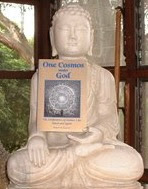
The human person is not only a unity, but personhood is the quintessence of diversified unity, since all our "parts" are human parts. Humanness is not "additive" -- as if the parts become human at a certain point. Rather, we are human -- not to mention gendered -- the very instant sperm and egg unite to form a new person. Our oneness is always anterior, not acquired, except to say that we are also "ensouled" at conception, and the immaterial soul obviously cannot originate in matter.
Which reminds me. It is difficult for us to imagine how two natures -- divine and human -- could be present in one person. Then again, maybe not. For human beings have an animal nature and a human nature, and yet, here we are, a single person. While we can talk about our animal nature, it isn't actually a separate or autonomous entity, like a Dr. Bob and Cousin Dupree.
Then again, sometimes it is. Specifically, this is what we call neurosis or psychosis, in which psychic parts are more or less split off from the central self.
Here it is important to point out that these parts cannot literally be split off, any more than the Trump-hater can successfully rid himself of unwanted psychic fragments by projecting them into the president. While it certainly feels to the haters as if the president truly harbors the nasty things projected into him -- just ask them! -- the process is really just one of introspection in reverse: extrospection, so to speak.
If the ethos of the philosophical life is know thyself, the battle cry of the pathologically fragmented psyche is deceive thyself! The Raccoon calls this mechanism auto-pullwoolery. If the purpose of life is the assimilation and acquisition of increasingly higher and deeper integration and unity, this mechanism tends in the opposite direction: paranoia instead of metanoia.
It occurs to me that this touches on why Jesus should be so emphatic about loving one's enemies, praying for one's persecutors, turning the other cheek, and generally refraining from returning tit for tat. If you presume to judge others, be careful, because the same criteria you apply will be applied to you: no double standards. No hypocrisy. No special pleading. No condemning Republicans for things you completely overlook in Democrats (and vice versa).
This is just rudimentary intellectual honesty and consistency. And yet, how rare it is. For example, anyone can see how ridiculously inaccurate various models of the Chinese Flu have been, so we disregard them. Garbage in, garbage out. But many of the same people are unable to generalize the principle to climate change models, which have proved to be just as ridiculously inaccurate.
One epically wrong model predicted 510,000 deaths in Britain. So far there are 2,619. But this guy has nothing on the climate fantasists, in that not a single one of their models predicted that warming would enter a two decade "pause." No doubt at least one of the Coronavirus models will turn out to be correct, if only by chance. Interesting that climate change models can't even aspire to the accuracy of a broken clock, since the latter is correct twice a day, while the former haven't been correct in 50 years.
Back to the actual point of this post. I had wanted to say something about the mystical foundations of science upon reading a passage in Barron. Here it is:
To be attentive -- to see, hear, taste, smell, and touch what is before us -- is much more difficult than it may seem.... Above all, [the mind] must overcome its tendency toward selective perception, seeing only what it wants to see, only what it might be convenient to see.
But this presupposes that there is something real to see -- AKA truth -- and that man is capable of putting his interests and biases to the side, and recognizing it (AKA objectivity).
Probably most people would place "objectivity" and "mystical" at antipodes. Not so fast! For mysticism is, among other things, the empiricism of the vertical, for there are stable and intelligible truths to be found there, just as there are in the material world. This is the context in which to understand the following observation by Barron:
To be intelligent... is to look for formal patterns, to seek out the intelligible structures that run through whatever exists. The summons to intelligence corresponds to the assumption of universal reasonability, the mystical intuition that undergirds the sciences.
Mystical intuition. This intuition is either true or false, but cannot be proved logically. Nevertheless, it is perfectly objective.
In the Christian vision, the truth of a thing is a reflection of the Truth that made it, a participation in the Logos that informs it (ibid).
Can I prove this? No, because it is the nonlocal principle whereby proof itself exists -- through which truth pervades creation and is accessible to us. But it can be intuited and envisioned, just like any other rock-solid transcendental truth.