Friday, April 27, 2018

The Monstrous Implications of Scientism

In the previous post we touched on the complementarity of subject/object, which mutually coarise. Tallis has some novel ideas about this, or at least pushes the materialistic argument to the brink of extinction and beyond. Hey, you can accomplish a lot with reductio ad absurdum. I mean, if matter is all there is, who just said that? And who just heard him?

Really, all one needs is an aphorism or two. So much easier to realize memes than memorize reams of philosophy. The following are not so much hierarchical as mutually reinforcing, like a strong rope made of individual threads:

Man has as much of a soul as he believes he has. When that belief dies, man becomes an object.

Modern man denies himself every metaphysical dimension and considers himself a mere object of science. But he screams when they exterminate him as such.

If the soul is a myth, genocide is a simple problem of effective anesthetics.

Between animal and man there is no other barrier than a palisade of taboos (Dávila).

Speaking of reductio ad absurdum -- reduction to absurdity -- I wonder what the opposite of this would be? Expansion to certitude? "That is absurd which is contrary to the first principles of reasoning," says the venerable Prof. Fernald -- for example, "that a part should be greater than the whole."

Fernald continues: "Monstrous and preposterous refer to what is overwhelmingly absurd." Then there are the ridiculous or nonsensical, which are "worthy only to be laughed at," such as "the lunatic's claim to be a king." Or, for that matter, the Darwinian's claim to truth.

So, depending upon our angle of vision, atheistic materialism might be absurd, paradoxical, irrational, foolish, silly, unreasonable, monstrous, preposterous, ridiculous, or nonsensical. What? The power of and?

Fernald also helpfully provides antonyms of absurd, e.g., certain, consistent, demonstrable, incontestable, incontrovertible, indisputable, logical, sound, true, undeniable, etc. These are the properties -- whether scientific or religious -- we're really after, aren't they? For it's one thing to prove an argument absurd, another thing entirely to find the one that is absolutely certain.

And yet, the two are related. For example, to explicitly affirm the absurdity that all truth is relative is to implicitly utter an absolute truth, thereby negating one's own first principle. All the relativist or neuromaniac or Darwinitwit need do is draw out the implications of his creed, and voila: he is cured of the absurd!

Note that this is precisely how Jordan Peterson rocketed from cult fame to something approaching the real thing: merely by holding his BBC interviewer to her own absurd standards.

By the way, Dávila has a cautionary aphorism for Peterson: No one is important for long without becoming an idiot.

And while looking for that one, I found this, which aphorizes what we are about to prosify. Read slowly and SEE:

The world is explicable from man; but man is not explicable from the world. Man is a given reality; the world is a hypothesis we invent.

This is indeed one of our first principles. And please note that this does not reduce to some form of arbitrary subjectivism or pure idealism. If it does, then it is no better than the dodgy materialism it displaces.

Unfortunately, politics is not only downstream from culture, but from pseudoscience, AKA scientism, or the Fashionable Nonsense of the Tenured. "The assumption... that we have no free will is combined with all manner of would-be progressive social policies claiming to be rooted in neuroscience" (Tallis). Therefore, for example, if we have no free will, then our justice system is patently unjust. We saw how this played out beginning in the 1960s: an entirely predictable explosion of crime.

Ideas have consequences. If crime is not a choice but only an effect of a material or efficient causes, then it leads to the reductio ad absurdum of... of a community organizer president with Al Sharpton as Czar of Race Relations and Black Lives Matter as intellectual vanguard.

Prof. Fernald says we are abusing the word "absurd." The word we are looking for is monstrous.

"Scientism and government have always made unhappy bedfellows" (Tallis). Let us count the (progressive) ways: eugenics, high carb/low fat diets, Keynesian economics, the government-global warming industrial complex, transgenderism, heterosexual AIDS, homosexual marriage...

Hear hear: "if any ideas are important, then ideas about the kind of creatures we are must be of supreme importance." And as we have pointed out on many occasions, "if On the Origin of Species really were the last word on humanity, it could not have been written." Do we really need to explain why? Okay: a brain simple enough for us to explain would not be complex enough to give rise to the explainer.

About those novel arguments alluded to above, here's one. Scientism, in order to be strictly consistent -- or fully monstrous -- must paradoxically adopt the point of view of no point of view, or of the "view from nowhere," in which "all appearances are summarized in the abstract," but are "had by no one in particular, and consequently by no one at all..." Again, it is the "material world seeing itself but from no particular point of view."

There is so much wrong with this that we don't have time to unpack it all. You can't just obliterate conscious selfhood and then try to sneak it in via the side door. Rather, if it's gone, it's gone. You can't secretly resurrect it without recourse to the miraculous. "There are some fundamental elements of selfhood that cannot be denied without self-contradiction," one of which is viewpoint.

We'll end with this, and pick it up on Tuesday: the realm of memory

has no place in the physical world. The physical world is what it is. It is not haunted by what it has been (or indeed, what it might become): by what was and will be. There are, in short, no tenses in material world.

[....]

[I]n the physical world no event is intrinsically past, present, or future. It becomes so only with reference to a conscious, indeed self-conscious, being who provides the reference point, the "now," that makes some events past, others future, and yet others present (Tallis.)

Wednesday, April 25, 2018

Between You & I is What is Between Man & Animal

That title just came to me. I'm quite sure it's true, but I suppose I should explain how and why it is true and how I could know. (Bear in mind that the background of this discussion continues to be Aping Mankind: Neuromania, Darwinitis and the Misrepresentation of Humanity, in which Tallis demolishes the ground of atheistic materialism even while remaining a steadfast and unwavering atheist.)

But first a few aphorisms to warm up the old cerebrum, which I have taken the liberty of arranging hierarchically so as to arrive at the -- wait for it! -- shocking conclusion:

1: Whoever is curious to measure his stupidity should count the number of things that seem obvious to him.

2: Often the simpler a truth is the more difficult it is to understand.

3: Truth is more than an impersonal proposition; it is a manner of thinking and of feeling.

4: The truth is objective but not impersonal.

5: All truth goes from flesh to flesh.

6: Truth is a person (Dávila).

Let's start with the first: I think it is entirely accurate to say that materialism is just plain obvious to the materialist. This must be the case, or they would realize how implausible it is, and provide more intellectual support than merely ridiculing or vilifying those who disagree.

It's analogous to the Taranto Principle in politics. Like me, perhaps you've wondered why leftists are unable to think, argue, or understand another point of view. This is a function of the media, culture, and education establishment all reinforcing their presumptions, such that they never have to defend their positions.

Rather, they're all obvious. Gay marriage? Obvious. Climate change? Obvious. Gender inequality? Obvious. Etc. They no more understand that they live in a bubble than the fish knows about water.

Note also that no amount of logic or evidence is able to move the liberal, because he mistakes his certitude for truth rather than ignorance. But in reality, their smug certitude is precisely a function of their ignorance. (I'm again reminded of a Bill Maher, who is usually wrong but never in doubt; however, you will notice that it is not a serene stupidity, since it is only maintained by projecting his ignorance into others and attacking them for it.)

An immediate corollary (2): because of what is so obvious to you, it can be difficult to recognize and understand the simple truth. Here again, it's an instance of The answer is the disease that kills curiosity. Can you imagine the mind of the person who is satisfied with a materialistic explanation of himself, such that he no longer has any curiosity about consciousness, free will, and human subjectivity? That is what I'd call a Total Eclipse of the Mystery of Being.

Truth is a manner of thinking and feeling (#3). This is a truth I first realized in my psychoanalytic training -- that there is truth but there are also developmental levels, such that what is true on one level might be false on another, and the depth of a truth may depend upon depth of the person uttering it.

Thus, the level cannot be distinguished from the person(al); in short, there are deep thinkers and shallow thinkers. It's unavoidably orthoparadoxical, but perhaps you've noticed that a banality from the lips of the tenured may be a profundity from the mouth of the Raccoon. A deep person transforms the otherwise banal into profundity, like water to wine or something. Deepak Chopra and Jesus can say the same things, and yet, one is an idiot.

Perhaps that's unclear. Here's a concrete example: I'm sure Thomas Jefferson and Nancy Pelosi would agree that "all men are created equal." Or, the pacifist and Navy SEAL agree that murder is wrong. 'Nuff said.

How can something be objective but not impersonal (#4)? Isn't that oxymoronic?

Well, first of all, objective and subjective are irreducibly complementary, not a duality. Prior to the appearance of humans -- or you can take it all the way back to the emergence of life -- there is no objectivity because there is no subjectivity. If there are no persons, there are no truths -- which is not the same as saying that truth is subjective. Analogously, only persons can know that murder is wrong, but that hardly makes it a matter of opinion.

Ultimately -- as Schuon has said in so many ways -- objectivity "is none other than the truth, in which the subject and the object coincide, and in which the essential takes precedence over the accidental -- or in which the Principle takes precedence over its manifestation..." Better (or deeper) yet,

Objectivity is the perfect adequation of the intelligence to objective reality; and inwardness is the persevering concentration of the will on that “Inward” which, according to Christ, coincides with the heart... and which opens onto the “Kingdom of God”, which in fact is “within you.”

Outward truth and inward depth. If your metaphysic allows for no inwardness, it obviously has no depth. By definition. And therefore no wholeness, totality, or even objectivity, for the deeper the subject the bigger the object in your ur-view mirror.

From my flesh to yours (#5). Here again, this is a truth I realized in graduate school -- that truth must be realized in order to be more than mere surface (k). The difference between reading about anxiety and having an anxiety attack is more or less infinite. Trust me.

The Word Became Flesh. Only all the time -- for example, whenever you speak and your having spoken causes understanding in another (a subject to which we will return in subsequent posts, this one getting close to the finish line.)

Finally, our shocking but ineluctable conclusion: that Truth is a person. If Tallis could only real-ize this, it would turn his world upside down and inside out, such that everything would now come into focus. But his admirable insistence on the reality of transcendence cannot help but prove sterile if detached from the Cosmic Person.

I didn't really get around to explaining the title, at least explicitly. Well, the gap between man and animal is literally infinite -- as infinite as, say, the abyss between the truth and a lie. What is the nature of this gap, or space, or depth-dimension? It is the intersubjective space between infant and mother, person and person, and ultimately Father and Son.

The trinity may not be obvious, but it sure explains a lot.

Tuesday, April 24, 2018

Death, Man, and Anti-Man

Does all humanism nurse a hidden (or not so hidden) anti-humanism? If not, it is only because it fails to draw out its own anti-human implications. Rather, it stops at an arbitrary point, imagining that Man will be able to stand on his own. In reality,

nothing is more fundamentally inhuman than the “purely human,” the illusion of constructing a perfect man starting from the individual and terrestrial; whereas the human in the ideal sense draws its reason for existence and its entire content from that which transcends the individual and the earthly.

Humanism is the reign of horizontality, either naïve or perfidious; and since it is also -- and by that very fact -- the negation of the Absolute, it is a door open to a multitude of sham absolutes, which in addition are often negative, subversive, and destructive (Schuon).

Take Google, for example. They always change their logo in celebration of various holidays, but I read somewhere that for the 18th straight year they failed to recognize Easter, an obviously intended in-your-apophasis slight to Christians. Which is fine. It's a free society. Thanks to Judeo-Christian values. Besides, their corporate creed is Don't Be Evil. What could go wrong with such a self-evident imperative? Who needs the Ten Commandments when you can reduce them to one?

Memo to our ill-educated internet overlords:

The initial contradiction of humanism is that, if one man can prescribe for himself an ideal that pleases him, so too can someone else, for the same reason, prescribe for himself another ideal....

The moral ideal of humanism is inefficacious because it is subject to the tastes of the moment, or to fashion, if one wishes; for positive qualities are fully human only in connection with the will to surpass oneself, hence only in relation to what transcends us. Just as man’s reason for being does not lie within man as such, so too, man’s qualities do not represent an end in themselves.... A quality is fully legitimate only on condition that in the last analysis it be linked to necessary Being, not to mere contingency, that is, to what is merely possible.

Recall that we are in the midst of a lengthy meditation on Aping Mankind, by a humanist who very much wants to distinguish himself from all those other anti-human humanists who inevitably preach animalism in disguise, because they lack any principle upon which to make such a distinction.

This is ineluctably true. Yesterday I saw a clip in which Bill Maher is going on about how conservatives Hate the Planet. Whatever. But do tell, why does this matter? Take your time. This is not a 15 minute segment pandering to low information leftists. We'll give you all the time you need to square this absurcularity.

By the way, in the same segment he derided the emotionally driven thinking of Americans. Good! Please explain why we should care about The Planet, or about future generations, or even "logic," with no emotional appeals whatsoever.

Stupidity is annoying enough, but when it shrouds itself in such pompous moral superiority... Why, it's enough to make a man hate religion.

Note also that Maher's style of humanism is always anti-humanistic at the core. More generally, the left loves mankind in the abstract. It's individual human beings they can't stand. Maher cannot disguise his contempt for half the citizenry.

Conversely, any religiously informed Christian must be quite skeptical of mankind. That's what you call a firm foundation of wisdom, without which you are bound to, oh, fly too close to the sun, or build a tower that collapses in on itself, or create one more sacrificial system to appease your strange and bloodthirsty gods. Same old same old terrestrial circle that man can only exit via a vertical leap.

This review is going rather slowly. I see we're still stuck on page 3. Oh well. We've got all the time in the world. At least until we don't. The Black Mirror of Death is always peering over our shoulder, if not giving us a snidelong glance from the sidebar.

But without Death we'd have no reason to think about Life at all. Death is quite literally the father of Sophia. I'm up to page 11 in that book, but there are already a number of arresting gags, such as Death destroys a man; the idea of death saves him (by E.M. Forster). Or, try this on for size:

"The shadow reveals the light" -- says it all. The unspeakable Nothing italicizes at least some of the Everything that is life. While death destroys us in fact, the thought of our own non-existence may save us from triviality, from entrapment in secondary things.... To be oblivious to death is to be only half-awake.

Half? That's charitable. But I want to focus on the sentence prior to that, in particular, "may" and "save," but also "triviality" and "secondary." For if there are secondary things, there must be a primary one, no? And if there exists trivia, then surely there is Importance -- who knows, perhaps even the One Thing Needful. Mustn't trivia, in order to exist at all, be parasitic on the non-trivial?

More generally, mustn't tenure be parasitic on something surpassing itself? Why would we ever recognize "free speech" if it doesn't presume responsible speech? Indeed, why care about speech at all if it isn't a function of truth (for the converse is impossible and unthinkable anyway)?

Is leftism parasitic on conservatism? You betcha'. Their whole economic program, for example, is all about distribution of wealth rather than its creation. They simply assume the latter, as if it just happens -- or rather, because the One Percent stole it from the restavus.

Which is like complaining that the top ten hitters in baseball hit fifty percent of the home runs, so we need to distribute them to more needy hitters. It's not fair that big Mike Trout already has nine home runs, while skinny little Dee Gordon has only one.

Tallis describes his meditation on death as "a walk across a tightrope that has nothing to hook on to at the other side because there is no other side."

Next to which I wrote in the margin: like that's even possible. I mean, since you are walking on the tightrope, and the tightrope is somehow remaining suspended in midair, perhaps it is hooked on to the other side. You don't have to call it God. Yet. Rather, how about just retaining an open mind? Something is holding you up in this space of transcendence, and it is not your genes, much less matter.

It very much reminds me of a comment by Stanley Jaki about free will. What holds it up? No wonder the materialites just deny it. That's much easier -- like cutting off the branch you're sitting on and remaining in the air. Anyone can do it! Or better, cutting the flower from the stem. The flower will live. For a few days.

But in reality, "What is needed is merely an intimation that freedom or rather free will belies mere material existence. Once that intimation is reflected upon, nothing prevents that one should be seized by a sense of metaphysics." Soon enough you realize that "All arguments against free will are so many proofs of it" (Jaki).

You're free! But how? Well, the "registering of the reality of one's free will" brings us "face to face with the realm of metaphysical reality which hangs in mid-air unless suspended from that Ultimate Reality, best called God" (Jaki). Or, let's just call it O: free will is a vertical lightrope suspended between man and O. Who could disagree, without proving it?

Lightrope. You could say that the intellect is our reaching toward O, while revelation is the Divine Intellect reaching toward us, which is how the whole innerprize remains suspended in midair: "Revelation is none other than the objective and symbolic manifestation of the Light which man carries in himself, in the depths of his being; it reminds him of what he is, and of what he should be since he has forgotten what he is" (Schuon).

A couple more points, and then we're out of time. Tallis properly notes that Death is never "a neat full stop at the end of the final sentence, of the final paragraph, of the final chapter, of a life. It is the profoundest of all interruptions."

Yes. Unless. Unless what? We're coming to that. Earlier in the book he quotes Auden, who suggests that this Unless must pass a strict test, that it must be "something a man of honor, awaiting death from cancer or a firing squad could read without contempt." A high bar indeed!

I don't see any way over the bar unless God himself goes under it and submits to death, but who would ever suggest such a strange idea?

Friday, April 20, 2018

Humanism and Animalism

There's too much going on in this book -- Aping Mankind: Neuromania, Darwinitis and the Misrepresentation of Humanity -- for me to take a linear approach, at least until I get a handle on it. Therefore, we'll just have to settle for an impressionistic or even pointillistic view.

What does the Aphorist say? My brief sentences are touches of color in a pointillist composition. Moreover, The only claim that I have is that of not having written a linear book, but a concentric book. The points consist of pebbles thrown into a pond -- and the pond is your soul.

Handle. Does the world have one? Is it numbers? Words? Ideas? Or is the cosmos entirely flat, such that there is nothing to grab and no one to lift it? Well, we do have hands, so we can physically handle things. Moreover, human beings are uniquely able to consciously think about things they'd like to lift, like this cup of coffee to my right.

That's a good start, but is there an ultimate handle, which is to say, principle of intelligibility? If you are a neuromeshugeh or Darwinebbish, I'm afraid not. There is no there there, only a here. And it's not even a here, because there can be no presence for whom the here is here.

Quite literally. Tallis spends a good deal of time discussing the reality of intentionality, which is to say, the irreducible "aboutness" of consciousness. Before the age of one, human infants surpass all other creatures in being able to look at where the finger is pointing. It's what we do. It's what you are effortlessly doing right now, seeing through my words (which you didn't even notice until I mentioned them) while both constructing and interacting with an implicit mental image that is more real than the words pointing to it. Polanyi and all that.

Come to think of it, I see Tallis and Polanyi as engaging in very similar projects, that is, rescuing science and philosophy from the metaphysical nul de slack that results from a naive -- but deeply destructive -- scientism. Destructive to what? To human beings, ultimately to the human state itself. The difference is that Polanyi, while apparently not a conventional believer, was very much open to the religious dimension, whereas Tallis has a knee-jerk opposition to it.

I'm frankly a little surprised that Tallis doesn't foresee "where this is headed," so to speak -- why he doesn't think to himself, "ah, now I get where those religious folk are coming from."

Instead, he draws a sharp line: he ventures into the transcendent, and even insists that it cannot be reduced to matter, but leaves it at that. It is literally sur-real, meaning beyond reality, but with no principle to explain or render it intelligible. Look! A hole in the sky:

Where does it go? He doesn't ask. Nor does he pretend to understand where it came from. It's just there.

But for Polanyi, religion involves a "fusion of incompatibles" accomplished by the imagination. God is the focal point of the fusion; or, in other words, He is the Cosmic Area Rug that reveals the meaning of its various patterns: "as in art -- only in a more whole and complete way -- God also becomes the integration of all the incompatibles in our own lives" (Polanyi).

Incompatibles? Like what? Oh, spirit and matter, God and man, knowing and being, body and mind, man and woman, faith and reason, Tallis and Schuon, you name it. Absent the integration, we can be no more than "a heap of impressions," or "a slop of accumulated experiences and their echoes in memory, not too different from delirium" (Tallis).

Instead, we have one mind. Or, more to the point, the mind itself is (or ought to be) one, which means that it possesses (or is possessed by) a synthetic and dynamic interior unity.

How do we -- how does the I of this neural storm -- pull this off, given the fact that there are more potential connections in the brain than there are particles in the universe? Our brain circuitry has "an estimated 9,000,000,000 components," each of which having "many hundreds, even thousands of connections with other neurons." The brain is "the mother of all motherboards." Yes, but which came first, the motherheno or the eggboard?

Where does this unity -- this synthesis -- take place? It can't be in the parts, because that just begs the question. If the parts are parts, they can't account for the whole: no matter how many rocks or neurons you toss onto a pile, it will still be a pile, not a unity.

Or, maybe the unity -- a faux unity to be sure -- is located below. This is what the neuromaniacs and Darwinists hold, that "you are just a little byway in the boundless causal nexus that is the material world" -- that you and your so-called mind serve "evolutionary success, not truth."

Therefore, if the Darwinians are correct, they will leave the most offspring. "The reasons we give for the things we do are mere rationalizations that conceal from us the real reason, which is no reason at all but a biologically determined propensity."

Well, at least God above and Darwinians below agree that we should be fruitful and multiply. But why then do the latter hate us so much?

Again, the rigidly orthodox Darwinian Professor Gray, whom Tallis quotes at the outset, describes man as "exceptionally rapacious," "predatory and destructive," possessing "no more meaning than that of a slime mold," and "not obviously worth preserving." In short, be sterile and stop propagating. How can a reductionist Darwinian be so un-Darwinian? How ever did he transcend his genes to the point of genocide?

It takes all kinds.

Wednesday, April 18, 2018

Cognitive Illness

I'm dealing with a workplace annoyance that will probably shorten this post, so let's dive right into Neuromania and Darwinitis. Gosh! That's not very charitable. He makes them sound like diseases or something.

Well, perhaps they are. There are obviously physical diseases. There are also mental illnesses. Why not cognitive ones, i.e., systematically dysfunctional ideas such as communism?

Disease as such cannot be understood outside the context of function, in that pathology is what happens when your telos is messed up. Rocks or stars or mountains can't be pathological because they have no purpose. More generally, nature is never wrong because it is never right.

Rather, nature is all Is, all the time. Except there is no time either. Nor even any space. Those two nebulous rascals require a perspective, and until self-aware humans happen upon the scene, there are no perspectives. We'll return to this perspective in due time.

I can see that Tallis is particularly concerned with rescuing humanism from the humanists. It goes without saying -- or saying with contempt -- that he also wants to rescue it from the religionists, but he spends very little time on them. Neuromaniacs and Darwinitwits are at least worthy of mockery. Religionists aren't even worthy, at least in this book.

Thus, he begins with a prominent atheist who absolutely savages human beings. The favorable review from Publisher's Weekly says

Humans think they are free, conscious beings, when in truth they are deluded animals.... Like the Christians of former times, scientists are caught up in the web of power; they struggle for survival and success; their view of the world is a patchwork of conventional beliefs....

He tears down institutions, especially consciousness, self, free will and morality [miraculously doing so without consciousness, self, free will, and morality!], and questions our ability to solve the problems of overpopulation and overconsumption....

Other animals do not need a purpose in life. Can we not think of the aim of life as being simply to see? This comforting question punctuates an otherwise profoundly disturbing meditation on humankind's real place in the world.

Booklist too sees no obvious flaw, let alone sickness:

Gray attacks the belief that humans are different from and superior to animals. Invoking pure Darwinism, he savages every perspective from which humans appear as anything more than a genetic accident that has produced a highly destructive species (homo rapiens) -- a species that exterminates other species at a phenomenal rate as our swelling numbers despoil the global environment. Gray explains the human refusal to confront the darker realities of our nature largely as the result of how we have consoled ourselves with the myths of Christianity and its secular offspring, humanism and utopianism.

Now, that is rich: because of Christianity, humans refuse to confront the darker realities of our nature. I'm not sure what could be darker than a primordial fall in collusion with the source of all evil (not to mention being permanently exiled from any terrestrial utopia), but we'll leave that to the side. The more interesting question is how Gray manages to elude the blade of his own condemnation. For if humanity is as monstrous as he claims, it could never produce a consciousness as angelic as his.

More cognitive sickness, from the first amazon reviewer (I don't think I could stomach wading through all 92):

If you think that you are not straw dogs that will be crushed ruthlessly by heaven [?] and earth, then you will have to read this book, among the most important philosophical books ever written.... Anybody who knows anything about human history cannot possibly disagree with Gray that we are a very violent species, although not as dangerous as the religions we have created, particularly the monotheistic religions such as Christianity.

Another devastating critique of our civilization is the way we have treated animals, of whom we are but one species but from whom we have usually tried to separate. The role of Christianity [pardon the French, but WTF?] in this endless tragedy of torture and unspeakable murder is appalling, but the consequences are even worse.

Now, that is a lot of stupid. Talk about an animal hater! Why on earth is the guy condemning human animals? Again, if you are going to revert to nature, there is only the Is. No oughts allowed. If everybody is Harvey Weinstein -- homo rapiens -- then nobody is.

While I can no doubt get a bit sanctimonious, at least I try to leaven it with a little irony. But this is a truly unhinged self-righteousness of the kind so ably described by Michael Polanyi, i.e., religious sentiment utterly detached from religion. These people like to speak with ignorant contempt of the "Old Testament God" of their malevolent imagination. In which case I would say: Here comes their New Testament, same as the Old Testament.

So, for a guy who sees volition, and hence morality, as an illusion, Gray sure is a strident moralist. (Additional ewww factor: his work has been praised by George Soros.)

In the words of Jordan Peterson: dude, clean up your own house. At least Jehovah gives humans a second chance (and more). His justice is tempered by -- if not a dimension of -- his mercy. But I don't see any mercy in Gray's grim characterization.

Which is fine: if humans are as awful as he describes, then so be it. As we say -- or insist, rather -- there is no privilege higher than truth.

Wait. Truth? How did that ever find its way into a purely material cosmos? That is what you call impossible. As Tallis asks, "Was it really natural selection that eventually brought into being creatures that could see that they were naturally selected?" If so, on what basis should we believe them, or even have a category called "belief," let alone "truth"?

Speaking of which, I need some Oxygen. Dávila, arranged hierarchically from truth to truth:

He who does not doubt does not shout.

Truths are whatever any imbecile refutes.

The man does not escape from his prison of paradoxes except by means of a vertical act of faith.

The truth is the happiness of the intelligence.

Tuesday, April 17, 2018

Atheist on Atheist Violence, or Pass the Popcorn

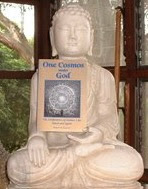
Now, here is a book that is right up our alley: Aping Mankind: Neuromania, Darwinitis and the Misrepresentation of Humanity, by Raymond Tallis.

Ironically, the author is a passionate, if not intemperate, atheist, and yet, he absolutely demolishes the ground upon which his New Atheist middlebros stand most confidently. In short, he destroys materialism in all its most popular and fashionable forms. At the other end -- almost as an afterthought -- he flicks away any thoughts of woohoo quantum deepakery like a gnat.

So, where does that leave him? He doesn't exactly say, but it seems he's content to accept what we don't know, and to not sneak in bad metaphysics in order to pretend to know more than we do. Like a good lawyer, he needs only undermine the prosecution's case, not build his own airtight one. I've ordered several more of his books in order to better understand where he's coming from. I'm only halfway through this first one, so I'm hardly an expert.

This particular book focuses on neurological and biological reductionism, i.e., neuromania and darwinitis, respectively (you might recall that in mybʘʘk I coined some similar words of my own -- reductionosis and materialitis, I think). The first (neuromania) reduces mind to brain, while the second (Darwinitis) reduces man to his genes. Both are ridiculous, but Tallis excels at higher ridicule and fine insultainment.

He doesn't just poke fun; he eviscerates, often with novel and creative arguments. It's the sort of thing halfbright atheists enjoy doing with dumb religion, only he turns the tables and does it to the atheists. And yet he is one. That's what I call intellectual honesty: criticizing your own best arguments, not just the worst arguments of your hapless opponent. If Bill Maher produced Religulous, Tallis trumps him with Asinihilism. Or something.

Let's begin where we always do, with any amazon reviewers who have already said what I'm about to say, thus saving me the trouble. This guy notes that

Interestingly, while as an atheist the author repeatedly dismisses dualism and what he calls 'supernaturalism' as unnecessary alternatives, he ultimately has to admit that he has no good explanation for the mysteries of the human mind himself...

Indeed, the first half of the book (on neuromania) ends with the acknowledgement that the problem of consciousness is "more than 'a hard problem.' It is a mystery."

Well, yes and no. Tallis absolutely refuses to venture down any supernatural path, in particular, anything associated with traditional religion. And yet, everything he believes could fit harmoniously within a sophisticated traditional metaphysic, a la Aquinas or Schuon, more on which as we proceed.

For he clearly proves the existence of a transnatural world. Like me, he seems to regard humanness as an intrinsically irreducible reality. Except in his case, it is grounded in nothing, instead of being an expression of the Ultimate Something.

Tallis repeatedly describes himself as a Humanist, one who wants to build a kind of protective wall around the human world, so it isn't threatened from below -- by reductionist intellectual barbarians -- but also from above -- by the religious. He doesn't understand that he has nothing to fear from the likes of us. We're on his side, only more than he is.

Come to think of it, it very much reminds me of how liberals have nothing to fear from conservatives, only from leftists: the left is the common enemy of classical liberals and conservatives alike. But only a few liberals realize this, e.g., Alan Dershowitz and Steven Pinker.

The same reviewer mentioned above agrees that the book "should be considered mandatory reading for atheists who are interested in genuine reasoning about the reality of the uniqueness of the human mind, rather than in superficial pseudo-scientific reasoning that is rooted in Neuromania and in a simplistic biologism that seeks to minimize what distinguishes us from the remainder of the animal world, including apes."

There is no question that the popular atheistic types don't end their investigation with materialism, but begin with it. It is just an exercise in intellectual backshadowing, such that they perceive and cherrypick the evidence to support what they already believe. You know the old gag: The answer is the disease that kills curiosity. Thus, materialism is the disease that kills any remotely sophisticated philosophy (which is predicated upon openness to total reality and love of wisdom).

Here is an excellent point that highlights something I wanted to say:

Negative scientific studies, studies that demonstrate negative findings (like showing that a drug doesn't lower blood pressure any more than a sugar pill) aren't as sexy as positive studies. Very few professors have gotten tenure by only showing what is not true. No one has won a Nobel prize for solely criticizing other people's research. That said, negative research can be as practical and useful as positive research.

Oh boy and how. In the back of the book there is a note to myself about what I call "anti-punditry." We have quite enough pundits, thank you -- all those brilliant people who are wrong about everything. But we are sorely lacking in anti-pundits, that is, socratic types who call them on their bullshit without necessarily replacing it with more bullshit. What's wrong with no bullshit? Indeed, I propose an award to the best anti-pundit of the year: the Nobull Prize.

"Aping Mankind is negative research. While most popular science writers attempt to weave compelling stories from the latest neuroscience experiments to explain 'why we are the way we are', Tallis attempts to show why these stories simply cannot be true." Oh my yes. Any idiot can gaze at the stars and discern the pattern of a unicorn. But it takes a real idiot to imagine the unicorn is real.

"I have never read a book that demonstrates more blatantly how atheism can operate like a religious belief."

From the Raccoon perspective, Yes and No. For if traditional religion is the safeguard and vehicle of a metaphysics of the Real, then atheism definitely falls far short of qualifying as a religion. To imagine that materialism could be as capacious and explanatory as religion is to not know what religion or materialism are.

We've laid out a very general view, now to the particulars, which I suppose will have to wait until tomorrow.

One more general point: one great irony is that everything Tallis holds dear and wishes to preserve has mainly been preserved by one institution: the Church, or let's say orthodox Christian doctrine. Seriously, who else these days refuses to give an inch to the opponents of personhood, free will, genuine humanism, natural rights, love, truth, beauty, etc? It's not secular universities, that's for sure.

Thursday, April 12, 2018

Maps, Models, and Probing in the Dark

This is your Friday Ramble on a Thursday, since I have an early appointment tomorrow...

Yesterday I was rereading the excellent Moral Case for Fossil Fuels. In it Epstein reminds us that the theory of anthropogenic global warming is built upon models, and that the models are wrong -- which is to say, they do not map the territory.

Nevertheless, adherents give more credence to the models than to the reality they are supposed to map. Which only happens all the time in every discipline, from physics to theology.

Some suggest that AGW is more religion than science. Which implies 1) that religions also have models, and 2) that their models are likewise wrong.

But wait. I just finished a book -- The Rational Bible -- the central claim of which is that its 3,000 year old model is both objective and absolute (i.e., not relative). Hyperbole? I don't think so: if people only ordered their lives to the Ten Commandments, "the world would be almost devoid of all man-made suffering."

Scientific models are abstractions and simplifications. They work well enough for linear phenomena, but are much more difficult in the case of complex systems such as weather, the economy, or history, because there are more variables than we can know, plus the variables interact in unpredictable ways. It's why a mutual fund prospectus can tell you all about the Plan, but always ends with the qualifier that

The performance data shown represent past performance, which is not a guarantee of future results. Current performance may be lower or higher than the performance data cited.

Lower or higher. Thanks for the tip! It's the same with global warming models: temperature may be lower or higher than the model predicts.

As Epstein says, anyone can hindcast or postdict after the fact, that is, come up with a model that tells us why something happened after it happened. Anyone can take the reservation. The hard part is holding the reservation. To do that, you need an effective working model of supply and demand.

We cannot get through life without maps and models of various kinds. There are cultural maps, psychological maps, religious maps. Yesterday we mentioned the psychoanalytic theorist W.R. Bion, who gave a lot of thought to how deceptive our psychological models can be. He even tried to develop his own abstract model, one that would allow us to handle psychological problems in the same way the mathematician is able to deal with problems in the absence of the object. It looked like this:

I have to admit, I never really understood the model, but I admired the attempt. For one thing, the mind is infinite, and you can't model infinitude. In other words, infinitude, by definition cannot be contained. Nevertheless, it can be represented, so long as we are conscious of what we're doing. Thus, for example, we can use the word "God," so long as we bear in mind that the reality designated by the word is (ortho)paradoxically beyond language.

Only humans can do this sort of thing. Obviously only humans have language. But even if AI is able to model human language, we would still be one step ahead, because we are able to appreciate the apophatic aspect of language, i.e., its nothingness as well as its somethingness. Could a computer ever acknowledge that, when it comes right down to it, it knows nothing?

It's a question of createdness vs. builtness. Minds are created, while computers are built. And creation is not just anything. All creation is of an ex nihilo character, even human creativity. No one has explained this more clearly than Pieper:

[W]hatever is real in nature is placed between two knowing agents, namely... between God's mind and the human mind. These "coordinates" place all reality between the absolutely creative, inventive knowledge of God and the imitating, "informed" knowledge of us humans and thus present the total realm of reality as a structure of interwoven original and reproduced conceptions.

In other words, what we call "reality" must exist in a potential space between God and man. Analogously, it was once thought that our eyes are able to see as a result of shining a beam on objects, whereas we now know it's the other way around: that light from objects strikes the retina. Likewise, as Pieper explains, "our knowledge is the product of truth, flowing indeed from the 'truth of all things.'"

This light shines in the darkness, and yet... So much mischief results from the belief that the light is self-generated!

An important orthoparadox: "being true and being unfathomable go together," such that "the comprehensibility of a thing can never be fully exhausted by any finite mind -- for all things are created, which means that the reason they are knowable is by necessity also the reason they are unfathomable" (Pieper).

That is exactly what I mean by the somethingness and nothingness of language, which are complementary, not a dualism or defect. This is the true human model.

Yesterday, in a moment of grandiosity, I was thinking of how I would like to wade through the arkive and assemble a Total Model of Reality. What would it require? Well, first and foremost, the Absolute. Deny that, and no model of any kind is possible.

Which leads back to Schuon's Outline of a Spiritual Anthropology. Here is an initial sketch of the model of who and where we are:

At the summit of the ontological pyramid -- or rather beyond all hierarchy -- we conceive the Absolute, which comprises by definition both Infinitude and Perfection.... If the Absolute is pure Reality, the Infinite will be Possibility, whereas Perfection or the Good will be the totality of the contents of the Infinite.

So, man is on a pilgrimage from possibility to perfection, relative to absolute, appearance to reality. But as Bion explains, it is as if each formulation or crystallization along the way results in "a feeling of security to offset and neutralize the sense of insecurity following on the discovery that discovery has exposed further vistas of unsolved problems -- 'thoughts' in search of a thinker" (Bion). In the end -- or In the beginning -- the thinker is God.

Wednesday, April 11, 2018

Cosmos and Meta-Cosmos, Human and Meta-Human

For a number of weeks now we've been intermittently dipping into Schuon's From the Divine to the Human, but getting distracted along the way. The third section has several essays on the Human World, beginning with one called Outline of a Spiritual Anthropology.

He had me at the title: spiritual anthropology. For if there is a theme that connects everydot about this blog, that would be it: what is man? What is his real order?

It's how I ended up with a PhD in psychology. It certainly wasn't the result of any settled career aspirations, but rather, an inevitable consequence of my unhinged curiosity. Was my curiosity satisfied by what I learned in grad school? What do you think?

Speaking of which, somehow I was lucky enough to encounter the writings of W.R. Bion in my second year, who launched my entire enterprise into a meta level. From that point onward I was in essence studying metapsychology, not just psychology; or, any truth I learned from psychology had to be harmoniously situated within a larger metapsychology: a psycho-spiritual cosmic anthropology, if you like.

Let me see if I can dig out some statements by Bion to exemplify what I'm talking about. As a matter of fact, he published a book called Second Thoughts, which is actually a collection of previously published essays on which he essentially goes meta on himself; in other words, the current Bion considers the past Bion from a higher perspective. (BTW, I don't recommend that anyone run out and purchase his books, since none are aimed at a lay audience.)

Interesting. The book has a single review on amazon, but the reviewer, like me, describes a breathless Can I buy some pot from you? moment on encountering Bion:

Bion is my guru. Fighting my way out of the barren landscapes of modern psychiatry. There is more to man than chemicals looking for a chat. There is more to illness than screwed up chemistry. Bion gives so many answers. He leaves behind awe. An awe of the vistas in front of you. Of the new horizons yet to be explored. There are so many directions to take. It's as if you leave behind a modernistic constrictive complex concrete jungle. Simply step into a delicate vibrant countryside.... Visit and discover places in your own experience and understanding. And yet so much more.

I know exactly what he means, for it is indeed the sensation of being lifted into a higher and more expansive perspective. Of course, I think that happens on any encounter with True Philosophy. For me, it also happened with Michael Polanyi and then later with Schuon, MOTT, Dávila, and others.

Come to think of it, that is the experience I want to transmit via my own writing. It was certainly the point of the book. If and when I assemble another book, it will be 100% about this experience -- a nonstop combination of (n) and (!?). I have no interest in mere information, except insofar as it serves as a launching pad.

Here is Bion commenting on one of his essays:

I am not unappreciative of the account; I think if it were some other psychoanalyst's report I would think it quite good. But as it is, I do not recognize the patient or myself.

This is key, because it demonstrates how easy it is to write plausibly and even convincingly about the mind, but in a way that more or less lacks truth. Only Bion -- the one who wrote it -- can appreciate the absence of truth. Others who read the essay may be convinced of its truth. We can say the same of higher dimensions: how easy it is to write of spirit! Anyone can do it. But is it true? And by what standard?

So much of Exodus is a reminder to the Israelites that they are to follow God's standard, not their own. However, God's standard is universal, which is the point of the whole exercise. If Jews aren't messengers of universal morality, then they were chosen for nothing. What a pointless hassle!

Prager even suggests that this is how and why Jews have in the past gone off the rails in pursuit of non-Jewish universal systems such as Marxism. In other words, Jews are predisposed to think in terms of universality, even if it is a false universality of the left:

Ever since the Jews were emancipated in the nineteenth century, they have been disproportionately involved in universalist movements; but, in their embrace of humanity, they often abandoned the Torah and Jewish identity. They did not wish to acknowledge that it is specifically because of the Torah's teachings that humanity came to view all people, including, of course, strangers, as created in God's image, and therefore -- in the words of the American Declaration of Independence -- "endowed by their Creator with certain unalienable rights."

When Jews abandoned the Torah and ethical monotheism, these very values affirming the sanctity of all human life have often been abandoned as well -- as was the case with Jews who embraced communism (which made war on religion and God-based values) and ended up supporting the tyrannical and murderous Soviet Union and other communist regimes.

Again, it is the same with contemporary Jewish leftists, who abandon the meta- for the infra-, or transcendence for immanence. The former is always open, the latter closed. The closed system will still allow "realizations," but only of what is permitted or conditioned by the system. Thus, they are "pseudo-realizations" that have the contours of truth without the content. Applied to psychology for example,

It becomes fatal to good analysis if premature application of a theory becomes a habit which places a screen between the psychoanalyst and the exercise of his intuition on fresh and therefore unknown material (Bion).

As it pertains to past bOb, this meant that all the fine theories I was learning were at once doors and walls -- or better, ceilings. Horizontally they are doors, but vertically they are ceilings. The former are essentially linear and mechanistic, the latter organismic and evolutionary, a "coming together, by a sudden precipitating intuition, of a mass of apparently unrelated incoherent phenomena which are thereby given coherence and meaning not previously possessed" (ibid.). This is (n), in contrast to mere (k).

"The verbal expression can be so formalized, so rigid, so filled with already existing ideas that the idea I want to express can have all the life squeezed out of it" (ibid.). I would say that all writing that presumes to be about spirit must be mindful of this minefield of (k). (This is, of course, a major reason why Jesus so often speaks in parables that require a realization on the part of the listener.)

To be continued...

Tuesday, April 10, 2018

Conscious Freedom and Absolute Truth

I was thinking about the subtitle of Dennis Prager's The Rational Bible: God, Slavery, and Freedom. Freedom and slavery are obviously at antipodes, and yet, freedom ultimately means nothing in the absence of God: the Israelites were "liberated from Egypt to serve God," and many of the subsequent laws are designed to purge them of their slave mentality.

Indeed, even today many Jews still vote Democrat, so the degyptionization process is ongoing: "In every generation a person is obligated to see himself as if he himself has come out of Egypt."

Perhaps on Independence Day we should have something analogous to a Passover service, in which we recall being imperial subjects who miraculously became free citizens thanks to our God-inspired Fathers. As our mosest indispensable Father wrote to a Hebrew congregation in 1789,

May the same wonder-working Deity, who long since delivered the Hebrews from their Egyptian oppressors, [and] planted them in a promised land -- whose providential agency has lately been conspicuous in establishing these United States as an independent nation -- still continue to water them with the dews of heaven and make the inhabitants of every denomination participate in the temporal and spiritual blessings of that people whose God is Jehovah.

"The point is while liberty is necessary, it is not sufficient for a good life" (Prager). Indeed, "Whoever sees in liberty anything other than liberty itself is born for servitude" (de Tocqueville, ibid.). Prager continues:

In other words, while liberty is magnificent, the only thing liberty guarantees is liberty, not goodness, not morality, not integrity, etc. Liberty must be accompanied by higher values, because liberty alone will lead to moral chaos, and ultimately... servitude.

For example, serving the state. The state gets a foot in the door by "serving" those who are unfit or unprepared for freedom (we are not taking about the deserving poor). This creates a moral-political hazard, as -- very much in contrast to what God attempts with the Israelites -- the state rewards the slave mentality. Create enough slaves, and the rest of us are placed in the position of serving the state that serves its slaves.

Aphorisms come to mind. Remember Julia, the ideal Democrat woman who unashamedly spends her life in different forms of dependence upon the state? The modern State is a teacher who never grants his students a degree (Dávila).

In short, if you are trained for servitude, don't be surprised if servitude is what you're good at: liberalism pampers its beneficiaries until they have been turned into dissolute adults. Thus, Each day we demand more of society so that we can demand less of ourselves. For As the State grows, the individual shrinks (ibid.).

Think of "the resistance." Our founders resisted servitude, while these pathetic cases are resisting freedom! Thus, He who jumps, growls, and barks has an invisible collar and an invisible chain (ibid.). Trump -- of all people -- is not responsible for the chain. Rather, it is self-imposed. And the louder the bark, the stronger the chain.

Let's dig down to the metaphysics of it all: In any proposition about man its paradoxical fusion of determinism and freedom must emerge (ibid.). Agreed: except that it is orthoparadoxical, which is to say, a kind of necessary complementarity. Man is necessarily woven of freedom and determinism.

Which come from where? Maybe you have a better idea, but I'm with Schuon, who writes in From the Divine to the Human that liberty derives "all its reality, hence its efficaciousness, from principial Infinitude -- which coincides with All-Possibility..." Conversely, determinism, or necessity, must ultimately be grounded in "the Absolute, hence to the pure Real."

Absolute Real and All-Possibility, or Truth and Freedom, respectively. And we are the image and likeness. You might say that we are given freedom in order to comport with truth. There is a "Torah" and a "people"; or, Logos and man. Or just Consciousness and Absolute.

Thursday, April 05, 2018

Our Civil War is a War On Order

If there is an order of things, it must correspond to the changelessness in things: it is the Unchanging in which all this Change is grounded. If the change has no underlying order, then it's just random chaos with no point or purpose.

There is always order, and there is always change. Analogously, character is who you are when no one is looking. Likewise, order is what exists even if no one sees it: it can only be discovered, not created or imposed. It is what exists despite anyone's opinion about it.

For example, this is obviously the purpose of philosophy: to find the real order in things -- not just of material reality, but in ethics, aesthetics, and thinking itself. Science deals with quantitative order, but that isn't the only order in which we find ourselves.

In The Rational Bible, Dennis Prager reminds us that the Ten Commandments are not intended to apply to just a particular slice of humanity, but to everyone: they disclose a universal moral order.

Thus, either the Torah "has something to say to everyone or it has nothing to say to [even] the Jews." In other words, it either reveals a universal order or it reveals nothing. There can be no in between. You might even say that there is truth and there is autobiography, and that most philosophy is little more than a glorified memoir or diary. Again: universal or nothing.

What we call wisdom is a pool of knowledge about the Changeless. Wisdom exists along a spectrum and eventually shades off into the human margin and beyond (or below). In other words, some wisdom can be truly universal, while much of it may indeed be culture-bound. Philosophy ought to be a quest for the former.

My eyes just lit upon the following passage: "As I show in my discussion of secular education as a potential 'false god,' the best educated in the West have often both lacked wisdom and been among the greatest supporters of evil ideologies and regimes."

Now, what were (and are) these ideologies but the systematic effort to impose a false order upon human beings? The result? Communist regimes alone "murdered about 100 million people and enslaved and destroyed the lives of more than a billion."

This quest for order is a serious business, perhaps the most serious. Get the order wrong, and the result is catastrophe: "The two missions -- promoting goodness and attaining wisdom -- are linked, because it is almost impossible to do good without wisdom."

The entire history of the left can be summarized in a single wise sentence: "All the good intentions in the world are likely to be worthless without wisdom." Actually, worthless if we're lucky. If only leftist schemes were neutral and not deadly!

In the United States we are absolutely in a civil war. It is as real as the one in the 1860s, with the stakes every bit as world-historically consequential. And if we dig down to the ground, what we really see are two different and irreconcilable orders, both then and now.

Speaking of the search for order, in November 2016 I remember Rachel Maddow and other progressives reading up on 1930s Germany in order to comprehend what was going on in the United States. Yes, that is crazy -- among other reasons because conservatism and fascism are at antipodes -- but it goes to the intensity with which human beings will grasp at order, even if there is no truth to it at all.

Me? I find much more useful parallels with the period leading up to the Civil War. I recently read a couple of books that document what it was like for the average person to live through the era, In the Presence of Mine Enemies: The Civil War in the Heart of America, 1859-1864 and The Thin Light of Freedom: The Civil War and Emancipation in the Heart of America.

What we have here (and there) are two very different ideas of order: political order, constitutional order, human order. Quite simply, we could not go on being one nation with two orders. A nation, in order to be one, must have one order. We cannot abide states with radically different orders, whether we're talking about slavery or illegal immigrants. In both cases it really comes down to the illegitimate usurpation of power rooted in a false order.

In the margins of the books I often highlighted passages with an N/C, for No Change. For example, I was thinking of the parallels between the Fugitive Slave Act of 1850 and how contemporary leftists treat blacks who stray from the liberal plantation. They are not permitted to do that, on pain of surrendering their human status.

Nor are they subtle about it. Just the other day on CNN, some dim pundit of color said it was perfectly acceptable to tar black conservatives with racial epithets. Conversely, we are not even permitted to criticize a black progressive such as Obama or Maxine Waters without being called racist. Or, see how the left reacted when someone in Trump's cabinet said he cared more about merit than "diversity." Democrats are no less obsessed with race today than they were during slavery and Jim Crow.

Different orders. In our order, all men are created equal, and endowed by their Creator with certain unalienable Rights. In their order, people are... well, first of all, they are not created. Rather, they evolve, I guess, with unequal races, genders, and classes, and it is up to the state to equalize these. Is it any wonder that This is War?

Prager also reminds us of how America's founders were deeply rooted in the Biblical order, or the order disclosed by our Judeo-Christian tradition. You might say it is the vertical macrocosm in which our political microcosm is rooted. In the past, we've noted how Thomas Jefferson and Ben Franklin proposed a design for the Great Seal of the U.S. depicting Moses leading the Israelites from slavery to freedom, with the motto Resistance to Tyrants is obedience to God.

Which it is, but why? Because the tyrant imposes a false order, while God reveals the true one. Which is why the loony "resistance" to Trump is hardly obedience to God. If anything, it is defiance of God, which is one of the definitions of fascism: the violent rejection of transcendence.

No, I am not conflating God and Trump. Please. Again, the subject is order, and which one we will live under, the constitutional one or the disordered one imposed by progressives.

Here is a critical point mentioned by Prager: "these two events -- the Exodus and the giving of the Ten Commandments -- are the two seminal events (other than Creation itself)," such that "liberty and morality are the twin pillars of the Torah."

Schematically we see Creation --> Commandments --> Liberty. Creation-as-such is the first order; it is the macrocosmos in which man is situated. Of all the creatures -- both living and nonliving -- man is the only one created with free will. But what is free will if it isn't grounded in the permanent order reflected in the Ten Commandments (and elsewhere)?

It is nothing, precisely. Therefore, freedom and truth/order are intimately related. As are the oppression and nothingness of the left. Freedom requires truth. Slavery needs only power.

Wednesday, April 04, 2018

A Translucent Cosmos

Where is the order or the cosmos?

First of all, the cosmos is not the sum of all things -- like a giant warehouse -- but rather, the unity of all things -- an organismic whole. However, this whole is not an empirical fact or observation, but more of a hypothesis. In reality it is an intuition. But just because its existence cannot be proved by science, we can nevertheless be sure it exists, for it cannot not exist and yet be a home for thinkers: no thought is possible in a non-cosmos.

Insofar as the scientist uses his scientific method, he has no right to talk of the Universe, of the strict totality of consistently interacting things. It may be that his model de facto covers that totality, but science can never be sure about that. Much less can science answer the question, "Is there indeed a universe?" (Jaki).

In short, it is not possible "for scientists or for their instruments to go outside the universe in order to observe it and provide thereby an experimental verification of it" (Jaki).

Science can only exist because numerical properties can be assigned to matter -- quantities to qualities. Or on other words, science is rooted in the extraction of a quantitative order in things. But then -- hello! -- we run into Prof. Gödel, who reminds us that "no non-trivial set of arithmetic propositions can have its proof of consistency within itself. This means that a necessarily true scientific account of the universe is a pipe dream" (ibid).

Hmm. This means that the ultimate order of things is a bit more ambiguous or subtle than simply assigning it a number or formula. Supposing physical cosmologists discover a "theory of everything," it is nevertheless a theory about the whole that is first intuited. In other words, the wholeness exists first, the theory second. The theory doesn't account for the wholeness but assumes it.

For Schuon, there exist three cosmos for man, "first the soul, then the world which is its medium of manifestation and finally the Universe of which this world represents but a minute fragment." This implies that there is an interior order (the soul), an exterior order (the world) and a transcendent order (the Universe of which the world is but a fragment).

Remember, whatever else we may say of existence, it must first be observed by a subject in order to say it. Perhaps you think that's a trivial observation, but it means that nothing can be radically independent of anything else; or rather, that a prior wholeness subtends anything we can know and say about the parts. If you really understand that, it's a can I buy some pot from you? moment.

Meister Eckhart understood it: Being is God's circle, and in this circle all creatures exist. So, Where there is isness, there God is. Creation is the giving of isness from God

To say knowledge is to say knower and knowability; to know anything = to be known by Someone. Therefore, truth implies persons, and in a way, the two are coequal, or of the same transcendent substance: Subject and Object are complementary, and this complementarity is the truth of things -- or, the very ground and possibility of Truth in Things.

This means that knowing is always a relation, such that relation is understood as the truth of things: it is the understanding of understanding. Thus, according to Pieper, "Truth is nothing else but the identity between the mind and reality, a relation originating and accomplished in the act of knowing..."

There is a truth in all things because all things are in the Truth. It is why facts can be factual, for only a tenured factsimian believes a fact could speak for -- or even perceive -- itself.

You could also say there is a Light in things. So, how did it get there? "All things are intelligible, translucent, clear and open because they are created by God's thought, and for this reason are essentially spirit related" (Pieper). To quote St. Thomas, "A thing has exactly as much light as it has reality."

Ah, now we're getting somewhere. Translucent. What a fine and useful word when applied to the vertical! As Pieper says, "the reality of a thing is itself its light," and things have more or less of this light at both ends. In other words, both subjects and objects are trans-lucent, or mediums of Light.

Cleaning windows. It's what this blog is about. Or better, windows and mirrors: a clean window allows us to see outside, while a clean mirror allows us to see inside -- and up. And thereby become more real.

"The soul is all that it knows," said Aristotle; it is necessary to add that the soul is able to to know all that it is; and that in its essence it is none other than That which is, and That which alone is. --Schuon

Tuesday, April 03, 2018

The Nonlocal Order of the World

Order. This might be the key distinction between left and right, for we believe in a transcendent order to which we owe our allegiance, while the left doesn't.

However, everyone actually believes in some form of order, for life would be impossible in its absence. Thus, the left replaces the transcendent vertical order with an immanent horizontal one, AKA the state. As they say, the state is the one thing to which we all belong. What they really mean is that we all belong to the state.

In the words of the Aphorist, Conservatism should not be a political party but the normal attitude of every decent man. Why? Because every decent man is ordered to the truths and virtues that are anterior to him. Supposing you prefer to live by your own truths and morals -- which is to say, desires -- this is precisely what makes one indecent.

And yet, this was the credo of my blighted generation, the Boomers. I didn't just believe it, but believed it with all the ignorant arrogance of a braying mob of gun-grabbing adolescents. What do they know of the transcendent order? Someone should ask them.

To praise youth is to forget our former idiocy (Dávila).

One reason the left rebels against hierarchy is that hierarchy is a kind of judge. We are judged in the light of certain standards, but for the left, standards are what they call "obstacles" -- for example, the Constitution.

Here in California the Constitution is a parchment barrier to stocking the country with millions more illegal Democrats -- which is to say, enough people to further defy and overturn the Constitution, only this time for good. Rid the country of the troublesome legal wall constructed by the founders, and any southern wall will crumble on its own.

It's the same with guns, marriage, religion, freedom of speech: each is an obstacle to the left.

Freedom is not free unless it is an ordered freedom. "Disordered freedom" is a contradiction in terms, but this is precisely what the left offers. Not only that, but disordered freedom evokes the state to control it. Indeed, this is one of the recurring themes of The Boy Crisis, which has led directly to a man crisis -- or to a Pajama Boy crisis, if you prefer: Vanderleun's New Castrati.

What is the essence of this crisis? And why does a female-centric culture -- such as in urban Democrat hells -- inevitably redound to violence and chaos?

I was about to say that civilization passes through the male line, but it's more that barbarism is combatted through the male line. In other words, the only cure for the toxic masculinity of the Pajama Boys and HoggBrats of the world is a virtuous masculinity (recall that the vir in virtue means man). Without spiritually mature and actualized men, we are merely bystanders to the repetitive cycle of merely biological men: to the bullies and bullied.

Here's an essay that goes to what we're talking about, The Wages of Inversion:

We live in an age in which things are no longer what they are supposed to be. Words have come to denote the opposite of what they signify. Cultural institutions on which we rely to serve our personal and national interests have morphed into caricatures of their original intentions, working against their foundational purposes.

Linguistic and institutional inversion is the time-dishonored strategy of totalitarian systems and is generally associated with the theory and practice of the Left, which has infiltrated the culture and polity of the free world, particularly in the areas of language use, the media, education, the arts and gender relations. The democratic West is now at the mercy of its own reverse polarity.

The left always deploys linguistic tactics in service to an ideological end. In other words, it first attacks language, and often this is enough.

For example, instead of arguing for homosexual unions on the merits, all the left had to do was redefine marriage. Then its legal recognition was readily deduced from bogus first principles. Likewise Roe v. Wade, which inserted abortion into the Constitution, or Dred Scott, which inserted race.

But "A society in which language has been so denatured as to operate on the principle of inversion, beyond even the institutional euphemisms of political correctness, has no future" (Solway). Literally. For language -- and the truth it carries -- is to civilization what blood is to the body. Tainted language is like tainted blood: eventually it spreads to the whole organism.

How does it spread? Three main ways: education, journalism, and entertainment. The media doesn't just provide "fake news," but literally an alternate universe. But this is only possible because the psychic targets have been softened by the continuous bombardment of education and entertainment. Skulls don't just fill themselves with mush. Rather, someone has to do the filling.

Solway quotes Madison, who wrote that

The American people owe it to themselves, and to the cause of free Government, to prove by their establishments for the advancement and diffusion of Knowledge, that their political Institutions… are as favorable to the intellectual and moral improvement of Man as they are conformable to his individual & social Rights.

To the extent that progress exists, it is a measure of the intellectual and moral improvement of man. And this intellectual and moral improvement is a consequence of adequation to a nonlocal order that never confers a right without a corresponding obligation or duty. A right to free speech? By all means, but only if you are obligated to truth! A right to self-defense? Of course, so long as you are defending good and not evil.

It is customary, writes Davila, to proclaim rights in order to be able to violate duties. But there can be no intrinsic right to violate inherent duties. If you believe that, that's... that's when you know The Future has arrived, and the blizzard of the world has crossed the threshold and overturned the order of the soul (Leonard Cohen).

Friday, March 30, 2018

Hierarchy, Caste, and Light Detectors

Okay, I don't really know where I'm going with this idea of depth. So let's go there!

For example, last night I had a dream that took place in the southern US. I was looking at an empty space where one of their statues had been removed. An old classmate from grad school recognized me, and I sat at her table while pretending to recognize her.

As we chatted, I defended the statues, suggesting to her that there was much more to southern culture than just slavery -- as there is more to Germany than Nazism (or more even to New York than the Times). But she was thoroughly steeped in the Narrative, and obviously didn't understand where I was coming from. I could tell she suspected I was a racist, and there was no way for me to escape the imputation. In such situations, the more you try to explain, the more defensive and guilty you sound.

So, it was a case of level confusion. Yes, it was also a case of narrative vs. truth, but such simplistic narratives can only exist at a certain cognitive level. A more intelligent or curious or openminded person questions the narrative and thereby escapes the matrix.

Eh, that's not a very good example. How about this one: a couple evenings ago I had a wide-ranging conversation with a lady. She asked what I did for a living, and I said "psychologist," which for some reason always gets a rise out of people. But I always qualify it right away, since I don't at all relate to the field. Okay, then what am I?

Good question. Really, I'm just this guy having a wide-ranging conversation with you, nothing more, nothing less. It's kind of what I do. Including on this blog.

But again, it's a question of depth. For me, psychology is dwarfed by metaphysics, theology, mysticism, esoterism, philosophy. The latter are totally compelling, in comparison to which psychology is a cage.

Indeed, it reminds me of the old gag to the effect that for the sage, paradise is a prison. You could drop me into any earthly paradise, but if I didn't have the space and time(lessness) to simply be, then it wouldn't be paradise.

So, in a very important way, being is paradise, and vice versa. That's a bold statement. Can you back it up? I think you're just lazy -- and probably neurotic -- and that you hide behind these fancy metaphysical ideas to conceal your lack of achievement.

Oh shut up. One mother-in-law is enough.

Looking back on it, I've always been sensitive to "class." Not economic class, nor social standing. Rather, something more ethereal... I'm sure Raccoons know what I'm talking about: there are supernaturally natural aristocrats, or "beings of light," so to speak. Can't you tell when you're in the presence of one? Of course you can. You can also feel the darkness. The remarkable thing is that some -- or most -- people can't.

For example, Rachel Maddow is apparently the most popular cable news host these days. I literally cannot imagine what it would be like to regard her as normal -- to not sense the dark-and-crazy. Conversely, there are people who regard, say, Churchill as Hitler. Not just on the fringe, but in the Washington Post (my mother-in-law sent me the link, worried that I might be giving our son a one-sided perspective).

Hmm... if Churchill is Hitler, that means Hitler is Churchill, so what's the big deal?

This post is turning into the Usual Friday Ramble, isn't it? Let's try to restore order with some gimlet words from Schuon. And what is order but awareness of, and respect for, levels?

The man of “aristocratic” nature -- we are not speaking of social classes -- is he who masters himself and who loves to master himself; the “plebeian” by nature -- with the same reservation -- is on the contrary he who does not master himself, and who does not wish to do so.

To master oneself is in substance to want to transcend oneself, in conformity with the reason for being of that central and total creature which is man; in fact, the man of the “dark age” lives below himself. Thus he must transcend himself -- or re-establish the equilibrium between Maya and Atma -- in accordance with a norm which he bears within himself, and which comprises all that makes life worth living.

For example... let's just say I know of a family of billionaires in which the wife and daughters are devoted to the TV program Keeping Up with the Kardashians. Can you even imagine what that must be like? Which proves -- as if such proof is necessary -- that no amount of money can purchase the kind of class under discussion.

I can hear it now: who are you to speak of class, when you support Trump! Again, level confusion: politics is politics. Dennis Prager speaks for me:

the policies of a political leader matter much more -- morally -- than that individual’s sexual sins, or even character. It is truly foolish to argue otherwise.... That “60 Minutes” correspondent Anderson Cooper and many in our country found it acceptable to ask a woman, “Did he use a condom?” on national TV is a far graver reflection of America’s moral malaise than a man having a one-night affair 12 years ago....

The fact is it is none of my business and none of my concern whether a politician ever had an extramarital affair. To cite just one of many examples, a president’s attitude toward the genocide-advocating Islamic tyrants in Tehran is incomparably more morally significant. That is just one of many reasons -- on moral grounds alone -- I far prefer the current president to the faithful-to-his-wife previous president.

It is apparently difficult to escape the caste to which one has been assigned. Think of all the academics who shouldn't be thinking, but rather, engaged in some productive form of manual labor. Most of the real trouble in the world can be traced to miscaste "intellectuals."

Schuon: "Caste takes precedence over race because spirit has priority over form; race is a form while caste is a spirit." But the left, from Andrew Jackson to the present, maintains the opposite: that race is critically important. Really, diversity and multiculturalism are the substitution of race for natural hierarchy, such that even truth itself is denied.

We've discussed the idea of caste before. You don't have to take it literally to understand that there is something to it, based upon everyday experience. Who hasn't met a warrior, or priest, or scholar, or laborer, or merchant? Nor do I, for example, pretend to be a warrior. I could probably be one, but it wouldn't be me -- the guy who likes to have pointless, wide-ranging conversations.

There is first of all the intellective, speculative, contemplative, sacerdotal type, which tends towards wisdom or holiness; holiness referring more particularly to contemplation, and wisdom to discernment.

Next there is the warlike and royal type, which tends towards glory and heroism; even in spirituality... this type will readily be active, combative and heroic, hence the ideal of the “heroicalness of virtue.”

The third type is the respectable “average” man: he is essentially industrious, balanced, persevering; his center is love for work that is useful and well done, and carried out with God in mind; he aspires neither to transcendence nor to glory -- although he desires to be both pious and respectable -- but like the sacerdotal type, he loves peace and is not interested in adventures; a tendency which predisposes him to a contemplativeness conformable with his occupations.

Lastly there is the type that has no ideal other than that of pleasure in the more or less coarse sense of the word; this is concupiscent man who, not knowing how to master himself, has to be mastered by others, so that his great virtue will be submission and fidelity.

Modern liberalism is premised on the idea that anyone can be anything, which is really a way of saying that everyone is nobody. We are not infinitely malleable. You are who you are, and it is a matter of actualizing and deepening that you, not pretending you're someone else.

Surely there must be some aphorisms that can save this wayward and wooly post from itself!

Equality is not justice; it is merely the way of avoiding the obligation of attributing to each his own.

Unjust inequality is not remedied by equality, but by just inequality.

Leveling is the barbarian’s substitute for order.

Where equality permits liberty to enter, inequality slips in.

He who claims equal opportunity ends up requiring that the gifted be penalized.

There is something definitively vile about the man who only admits equals, who does not tirelessly seek out his betters.

Equality is not the fulfillment but the perversion of equity. Only a hierarchical ordering proceeds equitably with “the lion and the ox” (Dávila).

By the way, I'm not saying I'm better than anyone else. Indeed, I would love for just once to be normal. But I've resigned myself to the realization that that is something that can never be. So the conversation continues...

Thursday, March 29, 2018

Simple and Deep, Complex and Shallow

We are on the subject of depth: what is it, and how do we know it? There are degrees of depth in thought, prose, poetry, science, religion, music, painting, or in other words, knowledge and beauty.

But again, depth isn't necessarily covariant with truth. I suppose Heidegger is deep, but that doesn't make him any less wrong. And in a certain sense, truth is actually quite simple, simplicity being not at all synonymous with superficiality. "God's essence is to exist." Doesn't get more simple or true than that.

Nevertheless, Often the simpler a truth is the more difficult it is to understand (NGD).

Some people are drawn to depth, while it appears that most people are indifferent to it at best, but often repelled by it. In the past, I've written about the psychological reasons for this, in that -- in my opinion -- just as people have psychological defense mechanisms that repress, deny, project and otherwise transform the lower vertical, they also have "pneumatic" defense mechanisms that allow them to do the same with the upper vertical. Which is how leftism becomes a religion.

To say lower is to say higher, and it makes no sense to affirm that the human ego is the highest entity in all of creation. Rather, it is always situated on a vertical spectrum between... best to leave this undefined -- or unsaturated with preconceptions -- since the unKnown is at both ends; let's just say that man is suspended between O and Ø.

With this in mind, we now have a way to conceptualize depth: the deeply true is in the direction of O, while the deeply false is in the direction of Ø. Looked at in this way, reductionistic Darwinism is deeply false, as is Marxism, or feminism, or positivism (giving adherents the benefit of the doubt that these isms are deep to begin with).

Now, what can it mean to be "in the direction of O"? How can we tell? Let's leave aside aesthetics and focus on thought. One critical point is that while Ø necessarily excludes O, O must encompass and account for Ø -- which is precisely what makes it the more deep. For depth implies comprehensiveness, and a system that accounts for the cosmic Subject is obviously more comprehensive than one that pretends to deny it at the outset (and it can only pretend to do so, on pain of saying nothing with no one to say it).

Conversely, O doesn't deny Ø, least of all in the Christian tradition. Indeed, we could even think of Incarnation as O becoming Ø; or, to tweak the old patristic gag, "O became Ø that Ø might become O."

In contrast, think of Eastern traditions for which Ø is pure illusion. Their goal is to attain O, but it must be a less comprehensive O, since it excludes Ø. A western representative of the same approach is Plotinus, whom St. Augustine rejected for precisely this reason. With neoplatonism you can experience the One, only you can't be there to experience it. D'O!

Backing up a bit, it was the work of millennia to first discover that God is one: "A religious-minded Greek felt himself the passive battlefield of overpowering and too often mutually conflicting divine influences. His will was at their mercy" (Gilson, God and Philosophy).

This testifies to a fragmented psyche that is both the cause and consequence of inability to know the One. This was a world "where everything came to men from without, including their feelings and passions, their virtues and their vices..." (ibid.).

And guess what? That world most assuredly still exists. As a clinical psychologist, I see it all the time -- not just in patients but (especially!) in politics, which is the widest field for externalizing various psychic fragments.

For example, the existence of people who cannot tolerate free speech isn't really a political problem but a psychological crisis. To even discuss it on the plane of politics is to obscure and displace its location and depth. In other words, there can be no deep political reason to eliminate free speech. However, there are certainly deep psychological reasons to do so! But that's between you and your psychologist.

Back to the gradual discovery of the One: "What makes Aristotle's metaphysics an epoch-making event in the history of natural theology is that in it the long delayed conjunction of the first philosophical principle with the notion of god became at last an accomplished fact" (ibid). In short, God is no longer the fragmented and un-integrated experience described above, but its synthesis: "At the summit of the Aristotelian universe is not an Idea, but a self-subsisting and eternal Act of thinking": an eternally one-ing one, so to speak.

Coming at it from a different angle -- revelation as opposed to natural theology -- "any follower of the Jewish God would know at once that, whatever the nature of reality itself may be said to be, its religious principle must of necessity coincide with its philosophical principle" -- each is one, but unified in an even higher Oneness: I AM and IT IS are not two, so to speak.

Gilson mentions in passing a key principle in understanding depth, that "Whereas Thomas Aquinas distinguished in order to unite, Descartes divided in order to separate." In the case of the latter, there is no way to put the cosmic egg back together after the initial division of thought and being -- thus, there can be no recovery of the depth of reality.

But what makes a thing deep is precisely the complementary oneness in the many and manyness of the One. "A world," writes Schuon, "is not a simple and inert block, but an infinitely variegated play of antinomies and combinations" which nevertheless possess a "homogeneous character," otherwise they would be different worlds. "Existence crystallizes, divides, and disperses; Intelligence on the contrary brings back to unity." The two are complementary:

we must distinguish between a perspective that is intellectual and unitive and another that is existential and separative; the first envisions everything in relation to unity, even Existence..., whereas the second sees everything in relation to separativity, even Intelligence...

Theology and science, respectively. Which are not two. Anything short of this is in the shallow end of the gene pool. For "there is no true synthesis without discernment." And vice versa.

Aphorisms, which is to say, maximum depth with minimum words:

All truths converge upon one truth, but the routes have been barricaded.

Thought can avoid the idea of God as long as it limits itself to meditating on minor problems.

In order for a multitude of diverse terms to coexist, it is necessary to place them on different levels. A hierarchical ordering is the only one that neither expels nor suppresses them. --Dávila

Wednesday, March 28, 2018

Building the Cosmic Cake or Something

Back to the structure of the conditions of existence -- which is to say, the rules of the game. What game? The Game of the Cosmos, or Cosmic Game. So play the game existence to the end... of the beginning (Lennon).

These structural conditions are universal. Why is that? Because this is a universe. You might even say they are the universe, because everything else changes, while these remain the same. For that matter, they also account for, or undergird, the change.

"Existence is perceived by a subject, and what it perceives is contents in containers, namely matter-energy, forms, and numbers, all situated in space and time" (Schuon). Can't get more concise than that: mattergy, spacetime, form & number, all perceived by a subject.

Everything we perceive is a form of matter-energy; the form is, so to speak, the nonlocal container, or that which makes a thing what it is. But some forms require time in order to disclose and reveal themselves. Or in other words, they are "nothing" in an instant.

Come to think of it, nothing is anything in an instant, since a degree of time is present in all manifestation. As Schuon explains it, the spatial container "is static and conserving," while the temporal container "is dynamic and transforming." Nothing is actually completely static, nor can anything consist of pure change.

Which, by the way, goes to one of the metaphysical criticisms of Darwinism: if everything is evolving, then we couldn't know it, knowledge -- or truth -- being of the changeless, precisely. Truth cannot surpass, or "evolve" beyond, itself, which is one reason why there can be no species that will evolve beyond man. Man can already know the absolute, so evolution beyond this is strictly inconceivable -- which is not to say we can't deepen our understanding of it, or see it from a higher perspective.

Time out for Aphorisms, once again arranged (by me) hierarchically:

Because opinions change, the relativist believes that truths change.

Truths are not relative. What is relative are opinions about the truth.

Religious thought does not go forward like scientific thought does, but rather goes deeper.

The scientific proposition presents an abrupt alternative: understanding it or not understanding it. The philosophical proposition, however, is susceptible to growing insight. Finally, the religious proposition is a vertical ascent that allows one to see the same landscape from different altitudes.

Regarding that last one, in recent days I've been thinking a lot about the idea of depth. What exactly is it, and is it real? We use the term all the time to navigate the subjective world, and no intellectual wishes to be thought shallow. And yet, there they are: millions of them!

Clearly, to say "depth" is to say "verticality." So, straight away, a person who denies verticality is not only as shallow as can be (e.g. Steven Pinker), but ridiculously self-refuting, because verticality can only be denied from a vertical perspective. Only someone who transcends materiality can deny transcendence.

But for us, subjectivity -- the transcendent center(s) -- is built into the cosmic cake; it is not the residue or by-product or effluvia of something more fundamental, but fundamentality itself. Recall what Schuon says in paragraph three about the structure of existence: at one end subjects, at the other end contents-in-containers. In between is the Cosmos.

Interestingly, "deep" doesn't necessarily correlate with "true." For example, I well remember when I was an ordinary, unreflective, ambient liberal back in my 20s. Then I began to be exposed to thinkers such as Chomsky, Zinn, and all the rest, and said to myself, "Wow, this is deep!" It's deep in the sense that it either drills down to the foundations of leftism, or draws out its ultimate implications. Yes, both are absurd, if not crazy, but I didn't know that. I was too shallow!

Indeed, Confused ideas and murky ponds seem deep (NGD). Which reminds me of the recent insufferable Children's Crusade: To praise youth is to forget our former idiocy.

Come to think to it, at the other end of the spectrum, I'm sure this explains the appeal of Jordan Peterson: for me he doesn't go deep enough -- he's on the way there -- but for many of his fans it's as if he is their introduction to vertical psycho-pneumatic depth.

I'm not going to have time to say everything I want to say about this depth business. But here are some aphorisms that flutter around different aspects the subject:

The universe is important if it is appearance, and insignificant if it is reality.

The lesser truths tend to eclipse the highest truths.

And this one especially: Profundity is not in what is said, but in the level from which it is said. How do we assess this level? How do we know right away that this person is deep, and this one shallow? This applies not only to thought, but to music, painting, religion, politics, everything. And for some reason, most people get off the depth train before arriving at the final stop.

Definitely to be continued...

Theme Song

Theme Song