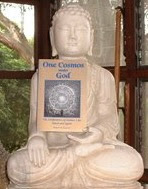
Oh well, what’s credibility for if you can’t spend it on something extravagant? Nobody's going to read this anyway. There's no traffic on the Saturday after Thanksgiving.
I’m still contending with this annoying “dead brain” phase that started exactly two weeks ago. It happens a few times a year and always involves other strange symptoms that can feel as if my entire nervous system is being unplugged and rewired, which I do not rule out. Hot, cold, muscle spasms, torrents of energy in different regions of the body, noises, fatigue alternating with energy, headaches, little “micro-moods” of various kinds that can last for seconds at a time. And sometimes there’s a sensation as if all the thoughts have been sucked out of my head, leaving just sort of a vibrating “absent presence.” I hate when that happens...
The energy is unstable and moves around from place to place -- now in my low back, now in my head, now in my neck, now in my hands or legs. Not only that, but -- I don’t mean to sound wacko here -- but so long as I can just sit quietly with it, the unpleasant sensations can become pleasant, even blissful. That happened last night as I lay down to sleep. Instead of falling asleep in under three minutes, as I usually do, there was a blissful, burning sensation in my low back, accompanied by a pleasantly alert and energized state of consciousness. Go figure.
This has been going on for, I don’t know, 30 years, although looking back on it, it’s possible that it was there during childhood as well. It often comes on like a switch, and then disappears just as mysteriously. Naturally I considered a medical explanation, but that has been a completely dry well -- don't even ask. I’ve also carefully considered a psychiatric one, but it just doesn’t correspond with anything found in the DSM, such as a somatization or bipolar disorder. For one thing, there’s nothing remotely close to loss of judgment or reality testing (at least until I published this post). It’s as if it’s an internal, parallel process that I am able to observe. In fact, if one thing has changed over the years, it is that I am more able to detach from it and not react to it -- just let it run its course, so to speak.
I know of at least one other reader who deals with the identical phenomena, and we both chanced upon a website that describes it to a “t.” As you know, I don’t normally go in for anything vaguely new-agey, and my psychological training makes me very skeptical of what are often attempts to normalize frank psychopathology. I mean, if a patient came to me with my symptoms, I’d first want to rule out a number of things before I began considering spiritual explanations.
I suppose one reason I’m writing about this against my better judgment is that I am sure there must be more than one of you out there who have had this experience. After all, if you have any familiarity with spiritual literature, these experiences are extremely common -- they're only described everywhere. I’ve read any number of them; for example, I remember in Krishnamurti’s biography (or possibly hagiography) there is a particularly vivid account of his struggles with these symptoms. (By the way, I do not want to imply that having the symptoms necessarily makes you “special” or enlightened, or that not having them implies the reverse.)
In an interesting synchroncity, the man who turned out to be my literary agent, John White, published a standard work in the field many years ago, entitled Kundalini, Evolution and Enlightenment. I must have purchased my copy in the early 1980’s, and I am now holding my dog-eared copy before me. It pretty much covers the weirderfront, with around forty chapters ranging from “Signs of Awakened Kundalini” to “Neurochemistry and the Awakening of Kundalini” to “Christian Mysticism and Kundalini.” There are personal accounts, medical theories, traditional explanations, and a chapter by no less an authority than the Big Kehuna Wilber, “Are the Chakras Real?”
Hmm, good question. I’ll just flip ahead to the last paragraph of the chapter. Ken says, “the chakras do appear to exist, and the chakras are knots.... Kundalini theory, with its penetrating understanding of these shadowy knots themselves, offers sound, wise, and powerful advice on how to see through them, so that one may finally awaken, as if from a dream, to discover that the cosmos is one’s body...” Hey, sounds good to me... Are we there yet?
As if my credibility were not damaged enough, the website I mentioned above is dedicated to the work of a person with the unlikely name of El Collie. It includes a list of typical Signs and Symptoms of Kundalini Awakening. Let’s keep an open mind and just peruse a few items on the list:
• Muscle twitches, cramps or spasms (check)
• Energy rushes or immense electricity circulating the body (check)
• Itching, vibrating, prickling, tingling, stinging or crawling sensations (check)
• Intense heat or cold (not exactly intense, but yes; a couple of episodes back, however, the cold sensations were intense -- I was freezing, when normally I am quite warm blooded)
• Alterations in eating and sleeping patterns (check)
• Episodes of extreme hyperactivity or, conversely, overwhelming fatigue (more of the latter -- no hyperactivity, but short episodes of depletion)
• Headaches, pressures within the skull (check, but generally mild and transient)
• Racing heartbeat, pains in the chest (check -- by the way, I’ve had a thorough cardiac work-up, including a CT scan and nuclear treadmill, not to mention very complete bloodwork, including thyroid)
• Digestive system problems (mild -- worse last time)
• Pains and blockages anywhere; often in the back and neck (check -- these blockages are quite fluid, changing from place to place, and can sometimes become pleasurable; I can actually move them in meditation)
• Emotional outbursts; rapid mood shifts; (no to the former but yes to the latter -- however, as I said, they’re rather short and mild, like a wind stirring up and blowing by; and it's as if they're sort of "parallel" to my predominant mood, which is actually rather cheerful)
• Hearing an inner sound or sounds, classically described as a flute, drum, waterfall, birds singing, bees buzzing but which may also sound like roaring, whooshing, or thunderous noises or like ringing in the ears (check -- occasional whooshing and ringing)
• Mental confusion; difficulty concentrating (just the latter)
• Altered states of consciousness: heightened awareness; spontaneous trance states; mystical experiences (not so much at present, but the last time, yes)
• Heat, strange activity, and/or blissful sensations in the head, particularly in the crown area (check)
• Ecstasy, bliss and intervals of tremendous joy, love, peace and compassion (again, more the last time)
• Exquisite awareness of one's environment (yes, there definitely seems to be a sensitivity to certain human environments)
Well, that’s it, I guess. Like I said, I am particularly interested in anyone else who would care to share their “K stories.” Feel free to post anonymously.
Hey, don’t make it look like I’m the only one!
Please?
Saturday, November 25, 2006


Friday, November 24, 2006
Thoughtsgiven Laughedovers
Ever since I started blogging, out of necessity I’ve been very diligent, in a chaotic sort of way, about keeping track of any wisp of a hint of an idea for an idea that might eventually form the basis of the kernel of a post. In the past I would just catch and release these thoughtlets, but now I have to make sure I reel in at least one big browser trout a day, whatever that means.
I have notebooks and scraps of paper everywhere. In fact, I even have things written on the walls of my office at home, as Dilys knows. Today I’m going to rifle through them and empty out my “down box.”
I’ve got a big stack right here in front of me. I’ll just start at the top and go from there. (Why do I feel like Andy Rooney doing a piece on junk mail?)
Let’s see. A couple of possibly direct quotes from Schuon, “God does not give the gift of intelligence only to require you to admit what is contrary to it,” and “if everyone were capable of understanding metaphysics, there would be no atheists.”
Ah, here is a very subtle point by Schuon, which, if you can grasp it, does indeed prove the metaphysical necessity of God: “An indefinitely augmentable beauty is meaningless and empties the very idea of beauty of its content.” In short, if there is no hierarchy that is conditioned from the top down, there is no beauty, and if beauty exists, there is a hierarchy conditioned from the top down. We can discern relative degrees of perfection only in light of the Absolute. In this way, the relative world proves the Absolute, otherwise we would truly live in a meaningless, arbitrary, and indistinguishible mass of flatland nothingness, like the university.
Another good quote: “The man who is integrally mature always keeps in equilibrium with wisdom the qualities of simplicity and freshness, gratitude and trust, that he possessed in the springtime of his life.”
Questions for Petey: “How is it that we are not trapped within our own nervous system?,” and “How is it that the cosmos continually surpasses itself?” Nah, too obvious.
Here’s a note to myself: “In any field above the level of the hard sciences, there is a huge difference between received knowledge and realized knowledge, so much so that to treat realized knowledge as if it can be received knowledge is to convert it to a lie and render it sterile, as do both atheists and false teachers.... One cannot replace concrete experience with abstract, secondary theory, without inhabiting a false and reified version of reality.”
But “this is what intellectuals habitually do -- i.e., live in their abstractions, and there is no theory more abstract than atheism, for it entirely superimposes a sterile dogma over the mystery of being. While this ground is a mystery, it is not an absurdity because it is infused with the very same logos that illuminates the mind and allows us to comprehend it. We see beauty or know truth because both are logos calling out to logos.”
Likewise, we may know God because God, who is infinitely distant from us, at the same time radiates to the perimeter of creation, where the breath of Spirit whispers to the divine spark hidden in the depths of our heart. This divine spark is far too beautiful to be untrue.
As you age, you have more time, not less -- the fullness of time, the wealth of time, the dense interconnectedness of time that the young cannot see. They have only duration. Spiritual growth converts duration to time and time to eternity, and then pours eternity back into duration. You're again like a child, only knowing the place for the first time.
Here are some notes taken while reading Richard Weaver’s Ideas Have Consequences. Sort of sums up the book: “Without imagination the world is simply a brute fact -- there is nothing to spiritualize it. In the flight from the center to the periphery, one becomes lost in details which cannot be understood. Fragmentation leads to obsession with parts. Downward pull that puts an end to ideational life. Specialization leads to deformity. World shrinks. As compensation, modern man is puffed up with vanity of being able to describe some minute portion of the world. Modernism is provincialism.”
More notes on Weaver: “Truth is an antecedent reality perceived by the intellect and not the senses. Denying universals denies everything transcending experience, therefore denial of truth and acceptance of relativism. Immersion in matter makes man unfit to deal with the problems of matter. Facts are substituted for truth, but there is no knowledge at the level of sensation. Facts do not speak for themselves and experience cannot tell us what we are experiencing. The world is our primary datum, but we do not end our days with a wealth of sense impressions.”
“The problem with this generation is that it has not read the minutes of the last meeting” (Weaver, anticipating dailykos).
“How can men who disagree on what the world is for agree on the minutiae of daily conduct?” (Weaver).
Egalitarianism creates a tyrannical flatland in which the same law applies to the ox and the lion, and is therefore a disorganizing concept which assures injustice.
The separation of knowledge from religion is the separation of facts and knowledge from metaphysics.
An ontological reality called integration must precede the human personality, just as wholeness must be anterior to natural selection.
Man’s real freedom is in the dimension of height and depth.
Like a neurotic patient, history acts out what it cannot remember.
Ever since language began colonizing the brain, it has been an unending task to synthesize all those bits into a coherent self.
Liberals are always rushing to non-judgment.
Life is to matter as mind is to brain as God is to existence.
Getting paid for doing what you like is like finding a self-replicating dollar bill.
When language is unhinged from reality, evolution is as static as a dog’s bark. This explains Ted Kennedy.
Culture is personal error squared.
If you’re not eccentric, you’re probably not living your individuality, which is to say, living.
You can substantially increase your freedom if you only stop endowing things with the spurious attractiveness needed to make pursuing them worth the trouble. Few things are worth doing as well as they can be done.
Spiritual practice is arranging your own birth.
We must always have at least a few people to live at the edge of sanctioned reality and keep an eye on eternity. I wish my in-laws would understand this.
Science reduces the world to a coherent absurdity, psychosis to an incoherent absurdity, myth to an incoherent non-absurdity, metaphysics to a coherent non-absurdity.
Higher realties do not stand out except to those who stand in them.
Mystepistemology: the study of how one may obtain reliable unknowing.
Factsimian: a human who reduces truth to fact and therefore sinks beneath his humanness.
Absolute victimhood corrupts absolutely. The left creates gold-plated victims in order to make their unpalatable ideas immune from argument.
For thousands of years mankind was lost in the circle only to become lost in the line. Religion is here to show us the spiral.
Discovering the true self behind the ego is a de-mask-us experience.
Let's face it, if you don't awaken to your higher self, that old saying is true: life is a Nancy Pelosi and then you die.
*****
That felt good. Nothing like an empty desk to feel unburdened. Or as Lao Tsu said to Andy Rooney,
Empty yourself of everything.
Let the mind rest at peace....
In the pursuit of learning, every day something is acquired.
In the pursuit of Tao, every day something is dropped.
I have notebooks and scraps of paper everywhere. In fact, I even have things written on the walls of my office at home, as Dilys knows. Today I’m going to rifle through them and empty out my “down box.”
I’ve got a big stack right here in front of me. I’ll just start at the top and go from there. (Why do I feel like Andy Rooney doing a piece on junk mail?)
Let’s see. A couple of possibly direct quotes from Schuon, “God does not give the gift of intelligence only to require you to admit what is contrary to it,” and “if everyone were capable of understanding metaphysics, there would be no atheists.”
Ah, here is a very subtle point by Schuon, which, if you can grasp it, does indeed prove the metaphysical necessity of God: “An indefinitely augmentable beauty is meaningless and empties the very idea of beauty of its content.” In short, if there is no hierarchy that is conditioned from the top down, there is no beauty, and if beauty exists, there is a hierarchy conditioned from the top down. We can discern relative degrees of perfection only in light of the Absolute. In this way, the relative world proves the Absolute, otherwise we would truly live in a meaningless, arbitrary, and indistinguishible mass of flatland nothingness, like the university.
Another good quote: “The man who is integrally mature always keeps in equilibrium with wisdom the qualities of simplicity and freshness, gratitude and trust, that he possessed in the springtime of his life.”
Questions for Petey: “How is it that we are not trapped within our own nervous system?,” and “How is it that the cosmos continually surpasses itself?” Nah, too obvious.
Here’s a note to myself: “In any field above the level of the hard sciences, there is a huge difference between received knowledge and realized knowledge, so much so that to treat realized knowledge as if it can be received knowledge is to convert it to a lie and render it sterile, as do both atheists and false teachers.... One cannot replace concrete experience with abstract, secondary theory, without inhabiting a false and reified version of reality.”
But “this is what intellectuals habitually do -- i.e., live in their abstractions, and there is no theory more abstract than atheism, for it entirely superimposes a sterile dogma over the mystery of being. While this ground is a mystery, it is not an absurdity because it is infused with the very same logos that illuminates the mind and allows us to comprehend it. We see beauty or know truth because both are logos calling out to logos.”
Likewise, we may know God because God, who is infinitely distant from us, at the same time radiates to the perimeter of creation, where the breath of Spirit whispers to the divine spark hidden in the depths of our heart. This divine spark is far too beautiful to be untrue.
As you age, you have more time, not less -- the fullness of time, the wealth of time, the dense interconnectedness of time that the young cannot see. They have only duration. Spiritual growth converts duration to time and time to eternity, and then pours eternity back into duration. You're again like a child, only knowing the place for the first time.
Here are some notes taken while reading Richard Weaver’s Ideas Have Consequences. Sort of sums up the book: “Without imagination the world is simply a brute fact -- there is nothing to spiritualize it. In the flight from the center to the periphery, one becomes lost in details which cannot be understood. Fragmentation leads to obsession with parts. Downward pull that puts an end to ideational life. Specialization leads to deformity. World shrinks. As compensation, modern man is puffed up with vanity of being able to describe some minute portion of the world. Modernism is provincialism.”
More notes on Weaver: “Truth is an antecedent reality perceived by the intellect and not the senses. Denying universals denies everything transcending experience, therefore denial of truth and acceptance of relativism. Immersion in matter makes man unfit to deal with the problems of matter. Facts are substituted for truth, but there is no knowledge at the level of sensation. Facts do not speak for themselves and experience cannot tell us what we are experiencing. The world is our primary datum, but we do not end our days with a wealth of sense impressions.”
“The problem with this generation is that it has not read the minutes of the last meeting” (Weaver, anticipating dailykos).
“How can men who disagree on what the world is for agree on the minutiae of daily conduct?” (Weaver).
Egalitarianism creates a tyrannical flatland in which the same law applies to the ox and the lion, and is therefore a disorganizing concept which assures injustice.
The separation of knowledge from religion is the separation of facts and knowledge from metaphysics.
An ontological reality called integration must precede the human personality, just as wholeness must be anterior to natural selection.
Man’s real freedom is in the dimension of height and depth.
Like a neurotic patient, history acts out what it cannot remember.
Ever since language began colonizing the brain, it has been an unending task to synthesize all those bits into a coherent self.
Liberals are always rushing to non-judgment.
Life is to matter as mind is to brain as God is to existence.
Getting paid for doing what you like is like finding a self-replicating dollar bill.
When language is unhinged from reality, evolution is as static as a dog’s bark. This explains Ted Kennedy.
Culture is personal error squared.
If you’re not eccentric, you’re probably not living your individuality, which is to say, living.
You can substantially increase your freedom if you only stop endowing things with the spurious attractiveness needed to make pursuing them worth the trouble. Few things are worth doing as well as they can be done.
Spiritual practice is arranging your own birth.
We must always have at least a few people to live at the edge of sanctioned reality and keep an eye on eternity. I wish my in-laws would understand this.
Science reduces the world to a coherent absurdity, psychosis to an incoherent absurdity, myth to an incoherent non-absurdity, metaphysics to a coherent non-absurdity.
Higher realties do not stand out except to those who stand in them.
Mystepistemology: the study of how one may obtain reliable unknowing.
Factsimian: a human who reduces truth to fact and therefore sinks beneath his humanness.
Absolute victimhood corrupts absolutely. The left creates gold-plated victims in order to make their unpalatable ideas immune from argument.
For thousands of years mankind was lost in the circle only to become lost in the line. Religion is here to show us the spiral.
Discovering the true self behind the ego is a de-mask-us experience.
Let's face it, if you don't awaken to your higher self, that old saying is true: life is a Nancy Pelosi and then you die.
*****
That felt good. Nothing like an empty desk to feel unburdened. Or as Lao Tsu said to Andy Rooney,
Empty yourself of everything.
Let the mind rest at peace....
In the pursuit of learning, every day something is acquired.
In the pursuit of Tao, every day something is dropped.
Wednesday, November 22, 2006
The Ego and the Substance of Nothingness
One of the challenges in discussing “the ego” is that everyone means something different by the word, which makes unambiguous communication difficult. And yet, precise definition is elusive, as is true of most things above the material plane. How does one exactly describe something which is by definition subjective anyway? As I mentioned last week, the philosopher of science Stanley Jaki said that words are like clouds, in that from a distance they look as though they have sharply defined edges. But the closer you get to them, the more they lose their edges and become indistinguishable from fog.
This is one of the reasons why intellectuals are more often than not confused people -- not just intellectually confused but morally confused. They are lost in the fog of speech. No place in America, for example, is more anti-Semitic and secular than the university. You might think that the two are separate issues, but they clearly aren’t. A religious person is much more likely to be able to recognize good and evil when they are staring him in the face.
Today Dr. Sanity links to a piece that touches on this obligatory anti-Semitism among the educated elites of Europe. The author writes that “At a dinner after my lecture, a professor remarked, as if it were a generally accepted platitude: ‘Of course, the only terrorist state in the Middle East is Israel.’ Nobody contradicted him. The delegitimization of Israel in the British academic world has become one aspect of a new and more powerful wave of outright anti-Semitism....”
Yesterday I heard a wonderful interview with the historian Niall Ferguson on the Dennis Prager show, regarding his new book The War of the World: Twentieth-Century Conflict and the Descent of the West. I haven’t read the book, but it sounds quite good. It seeks to answer the question, “why, if life was improving so rapidly for so many people at the dawn of the 20th century, were the next hundred years full of brutal conflict?” Why, for example, was Germany, of all places, at the vortex of this unprecedented storm of human evil? After all, by 1900, they were without a doubt the best educated and most culturally sophisticated people on earth.
Now, among other things, I am not historian. That’s just one of the many things I had to pretend to be -- others including physicist, biologist, anthropologist, and theologian -- in order to write my book. Many of my ideas would undoubtedly offend the rank and file historian, so it was extremely refreshing to hear an eminent historian agree with some of the broad historical outlines in my book.
For example, you will often hear professional historians such as Elton John make the demonstrably false assertion that religion is responsible for more death and destruction than any other force in history, when the opposite is true: in the twentieth century, some 200 million people died as a result of wholly secular, atheistic, and anti-religious ideologies. This figure dwarfs the number killed in religious wars, both in absolute and relative terms, as a percentage of the population. In fact, Ferguson agreed with another one of my conclusions -- that one must go all the way back to man in his pre-civilized state to see murder rates this high. (This was another controversial assertion in my book -- that human beings in their natural state were hardly innocent “noble savages,” but homicidal maniacs from the outset: Homo psychosus, as it were.)
It is no wonder that in Genesis 6:6, God expresses sorrow that he created human beings, to such an extent that he “grieved in his heart”: the world “was corrupt before God, and the earth was filled with violence.” Here is a fine example of how much more wisdom there is in a single line from the Bible than there is in entire anthropology departments of elite universities. God is not a multiculturalist. He despises almost almost all of them.
Amazingly, Ferguson -- who teaches at Harvard -- said that the taxi driver transporting him to the airport was likely to possess more wisdom than the entire Harvard history faculty. (He must have realized he was safe in making this assertion, as no elite leftist historian would ever stoop so low as to actually listen to talk radio.) Ferguson also highlighted the truism that -- then as now -- it was religiously committed people who were far more likely to recognize and fight the evil in the world. In the 20th century the great evils came from secular and atheistic ideologies, but this century the greatest threat comes from a “religious” source, Islamism. But even that’s not quite accurate, because Islamism is specifically a weird blend of Islam, Marxism and fascism. Furthermore, it is greatly enabled by secularists all over the world, from the sophisticated elites of Europe to the idiotorial pages of the New York Times (which was awarded a Pulitzer Prize for its helpful propaganda on behalf of Stalin; at some point along the line they will undoubtedly be awarded another for their invaluable assistance to the current enemies of civilization).
“Yes Bob, but what does this have to do with the ego?” I’m getting there. Every religion, properly understood, has precisely to do with the “extinction” of what we are calling the ego, and it’s replacement with another center of consciousness. In my book, in order to avoid the linguistic confusion alluded to above, I simply employed the “empty symbols” of (•••) for the ego and (¶) for this other being that is “behind” or “above” (•••). (By the way, the multiple dots stand for unintegrated mind parasites; the (¶) is inherently unified [relatively speaking], as it is the otherwise inexplicably unified part of us that mirrors the divine unity -- “as above, so below.”)
So, if I were your spiritual teacher -- which I am not, but that’s another one of those things I had to pretend to be in order to write the damn book -- I would tell you this: yes, the “ego” of which various traditions speak does exist, but it is for you to discover it and understand its nature. And yes, this other entity -- the (¶) -- most definitely exists, but in the latter case, it is even more critical that you discover and “become” it. A religious practice can provide you with the means to discover it, but it cannot simply give it to you. Or, to be perfectly accurate, there will probably come a time (or two or three) in your life that it will be spontaneously given to you by something called “grace,” another word that requires an empty pneumaticon so that we don’t pretend to know what it is. [In my book I used the downward arrow symbol for this gratuitous “cause,” and the symbol (?!) for its startling effect on (•••).]
Now, after the conclusion of the Ferguson interview, I began brooding on the mysteries of language. It was a long drive, and I had about another hour to kill or give birth to, so I opted for the latter. It occurred to me that it is not a Big Mystery that clever human primates are able to use mouth noises to stand for for things. To a certain extent, many animals can do this. For example, my nineteen month old can howl like a coyote and respond to his missing mates prowling the hills around my neighborhood.
But the much more mysterious property of human language is that it is not just able to convey symbols but to convey the substance of thought. No, even more, it is able to transmit the substance of being from one being to another.
Example?
Take, for example, a comedic genius, a Richard Pryor, a Groucho Marx, a Jackie Gleason -- even a Howard Stern (a pox on his merely profane imitators). Have you ever noticed that they don’t actually have to make an explicit joke in order to be funny? Rather, when they speak, their language somehow conveys the “substance” of comedy -- a very real and palpable substance that inferior comedians cannot transmit. For example, you will notice that Al Franken thinks he is one of the people who can do this, when he manifestly cannot. Which is why he evokes wincing, not laughter. Jack Benny he is not.
It is the same with music. Technical proficiency has nothing to do with the ability to convey the substance of music. Not only that, but perhaps you may have noticed that when a great musician speaks, they even convey music in their speech -- as if they cannot help being musical.
Naturally, the same holds true of intelligence. There are many people who, no matter how educated, cannot convey the substance of intelligence in their words. And there are other people who can speak very simply, and yet, their words make intelligence palpably present.
And of course, it is exactly so with spirituality. The key in writing about spirit is to convey its reality directly from being to being -- language must not just symbolize it, but partake of its rhythms and proportions.
Now, one of the most mysterious and inexplicable things Jesus ever said -- at the time, it would have been dismissed as “insane” -- was that some day his message would be known and taught throughout the world.
What? Why? An anonymous peasant who never wrote down a word of his teaching, ignominiously put to death as a common criminal? And yet, the bizarre prediction came true. Not only that, but these words will still be remembered and spoken long after the words of most any living academic.
What we call genuine scripture or “revelation” is language that conveys the substance of spirit. These words endure because they embody timeless truths that we are not only able to “understand,” but to “make present.” But not with the ego.
To be continued.
*****
The Substance of Joy. Hey, it's the reason why we keep him around, because he can also be the Substance of Annoyance.

Yes, cows are known to break dance when they are particularly overjoyed.

This is one of the reasons why intellectuals are more often than not confused people -- not just intellectually confused but morally confused. They are lost in the fog of speech. No place in America, for example, is more anti-Semitic and secular than the university. You might think that the two are separate issues, but they clearly aren’t. A religious person is much more likely to be able to recognize good and evil when they are staring him in the face.
Today Dr. Sanity links to a piece that touches on this obligatory anti-Semitism among the educated elites of Europe. The author writes that “At a dinner after my lecture, a professor remarked, as if it were a generally accepted platitude: ‘Of course, the only terrorist state in the Middle East is Israel.’ Nobody contradicted him. The delegitimization of Israel in the British academic world has become one aspect of a new and more powerful wave of outright anti-Semitism....”
Yesterday I heard a wonderful interview with the historian Niall Ferguson on the Dennis Prager show, regarding his new book The War of the World: Twentieth-Century Conflict and the Descent of the West. I haven’t read the book, but it sounds quite good. It seeks to answer the question, “why, if life was improving so rapidly for so many people at the dawn of the 20th century, were the next hundred years full of brutal conflict?” Why, for example, was Germany, of all places, at the vortex of this unprecedented storm of human evil? After all, by 1900, they were without a doubt the best educated and most culturally sophisticated people on earth.
Now, among other things, I am not historian. That’s just one of the many things I had to pretend to be -- others including physicist, biologist, anthropologist, and theologian -- in order to write my book. Many of my ideas would undoubtedly offend the rank and file historian, so it was extremely refreshing to hear an eminent historian agree with some of the broad historical outlines in my book.
For example, you will often hear professional historians such as Elton John make the demonstrably false assertion that religion is responsible for more death and destruction than any other force in history, when the opposite is true: in the twentieth century, some 200 million people died as a result of wholly secular, atheistic, and anti-religious ideologies. This figure dwarfs the number killed in religious wars, both in absolute and relative terms, as a percentage of the population. In fact, Ferguson agreed with another one of my conclusions -- that one must go all the way back to man in his pre-civilized state to see murder rates this high. (This was another controversial assertion in my book -- that human beings in their natural state were hardly innocent “noble savages,” but homicidal maniacs from the outset: Homo psychosus, as it were.)
It is no wonder that in Genesis 6:6, God expresses sorrow that he created human beings, to such an extent that he “grieved in his heart”: the world “was corrupt before God, and the earth was filled with violence.” Here is a fine example of how much more wisdom there is in a single line from the Bible than there is in entire anthropology departments of elite universities. God is not a multiculturalist. He despises almost almost all of them.
Amazingly, Ferguson -- who teaches at Harvard -- said that the taxi driver transporting him to the airport was likely to possess more wisdom than the entire Harvard history faculty. (He must have realized he was safe in making this assertion, as no elite leftist historian would ever stoop so low as to actually listen to talk radio.) Ferguson also highlighted the truism that -- then as now -- it was religiously committed people who were far more likely to recognize and fight the evil in the world. In the 20th century the great evils came from secular and atheistic ideologies, but this century the greatest threat comes from a “religious” source, Islamism. But even that’s not quite accurate, because Islamism is specifically a weird blend of Islam, Marxism and fascism. Furthermore, it is greatly enabled by secularists all over the world, from the sophisticated elites of Europe to the idiotorial pages of the New York Times (which was awarded a Pulitzer Prize for its helpful propaganda on behalf of Stalin; at some point along the line they will undoubtedly be awarded another for their invaluable assistance to the current enemies of civilization).
“Yes Bob, but what does this have to do with the ego?” I’m getting there. Every religion, properly understood, has precisely to do with the “extinction” of what we are calling the ego, and it’s replacement with another center of consciousness. In my book, in order to avoid the linguistic confusion alluded to above, I simply employed the “empty symbols” of (•••) for the ego and (¶) for this other being that is “behind” or “above” (•••). (By the way, the multiple dots stand for unintegrated mind parasites; the (¶) is inherently unified [relatively speaking], as it is the otherwise inexplicably unified part of us that mirrors the divine unity -- “as above, so below.”)
So, if I were your spiritual teacher -- which I am not, but that’s another one of those things I had to pretend to be in order to write the damn book -- I would tell you this: yes, the “ego” of which various traditions speak does exist, but it is for you to discover it and understand its nature. And yes, this other entity -- the (¶) -- most definitely exists, but in the latter case, it is even more critical that you discover and “become” it. A religious practice can provide you with the means to discover it, but it cannot simply give it to you. Or, to be perfectly accurate, there will probably come a time (or two or three) in your life that it will be spontaneously given to you by something called “grace,” another word that requires an empty pneumaticon so that we don’t pretend to know what it is. [In my book I used the downward arrow symbol for this gratuitous “cause,” and the symbol (?!) for its startling effect on (•••).]
Now, after the conclusion of the Ferguson interview, I began brooding on the mysteries of language. It was a long drive, and I had about another hour to kill or give birth to, so I opted for the latter. It occurred to me that it is not a Big Mystery that clever human primates are able to use mouth noises to stand for for things. To a certain extent, many animals can do this. For example, my nineteen month old can howl like a coyote and respond to his missing mates prowling the hills around my neighborhood.
But the much more mysterious property of human language is that it is not just able to convey symbols but to convey the substance of thought. No, even more, it is able to transmit the substance of being from one being to another.
Example?
Take, for example, a comedic genius, a Richard Pryor, a Groucho Marx, a Jackie Gleason -- even a Howard Stern (a pox on his merely profane imitators). Have you ever noticed that they don’t actually have to make an explicit joke in order to be funny? Rather, when they speak, their language somehow conveys the “substance” of comedy -- a very real and palpable substance that inferior comedians cannot transmit. For example, you will notice that Al Franken thinks he is one of the people who can do this, when he manifestly cannot. Which is why he evokes wincing, not laughter. Jack Benny he is not.
It is the same with music. Technical proficiency has nothing to do with the ability to convey the substance of music. Not only that, but perhaps you may have noticed that when a great musician speaks, they even convey music in their speech -- as if they cannot help being musical.
Naturally, the same holds true of intelligence. There are many people who, no matter how educated, cannot convey the substance of intelligence in their words. And there are other people who can speak very simply, and yet, their words make intelligence palpably present.
And of course, it is exactly so with spirituality. The key in writing about spirit is to convey its reality directly from being to being -- language must not just symbolize it, but partake of its rhythms and proportions.
Now, one of the most mysterious and inexplicable things Jesus ever said -- at the time, it would have been dismissed as “insane” -- was that some day his message would be known and taught throughout the world.
What? Why? An anonymous peasant who never wrote down a word of his teaching, ignominiously put to death as a common criminal? And yet, the bizarre prediction came true. Not only that, but these words will still be remembered and spoken long after the words of most any living academic.
What we call genuine scripture or “revelation” is language that conveys the substance of spirit. These words endure because they embody timeless truths that we are not only able to “understand,” but to “make present.” But not with the ego.
To be continued.
*****
The Substance of Joy. Hey, it's the reason why we keep him around, because he can also be the Substance of Annoyance.

Yes, cows are known to break dance when they are particularly overjoyed.

Tuesday, November 21, 2006
A Fool and His Ego are Soon Parted
Continuing with the musical question of Ego! What is it good for? Absolutely nothing!, I need to correct a misapprehension right at the outset. In response to yesterday’s post, George wrote, “I suspect that I may have an ego dysfunction; in my music and writing I am constantly aware that a part of me is hoping that I achieve some renown and riches from my efforts. Another part of me looks at that hope with a bit of disdain, knowing that the song or story should be given as a gift. Even the disdainful part is wistfully aware that it wants at least a taste of glory. And, all parts of me crave an audience.”
None of these things are pathological per se, and certainly not as they pertain to the ego as such. There is nothing wrong with achieving success or renown, so long as one keeps perspective and puts everything in its proper place. And much depends on caste and temperament. There is a form of yoga proper to each person, yoga being the most generic and universal description of the various paths of ego transcendence.
In fact, where I part company with certain spiritual schools is precisely over this question of the ego. I am sure this results from my psychoanalytic training, which appreciates just how much of an accomplishment it is to develop a healthy ego. For Freud, the goal of psychoanalysis was quite modest; on one occasion he said words to the effect that it was to convert intense suffering to garden variety unhappiness. In a less cynical mood, he said that it was to develop the capacity to work, love and play -- which is to say, cultivate productivity, creativity, and deep and satisfying relationships. None of these things should be minimized. They aren’t chopped liver.
Speaking of chopped liver, one of the beautiful things about Judaism is that it systematically elevates all of these activities to the center of spiritual life. It is a very “worldly” religion, but at the same time, it specifically attempts to illuminate this world with the light of another -- to see the sanctity in everyday living. There is no monastic tradition in Judaism, no attempt to escape, even vertically. Rather, the task is to create a life in which vertical energies descend into the day-to-day activities of this world, regardless of whether one is engaging in a business transaction, eating a meal, or raising a child. Everything becomes an occasion to vertically “re-member” the divine and therefore “forget” the ego.
In this sense, Judaism is very much a form of karma yoga (which is not to say that it doesn’t have its bhakti, hatha, raja, or jnana aspects as well, as all religions have each but tend to emphasize one; in passing, let it also be said that each religion can also become a shadow of its dominant mode, which is why, for example, Judaism can veer into legalism, or “bhakti” Christianity into a mindless and sentimental fideism, or “raja” Buddhism into an impractical escapism that sees the world only as illusion).
Mere ego transcendence without discernment will inevitably lead to foolishness. Remember, all religions evolved within traditional cultures, so one must be very cautious in isolating a particular spiritual idea from its overall context -- not just its scriptural context, but its culturally embodied context.
Let’s take the wrongheaded idea that the ego is the source of all our difficulties, something we must jettison entirely. It is one thing to do that in a supportive community of fellow spiritual seekers who are all "on the same page,” another thing entirely to indiscriminately apply it to the wider world. Doing so will lead to moral idiocy.
We see this, for example, in recent statements by the Dalai Lama that "There is a perception among the Western media that Islam is militant but that is not true,” that “All religions have the same potential for peace," and even that “The concept of war is outdated. Violence is unpredictable and it can go out of hand. Conflict situations should be resolved through negotiations.” This is the same sort of dangerous moral lunacy that was promulgated by Gandhi, and it is manifestly false. Not only that, but believing it would clearly lead to more evil in the world, not less.
But as I said, if you believe the world is simply “maya,” or an empty illusion, it should not be surprising that your moral categories are going to be a bit muddled, since morality specifically applies to this relative world that we inhabit. The Dalai Lama is undoubtedly correct in affirming that the concept of war is outdated in the land of samadhi, but it takes a lot of nirvana to say that this world would be a better place if we would simply negotiate with Islamists, nazis, or other implacably evil monsters of depravity.
If the Dalai Lama were a manava his word, he would have stayed in Tibet and negotiated with Mao. Yes, Mao was the most evil man who ever lived, having been responsible for the murder of some 70 million human beings. But hey, conflict situations should be resolved through negotiations, not by safely jet-setting around in countries that believe evil is real and must be confronted.
Do you see the problem? Frithjof Schuon wrote that “The reduction of the devil to the ego amounts in practice to the devil’s abolition…. The door then stands open to a puerile optimism, which is all the more dangerous in that it is mingled unsuspectingly with progressivist optimism.… Moreover a too exclusive -- and in any case inconsistent -- ‘satanization’ of the ego entails a too simplistic ‘divinization’ of the ‘other,’ which means that replacing the devil by the ego goes hand in hand with replacing God by the ‘neighbor,’ whence an ‘altruism’ that appears as an end in itself and thus loses all contact with metaphysical truth, and so with genuine spirituality.”
Is this not self-evident, both in theory and in practice? It is not only a certain type of Buddhist who is susceptible to this kind of moral foolishness. Obviously it can also afflict Christians who take this or that statement by Jesus out of context in order to support the deeply immoral idea of pacifism. In reality, there is no right superior to truth. Therefore, if your morality is not grounded in truth, it will cease to be moral despite your good intentions.
This, of course, is precisely what is wrong with all forms of leftist “do-gooderism,” and why their ideas do not work in practice. To be perfectly accurate, like the Dalai Lama’s ideas, they will work, but only in paradise -- as will Mao’s ideas. But if you willfully confuse the herebelow with paradise, a lot of people are going to be hurt and killed. And you won’t get paradise anyway.
As Schuon explains, if brotherly love becomes the highest ideal, the distinction between truth and error is attenuted if not obliterated. Since the ego is considered “error” per se, “there is then nothing wrong with believing two and two make five, provided one ‘does good’ or ‘renders service.’” This amounts to an escape from ego “from below” instead of above, since it is not possible to simultaneously transcend the ego and “abide in error,” as it were.
“From here,” as Schuon explains, “it is but a step to acceptance of the Antichrist out of humility or charity, even for the sake of being ‘nice.’” While these lovers of mankind are technically correct in appreciating the dangers of intellectual pride, it is another thing altogether to try to transcend intelligence along with the ego.
Doing so merely replaces one kind of pride with another. The other day, ShrinkWrapped had an excellent post on what amounts to the “pride of pacifism” or the selfishness at the heart of selflessness. You should read the whole thing, but the gist, for our purposes, is the idea that there is no one so proud and narcissistic as the pacifist who demonizes the war or President Bush as a means to morally elevate himself, thus spuriously converting cowardice to courage.
You will notice how incoherent this becomes. The Vietnam war, for example, was supposedly a terrible, immoral thing. And yet, because of it, we have “great” war heroes like Jons Carry or Murtha who can instruct us on the ways of war. Somewhere in their hearts, these people must believe that great good came from great evil, since they believe that no one who hasn’t fought in an even immoral war is morally qualified to either lead or avoid war. This means that if we follow the pacifist and eliminate all war, we will eventually have no one qualified to either fight or capitulate. But we needn’t worry. As we speak, there is someone fighting in Iraq who, twenty or thirty years hence, will be morally qualified to make cowards feel courageous.
To be continued....
None of these things are pathological per se, and certainly not as they pertain to the ego as such. There is nothing wrong with achieving success or renown, so long as one keeps perspective and puts everything in its proper place. And much depends on caste and temperament. There is a form of yoga proper to each person, yoga being the most generic and universal description of the various paths of ego transcendence.
In fact, where I part company with certain spiritual schools is precisely over this question of the ego. I am sure this results from my psychoanalytic training, which appreciates just how much of an accomplishment it is to develop a healthy ego. For Freud, the goal of psychoanalysis was quite modest; on one occasion he said words to the effect that it was to convert intense suffering to garden variety unhappiness. In a less cynical mood, he said that it was to develop the capacity to work, love and play -- which is to say, cultivate productivity, creativity, and deep and satisfying relationships. None of these things should be minimized. They aren’t chopped liver.
Speaking of chopped liver, one of the beautiful things about Judaism is that it systematically elevates all of these activities to the center of spiritual life. It is a very “worldly” religion, but at the same time, it specifically attempts to illuminate this world with the light of another -- to see the sanctity in everyday living. There is no monastic tradition in Judaism, no attempt to escape, even vertically. Rather, the task is to create a life in which vertical energies descend into the day-to-day activities of this world, regardless of whether one is engaging in a business transaction, eating a meal, or raising a child. Everything becomes an occasion to vertically “re-member” the divine and therefore “forget” the ego.
In this sense, Judaism is very much a form of karma yoga (which is not to say that it doesn’t have its bhakti, hatha, raja, or jnana aspects as well, as all religions have each but tend to emphasize one; in passing, let it also be said that each religion can also become a shadow of its dominant mode, which is why, for example, Judaism can veer into legalism, or “bhakti” Christianity into a mindless and sentimental fideism, or “raja” Buddhism into an impractical escapism that sees the world only as illusion).
Mere ego transcendence without discernment will inevitably lead to foolishness. Remember, all religions evolved within traditional cultures, so one must be very cautious in isolating a particular spiritual idea from its overall context -- not just its scriptural context, but its culturally embodied context.
Let’s take the wrongheaded idea that the ego is the source of all our difficulties, something we must jettison entirely. It is one thing to do that in a supportive community of fellow spiritual seekers who are all "on the same page,” another thing entirely to indiscriminately apply it to the wider world. Doing so will lead to moral idiocy.
We see this, for example, in recent statements by the Dalai Lama that "There is a perception among the Western media that Islam is militant but that is not true,” that “All religions have the same potential for peace," and even that “The concept of war is outdated. Violence is unpredictable and it can go out of hand. Conflict situations should be resolved through negotiations.” This is the same sort of dangerous moral lunacy that was promulgated by Gandhi, and it is manifestly false. Not only that, but believing it would clearly lead to more evil in the world, not less.
But as I said, if you believe the world is simply “maya,” or an empty illusion, it should not be surprising that your moral categories are going to be a bit muddled, since morality specifically applies to this relative world that we inhabit. The Dalai Lama is undoubtedly correct in affirming that the concept of war is outdated in the land of samadhi, but it takes a lot of nirvana to say that this world would be a better place if we would simply negotiate with Islamists, nazis, or other implacably evil monsters of depravity.
If the Dalai Lama were a manava his word, he would have stayed in Tibet and negotiated with Mao. Yes, Mao was the most evil man who ever lived, having been responsible for the murder of some 70 million human beings. But hey, conflict situations should be resolved through negotiations, not by safely jet-setting around in countries that believe evil is real and must be confronted.
Do you see the problem? Frithjof Schuon wrote that “The reduction of the devil to the ego amounts in practice to the devil’s abolition…. The door then stands open to a puerile optimism, which is all the more dangerous in that it is mingled unsuspectingly with progressivist optimism.… Moreover a too exclusive -- and in any case inconsistent -- ‘satanization’ of the ego entails a too simplistic ‘divinization’ of the ‘other,’ which means that replacing the devil by the ego goes hand in hand with replacing God by the ‘neighbor,’ whence an ‘altruism’ that appears as an end in itself and thus loses all contact with metaphysical truth, and so with genuine spirituality.”
Is this not self-evident, both in theory and in practice? It is not only a certain type of Buddhist who is susceptible to this kind of moral foolishness. Obviously it can also afflict Christians who take this or that statement by Jesus out of context in order to support the deeply immoral idea of pacifism. In reality, there is no right superior to truth. Therefore, if your morality is not grounded in truth, it will cease to be moral despite your good intentions.
This, of course, is precisely what is wrong with all forms of leftist “do-gooderism,” and why their ideas do not work in practice. To be perfectly accurate, like the Dalai Lama’s ideas, they will work, but only in paradise -- as will Mao’s ideas. But if you willfully confuse the herebelow with paradise, a lot of people are going to be hurt and killed. And you won’t get paradise anyway.
As Schuon explains, if brotherly love becomes the highest ideal, the distinction between truth and error is attenuted if not obliterated. Since the ego is considered “error” per se, “there is then nothing wrong with believing two and two make five, provided one ‘does good’ or ‘renders service.’” This amounts to an escape from ego “from below” instead of above, since it is not possible to simultaneously transcend the ego and “abide in error,” as it were.
“From here,” as Schuon explains, “it is but a step to acceptance of the Antichrist out of humility or charity, even for the sake of being ‘nice.’” While these lovers of mankind are technically correct in appreciating the dangers of intellectual pride, it is another thing altogether to try to transcend intelligence along with the ego.
Doing so merely replaces one kind of pride with another. The other day, ShrinkWrapped had an excellent post on what amounts to the “pride of pacifism” or the selfishness at the heart of selflessness. You should read the whole thing, but the gist, for our purposes, is the idea that there is no one so proud and narcissistic as the pacifist who demonizes the war or President Bush as a means to morally elevate himself, thus spuriously converting cowardice to courage.
You will notice how incoherent this becomes. The Vietnam war, for example, was supposedly a terrible, immoral thing. And yet, because of it, we have “great” war heroes like Jons Carry or Murtha who can instruct us on the ways of war. Somewhere in their hearts, these people must believe that great good came from great evil, since they believe that no one who hasn’t fought in an even immoral war is morally qualified to either lead or avoid war. This means that if we follow the pacifist and eliminate all war, we will eventually have no one qualified to either fight or capitulate. But we needn’t worry. As we speak, there is someone fighting in Iraq who, twenty or thirty years hence, will be morally qualified to make cowards feel courageous.
To be continued....
Monday, November 20, 2006
Whoops, Where'd Ego?
Reader Curious George, mischievous little primate that he is, asked an obvious -- which is to say good -- question yesterday about the ego: “I think it would benefit your readers to hear an explanation of why ego exists in the first place. (It seems absurd that it should exist for no particular reason.)
“What purpose does ego serve? How did it come about? Can it be transcended safely? It seems clear that ‘slipping the surly bonds of ego’ is a good thing in the creation of art. Is it so in all areas of life?”
To answer the last question first, I would respond with an urgent No! Please don’t! For the majority of people, the problem isn’t actually an excess but a deficit in ego. The ego is definitely here for a reason, even if it is ultimately a partial and contingent thing that is always in need of reform, or at least countervailing influences.
This latter point is something that Ken Wilber stresses (or at least used to -- his thinking constantly evolves, and I am not familiar with his current work). But he used to emphasize that a healthy ego was a prerequisite for any kind of spiritual practice, for if you ignore it, it will eventually come back to bite you, as we see in the accounts of so many “spiritual masters” or just rank-and-foul preachers who misbehave in all sorts of naughty ways. Wilber’s main point was that a robust and healthy ego is needed, because it is the “launching pad” for spiritual growth; which is to say, you have to be somebody before you can be nobody.
There are many different angles from which we can examine this problem of the ego. For example, just last week I discussed the traditional idea that the first half of life should be spent focussing on worldly attainment (the ego, so to speak), while the second half of life marks an inward turn toward spiritual growth (the Self).
As a psychologist, one is generally dealing with problems of the ego, although there are clearly cases when the impasse is more existential (universal to egoic existence per se) or spiritual (i.e., time to move beyond the ego) or biological (a chemical imbalance that causes dysregulation of the ego and its functions). But again, the problem is not generally a need to “transcend” the ego. Rather, it is a deficit in egoic functioning: a dysregulation in identity, in mood, in impulses, in relationships, etc. One of the evolutionary purposes of the ego is in fact to “regulate” and organize psychic life, so almost every form of mental illness involves some kind of dysregulation of the ego. Strong egos needs to be built brick by brick, not discarded prick by prick.
Which leads back to the question: what is the purpose of a healthy ego? I don’t mean to ramble, but that’s a tricky question, because it depends on the context. First of all, the ego is literally “two-faced,” in that it is both an individual and a social being. In the former sense it is a solitary entity enclosed upon itself, while in the latter sense it is defined by its social relations. In more traditional societies, there were and are all kinds of cultural mechanisms that prevented the ego from becoming inflated and detaching itself from the group. However, this also enforced a kind of conformity that prevented the fulfillment of one’s unique inner potential. In the modern world we have the opposite problem: few checks on the most pathological dreams of the ego, which soon leads to the glorification of frankly antisocial (“countercultural”) attitudes and behavior.
When I say “traditional society,” we don’t actually have to go back that far even in America. For example, how different would economic relations be if you and the owner of your company both worshipped at the same church or synagogue each week, both hearing the same messages about generosity, or charity, or brotherly love? Religion used to be a completely communal activity, which by definition countered the self-centered aims of the ego. As such, much modern spirituality, because it tends to be individualistic, can easily accommodate the needs of the ego, and therefore become a means of self-deception and ego-inflation.
This change has become quite dramatic in just my lifetime. For example, when I was a kid, when someone hit a home run, they would humbly circle the bases with their head down. The batter would never make a show of it by lingering at the plate, admiring the trajectory of the ball, or dawdling around the bases, much less jumping up and down and pointing at himself. If you did this -- except in extreme cases, such as hitting a walk off home run in the World Series -- you could be sure that in your next at bat, the opposing pitcher would knock you down, both literally and figuratively. This is a fine example of the “community” tempering the obnoxious narcissism of the ego.
Look at what happens today when someone scores a touchdown. The purpose of scoring used to be winning for the team. Now it is to draw attention to oneself, like a delighted infant. The last player I remember not doing this was Marcus Allen. He said that he was brought up to act as if he had seen the end zone before.
The identical thing has happened in the entertainment world. At some point in past 30 or 35 years, there was a definite shift in the attitude of most performers. Instead of being on stage in a respectful and subservient manner to please the audience, the audience was there to literally worship and glorify the artist.
Look at the Beatles. They ended each performance by literally bowing to the audience. One of the reasons they stopped performing in August of 1966 was that they could not deal with the bizarre idealization of the audience. For them, they were still innocent enough -- still the product of an earlier time -- to simply want to play their music to appreciative ears. All the other nonsense of “Beatlemania” was not just superfluous, but annoying and even disorienting, as it would be to any remotely emotionally healthy or even just minimally insightful person who realizes he is not worthy of such adulation, much less worship. It should be disturbing to the recipient, to say the least. (In Bob Dylan’s enjoyable autobiography, he devotes a chapter to the absolute nightmare of the idealization he received in the latter half of the 1960’s.)
But today, as I said, the situation is entirely reversed, and entertainment has literally become a form of substitute religion, in which sick celebrities comfortably take on the role of idealized demigod instead of shrugging it off with embarrassment. People now want to become ”artists” not for the joy and privilege of creativity in the service of transcendent beauty -- which is its own reward -- but simply for fame, which is nothing more than a collective pathology that glorifies narcissism (and is the death of art, needless to say).
Remember, the narcissist cannot be a narcissist without a community to mirror his grandiosity. In a culture that was not already deeply sick, we wouldn’t know the names “Paris Hilton” or “Britney Spears” or even “Katie Couric” (to pick a supposedly “respectable” name out of thin air; it could be most anyone with great celebrity but no talent). If I could ask them one question, I suppose it would be, “why are you not constantly embarrassed?” Either that, or, if they were slightly more self-aware, “how do you conceal your contempt for the idiots responsible for making a talentless person such as yourself so wealthy and powerful?” I mean, what kind of ignoramus watches CBS News to inform themselves about the world? Don’t people at CBS or Time magazine know that their success depends upon legions of dolts? I’m sure some of the more cynical executives must, but cynicism is just another variation on narcissism.
It seems that talk of the “ego” mostly comes to us through Eastern religions such as Buddhism and Yoga, since we in the West have discarded our own perfectly acceptable ways to conceptualize the spiritual pathology of the ego, which centers around pride. In Christianity the ego is not so much transcended as vigilantly monitored and reformed. The classical virtues -- temperance, prudence, courage and justice -- had to be developed in order to counter the “natural” trends of the fallen ego, i.e., pride, envy, sloth, greed, etc. Thus, traditional culture provided a built-in transcendent purpose to existence. No wise person mistook the ego for a finished product, much less something to be celebrated or worshiped.
Here again, the loss of our own wisdom tradition has led to deep pathologies that are enshrined in massive political movements. In the past, Dennis Prager has mentioned that one of the most beneficial lessons of his religious upbringing was in teaching him that his greatest struggles in life would always be with himself. All forms of leftist victimology turn this perennial, self-evident wisdom on its head, and teach that your greatest struggles are outside of yourself, with society.
I should add that this latter attitude is literally addictive, in that it easily becomes a primary ego defense mechanism that prevents growth, insight, and self-examination. Why examine the self when you know in advance that it’s someone else’s fault? Why engage in the hard work of becoming a better and more moral person when all you have to do is join a political movement and displace your personal responsibility to the collective? You may be a selfish creep, but at least you're against global warming!
Last night I caught a few moments -- it was all I could tolerate -- of the famous leftist Tom Hayden and some other aging hippie on C-SPAN, hawking (or doving, I suppose) a moronic book on pacifism. The reason why he has learned nothing in forty years is that his ideology guarantees that he will learn nothing. He believes the same foolish things at 66 that he did at 22 or 23, when he wrote that unreadable monument to “new left” pomposity, the Port Huron Statement.
That crockument begins, “We are people of this generation, bred in at least modest comfort, housed now in universities, looking uncomfortably to the world we inherit...” It should more accurately read “we the grandiose, the entitled, the egomaniacal, lacking even a modicum of gratitude or historical perspective, the recipients of unprecedented wealth, prosperity and opportunity, looking for a way to screw up the world we inherit, will, in our adolescent hubris, undermine the very conditions that made the priceless largesse of Western civilization possible....”
To be continued.
“What purpose does ego serve? How did it come about? Can it be transcended safely? It seems clear that ‘slipping the surly bonds of ego’ is a good thing in the creation of art. Is it so in all areas of life?”
To answer the last question first, I would respond with an urgent No! Please don’t! For the majority of people, the problem isn’t actually an excess but a deficit in ego. The ego is definitely here for a reason, even if it is ultimately a partial and contingent thing that is always in need of reform, or at least countervailing influences.
This latter point is something that Ken Wilber stresses (or at least used to -- his thinking constantly evolves, and I am not familiar with his current work). But he used to emphasize that a healthy ego was a prerequisite for any kind of spiritual practice, for if you ignore it, it will eventually come back to bite you, as we see in the accounts of so many “spiritual masters” or just rank-and-foul preachers who misbehave in all sorts of naughty ways. Wilber’s main point was that a robust and healthy ego is needed, because it is the “launching pad” for spiritual growth; which is to say, you have to be somebody before you can be nobody.
There are many different angles from which we can examine this problem of the ego. For example, just last week I discussed the traditional idea that the first half of life should be spent focussing on worldly attainment (the ego, so to speak), while the second half of life marks an inward turn toward spiritual growth (the Self).
As a psychologist, one is generally dealing with problems of the ego, although there are clearly cases when the impasse is more existential (universal to egoic existence per se) or spiritual (i.e., time to move beyond the ego) or biological (a chemical imbalance that causes dysregulation of the ego and its functions). But again, the problem is not generally a need to “transcend” the ego. Rather, it is a deficit in egoic functioning: a dysregulation in identity, in mood, in impulses, in relationships, etc. One of the evolutionary purposes of the ego is in fact to “regulate” and organize psychic life, so almost every form of mental illness involves some kind of dysregulation of the ego. Strong egos needs to be built brick by brick, not discarded prick by prick.
Which leads back to the question: what is the purpose of a healthy ego? I don’t mean to ramble, but that’s a tricky question, because it depends on the context. First of all, the ego is literally “two-faced,” in that it is both an individual and a social being. In the former sense it is a solitary entity enclosed upon itself, while in the latter sense it is defined by its social relations. In more traditional societies, there were and are all kinds of cultural mechanisms that prevented the ego from becoming inflated and detaching itself from the group. However, this also enforced a kind of conformity that prevented the fulfillment of one’s unique inner potential. In the modern world we have the opposite problem: few checks on the most pathological dreams of the ego, which soon leads to the glorification of frankly antisocial (“countercultural”) attitudes and behavior.
When I say “traditional society,” we don’t actually have to go back that far even in America. For example, how different would economic relations be if you and the owner of your company both worshipped at the same church or synagogue each week, both hearing the same messages about generosity, or charity, or brotherly love? Religion used to be a completely communal activity, which by definition countered the self-centered aims of the ego. As such, much modern spirituality, because it tends to be individualistic, can easily accommodate the needs of the ego, and therefore become a means of self-deception and ego-inflation.
This change has become quite dramatic in just my lifetime. For example, when I was a kid, when someone hit a home run, they would humbly circle the bases with their head down. The batter would never make a show of it by lingering at the plate, admiring the trajectory of the ball, or dawdling around the bases, much less jumping up and down and pointing at himself. If you did this -- except in extreme cases, such as hitting a walk off home run in the World Series -- you could be sure that in your next at bat, the opposing pitcher would knock you down, both literally and figuratively. This is a fine example of the “community” tempering the obnoxious narcissism of the ego.
Look at what happens today when someone scores a touchdown. The purpose of scoring used to be winning for the team. Now it is to draw attention to oneself, like a delighted infant. The last player I remember not doing this was Marcus Allen. He said that he was brought up to act as if he had seen the end zone before.
The identical thing has happened in the entertainment world. At some point in past 30 or 35 years, there was a definite shift in the attitude of most performers. Instead of being on stage in a respectful and subservient manner to please the audience, the audience was there to literally worship and glorify the artist.
Look at the Beatles. They ended each performance by literally bowing to the audience. One of the reasons they stopped performing in August of 1966 was that they could not deal with the bizarre idealization of the audience. For them, they were still innocent enough -- still the product of an earlier time -- to simply want to play their music to appreciative ears. All the other nonsense of “Beatlemania” was not just superfluous, but annoying and even disorienting, as it would be to any remotely emotionally healthy or even just minimally insightful person who realizes he is not worthy of such adulation, much less worship. It should be disturbing to the recipient, to say the least. (In Bob Dylan’s enjoyable autobiography, he devotes a chapter to the absolute nightmare of the idealization he received in the latter half of the 1960’s.)
But today, as I said, the situation is entirely reversed, and entertainment has literally become a form of substitute religion, in which sick celebrities comfortably take on the role of idealized demigod instead of shrugging it off with embarrassment. People now want to become ”artists” not for the joy and privilege of creativity in the service of transcendent beauty -- which is its own reward -- but simply for fame, which is nothing more than a collective pathology that glorifies narcissism (and is the death of art, needless to say).
Remember, the narcissist cannot be a narcissist without a community to mirror his grandiosity. In a culture that was not already deeply sick, we wouldn’t know the names “Paris Hilton” or “Britney Spears” or even “Katie Couric” (to pick a supposedly “respectable” name out of thin air; it could be most anyone with great celebrity but no talent). If I could ask them one question, I suppose it would be, “why are you not constantly embarrassed?” Either that, or, if they were slightly more self-aware, “how do you conceal your contempt for the idiots responsible for making a talentless person such as yourself so wealthy and powerful?” I mean, what kind of ignoramus watches CBS News to inform themselves about the world? Don’t people at CBS or Time magazine know that their success depends upon legions of dolts? I’m sure some of the more cynical executives must, but cynicism is just another variation on narcissism.
It seems that talk of the “ego” mostly comes to us through Eastern religions such as Buddhism and Yoga, since we in the West have discarded our own perfectly acceptable ways to conceptualize the spiritual pathology of the ego, which centers around pride. In Christianity the ego is not so much transcended as vigilantly monitored and reformed. The classical virtues -- temperance, prudence, courage and justice -- had to be developed in order to counter the “natural” trends of the fallen ego, i.e., pride, envy, sloth, greed, etc. Thus, traditional culture provided a built-in transcendent purpose to existence. No wise person mistook the ego for a finished product, much less something to be celebrated or worshiped.
Here again, the loss of our own wisdom tradition has led to deep pathologies that are enshrined in massive political movements. In the past, Dennis Prager has mentioned that one of the most beneficial lessons of his religious upbringing was in teaching him that his greatest struggles in life would always be with himself. All forms of leftist victimology turn this perennial, self-evident wisdom on its head, and teach that your greatest struggles are outside of yourself, with society.
I should add that this latter attitude is literally addictive, in that it easily becomes a primary ego defense mechanism that prevents growth, insight, and self-examination. Why examine the self when you know in advance that it’s someone else’s fault? Why engage in the hard work of becoming a better and more moral person when all you have to do is join a political movement and displace your personal responsibility to the collective? You may be a selfish creep, but at least you're against global warming!
Last night I caught a few moments -- it was all I could tolerate -- of the famous leftist Tom Hayden and some other aging hippie on C-SPAN, hawking (or doving, I suppose) a moronic book on pacifism. The reason why he has learned nothing in forty years is that his ideology guarantees that he will learn nothing. He believes the same foolish things at 66 that he did at 22 or 23, when he wrote that unreadable monument to “new left” pomposity, the Port Huron Statement.
That crockument begins, “We are people of this generation, bred in at least modest comfort, housed now in universities, looking uncomfortably to the world we inherit...” It should more accurately read “we the grandiose, the entitled, the egomaniacal, lacking even a modicum of gratitude or historical perspective, the recipients of unprecedented wealth, prosperity and opportunity, looking for a way to screw up the world we inherit, will, in our adolescent hubris, undermine the very conditions that made the priceless largesse of Western civilization possible....”
To be continued.
Sunday, November 19, 2006
On Slipping the Surly Bonds of the Ego and Giving Birth to the Living God
Does anyone actually know where thoughts -- much less creative thoughts -- come from? Yes, leave it to that other clot of ontological tumescence, the ego, to think that it could produce even so much as single thought ex nihilo. Soon the ego will “understand” the human genome, as if this will solve the mystery of how the most complex text ever written can both compose and read itself and then follow its own instructions, but just badly enough to evolve from bacteria to Beethoven. Talk about knowledge as a defense against understanding.
But we do not give birth to ourselves, only to the God that gives birth to us.
Eh, what?
I have no idea. I didn’t say that, Petey did. As an aside, that happens fairly regularly. Sometimes I am able to “catch his drift,” while other times the meaning eludes me. Petey, like God, doesn’t generally stump me a with a problem I cannot solve, even if doing so will require me to rise on the stepping stones of my dead self to higher things, as my man Jeeves once put it.
I try not to fake it and pass along Petey’s mystagoguery to the reader. Usually I am able to trancelight it into the plane of english. However, there are other times that Petey seems to have more of a poetic intent, in which case I have to relay the thought in its more or less unrefined form. Words are normally used in such a way that they serve as a container with a fairly specific and unambiguous content. But there are occasions when Petey uses words as more of an ambiguous container designed to pull or attract "unborn" thoughts into it. And there are other times that he seems to use words as the contained, in order to smash through or transcend a blockage in my own understanding, which may have become saturated and therefore static.
In other words, one of the unavoidable problems in discussing spirituality is how to bypass or disenable the ego. This is much trickier than it sounds, because the ego understands reality in the same way a dog or a cat or a cow does. That is, it just creates a sort of rigid cognitive map that it superimposes on reality and then calls it reality. In fact, one of the reasons why humans enjoy drugs and alcohol is that they can temporarily allow one to slip the surly bonds of the ego and touch the face of God, like those astronauts vis-à-vis the earth.
That was a long aside. But I think you will find that scripture is generally written in the way I have indicated above, designed to bypass the ego by either attracting higher thoughts into its orbit or smashing through it. Of course, it doesn’t work with atheists or materialists due to the hypertrophied nature of their hardened and sclerotic egos (atheosclerosis). To be bobtized in the spirit, one must become “like water” and not be a concretin.
(What follows is an edited and revised version of some previous material.)
The psychoanalyst James Grotstein has attempted to rescue the concept of the unconscious from its unfortunate reduction to a mere cauldron of uncivilized desires and impulses, and restore it to its true place as a mysterious alter-ego, or “stranger within” that shadows our existence in a most intimate, creative, and mysterious way. Far from being merely “primitive and impersonal” (although it surely includes primitive “lower vertical” elements as well), it is “subjective and ultra-personal,” a “mystical, preternatural, numinous second self” characterized by “a loftiness, sophistication, versatility, profundity, virtuosity, and brilliance that utterly dwarf the conscious aspects of the ego.”
Like his teacher Bion, Grotstein appreciates the spiritual implications of the unconscious as it manifests in our moment-to-moment experience. Understanding this higher aspect of the unconscious enriches one’s spiritual life, if for no other reason than it represents such a comparatively larger aspect of consciousness itself. Otherwise, it’s a little like living your life in a tiny boat and never looking around to appreciate the immense ocean upon which your insignificant vessel is floating -- of which your vessel is actually composed, because in reality there is no “ego” and "unconscious.” Rather, there is more of a wave-particle complementarity between them, so it is a mistake to either deny one half of the complementarity or to blend them together. The wave belongs to the ocean, while the ocean does not belong to the wave (with at least one rare exception).
Grotstein conceptualizes the unconscious as a sort of “handicapped” god who needs a partner in order to accomplish its mission. The goal of psychotherapy is not merely knowledge of, or insight into, the unconscious, but to establish a sort of dynamic collaboration between the phenomenal ego -- our conscious self -- and the “ineffable subject of being” (O) upon which the ego floats and into which it infinitely extends.
Through a creative resonance between these two aspects of ourselves, we are much more spontaneously alive, creative, and “present.” It is like adding another dimension (or two or three) of depth to our being, through which we become something that has never actually been, but is somehow more real than what we presently are. In this ceaselessly trinitarian dynamic, a new entity emerges, a “transcendent subject” that lives harmoniously in the dialectical space between our foreground self and the mysterious background subject that surrounds and vivifies it.
This novel way of looking at the unconscious has much in common with another one of my favorite spiritual cartographers, Meister Eckhart. Eckhart, like Petey, often relies upon various rhetorical devices such as paradox, pun, and oxymoron in the effort to use language to transcend language. Language cannot ultimately capture God, and yet, it is all we have to try to mark out the torahtery and communicate the experience to others. As a result, Eckhart said many things that are easy to misunderstand and which landed him in some trouble during his lifetime.
For example, Eckhart wrote that “In my birth all things were born, and I was the cause of myself and of all things... And if I did not exist, God would also not exist.” Just what did he mean by this? (the Catholic authorities asked!). In fact, it was something very similar to Grotstein’s description of the unconscious. That is, the God that we can know cannot exist without our first “conceiving” and giving birth to him -- God needs our assistance, or cooperation, to manifest in the herebelow.
First, it goes with unsaying, since it cannot be said, that God in his essence so surpasses our conceptual categories that he is beyond being or knowing, beyond the very horizon of knowability. What he actually is in himself, we cannot say, and he certainly doesn't require us to not say it. Apophatic theology holds that the only true things we can say about God are what he is not. Therefore, only by achieving the “negative capability” of unknowing, can we paradoxically know him in his essence.
Perhaps this is why, as Grotstein writes, God is the only true atheist, “because only He knows for sure that He doesn’t exist.” Furthermore, we are His children.
But we can certainly know God in his energies and activities on this side of the manifestivus. That is, in Eckhart’s understanding of the incarnation, God is eternally taking on human nature, not just once, but for all time, in the ground of our being. Eckhart adheres to the ancient Christian idea that God became man so that man may become God -- not literally, but in Grotstein’s sense of transforming the ineffable, nonlocal God-beyond-being into a local manifestation of his presence. The reason we may know God is because he is perpetually being born in the depths of our soul, but only if we cooperate and act as “midwife” to the process. God gives birth by speaking the word, but we are only born (from above) by hearing it and conforming ourselves to it.
Our absecular friends have it backwards. It is not God that requires explanation, but us. God alone properly has real being. God does not understand us because he exists -- rather, he ex-ists by our understanding of him, which is ultimately his self-understanding. That is why Eckhart said that the eye with which we see God is the same eye by which he sees us. We are each of us an opportunity for God to exist. Or perhaps more accurately, without us, God is orphaned in the cosmos, with no earthly parents to (p)raise him, just atoms with no evolution.
In other words, we must actually negotiate a “cyclopean” or “double worldview” between imagination and reality, something that the psychoanalyst D.W. Winnicott emphasized as well, with his idea of the “transitional space” of consciousness. We can never actually be just one or the other. We are perpetually giving birth to God, while God is perpetually giving birth to us. Both statements are equally true. Otherwise, we live in the dry desert hell of egoic separation from our source, or the alternate "fluid" hell of engulfment in symmatriarchal being with no way to express or communicate it -- no way for anything to "evolve" out of the formless and infinite void.
Creation means "giving existence to," or bringing something out of nothing. God’s creativity gives existence to us, but we give existence to God in our creative response to his actively present absence. That is, in both Judaism and in Eckhart’s thought, God actually must withdraw from the world in order to create it -- otherwise, the world is simply identical to God, and there is no freedom. (Of course, he cannot completely withdraw, as he leaves an immanent trace in every “part,” which in turn is a metaphysically transparental theophany that proclaims his glory.)
We are a creation of the absent God-beyond-being, but in making present our potential and becoming who we are, we take part in God’s creation of us, which paradoxically gives birth to both God and to ourselves. In surrendering to, and cooperating with, our own mysterious ground of being, our self-knowing and God’s self-knowing become a single act of essential knowledge. We give birth to the living God.
Finally, no one who gets this new Marshall Crenshaw compilation will regret the purchase. What a crime that he's not a household name. They just don’t make music like this anymore, or if they do, I don’t know about it. Seems like the musical genealogy that descends through the early-to-mid Beatles pretty much ends in him.
But we do not give birth to ourselves, only to the God that gives birth to us.
Eh, what?
I have no idea. I didn’t say that, Petey did. As an aside, that happens fairly regularly. Sometimes I am able to “catch his drift,” while other times the meaning eludes me. Petey, like God, doesn’t generally stump me a with a problem I cannot solve, even if doing so will require me to rise on the stepping stones of my dead self to higher things, as my man Jeeves once put it.
I try not to fake it and pass along Petey’s mystagoguery to the reader. Usually I am able to trancelight it into the plane of english. However, there are other times that Petey seems to have more of a poetic intent, in which case I have to relay the thought in its more or less unrefined form. Words are normally used in such a way that they serve as a container with a fairly specific and unambiguous content. But there are occasions when Petey uses words as more of an ambiguous container designed to pull or attract "unborn" thoughts into it. And there are other times that he seems to use words as the contained, in order to smash through or transcend a blockage in my own understanding, which may have become saturated and therefore static.
In other words, one of the unavoidable problems in discussing spirituality is how to bypass or disenable the ego. This is much trickier than it sounds, because the ego understands reality in the same way a dog or a cat or a cow does. That is, it just creates a sort of rigid cognitive map that it superimposes on reality and then calls it reality. In fact, one of the reasons why humans enjoy drugs and alcohol is that they can temporarily allow one to slip the surly bonds of the ego and touch the face of God, like those astronauts vis-à-vis the earth.
That was a long aside. But I think you will find that scripture is generally written in the way I have indicated above, designed to bypass the ego by either attracting higher thoughts into its orbit or smashing through it. Of course, it doesn’t work with atheists or materialists due to the hypertrophied nature of their hardened and sclerotic egos (atheosclerosis). To be bobtized in the spirit, one must become “like water” and not be a concretin.
(What follows is an edited and revised version of some previous material.)
The psychoanalyst James Grotstein has attempted to rescue the concept of the unconscious from its unfortunate reduction to a mere cauldron of uncivilized desires and impulses, and restore it to its true place as a mysterious alter-ego, or “stranger within” that shadows our existence in a most intimate, creative, and mysterious way. Far from being merely “primitive and impersonal” (although it surely includes primitive “lower vertical” elements as well), it is “subjective and ultra-personal,” a “mystical, preternatural, numinous second self” characterized by “a loftiness, sophistication, versatility, profundity, virtuosity, and brilliance that utterly dwarf the conscious aspects of the ego.”
Like his teacher Bion, Grotstein appreciates the spiritual implications of the unconscious as it manifests in our moment-to-moment experience. Understanding this higher aspect of the unconscious enriches one’s spiritual life, if for no other reason than it represents such a comparatively larger aspect of consciousness itself. Otherwise, it’s a little like living your life in a tiny boat and never looking around to appreciate the immense ocean upon which your insignificant vessel is floating -- of which your vessel is actually composed, because in reality there is no “ego” and "unconscious.” Rather, there is more of a wave-particle complementarity between them, so it is a mistake to either deny one half of the complementarity or to blend them together. The wave belongs to the ocean, while the ocean does not belong to the wave (with at least one rare exception).
Grotstein conceptualizes the unconscious as a sort of “handicapped” god who needs a partner in order to accomplish its mission. The goal of psychotherapy is not merely knowledge of, or insight into, the unconscious, but to establish a sort of dynamic collaboration between the phenomenal ego -- our conscious self -- and the “ineffable subject of being” (O) upon which the ego floats and into which it infinitely extends.
Through a creative resonance between these two aspects of ourselves, we are much more spontaneously alive, creative, and “present.” It is like adding another dimension (or two or three) of depth to our being, through which we become something that has never actually been, but is somehow more real than what we presently are. In this ceaselessly trinitarian dynamic, a new entity emerges, a “transcendent subject” that lives harmoniously in the dialectical space between our foreground self and the mysterious background subject that surrounds and vivifies it.
This novel way of looking at the unconscious has much in common with another one of my favorite spiritual cartographers, Meister Eckhart. Eckhart, like Petey, often relies upon various rhetorical devices such as paradox, pun, and oxymoron in the effort to use language to transcend language. Language cannot ultimately capture God, and yet, it is all we have to try to mark out the torahtery and communicate the experience to others. As a result, Eckhart said many things that are easy to misunderstand and which landed him in some trouble during his lifetime.
For example, Eckhart wrote that “In my birth all things were born, and I was the cause of myself and of all things... And if I did not exist, God would also not exist.” Just what did he mean by this? (the Catholic authorities asked!). In fact, it was something very similar to Grotstein’s description of the unconscious. That is, the God that we can know cannot exist without our first “conceiving” and giving birth to him -- God needs our assistance, or cooperation, to manifest in the herebelow.
First, it goes with unsaying, since it cannot be said, that God in his essence so surpasses our conceptual categories that he is beyond being or knowing, beyond the very horizon of knowability. What he actually is in himself, we cannot say, and he certainly doesn't require us to not say it. Apophatic theology holds that the only true things we can say about God are what he is not. Therefore, only by achieving the “negative capability” of unknowing, can we paradoxically know him in his essence.
Perhaps this is why, as Grotstein writes, God is the only true atheist, “because only He knows for sure that He doesn’t exist.” Furthermore, we are His children.
But we can certainly know God in his energies and activities on this side of the manifestivus. That is, in Eckhart’s understanding of the incarnation, God is eternally taking on human nature, not just once, but for all time, in the ground of our being. Eckhart adheres to the ancient Christian idea that God became man so that man may become God -- not literally, but in Grotstein’s sense of transforming the ineffable, nonlocal God-beyond-being into a local manifestation of his presence. The reason we may know God is because he is perpetually being born in the depths of our soul, but only if we cooperate and act as “midwife” to the process. God gives birth by speaking the word, but we are only born (from above) by hearing it and conforming ourselves to it.
Our absecular friends have it backwards. It is not God that requires explanation, but us. God alone properly has real being. God does not understand us because he exists -- rather, he ex-ists by our understanding of him, which is ultimately his self-understanding. That is why Eckhart said that the eye with which we see God is the same eye by which he sees us. We are each of us an opportunity for God to exist. Or perhaps more accurately, without us, God is orphaned in the cosmos, with no earthly parents to (p)raise him, just atoms with no evolution.
In other words, we must actually negotiate a “cyclopean” or “double worldview” between imagination and reality, something that the psychoanalyst D.W. Winnicott emphasized as well, with his idea of the “transitional space” of consciousness. We can never actually be just one or the other. We are perpetually giving birth to God, while God is perpetually giving birth to us. Both statements are equally true. Otherwise, we live in the dry desert hell of egoic separation from our source, or the alternate "fluid" hell of engulfment in symmatriarchal being with no way to express or communicate it -- no way for anything to "evolve" out of the formless and infinite void.
Creation means "giving existence to," or bringing something out of nothing. God’s creativity gives existence to us, but we give existence to God in our creative response to his actively present absence. That is, in both Judaism and in Eckhart’s thought, God actually must withdraw from the world in order to create it -- otherwise, the world is simply identical to God, and there is no freedom. (Of course, he cannot completely withdraw, as he leaves an immanent trace in every “part,” which in turn is a metaphysically transparental theophany that proclaims his glory.)
We are a creation of the absent God-beyond-being, but in making present our potential and becoming who we are, we take part in God’s creation of us, which paradoxically gives birth to both God and to ourselves. In surrendering to, and cooperating with, our own mysterious ground of being, our self-knowing and God’s self-knowing become a single act of essential knowledge. We give birth to the living God.
Finally, no one who gets this new Marshall Crenshaw compilation will regret the purchase. What a crime that he's not a household name. They just don’t make music like this anymore, or if they do, I don’t know about it. Seems like the musical genealogy that descends through the early-to-mid Beatles pretty much ends in him.
Saturday, November 18, 2006
The Birds and the Balls: On Getting to First Base and Flying Back Home
We left off yesterday with the outlandish claim that many adults use language “as a defense against growth or as a means to paper over psychic damage. In extreme cases, they will see no forest, only trees. In other cases, they will superimpose a fake forest over the real one. How to tell the difference? I’ll have to address that tomorrow. Suffice it to say that one of the purposes of religion is to see the real forest for the trees (and tree-dwellers).”
Some folks, like yesterday’s amiable troll, just give up looking for the forest. He expresses the necessarily vacuous cynicism of the untutored materialist or naive atheist in affirming that one may “substitute the word ‘efficiency’ whenever you want to use ‘truth’ and you'll get a more accurate picture of why things are the way they are.” Since there is no truth, there is only force, so that culture is nothing but “a combat over who will control the police and what police will act against.” He concludes by claiming that all people just want the same things and that “Whatever it takes to get there is whatever it takes, truth be damned.”
This proves two axiomatic points, 1), that if you eliminate truth, then foolishness will rush in to fill the void, and 2), that the resultant foolishness will indeed be enforced by raw power, since one can make no appeal to truth. It also shows that anything a troll can say has already been said. Perhaps not as poorly, but since the fall is ongoing, in that respect he has an advantage over his predecessors.
Naturally, the first thing one wants to ask the troll is whether his harebrained statements are true, or merely harebrained, or both. In any event, they do not rise to the level of philosophy, which is to say wisdom, certainly not a philosophy worthy of man or which answers to the needs of his soul, needs which prove the existence of their object no less than eyes are proof of light.
As I have mentioned a number of times in the past (borrowing a metaphor from the philosopher of science Stanley Jaki), philosophy can be compared to baseball, in the sense that one must first get to first base. All bad philosophies -- which is to say nearly all philosophies, certainly secular ones -- start at second or third, and conveniently “assume” first base. But everyone knows you can't steal first base.
The plain fact of the matter is that there is no way around John 1:1, which tells us, “In the beginning was the Word.” If your philosophy does not begin with the Word, then we have nothing to talk about, do we? I suppose we could convey our ideas through interpretive dancing -- which I am not above doing when the mood strikes -- but the broader meaning of “word” is any object that can stand for another and convey meaning between subjects, so no matter how silly the dance, it will still be steeped in the Word and addressed to a subject.
The upside-down, postmodern person begins with the absurd idea that we are real but that the truth is not. In reality, the reverse is true: the truth is real -- meaning eternal -- while the ego is false (or even nonexistent, ontologically speaking) to the extent that it denies truth. Intelligence as such means “conformity with truth,” or else there is no such thing as intelligence. In other words, intelligence cannot be “conformity with error” or "knowledge of falsehood" and retain any right to call itself intelligence.
The cosmos is permeated with intelligence, and therefore, truth. It is the pre-phenomenal or noumenal intelligence spoken of by John -- that by which everything was made and without which nothing was made.
I have a very precise recollection of when I first realized this fact, even if I was unable to draw out its implications at the time. It was the spring of 1985. I was sitting on the balcony of my apartment with a beer -- listening to Fables of the Reconstruction, by REM, now that I think about it -- after having completed my written doctoral exams. Just beyond the ledge, two birds were circling about, one chasing the other in an obvious mating ritual of some kind. Suddenly it was as if the cosmos turned inside out, and in one of those moments of metaphysical transparency, I “saw” the wisdom of nature merely using these delighted birds as “props” for its divine play, or lila. I could see the implicit intelligence underlying the explicit phenomena, the same abstract intelligence that causes a flower to turn toward the sun, or a caterpillar to turn into a butterfly, or a lowly retail clerk to pass his doctoral exams.
I saw the primordial intelligence of which the human mind was able to partake when it became human. I saw the sufficient reason for man’s intelligence, an intelligence which is anterior to his having “entered” it. I saw that all intelligence is ultimately the intelligence of God refracted through a medium of greater or lesser capacity. I saw that this intelligence was clearly present in matter, which is simply frozen math of great transcendental beauty, and in living things, which are exquisitely complex architecture in motion. And I saw that this intelligence was obviously present in the human mind which, in its uncorrupted state, is a mirror of the divine intellect, truth returning to Truth, the Word finally hearing its wisdom after 13.7 billion years of speaking it into the Void. I saw the impossibility of flesh gaining wisdom in the absence of wisdom become flesh.
About a week later the Lakers finally beat the Celtics for the world championship, and I knew that God existed.
Of course, the conditions of relative existence -- which is to say existence -- necessitate that we have an evolved self, an “ego,” and an “uncreated” spark of divinity that lights up our center. This is our “pilot light,” in both senses of the term. First, it provides the “direction” or “orientation” for our human journey. Second, it is like the pilot light of a furnace, a small, permanent light that stands vigilant, waiting for the conditions that will allow it to provide both warmth and light.
This light is the “light of the world,” and although it can be buried under layers of ice or mud, it can never be extinguished. This tiny spark is an echo (if you will pardon the mixed metaphor) of the divine center at the cosmic periphery. It is the reason why existence is a circle whose circumference is nowhere but whose center is everywho. It is that which allows any human subject to truthfully say I AM, even I am that, if he is very lucky -- or very good, or very beautiful (in the interior sense), or very intelligent (in the original sense of the term, not in its trivial contemporary usage).
To say “error” is to say “truth,” irrespective of whether or not one is aware of the truth. However, realizing the existence of error means that you are halfway to first base. You might say that the count is 3 and 0. You could still strike out, but with a disciplined eye, you will probably be awarded first base.
Now, a disciplined I is able to distinguish between reality and illusion, which is what spiritual practice is all about. Reality is constantly throwing itself at us, but, just as in baseball, we must be able to know when something is in the strike zone. The pitcher is a snake who, like all pitchers, will use deception -- curve balls, change ups, sliders that look hittable but dart away at the last moment. The skilled pitcher is able to make bad pitches look enticing and good pitches difficult to hit.
It is for us to distinguish balls from strikes, truth from error. Ultimately, our task is “to distinguish between terrestrial thought, induced by the environment, and celestial thought, induced by what constitutes our eternal substance...” (Schuon). Fortunately there is an umpire, an objective source of metaphysical certainty, who enforces the strike zone. To know this strike zone is to know the cause of human happiness. To align oneself with it, body, mind and spirit -- or heart, intellect and will -- is to achieve it. To paraphrase Schuon, it is a matter of knowing what is and then being what one knows.
The lost and “centerless” horizontal man is a very undisciplined hitter. Not only does he not know the strike zone, he makes up his own. Therefore, he swings wildly at most any pitch that comes his way, not even aware of the pitcher’s deception. He will generally start and end his life at the plate. He will strike out, shrug his shoulders, and shuffle back to the dugout, which is conveniently located a few feet below the earth.
To say error is to say enslavement or hypnosis, while to say truth is to say awakening or liberation. The hypnotized or enslaved person, just like the rest of us, is on fire. However, he doesn’t realize it, so he does nothing to try to put it out. Or, he reaches for shadows instead of water, as if the mere absence of light is enough to extinguish the blaze. Where is the water? It is where it has always been and ever will be. Just a bit north, falling down like rain.
The uncreated Word shatters created speech while at the same time directing it toward concrete and saving truth. --F. Schuon
Some folks, like yesterday’s amiable troll, just give up looking for the forest. He expresses the necessarily vacuous cynicism of the untutored materialist or naive atheist in affirming that one may “substitute the word ‘efficiency’ whenever you want to use ‘truth’ and you'll get a more accurate picture of why things are the way they are.” Since there is no truth, there is only force, so that culture is nothing but “a combat over who will control the police and what police will act against.” He concludes by claiming that all people just want the same things and that “Whatever it takes to get there is whatever it takes, truth be damned.”
This proves two axiomatic points, 1), that if you eliminate truth, then foolishness will rush in to fill the void, and 2), that the resultant foolishness will indeed be enforced by raw power, since one can make no appeal to truth. It also shows that anything a troll can say has already been said. Perhaps not as poorly, but since the fall is ongoing, in that respect he has an advantage over his predecessors.
Naturally, the first thing one wants to ask the troll is whether his harebrained statements are true, or merely harebrained, or both. In any event, they do not rise to the level of philosophy, which is to say wisdom, certainly not a philosophy worthy of man or which answers to the needs of his soul, needs which prove the existence of their object no less than eyes are proof of light.
As I have mentioned a number of times in the past (borrowing a metaphor from the philosopher of science Stanley Jaki), philosophy can be compared to baseball, in the sense that one must first get to first base. All bad philosophies -- which is to say nearly all philosophies, certainly secular ones -- start at second or third, and conveniently “assume” first base. But everyone knows you can't steal first base.
The plain fact of the matter is that there is no way around John 1:1, which tells us, “In the beginning was the Word.” If your philosophy does not begin with the Word, then we have nothing to talk about, do we? I suppose we could convey our ideas through interpretive dancing -- which I am not above doing when the mood strikes -- but the broader meaning of “word” is any object that can stand for another and convey meaning between subjects, so no matter how silly the dance, it will still be steeped in the Word and addressed to a subject.
The upside-down, postmodern person begins with the absurd idea that we are real but that the truth is not. In reality, the reverse is true: the truth is real -- meaning eternal -- while the ego is false (or even nonexistent, ontologically speaking) to the extent that it denies truth. Intelligence as such means “conformity with truth,” or else there is no such thing as intelligence. In other words, intelligence cannot be “conformity with error” or "knowledge of falsehood" and retain any right to call itself intelligence.
The cosmos is permeated with intelligence, and therefore, truth. It is the pre-phenomenal or noumenal intelligence spoken of by John -- that by which everything was made and without which nothing was made.
I have a very precise recollection of when I first realized this fact, even if I was unable to draw out its implications at the time. It was the spring of 1985. I was sitting on the balcony of my apartment with a beer -- listening to Fables of the Reconstruction, by REM, now that I think about it -- after having completed my written doctoral exams. Just beyond the ledge, two birds were circling about, one chasing the other in an obvious mating ritual of some kind. Suddenly it was as if the cosmos turned inside out, and in one of those moments of metaphysical transparency, I “saw” the wisdom of nature merely using these delighted birds as “props” for its divine play, or lila. I could see the implicit intelligence underlying the explicit phenomena, the same abstract intelligence that causes a flower to turn toward the sun, or a caterpillar to turn into a butterfly, or a lowly retail clerk to pass his doctoral exams.
I saw the primordial intelligence of which the human mind was able to partake when it became human. I saw the sufficient reason for man’s intelligence, an intelligence which is anterior to his having “entered” it. I saw that all intelligence is ultimately the intelligence of God refracted through a medium of greater or lesser capacity. I saw that this intelligence was clearly present in matter, which is simply frozen math of great transcendental beauty, and in living things, which are exquisitely complex architecture in motion. And I saw that this intelligence was obviously present in the human mind which, in its uncorrupted state, is a mirror of the divine intellect, truth returning to Truth, the Word finally hearing its wisdom after 13.7 billion years of speaking it into the Void. I saw the impossibility of flesh gaining wisdom in the absence of wisdom become flesh.
About a week later the Lakers finally beat the Celtics for the world championship, and I knew that God existed.
Of course, the conditions of relative existence -- which is to say existence -- necessitate that we have an evolved self, an “ego,” and an “uncreated” spark of divinity that lights up our center. This is our “pilot light,” in both senses of the term. First, it provides the “direction” or “orientation” for our human journey. Second, it is like the pilot light of a furnace, a small, permanent light that stands vigilant, waiting for the conditions that will allow it to provide both warmth and light.
This light is the “light of the world,” and although it can be buried under layers of ice or mud, it can never be extinguished. This tiny spark is an echo (if you will pardon the mixed metaphor) of the divine center at the cosmic periphery. It is the reason why existence is a circle whose circumference is nowhere but whose center is everywho. It is that which allows any human subject to truthfully say I AM, even I am that, if he is very lucky -- or very good, or very beautiful (in the interior sense), or very intelligent (in the original sense of the term, not in its trivial contemporary usage).
To say “error” is to say “truth,” irrespective of whether or not one is aware of the truth. However, realizing the existence of error means that you are halfway to first base. You might say that the count is 3 and 0. You could still strike out, but with a disciplined eye, you will probably be awarded first base.
Now, a disciplined I is able to distinguish between reality and illusion, which is what spiritual practice is all about. Reality is constantly throwing itself at us, but, just as in baseball, we must be able to know when something is in the strike zone. The pitcher is a snake who, like all pitchers, will use deception -- curve balls, change ups, sliders that look hittable but dart away at the last moment. The skilled pitcher is able to make bad pitches look enticing and good pitches difficult to hit.
It is for us to distinguish balls from strikes, truth from error. Ultimately, our task is “to distinguish between terrestrial thought, induced by the environment, and celestial thought, induced by what constitutes our eternal substance...” (Schuon). Fortunately there is an umpire, an objective source of metaphysical certainty, who enforces the strike zone. To know this strike zone is to know the cause of human happiness. To align oneself with it, body, mind and spirit -- or heart, intellect and will -- is to achieve it. To paraphrase Schuon, it is a matter of knowing what is and then being what one knows.
The lost and “centerless” horizontal man is a very undisciplined hitter. Not only does he not know the strike zone, he makes up his own. Therefore, he swings wildly at most any pitch that comes his way, not even aware of the pitcher’s deception. He will generally start and end his life at the plate. He will strike out, shrug his shoulders, and shuffle back to the dugout, which is conveniently located a few feet below the earth.
To say error is to say enslavement or hypnosis, while to say truth is to say awakening or liberation. The hypnotized or enslaved person, just like the rest of us, is on fire. However, he doesn’t realize it, so he does nothing to try to put it out. Or, he reaches for shadows instead of water, as if the mere absence of light is enough to extinguish the blaze. Where is the water? It is where it has always been and ever will be. Just a bit north, falling down like rain.
The uncreated Word shatters created speech while at the same time directing it toward concrete and saving truth. --F. Schuon
Friday, November 17, 2006
On Seeing the Forest for the Tree-Dwellers
Yesterday we were discussing Bion’s PS<-->D, which is the symbol he used to describe the mind’s basic activity in the most abstract terms possible. Specifically, mental activity involves bringing together a mass of particulars (PS) into a coherent whole (D), which in turn reveals their meaning. This is a never-ending process, as the back and forth interplay between PS and D operates along a gradient of meaning that reveals ever “higher” and “deeper” unities and syntheses.
Perhaps you will have noticed that one of the most disturbing aspects of anxiety or depression is that they proceed in the direction D-->PS. In the case of depression, it is as if reality loses its third dimension and one is reduced to a flat and depthless existence. Things that once brought joy, passion, pleasure and meaning are indistinguishable from anything else. In the case of anxiety, one is persecuted by unthought fragments that cannot be tamed or brought together. Suddenly -- as in the case of panic -- one’s psyche is violently rendered into persecutory bits.
This necessitates the introduction of another pair of symbols used by Bion, ♀ and ♂, standing for “container” and “contained,” respectively. When you think about it, we come into the world with virtually no psychological boundaries, or “containment” for our “content.” In fact, this is precisely what makes infancy so terrifying. In the absence of a psychotic episode or a bad LSD trip, it is almost impossible for us to imagine a completely unbound consciousness with no means to limit it. It is equivalent to being suddenly dropped into a zero point of infinite dimensions.
Pascal captured this experience when he wrote of the terror of the eternal silence of these infinite spaces. You might think that the body would serve as a sort of “boundary” against the formless infinite void, but that is not true. It eventually serves that purpose, becoming a sort of “membrane” between infinite nothingness and meaning, but not without first enlisting the services of the (m)othering One.
First of all, in early infancy our bodies are not yet our own. We have almost no control over them. Furthermore, most of the body’s systems are in a state of dysregulation -- or perhaps we might say “pre-regulation.” This is why the baby’s first and only task is to seek out maternal containment in order to down-regulate various bodily functions. And clearly, in the absence of speech -- a way to symbolize, store, and and communicate experience -- the baby is subject to what you might call the ultimate PS, nothing but constant impingement of internal and external phenomena that it must somehow make sense of.
How do we know this? First of all, we can know it by what happens to a child or adult who did not have adequate maternal containment and bears the visible scars of such. We can detect it in any number of ways. For example, I am thinking of a particular patient who happened to be an accomplished medical doctor. And yet, her mind had a sort of “lacunae,” a large, primitive area that could not be symbolized and therefore communicated or contained. As such, every day after work she engaged in the ritual of violently rocking back and forth in a rocking chair for an hour or more at a time. The purpose of the ritual was to contain primitive anxiety, or what you might call “cosmic dread,” a completely persecutory emptiness.
Another patient would cut herself. She would make dozens of small cuts in her arms and legs as a way to contain her anxiety. The physical pain of the cutting was preferable to the psychological pain of infinite and unbound nonexistence -- of her mental contents dispersing endlessly into space. Again, the key is that the person is desperately looking for containment of primitive anxiety that cannot be symbolized and therefore ”thought.” As such, therapy for such an individual involves containing and giving voice to the anxiety so that it may become thought instead of action.
People use all kinds of things for primitive containment: food, thrill seeking, sex, television, work, education, religion, drugs and alcohol. This is why Bion always made a distinction between a mental function or object and the use to which it is put. Take an obvious thing like education. It is possible for two people to have roughly the same education -- the same content, as it were -- but to put it to entirely different uses.
I am thinking, for example, of a very bright man I know, whose education -- which is considerable -- is almost entirely in the service of his aggression and his narcissism. Therefore, although he may say something that is technically true, he does not say it because it is true, which makes all the difference. Instead, the purpose of his knowledge is not Truth, but something far more primitive and aggressive, including the exercise of contempt for an internal object that is projected into his interlocutor, and a kind of omnipotence that actually serves the purpose of containment.
As such, this person cannot actually “learn.” Rather, he can only acquire. He can only pick up another factoid to place in his mental armamentarium to use as a weapon of war. This primitive use of education is quite common -- especially among the educated! -- and it is very easy to tell when one is dealing with such an individual. Con-versation -- which is to say flowing together -- is impossible with such a person.
This is what makes politicians and MSM talking heads so tedious. They are not there to teach, much less to learn. Rather, they are there to use speech as a primitive object with which to paper over reality or to vanquish their adversary. In fact, I am always surprised when I see someone in the MSM who is not doing this. However, what is so frustrating is that a person who does speak truthfully is treated identically to the person who doesn’t. There is a kind of utter cynicism, so that the truth is regarded as nothing but another form of “spin.”
For the thoroughly ironicized secular left (which should always be distinguished from any form of liberalism), there is no truth but no truth. The con artist thinks everyone “has an angle,” and cannot imagine someone who is innocently motivated by an agenda-free love of truth, with no strings attached. This is why you will have noticed that the left is inherently suspicious and paranoid, and therefore habitually attributes motives to positions. Since it is often the case that their positions are actually cynical motives in disguise, they think this is true of everyone.
Therefore, you can’t possibly be against judges tinkering with the basic unit of civilization and redefining marriage. Rather, you are simply using this as a cynical ploy to get more redneck homophobes to go to the polls. You can’t possibly think that racial quotas are bad for blacks. You must be a racist. You can’t actually believe that raising the minimum wage causes unemployment. You just hate poor people. You don’t really think that global jihad is a genuine threat. You just want to frighten people so that you can maintain control over them. You can’t possibly believe that Darwinism is logically self-refuting. You just want to teach Genesis as science and impose a theocracy. You can’t simply believe that Roe vs. Wade represents atrocious legal reasoning veering on judicial tyranny. You just want to “control women’s bodies.” You don’t want to harshly interrogate known terrorists. You just enjoy torturing people. You don’t really want to intercept their phone calls either. You’re just spying on Americans. And of course, if you do not accept all of the dubious speculations of the global warming theorists, you hate the earth.
And on and on and on. Again, Truth is reduced to motive, which represents nothing less than an attack on reality. It reminds me of when I used to enjoy watching wrestling on TV when I was a kid. The bad guy would turn his back to the clueless referee, reach somewhere into his tights, and throw a substance of some kind into his superior opponent’s eyes. Now, instead of “may the best man win,” it was merely two beasts struggling in the dark, as it were.
Likewise, if you can sever the sacred covenant between language and truth, then language is reduced to a battle of wills.
Hmmm. I’m not sure how I got to this point. What does this all have to do with the title of this post? Allow me to explain. Language, as we have said, is a container. But it makes all the difference in the world to discern the use to which the container is being put. For language can serve a range of psychological purposes, both high and low. Someone once said that language was given to man to conceal his thoughts, which is without a doubt one of the uses of language. But it has many other uses as well.
For example, for reasons completely unknowable to the secular mind, language can be a container of great transcendental beauty. Words can somehow be arranged in such a way that they radiate a noetic light that far transcends their literal meaning. Great poetry or prose is a kind of containment and non--containment at the same time, as the beauty radiates from, or “shines through” the container.
At the same time, language can be used to convey ugliness and depravity -- i.e., most contemporary literature -- or to kill thought. Instead of radiating or elevating, it "drags down." Alternatively, it may be used to transmit celestial messages to those with ears to hear them, or to arouse satanic collective energies, as it does in so much of the Islamic world. It may be used to memorialize and communicate self-evident truths, or it may cynically use the Truth to advance the Lie.
We go back to the helpless infant who struggles to find the means to symbolize a reality that is otherwise a bewildering impingement on the smooth surface of being. “Infant” actually comes from the old French en-fant, which literally means incapable of speech. Some babies use speech as a means to grow and colonize reality. Many adults use it as a defense against growth or as a means to paper over psychic damage. In extreme cases, they will see no forest, only trees. In other cases, they will superimpose a fake forest over the real one. How to tell the difference? I’ll have to get into that tomorrow. Suffice it to say that one of the purposes of religion is to see the real forest for the trees (and tree-dwellers).
Perhaps you will have noticed that one of the most disturbing aspects of anxiety or depression is that they proceed in the direction D-->PS. In the case of depression, it is as if reality loses its third dimension and one is reduced to a flat and depthless existence. Things that once brought joy, passion, pleasure and meaning are indistinguishable from anything else. In the case of anxiety, one is persecuted by unthought fragments that cannot be tamed or brought together. Suddenly -- as in the case of panic -- one’s psyche is violently rendered into persecutory bits.
This necessitates the introduction of another pair of symbols used by Bion, ♀ and ♂, standing for “container” and “contained,” respectively. When you think about it, we come into the world with virtually no psychological boundaries, or “containment” for our “content.” In fact, this is precisely what makes infancy so terrifying. In the absence of a psychotic episode or a bad LSD trip, it is almost impossible for us to imagine a completely unbound consciousness with no means to limit it. It is equivalent to being suddenly dropped into a zero point of infinite dimensions.
Pascal captured this experience when he wrote of the terror of the eternal silence of these infinite spaces. You might think that the body would serve as a sort of “boundary” against the formless infinite void, but that is not true. It eventually serves that purpose, becoming a sort of “membrane” between infinite nothingness and meaning, but not without first enlisting the services of the (m)othering One.
First of all, in early infancy our bodies are not yet our own. We have almost no control over them. Furthermore, most of the body’s systems are in a state of dysregulation -- or perhaps we might say “pre-regulation.” This is why the baby’s first and only task is to seek out maternal containment in order to down-regulate various bodily functions. And clearly, in the absence of speech -- a way to symbolize, store, and and communicate experience -- the baby is subject to what you might call the ultimate PS, nothing but constant impingement of internal and external phenomena that it must somehow make sense of.
How do we know this? First of all, we can know it by what happens to a child or adult who did not have adequate maternal containment and bears the visible scars of such. We can detect it in any number of ways. For example, I am thinking of a particular patient who happened to be an accomplished medical doctor. And yet, her mind had a sort of “lacunae,” a large, primitive area that could not be symbolized and therefore communicated or contained. As such, every day after work she engaged in the ritual of violently rocking back and forth in a rocking chair for an hour or more at a time. The purpose of the ritual was to contain primitive anxiety, or what you might call “cosmic dread,” a completely persecutory emptiness.
Another patient would cut herself. She would make dozens of small cuts in her arms and legs as a way to contain her anxiety. The physical pain of the cutting was preferable to the psychological pain of infinite and unbound nonexistence -- of her mental contents dispersing endlessly into space. Again, the key is that the person is desperately looking for containment of primitive anxiety that cannot be symbolized and therefore ”thought.” As such, therapy for such an individual involves containing and giving voice to the anxiety so that it may become thought instead of action.
People use all kinds of things for primitive containment: food, thrill seeking, sex, television, work, education, religion, drugs and alcohol. This is why Bion always made a distinction between a mental function or object and the use to which it is put. Take an obvious thing like education. It is possible for two people to have roughly the same education -- the same content, as it were -- but to put it to entirely different uses.
I am thinking, for example, of a very bright man I know, whose education -- which is considerable -- is almost entirely in the service of his aggression and his narcissism. Therefore, although he may say something that is technically true, he does not say it because it is true, which makes all the difference. Instead, the purpose of his knowledge is not Truth, but something far more primitive and aggressive, including the exercise of contempt for an internal object that is projected into his interlocutor, and a kind of omnipotence that actually serves the purpose of containment.
As such, this person cannot actually “learn.” Rather, he can only acquire. He can only pick up another factoid to place in his mental armamentarium to use as a weapon of war. This primitive use of education is quite common -- especially among the educated! -- and it is very easy to tell when one is dealing with such an individual. Con-versation -- which is to say flowing together -- is impossible with such a person.
This is what makes politicians and MSM talking heads so tedious. They are not there to teach, much less to learn. Rather, they are there to use speech as a primitive object with which to paper over reality or to vanquish their adversary. In fact, I am always surprised when I see someone in the MSM who is not doing this. However, what is so frustrating is that a person who does speak truthfully is treated identically to the person who doesn’t. There is a kind of utter cynicism, so that the truth is regarded as nothing but another form of “spin.”
For the thoroughly ironicized secular left (which should always be distinguished from any form of liberalism), there is no truth but no truth. The con artist thinks everyone “has an angle,” and cannot imagine someone who is innocently motivated by an agenda-free love of truth, with no strings attached. This is why you will have noticed that the left is inherently suspicious and paranoid, and therefore habitually attributes motives to positions. Since it is often the case that their positions are actually cynical motives in disguise, they think this is true of everyone.
Therefore, you can’t possibly be against judges tinkering with the basic unit of civilization and redefining marriage. Rather, you are simply using this as a cynical ploy to get more redneck homophobes to go to the polls. You can’t possibly think that racial quotas are bad for blacks. You must be a racist. You can’t actually believe that raising the minimum wage causes unemployment. You just hate poor people. You don’t really think that global jihad is a genuine threat. You just want to frighten people so that you can maintain control over them. You can’t possibly believe that Darwinism is logically self-refuting. You just want to teach Genesis as science and impose a theocracy. You can’t simply believe that Roe vs. Wade represents atrocious legal reasoning veering on judicial tyranny. You just want to “control women’s bodies.” You don’t want to harshly interrogate known terrorists. You just enjoy torturing people. You don’t really want to intercept their phone calls either. You’re just spying on Americans. And of course, if you do not accept all of the dubious speculations of the global warming theorists, you hate the earth.
And on and on and on. Again, Truth is reduced to motive, which represents nothing less than an attack on reality. It reminds me of when I used to enjoy watching wrestling on TV when I was a kid. The bad guy would turn his back to the clueless referee, reach somewhere into his tights, and throw a substance of some kind into his superior opponent’s eyes. Now, instead of “may the best man win,” it was merely two beasts struggling in the dark, as it were.
Likewise, if you can sever the sacred covenant between language and truth, then language is reduced to a battle of wills.
Hmmm. I’m not sure how I got to this point. What does this all have to do with the title of this post? Allow me to explain. Language, as we have said, is a container. But it makes all the difference in the world to discern the use to which the container is being put. For language can serve a range of psychological purposes, both high and low. Someone once said that language was given to man to conceal his thoughts, which is without a doubt one of the uses of language. But it has many other uses as well.
For example, for reasons completely unknowable to the secular mind, language can be a container of great transcendental beauty. Words can somehow be arranged in such a way that they radiate a noetic light that far transcends their literal meaning. Great poetry or prose is a kind of containment and non--containment at the same time, as the beauty radiates from, or “shines through” the container.
At the same time, language can be used to convey ugliness and depravity -- i.e., most contemporary literature -- or to kill thought. Instead of radiating or elevating, it "drags down." Alternatively, it may be used to transmit celestial messages to those with ears to hear them, or to arouse satanic collective energies, as it does in so much of the Islamic world. It may be used to memorialize and communicate self-evident truths, or it may cynically use the Truth to advance the Lie.
We go back to the helpless infant who struggles to find the means to symbolize a reality that is otherwise a bewildering impingement on the smooth surface of being. “Infant” actually comes from the old French en-fant, which literally means incapable of speech. Some babies use speech as a means to grow and colonize reality. Many adults use it as a defense against growth or as a means to paper over psychic damage. In extreme cases, they will see no forest, only trees. In other cases, they will superimpose a fake forest over the real one. How to tell the difference? I’ll have to get into that tomorrow. Suffice it to say that one of the purposes of religion is to see the real forest for the trees (and tree-dwellers).
Thursday, November 16, 2006
Thoughts and How to Think Them: Don't Get Stuck on Smart
Good question, Stu! What is death all about, anyway? That’s an example of something that would require a very lengthy post, which I don’t really feel motivated to do at the moment. Another reader, Brian, suggested “top film recommendations for spiritual seekers.” That’s also not as easy as it sounds. Yes, I am a film school graduate, but that was in 1982, and I’ve seen very few films since then, since they almost always disappoint me -- and I have very low expectations. All I ask is that a film hold my attention, which they rarely do. In a truly great film by a great director, every frame is captivating, with or without dialogue. That’s why I can see a film like Double Indemnity over and over, because each shot is so beautifully composed.
Speaking of rhythms, dissolution, and life and death, the psychoanalyst Bion (pronounced bee-on, by the way) had such an elegant model for the mind. He was my inspiration in trying to arrive at an abstract system of “empty symbols” to map the spiritual domain. It is not that my symbols are in any way “superior” to the realm they address, much less to the revelations they seek to comprehend. Rather, like science, they are abstractions that allow for “communication and storage” of ideas and experiences. They are like sound money -- only good to the extent that they can be cashed in for the gold of pure experience.
Bion used just a handful of symbols to map the psychological dimension. One of these was what he called PS<-->D, which is an abstraction from Klein’s delineation of the paranoid-schizoid and depressive positions, discussed in last Friday’s post (11-10-06). You needn’t be familiar with Klein’s concepts to understand that Bion looked at them in the way a physicist might look at outward phenomena -- say, a falling apple, or the trajectory of a cannonball -- and try to discover the underlying general law that explains both: gravity.
And once you have discovered the general law, you have the makings of a “logico-deductive” system that liberates you from the bewildering diversity of outward phenomena. You have a way to properly “think” about reality. Bion’s system is simply a way to think about the interior world, which is otherwise unthinkable and simply is. Just as the exterior world is a concrete “thing in itself” in the absence of science, the mind is equally impenetrable without a generative way to think about it.
I would argue that scripture is ultimately the same way. Spiritual simpletons believe that it “speaks for itself,” but this is rarely the case, otherwise we wouldn’t have the heroic exegetes and inspired commenters who disclose its underlying unity. I believe “revelation” represents an entire world which must be understood in roughly the same way we understand the material or psychological worlds.
Ultimately, PS<-->D has to do with the unending mental process of breakdown and synthesis, or part and whole, or entropy and evolution. Bion begins with the idea -- observation, really -- that our minds are subject to thoughts, which in turn give rise to the need for a mechanism to think them. Casual observation will reveal how much of your own mind is “untamed,” so to speak, subject to the constant intrusion of these unruly thoughts without a thinker.
This is especially true in most any form of mental illness. In fact, looked at from a certain angle, any mental illness involves unwanted thoughts that are not coming from what we identify as our own ego. Rather, they’re coming from elsewhere. You can say “the unconscious,” but that’s just another word that allows us to imagine that we have understood the phenomenon -- somewhat like primitive people who believe that to name something is to have understood it. But this is a form of pseudo-control that mainly serves to alleviate cognitive anxiety through premature closure, not to advance knowledge.
Instead of using the word unconscious, Bion simply used the symbol O to stand for the ultimate, unknowable reality, or noumenon. Likewise, he used the symbol ß (the Greek letter beta) to stand for “beta elements,” which are disconnected “thoughts without a thinker.” In themselves they are meaningless, but must be brought together in a coherent way by what he called alpha function, which is the quintessence of thinking, or O-->k. True thought is inherently creative, because it brings together a mass of particulars to reveal their underlying meaning. The meaning is paradoxically created and discovered.
What to do with thoughts? Few people realize that this forms the essence of the human condition. For one would think that the obvious answer would be, “think them, stupid!,” but that is rarely the case. The most popular alternatives to thinking one’s thoughts include projecting them (i.e., attributing them to others), denying them, acting them out (as opposed to understanding them), imposing a rigid and artificial coherence upon them, or drowning them in alcohol.
For example, it is a truism that our struggle with Islamo-fascism is with huge numbers of people who are incapable of thinking their thoughts. Instead, they are persecuted by thoughts that they cannot tolerate, which they promptly project into Jews and infidels. This is why we are literally their worst nightmare, as anyone who has visited memri.org can attest to. Projected thoughts, which are not under conscious control of the ego, undergo a monstrous transformation and return to the sender in an even more frightening form than when they went out.
But no matter how sophisticated your mind, you are still subject to this constant PS<->D dynamic, just as, no matter how healthy your body, you are still subject to metabolism (building up) and catabolism (tearing down). In fact, if we were to look at biology in a Bionian way, what is life itself but the dynamic interaction of M<-->C (metabolism<-->catabolism), so to speak? If we say that metabolism is the essence of life, we would be very wrong, for in order for biological life to exist, there must be a “death” aspect built into it -- a tearing down in order to rebuild, a disorder out of which a more robust order will emerge.
Now, there are many, many people who may outwardly look cognitively sophisticated, but who are simply holding on to a hypertrophied D function in order to avoid the persecution of PS. This would include most university professors, politicians, and theologians -- in fact, probably most intellectuals, who superimpose a grid of (k) over O and essentially “call it a life” insofar as their cognitve development is concerned.
In short, intellectuals -- for the simple reason that they have high IQs and are therefore capable of more intellectual defenses -- arrive at an ideology (which is actually much closer to a myth) and then use it for the rest of their lives to keep persecutory thoughts (i.e., “uncertainty”) at bay. This is how you explain a Noam Chomsky, for example -- someone who hasn’t been troubled by a proper thought in 40 or 50 years. Instead, he has a rigid ideology that represents the death of thought. But he projects this psychic death outward and calls it “America,” something about which he actually knows nothing. Rather, it simply serves the same purpose for him as the Jew does for Borat. Just a place to put unwanted thoughts for safekeeping. But you will notice that Chomsky is no less persecuted for it. In fact, his life revolves around doing battle with his own unwanted thoughts and ironically calling the tedious exercise “progressive.”
Not to belabor the point, but you will see this same process in the most vivid terms on the idiotorial pages of the New York Times or on websites such as dailykos. No thoughtful person could possibly confuse what Maureen Dowd does with “thinking.” Rather, she is simply “managing” persecutory thoughts in the best way she knows how. It helps that this defensive process is culturally sanctioned by her hidebound tribe of primitive and parochial Manhattanites.
Are there conservative ideologues who do this? Of course. Anyone who superimposes a rigid system of thought over reality is a pseudo-thinker. Having said that, it is nevertheless possible -- a commonplace, actually -- for an idiot to be on the side of Truth or a genius to be a proponent of the Lie. Countless wackademics are obviously stuck on smart. (The substance of the individual's virtue often accounts for this, but that is a topic for another post; suffice it to say that many geniuses are nevertheless rotten.)
Now, this is not to day that certain unyielding truths cannot be won from the formless infinite void. Of course you can do that. But these will tend not to become dogma. Rather, they will serve as “stepping stones” for higher and higher syntheses. That is, your thinking will not become static as a result of pulling a couple of big fish out of the psychic ocean. Rather, these fish will literally “mate” and produce a third thing. In this way, a healthy mind is inherently dynamic and trinitarian, constantly giving birth to higher and deeper unities.
There is no end to the process, perhaps with one exception -- the nondual mystic who has identified himself entirely with O, the ultimate reality and ground of being, the timeless tip-toppermost of the poppermost, all-embracing secret center of depth, the meaning of Within, first and last Truth of self, knowing without knowledge all that can be unKnown, existence to the end of the beginning, which tomorrow never knows. You know -- that spaceless and placeless infinite, supremely real and solely real, our common source without center or circumference, no place, no body, no thing, or not two things anyway: blissfully floating before the fleeting flickering universe, stork naked in brahma daynight, worshiping in wonder in a weecosmic womb with a pew, it is finally....
And even they do not linger long in the nothing-everything. They either come back as bodhisattvas, or bang back into existence from nothing to something, or perhap take the shape of a household gnome who will help me write another unnarcissary soph-help book. Please, Petey?
Speaking of rhythms, dissolution, and life and death, the psychoanalyst Bion (pronounced bee-on, by the way) had such an elegant model for the mind. He was my inspiration in trying to arrive at an abstract system of “empty symbols” to map the spiritual domain. It is not that my symbols are in any way “superior” to the realm they address, much less to the revelations they seek to comprehend. Rather, like science, they are abstractions that allow for “communication and storage” of ideas and experiences. They are like sound money -- only good to the extent that they can be cashed in for the gold of pure experience.
Bion used just a handful of symbols to map the psychological dimension. One of these was what he called PS<-->D, which is an abstraction from Klein’s delineation of the paranoid-schizoid and depressive positions, discussed in last Friday’s post (11-10-06). You needn’t be familiar with Klein’s concepts to understand that Bion looked at them in the way a physicist might look at outward phenomena -- say, a falling apple, or the trajectory of a cannonball -- and try to discover the underlying general law that explains both: gravity.
And once you have discovered the general law, you have the makings of a “logico-deductive” system that liberates you from the bewildering diversity of outward phenomena. You have a way to properly “think” about reality. Bion’s system is simply a way to think about the interior world, which is otherwise unthinkable and simply is. Just as the exterior world is a concrete “thing in itself” in the absence of science, the mind is equally impenetrable without a generative way to think about it.
I would argue that scripture is ultimately the same way. Spiritual simpletons believe that it “speaks for itself,” but this is rarely the case, otherwise we wouldn’t have the heroic exegetes and inspired commenters who disclose its underlying unity. I believe “revelation” represents an entire world which must be understood in roughly the same way we understand the material or psychological worlds.
Ultimately, PS<-->D has to do with the unending mental process of breakdown and synthesis, or part and whole, or entropy and evolution. Bion begins with the idea -- observation, really -- that our minds are subject to thoughts, which in turn give rise to the need for a mechanism to think them. Casual observation will reveal how much of your own mind is “untamed,” so to speak, subject to the constant intrusion of these unruly thoughts without a thinker.
This is especially true in most any form of mental illness. In fact, looked at from a certain angle, any mental illness involves unwanted thoughts that are not coming from what we identify as our own ego. Rather, they’re coming from elsewhere. You can say “the unconscious,” but that’s just another word that allows us to imagine that we have understood the phenomenon -- somewhat like primitive people who believe that to name something is to have understood it. But this is a form of pseudo-control that mainly serves to alleviate cognitive anxiety through premature closure, not to advance knowledge.
Instead of using the word unconscious, Bion simply used the symbol O to stand for the ultimate, unknowable reality, or noumenon. Likewise, he used the symbol ß (the Greek letter beta) to stand for “beta elements,” which are disconnected “thoughts without a thinker.” In themselves they are meaningless, but must be brought together in a coherent way by what he called alpha function, which is the quintessence of thinking, or O-->k. True thought is inherently creative, because it brings together a mass of particulars to reveal their underlying meaning. The meaning is paradoxically created and discovered.
What to do with thoughts? Few people realize that this forms the essence of the human condition. For one would think that the obvious answer would be, “think them, stupid!,” but that is rarely the case. The most popular alternatives to thinking one’s thoughts include projecting them (i.e., attributing them to others), denying them, acting them out (as opposed to understanding them), imposing a rigid and artificial coherence upon them, or drowning them in alcohol.
For example, it is a truism that our struggle with Islamo-fascism is with huge numbers of people who are incapable of thinking their thoughts. Instead, they are persecuted by thoughts that they cannot tolerate, which they promptly project into Jews and infidels. This is why we are literally their worst nightmare, as anyone who has visited memri.org can attest to. Projected thoughts, which are not under conscious control of the ego, undergo a monstrous transformation and return to the sender in an even more frightening form than when they went out.
But no matter how sophisticated your mind, you are still subject to this constant PS<->D dynamic, just as, no matter how healthy your body, you are still subject to metabolism (building up) and catabolism (tearing down). In fact, if we were to look at biology in a Bionian way, what is life itself but the dynamic interaction of M<-->C (metabolism<-->catabolism), so to speak? If we say that metabolism is the essence of life, we would be very wrong, for in order for biological life to exist, there must be a “death” aspect built into it -- a tearing down in order to rebuild, a disorder out of which a more robust order will emerge.
Now, there are many, many people who may outwardly look cognitively sophisticated, but who are simply holding on to a hypertrophied D function in order to avoid the persecution of PS. This would include most university professors, politicians, and theologians -- in fact, probably most intellectuals, who superimpose a grid of (k) over O and essentially “call it a life” insofar as their cognitve development is concerned.
In short, intellectuals -- for the simple reason that they have high IQs and are therefore capable of more intellectual defenses -- arrive at an ideology (which is actually much closer to a myth) and then use it for the rest of their lives to keep persecutory thoughts (i.e., “uncertainty”) at bay. This is how you explain a Noam Chomsky, for example -- someone who hasn’t been troubled by a proper thought in 40 or 50 years. Instead, he has a rigid ideology that represents the death of thought. But he projects this psychic death outward and calls it “America,” something about which he actually knows nothing. Rather, it simply serves the same purpose for him as the Jew does for Borat. Just a place to put unwanted thoughts for safekeeping. But you will notice that Chomsky is no less persecuted for it. In fact, his life revolves around doing battle with his own unwanted thoughts and ironically calling the tedious exercise “progressive.”
Not to belabor the point, but you will see this same process in the most vivid terms on the idiotorial pages of the New York Times or on websites such as dailykos. No thoughtful person could possibly confuse what Maureen Dowd does with “thinking.” Rather, she is simply “managing” persecutory thoughts in the best way she knows how. It helps that this defensive process is culturally sanctioned by her hidebound tribe of primitive and parochial Manhattanites.
Are there conservative ideologues who do this? Of course. Anyone who superimposes a rigid system of thought over reality is a pseudo-thinker. Having said that, it is nevertheless possible -- a commonplace, actually -- for an idiot to be on the side of Truth or a genius to be a proponent of the Lie. Countless wackademics are obviously stuck on smart. (The substance of the individual's virtue often accounts for this, but that is a topic for another post; suffice it to say that many geniuses are nevertheless rotten.)
Now, this is not to day that certain unyielding truths cannot be won from the formless infinite void. Of course you can do that. But these will tend not to become dogma. Rather, they will serve as “stepping stones” for higher and higher syntheses. That is, your thinking will not become static as a result of pulling a couple of big fish out of the psychic ocean. Rather, these fish will literally “mate” and produce a third thing. In this way, a healthy mind is inherently dynamic and trinitarian, constantly giving birth to higher and deeper unities.
There is no end to the process, perhaps with one exception -- the nondual mystic who has identified himself entirely with O, the ultimate reality and ground of being, the timeless tip-toppermost of the poppermost, all-embracing secret center of depth, the meaning of Within, first and last Truth of self, knowing without knowledge all that can be unKnown, existence to the end of the beginning, which tomorrow never knows. You know -- that spaceless and placeless infinite, supremely real and solely real, our common source without center or circumference, no place, no body, no thing, or not two things anyway: blissfully floating before the fleeting flickering universe, stork naked in brahma daynight, worshiping in wonder in a weecosmic womb with a pew, it is finally....
And even they do not linger long in the nothing-everything. They either come back as bodhisattvas, or bang back into existence from nothing to something, or perhap take the shape of a household gnome who will help me write another unnarcissary soph-help book. Please, Petey?
Wednesday, November 15, 2006
Wheels Within Wheels and the Rhythm of Bleating
I can’t be sure, but it feels as if another blogging cycle is coming to a close. In the past, this is when I would float the idea of stepping away from the blog, mistaking a transition for an endpoint. I could look it up, but I believe this has happened on about three previous occasions, perhaps three or four months apart. Now that I can see the larger pattern, there is no need to reenact the previous drama -- like breaking up and getting back together... even though there is no blogging like “make-up blogging.”
Naturally, when I started blogging, I had no idea where it would lead. In fact, that is the only way I can do it -- by starting with a blank slate each morning and proceeding from scratch. In so doing, I have to have faith that there will be something “inside” or “beyond” me waiting for me when I get up in the morning. I always want the blog to be an exercise in O --> k. If it ever becomes mere k --> O, it would be tedious for me, and the more sensitive readers -- which is probably to say all regular readers -- would be able to tell the difference in a heartbeat. At risk of handing ammunotions to my detractors, although my book includes the usual scholarly apparatus, whatever I am, I am not a “scholar.”
This spontaneity reflects the wider pattern of how I try to conduct my life. Interestingly, the psychoanalyst W.R. Bion -- one of a handful of thinkers who have most influenced me -- wrote that the therapist should approach each session by “suspending memory, desire and understanding” in order to facilitate the spontaneous emergence of truth (O) between patient and therapist. He called this open and expectant attitude “faith.” This specifically dynamic faith is a “negative capability,” similar to the apophatic theology of a Denys the Areopagite, Shankara, or Meister Eckhart. For this reason, Bion often cited the adage, “the answer is the disease that kills curiosity.”
Perhaps you have noticed that there have been many times in your life when you have reached “the end of the line.” In fact, if you haven’t done so by the age of 40, then there’s something wrong with you. The DSM only covers psychological illnesses, not spiritual, ontological or existential ones, but if by mid-life you haven’t seen through the world and been disillusioned (in the positive sense, which is not to say cynical) then you are probably a.... a loser. Sorry about that characterization, but it’s true.
In many traditional spiritual approaches, there is the idea that one spends the first half of one’s life in the exterior, dealing with worldly accomplishments -- education, career, marriage, family, etc. The second half of life marks the inward turn, as we develop ourselves spiritually. Thus, to the extent that you remain ensnared in, and hypnotized by, the exterior world of mayaplicity, you have fallen victim to spiritual failure to launch, for the inward is where we access the upward.
Please don’t misunderstand. Unless you join a monastery, this inward turn does not involve shunning or rejecting the world. I myself have never been more in the world. Rather, it is simply a matter of one half of the complementarity taking precedence over the other. So long as we exist, we cannot avoid straddling the interior/exterior divide which characterizes human existence.
As part of my continuing education, I recently attended a seminar on aging which turned out to be not bad. It was by a Jungian who had worked with Joseph Campbell toward the end of his life. He mentioned that in preparing for the seminar, he went through all of the most popular books on aging, and was disappointed to discover that almost none of them actually had to do with aging. Rather, almost all of them had to do with denying the aging process and pathetically attempting to hold onto one’s youth.
Naturally, it is entirely appropriate for an adolescent to be completely captivated (literally) by the world, which is one of the reasons why they embrace such dopey ideologies as leftism or atheism. But our pathological culture has come to identify “life” with “youth,” which is simply one phase of life. Life itself is always a developmental process, but especially for human beings.
For all other animals, their developmental process is determined genetically. Basically, there is a short period of development that ends with the capacity to reproduce, and that’s the end of the line. Once you’ve accomplished that, then nature has no further use for you. You have reported for genetic duty and now you are honorably discharged. In other words, you die. For some -- a mayfly, for example -- the entire cosmic process lasts from dawn to dawn. For others it is a year, or seven years, or seventy years, but from the standpoint of the Absolute being to whom we abbasalute -- the Life of life -- a single day is eternity, while eternity is a but single day.
What clearly sets human beings apart from the other animals -- some of us, anyway -- is that our development does not end with biological maturity -- with the capacity to reproduce. Rather, it can continue until the very end, so long as one draws breath. In my book, I try to explain why this is so, applying the insights of modern attachment theory to our evolutionary past, and showing how nature’s invention of the helpless infant was the key to interior evolution. Merely having a big brain was insufficient to allow our humanness to emerge. Rather, either before or at the same time, it required the emergence of developmentally incomplete nervous systems in which trans-genetic learning could take place.
For the majority of human beings, they imprint the culture they happen to have been born into, at which point their nervous system essentially “closes” except for a few later exceptions. For example, when we first fall in love, this is an example of the joy and exhilaration of our minds becoming open systems again. Likewise, for many people, this happens again with children or grandchildren. But aside from these vivid experiences that would “wake the dead,” most people’s minds revolve around a few dominant, core ideas that they have picked up along the way, so their minds are moreorlessibund.
Again, life is growth. Or to put it in the negative, nothing grows but life. Everything else is merely a mechanical process, but an organic process grows and develops toward an end point. Thus, if you are not growing, you are not just dying, you are already dead. And this is why the Oprah-esque books on aging are not really about youth worship but death worship. It is why the stretched and botoxed Nancy Pelosi looks less like the innocently beautiful young woman of her imagination than a surprised corpse.
It is one thing to deny the physical aging process, another matter entirely to deny the psycho-spiritual aging process. For me, the end of the line came when I was exactly 40 years old. In truth, it had come several times in the past, but when we are younger, we have the energy to dig in our heels and refuse the inner call. But after much loitering around the penumbra of spiritual truth, I made the conscious decision to dive heartlong over the interior horizon and into the great wide open.
One of the ways you can tell that spiritual growth is real, is that -- like life itself -- it is a process full of surprises. Only reality can surprise you. In fact, one of the purposes of unconscious psychological defenses is to remove the surprises from life, even if doing so causes pain or drains life of its novelty and unpredictability.
This is why one of the frightening hallmarks of mental illness is that one feels as if one is being swallowed up or pushed around by forces greater than oneself. That’s when you know something is wrong. That is the “lower vertical,” but the same holds true for the “upper vertical.” When one surrenders to a spiritual process, there is a definite sense that one is dealing with powers beyond one’s control. Every day is a surprise.
To get back to the what I touched on at the outset, one of the real aspects of the spiritual process is its cyclicity. While you can tinker around the edges of this rhythm, you can no more deny it than you could hold on to your breath and give up exhaling. For in reality, this rhythm is a reflection of the great cosmogonic cycle of death and rebirth, and unless you have died, you cannot live. And unless you have had many “dead again” experiences, you cannot have the joy of being reborn. Or as Joyce put it, “Horray! Surrection!” Petey says this ambiguous place between birth and death is where the resurraction is, but either way, it's a neveriverending dance along the razoredgeon.
Naturally, when I started blogging, I had no idea where it would lead. In fact, that is the only way I can do it -- by starting with a blank slate each morning and proceeding from scratch. In so doing, I have to have faith that there will be something “inside” or “beyond” me waiting for me when I get up in the morning. I always want the blog to be an exercise in O --> k. If it ever becomes mere k --> O, it would be tedious for me, and the more sensitive readers -- which is probably to say all regular readers -- would be able to tell the difference in a heartbeat. At risk of handing ammunotions to my detractors, although my book includes the usual scholarly apparatus, whatever I am, I am not a “scholar.”
This spontaneity reflects the wider pattern of how I try to conduct my life. Interestingly, the psychoanalyst W.R. Bion -- one of a handful of thinkers who have most influenced me -- wrote that the therapist should approach each session by “suspending memory, desire and understanding” in order to facilitate the spontaneous emergence of truth (O) between patient and therapist. He called this open and expectant attitude “faith.” This specifically dynamic faith is a “negative capability,” similar to the apophatic theology of a Denys the Areopagite, Shankara, or Meister Eckhart. For this reason, Bion often cited the adage, “the answer is the disease that kills curiosity.”
Perhaps you have noticed that there have been many times in your life when you have reached “the end of the line.” In fact, if you haven’t done so by the age of 40, then there’s something wrong with you. The DSM only covers psychological illnesses, not spiritual, ontological or existential ones, but if by mid-life you haven’t seen through the world and been disillusioned (in the positive sense, which is not to say cynical) then you are probably a.... a loser. Sorry about that characterization, but it’s true.
In many traditional spiritual approaches, there is the idea that one spends the first half of one’s life in the exterior, dealing with worldly accomplishments -- education, career, marriage, family, etc. The second half of life marks the inward turn, as we develop ourselves spiritually. Thus, to the extent that you remain ensnared in, and hypnotized by, the exterior world of mayaplicity, you have fallen victim to spiritual failure to launch, for the inward is where we access the upward.
Please don’t misunderstand. Unless you join a monastery, this inward turn does not involve shunning or rejecting the world. I myself have never been more in the world. Rather, it is simply a matter of one half of the complementarity taking precedence over the other. So long as we exist, we cannot avoid straddling the interior/exterior divide which characterizes human existence.
As part of my continuing education, I recently attended a seminar on aging which turned out to be not bad. It was by a Jungian who had worked with Joseph Campbell toward the end of his life. He mentioned that in preparing for the seminar, he went through all of the most popular books on aging, and was disappointed to discover that almost none of them actually had to do with aging. Rather, almost all of them had to do with denying the aging process and pathetically attempting to hold onto one’s youth.
Naturally, it is entirely appropriate for an adolescent to be completely captivated (literally) by the world, which is one of the reasons why they embrace such dopey ideologies as leftism or atheism. But our pathological culture has come to identify “life” with “youth,” which is simply one phase of life. Life itself is always a developmental process, but especially for human beings.
For all other animals, their developmental process is determined genetically. Basically, there is a short period of development that ends with the capacity to reproduce, and that’s the end of the line. Once you’ve accomplished that, then nature has no further use for you. You have reported for genetic duty and now you are honorably discharged. In other words, you die. For some -- a mayfly, for example -- the entire cosmic process lasts from dawn to dawn. For others it is a year, or seven years, or seventy years, but from the standpoint of the Absolute being to whom we abbasalute -- the Life of life -- a single day is eternity, while eternity is a but single day.
What clearly sets human beings apart from the other animals -- some of us, anyway -- is that our development does not end with biological maturity -- with the capacity to reproduce. Rather, it can continue until the very end, so long as one draws breath. In my book, I try to explain why this is so, applying the insights of modern attachment theory to our evolutionary past, and showing how nature’s invention of the helpless infant was the key to interior evolution. Merely having a big brain was insufficient to allow our humanness to emerge. Rather, either before or at the same time, it required the emergence of developmentally incomplete nervous systems in which trans-genetic learning could take place.
For the majority of human beings, they imprint the culture they happen to have been born into, at which point their nervous system essentially “closes” except for a few later exceptions. For example, when we first fall in love, this is an example of the joy and exhilaration of our minds becoming open systems again. Likewise, for many people, this happens again with children or grandchildren. But aside from these vivid experiences that would “wake the dead,” most people’s minds revolve around a few dominant, core ideas that they have picked up along the way, so their minds are moreorlessibund.
Again, life is growth. Or to put it in the negative, nothing grows but life. Everything else is merely a mechanical process, but an organic process grows and develops toward an end point. Thus, if you are not growing, you are not just dying, you are already dead. And this is why the Oprah-esque books on aging are not really about youth worship but death worship. It is why the stretched and botoxed Nancy Pelosi looks less like the innocently beautiful young woman of her imagination than a surprised corpse.
It is one thing to deny the physical aging process, another matter entirely to deny the psycho-spiritual aging process. For me, the end of the line came when I was exactly 40 years old. In truth, it had come several times in the past, but when we are younger, we have the energy to dig in our heels and refuse the inner call. But after much loitering around the penumbra of spiritual truth, I made the conscious decision to dive heartlong over the interior horizon and into the great wide open.
One of the ways you can tell that spiritual growth is real, is that -- like life itself -- it is a process full of surprises. Only reality can surprise you. In fact, one of the purposes of unconscious psychological defenses is to remove the surprises from life, even if doing so causes pain or drains life of its novelty and unpredictability.
This is why one of the frightening hallmarks of mental illness is that one feels as if one is being swallowed up or pushed around by forces greater than oneself. That’s when you know something is wrong. That is the “lower vertical,” but the same holds true for the “upper vertical.” When one surrenders to a spiritual process, there is a definite sense that one is dealing with powers beyond one’s control. Every day is a surprise.
To get back to the what I touched on at the outset, one of the real aspects of the spiritual process is its cyclicity. While you can tinker around the edges of this rhythm, you can no more deny it than you could hold on to your breath and give up exhaling. For in reality, this rhythm is a reflection of the great cosmogonic cycle of death and rebirth, and unless you have died, you cannot live. And unless you have had many “dead again” experiences, you cannot have the joy of being reborn. Or as Joyce put it, “Horray! Surrection!” Petey says this ambiguous place between birth and death is where the resurraction is, but either way, it's a neveriverending dance along the razoredgeon.
Tuesday, November 14, 2006
I Regret in Advance Anyone Who Hurts Their Own Feelings by Misinterpreting My Fractious Attempt at Humor
Even in pain, missing one knee, and wobbly from hydrocodone, Dr. Sanity can still stand on her other leg and somehow simultaneously use it to knee the enemies of liberty where it would count if only they had a pair. In any event, don't try that move at home unless you're a member of Cirque du Soleil.
Dr. Sanity sites a wonderfully ill-luminating (“shining a light on illness”) post at dailykos, extolling the progressive nature of the Iranian demonocracy. Unlike some fascist Christian theocracies,
“Iran has invested its oil wealth in universal education, healthcare, infrastructure bringing clean water and electricity to more than 98 percent of its people, and economic progress. Military spending is a paltry $91 per capita compared to more than $1,500 per capita in the United States and Israel. The social and economic achievements of the revolutionary regime in Iran in the past 25 years look quite progressive in reducing poverty and social inequalities, and as the society liberalizes toward a more secular democratic regime, even better progress can be expected in the future. Compared to rising inequality in the United States and Israel, ranked numbers one and two for social inequality among developed nations, the Iranians look pretty damn good.”
Nevertheless, “the usual crowd can be expected to comment on women, gays and political dissidents as being targets for repression in Iran. Without minimizing the issues, I'm not convinced that the case isn't overstated and that the repression isn't outweighed by wider social advances. Women and children rarely suffer the isolation, poverty and violence in Iran that so many suffer from family breakdown in America. Women in Iran are now universally educated, taking 65 percent of university places, marrying later, having fewer children, and driving social change. Even Iran has a vibrant gay subculture. The United States imprisons a higher proportion of its population than Iran (or any other nation) does, and that proportion continues to rise despite falling crime rates.”
First of all, no, this is not parody. Rather, this is the base of the Democratic party, the exceedingly base base that thinks you voted for them just because you rejected the Republican party. They have no objection to getting kosy with the Iranian regime. After all, they are fellow travelers, in that they both travel backward and call it progress.
As an asnide, everyone thinks the left is just being cynical in undermining the war on terror, but there's a greater principle involved. That is, if they change their normal behavior and stop trying to weaken the nation, it's like the terrorists have won. Making us less safe is their way of really sticking it to the terrorists. So, as Dr. Sanity reminds us,
“The fact that [Iran’s] president is the actual intellectual heir of Adolf Hitler is irrelevant; the fact that Iran actually IS a religious theocracy is of no matter. What is reality, after all, when compared to the fantasy universe of their feelings, where Bush = Hitler and the U.S. is imminently going to have a Christian theocracy imposed upon it! What does it matter that a few gays are strung up and hanged by the neck until dead, when we are dealing with such important ‘progressive’ ideas that are hallmarks of Iranian justice system. It is even possible for such moral degenerates to convince themselves that there is more oppression of women, children and gays right here in the U.S.! The idea that these wonderful, advanced and civilized people, who rape women daring to go out without the proper clothing, are more socially progressive than we neanderthals in the West, is a concept that only the left is stupid enough to embrace.”
But for Horizontal Man, since he has no “spiritual” needs -- being that he can have no soul -- the only measure of the good society is how well it meets the needs of the physical body and the collective -- the latter being its own absolute god, consistent with the dictates of cultural relativism. Thus, just as in the socialist paradise of Cuba or the USSR, everyone is educated. It matters not that their education specifically involves miseducation. Since all truth is relative anyway, what difference does it make? Here in the west we have our own tenurmites who eat away at the foundation of civilization and call it “education.”
These acadhimmis and crockademics know that it is our own arrogant cultural insensitivity -- ignorance, really -- that prevents us from seeing the rich beauty of the Iranian regime. It reminds me of that book I cited a while back -- you know, the Muslim Book of Virtues, by an imam who is sort of the William Bennett of the Islamic world -- except in his case, his only serious gambling involved marrying one of his wives before seeing what her face looked like (which is, after all, why they allow more than one to a customer). Here are a few "wise old Islamic sayings" from the book that I think are particularly relevant to our discussion. These are almost clichés in the Islamic world, but they are probably new to you:
“Sticks and stones will break your bones if your words should ever humiliate me.”
“If at first you don't succeed, try, try, try to blame the Jews.”
“Fool me once, death to you. Fool me twice? Ain’t gonna happen.”
“A penny saved will help finance a martyrdom operation.”
“There's something rotten in Denmark. Free speech.”
“Give a Palestinian a fish, and he'll eat for a day. Give him refugee camps and UN handouts, and he'll steal your fish forever.”
“A little knowledge is a dangerous thing. Period.”
“One picture is worth a thousand riots.”
“Ask me no questions and I will tell you lies just for the hell of it.”
“The race doesn't always go the swift, but to the sneaky and duplicitous.”
“Good fences make it more difficult to kill your neighbors.”
“If it's broke, we have no idea how to fix it.”
“If you can't beat 'em, at least try to kill and maim as many of their children as possible.”
“If you can't say anything nice, Grand Ayatollah Khamemei just might select you to be the President of Iran.”
“It's not whether you win or lose, it's how much meaningless suffering you can inflict.”
“Give us your tired, your poor, your huddled masses, the wretched refuse of your teeming deserts. They will make excellent suicide bombers.”
Now that I’m just free-associating, I am reminded of the excellent children's book Mommy is a Democrat. Here are a few gems pulled out at random:
“Ask not what your country can do for you. Instead, pack the Supreme Court with activist judges and make it an entitlement.”
“It's not how you play the game, so long as no one wins or loses and gets their feelings hurt.”
“A fool and someone else's money can solve any societal problem.”
“If life gives you lemons, file a class action suit against Sunkist.”
“A person is known by the company he boycotts.”
“When the going gets tough, the tough start leaking.”
“Beggars can't be choosers. Rather, they're now called ‘homeless.’”
“Boys will be boys, at least until government provides subsidized ritalin for every last one of them.”
“Regardless of your background, any American who really works hard at it can still be a victim.”
Hey, I know I’m offensive. But you can’t judge me, because you need to be more sensitive to redneck psychologist culture.
By the way, I happen to agree with dailykos about the superiority of the Iranian healthcare system. Did you know that every woman in Iran has complete coverage for forced clitoridectomies?
Muslim girls are also more physically fit than ours. I read a study that says that in some Muslim countries, sixty percent of the girls are forced to undergo clitoridectomies. Impressively, this means that forty percent of the girls can run faster than their brothers.
And the Iranians are still pushing ahead with their Manhattan Project. Of course, they say they're only developing nuclear reactors for peaceful purposes. Personally I'd feel better about it if they had figured out peaceful applications for rocks and belts. For them, it's a wardrobe malfunction when some boob doesn't explode out of his vest. But as they say, "better to light a single stick of dynamite than to curse the darkness."
Of course, if only Jon Carry had been elected, we wouldn’t be having this problem with Iran. Unlike Bush, he would have bent over forwards to get along with the mullahs.
Speaking of Iranian democracy, that's what you call a farce only a mullah could love.
Of course, Our Friends the Saudis couldn’t be more pleased with the results of our recent election. Every time they saw Speaker Pelosi’s face on al Jazeera, they serenaded her with chorus after chorus of Wahhabi Days are Here Again. Then again, they have no way of knowing that Pelosi's face always looks that surprised.
Did you know that none of the maps in Iran show Israel? That's what they mean when they refer to their "roadmap to peace."
And why do they hate us so much, anyway? True, without U.S. interference, the Islamic world wouldn't be stuck in the fourteenth century. Instead, they'd be right where they want to be, mired in the twelfth.
But you know what? At least Iran has a vibrant gay culture. Or at least it did until dailykos let the cat out of the burqa. I'm guessing that when the mullahs find out, they'll do what we did to the b'aath houses in Iraq....
Speaking of cats, did you hear that Cat Stevens is releasing his first album since his conversion to Islam over 25 year ago? Before he became a Muslim, he wrote the music for the film Harold and Maude, the story of a morbid, death-obsessed young man bent on killing himself to get back at others. The more things change....
Dr. Sanity sites a wonderfully ill-luminating (“shining a light on illness”) post at dailykos, extolling the progressive nature of the Iranian demonocracy. Unlike some fascist Christian theocracies,
“Iran has invested its oil wealth in universal education, healthcare, infrastructure bringing clean water and electricity to more than 98 percent of its people, and economic progress. Military spending is a paltry $91 per capita compared to more than $1,500 per capita in the United States and Israel. The social and economic achievements of the revolutionary regime in Iran in the past 25 years look quite progressive in reducing poverty and social inequalities, and as the society liberalizes toward a more secular democratic regime, even better progress can be expected in the future. Compared to rising inequality in the United States and Israel, ranked numbers one and two for social inequality among developed nations, the Iranians look pretty damn good.”
Nevertheless, “the usual crowd can be expected to comment on women, gays and political dissidents as being targets for repression in Iran. Without minimizing the issues, I'm not convinced that the case isn't overstated and that the repression isn't outweighed by wider social advances. Women and children rarely suffer the isolation, poverty and violence in Iran that so many suffer from family breakdown in America. Women in Iran are now universally educated, taking 65 percent of university places, marrying later, having fewer children, and driving social change. Even Iran has a vibrant gay subculture. The United States imprisons a higher proportion of its population than Iran (or any other nation) does, and that proportion continues to rise despite falling crime rates.”
First of all, no, this is not parody. Rather, this is the base of the Democratic party, the exceedingly base base that thinks you voted for them just because you rejected the Republican party. They have no objection to getting kosy with the Iranian regime. After all, they are fellow travelers, in that they both travel backward and call it progress.
As an asnide, everyone thinks the left is just being cynical in undermining the war on terror, but there's a greater principle involved. That is, if they change their normal behavior and stop trying to weaken the nation, it's like the terrorists have won. Making us less safe is their way of really sticking it to the terrorists. So, as Dr. Sanity reminds us,
“The fact that [Iran’s] president is the actual intellectual heir of Adolf Hitler is irrelevant; the fact that Iran actually IS a religious theocracy is of no matter. What is reality, after all, when compared to the fantasy universe of their feelings, where Bush = Hitler and the U.S. is imminently going to have a Christian theocracy imposed upon it! What does it matter that a few gays are strung up and hanged by the neck until dead, when we are dealing with such important ‘progressive’ ideas that are hallmarks of Iranian justice system. It is even possible for such moral degenerates to convince themselves that there is more oppression of women, children and gays right here in the U.S.! The idea that these wonderful, advanced and civilized people, who rape women daring to go out without the proper clothing, are more socially progressive than we neanderthals in the West, is a concept that only the left is stupid enough to embrace.”
But for Horizontal Man, since he has no “spiritual” needs -- being that he can have no soul -- the only measure of the good society is how well it meets the needs of the physical body and the collective -- the latter being its own absolute god, consistent with the dictates of cultural relativism. Thus, just as in the socialist paradise of Cuba or the USSR, everyone is educated. It matters not that their education specifically involves miseducation. Since all truth is relative anyway, what difference does it make? Here in the west we have our own tenurmites who eat away at the foundation of civilization and call it “education.”
These acadhimmis and crockademics know that it is our own arrogant cultural insensitivity -- ignorance, really -- that prevents us from seeing the rich beauty of the Iranian regime. It reminds me of that book I cited a while back -- you know, the Muslim Book of Virtues, by an imam who is sort of the William Bennett of the Islamic world -- except in his case, his only serious gambling involved marrying one of his wives before seeing what her face looked like (which is, after all, why they allow more than one to a customer). Here are a few "wise old Islamic sayings" from the book that I think are particularly relevant to our discussion. These are almost clichés in the Islamic world, but they are probably new to you:
“Sticks and stones will break your bones if your words should ever humiliate me.”
“If at first you don't succeed, try, try, try to blame the Jews.”
“Fool me once, death to you. Fool me twice? Ain’t gonna happen.”
“A penny saved will help finance a martyrdom operation.”
“There's something rotten in Denmark. Free speech.”
“Give a Palestinian a fish, and he'll eat for a day. Give him refugee camps and UN handouts, and he'll steal your fish forever.”
“A little knowledge is a dangerous thing. Period.”
“One picture is worth a thousand riots.”
“Ask me no questions and I will tell you lies just for the hell of it.”
“The race doesn't always go the swift, but to the sneaky and duplicitous.”
“Good fences make it more difficult to kill your neighbors.”
“If it's broke, we have no idea how to fix it.”
“If you can't beat 'em, at least try to kill and maim as many of their children as possible.”
“If you can't say anything nice, Grand Ayatollah Khamemei just might select you to be the President of Iran.”
“It's not whether you win or lose, it's how much meaningless suffering you can inflict.”
“Give us your tired, your poor, your huddled masses, the wretched refuse of your teeming deserts. They will make excellent suicide bombers.”
Now that I’m just free-associating, I am reminded of the excellent children's book Mommy is a Democrat. Here are a few gems pulled out at random:
“Ask not what your country can do for you. Instead, pack the Supreme Court with activist judges and make it an entitlement.”
“It's not how you play the game, so long as no one wins or loses and gets their feelings hurt.”
“A fool and someone else's money can solve any societal problem.”
“If life gives you lemons, file a class action suit against Sunkist.”
“A person is known by the company he boycotts.”
“When the going gets tough, the tough start leaking.”
“Beggars can't be choosers. Rather, they're now called ‘homeless.’”
“Boys will be boys, at least until government provides subsidized ritalin for every last one of them.”
“Regardless of your background, any American who really works hard at it can still be a victim.”
Hey, I know I’m offensive. But you can’t judge me, because you need to be more sensitive to redneck psychologist culture.
By the way, I happen to agree with dailykos about the superiority of the Iranian healthcare system. Did you know that every woman in Iran has complete coverage for forced clitoridectomies?
Muslim girls are also more physically fit than ours. I read a study that says that in some Muslim countries, sixty percent of the girls are forced to undergo clitoridectomies. Impressively, this means that forty percent of the girls can run faster than their brothers.
And the Iranians are still pushing ahead with their Manhattan Project. Of course, they say they're only developing nuclear reactors for peaceful purposes. Personally I'd feel better about it if they had figured out peaceful applications for rocks and belts. For them, it's a wardrobe malfunction when some boob doesn't explode out of his vest. But as they say, "better to light a single stick of dynamite than to curse the darkness."
Of course, if only Jon Carry had been elected, we wouldn’t be having this problem with Iran. Unlike Bush, he would have bent over forwards to get along with the mullahs.
Speaking of Iranian democracy, that's what you call a farce only a mullah could love.
Of course, Our Friends the Saudis couldn’t be more pleased with the results of our recent election. Every time they saw Speaker Pelosi’s face on al Jazeera, they serenaded her with chorus after chorus of Wahhabi Days are Here Again. Then again, they have no way of knowing that Pelosi's face always looks that surprised.
Did you know that none of the maps in Iran show Israel? That's what they mean when they refer to their "roadmap to peace."
And why do they hate us so much, anyway? True, without U.S. interference, the Islamic world wouldn't be stuck in the fourteenth century. Instead, they'd be right where they want to be, mired in the twelfth.
But you know what? At least Iran has a vibrant gay culture. Or at least it did until dailykos let the cat out of the burqa. I'm guessing that when the mullahs find out, they'll do what we did to the b'aath houses in Iraq....
Speaking of cats, did you hear that Cat Stevens is releasing his first album since his conversion to Islam over 25 year ago? Before he became a Muslim, he wrote the music for the film Harold and Maude, the story of a morbid, death-obsessed young man bent on killing himself to get back at others. The more things change....
Subscribe to:
Posts (Atom)
Theme Song