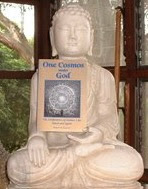
"And so," asks Pieper, "what is philosophizing 'good' for?"
If you read and understood the previous post, you know the answer: nothing! Rather, it is one of those activities that isn't "for" something other than itself, as is true of all ultimate goods, in particular, human beings. A person is not a means to an end, and the moment you treat him like one, you have dehumanized him, precisely.
Just so, the moment philosophy becomes a means to an end, it is no longer philosophy but something less -- for example, science, which is still good, but good for something, e.g., technology, or for blowing up terrorists who would dehumanize us.
Speaking of dehumanization, this immediately reminds us of Marx, upon whose headstone is engraved the following aphorism: The philosophers have only interpreted the world, in various ways. The point, however, is to change it.
Well, congratulations! In all of history, no philosopher has changed more people into corpses. And that's just for starters. He also changed countries into sh*tholes, wealth into worthless paper, college graduates into imbeciles, and Bernie Sanders into a presidential candidate.
For the sake of equal time, here's a counter-aphorism by an anti-Marxist:
Marxism turns the intelligence that it touches to stone.
So, in all of history, no "philosophy" has turned more intellects to stone. Including the 38 rockheads competing for the Democratic nomination.
We are also reminded of Hayek and the ineluctable Knowledge Problem. For which reason the Aphorist says:
The Marxist historian owes his certainty to his ignorance.
Do you know of anyone more arrogantly certain than AOC, than St. Greta, than B. Hussein?
In contrast to whom we have the father of philosophy, who ironically tells us the the only thing he really knows is that he doesn't know. And yet, this is a specifically human form of meta-knowledge that confers (or discloses) a quasi-divine status, somewhere above the animals but below the angels. Or, if you don't believe in a full-employment cosmos, between primates and God, relative and Absolute, contingency and necessity.
Not to belabor the point: man desires to know. This desire to know begins in Wonder, and the object of Wonder is unfathomable. It is Mystery, not as ignorance or superstition, but as empirical contact with the Transcendent Other, AKA O, through which course energies of various kinds, not just knowledge (of truth, or it isn't knowledge), but beauty, unity, love, grace, sanctity, etc.
Man is by definition lifted above nature -- man is transnatural, or he isn't one -- but this only gets us so far without O "reaching down" and completing the metacosmic circuit. At which point -- let's call it the Sacramental Synapse -- something like this occurs, from his being to ours (or beyond-being to being).
So, "The more I know about things, the further the sphere of the not-yet-known stretches out in front of me as immeasurable" (Pieper). Literally, in that it can never be quantified (thank you Gödel) but is unqualifiable as well, i.e., we can affirm or say no quality without simultaneously unsaying it, since O is (obviously) beyond language, even while being the ground and source of language (for before language was, the Word Am).
Importantly, there is Wonder at both ends of this process; you might call them Primordial Wonder and Consequent Wonder. For "we are not properly human if we are not able to to be profoundly moved by coming aware of the deeper aspect of the world" (Pieper).
Which goes to "the role of philosophy: to help man to experience again and again, along with the mysterious character of the world, his own unfinished state, the not-yet of his own being and existence" despite the most complete possible knowledge of anything and everything.
Augustine famously asked God to "give me chastity, but not yet." We say: give us not-yet, and now! Or in other words, "thy will be done, on earth as it is in heaven."
Key takeaway: reality -- the really real kind -- is a vertically open system. The moment it becomes closed, you're doing it -- humanness -- wrong. But do not conflate "closedness" and doctrine, because real doctrine generates a kind of infinitude, or is infinitely generative, rather. By which we mean....
Put it this way: perhaps you've heard the witty village atheist say he doesn't believe in the Christian God for the same reason he doesn't believe in the Flying Spaghetti Monster. I suppose this makes sense for the vertically closed atheist, but it makes no sense to -- speaking for myself -- me, because I would be hard-pressed to write a single post on the FSM, whereas on this blog alone I've spilled millions of intelligible words about O, with no conceivable end in sight short of dementia and/or death. I don't pretend I can ever exhaust O, whereas the FSM exhausts itself the moment you say it: it flies, it's made of spaghetti, and it's monstrous. Okay then.
"The more the world becomes accessible and opened up, the richer our existence" (ibid.).
The following must be important, because I scrawled an approving YES in the margin next to it:
Only a discerning encounter with the mystery -- which consists in the fact that something is -- only this experience gives us the awareness that the light which makes things "positively" knowable, is simply unfathomable and inexhaustible and thus, at the same time, makes things incomprehensible.
"The light shines in the darkness, and the darkness did not comprehend it.... the world was made through Him, and the world did not know Him." I can think of no fewer than three ways to construe this crypticism: the correct way, the stupid way, and the diabolical way.