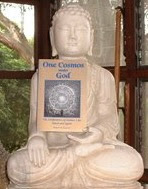
Just as today's armies are equipped only to win yesterday's wars, we cannot expect contemporary physics to successfully cope with problems other than those with which it has already coped. --Robert Rosen, Life Itself
As we were discussing yesterday, it is very unlikely -- impossible, really -- that the cosmos could be a machine. Rather, it is much more like an organism -- or even a mind -- than it is a machine. And once we understand this, it makes the so-called "emergence" of life and mind much less problematic, based upon the Principle of principles, as above, so below.
Conversely, if we begin with the scientistic quaxiom "as below, so above," we really can't ever leave the bottom floor, or barking structure, of the cosmic telovator. It is a world intrinsically devoid of values, progress, hierarchy, or even evolution (as opposed to mere change).
Based upon a proper meta-understanding of reason, it is the work of a moment to arrive at the logical necessity of God. To put it another way, I have never heard any version of atheism that isn't shot through with unjustified premises, illogical conclusions, and metaphysical nul-de-slacks.
However, to merely posit the existence of a creator tells us nothing about what this creator is like, for example, whether he is even good or worthy of worship. Indeed, how did this idea of "worship" slip in, anyway? Suppose physicists eventually discover a mathematical "theory of everything." It is highly unlikely that they will spontaneously bow down and worship it, even if it is their ultimate icon of scientistic gnosis. So why should we worship our Ultimate Principle? We'll get to that later.
If the Creator exists, it necessarily follows that he is "like us," without being limited to being like us. This is true of any level in the cosmic hierarchy. For example, life is "like matter," without being limited to it. Likewise, human beings are "like primates" without being limited to that. Or, to put it another way, if we turn the cosmos right side up, and begin at the top, we can see that each level of reality is a diminution, until we reach the realm of dense matter.
And in fact, all esoteric cosmologies continue down beyond matter, which makes perfect sense, since the "ray of creation" proceeds from the cosmic center (or top, if you like), and continues on "forever," so to speak, to the threshold of nihilism, or blind nothingness. In this regard, we can see that matter is actually superior and has more nobility than, say, the nihilists of dailykos, even though we must never treat them as such, out of respect for their still human potential.
I realize that some readers think Schuon is difficult or obscure, but really, the following cannot be said with any more adamantine precision. The difficulty probably results from trying to read what he is saying while sitting upside down. Basically you're out of your tree. Once you properly orient yourself to reality, feet firmly in the air -- roots aloft, branches down below -- it makes perfect sense:
"The diverse manifestations of the Good in the world clearly have their source in a principial and archetypal diversity, whose root is situated in the Supreme Principle itself, and which pertains not only to the Divine Qualities, from which our virtues are derived, but also -- in another respect -- to aspects of the Divine Personality, from which our faculties are derived" (emphasis mine).
Recall Jesus' ironic and extraordinarily soph-aware remark, "Why do you call Me good? There is none good but one, that is, God." What this means is that if we begin "at the top" -- which is to say, with the Absolute -- then we must conclude that only it is absolutely good: "He alone possesses, for example, the quality of beauty; compared to the divine Beauty, the beauty of a creature is nothing, just as existence itself is nothing next to the Divine Being" (Schuon).
But God, being absolute, is necessarily infinite. As such, his absolute transcendence is matched by his infinite immanence which extends everywhere and into every thing -- and which ultimately is another form of transcendence! It is why, for example, God is intuited in the very large -- e.g., Mount Everest or the Grand Canyon -- and the very small -- e.g., an infantile or even infinitesimal quantum of life or energy.
Because of the immanence of the Absolute, it can be said that "the beauty of a creature -- being beauty and not its contrary -- is necessarily that of God, since there is no other; and the same is true for all the other qualities, without forgetting, at their basis, the miracle of existence" (ibid).
Yesterday we were discussing how these principles may be applied to life, not just biological life, but to Life as such, of which biological organisms are a trans-lucent revelation and reflection. For clearly, as I mentioned in the Coonifesto, God is obviously alive; but just as obviously, not a biological organism. In fact, if animals could speak to biologists, they might say something like, "Why do you call me alive? There is none alive but one, that is, God." Then again, animals say this all the time. But in order to gnosis it, you must be an animal lover, for love is the "link" or "channel" for such pneumatic information. That or beauty.
Rosen -- who was a "hard" scientist, and, to my knowledge, not a religious man -- wanted to know "what it is about organisms that confers upon them their magical characteristics, what it is that sets life apart from all other material phenomena in the universe. That is indeed the question of questions: What is life? What is it that enables living things, apparently so moist, fragile, and evanescent, to persist while towering mountains dissolve into dust, and the very continents and oceans dance into oblivion and back?"
Of course, he looked for (and found) a scientific answer, but it is an answer that ultimately "must be," for the very same reason that the Creator must be. Rosen foreshadows this Reason in the Prolegomena of the book, where he observes that, "Ironically, the idea that life requires an explanation is a relatively new one. To the ancients, life simply was; it was a given; a first principle, in terms of which other things were explained."
But life "vanished as an explanatory principle with the rise of mechanics," even though machines -- which are created for a purpose -- are much more "like life" than life is "like a machine." It is as if scientists abstracted some quality from life, and then re-projected the abstraction onto the concrete reality, thus conflating the two. Frankly, scientists do this all the time, which is why one must make a conscious effort to escape the influence of the cramped and banal models of reality proffered to us by scientism.
One thing atheists and other materialists habitually do is to naively take their abstractions for real reality. However, the cosmos is not a machine, the genome is not a map, the brain is not a computer, mountains are not triangles, and love is not a baseball game. But I am a Raccoon, a foolblooded schlepson of Toots Mondello, a mystery for you to ponder until I continue this thread later.
Abide in Me and I in you. As the branch cannot bear fruit of itself, unless it abides in the vine, neither can you unless you abide in Me. --John 15:4
Friday, October 08, 2010


Thursday, October 07, 2010
The Problem with Solutions and the unKnown God of the Godless
Atheism is not a philosophy. It is not even a view of the world. It is simply an admission of the obvious…. Atheism is nothing more than the noises reasonable people make in the presence of unjustified religious beliefs. --Sam Harris
Science is and must be exciting, since it relies on largely unspecifiable clues which can be sensed, mobilized and integrated only by a passionate response to their hidden meaning.... This is the unaccountable element which enters into science at its source and vitally participates throughout, even in its final result. In science this element has been called intuition. --Michael Polanyi
Continuing our little raiding party on the wild godhead, Schuon writes that on the natural plane -- i.e., the horizontal world of empirical reality -- it is sufficient "to have at one's disposal the necessary data and then to reason correctly."
As it so happens, the same rules apply to the suprasensible world, with one important difference, "that the object of thought then requires the intervention of intellection, which is an inner illumination" (emphasis mine). However, the difference is not really as stark as one might suppose, for as Schuon adds, "if natural things may require a certain intuition independent of reasoning as such, then supernatural things will a fortiori require intuition of a superior order, since they do not fall within the reach of the senses."
Polanyi most adequately expresses this idea of "lower intuition," so to speak, being critical to the evolution of scientific understanding, and therefore progress into the great unKnown. It's not so much that the "intuition" is lower, only that science applies -- and then arbitrarily limits -- it to a lower order of reality, i.e., the natural/horizontal world. But to point out that the material world cannot be understood in the absence of intuition is to affirm the obvious principle that the world is not material (or that matter is not ultimate).
Theists often argue that most of the world's greatest scientists have been religious, and most serious philosophers of science now understand that science as we know it could only have arisen in Christendom (Whitehead was one of the first to notice, in his Science and the Modern World).
In any event, science cannot operate without certain functions that most people would regard as spiritual or quasi-religious, certainly not "mechanical" or empirical. Even to digest the most alimentary fact, "reason requires data in order to function, otherwise it operates in the void." Therefore, something transcending reason must supply the material on which it operates, or else you are truly trapped in a closed universe from which there is no escape, not even into knowledge -- including the knowledge that you are trapped.
In a way, this mirrors the philosophical problem of the ontological status of mathematics. That is, the most perfect mathematical account of the cosmos will never account for three things, 1) the mysterious existence of invariant mathematical operations that map the inner workings of the cosmos, 2) the "substance" to which the mathematical equations apply (in other words, no abstract mathematical equation can create the concrete reality on which it operates, only provide a description of it), and 3) the existence of mathematical subjects and the mysterious reciprocity between (and inner unity of) the objective world, the mathematical world, and the subjective world.
In reality -- which is where we want to be (and can only be, since it is Being) -- the data required by reason can only come from four sources, 1) the world, which is objective, 2) experience, which is obviously subjective, 3) revelation, which is, as Schuon explains, objective, since it enters from outside the world-system, and 4) intellection, "which is subjective since it is produced within ourselves" (Schuon).
Four sources of knowledge: exterior world, interior experience, exterior revelation, and interior intellection.
But it is the work of a moment to see that each of these implies and even "contains" its complementary opposite.
For example, the fact that we may comprehend the "inner workings" of the exterior world indeed suggests that it has an interior, as Whitehead immediately grasped almost a century ago, based upon the (then) new findings of quantum physics.
Likewise, the fact that we may objectively understand reality must mean that there is something of the unwavering object inside the human subject. Of the animals, only man is capable of objectivity, detachment, and disinterested consideration.
And revelation, save for the most fundamaliteralist (who may be a theist or atheist, it doesn't matter) is like a veritable interior cathedral that ultimately discloses the mind of the Creator (not completely, of course, any more than any text could exhaust the mind of its author).
Reason and Experience: both are far more mysterious than the weak and secularized mind can appreciate (and it is because of its all-too-human weakness that it is so easily secularized).
In an essay entitled The Unaccountable Element in Science, Polanyi explains how it is not possible in the practice of science to replace unspecifiable acts of personal judgment -- AKA, intuition -- with the operation of explicit reasoning, as if our minds operate like machines. This applies not only to scientific discovery, but to "the very holding of scientific knowledge."
Based upon his own extensive experience as a working scientist, he knew that "into all acts of judgment there enters, and must enter, a personal decision which cannot be accounted for by any rules." In other words, "no system of rules can prescribe the procedure by which the rules themselves are to be applied." This is particularly obvious in my own racket of psychology. You cannot unambiguously convey to another person the "rules" for apprehending the unconscious mind. Rather, this ability can only be gained through experience, even though it is still "rule bound."
To bring it down to a more mundane (or sophisticated, depending on your point of view) level, when Sidney Crosby and I watch a hockey game (today happens to be opening day), we "see" entirely different realities. What may look like mere noise to me, will constitute a field of extremely significant facts to him. And what looks important to me, may be just noise to him -- a sort of diversion that obscures the real action.
So right away, we can see that one of the indispensable skills of the scientist -- or, shall we say, the expert in any field, from theology to hockey -- is to distinguish between noise and information. The expert is able to convert what is foreground to the untrained eye into background, so as to attend to hidden clues that only the expert can intuit -- which is to say, appreciate as clues. In psychoanalysis it is referred to as "listening with the third ear," while in trolling it is called "listening with the middle finger." But every discipline or field of study must have something similar, whether it is quantum physics, wine tasting, or biblical exegesis:
"This gift of seeing things where others see nothing is indeed the mark of the scientific genius." Atheistic flatlanders such as Sam Harris see simplistic answers to the world enigma everywhere. Indeed, this is one of the reasons why the liberal mind sees a simple solution for every complex problem and a complex solution for every simple problem. In short, they lack depth and therefore wisdom. And when they do try to be wise, they replace intuitive wisdom with a kind of inappropriately mechanical thinking that is simultaneously linear and convoluted (as in the healthcare monstrosity).
In contrast, what the subgenius or even mere genius sees is a problem where others don't: "All research starts by a process of collecting clues that intrigue the enquiring mind.... The knowledge of a true problem is indeed a paradigm of all knowing. For knowing is always a tension alerted by largely unspecifiable clues and directed by them towards a focus at which we sense the presence of a thing -- a thing that, like a problem, embodies the clues on which we rely for attending to it" (Polanyi).
So don't give me this "God is just an intuition" business. For reality itself is nothing but an intuition. And atheism is indeed "nothing more than the [silly] noises [merely] reasonable people make in the presence of [their own] unjustified [ir]religious beliefs."
Or, to put it another way, God is not the solution. He is the problem. But only if you can give up your childishly simplistic solutions and are sophisticated enough to intuit the clues within the noise of the world. In short, to see God, you must quiet the noise -- especially in your fat head -- and get a clue. Otherwise you'll be stuck down in the paradorksical realm where truth lies -- or where "the answer is the disease that kills curiosity."
Why, on what lines will you look, Socrates, for a thing of whose nature you know nothing at all? Pray, what sort of thing, amongst those you know not, will you treat us to as the object of your search? Or even supposing, at the best, that you hit upon it, how will you know it is the thing you did not know? --Plato, Meno
Now -- if you haven't got an answer
Then you haven't got a question
And if you never had a question
Then you'd never have a problem
But if you never had a problem
Well, everyone would be happy
But if everyone was happy
There'd never be a love song --Harry Nilsson, Joy
Science is and must be exciting, since it relies on largely unspecifiable clues which can be sensed, mobilized and integrated only by a passionate response to their hidden meaning.... This is the unaccountable element which enters into science at its source and vitally participates throughout, even in its final result. In science this element has been called intuition. --Michael Polanyi
Continuing our little raiding party on the wild godhead, Schuon writes that on the natural plane -- i.e., the horizontal world of empirical reality -- it is sufficient "to have at one's disposal the necessary data and then to reason correctly."
As it so happens, the same rules apply to the suprasensible world, with one important difference, "that the object of thought then requires the intervention of intellection, which is an inner illumination" (emphasis mine). However, the difference is not really as stark as one might suppose, for as Schuon adds, "if natural things may require a certain intuition independent of reasoning as such, then supernatural things will a fortiori require intuition of a superior order, since they do not fall within the reach of the senses."
Polanyi most adequately expresses this idea of "lower intuition," so to speak, being critical to the evolution of scientific understanding, and therefore progress into the great unKnown. It's not so much that the "intuition" is lower, only that science applies -- and then arbitrarily limits -- it to a lower order of reality, i.e., the natural/horizontal world. But to point out that the material world cannot be understood in the absence of intuition is to affirm the obvious principle that the world is not material (or that matter is not ultimate).
Theists often argue that most of the world's greatest scientists have been religious, and most serious philosophers of science now understand that science as we know it could only have arisen in Christendom (Whitehead was one of the first to notice, in his Science and the Modern World).
In any event, science cannot operate without certain functions that most people would regard as spiritual or quasi-religious, certainly not "mechanical" or empirical. Even to digest the most alimentary fact, "reason requires data in order to function, otherwise it operates in the void." Therefore, something transcending reason must supply the material on which it operates, or else you are truly trapped in a closed universe from which there is no escape, not even into knowledge -- including the knowledge that you are trapped.
In a way, this mirrors the philosophical problem of the ontological status of mathematics. That is, the most perfect mathematical account of the cosmos will never account for three things, 1) the mysterious existence of invariant mathematical operations that map the inner workings of the cosmos, 2) the "substance" to which the mathematical equations apply (in other words, no abstract mathematical equation can create the concrete reality on which it operates, only provide a description of it), and 3) the existence of mathematical subjects and the mysterious reciprocity between (and inner unity of) the objective world, the mathematical world, and the subjective world.
In reality -- which is where we want to be (and can only be, since it is Being) -- the data required by reason can only come from four sources, 1) the world, which is objective, 2) experience, which is obviously subjective, 3) revelation, which is, as Schuon explains, objective, since it enters from outside the world-system, and 4) intellection, "which is subjective since it is produced within ourselves" (Schuon).
Four sources of knowledge: exterior world, interior experience, exterior revelation, and interior intellection.
But it is the work of a moment to see that each of these implies and even "contains" its complementary opposite.
For example, the fact that we may comprehend the "inner workings" of the exterior world indeed suggests that it has an interior, as Whitehead immediately grasped almost a century ago, based upon the (then) new findings of quantum physics.
Likewise, the fact that we may objectively understand reality must mean that there is something of the unwavering object inside the human subject. Of the animals, only man is capable of objectivity, detachment, and disinterested consideration.
And revelation, save for the most fundamaliteralist (who may be a theist or atheist, it doesn't matter) is like a veritable interior cathedral that ultimately discloses the mind of the Creator (not completely, of course, any more than any text could exhaust the mind of its author).
Reason and Experience: both are far more mysterious than the weak and secularized mind can appreciate (and it is because of its all-too-human weakness that it is so easily secularized).
In an essay entitled The Unaccountable Element in Science, Polanyi explains how it is not possible in the practice of science to replace unspecifiable acts of personal judgment -- AKA, intuition -- with the operation of explicit reasoning, as if our minds operate like machines. This applies not only to scientific discovery, but to "the very holding of scientific knowledge."
Based upon his own extensive experience as a working scientist, he knew that "into all acts of judgment there enters, and must enter, a personal decision which cannot be accounted for by any rules." In other words, "no system of rules can prescribe the procedure by which the rules themselves are to be applied." This is particularly obvious in my own racket of psychology. You cannot unambiguously convey to another person the "rules" for apprehending the unconscious mind. Rather, this ability can only be gained through experience, even though it is still "rule bound."
To bring it down to a more mundane (or sophisticated, depending on your point of view) level, when Sidney Crosby and I watch a hockey game (today happens to be opening day), we "see" entirely different realities. What may look like mere noise to me, will constitute a field of extremely significant facts to him. And what looks important to me, may be just noise to him -- a sort of diversion that obscures the real action.
So right away, we can see that one of the indispensable skills of the scientist -- or, shall we say, the expert in any field, from theology to hockey -- is to distinguish between noise and information. The expert is able to convert what is foreground to the untrained eye into background, so as to attend to hidden clues that only the expert can intuit -- which is to say, appreciate as clues. In psychoanalysis it is referred to as "listening with the third ear," while in trolling it is called "listening with the middle finger." But every discipline or field of study must have something similar, whether it is quantum physics, wine tasting, or biblical exegesis:
"This gift of seeing things where others see nothing is indeed the mark of the scientific genius." Atheistic flatlanders such as Sam Harris see simplistic answers to the world enigma everywhere. Indeed, this is one of the reasons why the liberal mind sees a simple solution for every complex problem and a complex solution for every simple problem. In short, they lack depth and therefore wisdom. And when they do try to be wise, they replace intuitive wisdom with a kind of inappropriately mechanical thinking that is simultaneously linear and convoluted (as in the healthcare monstrosity).
In contrast, what the subgenius or even mere genius sees is a problem where others don't: "All research starts by a process of collecting clues that intrigue the enquiring mind.... The knowledge of a true problem is indeed a paradigm of all knowing. For knowing is always a tension alerted by largely unspecifiable clues and directed by them towards a focus at which we sense the presence of a thing -- a thing that, like a problem, embodies the clues on which we rely for attending to it" (Polanyi).
So don't give me this "God is just an intuition" business. For reality itself is nothing but an intuition. And atheism is indeed "nothing more than the [silly] noises [merely] reasonable people make in the presence of [their own] unjustified [ir]religious beliefs."
Or, to put it another way, God is not the solution. He is the problem. But only if you can give up your childishly simplistic solutions and are sophisticated enough to intuit the clues within the noise of the world. In short, to see God, you must quiet the noise -- especially in your fat head -- and get a clue. Otherwise you'll be stuck down in the paradorksical realm where truth lies -- or where "the answer is the disease that kills curiosity."
Why, on what lines will you look, Socrates, for a thing of whose nature you know nothing at all? Pray, what sort of thing, amongst those you know not, will you treat us to as the object of your search? Or even supposing, at the best, that you hit upon it, how will you know it is the thing you did not know? --Plato, Meno
Now -- if you haven't got an answer
Then you haven't got a question
And if you never had a question
Then you'd never have a problem
But if you never had a problem
Well, everyone would be happy
But if everyone was happy
There'd never be a love song --Harry Nilsson, Joy
Wednesday, October 06, 2010
Okay, So Reality Exists: Now What?
Another item from several years back. In addition to being tweaked and recalibrated, it was the best one of about thirty I scanned & canned, the only one worthy of the eternal distinction of being tossed up and rewordgitated...
Let's suppose reality exists. If it does exist, then it is not sufficient to merely think or talk about it. Rather, we will want to be in conformity with it, no?
To put it another way, to not be in conformity with reality will result in death, injury, disease or dysfunction in one form or another.
For example, if you are not in conformity with the reality that walking into a speeding bus can be harmful to your health, you won't live very long. Likewise, if you aspire to be a world-class mathematician, you won't get very far if you refuse to conform to the dictates of basic math. Your career will die, as it were.
And if you wish -- or even don't wish -- to know God in the absence of conformity to the divine reality, you will undergo spiritual death. But only again and again.
So there obviously exist different environments -- a vertical spectrum as it were -- to which man must adapt. Unlike other animals, it will not do for man to only adapt to the physical world, for if he were to succeed, he would be an animal, not a man.
Now obviously, it is possible -- common, actually -- to have thoughts that do not conform to reality, and not just if you're frankly crazy. Leftists are proof of this. Nor does intelligence help. Our universities are proof of that. And good intentions are of no help at all. The Democrat party proves this year in, year out.
As we have discussed before, in order to have a cosmos at all, there must be a synapse between subject and object (we call this synapse "spacetime"). But no sooner do you have this differentiation, than you have a distinction between reality and appearances. The human vocation is to bridge this gap and to act upon it. The former is wisdom, the latter morality. Beauty is the creation of objects through which this reality is transmitted and reflected, i.e., the higher shining through the lower.
In the words of Schuon, "He who conceives the Absolute... cannot stop short de jure at this knowledge, or at this belief, realized in thought alone; he must on the contrary integrate all that he is into his adherence to the Real, as demanded precisely by Its absoluteness and infinitude."
Therefore -- and here's the point -- "Man must 'become that which he is' because he must 'become That which is.'" Which is why the new and improved "first commandment" is to love the Lord with all your heart, and with all your soul, and with all your mind, and with all your strength.
In other words, it takes all four -- heart, soul, mind and body -- to achieve this vertical conformity. Leave out one, and you leave a "hole" in the Divine reality, the fullness of which is deveiled only in our adequate mirroring of it.
In man, the big three transcendentals -- the Good, the True and the Beautiful -- are reflected in the form of Will, Thought, and Love, respectively. In other words, we must will the Good, know the True, and love the Beautiful. For who would want to will the bad, know lies, and love ugliness?
Okay, besides the left.
Just as wisdom is beauty of mind, virtue is beauty of will. And beauty itself reveals the intelligence -- not to say, love and will -- of creation, and therefore the Creator.
The point is that our Thought, Will, and Love are not merely isolated functions that arose through some sort of Darwinian magic. Rather, they specifically function in a vertical-teleological manner toward their appropriate ends. It is impossible to coherently argue otherwise. People will the bad all the time, but it's only because they confuse bad and good, as does, say, the U.N.
Likewise, people regularly teach and learn falsehood, but only because they either conflate it with truth, or deny the existence of Truth. If the latter, then "thought" will simply meander in a meaningless way over the blandscape of the mind, going from nowhere to nothing and then back again. It takes approximately four years to complete this round trip at a major university.
To quote Schuon, "Without beauty of soul, all willing is sterile, it is petty and closes itself to grace; and in an analogous manner: without effort of will, all spiritual thought ultimately remains superficial and ineffectual and leads to pretension."
Let's think about that one for a moment. Are there beautiful souls?
Who would have to even pause to answer something so obvious? What I don't understand is how the bonehead atheist can get through life and not be in conformity with this simple reality, i.e., the existence of beautiful souls, along with the naturally supernatural desire for one's own soul to attain to such beauty. But if beauty is just an illusion and the soul doesn't exist, I guess that's their only real option.
Again, such madness is analogous to wishing to develop one's mind even while denying the sufficient reason for its development, which is Truth. And who doesn't love Truth?
Okay, besides the tenured.
It's quite simple, really, because the Real is simple: There is something that man must know and think; and something that he must will and do; and something that he must love and be (Schuon).
Notice the invariant in these three statements about human reality: must.
Therefore, Man is the unnecessary being who must Must, in conformity with the Being who Must Be, since we didn't have to be.
In other words, human beings are contingent -- which is to say, relative -- not necessary, or Absolute.
And yet, religion is here to teach us how to travel the perilous path from contingency to Necessity. The secret lies in the Must, which is that little portion of necessity we share with the Creator. But, in keeping with the gift of free will, it is necessary for us to "activate" the divine Must, for only in conformity to this potential reality are we necessarily free.
Or, the crucifixion of the contingent is resurrected in the Absolute.
Let's suppose reality exists. If it does exist, then it is not sufficient to merely think or talk about it. Rather, we will want to be in conformity with it, no?
To put it another way, to not be in conformity with reality will result in death, injury, disease or dysfunction in one form or another.
For example, if you are not in conformity with the reality that walking into a speeding bus can be harmful to your health, you won't live very long. Likewise, if you aspire to be a world-class mathematician, you won't get very far if you refuse to conform to the dictates of basic math. Your career will die, as it were.
And if you wish -- or even don't wish -- to know God in the absence of conformity to the divine reality, you will undergo spiritual death. But only again and again.
So there obviously exist different environments -- a vertical spectrum as it were -- to which man must adapt. Unlike other animals, it will not do for man to only adapt to the physical world, for if he were to succeed, he would be an animal, not a man.
Now obviously, it is possible -- common, actually -- to have thoughts that do not conform to reality, and not just if you're frankly crazy. Leftists are proof of this. Nor does intelligence help. Our universities are proof of that. And good intentions are of no help at all. The Democrat party proves this year in, year out.
As we have discussed before, in order to have a cosmos at all, there must be a synapse between subject and object (we call this synapse "spacetime"). But no sooner do you have this differentiation, than you have a distinction between reality and appearances. The human vocation is to bridge this gap and to act upon it. The former is wisdom, the latter morality. Beauty is the creation of objects through which this reality is transmitted and reflected, i.e., the higher shining through the lower.
In the words of Schuon, "He who conceives the Absolute... cannot stop short de jure at this knowledge, or at this belief, realized in thought alone; he must on the contrary integrate all that he is into his adherence to the Real, as demanded precisely by Its absoluteness and infinitude."
Therefore -- and here's the point -- "Man must 'become that which he is' because he must 'become That which is.'" Which is why the new and improved "first commandment" is to love the Lord with all your heart, and with all your soul, and with all your mind, and with all your strength.
In other words, it takes all four -- heart, soul, mind and body -- to achieve this vertical conformity. Leave out one, and you leave a "hole" in the Divine reality, the fullness of which is deveiled only in our adequate mirroring of it.
In man, the big three transcendentals -- the Good, the True and the Beautiful -- are reflected in the form of Will, Thought, and Love, respectively. In other words, we must will the Good, know the True, and love the Beautiful. For who would want to will the bad, know lies, and love ugliness?
Okay, besides the left.
Just as wisdom is beauty of mind, virtue is beauty of will. And beauty itself reveals the intelligence -- not to say, love and will -- of creation, and therefore the Creator.
The point is that our Thought, Will, and Love are not merely isolated functions that arose through some sort of Darwinian magic. Rather, they specifically function in a vertical-teleological manner toward their appropriate ends. It is impossible to coherently argue otherwise. People will the bad all the time, but it's only because they confuse bad and good, as does, say, the U.N.
Likewise, people regularly teach and learn falsehood, but only because they either conflate it with truth, or deny the existence of Truth. If the latter, then "thought" will simply meander in a meaningless way over the blandscape of the mind, going from nowhere to nothing and then back again. It takes approximately four years to complete this round trip at a major university.
To quote Schuon, "Without beauty of soul, all willing is sterile, it is petty and closes itself to grace; and in an analogous manner: without effort of will, all spiritual thought ultimately remains superficial and ineffectual and leads to pretension."
Let's think about that one for a moment. Are there beautiful souls?
Who would have to even pause to answer something so obvious? What I don't understand is how the bonehead atheist can get through life and not be in conformity with this simple reality, i.e., the existence of beautiful souls, along with the naturally supernatural desire for one's own soul to attain to such beauty. But if beauty is just an illusion and the soul doesn't exist, I guess that's their only real option.
Again, such madness is analogous to wishing to develop one's mind even while denying the sufficient reason for its development, which is Truth. And who doesn't love Truth?
Okay, besides the tenured.
It's quite simple, really, because the Real is simple: There is something that man must know and think; and something that he must will and do; and something that he must love and be (Schuon).
Notice the invariant in these three statements about human reality: must.
Therefore, Man is the unnecessary being who must Must, in conformity with the Being who Must Be, since we didn't have to be.
In other words, human beings are contingent -- which is to say, relative -- not necessary, or Absolute.
And yet, religion is here to teach us how to travel the perilous path from contingency to Necessity. The secret lies in the Must, which is that little portion of necessity we share with the Creator. But, in keeping with the gift of free will, it is necessary for us to "activate" the divine Must, for only in conformity to this potential reality are we necessarily free.
Or, the crucifixion of the contingent is resurrected in the Absolute.
Tuesday, October 05, 2010
Are You Living in a Counterfeit Cosmos?
Where does the idea of a universe, or “cosmos,” come from, anyway? Why do we assume it exists? Animals don’t know anything about a cosmos, for they can't escape or transcend their sense impressions.
Whatever we imagine it to be, for the vast majority of human history, it was imagined very differently. Here I don't want to get into the quaintness of those old images and models. Rather, I want to emphasize two things, one, that human beings cannot help creating a wider cosmic context for themselves, and second, that these will always be human projections. Therefore, the premodern, modern, and postmodern cosmoses have much more in common with each other than they do with, say, the cosmos of a cow, which doesn't extend beyond its pasture and its senses (nor can the cow reflect on its cosmos, so it doesn't even really exist as a thing in itself).
Humans imagine there is a cosmos, but what do we really mean by the word? Is the universe the sum of things, or the whole of things? -- for these are two very different ideas. If it is merely the sum of things, there’s really no way to understand it, because each part is more or less independent of the other parts. But if it is the whole of things, that must mean that there is an underlying wholeness that somehow transcends and yet participates in each of the parts. Thus, to say "cosmos" is to say "unity" -- which is to say "the One," no matter how you say it. And to say that everything is one is to say that everything is internally related in such a manner that everything is within everything else.
Insofar as the universe is a whole, science cannot speak of it consistently. In other words, science, in order to be science, must treat the universe as a collection of objects, and simply assume their underlying unity -- if only to separate the scientific observer from what he observes. Like the mind itself, wholeness cannot be observed, only inferred. This leads me to believe that there is some hidden relationship between the mysteries of consciousness and wholeness. In short, the one cannot exist without the other. And for the Christian this is, of course, axiomatic, since he lives in a logoistic cosmos in which intelligence and intelligibility are just two sides of the same coin of the realm.
Every sense perception is an act of division within prior wholeness. Only the particular is ever observed, and there is no knowledge at the level of the senses. But every mental act is an act of synthesis and integration -- of bringing particulars together into a wholeness that reveals their meaning. Thus “the cosmos” is the ultimate mental act of material synthesis, analogous to the metaphysical synthesis of conceiving of God -- who also represents an absolute integrity and cohesion that we can never perceive in its a priori fulness with our senses or our mind. You might say that God is to the intellect as cosmos is to the senses.
For this reason, we can say that the physical cosmos is a kind of exteriorization of God, while God is the interiorization of the cosmos (while not limiting God to that). Conceiving of either is only possible because human beings are able to intuit both the wholeness and withinness of things. We are able to conceive the Absolute not because it is a fanciful wish, but because it is the inner reality that subtends everything; in other words, the Absolute is the necessary condition for conceiving of it at all. This is not a tautology, nor is it a repetition of Anselm's ontological argument. It is analogous to saying that without light we couldn't see anything, including light.
All bad philosophers -- which is to say, almost all modern philosophers -- take the cosmos utterly for granted, without getting into the prior question of why they believe there is a thing called “cosmos,” that is, the strict totality of interconnected objects and events (much less how we can know that it exists).
The religionist doesn’t have this problem. Judeo-Christian traditions affirm that “in beginning God created the heavens and the earth.” In other words, there is a prior supra-unity called “God” underlying the apparent division between the celestial and earthly realms -- the vertical and the horizontal, consciousness and matter, whole and part, knower and known, yin and yang, guys and dolls. Religion teaches: where there is apparent duality there is wholeness and unity, whatever the duality. Even life/death. Woo hoo!
The Mundaka Upanishad says something similar, affirming that “Out of the infinite ocean of existence arose Brahma, the first-born and foremost among the gods. From him sprang the universe, and he became its protector.” In other words, the creator God -- Yahweh, Brahma, the Father -- is himself an aspect of an even deeper unity, called Brahman, the Ground (by Meister Eckhart) or the Ain Sof (in Judaism), for even God (like the youman beastlings who mirror him) must possess a relative outside but an infinite inside. God turns his face to man, which is the part we may know through revelation. But I think everyone would agree that even if we somehow knew everything of what God has revealed to man, it would be just a drop in his Ocean.
In the absence of revelation -- either explicitly given or implicitly intuited -- there is no way to know about either the cosmos or its "parent," or source. Reduced to natural reason, human beings are like spiders spinning concepts out of their own substance and then living in and crawling about on them, catching the occasional meal. In fact, if the secular black window spider is going to be honest, he will have to admit that the noumenon is a black window, and that all he may ever really know is his own web, which was Kant’s point. Kant took profane philosophy as far as it could go, which is why most philosophy since has merely been a footnote on Kant.
For you have a choice that you must make at the outset: either we live our lives in an illusory, phenomenal universe, cut off from the noumenal reality. Or, because we are made in the image of the Creator, we can know the absolute in both its material/natural and immaterial/transnatural modes. The former side of the absolute subtends science, while the latter makes it possible to know transcendentrialities such as love, truth and beauty, being-conscousness-bliss, Father-Son-Holy Spirit, Brahma-Vishnu-Shiva, kether-hokmah-binah, or Tinkers to Evers to Chance.
Thus, secular philosophers create a problem where there is none. First, they exile us from the cosmos, and then they complain that we can never get back in! True, we are exiled in maya. But that is only to warn us that our senses do not disclose ultimate reality. Revelation goes to great lengths and heights and depths to explain this, including how to overcome the temptation to absolutize the relative. Scripture fully anticipated Kant and all of his followers in the allegory of the tree of knowledge of good and evil. Yes, you have free will, so you are therefore free to nourish yourself from the tree of duality. Just don’t be surprised if you end up with a bad case of spiritual malnourishment.
Of course, this doesn’t stop scientists from talking about the universe and making all sorts of absolute claims about it. In fact, science has hijacked the universe concept, and will permit no one else to make statements about it on pain of ridicule, ostracism, and ACLU lawsuits. As the philosopher of science Stanley Jaki writes, it is as if all of the central banks had been taken over by counterfeiters. So much of scientific epistemology and ontology is based on intellectual funny money that is not fungible into any underlying reality. The Raccoon says: bring back the Gold Standard! -- which is to say, the Absolute.
Like leftists who are only concerned with the distribution of wealth rather than its creation, secularists are only concerned with the propagation of "truth" rather than the specific metaphysical principles that make Truth itself knowable.
For example, science assures us that their model of the cosmos truly accounts for the strict totality of interacting objects and events. But how can the model contain the proof of its own claim, since it is part of that totality, not outside of it? The question is, can we take a scientific dollar bill and cash it in for real Truth? We can, but only if we realize that there is indeed a central bank that ensures the value of each of those scientific bank gnotes. Science divorced from God is a classic bubble that must eventually burst, since it is analogous to economic activity divorced from real value.
Yes, there is a cosmos. For the same reason there is a God: you can't half one without the underOne. As a matter of fact, the same thing holds true of biology. Say what you want about natural selection, but it presupposes something that its theory cannot account for: the wholeness of the genome and the organism, which is a reflection of the primordial wholeness of Being. Natural selection operates on entities that are living benefactories of a prior wholeness, without which Life itself could not be.
Knowledge is simply adequacy of subject to object. We can know the Reality because our intelligence is a sonny mirrorcle of the Abba we salute.
The subject as such takes precedence over the object as such: the consciousness of a creature capable of conceiving the starry heavens is more than the space and the stars so conceived.... It is precisely in virtue of the dimension of inwardness, which opens onto the Absolute and therefore the Infinite, that man is quasi-divine. --F. Schuon
Whatever we imagine it to be, for the vast majority of human history, it was imagined very differently. Here I don't want to get into the quaintness of those old images and models. Rather, I want to emphasize two things, one, that human beings cannot help creating a wider cosmic context for themselves, and second, that these will always be human projections. Therefore, the premodern, modern, and postmodern cosmoses have much more in common with each other than they do with, say, the cosmos of a cow, which doesn't extend beyond its pasture and its senses (nor can the cow reflect on its cosmos, so it doesn't even really exist as a thing in itself).
Humans imagine there is a cosmos, but what do we really mean by the word? Is the universe the sum of things, or the whole of things? -- for these are two very different ideas. If it is merely the sum of things, there’s really no way to understand it, because each part is more or less independent of the other parts. But if it is the whole of things, that must mean that there is an underlying wholeness that somehow transcends and yet participates in each of the parts. Thus, to say "cosmos" is to say "unity" -- which is to say "the One," no matter how you say it. And to say that everything is one is to say that everything is internally related in such a manner that everything is within everything else.
Insofar as the universe is a whole, science cannot speak of it consistently. In other words, science, in order to be science, must treat the universe as a collection of objects, and simply assume their underlying unity -- if only to separate the scientific observer from what he observes. Like the mind itself, wholeness cannot be observed, only inferred. This leads me to believe that there is some hidden relationship between the mysteries of consciousness and wholeness. In short, the one cannot exist without the other. And for the Christian this is, of course, axiomatic, since he lives in a logoistic cosmos in which intelligence and intelligibility are just two sides of the same coin of the realm.
Every sense perception is an act of division within prior wholeness. Only the particular is ever observed, and there is no knowledge at the level of the senses. But every mental act is an act of synthesis and integration -- of bringing particulars together into a wholeness that reveals their meaning. Thus “the cosmos” is the ultimate mental act of material synthesis, analogous to the metaphysical synthesis of conceiving of God -- who also represents an absolute integrity and cohesion that we can never perceive in its a priori fulness with our senses or our mind. You might say that God is to the intellect as cosmos is to the senses.
For this reason, we can say that the physical cosmos is a kind of exteriorization of God, while God is the interiorization of the cosmos (while not limiting God to that). Conceiving of either is only possible because human beings are able to intuit both the wholeness and withinness of things. We are able to conceive the Absolute not because it is a fanciful wish, but because it is the inner reality that subtends everything; in other words, the Absolute is the necessary condition for conceiving of it at all. This is not a tautology, nor is it a repetition of Anselm's ontological argument. It is analogous to saying that without light we couldn't see anything, including light.
All bad philosophers -- which is to say, almost all modern philosophers -- take the cosmos utterly for granted, without getting into the prior question of why they believe there is a thing called “cosmos,” that is, the strict totality of interconnected objects and events (much less how we can know that it exists).
The religionist doesn’t have this problem. Judeo-Christian traditions affirm that “in beginning God created the heavens and the earth.” In other words, there is a prior supra-unity called “God” underlying the apparent division between the celestial and earthly realms -- the vertical and the horizontal, consciousness and matter, whole and part, knower and known, yin and yang, guys and dolls. Religion teaches: where there is apparent duality there is wholeness and unity, whatever the duality. Even life/death. Woo hoo!
The Mundaka Upanishad says something similar, affirming that “Out of the infinite ocean of existence arose Brahma, the first-born and foremost among the gods. From him sprang the universe, and he became its protector.” In other words, the creator God -- Yahweh, Brahma, the Father -- is himself an aspect of an even deeper unity, called Brahman, the Ground (by Meister Eckhart) or the Ain Sof (in Judaism), for even God (like the youman beastlings who mirror him) must possess a relative outside but an infinite inside. God turns his face to man, which is the part we may know through revelation. But I think everyone would agree that even if we somehow knew everything of what God has revealed to man, it would be just a drop in his Ocean.
In the absence of revelation -- either explicitly given or implicitly intuited -- there is no way to know about either the cosmos or its "parent," or source. Reduced to natural reason, human beings are like spiders spinning concepts out of their own substance and then living in and crawling about on them, catching the occasional meal. In fact, if the secular black window spider is going to be honest, he will have to admit that the noumenon is a black window, and that all he may ever really know is his own web, which was Kant’s point. Kant took profane philosophy as far as it could go, which is why most philosophy since has merely been a footnote on Kant.
For you have a choice that you must make at the outset: either we live our lives in an illusory, phenomenal universe, cut off from the noumenal reality. Or, because we are made in the image of the Creator, we can know the absolute in both its material/natural and immaterial/transnatural modes. The former side of the absolute subtends science, while the latter makes it possible to know transcendentrialities such as love, truth and beauty, being-conscousness-bliss, Father-Son-Holy Spirit, Brahma-Vishnu-Shiva, kether-hokmah-binah, or Tinkers to Evers to Chance.
Thus, secular philosophers create a problem where there is none. First, they exile us from the cosmos, and then they complain that we can never get back in! True, we are exiled in maya. But that is only to warn us that our senses do not disclose ultimate reality. Revelation goes to great lengths and heights and depths to explain this, including how to overcome the temptation to absolutize the relative. Scripture fully anticipated Kant and all of his followers in the allegory of the tree of knowledge of good and evil. Yes, you have free will, so you are therefore free to nourish yourself from the tree of duality. Just don’t be surprised if you end up with a bad case of spiritual malnourishment.
Of course, this doesn’t stop scientists from talking about the universe and making all sorts of absolute claims about it. In fact, science has hijacked the universe concept, and will permit no one else to make statements about it on pain of ridicule, ostracism, and ACLU lawsuits. As the philosopher of science Stanley Jaki writes, it is as if all of the central banks had been taken over by counterfeiters. So much of scientific epistemology and ontology is based on intellectual funny money that is not fungible into any underlying reality. The Raccoon says: bring back the Gold Standard! -- which is to say, the Absolute.
Like leftists who are only concerned with the distribution of wealth rather than its creation, secularists are only concerned with the propagation of "truth" rather than the specific metaphysical principles that make Truth itself knowable.
For example, science assures us that their model of the cosmos truly accounts for the strict totality of interacting objects and events. But how can the model contain the proof of its own claim, since it is part of that totality, not outside of it? The question is, can we take a scientific dollar bill and cash it in for real Truth? We can, but only if we realize that there is indeed a central bank that ensures the value of each of those scientific bank gnotes. Science divorced from God is a classic bubble that must eventually burst, since it is analogous to economic activity divorced from real value.
Yes, there is a cosmos. For the same reason there is a God: you can't half one without the underOne. As a matter of fact, the same thing holds true of biology. Say what you want about natural selection, but it presupposes something that its theory cannot account for: the wholeness of the genome and the organism, which is a reflection of the primordial wholeness of Being. Natural selection operates on entities that are living benefactories of a prior wholeness, without which Life itself could not be.
Knowledge is simply adequacy of subject to object. We can know the Reality because our intelligence is a sonny mirrorcle of the Abba we salute.
The subject as such takes precedence over the object as such: the consciousness of a creature capable of conceiving the starry heavens is more than the space and the stars so conceived.... It is precisely in virtue of the dimension of inwardness, which opens onto the Absolute and therefore the Infinite, that man is quasi-divine. --F. Schuon
Monday, October 04, 2010
Brief Innermission
An open thread while I wondergo another short hiatus until further gnosis, since I don't feel like just rewordgitating the olden pneumagain precogitated bloggerel from the remurmurtory.
Subscribe to:
Comments (Atom)
Theme Song