Friday, April 08, 2022

On the Genesis of Evolution & Evolution of Genesis

Creation is the nexus between eternity and history. --Dávila 

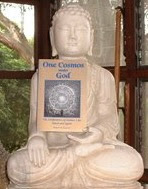
Now that we're flipping through the The One and the Many, might as well flip through to the end. Thus far we have touched on the questions of God's existence and immutability. Toward the end of the book is a chapter on The Metaphysics of Evolution, which ties these first two together nicely. 

Evolution itself is an undeniable and empirical fact: for example, at one point in cosmic history there existed no rational beings, but here we are. By virtue of what principle is our existence even possible? 

Put another way, in what kind of cosmos is it possible for free, self-aware, and truth-bearing primates to evolve into being? For just like anything else in this cosmos of ours, our existence isn't self-explanatory; rather, it obviously has a cause, but a purely material cause cannot have a spiritual effect:

Since such an immaterial nature has no material parts, but is a simple, inextended center of spiritual energy, it cannot be made out of different material parts provided by different material causes, e.g., the father cannot provide half a spiritual soul and the mother the other half... (Clarke).

Any metaphysician who actually is one recognizes that only God can create; or, if you prefer, if there is such a thing as real creation -- which is to say, of something from nothing -- then what we call "God" is its sufficient reason.

Now, creation and creativity are everywhere, at least their echoes. For which reason, in my view, the first words of Genesis are In the beginning God creates. No, not in the temporal beginning, rather, the ontological or principial beginning, which is always here and now (and cannot not be here & now). 

The point is, the metaphysical categories of creator, creation, and beginning are thoroughly entangled. Frankly, I don't see how it is possible to have one without the others: as Father and Son necessarily coarise, so too do creator and creation.  

And the most startling creation of all is of the unique individual person. We can generally understand the existence of ants, bees, and progressive atheists, but how to explain the unique individual subject?

[T]he appearance in our world of a new human being is something very special, as the Genesis story expresses imaginatively: the collaboration of heaven and earth, the earth rising up as far as it can [↑], and heaven reaching down to light a new spiritual fire in it from above [↓] -- the production of an embodied spirit that we call a human person, with a corresponding destiny extending through but beyond this whole material world.  

Again, how is this even possible?

Nothing less than the creative initiative of a transcendent cause can render adequate sufficient reason for the emergence at the end of the cosmic story of this amazing microcosm, the human person that integrates within itself all the levels of creation from the lowest material to union with the highest spiritual, the Author of the whole story himself.

The evolution of our immaterial being is obviously a vertical and relational collaboration, otherwise it is stripped of its sufficient reason.

Some people think there can be a sufficient material explanation for such an intrinsically immaterial process, but these folks tend to be the same superstitious and conspiratorial types who troll this blog. In reality, reductive materialism

gives no adequate explanation, or even recognition, of the basic fact presented by evolutionary history, namely, that out of simpler unities new more complex ones emerge, with properties that are neither merely the sum of already existing properties of the simpler unities, nor deducible directly from them, but are distinctly on a new level.

Putting on my visionary cap, I see a vast metacosmic circle encompassing creativity-infinitude-kenosis-projection-involution on one end, and creation-exile-evolution-metanoia-return on the other. But I'm not the only one: first (ontologically, not temporally) there is 

The Journey from the Many (all finite beings), projected outward from the One, their Infinite Source, by creation....  

This is "followed" (again, ontologically) by

The Journey of the Many back towards reunion with the One, their Source, drawn by this same Source [the Great Attractor, O] through the pull of the Good built in to the very nature of every being through the mediation of final causality, which draws each being toward the fulfillment of its own nature... (ibid).

Speaking for myself, in comparison to participation in this absolutely riveting Great Circle, pretty much everything else is frankly boring, or a kind of tedious and distracting chore. We'll close with this:

the intelligibility of being -- all being -- is inseparable from the context of persons: it is rooted in personal being, flows out from it, to other persons, who complete the circle by returning it back again to its personal source. In a word, the ultimate meaning of being is: Person-to-Person Gift.  

So, if creation is a gift, the mystic journey is just a regift.

On the Genesis of Evolution & Evolution of Genesis

Creation is the nexus between eternity and history. --Dávila 

Now that we're flipping through the The One and the Many, might as well flip through to the end. Thus far we have touched on the questions of God's existence and immutability. Toward the end of the book is a chapter on The Metaphysics of Evolution, which ties these first two together nicely. 

Evolution itself is an undeniable and empirical fact: for example, at one point in cosmic history there existed no rational beings, but here we are. By virtue of what principle is our existence even possible? 

Put another way, in what kind of cosmos is it possible for free, self-aware, and truth-bearing primates to evolve into being? For just like anything else in this cosmos of ours, our existence isn't self-explanatory; rather, it obviously has a cause, but a purely material cause cannot have a spiritual effect:

Since such an immaterial nature has no material parts, but is a simple, inextended center of spiritual energy, it cannot be made out of different material parts provided by different material causes, e.g., the father cannot provide half a spiritual soul and the mother the other half... (Clarke).

Any metaphysician who actually is one recognizes that only God can create; or, if you prefer, if there is such a thing as real creation -- which is to say, of something from nothing -- then what we call "God" is its sufficient reason.

Now, creation and creativity are everywhere, at least their echoes. For which reason, in my view, the first words of Genesis are In the beginning God creates. No, not in the temporal beginning, rather, the ontological or principial beginning, which is always here and now (and cannot not be here & now). 

The point is, the metaphysical categories of creator, creation, and beginning are thoroughly entangled. Frankly, I don't see how it is possible to have one without the others: as Father and Son necessarily coarise, so too do creator and creation.  

And the most startling creation of all is of the unique individual person. We can generally understand the existence of ants, bees, and progressive atheists, but how to explain the unique individual subject?

[T]he appearance in our world of a new human being is something very special, as the Genesis story expresses imaginatively: the collaboration of heaven and earth, the earth rising up as far as it can [↑], and heaven reaching down to light a new spiritual fire in it from above [↓] -- the production of an embodied spirit that we call a human person, with a corresponding destiny extending through but beyond this whole material world.  

Again, how is this even possible?

Nothing less than the creative initiative of a transcendent cause can render adequate sufficient reason for the emergence at the end of the cosmic story of this amazing microcosm, the human person that integrates within itself all the levels of creation from the lowest material to union with the highest spiritual, the Author of the whole story himself.

The evolution of our immaterial being is obviously a vertical and relational collaboration, otherwise it is stripped of its sufficient reason.

Some people think there can be a sufficient material explanation for such an intrinsically immaterial process, but these folks tend to be the same superstitious and conspiratorial types who troll this blog. In reality, reductive materialism

gives no adequate explanation, or even recognition, of the basic fact presented by evolutionary history, namely, that out of simpler unities new more complex ones emerge, with properties that are neither merely the sum of already existing properties of the simpler unities, nor deducible directly from them, but are distinctly on a new level.

Putting on my visionary cap, I see a vast metacosmic circle encompassing creativity-infinitude-kenosis-projection-involution on one end, and creation-exile-evolution-metanoia-return on the other. But I'm not the only one: first (ontologically, not temporally) there is 

The Journey from the Many (all finite beings), projected outward from the One, their Infinite Source, by creation....  

This is "followed" (again, ontologically) by

The Journey of the Many back towards reunion with the One, their Source, drawn by this same Source [the Great Attractor, O] through the pull of the Good built in to the very nature of every being through the mediation of final causality, which draws each being toward the fulfillment of its own nature... (ibid).

Speaking for myself, in comparison to participation in this absolutely riveting Great Circle, pretty much everything else is frankly boring, or a kind of tedious and distracting chore. We'll close with this:

the intelligibility of being -- all being -- is inseparable from the context of persons: it is rooted in personal being, flows out from it, to other persons, who complete the circle by returning it back again to its personal source. In a word, the ultimate meaning of being is: Person-to-Person Gift.  

So, if creation is a gift, the mystic journey is just a regift.

Thursday, April 07, 2022

On Having Your Crock and Bleating it Too

Most of the quotes in the previous post are from W. Norris Clarke's The One and the Many: A Contemporary Thomistic Metaphysic. Not much time this morning, but I'd like to touch on a somewhat unrelated passage from the same book: 

Thus either God exists, or I am absurd. 

That's the choice on offer, so don't pretend otherwise. If it's the latter, all we ask is that you be intellectually honest and consistent: have the courage of your absence of convictions. For in the real world, God or absurdity

is the basic option that confronts me, if I am willing to go to the depth of the human condition.

(In case you were wondering why atheists are so painfully intellectually shallow, generally even prior to their self-confessed spiritual shallowness.) 

But underneath both forms of shallowness is pride and signaling. Ironically, the conspicuous confession of atheism is always a signal of intellectual superiority -- for example, yesterday's commenter, who went out of his way to tell us that "deity" is a term we use when we "just don't understand reality." The implicit point, of course, is that he does understand reality. Signal received!

But how? By virtue of what principle? And other rhetorical questions.

Many people today are afraid of facing up to this radical option [God or absurdity], and so are content to live on the surface of life...

There's nothing wrong with being shallow, on the assumption that we exist in a universe devoid of depth, i.e., with no vertical dimension. 

Now, even when I was an atheist I was always attracted to the depth -- even repulsed by shallowness -- but not yet deep enough to be cognizant of the inconsistency. Nevertheless, "It can be shown"

that there is a lived contradiction between affirming theoretically that the universe or myself is unintelligible and continuing to live and use my mind as though it were intelligible...

Petey calls the latter "having your crock and eating it too." But in reality -- the reality for which our commenter claims to be the champion --  

it is finally up to each one of us either to accept his or her infinite-oriented nature as meaningful and revelatory of the real or as an opaque, illusory surd.

So, we are free to use our intelligence to choose the ultimate unintelligibility of mind, life, and existence, but that's not only an expensive signal, it's a fatal one: we had to destroy the mind in order to save the mind

On Having Your Crock and Bleating it Too

Most of the quotes in the previous post are from W. Norris Clarke's The One and the Many: A Contemporary Thomistic Metaphysic. Not much time this morning, but I'd like to touch on a somewhat unrelated passage from the same book: 

Thus either God exists, or I am absurd. 

That's the choice on offer, so don't pretend otherwise. If it's the latter, all we ask is that you be intellectually honest and consistent: have the courage of your absence of convictions. For in the real world, God or absurdity

is the basic option that confronts me, if I am willing to go to the depth of the human condition.

(In case you were wondering why atheists are so painfully intellectually shallow, generally even prior to their self-confessed spiritual shallowness.) 

But underneath both forms of shallowness is pride and signaling. Ironically, the conspicuous confession of atheism is always a signal of intellectual superiority -- for example, yesterday's commenter, who went out of his way to tell us that "deity" is a term we use when we "just don't understand reality." The implicit point, of course, is that he does understand reality. Signal received!

But how? By virtue of what principle? And other rhetorical questions.

Many people today are afraid of facing up to this radical option [God or absurdity], and so are content to live on the surface of life...

There's nothing wrong with being shallow, on the assumption that we exist in a universe devoid of depth, i.e., with no vertical dimension. 

Now, even when I was an atheist I was always attracted to the depth -- even repulsed by shallowness -- but not yet deep enough to be cognizant of the inconsistency. Nevertheless, "It can be shown"

that there is a lived contradiction between affirming theoretically that the universe or myself is unintelligible and continuing to live and use my mind as though it were intelligible...

Petey calls the latter "having your crock and eating it too." But in reality -- the reality for which our commenter claims to be the champion --  

it is finally up to each one of us either to accept his or her infinite-oriented nature as meaningful and revelatory of the real or as an opaque, illusory surd.

So, we are free to use our intelligence to choose the ultimate unintelligibility of mind, life, and existence, but that's not only an expensive signal, it's a fatal one: we had to destroy the mind in order to save the mind

Wednesday, April 06, 2022

God, the Ultimate Jazz Trio

Let's begin with a couple of aphoristical barbs from the nonlocal pen of Petey: 

Every metaphysician knows that God is the supreme cause of all effects. But what's the harm in taking the next step and affirming that he must thereby be the supreme effect of all causes? 

God is person, meaning that Person is the ultimate category and principle. But "Person" and "immutable" are antithetical.

As promised in a comment yesterday, I want to highlight some passages from one of my favorite theologians, W. Norris Clarke, drawn from various sources, including Person and Being, The One and the Many, The Philosophical Approach to God, and Explorations in Metaphysics

Some of these are exact quotes, others plagiaphrased or combined. At the conclusion we'll try to bring them all together and figure out what they mean, all the while staying within the traditional guardrails of orthodoxy and orthodox guardrails of tradition.

Where to begin... How about here:

To say that God is "all powerful" does not mean that He alone holds and exercises all power, but only that He is the ultimate source of all power...

And

To say that God is the creator of all things does not mean that He directly creates all the acts of creatures. God creates agents, beings with active natures -- or, if you wish, beings acting, not acts.  

It's one thing to create an inanimate rock or an insentient progressive NPC and be done with it, another thing entirely to create a free and creative being. Then there's no end to the trouble. In any event,

The fact that all creatures are totally dependent on God both in their being and in their actions does not therefore mean that God determines their actions from without.  

We are not Mohammedan occasionalists or scientistic determinists or Calvinist double-determinists. More to the point, we would like to preserve God's innocence of man's stupidity and depravity, which is impossible to do if God is ultimately directly responsible for every stupid and depraved human action. For God on the one hand 

communicates to creatures their own being and their own native power and supports them in its use, so that without Him they could neither exist nor act.  

BUT

since He really has given them a share in His own power, they determine the use to which this power is put, even to use it against the express conditional will of God (= sin). This is a free self-limitation of God's exercise of His own unlimited power.

This resolves so many otherwise insoluble metaphysical problems, that I personally have no hesitation in taking it on board. 

Moreover, this doesn't mean that the Divine Will isn't realized, only that it is necessarily mediated by human nature. As they say, God writes straight with lyin' crooks. 

"The actual carrying out of divine providence," writes Clarke, takes place -- in a manner of speaking -- "by persuasion, by luring to the good -- not by coercion." For God is not an authoritarian leftist. He is, for example, the very basis of free speech, even while knowing full well that our snowflake crybullies will inevitably be triggered by it. 

And the best part is, this is all fits into Orthodoxy, so long as we maintain a little perspective and keep things in their proper place:

All that an orthodox Christian must hold today with respect to predestination is that God determines the general set of goals He wishes to achieve, the goals at which He aims the universe, and knows that in general He will be able to achieve by his suasive power, but does not determine ahead of time in detail just whether or how each particular creature will achieve its share or not in this overall goal.  

The following may be a bit ill-sounding, but let's suppose that

Divine providence unfolds by constant instantaneous "improvisation" of the divine mind and will -- from His always contemporaneous eternal now -- precisely to fit the actual ongoing activities, especially the free ones, of the creaturely players in the world drama.

Now that is really speaking my (musical) language, because while there's no harm in seeing the cosmos as a grand symphony composed by the divine mind, I'm much more of a jazz guy, so the following is for me right in the pocket: God

might be said -- in an at first perhaps shocking, but to me illuminating metaphor -- to be the Great Jazz Player, improvising creatively as history unfolds.

Not only do I believe this, I can't not believe it, so it's good to know it can easily be harmonized with orthodoxy. Bottom line for today:

The complete script of our lives is not written anywhere ahead of time, before it happens, but only as it actually happens, by God and ourselves working it out together in our ongoing now's.

And the ultimate jazz trio must be -- you guessed it -- the Trinity. 

But that last passage also reminds me of Duke Ellington in particular, who not only combined structure and improvisation in his compositions, but specifically wrote to the strengths and weaknesses of his particular musicians, allowing them a degree of freedom to carry out what he had in mind for them. They might even have thought they were totally improvising, unaware that they were actually freely carrying out the composer's intent.

God, the Ultimate Jazz Trio

Let's begin with a couple of aphoristical barbs from the nonlocal pen of Petey: 

Every metaphysician knows that God is the supreme cause of all effects. But what's the harm in taking the next step and affirming that he must thereby be the supreme effect of all causes? 

God is person, meaning that Person is the ultimate category and principle. But "Person" and "immutable" are antithetical.

As promised in a comment yesterday, I want to highlight some passages from one of my favorite theologians, W. Norris Clarke, drawn from various sources, including Person and Being, The One and the Many, The Philosophical Approach to God, and Explorations in Metaphysics

Some of these are exact quotes, others plagiaphrased or combined. At the conclusion we'll try to bring them all together and figure out what they mean, all the while staying within the traditional guardrails of orthodoxy and orthodox guardrails of tradition.

Where to begin... How about here:

To say that God is "all powerful" does not mean that He alone holds and exercises all power, but only that He is the ultimate source of all power...

And

To say that God is the creator of all things does not mean that He directly creates all the acts of creatures. God creates agents, beings with active natures -- or, if you wish, beings acting, not acts.  

It's one thing to create an inanimate rock or an insentient progressive NPC and be done with it, another thing entirely to create a free and creative being. Then there's no end to the trouble. In any event,

The fact that all creatures are totally dependent on God both in their being and in their actions does not therefore mean that God determines their actions from without.  

We are not Mohammedan occasionalists or scientistic determinists or Calvinist double-determinists. More to the point, we would like to preserve God's innocence of man's stupidity and depravity, which is impossible to do if God is ultimately directly responsible for every stupid and depraved human action. For God on the one hand 

communicates to creatures their own being and their own native power and supports them in its use, so that without Him they could neither exist nor act.  

BUT

since He really has given them a share in His own power, they determine the use to which this power is put, even to use it against the express conditional will of God (= sin). This is a free self-limitation of God's exercise of His own unlimited power.

This resolves so many otherwise insoluble metaphysical problems, that I personally have no hesitation in taking it on board. 

Moreover, this doesn't mean that the Divine Will isn't realized, only that it is necessarily mediated by human nature. As they say, God writes straight with lyin' crooks. 

"The actual carrying out of divine providence," writes Clarke, takes place -- in a manner of speaking -- "by persuasion, by luring to the good -- not by coercion." For God is not an authoritarian leftist. He is, for example, the very basis of free speech, even while knowing full well that our snowflake crybullies will inevitably be triggered by it. 

And the best part is, this is all fits into Orthodoxy, so long as we maintain a little perspective and keep things in their proper place:

All that an orthodox Christian must hold today with respect to predestination is that God determines the general set of goals He wishes to achieve, the goals at which He aims the universe, and knows that in general He will be able to achieve by his suasive power, but does not determine ahead of time in detail just whether or how each particular creature will achieve its share or not in this overall goal.  

The following may be a bit ill-sounding, but let's suppose that

Divine providence unfolds by constant instantaneous "improvisation" of the divine mind and will -- from His always contemporaneous eternal now -- precisely to fit the actual ongoing activities, especially the free ones, of the creaturely players in the world drama.

Now that is really speaking my (musical) language, because while there's no harm in seeing the cosmos as a grand symphony composed by the divine mind, I'm much more of a jazz guy, so the following is for me right in the pocket: God

might be said -- in an at first perhaps shocking, but to me illuminating metaphor -- to be the Great Jazz Player, improvising creatively as history unfolds.

Not only do I believe this, I can't not believe it, so it's good to know it can easily be harmonized with orthodoxy. Bottom line for today:

The complete script of our lives is not written anywhere ahead of time, before it happens, but only as it actually happens, by God and ourselves working it out together in our ongoing now's.

And the ultimate jazz trio must be -- you guessed it -- the Trinity. 

But that last passage also reminds me of Duke Ellington in particular, who not only combined structure and improvisation in his compositions, but specifically wrote to the strengths and weaknesses of his particular musicians, allowing them a degree of freedom to carry out what he had in mind for them. They might even have thought they were totally improvising, unaware that they were actually freely carrying out the composer's intent.

Tuesday, April 05, 2022

Taking God Personally: Omniscience is Omnipathos

In my hiatal state, I've been dwelling on this conundrum of God's supposed immutability. We've discussed it in the past, but for some reason the subject has lately been coming back to haunt me. So I reread a number of dissenting voices, including Charles Hartshorne's The Divine Relativity

Harthsorne has a lot of ideas with which I profoundly disagree, but on those which we do agree, we really agree. Here are some plagiaphrased passages from the book, presented mostly without comment. 

--Divine relativity is not only compatible with, but equivalent to, an aspect of divine absoluteness. The Absolute is God with something left out of account. The Absolute is, rather, an abstract feature of the inclusive and supreme reality which is precisely the personal God.

--The higher one goes in the scale of being, the more obviously do the social aspects assume a primary role. Does this point to the conclusion that the supreme being is not social at all?

--God, if social, is eminently or supremely so. For all other beings limit their compassion at some point. I assert that the closest to zero dependence would occur at the bottom, not the top of the scale of beings. The closer we get to a "merely material" individual, the closer we come to something for which nearly all the changes in the universe make no appreciable difference at all.

--God is socially aware, period. 

--Sympathetic dependence is a sign of excellence and increases with every ascent in the scale of being. What does it mean to know what sorrow is, but never to have sorrowed, never to have felt the quality of suffering?

--The eminent form of sympathetic dependence can only apply to deity, for this form cannot be less than OMNISCIENT SYMPATHY.

--Conversely, it is the tyrant who depends as little as possible, ideally not at all, upon the wills and fortunes of others. Likewise, the father who as little as possible depends upon the will and welfare of his child is an inhuman monster.

--Yet God, we are told, is impassive and immutable and without accidents, and is therefore just as he would be had we never existed, or had all our experiences been otherwise.

--Suppose I can be equally happy and serene and joyous regardless of how men and women suffer around me. Shall we admire this alleged independence? I think not. Why should we admire it when it is alleged of God?

--The relative or changeable exceeds the nonrelative, immutable or absolute, as the concrete includes and exceeds the abstract.

--A personal God is one who has social relations and thus is constituted by relationships and hence is relative. 

--What is a person if not a being qualified and conditioned by social relations, relations to other persons? And what is God if not the supreme case of personality? Either God really does love all beings, that is, is related to them by a sympathetic union surpassing all human sympathy, or religion seems a vast fraud.

--To say, on the one hand, that God is love, and on the other, to speak of an absolute, infinite, immutable, impassive deity, seems a gigantic hoax.

--God has qualities that are accidental, that do not follow from any necessity of his essence.

--It simply cannot be that everything in God is necessary, including his knowledge that this world exists, unless the world is in the same sense necessary and there is no contingency whatsoever. 

--If God is wholly absolute, it follows that God does not know or love or will us, his creatures. 

Either he has relative being, and then we might know it, or he has only absolute being, in which case only He could know it.

--The perfect being either does, or does not, include the totality of imperfect things. If the perfect does not include the totality of imperfect things, then this total reality is a greater reality than the perfect alone.

Bottom line(s):

For God to do what I do when I decide my own act is mere nonsense, words without meaning. It is not my act if anyone else decides or performs it...

[I]t is impossible that our act should be both free and yet a logical consequence of divine action which "infallibly" produces its effect. Power to cause someone to perform by his own choice an act precisely defined by the cause is meaningless.

The notion of a cosmic power that determines all decisions fails to make sense. For its decisions could refer to nothing except themselves. they could result in no world; for a world must consist of local agents making their own decisions

Therefore,

Maximizing relativity as well as absoluteness in God enables us to conceive him as the supreme person.

Conversely, if God be in all aspects absolute, then literally it is "all the same" to him, a matter of utter indifference. This is precisely not to be personal in any way relevant to religion or ethics. A wholly absolute God is power divorced from responsiveness or sensitivity.

Me? I think the whole mess can be cleaned up by looking at things through the lenses of Trinity and Incarnation.  

Taking God Personally: Omniscience is Omnipathos

In my hiatal state, I've been dwelling on this conundrum of God's supposed immutability. We've discussed it in the past, but for some reason the subject has lately been coming back to haunt me. So I reread a number of dissenting voices, including Charles Hartshorne's The Divine Relativity

Harthsorne has a lot of ideas with which I profoundly disagree, but on those which we do agree, we really agree. Here are some plagiaphrased passages from the book, presented mostly without comment. 

--Divine relativity is not only compatible with, but equivalent to, an aspect of divine absoluteness. The Absolute is God with something left out of account. The Absolute is, rather, an abstract feature of the inclusive and supreme reality which is precisely the personal God.

--The higher one goes in the scale of being, the more obviously do the social aspects assume a primary role. Does this point to the conclusion that the supreme being is not social at all?

--God, if social, is eminently or supremely so. For all other beings limit their compassion at some point. I assert that the closest to zero dependence would occur at the bottom, not the top of the scale of beings. The closer we get to a "merely material" individual, the closer we come to something for which nearly all the changes in the universe make no appreciable difference at all.

--God is socially aware, period. 

--Sympathetic dependence is a sign of excellence and increases with every ascent in the scale of being. What does it mean to know what sorrow is, but never to have sorrowed, never to have felt the quality of suffering?

--The eminent form of sympathetic dependence can only apply to deity, for this form cannot be less than OMNISCIENT SYMPATHY.

--Conversely, it is the tyrant who depends as little as possible, ideally not at all, upon the wills and fortunes of others. Likewise, the father who as little as possible depends upon the will and welfare of his child is an inhuman monster.

--Yet God, we are told, is impassive and immutable and without accidents, and is therefore just as he would be had we never existed, or had all our experiences been otherwise.

--Suppose I can be equally happy and serene and joyous regardless of how men and women suffer around me. Shall we admire this alleged independence? I think not. Why should we admire it when it is alleged of God?

--The relative or changeable exceeds the nonrelative, immutable or absolute, as the concrete includes and exceeds the abstract.

--A personal God is one who has social relations and thus is constituted by relationships and hence is relative. 

--What is a person if not a being qualified and conditioned by social relations, relations to other persons? And what is God if not the supreme case of personality? Either God really does love all beings, that is, is related to them by a sympathetic union surpassing all human sympathy, or religion seems a vast fraud.

--To say, on the one hand, that God is love, and on the other, to speak of an absolute, infinite, immutable, impassive deity, seems a gigantic hoax.

--God has qualities that are accidental, that do not follow from any necessity of his essence.

--It simply cannot be that everything in God is necessary, including his knowledge that this world exists, unless the world is in the same sense necessary and there is no contingency whatsoever. 

--If God is wholly absolute, it follows that God does not know or love or will us, his creatures. 

Either he has relative being, and then we might know it, or he has only absolute being, in which case only He could know it.

--The perfect being either does, or does not, include the totality of imperfect things. If the perfect does not include the totality of imperfect things, then this total reality is a greater reality than the perfect alone.

Bottom line(s):

For God to do what I do when I decide my own act is mere nonsense, words without meaning. It is not my act if anyone else decides or performs it...

[I]t is impossible that our act should be both free and yet a logical consequence of divine action which "infallibly" produces its effect. Power to cause someone to perform by his own choice an act precisely defined by the cause is meaningless.

The notion of a cosmic power that determines all decisions fails to make sense. For its decisions could refer to nothing except themselves. they could result in no world; for a world must consist of local agents making their own decisions

Therefore,

Maximizing relativity as well as absoluteness in God enables us to conceive him as the supreme person.

Conversely, if God be in all aspects absolute, then literally it is "all the same" to him, a matter of utter indifference. This is precisely not to be personal in any way relevant to religion or ethics. A wholly absolute God is power divorced from responsiveness or sensitivity.

Me? I think the whole mess can be cleaned up by looking at things through the lenses of Trinity and Incarnation.  

Friday, March 25, 2022

A Hiatus It Is Then

Eight days without a post. What is it? A pause? A respite? A reprieve? A sabbatical?  

All of the above?

As always, there's no plan, whether to blog, not blog, or not-not blog. Although there's no reason to force oneself to do so when the inspiration isn't spirating. No one knows where or why it blows, but it's not blowing around here at the moment, so a hiatus it is.  

A Hiatus It Is Then

Eight days without a post. What is it? A pause? A respite? A reprieve? A sabbatical?  

All of the above?

As always, there's no plan, whether to blog, not blog, or not-not blog. Although there's no reason to force oneself to do so when the inspiration isn't spirating. No one knows where or why it blows, but it's not blowing around here at the moment, so a hiatus it is.  

Thursday, March 17, 2022

In Reality

In reality....

What do we even mean when we say that?

Speaking for myself, I suppose it is to distinguish something from appearances: it looks like X, but in reality it is Y. Only man knows about reality because only man knows about appearances. 

Come to think of it, most blues songs have this structure of appearance / reality. To boil it down to the essence, it would go something like: Had me a good woman once / Least I thought I did

It also reminds me of a B.B. King song: Nobody loves me but my mother / and she could be jivin' too.

"In reality," writes Schuon (continuing with what he was saying yesterday about the theomorphism of human intelligence), 

the laws of intelligence, hence also those of reason, reflect the laws of the divine Intellect; they cannot be contrary to it.

I'm going to stop him right there, not because Like anybody could know that!, but to highlight that God too is apparently subject to his own law:

God can do anything, but He cannot be contrary to His nature; He cannot not be God. 

Conversely, Luther's God is not bound by any nature, such that, for example, if he decreed that murder -- or ignorance, or lying, or adultery -- was good, then it would be. But if God's nature is intelligence, then unintelligence can't be a virtue. And if He is good He can't be bad. 

Schuon's story checks out: according to Gagliardi (Catholic Dogmatic Theology),

The Christian faith is a gift of the Logos, and thus it is deeply logical, not in the sense that the dogmas of the faith are the result of rational inferences, but in the sense that the truth of faith, though it surpasses rational truth, does not contradict it.  

Moreover, 

The human intellect, our little logos, is created by the divine Logos in its own image.... the Catholic et-et [i.e., both-and] never descends into a form of irrationalism; namely the oxymoronic reconciliation of contraries. It does not violate the principle of non-contradiction... 

As above, so below: the micrologos is an image, creation, and projection of of the macrologos. And if God is on earth, then man is in heaven.  

Gagliardi goes on to say that 

Our perspective is that truth exists and that human beings -- along with all their known limitations -- have access to it.... Thus the human being can know the Truth about God and about what he wishes to reveal. 

The point is, reality for us isn't merely existential or epistemological, but ontological and even trans-ontological, truly "in the nature of things." In short, we can say: in reality. It's not just a custom or convention.

Let's bring Schoun back into the discussion:

If the functions of intelligence were opposed to the nature of God, then there would be no need to speak of intelligence, precisely; intelligence, by definition, must be fitted to the knowable, which means at the same time that it must reflect the divine Intelligence, and this is why man is said to be "made in the image of God."

Except I wouldn't limit it to intelligence (nor would Schuon), since there are also love, beauty, virtue, etc.

As to Luther and other fideists who "scorn intelligence," the question arises of how and why God

could have endowed man with an in instrument of perception which provides what is contrary to reality, or provides it in an arbitrary manner beyond a certain level? For it is obvious that if certain philosophers deny God -- those precisely who detach reason from its roots -- it is not because reason obliges them to do so, otherwise atheism would be natural to man.

After all, everything has a sufficient reason. To exclude human intelligence -- of all things! -- from this axiom is not only arbitrary, it's self-canceling:

Is it with the intelligence that we should admit that intelligence is intrinsically incompatible with the knowledge of God?

In conclusion -- because I have to leave, not because there's nothing more to say -- "in reality" we're describing a kind of expanding circle that spirals from God down to us and then back up again:

To the extent that God makes Himself the object of our intelligence, it is He Himself who knows Himself in us...

In Reality

In reality....

What do we even mean when we say that?

Speaking for myself, I suppose it is to distinguish something from appearances: it looks like X, but in reality it is Y. Only man knows about reality because only man knows about appearances. 

Come to think of it, most blues songs have this structure of appearance / reality. To boil it down to the essence, it would go something like: Had me a good woman once / Least I thought I did

It also reminds me of a B.B. King song: Nobody loves me but my mother / and she could be jivin' too.

"In reality," writes Schuon (continuing with what he was saying yesterday about the theomorphism of human intelligence), 

the laws of intelligence, hence also those of reason, reflect the laws of the divine Intellect; they cannot be contrary to it.

I'm going to stop him right there, not because Like anybody could know that!, but to highlight that God too is apparently subject to his own law:

God can do anything, but He cannot be contrary to His nature; He cannot not be God. 

Conversely, Luther's God is not bound by any nature, such that, for example, if he decreed that murder -- or ignorance, or lying, or adultery -- was good, then it would be. But if God's nature is intelligence, then unintelligence can't be a virtue. And if He is good He can't be bad. 

Schuon's story checks out: according to Gagliardi (Catholic Dogmatic Theology),

The Christian faith is a gift of the Logos, and thus it is deeply logical, not in the sense that the dogmas of the faith are the result of rational inferences, but in the sense that the truth of faith, though it surpasses rational truth, does not contradict it.  

Moreover, 

The human intellect, our little logos, is created by the divine Logos in its own image.... the Catholic et-et [i.e., both-and] never descends into a form of irrationalism; namely the oxymoronic reconciliation of contraries. It does not violate the principle of non-contradiction... 

As above, so below: the micrologos is an image, creation, and projection of of the macrologos. And if God is on earth, then man is in heaven.  

Gagliardi goes on to say that 

Our perspective is that truth exists and that human beings -- along with all their known limitations -- have access to it.... Thus the human being can know the Truth about God and about what he wishes to reveal. 

The point is, reality for us isn't merely existential or epistemological, but ontological and even trans-ontological, truly "in the nature of things." In short, we can say: in reality. It's not just a custom or convention.

Let's bring Schoun back into the discussion:

If the functions of intelligence were opposed to the nature of God, then there would be no need to speak of intelligence, precisely; intelligence, by definition, must be fitted to the knowable, which means at the same time that it must reflect the divine Intelligence, and this is why man is said to be "made in the image of God."

Except I wouldn't limit it to intelligence (nor would Schuon), since there are also love, beauty, virtue, etc.

As to Luther and other fideists who "scorn intelligence," the question arises of how and why God

could have endowed man with an in instrument of perception which provides what is contrary to reality, or provides it in an arbitrary manner beyond a certain level? For it is obvious that if certain philosophers deny God -- those precisely who detach reason from its roots -- it is not because reason obliges them to do so, otherwise atheism would be natural to man.

After all, everything has a sufficient reason. To exclude human intelligence -- of all things! -- from this axiom is not only arbitrary, it's self-canceling:

Is it with the intelligence that we should admit that intelligence is intrinsically incompatible with the knowledge of God?

In conclusion -- because I have to leave, not because there's nothing more to say -- "in reality" we're describing a kind of expanding circle that spirals from God down to us and then back up again:

To the extent that God makes Himself the object of our intelligence, it is He Himself who knows Himself in us...

Wednesday, March 16, 2022

Where's the Damn Cosmos? It Was Here a Vertical Moment Ago...

Just some free associating, i.e., spontaneous and undirected thinking out loud... 

In his The Form of Transformed Vision, our late unknown friend James Cutsinger touches on what we Raccoons call the "dual-track" vision of God, one we must always bear in mind -- whether explicitly or implicitly -- when grappling with the trans-empirical world.  

First,  

Whatever else it may involve and however its distinguishing characteristics are described, knowledge means relationship: a relationship, bond, or bridge between a knowing subject and a known object (Cutsinger).

Or subject, I might add, for not only is there intersubjectivity, it would appear -- or so we have heard from the wise -- that ultimate reality is an irreducible intersubjectivity of Persons. Nor do we need to flesh this out, since the Second Person already has.

Within this dual-track approach is "an element of continuity and an element of discontinuity," which might be characterized as "liberal" and "conservative," respectively. 

A liberal-continuous approach will "tend in the direction of immanence and availability" (of God), whereas a more conservative-discontinuous approach will "characteristically emphasize the divine transcendence or sovereignty."

We could say that the continuous approach is more mystical, intuitive, and experiential, while the discontinuous is more objective, dogmatic, and obediential. To say we need both is to state the obvious, and indeed, one can't really exist without the other, for this is one of those primordial complementarities we can never eliminate. 

Nevertheless, of these two, the continuity must be ontologically prior, since it can account for discontinuity, whereas no amount of discontinuity -- no matter how small the gaps -- adds up to continuity. Digital is not and cannot be analog.

So, just because each perspectival vector is necessary, it doesn't mean one of the two doesn't take precedence. Take Christianity, for example. Behind all the objective doctrine is nevertheless a Person and a community of Persons. It's a continuous party up there!

This must be one of the reasons why Protestants ditched the -- discontinuous, so to speak -- Magisterium, liturgy, and sacraments in favor of a direct and unmediated relationship with the divine person; in so doing, they embrace continuity ("me & Jesus") while seemingly forgetting about the discontinuity, although they import all sorts of new discontinuities through the back door, e.g., sola scriptura, total depravity, devaluation of reason and intellect, etc.

(There's also a misunderstanding at the heart of this, for it is difficult to conceive of any divine-human contact more direct and continuous than Holy Communion.) 

Each of these ruptures (and others) means there can never be any continuity between man and God from our side of the divide. Rather, any continuity is completely owing to God's initiation and accomplishment, which was fully worked out even before we existed: you're either one of the elect or you'r not, and there's not a thing you can do about it. 

Some people apparently find this complete powerlessness to be a relief. Luther no doubt did, for it helped him overcome his obsessive and guilt-ridden scrupulosity. I find it... troubling. But then I don't have OCD.

For Luther, we are totally passive in the face of sola gratia, just as our intellect is wholly impotent in the face of sola fide. For that matter, even (or especially) our will -- AKA freedom -- contributes nothing to the unfolding of a rigid predestination. 

For Luther man is continuous, alright -- a continuous trainwreck: nor is Luther completely wrong, just 50% right. Let's see if we can spot the errors:

original sin has left in humanity such consequences that the latter cannot do anything that does not represent sin. Because of the wound created by the sin of Adam, human beings find themselves in such a condition that whatever they do, even the good, is always sinful.

The human being is thus completely excluded from grace, cannot cooperate with it and, thus, cannot cooperate in his or her own salvation. The only attitude that is possible for the sake of being saved is total passivity (Gagliardi).

Looks to me like a straight-up Kafka trap, for whatever we try to do from our side "would be a sin that would be an obstacle to grace," and for Luther, our "absolute passivity coincides with faith."

And don't even think about trying to think your way out of this trap: for Luther, reason is 

an enemy of faith, its greatest obstacle, to the point that in the (hypothetical) moment in which human reason was completely annulled one would have the fullness of faith.

Along these lines, I remember something Schuon says about God and intellect. To paraphrase, why would God insist that the only way to be reconciled to him is to toss out his highest gift? This seems like another Kafka trap, although perhaps I'm being unfair to Luther. If so, it's not my fault, since I'm totally depraved. A Kafka-escape!

To be sure, thinking can be a dangerous and destructive activity, and the world would be a better place if most people would refrain from it, or at least confine it to more practical matters while simply obeying with regard to the more consequential ones. Few people are qualified to think about celestial ins, outs, and what-have-yous.

Although I'm certainly no fan of mankind -- individual members to the contrary notwithstanding -- I am convinced that Luther is over the line, man. A little perspective, please. Sure, mankind is depraved, but if everyone is equally depraved, then no man is worse or better than any other. I've even heard people argue that sin is sin, and that no sin is more serious than any other. Whatever.

I just located the Schuon quote mentioned above:

to believe that the nature of God must appear as absurd to human intelligence; to believe, in other words, that God, after having given us intelligence -- not "logic" alone -- could require us to admit what is contrary to this gift; or to believe that God could have given us an intelligence contrary to the most lofty contents of which it is capable and for which it is made; thus, that He could have given us an intelligence inoperative with respect to truths concerning it, whereas it is precisely human -- not animal -- intelligence which is "made in the image of God"...

If one wishes to believe all this, "then it is pointless to speak of human theomorphism; if, on the contrary, there is theomorphism, it must concern above all the intelligence, which is the essence and the very reason of being man." And if being an unintelligent human animal is the ideal, it would have been sufficient for God to have created only leftists.

Now, what is theomorphism but a certain analogical continuity between man and God? And what is original sin but a rupture in this continuity? And who is Christ but its repair? 

Still, we are free to participate in the repair or to go on living amidst the wreckage in a necessarily vain search for continuity, wholeness, synthesis, and union, AKA One Cosmos.

Where's the Damn Cosmos? It Was Here a Vertical Moment Ago...

Just some free associating, i.e., spontaneous and undirected thinking out loud... 

In his The Form of Transformed Vision, our late unknown friend James Cutsinger touches on what we Raccoons call the "dual-track" vision of God, one we must always bear in mind -- whether explicitly or implicitly -- when grappling with the trans-empirical world.  

First,  

Whatever else it may involve and however its distinguishing characteristics are described, knowledge means relationship: a relationship, bond, or bridge between a knowing subject and a known object (Cutsinger).

Or subject, I might add, for not only is there intersubjectivity, it would appear -- or so we have heard from the wise -- that ultimate reality is an irreducible intersubjectivity of Persons. Nor do we need to flesh this out, since the Second Person already has.

Within this dual-track approach is "an element of continuity and an element of discontinuity," which might be characterized as "liberal" and "conservative," respectively. 

A liberal-continuous approach will "tend in the direction of immanence and availability" (of God), whereas a more conservative-discontinuous approach will "characteristically emphasize the divine transcendence or sovereignty."

We could say that the continuous approach is more mystical, intuitive, and experiential, while the discontinuous is more objective, dogmatic, and obediential. To say we need both is to state the obvious, and indeed, one can't really exist without the other, for this is one of those primordial complementarities we can never eliminate. 

Nevertheless, of these two, the continuity must be ontologically prior, since it can account for discontinuity, whereas no amount of discontinuity -- no matter how small the gaps -- adds up to continuity. Digital is not and cannot be analog.

So, just because each perspectival vector is necessary, it doesn't mean one of the two doesn't take precedence. Take Christianity, for example. Behind all the objective doctrine is nevertheless a Person and a community of Persons. It's a continuous party up there!

This must be one of the reasons why Protestants ditched the -- discontinuous, so to speak -- Magisterium, liturgy, and sacraments in favor of a direct and unmediated relationship with the divine person; in so doing, they embrace continuity ("me & Jesus") while seemingly forgetting about the discontinuity, although they import all sorts of new discontinuities through the back door, e.g., sola scriptura, total depravity, devaluation of reason and intellect, etc.

(There's also a misunderstanding at the heart of this, for it is difficult to conceive of any divine-human contact more direct and continuous than Holy Communion.) 

Each of these ruptures (and others) means there can never be any continuity between man and God from our side of the divide. Rather, any continuity is completely owing to God's initiation and accomplishment, which was fully worked out even before we existed: you're either one of the elect or you'r not, and there's not a thing you can do about it. 

Some people apparently find this complete powerlessness to be a relief. Luther no doubt did, for it helped him overcome his obsessive and guilt-ridden scrupulosity. I find it... troubling. But then I don't have OCD.

For Luther, we are totally passive in the face of sola gratia, just as our intellect is wholly impotent in the face of sola fide. For that matter, even (or especially) our will -- AKA freedom -- contributes nothing to the unfolding of a rigid predestination. 

For Luther man is continuous, alright -- a continuous trainwreck: nor is Luther completely wrong, just 50% right. Let's see if we can spot the errors:

original sin has left in humanity such consequences that the latter cannot do anything that does not represent sin. Because of the wound created by the sin of Adam, human beings find themselves in such a condition that whatever they do, even the good, is always sinful.

The human being is thus completely excluded from grace, cannot cooperate with it and, thus, cannot cooperate in his or her own salvation. The only attitude that is possible for the sake of being saved is total passivity (Gagliardi).

Looks to me like a straight-up Kafka trap, for whatever we try to do from our side "would be a sin that would be an obstacle to grace," and for Luther, our "absolute passivity coincides with faith."

And don't even think about trying to think your way out of this trap: for Luther, reason is 

an enemy of faith, its greatest obstacle, to the point that in the (hypothetical) moment in which human reason was completely annulled one would have the fullness of faith.

Along these lines, I remember something Schuon says about God and intellect. To paraphrase, why would God insist that the only way to be reconciled to him is to toss out his highest gift? This seems like another Kafka trap, although perhaps I'm being unfair to Luther. If so, it's not my fault, since I'm totally depraved. A Kafka-escape!

To be sure, thinking can be a dangerous and destructive activity, and the world would be a better place if most people would refrain from it, or at least confine it to more practical matters while simply obeying with regard to the more consequential ones. Few people are qualified to think about celestial ins, outs, and what-have-yous.

Although I'm certainly no fan of mankind -- individual members to the contrary notwithstanding -- I am convinced that Luther is over the line, man. A little perspective, please. Sure, mankind is depraved, but if everyone is equally depraved, then no man is worse or better than any other. I've even heard people argue that sin is sin, and that no sin is more serious than any other. Whatever.

I just located the Schuon quote mentioned above:

to believe that the nature of God must appear as absurd to human intelligence; to believe, in other words, that God, after having given us intelligence -- not "logic" alone -- could require us to admit what is contrary to this gift; or to believe that God could have given us an intelligence contrary to the most lofty contents of which it is capable and for which it is made; thus, that He could have given us an intelligence inoperative with respect to truths concerning it, whereas it is precisely human -- not animal -- intelligence which is "made in the image of God"...

If one wishes to believe all this, "then it is pointless to speak of human theomorphism; if, on the contrary, there is theomorphism, it must concern above all the intelligence, which is the essence and the very reason of being man." And if being an unintelligent human animal is the ideal, it would have been sufficient for God to have created only leftists.

Now, what is theomorphism but a certain analogical continuity between man and God? And what is original sin but a rupture in this continuity? And who is Christ but its repair? 

Still, we are free to participate in the repair or to go on living amidst the wreckage in a necessarily vain search for continuity, wholeness, synthesis, and union, AKA One Cosmos.

Monday, March 14, 2022

Please Hold While Bob Waits for Something More Important to Write About

Here's an excerpt from a letter by Schuon that reminds me of why I had to move on from psychology and begin the non-pursuit of Abiding on a full-timeless basis:

It often surprises me how deeply most men are sunk in phenomena, how much they identify themselves with their own everyday world of appearances, and how little strength of imagination they have...  

It goes without saying that this applies to the left -- to the Hysteria of the Moment -- but one often sees a variation of the same illusory identification in exoteric religiosity, which interests me not in the least. 

It no doubt has its reasons, since religion must meet man where he is, but for me it is as if such an approach is preemptively poisoned by that which it is here to help us transcend -- to what we "jokingly" refer to as the conspiracy

Both camps are tedious, but at least the latter types are mostly harmless.   

Is there really a conspiracy to distract us from reality? Good question. If you're a retard.

Schuon goes on to say that he noticed the phenomenon as a child, and while I don't mean to brag -- we'll see if Bob is entitled to boast as we proceed -- I perceived the same thing when I was a young 'un. Certainly by the age of nine, when I concluded that the world was mostly run by humorless Karens of both sexes. 

But the One Cosmos judges have determined that I have no right to brag, because in my case it was less owing to my being an unusually elevated and wise young man than to being a cynically unimpressed and disillusioned wise guy dominated by a profound sense of irony. 

In short, I thought almost everything was kind of stupid and pointless, especially things that concerned the Grown Ups. For which reason I vowed never to be one, and very nearly succeeded. 

This doesn't mean I was a nihilist. To the contrary, there were things that mattered very much to me -- too much, in fact. I've mentioned music and baseball. There was also... 

Well, there were other sports, because six months is a long time to go without baseball. Eventually there was reading, which I took up at the age of 23 or so. 

The other main pursuit is writing -- or this, whatever you want to call it -- which naturally leads to the question: why do I do it? What's the motivation? Why am I even writing and sharing this? Correct: to stay in shape while waiting for something more important to come along. In other words, I'm momentarily out of subjects.  

Now that I'm thinking about the past, there's the question of whether I actually rejected the Conspiracy or it me, certainly back when I was an adolescent. Today I would have the confidence -- or just the rudimentary common sense -- to be an outsider, but not then. 

Back then it was all an Overwhelming Mystery, and I wished the mystery would go away. In contrast, nowadays it's an Overwhelming Mystery, and that's just how Bob likes it: the more I know, the less I know, and that's fine. Abiding in the mystery. What else is there?

Correct: there is the question of whether the Dodgers will acquire Freddie Freeman, but I'm fine either way. The very purpose of a hobby is to pretend to care deeply about something that is ultimately of no consequence whatsoever. I'm not the type of person who riots when my team wins or loses. 

Conversely, music still seems "important" to me, the question being why. Off the top of my head I would say it is important insofar as it is audible spirit, a visitor from another realm. Otherwise to hell with it.

Back to Schuon's rumignosisses. With regard to most men being hypnotized by appearances, he again says that 

this surprised me even as a child insofar as I was capable of noticing it; I did notice it without any doubt, for otherwise I should not so often have felt myself to be as one standing outside, disinterested, as if I were an onlooker.

That's definitely part of it: standing outside, disinterested, as if an onlooker. Oh, I can pretend to be interested, otherwise I couldn't have been a psychologist for 30 years.  

I suppose Job One of the religious life is to shift one's fascination from the surface to the depth. Yes, that's it: to stay completely engaged, but with reality, not appearances. Is this too much to ask? 

At the moment -- this moment in man's history -- yes. It's an ongoing transformation, with the inevitable ups & downs, strikes and gutters, as we slowly adapt to the properly human world, which is obviously a divine-human world. But don't wait too long, for

Life: even if it is short, it is long; and even if it is long, it is short.

It is long because one day follows another, seemingly without end; it is short because it is only the dream of a night.

Yet this dream is all; it is all because it contains the seed of our Eternity (Schuon).

Bottom line for today:

Life is a dream, and to think of God is to awaken; it is to find Heaven already, here below (ibid.).

So, the rest of my day is set. Make that the rest of my life. 

Please Hold While Bob Waits for Something More Important to Write About

Here's an excerpt from a letter by Schuon that reminds me of why I had to move on from psychology and begin the non-pursuit of Abiding on a full-timeless basis:

It often surprises me how deeply most men are sunk in phenomena, how much they identify themselves with their own everyday world of appearances, and how little strength of imagination they have...  

It goes without saying that this applies to the left -- to the Hysteria of the Moment -- but one often sees a variation of the same illusory identification in exoteric religiosity, which interests me not in the least. 

It no doubt has its reasons, since religion must meet man where he is, but for me it is as if such an approach is preemptively poisoned by that which it is here to help us transcend -- to what we "jokingly" refer to as the conspiracy

Both camps are tedious, but at least the latter types are mostly harmless.   

Is there really a conspiracy to distract us from reality? Good question. If you're a retard.

Schuon goes on to say that he noticed the phenomenon as a child, and while I don't mean to brag -- we'll see if Bob is entitled to boast as we proceed -- I perceived the same thing when I was a young 'un. Certainly by the age of nine, when I concluded that the world was mostly run by humorless Karens of both sexes. 

But the One Cosmos judges have determined that I have no right to brag, because in my case it was less owing to my being an unusually elevated and wise young man than to being a cynically unimpressed and disillusioned wise guy dominated by a profound sense of irony. 

In short, I thought almost everything was kind of stupid and pointless, especially things that concerned the Grown Ups. For which reason I vowed never to be one, and very nearly succeeded. 

This doesn't mean I was a nihilist. To the contrary, there were things that mattered very much to me -- too much, in fact. I've mentioned music and baseball. There was also... 

Well, there were other sports, because six months is a long time to go without baseball. Eventually there was reading, which I took up at the age of 23 or so. 

The other main pursuit is writing -- or this, whatever you want to call it -- which naturally leads to the question: why do I do it? What's the motivation? Why am I even writing and sharing this? Correct: to stay in shape while waiting for something more important to come along. In other words, I'm momentarily out of subjects.  

Now that I'm thinking about the past, there's the question of whether I actually rejected the Conspiracy or it me, certainly back when I was an adolescent. Today I would have the confidence -- or just the rudimentary common sense -- to be an outsider, but not then. 

Back then it was all an Overwhelming Mystery, and I wished the mystery would go away. In contrast, nowadays it's an Overwhelming Mystery, and that's just how Bob likes it: the more I know, the less I know, and that's fine. Abiding in the mystery. What else is there?

Correct: there is the question of whether the Dodgers will acquire Freddie Freeman, but I'm fine either way. The very purpose of a hobby is to pretend to care deeply about something that is ultimately of no consequence whatsoever. I'm not the type of person who riots when my team wins or loses. 

Conversely, music still seems "important" to me, the question being why. Off the top of my head I would say it is important insofar as it is audible spirit, a visitor from another realm. Otherwise to hell with it.

Back to Schuon's rumignosisses. With regard to most men being hypnotized by appearances, he again says that 

this surprised me even as a child insofar as I was capable of noticing it; I did notice it without any doubt, for otherwise I should not so often have felt myself to be as one standing outside, disinterested, as if I were an onlooker.

That's definitely part of it: standing outside, disinterested, as if an onlooker. Oh, I can pretend to be interested, otherwise I couldn't have been a psychologist for 30 years.  

I suppose Job One of the religious life is to shift one's fascination from the surface to the depth. Yes, that's it: to stay completely engaged, but with reality, not appearances. Is this too much to ask? 

At the moment -- this moment in man's history -- yes. It's an ongoing transformation, with the inevitable ups & downs, strikes and gutters, as we slowly adapt to the properly human world, which is obviously a divine-human world. But don't wait too long, for

Life: even if it is short, it is long; and even if it is long, it is short.

It is long because one day follows another, seemingly without end; it is short because it is only the dream of a night.

Yet this dream is all; it is all because it contains the seed of our Eternity (Schuon).

Bottom line for today:

Life is a dream, and to think of God is to awaken; it is to find Heaven already, here below (ibid.).

So, the rest of my day is set. Make that the rest of my life. 

Wednesday, March 09, 2022

How to Tell a Worthless Layabout from a Serious Idler

 "To speak of the Absolute," writes Schuon,

is to speak of the Infinite; Infinitude is an intrinsic aspect of the Absolute. It is from the "dimension" of Infinitude that the world springs forth; the world exists because the Absolute, being as such, implies Infinitude.

I understand this description perfectly. But that doesn't necessarily mean it is correct. As it so happens, I believe it is correct "as far as it goes," but it doesn't go far enough, nor does it account for, or delve into, what I regard as the most important meta-principle of all, which is to say, Person, and all this implies (e.g., relation, love, intelligence, freedom, creativity, etc.).

We'll get into it more deeply as we proceed, but I don't see how we can ever arrive at Personhood unless we begin there. 

While I gather my thoughts, let's what Sr. D. has to say.

--If God were not a person, He would have died some time ago. 

--The existence of God is indemonstrable, because with a person the only thing we can do is bump into him.

--For God there are only individuals.

--The two poles are the individual and God; the two antagonists are God and man. 

--God exists for me in the same act in which I exist.

Perhaps it's a left brain-right brain thing, or words and music: Schuon's account is almost mathematical in its precision, whereas Davila is always more poetical.  

And while looking for those, I found an aphorism that touches on our primordial Slack, another important cosmic principle, or better, mode, since this mode apparently isn't for everyone:

Man needs a busy life. No one is more unfortunate than the idler who was not born predestined to be one. An idle life without boredom, stupidities, or cruelty is as admirable as it is rare.

I am one of those people who not only doesn't need a busy life, but would experience it as a living death. It's one of the reasons I could never be a proper psychologist. I literally cannot relate to the sorts of problems that beset the average man. I'm not bragging. After all, an autistic person could say the same thing, and we don't praise autism as the ideal way for a man to be.

But I must have been predestined to be an idler, since I'm never bored. Except when circumstances force me to be busy. 

As for stupidity, I was no doubt less stupid twenty years ago. They say a man reaches his intellectual prime at midlife. Well, first of all, I've always been a little behind my peers -- i.e., immature -- and second, I think I was actually kind of "brilliant" when I was 40 or so. Problem is, I was nevertheless an idiot. Defective software. In other words, I was still a liberal, among other defects. 

Along these lines, here's something from Rob Henderson's latest newsletter: 

According to both the Talmud and Solon, only at age 30 does a man attain full strength, and “plant his feet firm upon the ground,” according to Confucius. 
From 30 to 40, a man often has great strength and energy. But has not yet reached full maturity and wisdom.
 
And in the Talmud, 40 is the age for “understanding” and 50 for “giving counsel.”
 
From 42 to 56, says Solon, “the tongue and the mind are now at their best.” In the next phase, 56 to 63, a man “is able, but never so nimble in speech and in wit as he was in the days of his prime.”
 
Similarly, Confucius wrote, “At 40, I no longer suffered from perplexities,” and “At 50, I knew what were the biddings of heaven.” Although it was not until he was 60 that Confucius says he “heard them with a docile ear.”

Likewise, the Talmud states that the full wisdom and dignity of being an elder begins at 60. This is also the age, says Confucius, that men enter into a new relationship with life and death, with the ultimate source of personal values, and with the self.  

Back to the subject at hand, which comes down to a priori metaphysics vs. revelation. On the face of it, it would appear that man is in need of the latter because he is incapable of the former.

ALL men? Or are there a few serious idlers who retain the capacity for drilling right down to the core of things and envisioning the naked truth? This latter invites all sorts of frauds and abuses -- call it the yung pueblo syndrome, as discussed a couple of posts back. For it is easy to think one has all the answers. I certainly remember when I did. You know, back in my intellectual prime, when I was so brilliant and all.

Humility. In its absence you are most certainly headed for a fall. 

While we're idly milling around, how about we define some terms? For example, what do we mean by the Absolute?

If we were to be asked what the Absolute is, we would reply first of all that it is necessary and not merely possible Reality; absolute Reality, hence infinite and perfect, precisely (Schuon).

I agree with that: the Absolute -- whatever it is and however else we conceptualize it -- is that which must be and cannot not be, on pain of cosmic absurdity and performative self-contradiction. It's what is left when we eliminate all the bullshit: self-evident truths, and all that.

FREE SPEECH, FREE WILL, FREE MARKETS, and FREE THOUGHT in our FREE TIME (slogan for imaginary campaign)

But as Dávila says, The free act is only conceivable in a created universe. In the universe that results from a free act.

Here are some of my bottom-line attributes of the Absolute: the Absolute is Person-Love-Creativity.

Okay, now do Infinitude:

the Infinite is that which, in the world, appears as modes of expanse or of extension, such as space, time, form or diversity, number or multiplicity, matter or substance (Schuon).

This certainly goes to the "many-ness" of things, where as Absoluteness goes more to their sheer existence -- moreover, their existence as this rather than either that or nothing; for "compared to empty space, each grain of sand is a miracle." And thanks to Infinitude, we'll never run out of grains of sand.

I don't recall Schuon ever discussing person or personalism. To the extent that he does, he regards the personal God as already a relative term, specifically, relative to the impersonal Beyond-Being. 

As we've discussed before, I like to look at these in a complementary way, similar to how we conceptualize the Trinity as being a single substance despite the relations of the three persons. Analogously, there is a relation between the impersonal and personal, but it's all one divine substance. 

In fact, I agree with Norris Clarke that God is ultimately substance-in-relation: there is no substance "behind" or "above" the relations, nor are there relations absent the substance. It's an irreducible complementarity, like man-woman, or time-eternity, or creator-creation. 

How to Tell a Worthless Layabout from a Serious Idler

 "To speak of the Absolute," writes Schuon,

is to speak of the Infinite; Infinitude is an intrinsic aspect of the Absolute. It is from the "dimension" of Infinitude that the world springs forth; the world exists because the Absolute, being as such, implies Infinitude.

I understand this description perfectly. But that doesn't necessarily mean it is correct. As it so happens, I believe it is correct "as far as it goes," but it doesn't go far enough, nor does it account for, or delve into, what I regard as the most important meta-principle of all, which is to say, Person, and all this implies (e.g., relation, love, intelligence, freedom, creativity, etc.).

We'll get into it more deeply as we proceed, but I don't see how we can ever arrive at Personhood unless we begin there. 

While I gather my thoughts, let's what Sr. D. has to say.

--If God were not a person, He would have died some time ago. 

--The existence of God is indemonstrable, because with a person the only thing we can do is bump into him.

--For God there are only individuals.

--The two poles are the individual and God; the two antagonists are God and man. 

--God exists for me in the same act in which I exist.

Perhaps it's a left brain-right brain thing, or words and music: Schuon's account is almost mathematical in its precision, whereas Davila is always more poetical.  

And while looking for those, I found an aphorism that touches on our primordial Slack, another important cosmic principle, or better, mode, since this mode apparently isn't for everyone:

Man needs a busy life. No one is more unfortunate than the idler who was not born predestined to be one. An idle life without boredom, stupidities, or cruelty is as admirable as it is rare.

I am one of those people who not only doesn't need a busy life, but would experience it as a living death. It's one of the reasons I could never be a proper psychologist. I literally cannot relate to the sorts of problems that beset the average man. I'm not bragging. After all, an autistic person could say the same thing, and we don't praise autism as the ideal way for a man to be.

But I must have been predestined to be an idler, since I'm never bored. Except when circumstances force me to be busy. 

As for stupidity, I was no doubt less stupid twenty years ago. They say a man reaches his intellectual prime at midlife. Well, first of all, I've always been a little behind my peers -- i.e., immature -- and second, I think I was actually kind of "brilliant" when I was 40 or so. Problem is, I was nevertheless an idiot. Defective software. In other words, I was still a liberal, among other defects. 

Along these lines, here's something from Rob Henderson's latest newsletter: 

According to both the Talmud and Solon, only at age 30 does a man attain full strength, and “plant his feet firm upon the ground,” according to Confucius. 
From 30 to 40, a man often has great strength and energy. But has not yet reached full maturity and wisdom.
 
And in the Talmud, 40 is the age for “understanding” and 50 for “giving counsel.”
 
From 42 to 56, says Solon, “the tongue and the mind are now at their best.” In the next phase, 56 to 63, a man “is able, but never so nimble in speech and in wit as he was in the days of his prime.”
 
Similarly, Confucius wrote, “At 40, I no longer suffered from perplexities,” and “At 50, I knew what were the biddings of heaven.” Although it was not until he was 60 that Confucius says he “heard them with a docile ear.”

Likewise, the Talmud states that the full wisdom and dignity of being an elder begins at 60. This is also the age, says Confucius, that men enter into a new relationship with life and death, with the ultimate source of personal values, and with the self.  

Back to the subject at hand, which comes down to a priori metaphysics vs. revelation. On the face of it, it would appear that man is in need of the latter because he is incapable of the former.

ALL men? Or are there a few serious idlers who retain the capacity for drilling right down to the core of things and envisioning the naked truth? This latter invites all sorts of frauds and abuses -- call it the yung pueblo syndrome, as discussed a couple of posts back. For it is easy to think one has all the answers. I certainly remember when I did. You know, back in my intellectual prime, when I was so brilliant and all.

Humility. In its absence you are most certainly headed for a fall. 

While we're idly milling around, how about we define some terms? For example, what do we mean by the Absolute?

If we were to be asked what the Absolute is, we would reply first of all that it is necessary and not merely possible Reality; absolute Reality, hence infinite and perfect, precisely (Schuon).

I agree with that: the Absolute -- whatever it is and however else we conceptualize it -- is that which must be and cannot not be, on pain of cosmic absurdity and performative self-contradiction. It's what is left when we eliminate all the bullshit: self-evident truths, and all that.

FREE SPEECH, FREE WILL, FREE MARKETS, and FREE THOUGHT in our FREE TIME (slogan for imaginary campaign)

But as Dávila says, The free act is only conceivable in a created universe. In the universe that results from a free act.

Here are some of my bottom-line attributes of the Absolute: the Absolute is Person-Love-Creativity.

Okay, now do Infinitude:

the Infinite is that which, in the world, appears as modes of expanse or of extension, such as space, time, form or diversity, number or multiplicity, matter or substance (Schuon).

This certainly goes to the "many-ness" of things, where as Absoluteness goes more to their sheer existence -- moreover, their existence as this rather than either that or nothing; for "compared to empty space, each grain of sand is a miracle." And thanks to Infinitude, we'll never run out of grains of sand.

I don't recall Schuon ever discussing person or personalism. To the extent that he does, he regards the personal God as already a relative term, specifically, relative to the impersonal Beyond-Being. 

As we've discussed before, I like to look at these in a complementary way, similar to how we conceptualize the Trinity as being a single substance despite the relations of the three persons. Analogously, there is a relation between the impersonal and personal, but it's all one divine substance. 

In fact, I agree with Norris Clarke that God is ultimately substance-in-relation: there is no substance "behind" or "above" the relations, nor are there relations absent the substance. It's an irreducible complementarity, like man-woman, or time-eternity, or creator-creation. 

Tuesday, March 08, 2022

Too Much Manichee Business

Some people say existence itself is a miracle, and they are most certainly correct: for the gap between nothing and anything, let alone everything, is infinite, and can therefore be mediated only by (an) infinite being.

However, I think we can all agree that even more miraculous is the consciousness that notices the miracle of being, AKA, the primordial WTF?!

Happily, the cosmos is big enough for both perspectives -- for the cosmic extrovert and the cosmic introvert. But best of all is to maintain a balance between these two perspectives, which is to say, cosmic ambiversion. 

Now, my nonlocal sources tell me that the Incarnation is the last Word in cosmic ambiversion, being that it -- obviously -- takes up both matter and spirit, exterior and interior. 

At the time, there was far less difficulty accepting God-as-consciousness than God-as-flesh, and in fact, there still is. There is something in us that more readily tilts toward a Gnostic, or Manichaean, or neoplatonic devaluation of matter. 

Put conversely, the resurrection of the body is still a scandal -- foolishness to the geeks and a bumble to the blockheads & tools. For it is, among other things, a way of descent -- or of ascent-via-descent, so to speak, more on which as we proceed.  

In contrast, for Plato, the way out of this mess is up, i.e., pure ascent:

Our physical, natural, material world, the world in which we live our lives and that we perceive through our senses, is a world of constant change, flux, and decay....

But there is another, higher world, Plato believed, where all exists in a state of eternal and changeless perfection (Markos).

The question is, how do we exit the former (becoming) and enter the latter (being)? Central to this approach is the image

of the golden steps that lead the initiate out of the world of illusion and error into a higher realm of light and truth. A rising path is also an ex-odus, a road out, a movement from slavery to freedom, ignorance to knowledge, darkness to light, the shadows on the cave wall to the piercing and revealing rays of the sun (ibid).

So yes, we can ascend out of the cave, and there are even said to be people who have accomplished it without drugs, although I've never met one.

But I don't think it ever occurred to Plato that the One ever could or would assume flesh and voluntarily enter the cave. Why would anyone do such a thing when the whole point of the philosophical life is to leave the shadows of the cave behind and below?

Shifting gears a bit, another way of conceptualizing the cosmic ambiversion mentioned above is to say that we are existentially amphibious, in that man qua man is always consciously aware of inhabiting two realms, whether we call them matter and psyche, nature and grace, flesh and spirit, tenure and reality, conspiracy and slack, etc.:  

Over our heads there hovers a perpetual question mark: What exactly am I? What shall I become? 

Unlike the beasts and the angels, who are fixed in their respective spheres, we belong to neither the earth nor the sky. We are truly amphibians, with a foot in each world, and so in our breasts there is a perpetual struggle, an agon [conflict]: down or up; lower or higher; fall or rise (ibid).

Well, there's a better way. First of all, we can't consider our amphibious nature in a linear manner, as if there are two disconnected lines, one leading up & out, the other down & in. Rather, what if the two lines are actually a single continuous line, so that down is up and up is down? (I might suggest reviewing the Sermon on the Mount ⇆ Plain for the orthoparadoxical details.)

Plato's conception of God as removed, immutable, and wholly untainted by contact with our shifting corporeal World of Becoming cannot, finally, be reconciled with the biblical revelation of a merciful Savior-God who so loves humanity that he willingly leaves the World of Being, takes upon himself the "prison" of human flesh, and suffers a very physical and bloody death.

Plato would regard such a scheme as nonsensical ("a great plan, Walteus, f-ing ingenious, if I understand it correctly, an Athenian f-king sundial"). 

Let's stop ramblin' and get to the point:

man is by definition situated between an Intellection which connects him to God and a world which has the power to separate him from God (Schuon).

Certainly prior to the Incarnation, this kind of dualistic Manichee business makes perfect sense. But not afterword. For as Thomas noted, man is a substantial unity of matter and spirit, such that he

exists on the brink of two worlds, the spiritual and the corporeal, combining the qualities of both; he is their horizon, their common frontier.

So, if we are to be saved, we can't actually flee from matter into divinity, since our nature is a substantial unity of both; rather, matter itself must somehow be divinized. I guess we'll leave off with this passage by Richard De Smet:

(N)othing was healed by Christ that was not assumed by him. To maintain this position against Marcion and the Manichees had meant accepting man's vegetable life as an essential part of him.... it had meant understanding man as at once body, soul, and spirit, a natural unity of the spiritual and the psychical and the physical....

Thus like every man (Jesus) is a microcosm and a frontier being but... he is the horizon and the bridge between the created macrocosm and the uncreated Divinity.

Hmm. Looks like this rescue mission involves a kind of ever spiraling dual-teleology, in that God becomes the perfect man in order for man to become a more perfect likeness of God; Jesus is simultaneously God's icon of man and man's icon of God, and we are situated somewhere on that spiral betwixt & bethreen.

Theme Song

Theme Song