Which, by the way, I think is an interesting and exciting subject. I don't really understand why everybody else isn't interested, because one would think it would be the first thing on the human agenda, i.e., exactly WTF is going on down here?!
True, there are philosophers, but they constitute a tiny minority, plus they are almost all ridiculously wrong -- just philodoxers in disguise, in love with their own blather.
That's a pretty bold statement, Bob. What, you're smarter than all those luminaries?
Well, in our day and age, we have been trained to believe that truth is inaccessible to man, and that the best we can do is come up with clever and complicated systems of conjecture, which are always contradicted by the guesswork of some other tenured ape.
Thus, if you take a university philosophy course, you will be treated to a survey of the considered opinions of all the usual suspects, from the pre-Socratics to the postmoderns, leaving you in a dispirited, disillusioned, and defeated muddle. For without truth there is no hope, not even hope for hope.
As always, humans hunger for truth. We are epistemophilic to the ground, and yet, we are told before we even begin the human adventure that no object corresponds to this drive.
Imagine if we were all tormented by a sex drive, with no corresponding object. Imagine a world in which half the population consists of normal males, the other half clones of Sandra Fluke. If such were the case, we would have every right to call God a sadist and existence absurd.
And make no mistake: existence is either a reflection of truth, or it is absurd. God or nihilism. There is no other rational choice, and the sooner one admits it, the better. Either you are living in a fantasy for believing man may know Truth; or you are living in a fantasy for not so believing.
How have we arrived at this parched world of hollow men? Two ways, one vertical, the other horizontal. The first is simple rejection of transcendence, or the blind reenactment of Genesis 3. The second -- the horizontal -- consists mostly of crude repetition and violent pressure to conform.
This repetition is both verbal and nonverbal, and the latter is the more dangerous because it is implicit and pervasive in the culture. It goes to Breitbart's Axiom that politics is downstream from culture. It is as if everything about the culture is designed to not even confuse you, but to inculcate passive acceptance of pneumatic disorder as normative.
It reminds me of Evan Sayek's famous lecture on how the left first undermines judgment and discrimination, which results in an inverted world in which these become identified with moral turpitude. In the world of the left, judgment is judgmentally condemned, which results in a disconnect between the soul and truth. The disconnect is then enforced via political correctness, which someone called a War on Noticing. For example, if you notice the banality that it is impossible for two men to marry, you are a HATER.
So, someone is wrong on this question of whether man may know Truth. And if we want to be strictly logical about it, to insist there is no truth is to of course posit the truth of that statement. Yes, but is it a trivial truth? I don't see how, because to know any truth is to enter a transcendence in need of explanation.
Every secular humanist, every materialist, every leftist, every postmodernist, is just wrong, wrong, wrong, irrespective of how brilliant they and their disciples think they are. For the human longing for truth does have an object, which we call O. Which we will now proceed to explore, if not occupy.
As alluded to in yesterday's post, there is Truth and there are the diverse ways of expressing it. It seems that people become confused by this diversity, as if it implies that truth itself is "diverse."
Not so. For example, put ten people in a room, and each one will have a different view. We do not conclude from this that there exist ten different rooms; rather, there is just the one room seen from different perspectives.
Let's also stipulate that the ten people are diverse: there are men and women, intelligent and stupid, different languages and cultures, different developmental stages, etc. Doesn't matter. It's still one room.
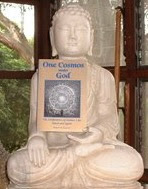
Likewise, it is One Cosmos. Here again, we all implicitly recognize this, or we wouldn't even bother to try to communicate. Indeed, if multiplicity were the ground of existence, then communication itself would be strictly impossible, because there would be no common, implicit substratum of meaning and reality. Frankly, to say "cosmos" is to say God, but let's take it nice and easy and enjoy some stops along the way, shall we?
Where do we start? It seems that we have two pairs of possibility: we can begin with multiplicity or unity; and we can begin with the subject or the object.
Don't fall for his trick! For it is always both: multiplicity implies unity, just as unity implies multiplicity. Likewise, there can be no object without a subject who apprehends it, nor any subject without objects to apprehend. In a word: complementarity, or, if you prefer, orthoparadox.
Schuon writes that "In metaphysics, it is necessary to start from the idea that the Supreme Reality is absolute." This is the Principle of principles, but you don't have to accept it. Again, you can affirm the opposite -- that the supreme reality is relativistic. But then you can stop, because the game is over. Congratulations, you've lost! But only forever.
I do have some slight disagreements with Schuon at this juncture, again, because of the Advaita Vedanta vs. Trinity thing, but we can agree that the Absolute must also by definition be Infinite. There are different ways to conceptualize or visualize the absolute. It is, as Schuon describes, "reflected in space by the point or the center; in time by the moment or the present," "in form, by the sphere," and "in number, by unity" (in other words, all numbers are multiples of one).
Think about this for a moment: each of these is a profound mystery, i.e., center, moment, unity. Each needs to be explained, not simply assumed. How is it, for example, that every human being is a unified subjective center of the cosmos, in each and every moment? Because we are the image and likeness of the Absolute, that's why. Our center is His Center (although His Center is not our center, if you catch my drift).
Many of Meister Eckhart's juiciest comments go to this reality. Let's see if I can dig one out.
--Every single creature is full of God, and is a book about God.
--The eye with which I see God is the same eye with which God sees me.
--Wherever I am, there is God.
--Being is God's circle, and in this circle all creatures exist.
--It is a joy to God to have poured out the divine nature and being into us, who are divine images.
--Outside of God there is nothing but nothing, and The divine one is a negation of negations.
--For you ask me: Who is God? What is God? I reply: Isness. Isness is God. Where there is isness, there God is. Creation is the giving of isness by God.
Those will do. As for me, it's the end of isness and the start of business. To be continued.