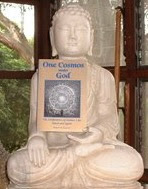
Monday, January 08, 2018

It's Hard to be Somebody

We're almost done re-Inventing the Individual. Sorry for the length, but it's not as simple and straightforward as we've been led to believe.

Your Right to Reality

Do we have a right to live in reality? For most of human history, the answer has been no, in the sense that people have been forced to live in someone else's vision or idea of reality.

It reminds me of what Thomas Sowell says about planned economies: every economy is planned. It's just a matter of who does the planning, unaccountable elites or private parties.

It indeed comes down to knowledge and power -- the power to be the Decider. For example, Obama and the Democrats have the power to define what constitutes economic knowledge of medical costs. However -- similar to Heisenberg's indeterminacy principle vis a vis position and momentum -- the more centralized power one exerts over economic realities, the less knowledge one has of them. Total power -- as in totalitarian states -- equates to total ignorance of price signals, and therefore of economic realities of supply, demand, scarcity, etc.

Moreover, the power is only illusory anyway, because there is no way for any human being, or even the most powerful computer, to ever calculate the potential interactions of millions of mutually dependent prices. That knowledge is essentially infinite, and therefore requires omniscience to calculate. It is not even calculation, just -- to use the technical term -- bullshitting.

To which Obama responds, "your point being?"

A Freehold in Reality

The left has spent the last century or so trying to replace the west's cosmic narrative with their new and improved version, but the problem there, as alluded to at the top of this post, is that it is simultaneously "unconstrained" (Sowell) while at the same time being highly constraining because it is forced upon us. It is like being forced into freedom -- freedom from reality. Which is no freedom at all.

It again goes to what was said above about who gets to define reality, but more importantly, who gets to define the reality in which we are all forced to live. For example, I live in California, a one party state in which no one has any input except for the unconstrained visionaries who want to control every aspect of our lives.

In California the Democrats even veto God, and insist that we decide what sex we are and that others recognize the delusion. So it's really "unconstrained for thee but not for me." The hypocrisy is built in, because it's never "power to the people" but "power to the right people." Liberal privilege, institutional stupidity, structural madness, and nonwhite supremacism are all very real here.

The other day I mentioned the obnoxious book on Indians my son is being forced to read. That's because in California it is against the law for a textbook to tell the truth -- or to not speak with a forked tongue -- about any officially sanctioned victim group.

That little preamble was provoked by the following passage in Inventing the Individual:

Since the time of Paul, Christian thought has been directed to the status and claims of humans as such, quite apart from any roles they happened to occupy in a particular society." Therefore, "It is hardly too much to say that Paul's conception of deity provided the individual with a freehold in reality (emphasis mine).

This is a remarkable development, for among other things, it "laid a normative foundation for the individual conscience and its claims." Truly, this turned the world upside down -- or brightside up, rather -- because it placed previously unthinkable limits on the state's power to define reality and force it upon the restavus.

Reality has many dimensions, both horizontal and vertical. For example, thanks to the state, we are never even freeholders of our own land, in that (at least in California) we must pay an annual property tax to pretend to call it our own. Nor do children have a right to the truth about, say, American Indians, or Islam, or homosexuality. As such, it is as if the state has a claim on that part of your child's mind.

I'm just about out of time for today, but the thought occurs to me that if we knew in 1900 what we know today, the left could be declared unconstitutional on first amendment grounds. Why? Because the economy is an information system that continuously conveys the facts about economic reality via prices. Therefore, to interfere with the economy in a massive way -- as in ObamaCare -- is equivalent to burning libraries full of books.

Leftists invert the old gag about knowing the value of nothing and cost of everything, in that they have no way to calculate the cost of what they value. No wonder the cost always rises, and is never enough.

Inward Mobility

The new interiority of Christianity had to deal with an existing world in which "people still celebrated bloody sacrifices, indulged in fortune-telling and magic, placed their faith in amulets and soothsayers, sought salvation through spells, and believed in superstition." Each of these represents an exteriorized from of religiosity. Only gradually was "the magical interpretation" of the world "robbed of its allure." And the temptation to regress is always there, as exemplified by every false god from Moloch to AGW.

Even the language of the the Middle Ages is difficult for us to comprehend, or to "think our way into," since its users were so different. As Friedwrites, cognition tended to be rooted in a situational and concrete as opposed to abstract and universal mode of thinking.

Likewise, familiar tools and concepts such as formal logic and cause-and-effect "were largely absent." Sometimes this resulted in failure to differentiate image from God: iconography easily descended to idolatry: "Many a simple-minded believer may well have identified the image with the subject depicted."

Again, this doesn't mean our forebears didn't know anything; rather, that they knew a very different world: "Within such a framework, no unity could be identified." Nor was there "any figure of abstraction separating the private from public realms." In this context, one can see the developmental leap required to intuit monotheism, which is another name for the ultimate transcendent unity of things, or their single ground and cause.

I've mentioned before how the severely mentally ill person can provide insight into the relatively sane, since his psychic content and defense mechanisms are so visibly hypertrophied and externalized. Just so, we can see how each and every one of these prior modes of thought persist today. We don't so much abandon them as integrate them into a more comprehensive system. I can have an icon of Christ on the wall without confusing it with Christ; we can be religious without conflating it with magic; we can believe in science without confusing it with ultimate reality.

"Individual" and "private" co-arise in history, as they are two sides of the same development. Just as liberty and private property are entirely bound up together, so too are individual and private self.

This lays the foundation for the profound political changes to come, for the unit of politics becomes the person instead of the family or group. Compare this to, say, the Arab-Muslim world, where the primary identification is still to kin and tribe, while morality is not a private matter but public conformity to sharia law.

The latter is quite different from the Christian view, in which the individual was encouraged to undertake a "strict accounting of himself" (in Siedentop). We must try to look at ourselves as God sees us. Indeed, "moral authority ought to imitate the condescension of God, seeking out and inhabiting the depth of the human condition." God goes all the way down and in, so if it's good enough for him, it should be good enough for the likenesses of us.

New Principles, New Worlds

New principles lead to new uprisings (to deploy one of the left's favorite buzzwords). This is because the mind must first rise up to a new vertical principle before awareness of it provokes a horizontal uprising -- or better, a down- and out-flowing, i.e., a clamoring to see the principle instantiated in the world.

For example, people have to first intuit that all men are created equal before regarding inequality as problematic instead of just being in the nature of things. Legal equality is a discovery, not a given. And once discovered it needs to be real-ized in the world, for which reason the Constitution follows the Declaration as effect to cause.

The moral intuitions prompted by Christian beliefs provided just such a basis "for an appeal against injustice that had not been available in the ancient world" (Siedentop). Thus, "the universalism of Christian aspiration had a subversive potential" unknown to that time, and still at work in the world today.

You could say that the universal subverts the particular, just as in science, whereby a more general theory subsumes disparate phenomena: ice and clouds, for example, are just different states of water.

Against this truly progressive approach is the modern superstition of multiculturalism, whereby the particular subverts the universal: for the left there is no objective or universal good except for the conviction that there isn't. Except when there is. I know. It's an inverted form of Gödel's theorems, whereby you get both incoherence and incompleteness from a leftist.

Regarding the invention of progress, "The idea of a more 'open' future was a symptom of Christian moral beliefs affecting the population at large." This was accompanied by "the rejection of fate and advent of hope," but this cuts two ways, since the new uncertainty brings with it new anxieties.

As someone once said, if you have no alternative then you have no problem. But the dawn of an open future that can be shaped by the individual brings with it a new burden of responsibility which some people, understandably, don't want to bear. Nowadays we call them liberals.

Today we talk about "upward mobility," but this was preceded by awareness of a new inward mobility. As Siedentop writes, people began realizing "that salvation did not depend upon social status," which contributed to a new "kind of imagined mobility, a moral standing that could be achieved rather than inherited."

Now, here's an ironic one: a critically important factor in the development of a common European identity was the contrast with a violent and expansionist Islam. The presence of a common enemy can cause people to appreciate a shared identity.

For example, leftists everywhere are proclaiming that "I am Charlie Hebdo." But it shouldn't take a mass murder for leftists to realize that they too are nihilistic peddlers of pornography, only more craven.

A better example is their universal hatred of Fox News, which is the only major media outlet that actually does critique Islam, only in a far more informative and measured way than Charlie Hebdo.

But you will never see hypocritical leftists proclaiming I AM RUPERT MURDOCH!, because their identity depends upon this shared hatred of conservative heresy. They will shout I AM ISIS! before admitting any common values with conservative liberalism.

Back when religious leaders weren't appeasement-mongering invertebrates, "The appeal by Pope Urban II for volunteers to halt the expansion of Islam... created in Europe a new consciousness of itself." Prior to this, "Europe had never been excited by one sentiment, or acted in one cause; there was no Europe. The crusades revealed Christian Europe."

No wonder leftists can't forgive the crusades and Muslims can't forget them.

Once again Islamic terrorists are trying their best to bring about a unified response, but leaders such as Obama refuse to even name the enemy, for it would engender the wrong kind of unity, i.e., a patriotic love for our way of life.

Rather, Obama's leftist worldview revolves around despising our way of life, so in that sense he's implicitly in agreement with the terrorists. This is a guy who spent two decades in a toxic mosque church that taught exactly this doctrine, i.e., GOD DAMN AMERICA! and all the rest. Terror is just leftism by other means.

So, "The crusades were truly a universal event, involving all strata of the population," revealing "'a people' with a shared identity."

Again, this is very much in contrast to the reigning dogma of multiculturalism, whereby the only thing that unites us is our differences (along with an unacknowledged, implicit unity derived from hatred of universalist conservatives).

If Islamists had wanted to invent a divide-and-conquer strategy, they couldn't possibly have come up with something more effective than this principled divisiveness of the left.

Liberal Distinctions, Leftist Con-fusions

One thing that comes through in Inventing the Individual is how the so-called middle ages ushered in so many vital cognitive distinctions that we take for granted. But man didn't always have these distinctions, nor do all men have them even today. To put it mildly.

In fact, Fried says much the same thing, although neither author devotes a separate section to the subject. Rather, the evidence is scattered throughout both books, so I'll attempt to pull some of it together here.

This probably sounds like a slightly dryasdust subject, but it definitely isn't, because it goes directly to our vision of the world. Without the proper tools, that vision can only be so deep, complex, and comprehensive.

Consider what happens when we chuck religious tools from our cognitive bag of tricks. It is not as if a hammer can replace the work of a wrench or screwdriver. But if that's all you have, you'll end up trying to pound religious screws into place with a hammer, which makes for an ugly and probably dysfunctional end product.

A big one is the distinction between secular and spiritual authority. Prior to this distinction there is only authority -- or power -- period.

But there is more to it than just keeping these two domains apart, because for one thing, they cannot be kept apart. That is to say, they are complementary, not "opposite." To imagine the latter is be a leftist.

But the leftist only pretends to deny spiritual authority while actually usurping it. In short, he regresses to a state of mind in which the two are still fused, and then subsumes the religious into the secular, thus ending up with either the omnipotent state or the cult of personality (or both, as in Castro or Kim). Put another way, he denies a primordial complementarity and then subsumes one side into the other.

As Hartshorne has explained, this is a common strategy for all kinds of tenured foolishness. You might say that pre-Christian neo-Platonists tended to default to the spirit side, while post-Christian sophists default to the material side. But how can one even begin to describe reality without including both?

And while it is possible to regard one side of a complementarity as the more fundamental, these folks always choose the wrong side, as, for example, Marx did to Hegel; a pox on both, but at least Hegel gives spirit its props, since it can theoretically account for matter while the converse is impossible without millions of corpses.

Again, once there is a distinction between the secular and religious realms, that is not the end of their interaction. We are still left with the question of what constitutes legitimate authority, and that is a question that cannot be answered by mere power, i.e., the secular arm.

Rather, that is always a spiritual question, for which reason the American founding is thoroughly grounded in, and legitimized by, spiritual principles, i.e., Nature and Nature's God. While there is of course secular authority, if it should become divorced from spiritual authority, the founders say that this invokes the natural (i.e., God-given) right of rebellion.

The purpose of government is to secure our God-given rights. And if government becomes "destructive of these ends, it is the Right of the People to alter or to abolish it, and to institute new Government, laying its foundation on such principles and organizing its powers in such form, as to them." Again, secular power is not self-justifying; rather, power is grounded in transcendent truth.

While we (conservative liberals) take this for granted, it took a very long time for mankind to draw these distinctions and to work out the political implications. As Fried writes, as of 1000 AD, "lords did not think in 'political' categories," for "the habit of thinking in categories was still only in its infancy then."

Thus, "There were no conceptions of 'domestic' or 'foreign policy,' or of 'politics' and 'the state.'" Indeed, "nobody would have understood them as templates for interpreting the world or for acting in a particular way, nor could anyone have associated a particular attitude with them or have advocated such a mind-set." Among other things, man had yet to recognize a clear distinction between mind and reality, or God and world.

As such, rulers looked to the world for signs and augurs; these "were everywhere to be seen for those who knew how to read them"; think of them as the pundits of the premodern world. Like our pundits, they all had opinions, usually wrong and immediately forgotten. They looked "to the sun, moon, and stars in the sky, in the natural world and among people, and even animals." The wrong decision might bring on the object lesson of a natural disaster, which "skillful interpreters could always be relied upon to proclaim their import with hindsight."

As man slowly individuates from the womb of nature, language undergoes a profound change, "engendering whole new sets of differentiating terminology, and bringing about advances in perception and an increase in the sum total of cognitive capacity." A new mode of thought emerges; you could say that this mode is capable of being critical because of the critical distance between subject and object.

Now, this critical distance between subject and object is a kind of "space" through which "new perspectives on and approaches to the complexity of the world and cosmos opened up." "[T]hings that had never even been imagined came into peoples' purview, while familiar things were seen in a new light" and "placed in a new relation to one another" (Fried).

From our privileged perspective, this space is "everything." Eliminate it and what's left, obedience to the state, or adherence to some state-funded ideolatry? Or perhaps a pre-political life of simply obeying one's impulses.

One implicit point made by both Fried and Siedentop is that freedom tends to emerge and flourish in the interstices between competing powers. But it took until the American founding to make this principle explicit. That is, the framers recognized that freedom is only safe when power is dispersed among competing interests. "The bigger the state, the smaller the citizen," as Dennis Prager says.

Which is precisely why the left sells us chains it relabels "freedom," as in "you're not really free if you don't have health insurance, therefore the state has a right to your body." To which we respond: why can't we have health and freedom? Why revert to a time when there was no space between ruler and ruled? Why deprive us of our God-given slack?

Friday, January 05, 2018

Unpopular Nonmechanics

Honestly, I didn't think it would be this long. I am, however, enjoying the ride. Being that I haven't read any of it since spellchecking it three years ago, it's like reading it for the first time, because it's difficult to see the forest for the typos. So, indulge me.

One overall impression I get from my writing is how incredibly unpopular I would be if only I were more popular.

Anyway, here is a summary of our progress thus far in reimagineering how the Christian west ever invented the individual:

"Christian convictions were submitted to the disciplines of logic and metaphysical speculation, to the requirements of disciplined argument." Importantly, the influence was two-way, in that "Greek philosophy was also transformed." In particular, "traditional assumptions about natural inequality and the motivating power of reason were gradually abandoned" (Siedentop).

The first sentence [third paragraph] of this post implies that the individual is something man could have tried to invent, but this is of course not the case, any more than we could have invented hands or bipedalism. Rather, it was spontaneously brought about by certain conditions. However, once it began to emerge, it in turn altered the conditions that brought it about: what was an unconscious process -- through greater self-awareness and -understanding -- became more of a conscious process.

For example, until fairly recently, no one gave much thought to the effect of certain environments and experiences on child development. Rather, children just "grew up," like any other plant or animal. But nowadays we hardly do anything without thinking about the impact on our child's development. We think about their friends, the parents of their friends, the TV programs they watch, etc. We realize that the child is a growing individual who sucks in influences from the world as a plant draws nutrients from the soil.

But you can't go to the other extreme and imagine that your child is something you only invent. Rather, it is very much a case of trying to help him become who he is -- to realize his potential, to recognize his gifts, and to exercise these in the service of God and man. From the start, both my wife and I have been overwhelmed by the impression: Where did this guy come from? No way in the world could we have invented him! There has never been any shock of recognition; rather, the opposite: the shock of an alien in our midst.

So you can't really know what kind of parent you'll be until you meet your child and find out what kind of parent he needs in order to become who he is. But here again, it is obviously not a one-way process.

For example, the other day I read something about crazy Angelina Jolie, who is allowing her children to "choose" their own gender, with absolutely no hint (she pretends) of parental influence or preference. Thus, her eight year old girl Shiloh is pretending to be a boy named John.

To whom is this supposed to be helpful? It can only be to appease some of Jolie's most primitive and destructive mind parasites. Even in a sanitized version, here is a person who, at age 14, "aspired to become a funeral director," "wore black clothing, experimented with knife play, and went out moshing with her live-in boyfriend." She "suffered episodes of depression throughout her teens and early twenties," "found it difficult to emotionally connect with other people," and engaged in "self-harm," which is to say "the ritual of having cut myself and feeling the pain, maybe feeling alive, feeling some kind of release."

Apparently the self-cutting wasn't that effective, because she "began using drugs; by age 20, she had tried 'just about every drug possible,' including heroin."

No, we didn't intend this post to veer in a sensational direction. I am no more interested in celebrity gossip than you are. But perhaps we can learn something from this, so let's see where it leads.

"Jolie has had a difficult relationship with her father." No. Really? Didn't see that coming.

Hmm. "She gained a reputation for being difficult to deal with." My guess is that this is because all borderline personalities are difficult to deal with. If you've never had a borderline person in your life, count yourself blessed. Back when I was in graduate school, there was an axiom: never try to have more than one borderline patient at a time in your practice, because they can turn your world upside down. You know, you come home and there's a rabbit boiling on your stove, or your dog has been poisoned.

Speaking of sexual confusion, Jolie is proudly bisexual: "Of course. If I fell in love with a woman tomorrow, would I feel that it's okay to want to kiss and touch her? If I fell in love with her? Absolutely! Yes!" So, this mind parasite is a gift that keeps giving, in that she is now passing it along to her children.

Here is prima facie evidence of borderline personality structure, which is characterized by extreme impulsivity, essentially because the impulses are coming from different sub-selves that are split off from one another. When one sub-self switches into gear, it displaces the other one: "After a two-month courtship, Jolie married actor Billy Bob Thornton." What took her so long? But then they "abruptly separated." What happened there? "It took me by surprise, too, because overnight, we totally changed. I think one day we had just nothing in common."

Nothing. Which is just the other side of an imaginary fusion of everything that results from an absence of boundaries.

One thing about money is that it can insulate you from the effect of your own mind parasites. You can be as crazy as you want to be, with no feedback from the world. And with no corrective feedback, there is no way to learn and grow, so the mind parasites win by default. This is why it so often seems that actors and rock stars all live out the same clichéd pattern. Instead of becoming themselves, they grab a mask from the ancient gallery and live out some predestined pathology (as indeed did Jim Morrison and so many other members of Club 27).

Now, where were we? Let's just say that this new space of potential individuality cuts both ways. Prior to its emergence -- and still in much of the world today -- one doesn't have this potential space. Rather, as in the ancient world, one's self is defined by culture, by family, by class, by caste, by race, etc. There is very little wiggle room to be anything other than a role that has been pre-selected for you.

Having said that, there are some critical things that have been conveniently pre-selected for us, and of which the accumulated wisdom of tradition is here to remind us: little things like, oh, one's sex. We don't invent everything about the self, for this would equate to nihilism or even blind tenure. Rather, there are some spiritual set-points, just as there are for any species. A newborn calf doesn't have to go through the process of deciding if it prefers meat over grass. That has already been settled.

Now, humans, unlike animals, are not bound by instinct. However, that is not to say that we have no instincts. Rather, for the human being there are certain universal archetypes that are like nonlocal attractors, or "vertical instincts."

Speaking of which, in The Book of Words, Rabbi Kushner writes that we may "exercise more 'freedom' by simply trying to be who we are and, in so doing, become who we are meant to be." "In moments of heightened awareness," we may have the sense of "rising to our destiny" (as opposed to sinking to our fate, which is what mind parasites facilitate). Thus, "We are 'free' to be what Heaven has intended us to be or not, but we are not free to be something else."

Just as there is an intersubjective space of individuation between oneself and other human beings, there is a vertical space between the individual and God. Within this space there is a two-way flow of influences and attractions (for even the earth exerts a tiny amount of gravitational attraction on the sun).

Maybe it's a little orthoparadoxical, but I have no problem with it: "A person's actions thus have a profound effect on bringing the Creation closer to its perfection. These individual acts of free will on the part of a person constitute the 'arousal from below'" (what I symbolize [↑]).

At the same, there is the "arousal from above," or (↓): "At every moment God Godself acts to draw the Creation toward perfection.... Yet ultimately these two levels of free will are not separate. They are both aspects of the same thing. The 'arousal from below' sets in motion processes in the worlds above. Conversely, the power to cause the 'arousal from below' to come about is only in the hands of Godself" (you know -- like some kind of grace or something).

I recommend that you just say yes to this grace, because saying no will land you nowhere, in both this life and the next. Of which this life is a kind of inspiraling shadow-becoming-substance.

The Feminist Dilemma: How to Find a Wet Noodle in a Stack of Brown Bananas

"Any set of basic assumptions opens up some avenues for thought, while closing down others" (Siedentop). Although Christianity provides just such a set of basic assumptions, it required centuries for the implications of these "to be drawn out and clarified -- and even more time would pass before long-established social practices or institutions were reshaped by these implications."

This was a conservative revolution -- the only kind of revolution that actually succeeds -- because it started with the way the world actually is, instead of imposing an abstract ideal on it, which always ends in violence and regression, since it unleashes the worst in man under the guise of the best. See Islam and leftism for abundant examples.

Those twin malignancies close off the pragmatic past in the name of an impossible future, while Christianity tries to open the present to the influence of a higher mode of being, resulting in change that is both organic and rooted, thus more robust (plus in accord with human nature).

Which is why Obama is always urging us to yield to the FIERCE URGENCY OF THE NOW!, so we don't notice what he's really up to. Or in other words, "Time is running out to do something stupid and irreversible. Act now!" (Williamson).

Yes, “'Now!' is a rhetorical short circuit, a way to preempt anyone’s thinking too deeply about a proposition." It "is the eternal cry of the infantile -- 'What does baby want? Diaper change! When does baby want it? Now!'" (ibid.).

In contrast, positive change preserves continuity, which is a central point of the Incarnation, since it serves to bridge the otherwise unbridgeable gap between man and God. In short, we get the benefits of heaven with all the conveniences of our own embodiment.

But again, it takes awhile for that to sink in and up.

For example, think of how the Islamists impatiently blew up those ancient Buddhist statues, or how the left has been busy blowing up western civilization for the past 50 years or more.

But Christianity planted itself within the existing paganism, and simply Christianized its sentiments, gods, and rituals. Aligning the birth of Christ with the winter solstice "is only the most obvious example" of appropriating "the advantages both of change and continuity."

Doing so was analogous to plugging an existing wire into a higher source of energy. Once plugged in, the energy began reshaping practices, beliefs, and institutions, nowhere more dramatically than in the family. Frankly, it "destroyed the ancient family as a cult or religious association" (Siedentop).

You might say that before there could be a separation of church and state, there first had to be a separation of church and family, and in particular, God and father. The family was still sanctified, of course, but as an icon of God, not the thing itself. Now the terrestrial father had to answer to a higher fathority.

As a hopefully brief asnide, I wonder how someone ends up being as deeply confused as this toothache with a vagina, who asks -- or tells -- us How to Find a Feminist Boyfriend.

The first thought that occurs to me is to simply find a toothache without a penis, which shouldn't be hard to do, last time I checked dailykos.

But let's be quasi-serious for a moment: the same energy that causes those Islamists to deface works of art is what motivates the left to blow up our own beautiful traditions, marriage being just one of them.

The difference, however, is that the left has been deeply conditioned by the Christian message, where Islamists haven't. Therefore, we see in the left a perversion of Christian principles, or a neopagan rebarbarism of that from which Christianity is supposed to save us, now promiscuously fertilized by faux-Christian principles.

This is analogous to how Islamists use the highest technology for the lowest ends. In other words, they adopt a technology that they themselves could never gave invented -- because they are so primitive -- for the most primitive purposes.

In the case of the left, they take a morality that they lack the principles to invent (let alone discover) -- say, marriage -- and twist it to their own base ends. Leftists, of course, believe in "homosexual marriage." But why? How did they come up with this notion of "marriage"? That's right: they just stole it. However, being that they are mixing the Christian higher and pagan-lower, they can have no principled objection to polygamy, to inter-species marriage, to sibling marriage, to even Angelina Jolie, all pseudo-sanctified by that same purloined word.

"How do you spot a male feminist if he’s not at an abortion rights rally wearing a 'This Is What a Feminist Looks Like' T-shirt?"

He's the one not shuddering at that sentence. He's the one in whom your prose doesn't trigger the gag reflex.

"Few guys will proudly say no when asked if they’re feminists."

True, so true. Only 62% of white males didn't support President Unicorn in the last election, so there's still a very large pool of castrati from which to draw.

And if you can read the next sentence without cringing, you are on the shortlist: "feminist daters -- male or female, gay or straight -- aren’t constrained by gender roles."

For the feminist, gender is everything, but for the purpose of being nothing. It is nihilism masquerading as gender, for to be a feminist is to treat femininity with the subtlety of an Islamist art critic.

"A true male feminist is supportive of, interested in and enthusiastic about his partner’s career."

There are not many men whose careers interest me. Why should I care what a women does, unless it's something intrinsically interesting, like raising children? (Show me the man who is attracted to a woman because of her job, and I'll show you a pole dancer. --Cousin Dupree)

Did you know that homosexuals aren't perfect? I've never heard a leftist acknowledge this before. For example, there are "gay couples who are so rigid in their gender division" that "one man doesn’t want his partner to work, wants him to stay home with the kids.”

That makes their other problems sound trivial, like shorter lifespans, higher incidence of mental illness and other diseases, inability to sustain monogamy, increased substance abuse, etc. Well. Those are just because mother nature is a homophobic bitch.

"If you’re a woman who wants a man to grab you and kiss you because that’s what sweeps you off your feet, realistically, a feminist man is not going to do that."

No, a feminist man will require you to fill out a signed affidavit in triplicate in the presence of a notary public. And any sweeping will be done with a proper broom and apron, thank you.

You know, "I might be cool with casual sex, but that doesn’t necessarily make me this ‘cool girl’ who’s detached from emotion."

No, in my experience it makes you a developmentally arrested little girl who is using sex to fulfill various unconscious needs that cannot be consciously entertained. We used to call them "sluts," because their desperation is so close to the surface and they are so easily manipulated by men who have a complementary sexual agenda.

There is no doubt that throughout history there have been women who, for whatever reason, have been conflicted about being one. But only in the modern world do they have so many options to act out their conflict without insight and therefore without hope of change. That's what you call progress.

Conservative Progress and Progressive Decay

As Siedentop suggests, we should not be surprised that "a religion which postulated the incarnation -- a God who is 'with us' -- would change the understanding of time itself, holding out a hope that undermined older beliefs in a relentless cycle of growth and decay."

For the ancient mind, there was either stasis or decay. The purpose of religious ritual, for example, was to pull the world back toward its divine archetype and thereby counteract entropy: time is entropic whereas primitive religious rituals are negentropic.

But with the widespread acceptance of Judeo-Christian metaphysics, time becomes negentropic; or, to be precise, time has elements within it of both entropy (decay) and growth. And the growth is again inconceivable in the absence of the divine attractor, proximity to which is the real measure of "progress," both individually and collectively.

In the absence of the divine attractor, time, whether we like it or not, reverts to entropy. This is why it is such a vivid example of the Butterfield Effect to wonder at the paradox of why culture is decaying despite the dominance of the left. Rather, it must decay under the influence of leftist assumptions.

Equally ironic, in light of yesterday's post, is that no force in history has been more liberating of women than Christianity. Here again, writes Siedentop, we should not be surprised to see new "declarations of independence by women" as a consequence of "Christian belief in the equality of souls." In particular, more affluent women began taking "on new roles. They became patronesses, disciples and travelers. They prized associations with leading Christian intellectuals. They used associations with such men to further their education."

Did this take time? Of course! Time is progressive, remember? In particular, it took centuries for the Christian message to undo the programming of culture. The world has always been multicultural, only worse. It is one of the main things from which the universal message of Christianity is supposed to save us. Thus, it would be another instance of the Butterfield Effect to wonder why there is so much more racial tension these days despite all this wonderful multiculturalism.

By way of contrast, even a genius such as Aristotle claimed that "some are free men and others slaves by nature" (in Siedentop). But this is not the angle from which Christianity looks. Rather, from the God's-eye perspective we are equally worthy, at least until we misuse our God-given free will. Then God sorts the wolves from the sheep, the flowers from the weeds, the evolved from the tenured.

Discovering New Worlds within Worlds

"Every set of beliefs," writes Siedentop, "introduces its own logic and its own constraints."

Secular types imagine this doesn't apply to them -- as if it is possible to approach the world without any beliefs, assumptions, or principles whatsoever -- but this is analogous to a computer with no program, or a game with no rules. Furthermore, many of our deepest assumptions are innate and inbuilt, even limiting ourselves to the horizontal. Call it the "wisdom of the species," if you like.

Come to think of it, we have in the past discussed those four annoying limitations or infirmities that constrain every man, every time, here for example:

First, we are "creature, not Creator, manifestation and not Principle" (Schuon). Second, we are not angels; we are neither at the top nor the bottom of the vertical hierarchy, but somewhere in the middle -- which, of course, goes to the issue of free will, as we are suspended halfway between our better and worse selves, between the saints and the Sharptons. Third, as unique individuals we have essential differences that are not accidental or contingent. This is not a matter of "ego" but of self, i.e., our divine clueprint.

The fourth infirmity touches on what we usually think of as sin, since these are the differences that are accidental or contingent, not essential. More often than not they are a result of mind parasites of varying degrees of virulence, but sometimes they are simply a result of inertia, convenience, dullness, conformity, credulousness, absence of curiosity, or tenure (i.e., all of the above). (More fine insultainment here.)

At any rate, a primary difference between Christians and secularists is that we are candid in announcing our metaphysical assumptions up front, while they either pretend they don't have any, or else lack the cognitive sophistication to understand what they are.

For example, the most dense among them -- e.g., what's his name, the glorified planetarium gift shop manager-- Tyson? -- unwittingly deny all of man's intrinsic infirmities, which is why they can be such inappropriately confident yahoos. But even denying infirmity #1 lands us in all sorts of trouble. To quote myself:

"The first is the Biggest, which is why it is enshrined in the First Commandment: sorry, but you are not God. You are 'creature, not Creator, manifestation and not Principle or Being.' In fact, only the godless can be unaware of the fact that they are not God, which is probably the greatest source of their political mischief. As Obama might say, if I had a God, he'd look like me."

Back to the new logic and constraints brought into the world by Christianity. These two are different but equally important.

With regard to logic, Christianity furnishes certain premises which man must work out on his own (with the assistance of grace, of course). With regard to the constraints, certain avenues of thought become either unthinkable, or, more to the point, unworthy of thought: they are cognitive nul de slacks. At the same time, certain behaviors are off limits, say, cutting open a live human being in order to see what's going on inside. For now man is aware of "a 'moral' law distinct from custom or human command."

As it so happens, my fourth grade son is being forced to read a nauseatingly politically correct book about the Indians. For the sake of equal time, I pulled out my copy of D'Souza's America, which has a chapter on the Indians. At the beginning he addresses the objection that Columbus couldn't have "discovered" America, being that there were already people here. But this ignores the deeper point, that it was a European who landed in America, not a native American who landed in Europe. There are important reasons why the latter was never going to happen, at least so long as Indians remained Indians (which is to say, neolithic, tribal, preliterate, etc.).

One central reason is that the discovery of this new material world followed in the wake of the prior discovery of another new world: the human interior. I hope I'm not beating a dead hobby horse, but one of the reasons I am so drawn to this book is that Siedentop shares many of my ideas about the emergence -- or discovery -- of this new interior world.

For example, "The sharp edge of the moral sword wielded by churchmen cut through to -- and exposed -- an 'awareness of self'.... in its essentials, the realm the clergy claimed for themselves and sought to defend was unseen. It was within." He quotes one representative churchman, who said that God "resides in us like the soul in our body... Ever must we cling to God, the deep, vast, hidden, lofty and almighty God."

This is one of those notions that now seems second nature to us, but it was a radically new conception at the time. I don't have sufficient time to be systematic here, so I'll just cite some additional examples from Siedentop. He references the historian Guizot, who claims that "If the Christian Church had not existed, the... world must have been abandoned to purely material force." The Church "spread abroad the idea of a rule, of a law superior to all human laws."

Although modern secularists may regard this as some sort of "oppression," it was in fact a liberation, an important part of the truth that sets us free. And as we have been acknowledging all along, it took many centuries for the message to sink in and change man from the inside out. But change it did. There is a reason why even (most) secular westerners cannot conceive of, say, murdering a writer who pokes fun at the messiah while screaming obamahu ackbar! Rather, they just hack your computer.

The discovery of this new interior world contributes to a growing awareness of the distinction between power and authority, or force and right, or spiritual and temporal power:

"The separation of temporal and spiritual power is based upon the idea that physical force has neither right nor influence over souls, over conviction, over truth. It flows from the distinction established between the world of thought and the world of action, between the world of internal and that of external facts" (ibid., emphasis mine).

Siedentop continues: "Distinguishing spiritual from temporal power rests on the premise of individual conscience," for "there must be a sphere within," a God-given "area of choice, governed by conscience." Or just say horizontal freedom guided by vertical constraint -- constraints which must equally apply to terrestrial rulers (the "rule of law").

Today's bottom line: "Increasingly, acknowledging that subjects had souls was making a difference to the question of what constituted proper governance. It was another step in inventing the individual."

Thursday, January 04, 2018

Outward Revelation and Inward Revolution

Another long one on Inventing the Individual: The Origins of Western Liberalism. Hey, it's a big subject -- the biggest -- and someone's gotta cover it.

Stop Contaminating Our Outside with Your Inside!

One thing that comes through in Inventing the Individual is the gradual historical differentiation of various spheres, powers, and concepts that had previously been merged. Most of these are things we take for granted, because they seem so fundamental to our experience, for example, the notion of a private self.

In a way, it is analogous to biological development, which is teleologically drawn toward differentiation and specialization. Think of how we all transition from zygote to blastocyst to fetus, as cells slowly differentiate into specific organ systems. Well, it is the same way with human development, both individually and collectively.

Most of the sciences were once fused with what we now know of as mythological approaches; for example, astronomy emerged from astrology, chemistry from alchemy, and meteorology from primitive superstitions about manmade climate change.

Let me see if I can compile a list of the differentiations that were hastened if not brought about by the gradual assimilation of Christianity: private from public self; inner from outer; individual from family; person from state; woman from man; child from father; law from custom; voluntary from compulsory; science from magic; and more.

One of the most foundational of these is the gradual differentiation of inside from outside, which is most definitely an ongoing affair. For example, mental illness almost always involves some conflation of inner and outer. Take a person with agoraphobia, i.e., fear of leaving the house. The fear is real, but what is she actually afraid of? Of the outside, or of her own inside -- her own mental content -- projected outward? Obviously the latter.

Sometimes entire political movements can be rooted in this atavism, for example, oh, THE WHOLE FREAKING DEMOCRATIC PARTY! The list is endless. For example, feminists tell us that there is a one in five chance of being raped in college, whereas FBI statistics say that it is actually about a .06 chance. So feminist paranoiacs multiply the threat by a factor of . But whatever the factor, it is not a factor of external reality, but of internal reality projected into fearsome men. Which I find fascinating.

Or, the left's complaints about the so-called 1%. This generous 1% pays 40% of the income tax. The 3% pays over half, and the 10% pays 71% to subsidize your lifestyle of being a professional complainer, since your half only accounts for 3% of federal revenues.

Likewise, are blacks really unfairly targeted by police? The short answer is of course no. Not only that, but both blacks and whites are in reality unfairly targeted by black criminals. The latter is the objective, verifiable truth, whereas the liberal belief is again a projection of the interior into the exterior. Which we wouldn't mind if they didn't proceed to act on the belief, as did the recent police assassin.

Do women really earn 77 cents on the manly dollar? No, of course not. That's just economics being infected by mind parasites. Do 97% of scientists believe in AGW? No, again, that's just some kind of projection of superego authority into omniscient science.

A critical point is that science only became possible with this withdrawal of psychic projections from the external world (I have posted on this subject a number of times, plus it's covered in the bʘʘk). Siedentop only touches on this, but it's nice to have a little scholarly back-up for the common-sense revelations given to me by Petey.

Abelard reminds us that Christ said I am truth, not I am custom, or opinion, or political correctness. Which is why I believe any truth is a function of the All-True, and why I have no concern that any new truth could possibly undermine the One Truth. Rather, it's all Good. Literally, because the Good and True converge in the Beautiful Three.

One of the problems of ancient thought is that it was often too reliant uoon deduction from a priori principles. Conversely, it distrusted the empirical world as an ever-changing illusion, so it was very weak on induction. Thus, the development of science was hindered by Aristotelean assumptions such as the belief that the celestial sphere must operate on different laws than the terrestrial, or that things "seek" their home instead of being pulled there by gravity.

"The Christian preoccupation with 'innerness' and human agency -- an intensified awareness of the difference between 'inner' and 'outer' experience, between the will and the senses -- contributed to a veritable outburst of logical studies in the twelfth and thirteenth centuries" (Siedentop).

Note that this is prior to the scientific revolution that it rendered possible, for "It reflected a growing distrust of the coercive potential" of extra-mental "general terms or concepts." In other words, it was necessary to stop projecting these concepts into the world, and actually examine the world without preconceptions.

One of the preconceptions that had to be eliminated was teleology. But then science become re-conflated with a new conceptual abstraction that literally banished teleology, instead of simply excluding it for the sake of scientific method. As we will see, there are many Christian ideas that became detached from Christianity, only to return in a more primitive way.

One of the biggies is liberty. The very same liberty that was only made possible and intelligible via Christianity has been hijacked by the left and rendered absurd and destructive. With Christianity, individual and collective are irreducible complementarities, I would say due to the trinitarian structure of reality. But the left posits a radically detached individualistic interiority and fuses it with the exterior collective of the coercive state, in a wholly unholy alliance.

And the Naughty Word Becomes Flesh: Terror, Microaggressions, & Hallucinations

Yesterday we were discussing the historically gradual separation of interior from exterior, or subject from object, or psyche from environment. Of course, this first required the discovery of the interior, which is another way of saying the invention of the individual.

Importantly, this is both discovery and invention; like any new land, we cannot discover it without simultaneously changing it, at least if we are going to actually live there. And once there, it is hard to revert to the state of pre-discovery and put the truthpaste back in the tube. In other words, it is very difficult for us to know what it was like to be a pre-individual hive-person. Unless you've been to graduate school, in which case you might have a feel for it.

And yet, we do see reversion to pre-individual ways of being, for example, in the liberal mob. A liberal by definition rejects or falls short of his concrete individuality and instead identifies with an abstract group of some type, usually a persecuted one. But the persecution, at least in America, is usually a projection of the interior into the exterior.

If this were not the case, then, say, Thomas Sowell (and other black thinkers such as Jason Riley) would be as freaked out about our omnipresent racism as Obama, Sharpton, Holder, and the rest of the left wing rabble. But he's not at all freaked out about it. Rather, like any sane individual -- or, let's just say individual -- he is concerned about the bill coming due on the left's flagrantly irresponsible use of the race card to purchase power.

Let's put it this way: if you believe, as does Obama's spiritual mentor, that America should be damned, then these murdered police officers are just more chickens come home to roost. It's the price of progress.

As Sowell writes, "No politician in the country has done more [than deBlasio] to play the race card against the police and spread the notion that cops are the big problem in minority communities." This is what happens -- and perhaps should happen -- if the black community is really a "'colonial' society being 'occupied' by white policemen who target young blacks." If you were in that situation, wouldn't you lash out violently?

So, as I said yesterday, this separation of inside from outside is very much an ongoing struggle, for some populations much more so than others.

Example?

Consider the Eleven Most Politically Correct Moments on College Campuses in 2014. Let's look at the first: "microaggressions." What is a microaggression? As they candidly acknowledge, it has no objective definition, since there is no such thing as truth anyway ("there are no objective definitions to words and phrases").

Therefore, a microaggression is anything that offends a liberal for any reason at any time. Follow this insane logic to its ultimate end, and feelings become the only arbiter of reality. From here it is but a step to totalitarianism, which differs from mere tyranny, in that the latter doesn't care what you think, only what you do. But the leftist totalitarian cannot tolerate deviant thoughts, and tries to exert control over interiors.

So, if you find yourself being accused of microaggression, you really need to ramp it up and be more aggressive. And if you're not accused of microaggression, you need to grow a pair and start offending these victim-bullies.

Look at #2: feminists are somehow upset that someone invented a nail polish that changes colors when it comes into contact with the so-called date-rape drug. That's a good thing, isn't it? NO! "I don’t want to fucking test my drink when I’m at the bar... That’s not the world I want to live in.” The latter part is the operative principle of the left: That’s not the world I want to live in! And You'd better conform yourself to mine, or else!

Yes, but... this is the only world there is.

Not true. As we have discussed in the past, just as, in terms of economic development, there is the first world, second world, third world, etc., there are various psychic worlds inhabited by different populations. Al Sharpton's world is not our world, because, among other reasons, his is a demon-haunted world peopled by projections of his own sociopathy. Does it surprise you that a sociopath should see sociopathy everywhere, or that envious people see greed everywhere, or that racists see race everywhere? Then you are not Raccoon material.

#3: promoting anti-rape culture is just another form of rape-culture, since men shouldn't have to be told to respect women. Feminism is sort of like the Ex-Wife From Hell, only in collective form, isn't it?

First of all, these women don't even want to be respected as women, because they have rejected their own femininity (which is no doubt a big reason why the men around them behave the way the do; if you think men are hateful, don't be surprised if your world is peopled by hateful men, as per the above).

Such ovary tower feminists are desperately in need of a strong and virtuous man to put them (meaning the sick part that is screaming for help) in their place. Short of that, there is no cure for their female psychosis. Healthy females know exactly what I'm talking about, and won't perceive any aggression whatsoever in this observation (except perhaps in the way that spiritual combat must be "aggressive," or at least firm, in the face of hysteria).

It also occurs to me that "angry feminist" is a pleonasm, like a Palestinian "day of rage." What is the difference between a day of rage and any other day?

Speaking of our Muslim friends, my attention was also arrested by this interview with a member of the Islamic State. They too project their interior into the exterior, which is the sole source of their motivation. In other words, if they were to withdraw their psychic projections, they would have absolutely nothing to do but sit in the sand all day and contemplate the pathetic state of the Islamic world. But by projecting this into the west and attacking it, it converts weakness into strength, and every day can be a bracing new day of rage.

The projection obviously feels quite real, scarcely different from a hallucination: "there were 50 new fighters who came every day.... And I just could not believe the glow in their eyes. They felt like they were coming to a promised land, like they were fighting for the right thing."

Thus, there are real physiological changes that take place with the new reality, surges of adrenaline, testosterone, dopamine, serotonin, and other vivifying and self-rewarding hormones and neurotransmitters. The fantasy becomes even more real in this way, as the insane word takes on flesh.

As with the left, regress equals progress, since they live in an inverted world: "Slavery absolutely signals progress.... I would say that slavery is a great help to us and we will continue to have slavery and beheadings, it is part of our religion."

Multiculturalism. Isn't it beautiful?

Memo to feminists: this is what rape culture actually looks like:

"[C]apturing women is permissible if they are nonbelievers." If the slave is "a virgin, he [the owner] can have intercourse with her immediately after the ownership is fulfilled." However, "If she was not a virgin, her uterus must be purified." (Don't ask.)

What about underage girls? Please. These are not barbarians. There are strict and even convenient rules of engagement: "It is permissible to have intercourse with the female slave who hasn't reached puberty if she is fit for intercourse.... However, if she is not fit for intercourse, he [the owner] can only enjoy her without intercourse."

Proof of God Discovered in the Last Place Man Searched

I've read in a number of places that Augustine's Confessions is the first true autobiography, the first example of an unstinting exploration of the human interior -- not in a generic, mythic, or self-serving sense, but in an intimate, critical, and confessional sense.

Note also that the dialogue is between Augustine and God; it takes place in the vertical space illuminated by the divine presence. It is not about exterior reality except insofar as it reveals the interior.

Siedentop quotes the historian Peter Brown, who observes that "The Confessions are a manifesto of the inner world: 'Men go to gape at mountain peaks, at the boundless tides of the sea, the broad sweep of rivers, the encircling ocean and the motions of stars: and yet they leave themselves unnoticed; they do not marvel at themselves.'"

Yeah, well, what about Obama? Does he ever stop marveling at himself? That is the problem: he has the marveling down, but he is both marveler and marvelee. In other words, he excludes the Creator from the loop, which reduces to simple narcissism.

Brown continues: "A man cannot hope to find God unless he first finds himself: for this God is 'deeper than my inmost being,' [so] experience of Him becomes 'better' the more 'inward.' Above all, it is man's tragedy that he should be driven to flee 'outwards,' to lose touch with himself, to 'wander far' from his 'own heart': 'You were right before me: but I had moved away from myself. I could not find myself: how much less, then could I find You'" (he's obviously quoting Augustine in there).

Ironically, Obama made his name by [allegedly] writing his own Confessions. But although both go by the name "autobiography," it would be difficult to find two more antithetical texts. After all, Mein Kampf is an autobiography. Taking that as an extreme case, does it really tell us about Hitler, or about his pathological projections into the world?

In other words, any actual insight into Hitler himself is accidental. Being that he lacked all insight, the only way to understand him is via his external actions. What he says about himself is of no consequence, since he would be the last to understand his own real motives, which were as concrete and unexamined as rock.

Here is the orthoparadoxical deal: is it possible for man to discover and know God? Yes and no. Even prior to this, is it possible for man to discover and know anything? Yes, so long as he has the sensory equipment for the job, and his mind is able to conform to the object or reality in question.

In other words, we must make ourselves adequate to the object of knowledge. So in one sense "the world" is prior, and we must adapt to it. But in another sense, world and mind co-arise; as our knowledge increases, it is as if the mind extends more deeply into reality, as, say, quantum physics goes further than classical physics.

I would say that it is no different with regard to God. Analogously, the quantum world was always "there" even before man ever discovered it. Likewise, God was always there prior to the appearance of man, of life, or even of existence itself. But in order to know this God, there must be a subject capable of knowing him. Therefore, one could say that God and man "co-arise" and "co-evolve," so to speak -- even though, like the world, God is obviously prior to our discovery and elaboration of him.

When did man discover God? In one sense this is impossible to say, since it occurred long prior to any form of written documentation. But in another sense it can only have occurred in one way, since man and God not only co-arise, but are two sides of the same coin. To say that man is the image and likeness of God is to posit this axiom. As man learns more about himself, he learns more of God; and as he learns more about God, he learns more about himself, in an ever-deepening spiral of interiority.

Siedentop: "The Confessions provide us with a story, not primarily about the development of Augustine's mind, but rather about the development of his 'heart' or 'feelings.' The search for God proves to be a search for the only 'delight' that is not precarious or illusory."

This search involves "a mysterious merger of intellect and feeling," and is very much counter to the then-prevailing idea that reason alone is sufficient to understand the world. Reason is ultimately a circular exercise, since it cannot furnish its own premises, nor does it have the power to motivate man.

Rather, motivation -- the will -- must involve the heart. Thus, "Opening oneself to the action of grace" is "the only way out of such a vicious circle." This opening is not only intersubjective, but the very foundation and possibility of intersubjectivity itself. It is an icon of the primordial Relationship that is God.

"Reconstructing the self -- by opening the self to the work of grace -- led Augustine to focus on the human will and on the conditions of its exercise." There is "almost incredible self-consciousness in his writing," which is precisely why so many have attributed "the birth of the individual to Augustine."

For just as history, in the absence of God, can be nothing more than the meaningless sound and fury of tenured tautologues, the absurcular babble of the godless rabble is just the mental masturbation of so many infertile eggheads -- heads which must be fertilized from above in order to bear good fruit...

Boldly Growing Where No Man Has Grown Before

Yesterday we were discussing Augustine's Confessions, which are a "manifesto of the inner world," the latter being the real final frontier. His was the first true autobiography, boldly going where no man had gone before and chronicling the interior voyages of the soul-ship Innerprize. In so doing, Augustine not only explored strange new worlds, but spoke of a new life (in God) and a new civilization (the City of God).

This, I think, is a key point: that the Confessions are a dialogue with God. Thus, the invention of the individual is not, and could not be, "an exercise leading to isolation."

Rather, to the extent that it does lead to isolation, then something has gone awry: your psycho-pneumatic system is not open, either vertically or horizontally (or both). Isolation, among other things, is a failure of love, and if God is love, then there you go.

To put it another way, in order to invent the individual, it is first necessary to invent the group. In terms of the overall arc of salvation, the Jews constituted the group into which God could insert himself as quintessential individual. Jesus would have made no sense in any other context (and he sometimes barely made sense in this one, even to his closest disciples).

Imagine if God were a mere "one," an absolute monad, unrelated to anything but himself. If this God were to incarnate, it would be in the form of power, or a kind of isolated exaltation. No one could compare to him, in contrast to Jesus, to whom all may compare themselves (e.g., "the imitation of Christ"), and indeed is the eternal standard of comparison.

Now, in many ways, to say individual is to say will. In other words, our individuality manifests in the form of consciousness of choice, and by extension, of necessity. To be aware of necessity is to implicitly know freedom, and vice versa. According to Siedentop, what we value as freedom is the end result of hundreds of years of meditation on, and articulation of, (Judeo-) Christian moral intuitions.

For example, to be given the Ten Commandments implies the freedom to obey them or not. On the one hand they represent constraints on freedom, but this is for the purpose of conforming ourselves to a higher will in a higher world.

Analogously, you don't place a fish on dry land and say to him: "there you go, free at last from the water!" The Law is like the water that simultaneously constrains and frees us.

For Augustine, it's all about "transformation of the will." Think, for example, of what happens when the will infects the truth (because it is detached from it). What happens is the left, or knowledge piggybacking on desire, belief on make-belief, Is on Ought. The leftist ultimately sees what he wishes to see, which is like a bad parody of the Higher Eccentricity of the Raccoon. Leftists are weird, but not in the Good way.

Not to imply any manichee business, but it seems to me that, as the intellect may conform itself to truth or falsehood, the will may move toward the light or the dark. As one apostle put it, the light shines in the darkness but the darkness does not comprehend it.

This is the same Light "which gives light to every man who comes into the world." Every one. Not just kings, or aristocrats, or priests, or men, but every person qua person. This itself implies individuality and equality. We may all seek redemption because we have all equally fallen short as a result of our misguided will.

You could say that light and dark are like two attractors at antipodes to one another. As Augustine is pulled into the former, "You fill me with a feeling quite unlike my normal state, an inward sense of delight." But when in the orbit of the latter, the "heavy burden of distress drags me back: I am sucked back to my habits, and find myself held fast."

In order to pull out of the downworld attractor, the will is necessary but not sufficient. Rather, our will must be aligned with a greater will. This is very much in contrast to the Greek idea that the exercise of mere reason is sufficient to do the job.

Socrates-Plato said something to the effect that a good man, guided by reason, could do no wrong. This is definitely not what Paul or Augustine taught, because man can rationalize just about any mess produced by his wayward will. Or maybe you've never heard Obama speak.

The Neoplatonists of the time imagined they could deploy the will to escape or ascend from this "inferior material world."

But for Augustine, "Christians neither could nor should turn their backs on the world." True, we are aliens in this strange land, but resident aliens; Augustine teaches us to be "otherworldly in the world," unlike, say, Muslims, who hope to be worldly in the higher world, or leftists, who are worldly in the lower world.

That's Innerattainment!

I believe I mentioned about a week ago that some of the most revolutionary blessings of Christianity are no longer seen or appreciated -- by the tenured rabble anyway -- because they have become second nature to us.

But it's not a case of second nature, rather, trans-nature -- or "first supernature," or something. But since the radical enlightenment, thinkers of the left have been telling each other that these blessings represent a dramatic moving away from Christianity, rather than a prolongation of its original revolution (by far the most consequential revolution in human history).

Let us count some of these blessings. "By taking individual responsibility so seriously, the ideas of moral equality and limited government became closely associated. Outward conformity of behavior was all that had been expected in the ancient family and polis" (Siedentop).

Even prior to this, "Paul's vision on the road to Damascus amounted to the discovery of human freedom -- of moral agency potentially available to each and everyone, that is, to individuals. This 'universal' freedom, with its moral implications, was utterly different from the freedom enjoyed by the privileged class of citizens in the polis" (ibid.).

For this birth of a new freedom liberates us from inherited social hierarchies and from fate more generally, making us brotherly heirs of the one father. Fate is gradually displaced by hope and destiny -- in other words, the future becomes "open," and we have a hand in shaping it and ourselves.

Afterwards, the Christian monastic movement provided a kind of living laboratory, featuring "a vision of social order founded on conscience, on hard-won individual intentions rather than publicly enforced status differences" (ibid.).

Clearly, in order to be capable of self-rule, man had to first become capable of ruling himself, something the left always forgets. For what is the left but a two-tiered system of acquiring political power, with a 1% or 2% of elites, crooks, and cronies at the top, and beneath them an ungovernable constituency of impulsive, irrational, frustration-intolerant, pleasure driven half-animals with short time-horizons and a long list of resentments. The liberal politician sells them dependency in exchange for votes, which puts in place an incentive structure that is bound to produce more of these wretched slaves.

But in order for a genuine liberal order to emerge, there must first be "obedience to rules that an individual's conscience" imposes "on itself." The left puts the cart before the horse, and imposes no prior demand of self-rule. This is why the left crowns Al Sharpton a "black leader" instead of a sociopathic hustler.

For most of history, man has been forced to obey external authority only. What does it mean to obey an "interior" authority, and what is the nature of this authority? Who or what authorizes it? In the pre-Christian world -- the world in which Christ was inserted -- "There was no notion of the rights of individuals against the claims of the city and its gods. There was no formal liberty of thought or action.... Citizens belonged to the city, body and soul" (ibid.).

Here again, this is where the enlightenment thinkers got it all wrong, because they simply made up a connection between modernity and antiquity, and invented the term "dark ages" to signify a few centuries-long discontinuity in their fractured fairy tale.

But "the liberty of the ancient citizen" was nothing like our idea of freedom. As Siedentop says, it was not a God-given space of personal freedom, but the duty of a few privileged citizens to participate in the political process.

Another blessing of Christianity is its universality. For example, if you and I have the same intrinsic rights as any caesar or prince or president, this unleashes "a process of abstraction which could and did threaten inherited inequalities" (ibid.). The idea that "all men are created equal" is both abstract and universal.

Where the left errs is in regarding these as concrete and particular, with the result that they end up with the insistence upon special (not universal) rights in order to bring about equal outcomes. In other words, for them equality is not antecedent but consequent; for similar reasons it is material rather than spiritual, which constitutes a cosmic heresy of the first rank, for a man with no spirit has no proper use for freedom. (Giving freedom to a such a being is like giving hands to dogs. Imagine the mischief!)

The inner attainment of abstraction and universality alluded to above leads directly to the "rule of law," as "the logos which had been embodied in the city and its laws began to make way for a logos embodied in a universal rational order, in what would be called 'natural law'" (ibid.).

It seems to me that man had to first clear the historical space of all those concrete projected gods -- e.g., Zeus, Neptune, Aphrodite, and all the rest -- in order for the abstract logos to concretely incarnate. In order to get God into the world, you first have to get all these manmade gods out of the world, so they won't be confused. (And this is an argument Chesterton makes in The Everlasting Man.)

Here again the centrality of the Jews and of the commandment against idolatry. Why is idolatry an intrinsic cosmic heresy? Because it begins with concretion instead of ending there. The Jewish God could not be so easily "pinned down." For I AM, or I-will-be-who-I-will-be, are prior to the world, and only later in the world.

Yes, to be continued...

Wednesday, January 03, 2018

Catching Up with the Past

Don't worry -- this ridiculously long post is for my benefit, not yours. It is actually a compilation of previous posts on Inventing the Individual, which is one of the more important books we have ever discussed.

The book popped into my head the other day, after I bumped into an old friend I hadn't seen in probably 25 years. Given all that has occurred in that span, how does one begins to "catch up?" We talked about this and that, at one point lightly touching on Christianity. He disapprovingly alluded to what Leviticus says about "homosexuality," while I attempted to explain that the deeper purpose of Leviticus is to transmit a set of values, not to be taken literally. I didn't do a very good job of it, but recommended Dennis Prager's Judaism's Sexual Revolution: Why Judaism (and then Christianity) Rejected Homosexuality.

The larger point is that we cannot anachronistically project ourselves two or three thousand years into the past. Or at least we cannot do so without... hesitating. People were different back then. How so? Glad you asked! (Titles of previous posts are in bold.)

Who Invented You, Anyway?

And now for a gear-grinding change of subjects...

No, that's not quite right, because deep down, the subject of this blog is always the same, that is, How did we get here? And with it, What are we supposed to do while we're here? And Toward what end? Or in other words, Origin, Present Being, and Destiny; or Creation, Freedom, and Judgment. Or Who, What, and Why.

I've mentioned before that the Book of the Same Name was essentially an extended meditation on this question of How did I get here? The question provokes any number of answers, all of them true; for example, there are genetic, historical, biological, evolutionary, psychological, anthropological, cultural, economic, religious and other factors that contribute to Who We Are.

Most people seem to pick one or two and say to hell with it, but I wanted to look around, dig down, peer behind, and stretch upward, in order to consider as many angles as humanly possible, and then found my own religion. In the end, I decided to up- and outsource the second part for reasons of comparative advantage. In other words, God knows better.

Chapter 3.3 is called Humans and How They Got That Way: Putting the Sapiens into Homo. You see, we were Homos for a good long while before we became especially sapiental (wise) about it. That chapter contains some dodgy and overly generalized "history" that traces the emergence of what we call the "individual" or personal self. This self is something we cannot take for granted, nor can we simply project it into the past, as if premodern humans (including contemporary ones!!!) experienced the world in the same way we do.

The question is, Who invented the individual? Long story short, Christianity; to be perfectly accurate, you might say that Judaism did a lot of the R & D, while Christianity focused on marketing. But without this radical new philosophy, we might still be pre-individual members of clans and tribes with no personal identity, no better than the de-individualized multicultural mob of today.

So, this book, Inventing the Individual, pretty much has my hair on fire. I'm only up to page 65, so I don't know the author's ultimate conclusions, but already there is plenty to playgiarize with, and more than enough to make my own theories almost seem plausible.

I'm just going to flip through the book and expand upon passages that arrested my attention. It begins with a quote from the 19th century historian Fustel de Coulanges, to the effect that the true object of historical study "is the human mind: it should aspire to know what this mind has believed, thought, and felt in different ages of the life of the human race."

Right. The problem here is that mere empathy is not only insufficient, but probably going to mislead. In other words, it is exceedingly difficult to simply project ourselves back in time, as if people of the past were "just like us."

Note that this doesn't just apply to the past. For example, I don't think it is truly possible for us to understand the mindset of Islamic terrorists, or pedophiles, or mass murderers.

(Coincidentally, yesterday's Best of the Web was on the subject of pathological altruism, in which Taranto cites an author who said of the Australian murderer that we face a "difficult test of our empathy," in that "While we do not know [the murderer's] story or his motivation, we know he was once someone just like those people whose lives he has now treated with such disdain. He must have loved ones, too. Forgiving him will be very difficult, and it will take time. Without forgiveness, though, we have to live with destructive hate." Liberalism. Is there anything it can't pervert?)

More generally -- and this is something I'll be expanding upon later -- to the extent that we misuse empathy, it will only "reveal" what we have projected into the subject. It will only tell us about ourselves, not the other person.

This was one of the most important lessons of my psychoanalytic study, first, that empathy is a tool of investigation, and second, that it must operate at the same level as the person under study. To take an obvious example, it requires empathy to understand an infant, a spouse, a friend, or a stranger, but in each case it is different.

For our purposes, when a patient comes in for therapy, they are generally operating at a certain level of development, e.g., neurotic, borderline, autistic, narcissistic, psychotic, etc. If you try to deal with a borderline or paranoid patient the same way you would a neurotic, you'll get nowhere. In each case empathy is required, but in order to empathize with the borderline, you have to use it to reach a more primitive mode of experience, relating, and cognition (within both your self and the other person, the former facilitating the latter).

We have to do something similar to understand the people of the past, especially people who are or were swimming outside the Judeo-Christian stream. As Siedentop writes, "Deep moral changes, changes in belief, can take centuries to begin to modify social institutions." And very much contrary to postmodernists in all their nasty variety, "it seem to me that moral beliefs have given an overall 'direction' to Western history."

For me, a more interesting way to chart this progress is through the emergence and deepening of the individual. That is, if we trace our existence from the Big Bang all the way to the present post, what is most striking -- and most important to us -- is a gradual expansion and deepening of the subjective horizon.

In other words, our "mental space" -- the space in which we live -- expands and deepens along with our individuality; these are really two sides of the same process, as we shall see. Freedom, conscience, and personal self are all bound up together, but we also need to examine the religious and cultural conditions that made these possible.

What I would say is that God is of course the necessary condition -- the condition without which -- while various religious, psychological, and cultural factors provide the sufficient conditions -- the conditions with which.

Let's begin with pre-Christian antiquity. In order to even begin to understand these remote ancestors, "We must imagine ourselves in a world where action is governed by norms reflecting exclusively the claims of the family, its memories, rituals and roles, rather than the clams of individual conscience. We must imagine ourselves into a world of humans or persons who were not 'individuals' as we would understand them now" (Siedentop, emphasis mine).

Interestingly, this would imply that in order for God to save or redeem individuals, he had to first bring about conditions through which people could individuate from the group (just as humans had to first "speciate" from animals, life had to anim-ate from matter, and existence had to undergo creatio from nihilo). Thus, as we shall see, culture is the bread which shall gradually be leavened by some very wise men from the yeast, especially Paul.

Advanced Viral History

In the coon classic Science and the Modern World, Whitehead says that when considering "the philosophy of an epoch, do not chiefly direct your attention to those intellectual positions which its exponents feel it necessary to explicitly defend."

Rather, "there will be some fundamental assumptions which adherents of all the variant systems within each epoch unconsciously presuppose."

Thus, just as there is an unconscious "emotional" mind, there is an unconscious intellectual, or philosophical, or metaphysical, or moral, or even political mind. The problem is, people no longer know what they are assuming, "because the assumptions appear so obvious" and because "no other way of putting things has ever occurred to them."

And in my experience, the people most susceptible to this are the tenured (and by extension, journalists), especially those who have spent their entire lives in academia, and therefore have no idea how the world actually works. As such, their unconscious assumptions are not subject to any critique, whether from other minds with very different assumptions or from reality.

Another factor in their conformity is the narcissistic need for confirmation, prestige, and acceptance; between creatures of the university or of Hollywood, it is difficult to say which population is the most craven.

One thing that is so provocative about Inventing the Individual is that it goes directly to a number of those "fundamental assumptions" alluded to by Whitehead, and shows how flimsy they are, for the contemporary secularist who calls himself "liberal" is unwittingly "paying tribute" to the Christian "origins of [his] moral intuitions."

It is just that these intuitions have become detached from their proper object, with the result that we now see a dangerous combination of religious zeal in the absence of the channels provided by religious tradition. We may discern the same pattern in every revolutionary movement from the French Revolution to the recent mob violence around the country: moral righteousness without morality, or "immoral morality"; in a word... or two, moral insanity.

It would be difficult to find the committed liberal who doesn't imagine that "historical progress" involves the struggle to found a secular society out of an illiberal religious past. Siedentop (and he is far from the only one) shows that the progress vaunted by liberals is unthinkable in the absence of deeply Christian assumptions.

But because Enlightenment thinkers were motivated more by hatred of God than love of truth, they concocted a new narrative that made religion the enemy of reason and progress. It is bad enough what this did to history, but it also maims the soul, because it deprives it of its deep historical continuity and contributes to the resultant cosmic alienation. From there it is but a step to the perpetual resentment of the left.

As Siedentop puts it, "We no longer have a persuasive story to tell ourselves about our origins and development." Rather, "things have just happened to us," as in the accidents of natural selection. Thus, the liberalism that was once a positive philosophy grounded in religious principles "has come to stand for 'non-belief' -- for indifference and permissiveness, if not decadence."

How did this happen? How was this positive philosophy drained of meaning and transformed into the unholy trinity of relativism, envy, and entitlement?

In order to answer this question, we must first ask whether it is "mere coincidence that secularism developed in the Christian West"; or in other words, whether we are dealing with continuity, or whether there has been an ontological rupture along the way.

One of the things those Enlightenment thinkers did was to fabricate a faux continuity with the ancient past, with Greece and Rome. In seeking to "minimize the moral and intellectual distance between modern Europe and Graeco-Roman antiquity," they maximized "the gap between the 'dark' middle ages and the 'light' of their own age." As a result, "the millennium between the fall of the Western Roman empire and the Renaissance became an unfortunate interlude, a regression in humanity."

But is this true? Or is it just a flattering narrative, a collective neurosis for the purposes of self-aggrandizement? This leads to another question: "just how free and secular were ancient Greece and Rome?" Because if the modern secularists are correct, Christianity must represent a dark departure from that idyllic world.

In the book, I discussed this, starting on p. 142, under the heading Viral History 101. I would consider Siedentop's book Viral History 201, or whatever the next level would be. He looks at some of the same things, only in a sober and scholarly way instead of in the spontaneous and freewheeling manner of the Raccoon.

Bottom line, when we look at that world -- at the average mentality, not the geniuses and luminaries -- "we find ourselves drawn back to an utterly remote moral world." It is so remote that I personally find it impossible to imagine what it must have been like, any more than I can imagine what it is like to be a frog. I mean, it's weird. And yet, for them, they did not regard it as such. In fact, if anything is weird, it is this recent and unexpected emergence of the individual in the Christian west. No one saw that coming.

"To recapture that world -- to see and feel what acting in it was like -- requires an extraordinary imaginative leap." For starters we must de-Christianize ourselves, which is probably impossible, as impossible as removing the yeast from the bread.

To begin with, not only was the family a religious institution, it was the religious institution, with father serving as priest, magistrate, judge, law enforcement, and executioner if necessary. Not only was there no separation of these domains in society, there was no separation in the individual, which, as we shall see, is a key point about the eventual impact of Christianity.

Premodern and Postmodern: Extremists Meet

We are discussing the Invention of the Individual, which, like most of the best things in life, could not have been invented by man. As we know, the best things in life are free; but the individual is free in another sense, being that it is the basis of what we call "freedom."

Obviously, freedom makes no sense in a pre-individual context, because the very essence of freedom is personal agency. And personal agency is a quintessential example of what Whitehead was saying yesterday about fundamental assumptions that are unconsciously presupposed by everybody. Therefore, no one thinks about it. It's just part of the human package, like hands, eyes, and brain.

But the human individual is not an artifact of our biological hardware. At best, we can say that our genetic endowment permits it, but it most certainly cannot cause it.

We can know this with certainty because for most of human history and for all of human prehistory (which is by far the larger period of time) there were no individuals, only groups.

Now, we are all members of various groups -- family, workplace, country, etc. However, it is difficult for us to experience this in the same lucid way as our individuality. This is because our individuality is explicit, whereas our group identification has become more implicit, more of a background phenomenon. It is the context of our individuality.

What we need to do -- which I think is almost impossible -- is to imagine what it would be like to have no individual awareness (or a very attenuated version of it), and imagine the group identity as being primary, or at the forefront of consciousness.

No coon do. As it so happens, the other day I evaluated a person who had served as an interpreter and cultural liaison for our military in Iraq (he was severely injured in a terrorist blast). He was there to help our military avoid cultural "misunderstandings," but it really goes deeper than that.

To translate mere language is essentially a horizontal affair: I say beer, you say cerveza. But if you are Muslim, you might say kill the grog-swilling infidel!

The problem with cross-cultural contact is that it is not necessarily a horizontal translation. Although we are no longer permitted by the left to think in these terms, there is a vertical component as well.

To a certain extent we may understand lower cultures, but they have no way of knowing about the higher, since they've never been there. It is like trying to explain color to a blind man -- except the blind man wants to decapitate you for the blasphemy of claiming that color exists.

This is why multiculturalism is such a fraud. Someone like me, who is truly curious about other cultures, will be called "racist" for being so. Thus, when a liberal wants to have a "conversation about race," it is like when an Islamist wants to have a conversation about your religion while disconcertingly staring at your neck.

I once read a book on the relationship between developmental time and cultural space. Since it is a two-way relationship, we can have chronologically contemporary cultures that are developmentally backward, or chronologically early cultures that are developmentally advanced.

Which is another incoherent feature of progressive thought, because the distance between cultures is measured by, you know, progress.

In short, in order to say "all cultures are of equal value," one must -- "ironically" -- eliminate any notion of progress. But at the same time, their Hegelian-Marxist leanings cause them to deny the importance of culture and to superimpose some abstract notion of material progress on top of it. As I said, incoherent.

Remember Gil Bailie's Violence Unveiled? As good as that book is, I was never comfortable with reducing the Christian message to an implicit injunction against scapegoating and human sacrifice, a la René Girard.

On the other hand, I am very comfortable with the idea of seeing it as a God-given key to human development. Indeed, it must be a key, because we simply do not see this same development outside its reach.

Inventing the Individual is all about how Christianity managed to do this. Importantly, this was not an overnight success, and in many respects is still taking place today, and not just in backward countries.

Rather, even here in the modern west, one might say that the essence of our political differences revolves around this question of collective vs. individual -- hence the left's insistence that "government is the one thing that unites us," or to which we all belong; or "you didn't build that," or no one ever got rich, or even got a job, without the help of the Elizabeth Warrens and Hillary Clintons of the world.

We see the same form in the pre-Christian world, only with different content. I don't want to repeat Siedentop's entire argument, but he demonstrates how the ancient family was a kind of barrier that had to be overcome, or broken out of, in order for the individual to emerge from it. It "constrained its members to an extent that can scarcely be exaggerated." (This is the context to understand what Jesus means by "hating" one's family.)

The father was a kind of totalitarian ruler who had even "the right to repudiate or kill his wife as well as his children." To the extent that there was law, he was it. Charitable sentiments for people outside the family would have been unintelligible -- one reason why the Jewish injunction to "love the stranger" was so revolutionary (let alone the later Christian injunction to love the enemy).

We'll leave off with a visual aid; if the family is the white base at the bottom from which individuality emerges, and God the curved metal at the top, the blue flame of our spiritual development is ignited in between:

A Liberal is Like a Christian, Only Worse

This subject of Inventing the Individual is too large for me to get my mind around. Normally, when I write, I like to do so from the center out. In this case, I need to start from the outside in. I have to pick a random spot at the periphery and try to start boring in from there. In so doing, maybe I'll even find the center -- the attractor -- at which point this rambly stream of consciousness will become more orderly. Don't count on it.

Perhaps I should begin with the idea that Christianity is the most important revolution in human history, and that Paul is its most important revolutionary (on our side of the veil). This is a consistent subtext of the book -- that Christianity initiated a turn in history that is still very much in progress (indeed it is progress). In Raccoon parlance, I would say that it is an extension the previous cosmic revolutions of existence, life, and mind, for it is the vertical prolongation of mind into spirit and God.

Which leads to one of my own conclusions, that some of the most important blessings Christ brought into the world are unappreciated and even unseen because they are now so ubiquitous. So much of the context of our (western) world was only made possible by Christianity, and yet, because it is in the background, we don't notice it. One of these, of course, is "the individual." But with the individual comes freedom, equality, rights, dignity, consent to rule, civil society, the marketplace, and on and on.

Another critical point is that these blessings were and are very slow to come into being. It is not as if they occurred overnight; although the yeast came into the world some 2000 years ago, the bread is still rising.

Thus, it has been a gradual process of applying the moral intuitions and insights provoked by the Christian -- especially Pauline -- message. For when Paul says that in Christ there is neither slave nor free, male nor female, this is every bit as world-shattering as contemporary revolutionaries who insist, say, that in leftism sex is just a human construct, so if you're a man you can shower in the girls locker room if you like.

In fact -- strange as it seems -- this left wing perversion of Christianity is unthinkable in the absence of Christianity, because it is just an inversion of its egalitarian message. It has been clear to me for a long time that leftist moral appeals are rooted in a perversion of Christianity, but this book provides the full story (even if unwittingly) of how this came about.

For example, the last four months of police-bashing by the left would have no traction at all if it didn't appeal to some distorted sense of Christian morality. For if police are racists for whom it is open season on blacks, then it is as moral to kill them as it would have been for Jews to kill Nazis. A Marxist such as deBlasio is like a Christian, only worse (but from his perspective, better). Ideas and rhetoric have consequences.

Jimmy Carter too is like a Christian, only worse. Sultan Knish: "Carter couldn’t save the Soviet Union, but he did his best to save Castro, visiting Fidel and Raul in Cuba where the second worst president in American history described his meeting with Castro as a greeting among 'old friends.'” In turn, "Raul Castro called Carter 'the best of all U.S. presidents.'"

Castro is a revolutionary, as is Obama. In fact, Obama is our first revolutionary president, the first president who has overtly attempted to undo our original revolution, which was really the political application of the Pauline revolution (although I suppose that Wilson was a pre-Obama). Siedentop asks the question, "Was Paul the greatest revolutionary in human history?" You could say that the book is one extended and thoroughly documented Yes.

"Through its emphasis on human equality, the New Testament stands out against the primary thrust of the ancient world, with its dominant assumption of 'natural' inequality. Indeed, the atmosphere of the New Testament is one of exhilarating detachment from the unthinking constraints of inherited social roles. Hence Paul's frequent references to 'Christian liberty'" (emphasis mine).

This essential liberty is prior to our existence, and is the ground of being: it is "pre-social," and comes "to serve as a criterion of legitimate social organization." Therefore, anything that attacks or undermines it becomes false by logical entailment. If liberty is axiomatic, it is like dynamite at the foundation of tyranny, oppression, inherited privilege, etc. It may take centuries to blow apart the structure of lies, but blow it will. For "I did not come to bring peace, but a sword."

Beneath this cosmic subversion is "the invention of the individual, the introduction of a primary social role" which begins "to undercut the radical differences of status and treatment" of existing societies. This revolution "sent Europe along a road which no human society had previously followed," for from the perspective of the old orders, this dangerous message of liberty would have been regarded as the essence of dis-order and societal chaos. Which it still is by the left, hence their attempt to re-exert control from the top-down.

But once the ball began rolling and the yeast rising, it was very difficult to arrest. "Under way was nothing less than a reconstruction of the self, along lines more consistent with Christian moral intuitions." For if Christ is truth, then those many pretenders to truth are rendered transparently false. Every emperor is suddenly seen as more or less naked. Along these lines, Siedentop quotes the historian Guizot:

"With the church originated a great fact, the separation of spiritual and temporal power. This separation is the source of liberty and conscience," for it "is based upon the idea that physical force has neither right nor influence over souls, over conviction, over truth. It flows from the distinction established between the world of thought and the world of action, between the world of the internal and that of external facts."

Which leads to one of our most cherished pet ideas, that the leading edge of cosmic evolution is into and over this subjective horizon, into the cosmic interior. Among other things, Christ shows us the way into this interior, or rather, he is the interior made exterior, or word made flesh.

This is getting too long even for me. To be continued.

Monday, January 01, 2018

He Who Hesitates is... On the Right Track?

New year, new book, same subject, which is to say, Everything and Nothing.

This one is called No God, No Science? Theology, Cosmology, Biology, by Michael Hanby. The book is right up our alchemy, in that it reveals the unity of all things, from matter on up and God on down (which are two sides of the same vertical reality).

And speaking of alchemy, what is the cosmos but a system of transmuting matter into consciousness, truth, beauty, etc? This is what the cosmos does. Indeed, if it doesn't transmute energy into truth, then we can stop thinking right now, because there would be no point to it. To know a truth -- or to create beauty, or to do a good deed -- is like a little flowering of the cosmos.

Yes, you could call it a miracle. We could investigate and analyze it forever, but we will never eliminate that last leap, which is to say, the (literally) infinite gap between material objects and immaterial subjects, between immanent evolution and transcendent truth, between existence and intelligence. Or just say horizontal and vertical (and saying anything places you in the latter, the logosphere).

Hanby alludes to this at several points -- for example, that any theory of reality must include its own possibility; or that it is as if scientism understands everything about the cosmos except for the small matter of how we understand it at all. D'oh!

Take the theory of natural selection, for example. I've brought this up in a number of posts -- that it can by no means account for its own possibility, for in rendering the mind (or brain, really) completely contingent, it bars access to any permanent truth. Certainly this constraint applies to other animals, who inhabit their own closed worlds, and are not conformed or open to being or truth -- to totality and objectivity.

Does natural selection explain how we are exempted from this limitation? No. And if we aren't exempted, then no theory of any kind is "true." Therefore, if (reductionistic) natural selection is true, then it is false.

No doubt it is partially true, but to elevate a partial truth to the whole is just Genesis 3 All Over Again. Bor-ring. Natural selection must account for our ability to understand it -- or at least have the courtesy get out of the way of our understanding! Genes can be so damn selfish and bullheaded sometimes.

The same can be said for cosmology, anthropology, neurology, any field of study. Each one is only possible because -- obviously -- existence includes their possibility. So, rule one in metaphysics would have to be avoiding one in which your philosophy is rendered impossible. For example, materialism renders intelligence impossible, so it is self-refuting before it ever gets off the ground.

Most philosophies are similarly self-refuting. I am reminded of an Aphorism, that Intelligence is a train from which few do not deboard, one after the other, in successive stations. This blog serves passengers who remain on the bus for the whole journey. That is its sole purpose. That and a few chuckles along the way.

Another aphorism: Erudition has three grades: the erudition of him who knows what an encyclopedia says, the erudition of him who writes what an encyclopedia says, and the erudition of him who knows what an encyclopedia does not know how to say.

The purpose of this blog is to say what cannot be said until we finally know Nothing, for That which is incomprehensible increases with the growth of the intelligence. The God we know is just a springboard to the God beyond all knowing.

Which is true of all knowledge, isn't it? Again, this goes back to the doctrine of creation: that the only reason we can know anything is that we cannot know everything, the latter being reserved for the Creator. Therefore, man will never truly understand so much as a fly, because there is again that infinite leap between Nothing and any thing at all -- let alone our ability to comprehend it!

By the way, I've noticed this pattern, that in Schuon's books, the first essay is often the most provocative, and the first sentence or two the most pointed, as if they summarize not only the whole book but the whole existentialada. I'm currently re-re-reading From the Divine to the Human, and its first sentence is as follows:

The first thing that should strike man when he reflects on the nature of the Universe is the primacy of the miracle of intelligence -- or consciousness or subjectivity -- whence the incommensurability between it and material objects, whether a grain of sand or the sun, or any creature whatever as an object of the senses.

Bʘʘm. And the "should" should be taken in both senses, as an intellectual imperative but a moral one as well. It is what we ought to do, because when we forget to do it, bad things follow -- for example, the left. If wisdom is always bearing in mind what we do not and cannot know, then leftism is the last word in willful and systematic stupidity.

You might say that our knowledge is both shielded and secured by what we cannot know. Even the most virulent atheism lives in the shadow of a lost -- or forgotten or denied -- knowledge that is specifically Christian.

Which is what this book is ultimately about: that to even say "cosmos" is to have confessed faith in a transcendent unity that surpasses any particular knowledge of it. No one has ever seen the cosmos, and no one ever will. And yet, we know it in every act of knowledge, as its nonlocal unity sponsors any and all local knowing, itself a transcendent unity of subject and object.

So, scientism also performs a kind of alchemy, albeit a retarded one that transmutes the inconceivable into a banality, the latter an unreflective stupidity that could never be. In other words,

Nothing is more absurd than to have intelligence derive from matter, hence the greater from the lesser; the evolutionary leap from matter to intelligence is from every point of view the most inconceivable thing that could be (Schuon).

Or, you could say that it is precisely its conceivability that makes the materialist crocktrine so inconceivable. That sounds paradoxical, but it is literal. Speaking aphironically, you might say, Nothing is more superficial than intelligences that comprehend everything (Dávila).

Here at One Cosmos we never forget that As long as we can respond without hesitating we do not know the subject.

Therefore... er... umm... ah... let me put it this way... no, wait... let me get back to you...

Tuesday, December 26, 2017

Let's Call it a Year

No way. The spirit is willing but the brain is weak -- weakened by excessive merriment and insufficient sleep, the latter aggravated by a new Great Dane puppy as of last Friday. So, consider it an open thread for advice, criticism, complaints, loose ends, aphorisms, future directions, musical recommendations, and hangover remedies.

My musical recommendations are Morricone Bossa, Morricone High, Morricone Kill, or maybe just the career-spanning Collected in order to get a sense of the incredible range of the Maestro.

I do prefer his earlier and more unconventional works, between around 1965 and 1975. He has composed the music for over 500 films, and I read somewhere that it was because the budgets were often so low that he was forced to rely on such unusual instrumentation as whistling, Jew's harp, surf guitar, and the unique wordless vocal stylings of Edda Dell'Orso, whose collections are out of print and too damn expensive, although I was lucky enough to pick up a used copy of the first for under ten bucks. Woo hoo!

I also recommend the cult film Seconds, which is all about diabolical freedom. Imagine if you could incarnate yourself. What could go wrong?

As for magical cures, brain elixirs, and life extension tweaks, I recommend the company Bulk Supplements. I'm experimenting with several, and before today, they seemed to be helping.

Theme Song

Theme Song