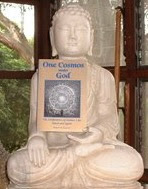
Wednesday, January 03, 2018

Catching Up with the Past

Don't worry -- this ridiculously long post is for my benefit, not yours. It is actually a compilation of previous posts on Inventing the Individual, which is one of the more important books we have ever discussed.

The book popped into my head the other day, after I bumped into an old friend I hadn't seen in probably 25 years. Given all that has occurred in that span, how does one begins to "catch up?" We talked about this and that, at one point lightly touching on Christianity. He disapprovingly alluded to what Leviticus says about "homosexuality," while I attempted to explain that the deeper purpose of Leviticus is to transmit a set of values, not to be taken literally. I didn't do a very good job of it, but recommended Dennis Prager's Judaism's Sexual Revolution: Why Judaism (and then Christianity) Rejected Homosexuality.

The larger point is that we cannot anachronistically project ourselves two or three thousand years into the past. Or at least we cannot do so without... hesitating. People were different back then. How so? Glad you asked! (Titles of previous posts are in bold.)

Who Invented You, Anyway?

And now for a gear-grinding change of subjects...

No, that's not quite right, because deep down, the subject of this blog is always the same, that is, How did we get here? And with it, What are we supposed to do while we're here? And Toward what end? Or in other words, Origin, Present Being, and Destiny; or Creation, Freedom, and Judgment. Or Who, What, and Why.

I've mentioned before that the Book of the Same Name was essentially an extended meditation on this question of How did I get here? The question provokes any number of answers, all of them true; for example, there are genetic, historical, biological, evolutionary, psychological, anthropological, cultural, economic, religious and other factors that contribute to Who We Are.

Most people seem to pick one or two and say to hell with it, but I wanted to look around, dig down, peer behind, and stretch upward, in order to consider as many angles as humanly possible, and then found my own religion. In the end, I decided to up- and outsource the second part for reasons of comparative advantage. In other words, God knows better.

Chapter 3.3 is called Humans and How They Got That Way: Putting the Sapiens into Homo. You see, we were Homos for a good long while before we became especially sapiental (wise) about it. That chapter contains some dodgy and overly generalized "history" that traces the emergence of what we call the "individual" or personal self. This self is something we cannot take for granted, nor can we simply project it into the past, as if premodern humans (including contemporary ones!!!) experienced the world in the same way we do.

The question is, Who invented the individual? Long story short, Christianity; to be perfectly accurate, you might say that Judaism did a lot of the R & D, while Christianity focused on marketing. But without this radical new philosophy, we might still be pre-individual members of clans and tribes with no personal identity, no better than the de-individualized multicultural mob of today.

So, this book, Inventing the Individual, pretty much has my hair on fire. I'm only up to page 65, so I don't know the author's ultimate conclusions, but already there is plenty to playgiarize with, and more than enough to make my own theories almost seem plausible.

I'm just going to flip through the book and expand upon passages that arrested my attention. It begins with a quote from the 19th century historian Fustel de Coulanges, to the effect that the true object of historical study "is the human mind: it should aspire to know what this mind has believed, thought, and felt in different ages of the life of the human race."

Right. The problem here is that mere empathy is not only insufficient, but probably going to mislead. In other words, it is exceedingly difficult to simply project ourselves back in time, as if people of the past were "just like us."

Note that this doesn't just apply to the past. For example, I don't think it is truly possible for us to understand the mindset of Islamic terrorists, or pedophiles, or mass murderers.

(Coincidentally, yesterday's Best of the Web was on the subject of pathological altruism, in which Taranto cites an author who said of the Australian murderer that we face a "difficult test of our empathy," in that "While we do not know [the murderer's] story or his motivation, we know he was once someone just like those people whose lives he has now treated with such disdain. He must have loved ones, too. Forgiving him will be very difficult, and it will take time. Without forgiveness, though, we have to live with destructive hate." Liberalism. Is there anything it can't pervert?)

More generally -- and this is something I'll be expanding upon later -- to the extent that we misuse empathy, it will only "reveal" what we have projected into the subject. It will only tell us about ourselves, not the other person.

This was one of the most important lessons of my psychoanalytic study, first, that empathy is a tool of investigation, and second, that it must operate at the same level as the person under study. To take an obvious example, it requires empathy to understand an infant, a spouse, a friend, or a stranger, but in each case it is different.

For our purposes, when a patient comes in for therapy, they are generally operating at a certain level of development, e.g., neurotic, borderline, autistic, narcissistic, psychotic, etc. If you try to deal with a borderline or paranoid patient the same way you would a neurotic, you'll get nowhere. In each case empathy is required, but in order to empathize with the borderline, you have to use it to reach a more primitive mode of experience, relating, and cognition (within both your self and the other person, the former facilitating the latter).

We have to do something similar to understand the people of the past, especially people who are or were swimming outside the Judeo-Christian stream. As Siedentop writes, "Deep moral changes, changes in belief, can take centuries to begin to modify social institutions." And very much contrary to postmodernists in all their nasty variety, "it seem to me that moral beliefs have given an overall 'direction' to Western history."

For me, a more interesting way to chart this progress is through the emergence and deepening of the individual. That is, if we trace our existence from the Big Bang all the way to the present post, what is most striking -- and most important to us -- is a gradual expansion and deepening of the subjective horizon.

In other words, our "mental space" -- the space in which we live -- expands and deepens along with our individuality; these are really two sides of the same process, as we shall see. Freedom, conscience, and personal self are all bound up together, but we also need to examine the religious and cultural conditions that made these possible.

What I would say is that God is of course the necessary condition -- the condition without which -- while various religious, psychological, and cultural factors provide the sufficient conditions -- the conditions with which.

Let's begin with pre-Christian antiquity. In order to even begin to understand these remote ancestors, "We must imagine ourselves in a world where action is governed by norms reflecting exclusively the claims of the family, its memories, rituals and roles, rather than the clams of individual conscience. We must imagine ourselves into a world of humans or persons who were not 'individuals' as we would understand them now" (Siedentop, emphasis mine).

Interestingly, this would imply that in order for God to save or redeem individuals, he had to first bring about conditions through which people could individuate from the group (just as humans had to first "speciate" from animals, life had to anim-ate from matter, and existence had to undergo creatio from nihilo). Thus, as we shall see, culture is the bread which shall gradually be leavened by some very wise men from the yeast, especially Paul.

Advanced Viral History

In the coon classic Science and the Modern World, Whitehead says that when considering "the philosophy of an epoch, do not chiefly direct your attention to those intellectual positions which its exponents feel it necessary to explicitly defend."

Rather, "there will be some fundamental assumptions which adherents of all the variant systems within each epoch unconsciously presuppose."

Thus, just as there is an unconscious "emotional" mind, there is an unconscious intellectual, or philosophical, or metaphysical, or moral, or even political mind. The problem is, people no longer know what they are assuming, "because the assumptions appear so obvious" and because "no other way of putting things has ever occurred to them."

And in my experience, the people most susceptible to this are the tenured (and by extension, journalists), especially those who have spent their entire lives in academia, and therefore have no idea how the world actually works. As such, their unconscious assumptions are not subject to any critique, whether from other minds with very different assumptions or from reality.

Another factor in their conformity is the narcissistic need for confirmation, prestige, and acceptance; between creatures of the university or of Hollywood, it is difficult to say which population is the most craven.

One thing that is so provocative about Inventing the Individual is that it goes directly to a number of those "fundamental assumptions" alluded to by Whitehead, and shows how flimsy they are, for the contemporary secularist who calls himself "liberal" is unwittingly "paying tribute" to the Christian "origins of [his] moral intuitions."

It is just that these intuitions have become detached from their proper object, with the result that we now see a dangerous combination of religious zeal in the absence of the channels provided by religious tradition. We may discern the same pattern in every revolutionary movement from the French Revolution to the recent mob violence around the country: moral righteousness without morality, or "immoral morality"; in a word... or two, moral insanity.

It would be difficult to find the committed liberal who doesn't imagine that "historical progress" involves the struggle to found a secular society out of an illiberal religious past. Siedentop (and he is far from the only one) shows that the progress vaunted by liberals is unthinkable in the absence of deeply Christian assumptions.

But because Enlightenment thinkers were motivated more by hatred of God than love of truth, they concocted a new narrative that made religion the enemy of reason and progress. It is bad enough what this did to history, but it also maims the soul, because it deprives it of its deep historical continuity and contributes to the resultant cosmic alienation. From there it is but a step to the perpetual resentment of the left.

As Siedentop puts it, "We no longer have a persuasive story to tell ourselves about our origins and development." Rather, "things have just happened to us," as in the accidents of natural selection. Thus, the liberalism that was once a positive philosophy grounded in religious principles "has come to stand for 'non-belief' -- for indifference and permissiveness, if not decadence."

How did this happen? How was this positive philosophy drained of meaning and transformed into the unholy trinity of relativism, envy, and entitlement?

In order to answer this question, we must first ask whether it is "mere coincidence that secularism developed in the Christian West"; or in other words, whether we are dealing with continuity, or whether there has been an ontological rupture along the way.

One of the things those Enlightenment thinkers did was to fabricate a faux continuity with the ancient past, with Greece and Rome. In seeking to "minimize the moral and intellectual distance between modern Europe and Graeco-Roman antiquity," they maximized "the gap between the 'dark' middle ages and the 'light' of their own age." As a result, "the millennium between the fall of the Western Roman empire and the Renaissance became an unfortunate interlude, a regression in humanity."

But is this true? Or is it just a flattering narrative, a collective neurosis for the purposes of self-aggrandizement? This leads to another question: "just how free and secular were ancient Greece and Rome?" Because if the modern secularists are correct, Christianity must represent a dark departure from that idyllic world.

In the book, I discussed this, starting on p. 142, under the heading Viral History 101. I would consider Siedentop's book Viral History 201, or whatever the next level would be. He looks at some of the same things, only in a sober and scholarly way instead of in the spontaneous and freewheeling manner of the Raccoon.

Bottom line, when we look at that world -- at the average mentality, not the geniuses and luminaries -- "we find ourselves drawn back to an utterly remote moral world." It is so remote that I personally find it impossible to imagine what it must have been like, any more than I can imagine what it is like to be a frog. I mean, it's weird. And yet, for them, they did not regard it as such. In fact, if anything is weird, it is this recent and unexpected emergence of the individual in the Christian west. No one saw that coming.

"To recapture that world -- to see and feel what acting in it was like -- requires an extraordinary imaginative leap." For starters we must de-Christianize ourselves, which is probably impossible, as impossible as removing the yeast from the bread.

To begin with, not only was the family a religious institution, it was the religious institution, with father serving as priest, magistrate, judge, law enforcement, and executioner if necessary. Not only was there no separation of these domains in society, there was no separation in the individual, which, as we shall see, is a key point about the eventual impact of Christianity.

Premodern and Postmodern: Extremists Meet

We are discussing the Invention of the Individual, which, like most of the best things in life, could not have been invented by man. As we know, the best things in life are free; but the individual is free in another sense, being that it is the basis of what we call "freedom."

Obviously, freedom makes no sense in a pre-individual context, because the very essence of freedom is personal agency. And personal agency is a quintessential example of what Whitehead was saying yesterday about fundamental assumptions that are unconsciously presupposed by everybody. Therefore, no one thinks about it. It's just part of the human package, like hands, eyes, and brain.

But the human individual is not an artifact of our biological hardware. At best, we can say that our genetic endowment permits it, but it most certainly cannot cause it.

We can know this with certainty because for most of human history and for all of human prehistory (which is by far the larger period of time) there were no individuals, only groups.

Now, we are all members of various groups -- family, workplace, country, etc. However, it is difficult for us to experience this in the same lucid way as our individuality. This is because our individuality is explicit, whereas our group identification has become more implicit, more of a background phenomenon. It is the context of our individuality.

What we need to do -- which I think is almost impossible -- is to imagine what it would be like to have no individual awareness (or a very attenuated version of it), and imagine the group identity as being primary, or at the forefront of consciousness.

No coon do. As it so happens, the other day I evaluated a person who had served as an interpreter and cultural liaison for our military in Iraq (he was severely injured in a terrorist blast). He was there to help our military avoid cultural "misunderstandings," but it really goes deeper than that.

To translate mere language is essentially a horizontal affair: I say beer, you say cerveza. But if you are Muslim, you might say kill the grog-swilling infidel!

The problem with cross-cultural contact is that it is not necessarily a horizontal translation. Although we are no longer permitted by the left to think in these terms, there is a vertical component as well.

To a certain extent we may understand lower cultures, but they have no way of knowing about the higher, since they've never been there. It is like trying to explain color to a blind man -- except the blind man wants to decapitate you for the blasphemy of claiming that color exists.

This is why multiculturalism is such a fraud. Someone like me, who is truly curious about other cultures, will be called "racist" for being so. Thus, when a liberal wants to have a "conversation about race," it is like when an Islamist wants to have a conversation about your religion while disconcertingly staring at your neck.

I once read a book on the relationship between developmental time and cultural space. Since it is a two-way relationship, we can have chronologically contemporary cultures that are developmentally backward, or chronologically early cultures that are developmentally advanced.

Which is another incoherent feature of progressive thought, because the distance between cultures is measured by, you know, progress.

In short, in order to say "all cultures are of equal value," one must -- "ironically" -- eliminate any notion of progress. But at the same time, their Hegelian-Marxist leanings cause them to deny the importance of culture and to superimpose some abstract notion of material progress on top of it. As I said, incoherent.

Remember Gil Bailie's Violence Unveiled? As good as that book is, I was never comfortable with reducing the Christian message to an implicit injunction against scapegoating and human sacrifice, a la René Girard.

On the other hand, I am very comfortable with the idea of seeing it as a God-given key to human development. Indeed, it must be a key, because we simply do not see this same development outside its reach.

Inventing the Individual is all about how Christianity managed to do this. Importantly, this was not an overnight success, and in many respects is still taking place today, and not just in backward countries.

Rather, even here in the modern west, one might say that the essence of our political differences revolves around this question of collective vs. individual -- hence the left's insistence that "government is the one thing that unites us," or to which we all belong; or "you didn't build that," or no one ever got rich, or even got a job, without the help of the Elizabeth Warrens and Hillary Clintons of the world.

We see the same form in the pre-Christian world, only with different content. I don't want to repeat Siedentop's entire argument, but he demonstrates how the ancient family was a kind of barrier that had to be overcome, or broken out of, in order for the individual to emerge from it. It "constrained its members to an extent that can scarcely be exaggerated." (This is the context to understand what Jesus means by "hating" one's family.)

The father was a kind of totalitarian ruler who had even "the right to repudiate or kill his wife as well as his children." To the extent that there was law, he was it. Charitable sentiments for people outside the family would have been unintelligible -- one reason why the Jewish injunction to "love the stranger" was so revolutionary (let alone the later Christian injunction to love the enemy).

We'll leave off with a visual aid; if the family is the white base at the bottom from which individuality emerges, and God the curved metal at the top, the blue flame of our spiritual development is ignited in between:

A Liberal is Like a Christian, Only Worse

This subject of Inventing the Individual is too large for me to get my mind around. Normally, when I write, I like to do so from the center out. In this case, I need to start from the outside in. I have to pick a random spot at the periphery and try to start boring in from there. In so doing, maybe I'll even find the center -- the attractor -- at which point this rambly stream of consciousness will become more orderly. Don't count on it.

Perhaps I should begin with the idea that Christianity is the most important revolution in human history, and that Paul is its most important revolutionary (on our side of the veil). This is a consistent subtext of the book -- that Christianity initiated a turn in history that is still very much in progress (indeed it is progress). In Raccoon parlance, I would say that it is an extension the previous cosmic revolutions of existence, life, and mind, for it is the vertical prolongation of mind into spirit and God.

Which leads to one of my own conclusions, that some of the most important blessings Christ brought into the world are unappreciated and even unseen because they are now so ubiquitous. So much of the context of our (western) world was only made possible by Christianity, and yet, because it is in the background, we don't notice it. One of these, of course, is "the individual." But with the individual comes freedom, equality, rights, dignity, consent to rule, civil society, the marketplace, and on and on.

Another critical point is that these blessings were and are very slow to come into being. It is not as if they occurred overnight; although the yeast came into the world some 2000 years ago, the bread is still rising.

Thus, it has been a gradual process of applying the moral intuitions and insights provoked by the Christian -- especially Pauline -- message. For when Paul says that in Christ there is neither slave nor free, male nor female, this is every bit as world-shattering as contemporary revolutionaries who insist, say, that in leftism sex is just a human construct, so if you're a man you can shower in the girls locker room if you like.

In fact -- strange as it seems -- this left wing perversion of Christianity is unthinkable in the absence of Christianity, because it is just an inversion of its egalitarian message. It has been clear to me for a long time that leftist moral appeals are rooted in a perversion of Christianity, but this book provides the full story (even if unwittingly) of how this came about.

For example, the last four months of police-bashing by the left would have no traction at all if it didn't appeal to some distorted sense of Christian morality. For if police are racists for whom it is open season on blacks, then it is as moral to kill them as it would have been for Jews to kill Nazis. A Marxist such as deBlasio is like a Christian, only worse (but from his perspective, better). Ideas and rhetoric have consequences.

Jimmy Carter too is like a Christian, only worse. Sultan Knish: "Carter couldn’t save the Soviet Union, but he did his best to save Castro, visiting Fidel and Raul in Cuba where the second worst president in American history described his meeting with Castro as a greeting among 'old friends.'” In turn, "Raul Castro called Carter 'the best of all U.S. presidents.'"

Castro is a revolutionary, as is Obama. In fact, Obama is our first revolutionary president, the first president who has overtly attempted to undo our original revolution, which was really the political application of the Pauline revolution (although I suppose that Wilson was a pre-Obama). Siedentop asks the question, "Was Paul the greatest revolutionary in human history?" You could say that the book is one extended and thoroughly documented Yes.

"Through its emphasis on human equality, the New Testament stands out against the primary thrust of the ancient world, with its dominant assumption of 'natural' inequality. Indeed, the atmosphere of the New Testament is one of exhilarating detachment from the unthinking constraints of inherited social roles. Hence Paul's frequent references to 'Christian liberty'" (emphasis mine).

This essential liberty is prior to our existence, and is the ground of being: it is "pre-social," and comes "to serve as a criterion of legitimate social organization." Therefore, anything that attacks or undermines it becomes false by logical entailment. If liberty is axiomatic, it is like dynamite at the foundation of tyranny, oppression, inherited privilege, etc. It may take centuries to blow apart the structure of lies, but blow it will. For "I did not come to bring peace, but a sword."

Beneath this cosmic subversion is "the invention of the individual, the introduction of a primary social role" which begins "to undercut the radical differences of status and treatment" of existing societies. This revolution "sent Europe along a road which no human society had previously followed," for from the perspective of the old orders, this dangerous message of liberty would have been regarded as the essence of dis-order and societal chaos. Which it still is by the left, hence their attempt to re-exert control from the top-down.

But once the ball began rolling and the yeast rising, it was very difficult to arrest. "Under way was nothing less than a reconstruction of the self, along lines more consistent with Christian moral intuitions." For if Christ is truth, then those many pretenders to truth are rendered transparently false. Every emperor is suddenly seen as more or less naked. Along these lines, Siedentop quotes the historian Guizot:

"With the church originated a great fact, the separation of spiritual and temporal power. This separation is the source of liberty and conscience," for it "is based upon the idea that physical force has neither right nor influence over souls, over conviction, over truth. It flows from the distinction established between the world of thought and the world of action, between the world of the internal and that of external facts."

Which leads to one of our most cherished pet ideas, that the leading edge of cosmic evolution is into and over this subjective horizon, into the cosmic interior. Among other things, Christ shows us the way into this interior, or rather, he is the interior made exterior, or word made flesh.

This is getting too long even for me. To be continued.

Monday, January 01, 2018

He Who Hesitates is... On the Right Track?

New year, new book, same subject, which is to say, Everything and Nothing.

This one is called No God, No Science? Theology, Cosmology, Biology, by Michael Hanby. The book is right up our alchemy, in that it reveals the unity of all things, from matter on up and God on down (which are two sides of the same vertical reality).

And speaking of alchemy, what is the cosmos but a system of transmuting matter into consciousness, truth, beauty, etc? This is what the cosmos does. Indeed, if it doesn't transmute energy into truth, then we can stop thinking right now, because there would be no point to it. To know a truth -- or to create beauty, or to do a good deed -- is like a little flowering of the cosmos.

Yes, you could call it a miracle. We could investigate and analyze it forever, but we will never eliminate that last leap, which is to say, the (literally) infinite gap between material objects and immaterial subjects, between immanent evolution and transcendent truth, between existence and intelligence. Or just say horizontal and vertical (and saying anything places you in the latter, the logosphere).

Hanby alludes to this at several points -- for example, that any theory of reality must include its own possibility; or that it is as if scientism understands everything about the cosmos except for the small matter of how we understand it at all. D'oh!

Take the theory of natural selection, for example. I've brought this up in a number of posts -- that it can by no means account for its own possibility, for in rendering the mind (or brain, really) completely contingent, it bars access to any permanent truth. Certainly this constraint applies to other animals, who inhabit their own closed worlds, and are not conformed or open to being or truth -- to totality and objectivity.

Does natural selection explain how we are exempted from this limitation? No. And if we aren't exempted, then no theory of any kind is "true." Therefore, if (reductionistic) natural selection is true, then it is false.

No doubt it is partially true, but to elevate a partial truth to the whole is just Genesis 3 All Over Again. Bor-ring. Natural selection must account for our ability to understand it -- or at least have the courtesy get out of the way of our understanding! Genes can be so damn selfish and bullheaded sometimes.

The same can be said for cosmology, anthropology, neurology, any field of study. Each one is only possible because -- obviously -- existence includes their possibility. So, rule one in metaphysics would have to be avoiding one in which your philosophy is rendered impossible. For example, materialism renders intelligence impossible, so it is self-refuting before it ever gets off the ground.

Most philosophies are similarly self-refuting. I am reminded of an Aphorism, that Intelligence is a train from which few do not deboard, one after the other, in successive stations. This blog serves passengers who remain on the bus for the whole journey. That is its sole purpose. That and a few chuckles along the way.

Another aphorism: Erudition has three grades: the erudition of him who knows what an encyclopedia says, the erudition of him who writes what an encyclopedia says, and the erudition of him who knows what an encyclopedia does not know how to say.

The purpose of this blog is to say what cannot be said until we finally know Nothing, for That which is incomprehensible increases with the growth of the intelligence. The God we know is just a springboard to the God beyond all knowing.

Which is true of all knowledge, isn't it? Again, this goes back to the doctrine of creation: that the only reason we can know anything is that we cannot know everything, the latter being reserved for the Creator. Therefore, man will never truly understand so much as a fly, because there is again that infinite leap between Nothing and any thing at all -- let alone our ability to comprehend it!

By the way, I've noticed this pattern, that in Schuon's books, the first essay is often the most provocative, and the first sentence or two the most pointed, as if they summarize not only the whole book but the whole existentialada. I'm currently re-re-reading From the Divine to the Human, and its first sentence is as follows:

The first thing that should strike man when he reflects on the nature of the Universe is the primacy of the miracle of intelligence -- or consciousness or subjectivity -- whence the incommensurability between it and material objects, whether a grain of sand or the sun, or any creature whatever as an object of the senses.

Bʘʘm. And the "should" should be taken in both senses, as an intellectual imperative but a moral one as well. It is what we ought to do, because when we forget to do it, bad things follow -- for example, the left. If wisdom is always bearing in mind what we do not and cannot know, then leftism is the last word in willful and systematic stupidity.

You might say that our knowledge is both shielded and secured by what we cannot know. Even the most virulent atheism lives in the shadow of a lost -- or forgotten or denied -- knowledge that is specifically Christian.

Which is what this book is ultimately about: that to even say "cosmos" is to have confessed faith in a transcendent unity that surpasses any particular knowledge of it. No one has ever seen the cosmos, and no one ever will. And yet, we know it in every act of knowledge, as its nonlocal unity sponsors any and all local knowing, itself a transcendent unity of subject and object.

So, scientism also performs a kind of alchemy, albeit a retarded one that transmutes the inconceivable into a banality, the latter an unreflective stupidity that could never be. In other words,

Nothing is more absurd than to have intelligence derive from matter, hence the greater from the lesser; the evolutionary leap from matter to intelligence is from every point of view the most inconceivable thing that could be (Schuon).

Or, you could say that it is precisely its conceivability that makes the materialist crocktrine so inconceivable. That sounds paradoxical, but it is literal. Speaking aphironically, you might say, Nothing is more superficial than intelligences that comprehend everything (Dávila).

Here at One Cosmos we never forget that As long as we can respond without hesitating we do not know the subject.

Therefore... er... umm... ah... let me put it this way... no, wait... let me get back to you...

Tuesday, December 26, 2017

Let's Call it a Year

No way. The spirit is willing but the brain is weak -- weakened by excessive merriment and insufficient sleep, the latter aggravated by a new Great Dane puppy as of last Friday. So, consider it an open thread for advice, criticism, complaints, loose ends, aphorisms, future directions, musical recommendations, and hangover remedies.

My musical recommendations are Morricone Bossa, Morricone High, Morricone Kill, or maybe just the career-spanning Collected in order to get a sense of the incredible range of the Maestro.

I do prefer his earlier and more unconventional works, between around 1965 and 1975. He has composed the music for over 500 films, and I read somewhere that it was because the budgets were often so low that he was forced to rely on such unusual instrumentation as whistling, Jew's harp, surf guitar, and the unique wordless vocal stylings of Edda Dell'Orso, whose collections are out of print and too damn expensive, although I was lucky enough to pick up a used copy of the first for under ten bucks. Woo hoo!

I also recommend the cult film Seconds, which is all about diabolical freedom. Imagine if you could incarnate yourself. What could go wrong?

As for magical cures, brain elixirs, and life extension tweaks, I recommend the company Bulk Supplements. I'm experimenting with several, and before today, they seemed to be helping.

Friday, December 22, 2017

The Last Christmas Post You'll Ever Need

What might that be? I can't say, because the title occurred to me before the post. At the moment, all I have is a bold title with no content. Nevertheless, I trust that if I just keep banging away, a post worthy of the title will somehow materialize.

I want to wrap up the review of Freedom from Reality, not because I succeeded in summarizing it, but because I give up. It's just too... unruly. I can't seem to reduce the thing to something smaller than itself, which I like to think is my speciality. Or something I can't help doing, at any rate.

Too much noise and redundancy. Again, not to belabor the point, but my favorite writers convey almost no noise, and if they are redundant, the redundancy is not in the message. In other words, they are never wooly or diffuse. If they repeat themselves, it is in the manner of a great artist who tosses out one masterpiece after another. That's not redundancy but fruitfulness.

Also, the work of the true spiritual master is very close to the source. The more distant one is, the "longer" the channel, and the more opportunity for noise to get in and contaminate things.

Schuon, in my opinion, always speaks in proximity to the Source, which is why he is so essential, universal, and primordial. As described in the foreword of his biography, "there are authors who occasionally examine things in depth, but who, very quickly, return again to the surface. In the case of Schuon, he starts at a considerable depth, and he remains" there.

This is quite true, but what makes it doubly intense is that once there, he doesn't go all wobbly or wooly on us. Rather, he maintains the same level of clarity, which is quite unusual, or maybe you haven't gnosissed. But this ultimately makes his yoke much easier, because he's done the hard work of stripping the celestial message of so much noise at the human margin.

Back to Schindler. Toward the end of the book, he summarizes what occurs with man's acquisition of diabolical freedom, calling it a kind of "anti-redemption," which is to say, a total inversion of "the perfect sacrifice of Christ." With it, man is reduced to "the all-powerful technician and the helpless product" of his own techne.

Indeed, you might even say that man, who is always analogue, literally makes himself into a digital being.

For this is the end result of a logical atomism that, on the human level, redounds to a radical individualism in which each man lives in his own private Idaho. Instead of being oriented toward the Transcendent Third that (who) unites us all, he... well, no one put it better than Thomas Wolfe, in his priceless description of some French pinhead, a

relentlessly rational intellectual that only France loves wholeheartedly, the logician who flies higher and higher in ever-decreasing concentric circles until, with one last, utterly inevitable induction, he disappears up his own fundamental aperture and emerges in the fourth dimension as a needle-thin umber bird.

In other words, he disappears up his own aseity. Which is, yes, funny, but more importantly, 100% ineluctably true if you take logical atomism to its absurcular conclusion.

But that conclusion simply cannot be, can it? Since this metaphysic is 100% false, it makes me wonder if its metaphysical opposite might be 100% true. And what might be the inverse image of this flat and desiccated world that can't even account for its own freedom, beauty, and intelligibility? In short, in what kind of cosmos is it possible for beings to know truth, let alone error on such a grandiose scale?

That also sounds funny, but if man cannot know error, then he cannot know truth. In other words, freedom and truth go together like error and subjugation. To be in error -- in particular, fundamental error -- is to be in thrall to... to what? I would say to powers, principalities, thrones, dominions. The usual cosmocrats of the dark aion.

In other words,

Pure power and utter powerlessness now converge into one, and man becomes the abject servant of his own limitless freedom, a passive object of active power: a slave of modern liberty (Schindler).

Paradox. The bad kind.

That might require a little more explanation. In reality, freedom is again distinguishable but inseparable from other transcendentals such as truth, beauty, and virtue. Sever it from these transcendentals, and what does it become?

Blind power. The person -- who was once-upin-a-timeless intrinsically connected to his own essence-telos -- is now adrift in a meaningless world over which he has this imaginary power he calls "freedom." Free, like a man dropped into a vast desert with no map, no compass, no companions, no traditions, and certainly no hope. The Aphorist:

Upon finding himself perfectly free, the individual discovers that he has not been unburdened of everything, but despoiled of everything. So, Total liberation is the process that constructs the perfect prison. In fact, Whoever is liberated from everything that oppresses him soon discovers that he is also liberated from what protects him.

Well, it looks like this is not the last Christmas post we'll ever need. Rather, we need at least one more, but it will probably have to wait until Tuesday. We'll leave you with a couple more aphorisms to ponder in the desert:

Freedom is not the goal of history but the material that it works with.

D'oh! Now you tell me!

The prestige of freedom in a society that professes scientific determinism is a Christian holdover.

Blasphemy! Cried the devil.

Thursday, December 21, 2017

Celestial Laws and Terrestrial Loopholes

Two more subtle aspects of diabolical freedom: it "proffers an object of desire while at the same time undermining the conditions under which that object could be attained in actuality."

And it presents "just itself as the solution to the problem that it itself generates" (Schindler).

The first observation reminds me of (Glenn) Reynold's Law, that "Subsidizing the markers of status doesn’t produce the character traits that result in that status; it undermines them." Sad!

And the second reminds me of Murray's Third Law (same link), that "The less likely it is that the unwanted behavior will change voluntarily, the more likely it is that a program to induce change will cause net harm." Sadder!

But both of these are easily subsumed by Gagdad's First Law of Leftism, which is to deny, ignore, or invert all laws of human nature. Saddest!

Which reminds me of Thomas Sowell's first lessons of economics and politics: "The first lesson of economics is scarcity: there is never enough of anything to fully satisfy all those who want it. The first lesson of politics is to disregard the first lesson of economics."

If you try to provide as much as everybody wants via government fiat, you "paradoxically" create shortages, rationing, and black markets. But there is no paradox, being that this is a finite universe. Scarcity would only be paradoxical in Eden.

Then again, there must be some sort of scarcity even in Eden. Why? Because of the ontological distance between Creator and creation, finite and infinite, time and eternity, absolute and relative. Taking it one step further, isn't this the lesson of Genesis 3?

Put it this way: the first law of metaphysics is the Absolute: it exists, and you're not it. The first lesson of Man is to disregard the first lesson of metaphysics. Gravity takes care of the rest. It resembles freedom, in the sense that a falling man looks free until he hits the ground. Who was freer than Harvey Weinstein, or Matt Lauer, or Kevin Spacey?

Another subtle point, that diabolical freedom "signals a kind of desperate neediness, the response to which tends to take the repetitive and self-reinforcing form of addiction." This ontologically closed loop "lacks the inward openness in response to the other that is the form of hope."

There's a lot to unpack in that little passage. It implies that addiction -- or any compulsion, really -- is nothing less than a fruitless attempt to heal (as in whole) oneself in a way that aggravates the wound, precisely.

Indeed, from the perspective of the wound, the pseudo-cure is the wound's way to go-on-being. The process "is not only perverse; it is perversity itself, because its turning toward what is other than itself is in fact nothing more than a turning toward itself" (Schindler).

The alcoholic drinks to forget about the problems caused by his alcoholism, just as the feckless millennial attends an expensive college in the hope of obtaining a job that pays enough to repay the debt incurred by attending college.

On a deeper level this goes to the very structure of personhood, which is intersubjective and relational, both horizontally and (because) vertically. Of course we "discover" the (m)other before we discover God, but that is a function of teleology, in that final causes are ontologically first but chronologically last. Which is why it takes time to become oneself, precisely. (A distinction that goes to the difference between a paradox and an orthoparadox.)

About the isness of (m)otherhood. One of the shocks in my life has been how my psychoanalytic training (at least in my case) caused me to burrow toward a trinitarian metaphysic, while emminent Catholic thinkers such as Ratzinger and Balthasar were coming at it from the other side: burrowing toward psychoanalytic attachment theory via trinitarian metaphysics. I was reminded of this just the other day, in a passage from No God, No Science.

Which I can't find at the moment. However, the main point can be summarized in a remark that "the poles, even as they are in tension, exist strictly through each other" -- from Father and Son, to mother and infant, man and wife, intelligence and intelligibility, and throughout the cosmos. Complementarities everywhere, duality nowhere.

You might put it this way: Every I is a we, such that every is is an are. So yes, before Abraham was, I am. But before I am, we are. So, Let us make man in Our image, after Our likeness.

I hope that is clear, because it's kind of the whole point of existence. Last night at a little Christmas get together, I was showing off my marvelous Dude sweater while bobbling on about something having to do with the search for the cosmic area rug.

Then it occurred to me -- obvious when you think about it -- that Christ, or the Incarnation, is the cosmic area rug, precisely. Truly, it (He) is the metaphysical concept that ties up every loose end, and makes sense of critical aspects of our humanness that are otherwise inexplicable -- certainly via any kind of scientistic metaphysic.

Maybe instead of Christmas trees we should have Christmas rugs. But the gift-giving, irrespective of how annoying and transactional it can be, goes to the heart of things, being that creation is literally the gift that keeps giving. It is wholly unnecessary. It is uncalled for, except that it is, via the in-vocation of the logos.

Certainly it is why I give away my writing. A cynic might say you get what you pay for. But in my case I get what I pray for, which is another damn post for readers to en-joy. I hope.

That's kind of a blunt way to end things. Let me find an aphorism or three from a particularly fine rug maker to tie things up:

Loyalty to a doctrine ends up in adherence to the interpretation we give it. Only loyalty to a person frees us from all the indulgence we grant ourselves.

By unmasking a truth, one encounters a Christian face

Christ was in history like a point on a line. But his redemptive act is to history as the center is to the circumference.

Tuesday, December 19, 2017

The Exhausting Flight from Reality

We need to bear down, people, and finish up with diabolical liberty before moving on.

As mentioned when we started this review a few weeks back, Schindler spends 100 pages or so analyzing Locke as a paradigmatic exemplar of modern liberty. Not a bad guy by any means, but the type of liberty he espouses is simply not sustainable; or, to be precise, it is groundless and therefore unstable -- denied its organic telos in the Real, freedom reduces to nihilism. And as the master puts it, nihilism is exhausting.

Why exhausting? More to the point, how can slack end in slacklessness? What gives?

Well, recall what was said yesterday about appearance and reality. Liberal freedom is all about the appearance of freedom, not its substance. Again, its substance is grounded in truth, beauty, virtue, and a higher unity-in-diversity. Severed from this deeper reality, it is like a planet with no sun, endlessly wandering the cosmos. No center, no destination, no direction home. Like a... rolling stone, or something.

So, now you know what Leo Strauss means when he characterizes this as "the joyless quest for joy" (in Schindler). Have you ever been in that state? Then you know how exhausting it can be. "The quest for joy is joyless because it is a pure means to an absent end." Literally, because it is what inevitably happens when you abstract liberty from its deeper matrix.

I don't want to get sidetracked, but I'm reading a biography of one of my favorite groups, the Byrds. (It's only 1200 pages, but don't worry, there's a volume 2.) They were at the epicenter of the hedonism of the 1960s, of an insanely joyless quest for joy. Keeping reality at bay is a full time job, and it is indeed exhausting. There simply aren't enough drugs -- or women, or money. It's a familiar story.

In any event, as Schindler says, the diabolical liberty of modernity ends in "the narcissism of desire, not for anything, but simply for desire itself." But you can't get there from here -- or here from there, rather. In a very real way we cease to be human, if humanness means anything. So one can get there, but you can't be there to enjoy it.

Modern liberty reduces to the meaningless power to act on desire, in an absurcular and autonomous pattern -- very much like any other dissipative structure. If you feed the structure money or power or some other narcissistic supply, it widens out, so to speak, conferring the temporary illusion of freedom.

But this is reminiscent of what Lao Tse says about the best way to control a bull: just give him a wider pasture, so he doesn't notice the fence. Diabolical liberty imprisons human beings without them even knowing it. Which is what makes it diabolical.

Notice too how the widening of the pasture is conflated with "depth." But to do whatever you want to do, whenever you want to do it, is to skim endlessly on the surface of being.

It reminds me of a passage in the Byrds book about the insufferable -- and exhausting -- David Crosby. Regarding one of his lame attempts to write a profound song, his manager says that

David collected a lot of thoughts and phrases to make him appear smart, but he was glib. He had the reasoning and logic of a 14-15 year old who has just reached the age of reason and is so astounded by himself and the fact that he can figure out something that he thinks he's somehow turned into a god.

That was in 1966, and amazingly, he's the same rebellious and grandiose ignoramus today. He has learned nothing in life: his twitter feed reveals a drug-addledescent geezer wandering the large pasture provided by his money and fame, with a pseudo-omniscience concealing a genuine nescience. His flight from the real has been a complete and total success: this Byrd has flown.

"Precisely because Locke interprets power as separate from actuality, it is utterly without content: in itself it is nothing" (Schindler).

For to separate freedom from actuality (i.e., from its telos) is to separate mind from reality and appearances from truth. It renders the mind worthless because the truth unknowable.

It is also a life of total irresponsibility, in that the price of freedom is its obligation to reality. If all people were David Crosby, it would never have occurred to God to give them freedom. At the very least he would have created man with two livers.

A society can tolerate a certain number of progressives, but someone has to change their diapers. And donate a liver.

[P]rogress means advancement.... [It] can be determined only in relation to a telos, a destination, and thus the term makes sense only in relation to specific, determinate realities.

One might say that, when a person uses the term "progress" without intending any specific, concrete, actual, and end-directed reality or realities, then the implied subject of progress is diabolical.

And "to the extent that one's relation to the world is mediated by and through the diabolical, one not only will lose one's soul (as a future danger), but one has already surrendered it."

Mission accomplished.

Monday, December 18, 2017

Breaking News: The Strange Death of the Cosmos

Yesterday I had the usual slew of indiscriminate thoughtflashes. This one probably isn't an original one, and it may or may not lead anywhere, or be worthy of a post. But if you're reading this, then it means the half-baked thought did indeed make it to the finish line and achieve posthood. Otherwise I'd just delete the whole thing and start over.

It has to do with the function of intelligence, which is to discern reality from appearances. Now, if you were the devil, how would you nullify intelligence, or even turn it against itself? I can think of an easy way that doesn't even involve extensive lying, indoctrination, or exposure to college (but I repeat myself).

Rather, all you have to do is eliminate the distinction between appearance and reality, and voila, no intelligence! It reminds me of the neutron bomb, which destroys every living thing while leaving structures intact. It "only" kills people, while sparing the places they inhabit.

Now, I can think of three main institutions that function like a cognitive neutron bomb: the liberal news media, Hollywood, and public education. Each is all surface with no depth, or all appearances with no reality.

Isn't it ironic that we've lately been witnessing the Revenge of the Depth in two of these three institutions, what with the daily revelations of predation and depravity? In each case it involves someone who pretends to be one thing on the surface, but is someone else deep down. I think it's only a matter of time before academia has its turn in the pervnado barrel.

The surface is glib, shiny, and seductive. But you can't even know it's a surface except from the perspective of the depth. Eliminate the depth, and the surface is the depth. Several aphorisms come to mind, for example,

To feign knowledge of a subject, it is advisable to adopt its most recent interpretation.

Therefore,

The only man who saves himself from intellectual vulgarity is the man who ignores what it is fashionable to know.

Journalists are the worst of all, being that journalism is -- to paraphrase someone -- of and for the moment. There are, of course, exceptions, but journalism as such is the study and transmission of appearances. It used to be the function of history to sort it all out later.

To paraphrase someone else, journalism is the first rough draft of history. But now it's the first rough draft of rewritten history, AKA historical revisionism. Anyone can get the facts wrong, but to weave them into a grand narrative requires a historian.

In the real world, "noise" is what interferes with the transmission of information. But the news media is quite literally the noise media, insofar as they provide a kind of incessant noise between appearances and reality. They generate a flow of pseudo-information which is really a diabolical "higher noise." It has the appearance of information but is really the obfuscation of reality.

For which reason Iowahawk, of whom we are not worthy, says that Journalism is about covering important stories. With a pillow, until they stop moving. A professional journalist is someone who knows which stories to asphyxiate.

In another solid gold tweet, Jim Treacher says Modern journalism is all about deciding which facts the public shouldn't know because they might reflect badly on Democrats.

There is a deeper principle -- or lack thereof -- in all of this, but I got a late start and now I'm near out of time. It's one of the threads running through this other challenging book I'm reading called No God, No Science: Theology, Cosmology, Biology (not challenging because of the subject matter, but because of the presentation).

Here are a couple of clues as to what's going on deep down in the cosmos, beneath all the journalism, entertainment, education, and other lies:

Though we are led to think that the universe is the province of a special science such as astrophysics or astronomy, the cosmos (or universe) is an irreducibly metaphysical and theological idea.

But modernity has essentially destroyed the soul while leaving the cosmos (disclosed by and to the soul) standing. The cosmos is now like a shell, vacated of hierarchy, truth, meaning, and spiritual depth. Deep down it has become entirely flat, such that it can no longer even account for its own intelligibility. In other words, it can no longer host the soul that intuitively perceives its nonlocal wholeness-in-being. It is a ghost town minus the animating ghost.

Friday, December 15, 2017

Unavoidable Truths and Inevitable Lies

Before moving on, a loose end. Recall our Supreme Court's sophomoric take on the meaning of freedom: At the heart of liberty is the right to define one's own concept of existence, of meaning, of the universe, and of the mystery of human life.

Now, no one denies that one has the "right" to be stupid. But the Court covertly turns this right into a kind of obligation, because if the essence of liberty is whatever anyone wants it to be, then liberty is essentially reduced to nothing. My freedom, say, to keep my own money, is indistinguishable from your freedom to take it. Some freedom.

It's equivalent to saying that "the essence of truth is the right to believe whatever we want," which is another recipe for nihilism. Worse, it's the recipe for leftism -- for multiculturalism, moral relativism, and "diversity." As Schuon puts it in one of his most important books, Logic & Transcendence,

Relativism reduces every element of absoluteness to relativity while making a completely illogical exception in favor of this reduction itself. Fundamentally it consists in propounding the claim that there is no truth as if this were truth or in declaring it to be absolutely true that there is nothing but the relatively true; one might just as well say that there is no language or write that there is no writing.

Now, that is what you call the truth, the whole truth, and nothing but the truth. It is as true today as it has always been and always will be. Imagine if we had such lucid minds on the Supreme Court, instead of those four or five pompous and over-educated tools?

Education should consist first and foremost in being acquainted with truths that cannot not be. Instead, children are indoctrinated into the diabolical principle that absolute truth absolutely cannot be.

Put conversely, to systematically deny the mind knowledge of, and access to, the absolute, is the worst form of abuse. It is to undermine the very reason why we have a mind, the purpose of which is to conform itself to the true -- to distinguish reality from appearances, the real from the un- or less real, the essential from the contingent.

As Schuon puts it elsewhere,

The prerogative of the human state is objectivity, the essential content of which is the Absolute. There is no knowledge without objectivity of the intelligence; there is no freedom without objectivity of the will; and there is no nobility without objectivity of the soul.

And in his most concise but no less penetrating book (good for keeping by the bedside to seed one's dreams), he writes that "The worth of man lies in his consciousness of the Absolute."

Think about that one: we all -- those who aren't soul-dead -- know that man is somehow "different," and that he is of ultimate value. Why? On what basis? The Golden Rule? Yes, that's a good start, but there is a deeper principle involved, which Schuon enunciates. It's another way of saying that man is in the image of the Creator, AKA the Absolute. Why love our neighbor? Just because some authority told us to? Or did the authority tell us to do this because it reflects the truth of things -- that our neighbor is as much a reflection of God as we are?

As we've discussed before, there is obviously a horizontal continuity between man and animal. However, there is also a kind of -- literally -- infinite discontinuity on the vertical plane. No animal can conceive of the Absolute, or love his neighbor, or freely choose good over evil, or know truth, or be objective and disinterested.

Schuon says something above that dovetails nicely with our ongoing discussion of diabolical liberty, that "there is no freedom without objectivity of the will." You will note that this is precisely the opposite of what the Supreme Clowns say -- that freedom is 100% subjective, with no rational telos whatsoever. They might just as well say -- again, literally -- that "at the heart of law is the right to do whatever the hell you want to."

Which comes very close to what a modern liberal would say -- that we are permitted to do whatever we want to do -- that nothing is forbidden -- so long as it doesn't hurt someone else. Either way, it entirely drains liberty of any meaning whatsoever.

Furthermore, once down that path, it's easy enough to justify any monstrosity, from Dred Scott to Roe v. Wade. Both decisions are based on an arbitrary -- which is to say, subjective -- interpretation of freedom. Put conversely, neither decision is rooted in the Nature of Things -- those things that cannot not be.

"Separation of church and state." There is a sane principle buried in that cliché, so long as we interpret its meaning in terms of truths that cannot not be. One truth that cannot not be is that man is religious. I'm no doubt thinking about this because of another book I'm reading, called No God, No Science: Theology, Cosmology, Biology. But the type of vulgar atheism with which we are so familiar, for example, is just a banal Christian heresy. Therefore, if a leftist wants to be true to his principle, then he must also maintain a separation between atheism and state.

But that is not how the Supreme Kooks see it. Scalia writes of how, over the past half century or so, the Court has gone from neutrality toward religion to overt hostility. But since man cannot not be religious, this only ends up privileging the secular religion of the left, conveniently hiding behind the subjective "evolving standards of decency" gag.

That's about it for today. The end. No, wait. Here's a juicy passage from Chesterton, cited by Schindler:

We are fond of talking about "liberty"; but the way we end up talking of it is an attempt to avoid discussing what is good. We are fond of talking about "progress"; that is a dodge to avoid discussing what is good. We are fond of talking about "education"; that is a dodge to avoid discussing what is good.

So, "Let us not decide what is good, but let it be considered good not to decide it." In short, let us all live in the comfort and safety of our own delusions, and call it freedom. After all, it is the Law of the Land.

Thursday, December 14, 2017

An Offer You Must Refuse

One of Schindler's main points is that freedom cannot be understood in isolation, but is always part of an organic whole that includes both the good and the real. This shouldn't be surprising, since the good and the real are essentially fungible: things are good insofar as they exist. How they exist is another matter, especially as it pertains to humans, since we have a hand in that determination.

Even Hitler was good vis-a-vis his sheer existence. What he did with his existence... you know the rest.

Or, maybe you don't. What went wrong? "He made bad choices," to put it mildly. But this presupposes good choices, which goes back to the idea that freedom and goodness are intrinsically related. Which modernity denies, absolutely.

Again, this cosmic heresy was ably articulated by those five illustrious idiots on the Supreme Court:

At the heart of liberty is the right to define one's own concept of existence, of meaning, of the universe, and of the mystery of human life."

As we have put it before, paradise is walled by complementarities, one of which is freedom <--> good. Thus, to sever this complementarity -- as SCOTUS has done above -- is not the way to paradise. Rather, it is the way to permanently bar entry.

You might say that, prior to our vertical plunge, man is spontaneously good, such that his freedom is not misused. With the fall, this unity is broken, such that outside paradise man must endeavor to consciously put them back together. A saint is someone who has succeeded at this -- i.e., attained heroic virtue through cooperation with infused grace. Then there's the restavus.

Both freedom and goodness are real. But that is not how modernity sees it. That train left the metaphysical station a few hundred years ago, such that today we are living in the End Times of that perspective. What I mean is that reality is one, and our job is to evolve in that direction and conform ourselves to it.

But this is not the approach of the left. Rather, the precise opposite, into diabolical fragmentation, disunity, and "diversity." (As Schindler notes, dia-ballo means "to divide" and "to set apart or at odds"). This will not and cannot end well, as anyone with three eyes open can see.

Speaking of which, I wonder when blacks will figure out that race-virtue signaling leftists have the same attitude toward them as do "feminist men" toward women? A real feminist doesn't divide men and women to begin with, but rather, apprehends their unity-in-complementarity.

Same with race. Once you have divided people by race, there is no return to unity. It's either one nation under God, or no nation -- and eternal hostility -- under multiculturalism and identity politics.

Returning to the deeper meaning of diabolical, Schindler describes six essential features. Although you may not have consciously considered these before, they will be familiar to you, at least if you've ever watched CNN or MSNBC, or read the NY Times:

(1) the diabolical presents a deceptive image that substitutes for reality; (2) it is characterized by an essential negativity; (3) it renders appearance more decisive than reality, and indeed, better than reality according to the measure of convenience and efficiency; (4) it has a supra-individual dimension that is nevertheless impersonal: that is, it tends to take the form of an essentially self-referential system; (5) it is "soulless" in the sense of lacking an animating principle of unity; and (6) it is essentially self-destructive.

Boom. To the sixth power.

But how on earth does one explain this to the liberal who either cannot or will not see it? I don't know. Each of these principles (or their opposite, rather) is implicitly embodied in Christian metaphysics, but that atheistic train has also left the intellectual station. Liberals "getting what they want" is the worst possible catastrophe one can imagine, whether individually or collectively.

Which brings to mind an aphorism or three:

--Hell is the place where man finds all his projects realized.

--Earth will never be a paradise, but it could perhaps be prevented from approaching closer and closer to being a cheap imitation of Hell.

--Hell is any place from which God is absent.

Or, as Schindler puts it, "the immediate possession of all things in appearance coincides with a complete oblivion with respect to their real situation..." Inside Plato's Leftist Cave, "desires are perfectly satisfied, but only in a transformed mode, namely, in appearance." You can have it all, if all you want is Nothing, AKA freedom from reality.

This is to be really, really woke -- i.e., to be completely asleep to the Light: "what is perhaps the most diabolical of all is that we become our own jailers, since the imprisonment is subjectively experienced as the most complete liberation, offered in place of the inevitable burden of the real. It is precisely its being a bargain that reveals its provenance from the devil."

"Progressives." Those who live in the twilight of history imagine that the day is being born when night is approaching.

So, put on your armor of Light, and don't let the disilluminati get to you.

Tuesday, December 12, 2017

Endless Layers of Dissemblance and the Lefthand Way to Auto-Divinity

A note to myself in the margin suggests the following passage would be a good start in our attempt to wrap our minds around diabolical liberty and its Freedom From Reality. I actually referenced it a couple weeks ago, but then got sidetracked. So let's begin again:

Modern liberty is, in sum, a deceptive and ultimately soul-destroying illusion, which cuts one off from, and indeed sets one in opposition to, God, the world, other people, the community as a whole... and even oneself, so that one's inner being, in its congenital blindness to the inner reality of everything else without exception, is smothered by endless layers of dissemblance.

Endless layers of dissemblance. That's our world, alright. Just think, for example, of the endless l's. of d. that are being exposed by the very existence of a President Trump -- in other words, the bottomless layers, liars, and lawyers of the Deep State. Conversely, imagine how these sinister players would have been smothered by additional layers had Clinton been elected.

Indeed, how would you characterize a Clinton? I can't think of a more accurate description than layers of dissemblance. What is beneath the dissemblance? Yes, more dissembling. Interestingly, if Schindler is right, then there is no there there: each lie simply conceals another, such that it is obfuscation all the way down (and in).

Thus, one day Clinton is an unwavering supporter of traditional marriage, AKA marriage. Next day, supporters of traditional marriage are deplorable. Was she lying then, or is she lying now? Neither. She is a lie, and the lie is in service to power. It is not the "opposite" of truth, but the negation of its very possibility, as alluded to by Schindler.

At least we always know what liberals are thinking, since they attribute their thoughts, emotions, and motives to others. As such, we can see how they have projected a web of dissemblance onto President Trump, AKA Russian Collusion. This grand conspiracy consists of layer upon layer of vaporous allegations, surrounding a total vacuum. Or, surrounding the DNC's collusion with Russia to defeat Trump via the infamous dossier, itself a diabolical crock.

At any rate, "Modern liberty is not merely an instance of the diabolical, but is, we might say, diabolicality itself." As such, there is nothing modern about it per se; what makes it modern is the total forgetfulness of where it comes from, and the elevation of diabolical liberty to the ideal.

In other words, it is not just the inversion of reality -- for that is a consequence of the fall -- but the insistence that this inversion is normative. You might say that, instead of falling downward, the ideologues of diabolical liberty pretend that we fall upward. But this upward fall always requires violence and coercion; the bigger the lie, the bigger the government needed to force us to believe it.

I hope that is clear, because it is literally true. But sometimes I feel as if I can't quite reach the words I need to describe the reality I'm seeing. The point is, Genesis 3 is a mythic formulation of metaphysical truth. I don't like the term "noble lie," because the myth really involves the transmission of a timeless and universal truth that transcends the ego. It is not illogical, just beyond the limits of terrestrial logic (which can only be circular).

In the first sentence of this post, I alluded to the attempt to "wrap our minds" around the concept of liberty. However, in truth, this is something we can never do, for we are contained by liberty, rather than vice versa. If we could contain liberty, then we would be God. So, strictly speaking, we cannot "understand" freedom, only live it.

Of course, we are free to deny freedom, but then we literally cannot understand anything. The denial of freedom -- as in, say Marxism or behaviorism or Darwinism -- results in a descent into permanent and total stupidity. But it doesn't end there. Rather, this total stupidity will be surrounded by layers of dissemblance.

Now, even a child -- or perhaps especially a child -- can see through the layers of dissemblance. For example, ask a Darwinian where truth comes from, and how human beings can know it, and you will be treated to a blizzard of dissemblance. Likewise, ask a physicist what caused the big bang, or a geneticist what causes all the symbolic information, and prepare yourself to be bamboozled.

Why does man insist on trying to do it himself -- by denying the intrinsic otherness of truth and reality? Genesis doesn't really say, does it? Or, it's a little vague: ye shall be as gods. It seems that this is the first and last temptation: it is ontologically first, and chronologically as recent as this morning's headline, whatever it is.

Put it this way: we can have a relationship to the truth that is anterior to us; or, we can presume to possess the truth. But in the case of the latter, we are really pretending to be the truth, which is to say, God. Therefore, it's really our own lame attempt at the Incarnation, isn't it?

We're again getting close to the fire, where words start to melt, but knowledge follows being, and being is relationship: what Is is being-in-relation. You can't "know being" (in its totality) because it is being that knows in every act of knowing.

I recently reread Schuon's Stations of Wisdom, which contains some of his most challenging essays, but they are challenging precisely because of proximity to the essence of things, where words begin to fail. But try this on for size:

Some people see a kind of incompatibility between metaphysics -- which they confuse with the more or less logical constructions of the discursive mind -- and the love of God, of which they seem to see only the most human side.

But I am here to tell you that

the love of God is something universal: the term "love" designates not only a path depending on will and feeling, but also -- and this is its broadest meaning -- every path insofar as it attaches us to the Divine; "love" is everything that makes us prefer God to the world and contemplation to earthly activity, wherever this alternative has a meaning.

In this context, this blog is nothing but the love of God, every morning, delivered fresh to your vertical door. In the same context, you can see how and why the contemporary left is and must be a hate cult surrounded by layers of dissembling. Not fake news, but fakery, period.

For "the first act of Adam and Eve, after eating the fruit is the self-protective gesture of fashioning a covering for themselves," in which they "hide from God." In the resultant cosmic inversion, "things that had initially mediated an intimacy between God and the creature have now become means to keep the creator at a distance" (Schindler).

This all very much reminds me of an Aphorism, that In order to challenge God, man puffs up his emptiness. Specifically, he puffs up the emptiness by surrounding it with layers of dissemblance. Dip him in water, though, and all his impressive plumage is shown to conceal a naked rat.

Friday, December 08, 2017

What Does the Left Want? Freedom! From What? Reality!

Back to diabolical liberty and how it gets that way. Yesterday I was reminding my son that life consists of time. It's all we have, and then it stops (at least on this plane). But time in the absence of freedom would be just... duration, I guess.

It seems like T minus F would be rather tedious, but boredom can only be conceived from the perspective of choice and possibility. My son sometimes asks if our dogs are bored, since they spend most of their time nodding off with glazed expressions. I don't think so. It's just that when affection, treats, walks, or danger from the UPS man aren't in the offing, the world must go kind of blank. Like how your computer goes to sleep if you don't give it something to do.

But man is a reflection of both absoluteness and infinitude, the former going to truth, strength, and virtue, the latter to possibility, novelty, and change.

For our purposes, possibility is another word for freedom (or, as they say, "no alternative, no problem"). However, mere possibility is no better than a dog's life, because that would revert to the essence of the diabolical: if everything is permitted and nothing is forbidden, then Dirty Harvey and his ilk become the ideal.

And don't think there aren't billions just like him. Indeed, the recent outing of so many Hollywood sleazebags and liberal newsfrauds proves the point. What motivates these men? If they simply have the power to actualize the freedom we all secretly desire, then to hell with freedom!

Real freedom -- the nondiabolical kind -- is always present in a much larger context. The moment it is severed from its telos, it becomes diabolical. Thus, to repeat an Aphorism from a few days ago, The proclamation of our autonomy is the founding act of Hell.

As such, The idea of “the free development of personality” seems admirable as long as one does not meet an individual whose personality has developed freely. If you meet such a person, run away! Certainly don't meet with him alone in a hotel room.

That reminds me. Yes, land of the free, but home of the brave; in other words, freedom + courage. And what is courage? It is the resolution to do the right thing in the face of adversity. I remember Bill Maher calling the 911 terrorists "courageous." Wrong. Like freedom, courage severed from its telos is an egocentric or indiscriminate rashness. If courage is evil, then to hell with it too.

Another aphorism to bear in mind in light of these beta predators such as Lauer, Conyers, and Rose: Poverty is the only barrier to the throng of vulgarities that whinny inside souls.

Anyone short of a saint has mind parasites of various types and dimensions (indeed, so too does the saint, except that he has transcended and mastered them). But many of these critters are latent, so to speak, unless infused with power. It is very much as if the power breathes life into them, in an inverse analogy to God in-breathing the human soul.

So, diabolical freedom is a kind of demonic in-spiration. The other day I saw a video of Jordan Peterson, who touched on this, albeit from a different angle. He adverted to studies showing that happiness is correlated with money up to a certain point, after which there is no correlation at all, and often an inverse one.

For example, if you are a cokehead and win the lottery, things are not going to end well. Likewise, if you are Michael Jackson, or Matt Lauer, or Keven Spacey, or all those prematurely dead rock stars: money and power simply breathe life into the mind parasites -- spiritual retroviruses -- that circumstances normally prevent from coming out to play.

But lets zoom out and consider this from a cosmic perspective: in the West, we enjoy a kind of affluence that was available to fewer than .01% of past human beings. To the extent that our ancestors appear more "virtuous" to us, we must remember that they had far fewer temptations, not to mention the fact you can only get into so much trouble if you are, one the one hand, performing backbreaking work from dawn to dusk, and on the other, always pregnant, with no cheap Mexican labor to cook and keep house.

Thus, if contemporary society is crazy and getting crazier, it is because of the in-breathing of diabolical freedom -- very much like those otherwise innocuous embers a few miles away from me, bursting into flames because of the Santa Ana winds.

This must be why the milloonnial generation -- or whatever you want to call it -- is the most fragile in the nation's history. For to say that your biggest problem is hurt feelings as a result of other people expressing an opinion with which you disagree, is to boast that you have no problems at all.

But obviously you have a big problem, because you are proclaiming to the world that you are unfit to endure freedom -- the nondiabolical kind. And your only solution is to place the rest of us in cages -- like the sheltered prince who would rather carpet the world than simply toughen his feet or wear shoes.

As mentioned last week, this book is too sprawling to wrap my mind around. Let's begin with some notes to myself in back (which may or may not be direct quotes) -- for example, "the power to do good can be as evil as the power to do bad, if it is power only." Boom. That is what you call a knockout blow.

The secular left is not only atheistic but anti-theistic, at least as it pertains to the real God. Therefore, it is literally the case that for them, truth reduces to power; or power shielded by the self-styled "good intentions" of the person wielding it.

Put conversely, for the left, there is nothing we can't accomplish with a combination of concentrated power, good intentions, and other people's money! For proof, just look at what Obama accomplished by creating more debt than all past administrations combined. Paradise!

Speaking of which, the left's hysteria since November 2016 is just a mirror image of the hysteria they exhibited through eight years of Obama. For them, Obama and Trump are just reverse caricatures of one another.

This will take us down another distracting rabbit hole, but the point is, leftists got exactly what their hearts were yearning for in 2008. So, heaven on earth, right? No, nothing changed, except for the worse. But do they have any insight into this? Of course not. Like any other mental patient in flight from personal responsibility -- AKA ordered freedom -- they simply want to resume that comforting dream.

Here is another note to myself, one that Schindler emphasizes throughout the book: that diabolical freedom is parasitic on the very reality it abolishes. Think, for example, of the redefinition of marriage. It is obviously parasitic on the real thing, i.e., natural marriage. The left used to be more explicit about the goal of weakening the family, but my guess is that the majority of leftists probably don't even realize that that is the real endgame.

Once again I find myself hovering around the subject of the book without fully diving in. We'll try harder. Next week.

Thursday, December 07, 2017

The World Wide Counter-Web

The diffusion of a few drops of Christianity into a leftist mind transforms the idiot into a perfect idiot. --Dávila

Continuing with the False Promise of Big Government, it's a little like Genesis 3 All Over Again, isn't it? For the promise of Big Government is another phony attempt to beat the system -- the system of reality.

Now, there are systems that can and should be beaten. Indeed, a large part of "fallenness" involves falling into a kind of world wide existential system to which, in many ways, we cannot avoid adapting.

Imagine being born into a crime family, like the Mafia or the Clintons, and not knowing any better. Well, the human species is a kind of crime family. Or maybe you're unacquainted with this thing called history. But God knows: Christianity assumes the misery of history, as Christ assumes that of man. (Dávila).

BTW, yesterday I was reminded of Jesus' friendly warnings to the rich. But back then, wealth was based upon theft, slavery, and plunder. There was no meritocracy, no upward mobility, no secure private property, and no rule of law, so the wealthy were more like thieves than capitalists.

About our being caught in the world wide web, here are some fine aphorisms:

Where Christianity disappears, greed, envy, and lust invent a thousand ideologies to justify themselves.

The Christ of the Gospels is not concerned with the economic situation of the poor, but with the moral condition of the rich.

In the Christianity of the leftist Christian, one of the two elements sooner or later eliminates the other.

Only the Church considers itself a congregation of sinners. All other communities, religious or lay, feel themselves to be a confraternity of saints.

He who claims equal opportunity ends up requiring that the gifted be penalized.

World Wide Web. That reminds me of something. Ah yes, an editorial I've been saving from a couple of weeks ago by Glenn Reynolds on the role of social media in spreading disease -- not biological diseases but cognitive, and I would say, spiritual, diseases:

[I]n recent years we’ve gone from an era when ideas spread comparatively slowly, to one in which social media in particular allow them to spread like wildfire. Sometimes that’s good, when they’re good ideas. But most ideas are probably bad; certainly 90% of ideas aren’t in the top 10%. Maybe we don’t know the mental disease vectors that we’re inadvertently unleashing....

We don’t know much about the spread of ideas, or what would constitute the equivalent of intellectual indoor plumbing. (Censorship isn’t enough, as it often just promotes the spread of bad ideas that people in power like). Over time we’ll learn more. Maybe we’ll come up with something like the germ theory of disease for ideas.

Or, maybe we already have something like the germ theory of disease for bad ideas. I know I do, anyway. Reynolds himself provides a hint: "Better nourished minds are likely more resistant to social-media contagion." Specifically, proper vertical nourishment is without question the best defense against the empty but destructive calories of purely horizontal ideologies.

Thus, for example, "The Church’s function is not to adapt Christianity to the world, nor even to adapt the world to Christianity; her function is to maintain a counterworld in the world" (Dávila).

You don't have to take that literally in order to understand that you need to anchor your thinking -- indeed, your very being -- in the sheetrock of Principles that Cannot Not Be, which serve as a counterworld to the fallenworld.

As you know, I am currently surrounded by flames. There is nothing political about the flames, any more than there is something political about gravity. But this morning I stumbled across the following tweet by some liberal celebrity: "Just evacuated my house. It's like Donald Trump is setting the world on fire. Literally and figuratively."

Of course. Who doesn't see it?

Er, the sane?

Back to the main subject at hand. I only have time enough to quote a couple of relevant passages from the book, and let you do the myth. They don't really require any commentary on my part:

The nongovernmental institutions of civil society transmit to each new generation those virtues without which free societies cannot survive. When these institutions function properly, they help prevent people from becoming too dependent on government. They also unify people and empower them to control government....

So a vicious circle ensues: the more the federal government drains the energy and independence of the social and mediating institutions, the more that individuals become increasingly atomized and separated; and the more individuals become disconnected, the more a centralized government steps into the void.

Let us recall that The proclamation of our autonomy is the founding act of Hell (Dávila). This fall into pseudo-autonomy is followed by the wrong kind of dependence. For ultimate reality is relational, not atomistic; it is not atoms-in-relation, but relation-in-atoms. Big government is one more attempt to undo the effects of the fall, way downstream from where it has occurred.

Wednesday, December 06, 2017

The War on Spiritual Poverty

With the generosity of his program does the liberal console himself for the magnitude of the catastrophes it produces. --Dávila

After submitting the previous post to a candid world, I read a brief book that dovetails perfectly with its theme, called The False Promise of Big Government: How Washington Helps the Rich and Hurts the Poor. The title is quite literally true, in that America's four wealthiest counties (and seven of the top ten) surround Washington D.C.

The author reviews six reasons why statism is inevitably destructive, five of which go to more material concerns. Here at One Cosmos we are more preoccupied with the spiritual rot it engenders.

As Ronald Reagan famously said, "The lessons of history" demonstrate

conclusively that continued dependence upon relief induces a spiritual and moral disintegration fundamentally destructive to the national fiber. To dole out relief in this way is to administer a narcotic, a subtle destroyer of the human spirit.

Fooled you! That was FDR in 1935.

How could Kingfish Liberal say such a thing? Because 80 years ago it was still possible to state the obvious. The left's War on Noticing had not yet begun in earnest. It was undoubtedly there -- it always is -- but not to the point of totally engulfing the media, academia, entertainment, and politics. In short, liberals used to be liberal. Or at least not flagrantly illiberal, as is the case today.

An actual liberal believes in limited government. Contemporary liberals believe in unlimited government. I mean, if government can force you to bake a cake for people who engage in practices you deplore, then what can't it compel?

It reminds me of something Thomas Sowell often says: that laws and policies, whatever else they do, create systems of incentives, and these incentives may be totally at odds with the stated purpose of the l. or p. For example, what if the multi-trillion dollar "war on poverty" is a vast system of incentives to engender more of it?

For as FDR famously said in 1935,

Our American answer to poverty is not to make the poor more secure in their poverty but to reach down and to help lift themselves out of poverty and move with the large majority along the high road of of hope and prosperity. The days of the dole in our country are numbered.

Probably didn't fool you with that one. That was LBJ in 1964. Since then the days of the dole number close to 20,000, so technically he's right.

At any rate, those comments by FD and LB show that conservatives only believe what prominent liberals once believed -- or at least said -- for which reason we are now called fascists. You know, like other fanatical supporters of limited government such as Adolf Hitler.

Each generation must learn anew the disastrous consequences of big government. But don't worry. Big government has that covered too, since you can sail through 12 or 16 or especially 23 years of Big Education without ever hearing about the disaster.

And why would you? Public education will not inform its captives of the virtues of vouchers, any more than your drug dealer will take you to rehab and offer to pay for it. Satan himself never compels. Rather, incentivizes.

Speaking of Big Education, it seems to me that job one of the left is to eliminate the soul. Once the soul is out of the way, then it cannot be damaged or destroyed. Of course it is still subject to damage and destruction, but the problem will be misdiagnosed, projected, and displaced elsewhere.

Does it surprise you that Hollywood and the media are populated by soulless predators? Only the soulless should be shocked at that revelation. For it is written (by the Aphorist):

The stupid are surprised by stupidity and the corrupt by corruption. The intelligent and the innocent are less easily disconcerted.

A variant of "you can't cheat an honest man."

I just looked at Drudge, and now I'm distracted by the fire that is only about ten miles alway. No threat to us, but it's hard to turn away from the TV when the usual morning commute is going up in flames. In other words, to be continued. After a few pointy ones from the Aphorist:

As the State grows, the individual shrinks.

The progressive Christian’s error lies in believing that Christianity’s perennial polemic against the rich is an implicit defense of socialist programs.

The leftist emulates the devout who continue venerating the relic after the miracle has been proved to be a hoax.

Theme Song

Theme Song