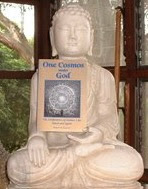
We left off with the idea that we are the measure of what we can understand; and that our understanding includes a nonlocal organ "which perceives, and at the same time confers existence upon, a reality of its own" (Corbin).
We compared this latter to the historical imagination. Coincidentally, for several months now I've been immersing myself in WinstonWorld, a remarkably expansive and imaginative place. Churchill wrote four volumes on the History of the English Speaking Peoples, ending at the threshold of WWI. He carried the story forward by writing five volumes on that little dispute, and then six more on its continuation in WWII.
My point is that he essentially imagined all of history and situated himself within it. Contrast this with the average lofo voter, whose historical horizons scarcely extend past the last meal and beyond the next. Or maybe you've never seen Watter's World.
Not only did he imagine history, but he assimilated it, such that it was woven into his very substance. Manchester says something to the effect that for Churchill, English history was more akin to what childhood memories are for you and I, or lunch for the lofo.
Here is the exact passage. I include it because I think it parallels what Corbin says about God and the imaginal space (emphases mine):
"Memorizing dates and place-names has always been the bane of schoolchildren." But "for a few," including Churchill, "history, by way of imagination and discipline, becomes part of personal memory, no less than childhood recollections of the first swim in the ocean or the first day of school."
"Churchill did not simply observe the historical continuum; he made himself part of it." The distant past, extending to Greco-Roman times, "informed his identity in much the same way" as did memories of his childhood home.
Even so, "He did not live in the past." Rather, "the past lived on in him." He had a "mystical relationship" with it, such that the present resonated with the past in a deeply personal way. You could say that this is how and why he recognized Hitler the moment he saw him: same play, new actor.
Yesterday we spoke of the distinction between history and memoir; a memoir, although "in" history, isn't history, in that the latter involves a more transcendental, comprehensive, and disinterested view. However, in a fascinating twist, it is as if Churchill transforms history into memoir -- as if it all happened to him personally.
Now, how might this help inform what we've been saying about the imaginal space?
Somewhere our Unknown Friend writes of the importance of imagining various events of the Bible -- is if intimately participating in them.
On a more banal level, I'm thinking of the great announcer of the Dodgers, Vin Scully, who will be retiring this week after 67 years with the team. I've been listening to him since 1965, and it is difficult if not impossible to describe his magical ability to facilitate one's imaginative participation in the game.
Through the '60s and '70s in particular, few games were televised, so radio was the only option. But he made the games so vivid, that most everyone attending them held transistor radios to their heads, listening to Vin describe what they were seeing with their own eyes. In fact, you didn't even need a radio. There were so many, that you could hear his voice in the stands without one -- even on the field.
Again, this may strike one as a trivial example, but think of the implications: Scully's imaginative description of the game was somehow more real than the game itself; or, it revealed a deeper dimension of reality via one's personal participation in the imaginal.
By the way, the wife discovered a download of Vin reading the rosary. I am informed by an 11 year old witness that it made her cry -- just as he made me cry in 1966, when the Dodgers lost to the Orioles in the World Series, even though the eyes tell us it's just a bunch of grown men playing a child's game.
There is something similar going on with scripture. For example, "the story of Adam in Genesis" reflects "the invisible history of the 'celestial' and spiritual man, enacted in a time of its own and always 'in the present'" (Corbin). As with Churchill, the stage is the same, and even the roles; only the actors change.
We're almost out of time. Let's conclude by suggesting that "mere reality" is lacking a dimension or two, which can only be perceived via the imaginal. "Is it possible to to see without being in the place where one sees?" Imaginal visions "are in themselves penetrations into the world they see."
It's little like how a magnifying glass gathers the sun's rays into a focal point which burns through the surface.