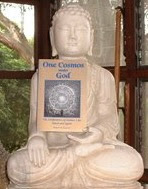
There are two kinds of men: Those who believe in original sin and idiots. --Don Colacho
Interesting night. What began as a minor disturbance in the force yesterday morning, evolved into a full-blown cold just at bedtime. As such, I was absolutely unable to sleep, and eventually gave up trying. I got up at around 3:30, and have now been awake for, let's see -- almost 24 hours.
At the moment I feel pretty good, but you know how that goes. At some point today there's gonna be a crash.
In any event, with 1,800 posts nestled away in the knowa's arkive, why put any additional strain on the already taxed Gagdad pneumasomatic system? Why not just remumble a little gnosissed and long fleabitten piece of bloggerel from five years ago?
I don't know about you, but these old & moldies are always new to me, plus reposting them gives me the opportunity to entertain second thoughts about those rough first drafts of cosmic history, and determine if they need to be brought up to standards of the Current Truth which never changes.
Also, speaking of memoirs of the future, it occurred to me that perhaps it's time for another guided tour around the impossibly rich world of Meditations on the Tarot. To my knowledge it remains the best book on orthoparadoxical Christian esoterism, and in many ways, it is what started the whole "Raccoon craze" that swept the nation when I first began blogging six years ago. Many new readers have come on board the cosmic bus since then, so perhaps this would be a useful service.
On the other hand, I may regret having brought it up after I get some sleep.
Another possible direction I've been toying with is a series of posts on pure metaphysics, showing how everything fits together with a series of undeniable axioms that harmelodically build upon and interlock with one another, and which are reflected in the implicit metaphysic of revelation.
Naturally I wouldn't rely upon Schuon -- except perhaps to use his ideas for all they're worth -- but I would like to rethink them through from the ground up (or top down) and spread some of my special vertilizer on these seeds. One major difference is that Schuon believed Vedanta to be the "universal metaphysic," but I respectfully disagree. Rather, I believe it is found in the Judeo-Christian stream, of which other religions are partial reflections, in large part because I believe the Trinity to be "more absolute" than any monad.
Anyway, here is your old post, updated and revised. If necessary. Let's call it, I don't know... how about The Lure of Nothingness:
As we have discussed on many occasions, the current divide between left and right, between illiberal leftism and the classic American liberalism of the Fathers, mirrors an ontological divide that goes back to the very Origin and Center of the cosmos.
Looked at in one way, this Origin and Center are situated in the distant (horizontal) past, where history blurs into myth. However, looked at from an other angle -- the vertical -- they can only be situated in the now, since the now is precisely where eternity bisects time, so to speak. Mainly through us.
Human beings are fallen creatures in a fallen world. This concept is thoroughly misunderstood by the secularized mind, perhaps owing to their formidable shallowness and invincible idiocy.
In fact, “misunderstood” is perhaps not a strong enough word, because it presumes that one may understand this principle from the outside. However, as is true of all important metaphysical ideas that are couched in religious language, they can only be comprehended from the inside. One must first be in a religious world to know the world from which religion arises. Otherwise you are somewhat like a music critic who just happens to be deaf.
For similar reasons, most people believe one must first somehow decide whether or not God exists before joining in with the religious fun, but the opposite is true. One becomes religious so as to make God present in one’s life.
Whether or not God exists is a separate issue. Besides, if he doesn't exist, only he knows it. The important point is to make him present and real, and thus inhabit the space where our true humanness emerges. Anything short of this makes one merely human, which is necessarily to say less than human, in the sense that a person who fails to transcend himself sinks beneath himself.
For man alone, a merely "natural" existence is completely unnatural and more than a little pathetic. This is something everyone knows, since knowledge as such depends upon this prior transcendence. The tenured can deny it, but in so doing they affirm it. Way it is.
Once upon a timeless -- we don't have to reify the details -- human consciousness "fell" from one state to another. It is not necessarily a matter of assigning blame, because in order for there to be a cosmos at all -- a manifestivus for the rest of us -- there must in some sense be a "fall," for to say “manifestation” is to say “other than the God,” is to say “relative,” is to say “alienation,” death, toil, and trouble. And here we are.
(It seems to me that in the Christian West they emphasize more the volitional component -- and therefore sin -- whereas in the East they focus more on the inevitability; I think there is room for both, i.e., for both Easter and Christmas, Atonement/Resurrection and Incarnation.)
So we make the vertical leap from up to down and inside out, without which there could not be a sensible cosmos. We exchange essence for existence and plunge headlong into this veil of tears, the cosmic nothing. The link with the invisible world is broken, and a visible world fills the void. Bang! What a strange, eery, beautiful place!
Having said that....
“We must distrust the fascination abysses can exert over us; it is in the nature of cosmic impasses to seduce and play the vampire; the current of forms does not want us to escape its hold. Forms can be snares just as they can be symbols and keys; beauty can chain us to forms just as it can be a door to the non-formal” (Schuon).
The “cosmic leftism” of which Petey, the merciful, the compassionate, the gaseous, speaks, is the fascination of the abyss. In other worlds, it is an extension or prolongation of the fall as a solution to the fall. Should we venture down this path, we become just like a human, only worse.
If we can only keep falling, then perhaps we will “break on through” to the other side, perfect mankind, create heaven on earth, and win the human race. Thus, on the deepest cosmic level, our cultural divide reflects a much larger choice: reverse the fall, or keep on plunging? Or, one could say: or O or ø. Don't kid yourself. It really is that simple and that stark: God or nothing. Creation or Nihilism. Obama or anyone.
Leftists are activists. And they are socially aware. And they are committed. But their frenetic activity is a substitute for the calm and expansiveness of Being. Theirs is “the restless and disappointing turmoil of superfluous things” (Schuon); their self-styled "social awareness" is a poor substitute for vertical awareness; and their "commitment" is an ersatz replacement for faith -- faith in a false absolute that necessarily elevates man to god, for in this provincial view there can be nothing higher than the human beastling. And soon enough, nothing lower.
This is why leftism generates such emotionality in its adherents -- it is religious emotion in the absence of religion. Just as it is almost impossible to treat alcoholism in the absence of a spiritual awakening, I don't see how someone could truly recover from the left without the assistance of nonlocal operators. At the very least, one must become aware of the deeper reality behind the play of appearances, of which the human world is a kind of reflection herebelow.
This plunge of allegiance to the fog represents a hypnotic capitulation to a kind of entropic pull that is always present in humans. In an analogy I have used many times with patients, it is as if we have one "force" that pushes -- or pulls -- us into the future, into novelty, growth, change, and development; and a "counter-force" that runs in the opposite direction, toward stasis, fear of change, regression to safety, etc.
One sees this quite vividly in the developing child, since every developmental stage is fraught with ambivalence: become more independent? Yes! Oops. Where's mommy! There is this constant push for individuation and autonomy, alternating with separation anxiety and abandonment depression.
The reversal of the cosmic fall cannot be achieved, much less imposed, collectively. Rather, it can only be accompliced one assoul at a time through metanoia, repentance, or “turning around,” toward the Light of our transpersonal sun and source.
Secularism begins and therefore ends with the material world. Being that the material world is a shifting and transitory world, one can only derive a shifting and transitory metaphysic from its study. This is by no means to devalue science, only to not confuse it with metaphysics.
Furthermore, with this inversion, one will necessarily confuse the Principle with its manifestation. One will have to adhere, for example, to a bizarre metaphysic that permits a wholly accidental and contingent mind to know absolutely.
Here is what we have heard from the wise. In “reality,” the cosmos may be thought of as a kind of message from God to Himself by Himself, so long as one doesn't take the analogy too far.
But this should by no means be taken as an excuse for pantheism or narcissism, since the message is nonetheless real. For while God is both Alpha and Omega, sender and recipient, the message is deployed in time, and time is a mode of Eternity. We have received -- or assimilated -- the good news of the message when we have achieved our end.
Which is to say, beginning. A flesh start. Perpetually born and borne again, on the river of time to the ocean of eternity. Existence renewed. Been here before. First time. Older than Abraham, young as a babe's I-AM. The circle unbroken by and by.
The Son of God became man so that man might become God. --Saint Athanasius
Friday, September 30, 2011


Thursday, September 29, 2011
The Eye is the Sun it Sees, and the Sun a Shining I
In Yoga and the Jesus Prayer, Matus repeats an old wise crack of Gregory Nazianzen, to the effect that What the sun is for the visible world, God is for the intelligible world. For Symeon, the sun is his "favorite model for the inner illumination."
In the visible world, the sun is "everything." Not only is it the light with which we see, but we also directly assimilate it every time we eat. The mystery of photosynthesis converts photons to the plants that nourish us one way or the other, either directly or indirectly.
Likewise, vision is a subtle form of touch (as are all the senses), in that it involves photons striking the retina, which converts these to signals sent to the visual cortex.
Now, psychopneumatic vision is also a form of touch, even more subtle than biopsychic vision. You might say that (↓) is analogous to physical light, while (¶) is the spiritual eye that sees and transmutes (↓) into intelligible thought, i.e., logosynthesis.
Just as this world would be dark and silent in the absence of the central sun, (¶) too is "empty," so to speak, until illuminated by (↓). In this way, "God's energies... shine in the human spirit," ultimately revealing how "the two spirits, human [↑] and divine [↓], are drawn into union." Only an intelligent world can be an intelligible world, or kosmos neotikos.
Again, (↓) and (↑) are not actually "two," but different sides of the same procession. Maximus Confessor called this the "exitus-reditus," but one could also call it "involution-evolution," or inevotability for short.
For Eckhart, it was a kind of "boiling over" or "flowing forth" in God, followed by a "breaking through" and "flowing back" on the human end. Thus, "God's going-out is his going-in" (Eckhart) -- or, in the words of Marx, "hello I must be going."
Indeed, Eckhart conceived of this absurcular flow "as the fundamental law of reality taught by the Bible," e.g., The rivers return to the place from whence they flowed, so that they may flow again. "The pulse of this universal circle of activity" (McGinn) is what we call "Raccoon central," or O. The enigmatic author of the Lowly Bobble clumsily describes it thus:
Here, prior to thought, by the headwaters of the eternal, the fountain of innocence, the mind shoreless vast and still, absoloved & absorbed in what is always the case, face to face in a sacred space.
Again, for Symeon this neverending deustiny is the alwaysbeginning ground:
The beginning of the race is its end,
and the end its beginning.
Endless is its ending, for
the beginning is already the end.
No, not a koan but an ortho(para)dox, or simultaneously "right speech" and beyond it.
Back to the central sun, the planetary "absolute" around which we revolve. On the biopsychic level it corresponds to the eye, while in the psychopneumatic it corresponds to the intellect.
When you think about the other senses -- hearing, touch, taste, and smell -- they are much more "local," so to speak, and in a way, more "gross." Conversely, vision takes in an infinitely larger field. For example, you can't hear anything beyond a few miles, and you can't touch anything that isn't right next to you (and even then you might get sued).
But (assisted) vision can actually see, for example, the residue of the big bang, i.e., the cosmic background radiation, while unassisted vision can see whole galaxies, not to mention take in light from events that occurred millions of years ago; when you look at a star, you are looking at something from the distant past. In other words,
"Sight alone communicates to us the existence of immeasurably remote heavenly bodies that are perfectly foreign to our vital interests" (Schuon). Thus, vision includes a kind of dispassionate "objectivity" or "disinterestedness" that corresponds to truth.
Analogously, intellect can "see" much more than the local ego, which generally cannot see beyond its self-interested little paradigm, its cultural assumptions, its mind parasites.
As described by Schuon, the latter is always limited by at least four factors: first, we are "creature, not Creator, manifestation and not Principle." Second, we are not angels; we are neither at the top nor the bottom of the vertical hierarchy, but somewhere in the middle, suspended halfway between our better and worse selves. Third, we have essential differences that are not accidental or contingent. This is not a matter of ego but of essential self. And fourth, we are inhabited by "accidental" infirmities or limitations in the form of internalized mind parasites (both individual and collective).
In short, you are 1) creature, 2) a mid-level one, 3) you and not someone else, and 4) a little weird, unlike Bob, who is totally normal.
So "the eye becomes the metaphysical center of the world of which it is at the same time the sun and the heart" (Schuon).
I suppose one could say that intellect sees the light, while the heart feels the warmth (although it is the same divine ray).
But just as the plant metabolizes the sun's rays, "God is at once the Subject and Object, the Knower and Known," and the cosmsos itself "is merely vision or knowledge, in whatever mode it may be realized..., Knowledge and Reality being two complementary aspects of the same divine Cause" (ibid.).
I am the things that are, and those things that are to be, and those that have been.... the fruit which I bore was the sun. --Proclus
My, what big eyes yʘʘ have!
In the visible world, the sun is "everything." Not only is it the light with which we see, but we also directly assimilate it every time we eat. The mystery of photosynthesis converts photons to the plants that nourish us one way or the other, either directly or indirectly.
Likewise, vision is a subtle form of touch (as are all the senses), in that it involves photons striking the retina, which converts these to signals sent to the visual cortex.
Now, psychopneumatic vision is also a form of touch, even more subtle than biopsychic vision. You might say that (↓) is analogous to physical light, while (¶) is the spiritual eye that sees and transmutes (↓) into intelligible thought, i.e., logosynthesis.
Just as this world would be dark and silent in the absence of the central sun, (¶) too is "empty," so to speak, until illuminated by (↓). In this way, "God's energies... shine in the human spirit," ultimately revealing how "the two spirits, human [↑] and divine [↓], are drawn into union." Only an intelligent world can be an intelligible world, or kosmos neotikos.
Again, (↓) and (↑) are not actually "two," but different sides of the same procession. Maximus Confessor called this the "exitus-reditus," but one could also call it "involution-evolution," or inevotability for short.
For Eckhart, it was a kind of "boiling over" or "flowing forth" in God, followed by a "breaking through" and "flowing back" on the human end. Thus, "God's going-out is his going-in" (Eckhart) -- or, in the words of Marx, "hello I must be going."
Indeed, Eckhart conceived of this absurcular flow "as the fundamental law of reality taught by the Bible," e.g., The rivers return to the place from whence they flowed, so that they may flow again. "The pulse of this universal circle of activity" (McGinn) is what we call "Raccoon central," or O. The enigmatic author of the Lowly Bobble clumsily describes it thus:
Here, prior to thought, by the headwaters of the eternal, the fountain of innocence, the mind shoreless vast and still, absoloved & absorbed in what is always the case, face to face in a sacred space.
Again, for Symeon this neverending deustiny is the alwaysbeginning ground:
The beginning of the race is its end,
and the end its beginning.
Endless is its ending, for
the beginning is already the end.
No, not a koan but an ortho(para)dox, or simultaneously "right speech" and beyond it.
Back to the central sun, the planetary "absolute" around which we revolve. On the biopsychic level it corresponds to the eye, while in the psychopneumatic it corresponds to the intellect.
When you think about the other senses -- hearing, touch, taste, and smell -- they are much more "local," so to speak, and in a way, more "gross." Conversely, vision takes in an infinitely larger field. For example, you can't hear anything beyond a few miles, and you can't touch anything that isn't right next to you (and even then you might get sued).
But (assisted) vision can actually see, for example, the residue of the big bang, i.e., the cosmic background radiation, while unassisted vision can see whole galaxies, not to mention take in light from events that occurred millions of years ago; when you look at a star, you are looking at something from the distant past. In other words,
"Sight alone communicates to us the existence of immeasurably remote heavenly bodies that are perfectly foreign to our vital interests" (Schuon). Thus, vision includes a kind of dispassionate "objectivity" or "disinterestedness" that corresponds to truth.
Analogously, intellect can "see" much more than the local ego, which generally cannot see beyond its self-interested little paradigm, its cultural assumptions, its mind parasites.
As described by Schuon, the latter is always limited by at least four factors: first, we are "creature, not Creator, manifestation and not Principle." Second, we are not angels; we are neither at the top nor the bottom of the vertical hierarchy, but somewhere in the middle, suspended halfway between our better and worse selves. Third, we have essential differences that are not accidental or contingent. This is not a matter of ego but of essential self. And fourth, we are inhabited by "accidental" infirmities or limitations in the form of internalized mind parasites (both individual and collective).
In short, you are 1) creature, 2) a mid-level one, 3) you and not someone else, and 4) a little weird, unlike Bob, who is totally normal.
So "the eye becomes the metaphysical center of the world of which it is at the same time the sun and the heart" (Schuon).
I suppose one could say that intellect sees the light, while the heart feels the warmth (although it is the same divine ray).
But just as the plant metabolizes the sun's rays, "God is at once the Subject and Object, the Knower and Known," and the cosmsos itself "is merely vision or knowledge, in whatever mode it may be realized..., Knowledge and Reality being two complementary aspects of the same divine Cause" (ibid.).
I am the things that are, and those things that are to be, and those that have been.... the fruit which I bore was the sun. --Proclus
My, what big eyes yʘʘ have!
Wednesday, September 28, 2011
I Pledge Allegiance to the United States of Mind
The hard part, of course, is transmuting temporary spiritual states into permanent traits, which I suppose is what the religious life is all about. Interestingly, this also happens to be what distinguishes a neurosis -- or what is called an Axis I disorder -- from a personality disorder, or Axis II.
An Axis I condition is analogous to a person with, say, a cold or flu. It is presumed to be something "added on" to the personality, something either isolated from the rest (like a simple phobia) or temporary and time-limited, like certain anxiety or depressive disorders; you might say that that Axis I conditions are limited and bound, either in living-time or in psychic space.
But a personality disorder involves the whole person, and affects every area of functioning -- relationships, thinking, perception, emotional stability, impulses, self image, the whole existentialada. (And it's not an either/or division, more of a continuum.)
One can draw the same distinction with regard to spiritual development. For Symeon, what begins with gratuitous divine ingressions is gradually assimilated into the "whole person," so to speak: from states to traits; from Axis I disorder to an Axis II spiritual order. Of note, some degree of dis-order usually must precede the order, i.e., some disassembly required: creative destruction, order from chaos, spontaneous emergence, yada yada.
The Axis II spiritual condition is one "in which the experience of God as light is no longer a transient irruption into the everyday, involving 'altered states of consciousness,' but a total transformation of the mystic's perception of reality" (Matus). And that is not all; for "the contemplative then becomes a 'theodidact,' one taught by God" in such a manner that the "knowledge" therein "transcends words and concepts," but not completely.
Again, no experience of any kind can be communicated directly, but a linguistically -- or musically or artistically -- gifted person can communicate more of it than others, just as a poet can transform and transmit the everyday into something sublime.
Symeon writes that one goes from "experiencing" the Light to being united with it, "but not as if he were in a continual state of ecstasy." Indeed, ec-stasy implies "standing outside" oneself, but this is the opposite movement. It is the Deep Within, except that it radiates outward, illuminating everything: "persons and things are perceived as they really are in God" (ibid.).
Importantly, this is not just personal theosis -- the realization of God -- but cosmotheosis, a word apparently made up by the enigmatic One Cosmos author. It is the fulfillment of the very order of existence and even beyond, for it is "ordered to an eschatological fulfillment beyond this life" (Matus). It is "a foretaste of eternal glory here and now."
This brings to mind Paul's lament about the "futility of creation," and how it "has been groaning in the pains of childbirth until now." Who is the child and what is this birth?
For Symeon, the penetration of the Divine Light isn't only a matter of psychic transformation, which would be too superficial. Rather, Christianity doesn't separate soul from body, and treats the former as the form of the latter. Therefore, Symeon "insists on the penetration of the transforming light into our consciousness and into our very flesh." Again it is not an explosive ecstasy but an implosive in-stasy, so to speak.
In the One Cosmos book, the author refers to such individuals as divine "fleshlights," each a kind of saintly newborn testavus for the restavus, illuminating the Way. Without them, each person would have to reinvent the wheel of karma.
The archetype and necessary condition of this union of light and flesh is, of course, Christ, without whom our own (↑) would be futile. He is the "inseparable union of the two energies and two wills," i.e., (↓ ↑), only in one continuous open circle (a kind of discontinuity-within-deuscontinuity).
In reality, it is this divine spiral into which we leap when we take that leap of faith. Looked at in this way, it is not so much our own (↑) that is efficacious, but (↑) within the context of (↓ ↑), so that "we have only to cooperate freely and actively with this work" (Matus).
In other words, it must be emphasized that the human "struggle for virtue" doesn't "imply on our part an ability to produce the light. It is always God, in his perfect freedom, who dispenses his grace" (ibid.).
[W]hereas the material sun rises and then sets, giving way to darkness, God must become an ever-rising sun in the believer, who himself then becomes, in the world, like an ever-new dawn.... This rising dawn... is also the descent of the divine sun on or within him. It is this descent which makes him ascend in the spirit.
An Axis I condition is analogous to a person with, say, a cold or flu. It is presumed to be something "added on" to the personality, something either isolated from the rest (like a simple phobia) or temporary and time-limited, like certain anxiety or depressive disorders; you might say that that Axis I conditions are limited and bound, either in living-time or in psychic space.
But a personality disorder involves the whole person, and affects every area of functioning -- relationships, thinking, perception, emotional stability, impulses, self image, the whole existentialada. (And it's not an either/or division, more of a continuum.)
One can draw the same distinction with regard to spiritual development. For Symeon, what begins with gratuitous divine ingressions is gradually assimilated into the "whole person," so to speak: from states to traits; from Axis I disorder to an Axis II spiritual order. Of note, some degree of dis-order usually must precede the order, i.e., some disassembly required: creative destruction, order from chaos, spontaneous emergence, yada yada.
The Axis II spiritual condition is one "in which the experience of God as light is no longer a transient irruption into the everyday, involving 'altered states of consciousness,' but a total transformation of the mystic's perception of reality" (Matus). And that is not all; for "the contemplative then becomes a 'theodidact,' one taught by God" in such a manner that the "knowledge" therein "transcends words and concepts," but not completely.
Again, no experience of any kind can be communicated directly, but a linguistically -- or musically or artistically -- gifted person can communicate more of it than others, just as a poet can transform and transmit the everyday into something sublime.
Symeon writes that one goes from "experiencing" the Light to being united with it, "but not as if he were in a continual state of ecstasy." Indeed, ec-stasy implies "standing outside" oneself, but this is the opposite movement. It is the Deep Within, except that it radiates outward, illuminating everything: "persons and things are perceived as they really are in God" (ibid.).
Importantly, this is not just personal theosis -- the realization of God -- but cosmotheosis, a word apparently made up by the enigmatic One Cosmos author. It is the fulfillment of the very order of existence and even beyond, for it is "ordered to an eschatological fulfillment beyond this life" (Matus). It is "a foretaste of eternal glory here and now."
This brings to mind Paul's lament about the "futility of creation," and how it "has been groaning in the pains of childbirth until now." Who is the child and what is this birth?
For Symeon, the penetration of the Divine Light isn't only a matter of psychic transformation, which would be too superficial. Rather, Christianity doesn't separate soul from body, and treats the former as the form of the latter. Therefore, Symeon "insists on the penetration of the transforming light into our consciousness and into our very flesh." Again it is not an explosive ecstasy but an implosive in-stasy, so to speak.
In the One Cosmos book, the author refers to such individuals as divine "fleshlights," each a kind of saintly newborn testavus for the restavus, illuminating the Way. Without them, each person would have to reinvent the wheel of karma.
The archetype and necessary condition of this union of light and flesh is, of course, Christ, without whom our own (↑) would be futile. He is the "inseparable union of the two energies and two wills," i.e., (↓ ↑), only in one continuous open circle (a kind of discontinuity-within-deuscontinuity).
In reality, it is this divine spiral into which we leap when we take that leap of faith. Looked at in this way, it is not so much our own (↑) that is efficacious, but (↑) within the context of (↓ ↑), so that "we have only to cooperate freely and actively with this work" (Matus).
In other words, it must be emphasized that the human "struggle for virtue" doesn't "imply on our part an ability to produce the light. It is always God, in his perfect freedom, who dispenses his grace" (ibid.).
[W]hereas the material sun rises and then sets, giving way to darkness, God must become an ever-rising sun in the believer, who himself then becomes, in the world, like an ever-new dawn.... This rising dawn... is also the descent of the divine sun on or within him. It is this descent which makes him ascend in the spirit.
Tuesday, September 27, 2011
Hurtling Downward Faster than the Speed of Light?
Ironically, one result of modern rationalism has been the ascendence of emotion and sentiment as the leading edge of thought.
Specifically, because emotion is denied as a source of genuine knowledge (both gross because irrelevant and subtle because impossible), the rationalist imagines he can think without it. This only causes the untutored sentiments to take their vengeance on the mind that denies them. One sees this in every feeling-based modernist movement from doctrinaire atheism, to radical secularism, to metaphysical Darwinism, to any form of leftism.
This occurred to me while reading a passage of Schuon. He mentions that while "there are no doubt contemporary philosophical problems," there are nevertheless "no intellectual needs so particular to our time as to render incomprehensible those of our fathers."
Interestingly, the older I get and wiser -- or less dense -- I become, the more true this is. To put it another way, the younger I was, the more drawn I was to the new, the novel, the modern and up-to-date. Now I wonder what "needs" these were addressing, because I now regard the "solutions" as hopelessly superficial and beside the point. They do not address man as he is, but as they wish him to be. But if man were really that way, their solutions would be unnecessary.
Last night I happened to see a short clip of Reagan from before he was president, and remembered how much I despised him back in the 1980s. When I saw the clip, it gave me a totally spontaneous and unmediated "good feeling" about the man. Without knowing anything else about him, there was a prior response of warmth and even trust.
You might say that my present feelings toward Obama are the mirror image of the feelings I had thirty years ago about Reagan. But you would be wrong. Several trolls have made this charge, and superficially it makes sense: I am the same person, but I have, for whatever reason, attached my toxic emotions to a new object of scorn.
But last night, after seeing the short clip of Reagan, I wondered if, thirty years from today, I might happen to see a short clip of Obama on my implanted biocomputer screen and have that same spontaneous emotional reaction of warmth and good will.
No. That is impossible, because the change I have endured is not of the "flip-flop" variety, but rather, of the evolutionary and non-linear type.
Also, in order to revert backward, I would have to "unknow" so much I have learned over the last thirty years, that I would no longer be I.
If anyone should believe in progress it is the self-styled "progressive," but in reality, progressive belief is the one thing in the world that isn't subject to the universal decay that flows from their cosmic nihilism. Empires come and go, but socialism is forever.
It is indeed true that "real knowledge has no history" (Schuon). But the progressive lives in hopeless contradiction, for he posits a world with no transcendent ground and therefore no permanent truths.
Just as Darwinism mandates that every species is an accident on the way to either extinction or another transitional species, it also means that today's truth becomes tomorrow's obsolete opinion, convention, and myth. Except for metaphysical Darwinism, which abides in a transcendent world of permanent truth, right alongside Obama's campaign promises.
It is similar to the supposedly faster-than-light neutrinos we learned about last week. The problem isn't that this is merely a new physical "fact" to be piled atop all the others.
Rather, if true, it would be a fact that unexplains everything else physicists "know" about the foundations of the natural world. Some facts are puzzle pieces, others are explosive devices. This is a neutrino bomb that leaves physicists standing while utterly blowing their minds.
But irrespective of whether we are in for a new physical paradigm, nothing about intelligence itself will have changed. And this is why revelation does not change, because it is and always will be conformed to man. It is addressed to "certain constants of intelligence" (Schuon), which is another way of saying that the intellect is not just in conformity to truth, but ultimately of the same "substance," which is being itself.
Thus, one might say that revelation is a communication of being from (future or timeless) Self to (present or temporal) self. And a modern man is simply "a man who forgets what is known about man" (Don Colacho), which cannot be forgotten without ceasing to be one.
In any event, the mind can readily assimilate any merely scientific finding without ceasing to be what it is. Man will always be higher than that which he knows; if he is lower, then he cannot know (truth), period.
To put it another way, the mind can only accept aberrations such as atheism or metaphysical Darwinism as a consequence of not being what it is.
We could say the same of leftism, being that it elevates man's fleeting desires to timeless and universal rights, and these new rights to someone else's obligation to fulfill them.
In short, it redounds to a tyranny of government of, by, and for the ungovernable. When we devolve from principle to accident, from idea to fact, and from intellect to feeling, we likewise justify any collective action to nurture or remedy these good or bad feelings.
For our founders, democracy was rooted in the conviction that all citizens are capable of being either ruler or ruled. Therefore, people who are incapable of self-rule are specifically unfit to engage in democracy. If you cannot even master your own domain, how can you presume to be sovereign over others?
But in the world of the left, these objectively disordered souls -- or the elected proxies who gain power in exchange for indulging and ministering to them -- become the rulers and exploiters of the self-governed. Their world is precisely ass-backward.
And we mean this literally, since it places man's worthless excreta at the top, and his head -- his truth-metabolizing intellect -- at the bottom. Is it any wonder we've been hurtling downward for the last three years even faster than usual?
It may look as if this is occurring faster than the Light which can save us. But this is only an illusion, for darkness doesn't actually move. It only enshrouds.
Real wisdom does not fade with age any more than does real art. Conceptualist relativism abolishes truth in order to set in its place a blind and heavy biological pseudo-reality. --F. Schuon
Specifically, because emotion is denied as a source of genuine knowledge (both gross because irrelevant and subtle because impossible), the rationalist imagines he can think without it. This only causes the untutored sentiments to take their vengeance on the mind that denies them. One sees this in every feeling-based modernist movement from doctrinaire atheism, to radical secularism, to metaphysical Darwinism, to any form of leftism.
This occurred to me while reading a passage of Schuon. He mentions that while "there are no doubt contemporary philosophical problems," there are nevertheless "no intellectual needs so particular to our time as to render incomprehensible those of our fathers."
Interestingly, the older I get and wiser -- or less dense -- I become, the more true this is. To put it another way, the younger I was, the more drawn I was to the new, the novel, the modern and up-to-date. Now I wonder what "needs" these were addressing, because I now regard the "solutions" as hopelessly superficial and beside the point. They do not address man as he is, but as they wish him to be. But if man were really that way, their solutions would be unnecessary.
Last night I happened to see a short clip of Reagan from before he was president, and remembered how much I despised him back in the 1980s. When I saw the clip, it gave me a totally spontaneous and unmediated "good feeling" about the man. Without knowing anything else about him, there was a prior response of warmth and even trust.
You might say that my present feelings toward Obama are the mirror image of the feelings I had thirty years ago about Reagan. But you would be wrong. Several trolls have made this charge, and superficially it makes sense: I am the same person, but I have, for whatever reason, attached my toxic emotions to a new object of scorn.
But last night, after seeing the short clip of Reagan, I wondered if, thirty years from today, I might happen to see a short clip of Obama on my implanted biocomputer screen and have that same spontaneous emotional reaction of warmth and good will.
No. That is impossible, because the change I have endured is not of the "flip-flop" variety, but rather, of the evolutionary and non-linear type.
Also, in order to revert backward, I would have to "unknow" so much I have learned over the last thirty years, that I would no longer be I.
If anyone should believe in progress it is the self-styled "progressive," but in reality, progressive belief is the one thing in the world that isn't subject to the universal decay that flows from their cosmic nihilism. Empires come and go, but socialism is forever.
It is indeed true that "real knowledge has no history" (Schuon). But the progressive lives in hopeless contradiction, for he posits a world with no transcendent ground and therefore no permanent truths.
Just as Darwinism mandates that every species is an accident on the way to either extinction or another transitional species, it also means that today's truth becomes tomorrow's obsolete opinion, convention, and myth. Except for metaphysical Darwinism, which abides in a transcendent world of permanent truth, right alongside Obama's campaign promises.
It is similar to the supposedly faster-than-light neutrinos we learned about last week. The problem isn't that this is merely a new physical "fact" to be piled atop all the others.
Rather, if true, it would be a fact that unexplains everything else physicists "know" about the foundations of the natural world. Some facts are puzzle pieces, others are explosive devices. This is a neutrino bomb that leaves physicists standing while utterly blowing their minds.
But irrespective of whether we are in for a new physical paradigm, nothing about intelligence itself will have changed. And this is why revelation does not change, because it is and always will be conformed to man. It is addressed to "certain constants of intelligence" (Schuon), which is another way of saying that the intellect is not just in conformity to truth, but ultimately of the same "substance," which is being itself.
Thus, one might say that revelation is a communication of being from (future or timeless) Self to (present or temporal) self. And a modern man is simply "a man who forgets what is known about man" (Don Colacho), which cannot be forgotten without ceasing to be one.
In any event, the mind can readily assimilate any merely scientific finding without ceasing to be what it is. Man will always be higher than that which he knows; if he is lower, then he cannot know (truth), period.
To put it another way, the mind can only accept aberrations such as atheism or metaphysical Darwinism as a consequence of not being what it is.
We could say the same of leftism, being that it elevates man's fleeting desires to timeless and universal rights, and these new rights to someone else's obligation to fulfill them.
In short, it redounds to a tyranny of government of, by, and for the ungovernable. When we devolve from principle to accident, from idea to fact, and from intellect to feeling, we likewise justify any collective action to nurture or remedy these good or bad feelings.
For our founders, democracy was rooted in the conviction that all citizens are capable of being either ruler or ruled. Therefore, people who are incapable of self-rule are specifically unfit to engage in democracy. If you cannot even master your own domain, how can you presume to be sovereign over others?
But in the world of the left, these objectively disordered souls -- or the elected proxies who gain power in exchange for indulging and ministering to them -- become the rulers and exploiters of the self-governed. Their world is precisely ass-backward.
And we mean this literally, since it places man's worthless excreta at the top, and his head -- his truth-metabolizing intellect -- at the bottom. Is it any wonder we've been hurtling downward for the last three years even faster than usual?
It may look as if this is occurring faster than the Light which can save us. But this is only an illusion, for darkness doesn't actually move. It only enshrouds.
Real wisdom does not fade with age any more than does real art. Conceptualist relativism abolishes truth in order to set in its place a blind and heavy biological pseudo-reality. --F. Schuon
Monday, September 26, 2011
The Original Synergy: Nobody Ever Got Spiritually Rich On His Own
Matus writes that "All Christians are, or should be, in some sense, mystics," in that "their faith ought to give them a new vision" and "a different consciousness of themselves, of other persons, and of God." It should gradually penetrate "to the deepest levels of consciousness," slowly and sometimes imperceptibly transforming "their motives, thought patterns, and emotional reflexes." I say "imperceptibly" because it is difficult to remember the assoul we might have become absent the transformation.
Now, Schuon writes that "a metaphysical doctrine is the incarnation in the mind of a universal truth."
Thus, what was said in the first paragraph about the transformative power of faith is a result of the gradual "incarnation of truth," so to speak. Before it is a "cognitive truth" it is an ontological truth, i.e., truth of being.
For example, Symeon didn't understand what was happening when it was happening, since it occurs on a vertical plane that is ontologically prior to thought. When first granted a vision of the Light, he "was at a loss to tell what was happenning; who or what the light was did not emerge at the level of conceptual understanding," of the "conscious psyche" or ego (Matus).
For this reason, in the obscure "One Cosmos" book mentioned in last Thursday's post, the enigmatic author uses the symbol (?!) to categorize the spontaneous mystical experience without thereby limiting it with some superficial manmode cognitive definition.
In these matters -- no different than in a neurosis -- thought can be and often is a defense against experience.
Indeed, this is the self-imposed barrier faced by the gorgon-variety ovary-tower intellectual, who cannot climb in from the comfortable little cage she has fashioned for herself at our expense.
In a passage ripped from the One Cosmos praybook, Matus writes of how for Symeon the vision was "an 'unexpected wonder' which left him filled with 'amazement' but with little understanding."
Rarely does an individual pass their whole life before their I experiences one of these metaphysical freebies.
But many people -- especially the cagebound intellectuals mentioned above -- treat these peek experiences (in which we are granted a peek behind the veil) as mere anomalies to be unexplained away. They exercise a pathological foreclosure of curiosity (-o), ensuring that this experience, so fraught with potential meaning, is just "meaningless."
The (?!) is the ingression of a grace that tells us, among others, that there are more things in heaven and earth than these intellectual whoratios dream up in their philosophy departments and law schools.
Thus, the last thing we should do is close ourselves to the experience. After all, if everyone had done that, we'd still be indistinguishable from apes and liberals. Truth, beauty, virtue, art, music, poetry -- anythink that requires contact with the Subject beyond (and before and behind) would be off limits.
So Symeon did not reject the gift of (?!), but set out in pursuit of its source, of what it meant: "His life thereafter became a progressive initiation into the meaning of his visions" (Matus). This is indeed the Way of the Raccoon: to follow the sparks back upsdream to that big whole in the ground of being.
For Symeon, this upward and inword journey is at the same time "a restoration and reintegration of our original condition." The journey is not from a "here" to a "there" in any Euclidian sense.
Rather, it is via a kind of transpersonal membrane, so to speak, through which energies flow back and forth. Thus, the key practical principle is "openness," or what the tri-curious One Cosmos author symbolizes (o).
From another angle, Schuon describes our spiritual membrain as follows: "[H]uman intelligence makes itself similar to its own universal Essence, thanks to a sort of reciprocity between thought and Reality."
Or in other words, thought makes itself similar to truth, not vice versa. We do not begin with an axiom but an experience, for no axiom can wholly contain the experience. The attempt to do so is like "a man trying to draw the geometrical point by setting out to make it as small as possible" (ibid.).
But just as there is in physics Planck's Constant, which is the smallest unit of energy, there is on our being a constant plank we walk between I, Thou, and the Love and Truth that freely pass between. Truth embraces us, not vice versa.
It is preferable to use these empty symbols because we again don't want to assume too much about what they symbolize. For one thing, as Symeon suggests, it is not actually "possible to distinguish divine activity (or energy) within us from our own," or what is "'infused' from what is 'acquired.'"
One might say that it is always a trynergy, or a case of "yours, mine, and ours," unmixed and inseparable. There can be no sharp "division of labor" between Creator and creature, for nobody gets spiritually rich on his own, only impoverished, both spiritually and, as a consequence, intellectually and politically.
We might say that the above-noted membrane is a kind of light-transducer, no different from any other sense. For example, our eyes transduce photons into the experience we call "light," just as our ears transduce air vibrations into "sound." What the One Cosmos author calls (¶) tranduces (↓) into (n).
You don't even have to know what this means to know that it is true. Not only is it the equation of your birth, but we might say that it is the "Christmas presence" or "Christ principle," in that 〇 (↓) (¶) so that (¶) might (↑) 〇. If we succeed, we are ʘ, so not to speak. (And I do hope that was sufficiently unclear).
Please note that this is of necessity a neverending -- which is to say, alwaysbeginning -- process. Symeon, writing of himself in the third person, says that "If he would wish to write down his experiences, he would run out of paper and ink -- I don't think there would be enough time for him to describe them all in detail."
This, of course, brings to mind the Apostle's dilemma described in the last paragraph of John. Who has the necessary timelessness?! Mine just ran out.
Now, Schuon writes that "a metaphysical doctrine is the incarnation in the mind of a universal truth."
Thus, what was said in the first paragraph about the transformative power of faith is a result of the gradual "incarnation of truth," so to speak. Before it is a "cognitive truth" it is an ontological truth, i.e., truth of being.
For example, Symeon didn't understand what was happening when it was happening, since it occurs on a vertical plane that is ontologically prior to thought. When first granted a vision of the Light, he "was at a loss to tell what was happenning; who or what the light was did not emerge at the level of conceptual understanding," of the "conscious psyche" or ego (Matus).
For this reason, in the obscure "One Cosmos" book mentioned in last Thursday's post, the enigmatic author uses the symbol (?!) to categorize the spontaneous mystical experience without thereby limiting it with some superficial manmode cognitive definition.
In these matters -- no different than in a neurosis -- thought can be and often is a defense against experience.
Indeed, this is the self-imposed barrier faced by the gorgon-variety ovary-tower intellectual, who cannot climb in from the comfortable little cage she has fashioned for herself at our expense.
In a passage ripped from the One Cosmos praybook, Matus writes of how for Symeon the vision was "an 'unexpected wonder' which left him filled with 'amazement' but with little understanding."
Rarely does an individual pass their whole life before their I experiences one of these metaphysical freebies.
But many people -- especially the cagebound intellectuals mentioned above -- treat these peek experiences (in which we are granted a peek behind the veil) as mere anomalies to be unexplained away. They exercise a pathological foreclosure of curiosity (-o), ensuring that this experience, so fraught with potential meaning, is just "meaningless."
The (?!) is the ingression of a grace that tells us, among others, that there are more things in heaven and earth than these intellectual whoratios dream up in their philosophy departments and law schools.
Thus, the last thing we should do is close ourselves to the experience. After all, if everyone had done that, we'd still be indistinguishable from apes and liberals. Truth, beauty, virtue, art, music, poetry -- anythink that requires contact with the Subject beyond (and before and behind) would be off limits.
So Symeon did not reject the gift of (?!), but set out in pursuit of its source, of what it meant: "His life thereafter became a progressive initiation into the meaning of his visions" (Matus). This is indeed the Way of the Raccoon: to follow the sparks back upsdream to that big whole in the ground of being.
For Symeon, this upward and inword journey is at the same time "a restoration and reintegration of our original condition." The journey is not from a "here" to a "there" in any Euclidian sense.
Rather, it is via a kind of transpersonal membrane, so to speak, through which energies flow back and forth. Thus, the key practical principle is "openness," or what the tri-curious One Cosmos author symbolizes (o).
From another angle, Schuon describes our spiritual membrain as follows: "[H]uman intelligence makes itself similar to its own universal Essence, thanks to a sort of reciprocity between thought and Reality."
Or in other words, thought makes itself similar to truth, not vice versa. We do not begin with an axiom but an experience, for no axiom can wholly contain the experience. The attempt to do so is like "a man trying to draw the geometrical point by setting out to make it as small as possible" (ibid.).
But just as there is in physics Planck's Constant, which is the smallest unit of energy, there is on our being a constant plank we walk between I, Thou, and the Love and Truth that freely pass between. Truth embraces us, not vice versa.
It is preferable to use these empty symbols because we again don't want to assume too much about what they symbolize. For one thing, as Symeon suggests, it is not actually "possible to distinguish divine activity (or energy) within us from our own," or what is "'infused' from what is 'acquired.'"
One might say that it is always a trynergy, or a case of "yours, mine, and ours," unmixed and inseparable. There can be no sharp "division of labor" between Creator and creature, for nobody gets spiritually rich on his own, only impoverished, both spiritually and, as a consequence, intellectually and politically.
We might say that the above-noted membrane is a kind of light-transducer, no different from any other sense. For example, our eyes transduce photons into the experience we call "light," just as our ears transduce air vibrations into "sound." What the One Cosmos author calls (¶) tranduces (↓) into (n).
You don't even have to know what this means to know that it is true. Not only is it the equation of your birth, but we might say that it is the "Christmas presence" or "Christ principle," in that 〇 (↓) (¶) so that (¶) might (↑) 〇. If we succeed, we are ʘ, so not to speak. (And I do hope that was sufficiently unclear).
Please note that this is of necessity a neverending -- which is to say, alwaysbeginning -- process. Symeon, writing of himself in the third person, says that "If he would wish to write down his experiences, he would run out of paper and ink -- I don't think there would be enough time for him to describe them all in detail."
This, of course, brings to mind the Apostle's dilemma described in the last paragraph of John. Who has the necessary timelessness?! Mine just ran out.
Subscribe to:
Posts (Atom)
Theme Song