It is always possible to have boundless compassion, but only if one is a liberal. The moment we are dealing with the real world, compassion is not only bounded -- because scarce resources with alternative uses is a price of existence -- but fraught with unintended consequences.
To be a man means to have an envy-haunted imagination, which means that there is never enough stuff for anyone. This is proved by the fact that two-thirds of Americans go to bed hungry and fat. Or that half of them insist that the state isn't big enough. Or that my child is bored by Christmas afternoon.
If we consider only intent, then quite naturally pretty much everything is compassionate, from socialized medicine to the Islamic Jihad to purchasing another toy with which my son will be bored in five minutes.
I will stipulate that the majority of people who wish to impose state controlled healthcare believe they have my best interests at heart. But so too do the Islamic barbarians who wish to impose on us a Caliphate worse than death.
So everyone -- liberal and conservative alike -- should be able to agree that compassion as such, unleavened by deep and sophisticated thought, is a childish thing. Which doesn't necessarily make it a bad thing -- indeed, it is clearly a good -- if limited to the micro realm in which it evolved, i.e., to family and friends.
But if we try to systematically translate it to the macro realm, then trouble is in store (there are exceptions of course, eg. large scale and unforeseeable disasters).
"Love thy neighbor" is one thing. But to imagine it is possible to love 300 million strangers if only we can extract sufficient taxes is lunacy. The philosophists behind the French Revolution loved everyone, as did Marx and Lenin. America's founders, not so much.
Besides, the government doesn't love. Rather, as our Founders recognized, governments have powers and that is all. That being the case, they decided to create a government with clearly defined and strictly limited powers. This means that there are certain things it is forbidden to do, no matter how "compassionate" its vulgar representatives.
Conversely, a monarch -- or religious leader, for that matter -- can be guided by malevolence, or compassion, or any other emotion. There is no limit to feelings.
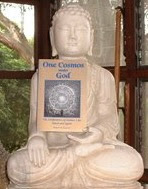
This preramble has been brought to you by our sponsor, Money, Greed, and God: Why Capitalism Is the Solution and Not the Problem, which I read last weekend. There's not much in it that a libertarian or (classical liberal) conservative won't already know, but there is quite a bit that the religious believer might not.
As a result, a religious conservative might well have some residue of cognitive dissonance in enthusiastically embracing capitalism, since we are often told that there is something incompatible between the two. The purpose of this book is to disabuse us of any such notion, and to demonstrate that free markets are the only cosmically correct economic arrangement for the thinking Christian.
A key principle is evolution. All of the major religions were born and developed in static and unevolving cultures. Thus, certain doctrines will apply only to this specific type of culture.
Put it this way: limiting our discussion to Christianty, it has certain core principles that of course transcend history and culture. But certain other aspects are worked out at what Schuon calls the "human margin," and are not necessarily eternal. They are inspired and "sanctified," but cannot be applied universally when conditions undergo a fundamental change.
This is just common sense. We all know that lying is bad, but not if you lie to the Nazi who wants to know where Ms. Frank is hiding. Is this hypocrisy or inconsistency? Hardly.
"Divine influence is total only for the Scriptures and for the essential consequences of the Revelation"; but this "always leaves a 'human margin,'" where the revelation "exerts no more than an indirect action, letting ethnic or cultural factors speak" (Schuon).
It is generally the transitional area where certain exoteric pieties and practices emerge and crystalize, but again, these conventions can be counterproductive when terrestrial conditions change. A most obvious example is envy, which served a purpose under conditions of band-level organization, but is extremely counter-productive in the contemporary world.
The human margin is what allows the universal revelation to be tailored to this or that group. Most people are not esoterists, and therefore require the human margin as a point of entry into the divine.
As Schuon explains, if this were not the case, then "there would be no theological elaborations, nor would there be any divergences in orthodoxy, and the first Father of the Church would have written one single theological treatise which would have been exhaustive and definitive." There would have been no need for an Eckhart, an Aquinas, a Balthasar, and a host of other religious geniuses.
Schuon makes the subtle point that there are "men who are inspired by the Holy Spirit because and to the extent that they are Saints," but "others who are Saints because and to the extent that they are inspired by the Holy Spirit."
To put it another way, these two may be visualized as:

and


In my opinion, nearly all of the traditional objections to capitalism were and are at the human margin. A quintessential example is the injunction against the charging of interest, which Richards deals with in chapter six.
The very concept of "interest" meant something entirely different in a static agrarian culture in which a handful of oligarchs ruled over a vast majority of subsistence farmers, who mostly bartered with neighbors and kin. No one had the slightest notion of a fluid and dynamic economy in which money is abstract, immaterial, fertile, and a key to unleashing human creativity, growth, and efficient allocation of resources.
In order to understand something at the human margin, we must try to apprehend the principle it embodies. Just as you wouldn't loan money to your wife or child at usurious rates of interest, it would have been wrong for, say, a wealthy nobleman in medieval times to trap peasants into a cycle of debt they could never repay.
This is still wrong today, which is why it was wrong for Jimmy Carter to ever sign the Community Reinvestment Act into law, and why it was wrong for private actors to exploit reckless or irresponsible borrowers through subprime loans. But we cannot generalize from this to say that "interest is bad." One can never condemn anything on the basis of consequences that flow from its misuse.
As Richards writes, "What's interesting about the Christian West is not that it once condemned all charging of interest, but that it eventually learned to make careful distinctions and develop vibrant, wealth-creating capitalist economies with sophisticated banking systems."
He quotes another scholar, who writes that "The scholastic theory of usury is an embryonic theory of economics. Indeed, it is the first attempt at a science of economics known to the West."
In other words, Christians began using their heads and not just their hearts to think economically.
Just as we shouldn't look to scripture to tell us about the laws of physics, nor should we expect it to reveal the laws of economics. But it reveals much about the purpose of physics and of economics. Which, oddly enough, converge upon the same Attractor.