As touched on in a comment yesterday, the movement from ego to self and servility to freedom is accompanied by a withdrawal of projections, so that the locus of reality is felt to be on the interior rather than exterior plane.
Ultimately we see that the exterior could never be the cause of the interior, for the greater cannot arise from the lesser (vertically speaking, of course, in the sense that consciousness is prior to matter, not in the vulgar horizontal sense of deepak animals and other beasts).
Human psychospiritual development requires the interiorization of boundaries of various kinds between self and other, ego and environment, affect and thought, man and God, etc., without which the maturational process can never get off the ground (interesting that one of yesterday's trolls argued that the absence of boundaries represents some sort of "mysticism." If this were true, then babies and rocks would be mystics).
Hans Jonas discusses this in chapter one of his The Phenomenon of Life, Life, Death, and the Body in the Theory of Being:
"When man first began to interpret the nature of things -- and this he did when he began to be man -- life to him was everywhere, and Being the same as being alive.... Soul flooded the whole of existence and encountered itself in all things. Bare matter, that is, truly inanimate, 'dead' matter, was yet to be discovered -- as indeed, its concept, so familiar to us, is anything but obvious."
Thus, "that the world is alive is really the most natural view, and largely supported by prima-facie evidence. On the terrestrial scene, in which experience is reared and contained, life abounds and occupies the whole foreground exposed to man's immediate view. The proportion of manifestly lifeless matter encountered in this primordial field is small, since most of what we now know to be inanimate is so intimately intertwined with the dynamics of life that it seems to share its nature."
Now, growth takes place in the direction of exterior --> interior --> exterior. In a very real sense, we first encounter ourselves outside of ourselves in the form of heroes, myths, ideals, attractions, and other modes. We activate an ideal by first locating it outside. It is very much as if the soul is attracted to what it needs in order to awaken and know itself, so it is quite important to pay attention to these sometimes subtle promptings and soul-inclinations, for to ignore them is to risk wasting one's life.
Joseph Chilton Pearce has discussed this in at least a couple of his books. He agrees that we are born with a unique psychic blueprint, which may be thought of as an in-built expectation for certain kinds of experience. The blueprint is like the lock, while the experiences, or external models, are the keys that unlock it and provide its content.
In fact, Jung speaks of the archetypes -- e.g., the Great Mother, the anima, the "wise old man," the crone, etc. -- in the same way. Bion called them "preconceptions," or "empty categories" awaiting and anticipating certain experiences that will automatically make sense on a deep level when we have them. Your "soul mate" is not just a person, but a whole world -- a world that we paradoxically co-create in discovering.
Of particular interest is the archetype of the Self, which is our own unique constellation of factors -- as unique as your face. And if a central purpose of life is to realize one's archetype, or one's spiritual destiny, then the ultimate value of a culture or nation or political movement will be the degree to which it either impedes or makes this realization possible (see page 180): "We must each of us, in our own way, strive for the cultural circumstances that make intellectual, emotional, and spiritual growth possible, because most cultural circumstances actively suppress our growth as human beings."
As such, any purely materialistic political philosophy will be a non-starter. I never say that "Republicanism" is any kind of ideal. Far from it. It's just that the left is so incredibly dangerous and destructive to human ends, that it must be opposed, just as the Islamofascists must be.
In the case of the latter, their great evil is in denying man his reason for being: the systematic smothering of our spiritual individuation. To force women to live in bags -- i.e., to deprive them of their faces -- is a terrifying metaphor of what they do to the soul, which is to say, bury it in darkness. Likewise, radical feminism asphixiates the beautiful archetypal feminine form in an airless black bag of faceless ideology.
All of the archetypes are collective save for one, which is our unique Self, and which is yours to keep as a coonsolation prize for this difficult journey we call life.
Now, presuming there is a Creator, each person represents a unique "problem of God," something spoken of by Sri Aurobindo. And this is where we can run into a bit of a snag with institutionalized, big box religions, which can -- indeed, must -- cater to a psychospiritual "type" rather than the unique individual. It's like purchasing clothes off the rack. You're not going have a perfect fit unless you are perfectly average.
Now, there was clearly a time when it was necessary for institutionalized religion to be geared toward the collective, since it wasn't too long ago that what we call the modern individual Self did not exist -- or only existed in a few lucky or perhaps luckless souls. Charles Taylor provides a ponderous 600 page explanation in his Sources of the Self: The Making of the Modern Identity, which I would not recommend if you already get the point.
The problem is, how does one present timeless and unalterable truths geared toward the unique individual? It seems like a contradiction. But in reality, it's not a problem at all -- it's like asking how we can have this phenomenon called "life," and yet, all of these diverse species. Or how can consciousness exist with all these individuals walking around calling themselves "I"? Who is the real I?
Likewise, who is the real God? The answer may surprise you. In fact, if it doesn't surprise you, it's probably the wrong answer. More on that later. But to say that God knows the number of hairs on your head is a way of saying that he values your unrepeatable uniqueness. Likewise, Before I formed you in the belly, I knew you.
Now, I was pleasantly surprised to see that Bolton says what amounts to the same thing in his Keys of Gnosis: "Because of the presence of its immanent principle or 'divine spark,' the soul can thus align itself with forces and influences which share its true nature, or it can align itself with forces which are alien to it and which tend to make it more and more a part of a physical system in which individuality would ultimately be lost."
In other words, we can choose to be an anonymous rock or a unique person. The exertion of free will becomes relevant here, for "the less free the will is, the more it functions simply in reaction to outside forces with standard responses to standard stimuli and stimulations."
This is the passive, pre-individual who is a victim of external circumstances, to whom Democrats address themselves. These people are easy for the left to manipulate, because they are accustomed to simply responding with feelings to external stimuli.
Conversely, a free will is one that doesn't react, but acts. This is the true meaning of "turning the other cheek." For example, if someone pulls a knife on you, it is perfectly acceptable to pull a gun on them, so long as the act is not "kind for kind" on an emotional or spiritual level.
This is a spiritually perilous area, and one must "walk the razor's edge" to not fall into the trap of retaliation, even while administering disinterested cosmic justice right in the kisser, for if done in the wrong spirit, then the wrong will return to you.
Look at Germany, or Japan, or Iraq. We conquered them in order to liberate them, fully in keeping with the deeper meaning of turning the other cheek. If we had responded in kind -- and in the same spirit which animated their primitive and sadistic violence -- then we would have simply destroyed them.
Now, back to free will. Bolton writes that three conditions are necessary in order to be "capable of consistent and self-originated activity.... namely, the physical strength necessary for it, a practical knowledge of what the action involves, and finally a relation of the actions to values and long-term purpose, not to accidental needs and whims."
To be continued....
Friday, December 31, 2010


Thursday, December 30, 2010
Man's Exodus to Freedom: The Cosmic Bar Mitzvah
As we were saying yesterday, free will is not an either/or proposition, but a lengthy process of acquisition or realization that goes hand in hand and head in heart with what we call spiritual growth.
We were about to say that it is on a continuum in the animal kingdom, but that wouldn't be correct, since only human beings may access it. The exercise of will is on a continuum, but only human beings may freely exercise their will and make conscious choices between alternative actions.
Just as one purpose of the bar mitzvah is to mark the transition to moral responsibility and therefore freedom, one might say that the emergence of human beings represented the cosmic bar mitzvah, for now the cosmos was finally free -- at least in potential: for the creation is still subject to futility, and groans with birth pangs on the way toward its ultimate spiritual liberation.
When a self-deluded autoslave insists that free will doesn't exist, we want to say "in your case, we couldn't agree more." It's similar to liberals who maintain that "everyone's a racist." If they could just say "I and my fellow liberals are morbidly preoccupied with race," we would have no objection. But why the crass generalization? Speak for yourself.
Interesting that in the case of the autoslave, his freedom is simply transferred to the internal entity that enslaves him. As the existentialists say, human beings are condemned to freedom, which is why the vast majority of people and cultures reject it and prefer various religious and ideological shackles. Freedom is a terrible thing, for it equates with responsibility, and who would want that?
But for the minority of souls who wish to expand their interior freedom, there is always a way. According to Bolton, the process of realizing one's freedom consists "in a progressive elimination, or at least subordination, of the alien causes which commonly manipulate the will, and a corresponding ascendency of what is owing to the will alone" (italics mytalics).
Alien causes which commonly manipulate the will. These are, of course, mind parasites, those foreign agents and sinister minsters of propaganda that we have internalized and mistake for ourSelves. You know, all of those agenda-driven hostile forces that hijack the machinery of the host -- the human subject -- and use it to crank out their own dysfunctional and anti-evolutionary thoughts, emotions and actions.
You could say that the personification of the sum total of these parasitic trends is what folks call Satan, and you wouldn't be wide of the mark. The adverse forces are impersonal until internalized by a human being through whom they speak, will and act. These machine-like entities are not really alive. Rather, like viruses, they are something in between life and matter.
It is no different than a virus that takes over the cell in order reproduce and infect others. It is not just obvious cases such as a Marx or Hitler who infect the masses with acute soul pathology. Equally troubling are the chronic cases that can weaken the hardiest soul -- both individually and collectively -- over time.
In any event, these "alien causes" always block freedom in one way or another, and therefore prevent spiritual growth. If you could see one, you'd be horrified. It reminds me of a comment by Schuon, that "the lowest animal species, those that repel us, manifest most directly the quality of ignorance (tamas); they are repugnant to us because they are like 'living conscious matter' whereas the law of matter is precisely unconsciousness." It is no wonder that they are represented in dreams -- or under the influence of LSD -- as spiders, reptiles, and other creepy crawlies.
Other forms of matter, such as Al Sharpton, shock us for the opposite reason, for they are like a man deprived of what makes him one, which is to say, higher consciousness.
Back in the 1960s, when it was legal to study the effects of LSD, a lot of interesting psychological research was conducted on the subject of mind parasites. It was thought that by administering LSD to a patient in a controlled setting with adequate therapeutic support, one could bypass all of the ego's usual defense mechanisms and see the parasites directly, so to speak, and therefore process and work through them more rapidly.
I remember a book by Stanislav Grof -- here it is, Realms of the Human Unconscious: Observations from LSD Research -- in which he discusses how patients under the influence of LSD could actually draw pictures of their mind parasites in order to try to understand and work through them.
I don't have time to dig out the book, but I remember one particular lady who drew a monstrous looking spider that had her in its grip. Of course, the mind parasite isn't actually a spider. Rather, that's just the mind's representation of the internalized hostile force which is otherwise invisible. This is essentially identical to how our Dreamer uses images to represent conflicts, impasses, and various hostile entities. (Petey wishes to remind us that divine forces are also routinely personified.)
Carl Jung wrote of how the medieval pseudo-science of alchemy was actually a way to talk about mind parasites and their eradication. Bolton agrees that this process "can be envisaged in alchemical terms as a removal of the [parasitic] 'dross' which allows the [spiritual] 'gold' concealed in it to appear in pure form." What can be underemphasized, however, is that the "dross" is not a just an object, so to speak, but a subject with a will of its own -- or, to be perfectly accurate, something that can only operate in the world by taking over the human will.
When you think about it, this is not that different from how the Creator operates in the world, at least for the most part. The traditional view is that human beings are the living bridge, or link, between God and nature, or spirit and matter, or freedom and determinism, however you wish to conceptualize it. Therefore, when we say "thy will be done, on earth as it is in heaven," we mean this quite literally. For it is just another way of saying that the purpose of life is to freely manifest truth, or love, or beauty on this plane (since they can only manifest in freedom; in other words, no deterministic machine could know or express truth).
It's no different looked at from the other end of the existentialada. "Satan" is a paradoxical entity, being that he represents the "center of dissipation," so to speak, and spiritual dissipation by its very nature can have no center. The point is that both mind parasites and Satan can have no ultimate reality, since they represent the internalization or personification of the negations of the good, true, and beautiful. But the perverse human will can give them a kind of temporary pseudo-center.
Let's consider the god of the Islamists. When a voice in your head tells you to blow yourself up with nails and rat poison, or to slash off your daughter's clitoris with a rusty hood ornament, that's a hint that you're not dealing with the Creator of the Universe. When the voice tells you to force women to live in bags or to strangle your daughter because she doesn't want to marry that malodorous and toothless letch with all the goats in his dowry -- nope, not the real God.
So what is this sadistic and suffocating entity? It sounds like a very bad acid trip, which, in a way it is, because there's no coming down. Whether it be angry jihadis in Khartoum or jihadis angry about a cartoon, they're always enraged about something.
Most all the real evil in the world is caused by the spiritually unfree. As Bolton writes, in human beings, "freely-willed and unfree actions mingle in all proportions, because external causes can condition one's will in proportion to one's lack of self-awareness" (mytalics again).
You will immediately note that this is why the left is obsessed with so-called external barriers to freedom, when the real barriers -- at least in the contemporary U.S. -- are nearly always interior. Which is why when you eliminate these external barriers, it doesn't really do any good, because you aren't giving people real freedom, which they will still have to cultivate once the external barrier is removed.
For example, this is why racial quotas don't work. They eliminate an external barrier but ignore the interior ones, so failure is simply deferred. Liberals just kick the can't down the road. One is still a failure, but simply the last to know it. Which is hardly a mercy.
We were about to say that it is on a continuum in the animal kingdom, but that wouldn't be correct, since only human beings may access it. The exercise of will is on a continuum, but only human beings may freely exercise their will and make conscious choices between alternative actions.
Just as one purpose of the bar mitzvah is to mark the transition to moral responsibility and therefore freedom, one might say that the emergence of human beings represented the cosmic bar mitzvah, for now the cosmos was finally free -- at least in potential: for the creation is still subject to futility, and groans with birth pangs on the way toward its ultimate spiritual liberation.
When a self-deluded autoslave insists that free will doesn't exist, we want to say "in your case, we couldn't agree more." It's similar to liberals who maintain that "everyone's a racist." If they could just say "I and my fellow liberals are morbidly preoccupied with race," we would have no objection. But why the crass generalization? Speak for yourself.
Interesting that in the case of the autoslave, his freedom is simply transferred to the internal entity that enslaves him. As the existentialists say, human beings are condemned to freedom, which is why the vast majority of people and cultures reject it and prefer various religious and ideological shackles. Freedom is a terrible thing, for it equates with responsibility, and who would want that?
But for the minority of souls who wish to expand their interior freedom, there is always a way. According to Bolton, the process of realizing one's freedom consists "in a progressive elimination, or at least subordination, of the alien causes which commonly manipulate the will, and a corresponding ascendency of what is owing to the will alone" (italics mytalics).
Alien causes which commonly manipulate the will. These are, of course, mind parasites, those foreign agents and sinister minsters of propaganda that we have internalized and mistake for ourSelves. You know, all of those agenda-driven hostile forces that hijack the machinery of the host -- the human subject -- and use it to crank out their own dysfunctional and anti-evolutionary thoughts, emotions and actions.
You could say that the personification of the sum total of these parasitic trends is what folks call Satan, and you wouldn't be wide of the mark. The adverse forces are impersonal until internalized by a human being through whom they speak, will and act. These machine-like entities are not really alive. Rather, like viruses, they are something in between life and matter.
It is no different than a virus that takes over the cell in order reproduce and infect others. It is not just obvious cases such as a Marx or Hitler who infect the masses with acute soul pathology. Equally troubling are the chronic cases that can weaken the hardiest soul -- both individually and collectively -- over time.
In any event, these "alien causes" always block freedom in one way or another, and therefore prevent spiritual growth. If you could see one, you'd be horrified. It reminds me of a comment by Schuon, that "the lowest animal species, those that repel us, manifest most directly the quality of ignorance (tamas); they are repugnant to us because they are like 'living conscious matter' whereas the law of matter is precisely unconsciousness." It is no wonder that they are represented in dreams -- or under the influence of LSD -- as spiders, reptiles, and other creepy crawlies.
Other forms of matter, such as Al Sharpton, shock us for the opposite reason, for they are like a man deprived of what makes him one, which is to say, higher consciousness.
Back in the 1960s, when it was legal to study the effects of LSD, a lot of interesting psychological research was conducted on the subject of mind parasites. It was thought that by administering LSD to a patient in a controlled setting with adequate therapeutic support, one could bypass all of the ego's usual defense mechanisms and see the parasites directly, so to speak, and therefore process and work through them more rapidly.
I remember a book by Stanislav Grof -- here it is, Realms of the Human Unconscious: Observations from LSD Research -- in which he discusses how patients under the influence of LSD could actually draw pictures of their mind parasites in order to try to understand and work through them.
I don't have time to dig out the book, but I remember one particular lady who drew a monstrous looking spider that had her in its grip. Of course, the mind parasite isn't actually a spider. Rather, that's just the mind's representation of the internalized hostile force which is otherwise invisible. This is essentially identical to how our Dreamer uses images to represent conflicts, impasses, and various hostile entities. (Petey wishes to remind us that divine forces are also routinely personified.)
Carl Jung wrote of how the medieval pseudo-science of alchemy was actually a way to talk about mind parasites and their eradication. Bolton agrees that this process "can be envisaged in alchemical terms as a removal of the [parasitic] 'dross' which allows the [spiritual] 'gold' concealed in it to appear in pure form." What can be underemphasized, however, is that the "dross" is not a just an object, so to speak, but a subject with a will of its own -- or, to be perfectly accurate, something that can only operate in the world by taking over the human will.
When you think about it, this is not that different from how the Creator operates in the world, at least for the most part. The traditional view is that human beings are the living bridge, or link, between God and nature, or spirit and matter, or freedom and determinism, however you wish to conceptualize it. Therefore, when we say "thy will be done, on earth as it is in heaven," we mean this quite literally. For it is just another way of saying that the purpose of life is to freely manifest truth, or love, or beauty on this plane (since they can only manifest in freedom; in other words, no deterministic machine could know or express truth).
It's no different looked at from the other end of the existentialada. "Satan" is a paradoxical entity, being that he represents the "center of dissipation," so to speak, and spiritual dissipation by its very nature can have no center. The point is that both mind parasites and Satan can have no ultimate reality, since they represent the internalization or personification of the negations of the good, true, and beautiful. But the perverse human will can give them a kind of temporary pseudo-center.
Let's consider the god of the Islamists. When a voice in your head tells you to blow yourself up with nails and rat poison, or to slash off your daughter's clitoris with a rusty hood ornament, that's a hint that you're not dealing with the Creator of the Universe. When the voice tells you to force women to live in bags or to strangle your daughter because she doesn't want to marry that malodorous and toothless letch with all the goats in his dowry -- nope, not the real God.
So what is this sadistic and suffocating entity? It sounds like a very bad acid trip, which, in a way it is, because there's no coming down. Whether it be angry jihadis in Khartoum or jihadis angry about a cartoon, they're always enraged about something.
Most all the real evil in the world is caused by the spiritually unfree. As Bolton writes, in human beings, "freely-willed and unfree actions mingle in all proportions, because external causes can condition one's will in proportion to one's lack of self-awareness" (mytalics again).
You will immediately note that this is why the left is obsessed with so-called external barriers to freedom, when the real barriers -- at least in the contemporary U.S. -- are nearly always interior. Which is why when you eliminate these external barriers, it doesn't really do any good, because you aren't giving people real freedom, which they will still have to cultivate once the external barrier is removed.
For example, this is why racial quotas don't work. They eliminate an external barrier but ignore the interior ones, so failure is simply deferred. Liberals just kick the can't down the road. One is still a failure, but simply the last to know it. Which is hardly a mercy.
Wednesday, December 29, 2010
Big Other is Watching!
I remember Bob reading a book by Stanley Jaki in which he says that the existence of free will illuminates a vertical trail of transcendence that leads straight back to the Creator.
Yes, here it is: our intimation of "freedom or rather free will belies mere material existence.... in the final analysis, the elemental registering of free will almost exhausts whatever else can be said about its reality. Everything else is embellishment, very useful and informative as it may be, because it is irrelevant unless achieved and articulated freely."
In other words, any argument for or against free will obviously presumes its existence, since it proves the reality of the subject who is free to either accept or reject it. Conversely, to affirm that free will doesn't exist is to void one's argument at the outset, since the argument can appeal to neither truth nor to the subject who may know it; as Poincaré commented, "no determinist argues deterministically," so "all arguments against free will are so many proofs if it" (Jaki).
Every free act transcends matter, which is why any form of materialism is the very basis of illiberalism, and which is why the secular left is so spiritually destructive. We've been thinking about this a great deal lately, as Bob finally got around to reading Whittaker Chambers' Witness, followed by a more recent intellectual biography. (Actually, since Chambers was more of a prophet and mystic, the book is more of a pneumacognitive biography. Can't get into details at the moment. We hope to say more about it when we have the time.)
Intrinsic to the project of leftism is the abolition of that which transcends matter, which must result in the dehumanization of humans and the end of Man. This is why their assault on religion in general and the soul in particular is not peripheral but absolutely essential to their goals; it is not a bug but a feature.
In short, the left must replace transcendence with immanence. Once that has been accomplished, then everything else falls all the way down into place. It's like building the cage. Once the cage of immanence is complete, then man lives behind bars he can't even see, but which suppress and nullify the mythic imagination. Instead of imagination containing the world, materialism contains the imagination.
The problem is, not too many people think about what the existence of free will implies, since it is not quantifiable or reducible to anything but itself. Like so many other fundamental realities -- time, life, intelligence, beauty, etc. -- it seems that we know everything about it except what it essentially is.
This leads us to suspect that these fundamentals are somehow implicitly linked to one another, and that there is but one Incomprehensible Thing with several different modes, depending upon how one looks at it. For example, life is interior time; time is freedom; intelligence is freedom + truth; virtue is truth + will; beauty is form + truth; etc.
We are free to the extent that we are a conscious subject rather than an object that only reacts and is acted upon. However, freedom can only be exercised in an objective world, which is to say, on objects, including "objects" within oneself (including objective pseudo-subjects that have no business being there, i.e., mind parasites).
This is why man is more or less free, depending upon the existence of mind parasites that live off the central host by appropriating a portion of its existential freedom. Like our trolls, mind parasites are certainly willful, but not free.
If everything were subjective, then there could not be free will either. This leads to an interesting spookulation about the "necessity" (so to speak) of the world (i.e., a creation) for God's total freedom.
In other words, just like us, how could God be meaningfully free unless there were objects to act upon? To put it another way, perhaps God's freedom is ultimately given its highest expression in the existence of the human subject which can either deny or align itself with him. Thus, denial of God is the ironyclad proof of His existence, and even a kind of ultimate -- if inverse -- and perverse -- seal of his divine freedom. (This is similar to how the denial of truth is its assertion, or the promulgation of materialism is its refutation.)
There is no meaningful terrestrial freedom in the absence of the human will, but the will is only free to the extent that it is free from certain repetitive actions and mechanical patterns of thought, which we call Mind Parasites. As Emerson wrote (cited in Jaki), "Intellect annuls Fate. So far as man thinks, he is free."
But freedom itself is not something that could ever be attained, only revealed and discovered in natural law (which is obviously supernatural). For its existence brings one "face to face with that realm of metaphysical reality which hangs in mid-air unless suspended from that Ultimate Reality, best called God, the Creator" (Jaki).
Hmm, why does that ring a bell of freedom's fleshing? Oh yes:
Starry-eyed and laughing as I recall when we were caught
Trapped by no track of hours for they hanged suspended
The Judeo-Christian affirmation of man's freedom is "born out of the perspective that man was given freedom not in order to do anything he wants to but that he should be able to do what he is supposed to do." We are created free so that our actions "may have that merit which only a freely performed act can have. God therefore has to remain a subtly hidden God, lest man should find himself 'constrained' to obey Him" (Jaki). Here again man would find himself in another kind of cage, only a transcendent one instead of the immanent prison of the psychospiritual left (one thinks of the Islamic world).
In Keys of Gnosis, Bolton widens the argument to a more meta-cosmic perspective. He begins with the premise that "Free will and its opposite, determinism, form a duality in human consciousness which parallels that of Providence and Fate in the world."
This makes perfect nonsense if freedom is only free to the extent that it both emanates from, and returns to, the Creator, when exercised responsibly, and yet, can only exist in a world that is other than free, which is to say, partially determined and bound by Fate. When "the word becomes flesh," it essentially submits itself or descends into a world of fate which it must transcend.
On the human plane there can be neither pure freedom nor pure determinacy -- or, by extension, pure providence nor unalloyed fate -- but always a mingling of the two in various proportions. As Bolton explains, this is why the issue can appear confusing to people, since it's not as if freedom is an either/or proposition.
Rather, each individual has a varying mixture of freedom and determinacy, chance and necessity, horizontal parasites and vertical symbionts, flack and slack.
Furthermore, this would imply that a central task of spiritual growth is to increase the one while diminishing the other, i.e., mind parasites and other mechanical patterns of thought and behavior, so that we may increasingly "rise above" fate and become relatively free. Here it can easily be understood how an improper kind of freedom is slavery while a proper kind of slavery is freedom. It is not actually a paradox at all, especially since truth (and only truth) sets one free, and truth simply is. To deny what Is is to submit to slavery.
Ironically, it is during our early childhood that we are most "free," i.e., unconstrained by any limits. But we actually aren't really free at all, since there is no will to choose or to mediate the freedom. Thus, when we nostalgically yearn for the freedom of childhood, we are actually pining for the absence of freedom, or the "pre-free" infinity of non-choosing (not to mention the existence of the Big Other whose job it is to sponsor and maintain the illusion of our freedom, and to introduce painful limits only gradually).
For just as there is an infinity of endless numerical succession, there is also the infinity of the pre-numerical Zero. A better word might be innocence than freedom. Innocence literally means "without knowledge," and in childhood we are without knowledge of our freedom or our fate. This implies that the exercise of free will and the "fall" from the innocent paradise of infancy are indistinguishable, just as it says in Genesis.
So, as Bolton writes, we are "originally unfree, but with a nascent free will which can develop to its full potential under the right conditions." Thus, political freedom is a means, not an end. By making it the end, the left undermines it in any meaningful sense. And then, since it doesn't mean anything anyway, they just go about eliminating it altogether, so they can do the choosing for you. Which is why tyrannies are only free at the top, in the Big Other who knows better how to run your life.
Yes, here it is: our intimation of "freedom or rather free will belies mere material existence.... in the final analysis, the elemental registering of free will almost exhausts whatever else can be said about its reality. Everything else is embellishment, very useful and informative as it may be, because it is irrelevant unless achieved and articulated freely."
In other words, any argument for or against free will obviously presumes its existence, since it proves the reality of the subject who is free to either accept or reject it. Conversely, to affirm that free will doesn't exist is to void one's argument at the outset, since the argument can appeal to neither truth nor to the subject who may know it; as Poincaré commented, "no determinist argues deterministically," so "all arguments against free will are so many proofs if it" (Jaki).
Every free act transcends matter, which is why any form of materialism is the very basis of illiberalism, and which is why the secular left is so spiritually destructive. We've been thinking about this a great deal lately, as Bob finally got around to reading Whittaker Chambers' Witness, followed by a more recent intellectual biography. (Actually, since Chambers was more of a prophet and mystic, the book is more of a pneumacognitive biography. Can't get into details at the moment. We hope to say more about it when we have the time.)
Intrinsic to the project of leftism is the abolition of that which transcends matter, which must result in the dehumanization of humans and the end of Man. This is why their assault on religion in general and the soul in particular is not peripheral but absolutely essential to their goals; it is not a bug but a feature.
In short, the left must replace transcendence with immanence. Once that has been accomplished, then everything else falls all the way down into place. It's like building the cage. Once the cage of immanence is complete, then man lives behind bars he can't even see, but which suppress and nullify the mythic imagination. Instead of imagination containing the world, materialism contains the imagination.
The problem is, not too many people think about what the existence of free will implies, since it is not quantifiable or reducible to anything but itself. Like so many other fundamental realities -- time, life, intelligence, beauty, etc. -- it seems that we know everything about it except what it essentially is.
This leads us to suspect that these fundamentals are somehow implicitly linked to one another, and that there is but one Incomprehensible Thing with several different modes, depending upon how one looks at it. For example, life is interior time; time is freedom; intelligence is freedom + truth; virtue is truth + will; beauty is form + truth; etc.
We are free to the extent that we are a conscious subject rather than an object that only reacts and is acted upon. However, freedom can only be exercised in an objective world, which is to say, on objects, including "objects" within oneself (including objective pseudo-subjects that have no business being there, i.e., mind parasites).
This is why man is more or less free, depending upon the existence of mind parasites that live off the central host by appropriating a portion of its existential freedom. Like our trolls, mind parasites are certainly willful, but not free.
If everything were subjective, then there could not be free will either. This leads to an interesting spookulation about the "necessity" (so to speak) of the world (i.e., a creation) for God's total freedom.
In other words, just like us, how could God be meaningfully free unless there were objects to act upon? To put it another way, perhaps God's freedom is ultimately given its highest expression in the existence of the human subject which can either deny or align itself with him. Thus, denial of God is the ironyclad proof of His existence, and even a kind of ultimate -- if inverse -- and perverse -- seal of his divine freedom. (This is similar to how the denial of truth is its assertion, or the promulgation of materialism is its refutation.)
There is no meaningful terrestrial freedom in the absence of the human will, but the will is only free to the extent that it is free from certain repetitive actions and mechanical patterns of thought, which we call Mind Parasites. As Emerson wrote (cited in Jaki), "Intellect annuls Fate. So far as man thinks, he is free."
But freedom itself is not something that could ever be attained, only revealed and discovered in natural law (which is obviously supernatural). For its existence brings one "face to face with that realm of metaphysical reality which hangs in mid-air unless suspended from that Ultimate Reality, best called God, the Creator" (Jaki).
Hmm, why does that ring a bell of freedom's fleshing? Oh yes:
Starry-eyed and laughing as I recall when we were caught
Trapped by no track of hours for they hanged suspended
The Judeo-Christian affirmation of man's freedom is "born out of the perspective that man was given freedom not in order to do anything he wants to but that he should be able to do what he is supposed to do." We are created free so that our actions "may have that merit which only a freely performed act can have. God therefore has to remain a subtly hidden God, lest man should find himself 'constrained' to obey Him" (Jaki). Here again man would find himself in another kind of cage, only a transcendent one instead of the immanent prison of the psychospiritual left (one thinks of the Islamic world).
In Keys of Gnosis, Bolton widens the argument to a more meta-cosmic perspective. He begins with the premise that "Free will and its opposite, determinism, form a duality in human consciousness which parallels that of Providence and Fate in the world."
This makes perfect nonsense if freedom is only free to the extent that it both emanates from, and returns to, the Creator, when exercised responsibly, and yet, can only exist in a world that is other than free, which is to say, partially determined and bound by Fate. When "the word becomes flesh," it essentially submits itself or descends into a world of fate which it must transcend.
On the human plane there can be neither pure freedom nor pure determinacy -- or, by extension, pure providence nor unalloyed fate -- but always a mingling of the two in various proportions. As Bolton explains, this is why the issue can appear confusing to people, since it's not as if freedom is an either/or proposition.
Rather, each individual has a varying mixture of freedom and determinacy, chance and necessity, horizontal parasites and vertical symbionts, flack and slack.
Furthermore, this would imply that a central task of spiritual growth is to increase the one while diminishing the other, i.e., mind parasites and other mechanical patterns of thought and behavior, so that we may increasingly "rise above" fate and become relatively free. Here it can easily be understood how an improper kind of freedom is slavery while a proper kind of slavery is freedom. It is not actually a paradox at all, especially since truth (and only truth) sets one free, and truth simply is. To deny what Is is to submit to slavery.
Ironically, it is during our early childhood that we are most "free," i.e., unconstrained by any limits. But we actually aren't really free at all, since there is no will to choose or to mediate the freedom. Thus, when we nostalgically yearn for the freedom of childhood, we are actually pining for the absence of freedom, or the "pre-free" infinity of non-choosing (not to mention the existence of the Big Other whose job it is to sponsor and maintain the illusion of our freedom, and to introduce painful limits only gradually).
For just as there is an infinity of endless numerical succession, there is also the infinity of the pre-numerical Zero. A better word might be innocence than freedom. Innocence literally means "without knowledge," and in childhood we are without knowledge of our freedom or our fate. This implies that the exercise of free will and the "fall" from the innocent paradise of infancy are indistinguishable, just as it says in Genesis.
So, as Bolton writes, we are "originally unfree, but with a nascent free will which can develop to its full potential under the right conditions." Thus, political freedom is a means, not an end. By making it the end, the left undermines it in any meaningful sense. And then, since it doesn't mean anything anyway, they just go about eliminating it altogether, so they can do the choosing for you. Which is why tyrannies are only free at the top, in the Big Other who knows better how to run your life.
Tuesday, December 28, 2010
Queer Theology and Flaming Fairy Tales
For you are bringing some queer ideas to our ears, and we wish to know what they mean. --Acts 17:20
Bolton writes that "The transcendent dimension of everyday consciousness is evidenced by unmistakable signs if one knows how to look for them. Far from needing the extraordinary experiences of a mystic, an analysis of what is well known already will suffice for this purpose."
Indeed. It is as if we need only amplify our metaphysical gaydar to perceive what is beyond and receive what is behind.
Yes, this is certainly how I (the wider world of Bob's polymorphous unconscious) perceive the situation. I -- we prefer the more impersonal we -- we are that which causes things, on the one hand, to radiate from, and to overflow with, being; and on the other, to possess a secret "interior" known only to the human state (among creatures).
You might say that we are the deep interior of the cosmos, just as modern physics discloses the "deep exterior" of things; the important point is that the depth proceeds in both directions -- exterior and interior, or objective and subjective -- and in each case shades off into the uncanny.
Yes, thanks to us, existence is always slightly uncanny, but in a good way. You wouldn't want to inhabit a world where all the numbers added up. Reality is not an accounting ledger. You wouldn't want to live in a place where clouds were spheres, mountains were cones, and rivers were lines. God is not a mathematician.
Well, he is, but he is so much more! He is an accountant, but he practices creative bookkeeping, which is why existence is filled with so many loopwholes. For a living organism is a loopwhole, precisely.
Let us suppose that physicists someday discover their big TOE, which is to say, Theory of Everything; whatever it turns out to be, it will still abide within a small corner of my limitless expanse, not vice versa, so it will not eliminate the strangeness from the world, if that's what you're thinking. No, the strangeness is here to stay. To imagine that we can be neatly reduced and packed back into an equation is to imagine it possible to shove the truthpaste back into the tube.
Frankly, if you do not find existence to be flamingly queer, then you are just not queer enough. You need your unconscious to come out of its repressive closet. In our view, a proper liberal education is already Queer Studies, as it should teach one to appreciate the strange reality behind banal appearances. O, there are more things in heaven and earth, my dear tenured ape, than are dreamt up in your feminist ovary towers and straitjacketed looniversity bins! You know the saying:
The Universe is not only queerer than we suppose, but queerer than we can suppose. -- J.B.S. Haldane
One reason we know that materialism cannot possibly be true is that it is simply not queer enough to encompass the Real. Not even close. In fact, the opposite: it is shallowness on stilts, barbarism on barbiturates, big talk for a one-eyed fat man. It puts us to sleep and always did. It is for the good little boys and girls, the soul-dead memorizers, the slavish conformists.
Or, to be perfectly accurate, transconsciousness has to already be asleep or dead in the prosaic mind of the person who propagates such an anti-queer agenda. The way we see it, everybody is unconsciously queer, even if consciously they're as straight as Karl Marx or Barney Frank. The leftbrains don't know what their rightbrain's doodling, but scratch the surface and every bitty darweinie's got a fairytale to tell.
One of the problems, according to Bolton, is that the modern mind essentially confuses the categories of concrete and abstract, and when you concretize the abstract, you end up draining reality of its irreducible queerness. One of the hallmarks of life under the oppressive reign of quantity is that the merely physical is seen to be synonymous with the concrete, which is the end-state of a kind of philosophical dumbing-down that can descend no lower than materialism. Materialism is like the anonymous bathroom sex of metaphysics, just external mental organs rubbing together for some kind of metaphysical release.
Prior to modernity, the most important philosophical distinction was that between reality and appearances. Yes, we queers care about appearance, but we care about reality even more.
In fact, the ability to draw distinctions in this arena forms the basis of wisdom, for wisdom seeks the enduring reality behind appearances, which is another way of saying the concrete reality behind the ever-shifting panorama of fleeting forms and fashions. Thus, only in a world that has been systematically turned upside-down can matter be seen as the ultimate concrete instead of the instantiation of something much more real "from above." When did theology stop being the queen of the sciences?
I believe Bob addressed this issue in the book. Yes, here it is, pages 198-206: Saying More With Less: The Problems of Conceptual Abstractness and Concreteness. There he highlighted one of the problems with contemporary religion, in that it has lost much of its textual potency by attempting to reconcile itself to modern materialism, which ends up purging it of queers like us.
It is impossible for an open queer to relate to these straight and linear materialistic creeds, since to accept them we would have to pretend we are not who we are. But we're here, we're queer, and we're not going away. Ever.
Ironically, the founders of great religions are always a bit queer. Take Jesus, for example. No, I'm not talking about the fact that he was unmarried, lived with his mother until he was 30, and hung out with a group of guys. Rather, almost everything he says is quite strange, but not in some kind of merely affected or annoying way, like Andrew Sullivan.
Rather, most of his flamboyant utterances have an odd combination of the unexpected or surprising and the authoritative and centered. Most unpredictable people are rather flitty, decentered, and "light in the loafers," while most authoritative people are not very spontaneous or gay. So in Jesus -- not surprisingly -- one sees the archetype of the proper bitextual dialectic between conscious and transconscious minds, of authority and spontaneity, discipline and freedom.
Another way of saying it is that Jesus speaks with a maximum of precision, and yet, in an unsaturated manner calculated to provoke unconscious resonance in the listener. He's always speaking to your inner queerness. In fact, this is one of the reasons why so many outwardly straight scientists remain closeted Christians -- because scientism simply cannot satisfy their deeper needs and urges.
Here's the problem. As Bob wrote, "people tend to forget that religion points beyond itself to something that is not religion, just as reality is surely independent of the words we use to describe it." Therefore, when you concretize religion, you end up worshipping religion instead of God, something that particularly applies to the Mohammedans, but which also helped provoke the Christian religious wars.
Schisms usually begin when someone hangs out a sign that says No Queers Allowed. So ironically, the queers have to form a new heterotextual movement where they won't be persecuted for being "different." Indeed, America is fundamentally a nation of religious queers -- of people who fled the repressive state religions of their homolands in order to practice their hetero faiths here.
We've all heard the cliché "queer as a Coon," which goes to the heart of what it means to live as a transdimensional Raccoon trying to "pass" in such a straight world. Raccoons are like everyone else. We want to get married, raise our children, and contribute to society. But being "neither fish nor fowl," we often find it difficult to relate to either the straight scientistic or institutionally religious worlds. Therefore, we have had to develop our own rituals and slackraments, e.g., the Beer O'clock Tipple, the annual Rite of the Water Balloons, the Mambo Dance Party, etc.
I think it's safe to assume that no Raccoon thinks of these things merely as concrete forms, but rather, symbolic occasions to re-enact timeless events and and re-connect with our eternal essence. When we invoke our drinking toast -- "Fingers to fingers, thumbs to thumbs, watch out below, here she comes" -- we're obviously not just talking about "below" in an exterior gastrological sense.
Rather, our oral traditions emphasize the immaterial, interior, astrological space of the soul. We always become more gay and lively after a couple of adult beverages, which serve as a kind of "bridge" between the worlds. The finger-to-thumb circle reminds us of O, and our opposable thumb reminds us of the frictional relationship between time and eternity. All of our slackraments endeavor to soften the semipermeable manbrain between the two worlds -- which never really existed to begin with. And none of us wants to live a lie. It's not our fault that we were born again this way.
... [C]ommon sense is deceived in believing the material world to be the measure of the real.... [A] spiritually-grounded power depends on a kind of identification with eternal non-material realities.... Not only is the world of sense known to us only through representations, but also the objects which cause them are, qua material, both of a lower degree of reality and inaccessible to us in their inner substance, precisely because for us they can only be represented. Where this is ignored, the real will be sought where it is least knowable, at the price of one's capacity for real knowledge. --Robert Bolton, Keys of Gnosis
Bolton writes that "The transcendent dimension of everyday consciousness is evidenced by unmistakable signs if one knows how to look for them. Far from needing the extraordinary experiences of a mystic, an analysis of what is well known already will suffice for this purpose."
Indeed. It is as if we need only amplify our metaphysical gaydar to perceive what is beyond and receive what is behind.
Yes, this is certainly how I (the wider world of Bob's polymorphous unconscious) perceive the situation. I -- we prefer the more impersonal we -- we are that which causes things, on the one hand, to radiate from, and to overflow with, being; and on the other, to possess a secret "interior" known only to the human state (among creatures).
You might say that we are the deep interior of the cosmos, just as modern physics discloses the "deep exterior" of things; the important point is that the depth proceeds in both directions -- exterior and interior, or objective and subjective -- and in each case shades off into the uncanny.
Yes, thanks to us, existence is always slightly uncanny, but in a good way. You wouldn't want to inhabit a world where all the numbers added up. Reality is not an accounting ledger. You wouldn't want to live in a place where clouds were spheres, mountains were cones, and rivers were lines. God is not a mathematician.
Well, he is, but he is so much more! He is an accountant, but he practices creative bookkeeping, which is why existence is filled with so many loopwholes. For a living organism is a loopwhole, precisely.
Let us suppose that physicists someday discover their big TOE, which is to say, Theory of Everything; whatever it turns out to be, it will still abide within a small corner of my limitless expanse, not vice versa, so it will not eliminate the strangeness from the world, if that's what you're thinking. No, the strangeness is here to stay. To imagine that we can be neatly reduced and packed back into an equation is to imagine it possible to shove the truthpaste back into the tube.
Frankly, if you do not find existence to be flamingly queer, then you are just not queer enough. You need your unconscious to come out of its repressive closet. In our view, a proper liberal education is already Queer Studies, as it should teach one to appreciate the strange reality behind banal appearances. O, there are more things in heaven and earth, my dear tenured ape, than are dreamt up in your feminist ovary towers and straitjacketed looniversity bins! You know the saying:
The Universe is not only queerer than we suppose, but queerer than we can suppose. -- J.B.S. Haldane
One reason we know that materialism cannot possibly be true is that it is simply not queer enough to encompass the Real. Not even close. In fact, the opposite: it is shallowness on stilts, barbarism on barbiturates, big talk for a one-eyed fat man. It puts us to sleep and always did. It is for the good little boys and girls, the soul-dead memorizers, the slavish conformists.
Or, to be perfectly accurate, transconsciousness has to already be asleep or dead in the prosaic mind of the person who propagates such an anti-queer agenda. The way we see it, everybody is unconsciously queer, even if consciously they're as straight as Karl Marx or Barney Frank. The leftbrains don't know what their rightbrain's doodling, but scratch the surface and every bitty darweinie's got a fairytale to tell.
One of the problems, according to Bolton, is that the modern mind essentially confuses the categories of concrete and abstract, and when you concretize the abstract, you end up draining reality of its irreducible queerness. One of the hallmarks of life under the oppressive reign of quantity is that the merely physical is seen to be synonymous with the concrete, which is the end-state of a kind of philosophical dumbing-down that can descend no lower than materialism. Materialism is like the anonymous bathroom sex of metaphysics, just external mental organs rubbing together for some kind of metaphysical release.
Prior to modernity, the most important philosophical distinction was that between reality and appearances. Yes, we queers care about appearance, but we care about reality even more.
In fact, the ability to draw distinctions in this arena forms the basis of wisdom, for wisdom seeks the enduring reality behind appearances, which is another way of saying the concrete reality behind the ever-shifting panorama of fleeting forms and fashions. Thus, only in a world that has been systematically turned upside-down can matter be seen as the ultimate concrete instead of the instantiation of something much more real "from above." When did theology stop being the queen of the sciences?
I believe Bob addressed this issue in the book. Yes, here it is, pages 198-206: Saying More With Less: The Problems of Conceptual Abstractness and Concreteness. There he highlighted one of the problems with contemporary religion, in that it has lost much of its textual potency by attempting to reconcile itself to modern materialism, which ends up purging it of queers like us.
It is impossible for an open queer to relate to these straight and linear materialistic creeds, since to accept them we would have to pretend we are not who we are. But we're here, we're queer, and we're not going away. Ever.
Ironically, the founders of great religions are always a bit queer. Take Jesus, for example. No, I'm not talking about the fact that he was unmarried, lived with his mother until he was 30, and hung out with a group of guys. Rather, almost everything he says is quite strange, but not in some kind of merely affected or annoying way, like Andrew Sullivan.
Rather, most of his flamboyant utterances have an odd combination of the unexpected or surprising and the authoritative and centered. Most unpredictable people are rather flitty, decentered, and "light in the loafers," while most authoritative people are not very spontaneous or gay. So in Jesus -- not surprisingly -- one sees the archetype of the proper bitextual dialectic between conscious and transconscious minds, of authority and spontaneity, discipline and freedom.
Another way of saying it is that Jesus speaks with a maximum of precision, and yet, in an unsaturated manner calculated to provoke unconscious resonance in the listener. He's always speaking to your inner queerness. In fact, this is one of the reasons why so many outwardly straight scientists remain closeted Christians -- because scientism simply cannot satisfy their deeper needs and urges.
Here's the problem. As Bob wrote, "people tend to forget that religion points beyond itself to something that is not religion, just as reality is surely independent of the words we use to describe it." Therefore, when you concretize religion, you end up worshipping religion instead of God, something that particularly applies to the Mohammedans, but which also helped provoke the Christian religious wars.
Schisms usually begin when someone hangs out a sign that says No Queers Allowed. So ironically, the queers have to form a new heterotextual movement where they won't be persecuted for being "different." Indeed, America is fundamentally a nation of religious queers -- of people who fled the repressive state religions of their homolands in order to practice their hetero faiths here.
We've all heard the cliché "queer as a Coon," which goes to the heart of what it means to live as a transdimensional Raccoon trying to "pass" in such a straight world. Raccoons are like everyone else. We want to get married, raise our children, and contribute to society. But being "neither fish nor fowl," we often find it difficult to relate to either the straight scientistic or institutionally religious worlds. Therefore, we have had to develop our own rituals and slackraments, e.g., the Beer O'clock Tipple, the annual Rite of the Water Balloons, the Mambo Dance Party, etc.
I think it's safe to assume that no Raccoon thinks of these things merely as concrete forms, but rather, symbolic occasions to re-enact timeless events and and re-connect with our eternal essence. When we invoke our drinking toast -- "Fingers to fingers, thumbs to thumbs, watch out below, here she comes" -- we're obviously not just talking about "below" in an exterior gastrological sense.
Rather, our oral traditions emphasize the immaterial, interior, astrological space of the soul. We always become more gay and lively after a couple of adult beverages, which serve as a kind of "bridge" between the worlds. The finger-to-thumb circle reminds us of O, and our opposable thumb reminds us of the frictional relationship between time and eternity. All of our slackraments endeavor to soften the semipermeable manbrain between the two worlds -- which never really existed to begin with. And none of us wants to live a lie. It's not our fault that we were born again this way.
... [C]ommon sense is deceived in believing the material world to be the measure of the real.... [A] spiritually-grounded power depends on a kind of identification with eternal non-material realities.... Not only is the world of sense known to us only through representations, but also the objects which cause them are, qua material, both of a lower degree of reality and inaccessible to us in their inner substance, precisely because for us they can only be represented. Where this is ignored, the real will be sought where it is least knowable, at the price of one's capacity for real knowledge. --Robert Bolton, Keys of Gnosis
Monday, December 27, 2010
Spiritual Joy vs. the Mirthless Pursuit of Pleasure
Here's another clue for you all -- that is, all you four-dimensional flat-cosmos types who imagine you can exclude the unconscious (or more properly the "transconscious" or "supraconscious" in order to avoid conflation with the exclusively lower unconscious studied by psychoanalysis) from your shriveled little weltanschauung.
But before getting into that, I want you to know that although the one you call Bob is taking another day off, I am not, since I never have and never will. Rather, I am no different than your heart, your liver, or your lungs. I'm always here, churning away in the dark, wideawake while you daydream and doing the vital dreamwork amidst your trivial pursuits.
Now, when you get right down to it, there are only a couple of clusterforks in the spiritual path, the purpose of which is to conform oneself to OneSelf, or to one's divine archetype -- to paradoxically "become who you already are," so to speak.
This requires that one grow in truth, wisdom and virtue, and thus close the annoying gap between accident and substance, or contingency and essence. Yes Virginia there is a real ewe, but until you remove the wool from your eyes, you're on the lamb from God. Timelessness takes time, and walking on water wasn't built in a day. We know this already.
Another way of saying it is that in the spiritual life we are specifically attempting to grow something that transcends time. That something is "you." This is not really controversial. For example, every living thing begins with an immature form that seeks its mature form. Something wills that babies become adults and that teatmilkers become meateaters, apaulling though that may sound. Cor, blindme!
But such morphogenetic growth doesn't merely involve changes to the physical form, especially as it pertains to human beings.
Rather, everyone who is anyone knows that real human change takes place on the interior plane, and that it continues well beyond the point that we have reached physical maturity. Two physically mature human specimens can have virtually nothing in common, whereas that is never true of other animals.
In fact, among all the animals, only humans can (and should) continue growing indefinitely, to the point of nous' return. A mind that has stopped growing is effectively dead, as it has become a closed system. And the most damaging closure is of the vertical kind. For when that takes place, one has become like a dead man walking or blind man gawking.
It is fair to say that someone who is not growing toward his nonlocal telos is effectively living as an animal. Thus, many people who imagine that they are not "spiritual" actually are -- for example, the painter or musician who seek beauty in their work, or the scientist who passionately strives toward truth.
In a less endarkened age, these activities would be seen for what they are, and could not have become detached from the greater spiritual Adventure of Consciousness -- or even become opposed to it, as happens with scientism or with debased "art" that has no spiritual direction at all (except down or away from the Light).
Now, if we, the transconscious mode, did not exist, then there would be no deep continuity in our lives, and thus, no actual entity that undergoes change through time. In other words, animals essentially exist only in space, in such a way that they basically mirror the narrow external world that they co-create.
But the human being has deep temporal roots that extend all the way back to his own conception -- and beyond, to the very Genesis of creation. The human being lives in time, but time isn't just a linear succession of discrete and disconnected moments, as the existence of memory and transtemporal vision prove. Rather, the past and future are entangled in the present, not just consciously, but transconsciously.
For example, most forms of mental illness are a result of some unmetabolized -- which is to say, unsynthesized -- aspect of the past intruding upon the present. A symptom exists as an unconscious part that needs to be integrated into the whole.
But other symptoms can emanate from the future, so to speak. This was the position of Carl Jung, who observed that much mental illness is actually a result of a spiritual stillbirth, or from the pain of failing to realize one's archetype. Such a person can ransack his past, looking for what went wrong, but he won't find it, because it's in the future, not in the past; or "above," not below. Call it a spiritual prepartum depression, or pre-emptive mourning-before pall, or a miscarriage of just us.
As alluded to above, there are only a couple of alternatives to leading the spiritual life. One of them is hedonism, which ends up doing violence to the temporal aspect of human existence, as it reduces life to the mirthless pursuit of discrete moments of pleasure, as if salvation consists of the accumulation of these disconnected experiences.
But the whole point is that these moments of sensory pleasure are inherently disconnected and can never surpass themselves, and in fact, usually diminish with time. In other words, the first time you do something is usually the most intense, and if you spend your life trying to achieve that level of intensity, you're just chasing your tail told by an idiot.
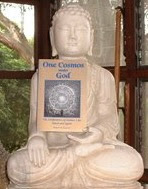
As Bob put it in One Cosmos, many problems are caused by trying to wring more pleasure out of something than there is in it. This can happen with food, vacations, sex, what have you, and is responsible for a lot of compulsive behavior. Anything that gives pleasure can become problematic if used in the wrong spirit.
As Bolton writes in Keys of Gnosis, the idea that happiness results from an accumulation of pleasures is pure illusion, since "each of its successive moments is in effect a separate world for experience." The bare moment "neither receives anything from, nor imparts anything to, any other moment, not even the next ones adjacent to it." Excluded from my transtemporal influence, the pursuit of moment-to-moment pleasure "does not allow the least possibility that any of them could be combined to make a total in this world..."
One can possess perfectly normal intelligence, even superior intelligence, and yet be destitute of spiritual wisdom, since the latter can only exist on a transcendent plane above the linear succession of temporal moments.
Now, this is one more reason why there is so little wisdom on the secular left, unless it is just accidental or parasitic on some other non-leftist source. Only religion teaches one the secret of converting momentary pleasures into something enduring, for example, through the joyful sacrament of marriage.
Bolton writes that "the greatest amount of pleasure of whatever kind can never exceed the greatest single instance of it, and likewise with pain." This is why, to quote Plotinus, to try to make multiplicity, "whether in time or in action, essential to happiness," is to try to put happiness together "by combining non-existents" (quoted in Bolton).
What does exist is the present, only it is not actually a "bare moment" on a linear scale. Rather, it has vertical extension, and this is where pleasure can actually be deepened in a meaningful sense, and this is what true spirituality endeavors to do. It is a way for the little daily pleasures of your life to actually accumulate and add up to One instead of Øne.
But before getting into that, I want you to know that although the one you call Bob is taking another day off, I am not, since I never have and never will. Rather, I am no different than your heart, your liver, or your lungs. I'm always here, churning away in the dark, wideawake while you daydream and doing the vital dreamwork amidst your trivial pursuits.
Now, when you get right down to it, there are only a couple of clusterforks in the spiritual path, the purpose of which is to conform oneself to OneSelf, or to one's divine archetype -- to paradoxically "become who you already are," so to speak.
This requires that one grow in truth, wisdom and virtue, and thus close the annoying gap between accident and substance, or contingency and essence. Yes Virginia there is a real ewe, but until you remove the wool from your eyes, you're on the lamb from God. Timelessness takes time, and walking on water wasn't built in a day. We know this already.
Another way of saying it is that in the spiritual life we are specifically attempting to grow something that transcends time. That something is "you." This is not really controversial. For example, every living thing begins with an immature form that seeks its mature form. Something wills that babies become adults and that teatmilkers become meateaters, apaulling though that may sound. Cor, blindme!
But such morphogenetic growth doesn't merely involve changes to the physical form, especially as it pertains to human beings.
Rather, everyone who is anyone knows that real human change takes place on the interior plane, and that it continues well beyond the point that we have reached physical maturity. Two physically mature human specimens can have virtually nothing in common, whereas that is never true of other animals.
In fact, among all the animals, only humans can (and should) continue growing indefinitely, to the point of nous' return. A mind that has stopped growing is effectively dead, as it has become a closed system. And the most damaging closure is of the vertical kind. For when that takes place, one has become like a dead man walking or blind man gawking.
It is fair to say that someone who is not growing toward his nonlocal telos is effectively living as an animal. Thus, many people who imagine that they are not "spiritual" actually are -- for example, the painter or musician who seek beauty in their work, or the scientist who passionately strives toward truth.
In a less endarkened age, these activities would be seen for what they are, and could not have become detached from the greater spiritual Adventure of Consciousness -- or even become opposed to it, as happens with scientism or with debased "art" that has no spiritual direction at all (except down or away from the Light).
Now, if we, the transconscious mode, did not exist, then there would be no deep continuity in our lives, and thus, no actual entity that undergoes change through time. In other words, animals essentially exist only in space, in such a way that they basically mirror the narrow external world that they co-create.
But the human being has deep temporal roots that extend all the way back to his own conception -- and beyond, to the very Genesis of creation. The human being lives in time, but time isn't just a linear succession of discrete and disconnected moments, as the existence of memory and transtemporal vision prove. Rather, the past and future are entangled in the present, not just consciously, but transconsciously.
For example, most forms of mental illness are a result of some unmetabolized -- which is to say, unsynthesized -- aspect of the past intruding upon the present. A symptom exists as an unconscious part that needs to be integrated into the whole.
But other symptoms can emanate from the future, so to speak. This was the position of Carl Jung, who observed that much mental illness is actually a result of a spiritual stillbirth, or from the pain of failing to realize one's archetype. Such a person can ransack his past, looking for what went wrong, but he won't find it, because it's in the future, not in the past; or "above," not below. Call it a spiritual prepartum depression, or pre-emptive mourning-before pall, or a miscarriage of just us.
As alluded to above, there are only a couple of alternatives to leading the spiritual life. One of them is hedonism, which ends up doing violence to the temporal aspect of human existence, as it reduces life to the mirthless pursuit of discrete moments of pleasure, as if salvation consists of the accumulation of these disconnected experiences.
But the whole point is that these moments of sensory pleasure are inherently disconnected and can never surpass themselves, and in fact, usually diminish with time. In other words, the first time you do something is usually the most intense, and if you spend your life trying to achieve that level of intensity, you're just chasing your tail told by an idiot.
As Bob put it in One Cosmos, many problems are caused by trying to wring more pleasure out of something than there is in it. This can happen with food, vacations, sex, what have you, and is responsible for a lot of compulsive behavior. Anything that gives pleasure can become problematic if used in the wrong spirit.
As Bolton writes in Keys of Gnosis, the idea that happiness results from an accumulation of pleasures is pure illusion, since "each of its successive moments is in effect a separate world for experience." The bare moment "neither receives anything from, nor imparts anything to, any other moment, not even the next ones adjacent to it." Excluded from my transtemporal influence, the pursuit of moment-to-moment pleasure "does not allow the least possibility that any of them could be combined to make a total in this world..."
One can possess perfectly normal intelligence, even superior intelligence, and yet be destitute of spiritual wisdom, since the latter can only exist on a transcendent plane above the linear succession of temporal moments.
Now, this is one more reason why there is so little wisdom on the secular left, unless it is just accidental or parasitic on some other non-leftist source. Only religion teaches one the secret of converting momentary pleasures into something enduring, for example, through the joyful sacrament of marriage.
Bolton writes that "the greatest amount of pleasure of whatever kind can never exceed the greatest single instance of it, and likewise with pain." This is why, to quote Plotinus, to try to make multiplicity, "whether in time or in action, essential to happiness," is to try to put happiness together "by combining non-existents" (quoted in Bolton).
What does exist is the present, only it is not actually a "bare moment" on a linear scale. Rather, it has vertical extension, and this is where pleasure can actually be deepened in a meaningful sense, and this is what true spirituality endeavors to do. It is a way for the little daily pleasures of your life to actually accumulate and add up to One instead of Øne.
Subscribe to:
Posts (Atom)
Theme Song