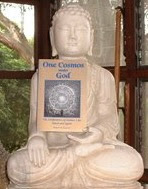
Whenever I read I highlight, but in a peculiar way. I don't highlight for facts or ideas. Rather, I only highlight things that, for whatever reason, resonate with me on some deeper level.
When I finish a book, I go back and re-read what I have highlighed, which reinforces that Resonant Thing inside of me. My posts often consist of articulating and amplifying this resonance, so that hopefully it will resonate in you as well. (In my book this is symbolized ≈. That with which ≈ resonates is ¶.)
I finally finished this book on Van Morrison that I started reading at least a couple of months ago. This morning I've decided to review the scattered passages I highlighted. In what follows, you may see that a kind of narrative emerges, one that is certainly relevant to me, but perhaps to you as well.
"I don't want to just sing a song... anyone can do that... something else has got to happen" (VM).
America exists as an emotional idea, both within its own people and the wider world.
The BBC depended upon imported American records during the Second World War.
Port cities throughout the UK emerged as centres of Britain's growing popular music scene.
... jazz, blues, country records, all saturated with the spirit of America, the sound of a far-off new world dream, where even songs of poverty, hard work and harder luck seemed magical.
"Blues isn't to do with black or white; blues is about the truth, and blues is the truth" (VM).
... if 'having the blues' is a cultural shorthand for feeling down, then 'singing the blues' is surely something else -- suggestive of resistance and endurance.
Sun's going down, nightfall gonna catch me here. --Robert Johnson
... the blues can sound like anything -- it is in performance that they become "truth."
"I wanted to make my own blues, my own soul music, to do something of my own with it. That's where I'm coming from" (VM).
So he wanted to take the tradition, and innovate within and beyond it.
... these songs were not necessarily born to be sold, to be "listened" to for pleasure or "consumed" by others; other imperatives came to bear upon their coming into being.
Morrison was perhaps at the deepest point of his interest in the metaphysical power of music -- music as healing force.
"Jazz is not a kind of music, it is an approach, and it applies to how one goes about finding their voice, relating to a tradition, stepping into the unknown and swinging" (Ben Sidran).
... Morrison has called it "the sense of wonder," the unconscious living in the now, that seems to fall from us as we make the transition from childhood to adulthood, from innocence to experience.
Paul McCartney once described the riff of Ray Charles' "What'd I Say" as "the riff of the universe... that just keeps going forever."
[Gloria] is simplicity of a near-primal kind... the feel -- that which cannot be transcribed -- is everything.
[Gloria is] so pure, that if no other hint of it but this record existed, there would still be such a thing as rock and roll.
"How can a 51-year old sing that? I can't relate to it. Why am I expected to, anyway, at 51? I wrote it when I was 20. I was never paid for Brown Eyed Girl" (VM).
The memory of it [the Garden] is both a thorn in the side, a reminder of the Fall, but also a spur on to working towards some kind of return.
So there is this literal use of the term [healing] to consider, and it is certainly part of Morrison's deeper interest in music, in its nature and its "secret power."
"Any kind of art or music is involved in healing, whether it's rock 'n' roll or classical music, it's all healing.... All this is just the foreground, but the background is something else."
... the ancient roads are under our feet, criss-crossing what appear to be our fixed navigational material realities, hidden but perceptible.
This is the role of the ancient highway, to provide a link between the "forgotten" reality and the present material circumstances...
"He's after the musical technique of how to live" (Patrick Kavanagh).
Samuel Becket said that the most he could dare to hope for was to make or leave "a stain on the silence".... [His] ambition was to create what he called "a literature of the unword."
"The expression that there is nothing to express, nothing with which to express, nothing from which to express, no power to express, no desire to express, together with the obligation to express" (George Duthiut).
Distrust the artist who tells you they know exactly what their work is "about."
In Morrison's art, silence is at the centre, and sometimes when he approaches that centre on a good night onstage -- when something is about to happen -- the conditions need to be absolutely right or it won't happen.... [It is] where the commonplace can become the marvellous.
... silence is a positive presence, rather than a vacuum, or an absence. It is an aspect of being, rather than non-being.
Q: ... [Y]ou seem to sing somewhere between your throat and your heart.... [I]s that the zone you want to both come from and resonate in other people, the heart?
VM: Eventually it'll get into the heart. That's what the eventual goal is -- Exactly.
Why was I writing this kind of material when my contemporaries weren't? So I wanted to find out where I stood and which tradition I came from. Well eventually I found out that the tradition I belonged to was actually my own tradition. It was like being hit over the head with a baseball bat. You find out that what you've been searching for you already are. --VM
TW:ge
Saturday, August 21, 2010


Friday, August 20, 2010
Cosmic Evolution and the Third Bang
Again, the emergence of man was either the ultimate Black Swan -- meaning the most inconceivable thing one can possible conceive -- or there is something else going on here besides natural selection. At the very dawn of the cultural explosion, "there was no hint of what was to come, no clue" that this unimpressive specimen was anything more than a "precariously successful predatory ape" (Ridley). For how could there be a clue, with no one capable of getting one?
Sometimes I re-imagine the old covenant as an allegory for a more universal story -- in other words, not just about the people of Israel, but about man as such. Thus, what if God happened to choose this particular "precariously successful predatory ape" for his people? He certainly didn't choose Neanderthals, or Home erectus, or a number of other big-brained hominids.
And where was that garden, and what was the Law that was violated? Reader Mikal provided a hint with his comment yesterday about the new rules that applied to the human dimension, over and above the biological. Man is in biology but striving for the human (or divine-human synthesis, to be precise). The Ten Commandments codify certain vertical and horizontal rules that make this journey possible.
As we have discussed in the past, the first five are vertical, and have to do with our relationship to the Absolute. But the second five are horizontal, and have to do with our relationship to our fellow man, i.e., murdering, lying, stealing, envying, and cheating. These are the minimal rules necessary to maintain a functioning collective, and without the collective, man is nothing.
Note that this is Ridley's central point: that somehow, man was lifted out of his solitary existence to a communal one, and not just physically. After all, ants and communists live in physical communion, and what has it done for them? Rather, what was required was emotional, spiritual, and intellectual communion, or the exchange of ideas, emotions, and other mental states, modes, and dimensions.
Being an exiled-from-the-garden variety intellectual, Ridley focuses on the intellectual and economic, but there are deeper currents that unite human beings, and without which there would be no "medium" for the transfer of ideas. He touches on one of the critical ones -- trust, and especially its gradual widening -- but isn't able to say much about it with the crude tools available to the materialist.
Back to the Bible for a moment. I've always had the suspicion that the story of Cain and Abel is actually a collective memory about the genocide of our nearest genetic neighbor, Neanderthal man. They were a separate line of Homo sapiens, with language, tools, and a larger brain than ours. But the last of them died out some 25,000 years ago. Given that we had a lot of contact with them, and given how human beings treat the Other, it wouldn't surprise me if we wiped them out. The only surprise is that we didn't make them slaves, like a Star Trek episode.
Note that just after we leave Eden, the scene changes to the story of the primordial brothers. Surely it is significant that the first crime recorded in the Bible is murder, calculated, cold-blooded and remorseless. This is one of the reasons why the Bible is so much more unflinchingly accurate and realistic than most other philosophies in describing what man is and what he is capable of. Knowing this, nothing about man's countless future crimes should come as a surprise. But how do we stop this endless man-on-man, brother-on-brother violence?
We'll get to that later. We're getting ahead of ourselves. Back to Ridley and that unimpressive predatory ape that suddenly found itself publishing books about itself.
Again, Ridley fully concedes the problems of a Darwinian explanation, in that genetic change could never keep up with the suddenness and speed of the cultural explosion, let alone explain it. The genes are a lagging indicator, not a leading one. Something else is providing the evolutionary pressure. But whatever it is, "it must be something that gathers pace by feeding upon itself, something that is auto-catalytic."
Now, it just so happens that this is right up my alley, as the second paper I published back in 1994 -- yes, in a real scientific, peer-reviewed journal -- was on this very topic. It was titled Psychoanalysis, Chaos and Complexity: The Evolving Mind as a Dissipative Structure. But the paper was based on a part of my dissertation, which I must have begun writing in the spring of 1986, so that shows you how long these ideas have been percolating and evolving in my melon.
In turn, some of these ideas found their way into chapter 3.2 of my book, The Acquisition of Humanness in a Contemporary Stone Age Baby. That's really the point, because if scientists are correct, then a baby of today is genetically no different (or not significantly different) from a baby of 100,000 years ago, which means that all the stuff that's happened since then can in no way be reduced to genetics and natural selection. I am happy to concede that genes are a necessary, but clearly not a sufficient, condition for our humanness (let alone a final one).
So I don't think I'll rehearse my whole argument here. Most readers are familiar with it anyway.
Well, maybe just a little. That word "auto-catalytic" is particularly important. It has to do with the product of a chemical reaction that is itself the catalyst for another reaction. Open systems -- otherwise known as dissipative structures -- take in energy or information, and then sustain themselves through auto-catalysis. Some people believe that auto-catalysis is the irreducible component of life, e.g., Ilya Prigogine.
Whatever the case may be, it is certainly the irreducible component of mental life, along with openness and disequilibrium. In the paper, I describe how, through psychic auto-catalysis, there is a spiraling ascent into meaning and truth, which in turn accelerate their own synthesis. This is the underlying mechanism that permits what we call "the colonization of the subjective horizon."
Ridley reduces this all down to economic exchange, which for me is placing the cart before the horse. Rather, human beings must again be open systems at their very foundation. Exchange is not something that is only added later, as if it is contrary to our nature. But here is how Ridley describes it:
"Exchange needed to be invented. It does not come naturally to most animals. There is strikingly little use of barter in other animal species." He's talking about something much more profound than mere reciprocity, or, say, giving food for sexual favors. Rather, he's talking about abstract exchange, which eventually leads to the total abstraction of money. This new kind of exchange is "a thing of explosive possibility, a thing that breeds, explodes, grows, auto-catalyzes."
Indeed, as I tried to explain in my book, it is really the third Bang, after existence and life. And obviously, we've gotten a lot of bucks from this bang.
To be continued....
Sometimes I re-imagine the old covenant as an allegory for a more universal story -- in other words, not just about the people of Israel, but about man as such. Thus, what if God happened to choose this particular "precariously successful predatory ape" for his people? He certainly didn't choose Neanderthals, or Home erectus, or a number of other big-brained hominids.
And where was that garden, and what was the Law that was violated? Reader Mikal provided a hint with his comment yesterday about the new rules that applied to the human dimension, over and above the biological. Man is in biology but striving for the human (or divine-human synthesis, to be precise). The Ten Commandments codify certain vertical and horizontal rules that make this journey possible.
As we have discussed in the past, the first five are vertical, and have to do with our relationship to the Absolute. But the second five are horizontal, and have to do with our relationship to our fellow man, i.e., murdering, lying, stealing, envying, and cheating. These are the minimal rules necessary to maintain a functioning collective, and without the collective, man is nothing.
Note that this is Ridley's central point: that somehow, man was lifted out of his solitary existence to a communal one, and not just physically. After all, ants and communists live in physical communion, and what has it done for them? Rather, what was required was emotional, spiritual, and intellectual communion, or the exchange of ideas, emotions, and other mental states, modes, and dimensions.
Being an exiled-from-the-garden variety intellectual, Ridley focuses on the intellectual and economic, but there are deeper currents that unite human beings, and without which there would be no "medium" for the transfer of ideas. He touches on one of the critical ones -- trust, and especially its gradual widening -- but isn't able to say much about it with the crude tools available to the materialist.
Back to the Bible for a moment. I've always had the suspicion that the story of Cain and Abel is actually a collective memory about the genocide of our nearest genetic neighbor, Neanderthal man. They were a separate line of Homo sapiens, with language, tools, and a larger brain than ours. But the last of them died out some 25,000 years ago. Given that we had a lot of contact with them, and given how human beings treat the Other, it wouldn't surprise me if we wiped them out. The only surprise is that we didn't make them slaves, like a Star Trek episode.
Note that just after we leave Eden, the scene changes to the story of the primordial brothers. Surely it is significant that the first crime recorded in the Bible is murder, calculated, cold-blooded and remorseless. This is one of the reasons why the Bible is so much more unflinchingly accurate and realistic than most other philosophies in describing what man is and what he is capable of. Knowing this, nothing about man's countless future crimes should come as a surprise. But how do we stop this endless man-on-man, brother-on-brother violence?
We'll get to that later. We're getting ahead of ourselves. Back to Ridley and that unimpressive predatory ape that suddenly found itself publishing books about itself.
Again, Ridley fully concedes the problems of a Darwinian explanation, in that genetic change could never keep up with the suddenness and speed of the cultural explosion, let alone explain it. The genes are a lagging indicator, not a leading one. Something else is providing the evolutionary pressure. But whatever it is, "it must be something that gathers pace by feeding upon itself, something that is auto-catalytic."
Now, it just so happens that this is right up my alley, as the second paper I published back in 1994 -- yes, in a real scientific, peer-reviewed journal -- was on this very topic. It was titled Psychoanalysis, Chaos and Complexity: The Evolving Mind as a Dissipative Structure. But the paper was based on a part of my dissertation, which I must have begun writing in the spring of 1986, so that shows you how long these ideas have been percolating and evolving in my melon.
In turn, some of these ideas found their way into chapter 3.2 of my book, The Acquisition of Humanness in a Contemporary Stone Age Baby. That's really the point, because if scientists are correct, then a baby of today is genetically no different (or not significantly different) from a baby of 100,000 years ago, which means that all the stuff that's happened since then can in no way be reduced to genetics and natural selection. I am happy to concede that genes are a necessary, but clearly not a sufficient, condition for our humanness (let alone a final one).
So I don't think I'll rehearse my whole argument here. Most readers are familiar with it anyway.
Well, maybe just a little. That word "auto-catalytic" is particularly important. It has to do with the product of a chemical reaction that is itself the catalyst for another reaction. Open systems -- otherwise known as dissipative structures -- take in energy or information, and then sustain themselves through auto-catalysis. Some people believe that auto-catalysis is the irreducible component of life, e.g., Ilya Prigogine.
Whatever the case may be, it is certainly the irreducible component of mental life, along with openness and disequilibrium. In the paper, I describe how, through psychic auto-catalysis, there is a spiraling ascent into meaning and truth, which in turn accelerate their own synthesis. This is the underlying mechanism that permits what we call "the colonization of the subjective horizon."
Ridley reduces this all down to economic exchange, which for me is placing the cart before the horse. Rather, human beings must again be open systems at their very foundation. Exchange is not something that is only added later, as if it is contrary to our nature. But here is how Ridley describes it:
"Exchange needed to be invented. It does not come naturally to most animals. There is strikingly little use of barter in other animal species." He's talking about something much more profound than mere reciprocity, or, say, giving food for sexual favors. Rather, he's talking about abstract exchange, which eventually leads to the total abstraction of money. This new kind of exchange is "a thing of explosive possibility, a thing that breeds, explodes, grows, auto-catalyzes."
Indeed, as I tried to explain in my book, it is really the third Bang, after existence and life. And obviously, we've gotten a lot of bucks from this bang.
To be continued....
Thursday, August 19, 2010
The Darwinian Tower of Monkey Babble
We left off with Ridley's observation that "there appeared on earth a new kind of hominid, one that refused to play by the rules. Without any change in its body, without any succession of species, it just kept changing its habits. For the first time, its technology changed faster than its anatomy. There was an evolutionary novelty, and you are it."
Some of you anyway.
Now, this is not supposed to happen under the iron hand of natural selection. But as Ridley properly notes, our species was born in rebellion. It simply "refused to play by the rules," rules that are only invented a posteriori anyway by scientists looking through the rearview mirror with 20/20 hindsight.
Again, this is the ultimate Black Swan, since not only could no one have predicted it beforehand, but they would have said with absolute certainty that it is impossible, not in this cosmos, and not under the rules we play by -- just as they insist that it is impossible for the Son of Man to evolve out of man. In their religion, only one miracle is permitted. Thus, the vast testimony of the saints and sages -- not to mention the legacy of true artists of Space and Time -- is just noise.
But why do scientists believe the only rules governing the cosmos are those that are accessible to their modified ape brain seen through the window of the last 300 years? This is just one of the implicit meta-rules they play by, but once you examine the rule, it is absurd if not childish, especially in the context of their own theory of what man is.
In other words, if man is what they say he is, what is the source of their arrogance and narrow-minded certainty? Why the preposterous confidence about what an ape can know of reality?
Either man's intellect is a potential adequation to reality, or it is not. And if it is, then Darwin is wrong, period. It surely doesn't mean that there is no truth to natural selection, because there obviously is. It is just that it cannot be the only rule life plays by, for there is nothing in natural selection that permits pneumacognitive adequation to nonlocal reality and truth.
Or, look at it this way. Usually, when a great person breaks a rule, it is because he is obeying a higher one. For example, a jazzologically untutored person might listen to Thelonious Monk and remark, "sounds okay, but why does he keep hitting the wrong notes? Why isn't he obeying the rules of music?"
The answer is that he is obeying a higher musical law, one in which notes that may sound wrong from below are right from above. Likewise the paintings of Kandinsky we discussed the other day. He's not just breaking rules, but discovering new ones.
Note that rules are the boundary conditions that govern a game. Let's say we're playing baseball. Nature could not evolve a superior ballplayer by making one that "refused to play by the rules."
For example, this ballplayer might insist that a home run is now a home run regardless of whether the ball is fair or foul; or that he may henceforth tackle the runner to impede his progress. If this were to happen, there would be no game. In other words, there is no possible game outside the rules of the game. Rather, there's just chaos. The game is over when someone refuses to play by the rules.
At some point some fifty-thousand years ago, human beings flatly refused any longer to play by the rules of natural selection. But just as with baseball, when someone refuses to play by the rules, that should be the end of the game.
In fact, man is hardly the only animal that tried to outwit nature and play outside her rules. But before man, their batting average was .000. In other words, like Pete Rose, the price they paid for violating the rules was extinction.
But when man stepped outside or above the rules of natural selection -- when the Spirit of Life was breathed into him -- he didn't just step out into chaos, into a jungle with no higher law governing it.
To the contrary, he now found himself playing under a new set of rules, very similar to what occurred when matter refused to play by the old rules of physics and suddenly came to life. Thereafter it played under a novel set of rules which fall under the rubric of biology. And one of those rules is surely natural selection, but only one.
There are clearly other rules -- including rules that transcend natural selection -- but not all of the monkeys are able to discern or understand them yet. Give them a break. And a banana.
Again, these human monkeys have only recently come down from the trees, so it is understandable that some of the slower ones would have some peculiar ideas about themselves. Some lament that they have no free will, others that the cosmos that gave birth to them is meaningless. What can one say? Life evolves. And some get left behind. Way it is.
Timelessness takes time. You can't just tell a snake to get some legs, nor can you tell a troll to get a clue. Some men crawl on their bellies and others walk upright.
But make no mistake: man was made to stand upright, for this corresponds to his deiformity, and is an analogue of his intrinsic dignity and nobility. An undignified and ignoble man is less than a man. He is not measuring up to what he ought to be (and note that the human Ought -- which is rooted in his celestial archetype -- is completely extra-Darwinian).
This is an example of a nonlocal rule human beings play under, and which may be intuited by the awakened intellect. Conversely, to suggest that our nobility, our love of truth, our boundless creativity, our knowledge of good and evil, may be reduced to natural selection is pure monkey babble.
This is not to suggest that some human monkeys aren't stuck playing under those old rules, and cannot fly past the neuralnet of their genetic program. But they're missing out on the game of a lifetime.
To be continued....
Some of you anyway.
Now, this is not supposed to happen under the iron hand of natural selection. But as Ridley properly notes, our species was born in rebellion. It simply "refused to play by the rules," rules that are only invented a posteriori anyway by scientists looking through the rearview mirror with 20/20 hindsight.
Again, this is the ultimate Black Swan, since not only could no one have predicted it beforehand, but they would have said with absolute certainty that it is impossible, not in this cosmos, and not under the rules we play by -- just as they insist that it is impossible for the Son of Man to evolve out of man. In their religion, only one miracle is permitted. Thus, the vast testimony of the saints and sages -- not to mention the legacy of true artists of Space and Time -- is just noise.
But why do scientists believe the only rules governing the cosmos are those that are accessible to their modified ape brain seen through the window of the last 300 years? This is just one of the implicit meta-rules they play by, but once you examine the rule, it is absurd if not childish, especially in the context of their own theory of what man is.
In other words, if man is what they say he is, what is the source of their arrogance and narrow-minded certainty? Why the preposterous confidence about what an ape can know of reality?
Either man's intellect is a potential adequation to reality, or it is not. And if it is, then Darwin is wrong, period. It surely doesn't mean that there is no truth to natural selection, because there obviously is. It is just that it cannot be the only rule life plays by, for there is nothing in natural selection that permits pneumacognitive adequation to nonlocal reality and truth.
Or, look at it this way. Usually, when a great person breaks a rule, it is because he is obeying a higher one. For example, a jazzologically untutored person might listen to Thelonious Monk and remark, "sounds okay, but why does he keep hitting the wrong notes? Why isn't he obeying the rules of music?"
The answer is that he is obeying a higher musical law, one in which notes that may sound wrong from below are right from above. Likewise the paintings of Kandinsky we discussed the other day. He's not just breaking rules, but discovering new ones.
Note that rules are the boundary conditions that govern a game. Let's say we're playing baseball. Nature could not evolve a superior ballplayer by making one that "refused to play by the rules."
For example, this ballplayer might insist that a home run is now a home run regardless of whether the ball is fair or foul; or that he may henceforth tackle the runner to impede his progress. If this were to happen, there would be no game. In other words, there is no possible game outside the rules of the game. Rather, there's just chaos. The game is over when someone refuses to play by the rules.
At some point some fifty-thousand years ago, human beings flatly refused any longer to play by the rules of natural selection. But just as with baseball, when someone refuses to play by the rules, that should be the end of the game.
In fact, man is hardly the only animal that tried to outwit nature and play outside her rules. But before man, their batting average was .000. In other words, like Pete Rose, the price they paid for violating the rules was extinction.
But when man stepped outside or above the rules of natural selection -- when the Spirit of Life was breathed into him -- he didn't just step out into chaos, into a jungle with no higher law governing it.
To the contrary, he now found himself playing under a new set of rules, very similar to what occurred when matter refused to play by the old rules of physics and suddenly came to life. Thereafter it played under a novel set of rules which fall under the rubric of biology. And one of those rules is surely natural selection, but only one.
There are clearly other rules -- including rules that transcend natural selection -- but not all of the monkeys are able to discern or understand them yet. Give them a break. And a banana.
Again, these human monkeys have only recently come down from the trees, so it is understandable that some of the slower ones would have some peculiar ideas about themselves. Some lament that they have no free will, others that the cosmos that gave birth to them is meaningless. What can one say? Life evolves. And some get left behind. Way it is.
Timelessness takes time. You can't just tell a snake to get some legs, nor can you tell a troll to get a clue. Some men crawl on their bellies and others walk upright.
But make no mistake: man was made to stand upright, for this corresponds to his deiformity, and is an analogue of his intrinsic dignity and nobility. An undignified and ignoble man is less than a man. He is not measuring up to what he ought to be (and note that the human Ought -- which is rooted in his celestial archetype -- is completely extra-Darwinian).
This is an example of a nonlocal rule human beings play under, and which may be intuited by the awakened intellect. Conversely, to suggest that our nobility, our love of truth, our boundless creativity, our knowledge of good and evil, may be reduced to natural selection is pure monkey babble.
This is not to suggest that some human monkeys aren't stuck playing under those old rules, and cannot fly past the neuralnet of their genetic program. But they're missing out on the game of a lifetime.
To be continued....
Wednesday, August 18, 2010
Creation Myths of the Tenured
Without a doubt, the ultimate Black Swan is whatever it was that permitted merely genetic human beings to emerge into full humanness just yesterday (cosmically speaking), some 50,000 years ago.
Prior to this there was existence, but so what? There was life, but who cares? With no one to consciously experience it, what was the point? Without self-conscious observers, the whole cosmos could bang into being and contract into nothingness, and it would be no different than the proverbial tree falling in the forest with no one there to hear it.
One of the reasons why this is such a lonely and unpopular blog is that it takes both science and religion seriously. Most science and religion are unserious, but especially -- one might say intrinsically -- when they exclude each other.
A religion that cannot encompass science is not worthy the name, while a science that cannot be reconciled with religion is not fit for human beings. And I mean this literally, in that it will be a science that applies to a different species, not the one that is made to know love, truth, beauty, existence, and the Absolute. Science must begin and end in this principle -- which is to say, the Principle -- or it is just a diversion. Nevertheless, Stupidity appropriates what science invents with diabolical facility (Aphorisms of Don Colacho).
In taking science seriously, we must obviously take "evolution" seriously. I place the word in quotation marks not because I don't believe in it, but for reasons we have discussed at length in the past (cf. here or there). Evolution was around long prior to Darwin, and the word didn't even appear in the first five editions of The Origin of Species. It was only inserted later, after which time evolution and Darwinism (natural selection) became conflated, even though they are in many ways at antipodes. In other words, evolution disproves Darwinism, and vice versa, despite the semantic and metaphysical games materialists deploy to try to reconcile the two.
In our effort to demonstrate the essential unity of religion and science, we specifically want to avoid the superficial and metaphysically incoherent approach of the materialists, which essentially reduces to magic -- no different than the young earth creationist who sees God as a kind of magician. But creation is not magic; rather, it is thoroughly rooted in, and infused with, order and Reason. Yes, there are myths that describe creation as if it were a giant magic act, but the purpose of myth is to awaken Truth within, not to force consent from without.
This is something that used to be taken for granted by theologians, but as they have become increasingly intimidated by the findings of modern science, it seems that they have retreated further into a protective bubble of faith in the incredible -- or faith in things that are not worthy of the intrinsic dignity and nobility of man's seeking Intellect. The Intellect is noble precisely because it may know truth, so that anything short of an integral and total truth undercuts man at the root. It's an insult, really.
In The Rational Optimist: How Prosperity Evolves, Ridley tries to account for the evolution of man in wholly naturalistic terms. In one sense, he recognizes a fatal problem with the Darwinian account, in that there is an insurmountable gap between our finite genes and our infinite capabilities.
In other words, we know that human beings were genetically "complete" (which itself is an absurd word to apply to natural selection, since nothing can be complete or incomplete) long before the appearance of what we would call humanness.
Furthermore, the suddenness (especially in Darwinian terms) of man's psychospiritual transformation also surpasses anything natural selection can explain. It can try, but to say that a random genetic mutation accounts for the human capacity to know truth and beauty makes no sense whatsoever.
Anyway, at least Ridley is honest in acknowledging the problem, although he doesn't exactly name it or draw out its full implications. But the problem is this: that there is a literally infinite gap between man and animal (even though there is an obvious continuity as well), just as there is an infinite gap between nothing and existence or matter and life.
One can say that this gap is infinite because man intuits the Absolute, or one can say that man intuits the Absolute because of this infinite gap. Either way, once man consciously enters the sensorium of time and space, he is implicitly aware of both Absolute and Infinite, and therefore Love, Truth, Justice, Beauty, Virtue, and Eternity. These are the things that define man, not his genome.
Ridley notes an important fact that I discussed in my book, which is that early hominids remained trapped in their niche for "more than a thousand millennia." They basically produced a single tool, the stone hand axe.
Clearly, "the creatures that made this thing were very content with it," in that it changed very little during the course of a million years, across three continents. As I mentioned in the book, it's almost as if this tool were analogous to a bird's nest or a spider's web, i.e., something we were genetically programmed to produce.
As long as 600,000 ago, there were hominids with brains nearly as large as ours, and yet, with no discernible payoff: "they did not experience anything remotely resembling cultural progress. They just did what they did very well. They did not change."
But again, this is normative for Darwinism. Once a creature successfully adapts to its environmental niche, there is no pressure to change. As we mentioned yesterday, "natural selection is a conservative force. It spends more of its time keeping species the same than changing them" (Ridley).
And just what kind of "pressure" could force an ape to suddenly become Buddha, or Beethoven, or Shakespeare, anyway? What, is evolution the mother of all Jewish mothers? (Hmm, before you dismiss that outright....) Yes, there was a pressure, but as we shall see, it was from above, not below. But we're getting ahead of ourselves.
So quite suddenly "there appeared on earth a new kind of hominid, one that refused to play by the rules. Without any change in its body, without any succession of species, it just kept changing its habits. For the first time, its technology changed faster than its anatomy. There was an evolutionary novelty, and you are it" (Ridley).
Yes, we are without a doubt an evolutionary novelty. But are we a Darwinian novelty, which is to say, a random accident? I don't think so. In fact, a wholly contingent being could never know truth anyway, let alone its own truth.
To be continued....
Prior to this there was existence, but so what? There was life, but who cares? With no one to consciously experience it, what was the point? Without self-conscious observers, the whole cosmos could bang into being and contract into nothingness, and it would be no different than the proverbial tree falling in the forest with no one there to hear it.
One of the reasons why this is such a lonely and unpopular blog is that it takes both science and religion seriously. Most science and religion are unserious, but especially -- one might say intrinsically -- when they exclude each other.
A religion that cannot encompass science is not worthy the name, while a science that cannot be reconciled with religion is not fit for human beings. And I mean this literally, in that it will be a science that applies to a different species, not the one that is made to know love, truth, beauty, existence, and the Absolute. Science must begin and end in this principle -- which is to say, the Principle -- or it is just a diversion. Nevertheless, Stupidity appropriates what science invents with diabolical facility (Aphorisms of Don Colacho).
In taking science seriously, we must obviously take "evolution" seriously. I place the word in quotation marks not because I don't believe in it, but for reasons we have discussed at length in the past (cf. here or there). Evolution was around long prior to Darwin, and the word didn't even appear in the first five editions of The Origin of Species. It was only inserted later, after which time evolution and Darwinism (natural selection) became conflated, even though they are in many ways at antipodes. In other words, evolution disproves Darwinism, and vice versa, despite the semantic and metaphysical games materialists deploy to try to reconcile the two.
In our effort to demonstrate the essential unity of religion and science, we specifically want to avoid the superficial and metaphysically incoherent approach of the materialists, which essentially reduces to magic -- no different than the young earth creationist who sees God as a kind of magician. But creation is not magic; rather, it is thoroughly rooted in, and infused with, order and Reason. Yes, there are myths that describe creation as if it were a giant magic act, but the purpose of myth is to awaken Truth within, not to force consent from without.
This is something that used to be taken for granted by theologians, but as they have become increasingly intimidated by the findings of modern science, it seems that they have retreated further into a protective bubble of faith in the incredible -- or faith in things that are not worthy of the intrinsic dignity and nobility of man's seeking Intellect. The Intellect is noble precisely because it may know truth, so that anything short of an integral and total truth undercuts man at the root. It's an insult, really.
In The Rational Optimist: How Prosperity Evolves, Ridley tries to account for the evolution of man in wholly naturalistic terms. In one sense, he recognizes a fatal problem with the Darwinian account, in that there is an insurmountable gap between our finite genes and our infinite capabilities.
In other words, we know that human beings were genetically "complete" (which itself is an absurd word to apply to natural selection, since nothing can be complete or incomplete) long before the appearance of what we would call humanness.
Furthermore, the suddenness (especially in Darwinian terms) of man's psychospiritual transformation also surpasses anything natural selection can explain. It can try, but to say that a random genetic mutation accounts for the human capacity to know truth and beauty makes no sense whatsoever.
Anyway, at least Ridley is honest in acknowledging the problem, although he doesn't exactly name it or draw out its full implications. But the problem is this: that there is a literally infinite gap between man and animal (even though there is an obvious continuity as well), just as there is an infinite gap between nothing and existence or matter and life.
One can say that this gap is infinite because man intuits the Absolute, or one can say that man intuits the Absolute because of this infinite gap. Either way, once man consciously enters the sensorium of time and space, he is implicitly aware of both Absolute and Infinite, and therefore Love, Truth, Justice, Beauty, Virtue, and Eternity. These are the things that define man, not his genome.
Ridley notes an important fact that I discussed in my book, which is that early hominids remained trapped in their niche for "more than a thousand millennia." They basically produced a single tool, the stone hand axe.
Clearly, "the creatures that made this thing were very content with it," in that it changed very little during the course of a million years, across three continents. As I mentioned in the book, it's almost as if this tool were analogous to a bird's nest or a spider's web, i.e., something we were genetically programmed to produce.
As long as 600,000 ago, there were hominids with brains nearly as large as ours, and yet, with no discernible payoff: "they did not experience anything remotely resembling cultural progress. They just did what they did very well. They did not change."
But again, this is normative for Darwinism. Once a creature successfully adapts to its environmental niche, there is no pressure to change. As we mentioned yesterday, "natural selection is a conservative force. It spends more of its time keeping species the same than changing them" (Ridley).
And just what kind of "pressure" could force an ape to suddenly become Buddha, or Beethoven, or Shakespeare, anyway? What, is evolution the mother of all Jewish mothers? (Hmm, before you dismiss that outright....) Yes, there was a pressure, but as we shall see, it was from above, not below. But we're getting ahead of ourselves.
So quite suddenly "there appeared on earth a new kind of hominid, one that refused to play by the rules. Without any change in its body, without any succession of species, it just kept changing its habits. For the first time, its technology changed faster than its anatomy. There was an evolutionary novelty, and you are it" (Ridley).
Yes, we are without a doubt an evolutionary novelty. But are we a Darwinian novelty, which is to say, a random accident? I don't think so. In fact, a wholly contingent being could never know truth anyway, let alone its own truth.
To be continued....
Tuesday, August 17, 2010
Post-Biological Evolution and the Colonization of Subjective Space
In Matt Ridley's The Rational Optimist: How Prosperity Evolves, he posits a theory for why things are always getting so much better. While the arrow of progress goes up and down over the short term, if you take a longer view -- decades instead of years, centuries instead of decades -- the differences are dramatic; they are not just linear, but exponential.
At least if you begin with the proper boundary conditions. It took mankind thousands of years to discover these boundary conditions, which is why it took until three hundred years ago for things to really take off. World GDP per capita was essentially stagnant for 1700 years before there was a sudden breakthrough several hundred years ago.
But all along, there have been forces opposed to the very conditions that make progress possible. We see those atavistic and conservative (in the negative sense) forces today in the form of Islamist and progressive statists (and the unholy alliance between them).
Take virtually any variable and compare it with the past, and you will see that we are vastly better off today, whether it is violence, murder, disease, hunger, housing, infant mortality, whatever. Ridley provides many eye-opening statistics.
For example, the average Mexican today lives longer than the average Briton did in 1955. In South Korea, the average person not only earns fifteen times as much, but lives twenty-six years longer than in 1955. Even the UN "estimates that poverty was reduced more in the last fifty years than in the previous 500." Indeed, "it is hard to find any region [of the world] that was worse off in 2005 than it was in 1955."
Statistics on murder and violence are especially illuminating. I mentioned these in my book, but they are worth recalling. Among hunter-gatherers about 30 percent of adult males die from homicide, which would equate to two billion war-related deaths in the twentieth century instead of the mere 100 million. (And note that the vast majority of these deaths were caused by illiberal fascist/leftist/communist states that directly oppose the very mechanisms and institutions that unleash progress and undermine the causes of war.)
I tried to tackle the same subject in my book, except that I took for granted the factors that Ridley puts forth as conclusions. His premise and his conclusion are quite simple: that progress is a function of exchange, not just physical trade and barter, but the exchange and "mating" of ideas. This is what lifts man above biology in a way that no other animal has achieved. Biology has transcended itself in man, but only through very specific conditions.
Beyond this assertion, Ridley is essentially reduced to saying that it must have happened "somehow." As he properly notes, it cannot simply have been because human beings have a bigger brain than most other animals, for no matter how large the brain, it will come up against an evolutionary wall if it isn't an open system that exchanges information and emotion with others.
Nor can it have been a result of language, which was surely a necessary but not sufficient condition for our post-biological evolution (i.e., even Islamists and trolls have language).
As Ridley writes, "It was not something that that happened within a brain. It was something that happened between brains" (emphasis mine). But what does it mean to say that things can happen "between" brains? What is the nature of this "between," and how did it get here?
As I also noted in my book, human beings were genetically complete long before the "cultural explosion" took place, so there must be a non-genetic explanation (or again, genes are necessary but not sufficient causes for our humanness).
Note also that it is not simply a matter of saying that "man has culture," for that is begging the question. After all, culture cuts both ways -- and usually the wrong way. Most cultures stagnate because they simply self-replicate. It is similar to what would happen if a family only reproduced within itself, or universities only hired ideologically identical faculty members (not that that could ever happen in America).
Indeed, Ridley notes that "Exchange is to cultural evolution as sex is to biological evolution." But cultures resist change, in the same way that any adaptation does: "in evolutionary terms it is quite normal," as "most species do not change their habits during their few million years on earth or alter their lifestyle much..." Natural selection "spends more of its time keeping species the same than changing them."
But I believe that Ridley too ultimately begs the question of where all the Slack comes from, largely due to his blind anti-religious bigotry. For it is entirely correct that the blessing of widespread human leisure "comes from exchange and specialization and from the resulting division of labor."
But Ridley is curiously incurious when it comes to discussing the ontological status of this newly discovered post-biological space that human beings began to inhabit. Well, actually it's not curious at all, because for any variety of materialist, it must be just a freak accident, a weird side effect of physical processes.
For the implication of Ridley's view would be that human beings have no nature, no essence, no reason for being. And if this is the case, then liberty cannot be our sacred birthright, and there is no reason why the state or collective cannot appropriate us for its ends, just as it has done through most of history.
Our ultimate protection from this fate is that we are grounded in something more real than biology and physics. And once some particularly wise men adopted this as their founding principle some 235 years ago, things really took off. In the end, reality prevails, but it's always a struggle.
At least if you begin with the proper boundary conditions. It took mankind thousands of years to discover these boundary conditions, which is why it took until three hundred years ago for things to really take off. World GDP per capita was essentially stagnant for 1700 years before there was a sudden breakthrough several hundred years ago.
But all along, there have been forces opposed to the very conditions that make progress possible. We see those atavistic and conservative (in the negative sense) forces today in the form of Islamist and progressive statists (and the unholy alliance between them).
Take virtually any variable and compare it with the past, and you will see that we are vastly better off today, whether it is violence, murder, disease, hunger, housing, infant mortality, whatever. Ridley provides many eye-opening statistics.
For example, the average Mexican today lives longer than the average Briton did in 1955. In South Korea, the average person not only earns fifteen times as much, but lives twenty-six years longer than in 1955. Even the UN "estimates that poverty was reduced more in the last fifty years than in the previous 500." Indeed, "it is hard to find any region [of the world] that was worse off in 2005 than it was in 1955."
Statistics on murder and violence are especially illuminating. I mentioned these in my book, but they are worth recalling. Among hunter-gatherers about 30 percent of adult males die from homicide, which would equate to two billion war-related deaths in the twentieth century instead of the mere 100 million. (And note that the vast majority of these deaths were caused by illiberal fascist/leftist/communist states that directly oppose the very mechanisms and institutions that unleash progress and undermine the causes of war.)
I tried to tackle the same subject in my book, except that I took for granted the factors that Ridley puts forth as conclusions. His premise and his conclusion are quite simple: that progress is a function of exchange, not just physical trade and barter, but the exchange and "mating" of ideas. This is what lifts man above biology in a way that no other animal has achieved. Biology has transcended itself in man, but only through very specific conditions.
Beyond this assertion, Ridley is essentially reduced to saying that it must have happened "somehow." As he properly notes, it cannot simply have been because human beings have a bigger brain than most other animals, for no matter how large the brain, it will come up against an evolutionary wall if it isn't an open system that exchanges information and emotion with others.
Nor can it have been a result of language, which was surely a necessary but not sufficient condition for our post-biological evolution (i.e., even Islamists and trolls have language).
As Ridley writes, "It was not something that that happened within a brain. It was something that happened between brains" (emphasis mine). But what does it mean to say that things can happen "between" brains? What is the nature of this "between," and how did it get here?
As I also noted in my book, human beings were genetically complete long before the "cultural explosion" took place, so there must be a non-genetic explanation (or again, genes are necessary but not sufficient causes for our humanness).
Note also that it is not simply a matter of saying that "man has culture," for that is begging the question. After all, culture cuts both ways -- and usually the wrong way. Most cultures stagnate because they simply self-replicate. It is similar to what would happen if a family only reproduced within itself, or universities only hired ideologically identical faculty members (not that that could ever happen in America).
Indeed, Ridley notes that "Exchange is to cultural evolution as sex is to biological evolution." But cultures resist change, in the same way that any adaptation does: "in evolutionary terms it is quite normal," as "most species do not change their habits during their few million years on earth or alter their lifestyle much..." Natural selection "spends more of its time keeping species the same than changing them."
But I believe that Ridley too ultimately begs the question of where all the Slack comes from, largely due to his blind anti-religious bigotry. For it is entirely correct that the blessing of widespread human leisure "comes from exchange and specialization and from the resulting division of labor."
But Ridley is curiously incurious when it comes to discussing the ontological status of this newly discovered post-biological space that human beings began to inhabit. Well, actually it's not curious at all, because for any variety of materialist, it must be just a freak accident, a weird side effect of physical processes.
For the implication of Ridley's view would be that human beings have no nature, no essence, no reason for being. And if this is the case, then liberty cannot be our sacred birthright, and there is no reason why the state or collective cannot appropriate us for its ends, just as it has done through most of history.
Our ultimate protection from this fate is that we are grounded in something more real than biology and physics. And once some particularly wise men adopted this as their founding principle some 235 years ago, things really took off. In the end, reality prevails, but it's always a struggle.
Monday, August 16, 2010
When Narratives Attack
Everybody's got one.
A narrative, that is. For reasons we will get into later, human beings are narrative-producing machines. Narratives are how we understand time -- how we link together experiences into a coherent and meaningful stream.
In order to do this, we must ignore the vast majority of "reality," sometimes appropriately, sometimes not. Just like the historian, we must select from the infinite pool of facts those we consider relevant. Thus, there can be no objective history outside the narrative, for it is the narrative that tells us what is relevant and historical.
As I've mentioned before, everyone comes into therapy with a narrative of their life. In fact, to a large extent, they come in because the narrative is "broken," so to speak. Either it's no longer making sense, or has run aground, or is unfulfilling, whatever.
The problem is, one's true narrative is never linear but multidimensional, both vertically and horizontally. For example, we have a conscious and an unconscious mind, a right and left cerebral hemisphere, an emotional nature and an intellect, spirit and psyche. Each of these can have different agendas and be at cross-purposes with other dimensions.
Freud focused on the conflicts between instinct, conscience, and ego, but there are also potential conflicts between, say, intellect and self-image, archetype and culture, self and ego, conscience and desire, biology and economics, spirit and tenure.
We call someone "insane" when their narrative has completely broken down into fragments, or when a part has hijacked the whole. But most people are more or less insane -- or perhaps unsane -- in the sense alluded to above. The opposite of this state is what we would call integration, in which all the parts are harmoniously participating in the narrative (a narrative which is meta-cosmic in nature).
In my experience, most people have to amputate certain parts of the self in order to keep their narrative functioning. When the pain of this amputation becomes too intense, that's when they come in for therapy (or experience a "breakdown" of some kind).
But most people do not seek therapy. Rather, they may self-medicate with drugs or alcohol, or distract themselves in work, sex, or power games, or act out in some other manner. The list of ways in which people may pull the wool over their own eyes is endless.
What we call the "news" is nothing but a narrative. But most importantly, it is just like the narrative of a neurotic person, who is neurotic precisely because of his defective narrative. Thus, when things happen outside the narrative, he doesn't notice them. Or, if he can't do that, he might aggressively attack or devalue them.
From a psychological perspective, this is perfectly understandable. For example, if your self-image is invested in the idea that the world is catastrophically warming, you will be threatened by evidence that it is not.
The other day, Taranto made the point that "for white liberals of a certain age (read baby boomers), an important part of their self-image lies in the assumption that conservatives are racist."
The point of this self-serving narrative is obviously not to describe reality, but rather, to feel good about oneself. It is auto-therapy, as is so much of the liberal narrative. For the liberal, everyone who disagrees with him is racist, misogynist, "homophobic," "Islamophobic," "anti-science," contemptuous of the poor, etc. In each case, the characterization is simply a transparent projection deployed for the purpose of maintaining the self-flattering narrative.
If you want to know why the culture has become so "divisive," this is why. Liberal elites are so threatened by the collapse of their narrative on every level, that they cannot help lashing out in a primitive manner.
Thus William Kristol writes of "the Agenda Project," a major progressive group which "has launched the 'Fuck Tea' project," the purpose of which is to "to dismiss the Tea Party and promote the progressive cause."
"The 'Fuck Tea' movement -- that's what the left has come to. They can't defend the results of Obama's policies or the validity of Krugman's arguments. They know it's hard to sustain an anti-democratic ethos in a democracy. They realize they've degenerated into pro-am levels of whining and squabbling. So they curse their opponents."
That's about as primitive as one can get and still remain in the realm of language. The only thing left after "fuck you" is violent action. But it is critical to bear in mind that state violence is different from personal violence. The state is a giant bully that has a kind of infinite reservoir of violence behind it, so it needn't necessarily behave with overt violence, since merely the threat is usually sufficient.
Change can be progressive, or it can be violent. Organic growth is a kind of change, but so too is a bullet to the head. Our Constitution is supposed to protect us from the violent predation of government, which is why it is Job One for the left to transform it from a document that protects us from the state to one which defines what the state can do to you.
Thus, "If a judge (or ultimately the Supreme Court) says the Constitution allows the government to force you to buy health insurance, then it’s a done deal, regardless of whether the Constitution says so or not. Under such a scenario, the Constitution thus becomes a tool for social engineering rather than a protection against government excess, as it was originally intended."
And "as the ruling class has more and more isolated to themselves the power to dictate what is and is not an appropriate use of the blessings of liberty, we have seen a corresponding decrease in the actual liberty we enjoy."
So in Arizona, a judge says that the people have no right to protect themselves from illegal aliens, while in California another judge decides that henceforth marriage will means something it has never meant and cannot mean. It is not so much that marriage between two men is "illegal." Rather, it is impossible, like being the father of your mother. But what is the left but violent insistence on the possibility of the impossible?
Unfortunately, this is only the beginning. Whatever happens in November, it certainly won't be a cause for joy. Transient relief, maybe, but not joy, because when narratives break down, people are truly capable of anything.
A narrative, that is. For reasons we will get into later, human beings are narrative-producing machines. Narratives are how we understand time -- how we link together experiences into a coherent and meaningful stream.
In order to do this, we must ignore the vast majority of "reality," sometimes appropriately, sometimes not. Just like the historian, we must select from the infinite pool of facts those we consider relevant. Thus, there can be no objective history outside the narrative, for it is the narrative that tells us what is relevant and historical.
As I've mentioned before, everyone comes into therapy with a narrative of their life. In fact, to a large extent, they come in because the narrative is "broken," so to speak. Either it's no longer making sense, or has run aground, or is unfulfilling, whatever.
The problem is, one's true narrative is never linear but multidimensional, both vertically and horizontally. For example, we have a conscious and an unconscious mind, a right and left cerebral hemisphere, an emotional nature and an intellect, spirit and psyche. Each of these can have different agendas and be at cross-purposes with other dimensions.
Freud focused on the conflicts between instinct, conscience, and ego, but there are also potential conflicts between, say, intellect and self-image, archetype and culture, self and ego, conscience and desire, biology and economics, spirit and tenure.
We call someone "insane" when their narrative has completely broken down into fragments, or when a part has hijacked the whole. But most people are more or less insane -- or perhaps unsane -- in the sense alluded to above. The opposite of this state is what we would call integration, in which all the parts are harmoniously participating in the narrative (a narrative which is meta-cosmic in nature).
In my experience, most people have to amputate certain parts of the self in order to keep their narrative functioning. When the pain of this amputation becomes too intense, that's when they come in for therapy (or experience a "breakdown" of some kind).
But most people do not seek therapy. Rather, they may self-medicate with drugs or alcohol, or distract themselves in work, sex, or power games, or act out in some other manner. The list of ways in which people may pull the wool over their own eyes is endless.
What we call the "news" is nothing but a narrative. But most importantly, it is just like the narrative of a neurotic person, who is neurotic precisely because of his defective narrative. Thus, when things happen outside the narrative, he doesn't notice them. Or, if he can't do that, he might aggressively attack or devalue them.
From a psychological perspective, this is perfectly understandable. For example, if your self-image is invested in the idea that the world is catastrophically warming, you will be threatened by evidence that it is not.
The other day, Taranto made the point that "for white liberals of a certain age (read baby boomers), an important part of their self-image lies in the assumption that conservatives are racist."
The point of this self-serving narrative is obviously not to describe reality, but rather, to feel good about oneself. It is auto-therapy, as is so much of the liberal narrative. For the liberal, everyone who disagrees with him is racist, misogynist, "homophobic," "Islamophobic," "anti-science," contemptuous of the poor, etc. In each case, the characterization is simply a transparent projection deployed for the purpose of maintaining the self-flattering narrative.
If you want to know why the culture has become so "divisive," this is why. Liberal elites are so threatened by the collapse of their narrative on every level, that they cannot help lashing out in a primitive manner.
Thus William Kristol writes of "the Agenda Project," a major progressive group which "has launched the 'Fuck Tea' project," the purpose of which is to "to dismiss the Tea Party and promote the progressive cause."
"The 'Fuck Tea' movement -- that's what the left has come to. They can't defend the results of Obama's policies or the validity of Krugman's arguments. They know it's hard to sustain an anti-democratic ethos in a democracy. They realize they've degenerated into pro-am levels of whining and squabbling. So they curse their opponents."
That's about as primitive as one can get and still remain in the realm of language. The only thing left after "fuck you" is violent action. But it is critical to bear in mind that state violence is different from personal violence. The state is a giant bully that has a kind of infinite reservoir of violence behind it, so it needn't necessarily behave with overt violence, since merely the threat is usually sufficient.
Change can be progressive, or it can be violent. Organic growth is a kind of change, but so too is a bullet to the head. Our Constitution is supposed to protect us from the violent predation of government, which is why it is Job One for the left to transform it from a document that protects us from the state to one which defines what the state can do to you.
Thus, "If a judge (or ultimately the Supreme Court) says the Constitution allows the government to force you to buy health insurance, then it’s a done deal, regardless of whether the Constitution says so or not. Under such a scenario, the Constitution thus becomes a tool for social engineering rather than a protection against government excess, as it was originally intended."
And "as the ruling class has more and more isolated to themselves the power to dictate what is and is not an appropriate use of the blessings of liberty, we have seen a corresponding decrease in the actual liberty we enjoy."
So in Arizona, a judge says that the people have no right to protect themselves from illegal aliens, while in California another judge decides that henceforth marriage will means something it has never meant and cannot mean. It is not so much that marriage between two men is "illegal." Rather, it is impossible, like being the father of your mother. But what is the left but violent insistence on the possibility of the impossible?
Unfortunately, this is only the beginning. Whatever happens in November, it certainly won't be a cause for joy. Transient relief, maybe, but not joy, because when narratives break down, people are truly capable of anything.
Subscribe to:
Posts (Atom)
Theme Song