[R]eligion translates metaphysical or universal truths into dogmatic language. Now, though dogma is not accessible to all men in its intrinsic truth, which can only be directly attained by the Intellect, it is none the less accessible through faith.... [I]ntellectual knowledge... proceeds neither from belief nor from a process of reasoning, [but] goes beyond dogma in the sense that, without ever contradicting the latter, penetrates its "internal dimension," that is, the infinite Truth which dominates all forms. --F. Schuon
As we have discussed in the past, what makes man unique is not just his capacity for knowledge, but his capacity to know so many things that are manifestly false. To call this latter thing "knowledge" is a perversion of the term, for knowledge that isn't true isn't proper knowledge at all. Then what is it? Why are human beings so prone to believe nonsense?
Even for most so-called intellectuals, most of what they know is not necessarily knowledge. Rather, it is plainly "belief." Belief is knowledge once or twice removed, for it means that we are placing our trust in the knowledge of another, or participating in the knowledge of another knower. We don't really know, but somebody does, and we trust them. For example, no one asks if you "know" about global warming; rather, they ask if you "believe" in it. Whether you believe in it depends upon whom you trust. In my case, I have enough common sense not to trust those who claim to know what the weather will be like in 100 years.
So much of what people think they know -- but which they really don't know at all -- comes down to whom they trust. For example, I generally read a few economics books per year, but I could hardly claim to be any kind of expert. And yet, I do have my opinions regarding economics -- even strong opinions. To a certain extent, my opinions rest upon which experts I trust. In my case, I trust a Thomas Sowell but deeply distrust a Paul Krugman. I expect the former to tell me the truth and the latter to lie and distort (there is also the critical matter of the "light" that emanates from the former and the "darkness" that radiates from the latter, but I don't have time to get into that). For example, the left is now claiming that we are in a recession. But since they claimed in 2004 that it was the worst economy since Herbert Hoover, this must be the worst economy in three years, which isn't saying much.
But it's much deeper than that, because one's understanding of economics is always shaped by one's values. For example, I value individualism, low taxes, and a limited government regardless of the economic implications, because I believe these values create better people. On the other and, the leftist values collectivism, big government, and high taxes. I derive my values from religion, whereas the leftist derives his from... from what? From his feelings, I suppose.
Belief cannot establish its own legitimacy, but derives its legitimacy from someone who either knows, thinks he knows, or pretends to know. In this sense, it is superficially similar to faith. However, belief is generally a static thing. It takes the unknown and superimposes the known upon it, thus foreclosing the unknown. Once one believes something, the issue becomes settled, even if in reality it isn't. Again, for those who believe in global warming, the science is "settled." But it's actually the reverse -- that is, the science is settled because they believe in the theory.
Again, this has certain superficial similarities to the religious person, who, for example, has faith that the universe was created. For me, this is a "settled" matter, and no amount of argument could change my opinion. But that is not to say that my opinion is "static." To the contrary, with the exercise of faith -- which is to be distinguished from mere belief -- one's understanding will deepen and deepen.
This is again because belief is foreclosure of the known, whereas faith is a dynamic engagement with the greater unKnown. Faith, properly understood, is not a cognitive structure or grid to be superimposed upon reality. Rather, it is a psychospiritual probe with which to explore transcendent reality -- somewhat like the way a blind person might use a cane to to construct an internal image of the dark space around him (to borrow an analogy from Polanyi).
Furthermore, unlike belief, faith should be convertible to real, i.e., "eternal" knowledge. It is actually a subtle and sophisticated way to gain knowledge that transcends the senses, not a means to provide false but comforting answers and to vanquish curiosity. Scientific knowledge, by definition, is always relative, whereas religious knowledge is the closest human beings can come to knowledge that is "absolute." In fact, religious knowledge partakes of the Absolute; or, to be exact, it is "infused" with the Absolute in holographic way, so that any "part" of revelation mirrors the whole, so to speak.
Thus, many people of faith are actually "people of (implicit) knowledge," whereas many so called intellectuals are actually no more than simple "people of faith." You can really see what little genuine knowledge people have when the discussion revolves around something you do happen to know about, whether it is quantum physics or plumbing repair.
For example, in my case, I happen to possess a lot of theoretical and first hand knowledge of psychology. Most intellectuals who claim to know about psychology don't actually have this kind of first hand knowledge. Rather, they have simply placed their trust in an expert whom they choose to believe. Thus, they have placed the will higher than the intellect; or, at the very last, their intellect is in service of the will. This is not a bad thing, so long as the will is in service to Truth. But most of the really serious problems of mankind -- the real wholesale evil -- is a result of the will in service to falsehood.
I remember having a number of discussions with a world-renowned leftist historian who shall go unnamed. His historical thinking presumed a great deal of psychological knowledge, for how can you claim to study human history without some kind of implicit or explicit theory of human development and motivation? And yet, his psychological ideas were so outdated and unsophisticated as to be laughable. Yes, he had his own psychological "experts" whom he relied upon -- probably some ideas he picked up here and there from leftist lizards in the faculty lounge -- but I knew that his faith in these experts was entirely misplaced. Incidentally, this man also happens to be an atheist who is extremely hostile to religion. But as it pertains to the human psyche, this cynical sophist remains a "simple man of faith."
Ironically, it is just so in any debate between an obligatory atheist, or secular fundamentalist, and a man of genuine faith or gnosis. True, many people of faith simply place their trust in someone who knows -- or claims to know -- and leave it at that. But others do know. They know directly, in the manner of vision or hearing. How then to discuss this knowledge with the obligatory atheist -- that simple and unsophisticated secular man of faith -- who has placed his faith in those who not only do not know but obnoxiously insist that there is nothing to know and no way to know it?
Imagine a medical expert in, say, the mid 19th century. He has all of the latest knowledge on disease. He knows all about the four humors, about the proper placement of leeches, about how germs are spontaneously generated by bad air, etc. Someone comes along and tells this arrogant fellow that germs aren't spontaneously generated. Rather, there are invisible microorganisms covering his hands, living things that he is actually unwittingly transmitting to his patients. Would this doctor not be far closer to the truth if he ceased believing his experts and stopped trusting his self-confirming personal experience?
As expressed by Josef Pieper, "belief has the extraordinary property of endowing the believer with knowledge which would not be available to him by the exercise of his own powers." Furthermore, "being wise with the head of someone else is undoubtedly a smaller thing than possessing knowledge oneself, but it is far to be preferred to the sterile arrogance of one who does not achieve the independence of the knower and simultaneously despises the dependence of the believer."
Since we begin the spiritual path without explicit knowledge, we must inevitably place our faith in the testimony of someone who does (or did) know (or who is perhaps knowledge itself). Ah, but how do we know that this person isn't a mere believer himself? How do we assess their credibility and trustworthiness? By what signs do we judge the false from the true prophet?
Human beings are equipped with means to apprehend exterior reality. But we are also curiously equipped to apprehend the interior reality of persons. It is said that a sophisticated scientist, strictly speaking, does not judge the merits of a scientific theory on the basis of whether it is "true" or "false." Rather, he does so (at least partly) on the basis of its generativity, that is, by how much it explains, how well it ties together various other facts and observations, and the extent to which it gives rise to new, "interesting" problems.
Have you ever known a generative person in whose presence you experience the bracing flow of "life" along your keel? Have you ever been in the presence of a stagnant and lifeless person in whose psychic presence you feel your soul being sucked out of your body?
The spiritually generative lumin being does not merely report reality. Rather, such an individual imparts reality. You might say that they are a door. Or you might say that they are a way. Or perhaps they are even the life.
They know. And we know that they know. And soon enough, we know too. Call it recognosis and ruahcollection.
An esotericism is addrssed precisely to those "that have ears to hear" and for that reason have no need of the explanations and "proofs" which may be desired by those for whom esotericism is not intended.... Christ necessarily spoke from an absolute standpoint, by reason of a certain "subjectivization" of the Absolute.... --F. Schuon
Friday, March 07, 2008


Thursday, March 06, 2008
The Audacity of Dreaming and the Power of Losers (3.07.10)
Obama is the candidate who has the audacity of hope. But in order for the exercise of mere hope to become an act of audacity, one must first, for whatever reason, feel unusually hopeless. For example, if one has a cold, one hopes to get better soon. But if one has end stage cancer, then it is pretty audacious to hope to get better.
Which raises the question: is it ever really appropriate to nurture audacious hope, in particular, on the horizontal plane? For to nurture audacious hope would seem to imply the wish for a complete overturning of the order of the world, which is presumably in a hopeless state.
First of all, to hope is "to cherish a desire with expectation of fulfillment," or "to long for with expectation of fulfillment" (Webster's). It can also mean "someone or something on which hopes are centered," such as Jesus, Obama, or Joe Torre, in the case of Dodger fans.
What about audacity? It has to do with the quality of intrepid boldness, but also "bold or arrogant disregard of normal restraints." Thus, on the one hand, it can imply courage, but on the other, a reckless absence of prudence -- for courage without prudence is no longer a virtue.
Now, "hope" is one of the Christian virtues, which is why it is a sin for a Christian to wallow in hopelessness or despair. The whole point is that the Christian -- and the world -- is hopeless without Christ, whose mission it was to save us from that kind of existential cosmic hopelessnes. Therefore, it seems evident that no true Christian would find Obama's message of "audacious hope" appealing, since no Christian should feel so hopeless that he would essentially cash in his vertical hopes for the horizontal fantasies of a silver-tongued leftist.
If Obama were a proper theologian instead of a freelance messiah, he might have entitled his book The Bodaciousness of Fantasy or perhaps Getting Ahead in Life With Sheer Loser Power.
 With regard to the latter, one has only to look at the type of person who attends a left wing rally or demonstration to know that Loser Power is a formidable force in the world. (Zombie does a wonderful job of documenting the awesome Power of Losers; the images are from her site.)
 As Dr. Sanity writes today, "There is no doubt that both Clinton and Obama, for all their talk of 'hope' are both heavily invested in misery and failure -- both in their economic philosophy, as well as their desire for immediate (if not sooner) surrender in Iraq.
"You would think that people with real 'hope' would see the progress in Iraq and the turnabout that has occurred in the hearts and minds of the people there. You would think that people hyping 'change' would come up with some ideas and programs that aren't beholden to an ideology that has already failed in country after country, and which has made their economies circle the drain.
 "The Democratic party has become a bleak house that only knows how to pander to the pessimism and envy of Americans. Since 2000 when Bush was elected, they have been whining constantly and pointing to doom and gloom omens whenever they could about the economy. Their goal? To create a perception of disaster -- even as the economy chugged along like the little engine that could. No group is happier or more excited over the possibility of a real recession than the Democratic elite, who are practically salivating over the word. Never mind that unemployment remains at historic lows... or that manufacturing has actually grown during the Bush years."
Now, hope, according to theologian Montague Brown, is "the will that what is good might be," as in "thy kingdom come, thy will be done." It is another way of saying "may the vertical radiate into the horizontal," or my we align ourselves with the Sovereign Good. It is contrasted with wishing, which is "the desire that what one wants might be." Theologically, the difference could not be starker.
Brown explains that hope "involves the conviction that, despite appearances to the contrary, truth and goodness will prevail. To hope is to commit ourselves to the betterment of ourselves and the world." We would have no problem at all with the left if they understood hope in this way, and exerted all of their effort -- body, mind, and soul -- at improving themselves (first) and the world (second), instead of transferring power to the state in order to force people to do their will -- which, in the end, means being compelled to do the will of audacious losers.
While hope "looks to the future," it is "rooted in reality as it is. In this sense, hope is realistic." However, it is also idealistic, in that "it envisions the perfection of that reality." Furthermore, we must be willing to work for what we hope. Again, this does not mean transferring this responsibility to a coercive and heavy-handed state.
Wishing, on the other hand, "involves the fancy that... our desire will be satisfied. To wish is to invoke fortune to bring us what we want, even if what we want is not good." Wishing is a product of the lower imagination. It "has no particular bond with reality as it is," nor must one dedicate oneself to making the wish a reality. "We wish for all all sorts of frivolous and unattainable things.... [It] is easy and makes no demands on us to choose truth over fantasy or to choose good over evil" (Brown).
Flat out of time. No time to proofread or spell check. That last image is courtesy American Digest.
****
Obama's Messiahship is all about delivering self esteem to losers (TW: Walt):
Obama-world "is a world of Hope; of Action; of Change You Can Believe In; of Yes We Can; of Coming Together; of Moving Forward Into the Future, and of other banalities that can mean absolutely anything to anyone. 'I am asking you to take a chance on your own aspirations.' It's all about us and our good feelings of youth and unity. Nothing so difficult as spelling out tough policy choices or arguing about a particular program's merits or ramifications is involved....
"Unification for 'change,' 'hope,' and 'the future' is perfect for Obama's young, esteem-fueled supporters: just as their academic self-esteem was divorced from actual achievement, and their competitive self-esteem was insulated from scorekeeping, Obama-supplied political self-esteem is disconnected from any actual opinions, policies or analyses."
Loser Power!
Which raises the question: is it ever really appropriate to nurture audacious hope, in particular, on the horizontal plane? For to nurture audacious hope would seem to imply the wish for a complete overturning of the order of the world, which is presumably in a hopeless state.
First of all, to hope is "to cherish a desire with expectation of fulfillment," or "to long for with expectation of fulfillment" (Webster's). It can also mean "someone or something on which hopes are centered," such as Jesus, Obama, or Joe Torre, in the case of Dodger fans.
What about audacity? It has to do with the quality of intrepid boldness, but also "bold or arrogant disregard of normal restraints." Thus, on the one hand, it can imply courage, but on the other, a reckless absence of prudence -- for courage without prudence is no longer a virtue.
Now, "hope" is one of the Christian virtues, which is why it is a sin for a Christian to wallow in hopelessness or despair. The whole point is that the Christian -- and the world -- is hopeless without Christ, whose mission it was to save us from that kind of existential cosmic hopelessnes. Therefore, it seems evident that no true Christian would find Obama's message of "audacious hope" appealing, since no Christian should feel so hopeless that he would essentially cash in his vertical hopes for the horizontal fantasies of a silver-tongued leftist.
If Obama were a proper theologian instead of a freelance messiah, he might have entitled his book The Bodaciousness of Fantasy or perhaps Getting Ahead in Life With Sheer Loser Power.
 With regard to the latter, one has only to look at the type of person who attends a left wing rally or demonstration to know that Loser Power is a formidable force in the world. (Zombie does a wonderful job of documenting the awesome Power of Losers; the images are from her site.)
  As Dr. Sanity writes today, "There is no doubt that both Clinton and Obama, for all their talk of 'hope' are both heavily invested in misery and failure -- both in their economic philosophy, as well as their desire for immediate (if not sooner) surrender in Iraq.
"You would think that people with real 'hope' would see the progress in Iraq and the turnabout that has occurred in the hearts and minds of the people there. You would think that people hyping 'change' would come up with some ideas and programs that aren't beholden to an ideology that has already failed in country after country, and which has made their economies circle the drain.
 "The Democratic party has become a bleak house that only knows how to pander to the pessimism and envy of Americans. Since 2000 when Bush was elected, they have been whining constantly and pointing to doom and gloom omens whenever they could about the economy. Their goal? To create a perception of disaster -- even as the economy chugged along like the little engine that could. No group is happier or more excited over the possibility of a real recession than the Democratic elite, who are practically salivating over the word. Never mind that unemployment remains at historic lows... or that manufacturing has actually grown during the Bush years."
 Now, hope, according to theologian Montague Brown, is "the will that what is good might be," as in "thy kingdom come, thy will be done." It is another way of saying "may the vertical radiate into the horizontal," or my we align ourselves with the Sovereign Good. It is contrasted with wishing, which is "the desire that what one wants might be." Theologically, the difference could not be starker.
Brown explains that hope "involves the conviction that, despite appearances to the contrary, truth and goodness will prevail. To hope is to commit ourselves to the betterment of ourselves and the world." We would have no problem at all with the left if they understood hope in this way, and exerted all of their effort -- body, mind, and soul -- at improving themselves (first) and the world (second), instead of transferring power to the state in order to force people to do their will -- which, in the end, means being compelled to do the will of audacious losers.
While hope "looks to the future," it is "rooted in reality as it is. In this sense, hope is realistic." However, it is also idealistic, in that "it envisions the perfection of that reality." Furthermore, we must be willing to work for what we hope. Again, this does not mean transferring this responsibility to a coercive and heavy-handed state.
Wishing, on the other hand, "involves the fancy that... our desire will be satisfied. To wish is to invoke fortune to bring us
 what we want, even if what we want is not good." Wishing is a product of the lower imagination. It "has no particular bond with reality as it is," nor must one dedicate oneself to making the wish a reality. "We wish for all all sorts of frivolous and unattainable things.... [It] is easy and makes no demands on us to choose truth over fantasy or to choose good over evil" (Brown).
 Flat out of time. No time to proofread or spell check. That last image is courtesy American Digest.
****
Obama's Messiahship is all about delivering self esteem to losers (TW: Walt):
Obama-world "is a world of Hope; of Action; of Change You Can Believe In; of Yes We Can; of Coming Together; of Moving Forward Into the Future, and of other banalities that can mean absolutely anything to anyone. 'I am asking you to take a chance on your own aspirations.' It's all about us and our good feelings of youth and unity. Nothing so difficult as spelling out tough policy choices or arguing about a particular program's merits or ramifications is involved....
"Unification for 'change,' 'hope,' and 'the future' is perfect for Obama's young, esteem-fueled supporters: just as their academic self-esteem was divorced from actual achievement, and their competitive self-esteem was insulated from scorekeeping, Obama-supplied political self-esteem is disconnected from any actual opinions, policies or analyses."
Loser Power!
Wednesday, March 05, 2008
Conservatives Defend Us From Our Real Enemies, Liberals Defend Us From Our Enemy, Reality (1.21.10)
Continuing with Monday's pedantic post: in the depressive position, the infant gradually integrates experience into a coherent self which is able to distinguish fantasy from reality, interior from exterior, self from not-self. You might think that this is an unproblematic achievement, but you would be quite wrong. We all carry remnants of the paranoid-schizoid position, some much more so than others
In my book I refer to these enduring, or "crystalized" pathological remnants as “mind parasites”; but remember, healthy functioning always involves a sort of fluid dialectic between the two positions, analogous to metabolism and catabolism. Carl Jung in particular emphasized how a psychological "breakdown" can be a prelude to a new level of integration. In fact, it happened in his own life, when experienced what amounted to a psychotic break during World War I (I forget all the details at the moment).
Here, I'll look it up. This might be helpful. In his autobiography Memories, Dreams, Reflections, Jung wrote that after his break from Freud in 1913, "a period of inner uncertainty began for me. It would be no exaggeration to call it a state of disorientation. I felt totally suspended in mid-air, for I had not yet found my own footing." Interestingly, this coincided with the onset of the war, which was experienced as a sort of psychotic breakdown of the world's order. Jung could not distinguish between his internal experience and the world situation:
"The pressure I had felt in me seemed to be moving outward, as though there were something in the air. The atmosphere actually seemed to me darker than it had been. It was as if the sense of oppression no longer sprang exclusively from a psychic situation, but from concrete reality. This feeling grew more and more intense."
Hmm, this is getting interesting. What happened next? "In October, while I was alone on a journey, I was suddenly seized by an overpowering vision: I saw a monstrous flood covering all of the northern and low-lying lands between the North Sea and the Alps.... I realized that a frightful catastrophe was in progress. I saw the mighty yellow waves, the floating rubble of civilization, and the drowned bodies of uncounted thousands. Then the whole sea turned to blood. This vision lasted about one hour. I was perplexed and nauseated."
Soon he was plunged into an "incessant stream of fantasies" that made it difficult to function. "Had I left those images hidden in the emotions, I might have been torn to pieces by them. There is a chance that I might have succeeded in splitting them off; but in that case I would have inexorably fallen into a neurosis and and so been ultimately destroyed by them anyhow."
More on Jung's psychotic break in a later post. For our purposes, the point is that he did not defend himself against the unconscious through manic defenses, but fully plunged into it in an ultimately creative and healing way.
Now, a "borderline" individual engages in severe splitting between good and bad, and has difficulty distinguishing between "inside" and "outside." As such, if you disappoint or frustrate them, they can suddenly perceive you as all bad (which they have projected into you), completely forgetting the many positive experiences they have had with you. It is as if these experiences never happened, and the “good you” no longer exists, because it has been banished to some black hole of unconsciousness (this process should not be confused with garden-variety PMS).
Likewise, a narcissistic individual only has use for you so long as you serve as a mirror for their primitive, paranoid-schizoid grandiosity. As soon as you fail to idealize them, they will react with anger or contempt in order to maintain their illusion of greatness. They will flush you from their life like a bad object.
The manic defenses are those defenses that prevent movement from the paranoid-schizoid to the depressive position, and include contempt, triumph, control and idealization. Basically, you can think of these defenses as coming into play when reality threatens to impinge upon fantasy. In fact, these defenses ultimately consist of attacks on a reality the individual has already dimly perceived but does not wish to consciously entertain.
At the same time, the manic defenses prevent recognition all of the implications of the unconsciously perceived reality, which is obviously a huge impediment to fruitful and generative thought. It explains why the left does not profit from experience, and why they continue proposing irrational and utopian ideas and policies that have already failed and will surely fail again. But only by arresting thought in this way can they keep their audaciously manic hopes alive. (Thomas Sowell calls this the inability to "think beyond stage one," which in practical terms comes down to failing to appreciate the law of unintended consequences.)
In the past we have discussed deMause's concept of the “group fantasy.” In my view, the philosophy of secular leftism is very much rooted in the paranoid-schizoid position, whereas the classical liberalism embodied in the conservative intellectual movement is much more reflective of the depressive position. Here, I hope it should go without saying that I am not primarily referring to individuals, as there are obviously many immature conservatives and mature liberals. Rather, I am specifically discussing the group dynamic.
If I am correct, then we will see in conservatism a much more sober and realistic assessment of mankind. As I have mentioned before, I am of the view that conservatism is as much an inclination, temperament, or “cast of mind” as it is any set doctrine. In fact, the doctrines follow from the temperament -- or, you might say, the depressive position -- rather than vice versa. This would explain why normal people generally become more conservative as they mature and grow wiser, whereas leftism mostly appeals to the young or to the permanently immature of academia and Hollywood.
A while back, I wrote a post which summarized the main tenets of conservatism and liberalism. Let’s review them and see how they line up in terms of the paranoid-schizoid vs. depressive positions. I think they basically speak for themselves.
Russell Kirk summarized the six canons of conservative thought as
1. Belief in a transcendent order; and that most political problems are moral problems resulting from bad values. (To cite an obvious example, if Hispanic or Black Americans adopted Asian American or Mormon values, they would be just as successful.)
2. Appreciation of the ineffable mystery of existence, and with it, opposition to the tedious uniformity, egalitarianism, and utilitarian aims of of most radical systems.
3. An understanding that liberty and equality are contradictory aims; a belief that there are distinctions between men and that classes will emerge naturally and spontaneously in a free society. “If natural distinctions are effaced among men, oligarchs fill the vacuum.”
4. A belief that property and freedom are intimately linked. “Economic leveling... is not economic progress.”
5. Distrust of radical schemes by liberal intellectuals “who would reconstruct society upon abstract designs” that simply mask the intellectual’s lust for power.
6. Recognition that change and reform are not synonymous, and that “prudent change is the means of social preservation.”
In contrast, contemporary left-liberalism has entirely different assumptions and attacks (manically, in my estimation) the existing social order on the following grounds:
1. “The perfectibility of man”; the belief that education, environment or legislation “can produce men like gods; they deny that humanity has a natural proclivity towards violence and sin.”
2. Contempt for tradition. “Formal religion is rejected and various ideologies are presented as substitutes.”
3. Political leveling: “Order and privilege are condemned,” accompanied by “an eagerness for centralization and consolidation.”
4. Economic leveling: “The ancient rights of property... are suspect to almost all radicals.”
The first six postulates are true or revolve around truth; the second four are false or rooted in falsehood. But worse than that, the latter are manic defenses against the sobering reality of the former. To put it another way, to believe in the latter four is to never "grow up" in the pneumacosmic sense.
In my book I refer to these enduring, or "crystalized" pathological remnants as “mind parasites”; but remember, healthy functioning always involves a sort of fluid dialectic between the two positions, analogous to metabolism and catabolism. Carl Jung in particular emphasized how a psychological "breakdown" can be a prelude to a new level of integration. In fact, it happened in his own life, when experienced what amounted to a psychotic break during World War I (I forget all the details at the moment).
Here, I'll look it up. This might be helpful. In his autobiography Memories, Dreams, Reflections, Jung wrote that after his break from Freud in 1913, "a period of inner uncertainty began for me. It would be no exaggeration to call it a state of disorientation. I felt totally suspended in mid-air, for I had not yet found my own footing." Interestingly, this coincided with the onset of the war, which was experienced as a sort of psychotic breakdown of the world's order. Jung could not distinguish between his internal experience and the world situation:
"The pressure I had felt in me seemed to be moving outward, as though there were something in the air. The atmosphere actually seemed to me darker than it had been. It was as if the sense of oppression no longer sprang exclusively from a psychic situation, but from concrete reality. This feeling grew more and more intense."
Hmm, this is getting interesting. What happened next? "In October, while I was alone on a journey, I was suddenly seized by an overpowering vision: I saw a monstrous flood covering all of the northern and low-lying lands between the North Sea and the Alps.... I realized that a frightful catastrophe was in progress. I saw the mighty yellow waves, the floating rubble of civilization, and the drowned bodies of uncounted thousands. Then the whole sea turned to blood. This vision lasted about one hour. I was perplexed and nauseated."
Soon he was plunged into an "incessant stream of fantasies" that made it difficult to function. "Had I left those images hidden in the emotions, I might have been torn to pieces by them. There is a chance that I might have succeeded in splitting them off; but in that case I would have inexorably fallen into a neurosis and and so been ultimately destroyed by them anyhow."
More on Jung's psychotic break in a later post. For our purposes, the point is that he did not defend himself against the unconscious through manic defenses, but fully plunged into it in an ultimately creative and healing way.
Now, a "borderline" individual engages in severe splitting between good and bad, and has difficulty distinguishing between "inside" and "outside." As such, if you disappoint or frustrate them, they can suddenly perceive you as all bad (which they have projected into you), completely forgetting the many positive experiences they have had with you. It is as if these experiences never happened, and the “good you” no longer exists, because it has been banished to some black hole of unconsciousness (this process should not be confused with garden-variety PMS).
Likewise, a narcissistic individual only has use for you so long as you serve as a mirror for their primitive, paranoid-schizoid grandiosity. As soon as you fail to idealize them, they will react with anger or contempt in order to maintain their illusion of greatness. They will flush you from their life like a bad object.
The manic defenses are those defenses that prevent movement from the paranoid-schizoid to the depressive position, and include contempt, triumph, control and idealization. Basically, you can think of these defenses as coming into play when reality threatens to impinge upon fantasy. In fact, these defenses ultimately consist of attacks on a reality the individual has already dimly perceived but does not wish to consciously entertain.
At the same time, the manic defenses prevent recognition all of the implications of the unconsciously perceived reality, which is obviously a huge impediment to fruitful and generative thought. It explains why the left does not profit from experience, and why they continue proposing irrational and utopian ideas and policies that have already failed and will surely fail again. But only by arresting thought in this way can they keep their audaciously manic hopes alive. (Thomas Sowell calls this the inability to "think beyond stage one," which in practical terms comes down to failing to appreciate the law of unintended consequences.)
In the past we have discussed deMause's concept of the “group fantasy.” In my view, the philosophy of secular leftism is very much rooted in the paranoid-schizoid position, whereas the classical liberalism embodied in the conservative intellectual movement is much more reflective of the depressive position. Here, I hope it should go without saying that I am not primarily referring to individuals, as there are obviously many immature conservatives and mature liberals. Rather, I am specifically discussing the group dynamic.
If I am correct, then we will see in conservatism a much more sober and realistic assessment of mankind. As I have mentioned before, I am of the view that conservatism is as much an inclination, temperament, or “cast of mind” as it is any set doctrine. In fact, the doctrines follow from the temperament -- or, you might say, the depressive position -- rather than vice versa. This would explain why normal people generally become more conservative as they mature and grow wiser, whereas leftism mostly appeals to the young or to the permanently immature of academia and Hollywood.
A while back, I wrote a post which summarized the main tenets of conservatism and liberalism. Let’s review them and see how they line up in terms of the paranoid-schizoid vs. depressive positions. I think they basically speak for themselves.
Russell Kirk summarized the six canons of conservative thought as
1. Belief in a transcendent order; and that most political problems are moral problems resulting from bad values. (To cite an obvious example, if Hispanic or Black Americans adopted Asian American or Mormon values, they would be just as successful.)
2. Appreciation of the ineffable mystery of existence, and with it, opposition to the tedious uniformity, egalitarianism, and utilitarian aims of of most radical systems.
3. An understanding that liberty and equality are contradictory aims; a belief that there are distinctions between men and that classes will emerge naturally and spontaneously in a free society. “If natural distinctions are effaced among men, oligarchs fill the vacuum.”
4. A belief that property and freedom are intimately linked. “Economic leveling... is not economic progress.”
5. Distrust of radical schemes by liberal intellectuals “who would reconstruct society upon abstract designs” that simply mask the intellectual’s lust for power.
6. Recognition that change and reform are not synonymous, and that “prudent change is the means of social preservation.”
In contrast, contemporary left-liberalism has entirely different assumptions and attacks (manically, in my estimation) the existing social order on the following grounds:
1. “The perfectibility of man”; the belief that education, environment or legislation “can produce men like gods; they deny that humanity has a natural proclivity towards violence and sin.”
2. Contempt for tradition. “Formal religion is rejected and various ideologies are presented as substitutes.”
3. Political leveling: “Order and privilege are condemned,” accompanied by “an eagerness for centralization and consolidation.”
4. Economic leveling: “The ancient rights of property... are suspect to almost all radicals.”
The first six postulates are true or revolve around truth; the second four are false or rooted in falsehood. But worse than that, the latter are manic defenses against the sobering reality of the former. To put it another way, to believe in the latter four is to never "grow up" in the pneumacosmic sense.
Tuesday, March 04, 2008
March 4, 2008: International Transdimensional Raccoon Day
Today we cerebrate on another year in the glorious evolution of our Raccoon heritage.
Witnesses who were present at that little speakeasy in Bismark, North Dakota, swear that when Toots Mondello and Herman Hildebrand founded the International Order of Friendly Sons of the Raccoons on March 4, 1907, neither of them were consciously aware of the significance of the date, or much of anything else, for that matter. But March 4th is the only date of the year that is simultaneously a command, a duty, and a rallying cry that encompasses the Coon credo: March Forth into the vertical with noble tails entwined, ye mighty little beasts! Woooooo!
Of course, at first -- and to be honest, ever since -- the yearly cooniversary of our founding was mainly an occasion to hoist a few (and if the stories about brothers Herman and Toots are more than apocryphal, "stagger forth" was perhaps more accurate than "march forth"). This is why tonight at "beer o'clock," all dues-paying adult Raccoons everywhere in the world will raise the spirit of their choice (the "shot glazarus ceremony") and repeat the sacred coontra, Fingers to fingers, thumbs to thumbs, watch out below, here she comes.
Subsequent generations of slightly less libationary Coons came to appreciate the bi-cosmic synchronicity of the date, especially after bylaw, sec. 2 was changed to require a public school diploma for membership. Before that, none of the members had heard of the word "synchronicity."
"Where have we been"? Where are we going"? "Does Gladys look pissed"? These are not just idle questions that Toots posed in the early morning hours of March 5, 1907. Think of how much things have changed in just 100 years. Today he would have mumbled those questions in the back of a squad car instead of a paddy wagon. He would have been fined and given community service instead of being released into the custody of a none-too-pleased Gladys waving that formidable rolling pin. Wasn't that punishment enough? Have we become a crueler society? Or was the greater cruelty being married to Gladys? That was certainly Toots' view.
When we prophylactically reflect upon a century of unadulterated Coonery, we first notice the many things that have changed, including more liberal divorce laws that might have given Toots a chance at coonjugal fulfillment. Perhaps not, for whereas Herman was the more coontemplative "much loved disciple," Toots -- like his latter day servant, Cousin Dupree -- was always the more headstrong, fire-breathing Ovangelist, what with his frequent "celestial fits." Both temperaments were required to accomplish the divine mission, for the "church of Herman" and the "church of Toots" are ultimately one, as we all know.
And since "Raccoon nature" is eternal and unchanging, it is equally striking that the nature of the anti-Coon adversary is also unchanging. For example, the headline of the March 4, 1908 Los Angeles Daily Mirror histrionically warns of false prophets and phony cults, in such a way that it could cause people to indiscriminately lump them together with the benign cult of Raccoons -- the only cult, I might add, that "has no members." Toots always said that if a cult ever formed around him, he would be the first to quit, which he did many times. Thus, to this day, no one can "join" the Transdimensional Order of the Friendly Sons & Daughters of the Cosmic Raccoons, they can only be kicked out -- which sets us apart from Islam, which everyone is compelled to join and no one is free to leave.
Anyway, the sensational headline from 100 years ago:
WHIPPED HIS WOMEN SLAVES
Head of Free Love Cult Ruled Like Czar
Only Divorced Men and Single Women Admitted
Affinities Furnished for Cash Consideration
 "A revelation of a strange cult -- one more weird and unusual than that of Jacob Bielhart of the 'Spirit Fruit' fame, more insidious than that of the prophet who conducted his 'heaven' with its corp of 'angels' in Englewood, and more ritualistic than the cult of Mazdamen, which flourishes among Chicago sun worshippers -- was made in Judge Walker's court. Lola P. Sadony asked for a divorce from 'Professor' J.A. Sadony, founder and 'chief' of the cult known as the 'Society of Psychological Science,' or the 'Institute of Mental and Athletic Development.' She attacked her husband in a sensational bill.
"The story of the wife was of a 'healer by hands,' who has gathered together a cult of admirers who worship him under the title of 'Chief,' take his orders as imperative, bow down to his 'chief disciples,' and give him money they obtain by toil and sacrifice....
"Sadony would go into a trance and tell wives to leave their husbands, and husbands to leave their wives. The women were directed to cleave to the pundit and give him all their earnings.... Sadony had a throne in the attic of the house on Winthrop Avenue, where seances were held [and he] went into trances while reclining on a gilded chair upholstered in red plush....
"Seventy-five dollars a week was considered a fair estimate of the prophet's income. Every time he wanted money he would 'throw a fit' and make his wants known. No more than thirteen, including the high priest, were ever permitted to belong to the queer sect. Witness said they had to give practically all their earnings to Sadony, and didn't have enough to buy clothes. However, clothes were not considered essential at the colony."
Yes, there are some superficial similarities -- the seances in the red plush chair, the mandate to "cleave to Petey," the sale of indulgences, the clothing-optional credo -- but to tar the Merry Cult of Raccoons with the same lurid brush is to... get tar all over us.
But today, of all days, is not one for looking back with bitterness. Rather, it is a day for Marching Forth with.... with unbitterness, which I believe was one of the rejected early mottos -- not because we don't believe it, but because nothing rhymes with "unbitterness." The closest thing was "critterness," which some of our southern brothers favored, but gave the fight song too regional a vernacular. In a compromise, the final version of our marching song became,
In the West and in the East
There’s a mighty little beast
For courage there is no other.
When the chips are all at stake
We are proud to call him brother.
So with our noble tails entwined
And a spirit strong of mind
We'll have hearts that cannot melt.
In the forest, in the trees
On the land or seven seas
We're brothers under the pelt
It was felt that there was no need to specifically commemorate our founding by referencing "marching forth" in the marching song, since, after all, it is a "marching song," and no one marches backwards except for progressives. "March forth." It's what we do -- in word and in deed -- but always with "tails entwined." With or without clothing.
Obviously, in his wildest beer-fueled Coon-vision reveries, Toots could not have foreseen the technological wonders of the present age, in which initiates from all over the world could coongregate in their underwear and entwine their tails in cyberspace. I just checked out my site meter, and it shows me that at this moment (7:03AM) there are Coons (or possibly anti-Coons) in ten different countries besides the U.S., including the UK (Beaglehole?), Germany ("das Kulturcoons"), Canada ("Coonucks"), Australia ("Koongaroos"), Netherlands ("Vikoons"), Korea ("Coonfucians"), Saudi Arabia ("soon to be late Coon") and "Unknown Country (probably just some other place outside the U.S. such as Manhattan or Berkeley).
When you think about it, this is remarkable, since my book has not yet been translated into most of these languages. My publisher has informed me that, in order for that to happen, they want me to first translate it into english. They've always been very supportive like that.
A while back we kicked around the question of whether Paul chose God or was chosen by Him, and I think we all agreed that the latter was the case. Even if he had wanted to, Paul could never have chosen, much less designed and implemented, his mission. Most people who "want" to become prophets or gurus or spiritual teachers are driven by impure motives, since it is always out of one's hands anyway. These gifts are graces from heaven, not self-willed, and God generally chooses unlikely vehicles just to emphasize the centrality of grace (although it is certainly necessary to align our will with the grace, which is where free will does come into play).
It was the same coonundrum with Toots and Herman. Did they "choose" Coonhood? Or were they merely instruments of higher forces? Knowing what we know about the early lives of Toots and Herman, I don't think anyone could make a case for the former. Coon lore euphemistically refers to the "boyish peccadilloes" and "legal entanglements" of their youth, but for one thing, since when is a 35 year-old man a "youth," and since when is a state penitentiary a "reform school?" But let's not nitpick on the one day we should all be enjoying a picnic.
Please, I do not stand here today in judgment of the character of our founders, which speaks for itself, at least since those "lost" documents were discovered through the Freedom of Information Act. No, I think we have to be honest with ourselves, and realize that none of us deserves to be called "Coon" -- although we must never stop trying to earn the title, and we must always pay the $2 monthly dues.
For as Toots whispered in his dying breath before sloughing off the pelt, "Why do you call me Coon? There is no Coon but the Grand High Exhalted Mystic Ruler."
And Petey's term isn't up until sunset on March 4, 2012, when we name our new Exalted Ruler during the grand mystic ceremony of the Nocturnal O-mission.
Words to reflect upon and coontemplate on this sacred day. So March Forth and go vertical, young Coon!
From the hallowed streets of Greenpernt,
To the shores of Sheepshead Bay,
From the Verrazano Narrows,
To Canarsie across the way...
We have come together, one and all,
In fellowship to commune,
And to glorify the Grand Exalted
Brotherhood of Raccoons.
Wooooooo!
Witnesses who were present at that little speakeasy in Bismark, North Dakota, swear that when Toots Mondello and Herman Hildebrand founded the International Order of Friendly Sons of the Raccoons on March 4, 1907, neither of them were consciously aware of the significance of the date, or much of anything else, for that matter. But March 4th is the only date of the year that is simultaneously a command, a duty, and a rallying cry that encompasses the Coon credo: March Forth into the vertical with noble tails entwined, ye mighty little beasts! Woooooo!
Of course, at first -- and to be honest, ever since -- the yearly cooniversary of our founding was mainly an occasion to hoist a few (and if the stories about brothers Herman and Toots are more than apocryphal, "stagger forth" was perhaps more accurate than "march forth"). This is why tonight at "beer o'clock," all dues-paying adult Raccoons everywhere in the world will raise the spirit of their choice (the "shot glazarus ceremony") and repeat the sacred coontra, Fingers to fingers, thumbs to thumbs, watch out below, here she comes.
Subsequent generations of slightly less libationary Coons came to appreciate the bi-cosmic synchronicity of the date, especially after bylaw, sec. 2 was changed to require a public school diploma for membership. Before that, none of the members had heard of the word "synchronicity."
"Where have we been"? Where are we going"? "Does Gladys look pissed"? These are not just idle questions that Toots posed in the early morning hours of March 5, 1907. Think of how much things have changed in just 100 years. Today he would have mumbled those questions in the back of a squad car instead of a paddy wagon. He would have been fined and given community service instead of being released into the custody of a none-too-pleased Gladys waving that formidable rolling pin. Wasn't that punishment enough? Have we become a crueler society? Or was the greater cruelty being married to Gladys? That was certainly Toots' view.
When we prophylactically reflect upon a century of unadulterated Coonery, we first notice the many things that have changed, including more liberal divorce laws that might have given Toots a chance at coonjugal fulfillment. Perhaps not, for whereas Herman was the more coontemplative "much loved disciple," Toots -- like his latter day servant, Cousin Dupree -- was always the more headstrong, fire-breathing Ovangelist, what with his frequent "celestial fits." Both temperaments were required to accomplish the divine mission, for the "church of Herman" and the "church of Toots" are ultimately one, as we all know.
And since "Raccoon nature" is eternal and unchanging, it is equally striking that the nature of the anti-Coon adversary is also unchanging. For example, the headline of the March 4, 1908 Los Angeles Daily Mirror histrionically warns of false prophets and phony cults, in such a way that it could cause people to indiscriminately lump them together with the benign cult of Raccoons -- the only cult, I might add, that "has no members." Toots always said that if a cult ever formed around him, he would be the first to quit, which he did many times. Thus, to this day, no one can "join" the Transdimensional Order of the Friendly Sons & Daughters of the Cosmic Raccoons, they can only be kicked out -- which sets us apart from Islam, which everyone is compelled to join and no one is free to leave.
Anyway, the sensational headline from 100 years ago:
WHIPPED HIS WOMEN SLAVES
Head of Free Love Cult Ruled Like Czar
Only Divorced Men and Single Women Admitted
Affinities Furnished for Cash Consideration
 "A revelation of a strange cult -- one more weird and unusual than that of Jacob Bielhart of the 'Spirit Fruit' fame, more insidious than that of the prophet who conducted his 'heaven' with its corp of 'angels' in Englewood, and more ritualistic than the cult of Mazdamen, which flourishes among Chicago sun worshippers -- was made in Judge Walker's court. Lola P. Sadony asked for a divorce from 'Professor' J.A. Sadony, founder and 'chief' of the cult known as the 'Society of Psychological Science,' or the 'Institute of Mental and Athletic Development.' She attacked her husband in a sensational bill.
"The story of the wife was of a 'healer by hands,' who has gathered together a cult of admirers who worship him under the title of 'Chief,' take his orders as imperative, bow down to his 'chief disciples,' and give him money they obtain by toil and sacrifice....
"Sadony would go into a trance and tell wives to leave their husbands, and husbands to leave their wives. The women were directed to cleave to the pundit and give him all their earnings.... Sadony had a throne in the attic of the house on Winthrop Avenue, where seances were held [and he] went into trances while reclining on a gilded chair upholstered in red plush....
"Seventy-five dollars a week was considered a fair estimate of the prophet's income. Every time he wanted money he would 'throw a fit' and make his wants known. No more than thirteen, including the high priest, were ever permitted to belong to the queer sect. Witness said they had to give practically all their earnings to Sadony, and didn't have enough to buy clothes. However, clothes were not considered essential at the colony."
Yes, there are some superficial similarities -- the seances in the red plush chair, the mandate to "cleave to Petey," the sale of indulgences, the clothing-optional credo -- but to tar the Merry Cult of Raccoons with the same lurid brush is to... get tar all over us.
But today, of all days, is not one for looking back with bitterness. Rather, it is a day for Marching Forth with.... with unbitterness, which I believe was one of the rejected early mottos -- not because we don't believe it, but because nothing rhymes with "unbitterness." The closest thing was "critterness," which some of our southern brothers favored, but gave the fight song too regional a vernacular. In a compromise, the final version of our marching song became,
In the West and in the East
There’s a mighty little beast
For courage there is no other.
When the chips are all at stake
We are proud to call him brother.
So with our noble tails entwined
And a spirit strong of mind
We'll have hearts that cannot melt.
In the forest, in the trees
On the land or seven seas
We're brothers under the pelt
It was felt that there was no need to specifically commemorate our founding by referencing "marching forth" in the marching song, since, after all, it is a "marching song," and no one marches backwards except for progressives. "March forth." It's what we do -- in word and in deed -- but always with "tails entwined." With or without clothing.
Obviously, in his wildest beer-fueled Coon-vision reveries, Toots could not have foreseen the technological wonders of the present age, in which initiates from all over the world could coongregate in their underwear and entwine their tails in cyberspace. I just checked out my site meter, and it shows me that at this moment (7:03AM) there are Coons (or possibly anti-Coons) in ten different countries besides the U.S., including the UK (Beaglehole?), Germany ("das Kulturcoons"), Canada ("Coonucks"), Australia ("Koongaroos"), Netherlands ("Vikoons"), Korea ("Coonfucians"), Saudi Arabia ("soon to be late Coon") and "Unknown Country (probably just some other place outside the U.S. such as Manhattan or Berkeley).
When you think about it, this is remarkable, since my book has not yet been translated into most of these languages. My publisher has informed me that, in order for that to happen, they want me to first translate it into english. They've always been very supportive like that.
A while back we kicked around the question of whether Paul chose God or was chosen by Him, and I think we all agreed that the latter was the case. Even if he had wanted to, Paul could never have chosen, much less designed and implemented, his mission. Most people who "want" to become prophets or gurus or spiritual teachers are driven by impure motives, since it is always out of one's hands anyway. These gifts are graces from heaven, not self-willed, and God generally chooses unlikely vehicles just to emphasize the centrality of grace (although it is certainly necessary to align our will with the grace, which is where free will does come into play).
It was the same coonundrum with Toots and Herman. Did they "choose" Coonhood? Or were they merely instruments of higher forces? Knowing what we know about the early lives of Toots and Herman, I don't think anyone could make a case for the former. Coon lore euphemistically refers to the "boyish peccadilloes" and "legal entanglements" of their youth, but for one thing, since when is a 35 year-old man a "youth," and since when is a state penitentiary a "reform school?" But let's not nitpick on the one day we should all be enjoying a picnic.
Please, I do not stand here today in judgment of the character of our founders, which speaks for itself, at least since those "lost" documents were discovered through the Freedom of Information Act. No, I think we have to be honest with ourselves, and realize that none of us deserves to be called "Coon" -- although we must never stop trying to earn the title, and we must always pay the $2 monthly dues.
For as Toots whispered in his dying breath before sloughing off the pelt, "Why do you call me Coon? There is no Coon but the Grand High Exhalted Mystic Ruler."
And Petey's term
 isn't up until sunset on March 4, 2012, when we name our new Exalted Ruler during the grand mystic ceremony of the Nocturnal O-mission.
Words to reflect upon and coontemplate on this sacred day. So March Forth and go vertical, young Coon!
From the hallowed streets of Greenpernt,
To the shores of Sheepshead Bay,
From the Verrazano Narrows,
To Canarsie across the way...
We have come together, one and all,
In fellowship to commune,
And to glorify the Grand Exalted
Brotherhood of Raccoons.
Wooooooo!
Monday, March 03, 2008
Obamanic Depression is a Frustrating Mess (1.20.10)
Manic depression is touching my soul
I know what I want, but I just don't know
How to go about gettin' it --Jimi Hendrix
I’m trying to imagine what it must feel like for Horizontal Man to win -- or even hope to win -- an election. I know that for me and other verticaloids of my acquaintance, there is no great joy upon winning an election, usually just relief that we have managed to temporarily pull the cultural plane out of its death spiral.
But for Horizontal Man, politics is his religion, which is the whole problem with his politics. The Obama phenemonon is the quintessential example of this. He is almost wholly the product of displaced vertical wishes and dreams onto the horizontal plane. Obama most certainly realizes this, which is why he is running one of the most cynical and manipulative campaigns in living memory.
One way or another, vertical man is born again “from above.” Therefore, he draws his energies from the vertical center and radiates them to the horizontal periphery. But since Horizontal Man is trapped in the bewilderness of his contingent being (i.e., maya), he unconsciously projects the above into the future, and thereby constructs a faux spiritual life that attempts to draw on the psychic energies by this self-created illusion.
In other words, horizontal man (if he isn't just an honest nihilist or self-consistent hedonist) practices the religion of progressivism, in which belief in a transcendent order is immamentized and "nourishes" the vacuum where his soul should be. In so doing, he receives a kind of existential consolation which may be compared to a form of counterfeit grace, in particular, when he imagines that he is in proximity to this heaven and therefore closer to being “saved” from the existential situation that afflicts all humans. Obviously, the Obamaniacs are feeling very "close" to this heaven, which ratchets up their creepy fervor. (The depth of spiritual hopelessness defended against by this false hope is frightening to consider.)
You can clearly recognize this mechanism of hoped-for horizontal salvation in action. For if reality were actually as awful as what the fantasists of the left have been saying for the past seven years, we would not see this manic exaltation among their rank and foul. Rather, we would see great sobriety and moral seriousness, as they brood on the monumental work of undoing the theo-fascist takeover of America, of saving the planet from immanent demise from the Bush-caused weather changes, of repairing our "permanently damaged" standing in the world. After all, if all it takes to undo these problems is to elect a smiling cipher, then they couldn't have been that serious to begin with.
The great psychoanalyst Melanie Klein divided human psychological development into two main stages, which she termed the paranoid-schizoid and the depressive positions. (I will try to avoid pedantry at risk of over-simplification.)
For Klein, the primary goal of development was to move from the former to the latter, although in reality, the relationship between the two is more dialectical than linear, similar to the relationship that exists between the conscious and unconscious minds, or between what might be called mental metabolism (building up) and catabolism (breaking down).
In other words, we no longer think of an unconscious mind per se, but a dialectical relationship between the conscious and unconscious. This dialectic can be fruitful and generative, or stultifying and self-defeating, but you can no more rid yourself of unconscious processes than you could speak without the implicit deep structure of grammar.
Human beings are subject to the nuisance of intrusive thoughts long before they are capable of thinking them. The problem for development is to build a robust psychic structure in which one may think thoughts instead of merely being thought by them. Naturally, our earliest psychological reality is almost wholly fantastic, and it is actually the primary job of the parent to prolong this fantasy until the baby becomes capable of discovering and bearing reality. In the absence of unconscious buffers, reality truly would be unbearable -- something like looking straight into the sun, or trying to live on the surface of mars.
This is why you cannot “spoil” an infant. Rather, you must indulge them until they are resilient enough to tolerate the painful and disappointing discovery of reality. Ironically, this can only be achieved if they have a firm foundation of entitlement and generative fantasy -- for example, the fantasy that one’s painful hunger causes a generous and bountiful breast to magically appear out of nowhere. The baby must imagine that this loving breast is his own creation before he makes the disappointing discovery that it actually belongs to mother (let alone a third interloper!), otherwise reality will have to be rejected or even attacked in some form or fashion. We must be provided with, and then gradually disillusioned of, our infantile omnipotence, on pain of trying to hold on to it or resurrect it for the rest of our lives.
The paranoid-schizoid position takes place in the first year of life. Naturally there is no clear sense of psychological boundaries at this time, which is why the psychoanalyst D.W. Winnicott made the famous remark that “there is no such thing as an infant.” Rather, there is primarily a harmonious, mixed-up fusion of mother and baby. The baby’s sense of individual selfhood will only gradually emerge from this primordial matrix.
Klein called this the “paranoid-schizoid position” because it is the source of our most primitive psychological defenses -- i.e., denial, splitting, and projection. These defenses are normative for a baby, but only become problematic to the extent that we fail to evolve into the depressive position. At this early age, we shouldn’t even think of them as defenses, but more as primitive modes of "thinking," i.e., of organizing otherwise chaotic mental experience, almost like primitive neurological "categories" or preconceptions.
For example, splitting early experience into a “good” and “bad” breast is analogous to God’s separation of the primordial waters. It is an attempt to achieve safety by placing a distance between what are in reality different aspects of oneself. Projection obviously works the same way, in that it allows the person to evacuate the "bad" or to place the good outside the self for "safekeeping."
End of part 1.
Back-up @ American Thinker:
"The Obama campaign truly has taken on a cult-like quality. His starry-eyed supporters actually believe that simply electing Barack Obama as president will solve, not just this country's, but the world's most difficult problems -- problems that have been with us since the dawn of history.... Witness his messianic campaign slogan, 'We are the ones we've been waiting for,' which is repeated several times near the end of the video. [A fine example of omnipotent infantile solipsism, BTW.]
"Anyone who spends a few minutes thinking about this, knows that a President Obama never will be able to deliver on this [manic] dream of 'change' and 'hope.' And not just because his actual policy prescriptions reflect standard liberal tax-and-spend collectivism. Under any set of policies, the problems facing this country, let alone the world [AKA "reality"], are not going to go away anytime soon. They are part of the human condition. At best, they can be managed and ameliorated.
"Yet how will Obama and his supporters react when they realize that his achievements as president, whatever they may be, will never match his -- or their -- aspirations? Will they react in a mature manner, or will they lash out in anger against those whom they perceive as standing in the way of 'progress'? Will they make a good faith effort to work with independents and conservatives, or will they vilify their political opponents?... Frustrated idealists are not known for their calmness, rationality, and willingness to compromise."
If Melanie Klein is right, I think we know the answer, for frustrated infants are also not known for their calmness, rationality, and willingness to compromise.
I know what I want, but I just don't know
How to go about gettin' it --Jimi Hendrix
I’m trying to imagine what it must feel like for Horizontal Man to win -- or even hope to win -- an election. I know that for me and other verticaloids of my acquaintance, there is no great joy upon winning an election, usually just relief that we have managed to temporarily pull the cultural plane out of its death spiral.
But for Horizontal Man, politics is his religion, which is the whole problem with his politics. The Obama phenemonon is the quintessential example of this. He is almost wholly the product of displaced vertical wishes and dreams onto the horizontal plane. Obama most certainly realizes this, which is why he is running one of the most cynical and manipulative campaigns in living memory.
One way or another, vertical man is born again “from above.” Therefore, he draws his energies from the vertical center and radiates them to the horizontal periphery. But since Horizontal Man is trapped in the bewilderness of his contingent being (i.e., maya), he unconsciously projects the above into the future, and thereby constructs a faux spiritual life that attempts to draw on the psychic energies by this self-created illusion.
In other words, horizontal man (if he isn't just an honest nihilist or self-consistent hedonist) practices the religion of progressivism, in which belief in a transcendent order is immamentized and "nourishes" the vacuum where his soul should be. In so doing, he receives a kind of existential consolation which may be compared to a form of counterfeit grace, in particular, when he imagines that he is in proximity to this heaven and therefore closer to being “saved” from the existential situation that afflicts all humans. Obviously, the Obamaniacs are feeling very "close" to this heaven, which ratchets up their creepy fervor. (The depth of spiritual hopelessness defended against by this false hope is frightening to consider.)
You can clearly recognize this mechanism of hoped-for horizontal salvation in action. For if reality were actually as awful as what the fantasists of the left have been saying for the past seven years, we would not see this manic exaltation among their rank and foul. Rather, we would see great sobriety and moral seriousness, as they brood on the monumental work of undoing the theo-fascist takeover of America, of saving the planet from immanent demise from the Bush-caused weather changes, of repairing our "permanently damaged" standing in the world. After all, if all it takes to undo these problems is to elect a smiling cipher, then they couldn't have been that serious to begin with.
The great psychoanalyst Melanie Klein divided human psychological development into two main stages, which she termed the paranoid-schizoid and the depressive positions. (I will try to avoid pedantry at risk of over-simplification.)
For Klein, the primary goal of development was to move from the former to the latter, although in reality, the relationship between the two is more dialectical than linear, similar to the relationship that exists between the conscious and unconscious minds, or between what might be called mental metabolism (building up) and catabolism (breaking down).
In other words, we no longer think of an unconscious mind per se, but a dialectical relationship between the conscious and unconscious. This dialectic can be fruitful and generative, or stultifying and self-defeating, but you can no more rid yourself of unconscious processes than you could speak without the implicit deep structure of grammar.
Human beings are subject to the nuisance of intrusive thoughts long before they are capable of thinking them. The problem for development is to build a robust psychic structure in which one may think thoughts instead of merely being thought by them. Naturally, our earliest psychological reality is almost wholly fantastic, and it is actually the primary job of the parent to prolong this fantasy until the baby becomes capable of discovering and bearing reality. In the absence of unconscious buffers, reality truly would be unbearable -- something like looking straight into the sun, or trying to live on the surface of mars.
This is why you cannot “spoil” an infant. Rather, you must indulge them until they are resilient enough to tolerate the painful and disappointing discovery of reality. Ironically, this can only be achieved if they have a firm foundation of entitlement and generative fantasy -- for example, the fantasy that one’s painful hunger causes a generous and bountiful breast to magically appear out of nowhere. The baby must imagine that this loving breast is his own creation before he makes the disappointing discovery that it actually belongs to mother (let alone a third interloper!), otherwise reality will have to be rejected or even attacked in some form or fashion. We must be provided with, and then gradually disillusioned of, our infantile omnipotence, on pain of trying to hold on to it or resurrect it for the rest of our lives.
The paranoid-schizoid position takes place in the first year of life. Naturally there is no clear sense of psychological boundaries at this time, which is why the psychoanalyst D.W. Winnicott made the famous remark that “there is no such thing as an infant.” Rather, there is primarily a harmonious, mixed-up fusion of mother and baby. The baby’s sense of individual selfhood will only gradually emerge from this primordial matrix.
Klein called this the “paranoid-schizoid position” because it is the source of our most primitive psychological defenses -- i.e., denial, splitting, and projection. These defenses are normative for a baby, but only become problematic to the extent that we fail to evolve into the depressive position. At this early age, we shouldn’t even think of them as defenses, but more as primitive modes of "thinking," i.e., of organizing otherwise chaotic mental experience, almost like primitive neurological "categories" or preconceptions.
For example, splitting early experience into a “good” and “bad” breast is analogous to God’s separation of the primordial waters. It is an attempt to achieve safety by placing a distance between what are in reality different aspects of oneself. Projection obviously works the same way, in that it allows the person to evacuate the "bad" or to place the good outside the self for "safekeeping."
End of part 1.
Back-up @ American Thinker:
"The Obama campaign truly has taken on a cult-like quality. His starry-eyed supporters actually believe that simply electing Barack Obama as president will solve, not just this country's, but the world's most difficult problems -- problems that have been with us since the dawn of history.... Witness his messianic campaign slogan, 'We are the ones we've been waiting for,' which is repeated several times near the end of the video. [A fine example of omnipotent infantile solipsism, BTW.]
"Anyone who spends a few minutes thinking about this, knows that a President Obama never will be able to deliver on this [manic] dream of 'change' and 'hope.' And not just because his actual policy prescriptions reflect standard liberal tax-and-spend collectivism. Under any set of policies, the problems facing this country, let alone the world [AKA "reality"], are not going to go away anytime soon. They are part of the human condition. At best, they can be managed and ameliorated.
"Yet how will Obama and his supporters react when they realize that his achievements as president, whatever they may be, will never match his -- or their -- aspirations? Will they react in a mature manner, or will they lash out in anger against those whom they perceive as standing in the way of 'progress'? Will they make a good faith effort to work with independents and conservatives, or will they vilify their political opponents?... Frustrated idealists are not known for their calmness, rationality, and willingness to compromise."
If Melanie Klein is right, I think we know the answer, for frustrated infants are also not known for their calmness, rationality, and willingness to compromise.
Saturday, March 01, 2008
Out Through the In Door (3.05.10)
Beauty is a crystallization of a certain aspect of universal joy; it is a limitlessness expressed by a limit. --F. Schuon
Ever since the scientific revolution, we have tended to divide the world into a public sphere of objective, measurable reality and a private sphere of ephemeral, subjective perceptions. In this view, the external world is considered the fundamental reality, while consciousness is reduced to an epiphenomenon, so that all our perceptions of the world -- its vivid colors, sounds, and textures -- are rendered meaningless, revealing nothing intrinsic to the cosmos. All subjective qualities are reduced to quantities -- for example, our perception of the redness of an apple is reduced to a particular frequency of light, or music is reduced to vibrating air molecules striking against our ear drums.
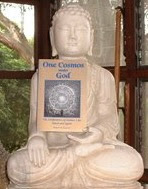
As I wrote in One Cosmos Under God, "science begins with the one world we experience with our senses (where else could it begin?), but quickly saws off that familiar limb by 'excluding everything that can be imagined or conceived, except in abstract mathematical terms,' consequently relegating everything outside mathematical description -- the very world it started with -- to 'an ontological limbo.'" Only this second, abstract world is considered to disclose valid information about the universe, whereas all of our initial impressions of color, sound, texture, beauty, and meaning supposedly reveal nothing real about the universe, only about our own nervous systems.
But one of the fundamental tenets of esoterism is that the universe not only has a within that is uniquely accessible to humans, but that the very cosmos is the "exteriorization" or crystallization of this same within. In other words, the universe is not simply an exterior made up of discrete parts that are external to one another. Rather, by looking at the parts in a certain way, we may intuit a wholeness in the world that in turn reveals its interior dimension. Parts show us only the exterior of the cosmos, while wholeness lures us toward the Great Within.
I recently wrote to a reader about the experience of mountain biking in the open space around our house. One day I brought along the camera so I could bring back some photos for Mrs. Gagdad, who doesn't bike. Just by virtue of having the camera, I found myself regarding reality in an entirely different, more consciously aesthetic way. It reminded me of the young videographer in the film American Beauty, who would simply record seemingly banal things, such as a paper bag blowing in the wind, which elevated them to a transcendent level just by looking at them in this aesthetic way.
It seems that we originally gain access to the Great Within through the human face. As infants, our whole world is oriented toward the mother's face. Obviously, in looking at a face, we don't first attend to a nose here, an eye there, a mouth there, and then inductively leap to the conclusion that faces exist. Rather, without even knowing it, we attend to the face as a whole, and can instantaneously distinguish one face from another and one expression from another.
In attending to the mother's face, the baby knows that the mother has a living interior, and through her changing expressions, begins to discover his own interior. Severely autistic children, for example, do not see whole "faces," but only a collection of parts, so that they are never fully ushered into the intersubjective Withinness of the cosmos. Instead, they can be left isolated in the bizarre and frightening existence of a living death -- immersed in a sea of things that move and have independent existence, but reveal no intrinsic meaning. Adhering to the strict scientific view -- which regards the "within" as mere subjective "noise" -- one would have to say that people with autism are more in touch with reality than anyone else, which is absurd.
Just as the face allows us to see the within of the person "behind" it, the wholeness of the cosmos invites us to see beyond its surface. (One of the central points of my book is that modern physics reveals the cosmos to be an internally related whole, not just a collection of exterior parts.) Paradoxically, we can know the interior only by focusing on the exterior. Just as the face is the meaning of its features, the meaning of existence can be discovered by dwelling in its features. Poets, for example, have always understood that by indwelling in nature we can intuit what dwells within nature -- we are floating atop a sea of clues that point beyond themselves to a hidden reality, which in turn throws out clues like sparks from a central fire. By attending to things and events in a certain "actively passive" way, we allow them to "speak" to us, and this in turn in-forms us about their nature.
The English poet Gerard Manley Hopkins coined the term "inscape" to refer to this more intense experience of observing things in such a way that their intrinsic qualities emerge. He believed that by allowing one's attention to be drawn to a bird in flight, a tree, or a landscape, we allow their character to act upon us through a union of the inner and outer worlds. Similarly, Goethe argued that we discover the true nature of things through a contemplative kind of looking he called "seeing with exactitude." By doing this, we can open ourselves to what the cosmos is telling us about itself (and by extension, ourselves).
This being so, we can also see that exploration of the Great Within will yield valid insights about the cosmos. As Schuon writes, certain gifted metaphysical or mystical poets such as Dante are able to express "spiritual realities with the help of the beauty of their souls." In this regard, "it is a matter of endowment far more than of method, for not every man has the gift of sincerely expressing truths that go beyond ordinary humanity." One secret denied the leftist is that the world is as beautiful as the soul's capacity to see it.
This has obvious theological implications. For example, what is scripture but an exterior narrative that tells us of the within of God? Just as it is a mistake to view nature as an object, one makes the same mistake in viewing scripture only as a historical narrative of external events. Rather, those events have a within which is their true teaching. As Meister Eckhart wrote, "If you would have the kernel, you must break the shell."
It can also be argued that the figure of Jesus answers the deepest human longing to "see the face of God," and thereby know his Within most intimately. Again, the whole point of the gospels, if you are a Christian, is that their external narrative reveals the interior God. You cannot dismantle or deconstruct the gospel stories, for this would be like disassembling a human face to try to understand its expression. We see by a sort of interior light when we dwell in faith, for faith is actually foreknowledge of as yet undiscovered truths -- knowledge of approaching discoveries on the interior plane of things.
As the poet Novalis put it, "The seat of the soul is where the inner world and the outer world meet." If you are feeling boxed in by the materialistic paradigm of modernity, know that you may escape it any time through any of the infinite inscapes that both surround and abide within us. For being mirrorcles of the Absolute, we may penetrate nature only because it penetrates us in a higher realm of transcendent union.
The sacred mountain, seat of the Gods, is not to be found in space even though it is visible and tangible....
For the man of the golden age to climb a mountain was in truth to approach the Principle; to watch a stream was to see universal Possibility at the same time as the flow of forms.
In our day to climb a mountain -- and there is no longer a mountain that is the "center of the world" -- is to "conquer" its summit; the ascent is no longer a spiritual act but a profanation. Man, in his aspect of human animal, makes himself God. The gates of Heaven, mysteriously present in nature, close before him. --F. Schuon, Spiritual Perspectives and Human Facts
Ever since the scientific revolution, we have tended to divide the world into a public sphere of objective, measurable reality and a private sphere of ephemeral, subjective perceptions. In this view, the external world is considered the fundamental reality, while consciousness is reduced to an epiphenomenon, so that all our perceptions of the world -- its vivid colors, sounds, and textures -- are rendered meaningless, revealing nothing intrinsic to the cosmos. All subjective qualities are reduced to quantities -- for example, our perception of the redness of an apple is reduced to a particular frequency of light, or music is reduced to vibrating air molecules striking against our ear drums.
As I wrote in One Cosmos Under God, "science begins with the one world we experience with our senses (where else could it begin?), but quickly saws off that familiar limb by 'excluding everything that can be imagined or conceived, except in abstract mathematical terms,' consequently relegating everything outside mathematical description -- the very world it started with -- to 'an ontological limbo.'" Only this second, abstract world is considered to disclose valid information about the universe, whereas all of our initial impressions of color, sound, texture, beauty, and meaning supposedly reveal nothing real about the universe, only about our own nervous systems.
But one of the fundamental tenets of esoterism is that the universe not only has a within that is uniquely accessible to humans, but that the very cosmos is the "exteriorization" or crystallization of this same within. In other words, the universe is not simply an exterior made up of discrete parts that are external to one another. Rather, by looking at the parts in a certain way, we may intuit a wholeness in the world that in turn reveals its interior dimension. Parts show us only the exterior of the cosmos, while wholeness lures us toward the Great Within.
I recently wrote to a reader about the experience of mountain biking in the open space around our house. One day I brought along the camera so I could bring back some photos for Mrs. Gagdad, who doesn't bike. Just by virtue of having the camera, I found myself regarding reality in an entirely different, more consciously aesthetic way. It reminded me of the young videographer in the film American Beauty, who would simply record seemingly banal things, such as a paper bag blowing in the wind, which elevated them to a transcendent level just by looking at them in this aesthetic way.
It seems that we originally gain access to the Great Within through the human face. As infants, our whole world is oriented toward the mother's face. Obviously, in looking at a face, we don't first attend to a nose here, an eye there, a mouth there, and then inductively leap to the conclusion that faces exist. Rather, without even knowing it, we attend to the face as a whole, and can instantaneously distinguish one face from another and one expression from another.
In attending to the mother's face, the baby knows that the mother has a living interior, and through her changing expressions, begins to discover his own interior. Severely autistic children, for example, do not see whole "faces," but only a collection of parts, so that they are never fully ushered into the intersubjective Withinness of the cosmos. Instead, they can be left isolated in the bizarre and frightening existence of a living death -- immersed in a sea of things that move and have independent existence, but reveal no intrinsic meaning. Adhering to the strict scientific view -- which regards the "within" as mere subjective "noise" -- one would have to say that people with autism are more in touch with reality than anyone else, which is absurd.
Just as the face allows us to see the within of the person "behind" it, the wholeness of the cosmos invites us to see beyond its surface. (One of the central points of my book is that modern physics reveals the cosmos to be an internally related whole, not just a collection of exterior parts.) Paradoxically, we can know the interior only by focusing on the exterior. Just as the face is the meaning of its features, the meaning of existence can be discovered by dwelling in its features. Poets, for example, have always understood that by indwelling in nature we can intuit what dwells within nature -- we are floating atop a sea of clues that point beyond themselves to a hidden reality, which in turn throws out clues like sparks from a central fire. By attending to things and events in a certain "actively passive" way, we allow them to "speak" to us, and this in turn in-forms us about their nature.
The English poet Gerard Manley Hopkins coined the term "inscape" to refer to this more intense experience of observing things in such a way that their intrinsic qualities emerge. He believed that by allowing one's attention to be drawn to a bird in flight, a tree, or a landscape, we allow their character to act upon us through a union of the inner and outer worlds. Similarly, Goethe argued that we discover the true nature of things through a contemplative kind of looking he called "seeing with exactitude." By doing this, we can open ourselves to what the cosmos is telling us about itself (and by extension, ourselves).
This being so, we can also see that exploration of the Great Within will yield valid insights about the cosmos. As Schuon writes, certain gifted metaphysical or mystical poets such as Dante are able to express "spiritual realities with the help of the beauty of their souls." In this regard, "it is a matter of endowment far more than of method, for not every man has the gift of sincerely expressing truths that go beyond ordinary humanity." One secret denied the leftist is that the world is as beautiful as the soul's capacity to see it.
This has obvious theological implications. For example, what is scripture but an exterior narrative that tells us of the within of God? Just as it is a mistake to view nature as an object, one makes the same mistake in viewing scripture only as a historical narrative of external events. Rather, those events have a within which is their true teaching. As Meister Eckhart wrote, "If you would have the kernel, you must break the shell."
It can also be argued that the figure of Jesus answers the deepest human longing to "see the face of God," and thereby know his Within most intimately. Again, the whole point of the gospels, if you are a Christian, is that their external narrative reveals the interior God. You cannot dismantle or deconstruct the gospel stories, for this would be like disassembling a human face to try to understand its expression. We see by a sort of interior light when we dwell in faith, for faith is actually foreknowledge of as yet undiscovered truths -- knowledge of approaching discoveries on the interior plane of things.
As the poet Novalis put it, "The seat of the soul is where the inner world and the outer world meet." If you are feeling boxed in by the materialistic paradigm of modernity, know that you may escape it any time through any of the infinite inscapes that both surround and abide within us. For being mirrorcles of the Absolute, we may penetrate nature only because it penetrates us in a higher realm of transcendent union.
The sacred mountain, seat of the Gods, is not to be found in space even though it is visible and tangible....
For the man of the golden age to climb a mountain was in truth to approach the Principle; to watch a stream was to see universal Possibility at the same time as the flow of forms.
In our day to climb a mountain -- and there is no longer a mountain that is the "center of the world" -- is to "conquer" its summit; the ascent is no longer a spiritual act but a profanation. Man, in his aspect of human animal, makes himself God. The gates of Heaven, mysteriously present in nature, close before him. --F. Schuon, Spiritual Perspectives and Human Facts
Subscribe to:
Comments (Atom)
Theme Song