Beauty is a crystallization of a certain aspect of universal joy; it is a limitlessness expressed by a limit. --F. Schuon
Ever since the scientific revolution, we have tended to divide the world into a public sphere of objective, measurable reality and a private sphere of ephemeral, subjective perceptions. In this view, the external world is considered the fundamental reality, while consciousness is reduced to an epiphenomenon, so that all our perceptions of the world -- its vivid colors, sounds, and textures -- are rendered meaningless, revealing nothing intrinsic to the cosmos. All subjective qualities are reduced to quantities -- for example, our perception of the redness of an apple is reduced to a particular frequency of light, or music is reduced to vibrating air molecules striking against our ear drums.
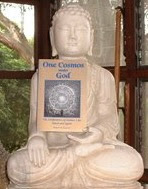
As I wrote in One Cosmos Under God, "science begins with the one world we experience with our senses (where else could it begin?), but quickly saws off that familiar limb by 'excluding everything that can be imagined or conceived, except in abstract mathematical terms,' consequently relegating everything outside mathematical description -- the very world it started with -- to 'an ontological limbo.'" Only this second, abstract world is considered to disclose valid information about the universe, whereas all of our initial impressions of color, sound, texture, beauty, and meaning supposedly reveal nothing real about the universe, only about our own nervous systems.
But one of the fundamental tenets of esoterism is that the universe not only has a within that is uniquely accessible to humans, but that the very cosmos is the "exteriorization" or crystallization of this same within. In other words, the universe is not simply an exterior made up of discrete parts that are external to one another. Rather, by looking at the parts in a certain way, we may intuit a wholeness in the world that in turn reveals its interior dimension. Parts show us only the exterior of the cosmos, while wholeness lures us toward the Great Within.
I recently wrote to a reader about the experience of mountain biking in the open space around our house. One day I brought along the camera so I could bring back some photos for Mrs. Gagdad, who doesn't bike. Just by virtue of having the camera, I found myself regarding reality in an entirely different, more consciously aesthetic way. It reminded me of the young videographer in the film American Beauty, who would simply record seemingly banal things, such as a paper bag blowing in the wind, which elevated them to a transcendent level just by looking at them in this aesthetic way.
It seems that we originally gain access to the Great Within through the human face. As infants, our whole world is oriented toward the mother's face. Obviously, in looking at a face, we don't first attend to a nose here, an eye there, a mouth there, and then inductively leap to the conclusion that faces exist. Rather, without even knowing it, we attend to the face as a whole, and can instantaneously distinguish one face from another and one expression from another.
In attending to the mother's face, the baby knows that the mother has a living interior, and through her changing expressions, begins to discover his own interior. Severely autistic children, for example, do not see whole "faces," but only a collection of parts, so that they are never fully ushered into the intersubjective Withinness of the cosmos. Instead, they can be left isolated in the bizarre and frightening existence of a living death -- immersed in a sea of things that move and have independent existence, but reveal no intrinsic meaning. Adhering to the strict scientific view -- which regards the "within" as mere subjective "noise" -- one would have to say that people with autism are more in touch with reality than anyone else, which is absurd.
Just as the face allows us to see the within of the person "behind" it, the wholeness of the cosmos invites us to see beyond its surface. (One of the central points of my book is that modern physics reveals the cosmos to be an internally related whole, not just a collection of exterior parts.) Paradoxically, we can know the interior only by focusing on the exterior. Just as the face is the meaning of its features, the meaning of existence can be discovered by dwelling in its features. Poets, for example, have always understood that by indwelling in nature we can intuit what dwells within nature -- we are floating atop a sea of clues that point beyond themselves to a hidden reality, which in turn throws out clues like sparks from a central fire. By attending to things and events in a certain "actively passive" way, we allow them to "speak" to us, and this in turn in-forms us about their nature.
The English poet Gerard Manley Hopkins coined the term "inscape" to refer to this more intense experience of observing things in such a way that their intrinsic qualities emerge. He believed that by allowing one's attention to be drawn to a bird in flight, a tree, or a landscape, we allow their character to act upon us through a union of the inner and outer worlds. Similarly, Goethe argued that we discover the true nature of things through a contemplative kind of looking he called "seeing with exactitude." By doing this, we can open ourselves to what the cosmos is telling us about itself (and by extension, ourselves).
This being so, we can also see that exploration of the Great Within will yield valid insights about the cosmos. As Schuon writes, certain gifted metaphysical or mystical poets such as Dante are able to express "spiritual realities with the help of the beauty of their souls." In this regard, "it is a matter of endowment far more than of method, for not every man has the gift of sincerely expressing truths that go beyond ordinary humanity." One secret denied the leftist is that the world is as beautiful as the soul's capacity to see it.
This has obvious theological implications. For example, what is scripture but an exterior narrative that tells us of the within of God? Just as it is a mistake to view nature as an object, one makes the same mistake in viewing scripture only as a historical narrative of external events. Rather, those events have a within which is their true teaching. As Meister Eckhart wrote, "If you would have the kernel, you must break the shell."
It can also be argued that the figure of Jesus answers the deepest human longing to "see the face of God," and thereby know his Within most intimately. Again, the whole point of the gospels, if you are a Christian, is that their external narrative reveals the interior God. You cannot dismantle or deconstruct the gospel stories, for this would be like disassembling a human face to try to understand its expression. We see by a sort of interior light when we dwell in faith, for faith is actually foreknowledge of as yet undiscovered truths -- knowledge of approaching discoveries on the interior plane of things.
As the poet Novalis put it, "The seat of the soul is where the inner world and the outer world meet." If you are feeling boxed in by the materialistic paradigm of modernity, know that you may escape it any time through any of the infinite inscapes that both surround and abide within us. For being mirrorcles of the Absolute, we may penetrate nature only because it penetrates us in a higher realm of transcendent union.
The sacred mountain, seat of the Gods, is not to be found in space even though it is visible and tangible....
For the man of the golden age to climb a mountain was in truth to approach the Principle; to watch a stream was to see universal Possibility at the same time as the flow of forms.
In our day to climb a mountain -- and there is no longer a mountain that is the "center of the world" -- is to "conquer" its summit; the ascent is no longer a spiritual act but a profanation. Man, in his aspect of human animal, makes himself God. The gates of Heaven, mysteriously present in nature, close before him. --F. Schuon, Spiritual Perspectives and Human Facts
Saturday, March 01, 2008


Friday, February 29, 2008
Obama and the Lure of the False Vertical: Worshiping a Groovin' Image
Regardless of whether or not you believe human beings are in need of salvation, they inevitably seek it in one form or another. Some of these forms are both "authorized" and therefore operative (i.e., vehicles of grace, the only real means of salvation), while others are sham versions that -- at risk of conjuring a disturbing image -- may send a tingle up Chris Matthews' pasty and dimpled thigh, but leave you back down on the launch pad in some rancid dimension of hell -- which you soon realize when you look to your left and are assaulted by the beastly image of Keith Olbermann.
Now, among the ten commandments there is one in particular that leftists always poke fun at, and that is the injunction against worshiping graven images. Why would the Author of Creation care about that? And what relevance could it possibly have for contemporary people?
The purpose of this commandment is to check the human tendency to worship the relative, the ubiquitous tendency to "bow down and serve" manmade gods, whether secular or religious. Idolatry occurs whenever one holds a value higher than God, or let us say the Absolute, or One.
Thus it is actually possible to turn one’s religion -- or irreligion -- into a false god, and to value it above all else. Certainly in the Muslim Middle East, it would appear that the worship of God has been completely eclipsed by the worship of Islam. But it is also soph-evident that the secular left displaces the need for religion and salvation to the plane of politics -- i.e., they horizontalize the vertical, and imagine that, with enough coercion, manipulation, and thought control, they can recreate paradise on earth.
The archetype of "messiah" does not belong to the horizontal plane -- or the realm of manifestation -- but to the vertical world, i.e., the principial order. Schuon uses the analogy of the colorless essence of white light, which breaks into manifestation in terms of a particular color. Naturally, the archetypal ideas of the celestial realm must be clothed in human thought; to put it another way, we must use forms to inwardly "recollect" what is actually beyond the local form. Schuon expresses the idea of what might be called the "cosmic Christ" as follows:
"The Redemption is an eternal act which cannot be situated either in time or space, and the sacrifice of Christ is a particular manifestation or realization of it on the human plane; men were able to benefit from the Redemption as well before the coming of Jesus Christ as after it, and outside the visible Church as well as within it.
"If Christ had been the only manifestation of the Word, supposing such uniqueness of manifestation be possible, the effect of His birth would have been the instantaneous reduction of the universe to ashes."
The point is, the plane of manifestation could not possibly "contain" the archeytpe of the Messiah in its fulness. It would rip reality to shreds.
Elsewhere Schuon wrote that "Christ is the Heart of the macrocosm, as the Intellect is the Christ of the microcosm." As such, "He is then the Intellect in us as well as the Intellect in the Universe and a fortiori in God; in this sense, it can be said that there is no truth nor wisdom that does not come from Christ, and this is evidently independent of all consideration of time and place. Just as ‘the Light shineth in the darkness; and the darkness comprehended it not,' so too the Intellect shines in the darkness of passions and illusions."
Now, where does the latest messiah, Obama, fit into this scheme? Clearly -- often in a shockingly naive and undisguised manner -- Obama draws upon (or, to be precise, his enthusiasts draw upon) the universal hunger for messianic redemption, for a cosmic-historical figure who will shatter the existing corrupt order and make us "whole" again, which is to say, at one with God.
Now the fact that even secularized flatlanders sense the need for a messianic redemption speaks to unconscious awareness of our fallen situation. But naturally, the leftist understands the Fall in an unorthodox -- to say the least -- way. In fact, it would be an interesting exercise to "reverse engineer" their outward passion for the Obamessiah, to try to discern their unconscious understanding of what he is here to accomplish, or "undo." In short, exactly what is Obama's divine mission?
I think Julie is on the right track with a comment from yesterday. Obama
"embodies (at least outwardly) everything that leftists wish they were themselves: he's black, but also white; he's American, but also a 'citizen of the world'; he pushes for everything the leftiest of lefties desires, but somehow he also has social skills and charisma, so he makes it all look cool and appealing (as opposed to a Cindy Sheehan, or Code Pinkos, or Hillary, or any of the nutjobs who tend to flock to protests). He doesn't screech, whine or nag (he leaves that to the wife, I guess); instead, he cajoles and (anti)inspires. He absolves them of the sin of being white. He's like a great big mirror, showing them exactly what they want to see; they see their dream selves in him. Which would be all well and good, if what they fervently desired were not the most deadly, self-destructive governmental policies man has ever conceived -- socialism, multi-culturalism, pacifism, etc."
Therefore, our first guess is that Obama is indeed a messiah, only a messiah of the lower vertical, the projection of faux wholeness -- i.e., the healing of spiritual brokenness -- only in a circular, narcissistic, and ultimately "infertile" way. It is the creation and projection of a just and healing god to compensate for the absence of God. In essence, he is a groovin' image for the spiritually grooveless secular masses.
Reminds me this line by Samuel Johnson, quoted today in Peggy Noonan's tribute to Buckley: "How small of all that human hearts endure / That part which laws or kings can cause or cure."
 Obama's finest speeches.... elevate. They enmesh you in a grander moment, as if history has stopped flowing passively by, and, just for an instant, contracted around you, made you aware of its presence, and your role in it. He is not the Word made flesh, but the triumph of word over flesh, over color, over despair. --Ezra Klein
Now, among the ten commandments there is one in particular that leftists always poke fun at, and that is the injunction against worshiping graven images. Why would the Author of Creation care about that? And what relevance could it possibly have for contemporary people?
The purpose of this commandment is to check the human tendency to worship the relative, the ubiquitous tendency to "bow down and serve" manmade gods, whether secular or religious. Idolatry occurs whenever one holds a value higher than God, or let us say the Absolute, or One.
Thus it is actually possible to turn one’s religion -- or irreligion -- into a false god, and to value it above all else. Certainly in the Muslim Middle East, it would appear that the worship of God has been completely eclipsed by the worship of Islam. But it is also soph-evident that the secular left displaces the need for religion and salvation to the plane of politics -- i.e., they horizontalize the vertical, and imagine that, with enough coercion, manipulation, and thought control, they can recreate paradise on earth.
The archetype of "messiah" does not belong to the horizontal plane -- or the realm of manifestation -- but to the vertical world, i.e., the principial order. Schuon uses the analogy of the colorless essence of white light, which breaks into manifestation in terms of a particular color. Naturally, the archetypal ideas of the celestial realm must be clothed in human thought; to put it another way, we must use forms to inwardly "recollect" what is actually beyond the local form. Schuon expresses the idea of what might be called the "cosmic Christ" as follows:
"The Redemption is an eternal act which cannot be situated either in time or space, and the sacrifice of Christ is a particular manifestation or realization of it on the human plane; men were able to benefit from the Redemption as well before the coming of Jesus Christ as after it, and outside the visible Church as well as within it.
"If Christ had been the only manifestation of the Word, supposing such uniqueness of manifestation be possible, the effect of His birth would have been the instantaneous reduction of the universe to ashes."
The point is, the plane of manifestation could not possibly "contain" the archeytpe of the Messiah in its fulness. It would rip reality to shreds.
Elsewhere Schuon wrote that "Christ is the Heart of the macrocosm, as the Intellect is the Christ of the microcosm." As such, "He is then the Intellect in us as well as the Intellect in the Universe and a fortiori in God; in this sense, it can be said that there is no truth nor wisdom that does not come from Christ, and this is evidently independent of all consideration of time and place. Just as ‘the Light shineth in the darkness; and the darkness comprehended it not,' so too the Intellect shines in the darkness of passions and illusions."
Now, where does the latest messiah, Obama, fit into this scheme? Clearly -- often in a shockingly naive and undisguised manner -- Obama draws upon (or, to be precise, his enthusiasts draw upon) the universal hunger for messianic redemption, for a cosmic-historical figure who will shatter the existing corrupt order and make us "whole" again, which is to say, at one with God.
Now the fact that even secularized flatlanders sense the need for a messianic redemption speaks to unconscious awareness of our fallen situation. But naturally, the leftist understands the Fall in an unorthodox -- to say the least -- way. In fact, it would be an interesting exercise to "reverse engineer" their outward passion for the Obamessiah, to try to discern their unconscious understanding of what he is here to accomplish, or "undo." In short, exactly what is Obama's divine mission?
I think Julie is on the right track with a comment from yesterday. Obama
"embodies (at least outwardly) everything that leftists wish they were themselves: he's black, but also white; he's American, but also a 'citizen of the world'; he pushes for everything the leftiest of lefties desires, but somehow he also has social skills and charisma, so he makes it all look cool and appealing (as opposed to a Cindy Sheehan, or Code Pinkos, or Hillary, or any of the nutjobs who tend to flock to protests). He doesn't screech, whine or nag (he leaves that to the wife, I guess); instead, he cajoles and (anti)inspires. He absolves them of the sin of being white. He's like a great big mirror, showing them exactly what they want to see; they see their dream selves in him. Which would be all well and good, if what they fervently desired were not the most deadly, self-destructive governmental policies man has ever conceived -- socialism, multi-culturalism, pacifism, etc."
Therefore, our first guess is that Obama is indeed a messiah, only a messiah of the lower vertical, the projection of faux wholeness -- i.e., the healing of spiritual brokenness -- only in a circular, narcissistic, and ultimately "infertile" way. It is the creation and projection of a just and healing god to compensate for the absence of God. In essence, he is a groovin' image for the spiritually grooveless secular masses.
Reminds me this line by Samuel Johnson, quoted today in Peggy Noonan's tribute to Buckley: "How small of all that human hearts endure / That part which laws or kings can cause or cure."
 Obama's finest speeches.... elevate. They enmesh you in a grander moment, as if history has stopped flowing passively by, and, just for an instant, contracted around you, made you aware of its presence, and your role in it. He is not the Word made flesh, but the triumph of word over flesh, over color, over despair. --Ezra Klein
Thursday, February 28, 2008
William F. Buckley: Tribute to a Spiritual Centrist and Vertical Warrior
Speaking of heroes...
Partly because of all the counterfeit heroes, it can be difficult to notice when a genuine hero walks among us. Words like "artist," "superstar," and "legend," are so abused and debased, that they no longer convey any objective meaning. The liberal media tell us that Bill Buckley was a "hero to conservatives" instead of to "mankind." When Noam Chomsky publishes his last and perishes into some post-tenure principality to meet his Marxist maker, he will undoubtedly be lauded as a "hero of the left."
But what exactly is a hero, and how does one gauge his moral worth? As Schuon writes, "virtues sundered from truth do not have the power to raise us above ourselves," and a hero specifically helps to lift or preserve mankind in its most noble sense. Put it this way: intelligence descends from the Truth which it will rediscover, or "recollect," on its virtuous ascent back to the One; or, if you like, to the First Principles of cosmos and man. This ascent -- although it is necessarily marked by many transient descents and other deviations -- is the Hero's Journey, if the the hero and the journey are to have any intrinsic merit.
Hero: "A mythological or legendary figure often of divine descent endowed with great strength or ability; an illustrious warrior; a man admired for his achievements and qualities; one that shows great courage; the central figure in an event or period" (Webster's).
An intellectual warrior endowed with superhuman strength and ability? Just consider the scoreboard:
"During his nearly 60 years in the public eye, William F. Buckley Jr. published 55 books (both fiction and nonfiction); dozens of book reviews; at least 56 introductions, prefaces, and forewords to other peoples’ books; more than 225 obituary essays; more than 800 editorials, articles, and remarks in National Review; several hundred articles in periodicals other than National Review; and approximately 5,600 newspaper columns. He gave hundreds of lectures around the world, hosted 1,429 separate Firing Line shows, and may well have composed more letters than any American who has ever lived."
But none of it would be worth the paper it was written on had it not been essentially true, for truth can be the only criterion of its intrinsic value. After all, a single line of the scripture is worth all of the books, lectures, diatribes, paranoid rants, angry polemics, and conspiracy theories of a Noam Chomsky, Gore Vidal, or other modern idolaters who offer their literary blood to the phantoms of their own imagination.
A man of great courage, the central figure in an event or period:
"William F. Buckley Jr. was arguably the most important public intellectual in the United States in the past half century. For an entire generation he was the preeminent voice of American conservatism and its first great ecumenical figure. He changed minds, he changed lives, and he helped to change the direction of American politics."
Divine descent? Oh, no question -- by adoption, anyway. The following exchange took place at the end of his 1970 Playboy interview:
PLAYBOY: Don’t most dogmas, theological as well as ideological, crumble sooner or later?
BUCKLEY: Most, but not all.
PLAYBOY: How can you be so sure?
BUCKLEY: I know that my Redeemer liveth.
Buckley's heroism would have been inconceivable outside his intimate familiarity with the Permanent, the True, and the Permanently True. In the founding statement of National Review, he famously wrote that the movement it championed would stand "athwart history, yelling Stop, at a time when no one is inclined to do so, or to have much patience with those who so urge it."
This statement is still misunderstood by our liberal elites who conflate progress and history. In fact, progress is unthinkable in the absence of permanent standards that necessarily transcend, but are embodied within, history. Intellectuals (in the debased sense of those who engage in "intellectualism" as opposed to intellection) gradually came to regard these permanent standards as a source of oppression instead of the key to liberation. But Truth cannot oppress, except for those who are so spiritually enfeebled that they collapse under its obligations.
53 years later, the left continues to reject our founding principles "in favor of radical social experimentation. Instead of covetously consolidating its premises, the United States seems tormented by its tradition of fixed postulates having to do with the meaning of existence, with the relationship of the state to the individual, of the individual to his neighbor, so clearly enunciated in the enabling documents of our Republic" (Buckley, emphasis mine). True in 1955, true in 2008, and true, period.
For this is a very old story, foreshadowed in the enabling and ennobling document of western civilization: And the serpent said "you shall not surely die, for God knows that in the day you eat of it your eyes will be opened, and you will be like God, knowing good and evil. It's pretty simple: you can either have God or be God, and the left chooses the latter. And just as promised, death comes one way or the other (e.g., the "culture of death"). In God and Man at Yale, Buckley wrote of the left's abiding faith that
"All the society’s ills -- the economic, the social, the ethical -- can be ameliorated by Bigger and Bigger Government. No consideration of private property or individual economic freedom is to deter the government from spending 'up to the point where the marginal loss of satisfaction to those providing the revenue is just equal to the marginal gain in satisfaction derived by those benefiting from the expenditures'; and no doubts are expressed as to whether even the wisest governments know where this point is. The government, it seems, is to weigh numerical losses and gains in satisfaction; and just so long as there is a net gain (an intangible which the government is to interpret), any government policy is justified. Individual rights of the sort that for generations were never supposed to be prey to government action, are cheerily disregarded as unjustifiable impedimenta in the way of purposive and enlightened state policies."
But don't worry: for the all- wise and loving government, not a sparrow falls to the ground apart from its will, and the very hairs on your head are all numbered! I thought this was just hyperbole until I was audited by the IRS several years ago. Now my advice for those who die / Declare the pennies on your eyes (George Harrison).
At PowerLine the other day, they tossed out a casual aside of great profundity:
"Obama's appeal lies, in part, in his ability to make liberalism seem palatable. Unlike Hillary Clinton and John Edwards, he is generally not shrill or hectoring. He comes across as calm and reasonable. In this, he really does resemble Ronald Reagan."
However, "There are obvious differences between Reagan and Obama." For example, "Reagan was a life-long student of Communism, while Obama is not yet a life-long student of anything. Most important, Reagan was devoted to conservatism, which is essentially true, while Obama is devoted to liberalism, which is essentially false. This means that Obama's policies, no matter how smoothly he may advocate them, will never be as successful as Reagan's."
Exactly. It will always be true that conservatism is essentially true, just as it will always be true that liberalism is essentially false, for the former is rooted in permanent truths about human nature, and if your vision of human nature is faulty, so too will be everything built upon it.
America's memory is short, especially the vertical memory of its founding principles, which tend only to be recalled in crises: "Ronald Reagan came to power at a time when America had been carrying out, for sixteen years, an experiment with liberalism that by 1980 had brought the country to the brink of catastrophe. Americans did not adopt conservative principles because they sounded good on first hearing. They adopted conservative principles because of bitter experience with the alternative" (PowerLine).
It is amazing to think that there was a greater distance in time between the founding of National Review and Reagan's first presidency (25 years) than there has been between then and now (28 years). So today, the benefit of our knowledge of the catastrophic results of liberal governance has not just been "lost" -- which is far too passive a characterization. Rather, it has been crushed, spindled, mutilated, and disappeared. As a result, "A generation of American voters has not experienced the failures of the Great Society, the near-collapse of American cities, double-digit inflation and unemployment, seventy percent tax brackets, or the disaster of Jimmy Carter's foreign policy. In the absence of historical memory, and with a powerful assist from the ever-forgetful press, liberalism is once again emerging as the philosophy that sounds good. The fact that it doesn't work awaits as an unpleasant surprise for a new generation" (PowerLine)
Veracity, charity, and humility, the three fundamental virtues. For the left, truth reduces to power, so veracity is out of the question. Likewise, the true charity (caritas) that can only flow from the awakened human heart is rendered pointless when All Good Things come from the state. And what could be more grandiose than the belief that mankind is perfectible and that the state knows how to achieve it? "Humility" and "left" are mutually exclusive. The proud leftist always confuses empathy with indulgence, rooted in an inability to clearly see both what man is and what he is meant to be.
Buckley was not a man of the right, but a man of the center, which is to say, the vertical in all its infinite ramifications -- a man on intimate terms with the immutable order of cosmic principles, and therefore able to use his intellect to explicate them in an inexhaustible way.
Jacques Maritain famously said that there were never more than three schools of philosophy: The idealists who believe that getting the truth was easy. These are the conventional liberals, whom Bill gently mocked. The nominalists, the Sophists, who deny truth altogether; these are the hard Left, the true enemy he rallied us against. And finally the realists, who accept that the truth is out there but is fiercely difficult to lock down. Bill's most enduring achievement was to identify and shape conservatism as the political expression of philosophical realism in our time. --Richard Vigilante, The Corner
Partly because of all the counterfeit heroes, it can be difficult to notice when a genuine hero walks among us. Words like "artist," "superstar," and "legend," are so abused and debased, that they no longer convey any objective meaning. The liberal media tell us that Bill Buckley was a "hero to conservatives" instead of to "mankind." When Noam Chomsky publishes his last and perishes into some post-tenure principality to meet his Marxist maker, he will undoubtedly be lauded as a "hero of the left."
But what exactly is a hero, and how does one gauge his moral worth? As Schuon writes, "virtues sundered from truth do not have the power to raise us above ourselves," and a hero specifically helps to lift or preserve mankind in its most noble sense. Put it this way: intelligence descends from the Truth which it will rediscover, or "recollect," on its virtuous ascent back to the One; or, if you like, to the First Principles of cosmos and man. This ascent -- although it is necessarily marked by many transient descents and other deviations -- is the Hero's Journey, if the the hero and the journey are to have any intrinsic merit.
Hero: "A mythological or legendary figure often of divine descent endowed with great strength or ability; an illustrious warrior; a man admired for his achievements and qualities; one that shows great courage; the central figure in an event or period" (Webster's).
An intellectual warrior endowed with superhuman strength and ability? Just consider the scoreboard:
"During his nearly 60 years in the public eye, William F. Buckley Jr. published 55 books (both fiction and nonfiction); dozens of book reviews; at least 56 introductions, prefaces, and forewords to other peoples’ books; more than 225 obituary essays; more than 800 editorials, articles, and remarks in National Review; several hundred articles in periodicals other than National Review; and approximately 5,600 newspaper columns. He gave hundreds of lectures around the world, hosted 1,429 separate Firing Line shows, and may well have composed more letters than any American who has ever lived."
But none of it would be worth the paper it was written on had it not been essentially true, for truth can be the only criterion of its intrinsic value. After all, a single line of the scripture is worth all of the books, lectures, diatribes, paranoid rants, angry polemics, and conspiracy theories of a Noam Chomsky, Gore Vidal, or other modern idolaters who offer their literary blood to the phantoms of their own imagination.
A man of great courage, the central figure in an event or period:
"William F. Buckley Jr. was arguably the most important public intellectual in the United States in the past half century. For an entire generation he was the preeminent voice of American conservatism and its first great ecumenical figure. He changed minds, he changed lives, and he helped to change the direction of American politics."
Divine descent? Oh, no question -- by adoption, anyway. The following exchange took place at the end of his 1970 Playboy interview:
PLAYBOY: Don’t most dogmas, theological as well as ideological, crumble sooner or later?
BUCKLEY: Most, but not all.
PLAYBOY: How can you be so sure?
BUCKLEY: I know that my Redeemer liveth.
Buckley's heroism would have been inconceivable outside his intimate familiarity with the Permanent, the True, and the Permanently True. In the founding statement of National Review, he famously wrote that the movement it championed would stand "athwart history, yelling Stop, at a time when no one is inclined to do so, or to have much patience with those who so urge it."
This statement is still misunderstood by our liberal elites who conflate progress and history. In fact, progress is unthinkable in the absence of permanent standards that necessarily transcend, but are embodied within, history. Intellectuals (in the debased sense of those who engage in "intellectualism" as opposed to intellection) gradually came to regard these permanent standards as a source of oppression instead of the key to liberation. But Truth cannot oppress, except for those who are so spiritually enfeebled that they collapse under its obligations.
53 years later, the left continues to reject our founding principles "in favor of radical social experimentation. Instead of covetously consolidating its premises, the United States seems tormented by its tradition of fixed postulates having to do with the meaning of existence, with the relationship of the state to the individual, of the individual to his neighbor, so clearly enunciated in the enabling documents of our Republic" (Buckley, emphasis mine). True in 1955, true in 2008, and true, period.
For this is a very old story, foreshadowed in the enabling and ennobling document of western civilization: And the serpent said "you shall not surely die, for God knows that in the day you eat of it your eyes will be opened, and you will be like God, knowing good and evil. It's pretty simple: you can either have God or be God, and the left chooses the latter. And just as promised, death comes one way or the other (e.g., the "culture of death"). In God and Man at Yale, Buckley wrote of the left's abiding faith that
"All the society’s ills -- the economic, the social, the ethical -- can be ameliorated by Bigger and Bigger Government. No consideration of private property or individual economic freedom is to deter the government from spending 'up to the point where the marginal loss of satisfaction to those providing the revenue is just equal to the marginal gain in satisfaction derived by those benefiting from the expenditures'; and no doubts are expressed as to whether even the wisest governments know where this point is. The government, it seems, is to weigh numerical losses and gains in satisfaction; and just so long as there is a net gain (an intangible which the government is to interpret), any government policy is justified. Individual rights of the sort that for generations were never supposed to be prey to government action, are cheerily disregarded as unjustifiable impedimenta in the way of purposive and enlightened state policies."
But don't worry: for the all- wise and loving government, not a sparrow falls to the ground apart from its will, and the very hairs on your head are all numbered! I thought this was just hyperbole until I was audited by the IRS several years ago. Now my advice for those who die / Declare the pennies on your eyes (George Harrison).
At PowerLine the other day, they tossed out a casual aside of great profundity:
"Obama's appeal lies, in part, in his ability to make liberalism seem palatable. Unlike Hillary Clinton and John Edwards, he is generally not shrill or hectoring. He comes across as calm and reasonable. In this, he really does resemble Ronald Reagan."
However, "There are obvious differences between Reagan and Obama." For example, "Reagan was a life-long student of Communism, while Obama is not yet a life-long student of anything. Most important, Reagan was devoted to conservatism, which is essentially true, while Obama is devoted to liberalism, which is essentially false. This means that Obama's policies, no matter how smoothly he may advocate them, will never be as successful as Reagan's."
Exactly. It will always be true that conservatism is essentially true, just as it will always be true that liberalism is essentially false, for the former is rooted in permanent truths about human nature, and if your vision of human nature is faulty, so too will be everything built upon it.
America's memory is short, especially the vertical memory of its founding principles, which tend only to be recalled in crises: "Ronald Reagan came to power at a time when America had been carrying out, for sixteen years, an experiment with liberalism that by 1980 had brought the country to the brink of catastrophe. Americans did not adopt conservative principles because they sounded good on first hearing. They adopted conservative principles because of bitter experience with the alternative" (PowerLine).
It is amazing to think that there was a greater distance in time between the founding of National Review and Reagan's first presidency (25 years) than there has been between then and now (28 years). So today, the benefit of our knowledge of the catastrophic results of liberal governance has not just been "lost" -- which is far too passive a characterization. Rather, it has been crushed, spindled, mutilated, and disappeared. As a result, "A generation of American voters has not experienced the failures of the Great Society, the near-collapse of American cities, double-digit inflation and unemployment, seventy percent tax brackets, or the disaster of Jimmy Carter's foreign policy. In the absence of historical memory, and with a powerful assist from the ever-forgetful press, liberalism is once again emerging as the philosophy that sounds good. The fact that it doesn't work awaits as an unpleasant surprise for a new generation" (PowerLine)
Veracity, charity, and humility, the three fundamental virtues. For the left, truth reduces to power, so veracity is out of the question. Likewise, the true charity (caritas) that can only flow from the awakened human heart is rendered pointless when All Good Things come from the state. And what could be more grandiose than the belief that mankind is perfectible and that the state knows how to achieve it? "Humility" and "left" are mutually exclusive. The proud leftist always confuses empathy with indulgence, rooted in an inability to clearly see both what man is and what he is meant to be.
Buckley was not a man of the right, but a man of the center, which is to say, the vertical in all its infinite ramifications -- a man on intimate terms with the immutable order of cosmic principles, and therefore able to use his intellect to explicate them in an inexhaustible way.
Jacques Maritain famously said that there were never more than three schools of philosophy: The idealists who believe that getting the truth was easy. These are the conventional liberals, whom Bill gently mocked. The nominalists, the Sophists, who deny truth altogether; these are the hard Left, the true enemy he rallied us against. And finally the realists, who accept that the truth is out there but is fiercely difficult to lock down. Bill's most enduring achievement was to identify and shape conservatism as the political expression of philosophical realism in our time. --Richard Vigilante, The Corner
Wednesday, February 27, 2008
Three Thousand Years of Unmediated Heroes, from Moses to Sandy Koufax
I dug out, edited, and generally re-thought this post from two and a-half years ago, as it dovetails nicely with yesterday's discussion of heroes, statesmen, and athletes, oh my.
*****
When I was just a gaglad growing up in the mean and mythic streets of Calabasas -- the Last of the Old West -- in suburban Los Angeles, one of my heroes was Sandy Koufax. Even today he retains a sort of rarified, mythological stature in my imagination, much more so than any contemporary athlete ever could. Why is that?
Probably because when I was a kid, only nine Dodger games were televised all year, the nine road games played up in Candlestick Park against the loathsome Berkeley-Castro Street Giants. If I was lucky, I saw Koufax pitch a couple of times a year. This was in 1966, mind you, not 1926, but I still had to rely on the “words eye view” provided by radio broadcasts in order to conceive my image of his truly super-human exploits. And then he unexpectedly retired when I was only ten years old, keeping him frozen in that mythological state forever more. There would be no new images to superimpose on the hypnogogic visions I cOOnjured as a child while laying in bed and falling asleep with the radio under my pillow.
In his book Mediated: How the Media Shapes Your World and the Way You Live in It, author Thomas de Zengotita argues that we no longer have heroes because of the way mass media has affected our consciousness. That is, in order to be a real hero, you must essentially be unreal. For if you think about various heroes of old, it’s because we know so little about them (or have so few images) that their deeds may be imagined and therefore mythologized. As de Zengotita puts it, “real heroes of the past were represented with a frugality that is almost impossible to credit today.” But that doesn't result in knowing less about them -- or about reality -- but knowing more, in the vertical sense.
*****
By the way, while there is the sort of unreflective moonbattery in the book that one expects to see among the over-educated, it's not the flagrant kind, so I was somewhat surprised to discover that de Zengotita is a doctrinaire moonbat who contributes regularly to Huffingtonpost. The uncensored thoughts he displays there are so trite, shallow, and adolescent, and the writing so plain bad, that it makes me wonder how heavy a hand his editor had in writing the book. In any event, it is ironic that he is a victim of the sort of clichéd mass-media liberal groupthink that he analyzes in the book. It's almost as if he's brain-damaged, or channeling Garrison Keillor or Maureen Dowd.
A recent example of his thinking, what one call (-m), or an inverted version of the proper role of the mythic imagination:
"As an old-fashioned leftie I should be skeptical of a mere symbol, shouldn't I? Well, it depends. Obama is a very special symbol. He transcends the culture wars and identity politics simply in virtue of who he is.
[Andrew] Sullivan... emphasizes the impact of an Obama presidency on a world that now fears and despises us. Just the fact of it. Just the face. Just the name. At a stroke, America secures a new beginning -- in its own eyes as well. Nothing else could do it so decisively. So what if he's inexperienced? He's smart. He's a quick study. He'll listen to Dick Holbrooke and Joe Biden and he'll make those sensible, centrist decisions. He's no radical, he's shown that, Lord knows -- he'll be as deliberate and pragmatic in office as he's been in the campaign.
"It's not the policy, stupid, it's the symbolism. Obama actually embodies what he represents. That means he doesn't just represent change. He is change" [emphases mine].
With professors like this, is it any wonder that college students graduate with less wisdom than they had when they entered college?
*****
A heroic myth, like a dream or fairy tale, is particularly “unsaturated,” leaving considerable space for imaginative engagement with its narrative elements. If Koufax were playing today, the reality of his myth would be effaced by saturated media coverage of his every move, including those extra tight close-ups that intrusively force you to see every follicle in the player's nose, every vein in his eyeballs. de Zengotita cites the example of the New York fire fighters who attained heroic status through our imagining their very real selfless deeds, which, for the most part, no one actually saw. However this bubble burst for de Zengotita when he saw the official NYFD “Calendar of Heroes,” featuring photos of the firefighters stripped to the waist, seductively posing and “vogueing” for the camera. The mythic imagination was foreclosed and replaced by the mediated image. (I guess he hasn't seen the picture of a shirtless Obama frolicking on the beach.)
The central irony, according to de Zengotita, is that “we don’t have heroes because they are too real, representations of them are too rich and detailed. There is no space for our imaginations to occupy, no room for us to supply them with mythic life.” The mass media give us only a flattened realism devoid of reverence, depth, or dignity. Instead of heroes we have stars or celebrities, generally disreputable people such as Britney Spears, Madonna, or Paris Hilton, whose exploits we look at in the same way the ancient Greeks might have thought about their gods, who were actually not at all godlike. Rather, they were just like humans only worse -- more jealous, more envious, more lustful, more vengeful.
Likewise, in our day there has been a collapse of the vertical plane, so that the “higher” has been replaced by the lower writ large. In an age that absolutizes the relative and exalts the lower as "authenticity," it is much more difficult to have real heroes, for a real hero, whatever else he is, is never a relativist. Like George Bush, or Ronald Reagan, or Winston Churchill, they are in the service of an unwavering ideal. But today, unwavering commitment to a higher ideal is not called heroism but fanaticism or fascism, as in the case of President Bush. This inversion of principial truth is demanded by the logic of postmodern cynicism.
*****
Speaking of which, yesterday Dr. Sanity posted an excerpt of a recent interview with Henry Kissinger:
SPIEGEL: Isn’t German and European opposition to a greater military involvement in Afghanistan and Iraq also a result of deep distrust of American power?
Kissinger: By this time next year, we will see the beginning of a new administration. We will then discover to what extent the Bush administration was the cause or the alibi for European-American disagreements. Right now, many Europeans hide behind the unpopularity of President Bush. And this administration made several mistakes in the beginning.
[…]
Kissinger: … But I do believe that George W. Bush has correctly understood the global challenge we are facing, the threat of radical Islam, and that he has fought that battle with great fortitude. He will be appreciated for that later.
SPIEGEL: In 50 years, historians will treat his legacy more kindly?
Kissinger: That will happen much earlier.
So you see, once the hyper-saturated media images of Bush's presidency are out of the way, we will be able to "see" his legacy much more clearly. At the moment, there is too much information that obscures our knowledge, too much knowledge that forecloses wisdom, and too many pictures that disable the imagination.
*****
In fact, most people can't even recognize a hero unless they somehow become a star -- think of Jessica Lynch -- but as soon as that happens, “they cannot compete with the real stars -- who are performers.” So President Bush can’t compete with Martin Sheen, any more than our troops in Iraq can compete with Hollywood images of warfare. It remains to be seen if McCain -- a hero in real life -- will be able to compete with wholly imagined (in the lower sense) heroism of Obama, who, for the willfully hypnotized and seduced, "doesn't just represent change. He is change."
This brings up a crucial point about the role of imagination in understanding reality. In a recent discussion of the “intelligent design” debate with an atheistic reader, he essentially dismissed any non-empirical reality as being analogous to belief in "pink fairies" (which hardly comes as a surprise, as this is precisely what atheists are condemned to believe as a result of their transcendental infirmity, or pneumapathology). Richard Weaver, in his classic Ideas Have Consequences, argued that it is a characteristic of the barbarian, in all times and places, to believe that it is possible to grasp reality -- the "raw stuff of life" -- “barehanded,” without any mediation by the higher imagination. This not only leads to an absence of understanding, but to the destruction of man as such. As a result, we are left with the “ravages of immediacy,” for without imagination, reality is simply a brute fact with nothing to spiritualize it. The world shrinks down to our simplest way -- animal way, really -- of knowing it, and with it, our souls constrict correspondingly.
In this regard, postmodern cynicism is provincialism of the worst sort, as it imagines that it is getting closer to the reality of things, when it is actually getting more and more distant -- like pulverizing a work of art into smaller and smaller parts to try to get at its meaning.
So the question is, what is more “real,” those beautiful heroic images I internalized of Abraham Lincoln when I was in grade school, or postmodern biographies that argue that he was a closet homosexual that didn’t care a fig about black people? The American founders as secular prophets leading the new children of Israel out of a decrepit Europe, or a bunch of selfish elitists (not to mention slaveholders!) looking after their own economic interests? The luminous Jesus presented in the gospels, so full of empty spaces to fill with the divine imagination, or the work of the Jesus seminarians who argue that he was a radical leftist fighting for social justice for the poor, just like Che Guevara? Sandy Koufax heroically refusing to pitch in the World Series on Yom Kippur, or the eccentric, media-shy recluse?
People generally don't realize that it is possible to substitute facts for truth, to replace the higher reality perceived by the intellect and imagination with the lower reality perceived by the senses. When that happens, we literally become “disoriented,” away from the center and toward the periphery of existence. Today we live in an age in which we are being invaded by vertical barbarians who would ruthlessly strip aside the veils of the imagination to try to get at what’s real, only to find that there is nothing there. Certainly nothing worth living or fighting for. No wonder they're so suspicious and even contemptuous of those who fight, since they know, deep down, that they are far superior to the deluded warriors who risk their lives to enrich Halliburton.
*****
When I was just a gaglad growing up in the mean and mythic streets of Calabasas -- the Last of the Old West -- in suburban Los Angeles, one of my heroes was Sandy Koufax. Even today he retains a sort of rarified, mythological stature in my imagination, much more so than any contemporary athlete ever could. Why is that?
Probably because when I was a kid, only nine Dodger games were televised all year, the nine road games played up in Candlestick Park against the loathsome Berkeley-Castro Street Giants. If I was lucky, I saw Koufax pitch a couple of times a year. This was in 1966, mind you, not 1926, but I still had to rely on the “words eye view” provided by radio broadcasts in order to conceive my image of his truly super-human exploits. And then he unexpectedly retired when I was only ten years old, keeping him frozen in that mythological state forever more. There would be no new images to superimpose on the hypnogogic visions I cOOnjured as a child while laying in bed and falling asleep with the radio under my pillow.
In his book Mediated: How the Media Shapes Your World and the Way You Live in It, author Thomas de Zengotita argues that we no longer have heroes because of the way mass media has affected our consciousness. That is, in order to be a real hero, you must essentially be unreal. For if you think about various heroes of old, it’s because we know so little about them (or have so few images) that their deeds may be imagined and therefore mythologized. As de Zengotita puts it, “real heroes of the past were represented with a frugality that is almost impossible to credit today.” But that doesn't result in knowing less about them -- or about reality -- but knowing more, in the vertical sense.
*****
By the way, while there is the sort of unreflective moonbattery in the book that one expects to see among the over-educated, it's not the flagrant kind, so I was somewhat surprised to discover that de Zengotita is a doctrinaire moonbat who contributes regularly to Huffingtonpost. The uncensored thoughts he displays there are so trite, shallow, and adolescent, and the writing so plain bad, that it makes me wonder how heavy a hand his editor had in writing the book. In any event, it is ironic that he is a victim of the sort of clichéd mass-media liberal groupthink that he analyzes in the book. It's almost as if he's brain-damaged, or channeling Garrison Keillor or Maureen Dowd.
A recent example of his thinking, what one call (-m), or an inverted version of the proper role of the mythic imagination:
"As an old-fashioned leftie I should be skeptical of a mere symbol, shouldn't I? Well, it depends. Obama is a very special symbol. He transcends the culture wars and identity politics simply in virtue of who he is.
[Andrew] Sullivan... emphasizes the impact of an Obama presidency on a world that now fears and despises us. Just the fact of it. Just the face. Just the name. At a stroke, America secures a new beginning -- in its own eyes as well. Nothing else could do it so decisively. So what if he's inexperienced? He's smart. He's a quick study. He'll listen to Dick Holbrooke and Joe Biden and he'll make those sensible, centrist decisions. He's no radical, he's shown that, Lord knows -- he'll be as deliberate and pragmatic in office as he's been in the campaign.
"It's not the policy, stupid, it's the symbolism. Obama actually embodies what he represents. That means he doesn't just represent change. He is change" [emphases mine].
With professors like this, is it any wonder that college students graduate with less wisdom than they had when they entered college?
*****
A heroic myth, like a dream or fairy tale, is particularly “unsaturated,” leaving considerable space for imaginative engagement with its narrative elements. If Koufax were playing today, the reality of his myth would be effaced by saturated media coverage of his every move, including those extra tight close-ups that intrusively force you to see every follicle in the player's nose, every vein in his eyeballs. de Zengotita cites the example of the New York fire fighters who attained heroic status through our imagining their very real selfless deeds, which, for the most part, no one actually saw. However this bubble burst for de Zengotita when he saw the official NYFD “Calendar of Heroes,” featuring photos of the firefighters stripped to the waist, seductively posing and “vogueing” for the camera. The mythic imagination was foreclosed and replaced by the mediated image. (I guess he hasn't seen the picture of a shirtless Obama frolicking on the beach.)
The central irony, according to de Zengotita, is that “we don’t have heroes because they are too real, representations of them are too rich and detailed. There is no space for our imaginations to occupy, no room for us to supply them with mythic life.” The mass media give us only a flattened realism devoid of reverence, depth, or dignity. Instead of heroes we have stars or celebrities, generally disreputable people such as Britney Spears, Madonna, or Paris Hilton, whose exploits we look at in the same way the ancient Greeks might have thought about their gods, who were actually not at all godlike. Rather, they were just like humans only worse -- more jealous, more envious, more lustful, more vengeful.
Likewise, in our day there has been a collapse of the vertical plane, so that the “higher” has been replaced by the lower writ large. In an age that absolutizes the relative and exalts the lower as "authenticity," it is much more difficult to have real heroes, for a real hero, whatever else he is, is never a relativist. Like George Bush, or Ronald Reagan, or Winston Churchill, they are in the service of an unwavering ideal. But today, unwavering commitment to a higher ideal is not called heroism but fanaticism or fascism, as in the case of President Bush. This inversion of principial truth is demanded by the logic of postmodern cynicism.
*****
Speaking of which, yesterday Dr. Sanity posted an excerpt of a recent interview with Henry Kissinger:
SPIEGEL: Isn’t German and European opposition to a greater military involvement in Afghanistan and Iraq also a result of deep distrust of American power?
Kissinger: By this time next year, we will see the beginning of a new administration. We will then discover to what extent the Bush administration was the cause or the alibi for European-American disagreements. Right now, many Europeans hide behind the unpopularity of President Bush. And this administration made several mistakes in the beginning.
[…]
Kissinger: … But I do believe that George W. Bush has correctly understood the global challenge we are facing, the threat of radical Islam, and that he has fought that battle with great fortitude. He will be appreciated for that later.
SPIEGEL: In 50 years, historians will treat his legacy more kindly?
Kissinger: That will happen much earlier.
So you see, once the hyper-saturated media images of Bush's presidency are out of the way, we will be able to "see" his legacy much more clearly. At the moment, there is too much information that obscures our knowledge, too much knowledge that forecloses wisdom, and too many pictures that disable the imagination.
*****
In fact, most people can't even recognize a hero unless they somehow become a star -- think of Jessica Lynch -- but as soon as that happens, “they cannot compete with the real stars -- who are performers.” So President Bush can’t compete with Martin Sheen, any more than our troops in Iraq can compete with Hollywood images of warfare. It remains to be seen if McCain -- a hero in real life -- will be able to compete with wholly imagined (in the lower sense) heroism of Obama, who, for the willfully hypnotized and seduced, "doesn't just represent change. He is change."
This brings up a crucial point about the role of imagination in understanding reality. In a recent discussion of the “intelligent design” debate with an atheistic reader, he essentially dismissed any non-empirical reality as being analogous to belief in "pink fairies" (which hardly comes as a surprise, as this is precisely what atheists are condemned to believe as a result of their transcendental infirmity, or pneumapathology). Richard Weaver, in his classic Ideas Have Consequences, argued that it is a characteristic of the barbarian, in all times and places, to believe that it is possible to grasp reality -- the "raw stuff of life" -- “barehanded,” without any mediation by the higher imagination. This not only leads to an absence of understanding, but to the destruction of man as such. As a result, we are left with the “ravages of immediacy,” for without imagination, reality is simply a brute fact with nothing to spiritualize it. The world shrinks down to our simplest way -- animal way, really -- of knowing it, and with it, our souls constrict correspondingly.
In this regard, postmodern cynicism is provincialism of the worst sort, as it imagines that it is getting closer to the reality of things, when it is actually getting more and more distant -- like pulverizing a work of art into smaller and smaller parts to try to get at its meaning.
So the question is, what is more “real,” those beautiful heroic images I internalized of Abraham Lincoln when I was in grade school, or postmodern biographies that argue that he was a closet homosexual that didn’t care a fig about black people? The American founders as secular prophets leading the new children of Israel out of a decrepit Europe, or a bunch of selfish elitists (not to mention slaveholders!) looking after their own economic interests? The luminous Jesus presented in the gospels, so full of empty spaces to fill with the divine imagination, or the work of the Jesus seminarians who argue that he was a radical leftist fighting for social justice for the poor, just like Che Guevara? Sandy Koufax heroically refusing to pitch in the World Series on Yom Kippur, or the eccentric, media-shy recluse?
People generally don't realize that it is possible to substitute facts for truth, to replace the higher reality perceived by the intellect and imagination with the lower reality perceived by the senses. When that happens, we literally become “disoriented,” away from the center and toward the periphery of existence. Today we live in an age in which we are being invaded by vertical barbarians who would ruthlessly strip aside the veils of the imagination to try to get at what’s real, only to find that there is nothing there. Certainly nothing worth living or fighting for. No wonder they're so suspicious and even contemptuous of those who fight, since they know, deep down, that they are far superior to the deluded warriors who risk their lives to enrich Halliburton.
Tuesday, February 26, 2008
In War, Surrender. In Defeat, Apology. In Peace, Dhimmitude. In Victory... What's That?
In a recent Hillsdale Imprimus, Paul Johnson published a useful little primer on "What Great Statesmen Have to Teach Us." He writes that the foremost lesson is "the ability to see the world clearly, and to draw the right conclusions from what is seen," and then breaks this down into several areas.
Ideas and Beliefs: "The best kind of democratic leader has just a few -- perhaps three or four -- central principles to which he is passionately attached and will not sacrifice under any circumstances." One immediately sees the problem with Obama and the Clintons, for what do they actually believe in aside from socialized medicine, global warming, and appeasing our enemies? Bill Clinton may have been the most unprincipled president in history, and it is impossible to say what his wife actually believes.
And as for Obama, he doesn't seem to have any discernible philosophy except for the usual ad hoc leftism. I say ad hoc because American style leftism operates in a kind of helter skelter way, from the periphery toward the center. It is always concealing first principles that it never articulates, unlike conservatism, whose principles can be stated quite plainly: limited government, local control, low taxes, free markets, strong military, sovereignty, and judges who don't invent laws.
I suppose the problem is, no viable leftist, even if he privately believes it (Dennis Kucinich notwithstanding), can come out and say that his political philosophy revolves around a large and intrusive federal government, burdensome taxes, a state controlled economy, a weak military, appeasement of our enemies, open borders, and elites in black robes dictating constitutional law.
Johnson writes that he is not impressed "by leaders who have definite views on everything. History teaches it is a mistake to have too many convictions, held with equal certitude and tenacity. They crowd each other out. A great leader is someone who can distinguish between the essential and the peripheral -- between what must be done and what is merely desirable." He cites the example of Margaret Thatcher, who, similar to Ronald Reagan, had only three core "musts": "uphold the rule of law at home and abroad; keep government activities to a minimum, and so taxes low; encourage individuals to do as much as they can, as well as they can."
Willpower: The decisive quality of willpower has to do with the ability to make one's principles a reality. Thus, "a politician can have immense intelligence and all the other virtues, but if will is lacking he is nothing." It is fair to say that most politicians have abundant willpower, but I suppose the question is whether this power derives from mere narcissism -- the will to power -- or from a higher source -- the will to serve. I can't even imagine the stamina, drive, and discipline it must take to campaign for president day after day, month after dreary month. Personally, I'd die of boredom, mustering all that fake emotion and making the same stupid speech to the same slack-jawed crowds. It would be like having to be an actor in a bad play for two years, except that the play lasts 16 hours a day.
This is what is so off-putting about the Clintons. Yes, their will to power is impressive, but what's behind it? What actually drives them? Likewise, what actually motivates Obama? He pretends that it has to do with "unity" and "ending divisiveness," but these are bizarre sentiments coming from one of the most far-left politicians in American life. To the extent that he actually believes his own speeches, it only goes to show how out of touch with reality he is.
Obviously, willpower cuts both ways. Hitler, Stalin, Mao, and Castro all seized and maintained power entirely through the force of their personal will. "Mao's overwhelming will, we now know, led to the deaths of 70 million fellow Chinese. The cost of a misdirected will is almost unimaginably high." Thus, "those three or four simple central beliefs behind the will" had better be "right and morally sound."
Once in power, Bill Clinton proved to have willpower, but it was again a kind of scattered and "flighty" will that was easily derailed and distracted, typical of the American left. As such, he required constant polling of the mood of the country in order to sense where to direct his will. His principles -- to the extent that he had any -- were insufficient to motivate his will. This is reminiscent of the narcissistic but charismatic actor who feeds off the applause of the crowd, which gives him a faux sense of being, but who shrivels to nothing when the curtain is drawn.
As such, Johnson says that mere willpower is insufficient. Rather, it "must be organically linked to resolution, a determination to so see the cause through at all costs." Washington during our eight year war for independence, Lincoln in the struggle to preserve the nation, Churchill during the dark days of World War II -- each displayed patience, doggedness, pertinacity, resolution and even obstinacy. President Bush has shown all of these traits with regard to Iraq, and it remains to be seen whether they will pay off. But to openly flaunt their opposites as if they are virtues, as do the Democrat candidates -- impatience, weakness, and irresolution -- will most certainly yield immediate results, in that they will reward the patience, doggedness, pertinacity, resolution and obstinacy of our enemies.
Next is the ability to communicate. "The value of possessing a few simple ideas which are true and workable is enormously enhanced if the leader can put them across with equal simplicity." Interestingly, unlike Lincoln, whose words conveyed remarkable power, Washington was said to have been a rather unskilled speaker. Nevertheless, his physical bearing was such that he was able to communicate more with his personality, demeanor, and physical presence. This reminds me of something Schuon wrote about souls of great spiritual attainment, who are able to embody and reflect the "unmoved mover" within.
If there is one thing that does impress me about Obama, it is this. At least superficially, he seems to be rather unflappable, and I think people respond to this. He is quite natural and at ease. If he's faking it, he's doing an awfully good job of it. In this regard, he is the polar opposite of a Richard Nixon, who never seemed comfortable in his own skin.
But again, the question is, what is at the center of that unmoved mover? I'm not in any way comparing them to Obama, but Stalin and Mao were also preternaturally unflappable as they sent millions to their death. It's almost as of there is a spiritual peace that flows from the divine center, but a counterfeit version that emanates from a center that is "dead," so to speak. You often see this in great athletes. You wonder how they can maintain their poise under incredibly stressful circumstances, until you hear them interviewed after the game and say to yourself, "ahh, that's how. Just be so stupid that you don't have any thoughts that get in the way."
The final virtue that Johnson discusses is magnanimity, or "greatness of soul." This one is difficult to define, but it is what "makes one warm to its possessor." For example, "we not only respect and like, we love Lincoln because he had it to an unusual degree. It was part of his inner being." I again can't help thinking that Obama radiates a counterfeit version of this virtue. Obviously, his supporters respond to him just as if he is a great soul.
But this would be difficult to maintain in light a quote by Churchill, that he felt embodied the great statesman: "In war, resolution. In defeat, defiance. In victory, magnanimity. In peace, good will." Because for Obama, it would read, "In war, surrender. In defeat, apology. In peace, dhimmitude. In victory... what's that?"
Ideas and Beliefs: "The best kind of democratic leader has just a few -- perhaps three or four -- central principles to which he is passionately attached and will not sacrifice under any circumstances." One immediately sees the problem with Obama and the Clintons, for what do they actually believe in aside from socialized medicine, global warming, and appeasing our enemies? Bill Clinton may have been the most unprincipled president in history, and it is impossible to say what his wife actually believes.
And as for Obama, he doesn't seem to have any discernible philosophy except for the usual ad hoc leftism. I say ad hoc because American style leftism operates in a kind of helter skelter way, from the periphery toward the center. It is always concealing first principles that it never articulates, unlike conservatism, whose principles can be stated quite plainly: limited government, local control, low taxes, free markets, strong military, sovereignty, and judges who don't invent laws.
I suppose the problem is, no viable leftist, even if he privately believes it (Dennis Kucinich notwithstanding), can come out and say that his political philosophy revolves around a large and intrusive federal government, burdensome taxes, a state controlled economy, a weak military, appeasement of our enemies, open borders, and elites in black robes dictating constitutional law.
Johnson writes that he is not impressed "by leaders who have definite views on everything. History teaches it is a mistake to have too many convictions, held with equal certitude and tenacity. They crowd each other out. A great leader is someone who can distinguish between the essential and the peripheral -- between what must be done and what is merely desirable." He cites the example of Margaret Thatcher, who, similar to Ronald Reagan, had only three core "musts": "uphold the rule of law at home and abroad; keep government activities to a minimum, and so taxes low; encourage individuals to do as much as they can, as well as they can."
Willpower: The decisive quality of willpower has to do with the ability to make one's principles a reality. Thus, "a politician can have immense intelligence and all the other virtues, but if will is lacking he is nothing." It is fair to say that most politicians have abundant willpower, but I suppose the question is whether this power derives from mere narcissism -- the will to power -- or from a higher source -- the will to serve. I can't even imagine the stamina, drive, and discipline it must take to campaign for president day after day, month after dreary month. Personally, I'd die of boredom, mustering all that fake emotion and making the same stupid speech to the same slack-jawed crowds. It would be like having to be an actor in a bad play for two years, except that the play lasts 16 hours a day.
This is what is so off-putting about the Clintons. Yes, their will to power is impressive, but what's behind it? What actually drives them? Likewise, what actually motivates Obama? He pretends that it has to do with "unity" and "ending divisiveness," but these are bizarre sentiments coming from one of the most far-left politicians in American life. To the extent that he actually believes his own speeches, it only goes to show how out of touch with reality he is.
Obviously, willpower cuts both ways. Hitler, Stalin, Mao, and Castro all seized and maintained power entirely through the force of their personal will. "Mao's overwhelming will, we now know, led to the deaths of 70 million fellow Chinese. The cost of a misdirected will is almost unimaginably high." Thus, "those three or four simple central beliefs behind the will" had better be "right and morally sound."
Once in power, Bill Clinton proved to have willpower, but it was again a kind of scattered and "flighty" will that was easily derailed and distracted, typical of the American left. As such, he required constant polling of the mood of the country in order to sense where to direct his will. His principles -- to the extent that he had any -- were insufficient to motivate his will. This is reminiscent of the narcissistic but charismatic actor who feeds off the applause of the crowd, which gives him a faux sense of being, but who shrivels to nothing when the curtain is drawn.
As such, Johnson says that mere willpower is insufficient. Rather, it "must be organically linked to resolution, a determination to so see the cause through at all costs." Washington during our eight year war for independence, Lincoln in the struggle to preserve the nation, Churchill during the dark days of World War II -- each displayed patience, doggedness, pertinacity, resolution and even obstinacy. President Bush has shown all of these traits with regard to Iraq, and it remains to be seen whether they will pay off. But to openly flaunt their opposites as if they are virtues, as do the Democrat candidates -- impatience, weakness, and irresolution -- will most certainly yield immediate results, in that they will reward the patience, doggedness, pertinacity, resolution and obstinacy of our enemies.
Next is the ability to communicate. "The value of possessing a few simple ideas which are true and workable is enormously enhanced if the leader can put them across with equal simplicity." Interestingly, unlike Lincoln, whose words conveyed remarkable power, Washington was said to have been a rather unskilled speaker. Nevertheless, his physical bearing was such that he was able to communicate more with his personality, demeanor, and physical presence. This reminds me of something Schuon wrote about souls of great spiritual attainment, who are able to embody and reflect the "unmoved mover" within.
If there is one thing that does impress me about Obama, it is this. At least superficially, he seems to be rather unflappable, and I think people respond to this. He is quite natural and at ease. If he's faking it, he's doing an awfully good job of it. In this regard, he is the polar opposite of a Richard Nixon, who never seemed comfortable in his own skin.
But again, the question is, what is at the center of that unmoved mover? I'm not in any way comparing them to Obama, but Stalin and Mao were also preternaturally unflappable as they sent millions to their death. It's almost as of there is a spiritual peace that flows from the divine center, but a counterfeit version that emanates from a center that is "dead," so to speak. You often see this in great athletes. You wonder how they can maintain their poise under incredibly stressful circumstances, until you hear them interviewed after the game and say to yourself, "ahh, that's how. Just be so stupid that you don't have any thoughts that get in the way."
The final virtue that Johnson discusses is magnanimity, or "greatness of soul." This one is difficult to define, but it is what "makes one warm to its possessor." For example, "we not only respect and like, we love Lincoln because he had it to an unusual degree. It was part of his inner being." I again can't help thinking that Obama radiates a counterfeit version of this virtue. Obviously, his supporters respond to him just as if he is a great soul.
But this would be difficult to maintain in light a quote by Churchill, that he felt embodied the great statesman: "In war, resolution. In defeat, defiance. In victory, magnanimity. In peace, good will." Because for Obama, it would read, "In war, surrender. In defeat, apology. In peace, dhimmitude. In victory... what's that?"
Monday, February 25, 2008
Doing Battle with Hope Fiends, Crockheads, and Moonbatshiners (3.21.09)
Obama's finest speeches do not excite. They do not inform. They don't even really inspire. They elevate. They enmesh you in a grander moment, as if history has stopped flowing passively by, and, just for an instant, contracted around you, made you aware of its presence, and your role in it. He is not the Word made flesh, but the triumph of word over flesh, over color, over despair. --Ezra Klein, blogging under the influence
A black man with a white mother became a savior to us. A black man with a white mother could turn out to be one who can lift America from her fall.... This young man is the hope of the entire world that America will change and be made better.... If you look at Barack Obama's audiences and look at the effect of his words, those people are being transformed. --Calypso Louis
Continuing with our analysis of the Devil Card, Unknown Friend (UF) writes that the excesses of the left are always "owing to an intoxication of the will and imagination which engenders demons." For example, if Marx and Engels had merely behaved as good Jews or Christians and "simply defended the interests of the industrial workers without having let themselves be carried away by their intoxicated imagination," then they wouldn't have been so very destructive. After all, every normal person wants to help the poor and needy, but helping them at the end of a gun, as the left always want us to do, renders any spiritual benefit inoperative for both parties.
Moreover, the left always couches their supposed empathy for the downtrodden in fantastically broad and sweeping generalizations of historical "and even cosmic significance, such as the statement that God does not exist, that all religion is is only the 'opium of the people,' [and] that all ideology is only a superstructure on the basis of material interests." It is no different today, with the intoxication that fuels and pervades the Obama campaign:
"What we hear from Obama is the eternal mantra of the socialists; America is broken, millions have no health care, families cannot afford necessities, the rich are evil, we are selfish, we are unhappy, unfulfilled, without hope, desperate, poverty stricken, morally desolate, corrupt and racist. This nihilism is the lifeblood of all the democrat candidates, even 'hope you can believe in' performers like Obama. When Michelle Obama claims she is only newly proud of her country, she does not exaggerate. In her world as in Obama's, they believe we are a mess, a land filled with the ignorant and unenlightened, filled with despair" (Fairchok).
Wherever politics tries to be redemptive, it is promising too much. Where it wishes to do the work of God, it becomes, not divine, but demonic. --Pope Benedict XVI
As UF writes, it is always a "matter of excess -- a going beyond the limits of competence and sober and honest knowledge," which the left never doubts, "having been carried away by the intoxicating impulse of radicalism, i.e. by a fever of the will and imagination to change everything utterly at a single stroke."
It used to be said of alcoholism that that you can't drown your sorrows because they learn how to swim. The odd thing about the left is that the purpose of their intoxication is not to drown their sorrows but to deny their blessings. Because if one looks at the plain facts in a sober and detached way, we cannot help seeing that, as Fairchok writes,
"Our economy bustles along, with inevitable ups and downs, but remains strong. Americans live better than ever before. As a nation, we live in the best of times, a place that the rest of humanity covets. We did this by the sweat of our brows and the energy of our people. We have more education, more luxury, more life options, more of everything good and far less of everything bad, less disease, less poverty and less struggle than ever before. We have prosperity, we have employment, we have technology. Hope is what America is all about; hope that has every expectation of success. Consider the millions that are desperate to get here. Even our poor have cars, appliances and entertainments. Our concern for them is not hunger but obesity. Never before in the history of mankind has this contradiction existed."
And it is the fever dream of sweeping existential change that animates the left no less than the Islamists. As Lee Harris has written, a fantasy ideology such as Islamism is obviously not a rational response to the world arrived at in a logical, sober manner. Rather, it is a transformative belief, meaning that its primary purpose is to psychologically transform the person who believes the fantasy. And believing the fantasy is an end in itself -- it has no purpose other than to make the fantasy seem like reality -- like it might actually happen. Therefore, the real reason for 9-11 wasn't actually to bring down western civilization. Rather, it was for the Islamists to deepen their fantasy by getting us to play along with it.
Likewise, anyone with a basic familiarity with economics knows that leftist ideas don't just fail, but backfire. They cause all sorts of unintended consequences that the leftist never connects to the original policy -- e.g., how the welfare state eroded the structure of the black family, how racial quotas inevitably harm blacks, how rent control causes housing shortages, or how subsidizing higher education simply drives up the cost. "Progressivism is the wish to eliminate effects without wishing to eliminate their causes..." (Schuon).
Now, UF explains that the virtue of temperence protects us from the intoxicating counter-inspiration of radical fantasies -- including religious fantasies, such as the Inquisition. Remember, there was a time not too long ago when there was no "secular sphere," so that these demonic trends necessarily expressed themselves within the heart of the Church. As such, it is foolish to blame religion for something that is wholly manmade.
UF makes the subtle point that one cannot engender a positive egregore, or collective mind parasite. This is related to the principle that the mind parasite is an effect of "congealed" or "coagulated" psychic energy. As a result, it always "enfolds," whereas the good radiates. The former is an inward, contracting movement, whereas the latter is an expansive, radiant movement. This may sound overly abstract, but we are all familiar with the closed world of the left, whether it is their elite university campuses or the parochial and hidebound pages of the New York Times. If you approach these things with your activated cOOnvision, you can literally experience them as a sort of dense, black hole of inverse radiation.
Now, why did people respond to, say, Ronald Reagan? For the opposite reason -- the intrinsically unlimited radiant positive energy of which he was a mere vehicle. This only became more apparent when placed side by side with Jimmy Carter's withered and constipated presence.
I suppose the novel thing about Obama is that he is selling the same constipation, but with a kind of cheap and meretricious radiation that one must be intoxicated to appreciate. Indeed, as Fairchok writes,
"That is his appeal; he is [ironically] an actor, a performer, a cinematic presence that stirs simple emotions, emotions that have little grounding in truth. His speeches are the inane lyrics to a popular song that endures only because it has a great beat. One must not think to deeply on what Obama says, for it turns to smoke and disappears in the light of day. Ezra Klein is correct, Obama's speeches do not inform, they pander, they propagandize, they harmonize with the mythology of despair and the chimera of entitlement. As his hagiographies proclaim, he represents a new Camelot, but one that does not hold America quite so precious, a Camelot of globalists, moral relativists and communitarians."
Now, how to drive out a demon? Easy. As UF explains, "Light drives out darkness. This simple truth is the practical key to the problem of how to combat demons. A demon perceived, i.e. on whom the light of consciousness is thrown, is already a demon rendered impotent.... A demon rendered impotent is a deflated balloon."
The lords of Falsehood hold, at present, almost complete sway over poor humanity. Not only the lower life-energy, the lower vital being, but also the whole mind of man accepts them. Countless are the ways in which they are worshipped, for they are more subtle in their cunning and seek their ends in variously seductive disguises. The result is that men cling to their falsehood as if it were a treasure, cherishing it more than even the most beautiful things of life. Apprehensive of its safety, they take care to bury it deep down in themselves; but unless they take it out and surrender it to the Divine they will never find true happiness.
Indeed the very act of bringing it out and showing it to the Light would be in itself a momentous conversion and pave the way to the final victory. For the laying bare of each falsehood is in itself a victory -- each acknowledgment of error is the demolition of one of the lords of Darkness. --The Mother, Conversations on Yoga
A black man with a white mother became a savior to us. A black man with a white mother could turn out to be one who can lift America from her fall.... This young man is the hope of the entire world that America will change and be made better.... If you look at Barack Obama's audiences and look at the effect of his words, those people are being transformed. --Calypso Louis
Continuing with our analysis of the Devil Card, Unknown Friend (UF) writes that the excesses of the left are always "owing to an intoxication of the will and imagination which engenders demons." For example, if Marx and Engels had merely behaved as good Jews or Christians and "simply defended the interests of the industrial workers without having let themselves be carried away by their intoxicated imagination," then they wouldn't have been so very destructive. After all, every normal person wants to help the poor and needy, but helping them at the end of a gun, as the left always want us to do, renders any spiritual benefit inoperative for both parties.
Moreover, the left always couches their supposed empathy for the downtrodden in fantastically broad and sweeping generalizations of historical "and even cosmic significance, such as the statement that God does not exist, that all religion is is only the 'opium of the people,' [and] that all ideology is only a superstructure on the basis of material interests." It is no different today, with the intoxication that fuels and pervades the Obama campaign:
"What we hear from Obama is the eternal mantra of the socialists; America is broken, millions have no health care, families cannot afford necessities, the rich are evil, we are selfish, we are unhappy, unfulfilled, without hope, desperate, poverty stricken, morally desolate, corrupt and racist. This nihilism is the lifeblood of all the democrat candidates, even 'hope you can believe in' performers like Obama. When Michelle Obama claims she is only newly proud of her country, she does not exaggerate. In her world as in Obama's, they believe we are a mess, a land filled with the ignorant and unenlightened, filled with despair" (Fairchok).
Wherever politics tries to be redemptive, it is promising too much. Where it wishes to do the work of God, it becomes, not divine, but demonic. --Pope Benedict XVI
As UF writes, it is always a "matter of excess -- a going beyond the limits of competence and sober and honest knowledge," which the left never doubts, "having been carried away by the intoxicating impulse of radicalism, i.e. by a fever of the will and imagination to change everything utterly at a single stroke."
It used to be said of alcoholism that that you can't drown your sorrows because they learn how to swim. The odd thing about the left is that the purpose of their intoxication is not to drown their sorrows but to deny their blessings. Because if one looks at the plain facts in a sober and detached way, we cannot help seeing that, as Fairchok writes,
"Our economy bustles along, with inevitable ups and downs, but remains strong. Americans live better than ever before. As a nation, we live in the best of times, a place that the rest of humanity covets. We did this by the sweat of our brows and the energy of our people. We have more education, more luxury, more life options, more of everything good and far less of everything bad, less disease, less poverty and less struggle than ever before. We have prosperity, we have employment, we have technology. Hope is what America is all about; hope that has every expectation of success. Consider the millions that are desperate to get here. Even our poor have cars, appliances and entertainments. Our concern for them is not hunger but obesity. Never before in the history of mankind has this contradiction existed."
And it is the fever dream of sweeping existential change that animates the left no less than the Islamists. As Lee Harris has written, a fantasy ideology such as Islamism is obviously not a rational response to the world arrived at in a logical, sober manner. Rather, it is a transformative belief, meaning that its primary purpose is to psychologically transform the person who believes the fantasy. And believing the fantasy is an end in itself -- it has no purpose other than to make the fantasy seem like reality -- like it might actually happen. Therefore, the real reason for 9-11 wasn't actually to bring down western civilization. Rather, it was for the Islamists to deepen their fantasy by getting us to play along with it.
Likewise, anyone with a basic familiarity with economics knows that leftist ideas don't just fail, but backfire. They cause all sorts of unintended consequences that the leftist never connects to the original policy -- e.g., how the welfare state eroded the structure of the black family, how racial quotas inevitably harm blacks, how rent control causes housing shortages, or how subsidizing higher education simply drives up the cost. "Progressivism is the wish to eliminate effects without wishing to eliminate their causes..." (Schuon).
Now, UF explains that the virtue of temperence protects us from the intoxicating counter-inspiration of radical fantasies -- including religious fantasies, such as the Inquisition. Remember, there was a time not too long ago when there was no "secular sphere," so that these demonic trends necessarily expressed themselves within the heart of the Church. As such, it is foolish to blame religion for something that is wholly manmade.
UF makes the subtle point that one cannot engender a positive egregore, or collective mind parasite. This is related to the principle that the mind parasite is an effect of "congealed" or "coagulated" psychic energy. As a result, it always "enfolds," whereas the good radiates. The former is an inward, contracting movement, whereas the latter is an expansive, radiant movement. This may sound overly abstract, but we are all familiar with the closed world of the left, whether it is their elite university campuses or the parochial and hidebound pages of the New York Times. If you approach these things with your activated cOOnvision, you can literally experience them as a sort of dense, black hole of inverse radiation.
Now, why did people respond to, say, Ronald Reagan? For the opposite reason -- the intrinsically unlimited radiant positive energy of which he was a mere vehicle. This only became more apparent when placed side by side with Jimmy Carter's withered and constipated presence.
I suppose the novel thing about Obama is that he is selling the same constipation, but with a kind of cheap and meretricious radiation that one must be intoxicated to appreciate. Indeed, as Fairchok writes,
"That is his appeal; he is [ironically] an actor, a performer, a cinematic presence that stirs simple emotions, emotions that have little grounding in truth. His speeches are the inane lyrics to a popular song that endures only because it has a great beat. One must not think to deeply on what Obama says, for it turns to smoke and disappears in the light of day. Ezra Klein is correct, Obama's speeches do not inform, they pander, they propagandize, they harmonize with the mythology of despair and the chimera of entitlement. As his hagiographies proclaim, he represents a new Camelot, but one that does not hold America quite so precious, a Camelot of globalists, moral relativists and communitarians."
Now, how to drive out a demon? Easy. As UF explains, "Light drives out darkness. This simple truth is the practical key to the problem of how to combat demons. A demon perceived, i.e. on whom the light of consciousness is thrown, is already a demon rendered impotent.... A demon rendered impotent is a deflated balloon."
The lords of Falsehood hold, at present, almost complete sway over poor humanity. Not only the lower life-energy, the lower vital being, but also the whole mind of man accepts them. Countless are the ways in which they are worshipped, for they are more subtle in their cunning and seek their ends in variously seductive disguises. The result is that men cling to their falsehood as if it were a treasure, cherishing it more than even the most beautiful things of life. Apprehensive of its safety, they take care to bury it deep down in themselves; but unless they take it out and surrender it to the Divine they will never find true happiness.
Indeed the very act of bringing it out and showing it to the Light would be in itself a momentous conversion and pave the way to the final victory. For the laying bare of each falsehood is in itself a victory -- each acknowledgment of error is the demolition of one of the lords of Darkness. --The Mother, Conversations on Yoga
Subscribe to:
Posts (Atom)
Theme Song