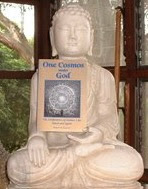
Some thoughts invoked by the excellent book I'm currently reading, Sanctifying the World: The Augustinian Life and Mind of Christopher Dawson, by Bradley Birzer. All of the quotes below are from the book.
Religion "is based on the recognition of a superhuman Reality of which man is somehow conscious and towards which he must in some way orientate his life." If man is the bridge between matter and spirit, then religion embodies the engineering principles, so to speak, of this bridge building. Far from being an "opiate for the masses," it is modern secular ideologies "which serve as nothing more than addictive drugs for decadent and lost peoples."
Revelation does not stop with the written word: "On the contrary, the whole history of Christendom is a continual dialogue between God and man, and every age of the Chruch's life, even the most remote and obscure, has some important lesson for us today." This would imply that the present is not "more important" than the past; but neither is it less so. I find that traditionalists have a sort of "inferiority complex" about the present, and conversely, tend to idealize the past.
But if each epoch of history is in some sense providential, then the question is, what is the purpose to the present time in which we are living? Perhaps it has to do with "sanctifying" the scientistic "reign of quantity" and bringing it back into harmony with timeless religious principles in a higher synthesis of spirit and matter. Which is to say, same as it ever was, for as Augustine wrote, to the extent that science and philosophy reveal truth about the world, "we are not only not to shrink from it, but to claim it for our own use from those who have unlawful possession of it."
In so doing, just as paganism was incorporated and sanctified by Christianity, perhaps our task is to sanctify these modern forms of neo-paganism. Certainly this is what I attempted to do in my book, which is hardly opposed to science, but rather attempts to place it in a context in which it "becomes" or "reveals" what it actually is in the larger scheme of things. Petey and I simply wish to bobtize science in the anamnoetic waters of eternity -- to cleanse it of its unnecessary cultural and temporal accretions.
Another way of saying it is that modernity has shattered the unity of the world into ever-smaller, disconnected and isolated fragments, in a process that is indistinguishable from decay. But this is not just a passive process; rather, the forces of secularism oppose any attempt to put the cosmic egg back together in a greater humptyarchy. Thus, on a very deep level, secularism tries to impose a religiously anti-religious lowerarchy on the rest of us, which is what liberal intolerance is all about -- diversity, moral relativism, multiculturalism, political correctness, etc.
In this specific sense, you cannot be "in love with the world" without hating God; for to love only the world is to reduce man to matter and therefore to a machine, and ultimately to a means rather than an end. But then secularism slips in its own teleology, converting man into a means of achieving wholly materialistic ends as defined by the "progressive" who substitutes material perfectibility for spiritual evolution. Thus, there really are "two Americas," the one that exists in reality -- i.e, the "shining city on a hill," and the one that exists in the fantasies of the left, or "Sugar Candy Mountain." Secular ideologies "promise much by taking much," which is to say, your soul.
Another important point is that the left must be intrinsically anti-family, since the family is the "first institution" and "precedes the state." As such, it is a competitor with the modern welfare state, something that has become obvious vis-a-vis Western Europe or the black family in America. Since man is a social animal, if his tightest bonds are not with the family, they will be with something less. Should the family collapse, "society itself must collapse or change in a fashion so drastic as to be no longer recognizable."
Indeed, this is what the whole debate about the re-definition of marriage is all about. It has nothing whatsoever to do with "homophobia," but with a prudent appreciation of the profundity of the issues involved -- i.e, not with homosexual "rights" but with heterosexual duties. It's like performing a needlessly radical experiment on a body that is already taxed and trying to maintain its health and equilibrium. Except the experiment is conducted by a handful of elite judges instead of doctors, so we can't even sue them for malpractice.
"There is a point at which the world of spirit comes in conscious contact with the world of matter. That point is man." Dawson felt that "most heresies have come from the inability to walk between the two extremes," so that "to privilege either the spiritual or material at the expense of the other is to verge into a modern form of Gnosticism." Man's "whole destiny depends on the proper co-ordination" of matter and spirit; since Man is a bridge, "the lower world is in some sense dependent on him for its spiritualization and its integration in the universal order." And man's true order does not come from the material and temporal world, but from the timeless and atemporal. To ignore this reality is essentially to commit cluelesscide as it pertains to one's genuine humanness.
"All true progress comes from the proper use of language." As God "spoke" the cosmos into existence, man "speaks" culture into existence. If the family is the fist thing undermined by the left, then language is the second. What is always most startling about leftist discourse is the inebriated and intoxicated abuse of language. Call it discoarse, I guess. They truly are at war with the Word, so we can say that Word War I has been going on since the beginning of human time. The left is a new whine in a very old battle.
"The 'mastery' of professional historical methods and 'techniques will not produce great history, any more than a mastery of metrical technique will produce great poetry.' The true historian, or the metahistorian, will recognize that 'something more is necessary -- intuitive understanding, creative imagination, and finally a universal vision transcending the relative limitation of the particular field of historical study.'" Thus, the genuine historian must also be a poet in the true sense of the word.
History has both upper and lower vertical aspects, or unconscious and supraconscious: "What we see in history is only a partial and uncertain manifestation of the spiritual activity which is taking place at once below and above the level of historical study." "We modern sophists... are the ones being unscholarly in discounting a higher power, a power unseen and unknown through our five physical senses, but recognized by all human cultures prior to the advent of modernity."
"Christian culture is always in conflict with the world," whereas leftist culture is always at odds with reality, i.e., the realities from which the world derives its meaning and significance. This reality is what Augustine called the City of God, whereas we are merely brother-and-sista' sojourners in the City of Man, "nothing but a stranger in this world," as Van Morrison sang:
To be born again
In another world
In another time
Got a home on high
Ain't nothing but a stranger in this world
I got a home on high
In another land
So far away
So far away
Way up in the heaven
Saturday, December 15, 2007


Friday, December 14, 2007
Existential Shrinkage and the Imagination of Reality (11.19.10)
The Eternal Body of Man is The Imagination.... Imagination, the real & eternal World of which this Vegetable Universe is but a faint shadow & in which we shall live in our Eternal or Imaginative Bodies when these Vegetable Mortal Bodies are no more. --William Blake
Dawson felt that imagination was the most important mode of the metaxy (discussed in yesterday's post), the divine-human "bridge" that is Man; and that creativity and imagination were "the greatest gifts God had bequeathed to the human person" (Birzer). Or, if you prefer the psychedelicized words of a raving ethnobotanist,
"The imagination argues for a divine spark in human beings. It is absolutely confounding if you try to see imagination as a necessary quantity in biology. It is an emanation from above -- literally a descent of the world soul" (Terence McKenna).
In order to know reality you must first imagine reality, something no animal can do. This kind of higher imagination is "the ability to see clearly beyond the here and now into the reality of eternal forms -- thus allowing one to order one's soul to the eternal community." In its absence, the human being loses his ability to order anything; reality flattens out, so that animals become indistinct from humans, men from women, gods from kings, kings from men, men from monsters, art from entertainment, superstars from benchwarmers. All the world essentially becomes analogous to pornography, which is sex drained of eros, or matter drained of soul.
In contrast, the task of the true Christian -- like the neo-Vedantin -- is to unite matter with soul in order to sanctify the world. You might say that there is a vertical His- and Heresy, the former involving an "upward flight" from the world into the Abbasolute, the latter being a "downward escape" into the considerable charms and snares of Mamamaya. But where we are supposed to live is within the innercourse of the two, or more precisely, the One, which can be envisioned but not seen; or only seen with higher vision, which is to say, imagination. With our intelligence we may discern this reality, but with our imagination we may unite ourselves with it. The former is mind, the latter is heart, and their union forms basis of the higher I-mage -- the mage that imagines. That would be us.
As usual, Schuon says it best: "The vice of outwardness is the lack of harmony between the two dimensions: between our tendency towards the things that surround us and our tendency towards the 'kingdom of God which is within you.' What is necessary is to realize a spiritual rootedness that removes from outwardness its tyranny at once dispersing and compressing, and that on the contrary allows us to 'see God everywhere'; which means to perceive symbols, archetypes and essences in sensible things.... Similarly regarding matter: what is necessary is not to deny it -- if that were possible -- but to withdraw from its seductive and enslaving grasp; to distinguish in it what is archetypal and quasi-celestial from what is accidental and indeed too earthly; hence to treat it with nobleness and sobriety. In other words, outwardness is a right, and inwardness a duty..."
A one-sided, unimaginative, dryasdust outwardness is an affliction that particularly affects the left. Even back in his day, Dawson could already see that most liberals were "simple-minded secularists and utilitarians who failed to understand truth, beauty and goodness" and "lacked the power of imagination. They were quantifiers and calculators, sophisticated men of the world, but not of the soul. They had been duped by worldly wisdom" (Birzer). This attitude results in the mechanization of man and makes him "less than God intended him to be." To put it another way, the inevitable outcome of secularism is that one is free, but not free to realize one's spiritual potentialities, and therefore only free in the manner of an uncaged animal; or an animal with impenetrable barriers he cannot see, thus giving the illusion of freedom.
Imagination mediates between the possible and the actual. It is what allows the infinite to become intelligible, i.e., to be represented in the finite realm. As Bolton writes, "each relative world contains only a cross-section of the universal possibilities," and each person is just such a relative world. This world can be quite large and expansive or small and cramped, depending upon the individual case. In other words, the "size" of the exterior world in which one lives and moves is merely a projection of the human interior.
For example, when we consider the inconceivable vastness of outer space, only a materialized mind living under the "reign of quantity" fails to realize that he is really contemplating the infinity of his own mind, for the physical cosmos is neither large nor small. It's just a coonvas on which we paint beautiful or ugly pictures with the materials available to us. Bolton writes that "it may seem strange to speak of the mind as though it were a thing having a physical size, but it undoubtedly has its own analogue of spatial capacity." Furthermore -- and this is a critical point as it pertains to scientism -- the ability "to grasp one part of reality brilliantly while being oblivious of the other things that human minds are capable of can be more opposed to the truth than the perceiving of all things equally dimly."
And this is why, as I have mentioned before, even the literal creationist is surely closer to the reality of the situation than the unimaginative atheist who has drained reality of its most essential ideas and archetypes. His mind "contracts" the cosmos in order to make it adequate to the cold and shrunken proportions of his own being. This "existential shrinkage" would be a great embarrassment to atheists if only they realized how silly they look to us, but like children and savages, they live in a kind of naive cognitive innocence without a fig leaf of metaphysics.
Regarding the "intelligent error" of shrunken secularists, Schuon writes that "It is only too evident that mental effort does not automatically give rise to the perception of the real; the most capable mind may be the vehicle of the grossest error. The paradoxical phenomenon of even a 'brilliant' intelligence being the vehicle of error is explained first of all by the possibility of a mental operation that is exclusively 'horizontal,' hence lacking all awareness of 'vertical' relationships." In turn, this exclusively horizontal mentality "creates a void that the irrational necessarily comes to fill." And of course, there are not just scientific materialists but religious ones, those "whose intellectual intuition remains latent, this being precisely what constitutes the 'obscure merit of faith.'"
Reason can never arrive at reality. At best, it can remove obstacles in the way of our imaginative vision. As Schuon explains, reasoning is analogous to "the groping of a blind man, with the difference that -- by removing obstacles -- it may bring about a clearing of vision; it is blind and groping due to its indirect and discursive nature." That is, "it is a means of knowledge, but this means is mediate and fragmentary like the sense of touch, which enables a blind man to find his way and even to feel the heat of the sun, but not to see." To put it another way, it allows us to uncover the transcendent vision "which one possesses a priori," i.e., vertical recollection.
What does it mean to say that the cosmos is "expanding?" Again, if one is only referring to physical reality, the point couldn't be more banal. In the absence of an objective frame of reference outside the system, for all we know, the cosmos could equally be contracting toward a metacosmos encircling it. In a very real way, the only thing that is actually expanding in the world is man's inwardness, is it not? And if you're not expanding, then you are contracting, for the mind cannot cease its dynamism, its "metabolism" of reality. You are what you eat, and if you eat the quantified and atomistic sawdust of secularism, you will inevitably be spiritually malnourished, just a shell of your future self.
Slowly, through grace, each Christian is sanctified, the debris of the world being gradually removed from the order of his soul, and then the human as the metaxy serves as the bridge between the spiritual and material worlds. --Bradley Birzer
Dawson felt that imagination was the most important mode of the metaxy (discussed in yesterday's post), the divine-human "bridge" that is Man; and that creativity and imagination were "the greatest gifts God had bequeathed to the human person" (Birzer). Or, if you prefer the psychedelicized words of a raving ethnobotanist,
"The imagination argues for a divine spark in human beings. It is absolutely confounding if you try to see imagination as a necessary quantity in biology. It is an emanation from above -- literally a descent of the world soul" (Terence McKenna).
In order to know reality you must first imagine reality, something no animal can do. This kind of higher imagination is "the ability to see clearly beyond the here and now into the reality of eternal forms -- thus allowing one to order one's soul to the eternal community." In its absence, the human being loses his ability to order anything; reality flattens out, so that animals become indistinct from humans, men from women, gods from kings, kings from men, men from monsters, art from entertainment, superstars from benchwarmers. All the world essentially becomes analogous to pornography, which is sex drained of eros, or matter drained of soul.
In contrast, the task of the true Christian -- like the neo-Vedantin -- is to unite matter with soul in order to sanctify the world. You might say that there is a vertical His- and Heresy, the former involving an "upward flight" from the world into the Abbasolute, the latter being a "downward escape" into the considerable charms and snares of Mamamaya. But where we are supposed to live is within the innercourse of the two, or more precisely, the One, which can be envisioned but not seen; or only seen with higher vision, which is to say, imagination. With our intelligence we may discern this reality, but with our imagination we may unite ourselves with it. The former is mind, the latter is heart, and their union forms basis of the higher I-mage -- the mage that imagines. That would be us.
As usual, Schuon says it best: "The vice of outwardness is the lack of harmony between the two dimensions: between our tendency towards the things that surround us and our tendency towards the 'kingdom of God which is within you.' What is necessary is to realize a spiritual rootedness that removes from outwardness its tyranny at once dispersing and compressing, and that on the contrary allows us to 'see God everywhere'; which means to perceive symbols, archetypes and essences in sensible things.... Similarly regarding matter: what is necessary is not to deny it -- if that were possible -- but to withdraw from its seductive and enslaving grasp; to distinguish in it what is archetypal and quasi-celestial from what is accidental and indeed too earthly; hence to treat it with nobleness and sobriety. In other words, outwardness is a right, and inwardness a duty..."
A one-sided, unimaginative, dryasdust outwardness is an affliction that particularly affects the left. Even back in his day, Dawson could already see that most liberals were "simple-minded secularists and utilitarians who failed to understand truth, beauty and goodness" and "lacked the power of imagination. They were quantifiers and calculators, sophisticated men of the world, but not of the soul. They had been duped by worldly wisdom" (Birzer). This attitude results in the mechanization of man and makes him "less than God intended him to be." To put it another way, the inevitable outcome of secularism is that one is free, but not free to realize one's spiritual potentialities, and therefore only free in the manner of an uncaged animal; or an animal with impenetrable barriers he cannot see, thus giving the illusion of freedom.
Imagination mediates between the possible and the actual. It is what allows the infinite to become intelligible, i.e., to be represented in the finite realm. As Bolton writes, "each relative world contains only a cross-section of the universal possibilities," and each person is just such a relative world. This world can be quite large and expansive or small and cramped, depending upon the individual case. In other words, the "size" of the exterior world in which one lives and moves is merely a projection of the human interior.
For example, when we consider the inconceivable vastness of outer space, only a materialized mind living under the "reign of quantity" fails to realize that he is really contemplating the infinity of his own mind, for the physical cosmos is neither large nor small. It's just a coonvas on which we paint beautiful or ugly pictures with the materials available to us. Bolton writes that "it may seem strange to speak of the mind as though it were a thing having a physical size, but it undoubtedly has its own analogue of spatial capacity." Furthermore -- and this is a critical point as it pertains to scientism -- the ability "to grasp one part of reality brilliantly while being oblivious of the other things that human minds are capable of can be more opposed to the truth than the perceiving of all things equally dimly."
And this is why, as I have mentioned before, even the literal creationist is surely closer to the reality of the situation than the unimaginative atheist who has drained reality of its most essential ideas and archetypes. His mind "contracts" the cosmos in order to make it adequate to the cold and shrunken proportions of his own being. This "existential shrinkage" would be a great embarrassment to atheists if only they realized how silly they look to us, but like children and savages, they live in a kind of naive cognitive innocence without a fig leaf of metaphysics.
Regarding the "intelligent error" of shrunken secularists, Schuon writes that "It is only too evident that mental effort does not automatically give rise to the perception of the real; the most capable mind may be the vehicle of the grossest error. The paradoxical phenomenon of even a 'brilliant' intelligence being the vehicle of error is explained first of all by the possibility of a mental operation that is exclusively 'horizontal,' hence lacking all awareness of 'vertical' relationships." In turn, this exclusively horizontal mentality "creates a void that the irrational necessarily comes to fill." And of course, there are not just scientific materialists but religious ones, those "whose intellectual intuition remains latent, this being precisely what constitutes the 'obscure merit of faith.'"
Reason can never arrive at reality. At best, it can remove obstacles in the way of our imaginative vision. As Schuon explains, reasoning is analogous to "the groping of a blind man, with the difference that -- by removing obstacles -- it may bring about a clearing of vision; it is blind and groping due to its indirect and discursive nature." That is, "it is a means of knowledge, but this means is mediate and fragmentary like the sense of touch, which enables a blind man to find his way and even to feel the heat of the sun, but not to see." To put it another way, it allows us to uncover the transcendent vision "which one possesses a priori," i.e., vertical recollection.
What does it mean to say that the cosmos is "expanding?" Again, if one is only referring to physical reality, the point couldn't be more banal. In the absence of an objective frame of reference outside the system, for all we know, the cosmos could equally be contracting toward a metacosmos encircling it. In a very real way, the only thing that is actually expanding in the world is man's inwardness, is it not? And if you're not expanding, then you are contracting, for the mind cannot cease its dynamism, its "metabolism" of reality. You are what you eat, and if you eat the quantified and atomistic sawdust of secularism, you will inevitably be spiritually malnourished, just a shell of your future self.
Slowly, through grace, each Christian is sanctified, the debris of the world being gradually removed from the order of his soul, and then the human as the metaxy serves as the bridge between the spiritual and material worlds. --Bradley Birzer
Thursday, December 13, 2007
The Cause and Cure of History (11.17.10)
As Colonel Beaglehole has commented from deep inside his religious opium den for the elite, it's amazing that any history can get done at all when you're not even allowed to begin the barmy enterprise with the correct bloody premise. I mean, if you don't know what Man is or what he is for, then what difference does it make what climbs and crimes he accompliced in the past? He might have done this, or he might have done that, but since he has no essence and no cosmic role, then it really doesn't matter, does it? Now where's my blasted hookah?!
But Christopher Dawson begins with the idea that man is the metaxy, or "bridge," between the material and spiritual worlds. Didn't I sow psalmthing psimilar in the Book of Petey? Yes, here it is -- page 133, right next to the picture of that cute little baby caterpultering into a buddhafly:
"I have a very specific view of history in mind, and it's quite different from that of the typical historian who wrongs history while writing it. First of all, historians -- contemporary ones, anyway -- no longer presume to know the 'purpose' of history. Without question they tell us about causes and motivations within history, but they steer quite clear of asking what is the actual point of history. And understanding the point of history is admittedly quite difficult -- if not impossible -- if you don't know what a human being is."
Indeed, "the problem is only compounded if you are only a human being working with merely human sources, for how then can you stand outside the flow of historical events and gain any perspective on history, or have any stable frame of reference? If the historian is just a historically conditioned product of history, why should we pay any attention to him at all?"
The point is that 99% of historians would ironically reject Dawson because of his religiosity and "subjectivity," when he is the one who is being -- or at least trying to be -- objective, by placing history in its proper cosmic and spiritual context -- by understanding the flow of horizontal events in the light of an eternal vertical standard. This is in accord with Tomberg, who described history as a sort of "whirlpool" created by two opposing streams of influence, one horizontal, the other vertical:
"The spiritual-cultural history of mankind is the result on the one hand of the causes which are to be found in space and time, and on the other hand of the causes which are not to be found there, which are of a timeless and spaceless nature." Or, in the pcilly but accurate words of Terence McKenna, history is a "burst of static" between monkeys and God, as the "eschatological object" at the end of time -- call it O, if you like -- "mitigates and transforms the forward flow of entropic circumstance."
According to wikipedia, the metaxy is the "in-between" or "middle ground" between the divine realm and mankind. Eric Voegelin (who was influenced by Dawson) used the term "to mean the permanent place where man is in-between two poles of existence" such as infinite and finite, time and eternity, matter and spirit, form and substance, being and beyond-being, or -- would you believe? -- KAOS and CONTROL. Voegelin also used it to mean the unchanging "template of the mind (or nous) in contrast to the dynamic and unordered flow of experiential consciousness." Ultimately it is "the whole of existence being expressed as the cosmos." One Cosmos Under God, to join a craze.
Therefore, as Birzer writes, "Only by properly ordering himself between the two extremes and demands of the physical and metaphysical can man fulfill his purpose for the 'integration [of the material] in the universal order.'" Thus, even if you are not Christian, you can still see Christianity as our particular way (in the West) of conceptualizing and thinking about this underlying reality -- an unavoidably mythsemantical language, if you will, for explicating something quite real and objective.
To put it another way, if you toss aside our Judeo-Christian "wisdom tradition," as secular scholars have done, then you also throw out our traditional way of discussing the reality of man's role as cosmic metaxy. You end up with mere de-mythologized horizontal history, and ultimately with a "particularization" of historical events, divorced from the cosmic Universal. This is a kind of intellectual Fall that ends in the tin growl of deconstruction, multiculturalism, "diversity," moral relativism, and leftist totolerantarianism. In turn, this is why secularism is not just anti-religion, but a substitute "religion of darkness" for unfertile eggheads in their ovary tower.
When you worship at the altar of political correctness, you are engaging in a kind of primitive sacrifice of the One. It is a violent dismembering and therefore disremembering of Unity, and as as result, anti-human in the extreme. Instead of the "white unity" out of which the diversity of cosmic color emanates, you end up with the "black unity" of a chaotic blending of colors with no qualitative differences. This is why the "diversity" of leftist college campuses results in such a stupifyingly bland and shockingly anti-intellectual pneumatosphere, where you are free to believe in anything but Reality.
The new intellectual boorbarians of the left are specifically opposed to man's role as metaxy, even if they don't consciously realize it. Are they not simply re-enacting timeless biblical events, a sort of Black Mass in which they recrucify Christ -- who, again, even if you are not Christian, can be seen as the symbol par excellence of the metaxy, the link between human and divine? When they cynically ask, "what is truth?," are they not ironically parroting the words of another archetypal pilate light?
The question is, how does one hail this metaxy and whole one's cabeza?
So you want a luxury corps at pentecost? What lieability has my only begotten sonofabang! Ahriman is his own worst enemy! If your powers of deception were cleansed, then nothing would appear as it isn't. No body crosses the phoenix line lest it be repossessed and amortized.
But Christopher Dawson begins with the idea that man is the metaxy, or "bridge," between the material and spiritual worlds. Didn't I sow psalmthing psimilar in the Book of Petey? Yes, here it is -- page 133, right next to the picture of that cute little baby caterpultering into a buddhafly:
"I have a very specific view of history in mind, and it's quite different from that of the typical historian who wrongs history while writing it. First of all, historians -- contemporary ones, anyway -- no longer presume to know the 'purpose' of history. Without question they tell us about causes and motivations within history, but they steer quite clear of asking what is the actual point of history. And understanding the point of history is admittedly quite difficult -- if not impossible -- if you don't know what a human being is."
Indeed, "the problem is only compounded if you are only a human being working with merely human sources, for how then can you stand outside the flow of historical events and gain any perspective on history, or have any stable frame of reference? If the historian is just a historically conditioned product of history, why should we pay any attention to him at all?"
The point is that 99% of historians would ironically reject Dawson because of his religiosity and "subjectivity," when he is the one who is being -- or at least trying to be -- objective, by placing history in its proper cosmic and spiritual context -- by understanding the flow of horizontal events in the light of an eternal vertical standard. This is in accord with Tomberg, who described history as a sort of "whirlpool" created by two opposing streams of influence, one horizontal, the other vertical:
"The spiritual-cultural history of mankind is the result on the one hand of the causes which are to be found in space and time, and on the other hand of the causes which are not to be found there, which are of a timeless and spaceless nature." Or, in the pcilly but accurate words of Terence McKenna, history is a "burst of static" between monkeys and God, as the "eschatological object" at the end of time -- call it O, if you like -- "mitigates and transforms the forward flow of entropic circumstance."
According to wikipedia, the metaxy is the "in-between" or "middle ground" between the divine realm and mankind. Eric Voegelin (who was influenced by Dawson) used the term "to mean the permanent place where man is in-between two poles of existence" such as infinite and finite, time and eternity, matter and spirit, form and substance, being and beyond-being, or -- would you believe? -- KAOS and CONTROL. Voegelin also used it to mean the unchanging "template of the mind (or nous) in contrast to the dynamic and unordered flow of experiential consciousness." Ultimately it is "the whole of existence being expressed as the cosmos." One Cosmos Under God, to join a craze.
Therefore, as Birzer writes, "Only by properly ordering himself between the two extremes and demands of the physical and metaphysical can man fulfill his purpose for the 'integration [of the material] in the universal order.'" Thus, even if you are not Christian, you can still see Christianity as our particular way (in the West) of conceptualizing and thinking about this underlying reality -- an unavoidably mythsemantical language, if you will, for explicating something quite real and objective.
To put it another way, if you toss aside our Judeo-Christian "wisdom tradition," as secular scholars have done, then you also throw out our traditional way of discussing the reality of man's role as cosmic metaxy. You end up with mere de-mythologized horizontal history, and ultimately with a "particularization" of historical events, divorced from the cosmic Universal. This is a kind of intellectual Fall that ends in the tin growl of deconstruction, multiculturalism, "diversity," moral relativism, and leftist totolerantarianism. In turn, this is why secularism is not just anti-religion, but a substitute "religion of darkness" for unfertile eggheads in their ovary tower.
When you worship at the altar of political correctness, you are engaging in a kind of primitive sacrifice of the One. It is a violent dismembering and therefore disremembering of Unity, and as as result, anti-human in the extreme. Instead of the "white unity" out of which the diversity of cosmic color emanates, you end up with the "black unity" of a chaotic blending of colors with no qualitative differences. This is why the "diversity" of leftist college campuses results in such a stupifyingly bland and shockingly anti-intellectual pneumatosphere, where you are free to believe in anything but Reality.
The new intellectual boorbarians of the left are specifically opposed to man's role as metaxy, even if they don't consciously realize it. Are they not simply re-enacting timeless biblical events, a sort of Black Mass in which they recrucify Christ -- who, again, even if you are not Christian, can be seen as the symbol par excellence of the metaxy, the link between human and divine? When they cynically ask, "what is truth?," are they not ironically parroting the words of another archetypal pilate light?
The question is, how does one hail this metaxy and whole one's cabeza?
So you want a luxury corps at pentecost? What lieability has my only begotten sonofabang! Ahriman is his own worst enemy! If your powers of deception were cleansed, then nothing would appear as it isn't. No body crosses the phoenix line lest it be repossessed and amortized.
Wednesday, December 12, 2007
The Spirit of History and the Shadow of Things that May Be (11.18.10)
"Before I draw nearer to that stone to which you point," said Scrooge, "answer me one question. Are these the shadows of the things that will be, or are they shadows of things that may be, only?"
Still, Petey pointed downward to the grave by which it stood.
"The course of our lives will foreshadow certain ends, to which, if persevered in, they must lead," said Scrooge. "But if those courses be departed from, the ends will change. Say it is thus with what you show me!"
If I were going to write another book -- which for all intents and purposes I already have, many times -- it would center around the idea of Unity. Or perhaps it would be unified around the idea of the center, which amounts to the same opposite thing. "Unity," "meaning," "purpose," "wholeness," and the "cosmic center" are all aspects of the same vertical reality.
While no form of leftism, materialism, scientism, or secularism is to be taken intellectually seriously (except as a serious threat to truth and happiness), I do take seriously orthodox spiritual views that clash with mine. The reason for this is that no form of materialism is sufficient to account for the richness, depth, and complexity of the world, and can never result in the unity which even scientists presume to exist (only materially). On the other hand, if some other guy has an alternate explanation of spiritual unity, then that needs to be given its due, since there cannot be two unities. Either one of them is wrong, or else one can be assimilated into the other.
This is why I have spent so much time discussing the traditionalist view that perfection -- which is to say, unity -- lies in the past, and that time is an ultimately degenerative process. This goes directly against my view that time is ultimately progressive, even though from within time, things are always simultaneously getting worse and better, so it's understandable that some people see through the half empty glass darkly.
I suppose it all has to do with the nature of time, doesn't it? A lot of startling things happen within time -- i.e., apparent ontological discontinuities -- that cannot be explained by either science or by tradition, but only by a higher synthesis of the two, which is what I attempt to do in my book. For example, there is not, nor will there ever be, any scientific explanation of the phenomenon of life itself, or of human consciousness. These are well beyond the limits of what materialistic science can deal with. Obviously, human consciousness explains science, not vice versa. Likewise, language and reason explain natural selection, not the converse. If evolution were the cause of language, then the truth of evolution could not be known.
I will grant the traditionalists this: the world is either headed toward apocalypse or unity. If time is progressive, then history represents an arc of salvation that will result in the reunification of the world, after our 50,000 year journey out of Africa and into the prismhouse of time and cultural diversification. If this reunification does not occur, then I agree with the traditionalists that mankind cannot be sustained, and that we are headed toward some sort of disaster foretold in all of the world's mythologies -- a disaster that falls under the heading of "apocalypse." No one knows the time, the hour, or the details, but it will be nasty. Sort of like the fantasies of the global warming hysterics, only in reality.
The question is, does history have an expiration date, or does it have a way to "renew" and regenerate itself? There are many ways to look at this question. The Christian view would be that history essentially reached its inevitable nadir long ago, which is why God decided to take things into his own hands and jump down into his creation so as to reverse its downward course. Absent having done so, history would have continued winding down into chaos and barbarism. While humans may have still existed, it would be in a kind of spiritual darkness that we can scarcely conceive. We don't have to look far to perceive the "shadow" of this darkness (so to speak), for it pervades certain precincts of the present world untouched by the Judeo-Christian timelifestream, most notably, Islamic culture and the necrophiliactivists of the psychospiritual left (not a paradox, since the left is a kind of parasitic Death that feeds on Life).
I've been reading an excellent new intellectual biography of the Catholic historian Christopher Dawson, who was clearly a (small t) traditionalist, and yet, did not believe that history was inevitably winding down. He did, however, feel that only a spiritual rebirth could reverse our downward historical trend.
As Birzer explains, Dawson saw "beyond the mechanistic and materialistic understanding of history, arriving at a meta-history that transcended and transfigured conventional historical assumptions." Whereas the conventional historian who focuses on the "raw material" of history can "lose sight of the deeper spiritual forces that make history intelligible to us," Dawson attempted to place the individual "within a larger mythological understanding of story and history" and to render "the past present by the light of the eternal omnipresent."
In point of fact, the historian cannot help but place history within the context of a larger myth, the question being whether it is a true or false one (i.e., myth in the proper sense of having to do with archetypal reality, or in the fallen sense of quasi-animal imagination). For example, any sort of leftist historicism derived from Marx is pure mythology, but it is a counter-myth that is not rooted in any kind of transcendent reality, only in the mind of the leftist. The same can be said for the myths of scientism, atheism and materialism. Naturally, Dawson was not taken seriously by these intellectually unserious types, since "he took seriously the importance of the Creator, the profound implications of the Incarnation, and the movement of the Holy Spirit in history."
It is fair to say that Dawson viewed history through the lens of revelation instead of ideology -- and not just the revelation of scripture, but through the living revelation given him by the Holy Spirit. Furthermore, history itself is a revelation of that same Spirit, so the writing of history ultimately involves spirit interpreting Spirit, so to speak. There is no question that he was just as "scholarly" as any academic historian, except that he was free of the narrow constraint of various fashionable ideologies which come and go.
For Dawson, historicism is "the belief that men can, by the use of their natural powers, discover an inner meaning in the historical process." Allied with this was the idea that "a civilization cannot long survive the dying of belief in a transcendent order that brought the culture into being." Therefore, by "re-mythologizing" history, Dawson was simply doing what I said must be done to avoid catastrophe, which is to write a universal history in the teeth of forces that "desire nothing less than the total subversion and destruction of all that is True, Good, and Beautiful" (Dawson was a major influence on Tolkien, who obviously attempted to remythologize the Christian West in his own way).
It was Dawson's belief that we did, however, live in a somewhat uniquely perilous age, in that (writing in 1940) "the dark forces that have been chained by a thousand years of Christian civilization... have now been set free to conquer the world." In other words, the phenomena of nazism, fascism, and communism all represented the de-Christianization and re-paganization of the West, the descent into "a chaos of pure sensation." It should go without saying that there is no merely "human" cure for this descent, and that "the forces of evil cannot be successfully resisted without the power of Spirit," the only thing which can carry on the work of Creation and thereby reverse our otherwise inevitable Fall.
"Good Spirit," he pursued, as down upon the ground he fell before it: "Assure me that I yet may change these shadows you’ve shown me, by an altered life!"
The kind hand trembled.
"I will honour Christmas in my heart, and try to keep it all the year. I will live in the Past, the Present, and the Future. The Spirits of all Three shall strive within me. I will not shut out the lessons that they teach. Oh, tell me I may sponge away the writing on this stone!"
Still, Petey pointed downward to the grave by which it stood.
"The course of our lives will foreshadow certain ends, to which, if persevered in, they must lead," said Scrooge. "But if those courses be departed from, the ends will change. Say it is thus with what you show me!"
If I were going to write another book -- which for all intents and purposes I already have, many times -- it would center around the idea of Unity. Or perhaps it would be unified around the idea of the center, which amounts to the same opposite thing. "Unity," "meaning," "purpose," "wholeness," and the "cosmic center" are all aspects of the same vertical reality.
While no form of leftism, materialism, scientism, or secularism is to be taken intellectually seriously (except as a serious threat to truth and happiness), I do take seriously orthodox spiritual views that clash with mine. The reason for this is that no form of materialism is sufficient to account for the richness, depth, and complexity of the world, and can never result in the unity which even scientists presume to exist (only materially). On the other hand, if some other guy has an alternate explanation of spiritual unity, then that needs to be given its due, since there cannot be two unities. Either one of them is wrong, or else one can be assimilated into the other.
This is why I have spent so much time discussing the traditionalist view that perfection -- which is to say, unity -- lies in the past, and that time is an ultimately degenerative process. This goes directly against my view that time is ultimately progressive, even though from within time, things are always simultaneously getting worse and better, so it's understandable that some people see through the half empty glass darkly.
I suppose it all has to do with the nature of time, doesn't it? A lot of startling things happen within time -- i.e., apparent ontological discontinuities -- that cannot be explained by either science or by tradition, but only by a higher synthesis of the two, which is what I attempt to do in my book. For example, there is not, nor will there ever be, any scientific explanation of the phenomenon of life itself, or of human consciousness. These are well beyond the limits of what materialistic science can deal with. Obviously, human consciousness explains science, not vice versa. Likewise, language and reason explain natural selection, not the converse. If evolution were the cause of language, then the truth of evolution could not be known.
I will grant the traditionalists this: the world is either headed toward apocalypse or unity. If time is progressive, then history represents an arc of salvation that will result in the reunification of the world, after our 50,000 year journey out of Africa and into the prismhouse of time and cultural diversification. If this reunification does not occur, then I agree with the traditionalists that mankind cannot be sustained, and that we are headed toward some sort of disaster foretold in all of the world's mythologies -- a disaster that falls under the heading of "apocalypse." No one knows the time, the hour, or the details, but it will be nasty. Sort of like the fantasies of the global warming hysterics, only in reality.
The question is, does history have an expiration date, or does it have a way to "renew" and regenerate itself? There are many ways to look at this question. The Christian view would be that history essentially reached its inevitable nadir long ago, which is why God decided to take things into his own hands and jump down into his creation so as to reverse its downward course. Absent having done so, history would have continued winding down into chaos and barbarism. While humans may have still existed, it would be in a kind of spiritual darkness that we can scarcely conceive. We don't have to look far to perceive the "shadow" of this darkness (so to speak), for it pervades certain precincts of the present world untouched by the Judeo-Christian timelifestream, most notably, Islamic culture and the necrophiliactivists of the psychospiritual left (not a paradox, since the left is a kind of parasitic Death that feeds on Life).
I've been reading an excellent new intellectual biography of the Catholic historian Christopher Dawson, who was clearly a (small t) traditionalist, and yet, did not believe that history was inevitably winding down. He did, however, feel that only a spiritual rebirth could reverse our downward historical trend.
As Birzer explains, Dawson saw "beyond the mechanistic and materialistic understanding of history, arriving at a meta-history that transcended and transfigured conventional historical assumptions." Whereas the conventional historian who focuses on the "raw material" of history can "lose sight of the deeper spiritual forces that make history intelligible to us," Dawson attempted to place the individual "within a larger mythological understanding of story and history" and to render "the past present by the light of the eternal omnipresent."
In point of fact, the historian cannot help but place history within the context of a larger myth, the question being whether it is a true or false one (i.e., myth in the proper sense of having to do with archetypal reality, or in the fallen sense of quasi-animal imagination). For example, any sort of leftist historicism derived from Marx is pure mythology, but it is a counter-myth that is not rooted in any kind of transcendent reality, only in the mind of the leftist. The same can be said for the myths of scientism, atheism and materialism. Naturally, Dawson was not taken seriously by these intellectually unserious types, since "he took seriously the importance of the Creator, the profound implications of the Incarnation, and the movement of the Holy Spirit in history."
It is fair to say that Dawson viewed history through the lens of revelation instead of ideology -- and not just the revelation of scripture, but through the living revelation given him by the Holy Spirit. Furthermore, history itself is a revelation of that same Spirit, so the writing of history ultimately involves spirit interpreting Spirit, so to speak. There is no question that he was just as "scholarly" as any academic historian, except that he was free of the narrow constraint of various fashionable ideologies which come and go.
For Dawson, historicism is "the belief that men can, by the use of their natural powers, discover an inner meaning in the historical process." Allied with this was the idea that "a civilization cannot long survive the dying of belief in a transcendent order that brought the culture into being." Therefore, by "re-mythologizing" history, Dawson was simply doing what I said must be done to avoid catastrophe, which is to write a universal history in the teeth of forces that "desire nothing less than the total subversion and destruction of all that is True, Good, and Beautiful" (Dawson was a major influence on Tolkien, who obviously attempted to remythologize the Christian West in his own way).
It was Dawson's belief that we did, however, live in a somewhat uniquely perilous age, in that (writing in 1940) "the dark forces that have been chained by a thousand years of Christian civilization... have now been set free to conquer the world." In other words, the phenomena of nazism, fascism, and communism all represented the de-Christianization and re-paganization of the West, the descent into "a chaos of pure sensation." It should go without saying that there is no merely "human" cure for this descent, and that "the forces of evil cannot be successfully resisted without the power of Spirit," the only thing which can carry on the work of Creation and thereby reverse our otherwise inevitable Fall.
"Good Spirit," he pursued, as down upon the ground he fell before it: "Assure me that I yet may change these shadows you’ve shown me, by an altered life!"
The kind hand trembled.
"I will honour Christmas in my heart, and try to keep it all the year. I will live in the Past, the Present, and the Future. The Spirits of all Three shall strive within me. I will not shut out the lessons that they teach. Oh, tell me I may sponge away the writing on this stone!"
Tuesday, December 11, 2007
The Shiny Beast at the End of History
Well, I have almost no time this morning, so if this post suddenly ends in a whimper instead of a bang....
Often I start a post with just the fragment of an idea for an idea, which then metastasizes into a whole post after placing it in the "crock pot" (which is what Petey calls my head). Today I'm afraid I may only have time for the raw fragments, so it will be up to you kook them into a fully half-baked compost.
Take this line, for example, about the gradual transformation of plain old Germany into Nazi Germany. If I had time, I could turn this into a long-winded post about how the left has gradually taken over every institution (the media, academia, the education establishment, the state department, professional associations, the judiciary, etc.) during my lifetime, so that elections hardly even matter to them:
"[A] reporter compared the process of Nazism's attempted moral transformation of German society to rebuilding a railway bridge. Engineers could not simply demolish an existing structure, because of the impact on rail traffic. Instead, they slowly renewed each bolt, girder and rail, work which hardly caused passengers to glance up from their newspapers. However, one day, they would realize that the old bridge had gone and a gleaming new structure stood in its stead" (Michael Burleigh, The Third Reich).
So for the left, elections are just noisy diversions that they use like a magician to distract the public while they do their real lasting work right under your nose. For example, the left is still yammering about the theo-fascist takeover of government and the urgent need to impeach President Bush at once, even though he really will leave office in 13 months, no matter how much they complain, which will cause their readership, subscriptions, and fundraising to plummet.
But no mere election can rid us of the entrenched interests of the left, which has its testicles.... wait, it has no testicles.... its tentacles into everything.
Look at that -- just three paragraphs into the post and I've already fulfilled Godwin's Law....
Some other nuggets from that same book: Nazism is applied biology. It's what you end up with in a thoroughly despiritualized (and therefore derealized) world, i.e., "the imposition of an ought-world on reality."
Another contemporary commenter called fascist rhetoric "an extraordinary rape of the soul." But if the soul doesn't exist, then it cannot be raped, so the left eliminates that problem at the outset. No, the soul cannot be raped, but the earth can be. Which is ironic, since much of the rhetoric from the greenhouse gasbags approaches soul rape -- i.e., human beings are intrinsically bad and selfish, and should stop reproducing altogether.
"If you want a picture of the future, imagine a boot stamping on a human face -- forever." Here's Sean Penn's floppy boot stomp (apologies to Captain Beefheart) in his speech last week in support of the the peace candidate, Dennis Kucinich: "High crimes and misdemeanors? How about full-blown treason for the outing our own CIA operatives? How about full-blown treason for those who support this administration through media propaganda? While I'm not a proponent of the Death Penalty, existing law provides that the likes of Cheney, Bush, Rumsfeld and Rice, if found guilty, could have hoods thrown over their heads, their hands bound, facing a 12-man rifle corps executing death by firing squad."
Now if Ann Coulter had said something similar, she would have been placed in the left wing media barrel and tossed over Niagra Falls for a few days of joyously sadistic bouncing.
Nazism was a "secularized religion." The result was "a 'church-state' or a state 'counter-church', with its own intolerant dogma, preachers, sacred rites and lofty idioms that offered total explanations of the past, present and future, while demanding unwavering dedication from its adherents." Why does this sound familiar? Oh yes, my 12 years of higher education....
Now speaking of bridges and past-present-future, one of our only defenses against the false god, Demos, is the coontinuity between the living, the dead, and the unborn, which in Christian life form a single body. Otherwise, we face the all too familiar torch-and-pitchfork-carrying leftist mob with no defense except Truth and Spirit -- which will prevail in the end, but in the meantime, we could use some backup. In our case, our most sacred reinforcements are the heroic Americans who gave their blood for an America that would be unrecognizable to them should the left prevail in its sinister world-historical mission.
In other words, its one thing to ask a man to give his life for a nation he recognizes and loves. It's another thing entirely to ask him to give his life for his country, only to deceive him by turning it into a country that he might very well have taken up arms against. How many of the "greatest generation" shed their blood for multiculturalism, or "diversity," or moral relativism, or income redistribution, or the redefinition of marriage? I would guess none, because the cowardly people who believe in those cynical and unheroic ideals are not likely to lay down their lives to advance them. Hell, they wouldn't even risk tenure, let alone their lives. They are not revolutionaries, but academic retroviruses.
But as Chesterton writes, "tradition is only democracy extended through time. It is trusting to a consensus of common human voices rather than to some isolated or arbitrary record.... Tradition means giving votes to the most obscure of all classes, our ancestors. It is democracy of the dead. Tradition refuses to submit to the small and arrogant oligarchy of those who merely happen to be walking about. All democrats object to men being disqualified by the accident of birth; tradition objects to their being disqualified by the accident of death.... tradition asks us not to neglect a good man's opinion, even if he is our father."
Now the left, since it obliterates all distinctions, destroys the continuity of the past and present. In particular, the narcissistic Boomer generation rejected the authority and wisdom of the past, and imagined that it could create a better mankind from the ground up, thus doing satan's heavy lifting. For once you collapse the vertical, you also shrink the horizontal, since you divest it of its eternal qualities. You end up with the flat moment, and that's all there is. And a moment is much easier for power-grabbing demagogues to manipulate than reality.
The end. Did I hear a whimper?
Often I start a post with just the fragment of an idea for an idea, which then metastasizes into a whole post after placing it in the "crock pot" (which is what Petey calls my head). Today I'm afraid I may only have time for the raw fragments, so it will be up to you kook them into a fully half-baked compost.
Take this line, for example, about the gradual transformation of plain old Germany into Nazi Germany. If I had time, I could turn this into a long-winded post about how the left has gradually taken over every institution (the media, academia, the education establishment, the state department, professional associations, the judiciary, etc.) during my lifetime, so that elections hardly even matter to them:
"[A] reporter compared the process of Nazism's attempted moral transformation of German society to rebuilding a railway bridge. Engineers could not simply demolish an existing structure, because of the impact on rail traffic. Instead, they slowly renewed each bolt, girder and rail, work which hardly caused passengers to glance up from their newspapers. However, one day, they would realize that the old bridge had gone and a gleaming new structure stood in its stead" (Michael Burleigh, The Third Reich).
So for the left, elections are just noisy diversions that they use like a magician to distract the public while they do their real lasting work right under your nose. For example, the left is still yammering about the theo-fascist takeover of government and the urgent need to impeach President Bush at once, even though he really will leave office in 13 months, no matter how much they complain, which will cause their readership, subscriptions, and fundraising to plummet.
But no mere election can rid us of the entrenched interests of the left, which has its testicles.... wait, it has no testicles.... its tentacles into everything.
Look at that -- just three paragraphs into the post and I've already fulfilled Godwin's Law....
Some other nuggets from that same book: Nazism is applied biology. It's what you end up with in a thoroughly despiritualized (and therefore derealized) world, i.e., "the imposition of an ought-world on reality."
Another contemporary commenter called fascist rhetoric "an extraordinary rape of the soul." But if the soul doesn't exist, then it cannot be raped, so the left eliminates that problem at the outset. No, the soul cannot be raped, but the earth can be. Which is ironic, since much of the rhetoric from the greenhouse gasbags approaches soul rape -- i.e., human beings are intrinsically bad and selfish, and should stop reproducing altogether.
"If you want a picture of the future, imagine a boot stamping on a human face -- forever." Here's Sean Penn's floppy boot stomp (apologies to Captain Beefheart) in his speech last week in support of the the peace candidate, Dennis Kucinich: "High crimes and misdemeanors? How about full-blown treason for the outing our own CIA operatives? How about full-blown treason for those who support this administration through media propaganda? While I'm not a proponent of the Death Penalty, existing law provides that the likes of Cheney, Bush, Rumsfeld and Rice, if found guilty, could have hoods thrown over their heads, their hands bound, facing a 12-man rifle corps executing death by firing squad."
Now if Ann Coulter had said something similar, she would have been placed in the left wing media barrel and tossed over Niagra Falls for a few days of joyously sadistic bouncing.
Nazism was a "secularized religion." The result was "a 'church-state' or a state 'counter-church', with its own intolerant dogma, preachers, sacred rites and lofty idioms that offered total explanations of the past, present and future, while demanding unwavering dedication from its adherents." Why does this sound familiar? Oh yes, my 12 years of higher education....
Now speaking of bridges and past-present-future, one of our only defenses against the false god, Demos, is the coontinuity between the living, the dead, and the unborn, which in Christian life form a single body. Otherwise, we face the all too familiar torch-and-pitchfork-carrying leftist mob with no defense except Truth and Spirit -- which will prevail in the end, but in the meantime, we could use some backup. In our case, our most sacred reinforcements are the heroic Americans who gave their blood for an America that would be unrecognizable to them should the left prevail in its sinister world-historical mission.
In other words, its one thing to ask a man to give his life for a nation he recognizes and loves. It's another thing entirely to ask him to give his life for his country, only to deceive him by turning it into a country that he might very well have taken up arms against. How many of the "greatest generation" shed their blood for multiculturalism, or "diversity," or moral relativism, or income redistribution, or the redefinition of marriage? I would guess none, because the cowardly people who believe in those cynical and unheroic ideals are not likely to lay down their lives to advance them. Hell, they wouldn't even risk tenure, let alone their lives. They are not revolutionaries, but academic retroviruses.
But as Chesterton writes, "tradition is only democracy extended through time. It is trusting to a consensus of common human voices rather than to some isolated or arbitrary record.... Tradition means giving votes to the most obscure of all classes, our ancestors. It is democracy of the dead. Tradition refuses to submit to the small and arrogant oligarchy of those who merely happen to be walking about. All democrats object to men being disqualified by the accident of birth; tradition objects to their being disqualified by the accident of death.... tradition asks us not to neglect a good man's opinion, even if he is our father."
Now the left, since it obliterates all distinctions, destroys the continuity of the past and present. In particular, the narcissistic Boomer generation rejected the authority and wisdom of the past, and imagined that it could create a better mankind from the ground up, thus doing satan's heavy lifting. For once you collapse the vertical, you also shrink the horizontal, since you divest it of its eternal qualities. You end up with the flat moment, and that's all there is. And a moment is much easier for power-grabbing demagogues to manipulate than reality.
The end. Did I hear a whimper?
Monday, December 10, 2007
Sexual and Textual Perverts in Islam and the West
As I mentioned a couple of days ago, when I first read deMause's Foundations of Psychohistory, it made immediate sense to me, as if he were just confirming things I knew had to be true, not all of it -- i.e., the more extreme historicist speculation -- but his abundant documentation of just how badly children were treated in the past, and how this resulted in very different historical personalities and "worlds" than ours.
It also occurred to me how compatible deMause's ideas were with Ken Wilber's Up From Eden, which I read when it was first published in the early 1980s. The latter book also posits a developmental model of history, although in Wilber's case, he anchors the model in a sort of universal Hegelian/Aurobindean evolution of spirit as opposed to anything concrete, i.e., improved childrearing practices. The problem is, deMause is an atheist, so he would undoubtedly regard Wilber's higher spiritual stages as intrinsically pathlological.
Now that I think about it, I suppose these were just two more of the contradictions I was attempting to resolve in my own book -- which would probably have to be much, much longer in order to convince anyone who isn't already somewhat sympathetic to its basic arguments.
An immediate difficulty one encounters is the definition of human normalcy. For example, modern Americans don't think it's "normal" to abuse children. However, as deMause writes, there is "a point back in history where most children were what we would now consider abused." But if that is the case, perhaps they were normal and we are the aberrations. The only other option is that normalcy exists in an archetypal sense -- that it is a telos that draws development toward it. This is what I mean when I say that Eden (or Adam Kadmon, the divine cosmic human archetype) is not in the past but in the future (or in the present vertical). Otherwise, psychological normalcy becomes an arbitrary cultural construct.
Again, as I have mentioned before, we needn't venture into the distant past to find confirmation of deMause's ideas, being that developmental time is embodied in cultural space. (Another excellent and more mainstream book in this regard is Edgerton's Sick Societes.) In other words, when we encounter what we regard as a "primitive" culture, we will nearly always discover -- assuming we are capable of true empathy of childhood pain -- what we consider to be appalling childrearing practices that keep it primitive (because of adults acting out their own childhood trauma on each new generation).
Just yesterday there was a very important piece at American Thinker by psychiatrist Stephen Rittenberg, entitled Liberalism, Jihadism and Perversion. He points out the difficulty of "diagnosing" the barbaric jihadis -- as if they are Western psychopaths, when they are actually just craven conformists in the context of their own culture:
"It is the intense pleasure derived from religiously sanctioned murderous lust that makes the jihadis so dangerous. The degree of narcissism matters little; these are not people who can be 'treated' by shoring up their narcissism, and bolstering their self esteem. It is our very civilized, therapeutic culture that makes us flinch from taking the necessary measures needed to deal with such foes. In truth, it may be our own narcissism -- the need to reassure ourselves of our superior civilized nature -- that causes us to obsess about whether necessary measures for waging war, like water boarding, and Guantanamo constitute 'torture'."
Thus -- and this is a critical point -- there is actually an implicit dynamic between the bloodthirsty psychopaths of Islam and the narcissistic enablers of the left, and that is perversion. And what is perversion? Importantly, sexual acting out is not synonymous with perversion, but an effect of something much deeper. As Rittenberg explains, perversions are not just "sexual" in the more narrow behavioral sense of the term. Rather, they embody the idea "that erotic pleasure [can] be intensified by the discharge of aggressive wishes, including the inflicting of, and submitting to, pain up to the point of death."
Rittenberg refers to the theories of Chasseguet-Smirgel, who "found that perversions are an essential way in which the human mind and psyche rebel against and seek to evade reality," including the reality of male-female differences: "The intolerance and fear of such differences can result in the practices of Wahabbi Islam, wherein women are so feared that they must be hidden and brutalized like beasts of the field. Muslim men's terror of women is undoubtedly accompanied by a high incidence of hidden (not so hidden when they travel to the Riviera) perverse sexuality."
This is true as far as it goes, but the question is, how do people -- and whole cultures -- end up this way? That is a question psychoanalysis in itself is unequipped to answer, since it is essentially a clinical practice that focuses on adult individuals as opposed to field study into, say, Muslim childrearing practices. This is what deMause's research attempts to do -- to link the kind of gross perversion we see in the Islamic world to concrete childrearing practices.
But at the same time, we shouldn't let the West off so easy. I believe ShrinkWrapped has written of how it is true that on the one hand we in the West have the most enlightened, child-centered parenting. But the problem -- and I'm not sure if deMause ever addressed this -- is that our own style of parenting may be more humane, but at the same time, it definitely has a dark shadow side, which is to say, pathological narcissism.
In other words, there is no doubt that there was a significant shift in childrearing practices in the West, beginning in the 1950s, i.e., with the Baby Boomers. I know that my own mother, for example, accepted Dr. Spock's ideas as gospel, Spock being the first pediatrician to popularize the new ideas about attachment theory coming out of England from people like John Bowlby and D.W. Winnicott. Later I'll get into deMause's evidence of just how different this child-centered approach was from past "adult-centered" parenting styles, but suffice it to say, when it comes to parenting, there is a fine line between empathy and indulgence -- just as there can be a fine line between having expectations or boundaries and just plain sadism.
As ShrinkWrapped has written -- and if he sees this, feel free to send the link -- the dark side of child-centered parenting is the kind of indulgence that can lead to pathological narcissism, which is why the Baby Boomer generation is perhaps the most narcissistic in history. Because in reality, indulging a child is not empathic. Rather, it is a failure of empathy, because it is a failure to recognize the actual child and to provide what he really needs as opposed to wants. In other words, giving a child what he wants can be either empathic or unempathic, depending upon the case.
Perhaps this explains our very different ways of responding to the Nazi perverts in World War II as opposed to the Islamist perverts today. The Islamists and Nazis haven't changed, in that they represent the same dark powers and principalities, the same barbarism, the same assault on everything we call Good, True and Beautiful. But in the West, there was much less narcissism a couple of generations ago, so that the threat could be appropriately dealt with. Of course, I cannot cite statistics to back this up, but psychoanalysts in general began to notice a great increase in narcissistic patients by the late 1960s, which led to a revolution of theorizing about how to treat them, since they couldn't be treated in the manner of a normal neurotic.
The barbarians haven't changed but we have, in such a way that we narcissistically treat the barbarians as if they are just unhappy children, and that if we only appease and indulge them enough, they will come around. As Rittenberg explains, leftism is as perverse as Islamism, only in a different way: in the realm of perversely destructive ideas as opposed to behavior. Indeed, "The reason we hear so little condemnation, much less military resolve to annihilate these savage perverts, is Western culture's thralldom to contemporary, politically correct liberalism, which is itself perverse. Post-modern Liberalism shares the mindset of the jihadis and unconsciously enjoys their enactment of liberal fantasies."
So, is the left itself just a giant sexual perversion? Well, ask yourself: why are they so obsessed with sexual transgression, sexual "freedom," sexual "oppression," sex "education," homosexual "marriage," the erosion of sexual differences, etc? It's not about the sex. That's just an effect, not a cause. Rather, as Rittenberg explains, leftism is a perverse mode of thought which, because of its attack on hierarchy and distinctions, ultimately destroys the very basis and possibility of thought: "Thus, for example, Post-Modernism represents perverse thinking in its denial of the difference between truth and falsehood, good and evil, superior and inferior cultures. When it argues that ‘male' and ‘female' are ‘constructed' identities, it argues against the immutable differences imposed by biological reality." (I would say archetypal reality.)
Likewise, "Socialism is similarly perverse in its radical egalitarianism, denying differences of talent, intelligence, motivation, skill." Affirmative action is obviously perverse, as is political correctness: "Ideas are perverse when they seek to undermine distinctions that are necessary for thought itself to exist. When such distinctions are eliminated, anything goes. When liberalism asserts that al Qaeda and America are equal threats to the world, it is being perverse. In fact, when liberals argue that modern Christianity and Islam are both ‘religions of peace' they are being perverse."
Perverse thought eliminates the vital distinctions that make thought possible; it is literally a form of thinking in reverse, in that it believes that the ultimate meaning of meaning is to render meaning ultimately meaningless. It is what Bion referred to as a sadistic "attack on linking," the links that form the foundation and infrastructure of the thinking mind.
By definition, the ultimate perversion has to be materialism, for it obliterates all hierarchical distinction and redounds to horizontal confusion and spiritual emptiness, or chaos and nihilism. It is just another word for intellectual and spiritual entropy, the terminal moraine of terminal morons. This entropy must be countered one Raccoon at a time, generation by generation. For to paraphrase Christopher Dawson, what took thousands of years to build can be destroyed in a single generation.
[T]he advance to the material extreme inevitably means a loss of distinction between things and a trend toward equalization, and in human beings, a corresponding loss of understanding as to the meaning of things that still escape this process.... there follows a corresponding weakening in the realms of intellectual and creative endeavor.... The issue then is the paradox of the decline of something which is the very negation of decline and corruptibility. But its effect on this world depends on the extent to which it is realized in each generation. Man's falling short of his destiny allows cosmic necessity to outflank the spiritual power... --Robert Bolton, The Order of the Ages
It also occurred to me how compatible deMause's ideas were with Ken Wilber's Up From Eden, which I read when it was first published in the early 1980s. The latter book also posits a developmental model of history, although in Wilber's case, he anchors the model in a sort of universal Hegelian/Aurobindean evolution of spirit as opposed to anything concrete, i.e., improved childrearing practices. The problem is, deMause is an atheist, so he would undoubtedly regard Wilber's higher spiritual stages as intrinsically pathlological.
Now that I think about it, I suppose these were just two more of the contradictions I was attempting to resolve in my own book -- which would probably have to be much, much longer in order to convince anyone who isn't already somewhat sympathetic to its basic arguments.
An immediate difficulty one encounters is the definition of human normalcy. For example, modern Americans don't think it's "normal" to abuse children. However, as deMause writes, there is "a point back in history where most children were what we would now consider abused." But if that is the case, perhaps they were normal and we are the aberrations. The only other option is that normalcy exists in an archetypal sense -- that it is a telos that draws development toward it. This is what I mean when I say that Eden (or Adam Kadmon, the divine cosmic human archetype) is not in the past but in the future (or in the present vertical). Otherwise, psychological normalcy becomes an arbitrary cultural construct.
Again, as I have mentioned before, we needn't venture into the distant past to find confirmation of deMause's ideas, being that developmental time is embodied in cultural space. (Another excellent and more mainstream book in this regard is Edgerton's Sick Societes.) In other words, when we encounter what we regard as a "primitive" culture, we will nearly always discover -- assuming we are capable of true empathy of childhood pain -- what we consider to be appalling childrearing practices that keep it primitive (because of adults acting out their own childhood trauma on each new generation).
Just yesterday there was a very important piece at American Thinker by psychiatrist Stephen Rittenberg, entitled Liberalism, Jihadism and Perversion. He points out the difficulty of "diagnosing" the barbaric jihadis -- as if they are Western psychopaths, when they are actually just craven conformists in the context of their own culture:
"It is the intense pleasure derived from religiously sanctioned murderous lust that makes the jihadis so dangerous. The degree of narcissism matters little; these are not people who can be 'treated' by shoring up their narcissism, and bolstering their self esteem. It is our very civilized, therapeutic culture that makes us flinch from taking the necessary measures needed to deal with such foes. In truth, it may be our own narcissism -- the need to reassure ourselves of our superior civilized nature -- that causes us to obsess about whether necessary measures for waging war, like water boarding, and Guantanamo constitute 'torture'."
Thus -- and this is a critical point -- there is actually an implicit dynamic between the bloodthirsty psychopaths of Islam and the narcissistic enablers of the left, and that is perversion. And what is perversion? Importantly, sexual acting out is not synonymous with perversion, but an effect of something much deeper. As Rittenberg explains, perversions are not just "sexual" in the more narrow behavioral sense of the term. Rather, they embody the idea "that erotic pleasure [can] be intensified by the discharge of aggressive wishes, including the inflicting of, and submitting to, pain up to the point of death."
Rittenberg refers to the theories of Chasseguet-Smirgel, who "found that perversions are an essential way in which the human mind and psyche rebel against and seek to evade reality," including the reality of male-female differences: "The intolerance and fear of such differences can result in the practices of Wahabbi Islam, wherein women are so feared that they must be hidden and brutalized like beasts of the field. Muslim men's terror of women is undoubtedly accompanied by a high incidence of hidden (not so hidden when they travel to the Riviera) perverse sexuality."
This is true as far as it goes, but the question is, how do people -- and whole cultures -- end up this way? That is a question psychoanalysis in itself is unequipped to answer, since it is essentially a clinical practice that focuses on adult individuals as opposed to field study into, say, Muslim childrearing practices. This is what deMause's research attempts to do -- to link the kind of gross perversion we see in the Islamic world to concrete childrearing practices.
But at the same time, we shouldn't let the West off so easy. I believe ShrinkWrapped has written of how it is true that on the one hand we in the West have the most enlightened, child-centered parenting. But the problem -- and I'm not sure if deMause ever addressed this -- is that our own style of parenting may be more humane, but at the same time, it definitely has a dark shadow side, which is to say, pathological narcissism.
In other words, there is no doubt that there was a significant shift in childrearing practices in the West, beginning in the 1950s, i.e., with the Baby Boomers. I know that my own mother, for example, accepted Dr. Spock's ideas as gospel, Spock being the first pediatrician to popularize the new ideas about attachment theory coming out of England from people like John Bowlby and D.W. Winnicott. Later I'll get into deMause's evidence of just how different this child-centered approach was from past "adult-centered" parenting styles, but suffice it to say, when it comes to parenting, there is a fine line between empathy and indulgence -- just as there can be a fine line between having expectations or boundaries and just plain sadism.
As ShrinkWrapped has written -- and if he sees this, feel free to send the link -- the dark side of child-centered parenting is the kind of indulgence that can lead to pathological narcissism, which is why the Baby Boomer generation is perhaps the most narcissistic in history. Because in reality, indulging a child is not empathic. Rather, it is a failure of empathy, because it is a failure to recognize the actual child and to provide what he really needs as opposed to wants. In other words, giving a child what he wants can be either empathic or unempathic, depending upon the case.
Perhaps this explains our very different ways of responding to the Nazi perverts in World War II as opposed to the Islamist perverts today. The Islamists and Nazis haven't changed, in that they represent the same dark powers and principalities, the same barbarism, the same assault on everything we call Good, True and Beautiful. But in the West, there was much less narcissism a couple of generations ago, so that the threat could be appropriately dealt with. Of course, I cannot cite statistics to back this up, but psychoanalysts in general began to notice a great increase in narcissistic patients by the late 1960s, which led to a revolution of theorizing about how to treat them, since they couldn't be treated in the manner of a normal neurotic.
The barbarians haven't changed but we have, in such a way that we narcissistically treat the barbarians as if they are just unhappy children, and that if we only appease and indulge them enough, they will come around. As Rittenberg explains, leftism is as perverse as Islamism, only in a different way: in the realm of perversely destructive ideas as opposed to behavior. Indeed, "The reason we hear so little condemnation, much less military resolve to annihilate these savage perverts, is Western culture's thralldom to contemporary, politically correct liberalism, which is itself perverse. Post-modern Liberalism shares the mindset of the jihadis and unconsciously enjoys their enactment of liberal fantasies."
So, is the left itself just a giant sexual perversion? Well, ask yourself: why are they so obsessed with sexual transgression, sexual "freedom," sexual "oppression," sex "education," homosexual "marriage," the erosion of sexual differences, etc? It's not about the sex. That's just an effect, not a cause. Rather, as Rittenberg explains, leftism is a perverse mode of thought which, because of its attack on hierarchy and distinctions, ultimately destroys the very basis and possibility of thought: "Thus, for example, Post-Modernism represents perverse thinking in its denial of the difference between truth and falsehood, good and evil, superior and inferior cultures. When it argues that ‘male' and ‘female' are ‘constructed' identities, it argues against the immutable differences imposed by biological reality." (I would say archetypal reality.)
Likewise, "Socialism is similarly perverse in its radical egalitarianism, denying differences of talent, intelligence, motivation, skill." Affirmative action is obviously perverse, as is political correctness: "Ideas are perverse when they seek to undermine distinctions that are necessary for thought itself to exist. When such distinctions are eliminated, anything goes. When liberalism asserts that al Qaeda and America are equal threats to the world, it is being perverse. In fact, when liberals argue that modern Christianity and Islam are both ‘religions of peace' they are being perverse."
Perverse thought eliminates the vital distinctions that make thought possible; it is literally a form of thinking in reverse, in that it believes that the ultimate meaning of meaning is to render meaning ultimately meaningless. It is what Bion referred to as a sadistic "attack on linking," the links that form the foundation and infrastructure of the thinking mind.
By definition, the ultimate perversion has to be materialism, for it obliterates all hierarchical distinction and redounds to horizontal confusion and spiritual emptiness, or chaos and nihilism. It is just another word for intellectual and spiritual entropy, the terminal moraine of terminal morons. This entropy must be countered one Raccoon at a time, generation by generation. For to paraphrase Christopher Dawson, what took thousands of years to build can be destroyed in a single generation.
[T]he advance to the material extreme inevitably means a loss of distinction between things and a trend toward equalization, and in human beings, a corresponding loss of understanding as to the meaning of things that still escape this process.... there follows a corresponding weakening in the realms of intellectual and creative endeavor.... The issue then is the paradox of the decline of something which is the very negation of decline and corruptibility. But its effect on this world depends on the extent to which it is realized in each generation. Man's falling short of his destiny allows cosmic necessity to outflank the spiritual power... --Robert Bolton, The Order of the Ages
Sunday, December 09, 2007
Gazing into the Mirror of Eternity
It is only in the poetic imagination which is akin to that of the child and the mystic that we can feel the pure sense of mystery and transcendence which is man's natural element. --Christopher Dawson
So last night was "girls' night out," meaning that it was just me and Future Leader. Leslie and I still can't get over the fact that he landed here with us, and probably never will. To review: we started dating in 1984, married in 1987, and had no desire for children until we both simultaneously decided that we did in late 2002. We hadn't been neutral about children; rather, we specifically didn't want any. Oddly, there was no discussion leading to the change of heart -- rather, we both came to the decision quite suddenly and independently.
Everything was put on hold for a while after my sister-in-law's death in December of 2002. Meanwhile, the biological clock was ticking. At our age, we needed to hasten the process, so we consulted a fertility specialist in late '03, and within about six months Leslie was pregnant. Tristan arrived in April '05.
Yada yada blah blah blah, he's in the process of acquiring speech, and I'm trying to catch him at the precise moment when he has one foot in language -- i.e., the finite -- but still has one foot in eternity. You might say that -- so long as we are not traumatized by inadequate or abusive parenting -- our first three years or so are spent in O, whereas the acquisition of language begins the lifelong process of translating O into (k), or the nonlocal to the local, very much like the collapse of the wave function in quantum physics, if you know what I mean. (And you don't, feel free to read my article on quantum physics and psychoanalysis, which is sitting here in a PDF file on my desktop.)
In Jewish tradition there is the idea that you were with God and living in eternity prior to your birth. Before descending into matter, God places his finger just below your nose, which causes the soul to "forget" its eternal nature -- which is where that little indentation under your nose came from. Think of it as your metaphysical belly button.
Anyway, at one point Tristan and I were sitting on the couch and I was just looking into his eyes, which really do seem to extend into eternity. There was a deep feeling of spiritual delight -- call it ananda, if you like -- and I blurted out Where did you come from?
I guess I didn't expect an answer, but Tristan immediately says "Upstairs!"
First of all, the slackatoreum has no stairs, if that's what you're thinking. I was a little taken aback, so I think I repeated the question, and he then said "upstairs, Daddy, upstairs!"
I don't remember exactly what I said after that, but it was something like, "what happened next?," to which he immediately responded -- illustrating the descent with his hand -- "down, down, down," and something about being with Mommy.
Now, I suppose I never actually thought that I could catch him on the border between time and eternity, the finite and the infinite, so I was unprepared for followup questions. I think I said something like, "why did you come down? Did you hear our prayers?"
To this he responded with a detailed explanation, only it was in what we call "Tristonian," which is his own private language that he's been speaking for a year or more. He's always been very verbal, except that it's only gradually "crystalizing" and making sense -- somewhat like Sean Penn, but without the infantile rage and paranoia. It's like the primordial speech out of which speech emerges. So I was listening very carefully to what he was saying, but I just couldn't make out the details -- the melody, but not the words. Very frustrating. But whatever he was saying, he was very animated and detailed in discussing it.
At some point I asked, "were you with God?," to which he responded "Yes!" However, I don't think that necessarily counts for much, since there's a fifty-fifty chance he would have said the same thing if I'd asked "were you in limbo with Larry King?"
On the other hand, it's pretty weird that he came up with that first response without any prompting. I'll keep working on obtaining the details, but I need to avoid making it some sort of contrived game, otherwise he'll notice my reactions and just keep saying the same thing. I need to catch him at unguarded moments, when he's relaxed and in one of these semi-trance states that children and other seers can slip into.

In the passage "Let me see your countenance (mirror)" (Song of Songs 2:14), there is the metaphor of the soul descending into the body, which blocks its further progress, contains it so that it is hidden, and then discharges it to return to its source. The body is the mirror receiving the light of the soul and reflecting it back in accordance with its own capacity, the heaviness of its coating, the density or smoothness of its "reflecting" surface, and the like. If the body acts as a well-made mirror, it will give forth more light than was originally received. And this is said to be the purpose of the descent of the soul into the body. --Adin Steinsaltz, In the Beginning
So last night was "girls' night out," meaning that it was just me and Future Leader. Leslie and I still can't get over the fact that he landed here with us, and probably never will.
 To review: we started dating in 1984, married in 1987, and had no desire for children until we both simultaneously decided that we did in late 2002. We hadn't been neutral about children; rather, we specifically didn't want any. Oddly, there was no discussion leading to the change of heart -- rather, we both came to the decision quite suddenly and independently.
 Everything was put on hold for a while after my sister-in-law's death in December of 2002. Meanwhile, the biological clock was ticking. At our age, we needed to hasten the process, so we consulted a fertility specialist in late '03, and within about six months Leslie was pregnant. Tristan arrived in April '05.
Yada yada blah blah blah, he's in the process of acquiring speech, and I'm trying to catch him at the precise moment when he has one foot in language -- i.e., the finite -- but still has one foot in eternity. You might say that -- so long as we are not traumatized by inadequate or abusive parenting -- our first three years or so are spent in O, whereas the acquisition of language begins the lifelong process of translating O into (k), or the nonlocal to the local, very much like the collapse of the wave function in quantum physics, if you know what I mean. (And you don't, feel free to read my article on quantum physics and psychoanalysis, which is sitting here in a PDF file on my desktop.)
In Jewish tradition there is the idea that you were with God and living in eternity prior to your birth. Before descending into matter, God places his finger just below your nose, which causes the soul to "forget" its eternal nature -- which is where that little indentation under your nose came from. Think of it as your metaphysical belly button.
Anyway, at one point Tristan and I were sitting on the couch and I was just looking into his eyes, which really do seem to extend into eternity. There was a deep feeling of spiritual delight -- call it ananda, if you like -- and I blurted out Where did you come from?
I guess I didn't expect an answer, but Tristan immediately says "Upstairs!"
First of all, the slackatoreum has no stairs, if that's what you're thinking. I was a little taken aback, so I think I repeated the question, and he then said "upstairs, Daddy, upstairs!"
I don't remember exactly what I said after that, but it was something like, "what happened next?," to which he immediately responded -- illustrating the descent with his hand -- "down, down, down," and something about being with Mommy.
Now, I suppose I never actually thought that I could catch him on the border between time and eternity, the finite and the infinite, so I was unprepared for followup questions. I think I said something like, "why did you come down? Did you hear our prayers?"
To this he responded with a detailed explanation, only it was in what we call "Tristonian," which is his own private language that he's been speaking for a year or more. He's always been very verbal, except that it's only gradually "crystalizing" and making sense -- somewhat like Sean Penn, but without the infantile rage and paranoia. It's like the primordial speech out of which speech emerges. So I was listening very carefully to what he was saying, but I just couldn't make out the details -- the melody, but not the words. Very frustrating. But whatever he was saying, he was very animated and detailed in discussing it.
At some point I asked, "were you with God?," to which he responded "Yes!" However, I don't think that necessarily counts for much, since there's a fifty-fifty chance he would have said the same thing if I'd asked "were you in limbo with Larry King?"
On the other hand, it's pretty weird that he came up with that first response without any prompting. I'll keep working on obtaining the details, but I need to avoid making it some sort of contrived game, otherwise he'll notice my reactions and just keep saying the same thing. I need to catch him at unguarded moments, when he's relaxed and in one of these semi-trance states that children and other seers can slip into.

In the passage "Let me see your countenance (mirror)" (Song of Songs 2:14), there is the metaphor of the soul descending into the body, which blocks its further progress, contains it so that it is hidden, and then discharges it to return to its source. The body is the mirror receiving the light of the soul and reflecting it back in accordance with its own capacity, the heaviness of its coating, the density or smoothness of its "reflecting" surface, and the like. If the body acts as a well-made mirror, it will give forth more light than was originally received. And this is said to be the purpose of the descent of the soul into the body. --Adin Steinsaltz, In the Beginning
Subscribe to:
Posts (Atom)
Theme Song