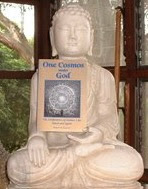
A quick but cooncentrated Saturday post...
Now, as I said, the human being is faced with a range of phenomena of which he needs to take account and make sense... of. And if he is to comprehend the totality of existence, then the True Philosopher, the extreme seeker after knowledge, the ardent lover of wisdom, the off-road spiritual adventurer, must exclude nothing (including, of course, nothing).
Being that he did not bearth or begaial himself and stands in a venerable stream of tradition, he will especially avoid dissing in it and dismissing the illustrious minds that went before, most of whom found the existence of Spirit to be soph-evident. If embracing the superfishy smells of a Dawkins or Dennett means rejecting the oceanic depths of Plato, Aquinas or Augustine, then so much the worse for the modern misosophers who are blind to the big lebowskis that exceed the limits of their reason, the denizen cohns of the deep that cannot be landed with their teeny poles.
Those who "go off the deep end" receive all of the attention from mental health professionals, but it is also possible -- more common, actually -- to fall off the shallow end, "to lose everything but one's reason," as someone once said. These people can't really be helped, since they find the shallow end to be quite congenial to their simple souls. They know how to wade, to tread water, to dog-paddle, and that's all they want or need to know. This blog is not addressed to them, so I don't know why they keep returning. They'll just keep crapsizing unless they overcome their dysluxia and learn to god-paddle in the bobtismal waters.
The materialists propose what amounts to an absurdly false hierarchy with man at the top, but no way to explain how he got there (since there can be no objective progress in a random and meaningless cosmos). As Schuon explains,
"To say that man is the measure of all things is meaningless unless one starts from the idea that God is the measure of man, or that the absolute is the measure of the relative, or again, that the universal Intellect is the measure of individual existence.... Once man makes himself a measure, while refusing to be measured in turn, or once he makes definitions while refusing to be defined by what transcends him and gives him all meaning, all human reference points disappear; cut off from the Divine, the human collapses."
This is why there can be no philosophy more anti-human than humanism; you cannot turn man into a god without placing him beneath himself, for you simply create a demon who is beyond good and evil.
"Intelligence is the perception of a reality, and a fortiori the perception of the Real as such" (Schuon). Therefore, intelligence is the ability to discern the Real from the unreal, or from the "less real."
Furthermore, intelligence itself must share something of the substance of the Real, or it could not possibly know it. Ultimately, Truth and Intelligence must be two aspects of the same thing, or both are meaningless, at least as far as humans are concerned.
As Schuon explains, "the sources of our transcendent intuitions are innate data, consubstantial with pure intelligence." This is a key insight into how and why the intellect "resonates" with divine revelation and with the "inward appearance" of things in general. As I mentioned a couple of posts back, just as our physical eye perceives empirical reality, our spiritual vision is able to perceive the vertical realm. Or, to paradoxaphrase Eckhart, "the eye with which I see God is the same eye with which God sees me."
To put it another way, Intelligence itself is proof of eternal values, since man's intellect would be inexplicable -- for it would lose its sufficent reason -- if deprived of "its most fundamental or loftiest contents," which include Truth, Reality, and the Absolute.
Conversely, you can say -- as do postmodernists and other tenured apes -- that objective truth doesn't exist; but if so, then neither does intelligence, so there is no reason to pay any attention to their avowed lack thereof.
Scientific materialism provides us with facts and details, but no wisdom as to what they mean, or even whether it is worthwhile to know them. Philosophy, in the words of Josef Pieper, is simply "the hunt for that which is worth knowing, for that wisdom which makes one unconditionally wise..."
In fact, Pieper's conception is quite similar to Schuon's, in that he regards philosophy as being concerned with reality as a whole and with wisdom in its entirety, which can be seen as two aspects of the same underlying unity. He quotes Plato, who wrote that the lover of wisdom seeks not this or that part, but "integrity and wholeness in all things human and divine."
Clearly this is not so of science (nor should it be), which explicitly limits itself (or should, anyway) to this or that aspect or part of the cosmos, not its totality. It does, however, assume that there is a totality, even though this totality can obviously never be observed or proven empirically. No one but the Creator has ever seen the cosmos. In fact, one could say that Cosmos and Creator are also two aspects of a single reality. There is no cosmos that cannot be known, nor knowledge in the absence of a hierarchically structured cosmos. Again, Being is Truth, at least around these parts.
Pieper agrees that "it is downright unphilosophical" to arbitrarily "exclude formally any attainable data concerning reality," including sexy bartenders and all they don't know. To reduce reality to what may be clearly and unambiguously known through the scientific method is to in effect say that "I want to know only what can be made compellingly obvious and is thoroughly demonstrable." Such an approach is not worthy of the name "philosophy." Philosophy begins where science ends, which is to say, at the edge of the known, where it shades off into the vast unKnown that shines forth with a dark light visible to the eye of the soul.
Which is why man is the pascally whybit who "transcends himself to an infinite degree." This is only possible in d'light of d'vine Absolute.
Saturday, August 25, 2007


Friday, August 24, 2007
The Religion of Science and the Science of Religion: In Search of the Missing TOENAIL
If I have time, I want to expand upon something I mentioned a couple of posts back about the structural similarity of science and religion, to the extent that both are systematic forms of understanding a world or "plane" of phenomena. In that post I made a bobscure reference to
"the transitional, generative space that exists between revelation and our contemplation of it. In this regard, one can see that Torah study, for example, has the identical structure of science, the latter of which you might say has a 'written revelation' and an 'oral revelation.' The 'written revelation' is simply the Cosmos, the World, physical reality, or whatever you want to call it. It is the Object which was here before we arrived, and to which we are Subject. Science -- the 'oral tradition' -- takes place in the space between the exterior Object and our own interior Subject, which mysteriously conforms to the Object on so many levels, as if the one were a deep reflection of the other. Which of course it is."
Now, I sympathize with people like our recent euranatheist, who don't "get" religion, and thereby imagine they've gotten it. It is a prideful stance of abject know-nothingness, in that it openly embraces the idea that there is nothing to know about Spirit. Therefore, it can promote ignorance as a kind of superior knowledge, if not wisdom, wisdom being impossible under such closed circlestases.
The reason I sympathize with the people who don't understand religion is that true religion, like real science, is difficult. Oh sure, most anyone can go to college and learn the basics of science, but there are relatively few truly creative and gifted scientists in proportion to the legion of worker BAs and other intellectual hivenaughts who only toil away at the shell of the cosmic taco and never trouble themselves with the whole existentialida. Only rarely does a scientist such as Michael Polanyi become a great philosopher. There is a world of difference between the intellectual visionary who intuits the whole vs. the mere thinker whose mind incessantly grinds away at facts.
In my book, Petey made the cryptic and possibly craptic -- you never know -- remark that "Science is the religion of the ultimate Object, while religion is the science of the ultimate Subject."
This is true as lo it gos, in that Subject and Object are irreducible existential categories, and we can burrow into the cosmic mountain from either end. Clearly, no cosmos is possible without both. Science -- for reasons it never examines -- disregards the Subject, which ineluctably ends in metaphysical absurdity, since it leads to a situation in which it explains everything except the mysterious one doing the explaining. Science necessarily begins with the assumption that there is a Subject who may know Truth, but then forgets all about it. Since the Subject remains inexspookable, he is simply errflushed out of the picture and down the brain.
But what an ass of an umption with which to burro into the cosmos like some mooronic donkey oldie! What kind of cosmos gives rise to Subjects who may know Truth? Aren't they even just a little bit curious?
This is another characteristic that always strikes me about these deiceased souls sophering from materialitis or reductionosis, that is, the lack of intellectual curiosity. Are there religious people who are intellectually incurious? Of course. But it's not a product of religion, at least properly understood. It is always tempting to cling to some easy formula in order to make the pain of not-knowing go away.
In my role as psychonautical travelguide, I find that most people have internalized a fundamentally faulty map of reality. I think this is for reasons of Darwin, not religion. That is, evolution selected us to simply adapt to an environment -- including an "interior," subjective environment -- not to know reality. (Our ability to know Truth is not, and could not be, explained by any Darwinian mechanism in a way that is not logically self-refuting.) Therefore, most people simply settle into a facile cognitive groove with which they are comfortable, and never venture beyond those boundaries. Furthermore, they defend their interior cognitive turf with the same sort of ferocity lower animals do on programs such as Meet the Press or Larry King.
Let's get back to my boundless sympathy for those who do not "get" religion, since I used to be one of them. The world of Spirit, no less than the world of Matter, confronts the human being with a welter of seemingly disconnected facts, or phenomena.
In fact, the rise of modern science some 300+ years ago simply represented a systematic way to organize all of the diverse and contradictory facts that appear before us. Eventually "laws" were discovered that explained seemingly unconnected phenomena, i.e., the "force" of gravity explaining the fall of the apple and the continuous "fall" of the earth around the sun. Science is a function of intelligence, which is the ability to know the substance in the accidental -- to literally escape the deceptive world of phenomena and know the principle in its manifestation.
Another way of saying it is that (to paraphrase Aldous Huxley) science is the reduction of multiplicity to unity. Science seeks increasingly deep unities to explain the outward phenomena. Presumably this will end with a big TOE, a Theory of Everything, the equation of our cosmic birth, a simple formula for generating this cosmos and everything in it.
But even if we do stub this TOE on our mental furniture, ultimately it would be no less painfully naive than the attempt to find the "cause" of God, for we would still need to know who or what devised the equation, and it could not be something less than intelligence. And it would indeed be the "ultimate intelligence," since it would be the ultimate case of Unity beneath diversity.
As intellectually OMniverous Raccoons, we want nothing less than the TOENAIL: Theory of Everything: Nous, Atman, Intellect, and Logos included.
In chapter four of my TOENAIL, I attempt to deal with the plane of "religious facts" in the same manner science deals with the plane of "scientific facts," that is, by seeking the laws beneath the phenomena and reducing multiplicity to unity. For surely there are religious facts. This is something even the atheist must acknowledge. It is just that he reduces them to a materialistic theory with which he is more emotionally comfortable. But the reason atheism will never be a popular religion is that the atheist is the rare person who either has no access to the world of religious facts, or if he does, simply explains them away. They are of no interest to him. He is incurious. But this is no less dysfunctional than primitive people who explain away the material world and live in "dream time."
Now in the final analysis, philosophical materialism is profoundly unscientific and unintelligent, since it is a stance that negates the very aim of science, which is to say, it grounds its certitude in appearance rather than reality, accident rather than substance, manifestation rather than principle.
Well, I was interrupted, and now I've lost the thread, so I'll continue tomorrow. Let me leave you with a relevant passage from Schuon's Language of the Self:
Logic can either operate in accordance with an intellection or on the contrary put itself at the disposal of an error, so that philosophy can become the vehicle of just about anything.... When unintelligence joins with passion to prostitute logic, it is impossible to escape a mental satanism which destroys the very basis of intelligence and truth....
When a man has no "visionary" -- as opposed to discursive -- knowledge of Being, and when he thinks only with his brain instead of "seeing" with the heart, all his logic will be useless to him, since he starts from an initial blindness.... Closing itself, above, to the light of the intellect, it opens itself, below, to the darkness of the subconscious.
"the transitional, generative space that exists between revelation and our contemplation of it. In this regard, one can see that Torah study, for example, has the identical structure of science, the latter of which you might say has a 'written revelation' and an 'oral revelation.' The 'written revelation' is simply the Cosmos, the World, physical reality, or whatever you want to call it. It is the Object which was here before we arrived, and to which we are Subject. Science -- the 'oral tradition' -- takes place in the space between the exterior Object and our own interior Subject, which mysteriously conforms to the Object on so many levels, as if the one were a deep reflection of the other. Which of course it is."
Now, I sympathize with people like our recent euranatheist, who don't "get" religion, and thereby imagine they've gotten it. It is a prideful stance of abject know-nothingness, in that it openly embraces the idea that there is nothing to know about Spirit. Therefore, it can promote ignorance as a kind of superior knowledge, if not wisdom, wisdom being impossible under such closed circlestases.
The reason I sympathize with the people who don't understand religion is that true religion, like real science, is difficult. Oh sure, most anyone can go to college and learn the basics of science, but there are relatively few truly creative and gifted scientists in proportion to the legion of worker BAs and other intellectual hivenaughts who only toil away at the shell of the cosmic taco and never trouble themselves with the whole existentialida. Only rarely does a scientist such as Michael Polanyi become a great philosopher. There is a world of difference between the intellectual visionary who intuits the whole vs. the mere thinker whose mind incessantly grinds away at facts.
In my book, Petey made the cryptic and possibly craptic -- you never know -- remark that "Science is the religion of the ultimate Object, while religion is the science of the ultimate Subject."
This is true as lo it gos, in that Subject and Object are irreducible existential categories, and we can burrow into the cosmic mountain from either end. Clearly, no cosmos is possible without both. Science -- for reasons it never examines -- disregards the Subject, which ineluctably ends in metaphysical absurdity, since it leads to a situation in which it explains everything except the mysterious one doing the explaining. Science necessarily begins with the assumption that there is a Subject who may know Truth, but then forgets all about it. Since the Subject remains inexspookable, he is simply errflushed out of the picture and down the brain.
But what an ass of an umption with which to burro into the cosmos like some mooronic donkey oldie! What kind of cosmos gives rise to Subjects who may know Truth? Aren't they even just a little bit curious?
This is another characteristic that always strikes me about these deiceased souls sophering from materialitis or reductionosis, that is, the lack of intellectual curiosity. Are there religious people who are intellectually incurious? Of course. But it's not a product of religion, at least properly understood. It is always tempting to cling to some easy formula in order to make the pain of not-knowing go away.
In my role as psychonautical travelguide, I find that most people have internalized a fundamentally faulty map of reality. I think this is for reasons of Darwin, not religion. That is, evolution selected us to simply adapt to an environment -- including an "interior," subjective environment -- not to know reality. (Our ability to know Truth is not, and could not be, explained by any Darwinian mechanism in a way that is not logically self-refuting.) Therefore, most people simply settle into a facile cognitive groove with which they are comfortable, and never venture beyond those boundaries. Furthermore, they defend their interior cognitive turf with the same sort of ferocity lower animals do on programs such as Meet the Press or Larry King.
Let's get back to my boundless sympathy for those who do not "get" religion, since I used to be one of them. The world of Spirit, no less than the world of Matter, confronts the human being with a welter of seemingly disconnected facts, or phenomena.
In fact, the rise of modern science some 300+ years ago simply represented a systematic way to organize all of the diverse and contradictory facts that appear before us. Eventually "laws" were discovered that explained seemingly unconnected phenomena, i.e., the "force" of gravity explaining the fall of the apple and the continuous "fall" of the earth around the sun. Science is a function of intelligence, which is the ability to know the substance in the accidental -- to literally escape the deceptive world of phenomena and know the principle in its manifestation.
Another way of saying it is that (to paraphrase Aldous Huxley) science is the reduction of multiplicity to unity. Science seeks increasingly deep unities to explain the outward phenomena. Presumably this will end with a big TOE, a Theory of Everything, the equation of our cosmic birth, a simple formula for generating this cosmos and everything in it.
But even if we do stub this TOE on our mental furniture, ultimately it would be no less painfully naive than the attempt to find the "cause" of God, for we would still need to know who or what devised the equation, and it could not be something less than intelligence. And it would indeed be the "ultimate intelligence," since it would be the ultimate case of Unity beneath diversity.
As intellectually OMniverous Raccoons, we want nothing less than the TOENAIL: Theory of Everything: Nous, Atman, Intellect, and Logos included.
In chapter four of my TOENAIL, I attempt to deal with the plane of "religious facts" in the same manner science deals with the plane of "scientific facts," that is, by seeking the laws beneath the phenomena and reducing multiplicity to unity. For surely there are religious facts. This is something even the atheist must acknowledge. It is just that he reduces them to a materialistic theory with which he is more emotionally comfortable. But the reason atheism will never be a popular religion is that the atheist is the rare person who either has no access to the world of religious facts, or if he does, simply explains them away. They are of no interest to him. He is incurious. But this is no less dysfunctional than primitive people who explain away the material world and live in "dream time."
Now in the final analysis, philosophical materialism is profoundly unscientific and unintelligent, since it is a stance that negates the very aim of science, which is to say, it grounds its certitude in appearance rather than reality, accident rather than substance, manifestation rather than principle.
Well, I was interrupted, and now I've lost the thread, so I'll continue tomorrow. Let me leave you with a relevant passage from Schuon's Language of the Self:
Logic can either operate in accordance with an intellection or on the contrary put itself at the disposal of an error, so that philosophy can become the vehicle of just about anything.... When unintelligence joins with passion to prostitute logic, it is impossible to escape a mental satanism which destroys the very basis of intelligence and truth....
When a man has no "visionary" -- as opposed to discursive -- knowledge of Being, and when he thinks only with his brain instead of "seeing" with the heart, all his logic will be useless to him, since he starts from an initial blindness.... Closing itself, above, to the light of the intellect, it opens itself, below, to the darkness of the subconscious.
Thursday, August 23, 2007
Leftist Faith, Ecstatic Moral Inversion, and the Substance of Nothing
Mankind’s deepest problems are universal and existential. But solutions to these will problems vary from individual to individual and culture to culture, based upon insight, emotional maturity, depth and breadth of intelligence, spiritual perception, and other factors.
It is a truism that ideas have consequences, but even ideas must take a back seat to the unexamined values that shape the ideas one is capable of thinking. As Camus once said, no one became a communist from reading Marx. Rather, first they had an emotional, psuedo-spiritual conversion, then they read the unholy scriptures in order to deepen their faith. And as Tom Sowell writes (quoted in today's outstanding diagnosis by Dr. Sanity), progressives don't really have any genuine interest in actually helping the poor, since victims are their most important constituency. Quite simply, fewer victims means less power for leftists:
"Despite whatever the left may say, or even believe, about their concern for the poor, their actual behavior shows their interest in the poor to be greatest when the poor can be used as a focus of the left's denunciations of society.... When the poor stop being poor, they lose the attention of the left. What actions on the part of the poor, or what changes in the economy, have led to drastic reductions in poverty seldom arouse much curiosity, much less celebration."
One is reminded of St. Augustine's comment that while to err is human, "to persist in error out of passion is diabolical."
One of the greatest benefits of a proper religious grounding is that very early on you internalize the value that your problems are largely your own fault, and that it is wrong to externalize blame onto others. This is one of the sharpest divides between classical liberals and leftists, the latter of whom propagate the doctrine of victimology, i.e., the systematic shifting of blame to others. For the leftist mind, to the extent that your life -- or country -- is a wreck, it is never your fault, but because of racism, classism, sexism, homophobia, white European maleism, whatever.
The point of this exercise is not to identify any real cause (and therefore, cure) but to create a locus of blame, so that one’s existential problems may be externalized and spuriously relieved. The more mature culture is the one that produces individuals who locate existential problems within, and who can both tolerate and transcend them -- for example, tolerating instead of acting on the constitutional envy we discussed a couple of days ago. There is no way to eliminate envy “from the outside,” which, after all, is why it is addressed by one of the Commandments. The Commandment does not say, “you shall try to eliminate envy by empowering a massive government to coerce the envied to give to each envious person according to his insatiable needs.”
The envious person unconsciously says, “if I can’t have it, then no one can. Therefore, I will destroy the object of my envy.” Thus we can see how unhinged envy is at the basis of pure nihilism, and why our enemies are so frightening. Think of Hitler’s scorched earth policy of destroying every square inch of land as his armies retreated. If he could not rule the world, then he would take the world down with him. This is what is so frightening about the prospect of Islamic nihilsts with weapons of mass destruction, for they truly do not care about the world so long as the world does not comport with their fantasies of how it ought to be.
Clearly, the Islamists operate by this principle, and one naturally worries about the extent to which normative Islam is informed by the same toxic attitude. For even if we were to disregard all of the hideous violence that emanates from the Religion of Peace, we would still conclude that this is a religion of perpetual outrage and compulsive lying, based upon the behavior of its most visible and risible spokesholes such as CAIR or Juan Cole.
The constant perception of victimization -- even amidst the outrageous and widespread victimization of others -- must emanate from something deep within Islam itself, unless this is merely a modern deviation. Despite it all, I am still open to that possibility, although I haven’t been able to find a single example of a truly interior Islam outside Sufism (which in my view is more Vedanta than Islam). In proportion to the billion or so normative Muslims, there are only a handful of Sufis, and frankly, even many of them tilt toward the dark side.
The gaspiel of nihilism is in fact a war against truth and therefore a war against the Creator, even though it is fair to say that few nihilists are aware of this fact. But the only reason we have a word called “truth” is because it is a reality that is over- and underwritten by God. Being that we are in the image of God, we are informed by an intellect that may know truth, a will that may choose the good, and an interior “eye” that may perceive beauty. The leftist attacks and undermines all of these things, and in so doing, destroys both man and God. Leftism is ultimately a program of radical immanence that cuts us off from our transcenent roots -- which, as expressed in the Upanishads, are aloft, not below.
For to say that absolute truth does not exist is to say precisely that human intelligence does not exist. To say that morality is relative is to say that anything is permitted and that man is therefore nothing, for he has no essence. And to create new forms of merely human “art” that celebrate ugliness, depravity, and naturalism is to sever mankind from the higher planes that distinguish us from the beasts and make us human. It is to reduce man to his animal nature -- except he becomes a pathetic animal with no nature, truly a nothing. (Excellent piece yesterday at American Thinker on Diversity, Nihilism, and the Anti-Rational Mind.
In this regard, the existentialists were correct in drawing out the radical implications of their "esoterism of stupidity." To return to our original point about values, every man is faced with two, and only two, choices that will determine everything else: essence or existence. For the spiritually inclined "interior" man, essence, or real being, is prior to, and determines, existence. But for the hexteriorized leftist, existence determines essence. You are a cosmic fluke. You have no a priori transcendent essence, much less purpose. Rather, your essence is determined by contingencies such as race, class and gender. For example, this is why the left is obsessed with race, whereas it is irrelevant to the conservative classical liberal.
It is no coincidence that the largest constituents of the left always include the young and unmarried. As one matures, gets married, and has children, one naturally tends to evolve away from leftist ideas, obviously not everyone, but a clear majority. This is because concrete reality has a way of clearing aside so much abstract intellectual theory. There is a reason why Marxism only exists in universities, and that you will never find a businessman who operates his business along the lines of Marxist doctrine. To paraphrase Ronald Reagan, "liberals read Marx. Conservatives understand him."
It is one thing for an adult to believe such leftist claptrap. If they want to ruin their lives in their adolescent rebellion, that’s fine by me. But to ruin a child’s life by inculcating him with their dysfunctional values really is an unforgivable sin. For example, to raise a black child in contemporary America to believe that this is a racist country, that white people hate him, that he is a victim from the start, and that his efforts will be for naught, is soul murder pure and simple.
Likewise, to brainwash an Arab child into believing that 15 million Jews in the entire world are the cause of a single problem among the world's billion Muslims -- let alone all their problems -- is an outrageous form of abuse, because when you create a victim, you create a nihilist. Why? Because once victim status is secured, then you are no longer burdened by a conscience. You are sanctioned to abandon yourself to your most primitive instincts, because the order of the cosmos is unfair and illegitimate, so anything you do to set things right is inherently moral, no matter how immoral. And the violence will not end until the Old Order is overthrown and the New Man is created, free of the existential categories that define man to begin with.
Meaning has been vanquished. Man is liberated from himself. The Triumph of the Will and the Reign of Nothingness are complete. God and man are dead. Long live the Beast!
And whoever must be a creator in good and evil, verily, he must be an annihilator and break values. Thus the highest evil belongs to the highest goodness: but this is creative. --Nietzsche
Nothing makes me more certain of the victory of our ideas than our success in the universities. --Adolf Hitler
It is a truism that ideas have consequences, but even ideas must take a back seat to the unexamined values that shape the ideas one is capable of thinking. As Camus once said, no one became a communist from reading Marx. Rather, first they had an emotional, psuedo-spiritual conversion, then they read the unholy scriptures in order to deepen their faith. And as Tom Sowell writes (quoted in today's outstanding diagnosis by Dr. Sanity), progressives don't really have any genuine interest in actually helping the poor, since victims are their most important constituency. Quite simply, fewer victims means less power for leftists:
"Despite whatever the left may say, or even believe, about their concern for the poor, their actual behavior shows their interest in the poor to be greatest when the poor can be used as a focus of the left's denunciations of society.... When the poor stop being poor, they lose the attention of the left. What actions on the part of the poor, or what changes in the economy, have led to drastic reductions in poverty seldom arouse much curiosity, much less celebration."
One is reminded of St. Augustine's comment that while to err is human, "to persist in error out of passion is diabolical."
One of the greatest benefits of a proper religious grounding is that very early on you internalize the value that your problems are largely your own fault, and that it is wrong to externalize blame onto others. This is one of the sharpest divides between classical liberals and leftists, the latter of whom propagate the doctrine of victimology, i.e., the systematic shifting of blame to others. For the leftist mind, to the extent that your life -- or country -- is a wreck, it is never your fault, but because of racism, classism, sexism, homophobia, white European maleism, whatever.
The point of this exercise is not to identify any real cause (and therefore, cure) but to create a locus of blame, so that one’s existential problems may be externalized and spuriously relieved. The more mature culture is the one that produces individuals who locate existential problems within, and who can both tolerate and transcend them -- for example, tolerating instead of acting on the constitutional envy we discussed a couple of days ago. There is no way to eliminate envy “from the outside,” which, after all, is why it is addressed by one of the Commandments. The Commandment does not say, “you shall try to eliminate envy by empowering a massive government to coerce the envied to give to each envious person according to his insatiable needs.”
The envious person unconsciously says, “if I can’t have it, then no one can. Therefore, I will destroy the object of my envy.” Thus we can see how unhinged envy is at the basis of pure nihilism, and why our enemies are so frightening. Think of Hitler’s scorched earth policy of destroying every square inch of land as his armies retreated. If he could not rule the world, then he would take the world down with him. This is what is so frightening about the prospect of Islamic nihilsts with weapons of mass destruction, for they truly do not care about the world so long as the world does not comport with their fantasies of how it ought to be.
Clearly, the Islamists operate by this principle, and one naturally worries about the extent to which normative Islam is informed by the same toxic attitude. For even if we were to disregard all of the hideous violence that emanates from the Religion of Peace, we would still conclude that this is a religion of perpetual outrage and compulsive lying, based upon the behavior of its most visible and risible spokesholes such as CAIR or Juan Cole.
The constant perception of victimization -- even amidst the outrageous and widespread victimization of others -- must emanate from something deep within Islam itself, unless this is merely a modern deviation. Despite it all, I am still open to that possibility, although I haven’t been able to find a single example of a truly interior Islam outside Sufism (which in my view is more Vedanta than Islam). In proportion to the billion or so normative Muslims, there are only a handful of Sufis, and frankly, even many of them tilt toward the dark side.
The gaspiel of nihilism is in fact a war against truth and therefore a war against the Creator, even though it is fair to say that few nihilists are aware of this fact. But the only reason we have a word called “truth” is because it is a reality that is over- and underwritten by God. Being that we are in the image of God, we are informed by an intellect that may know truth, a will that may choose the good, and an interior “eye” that may perceive beauty. The leftist attacks and undermines all of these things, and in so doing, destroys both man and God. Leftism is ultimately a program of radical immanence that cuts us off from our transcenent roots -- which, as expressed in the Upanishads, are aloft, not below.
For to say that absolute truth does not exist is to say precisely that human intelligence does not exist. To say that morality is relative is to say that anything is permitted and that man is therefore nothing, for he has no essence. And to create new forms of merely human “art” that celebrate ugliness, depravity, and naturalism is to sever mankind from the higher planes that distinguish us from the beasts and make us human. It is to reduce man to his animal nature -- except he becomes a pathetic animal with no nature, truly a nothing. (Excellent piece yesterday at American Thinker on Diversity, Nihilism, and the Anti-Rational Mind.
In this regard, the existentialists were correct in drawing out the radical implications of their "esoterism of stupidity." To return to our original point about values, every man is faced with two, and only two, choices that will determine everything else: essence or existence. For the spiritually inclined "interior" man, essence, or real being, is prior to, and determines, existence. But for the hexteriorized leftist, existence determines essence. You are a cosmic fluke. You have no a priori transcendent essence, much less purpose. Rather, your essence is determined by contingencies such as race, class and gender. For example, this is why the left is obsessed with race, whereas it is irrelevant to the conservative classical liberal.
It is no coincidence that the largest constituents of the left always include the young and unmarried. As one matures, gets married, and has children, one naturally tends to evolve away from leftist ideas, obviously not everyone, but a clear majority. This is because concrete reality has a way of clearing aside so much abstract intellectual theory. There is a reason why Marxism only exists in universities, and that you will never find a businessman who operates his business along the lines of Marxist doctrine. To paraphrase Ronald Reagan, "liberals read Marx. Conservatives understand him."
It is one thing for an adult to believe such leftist claptrap. If they want to ruin their lives in their adolescent rebellion, that’s fine by me. But to ruin a child’s life by inculcating him with their dysfunctional values really is an unforgivable sin. For example, to raise a black child in contemporary America to believe that this is a racist country, that white people hate him, that he is a victim from the start, and that his efforts will be for naught, is soul murder pure and simple.
Likewise, to brainwash an Arab child into believing that 15 million Jews in the entire world are the cause of a single problem among the world's billion Muslims -- let alone all their problems -- is an outrageous form of abuse, because when you create a victim, you create a nihilist. Why? Because once victim status is secured, then you are no longer burdened by a conscience. You are sanctioned to abandon yourself to your most primitive instincts, because the order of the cosmos is unfair and illegitimate, so anything you do to set things right is inherently moral, no matter how immoral. And the violence will not end until the Old Order is overthrown and the New Man is created, free of the existential categories that define man to begin with.
Meaning has been vanquished. Man is liberated from himself. The Triumph of the Will and the Reign of Nothingness are complete. God and man are dead. Long live the Beast!
And whoever must be a creator in good and evil, verily, he must be an annihilator and break values. Thus the highest evil belongs to the highest goodness: but this is creative. --Nietzsche
Nothing makes me more certain of the victory of our ideas than our success in the universities. --Adolf Hitler
Wednesday, August 22, 2007
Blinded by the Light & Dreaming by Day (7.28.10)
In his book From the Divine to the Human, Schuon has a chapter entitled To Refuse or Accept Revelation that is pertinent to some of our recent transatlandish disgustings. He points out that the reason people freely accept revelation is obviously not on empirical or (merely) rational grounds, but because man is a form of Truth, and therefore disposed to comprehend the divine message in spite of the objections of his own ego. In a way, the fact that we may comprehend revelation so deeply, proves the deiform nature of man and the divine object of which he is a distant reflection.
Schuon points out that in all orthodox religions there are two domains, one which "must be," and one which "may or may not be," and therefore doesn't necessarily have to exist. The former is that of dogma, the latter interpretation and elaboration. For example, just yesterday I was reading in Steinsaltz's In the Beginning about the distinction between the written Torah and the oral Torah.
In kabbalistic terms, the written Torah corresponds to wisdom, the oral Torah to understanding. The former is a numinous flash, a "nucleus" of all knowing, but only in potential. "Only afterwards does Understanding clothe this insight with the length and breadth of reason and make it comprehensible and communicable."
Steinsaltz writes that "the process is not unlike conception and giving birth: the original fertilized cell contains all, but it has to be lodged in the womb and developed." Similarly, Schuon thinks of revelation as a vertical ingression into time, while tradition is its horizontal extension or prolongation within the womb of time.
This is why, while dogma must be preserved, it must also be interpreted. Otherwise, it would be analogous to trying to take the fertilized cell and grow a full-sized human being in a petri dish, which would be meshuginah. As Steinsaltz writes, "Written Torah needs endless amplification, study, and clarification. There are infinite layers of meaning, depthless beauty," and new modes of experiential comprehension to be revealed: O-->(n).
While one receives the written revelation passively, so to speak, the oral revelation "proceeds to act on it, engaging in critical thinking" and "deep experiencing." And unlike the written Torah, which is fixed and not given to change, the oral Torah "can be altered and improved and is constantly being enlarged, added to, re-created, and enhanced by ever higher levels of experience."
This is precisely what I meant when I made reference to the transitional, generative space that exists between revelation and our contemplation of it. In this regard, one can see that Torah study has the identical structure of science, which you might say has a "written revelation" and an "oral revelation."
The "written revelation" is simply the Cosmos, the World, physical reality, or whatever you want to call it. It is the Object which was here before we arrived, and to which we are Subject. Science -- the "oral tradition" -- takes place in the space between the fixed Object and our own Subject, which mysteriously conforms to the Object on so many levels, as if the one were a deep reflection of the other. Which of course it is.
Now, the written revelation may be thought of as "day," the oral as "night." The wisdom of revelation manifests itself in the light of day, but may only be understood in the darkness of consciousness. In short, there is "daytime" knowledge and there is "nighttime" knowledge, and one must understand the distinction.
As Steinsaltz says, "the day is the time for receiving the light, and the night is the time for creating. There is a time to perceive, to look out and absorb things, and there is a time to develop what has been absorbed and even to fashion new things out of this knowledge." Steinsaltz compares it to a photograph, in which the film of the camera absorbs a bit of the light. But then you must enter your dark room in order to "develop" it.
It is no different with the pneumagraph of our indvidual lives. For genuine knowledge can only be gestated in the nighttime womb of the soul. Our Swedish visitor clearly has a bit of daytime knowledge (k) of Spirit, but his night vision is severely lacking, to say the least. Sounds like a serious case of slackular degeneration.
For the Raccoon is a gnocturnal creature, don't you know. For us, the daytime light is so intense, that it can be a bit overwhelming. We actually "see" the light better in the dark. Conversely, many anal-type materialists reject religion because they are simply night-blind or afraid of the dark. They may have understanding, but in the absence of wisdom.
The day and night also correspond to "outer" and "inner," part and whole, letter and spirit. Paradoxically, wholeness can only be seen by night, when all of the apparent, well-defined parts blend together and interpenetrate. By day, we see only fragments, but by night we are able to intuit the whole and dream the metaphysical dream by which the day may be creatively illuminated by the higher darkness.
Here is the essential difference. The spiritually attuned person, the poet, the true artist, all live by night and communicate their vision by the light of an intense beam of darkness. Coonversely, the atheist, the materialist, the radical secularist -- all live by day and are blinded by the light. And being that they cannot think by night, they dream by day -- which is to say, sleepwake -- through their lives.
Schuon points out that in all orthodox religions there are two domains, one which "must be," and one which "may or may not be," and therefore doesn't necessarily have to exist. The former is that of dogma, the latter interpretation and elaboration. For example, just yesterday I was reading in Steinsaltz's In the Beginning about the distinction between the written Torah and the oral Torah.
In kabbalistic terms, the written Torah corresponds to wisdom, the oral Torah to understanding. The former is a numinous flash, a "nucleus" of all knowing, but only in potential. "Only afterwards does Understanding clothe this insight with the length and breadth of reason and make it comprehensible and communicable."
Steinsaltz writes that "the process is not unlike conception and giving birth: the original fertilized cell contains all, but it has to be lodged in the womb and developed." Similarly, Schuon thinks of revelation as a vertical ingression into time, while tradition is its horizontal extension or prolongation within the womb of time.
This is why, while dogma must be preserved, it must also be interpreted. Otherwise, it would be analogous to trying to take the fertilized cell and grow a full-sized human being in a petri dish, which would be meshuginah. As Steinsaltz writes, "Written Torah needs endless amplification, study, and clarification. There are infinite layers of meaning, depthless beauty," and new modes of experiential comprehension to be revealed: O-->(n).
While one receives the written revelation passively, so to speak, the oral revelation "proceeds to act on it, engaging in critical thinking" and "deep experiencing." And unlike the written Torah, which is fixed and not given to change, the oral Torah "can be altered and improved and is constantly being enlarged, added to, re-created, and enhanced by ever higher levels of experience."
This is precisely what I meant when I made reference to the transitional, generative space that exists between revelation and our contemplation of it. In this regard, one can see that Torah study has the identical structure of science, which you might say has a "written revelation" and an "oral revelation."
The "written revelation" is simply the Cosmos, the World, physical reality, or whatever you want to call it. It is the Object which was here before we arrived, and to which we are Subject. Science -- the "oral tradition" -- takes place in the space between the fixed Object and our own Subject, which mysteriously conforms to the Object on so many levels, as if the one were a deep reflection of the other. Which of course it is.
Now, the written revelation may be thought of as "day," the oral as "night." The wisdom of revelation manifests itself in the light of day, but may only be understood in the darkness of consciousness. In short, there is "daytime" knowledge and there is "nighttime" knowledge, and one must understand the distinction.
As Steinsaltz says, "the day is the time for receiving the light, and the night is the time for creating. There is a time to perceive, to look out and absorb things, and there is a time to develop what has been absorbed and even to fashion new things out of this knowledge." Steinsaltz compares it to a photograph, in which the film of the camera absorbs a bit of the light. But then you must enter your dark room in order to "develop" it.
It is no different with the pneumagraph of our indvidual lives. For genuine knowledge can only be gestated in the nighttime womb of the soul. Our Swedish visitor clearly has a bit of daytime knowledge (k) of Spirit, but his night vision is severely lacking, to say the least. Sounds like a serious case of slackular degeneration.
For the Raccoon is a gnocturnal creature, don't you know. For us, the daytime light is so intense, that it can be a bit overwhelming. We actually "see" the light better in the dark. Conversely, many anal-type materialists reject religion because they are simply night-blind or afraid of the dark. They may have understanding, but in the absence of wisdom.
The day and night also correspond to "outer" and "inner," part and whole, letter and spirit. Paradoxically, wholeness can only be seen by night, when all of the apparent, well-defined parts blend together and interpenetrate. By day, we see only fragments, but by night we are able to intuit the whole and dream the metaphysical dream by which the day may be creatively illuminated by the higher darkness.
Here is the essential difference. The spiritually attuned person, the poet, the true artist, all live by night and communicate their vision by the light of an intense beam of darkness. Coonversely, the atheist, the materialist, the radical secularist -- all live by day and are blinded by the light. And being that they cannot think by night, they dream by day -- which is to say, sleepwake -- through their lives.
Tuesday, August 21, 2007
Atheists Sentenced to Life in Prison
Well, at least while waiting around in the jury room, I had time to write today's post. It's an irrevocable verdict against materialists, anti-theists, and other pseudo-rationalists, such as our Sweden sour shrimp. They are guilty as charged of holding intelligence up to ridicule by "representing the commonest stupidity as intelligence and disguising it as philosophy," as Schuon once put it in a cranky mood. This unanimous verdict will serve the purpose  of freeing me of having to respond to every half-educated intellectual papsquawk who deicides to take an ill-advised potshot at Dupree and "the twins." --->
We begin with Schuon's unassailable point that the effectiveness of metaphysical reasoning depends upon two principal factors, neither of which is reducible to "empirical facts" or the mechanical logic to which our minds have access (and therefore transcend). First is the depth or profundity of the intelligence in question. To cite some examples that come readily to mind, the depth and perspicacity of a Frithjof Schuon or Adin Steinsaltz or Unknown Friend far exceeds that of a Dawkins, Dennett, or Harris.
How do I know this? Easy. I've read and understand all of them. But can depth of soul be quantified like an empirical or logical fact? No. Rather, it can only be known because intelligence calls out to intelligence in a direct manner. Intelligence resonates with one's own depths, which is why metaphysical knowledge has always been associated with vertical recollection, as opposed to profane knowledge, which involves the mere passing of horizontal information from mind to mind.
If, as suggested by materialists and positivists, intelligence could be reduced to senses + logic, human beings wouldn't be intelligent enough to know it, since no logical operation can inform them of this. As Schuon writes, "reason always stands in need of data that it cannot provide or extract for itself."
The anti-theistic materialist would have you to believe that he begins his disinterested analysis "from zero," so to speak, completely free of dogma, but this is demonstrably false, for it is no less a dogma to irrationally affirm that no knowledge exists except for that supplied by reason in conjunction with sensory perception. As the philosopher of science Stanley Jaki has written, all bad philosophies begin at second base, but have no theory that can explain how they arrived at first. There's no stealing in philosophy (although it happens all the time).
In addition to intelligence, the second transrational condition of metaphysical reasoning is "the worth or amplitude of the available information." For example, our Swedish friend undoubtedly excludes revelation as a source of information with which to engage our reason, but only on alogical and a priori grounds, for there is no cosmic condition that forbids the Absolute from communicating itself to human beings in human terms, which is the essential definition of revelation (including the revelation of Being itself). You can fail to take cognizance of the Absolute, but it will always return through the backdoor. For example, it is impossible to consistently maintain that "it is absolutely true that nothing but the relatively true exists." As Schuon points out, one might just as well write that writing doesn't exist.
Just as the senses conform to the material world and our reason to the world of math and logic, our intellect -- or supralogical intelligence -- conforms to a realm of suprasensory phenomena. Here an analogy might be useful, for there is a dimension of suprasensible information readily available to human minds which is neither material nor logical, and that is other minds. Normal humans are equipped with what developmental neuropsychologists call a "mind reading" capacity, through which we may instantaneously -- without thinking -- access the "interior" of another.
This is especially pertinent in childrearing, both in the way the infant can read the mother and vice versa. Many adult psychopathologies are rooted in the "narcissistic injuries" and "empathic failures" of inadequate or distorted mind-reading. As you might expect, this results in split off, unintegrated parts of the psyche that are "unthinkable" because they were "unknown" by an empathic other. These often form the basis of mind parasites that dwell in a kind of infinite negative space -- a psychic "black hole," as it were.
Now, a gifted rabbi such as Adin Steinsaltz would, in all humility, say that in endeavoring to discern the meaning of this or that Torah passage, he is attempting to "read the mind of G-d." So too a Christian meditating on scripture. It is an elementary error of rationalists to equate the religious person's generative and fruitful dogma with their own reigning dogmas and catechisms.
In the case of tradition, we begin with what Schuon calls "an instinct for that which surpasses us," and which apprehends transcendent realities through their "superabundance of clarity." These are inclinations and perceptions that the anti-theist either lacks or is in rebellion against, which leads to the autodivinization of his own narrow ability to reason about the data given to his senses. The central difference is that traditional dogmas are not static, but furnish "pointers or keys," so that "the inward discovery" of their truth cannot be given but only discovered: O-->(n).
The materialist essentially reduces Truth to method and proceeds to close up intellectual shop, as his soph-satisfied soul has reached its carrying capacity. When "thinking" about religion, you will notice that he doesn't actually engage the object of religion, since he illogically rejects this object on a priori grounds.
To the extent that the atheist does think about the object of religion, he will simply supplant intellect with ego -- which is to say, he will try to operate in the absence of indispensable data that can only arise in the transitional space between O and our contemplation of it: "Just as it is impossible to reason about a country of which one has no knowledge, so also is it impossible to reason about suprasensory realities without drawing upon the data which pertain to them," which are supplied by 1) revelation, 2) intellection, and 3) grace.
Revelation is truly universal; it is about mankind as such -- a memo from Man to men, so to speak. But profane systems of thought are inevitably individualistic and idiosyncratic. They may convey a glimmer of transcendent truth, but it is always a partial picture, as a result of the warping of integral intelligence.
And what is intelligence? Intelligence is that which may know Truth. Likewise, Truth is that which the intellect my know with certitude. To say that the intellect cannot know God, the Absolute, is to place an artificial boundary around intelligence as such. And if our intelligence were bounded, we would not know where the boundary lay, so there would be no reason to accept anyone's boundary as anything other than arbitrary.
No. As Schuon writes, "either the intelligence by definition comprises a principle of illimitability or liberty," or it comprises "a principle of limitation or constraint, in which case it no longer admits of any certitude and cannot function any differently from the intelligence of animals, with the result that all pretension to a 'critical philosophy' is in vain."
I fully acknowledge that the materialist's intelligence leads him to the inevitable conclusions it does. But those conclusions are hardly inevitable to one with a wider and deeper intellect -- to those with more capacious and discerning souls. Countless human beings down through history have been aware of materialism and rejected it on the grounds that it excludes far too much of what we know to be the case.
Therefore, I pronounce atheists guilty as charged with intellectual cluelesside, and sentence them to life imprisonment down in flatland -- which has bars as strong as iron but weaker than the Love that removes the sin and other scars, speaking alighierically.
This brings us to another explanation of the term "idolatry," [which] refers to that which simply insists on the absolute independence of a self that is not the one God. When one sees himself as altogether independent of the absolute, he is in Galut, a state of being or place of banishment called exile.... It is not unlike captivity or subjugation, since there is no freedom to choose. --Adin Steinsaltz, In the Beginning
*I am indebted to Schuon's Logic and Transcendence for this post... both literally and figuratively.
 of freeing me of having to respond to every half-educated intellectual papsquawk who deicides to take an ill-advised potshot at Dupree and "the twins." --->
We begin with Schuon's unassailable point that the effectiveness of metaphysical reasoning depends upon two principal factors, neither of which is reducible to "empirical facts" or the mechanical logic to which our minds have access (and therefore transcend). First is the depth or profundity of the intelligence in question. To cite some examples that come readily to mind, the depth and perspicacity of a Frithjof Schuon or Adin Steinsaltz or Unknown Friend far exceeds that of a Dawkins, Dennett, or Harris.
How do I know this? Easy. I've read and understand all of them. But can depth of soul be quantified like an empirical or logical fact? No. Rather, it can only be known because intelligence calls out to intelligence in a direct manner. Intelligence resonates with one's own depths, which is why metaphysical knowledge has always been associated with vertical recollection, as opposed to profane knowledge, which involves the mere passing of horizontal information from mind to mind.
If, as suggested by materialists and positivists, intelligence could be reduced to senses + logic, human beings wouldn't be intelligent enough to know it, since no logical operation can inform them of this. As Schuon writes, "reason always stands in need of data that it cannot provide or extract for itself."
The anti-theistic materialist would have you to believe that he begins his disinterested analysis "from zero," so to speak, completely free of dogma, but this is demonstrably false, for it is no less a dogma to irrationally affirm that no knowledge exists except for that supplied by reason in conjunction with sensory perception. As the philosopher of science Stanley Jaki has written, all bad philosophies begin at second base, but have no theory that can explain how they arrived at first. There's no stealing in philosophy (although it happens all the time).
In addition to intelligence, the second transrational condition of metaphysical reasoning is "the worth or amplitude of the available information." For example, our Swedish friend undoubtedly excludes revelation as a source of information with which to engage our reason, but only on alogical and a priori grounds, for there is no cosmic condition that forbids the Absolute from communicating itself to human beings in human terms, which is the essential definition of revelation (including the revelation of Being itself). You can fail to take cognizance of the Absolute, but it will always return through the backdoor. For example, it is impossible to consistently maintain that "it is absolutely true that nothing but the relatively true exists." As Schuon points out, one might just as well write that writing doesn't exist.
Just as the senses conform to the material world and our reason to the world of math and logic, our intellect -- or supralogical intelligence -- conforms to a realm of suprasensory phenomena. Here an analogy might be useful, for there is a dimension of suprasensible information readily available to human minds which is neither material nor logical, and that is other minds. Normal humans are equipped with what developmental neuropsychologists call a "mind reading" capacity, through which we may instantaneously -- without thinking -- access the "interior" of another.
This is especially pertinent in childrearing, both in the way the infant can read the mother and vice versa. Many adult psychopathologies are rooted in the "narcissistic injuries" and "empathic failures" of inadequate or distorted mind-reading. As you might expect, this results in split off, unintegrated parts of the psyche that are "unthinkable" because they were "unknown" by an empathic other. These often form the basis of mind parasites that dwell in a kind of infinite negative space -- a psychic "black hole," as it were.
Now, a gifted rabbi such as Adin Steinsaltz would, in all humility, say that in endeavoring to discern the meaning of this or that Torah passage, he is attempting to "read the mind of G-d." So too a Christian meditating on scripture. It is an elementary error of rationalists to equate the religious person's generative and fruitful dogma with their own reigning dogmas and catechisms.
In the case of tradition, we begin with what Schuon calls "an instinct for that which surpasses us," and which apprehends transcendent realities through their "superabundance of clarity." These are inclinations and perceptions that the anti-theist either lacks or is in rebellion against, which leads to the autodivinization of his own narrow ability to reason about the data given to his senses. The central difference is that traditional dogmas are not static, but furnish "pointers or keys," so that "the inward discovery" of their truth cannot be given but only discovered: O-->(n).
The materialist essentially reduces Truth to method and proceeds to close up intellectual shop, as his soph-satisfied soul has reached its carrying capacity. When "thinking" about religion, you will notice that he doesn't actually engage the object of religion, since he illogically rejects this object on a priori grounds.
To the extent that the atheist does think about the object of religion, he will simply supplant intellect with ego -- which is to say, he will try to operate in the absence of indispensable data that can only arise in the transitional space between O and our contemplation of it: "Just as it is impossible to reason about a country of which one has no knowledge, so also is it impossible to reason about suprasensory realities without drawing upon the data which pertain to them," which are supplied by 1) revelation, 2) intellection, and 3) grace.
Revelation is truly universal; it is about mankind as such -- a memo from Man to men, so to speak. But profane systems of thought are inevitably individualistic and idiosyncratic. They may convey a glimmer of transcendent truth, but it is always a partial picture, as a result of the warping of integral intelligence.
And what is intelligence? Intelligence is that which may know Truth. Likewise, Truth is that which the intellect my know with certitude. To say that the intellect cannot know God, the Absolute, is to place an artificial boundary around intelligence as such. And if our intelligence were bounded, we would not know where the boundary lay, so there would be no reason to accept anyone's boundary as anything other than arbitrary.
No. As Schuon writes, "either the intelligence by definition comprises a principle of illimitability or liberty," or it comprises "a principle of limitation or constraint, in which case it no longer admits of any certitude and cannot function any differently from the intelligence of animals, with the result that all pretension to a 'critical philosophy' is in vain."
I fully acknowledge that the materialist's intelligence leads him to the inevitable conclusions it does. But those conclusions are hardly inevitable to one with a wider and deeper intellect -- to those with more capacious and discerning souls. Countless human beings down through history have been aware of materialism and rejected it on the grounds that it excludes far too much of what we know to be the case.
Therefore, I pronounce atheists guilty as charged with intellectual cluelesside, and sentence them to life imprisonment down in flatland -- which has bars as strong as iron but weaker than the Love that removes the sin and other scars, speaking alighierically.
This brings us to another explanation of the term "idolatry," [which] refers to that which simply insists on the absolute independence of a self that is not the one God. When one sees himself as altogether independent of the absolute, he is in Galut, a state of being or place of banishment called exile.... It is not unlike captivity or subjugation, since there is no freedom to choose. --Adin Steinsaltz, In the Beginning
*I am indebted to Schuon's Logic and Transcendence for this post... both literally and figuratively.
Monday, August 20, 2007
The Historical Undertow of Constitutional Envy
Well, it's jury duty week, so I have to leave rather early. I barely have time to repost this continuation of our series on the fall from liberalism to realism to vitalism. All that remains is our last leg of the journey into destructive nihilism.
One wonders what, aside from sheer ignorance, animates people to adopt doctrinaire leftist ideas when they have proven time and again to not only be ineffective, but to generally make matters worse. At a certain point, you have to begin wondering whether there is actually an unconscious desire to do just that -- perhaps something reflecting Freud’s idea of a death instinct in human beings.
In taking the long view of history, it is almost necessary to posit such a soph-defeating anti-evolutionary or anti-divine force in the world, if for no other reason than to have an explanatory “place holder” until we discover what this force actually is. It’s the same with the notion of satan, or the old Zoroastrian idea that cosmic history is a battle between Ahura Mazda and Ahriman, or light and dark respectively. If it’s not, then it might as well be.
Even Democrats used to see things this way. For example, President Truman once remarked that “God has created [the United States] and brought us to our present position of power and strength” in order to defend “spiritual values -- the moral code -- against the vast forces of evil that seek to destroy them.”
The war against Islamic jihad is nothing other than a struggle against pure, unalloyed evil. But what if you are too sophisticated to believe in the primitive idea of evil? Then you are probably too sophisticated to survive your own magical ideology. In naively embracing “peace” you are ensuring your own doom, which frankly wouldn’t bother me if I and my friends and family and beloved cosmonauts didn’t have to go down with you.
It's too bad we can't conduct a controlled experiment between Red America and Blue America. Then, once and for all, we could have a true test of which ideas are the more functional and create more economic prosperity and moral goodness.
In Blue America they would have high taxes, a mammoth, intrusive federal government, economically crippling Kyoto-style restrictions, government enforced racial discrimination, open borders (except into our country -- to preserve the integrity of the experiment we’d have to have a big fence to keep the Blue meanies from escaping into our beautiful Red America), a permanent ban on vouchers to ensure the stranglehold the Teachers Union has on education, a religious test to keep people of faith out of public life, no guns, no smoking, lots of abortions, inefficient and insanely expensive "free" healthcare, even more special rights and protections for criminals and terrorists, a ban on evil places like Walmart which provide vital goods to people of modest means at rock bottom prices, college at someone else's expense for everyone, no matter how stupid, and a high minimum wage to suppress employment and spur inflation.
As I mentioned a couple of posts back, if your conception of human nature is faulty, then your political philosophy is going to be dysfunctional. One of the reasons leftism is so inherently dysfunctional is that it revolves around the appeasement of perhaps the single most spiritually destructive human emotion of them all, constitutional envy. In the formulation of the brilliant psychoanalyst Melanie Klein, envy is the primary mode of expression of the death instinct. It is present in everyone, but can be exacerbated by early childhood experiences so that later in life it becomes a crippling barrier to psychological health and happiness. For envy prevents one from appreciating what one has. It can only attack the person or system believed to possess what one lacks. In this regard, it is the polar opposite of gratitude, which is one of the prerequisites of human happiness. As a matter of fact, Klein’s most famous book is entitled Envy and Gratitude.
At the heart of leftism is envy. Now, I am not a libertarian. I do not believe we should rid ourselves of all leftist ideas even if we could. But this is not because I believe leftist ideas work. Rather, it is because I believe that the force of envy is so strong in human beings, that the culture must have some means to channel it in an officially sanctioned way, or the society will implode from within. But the question is, how much should we appease envy? Because if you go too far, as they have in Europe, then you will reach that tipping point where the society begins to spiritually rot from within, because envy is an intrinsically sick and unhealthy beast that can never be made healthy.
In America we try to appease envy by tolerating such odious things as trial lawyers, overtaxing the wealthy and productive, racial quotas, and a general relaxing of standards in every arena so that people might feel “special.” The problem is, none of these things work to eliminate envy, for the simple reason that you cannot eliminate envy. The leftist thinks that the solution is to further appease envy, which simply leads to a vicious cycle of more and more envy, until no one is allowed to have any more than anyone else.
This, of course, was the ideal of communism, which ended up creating the most petty and envious population you could imagine. It wasn’t just in the Soviet Union, but even in the idealistic socialist experiments of the early Zionists. They had the idea -- contrary to all scripture and all understanding of human nature -- that the kibbutzim would eliminate the problem of envy and create heaven on earth. But the opposite happened. Envy could not be appeased, and found ever more minute and destructive ways to express itself. Today very few kibbutzim remain, as Israel eventually adopted American ideals of free market capitalism, which unleashed tremendous creativity, innovation and economic growth because it tapped into its most critical natural resource: Jewish culture.
Since leftism is a magical belief system that is no more effective in the long run than a kooky religion that keeps predicting the second coming or the landing of aliens, one must conclude that its benefits are mainly psychological and emotional. Based on my past flirtation with leftism, I think this is pretty much on the mark. It is also no coincidence that I wasn’t particularly spiritual back then, so it obviously tapped into that archetypal dimension that was going unused at the time. In other words, leftism rides piggyback on properly religious impulses from which it derives so much of its energy and fervor. Leftist ideas may be ineffective in the world, but they are highly effective (in a perverse way) in transforming the psyche of the person who believes them, and that is the point.
A religious person knows that the world is corrupt and fallen. In fact, this banality falls under the heading of something one cannot not know. However, depending upon whether or not one is religious, one will respond very differently to this realization. For the leftist, it means that the present social arrangement (not man as such) is corrupt to the core and must be torn down -- with extreme revolutionary prejudice if necessary.
It is no accident that leftists believe that there is some unique “culture of corruption” among conservatives, when the most generous analysis will demonstrate that the corruption is spread about equally between left and right, because the problem is within the human heart, not with ideology per se. But I’m pretty sure that if you conducted just a little investigative research, you would find that the corruption is much more common and pervasive on the left. People must have very short memories, because the Clinton administration was possibly the most corrupt in history.
Let’s look at a recent example of corruption, Mark Foley, who was denounced by Republicans and forced into retirement as soon as his naughty IMs became known. But Democrat Gerry Studds, who actually raped (assuming the age of consent was 18) an underage male page? Here’s how the liberal media eulogized him last year. See if you notice any difference in treatment of the two cases:
“Gerry Studds, the first openly gay member of Congress and a demanding advocate for New England fishermen and for gay rights, died early Saturday at Boston University Medical Center, his husband (sic) said....
“[H]e was also a leading critic of President Ronald Reagan's clandestine support of the Contra rebels in Nicaragua. He staunchly opposed the Strategic Defense Initiative, which Studds once described as ‘the Edsel of the 1980s’ -- overpriced and oversold.
“His homosexuality was revealed through scandal. In 1983, he was censured by the House of Representatives for having had an affair 10 years earlier with a 17-year-old congressional page. For Mr. Studds, formal and dignified, a model of old New England reserve, the discovery sparked intense anguish, friends said.
“Once outed, however, Mr. Studds refused to buckle to conservative pressure to resign.... [H]e never apologized. He defended the relationship as consensual and condemned the investigation, saying it had invaded his privacy....
“And in addition to speaking on the House floor on behalf of same-sex marriage, he set an example. In 2004, he and his longtime partner, Dean Hara, became one of the first couples to marry under a Massachusetts law allowing same-sex marriage.
“Though his name had barely been mentioned in Washington since he retired, the resignation late last month of Rep. Mark Foley, R-Fla., revived interest in Mr. Studds' dalliance with a teenage page in 1983.”
So let’s get this right. Foley is a vicious homosexual pervert and child predator that corrupt Republicans knew about and condoned merely because they wanted to hold on to political power. But Studds was a courageous openly gay congressman who was outed and persecuted by Sandinista-hating conservatives who invaded his privacy merely because of a dalliance with an underage page.
I think I get it. If a Republican homosexual asks a page for a photograph, he’s a pervert and a pedophile. But if a Democratic homosexual rapes an underage page, he’s a champion of gay rights. Any questions?
To be continued tomorrow.
One wonders what, aside from sheer ignorance, animates people to adopt doctrinaire leftist ideas when they have proven time and again to not only be ineffective, but to generally make matters worse. At a certain point, you have to begin wondering whether there is actually an unconscious desire to do just that -- perhaps something reflecting Freud’s idea of a death instinct in human beings.
In taking the long view of history, it is almost necessary to posit such a soph-defeating anti-evolutionary or anti-divine force in the world, if for no other reason than to have an explanatory “place holder” until we discover what this force actually is. It’s the same with the notion of satan, or the old Zoroastrian idea that cosmic history is a battle between Ahura Mazda and Ahriman, or light and dark respectively. If it’s not, then it might as well be.
Even Democrats used to see things this way. For example, President Truman once remarked that “God has created [the United States] and brought us to our present position of power and strength” in order to defend “spiritual values -- the moral code -- against the vast forces of evil that seek to destroy them.”
The war against Islamic jihad is nothing other than a struggle against pure, unalloyed evil. But what if you are too sophisticated to believe in the primitive idea of evil? Then you are probably too sophisticated to survive your own magical ideology. In naively embracing “peace” you are ensuring your own doom, which frankly wouldn’t bother me if I and my friends and family and beloved cosmonauts didn’t have to go down with you.
It's too bad we can't conduct a controlled experiment between Red America and Blue America. Then, once and for all, we could have a true test of which ideas are the more functional and create more economic prosperity and moral goodness.
In Blue America they would have high taxes, a mammoth, intrusive federal government, economically crippling Kyoto-style restrictions, government enforced racial discrimination, open borders (except into our country -- to preserve the integrity of the experiment we’d have to have a big fence to keep the Blue meanies from escaping into our beautiful Red America), a permanent ban on vouchers to ensure the stranglehold the Teachers Union has on education, a religious test to keep people of faith out of public life, no guns, no smoking, lots of abortions, inefficient and insanely expensive "free" healthcare, even more special rights and protections for criminals and terrorists, a ban on evil places like Walmart which provide vital goods to people of modest means at rock bottom prices, college at someone else's expense for everyone, no matter how stupid, and a high minimum wage to suppress employment and spur inflation.
As I mentioned a couple of posts back, if your conception of human nature is faulty, then your political philosophy is going to be dysfunctional. One of the reasons leftism is so inherently dysfunctional is that it revolves around the appeasement of perhaps the single most spiritually destructive human emotion of them all, constitutional envy. In the formulation of the brilliant psychoanalyst Melanie Klein, envy is the primary mode of expression of the death instinct. It is present in everyone, but can be exacerbated by early childhood experiences so that later in life it becomes a crippling barrier to psychological health and happiness. For envy prevents one from appreciating what one has. It can only attack the person or system believed to possess what one lacks. In this regard, it is the polar opposite of gratitude, which is one of the prerequisites of human happiness. As a matter of fact, Klein’s most famous book is entitled Envy and Gratitude.
At the heart of leftism is envy. Now, I am not a libertarian. I do not believe we should rid ourselves of all leftist ideas even if we could. But this is not because I believe leftist ideas work. Rather, it is because I believe that the force of envy is so strong in human beings, that the culture must have some means to channel it in an officially sanctioned way, or the society will implode from within. But the question is, how much should we appease envy? Because if you go too far, as they have in Europe, then you will reach that tipping point where the society begins to spiritually rot from within, because envy is an intrinsically sick and unhealthy beast that can never be made healthy.
In America we try to appease envy by tolerating such odious things as trial lawyers, overtaxing the wealthy and productive, racial quotas, and a general relaxing of standards in every arena so that people might feel “special.” The problem is, none of these things work to eliminate envy, for the simple reason that you cannot eliminate envy. The leftist thinks that the solution is to further appease envy, which simply leads to a vicious cycle of more and more envy, until no one is allowed to have any more than anyone else.
This, of course, was the ideal of communism, which ended up creating the most petty and envious population you could imagine. It wasn’t just in the Soviet Union, but even in the idealistic socialist experiments of the early Zionists. They had the idea -- contrary to all scripture and all understanding of human nature -- that the kibbutzim would eliminate the problem of envy and create heaven on earth. But the opposite happened. Envy could not be appeased, and found ever more minute and destructive ways to express itself. Today very few kibbutzim remain, as Israel eventually adopted American ideals of free market capitalism, which unleashed tremendous creativity, innovation and economic growth because it tapped into its most critical natural resource: Jewish culture.
Since leftism is a magical belief system that is no more effective in the long run than a kooky religion that keeps predicting the second coming or the landing of aliens, one must conclude that its benefits are mainly psychological and emotional. Based on my past flirtation with leftism, I think this is pretty much on the mark. It is also no coincidence that I wasn’t particularly spiritual back then, so it obviously tapped into that archetypal dimension that was going unused at the time. In other words, leftism rides piggyback on properly religious impulses from which it derives so much of its energy and fervor. Leftist ideas may be ineffective in the world, but they are highly effective (in a perverse way) in transforming the psyche of the person who believes them, and that is the point.
A religious person knows that the world is corrupt and fallen. In fact, this banality falls under the heading of something one cannot not know. However, depending upon whether or not one is religious, one will respond very differently to this realization. For the leftist, it means that the present social arrangement (not man as such) is corrupt to the core and must be torn down -- with extreme revolutionary prejudice if necessary.
It is no accident that leftists believe that there is some unique “culture of corruption” among conservatives, when the most generous analysis will demonstrate that the corruption is spread about equally between left and right, because the problem is within the human heart, not with ideology per se. But I’m pretty sure that if you conducted just a little investigative research, you would find that the corruption is much more common and pervasive on the left. People must have very short memories, because the Clinton administration was possibly the most corrupt in history.
Let’s look at a recent example of corruption, Mark Foley, who was denounced by Republicans and forced into retirement as soon as his naughty IMs became known. But Democrat Gerry Studds, who actually raped (assuming the age of consent was 18) an underage male page? Here’s how the liberal media eulogized him last year. See if you notice any difference in treatment of the two cases:
“Gerry Studds, the first openly gay member of Congress and a demanding advocate for New England fishermen and for gay rights, died early Saturday at Boston University Medical Center, his husband (sic) said....
“[H]e was also a leading critic of President Ronald Reagan's clandestine support of the Contra rebels in Nicaragua. He staunchly opposed the Strategic Defense Initiative, which Studds once described as ‘the Edsel of the 1980s’ -- overpriced and oversold.
“His homosexuality was revealed through scandal. In 1983, he was censured by the House of Representatives for having had an affair 10 years earlier with a 17-year-old congressional page. For Mr. Studds, formal and dignified, a model of old New England reserve, the discovery sparked intense anguish, friends said.
“Once outed, however, Mr. Studds refused to buckle to conservative pressure to resign.... [H]e never apologized. He defended the relationship as consensual and condemned the investigation, saying it had invaded his privacy....
“And in addition to speaking on the House floor on behalf of same-sex marriage, he set an example. In 2004, he and his longtime partner, Dean Hara, became one of the first couples to marry under a Massachusetts law allowing same-sex marriage.
“Though his name had barely been mentioned in Washington since he retired, the resignation late last month of Rep. Mark Foley, R-Fla., revived interest in Mr. Studds' dalliance with a teenage page in 1983.”
So let’s get this right. Foley is a vicious homosexual pervert and child predator that corrupt Republicans knew about and condoned merely because they wanted to hold on to political power. But Studds was a courageous openly gay congressman who was outed and persecuted by Sandinista-hating conservatives who invaded his privacy merely because of a dalliance with an underage page.
I think I get it. If a Republican homosexual asks a page for a photograph, he’s a pervert and a pedophile. But if a Democratic homosexual rapes an underage page, he’s a champion of gay rights. Any questions?
To be continued tomorrow.
Sunday, August 19, 2007
Euronalysis of an Eerieligious Fundamentalist
Let me preface this with my usual deusclaimer, that I have no objection to atheists who are simply indifferent to Spirit, nor to agnosticism, which is a perfectly honorable position. My bobjection is to militant anti-theists, not just because they are intellectually shallow and metaphysically ignorant, but because their program is dysfunctional, cannot sustain civilization, and leads to the extinction of the human being qua his humanness.
Now, Karlsson continues his critique by stating that "truth comes in logical types" and that "the logical function of true statements are not one and the same." (Say, was that a true statement? How does he know, especially given Gödel's theorems?) He says that some statements contain "transient truths" while others convey "fixed truth that will be true or untrue whenever I speak it." Then there are mathematical truths, which may be reduced to statements of equivalence and are therefore tautologous, and finally statements of opinion such as “lobsters are delicious.” He maintains that the latter type of statement is also meaningless, since it has no logical properties and is thus void of content.
I must say, I don't understand his point. For example, with regard to his belief that mathematical equations are tautologous, let us say that I get my taxes done at the end of the year, and my accountant informs me that, after all my deductions, I didn't actually make any money. After all is said and done, my income works out to zero. Does this mean that nothing happened to me economically during the year? Hardly. Like many atheists, Karlsson starts with the real world, converts it to an abstraction, and then concludes that the abstraction is more real than the reality from which it is abstracted. Whitehead referred to this as "the fallacy of misplaced concreteness."
He goes on to say that proofs of God are "aesthetic or emotional types of truth.... But that being said the consequences will be that there are no such things as proofs in the regularly accepted way we use that term. It’s logical meaning will instead be that a proof of god is whatever anyone accepts as a sign of his existence, but god's existence in the elliptical sense 'God exists' will in no way be connoted."
This is so garbled that I'm not sure how to respond. First of all, I would ask Karlsson to define his terms, since he doesn't define what he means by the words "God" and "truth." It is obvious that we are not talking about the same things. With a sufficiently elastic definition, you can prove anything, so Karlsson needs to be more precise about what he imagines he is proving or disproving. As things stand, he has only proven that he attended a European university and obtained a thoroughly absecular soulwash.
Karlsson seems to have read only a couple of my posts, and jumped to various conclusions based upon those. What I believe is that the universe is hierarchically structured from top to bottom (there can be no hierarchy without a "top") and that we employ differents modes to comprehend each level. At the very least, there is the empirical level that we understand with our senses (the "physical mind"); the non-physical rational world (i.e., logic and mathematics) that we understand with our reason; and the spiritual world, which we understand with the nous, with the intellect properly so-called, the "eye of spirit." Each of these levels is knowable in different ways, and has different standards of proof.
Mathematical truth cannot be discovered by examining objects, nor can empirical truth be found in a math book. Likewise, there are appropriate and time-tested means for proving the existence of God, so Karlsson has simply committed a massive category error by trying to employ lower modes to comprehend what transcends them. But if your only tool is a hammer, you can only nail God in your fantasy.
Truth presents itself to us in three broad forms: the truth of matter, the truth of reason, and the truth of revelation. The latter has two forms, an objective one (i.e., authentic scripture) and a subjective one (the nous, or what Sri Aurobindo calls the "psychic being"). Another way of saying it is that revelation is the intellect objectified, while the intellect is revelation subjectivized. This is why the awakened intellect is able to "see" the immutable truths of revelation, since there is a built in correspondence between outer and inner -- no different than the correspondence between our physical eye and the empirical world, or our mathematical minds and the platonic realm of mathematical forms to which they have access.
Ultimately this is rooted in our faith -- a faith that the atheist shares no less than the theist -- that the world is intelligible to intelligence. It is intelligible to intelligence because it was made by intelligence and is suffused with the selfsame logos that accounts for the intelligibilty of the world and the intelligence to which it is intelligible. In other words, "intelligibility" and "intelligence" are reducible to One. (Another way of saying it is that Being is Truth.) In order to avoid confusion, I call this OneTrueBeing "O," while atheists can call it what they want. But they cannot dismiss it on pain of fatal contradiction and ultimately absurdity, for any truth they discover is a truth of Being, or O.
Karlsson includes a paradoxical quote from one of my posts by Meister Eckhart, who wrote that “In my birth all things were born, and I was the cause of myself and of all things.... And if I did not exist, God would also not exist.” What did Eckhart mean by this? He meant that the God that we can know cannot exist without our first “conceiving” and giving birth to him -- God "requires" our assistance, or cooperation, to manifest in the herebelow. He needs an inlet, which is to say a "mirrorcle of the Absolute," which is what a human being essentially is.
This is merely a poetic way of coonveying the idea that the intelligible God is known only to the awakened intellect, but that the intelligible God is not identical to God as he is in himself -- or else we would be God. As I further explain in that same post, "we can know God in his energies and activities on this side of manifestation. That is, in Eckhart’s understanding of the incarnation, God is eternally taking on human nature, not just once, but for all time, in the ground of our being. Furthermore, Eckhart maintains that God became man so that man may become God -- not literally, but in Grotstein’s sense of transforming the ineffable, nonlocal God-beyond-being into a local manifestation of his presence. The reason we may know God is because he is perpetually being born in the depths of our soul, but only if we cooperate and act as 'midwife' to the process. God gives birth by speaking the word, but we are only born (from above) by hearing it."
"This is why Eckhart said that the eye with which we see God is the same eye by which he sees us. We are each of us an opportunity for God to exist. Or perhaps more accurately, without us, God is orphaned in the cosmos, with no one to bearth and (p)raise him....
"In transcending ourselves and becoming who we are, we take part in God’s creation of us, which paradoxically gives birth to both God and ourselves. In surrendering to, and cooperating with, our own mysterious ground of being, our self-knowing and God’s self-knowing become a single act of essential knowledge. We give birth to the living God," which is what I call O->(n) in my book.
I hope that sheds sufficient bobscurity on the subject, for I don't know how to be more perfectly unclear. Those who know will know what I am talking about, while Karlsson can only reduce it so something he thinks he knows. In other words, he claims absolute knowledge of something he doesn't know, which is to exalt stupidity, precisely.
Karlsson then argues that "as a matter of fact" -- fact, mind you -- "most of what he [Godwin] is saying is more or less direct plagiarism of Tillich. There is one important difference though and that is that Mr. Godwin defends the most outrageous form of social conservatism, objective aesthetics and denounces the lack of faith as a neurosis. All this in an post called Never Make a God of Your Irreligion."
First, I have never read Tillich, so I cannot be plagiarizing him. To the extent that our thinking converges, it is because we are looking at the same objective reality. This does not surprise me, given the "structure" of Spirit, i.e., the objective metaphysics through which it may be known. It only happens all the time.
Secondly, I would like to know what Karlsson means by "outrageous social conservatism." On what objective basis can he object to my values, since there is no objective ground for any values at all? What an outrageously inconsistent statement for a nihilist to make.
Thirdly, where do I "denounce lack of faith as neurosis?" As I said at the the outset of this post (and on many past occasions), I have no objection to agnostics or spiritually indifferent atheists, only to the militant kind, who do indeed make a god of their irreligion. For example, it is this god that causes Karlsson to have the emotional reaction he does to my "outrageous" heresy against his leftist religion.
In the post cited by Karlsson, I wrote that "There is no getting around the fact that the 'culture war' is at bottom a theological dispute between secular and traditionally religious forces. But it would be a great error to conclude that the war therefore involves atheistic vs. theistic camps, much less logic vs. faith. Rather, it is a war of competing theisms, each rooted in faith and steeped in metaphysics. Radical secularists are rarely neutral about God -- in fact, they are quite often burning with a passion about spiritual matters...." Karlsson's hysterical outrage that I do not share his politico-religious faith merely proves my point. For secular European socialists, socialism is their religion.
I encourage you to read the entire post, which I stand by.
Karlsson suggests that "It simply boils down to that Mr. Godwin feels that the Christian religion is true in the same way as he feels that a painting is beautiful or a lobster tastes good, and this feeling of being right is all that he needs to authenticate the truth of it all, in the same way as the feeling that the lobster tastes good is its own verification."
Obviously, Karlsson is committing the category error of confusing the levels of reality, as outlined above. No further comment is necessary. God is not a tasty lobster (although God and the lobster are "not two" either, especially with a light butter sauce).
He then states that "Reading is namely not about looking through and beyond the ink; it is all about looking at the ink in search for previously learnt patterns. The reading process does in no way supply you with new information, it simply uses old skills." Wrong. In reading, we are specifically looking beyond and through the known pattern in order to arrive at something we do not know. It's called "learning."
"Just as the Nazis made in Germany Mr. Godwin wish to do in the American political discourse. But he is not very god at it."
Now, that is an interesting statement, even though it makes no literal sense. It is interesting because I can "look beyond" its literal (non)meaning and get at what Mr. Karlsson is driving at -- which also makes no sense, by the way. Nazism was a homegrown European phenomenon that was specifically hostile to Christianity and all it represents. Metaphysically it is the opposite of the Americanism embodied in the classically liberal conservative intellectual movement with which I identify.
To put it another way, there are only two kinds of Europeans: those whose asses we saved, and those whose asses we kicked. And unless we do it again, Karlsson -- or more likely, his children -- will someday be speaking Arabic, as the European world is actually threatened by real religious fascists whom they cannot resist because of their silly, flaccid religion that that does not correspond to spiritual reality -- and therefore, the human being in his transpersonal essence.
In this regard, I agree with Karlsson that "After you have sold out objectivity for the perverse narcissism of wishful thinking there is no end to the possibilities. You can substantiate whatever claim you like in art and politics simply by referring to your inner liking and call it 'vertical truth.'"
For there is no intellectual narcissism more perverse and fraught with wishful thinking than radical secular leftism. The question is whether this experiment against human nature will die before being murdered by the true vertical barbarians.
Now, Karlsson continues his critique by stating that "truth comes in logical types" and that "the logical function of true statements are not one and the same." (Say, was that a true statement? How does he know, especially given Gödel's theorems?) He says that some statements contain "transient truths" while others convey "fixed truth that will be true or untrue whenever I speak it." Then there are mathematical truths, which may be reduced to statements of equivalence and are therefore tautologous, and finally statements of opinion such as “lobsters are delicious.” He maintains that the latter type of statement is also meaningless, since it has no logical properties and is thus void of content.
I must say, I don't understand his point. For example, with regard to his belief that mathematical equations are tautologous, let us say that I get my taxes done at the end of the year, and my accountant informs me that, after all my deductions, I didn't actually make any money. After all is said and done, my income works out to zero. Does this mean that nothing happened to me economically during the year? Hardly. Like many atheists, Karlsson starts with the real world, converts it to an abstraction, and then concludes that the abstraction is more real than the reality from which it is abstracted. Whitehead referred to this as "the fallacy of misplaced concreteness."
He goes on to say that proofs of God are "aesthetic or emotional types of truth.... But that being said the consequences will be that there are no such things as proofs in the regularly accepted way we use that term. It’s logical meaning will instead be that a proof of god is whatever anyone accepts as a sign of his existence, but god's existence in the elliptical sense 'God exists' will in no way be connoted."
This is so garbled that I'm not sure how to respond. First of all, I would ask Karlsson to define his terms, since he doesn't define what he means by the words "God" and "truth." It is obvious that we are not talking about the same things. With a sufficiently elastic definition, you can prove anything, so Karlsson needs to be more precise about what he imagines he is proving or disproving. As things stand, he has only proven that he attended a European university and obtained a thoroughly absecular soulwash.
Karlsson seems to have read only a couple of my posts, and jumped to various conclusions based upon those. What I believe is that the universe is hierarchically structured from top to bottom (there can be no hierarchy without a "top") and that we employ differents modes to comprehend each level. At the very least, there is the empirical level that we understand with our senses (the "physical mind"); the non-physical rational world (i.e., logic and mathematics) that we understand with our reason; and the spiritual world, which we understand with the nous, with the intellect properly so-called, the "eye of spirit." Each of these levels is knowable in different ways, and has different standards of proof.
Mathematical truth cannot be discovered by examining objects, nor can empirical truth be found in a math book. Likewise, there are appropriate and time-tested means for proving the existence of God, so Karlsson has simply committed a massive category error by trying to employ lower modes to comprehend what transcends them. But if your only tool is a hammer, you can only nail God in your fantasy.
Truth presents itself to us in three broad forms: the truth of matter, the truth of reason, and the truth of revelation. The latter has two forms, an objective one (i.e., authentic scripture) and a subjective one (the nous, or what Sri Aurobindo calls the "psychic being"). Another way of saying it is that revelation is the intellect objectified, while the intellect is revelation subjectivized. This is why the awakened intellect is able to "see" the immutable truths of revelation, since there is a built in correspondence between outer and inner -- no different than the correspondence between our physical eye and the empirical world, or our mathematical minds and the platonic realm of mathematical forms to which they have access.
Ultimately this is rooted in our faith -- a faith that the atheist shares no less than the theist -- that the world is intelligible to intelligence. It is intelligible to intelligence because it was made by intelligence and is suffused with the selfsame logos that accounts for the intelligibilty of the world and the intelligence to which it is intelligible. In other words, "intelligibility" and "intelligence" are reducible to One. (Another way of saying it is that Being is Truth.) In order to avoid confusion, I call this OneTrueBeing "O," while atheists can call it what they want. But they cannot dismiss it on pain of fatal contradiction and ultimately absurdity, for any truth they discover is a truth of Being, or O.
Karlsson includes a paradoxical quote from one of my posts by Meister Eckhart, who wrote that “In my birth all things were born, and I was the cause of myself and of all things.... And if I did not exist, God would also not exist.” What did Eckhart mean by this? He meant that the God that we can know cannot exist without our first “conceiving” and giving birth to him -- God "requires" our assistance, or cooperation, to manifest in the herebelow. He needs an inlet, which is to say a "mirrorcle of the Absolute," which is what a human being essentially is.
This is merely a poetic way of coonveying the idea that the intelligible God is known only to the awakened intellect, but that the intelligible God is not identical to God as he is in himself -- or else we would be God. As I further explain in that same post, "we can know God in his energies and activities on this side of manifestation. That is, in Eckhart’s understanding of the incarnation, God is eternally taking on human nature, not just once, but for all time, in the ground of our being. Furthermore, Eckhart maintains that God became man so that man may become God -- not literally, but in Grotstein’s sense of transforming the ineffable, nonlocal God-beyond-being into a local manifestation of his presence. The reason we may know God is because he is perpetually being born in the depths of our soul, but only if we cooperate and act as 'midwife' to the process. God gives birth by speaking the word, but we are only born (from above) by hearing it."
"This is why Eckhart said that the eye with which we see God is the same eye by which he sees us. We are each of us an opportunity for God to exist. Or perhaps more accurately, without us, God is orphaned in the cosmos, with no one to bearth and (p)raise him....
"In transcending ourselves and becoming who we are, we take part in God’s creation of us, which paradoxically gives birth to both God and ourselves. In surrendering to, and cooperating with, our own mysterious ground of being, our self-knowing and God’s self-knowing become a single act of essential knowledge. We give birth to the living God," which is what I call O->(n) in my book.
I hope that sheds sufficient bobscurity on the subject, for I don't know how to be more perfectly unclear. Those who know will know what I am talking about, while Karlsson can only reduce it so something he thinks he knows. In other words, he claims absolute knowledge of something he doesn't know, which is to exalt stupidity, precisely.
Karlsson then argues that "as a matter of fact" -- fact, mind you -- "most of what he [Godwin] is saying is more or less direct plagiarism of Tillich. There is one important difference though and that is that Mr. Godwin defends the most outrageous form of social conservatism, objective aesthetics and denounces the lack of faith as a neurosis. All this in an post called Never Make a God of Your Irreligion."
First, I have never read Tillich, so I cannot be plagiarizing him. To the extent that our thinking converges, it is because we are looking at the same objective reality. This does not surprise me, given the "structure" of Spirit, i.e., the objective metaphysics through which it may be known. It only happens all the time.
Secondly, I would like to know what Karlsson means by "outrageous social conservatism." On what objective basis can he object to my values, since there is no objective ground for any values at all? What an outrageously inconsistent statement for a nihilist to make.
Thirdly, where do I "denounce lack of faith as neurosis?" As I said at the the outset of this post (and on many past occasions), I have no objection to agnostics or spiritually indifferent atheists, only to the militant kind, who do indeed make a god of their irreligion. For example, it is this god that causes Karlsson to have the emotional reaction he does to my "outrageous" heresy against his leftist religion.
In the post cited by Karlsson, I wrote that "There is no getting around the fact that the 'culture war' is at bottom a theological dispute between secular and traditionally religious forces. But it would be a great error to conclude that the war therefore involves atheistic vs. theistic camps, much less logic vs. faith. Rather, it is a war of competing theisms, each rooted in faith and steeped in metaphysics. Radical secularists are rarely neutral about God -- in fact, they are quite often burning with a passion about spiritual matters...." Karlsson's hysterical outrage that I do not share his politico-religious faith merely proves my point. For secular European socialists, socialism is their religion.
I encourage you to read the entire post, which I stand by.
Karlsson suggests that "It simply boils down to that Mr. Godwin feels that the Christian religion is true in the same way as he feels that a painting is beautiful or a lobster tastes good, and this feeling of being right is all that he needs to authenticate the truth of it all, in the same way as the feeling that the lobster tastes good is its own verification."
Obviously, Karlsson is committing the category error of confusing the levels of reality, as outlined above. No further comment is necessary. God is not a tasty lobster (although God and the lobster are "not two" either, especially with a light butter sauce).
He then states that "Reading is namely not about looking through and beyond the ink; it is all about looking at the ink in search for previously learnt patterns. The reading process does in no way supply you with new information, it simply uses old skills." Wrong. In reading, we are specifically looking beyond and through the known pattern in order to arrive at something we do not know. It's called "learning."
"Just as the Nazis made in Germany Mr. Godwin wish to do in the American political discourse. But he is not very god at it."
Now, that is an interesting statement, even though it makes no literal sense. It is interesting because I can "look beyond" its literal (non)meaning and get at what Mr. Karlsson is driving at -- which also makes no sense, by the way. Nazism was a homegrown European phenomenon that was specifically hostile to Christianity and all it represents. Metaphysically it is the opposite of the Americanism embodied in the classically liberal conservative intellectual movement with which I identify.
To put it another way, there are only two kinds of Europeans: those whose asses we saved, and those whose asses we kicked. And unless we do it again, Karlsson -- or more likely, his children -- will someday be speaking Arabic, as the European world is actually threatened by real religious fascists whom they cannot resist because of their silly, flaccid religion that that does not correspond to spiritual reality -- and therefore, the human being in his transpersonal essence.
In this regard, I agree with Karlsson that "After you have sold out objectivity for the perverse narcissism of wishful thinking there is no end to the possibilities. You can substantiate whatever claim you like in art and politics simply by referring to your inner liking and call it 'vertical truth.'"
For there is no intellectual narcissism more perverse and fraught with wishful thinking than radical secular leftism. The question is whether this experiment against human nature will die before being murdered by the true vertical barbarians.
Subscribe to:
Comments (Atom)
Theme Song