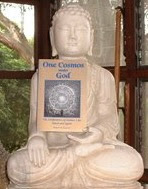
While we're on the subject, yet another reason why I am not a leftist is that it is an ideology that undermines true brotherly love, which is to say, caritas. It is astonishing to me that the Democrats are able to fraudulently depict themselves as the "party of compassion," when their central program involves half the population voting to force the other half to give it stuff. You can be in favor of that, but just don't call it "charitable" or "compassionate." Call it what it is: a form of misguided self-interest.
It is misguided because, as Tom Nugent explains today on NRO -- repeat after me -- "tax revenues will fall -- not rise -- when an economy slowed by tax hikes produces lower tax revenues. In all of this, the little guy -- not the rich guy -- is the one who’s going to get hurt.... Windfall profits taxes, higher capital gains taxes, higher maximum personal-income-tax rates, a national sales tax -- each and every one of these tax increases will ultimately hurt the little guy whose lifestyle and livelihood are inextricably attached to the economy."
At the same time they strangle the economy with taxes and thereby hurt "the little guy," leftists treat the profit motive as if it were a morally dubious thing. But as Paul Driessen explains, companies profit because they provide "goods, services and technologies that society needs and values -- legally, ethically, and by offering superior quality, lower cost, greater reliability, outstanding customer care and other benefits, while protecting the environment. It thereby stays in business, earns profits, and rewards investors who made its innovations and products possible." He quotes Milton Friedman's adage that “The social responsibility of business is to increase its profits,” and highlights the truism that profitability is "the most fundamental way a company is socially responsible -- to employees, customers, families and communities that have been improved by the company’s actions."
I realize that all of this is common sense unless you happen to be highly educated. In fact, a WSJ editorial this morning points out that high school seniors have more economic common sense than liberal politicians. Unlike other forms of illiteracy, economic illiteracy can be acquired, usually from a tenured carrier.
True charity can never be compulsory. Like any form of love, it must be freely given on pain of self-contradiction. Furthermore, it cannot be motivated merely by the feelings of the giver, but by the objective needs of the recipient, otherwise it becomes an exercise in self-congratulatory narcissism. And recognizing the objective needs of the recipient must take into account his total humanity -- including his spiritual essence -- not merely reduce him to his animal appetites. Otherwise, you can turn the recipient into a sort of half-human cripple.
While charity "consists in abolishing the egocentric distinction between 'me' and the 'other'" and "seeing the 'I' in the 'other' and the 'other' in the 'I'" (Schuon), different egos are at different levels of psychological development, so that to treat all people equally is to efface these important differences and to fail to recognize the humanity of the individual. In its wider context, charity does not only imply "beneficial action in relation to those who need it," but consideration of others’ feelings. Therefore, it is possible to be charitable in a very uncharitable manner.
The Golden Rule is to do unto others as you would have them do unto you, not necessarily as they would have you do unto them. The "doing" must flow from a "knowing," or from consciousness, not merely from one's feelings. As Schuon explains, the corollary of the Golden Rule is that we are not obliged to give our neighbor "what, in our opinion, we would not deserve if we were in his place." In short, in order to recognize what you deserve, you must simultaneously recognize what you most probably deserve good and hard, right in the kisser.
The Raccoon rule is that charity begins by lifting the world one a-hole at a time, beginning with oneself. Or, in the words of Schuon, "The first act of charity is to rid the soul of illusions and passions and thus rid the world of a maleficent being; it is to make a void so that God may fill it and, by this fullness, give Himself."
In ether worlds, charity begins at OMMMMMMMM.
Friday, August 10, 2007


Thursday, August 09, 2007
How to Distinguish Your Friends From the Barbarians
I'm not sure if my intention was entirely clear, but in my book, I attempt to draw a distinction between "culture" and "civilization," the former being local and contingent, the latter nonlocal and universal. A culture can be good or evil, depending upon how civilized it is.
"Civilization" is an archetype that, by its very nature, can never be fully attained on earth. It is the perfection and the totality to which this or that culture -- to the extent that it is healthy -- orients itself. In a sense, you might say that it is analogous to Augustine's distinction between the "City of Man" and "City of God." Evolution and progress can only occur in light of the "movement" toward civilization, which is why "progressives" are so curiously named, since their earthbound ideology specifically eliminates the possibility of objective progress toward this nonlocal telos.
One of my many objections to leftism is that it eliminates the idea of civilization and replaces it with culture. Multiculturalism explicitly maintains that various cultures are uniquely beautiful and valuable, and that there are no objective standards -- i.e., civilization -- by which we may judge them. Thus, because of this metaphysical pathology at the heart of leftism, it is not possible for them to notice, for example, that Israel is civilized and that it is surrounded by savages. To any civilized person, this observation is a banality of the first rank, but one of the most pernicious effects of leftist political correctness is that it outlaws civilization, generally equating it with "racism" or some other form of oppression.
Obviously, the so-called "Palestinians" and other Islamic death cults are barbarians, but the fact that this is not openly recognized and discussed is a kind of collectively enforced insanity. The odd thing about it is that it is not enforced by the barbarians themselves, who have no power over our minds. Rather, it is enforced by leftist elites in the media and academia. As noted at Belmont Club the other day, the left is the most critical "force multiplier" for our uncivilized enemies to gain power over us. In a very real way, the left represent the only hope for these barbarians who wish to destroy civilization.
Schuon writes that "civilization only represents a value provided it is supra-human in origin and implies for the 'civilized' man a sense of the sacred: only peoples who really have this sense and draw their life from it are truly civilized. If it is objected that... it is possible to conceive of a world that is civilized though having no religion, the answer is that in this case the civilization is devoid of value, or rather -- since there is no legitimate choice between the sacred and other things -- that it is the most fallacious of aberrations." Again, this is because culture draws its objective value from the vertical realm which transcends local space and time. To recognize the sacred is to recognize this transcendent order and our obligation to it.
Our intuition of the sacred -- without which we cannot know of true civilization -- is also our innate consciousness of the Divine. It is, according to Schuon, "a kind of universal respect, a kind of circumspection before the mystery of animate and inanimate creatures; and this without any favourable prejudice or weakness towards phenomena which manifest errors or vices, and which for that reason no longer present any mystery unless it be that of the absurd."
As such, while culture is -- given the very structure and possibility of universal existence -- no doubt necessary and inevitable, we owe it no fundamental allegiance or intrinsic respect. It is only valuable to the extent that it reflects "the immutable in the moving," or "the uncreate in the created, of the eternal in time, of the infinite in space, of the supraformal in forms; it is the mysterious introduction into one realm of existence of a presence which in reality contains and transcends that realm and could cause it to burst asunder in a sort of divine explosion. The sacred is the incommensurable, the transcendent, hidden within a fragile form belonging to this world..." (Schuon).
What applies to culture equally applies to the individual. Yes, in one sense, people are of infinite value, but only to the extent that they embody the infinite. Which is why there are so many "worthless" people, so to speak. We can only recognize their worthlessness to the extent that we recognize their (potential) divinity. Otherwise, we are in the absurd situation of suggesting that everyone is unconditionally of infinite value, which is logically indistinct from saying they are of no value, since there are no objective values by which to measure them. Only in such a pathological frame of mind could one award a Nobel Prize to a Yasser Arafat or Jimmy Carter, one of whom embodied evil, the other error, weakness, vanity, and resentment of the good -- not divine values, to say the least.
Now, the left wishes to cure mankind in the absence of a proper diagnosis of the individuals who constitute it. In fact, due to the very nature of the left, they cannot diagnose the illness because they cannot recognize it. That is, they are "humanists," an intrinsically anti-human ideology, since it specifically forbids the human individual from transcending himself and becoming truly human (since transcendence is believed to be fanciful). For them, there is nothing fundamentally wrong with the human being that a little coercive, top-down social engineering cannot cure -- not that there's anything to cure, since all cultures are beautiful, except maybe southern Christian culture, and all people are beautiful, except maybe wealthy white people... or conservative blacks... or people who listen to talk radio....
But as Schuon correctly states, the world is not a wreck because there is too much self-transcendence and not enough social engineering. Rather, "the world is miserable because men live beneath themselves." The fundamental error at the heart of the left is that it wishes "to reform the world without having either the will or the power to reform man, and this flagrant contradiction, this attempt to make a better world on the basis of a worsened humanity, can only end in the very abolition of what is human, and consequently in the abolition of happiness too." To truly reform man can only mean what it has always meant, which is to re-establish the broken link between the celestial and the mundane, the vertical and horizontal, cultures and the civilization they must embody.
It is a commonplace to point out that the left are hardly "liberal," meaning interested in liberty. Rather, as they have taken the wrecking ball to Spirit, they have simply replaced the internal law written in the heart of man with so many external laws written by the legislature. Thousands and thousands of laws to bind us to the leftist conception of the "good." But the good man -- the man who has transcended himself -- is not in need of this burdensome yoke.
There are Children of the Earth and Children of Light, and if your cOOnvision is awakened, you can distinguish one from the other in a nanosecond. The latter, "though he be a king, lives as if in the antechamber of Heaven; on this very earth and in his carnal body he has attached himself to Heaven and enclosed himself in a prolongation of those crystallisations of Light that are the celestial states" (Schuon). As implied in yesterday's post about the awakened sense of wonder, they live simply from day to day, but never in a repetitive way, for "the Lord makes all things new."
As above, so below; analogously, a culture is a sort of collective individual, while an individual is a private culture. True civilization is a sort of “mystical body" -- or, as Schuon describes it, "in so far as that is possible, a collective contemplative." And a Raccoon is none other than a private civilization.
One may define a person, if one allows oneself a somewhat permissible simplification, as a being that exists for the sake of its own perfection. --Josef Pieper
"Civilization" is an archetype that, by its very nature, can never be fully attained on earth. It is the perfection and the totality to which this or that culture -- to the extent that it is healthy -- orients itself. In a sense, you might say that it is analogous to Augustine's distinction between the "City of Man" and "City of God." Evolution and progress can only occur in light of the "movement" toward civilization, which is why "progressives" are so curiously named, since their earthbound ideology specifically eliminates the possibility of objective progress toward this nonlocal telos.
One of my many objections to leftism is that it eliminates the idea of civilization and replaces it with culture. Multiculturalism explicitly maintains that various cultures are uniquely beautiful and valuable, and that there are no objective standards -- i.e., civilization -- by which we may judge them. Thus, because of this metaphysical pathology at the heart of leftism, it is not possible for them to notice, for example, that Israel is civilized and that it is surrounded by savages. To any civilized person, this observation is a banality of the first rank, but one of the most pernicious effects of leftist political correctness is that it outlaws civilization, generally equating it with "racism" or some other form of oppression.
Obviously, the so-called "Palestinians" and other Islamic death cults are barbarians, but the fact that this is not openly recognized and discussed is a kind of collectively enforced insanity. The odd thing about it is that it is not enforced by the barbarians themselves, who have no power over our minds. Rather, it is enforced by leftist elites in the media and academia. As noted at Belmont Club the other day, the left is the most critical "force multiplier" for our uncivilized enemies to gain power over us. In a very real way, the left represent the only hope for these barbarians who wish to destroy civilization.
Schuon writes that "civilization only represents a value provided it is supra-human in origin and implies for the 'civilized' man a sense of the sacred: only peoples who really have this sense and draw their life from it are truly civilized. If it is objected that... it is possible to conceive of a world that is civilized though having no religion, the answer is that in this case the civilization is devoid of value, or rather -- since there is no legitimate choice between the sacred and other things -- that it is the most fallacious of aberrations." Again, this is because culture draws its objective value from the vertical realm which transcends local space and time. To recognize the sacred is to recognize this transcendent order and our obligation to it.
Our intuition of the sacred -- without which we cannot know of true civilization -- is also our innate consciousness of the Divine. It is, according to Schuon, "a kind of universal respect, a kind of circumspection before the mystery of animate and inanimate creatures; and this without any favourable prejudice or weakness towards phenomena which manifest errors or vices, and which for that reason no longer present any mystery unless it be that of the absurd."
As such, while culture is -- given the very structure and possibility of universal existence -- no doubt necessary and inevitable, we owe it no fundamental allegiance or intrinsic respect. It is only valuable to the extent that it reflects "the immutable in the moving," or "the uncreate in the created, of the eternal in time, of the infinite in space, of the supraformal in forms; it is the mysterious introduction into one realm of existence of a presence which in reality contains and transcends that realm and could cause it to burst asunder in a sort of divine explosion. The sacred is the incommensurable, the transcendent, hidden within a fragile form belonging to this world..." (Schuon).
What applies to culture equally applies to the individual. Yes, in one sense, people are of infinite value, but only to the extent that they embody the infinite. Which is why there are so many "worthless" people, so to speak. We can only recognize their worthlessness to the extent that we recognize their (potential) divinity. Otherwise, we are in the absurd situation of suggesting that everyone is unconditionally of infinite value, which is logically indistinct from saying they are of no value, since there are no objective values by which to measure them. Only in such a pathological frame of mind could one award a Nobel Prize to a Yasser Arafat or Jimmy Carter, one of whom embodied evil, the other error, weakness, vanity, and resentment of the good -- not divine values, to say the least.
Now, the left wishes to cure mankind in the absence of a proper diagnosis of the individuals who constitute it. In fact, due to the very nature of the left, they cannot diagnose the illness because they cannot recognize it. That is, they are "humanists," an intrinsically anti-human ideology, since it specifically forbids the human individual from transcending himself and becoming truly human (since transcendence is believed to be fanciful). For them, there is nothing fundamentally wrong with the human being that a little coercive, top-down social engineering cannot cure -- not that there's anything to cure, since all cultures are beautiful, except maybe southern Christian culture, and all people are beautiful, except maybe wealthy white people... or conservative blacks... or people who listen to talk radio....
But as Schuon correctly states, the world is not a wreck because there is too much self-transcendence and not enough social engineering. Rather, "the world is miserable because men live beneath themselves." The fundamental error at the heart of the left is that it wishes "to reform the world without having either the will or the power to reform man, and this flagrant contradiction, this attempt to make a better world on the basis of a worsened humanity, can only end in the very abolition of what is human, and consequently in the abolition of happiness too." To truly reform man can only mean what it has always meant, which is to re-establish the broken link between the celestial and the mundane, the vertical and horizontal, cultures and the civilization they must embody.
It is a commonplace to point out that the left are hardly "liberal," meaning interested in liberty. Rather, as they have taken the wrecking ball to Spirit, they have simply replaced the internal law written in the heart of man with so many external laws written by the legislature. Thousands and thousands of laws to bind us to the leftist conception of the "good." But the good man -- the man who has transcended himself -- is not in need of this burdensome yoke.
There are Children of the Earth and Children of Light, and if your cOOnvision is awakened, you can distinguish one from the other in a nanosecond. The latter, "though he be a king, lives as if in the antechamber of Heaven; on this very earth and in his carnal body he has attached himself to Heaven and enclosed himself in a prolongation of those crystallisations of Light that are the celestial states" (Schuon). As implied in yesterday's post about the awakened sense of wonder, they live simply from day to day, but never in a repetitive way, for "the Lord makes all things new."
As above, so below; analogously, a culture is a sort of collective individual, while an individual is a private culture. True civilization is a sort of “mystical body" -- or, as Schuon describes it, "in so far as that is possible, a collective contemplative." And a Raccoon is none other than a private civilization.
One may define a person, if one allows oneself a somewhat permissible simplification, as a being that exists for the sake of its own perfection. --Josef Pieper
Wednesday, August 08, 2007
Wondering Through the Bewilderness
I don't know if this is still valid, but I remember learning in graduate school that the EEGs of extreme extroverts and thrill seekers are unusually flat, which is why they seek thrills -- in order to stimulate their brain. In the absence of a vivid assault on the senses, they just feel kind of dead.
Conversely, more quiet and introverted people showed a great deal of brain activity even while resting and doing nothing. Often, such a person can feel overwhelmed by too much external activity -- it overloads their nervous system, so to speak. I definitely fall into that latter category, in that I have always required very little stimulation in order to feel hyper-stimulated. For me, one is often a crowd. O is enough to deal with.
I was thinking about this while reading Pieper's For the Love of Wisdom: Essays on the Nature of Philosophy, in which he discusses the meaning of philosophy. He quotes Socrates, who remarked that "the sense of wonder is the mark of the philosopher. Philosophy indeed has no other origin."
But contemporary philosophy does not begin with a sense of wonder, nor does it attempt to cultivate it. Rather, it begins with the capacity to doubt, and then aggravates it, eventually turning a good servant into a tyrannical master, for there is nothing that cannot be doubted by doubt. It takes no wisdom or skill at all.
One reason I could never be a secular leftist is that it is a cynical philosophy that drains everything it touches of the dimension of wonder. For atheists and other philistines, the world loses its metaphysical transparency; surface is reality and everything is self-evident. They elevate our crudest way of knowing the world to the highest wisdom, and their self-satisfaction ensures that no spiritual growth can occur. They are a closed system.
The sense of wonder is not merely a useless "luxury capacity" that serves no human purpose. Rather, it is a spiritual sense that discloses valid information about the cosmos. In fact, like a divining rod, it tells us where to look for the water. It senses those "holes" in the landscape through which the wondrous spiritual energies gently bubble forth to the surface.
The flatlander who is confined to the everyday, proximate world can never really philosophize, whereas for the person who has been arrested by a sense of wonder, "the immediate necessities of life fall mute, if only for this one moment of impassioned gazing at the wonder-inspiring physiognomy of the world." I suppose the atheist might object that he too wonders at Being, but he would never agree that wonder is a spiritual sense that discloses valid information about the object that has provoked it.
Pieper points out that it is not the abnormal, the sensational, and the exciting that provoke the sense of wonder. Indeed, this is the whole point. Many people compulsively seek out the abnormal and the sensational in order to simulate a dulled sense of wonder that is incapable of perceiving the wondrous in the commonplace:
"Whoever requires the unusual in order to fall into wonder shows himself by virtue of this very fact to be someone who has lost the ability to respond correctly to the mirandum of Being. The need for the sensational, even if it prefers to present itself under the guise of the bohemian, is an unmistakable sign of the absence of a genuine capacity for wonder and hence a bourgeois mentaility" (emphasis mine). This highlights the fact that the weirdest people are usually the most banal underneath their weirdness. And the far left is nothing if not a collection of weirdos, misfits, rejects, losers, crackpots, kooks, "rebels," poutliars, and boo-hoomians hiding behind their "authenticity."
A genuine sense of wonder preserves the extraordinary in the familiar, and is therefore a key to happiness. Pieper notes that for Aquinas, it was one of the indirect proofs of God, in that "in the very first moment of wonder man sets his foot on the path at the end of which lies the visio beatifica, the blissful perception of the ultimate cause." In this regard, you might say that wonder is a way of "metabolizing reality," in that it involves both digestion and resultant growth.
(By the way, for those of you with my book, much of what we are discussing here dovetails nicely with pp. 215-16, in which I point out that a goal of the spiritual life is "to be in a mild state of (?!) at all times.... It is a matter of removing obstacles to its reception, not setting up elaborate, complicated, or expensive situations to trick the ego into relaxing its death-grip for awhile." In fact, to further quote my bobself, "All of us can, with even unschooled intuition, receive these transitory, partial, and mixed messages from O, the flotsam and jetsam that whoosh up from the father shore.... [But] only through spiritual development can these metaphysical freebies evolve into a more conscious relationship to something felt as a continuous presence.")
Now, our sense of wonder ultimately answers to the Mystery of Being, and a mystery is not an annoygma to be solved but a riddle to be enjoyed and even played with. And all of this falls under the heading of "the answer is the disease that kills curiosity." As Pieper points out, our higher bewilderness is not to be coonfused with resignation, despair, or hopelessness. To the contrary, our engagement with the mystery of being is generative and therefore filled with hope and joy, because it brings us closer to the ultimate cause of our wondering.
What actually provoked me to wonder about wonder was an essay by Dennis Prager on how Excitement Deprives Children of Happiness -- which is another way of saying that immersing children in over-stimulating activities will inevitably lead to an atrophied sense of wonder. As Prager writes,
"because we parents so delight in the excitement we see in our children at those moments -- because they seem so happy then -- we can easily fall into the trap of providing more and more exciting things to keep them seemingly happy at just about every moment. And they in turn come to rely on getting excited to keep them happy and to identify excitement with happiness. But excitement is not happiness. In fact, it is the ultimate drug."
Never before in history has so much excitement been available to people, but are they really any happier or fulfilled? I agree with Prager that "all this excitement is actually inhibiting our children's ability to enjoy life and therefore be happy." It "renders young people jaded, not happy.... That is why the frequent complaint of 'I'm bored' is often a sign of a jaded child, i.e., a child addicted to excitement and therefore incapable of enjoying life when not being excited."
Yes, it's the simple things, like playing under your puppy,

talking to your best girl on the phone,

or eating a golf ball:

Conversely, more quiet and introverted people showed a great deal of brain activity even while resting and doing nothing. Often, such a person can feel overwhelmed by too much external activity -- it overloads their nervous system, so to speak. I definitely fall into that latter category, in that I have always required very little stimulation in order to feel hyper-stimulated. For me, one is often a crowd. O is enough to deal with.
I was thinking about this while reading Pieper's For the Love of Wisdom: Essays on the Nature of Philosophy, in which he discusses the meaning of philosophy. He quotes Socrates, who remarked that "the sense of wonder is the mark of the philosopher. Philosophy indeed has no other origin."
But contemporary philosophy does not begin with a sense of wonder, nor does it attempt to cultivate it. Rather, it begins with the capacity to doubt, and then aggravates it, eventually turning a good servant into a tyrannical master, for there is nothing that cannot be doubted by doubt. It takes no wisdom or skill at all.
One reason I could never be a secular leftist is that it is a cynical philosophy that drains everything it touches of the dimension of wonder. For atheists and other philistines, the world loses its metaphysical transparency; surface is reality and everything is self-evident. They elevate our crudest way of knowing the world to the highest wisdom, and their self-satisfaction ensures that no spiritual growth can occur. They are a closed system.
The sense of wonder is not merely a useless "luxury capacity" that serves no human purpose. Rather, it is a spiritual sense that discloses valid information about the cosmos. In fact, like a divining rod, it tells us where to look for the water. It senses those "holes" in the landscape through which the wondrous spiritual energies gently bubble forth to the surface.
The flatlander who is confined to the everyday, proximate world can never really philosophize, whereas for the person who has been arrested by a sense of wonder, "the immediate necessities of life fall mute, if only for this one moment of impassioned gazing at the wonder-inspiring physiognomy of the world." I suppose the atheist might object that he too wonders at Being, but he would never agree that wonder is a spiritual sense that discloses valid information about the object that has provoked it.
Pieper points out that it is not the abnormal, the sensational, and the exciting that provoke the sense of wonder. Indeed, this is the whole point. Many people compulsively seek out the abnormal and the sensational in order to simulate a dulled sense of wonder that is incapable of perceiving the wondrous in the commonplace:
"Whoever requires the unusual in order to fall into wonder shows himself by virtue of this very fact to be someone who has lost the ability to respond correctly to the mirandum of Being. The need for the sensational, even if it prefers to present itself under the guise of the bohemian, is an unmistakable sign of the absence of a genuine capacity for wonder and hence a bourgeois mentaility" (emphasis mine). This highlights the fact that the weirdest people are usually the most banal underneath their weirdness. And the far left is nothing if not a collection of weirdos, misfits, rejects, losers, crackpots, kooks, "rebels," poutliars, and boo-hoomians hiding behind their "authenticity."
A genuine sense of wonder preserves the extraordinary in the familiar, and is therefore a key to happiness. Pieper notes that for Aquinas, it was one of the indirect proofs of God, in that "in the very first moment of wonder man sets his foot on the path at the end of which lies the visio beatifica, the blissful perception of the ultimate cause." In this regard, you might say that wonder is a way of "metabolizing reality," in that it involves both digestion and resultant growth.
(By the way, for those of you with my book, much of what we are discussing here dovetails nicely with pp. 215-16, in which I point out that a goal of the spiritual life is "to be in a mild state of (?!) at all times.... It is a matter of removing obstacles to its reception, not setting up elaborate, complicated, or expensive situations to trick the ego into relaxing its death-grip for awhile." In fact, to further quote my bobself, "All of us can, with even unschooled intuition, receive these transitory, partial, and mixed messages from O, the flotsam and jetsam that whoosh up from the father shore.... [But] only through spiritual development can these metaphysical freebies evolve into a more conscious relationship to something felt as a continuous presence.")
Now, our sense of wonder ultimately answers to the Mystery of Being, and a mystery is not an annoygma to be solved but a riddle to be enjoyed and even played with. And all of this falls under the heading of "the answer is the disease that kills curiosity." As Pieper points out, our higher bewilderness is not to be coonfused with resignation, despair, or hopelessness. To the contrary, our engagement with the mystery of being is generative and therefore filled with hope and joy, because it brings us closer to the ultimate cause of our wondering.
What actually provoked me to wonder about wonder was an essay by Dennis Prager on how Excitement Deprives Children of Happiness -- which is another way of saying that immersing children in over-stimulating activities will inevitably lead to an atrophied sense of wonder. As Prager writes,
"because we parents so delight in the excitement we see in our children at those moments -- because they seem so happy then -- we can easily fall into the trap of providing more and more exciting things to keep them seemingly happy at just about every moment. And they in turn come to rely on getting excited to keep them happy and to identify excitement with happiness. But excitement is not happiness. In fact, it is the ultimate drug."
Never before in history has so much excitement been available to people, but are they really any happier or fulfilled? I agree with Prager that "all this excitement is actually inhibiting our children's ability to enjoy life and therefore be happy." It "renders young people jaded, not happy.... That is why the frequent complaint of 'I'm bored' is often a sign of a jaded child, i.e., a child addicted to excitement and therefore incapable of enjoying life when not being excited."
Yes, it's the simple things, like playing under your puppy,

talking to your best girl on the phone,

or eating a golf ball:

Monday, August 06, 2007
The Spiritual World and the Animal Environment
I may actually be able to write something new today. During the past month or more, I've been waking at 6:00 instead of 5:00, and the loss of that little hour makes all the difference. But this morning I woke up at 5:15, giving me a little window of uppertunity.
So, what does it all mean, anyway? Alfred North Whitehead defined philosophy as the pursuit of that question. As I have mentioned before, I'm not a bitter person, but I do still mildly resent what leftism has done to our educational system, because it took me half my life to unlearn all the leftst brain-washing and soul-dirtying and rearrive at where my philosophical endeavors should have started to begin with. I wasted so much time learning things that are not only wrong but harmful to the soul and incompatible with true happiness or fulfillment.
I hate to say this, because it sounds immodest or presumptuous, but these outwardly unpleasant little transitional phases I go through always have an implicit lesson, in that they 1) teach me not to take my (ab?)normal state of mind for granted, and 2) reacquaint me with the flatland world in order to better comprehend those souls who are stuck there permanently and have never been lifted above it. I don't know how anyone can stand to live there. It's just so... cramped... and ill-furnished.
What in the world is the world? Or, to put it another way, what kind of world is the world of man, and is it the same as the world? These questions are addressed in an enjoyable book I'm currently reading, For Love of Wisdom: Essays on the Nature of Philosophy, by Josef Pieper. One of the themes Pieper develops is the idea that all other animals merely live in a world, whereas human beings are privileged to (potentially, at least) live in the world.
For example, many people assume that all animals with eyes see the same object, when this is patently untrue. Pieper cites the example of a certain bird that preys on grasshoppers, but is incapable of seeing the grasshopper if it isn't moving. Only in leaping does the grasshopper become distinct from the background -- which is why many insects "play dead." In their resting form, not only are they "dead," but they are literally invisible. It is as if they drop into a hole and no longer exist in the world of the predator. Even if the bird were starving, it could search and search, and yet, never find the unmoving grasshopper right under its beak. In short, the animal cannot transcend its biological boundaries, even with an organ -- the eye -- seemingly equipped for the task.
Pieper quotes the biologist Uexküll, who distinguishes the animal's environment from the actual world. As he writes, "The environments of animals are comparable in no way to open nature, but rather to a cramped, ill-furnished apartment." Animals are confined to the environment to which they are adapted, and from which they can never escape. Most of the world is simply not perceived or even capable of being perceived. In fact, the world literally did not come into exstence until human beings happened upon the scene.
But given Darwinian principles -- which, by the way, we can only know about because we have transcended them -- how did mankind escape its environment and enter the real world? Or did we? Are we as trapped in a narrow cross-section of reality as any other tenured animal? If so, then both science and religion are impossible. Like the bird looking for the immobile grasshopper, we could find neither "the world" nor "God," despite diligent searching. But if science is possible, then God is necessary. Or, to put it another way, since God exists, science is possible.
Pieper writes that the human spirit is not so much defined by the property of immateriality as it is "by the ability to enter into relations with Being as a totality," in a way that clearly transcends our mere animal-environmental boundaries. (Interesting, isn't it, that the cult of global warming mostly appeals to those flatlanders who elevate the environment to the world? It is very much a religion for the folks mired down in 2D.)
Now, as Schuon always emphasized, the intellect properly so-called (i.e., nous) is not restricted to an environment. Rather, it is "relatively absolute" and therefore able to know the world. As Pieper writes, "it belongs to the very nature of a spiritual being to rise above the environment and so transcend adaptation and confinement," which in turn explains "the at once liberating and imperiling character with which the nature of spirit is immediatly associated."
This is what I was driving at on p. 92 of my book:
"Just as first singularity was an explosion into (and simultaneous creation of) material space-time, and the second singularity a discontinuous 'big bang' into the morphic space of biological possibility, the third singularity was an implosion into a trans-dimensional subjective space refracted through the unlikely lens of a primate brain. Up to the threshold of the third singularity, biology was firmly in control of the hominids, and for most of evolution, mind (such as it was) existed to serve the needs of the primate body. Natural selection did not, and could not have, 'programmed' us to know reality, only to survive in a narrow 'reality tunnel' constructed within the dialectical space between the world and our evolved senses."
But then suddenly Darwin was cast aside and "mind crossed a boundary into a realm wholly its own, a multidimensional landscape unmappable by science and unexplainable by natural selection"; humans ventured out of biological necessity and "into a realm with a vastly greater degree of freedom, well beyond the confining prison walls of the senses."
I suppose natural selection can explain our adaptation to an environment, but it cannot explain our discovery and comprehension of the world. Pieper quotes Aristotle, who wrote that "the soul is in a way all existing things." What did he mean by this? What he meant was that the soul is able to put itself in relation to the totality of Being. While other animals have only their little slice of Being, the human is able to grasp Being as a whole.
Thus -- running out of time here, but thus -- to be in Spirit is "to exist amid reality as a whole, in the face of the totality of Being." Spirit is not a world, but the world. Or, to be precise, "spirit" and "world" are reciprocal concepts, the one being impossible in the absence of the other. Science itself is a completely spiritual world, or it is no world at all, only an environment. Usually an academic environment.
So, what does it all mean, anyway? Alfred North Whitehead defined philosophy as the pursuit of that question. As I have mentioned before, I'm not a bitter person, but I do still mildly resent what leftism has done to our educational system, because it took me half my life to unlearn all the leftst brain-washing and soul-dirtying and rearrive at where my philosophical endeavors should have started to begin with. I wasted so much time learning things that are not only wrong but harmful to the soul and incompatible with true happiness or fulfillment.
I hate to say this, because it sounds immodest or presumptuous, but these outwardly unpleasant little transitional phases I go through always have an implicit lesson, in that they 1) teach me not to take my (ab?)normal state of mind for granted, and 2) reacquaint me with the flatland world in order to better comprehend those souls who are stuck there permanently and have never been lifted above it. I don't know how anyone can stand to live there. It's just so... cramped... and ill-furnished.
What in the world is the world? Or, to put it another way, what kind of world is the world of man, and is it the same as the world? These questions are addressed in an enjoyable book I'm currently reading, For Love of Wisdom: Essays on the Nature of Philosophy, by Josef Pieper. One of the themes Pieper develops is the idea that all other animals merely live in a world, whereas human beings are privileged to (potentially, at least) live in the world.
For example, many people assume that all animals with eyes see the same object, when this is patently untrue. Pieper cites the example of a certain bird that preys on grasshoppers, but is incapable of seeing the grasshopper if it isn't moving. Only in leaping does the grasshopper become distinct from the background -- which is why many insects "play dead." In their resting form, not only are they "dead," but they are literally invisible. It is as if they drop into a hole and no longer exist in the world of the predator. Even if the bird were starving, it could search and search, and yet, never find the unmoving grasshopper right under its beak. In short, the animal cannot transcend its biological boundaries, even with an organ -- the eye -- seemingly equipped for the task.
Pieper quotes the biologist Uexküll, who distinguishes the animal's environment from the actual world. As he writes, "The environments of animals are comparable in no way to open nature, but rather to a cramped, ill-furnished apartment." Animals are confined to the environment to which they are adapted, and from which they can never escape. Most of the world is simply not perceived or even capable of being perceived. In fact, the world literally did not come into exstence until human beings happened upon the scene.
But given Darwinian principles -- which, by the way, we can only know about because we have transcended them -- how did mankind escape its environment and enter the real world? Or did we? Are we as trapped in a narrow cross-section of reality as any other tenured animal? If so, then both science and religion are impossible. Like the bird looking for the immobile grasshopper, we could find neither "the world" nor "God," despite diligent searching. But if science is possible, then God is necessary. Or, to put it another way, since God exists, science is possible.
Pieper writes that the human spirit is not so much defined by the property of immateriality as it is "by the ability to enter into relations with Being as a totality," in a way that clearly transcends our mere animal-environmental boundaries. (Interesting, isn't it, that the cult of global warming mostly appeals to those flatlanders who elevate the environment to the world? It is very much a religion for the folks mired down in 2D.)
Now, as Schuon always emphasized, the intellect properly so-called (i.e., nous) is not restricted to an environment. Rather, it is "relatively absolute" and therefore able to know the world. As Pieper writes, "it belongs to the very nature of a spiritual being to rise above the environment and so transcend adaptation and confinement," which in turn explains "the at once liberating and imperiling character with which the nature of spirit is immediatly associated."
This is what I was driving at on p. 92 of my book:
"Just as first singularity was an explosion into (and simultaneous creation of) material space-time, and the second singularity a discontinuous 'big bang' into the morphic space of biological possibility, the third singularity was an implosion into a trans-dimensional subjective space refracted through the unlikely lens of a primate brain. Up to the threshold of the third singularity, biology was firmly in control of the hominids, and for most of evolution, mind (such as it was) existed to serve the needs of the primate body. Natural selection did not, and could not have, 'programmed' us to know reality, only to survive in a narrow 'reality tunnel' constructed within the dialectical space between the world and our evolved senses."
But then suddenly Darwin was cast aside and "mind crossed a boundary into a realm wholly its own, a multidimensional landscape unmappable by science and unexplainable by natural selection"; humans ventured out of biological necessity and "into a realm with a vastly greater degree of freedom, well beyond the confining prison walls of the senses."
I suppose natural selection can explain our adaptation to an environment, but it cannot explain our discovery and comprehension of the world. Pieper quotes Aristotle, who wrote that "the soul is in a way all existing things." What did he mean by this? What he meant was that the soul is able to put itself in relation to the totality of Being. While other animals have only their little slice of Being, the human is able to grasp Being as a whole.
Thus -- running out of time here, but thus -- to be in Spirit is "to exist amid reality as a whole, in the face of the totality of Being." Spirit is not a world, but the world. Or, to be precise, "spirit" and "world" are reciprocal concepts, the one being impossible in the absence of the other. Science itself is a completely spiritual world, or it is no world at all, only an environment. Usually an academic environment.
Subscribe to:
Posts (Atom)
Theme Song