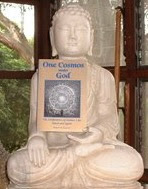
I really like Jonah Goldberg. He’s a guy who wears his intellect rather lightly, but is actually quite brilliant. If he wanted to, he could be just like those pretentious academic windbags of the left, but he just seems to have a pleasant and unassuming temperament.
In this latest editorial, Analogy vs. Analogy, Goldberg touches on something I’ve been thinking about, the question of what lessons, if any, we can really draw from history. Human beings cannot help being historical, for the simple reason that we exist in time, whereas animals essentially exist in the passing moment. But what is time? More on that below.
Here is an excerpt from Goldberg’s piece:
“’Example is the school of mankind,’ proclaimed Edmund Burke, the founder of modern conservatism, ‘and they will learn at no other.’
“Burke was disparaging the folly of French revolutionaries who believed that man could break the iron chains of history and create utopias through willpower and planning.
“This argument about whether history has anything to teach us has been the essence of the left-right debate for most of the last two centuries. Conservatives said: ‘There's nothing new under the sun.’ The left said: ‘Until now!’
".... [M]y favorite summary of this mindset comes from Stuart Chase, the intellectual often credited with coining the phrase ‘New Deal’ for FDR. ‘Are our plans wrong?’ he asked. ‘Who knows? Can we tell from reading history? Hardly.’”
Goldberg then goes on to point out that in the present divide between left and right, each side is guided by a different historical analogy. For the right “it is 1938 in Iran and Mahmoud Ahmadinejad is Hitler,” whereas for the left it is always Vietnam: “For many liberals of a certain generation, Vietnam is a universal peg, fitting perfectly into analytical holes of any shape. Indeed, the closest thing we get to a neat left-right divide on foreign policy these days is between those who see Vietnam as the Rosetta stone of international conundrums and those who see early 20th-century Europe as the universal translator.”
But are either of these analogies ultimately useful? History clearly has a phenomenal aspect (i.e., that part which we may know) and a noumenal aspect (whatever it is in itself). And of the phenomenal aspect of history, only a small subset of that is available to us in the form of written history. In other words, as Goldberg points out “we have a tendency to look for our car keys where the light is good. Our usable past is the past that is illuminated to us.”
“But what if there are historical parallels lurking in the shadows of our ignorance? What if the jihadists are more like the Muslim Barbary pirates made famous in the Marine Hymn with the line about 'the shores of Tripoli'? Or maybe they're more like the Thugees, an 18th-century murder cult in colonial India. Or the Panslavist Black Hand.... The point is, we don't know. But surely the ocean of historical experience cannot be summed up by the tributaries of Vietnam and Nazi Germany.”
One thing we do know--and this is without historical parallel--is that, thanks to technology, “second-rate powers like Iran, as well as basket cases like North Korea and modern-day Thugees like Bin Laden, can quickly attain destructive power Hitler only dreamed of. As science proceeds, this reality will loom ever more frightening.... It's ironic that just when the left has come to admire the utility of history, history may be offering us a blank page. The sobering question is: What kind of analogy will we provide for future generations?”
In my formulation--borrowed from Valentin Tomberg--I find it useful to consider history as having a “day” aspect and a “night” aspect. For example, the 9-11 movie that will be shown on ABC this Sunday night gives us a glimpse into the night time of history between the two Twin Tower attacks in 1993 and 2001. This is why it has the left so hysterical, for it completely undermines their clean and simplistic “day time” narrative of those years. But clearly, during the bright and carefree Clintonian daze, sinister events were incubating in the night time womb of history. And I’m not even blaming Clinton. We all wanted to ignore the gathering threat and sleepwalk through history at the time.
In fact, the majority of the country--and virtually all of the left--would like to return to the undisturbed slumber of daytime history. George Bush, on the other hand, is vilified for confronting threats head on while they incubate in the dark. Is a nightmare real if you wake up before it happened? This is the problem with the immature and anti--intellectual left. They chide Bush because Korea developed nukes on his watch, but also for preventing Saddam from developing them. Let’s be honest--anyone who thinks that Uday and Qsay would not have developed nuclear capability is just kidding themselves.
History, according to Tomberg, “is not to be understood as something which plays itself out on one level, but must be comprehended also in its dimension of height and depth.” Furthermore, “the key concepts for understanding the night aspect of history are ‘degeneration’ and ‘regeneration.’” Degeneration involves a gradual, step-by-step descent from a higher level, while regeneration is the opposite: re-ascent to a higher level. This is why, both personally and collectively, in the absence of periodic “booster shots” from above, things will simply degenerate below. Our much-rumored "fall" didn't just happen once upon a timeless, but is repeated on a moment-by-moment basis.
These periodic booster shots often enter history like depth charges from above. An avatar is not merely a human embodiment of the logos, but anyone--whether political, scientific, military, artistic, or religious--with a divine mission. For example, I consider the American founders as celestial emissaries par excellence, charged with a divine mission to regenerate a literally exhausted mankind. Subtract these and similar avatars from history, and history becomes a dark place indeed: imagine history without Abraham, Paul, Lincoln, Churchill--all people who saw into the night of history and altered its course.
As Tomberg puts it, “All movements of a social, political, artistic, intellectual, and religious kind may indeed have different speeds of devolution, but one thing they have in common: if no reinforcing impulse is given after a certain time, they will inevitably exhaust themselves. A thing of motion or or of life becomes a corpse unless 'reawakening impulses' intervene.”
Now the reactionary, illiberal left has repackaged itself as “progressive,” when the very nature of leftist assumptions prevents it. Because they are wholly horizontal and “live by day,” they can only regenerate themselves on their own excrement, so to speak. If you have any understanding of Freud’s developmental model, you will appreciate this in a quite literal way when reading, say, the explosively anal missives of dailykos. Talk about a historical rearguard action.
But in its own fumbling way, the conservative movement is clearly oriented to the “above,” always mindful of looking for regeneration outside the things of this world. The inspiration of the American founders did not come from the visible world. Indeed, they even say so: “We hold these truths to be self-evident, that all men are created equal, that they are endowed by their Creator with certain unalienable Rights” and “That to secure these rights, Governments are instituted among Men...”
History is a circle, but it is an open circle, or spiral. However, it can only maintain the upward spiral if it is specifically oriented to the finality of spiritual ideals that are not located in the field of time. These revivifying impulses from above eventually exhaust themselves unless we keep them alive. This is the esoteric meaning of conservatism. In its absence, gravity takes over and human nature takes care of the rest. Grace is to hitch a ride on one of the ubiquitous spiritual streams that course through the arteries of the cosmos, luring us toward our deustiny.
The historian of the future... will not compose a history of civilization--that is, the story of technological progress and sociopolitical struggles--but will trace the path of mankind through the stages of purification and illumination to its ultimate attainment of perfection. His narrative will detail mankind's temptations and their vanquishment, the standards set by particular individuals and groups, and the progressive lighting-up of new insights and the awakening of spiritual faculties among human beings. --Valentin Tomberg
Saturday, September 09, 2006


Thursday, September 07, 2006
Struggling With the Issue of Faith (updated 9.05.07)
That’s the title of Dr. Sanity’s thoughtful post today. Being in this somewhat murky state of mind, I decided to just steal it rather than come up with my own title.
In an interview last year, Siggy asked Dr. Sanity if she believed in God, and her response was, “I guess I have to say that I’m an agnostic and don’t take a position on whether God exists or not. I am aware of a very strong emotional part of me that wants very much to believe in an all powerful and all good deity that cares about me and all of humanity. But I also a very strong scientific and rational part that demands objective evidence of the existence of a Supreme Being. These two parts of me exist in a sort of dynamic tension right now and I expect that some day I might find a way to integrate them. Or, maybe not.”
Today, a year later, she says “That dynamic tension remains and the struggle continues unabated. I don't seem to have progressed too far along in resolving that conflict, but I have progressed. And, it is reassuring to realize that Siggy is correct when he says, “To struggle with faith is as much a part of faith as anything else.”
I think that last statement is very accurate, in the identical sense that we could say “To struggle with knowledge is as much a part of truth as anything else,” or “To struggle with love is as much a part of relationships as anything else.” Humans, by definition, are fated to inhabit--or at least span--the vast middle realm between being and nothingness, the absolute and the relative, matter and spirit, time and eternity. The paradoxes of human existence are impossibly difficult if you give them even a moment’s reflection.
Despite all of our scientific and technological advances over the past 300 years, I see no evidence that human beings are any happier than they have ever been. If anything, happiness might be even more elusive, because life is so much easier than it was for past generations, in that we expect things to go well and are devastated when tragedy and disappointment hit, which they inevitably do. No one in the past felt they were entitled to the things we take for granted--health, plentiful food, absence of physical pain, a long life, thriving children. Thus, it was no doubt easier not to become overly attached to the temporary and transient. Death was a constant reminder of the fragility and fickleness of existence. (In fact, this proximity to death probably conributes to the fact that the Islamists are willing to die for their idiotic beliefs, while so much of the West cannot muster the enthusiasm to defend itself.)
You could probably even say that this attitude prevailed in the West--let alone in undeveloped nations--through the great depression and World War II. As recently as the 1970’s, inflation was completely misunderstood by economists, and therefore untamable. The “boom or bust” business cycle really only began to seriously flatten after the Reagan revolution, in that our inevitable recessions are far less severe than in the past.
LIkewise, I am blessed to have diabetes at a time when it is so easy to control it with different types of insulin and instantaneous digital readouts of my blood sugar, but my mother, just one generation before, had no such control, with devastating results. My father died at 57 of an abdominal aneurysm that is easily detectable today with a $35 dollar exam at a health fair.
Given these profound existential changes, I think it is natural that humans began to focus on this side of the “time-eternity” divide, and look for our spiritual sustenance in the things of the world, so to speak--relationships, children, possessions, experiences. But does it work? I suppose for some. For others--perhaps we’re just neurotic, I don’t know--there is nothing in the field of time that will suffice or answer to this deeper call of the Spirit. It is a part of us that cries out for something that is not found in the objects of the world, and is only satisfied by one thing.
Is it real, this part of us that cries out for transcendence? I don’t know if that is the proper question. It’s somewhat analogous to falling in love and asking yourself if love is real or just an illusion, a trick of the nervous system. I’m imagining the Gagboy 10 or 20 years down the line, when he is at the peak of his enchantment with the opposite form of the complementary gender. “I know it looks like women are attractive, but don’t be fooled. It’s just Darwin playing tricks on you, trying to get you to reproduce. In reality, woman aren’t attractive or unattractive. To the extent that you find them beautiful, just remember that it’s an illusion programmed into you by evolution.”
“Gee, thanks, Dad!”
But isn’t this the same kind of “sophisticated” advice we might receive from the typical college professor regarding religion? “God? Probably nothing more than an illusion programmed into our nervous system. You can ignore it.” But doesn’t that just beg the question of whether everything isn’t just an illusion built into our nervous system, including the statement that everything is? That way madness lies. But also tenure, so there are compensations.
If we consider religiosity on a continuum from extreme atheism on the left side (“zero”) to mystical union on the right (“one hundred”), let us suppose that Dr. Sanity is at 50. Well, probably more like 49. I myself started at closer to zero, or at least veered in that direction after an initial interest in Eastern religions prompted by the Beatles’ (especially George’s) adoption of yoga. But I became seriously interested in philosophy during my college years, and virtually all modern philosophy is essentially atheistic, whether existentialism, positivism, phenomenology, what have you.
Just recently I have begun to think of religiosity as simply “the right way to live,” so to speak. After all, these are traditions that somehow nourished the human soul for hundreds and thousands of years, almost as if we were made for them and they were made for us. Regardless of whether or not we may attribute these traditions to a creator, I find that there is a wisdom in authentic religion that far surpasses what any single mind could have come up with.
It’s a bit like marriage and the family. No one “invented” either, but for most people it is simply the “right way” to live. Sure, you can experiment with other ways. Like Bill Maher, you can date porn stars, substitute dogs for children, and worship gaia, but is this really the way we’re built? Does he look happy or well adjusted to you?
I didn’t actually dive headlong into religion until 1995. In my case it was yoga, but once I did, the part of me that was hungering for transcendence all along began to “grow.” It reminds me of what they say about babies--”sleep begets sleep.” That is, if they nap more during the day, they sleep better at night. Likewise, faith begets faith. Just by taking that leap and living in the way humans have always lived, something automatic seems to kick in.
I don’t mean to trivialize it, but it reminds me of sports. I think it has to do with the arrival of the Gagboy last year, but before that, I was an absolutely fanatical Dodger fan. To be honest, the spell started to be broken when they were purchased by Fox from the O’Malley family, but from the age of nine, I lived and died with each win or loss. And yet--especially as an adult--I would sometimes reflect on the absurdity of my devotion. As Seinfeld said, when it comes right down to it, since the players constantly change, you're essentially rooting for laundry. But was I any happier when I thought this way? No, not at all. In fact, it just spoiled the fun.
There’s an old saying in baseball: “Don’t think, you’ll hurt the ballclub.” I think most philosophy falls into this category. There are ways to think that will be metaphysically fruitful and add to your fulfillment, other essentially circular forms of thought that are spiritually barren and go from nowhere to nothing (and certainly won't help you hit a curveball). To be honest, they aren’t worthy of man, itself a statement that touches on the mystery of what man actually is.
The "good news" of religion is that the world is not a closed circle, that it is not an eternal prison, that it has an exit and an entrance.... "Perdition" is to be caught up in the eternal circulation of the world of the closed circle... [whereas] "salvation" is life in the world of the open circle, or spiral, where there is both exit and entrance. --Meditations on the Tarot
In an interview last year, Siggy asked Dr. Sanity if she believed in God, and her response was, “I guess I have to say that I’m an agnostic and don’t take a position on whether God exists or not. I am aware of a very strong emotional part of me that wants very much to believe in an all powerful and all good deity that cares about me and all of humanity. But I also a very strong scientific and rational part that demands objective evidence of the existence of a Supreme Being. These two parts of me exist in a sort of dynamic tension right now and I expect that some day I might find a way to integrate them. Or, maybe not.”
Today, a year later, she says “That dynamic tension remains and the struggle continues unabated. I don't seem to have progressed too far along in resolving that conflict, but I have progressed. And, it is reassuring to realize that Siggy is correct when he says, “To struggle with faith is as much a part of faith as anything else.”
I think that last statement is very accurate, in the identical sense that we could say “To struggle with knowledge is as much a part of truth as anything else,” or “To struggle with love is as much a part of relationships as anything else.” Humans, by definition, are fated to inhabit--or at least span--the vast middle realm between being and nothingness, the absolute and the relative, matter and spirit, time and eternity. The paradoxes of human existence are impossibly difficult if you give them even a moment’s reflection.
Despite all of our scientific and technological advances over the past 300 years, I see no evidence that human beings are any happier than they have ever been. If anything, happiness might be even more elusive, because life is so much easier than it was for past generations, in that we expect things to go well and are devastated when tragedy and disappointment hit, which they inevitably do. No one in the past felt they were entitled to the things we take for granted--health, plentiful food, absence of physical pain, a long life, thriving children. Thus, it was no doubt easier not to become overly attached to the temporary and transient. Death was a constant reminder of the fragility and fickleness of existence. (In fact, this proximity to death probably conributes to the fact that the Islamists are willing to die for their idiotic beliefs, while so much of the West cannot muster the enthusiasm to defend itself.)
You could probably even say that this attitude prevailed in the West--let alone in undeveloped nations--through the great depression and World War II. As recently as the 1970’s, inflation was completely misunderstood by economists, and therefore untamable. The “boom or bust” business cycle really only began to seriously flatten after the Reagan revolution, in that our inevitable recessions are far less severe than in the past.
LIkewise, I am blessed to have diabetes at a time when it is so easy to control it with different types of insulin and instantaneous digital readouts of my blood sugar, but my mother, just one generation before, had no such control, with devastating results. My father died at 57 of an abdominal aneurysm that is easily detectable today with a $35 dollar exam at a health fair.
Given these profound existential changes, I think it is natural that humans began to focus on this side of the “time-eternity” divide, and look for our spiritual sustenance in the things of the world, so to speak--relationships, children, possessions, experiences. But does it work? I suppose for some. For others--perhaps we’re just neurotic, I don’t know--there is nothing in the field of time that will suffice or answer to this deeper call of the Spirit. It is a part of us that cries out for something that is not found in the objects of the world, and is only satisfied by one thing.
Is it real, this part of us that cries out for transcendence? I don’t know if that is the proper question. It’s somewhat analogous to falling in love and asking yourself if love is real or just an illusion, a trick of the nervous system. I’m imagining the Gagboy 10 or 20 years down the line, when he is at the peak of his enchantment with the opposite form of the complementary gender. “I know it looks like women are attractive, but don’t be fooled. It’s just Darwin playing tricks on you, trying to get you to reproduce. In reality, woman aren’t attractive or unattractive. To the extent that you find them beautiful, just remember that it’s an illusion programmed into you by evolution.”
“Gee, thanks, Dad!”
But isn’t this the same kind of “sophisticated” advice we might receive from the typical college professor regarding religion? “God? Probably nothing more than an illusion programmed into our nervous system. You can ignore it.” But doesn’t that just beg the question of whether everything isn’t just an illusion built into our nervous system, including the statement that everything is? That way madness lies. But also tenure, so there are compensations.
If we consider religiosity on a continuum from extreme atheism on the left side (“zero”) to mystical union on the right (“one hundred”), let us suppose that Dr. Sanity is at 50. Well, probably more like 49. I myself started at closer to zero, or at least veered in that direction after an initial interest in Eastern religions prompted by the Beatles’ (especially George’s) adoption of yoga. But I became seriously interested in philosophy during my college years, and virtually all modern philosophy is essentially atheistic, whether existentialism, positivism, phenomenology, what have you.
Just recently I have begun to think of religiosity as simply “the right way to live,” so to speak. After all, these are traditions that somehow nourished the human soul for hundreds and thousands of years, almost as if we were made for them and they were made for us. Regardless of whether or not we may attribute these traditions to a creator, I find that there is a wisdom in authentic religion that far surpasses what any single mind could have come up with.
It’s a bit like marriage and the family. No one “invented” either, but for most people it is simply the “right way” to live. Sure, you can experiment with other ways. Like Bill Maher, you can date porn stars, substitute dogs for children, and worship gaia, but is this really the way we’re built? Does he look happy or well adjusted to you?
I didn’t actually dive headlong into religion until 1995. In my case it was yoga, but once I did, the part of me that was hungering for transcendence all along began to “grow.” It reminds me of what they say about babies--”sleep begets sleep.” That is, if they nap more during the day, they sleep better at night. Likewise, faith begets faith. Just by taking that leap and living in the way humans have always lived, something automatic seems to kick in.
I don’t mean to trivialize it, but it reminds me of sports. I think it has to do with the arrival of the Gagboy last year, but before that, I was an absolutely fanatical Dodger fan. To be honest, the spell started to be broken when they were purchased by Fox from the O’Malley family, but from the age of nine, I lived and died with each win or loss. And yet--especially as an adult--I would sometimes reflect on the absurdity of my devotion. As Seinfeld said, when it comes right down to it, since the players constantly change, you're essentially rooting for laundry. But was I any happier when I thought this way? No, not at all. In fact, it just spoiled the fun.
There’s an old saying in baseball: “Don’t think, you’ll hurt the ballclub.” I think most philosophy falls into this category. There are ways to think that will be metaphysically fruitful and add to your fulfillment, other essentially circular forms of thought that are spiritually barren and go from nowhere to nothing (and certainly won't help you hit a curveball). To be honest, they aren’t worthy of man, itself a statement that touches on the mystery of what man actually is.
The "good news" of religion is that the world is not a closed circle, that it is not an eternal prison, that it has an exit and an entrance.... "Perdition" is to be caught up in the eternal circulation of the world of the closed circle... [whereas] "salvation" is life in the world of the open circle, or spiral, where there is both exit and entrance. --Meditations on the Tarot
Monday, September 04, 2006
One Cosmos Under a False God
Regarding yesterday’s post, Grant has graciously conceded that, as Will put it, “obnoxiousness in the defense of the Spirit is no vice" (it certainly can be, but it is clearly not always).
“However,” notes Grant, “there remains the sticking point of unity. In most credible spiritual systems, and as implied by the title of your own book and blog, everything that exists is of one piece, making Springsteen, moonbat that he is, contiguous with you, me, and everyone else. There is an appearance of division among people into separate beings but it seems clear that there is no actual division at all on a deeper level.
“The implication I am making is that everyone is the Self, and therefore it is logical to treat everyone as least as well as one would treat oneself. Following this line of thought, would you call yourself a moonbat or a spokeshole if you found yourself wrong about something? [Er, yes. I have many times made reference to my youthful jackassery.] Suppose you were mistaken about certain things, and you wanted to firmly correct your own behavior or beliefs--wouldn't you handle your self-correction with love, consideration and respect, even while being firm and severe? [Not really. In these matters there is no higher consideration than truth.]
“People are harsh on themselves sometimes--they may have inner dialogues that are terribly cruel. As rocker Graham Parker put it, ‘nobody hurts you harder than yourself. This self-inflicted pain is counterproductive. Therapists inculcate self-regard whenever possible, along with an ability to critique oneself honestly but without rancor or shame. [This is not true. Self-regard is worthless, if not harmful, if it is not based on an accurate view of reality, both internal and external. Both spirituality and good therapy aim at truth, not “self-regard.” Likewise, we should not treat others as they want to be treated, but as we--and by extension they---deserve to be treated. ]
“To finish my argument, I just have a lingering 10% suspicion that obnoxiousness, while effective for fostering changes, is unhealthy for the human corpus at large, the group Self, and the purposes that obnoxiousness serves could be accomplished in healthier ways. Could not Springsteen be seen as a mistaken friend rather than an alien entity to be belittled and discounted? Does Self love preclude severity and the ability to critique others?”
There are several points to be addressed here. First of all, you are confusing the meaning of “one,” something that new-age types generally do (although I have no idea whether you are in that category). As Coleridge put it, "two very different meanings lurk in the word, one."
As I wrote some time ago, “it cannot be forgotten that the positing of the One is not merely a dogma, but an experience--an experience vouchsafed to Moses on Sinai, as well as others before and since. In this regard, it is very similar to Vedanta, in that the Upanishads simply record direct encounters with the ultimate Mystery.”
“Allegorically, we enjoyed a continuous oneness with the Creator in Eden. However, this was not unity but oneness, something clearly not as lofty as unity, for unity requires our separateness from God, but then reconciliation at a higher, more complex and differentiated level, not a lower one of mere undifferentiated blending.... The name of God is the Name of the Unity of All Being. (Unity, not oneness.)”
The analogy with your body is exact. Your body, with all of its inconceivable complexity, is somehow a unity (in fact, disease, both physical and mental, may be thought of as a breakdown of this unity). If it were merely one, then it would simply be a pile of undifferentiated protoplasm.
In another post, I wrote that
“The difference between spiritual progressives and secular reactionaries is that they worship different gods--or more accurately, they have entirely incompatible understandings of the meaning of One. There is an antinomy between these two Ones: there is a left one and a right One--or more precisely, a higher One and a lower one.
“The Christian hermeticist Valentin Tomberg uses a visual image to conceptualize the problem. Imagine two cones placed base to base. At the top there is a point, in the middle an ‘equator’ where the bases meet, and at the bottom another point. Now imagine this as a sort of crystal. At the top is the white point where pure light, which is the synthesis of all colors, enters.
“As the light moves down toward the equator it becomes more and more differentiated into the various colors of the spectrum, until they reach their maximum degree of separation and intensity at the equator. Moving further down, the colors begin to merge until, at the bottom point, they once again lose all of their distinction and become black, which represents the blending and confusion of all colors. There is one sort of synthesis or Oneness above (the white point) and an entirely different kind of oneness below (the black point).
“The white point is analogous to wisdom, for it represents the underlying unity of all the different types of knowledge available at the equator, where all of the individual colors represent various disciplines and sciences.
“Perhaps you can see where I’m going with this, for it touches on the central point of my book and of this blog. The synthesis of all our seemingly contradictory truths lies ‘above,’ toward the white light of wisdom. If two seemingly contradictory things are true, say, the Book of Genesis and the theory of evolution, then their common source of truth must be found above, not below. There is a way to resolve the contradiction, but not by finding a compromise between the two at the "equator" or by simply confusing and blending them together below.
“For example, teaching intelligent design as an adjunct or alternative to natural selection is simply adding another color to the equator. Even worse, teaching it as the only truth would take both the Creator and science down to the black point, merging and blending science and theology in an unhealthy way. In fact, this is what is done in the Islamic world. Yes, they have intellectual and spiritual unity there, but it is the bad unity of the black point: One Nation Under God’s Boot Heel, so to speak. The identical thing happens in secular totalitarian states, or on leftist college campuses, where intellectual diversity is not permitted. What we want is to allow maximum diversity but to synthesize it on higher level, not eliminate it on a lower one: this is the meaning of One Cosmos Under God.
“Ironically, the secular left in America regard their fellow religious citizens as an incipient Taliban that wishes to enforce a black-point unity, when the opposite is true. That is, to the secular left, there is no white point above or black point below. Rather, there is only the equator, where we all live in our beautiful, diverse cultures and subcultures, none better than any other: multiculturalism, moral relativism, no objective or ‘privileged’ truth. And yet, multiculturalism and diversity are enforced from on high despite the fact that the left supposedly does not recognize the existence of morally superior cultural perspectives. What’s going on?
“In reality, the left is enforcing their absolute black point god, but simply denying it. They don't really care what culture you're from, so long as you are committed to diversity itself, and intolerant of any other view. This is nothing less than the unholy god of the black point flexing its muscle while pretending to be just another beautiful color in the reignbelow.
“In reality, there is no absolute system at the equator that can synthesize knowledge and explain our existence. There is only diversity and contradiction there, which is as it should be. Otherwise there would be no creation, nothing separate from the Creator. However, it is only the white light above that illuminates and unites everything below. We must maintain a commitment to that absolute white light that is reflected in all the relative truths at the equator, not to this or that relative truth enforced absolutely from below.
“Or we may simply affirm the trinitarian root of all goodness that is found on any coin: Liberty, In God We Trust, and E Pluribus Unum.”
On this Middle Earth plane we inhabit, God’s very purpose--or so we have heard from the wise--is to create a Unity starting from scratch, or from “bang,” if you will. Human beings are central to this task, as we embody the full spectrum of cosmic existence, and serve as the very link between above and below, the celestial and the mundane, the one and the many. There are forces opposed to this evolutionary progress, and it is our task to correct them, occasionally with divine severity. So yes, ultimately I am “one” with Bruce Springsteen and other moonbats, only on a level of reality that is inaccessible to them by virtue of their own benighted philosophies.
For it is written, "sometimes you have to crack on a bad egg to make an Om alight." Zen masters do it all the time. WHACK! Speaking of which, here's a koan: who's buried in Grant's duum?
“However,” notes Grant, “there remains the sticking point of unity. In most credible spiritual systems, and as implied by the title of your own book and blog, everything that exists is of one piece, making Springsteen, moonbat that he is, contiguous with you, me, and everyone else. There is an appearance of division among people into separate beings but it seems clear that there is no actual division at all on a deeper level.
“The implication I am making is that everyone is the Self, and therefore it is logical to treat everyone as least as well as one would treat oneself. Following this line of thought, would you call yourself a moonbat or a spokeshole if you found yourself wrong about something? [Er, yes. I have many times made reference to my youthful jackassery.] Suppose you were mistaken about certain things, and you wanted to firmly correct your own behavior or beliefs--wouldn't you handle your self-correction with love, consideration and respect, even while being firm and severe? [Not really. In these matters there is no higher consideration than truth.]
“People are harsh on themselves sometimes--they may have inner dialogues that are terribly cruel. As rocker Graham Parker put it, ‘nobody hurts you harder than yourself. This self-inflicted pain is counterproductive. Therapists inculcate self-regard whenever possible, along with an ability to critique oneself honestly but without rancor or shame. [This is not true. Self-regard is worthless, if not harmful, if it is not based on an accurate view of reality, both internal and external. Both spirituality and good therapy aim at truth, not “self-regard.” Likewise, we should not treat others as they want to be treated, but as we--and by extension they---deserve to be treated. ]
“To finish my argument, I just have a lingering 10% suspicion that obnoxiousness, while effective for fostering changes, is unhealthy for the human corpus at large, the group Self, and the purposes that obnoxiousness serves could be accomplished in healthier ways. Could not Springsteen be seen as a mistaken friend rather than an alien entity to be belittled and discounted? Does Self love preclude severity and the ability to critique others?”
There are several points to be addressed here. First of all, you are confusing the meaning of “one,” something that new-age types generally do (although I have no idea whether you are in that category). As Coleridge put it, "two very different meanings lurk in the word, one."
As I wrote some time ago, “it cannot be forgotten that the positing of the One is not merely a dogma, but an experience--an experience vouchsafed to Moses on Sinai, as well as others before and since. In this regard, it is very similar to Vedanta, in that the Upanishads simply record direct encounters with the ultimate Mystery.”
“Allegorically, we enjoyed a continuous oneness with the Creator in Eden. However, this was not unity but oneness, something clearly not as lofty as unity, for unity requires our separateness from God, but then reconciliation at a higher, more complex and differentiated level, not a lower one of mere undifferentiated blending.... The name of God is the Name of the Unity of All Being. (Unity, not oneness.)”
The analogy with your body is exact. Your body, with all of its inconceivable complexity, is somehow a unity (in fact, disease, both physical and mental, may be thought of as a breakdown of this unity). If it were merely one, then it would simply be a pile of undifferentiated protoplasm.
In another post, I wrote that
“The difference between spiritual progressives and secular reactionaries is that they worship different gods--or more accurately, they have entirely incompatible understandings of the meaning of One. There is an antinomy between these two Ones: there is a left one and a right One--or more precisely, a higher One and a lower one.
“The Christian hermeticist Valentin Tomberg uses a visual image to conceptualize the problem. Imagine two cones placed base to base. At the top there is a point, in the middle an ‘equator’ where the bases meet, and at the bottom another point. Now imagine this as a sort of crystal. At the top is the white point where pure light, which is the synthesis of all colors, enters.
“As the light moves down toward the equator it becomes more and more differentiated into the various colors of the spectrum, until they reach their maximum degree of separation and intensity at the equator. Moving further down, the colors begin to merge until, at the bottom point, they once again lose all of their distinction and become black, which represents the blending and confusion of all colors. There is one sort of synthesis or Oneness above (the white point) and an entirely different kind of oneness below (the black point).
“The white point is analogous to wisdom, for it represents the underlying unity of all the different types of knowledge available at the equator, where all of the individual colors represent various disciplines and sciences.
“Perhaps you can see where I’m going with this, for it touches on the central point of my book and of this blog. The synthesis of all our seemingly contradictory truths lies ‘above,’ toward the white light of wisdom. If two seemingly contradictory things are true, say, the Book of Genesis and the theory of evolution, then their common source of truth must be found above, not below. There is a way to resolve the contradiction, but not by finding a compromise between the two at the "equator" or by simply confusing and blending them together below.
“For example, teaching intelligent design as an adjunct or alternative to natural selection is simply adding another color to the equator. Even worse, teaching it as the only truth would take both the Creator and science down to the black point, merging and blending science and theology in an unhealthy way. In fact, this is what is done in the Islamic world. Yes, they have intellectual and spiritual unity there, but it is the bad unity of the black point: One Nation Under God’s Boot Heel, so to speak. The identical thing happens in secular totalitarian states, or on leftist college campuses, where intellectual diversity is not permitted. What we want is to allow maximum diversity but to synthesize it on higher level, not eliminate it on a lower one: this is the meaning of One Cosmos Under God.
“Ironically, the secular left in America regard their fellow religious citizens as an incipient Taliban that wishes to enforce a black-point unity, when the opposite is true. That is, to the secular left, there is no white point above or black point below. Rather, there is only the equator, where we all live in our beautiful, diverse cultures and subcultures, none better than any other: multiculturalism, moral relativism, no objective or ‘privileged’ truth. And yet, multiculturalism and diversity are enforced from on high despite the fact that the left supposedly does not recognize the existence of morally superior cultural perspectives. What’s going on?
“In reality, the left is enforcing their absolute black point god, but simply denying it. They don't really care what culture you're from, so long as you are committed to diversity itself, and intolerant of any other view. This is nothing less than the unholy god of the black point flexing its muscle while pretending to be just another beautiful color in the reignbelow.
“In reality, there is no absolute system at the equator that can synthesize knowledge and explain our existence. There is only diversity and contradiction there, which is as it should be. Otherwise there would be no creation, nothing separate from the Creator. However, it is only the white light above that illuminates and unites everything below. We must maintain a commitment to that absolute white light that is reflected in all the relative truths at the equator, not to this or that relative truth enforced absolutely from below.
“Or we may simply affirm the trinitarian root of all goodness that is found on any coin: Liberty, In God We Trust, and E Pluribus Unum.”
On this Middle Earth plane we inhabit, God’s very purpose--or so we have heard from the wise--is to create a Unity starting from scratch, or from “bang,” if you will. Human beings are central to this task, as we embody the full spectrum of cosmic existence, and serve as the very link between above and below, the celestial and the mundane, the one and the many. There are forces opposed to this evolutionary progress, and it is our task to correct them, occasionally with divine severity. So yes, ultimately I am “one” with Bruce Springsteen and other moonbats, only on a level of reality that is inaccessible to them by virtue of their own benighted philosophies.
For it is written, "sometimes you have to crack on a bad egg to make an Om alight." Zen masters do it all the time. WHACK! Speaking of which, here's a koan: who's buried in Grant's duum?
Sunday, September 03, 2006
Higher Bobnoxiousness
Reader Grant writes, “Jeez Bob, in the course of this blogorama on music you have referred to Bruce Springsteen as a ‘moonbat’ and Ann Coulter* as spiritually and aesthetically ‘autistic.’ Even if elements of what you say are true, still it smacks of hyperbole and cuteness. I am willing to concede the existence of your much-bruited obnoxiousness at this point.
“The question which arises: can obnoxiousness and godliness coexist in an enlightened person, or is this combination diagnostic of a divided and egoistic persona? Have there been obnoxious seers and saints in history, or have they all been, like Jesus, invariably free from the tendency to noxious commentary?
“I request that the issue of obnoxiousness in spirituallity be taken out for a test drive in one of your blog entries, Dr. Godwin, if you don't mind.”
First of all, it’s somewhat difficult to nail down the precise meaning of this term. Webster's’ Dictionary defines obnoxious as “liable to a hurtful influence,” or “odiously or disgustingly objectionable,” while the Oxford simply says “extremely unpleasant.” However, in common parlance, the word usually just refers to a garden-variety jerk, like Howard Dean, Keith Olbermann, Randi Rhodes or Bill Maher. Sometimes it refers to people who don’t know how not to be a jerk--Jimmy Carter, Helen Thomas, Maureen Dowd, Ted Kennedy.
However, there is also a form of obnoxiousness that is both temporary and beneficial. It is something that comes into play in both psychotherapy and in spirituality, for both enterprises involve breaking through defenses and introducing unpleasant, sometimes even catastrophic, truths.
In this regard, all effective psychotherapists and true spiritual teachers had better be obnoxious at one time or another. A therapist who does not occasionally confront the patient with unpleasant truths is likely to be little more than a “hand holder” or “professional friend.” And a guru or spiritual teacher who does not point the finger directly at you and say, in effect, “You are one f***** up individual,” is not likely the genuine article.
In this latter sense of the term, I don’t have time to count the many obnoxious sayings of Jesus: “Do not think that I came to bring peace on earth. I did not come to bring peace but a sword.” He says that most people are incapable of walking his narrow path, refers to listeners as a “brood of vipers,” goes ballistic on the money changers, curses a fig tree, calls people hypocrites, characterizes the religious authorities as “fools and blind,” and frankly says that most people are headed straight for hell.
Likewise, in the Bhagavad Gita, Krishna repeatedly rebukes Arjuna for his cowardice, ignorance, and narrow-mindedness: “If you refuse to fight this righteous war.... you will be a sinner, and disgraced. People will speak ill of you throughout the ages. You will be like the mooonbats, like Bruce Springsteen.” “In every age I come back to deliver the holy” and “destroy the sinner.” “The ignorant, the faithless, the doubter goes to his destruction.” “The entire world is deluded by moods and mental states.... The evil-doers turn not toward me. They are sunk low among mortals. Their judgment is lost in the maze of Maya, until the heart is human no longer, changed within to the heart of a devil, like Jimmy Carter."
The Upanishads also make it clear that most people are idiots: “Rare is he who, looking for immortality, shuts his eyes to what is without and beholds the Self. Fools follow the desires of the flesh and fall into the snare of all-encompassing death.” “Worlds there are without suns, covered up with darkness. To these after death go the ignorant, slayers of the Self.”
Shankara is particularly rough on the metaphysically ignorant, referring to them as “suicides” who “clutch at the unreal and destroy themselves. What greater fool can there be than the man who has obtained this rare human birth... and yet fails, through delusion, to realize his own highest good?” “Know that the deluded man who walks the dreadful path of sense-craving moves nearer to his ruin with every step.”
I am also reminded of an obnoxious comment made by Sri Aurobindo about why most people are unsuited for his narrow spiritual path: "I do not readily accept disciples, as this path of Yoga is a difficult one and can be followed only if there is a special call." In another letter he balked at the notion of trying to create some kind of mass movement, because "For serious work it is a poison.... a movement in the case of a work like mine means the founding of a school or a sect or some other damned nonsense. It means that hundreds or thousands of useless people join in and corrupt the work or reduce it to a pompous farce from which the Truth that was coming down recedes into secrecy and silence."
And Schuon probably made more obnoxious statements than even Jesus or Petey: “Contemporary man, in spite of his being marked by certain experiences due to the senescence of humanity, is spiritually soft and ineffective and intellectually ready to commit every possible betrayal, which will seem to him as summits of intelligence.... In a general way, the man of the ‘last days’ is a blunted creature, and the best proof of this is that the only ‘dynamism’ of which he is still capable is that which tends downwards, and which is no more than a passivity taking advantage of cosmic gravity; it is the agitation of a man who lets himself be carried away by a torrent and who imagines that he is creating this torrent himself by his agitation.”
So, am I obnoxious? I certainly hope so, at least to that brood of vipers out there who have somehow accidentally stumbled upon my blog.
*****
*Not quite accurate. I simply said, in response to someone's comment that Coulter was a "Deadhead," that I wasn't surprised, because she strikes me as somewhat spiritually and aesthetically "autistic." I meant this more in the technical sense of a mode of intelligence which is lacking or underdeveloped. Perhaps Grant reads Coulter for spiritual sustenance or aesthetic insights, but she strikes me as almost entirely worldly and political, at least based upon her written and spoken word. One could say the same thing about most political infotainers, both left and right. I readily acknowledge being autistic in certain areas in which they excel.
I do have high regard for, say, Mark Steyn's highly developed aesthetic judgment. If he were to somehow emerge as a Deadhead, then, out of respect for his authority, I might have to reconsider my stance. Likewise, I find Dennis Prager to possess unusual spiritual depth in a field not known for it.
On the other hand, Springsteen is an unalloyed moonbat--an arrogant, pernicious fool and useful idiot for the hostile forces intent on destroying even the possibility of truth and decency. He is much worse than an infotainer. He is a spokeshole for the other side.
******
On townhall.com today, Jesus, Jihadists and a Just War, by Doug Giles:
"There’s a prevalent perception among Christians that when it comes to conflict (like the War on Terror), Christ’s teachings go limper than an ED laden Pillsbury Dough Boy after six hours in a Sioux sweat lodge.
"Yeah, Jesus is seen in certain sectors of emasculated evangelicalism and in some spiritually castrated Catholic circles as an altruistic bearded lady who traipsed around Israel spitting out courteous clichés and nifty narratives like an over-medicated Garrison Keillor....
"When you take the accounts of Christ’s life straight... you come away with an entirely different picture.... You do not see Him as a passive peacemaker in the face of evil.
"So, what about all those “love your enemy,” “do good to those who harm you,” “turn the other cheek,” “howdy, bad neighbor” verses? Well, as far as I can tell, these passages apply to personal insults and injury... like the ones I get week after week from those who hate what I write....
"However, when it comes to terrorists sticking planes into buildings and blowing up trains, buses and Pizza Huts around the planet, I think the balance of the scripture and the common sense God’s given us show the multifaceted Jesus morph from being a gentle lamb into a rough lion....
"So. What do I suggest a Christian/Christian church should do? Try this... Drop the repellently corny “let’s love ‘em” slop. You sound, and are, ridiculous."
“The question which arises: can obnoxiousness and godliness coexist in an enlightened person, or is this combination diagnostic of a divided and egoistic persona? Have there been obnoxious seers and saints in history, or have they all been, like Jesus, invariably free from the tendency to noxious commentary?
“I request that the issue of obnoxiousness in spirituallity be taken out for a test drive in one of your blog entries, Dr. Godwin, if you don't mind.”
First of all, it’s somewhat difficult to nail down the precise meaning of this term. Webster's’ Dictionary defines obnoxious as “liable to a hurtful influence,” or “odiously or disgustingly objectionable,” while the Oxford simply says “extremely unpleasant.” However, in common parlance, the word usually just refers to a garden-variety jerk, like Howard Dean, Keith Olbermann, Randi Rhodes or Bill Maher. Sometimes it refers to people who don’t know how not to be a jerk--Jimmy Carter, Helen Thomas, Maureen Dowd, Ted Kennedy.
However, there is also a form of obnoxiousness that is both temporary and beneficial. It is something that comes into play in both psychotherapy and in spirituality, for both enterprises involve breaking through defenses and introducing unpleasant, sometimes even catastrophic, truths.
In this regard, all effective psychotherapists and true spiritual teachers had better be obnoxious at one time or another. A therapist who does not occasionally confront the patient with unpleasant truths is likely to be little more than a “hand holder” or “professional friend.” And a guru or spiritual teacher who does not point the finger directly at you and say, in effect, “You are one f***** up individual,” is not likely the genuine article.
In this latter sense of the term, I don’t have time to count the many obnoxious sayings of Jesus: “Do not think that I came to bring peace on earth. I did not come to bring peace but a sword.” He says that most people are incapable of walking his narrow path, refers to listeners as a “brood of vipers,” goes ballistic on the money changers, curses a fig tree, calls people hypocrites, characterizes the religious authorities as “fools and blind,” and frankly says that most people are headed straight for hell.
Likewise, in the Bhagavad Gita, Krishna repeatedly rebukes Arjuna for his cowardice, ignorance, and narrow-mindedness: “If you refuse to fight this righteous war.... you will be a sinner, and disgraced. People will speak ill of you throughout the ages. You will be like the mooonbats, like Bruce Springsteen.” “In every age I come back to deliver the holy” and “destroy the sinner.” “The ignorant, the faithless, the doubter goes to his destruction.” “The entire world is deluded by moods and mental states.... The evil-doers turn not toward me. They are sunk low among mortals. Their judgment is lost in the maze of Maya, until the heart is human no longer, changed within to the heart of a devil, like Jimmy Carter."
The Upanishads also make it clear that most people are idiots: “Rare is he who, looking for immortality, shuts his eyes to what is without and beholds the Self. Fools follow the desires of the flesh and fall into the snare of all-encompassing death.” “Worlds there are without suns, covered up with darkness. To these after death go the ignorant, slayers of the Self.”
Shankara is particularly rough on the metaphysically ignorant, referring to them as “suicides” who “clutch at the unreal and destroy themselves. What greater fool can there be than the man who has obtained this rare human birth... and yet fails, through delusion, to realize his own highest good?” “Know that the deluded man who walks the dreadful path of sense-craving moves nearer to his ruin with every step.”
I am also reminded of an obnoxious comment made by Sri Aurobindo about why most people are unsuited for his narrow spiritual path: "I do not readily accept disciples, as this path of Yoga is a difficult one and can be followed only if there is a special call." In another letter he balked at the notion of trying to create some kind of mass movement, because "For serious work it is a poison.... a movement in the case of a work like mine means the founding of a school or a sect or some other damned nonsense. It means that hundreds or thousands of useless people join in and corrupt the work or reduce it to a pompous farce from which the Truth that was coming down recedes into secrecy and silence."
And Schuon probably made more obnoxious statements than even Jesus or Petey: “Contemporary man, in spite of his being marked by certain experiences due to the senescence of humanity, is spiritually soft and ineffective and intellectually ready to commit every possible betrayal, which will seem to him as summits of intelligence.... In a general way, the man of the ‘last days’ is a blunted creature, and the best proof of this is that the only ‘dynamism’ of which he is still capable is that which tends downwards, and which is no more than a passivity taking advantage of cosmic gravity; it is the agitation of a man who lets himself be carried away by a torrent and who imagines that he is creating this torrent himself by his agitation.”
So, am I obnoxious? I certainly hope so, at least to that brood of vipers out there who have somehow accidentally stumbled upon my blog.
*****
*Not quite accurate. I simply said, in response to someone's comment that Coulter was a "Deadhead," that I wasn't surprised, because she strikes me as somewhat spiritually and aesthetically "autistic." I meant this more in the technical sense of a mode of intelligence which is lacking or underdeveloped. Perhaps Grant reads Coulter for spiritual sustenance or aesthetic insights, but she strikes me as almost entirely worldly and political, at least based upon her written and spoken word. One could say the same thing about most political infotainers, both left and right. I readily acknowledge being autistic in certain areas in which they excel.
I do have high regard for, say, Mark Steyn's highly developed aesthetic judgment. If he were to somehow emerge as a Deadhead, then, out of respect for his authority, I might have to reconsider my stance. Likewise, I find Dennis Prager to possess unusual spiritual depth in a field not known for it.
On the other hand, Springsteen is an unalloyed moonbat--an arrogant, pernicious fool and useful idiot for the hostile forces intent on destroying even the possibility of truth and decency. He is much worse than an infotainer. He is a spokeshole for the other side.
******
On townhall.com today, Jesus, Jihadists and a Just War, by Doug Giles:
"There’s a prevalent perception among Christians that when it comes to conflict (like the War on Terror), Christ’s teachings go limper than an ED laden Pillsbury Dough Boy after six hours in a Sioux sweat lodge.
"Yeah, Jesus is seen in certain sectors of emasculated evangelicalism and in some spiritually castrated Catholic circles as an altruistic bearded lady who traipsed around Israel spitting out courteous clichés and nifty narratives like an over-medicated Garrison Keillor....
"When you take the accounts of Christ’s life straight... you come away with an entirely different picture.... You do not see Him as a passive peacemaker in the face of evil.
"So, what about all those “love your enemy,” “do good to those who harm you,” “turn the other cheek,” “howdy, bad neighbor” verses? Well, as far as I can tell, these passages apply to personal insults and injury... like the ones I get week after week from those who hate what I write....
"However, when it comes to terrorists sticking planes into buildings and blowing up trains, buses and Pizza Huts around the planet, I think the balance of the scripture and the common sense God’s given us show the multifaceted Jesus morph from being a gentle lamb into a rough lion....
"So. What do I suggest a Christian/Christian church should do? Try this... Drop the repellently corny “let’s love ‘em” slop. You sound, and are, ridiculous."
Subscribe to:
Posts (Atom)
Theme Song