Saturday, April 29, 2023

My Exalted View From Nowhere

Chapter 2 of The Matter With Things is mostly about the fascinating and horrible things that will be the matter with you, depending on whether your stroke is in the left or the right cerebral hemisphere. Thus, it mostly aggravated my hypochondria. 

On the other hand, because hypochondria is probably located in the RH, a stroke on that side of the brain would presumably cure it. 

In general, the LH doesn't know what it doesn't know, nor does it care. Indeed, it seems that the LH is in a permanent state of advanced Dunning-Kruger.  

The whole discussion reminds me of asking people if they'd rather be blind or deaf. The former would be no picnic, but the latter isolates one from the human matrix. Likewise, an LH without an RH is more machine-like than human. 

There's a summary at the end of the chapter: knocking out the RH "makes coherent wholes dissolve, and brings things to a standstill: reality leaches out." And the LH

seems to lack appreciation, not just of motion, but of emotion; it relatively lacks emotional depth, or concern, tending to be irritable or facetious, especially when challenged. It tends to disown problems, and pass the responsibility to others; it is over-confident about what it cannot in the nature of things know about; fabricates (often improbable) stories to cover its ignorance; sees parts at the expense of wholes; tends to see "from the outside," rather than experience "from the inside"; and has an affinity for the inanimate, and for tools and machines in particular.

It is also quite confident it is right. 

So, it's a bit like an autistic person with Dunning-Kruger. 

Frankly it's like scientism, but it shares features of any ideology, except that our most pernicious contemporary ideologies are anchored in unbridled and incontinent feeling -- for example, transgender ideology in particular, but leftism more generally. How does that work? Certainly it helps to have a brain-damaged president, but he's just an effect, not the cause of anything. 

We don't want to fall into our own form of neurological reductionism. We have to remember that it's persons who have bilateral hemispheres, not vice versa, and that mother nature is a mad scientist (Kramer). 

Therefore, even absent a stroke or tumor, all sorts of weird and incoherent LH/RH combinations are possible, and with no awareness by the person promulgating it of how weird and incoherent it is. 

Have you ever seen Rachel Maddow? Like the stroke victim without a functioning RH, she's krazy konfident. But I've also read that she is prone to severe depressive episodes, which may well be the revenge of the RH.

Which goes back to a subject we've discussed in the past, which is the degree to which any worldview is but a compensatory superstructure over a cauldron of unresolved issues. Nietzsche had it right when he said something to the effect that most philosophies are but unwitting confessional autobiographies. Certainly it was true of his philosophy. 

But any philosophy -- self-evidently -- can only philosophize about that of which it is aware, and again, the LH only knows what it knows and doesn't know or care about what it doesn't. Probably the last word in this would be logical positivism, which, like the Oozlum bird, vanishes up its own ass(umptions).

From my exalted view from nowhere, standing outside the cosmos, it seems obvious to me that LH and RH are active and living complementarities that only exist because together they reflect the nature of things. But we'll see. 1,400 pages to go.

And if you think I'm joking about my E.V.F.N., there's simply no way around this vis-a-vis any philosophy. In the most abstract sense, it's really just another way of affirming that the Absolute exists and that we are ordered to it. Even the stupidest and most deranged philosophy conceivable either makes this claim or it can make no claim at all. 

We're up to chapter 3, but I want to go back and tie up any loose ends, or at least revisit a few passages that poked one of my hemispheres. So far the whole thing is interesting, engaging, and well written; I can't possibly cite every provocative nugget of insight, so I'll try to limit myself to a few big ones.

One key point is made on p. 6, where McGilchrist discusses the ontological reality and importance of relation. Remember, my EVFN maintains that ultimate reality is substance-in-relation, so anything that alludes to this makes my RH stand up:

Reductionism envisages a universe of things -- and simply material things at that. How these things are related is viewed as a secondary matter. However, I suggest that relationships are primary, more foundational than the things related: that relationships don't just "connect" pre-existing things, but modify what we mean by "things," which in turn modify everything else they are in relationship with.

And although McGilchrist only suggests this, it is confirmed by my EVFN.

In addition to the ontological reality of relation, McGilchrist also touches on the reality of hierarchy, at least implicitly. This is not a flat cosmos. That's only the LH perspective, certainly not the RH view, much less Bob's EVFN.

Lastly, there are a few passages that absolutely echo the views of our in-house theoretical biologist Robert Rosen, for example, "complexity is the norm, and simplicity represents a special case of complexity," or "simplicity is a feature of our model, not of the reality that is modelled." 

And although it may sound wacky to say "inanimacy is better regarded as the limit case of animacy" (McGilchrist), that is precisely what is seen from the EVFN.

Friday, April 28, 2023

God, Cosmos, and Neurology

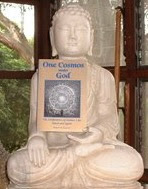
I suppose we ought to preface what follows with a description of The Matter With Things. As you can see, the author is one of those people who worries about the same sorts of things we do:

McGilchrist addresses some of the oldest and hardest questions humanity faces -- ones that, however, have a practical urgency for all of us today. Who are we? What is the world? How can we understand consciousness, matter, space and time? Is the cosmos without purpose or value? Can we really neglect the sacred and divine?
In doing so, he argues that we have become enslaved to an account of things dominated by the brain’s left hemisphere, one that blinds us to an awe-inspiring reality that is all around us, had we but eyes to see it. He suggests that in order to understand ourselves and the world we need science and intuition, reason and imagination, not just one or two; that they are in any case far from being in conflict; and that the brain’s right hemisphere plays the most important part in each. And he shows us how to recognize the "signature" of the left hemisphere in our thinking, so as to avoid making decisions that bring disaster in their wake.

Following the paths of cutting-edge neurology, philosophy and physics, he reveals how each leads us to a similar vision of the world, one that is both profound and beautiful -- and happens to be in line with the deepest traditions of human wisdom. It is a vision that returns the world to life, and us to a better way of living in it: one we must embrace if we are to survive.

Being that the book is over 1,500 pages and close to a hundred bucks in paperback, one wonders how many people will read it, or how many reviews it will garner. All we can say with certainty is that ours will be the lengthiest and most serious -- or wacky, depending -- review; or not so much a review as a dialogue and engagement.

Like me, you probably don't recall our multi-post discussion of his earlier book, The Master and the Emissary, about a decade ago. I remember writing about it, but I recall neither details nor bottom line. Sure, 1,500 is a lot of pages, but that is no doubt dwarfed by the number of pages we've cranked out here over the last ten years. Converted to text, it would no doubt be well over 10,000 pages. Who knows what's down there?

What do the existing reviewers say? This one from an Oxford dude sounds promising: 

It's very simple: this is one of the most important books ever published. And, yes, I do mean ever. It is a thrilling exposition of the nature of reality, and a devastating repudiation of the strident, banal orthodoxy that says it is childish and disreputable to believe that the world is alive with wonder and mystery.... 
McGilchrist's range is as vast as the subject -- which is everything -- demands. He is impeccably rigorous, fearlessly honest, and compellingly readable. Put everything else aside. Read this now to know what sort of creature you are and what sort of place you inhabit.

One reviewer calls it "the most important seminal work of philosophy in the broadest sense since the publication of Process and Reality by A.N. Whitehead in 1929," but another cautions us that McGilchrist is no Gagdad, for "there is nothing wacky or tendentious about this book." This is a potentially serious drawback, supposing reality turns out to be as wacky as I suspect it is. 

Surprisingly, there are even 70 reviews by regular folks. Let me see if I can quickly extract any helpful nuggets. Eh, most are too wordy, but only one of them gives less than four or five stars, it containing this brilliant passage accusing the author of failing to answer

A reasonable question, like one about existence of God -> so who created God?

In any event, if we can keep to the pace of reviewing one chapter per post, we could polish off this baby in 30 posts or so. But there's no way of predicting, since sometimes a single chapter can yield a one sentence (or less) review, while other times a single sentence provokes multiple posts.  

A note to myself in the margin -- and there's already an abundance of marginalia -- says for me to begin with this passage, so I will: 

Long before we had anything other than the most rudimentary knowledge of hemisphere difference, a number of philosophers -- Pascal, Spinoza, Kant, Goethe, Schopenhauer, Nietzsche, Bergson and Scheler among them -- were able to intuit that there are two fundamentally distinct ways in which we approach the world, what Bergson called "two different orders of reality." I would tentatively suggest that many of the great questions of philosophy in fact turn on which one you choose.

I appreciate the point, which comes down to, in my opinion, philosophies of being or of becoming. In my cosmos, these are complementary, neither reducible to the other except via our own (LH) power of abstraction. And again, of the two, being must be "prior" to becoming -- as Absolute is to Infinite -- even though the two are as eternally close as Father is to Son. 

Come to think of it, the Trinity itself only becomes impenetrable and impervious to logic if approached in a fully locked & loaded left-brain way. Although that characterization just popped into my head spontaneously, it is in fact locked -- or closed -- and loaded -- with ideological assumptions. But if the right brain were as facile with language as the left, it would say of the Trinity, Now you're talkin' my language!  

What is this wacky language? Before delving into it, let's first deal with the left. We're all familiar with the idea that the left cerebral hemisphere (LH) is more linear and linguistic, the right (RH) more holistic, imagistic, and context-bound. But that right there was a left-brained description of the right! 

I was wondering to myself what an RH description of the RH would be like. It would be like Finnegans Wake, literally. There are other ways it could be, but that book is like an RH dream of what it is like to dream with the RH. I will resist the temptation to veer any further in this wacky direction. 

On pp. 28-31 McGilchrist lists 20 different ways in which LH and RH asymmetry manifests, and let me highlight a few that stood out for me. The LH "deals preferentially with detail, the local, what is central and in the foreground, and easily grasped." 

Although he doesn't use the word, it makes me think the RH would therefore deal with the nonlocal, but in any event, this is very much like horizontal and vertical, respectively.

I would even say that a person who does not or cannot engage the vertical has an RH deficit. For similar reasons, the LH "largely fails to understand metaphor, myth, irony, tone of voice, jokes, humour more generally, and poetry, and tends to take things literally."

Which strongly suggests that the LH is a late-night comedian.

There is also evidence that the LH is very much ideological (my word) whereas the RH would be more open to ambiguity: "One could say that the LH is the hemisphere of theory, the RH that of experience" (or of map and territory, respectively).

The LH aims to narrow things down to a certainty, while the RH opens them up into possibility. The RH is able to sustain ambiguity and the holding together of of information that appears to have contrary implications...  

Very much like the analysis and synthesis that constitute the metabolism of experience. Note also the word I highlighted above, possibility. It makes me think that the ultimate categories of Absolute and Infinite (or All-Possibility) are reflected queerbelow in LH and RH. 

Which is enough for now. 

Thursday, April 27, 2023

Does God Have a Left and Right Brain?

Of course not. God is immaterial. But is there a kind of bilateral or maybe even trilateral asymmetry in God? 

You won't find the answer in this post, but by the end of it you will have some idea of why we're asking such a strange question, and how I'll be spending the next several weeks. Let's just say if it's good enough for nematodes, it ought to be good enough for God.    

Here's a good way to summarize our recent explorations of the necessity of possibility. 

But before getting to that, a thought just barged into my head: that while necessity and possibility -- or Absolute and Infinite -- are true complementarities, as is always the case, one must be prior, and in this case it must be the necessity. 

This is because it makes sense to say "the necessity of possibility," but makes no sense to say "the possibility of necessity." Rather, necessity is necessary, which is why we ground any and all thinkin' in Necessary Being. Remove it, and the cosmic archway collapses and nihilism prevails. 

Speaking of thinkin', I think "creation" and "possibility" must be two words for the same principle. FWIW, I have never liked the idea that the Creator creates without himself undergoing any kind of change. Of course I've heard the arguments, but I find these as persuasive as aerodynamical arguments proving bees can't fly.  

Schuon even goes so far as to suggest that God and creation are "coeternal," which may sound a tad off key until you realize that what he really means is simply the tautology that Creators gonna create. So,

cosmic and coeternal manifestation is necessary because God is necessary, whereas "creation" is free because it is not "the manifestation" but "a manifestation" (emphasis mine).

This strikes me as simultaneously self-evident and none of our isness. It's enough to know that this world is created. As for other hypothetical creations, I don't spend a moment trying to imagine what they might be like. My plate is full just dealing with this one.

"God is in fact free in His 'modes of expression,'" and who on earth is presumptuous enough to place limits on this creative freedom? Perhaps it's not even presumption, rather, just an anthropomorphic projection of one's own limitations. I'm hardly one to talk. I once believed rock stars were gods.

As touched on in yesterday's post, "the perfection of freedom and the perfection of necessity must both be found in the divine Nature," even though, from the human standpoint it is impossible for us to harmonize them, since necessity would seem to be the opposite of freedom. But in God, necessity does not imply constraint, nor freedom arbitrariness.  

For our purposes it is enough to know that the cosmic area rug is woven of necessity and freedom, which are mirrors herebelow of Absolute and Infinite, respectively. 

But that's not the end of it, rather, just the beginning, because yesterday I began reading McGilchrist's massive The Matter With Things, and couldn't help wondering to myself if all the highly abstract nonsense above -- so typical of this blog -- is somehow reflected in the concrete bifurcation of left and right cerebral hemispheres?

Maybe it's because my mind was cluttered with ideas about necessity and possibility, but the first thing that pops into my noggin while making my way through the introduction is, "Hey, Bob, left brain is a little like Necessity, and right brain a bit like Possibility, no?" 

I noted the question but put it in abeyance until I could examine it more closely in a post. So, let's take an initial stab at it, shall we?

Oof. I'm not sure how many stabs I can manage, this being my short morning. We can start by saying that this cerebral bifurcation business didn't just start with humans but goes waaaay back. 

Not to sound like Jordan Peterson and his macho lobsters, but it seems there is evidence of it in trilobites from 500 million ago. But that's nothing compared to the nematodes of 600 million years ago, who may boast of only 302 neurones that nevertheless express "chemoreceptors with left-right differences."

As if I didn't already know that.

Obviously I have no idea where McGilchrist is going with this, since I have 1,500 pages to go. But whereas he may want to trace our cerebral asymmetry back to nematodes, my instinct is to anchor it in a Divine Reality reflected herebelow in neurology.

Wednesday, April 26, 2023

Is This Really Necessary?

The necessity of possibility and the possibility of evil. I thought that was a pretty snappy way of putting it, because it still preserves divine omnipotence except insofar as even God doesn't have the power to not be God. God is not a deconstructionist. 

As we've said before, God somehow has the perfections of both freedom and necessity, and to an eminent degree. Herebelow we live in a world of contingency, a world that did not have to exist. But as Schoun says, "Contingency is always relative, but relativity is not always contingent." 

We know this for reasons touched on in yesterday's post, i.e., the irreducible "Absolute Relativity" in God, for it seems acceptable to say (for example) that the Son is relative to the Father (and vice versa), but it would be incorrect to conclude that the Son is contingent -- as if he might or might not have been, depending upon the whims of the Father. 

This latter error would also imply a principle prior to the Father (or Trinity), which is a nonstarter.

Contingency on the one hand and the presence of the Absolute on the other; these are the two poles of our existence (Schuon).

Oh by the way. 

Except -- or so we have heard from the wise -- the Absolute has furnished a way for us to transform mere contingency by plugging into, or hitching a ride upon, the Divine Relativity, which is the "good news" of Christianity. Everything about it is ordered to the possibility of this transformation and this movement between the two poles mentioned by Schuon.

I suppose we could say that "fallenness" is appropriately situated on that same bi-directional vertical line. It means that there really is a down and an up in the cosmos, and a bare acquaintance with History suggests -- or certainly is consistent with the idea -- that

man has radically turned away from his human vocation by plunging into the world of contingency and by identifying himself with it, whence the profane ego with its tyranny and vices (ibid.).

I suppose that's the bad news which the good news is designed to remedy.  

I found some unexpected confirmation of this view in a book I'm reading called Human Nature, by David Berlinski, despite the fact that he is a secular Jew. He is also a highly insultaining debunker of atheistic pieties, scientistic faith, and primitive progressive religiosity, and seems happy to dwell in the uncertainty and mystery of it all.

It was in discussing the "cause" of World War I that he made an intriguing point:

None of the Great Powers were compelled to go to war. They could have walked away. If these considerations are admitted, the causal chain that was designed to explain the outbreak of war is less a chain than a series of unconnected links.

This is because of the freedom and therefore contingency located in every human actor in the "causal chain." It very much reminds me of one of my favorite aphorisms, that

The permanent possibility of initiating a causal series is what we call a person.   

There's more to this than one might suspect, especially with reference to the words "permanent," "possibility," and "causal." 

First of all, permanent implies a kind of absoluteness, or necessity, or even eternity. For example, to say that 2+2 necessarily = 4 is to partake of an eternal truth. It may be a trivial truth, but it is the shadow of an Absolute that is the opposite of trivial.

Now, supposing we want to trace the causes of World War I to a single one, say, the assassination of Franz Ferdinand. But this is wholly arbitrary, because we could then trace the causes of Franz Ferdinand to the beginning of time -- either to a First Cause or to an intrinsically absurd infinite series, neither answer satisfying our desire to understand what's going on down here.

It is true that God is, among other things, First Cause. He is quite literally brother Nicolás' Permanent Possibility of Initiating a Causal Series, for which reason he is a Person (and vice versa.)

But hey, we're persons too! Of this we are absolutely certain. It's not one of those things that can be disproved, because who is disproving it? 

But still, what is it, and how have we come by this strange privilege of being persons amidst contingency while knowing the Absolute (or absolute certainty)?

the foundation of metaphysical certitude is the coincidence between truth and being; a coincidence that no ratiocination could invalidate. 

And 

We are situated in contingency, but we live by the reflection of the Absolute, otherwise we could not exist (Schuon).

I'm going to go out on a limb and say we do exist. Furthermore, we exist as persons capable of initiating causal series from a mysterious center that can only be a reflection of a Celestial Central to which we are linked in each moment. 

Speaking of limits on omnipotence due to the reality of Possibility, yesterday I was thinking to myself that the petition Thy will be done obviously implies that his will is not necessarily done, and can even be opposed or undone by our own power to initiate a causal series, beginning, I suppose, with Genesis 3, which circles back to The necessity of possibility and the possibility of evil

Tuesday, April 25, 2023

The Necessity of Possibility and the Possibility of Evil

As alluded to yesterday, blame the Jews for discovering that it is the same God who causes the sun to shine and the rain to fall on the good guys and bad goys alike, and for reasons we can supposedly never fathom. 

That latter in particular has always bothered me, in that, why should the very principle and substance of intelligence get a pass for behaving in such an unintelligible manner? There is no cosmic right to absurdity, and didn't we just stipulate that there is no privilege higher than truth? 

God did not create an intelligent being so that the latter might grovel before the unintelligible; He created him in order to be known starting from contingency, and that is precisely why He created him intelligent. If God wished to owe nothing to man, He would not have created him (Schuon).

Now, humility is one thing, groveling another. Moreover, there is no intelligence without humility, or to put it conversely, there is nothing more stupid than pride, since it poisons intelligence at the root. 

If the Divine Intellect is both shrouded in absurdity and the standard to which we ought to aspire, then we could rightly affirm that we ourselves have a right -- and obligation -- to sacred illogicality. 

And more than a few tricksy theologians and cult leaders flaunt their absurdity, preserve their mystique, and maintain their authority with such appeals. But if absurdity is the standard, by what standard are we to distinguish between this or that absurdity? 

If "the right is claimed to a sacred illogicality,"

then an explanation is due of what logic is and what human reason is; for if our intelligence, in its very structure, is foreign or even opposed to Divine Truth, what then is it, and why did God give it to us (ibid.)?

This would be like creating a creature who craves sweets while forgetting to invent sugar. 

Moreover, if God intends a message, to what and whom is the message addressed? Supposing I speak to you, then it presumes a message from my intellect to yours. Are we suggesting that God ignores our highest capacity and addresses it only to the will -- which reduces to a divine Because I Said So

My father used to play that card quite often, and even if the judgment was technically sound, such authoritarian trappings only nourish a covert spirit of rebellion, since the intelligence is not pacified. Which can lead to all sorts of intellectual mischief, up to and including tenure.

[W]hat sort of Divine message is it that is opposed to the laws of an intelligence to which it is essentially addressed, and what does it signify that man was created "in the image of God"? And what motive could induce us to accept a message that is contrary... to the very substance of our spirit (ibid.)? 

Now granted, most men are not intellectuals -- or nowadays, only intellectuals -- which is a real problem for God. In short, how to get the message through to an intelligence swollen with pride and presumption, while simultaneously constrained within infra-Gödelian rationalistic premises?  

Near as I can tell, that's why I'm here, nor would you be here if you weren't built the same way. 

In a fundamental sense, certain realities into which we are necessarily plunged are all necessarily related: relativism, contingency, freedom; but these only become absurd if they are detached from the Absolute, or if we posit a kind of radical, two-tiered distinction between Absolute and relative. 

Back to the question of evil, which, if it exists, is possible to exist. Now, where to situate this possibility? 

It seems that it must be situated in God, otherwise its possibility would be impossible. So, it seems that there can be no principle of evil as such, only a principle of possibility which may cut both ways, like the sun which is good in itself even if it shines on the baddies.

So, the following sketch may sound a bit sketchy, but it makes sense to me:

The ontological and hence "neutral" structure of evil is "in God," but not so evil as such; in other words, privative and subversive possibilities are not [in God] except insofar as they testify to Being and to All-Possibility, and not by their negative contents, which paradoxically signify non-existence or the impossible, hence the absurd (ibid., emphasis mine).

This is actually completely orthodox, in the sense that everything God creates is good, insofar as it partakes of being. 

But every created thing is more or less distant from this creative principle, and man in particular is in an ambiguous position, being that our freedom -- which is to say, our own reflected share of All-Possibility -- necessarily cuts both ways, meaning that we are free to align ourselves with the impossible and the absurd, and thereby rise up in rebellion against our very principle. In case you haven't noticed.

I'm starting to run out of gazz, so I'll hand the wheel over to Thomas:

The source of every imperfect thing lies necessarily in one perfect being.

The further a being is distant from that which is Being itself, namely God, the nearer it is to nothingness. But the nearer a being stands to God, the further away it is from nothingness.

Evil consists entirely in not-being.

We do not strive toward evil by tending towards anything but by turning away from something.

So, I suppose we could say that the principle of evil consists in this: in a cosmic divorce between Absolute and Infinite, or between necessity and possibility, or intellect and freedom. And I'll clean up any loose sh... ends tomorrow.

Monday, April 24, 2023

Are You Splittin' Me?

The existence of evil is probably the most compelling argument against the existence of God. There are equally compelling arguments for why evil exists, but they offer little solace to the one suffering the evil. 

Being that evil exists, it is undoubtedly a possibility, the question being where to situate this possibility. And it is darn difficult to not locate the possibility in God, at least a God who is omnipotent and therefore presumably has the power to prevent evil. 

Of course, we have the impulse to protect God from this attribution, which reminds me a little of patients who were abused by a parent. More often than not, they internalize blame for the abuse in order to protect the parent from responsibility and maintain the ideal parental image.  

Back in ancient times, people would ditch a god who had done them dirty. There were plenty of other gods on offer, so if it looked like your god had switched jerseys, you just switched gods.

The ancient Israelites were the great exception to this rule, in that they (albeit gradually) made the decision to stick by YHVH come what may. This was partly due to the insight that there was only one God. There may have been subordinate "gods," but the revelation of the one God must have mirrored a psychic intuition of the principle of unity. 

Now, the intuition of this unity is clearly a psychological advance. In order to describe this, I have to put on my old and frayed psychology hat, but it has to do with one of the objective "vectors" of psychological maturity, which is the "healing" of psychological splitting. 

Splitting is a primitive psychological defense mechanism whereby the young child preserves the good by splitting it from the bad. 

A quintessential example was mentioned above, wherein the abused child preserves the goodness of the parent by splitting off the experience of abuse, which is then internalized as low self esteem. Low self esteem is maintained by a kind of internalized, ongoing psychic abuse of oneself. Happens all the time.

The healing of this primitive splitting is accompanied by an increasingly realistic assessment of reality. This is because the mind isn't as riven by its default setting to split experience into all good and all bad. 

There's another subtle point here, which goes to the "discovery" of history. For objective history can neither be discovered nor understood so long as splitting prevails in the psyche. 

Note, for example, how the woke regard America as uniquely bad, and poisoned by racism, sexism, transphobia, and all the rest. At the same time, they project into our side, as if we are in denial of evils such as slavery and racism.  

How might this apply to God? Well, it seems to me that if we're going to have a mature conception of God, we have to situate the possibility of evil -- not the reality, mind you -- in God. It's a challenge, but I think we can thread that needle. Think about Jesus, who is said to be sinless. But was it possible for the man Jesus to have sinned?

I don't know the official answer to that question, but it seems to me that if it weren't possible, then no merit would be attached to his avoidance of sin. And what is the whole temptation in the desert about if the outcome was preordained? What's the lesson for the restavus slobs?   

The question is, what is the ontological distinction between evil and its possibility? Is this just casuistic logic-chopping, or perhaps an immature attempt to protect the divine Father from any speck of imperfection, like the abused child discussed above?

This same basic question is implicitly present in Genesis, as in, who is the serpent, and how did he get into God's creation? If the creation is good, how does evil slither on stage? What is its principle? Every effect has a cause, so what is the cause of the serpent? It can't be serpents all the way up.

Some people say it all has to do with the principle of freedom. If man is to be free, then the possibility of the potential misuse of freedom must be baked into the cake. To say freedom is to say possibility and indeterminacy. However, if God is literally omnipotent, then this would seem to render indeterminacy a terrestrial illusion. 

The traditional view holds that God is "pure act," meaning without potency (AKA potential, change, movement, etc.). Well, if we're going to make sense of this, then something's gotta give, and I say all we have to do is tweak our conception of the Godhead just a little bit, so as to situate Possibility in God, and many philosophical problems are solved. 

Maybe you think these are First World Problems, or White People Problems, or another one of Bob's attempts to soph-medicate his metaphysical OCD. All I know is, it's a problem if I can't achieve Total Cosmic Integration because of some unresolved split in the fabric of being.  

More on the solution tomorrow. 

Sunday, April 23, 2023

Giving the Finger to My Readers

Like many doctrines, creatio ex nihilo is at least equally intended to avoid misunderstanding as it is to convey any cutandry understanding. 

Frankly, the term doesn't lend itself to the latter, since nothing is neither conceivable nor ontologically possible, i.e., it is more apophatic than cataphatic. Unless nothing is actually something, in which case, No principle of noncontradiction for you!, and the world is fundamentally unintelligible.

The point of the principle is that God doesn't create out of some preexisting material sitting around at the Om Depot. This is because the Om is ontologically prior to the Depot:

Whatsoever has existed, whatsoever exists, whatsoever shall exist hereafter, is OM. And whatsoever transcends past, present, and future, that also is [you guessed it] OM (Mundukya Upanishad). 

Our Ultimate Principle or Whatever creates even being itself. Says so right here in the Taittiriya Upanishad:

In the beginning all this was Non-being. From it Being appeared. Itself created itself. 

Here's some similar nonsense from the Rig Veda, which may even have inspired Bob's own nonsensical creation myth:

Then Non-Being was not, nor Being. What was that ocean profound and impenetrable? Then death was not, nor immortality.... Darkness concealed in darkness in the beginning was all this ocean.... Desire in the beginning became active, -- desire, the first deed.

Or love. And knowledge:

Out of the infinite ocean of existence arose Brahma, first-born and foremost among the gods. From him sprang the universe, and he became its protector. The knowledge of Brahman, the foundation of all knowledge, he revealed to his firstborn son,  Atharva.

Now, even if you prefer the account in Genesis (and echoed in John), you have to admit that this isn't bad, no? Certainly it is closer to the truth than any scientistic creation myth, and infinitely so, because we are faced with a binary choice of principles: creation or non-creation, O or Ø. There's no in between. Or no! in between. 

Me, I like to think of the really venerable creation myths as giving us points of reference in order to think about the unthinkable. Strictly speaking, God is by definition unthinkable, and unthinkable means unthinkable, unless... see last sentence of paragraph two. 

Now, like the Bible, the Upanishads is not a unitary book but a collection of diverse writings. And like the Bible, taken literally it can even contradict itself here and there. Which is why you can't just stare at the finger(s) of the sages. Rather, the fingers are again local points of reference pointing to the nonlocal and ineffable. 

To extend the metaphor, these fingers point to something they can never grasp, because the Tao that can be named is not the eternal Tao -- this being one of those rare places where we must give a pass to the principle of noncontradiction, similar to the principle that God is one and three. 

Now that I'm thinking about it, somewhere along the line there must be a "violation" of the principle of noncontradiction, whether or not one acknowledges it. We've all heard bonehead atheists ask, If everything is created, what created God?, as if that's some kind of metaphysical checkmate, instead of painting the atheist into his own dark coroner where all the squares are black.

If the doctrine of creation from nothing gives us the finger, to what does the finger point? And equally important, to what does it not point? First and foremost, it means that 

creation "comes from" -- that is the meaning of the word ex -- an origin; not from a cosmic, hence "created" substance, but from a reality pertaining to the Creator (Schuon).

So, in one sense creation is a private party to which we aren't invited. But viewed from another angle, the miracle is that we are indeed invited, and this on many levels. There is a general invitation, while others are quite personal. How did they get my address?!

Come to think of it, this is obviously the meaning of the slapstick passage on p. 15 of my book:

Oh my stars, He expectorated a mirrorcle, now you're the spittin' image! You haven't perceived the hologram to your private particle? Come in, open His presence and report for karmic duty. Why, it's a Tree of Life for those whose wood beleaf.

When writing that, I couldn't decide if the humor was too broad or too obscure. I guess both, depending on the reader.  

Meanwhile, is this post getting anywhere? I want to say that another important area where the principle of noncontradiction doesn't hold is vis-a-vis transcendence and immanence. These two are as seemingly opposite as wave and particle, and yet, necessary attributes of God. 

In fact, you could even say that God is immanent because transcendent, because transcendence spills out all over the place.

No, it's not that God is sloppy, rather, because he is Absolute, and the first entailment of Absoluteness is Infinitude. The latter is like the divine ray of creation that radiates everywhere. 

Except it is not impersonal, which very much points to the gnocean that the Father engenders, and never stops engendering, the Son -- who is like that drop embraced by the sea held within the drop (p. 263), to utterly contradict myself, I hope.

The Son is at once "relative" to the Father, but this relativity turns out to be absolute, such that God is Absolute Relativity. I can count on three fingers what this post is pointing to, but we're out of time for now. 

Saturday, April 22, 2023

On the Achievement of Perfect Subjectivity

Just a brief bit of spontaneous mind jazz.

I heard that. 

Of course it is self-indulgent, the question being whether it is sufficiently so.

That subjectivity exists is an objective statement, and already adequate proof that we cannot be plunged into a radical subjectivism, or into a cosmic Just Your Opinion, Man, as the bums never tire of saying. 

Now, I've always had a sense that objective truth exists and that I personally know it. Problem is, I had this sense even -- or especially -- when I was a lunatic and an idiot, so it turns out my feelings aren't dispositive after all. 

Nowadays I'm much more circumspect in my circumnavelgazing, AKA, my  cosmic narcissism. It's more a way of life than a determinative content. Did someone say Voegelin?

The quest, thus, has no external "object," but is reality itself becoming luminous for its movement from the ineffable, through the Cosmos, to the ineffable.

Did someone say... circum?

The honest philosophy does to pretend to explain but to circumscribe the mystery. 

Did someone say political philosophy?
In the current political landscape no party is closer than others to the truth. There are just some that are further away.

Now, why are they further away? Because of the Ray of Creation, more on which.

It seems to me that the most obvious thing in the world is simultaneously the most mysterious and even miraculous, i.e., the human subject, or even just subjectivity itself. 

This (this!) is pretty much the most inconceivable thing you'd expect to pop up (boo!) in a heretofore purely objective universe with no interior at all -- unless it was (is!) there in potential all along, in which case it's still a mystery but at least nested in a Big Mystery, or Mystery Central.

Now, revelation implies -- threepeatedly -- that Mystery Central is not just "subjective" but intersubjective, i.e., tripersonal. 

Importantly, the Persons are not at all analogous to three objects in space, but rather, like a... like a family that is metaspiritually prior to its members; it is one even though "diverse." 

Not only does this principle explain how human beings are both subjective and intersubjective, it also explains how the latter always exists both horizontally and vertically. 

And truly truly, it makes perfect sense of what otherwise sounds crazy or nonsensical, that I am in my Father, and you are in me, and I am in you. 

And while tracking down the exact words, I saw many other passages in John that are unlocked with the same hermeneutickey to the kingdom.

As if the human subject weren't miraculous enough, along comes objectivity, which is equally miraculous, because it means simultaneously being the subject we cannot not be, but somehow standing above or outside ourselves, as if partaking the old "view from nowhere."

Now, most philosophers say this view from nowhere is impossible, but most philosophers are asses. Of course there's a view from nowhere, even if only God enjoys it.   

I want to say that even if we can never have this perspective in the literal sense, God does indeed furnish us with points of reference that are more than sufficient to guide us through this vale of veils.

What's under the veil? 

Wouldn't you like to know!

Yes, I would like to know. Are there only more veils? 

Yes. And no. Which gets into the whole business of just where to situate relativity, and also to the Ray of Creation alluded to above. Obviously it exists. But how and why? Maybe the pneumagraph to our right is a harbinger of the self-indulgent mind jazz of tomorrow -- a fancy way of saying to be continued.

Friday, April 21, 2023

Workin' on a Building

Modern architecture knows how to erect industrial sheds but cannot manage to construct a palace or a temple.

Well, I don't know if we can construct the latter, but hopefully we can do better than the former. Maybe we can manage something in between, like a primordial mancave with an airy geist room.  

Let's pick up right where we left off, with the truly self-evident principle that 

unless one accepts that there is indeed such a thing as truth, nothing holds: remove truth and everything collapses. Nothing can get around this: "there is no truth" cannot be taken as true since it would ipso facto refute itself.

This is like the keystone in the arch, the one without which the building collapses. Now, the question is whether this keystone is also the cornerstone the contractors rejected. If so, this would explain the shoddiness of their postmodern craftsmanship. 

I'm a little fuzzy in the head this morning -- too many carbs last night -- so I'm going to jump right to my bottom line, and then try to clean it up afterwards. 

I suppose we could begin with something Schuon often says, that there is no privilege higher than truth, and then combine this with what must be the shortest and bluntest of aphorisms, that 

Truth is a person. 

Do the math: if truth is the highest privilege, and it is as person, then... personhood is the highest truth and privilege?

Possibly, but let's toss in one more aphorism, just for fun:

The truth is objective but not impersonal.

Now, how can this be? Aren't "objective" and "personal" kind of antonymous? Yes and no. Actually, only a person can be objective and/or subjective, and on every level. Another one:

That which is not a person is not finally anything. 

This, even though 

The Antichrist is probably man.

How can this be? Easy: a human being divorced from God is no longer strictly human, since God and human coarise in the personal space referenced above. 

Which is not to say man literally creates God -- the Tripersonal Absolute -- but then again, look at the motley crew of sacrificial gods he does create and seemingly can't help creating, from Moloch to Quetzalcoatl to Climate Change. But I repeat myself.

At any rate, if that which is not a person isn't anything, then it isn't even nothing, since nothing is at least parasitic on someone. Think about it, while I think about this:

Modern man treats the universe like a lunatic treats an idiot.

Now, let's be literal: just how does a lunatic treat an idiot? I should know this because I used to be a psychologist. More importantly, I used to be a lunatic and an idiot, so this ought to be easy. 

A lunatic is crazy, while an idiot is just stupid. Put them together and what do we have? I mean, besides tenure? I suppose you have someone who insists on believing impossible things about nothing, from Hume to Kant to Nietzsche to Derrida to the Democratic platform.

If we are correct -- and we cannot not be -- then the category of person not only proceeds all the way up (and down), it is why there is an up and down. 

Put conversely, remove the archetypal person from the arch and we find ourselves in a totally unintelligible flatland. But in reality, there is only a floor in this building because there is a roof. And moreover, 

We cannot escape the triviality of existence through the doors, but rather through the roofs.

Another big one:

The permanent possibility of initiating a causal series is what we call a person.

Thus, the "first cause" is the "first person," and both are Necessary Being. 

Granted, this post never got off the ground. But that's okay. At least it's a solid foundation, something to build on.

Thursday, April 20, 2023

To the Heart of Ultimate Reality, and Beyond

We've been discussing epistemological assumptions, about which the Aphorist has this to say:

The scientific encyclopedia will grow indefinitely, but about the very nature of the universe it will never teach anything different from what its epistemological assumptions teach.

It may be coherent, but it will never be complete:

In the coherence of certain systems, a vision is articulated; others systems result from the mere inertia of an idea.

So, science will keep rollin' on forever, but it confers a false vision upon itself if it conflates this with "eternity," much less "eternal progress." This is because science takes place, and can only take place, within the horizons of a transcendence it can never reach. Or in other words,

Creation is the nexus between eternity and history.

Thus, science can never explain creation, because creation -- the verb and principle -- is the very link between vertical and horizontal. A reminder that

There are a thousand truths and only one error. 
Not literally. Rather, there are infinite truths, and the one error takes diverse forms. What is this one error? The answer may surprise you! Because it's sure going to surprise me, being that I'm waiting for Petey to whisper the answer.

And the answer is...

Hmm. Late again. Looks like we're on our own.

The One Error is like a... like a multifaceted disco ball. It has no light of its own, but if we shine our light this way or that, a different facet is illuminated. Here are some of the facets I see: relativism, nominalism, empiricism, existentialism, materialism, scientism... What is the substance?

Properly speaking they have no substance, for they are the substance of nothing, so to speak: nada. Nihilism. Bupkis. The Shadow of O.

The Big. Mistake., however, must be relativism, with nihilism as its first and last entailment. The phrase just popped into my head, The Dark Trinity. What could that be? Relativism-Becoming-Nominalism.

Which is at antipodes to, and parasitic on, our true cosmic situation, which is something like Absolute-Being-Transcendence (these also being interrelated). Or Absolute-Infinite-Perfect. Or perhaps Beyond Being-Infinitude-Existence. Or Transcendence-Immanence-Consciousness. This side of the veil, there's more than one way of skinning the catechism.

If all this seems a bit abstract, let's bring it down a notch or two. In fact, let's make it so concrete that any person of average intelligence and good will can grasp it and agree that Bob is correct.

This is my short morning, so I hope my eyes haven't bitten off more than I can stomach.

Philosophy is one endless argument. Can I really end it in the 30 minutes remaining?

Eh, I think so. I suppose it comes down to an initial bifurcation:

Truth --> consequences.

Or how about Intelligence <--> Intelligibility. You could say that this complementarity forms the space in which we live, move, and have our being, everywhere and always. And if you disagree, and you wish to be both scrupulously honest and rigorously consistent, you must STFU! at once.

Still too abstract?

Philosophy begins in wonder, the wonder of the eternal WTF?! In this the Aphorist agrees, more or less:

Any civilization flourishes in the hands of an astonished man.
Are we not civilized? Conversely, all anti-philosophy -- or misosophy, or philodoxy, or just Ø -- begins in blunder, the blunder of "absolute relativism" in all its many forms. 

Still too abstract.

There he is! Little help?

Yes, pull out that little book you referenced yesterday, Philosophy of Science in the Light of the Perennial Philosophy. Open to p. 1.

You mean where it asks, "How do we know if anything is true?" 

Correct. Keep reading.

[B]efore we can begin to look for the criterion of truth, we have to ascertain that there is such a thing as truth. Now, unless one accepts that there is indeed such a thing as truth, nothing holds: remove truth and everything collapses. Nothing can get around this: "there is no truth" cannot be taken as true since it would ipso facto refute itself.

That's about all the time we have this morning, but I will pour some more concrete tomorrow. 

Meanwhile, this post is dedicated to my son on his 18th birthday, an occasion so utterly surreal that there are no words. Here my meager skills come up against a wall of babbling inarticulacy. Compared to Ultimate Reality, trying to describe him or my feelings for him is beyond my capacity. 

Which, of course, I can't help thinking is another Big Hint about Ultimate Reality. Help us out here, Nicolas!

To love is to understand the reason God had for creating what we love. 


Wednesday, April 19, 2023

Sweeping Causality Under the Rug

Funny how Hume keeps popping into my awareness like a bad case of Baader-Meinhof. 

Of course, he would say it's just a coincidence, like everything else. The sun came up and it's light outside, but who knows why, and tomorrow may be different. The relationship between, say, heat and light, "is not causal, it is merely an association of ideas in our minds." But 

The fallacy of Hume's argument is obvious: in explaining what produced the notion of causality in our mind, he is effectively trying to ascertain the cause of causality. In other words, he must have taken causality for granted to have been prompted to explain its cause in our mind (Bina & Ziarani).

And if that passage caused us to understand it, poof, no Hume, and my Baader-Meinhof has been cured. But what is the cause of causality? There's a footnote:

We find the notion of causality in us because it is a universal reality that is necessarily present in our deepest being.

That's true. To say "human" is to say "a being who looks for causes in things." Causality

is a more fundamental reality than logic: the latter is merely the reflection of the former on the plane of the human mind. To accept an effect without a cause, then, is as absurd as to accept an inconsistent thesis. He who does not accept causality should best remain silent, for he would find himself in refutation of himself as soon as he expresses an opinion. 

Granted, sometimes a coincidence is just a coincidence. And unless we flip the rug and look at the other side, we can't see the connections between this and that. 

On our (phenomenal) side of the rug things might appear spatially separated, but look underneath and you see the connecting threads. Just as an effect without a cause is absurd, so too is a rug with a top and no bottom.

More generally, on our side of the rug things are more or less discontinuous. It's pretty much the first thing noticed by consciousness:

When we look around us, what do we see? Firstly, existence; secondly, differences; thirdly, movements, modifications, transformations; fourthly, disappearances (Schuon).

I think you could boil this down to forms, changes, and adiós, outta here. Now, adiós literally means "go with God," but that's just a coincidence. 

It seems to me that discontinuity is a left-brain specialty. In a way, it superimposes a discontinuity on the underlying continuity, because obviously, looked at another way, there are no literal boundaries between things, for All is One and Can I Buy Some Pot From You? 

This is an argument that goes all the way back to the pre-Socratics: many or one? Change or permanence? Beatles or Stones?

You could bring the debate right up to the present, as in "wave or particle?" Turns out it's always both, like a wavicle or something. But it dovetails nicely with our own Ultimate Category, which is to say, personal substance-in-relation. which is like particles-in-waves. Or perhaps ice cubes in water: different but the same.

It makes me think this is a debate between right and left hemispheres, but I'm still waiting for The Matter with Things in the mail, so we'll see. 

I want to say that science describes one side of the rug, but there are two sides to every story, not to mention multiple storeys in a vertical cosmos, and each storey with multiple mansions. 

Let's sober up for a moment and let Schuon explain what we're talking about. When we get into these deep waters, he's our designated diver:

Modern science, which is rationalist as to its subject and material as to its object, can describe our situation physically and approximately, but it can tell us nothing about our extra-spatial situation in the total and real Universe. 

Yes, literally NOTHING, unless you flip the rug and examine the other side, or better, consider both sides at once, as complementarities that necessitate or at least imply one another. In other words, there is a bit more slack on the underside, whereas necessity rules the topside. Only in God are freedom and necessity one, but God knows how.

Every truth is a tension between contradictory evidences that claim our simultaneous allegiance. 
Two contradictory philosophical theses complete each other, but only God knows how. 
This reminds me of a little tweet by Eve Keneinan that got stuck in my head, something to the effect that many distinctions that are intuitively obvious may be difficult explain -- for example, what I just said: it is intuitively obvious that many if not most of the really important things are more seen than proved. There are so many aphorisms that touch on this, that I'll limit myself to three:
Proofs for the existence of God abound for those who do not need them.
God is not an invention, but a finding.
There is evidence that disappears along with those who deserve to perceive it.

Now, I see a rug, and again, the rug has two sides, which reminds me of this: 

The natural and supernatural are not overlapping planes, but intertwined threads. 
Which is why denial of the wonderside always ends in catastrophe, for 
Any straight line leads straight to hell.

Unless you're a Humean being who think progressivism has no effects.

Tuesday, April 18, 2023

Reductio ad Oozlumity

A reader has alerted me to an essay he published a few years back called The Perils of Philosophy, which touches on the all-too-Humean. Since he's obviously aware of this blog, I'm going to have to give him attribution instead of stealing it outright:

(https://amgreatness.com/2020/05/12/the-perils-of-philosophy/) 

He cites a passage from a novel by C.S. Lewis describing a character who had sailed right through Hume and fallen all the way to the bottom of the cosmos:

He had passed from Hegel into Hume, thence through Pragmatism, and thence through Logical Positivism, and out at last into the complete void.... He had willed with his whole heart that there should be no reality and no truth...

Does the cosmos literally have a bottom? Of course it has a bottom, and speaking of which, does this not remind you of the legendary Oozlum bird -- the one that flies in ever-diminishing circles until it disappears up its bottom

But Lewis's character (named Wither) only hit the epistemic bottom. There is also a moral bottom and an aesthetic bottom, but interestingly, Hume in his personal life apparently avoided the latter two. He wasn't an assoul at all, rather,  

Hume was better than his philosophy, and not like Wither at all. He was brilliant and charming, liked and admired by Reid and loved by his good friend Adam Smith.

Go figure. If he had had a rigorously consistent philosophy he would have been an antinomian sociopath. 

Anyway, Curry cites philosopher Thomas Reid's description of Hume's metaphysic, which features

No cause or effects; no substances, material or spiritual; no evidence, even in mathematical demonstration; no liberty or active power; nothing existing in nature, but impressions and ideas following each other, without time, place, or subject.  

Why is this called rational instead of psychotic? Because it is both -- reminiscent of Chesterton's gag that the madman has lost everything but his reason. Instead of a reductio ad absurdum it's an.... expandio there, such that all of reality is rendered absurd. Whatever philosophy is, this must be the very opposite.

Epandio ad absurdum. I want to say that every bad philosophy ends there if only you pursue all its entailments to the end of the line. You may have noticed that they always begin with some principle or axiom that may seem self-evident to the philosopher in question, but is by no means obvious to the restavus. 

Again, such assertions tell us about the fellow asserting them, not about the reality purportedly being asserted. 

If someone tells me that all of reality is exhaustively described by the scientific method, that is not a scientific statement, rather, an autobiographical one, and I even feel a little sorry for him.

Well, not really. It also reminds me of a fruitless debate I had with another guy in the insane asylum. No, we weren't patients, rather, fellow interns from very different programs. He was a behaviorist while my training was in psychoanalysis, thus we were as different as Hume is from Aquinas, except we were both wrong. 

But a strictly consistent behaviorist believes only behavior is real, so the only way to win the debate would have been to hit him over the head with a baseball bat. No bat was handy, so my words just bounced off. 

Naturally, in his "mind," the failure of my words to penetrate his ideological carapace was sufficient proof of the doctrine in question. Which reminds me of how, when my dog barks at the UPS man as he drives away, she must believe she once again saved us from being murdered.

Time out for a passage by Schuon, because it goes to Thomas Reid's characterization of Hume above:

Spirit is Substance, matter is accident: that is to say that matter is but a contingent and transitory modality of the radiation that projects the worlds.... 

If this sounds like a non-Christian emanationism it is, except that Schuon would qualify it to say that God is constrained by his nature -- as Creator, duh -- to create. In other words, he may create this or he may create that, but he just can't help creating. 

You may say Like anyone could know that!, but it makes perfect nonsense to me. It certainly isn't absurd, a point to which we shall return, since it may provide a clue to deeper things. Meanwhile, let's allow the man to finish his thought: the radiation just mentioned

produces the polarization into subject and object: matter is the final point of the descent of the objective pole, sensorial consciousness being the corresponding subjective phenomenon. 

Again, you may find Schuon's description queer, but it is by no means absurd, and the question of course is whether it is queer enough:

For the senses, the object is matter, or let us say the perceptible physical domain; for the Intellect, objective reality is the Spirit in all its forms.

Now, this is just obvious, not esoteric, especially the first part: for what do the senses register? Various modes of physical reality. 

But do the senses know anything about the nonsense world? To ask the question is to answer it. Which is not to go to the other extreme and say that "beauty is in the eye of the beholder." It is, but it is also an adequation to the beautiful. 

Note that Schuon says the Intellect is ordered to an objective reality; we are not arguing for subjectivism, God forbid, for that is a gateway rug to absurdity -- a rug absolutely incapable of tying the cosmos together.

Seems like a good place to pause.

Theme Song

Theme Song