Friday, February 25, 2022

Slack History Month

American Indians -- like all primitive peoples -- were oriented to the past. The Golden Age. The primordial Womb of Time. They had no history, and not only because they lacked writing, but because they hadn't discovered it (history); nor had any white Karens arrived on the scene to devote a month to pandering to their vanity and firming up an important voting bloc.

Or perhaps -- analogous to what often occurs in individual development -- their culture(s) represented a kind of collective psychological defense against the passage of time. If you're a human, time is obviously a problem, if only because of aging and death. Make it stop! 

Think of, say, Michael Jackson, who defended himself against the transition to adulthood by sleeping with children, mutilating his face, bleaching his skin, adopting an exaggeratedly childlike affect and demeanor, etc. Who wants to grow up? I didn't, but then I didn't have sufficient wealth to arrest my development at 16 and keep time at bay. I tried, but my only available weapons were beer and college, so I gave up in my early 30s. (College, not beer.)

A commenter on the previous post agrees that "No doubt the Indians meted out terribly cruel punishments to their adversaries," but adds that Christians are guilty of the same and even worse.  

It is of course a banality to point out that Christians have committed grave sins, the question being whether they committed them because they were Christian or in spite of it. Conversely, no Indian was ever excommunicated from the tribe for excessive cruelty to strangers.

Only the Church considers itself a congregation of sinners. All other communities, religious or lay, feel themselves to be a confraternity of saints (NGD).

For example, Champlain writes of a random encounter with a luckless party of eleven Indians of another tribe who had been innocently fishing: 

An Algonquin warrior of the Petite nation ran up, seized a woman, and cut off her finger, "for a beginning of their usual torture."  

Ho hum. Just another day frolicking in the woods. Did they delight in torture because they were Indians? Or just because they were human? Either way, "Champlain rushed to her defense."

"I came at once," he wrote, "and reprimanded the chief," who was his friend, Iroquet. Champlain was very angry. He said to Iroquet, "This is not the act of a warrior, as he calls himself, to behave cruelly toward women who have no other defense but tears, and whom by reason of their weakness and helplessness we should treat with humanity."

To which Iroquet responded, "Yo, don't torture shame me, French dude." 

Iroquet was clearly aware of no transcendent principle that frowned upon treating strangers as piñatas. There was no mechanism from within their culture to apply the brakes to what otherwise came naturally. Aphorisms come to mind:

Educating the individual consists in teaching him to distrust the ideas that occur to him.

To educate man is to impede the “free expression of his personality."

Those who remove man’s chains free only an animal.

Of course, I am not judging the Indians. We cannot understand any people nor any era of history by viewing them simply as anticipations of, or preparations for, or links to, a subsequent age. We can't judge them by principles of which they had no awareness.

Except they must have had some awareness, however inchoate, that hurting innocent people is a bad thing, otherwise they wouldn't be human. Humans are intersubjective, and there's not a damn thing we can do about it. 

Put it this way: a human being is the only animal who tortures his fellows (up to and including the Son of God), not because he lacks empathy but precisely because he possesses it. Why else would a Hitler, for example, enjoy watching snuff films of enemies of the Reich being tortured and killed? Why does Putin get his jollies by treating 40 million Ukrainians as so many ants? Ants don't get their jollies that way.

Back to our story. After accusing them of a "base and brutal disposition," one warrior became "enraged by the interference of this meddlesome Frenchman" (trigger warning -- not for the squeamish):

He turned defiantly on Champlain and said, "See what I shall do, since you speak of it." He seized an Iroquois infant who had been nursing at the breast of its mother, took it by the foot, and smashed its head against a tree.

This, in my opinion, is what you call "consciousness of guilt," only immediately transformed to sadistic rage.  

Woman is a biological category. If only biology exists, then why shouldn't we oppress them and treat them as slaves? By virtue of what principle should we treat them as equals? Nevertheless, Champlain

also disapproved of the way Indian warriors treated women and compelled them to "serve as mules." And "as to the men," he wrote, "they do nothing but hunt deer and other animals, fish, build lodges and go on the war path."

All of this reminds me of what Sowell says about economics: the question isn't why people are so poor, being that we are born with nothing and for 99% of human history died the same way, with no wealth. The question is how a certain culture in a certain time and place began lifting itself above subsistence and generating and accumulating wealth.  

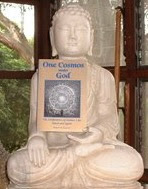
Along these lines, let's end with this provocative sentence from The Lord of History, going to how the Slack we westerners take for granted somehow began seeping into the human timestream: the author

shows how the bare possibility of history (as distinct from chronicle) arises from the revealed knowledge of God's creative work, and why this particular dimension of thought was discovered late in time.

Slack History Month

American Indians -- like all primitive peoples -- were oriented to the past. The Golden Age. The primordial Womb of Time. They had no history, and not only because they lacked writing, but because they hadn't discovered it (history); nor had any white Karens arrived on the scene to devote a month to pandering to their vanity and firming up an important voting bloc.

Or perhaps -- analogous to what often occurs in individual development -- their culture(s) represented a kind of collective psychological defense against the passage of time. If you're a human, time is obviously a problem, if only because of aging and death. Make it stop! 

Think of, say, Michael Jackson, who defended himself against the transition to adulthood by sleeping with children, mutilating his face, bleaching his skin, adopting an exaggeratedly childlike affect and demeanor, etc. Who wants to grow up? I didn't, but then I didn't have sufficient wealth to arrest my development at 16 and keep time at bay. I tried, but my only available weapons were beer and college, so I gave up in my early 30s. (College, not beer.)

A commenter on the previous post agrees that "No doubt the Indians meted out terribly cruel punishments to their adversaries," but adds that Christians are guilty of the same and even worse.  

It is of course a banality to point out that Christians have committed grave sins, the question being whether they committed them because they were Christian or in spite of it. Conversely, no Indian was ever excommunicated from the tribe for excessive cruelty to strangers.

Only the Church considers itself a congregation of sinners. All other communities, religious or lay, feel themselves to be a confraternity of saints (NGD).

For example, Champlain writes of a random encounter with a luckless party of eleven Indians of another tribe who had been innocently fishing: 

An Algonquin warrior of the Petite nation ran up, seized a woman, and cut off her finger, "for a beginning of their usual torture."  

Ho hum. Just another day frolicking in the woods. Did they delight in torture because they were Indians? Or just because they were human? Either way, "Champlain rushed to her defense."

"I came at once," he wrote, "and reprimanded the chief," who was his friend, Iroquet. Champlain was very angry. He said to Iroquet, "This is not the act of a warrior, as he calls himself, to behave cruelly toward women who have no other defense but tears, and whom by reason of their weakness and helplessness we should treat with humanity."

To which Iroquet responded, "Yo, don't torture shame me, French dude." 

Iroquet was clearly aware of no transcendent principle that frowned upon treating strangers as piñatas. There was no mechanism from within their culture to apply the brakes to what otherwise came naturally. Aphorisms come to mind:

Educating the individual consists in teaching him to distrust the ideas that occur to him.

To educate man is to impede the “free expression of his personality."

Those who remove man’s chains free only an animal.

Of course, I am not judging the Indians. We cannot understand any people nor any era of history by viewing them simply as anticipations of, or preparations for, or links to, a subsequent age. We can't judge them by principles of which they had no awareness.

Except they must have had some awareness, however inchoate, that hurting innocent people is a bad thing, otherwise they wouldn't be human. Humans are intersubjective, and there's not a damn thing we can do about it. 

Put it this way: a human being is the only animal who tortures his fellows (up to and including the Son of God), not because he lacks empathy but precisely because he possesses it. Why else would a Hitler, for example, enjoy watching snuff films of enemies of the Reich being tortured and killed? Why does Putin get his jollies by treating 40 million Ukrainians as so many ants? Ants don't get their jollies that way.

Back to our story. After accusing them of a "base and brutal disposition," one warrior became "enraged by the interference of this meddlesome Frenchman" (trigger warning -- not for the squeamish):

He turned defiantly on Champlain and said, "See what I shall do, since you speak of it." He seized an Iroquois infant who had been nursing at the breast of its mother, took it by the foot, and smashed its head against a tree.

This, in my opinion, is what you call "consciousness of guilt," only immediately transformed to sadistic rage.  

Woman is a biological category. If only biology exists, then why shouldn't we oppress them and treat them as slaves? By virtue of what principle should we treat them as equals? Nevertheless, Champlain

also disapproved of the way Indian warriors treated women and compelled them to "serve as mules." And "as to the men," he wrote, "they do nothing but hunt deer and other animals, fish, build lodges and go on the war path."

All of this reminds me of what Sowell says about economics: the question isn't why people are so poor, being that we are born with nothing and for 99% of human history died the same way, with no wealth. The question is how a certain culture in a certain time and place began lifting itself above subsistence and generating and accumulating wealth.  

Along these lines, let's end with this provocative sentence from The Lord of History, going to how the Slack we westerners take for granted somehow began seeping into the human timestream: the author

shows how the bare possibility of history (as distinct from chronicle) arises from the revealed knowledge of God's creative work, and why this particular dimension of thought was discovered late in time.

Thursday, February 24, 2022

Are You Not Innertained?!

So, the philosopher who knows what he's talking about is "a living insult to those who don't happen to see reality as he does" (Gilson). 

But the converse is not true: folks who don't know what they're talking about aren't an insult to the philosopher who knows what he's talking about, especially if his philosophy explains exactly how and why these idiots can and must exist. For it is written:

Men are divided into two camps: those who believe in original sin and those who are idiots.

And

To be a conservative is to understand that man is a problem without a human solution.

I don't pretend to know all the answers -- rather, only the problems. These problems aren't only existential -- and therefore not susceptible to any political solution -- but are ontological, woven into our very substance. For it is also written that 

No paradise will arise within the framework of time. Because good and evil are not threads twisted together by history, but fibers of the single thread that sin has spun for us.

So, idiots aren't an insult, but they are a potential threat if placed in a position of power and authority over us -- for example, if, say an enfeebled dementia patient somehow became president. But that would never happen.

Let's pretend Brandon actually received 81 million legal votes. Now, subtract from that 81 million the number of Brandon voters who were fully aware that he suffers from advanced dementia but voted for him anyway; you'll also need to subtract the number who would have voted for Brandon even had they known he was so with enfeebled dementia.  

Good. Now divide that figure by 81 million, and you have the degree to which the election was rigged. (My calculation comes out to .97, or 97%.)   

That was a joke. Obviously the real figure is 100%.

Now that I'm retired, I've had time to ponder what this blog is all about, and I've come to the conclusion that it's about metaphysical entertainment. Which you may think is easy or trivial, but at least this is the only place on the internet to indulge in such elevated frivolousness.

The other day I was watching an episode of Comedians in Cars, and Jerry compared himself to a woodchuck: a woodchuck chucks wood. It's what they do. Likewise, he tells jokes. It's what he does.

The point is, Are you not entertained?! If not, then I still haven't failed, because I am entertained. When I stop being entertained by myself is when the blog will stop. 

Some loose ends. A few posts back we said something about native Americans that bothered a reader or two. No offense, but if Aquinas isn't an advance over sweat lodges, pantheism, casinos, and Ward Churchill, then I need to get a new hobby. 

I have nothing whatsoever against Indians. Indeed, I would like to help them not be mired in superstition and the half truths of natural religion, just as I would expect them to help me if the roles were reversed. There is a better way. If not, then there's no such thing as verticality and perfection.

Anyway, a reader resuscitated this dead thread with a new comment to the effect that Schuon choose to live in the United States so he could "be close to a native American community to practice their primal religion."

Now, whatever this was, I seriously doubt that it was their "primal religion." In order to practice that, one would have to go back either to when there had been no contact between them and the old world or very shortly thereafter. Is it even possible to return to this level of innocence and naïveté, back to Eden, as it were?

Sure. At least to a degree. Not too long ago I read a book about the French explorer Champlain by David Hackett Fischer. 

Champlain was a genuine friend to the native Americans he encountered, and made favorable comments about their intelligence, appearance, and athleticism, nor did he approve of the way they were treated by Spanish conquerors, but nevertheless harbored no illusions about their barbarism and cruelty, since he personally witnessed it.

For example, in one of his first encounters in 1603, he describes a large gathering of many nations in celebration of a victory over a common enemy:
The Indian drums were beating in celebration. More than a hundred fresh Iroquois scalps were on display. Wounded Iroquois captives were tightly bound to stakes, and their torture had already begun. Blood dripped from what remained of slashed and shattered fingers, as they stoically awaited their fate.

They were stoic because they were well aware of the rules of the game: if the roles had been reversed, then they would be the ones who would be taunting their captives and cutting off appendages. 

Champlain notes that the Indians "worshiped one Great Spirit, believed in the immortality of the soul, and had an idea of the Devil," but "lived by a primitive system of customary law, and an ethic of lex talionis, the rule of retaliation." He added that "They have one evil in them, which is that they are given to revenge."

Yeah, maybe a little. On one occasion he helped one tribe prevail in battle over another: "Everyone knew what was coming. A fire was built and Champlain watched in horror as many warriors came forward and claimed the victor's role of torturer":

Each took a brand and burned this poor wretch a little at a time, so as to make him suffer more torment. They stopped from time to time, and threw water on his back. Then they tore out his nails and applied fire to the tips of his fingers and his penis. After that, they scalped him, slowly poured very hot gum on the crown of his head, pierced his arms near their wrists, and with sticks they tried to pull out his sinews by brute force.... This poor brute uttered strange cries, and I felt pity to see him treated this way.

Still, he knew it was not only pointless to intervene, but counter-productive. 

When he was dead they were not satisfied. They opened his body and threw his entrails into the lake. After that they cut off his head, arms and legs, which they scattered about, but they kept the scalp, which they flayed, as they did with the scalps of all the others whom they had killed in their attack.

The finale was "to cut his heart in several pieces and give it to his brother to eat, and to other companions who were prisoners."

Equity: "Some of the captives were kept alive so that they could be tortured by wives and daughters," who "greatly surpass the man in cruelty, for by their cunning they invent more cruel torments, and take delight in them."

Multiculturalism: "Torture and cannibalism of captives was an ancient custom among these nations." Champlain noted that it had an escalating quality (one is reminded Girard's scapegoat theory) "designed to exceed the horror of tortures past."

One wonders if they developed a kind of PTSD that kept the cycle going: "the continuing practice of turture was a way of guaranteeing a state of perpetual war. It meant that the work of retribution would always need to be done":

The Indians were driven by their fear, which appears to have been deepened by the torture... In dark nights along the lake, the torturers dreamed terrible dreams.

Back to the commenter, who adds that "three of the four founding members of the Perennialist School became practicing Muslims -- the first of which, Guénon, abandoned his Roman Catholicism and spent the remainder of his life in Cairo Egypt."

There's an oxymoron in there, because how could the perennial philosophy or religion only be founded in the 20th century? If that's the case, then it's hardly perennial, now is it?

As to Guénon, well, onó ináwa shyó. But conveniently, there's an entire chapter devoted to him in a book I'm currently reading, called The Lord of History: An Essay on the Mystery of History, by Jean Daniélou. But right now I gotta run.... 

Are You Not Innertained?!

So, the philosopher who knows what he's talking about is "a living insult to those who don't happen to see reality as he does" (Gilson). 

But the converse is not true: folks who don't know what they're talking about aren't an insult to the philosopher who knows what he's talking about, especially if his philosophy explains exactly how and why these idiots can and must exist. For it is written:

Men are divided into two camps: those who believe in original sin and those who are idiots.

And

To be a conservative is to understand that man is a problem without a human solution.

I don't pretend to know all the answers -- rather, only the problems. These problems aren't only existential -- and therefore not susceptible to any political solution -- but are ontological, woven into our very substance. For it is also written that 

No paradise will arise within the framework of time. Because good and evil are not threads twisted together by history, but fibers of the single thread that sin has spun for us.

So, idiots aren't an insult, but they are a potential threat if placed in a position of power and authority over us -- for example, if, say an enfeebled dementia patient somehow became president. But that would never happen.

Let's pretend Brandon actually received 81 million legal votes. Now, subtract from that 81 million the number of Brandon voters who were fully aware that he suffers from advanced dementia but voted for him anyway; you'll also need to subtract the number who would have voted for Brandon even had they known he was so with enfeebled dementia.  

Good. Now divide that figure by 81 million, and you have the degree to which the election was rigged. (My calculation comes out to .97, or 97%.)   

That was a joke. Obviously the real figure is 100%.

Now that I'm retired, I've had time to ponder what this blog is all about, and I've come to the conclusion that it's about metaphysical entertainment. Which you may think is easy or trivial, but at least this is the only place on the internet to indulge in such elevated frivolousness.

The other day I was watching an episode of Comedians in Cars, and Jerry compared himself to a woodchuck: a woodchuck chucks wood. It's what they do. Likewise, he tells jokes. It's what he does.

The point is, Are you not entertained?! If not, then I still haven't failed, because I am entertained. When I stop being entertained by myself is when the blog will stop. 

Some loose ends. A few posts back we said something about native Americans that bothered a reader or two. No offense, but if Aquinas isn't an advance over sweat lodges, pantheism, casinos, and Ward Churchill, then I need to get a new hobby. 

I have nothing whatsoever against Indians. Indeed, I would like to help them not be mired in superstition and the half truths of natural religion, just as I would expect them to help me if the roles were reversed. There is a better way. If not, then there's no such thing as verticality and perfection.

Anyway, a reader resuscitated this dead thread with a new comment to the effect that Schuon choose to live in the United States so he could "be close to a native American community to practice their primal religion."

Now, whatever this was, I seriously doubt that it was their "primal religion." In order to practice that, one would have to go back either to when there had been no contact between them and the old world or very shortly thereafter. Is it even possible to return to this level of innocence and naïveté, back to Eden, as it were?

Sure. At least to a degree. Not too long ago I read a book about the French explorer Champlain by David Hackett Fischer. 

Champlain was a genuine friend to the native Americans he encountered, and made favorable comments about their intelligence, appearance, and athleticism, nor did he approve of the way they were treated by Spanish conquerors, but nevertheless harbored no illusions about their barbarism and cruelty, since he personally witnessed it.

For example, in one of his first encounters in 1603, he describes a large gathering of many nations in celebration of a victory over a common enemy:
The Indian drums were beating in celebration. More than a hundred fresh Iroquois scalps were on display. Wounded Iroquois captives were tightly bound to stakes, and their torture had already begun. Blood dripped from what remained of slashed and shattered fingers, as they stoically awaited their fate.

They were stoic because they were well aware of the rules of the game: if the roles had been reversed, then they would be the ones who would be taunting their captives and cutting off appendages. 

Champlain notes that the Indians "worshiped one Great Spirit, believed in the immortality of the soul, and had an idea of the Devil," but "lived by a primitive system of customary law, and an ethic of lex talionis, the rule of retaliation." He added that "They have one evil in them, which is that they are given to revenge."

Yeah, maybe a little. On one occasion he helped one tribe prevail in battle over another: "Everyone knew what was coming. A fire was built and Champlain watched in horror as many warriors came forward and claimed the victor's role of torturer":

Each took a brand and burned this poor wretch a little at a time, so as to make him suffer more torment. They stopped from time to time, and threw water on his back. Then they tore out his nails and applied fire to the tips of his fingers and his penis. After that, they scalped him, slowly poured very hot gum on the crown of his head, pierced his arms near their wrists, and with sticks they tried to pull out his sinews by brute force.... This poor brute uttered strange cries, and I felt pity to see him treated this way.

Still, he knew it was not only pointless to intervene, but counter-productive. 

When he was dead they were not satisfied. They opened his body and threw his entrails into the lake. After that they cut off his head, arms and legs, which they scattered about, but they kept the scalp, which they flayed, as they did with the scalps of all the others whom they had killed in their attack.

The finale was "to cut his heart in several pieces and give it to his brother to eat, and to other companions who were prisoners."

Equity: "Some of the captives were kept alive so that they could be tortured by wives and daughters," who "greatly surpass the man in cruelty, for by their cunning they invent more cruel torments, and take delight in them."

Multiculturalism: "Torture and cannibalism of captives was an ancient custom among these nations." Champlain noted that it had an escalating quality (one is reminded Girard's scapegoat theory) "designed to exceed the horror of tortures past."

One wonders if they developed a kind of PTSD that kept the cycle going: "the continuing practice of turture was a way of guaranteeing a state of perpetual war. It meant that the work of retribution would always need to be done":

The Indians were driven by their fear, which appears to have been deepened by the torture... In dark nights along the lake, the torturers dreamed terrible dreams.

Back to the commenter, who adds that "three of the four founding members of the Perennialist School became practicing Muslims -- the first of which, Guénon, abandoned his Roman Catholicism and spent the remainder of his life in Cairo Egypt."

There's an oxymoron in there, because how could the perennial philosophy or religion only be founded in the 20th century? If that's the case, then it's hardly perennial, now is it?

As to Guénon, well, onó ináwa shyó. But conveniently, there's an entire chapter devoted to him in a book I'm currently reading, called The Lord of History: An Essay on the Mystery of History, by Jean Daniélou. But right now I gotta run.... 

Wednesday, February 23, 2022

An Immodest Proposal

I should acknowledge up front that I really don't have much to say, at least nothing new. A string of meh books has left me bereft of material to pilfer and playgiarize with.  

I do have one new idea, but it would require too much work, plus it's wholly impractical anyway: it involves taking seriously the notion that I'm right and everyone else is wrong.

Well, not me literally. Rather, Western civilization. Christendom. Classical liberalism. The modern world, minus all the leftard scolds spoiling the fun and ruining it for everyone else. 

Our ideological adversaries are permitted to unapologetically insist they've got all the answers -- or else! -- e.g., feminists, homosexual activists, equitarian thieves and hustlers, etc., so why can't we? 

Let's begin with that famous quote by Joe Sobran, hanging right here on my sacred meme screen. Which sentence is wrong?

WESTERN MAN man towers over the rest of the world in ways so large as to be almost inexpressible.

Correction: you can express this idea in academia. Once.

It's Western exploration, science, and conquest that have revealed the world to itself. 

That last observation manages to be simultaneously a banality and HATE SPEECH!!! 

Other races feel like subjects of Western power long after colonialism, imperialism, and slavery have disappeared. 

They have to, otherwise what's their excuse? Israel was colonized until 1948. So what? They've moved on. Most of Africa has been decolonized and independent for nearly as long. They have not moved on, to put it politely. What's the difference? Could it be that there is a correct way to go about things? 

The charge of racism puzzles whites who feel not hostility, but only baffled good will...

That's for sure. Every time I hear this slur, I wonder what depths of loserhood and self-perceived inferiority must motivate the charge (unless it's from white Karens, in which case it is to signal virtue to fellow People of Pallor and superiority over the People of Color for whom they presume to be Saviors). 

... because they [we] don't grasp what it really means: humiliation. 

"Black History Month" is what we psychologists call a reaction formation to what must be an unconscious feeling of Black Inferiority. Blacks who don't feel inferior must surely be embarrassed at the sickening pandering. 

The white man presents an image of superiority even when he isn't conscious of it.

Here again, this isn't us saying it, it's them: they just translate "superiority" to "privilege," in order to transform the pain of envy into the pleasures of victimhood and entitlement.

They crudely project this superiority-privilege into whites, even though plain vanilla Americans are way down the list of, say, median household income, after Indian-Americans, Taiwanese-Americans, Filipino-Americans, Chinese-Americans, Japanese-Americans, Turkish-Americans, Pakistani-Americans, Persian-Americans, Nigerian-Americans, Indonesian-Americans, Korean-Americans, etc.

And superiority excites envy.

Envy is part of the standard equipment of every human being, and if you don't manage it, it will manage you -- just like food, sex, or money. Envy is as important to understanding human psychology as are genetics, interpersonal relationships, and the drive for status. (Perennial raccoomendation: Envy, by Helmut Schoeck.)    

Destroying white civilization is the inmost desire of the league of designated victims we call "minorities."

Which has become the motive force behind the Brandon Administration. Brandon is our first truly Black president, in the sense that he is unabashedly pursuing the Equity Agenda, which is the newphemism for the old Envy Agenda. (One might be tempted to say Obama was the first black president, but he was the first white female president and the first homosexual president.) 

Now, what sent me down this line of thought? It was the following passage from a book I'm rereading called Being and Some Philosophers, by Etienne Gilson (published in 1949):

There are countries where no professor of any science could hold his job for a month if he started teaching that he does not know what is true about the very science he is supposed to teach, but where a man finds it hard to be appointed as a professor of philosophy if he professes to believe the truth of the philosophy he teaches (emphasis mine).

This despite the fact that science provides only likely knowledge whereas philosophy teaches not only certain knowledge -- truths that cannot not be true -- but without which the practice of science would be strictly impossible.

Neverthelesss, "if a philosopher feels reasonably sure of being right, then it is a sure thing that he is wrong." Such a man is

a living insult to those who don't happen to see reality as he does. He is a man to steer clear of; in short, he is a fanatic.

"Fan" is short for fanatic, and my dictionary defines the former as an ardent admirer or champion (as of a person, technique, or pursuit): ENTHUSIAST. 

So, guilty as charged. I'm a big fan of truth, reality, and civilization. As is our pal Nicolás:

Truths are not relative. What is relative are opinions about the truth. 
Violence is not enough to destroy a civilization. Each civilization dies from indifference to the particular values that founded it.

An Immodest Proposal

I should acknowledge up front that I really don't have much to say, at least nothing new. A string of meh books has left me bereft of material to pilfer and playgiarize with.  

I do have one new idea, but it would require too much work, plus it's wholly impractical anyway: it involves taking seriously the notion that I'm right and everyone else is wrong.

Well, not me literally. Rather, Western civilization. Christendom. Classical liberalism. The modern world, minus all the leftard scolds spoiling the fun and ruining it for everyone else. 

Our ideological adversaries are permitted to unapologetically insist they've got all the answers -- or else! -- e.g., feminists, homosexual activists, equitarian thieves and hustlers, etc., so why can't we? 

Let's begin with that famous quote by Joe Sobran, hanging right here on my sacred meme screen. Which sentence is wrong?

WESTERN MAN man towers over the rest of the world in ways so large as to be almost inexpressible.

Correction: you can express this idea in academia. Once.

It's Western exploration, science, and conquest that have revealed the world to itself. 

That last observation manages to be simultaneously a banality and HATE SPEECH!!! 

Other races feel like subjects of Western power long after colonialism, imperialism, and slavery have disappeared. 

They have to, otherwise what's their excuse? Israel was colonized until 1948. So what? They've moved on. Most of Africa has been decolonized and independent for nearly as long. They have not moved on, to put it politely. What's the difference? Could it be that there is a correct way to go about things? 

The charge of racism puzzles whites who feel not hostility, but only baffled good will...

That's for sure. Every time I hear this slur, I wonder what depths of loserhood and self-perceived inferiority must motivate the charge (unless it's from white Karens, in which case it is to signal virtue to fellow People of Pallor and superiority over the People of Color for whom they presume to be Saviors). 

... because they [we] don't grasp what it really means: humiliation. 

"Black History Month" is what we psychologists call a reaction formation to what must be an unconscious feeling of Black Inferiority. Blacks who don't feel inferior must surely be embarrassed at the sickening pandering. 

The white man presents an image of superiority even when he isn't conscious of it.

Here again, this isn't us saying it, it's them: they just translate "superiority" to "privilege," in order to transform the pain of envy into the pleasures of victimhood and entitlement.

They crudely project this superiority-privilege into whites, even though plain vanilla Americans are way down the list of, say, median household income, after Indian-Americans, Taiwanese-Americans, Filipino-Americans, Chinese-Americans, Japanese-Americans, Turkish-Americans, Pakistani-Americans, Persian-Americans, Nigerian-Americans, Indonesian-Americans, Korean-Americans, etc.

And superiority excites envy.

Envy is part of the standard equipment of every human being, and if you don't manage it, it will manage you -- just like food, sex, or money. Envy is as important to understanding human psychology as are genetics, interpersonal relationships, and the drive for status. (Perennial raccoomendation: Envy, by Helmut Schoeck.)    

Destroying white civilization is the inmost desire of the league of designated victims we call "minorities."

Which has become the motive force behind the Brandon Administration. Brandon is our first truly Black president, in the sense that he is unabashedly pursuing the Equity Agenda, which is the newphemism for the old Envy Agenda. (One might be tempted to say Obama was the first black president, but he was the first white female president and the first homosexual president.) 

Now, what sent me down this line of thought? It was the following passage from a book I'm rereading called Being and Some Philosophers, by Etienne Gilson (published in 1949):

There are countries where no professor of any science could hold his job for a month if he started teaching that he does not know what is true about the very science he is supposed to teach, but where a man finds it hard to be appointed as a professor of philosophy if he professes to believe the truth of the philosophy he teaches (emphasis mine).

This despite the fact that science provides only likely knowledge whereas philosophy teaches not only certain knowledge -- truths that cannot not be true -- but without which the practice of science would be strictly impossible.

Neverthelesss, "if a philosopher feels reasonably sure of being right, then it is a sure thing that he is wrong." Such a man is

a living insult to those who don't happen to see reality as he does. He is a man to steer clear of; in short, he is a fanatic.

"Fan" is short for fanatic, and my dictionary defines the former as an ardent admirer or champion (as of a person, technique, or pursuit): ENTHUSIAST. 

So, guilty as charged. I'm a big fan of truth, reality, and civilization. As is our pal Nicolás:

Truths are not relative. What is relative are opinions about the truth. 
Violence is not enough to destroy a civilization. Each civilization dies from indifference to the particular values that founded it.

Sunday, February 20, 2022

Postcard from p. 364

Just a brief update...

Well, this big ol' book is a bit of a disappointment so far. Halfway through, and there's hardly a highlight worth highlighting. 

But I am nevertheless determined to finish it, because there's a deeper principle involved: that the next book hasn't yet arrived in my mailbox. 

Or in other words, while the author's mind goes a mile an hour, the Post Office is even slower. 

Turns out the book is an extremely fine-grained look at the entire history of philosophy, with every obscure nook & cranium getting a moment in the sun. I now know more than I want or need to know about the Presocratics, the Stoics, the Epicureans, and the Neoplatonists, and although I've finally made it to Thomas Aquinas, now I'm afraid to leave him behind and venture into modernity. Save us from the Enlightenment!

One has only so much memory, and besides, Bob has never pretended to be a scholar so he has no use for all this historical trivia. Rather, Bob pretends to be a  __________, a _________, even an unalloyed _________!

Just give me your bottom line take. I don't really care how you got there. For example, there are philosophers who deny the existence of free will. Good. That means I can ignore them. 

Likewise there are philosophers who deny essences, or don't believe language has an external referent, or insist that natural selection is a sufficient explanation of humanness. Thanks for the warning!

It's not even Brandolini's Law ("the amount of energy needed to refute bullshit is an order of magnitude larger than to produce it"), rather, just Dávila's Admonition:

A few lines are enough to demonstrate a truth. Not even a library is enough to refute an error.

Moreover, as we tell nearly every troll, we were once leftists too, and there but for the grace of being odd did we leave it below: 

Let us say frankly to our opponent that we do not share his ideas because we understand them and that he does not share ours because he does not understand them.

So,

Engaging in dialogue with those who do not share our assumptions is nothing more than a stupid way to kill time.

In short, life is short, and there will never be sufficient time to respond to every quibble of every assoul.

Besides, this is in fact a LAWFUL cosmos, and here are some of our favorites, courtesy of Señor D:

The doctrines that explain the higher by means of the lower are appendices of a magician’s rule book. 
Either God or chance: all other terms are disguises for one or the other. 

Well, this book had better be building up to something big.  

Postcard from p. 364

Just a brief update...

Well, this big ol' book is a bit of a disappointment so far. Halfway through, and there's hardly a highlight worth highlighting. 

But I am nevertheless determined to finish it, because there's a deeper principle involved: that the next book hasn't yet arrived in my mailbox. 

Or in other words, while the author's mind goes a mile an hour, the Post Office is even slower. 

Turns out the book is an extremely fine-grained look at the entire history of philosophy, with every obscure nook & cranium getting a moment in the sun. I now know more than I want or need to know about the Presocratics, the Stoics, the Epicureans, and the Neoplatonists, and although I've finally made it to Thomas Aquinas, now I'm afraid to leave him behind and venture into modernity. Save us from the Enlightenment!

One has only so much memory, and besides, Bob has never pretended to be a scholar so he has no use for all this historical trivia. Rather, Bob pretends to be a  __________, a _________, even an unalloyed _________!

Just give me your bottom line take. I don't really care how you got there. For example, there are philosophers who deny the existence of free will. Good. That means I can ignore them. 

Likewise there are philosophers who deny essences, or don't believe language has an external referent, or insist that natural selection is a sufficient explanation of humanness. Thanks for the warning!

It's not even Brandolini's Law ("the amount of energy needed to refute bullshit is an order of magnitude larger than to produce it"), rather, just Dávila's Admonition:

A few lines are enough to demonstrate a truth. Not even a library is enough to refute an error.

Moreover, as we tell nearly every troll, we were once leftists too, and there but for the grace of being odd did we leave it below: 

Let us say frankly to our opponent that we do not share his ideas because we understand them and that he does not share ours because he does not understand them.

So,

Engaging in dialogue with those who do not share our assumptions is nothing more than a stupid way to kill time.

In short, life is short, and there will never be sufficient time to respond to every quibble of every assoul.

Besides, this is in fact a LAWFUL cosmos, and here are some of our favorites, courtesy of Señor D:

The doctrines that explain the higher by means of the lower are appendices of a magician’s rule book. 
Either God or chance: all other terms are disguises for one or the other. 

Well, this book had better be building up to something big.  

Friday, February 18, 2022

Bobby Got Book

I like big books and I cannot lie. 

The current one, coming in at 1,019 pages, is called Four Ages of Understanding: The First Postmodern Survey of Philosophy from Ancient Times to the Turn of the Twenty-First Century, by John Deely. A big book deserves a big-ass title.

It came to my attention in the usual way, i.e., some combination of angelic causation and complete randomness, nor can I yet say whether or not it is raccoommended. In fact, I don't even know exactly what it's about.

I mean, while the subject of the book is obviously What It's All About, I don't yet know the author's slant on W.I.A.A. I see it has something to do with the centrality of language -- of a logocentric universe composed of speech -- and that is what intrigued me, because hey, that's what I think.

My point this morning is that this doorstep isn't just my problem, it's yours, since I'll apparently be immersed in it for awhile. At the moment I'm only up to page 17, so I don't yet have much to say except that I like his colloquial style. 

In fact, if you're going to write a book this long, you had better be a congenial companion, otherwise your would-be reader will never make it through. Rather, it will have to be one of those books you've pretended to have read, like Being and Nothingness or The Phenomenology of Spirit.  

Although the book looks forbidding, the first sentence belies its serious length and weight: "I came from my Parkview house to the Hispanic gathering in Jackson Park just in time for the food (having been able to see when the time was right)."

So he announces right away that he's a Regular Guy. 

"Where have you been?" a lady unknown to me asked from across the table at which I took a seat.

"Writing a book," I replied, taking my first bite.

"Oh?" queried the stranger. "What about?"

"The history of philosophy" I said, taking another bite....

"Hasn't that already been written" she said, less a question than a hint I was wasting my time...

"Not so" I countered. "Besides, I have an angle." 

An angle? That's your excuse? It had better be some angle!

Ironically, the book is dedicated to me. Or will be if I make it to the end: to those few who will read every word

Hmm. Perhaps this has a double meaning, you know? No one can literally read every word of this logorrheic cosmos, but I can try. Obviously Deely did. 

SPOILER ALERT! 

I'm going to jump ahead to the last page:

For postmodern times and the immediate future of philosophy, the clear and central task is to come to terms with "a universe perfused with signs," if not composed exclusively of them.

Again, that is precisely how I look at the cosmos, and have ever since I heard a late night ramble by Terence McKenna on the subject back in the mid-1980s. He was high on psilocybin, while my excuse is that I had probably been up for at least 24 hours, which was my custom back then (I worked the graveyard shift and thought real men didn't require sleep). 

In any event, I remember the exact words pronounced in that slightly nasally and quizzicaloid voice of his:

I don't believe that the world is made of quarks or electromagnetic waves, or stars, or planets, or any of those things. I believe the world is made of language.

He also made it clear that "it is no great accomplishment to hear a voice in the head. The accomplishment is to make sure that it is telling you the truth." Hence the title of his book, True Hallucinations.

Likewise, any idiot can write a 1,000 page book, although reading one probably takes a special kind of idiot. Let's see what the critics are saying, i.e., amazon reviewers:

This book should be on the shelf of every person who takes ideas seriously.

Well, that's true of countless books. The question is whether or not it should be taken off the shelf, let alone read.

I'll keep you posted. Literally, of course. 

Meanwhile, my takeaway from chapter one is that: every animal lives in its own "objective world" which consists of the objects necessary for its survival (including objects to avoid); that these objective worlds are, ironically, a kind of dreamland; that "to wake from this dream is to discover the Other in its otherness"; and that philosophy must try to avoid becoming just another one of those somnolent hallucinations. 

So, just like back in the 1980s, I'll do my best to avoid sleep and try to discern which hallucinations are speaking the truth.

Bobby Got Book

I like big books and I cannot lie. 

The current one, coming in at 1,019 pages, is called Four Ages of Understanding: The First Postmodern Survey of Philosophy from Ancient Times to the Turn of the Twenty-First Century, by John Deely. A big book deserves a big-ass title.

It came to my attention in the usual way, i.e., some combination of angelic causation and complete randomness, nor can I yet say whether or not it is raccoommended. In fact, I don't even know exactly what it's about.

I mean, while the subject of the book is obviously What It's All About, I don't yet know the author's slant on W.I.A.A. I see it has something to do with the centrality of language -- of a logocentric universe composed of speech -- and that is what intrigued me, because hey, that's what I think.

My point this morning is that this doorstep isn't just my problem, it's yours, since I'll apparently be immersed in it for awhile. At the moment I'm only up to page 17, so I don't yet have much to say except that I like his colloquial style. 

In fact, if you're going to write a book this long, you had better be a congenial companion, otherwise your would-be reader will never make it through. Rather, it will have to be one of those books you've pretended to have read, like Being and Nothingness or The Phenomenology of Spirit.  

Although the book looks forbidding, the first sentence belies its serious length and weight: "I came from my Parkview house to the Hispanic gathering in Jackson Park just in time for the food (having been able to see when the time was right)."

So he announces right away that he's a Regular Guy. 

"Where have you been?" a lady unknown to me asked from across the table at which I took a seat.

"Writing a book," I replied, taking my first bite.

"Oh?" queried the stranger. "What about?"

"The history of philosophy" I said, taking another bite....

"Hasn't that already been written" she said, less a question than a hint I was wasting my time...

"Not so" I countered. "Besides, I have an angle." 

An angle? That's your excuse? It had better be some angle!

Ironically, the book is dedicated to me. Or will be if I make it to the end: to those few who will read every word

Hmm. Perhaps this has a double meaning, you know? No one can literally read every word of this logorrheic cosmos, but I can try. Obviously Deely did. 

SPOILER ALERT! 

I'm going to jump ahead to the last page:

For postmodern times and the immediate future of philosophy, the clear and central task is to come to terms with "a universe perfused with signs," if not composed exclusively of them.

Again, that is precisely how I look at the cosmos, and have ever since I heard a late night ramble by Terence McKenna on the subject back in the mid-1980s. He was high on psilocybin, while my excuse is that I had probably been up for at least 24 hours, which was my custom back then (I worked the graveyard shift and thought real men didn't require sleep). 

In any event, I remember the exact words pronounced in that slightly nasally and quizzicaloid voice of his:

I don't believe that the world is made of quarks or electromagnetic waves, or stars, or planets, or any of those things. I believe the world is made of language.

He also made it clear that "it is no great accomplishment to hear a voice in the head. The accomplishment is to make sure that it is telling you the truth." Hence the title of his book, True Hallucinations.

Likewise, any idiot can write a 1,000 page book, although reading one probably takes a special kind of idiot. Let's see what the critics are saying, i.e., amazon reviewers:

This book should be on the shelf of every person who takes ideas seriously.

Well, that's true of countless books. The question is whether or not it should be taken off the shelf, let alone read.

I'll keep you posted. Literally, of course. 

Meanwhile, my takeaway from chapter one is that: every animal lives in its own "objective world" which consists of the objects necessary for its survival (including objects to avoid); that these objective worlds are, ironically, a kind of dreamland; that "to wake from this dream is to discover the Other in its otherness"; and that philosophy must try to avoid becoming just another one of those somnolent hallucinations. 

So, just like back in the 1980s, I'll do my best to avoid sleep and try to discern which hallucinations are speaking the truth.

Tuesday, February 15, 2022

Perennial Misosophies & Philodoxies

After completing yesterday's post I ran into a couple of aphorisms that go to its subject -- or one of its subjects, the idea that the height of Greek thought reaches into the penumbra of the Christian revelation: 

Paganism is the other Old Testament of the Church.

Only he is a consummate Catholic who builds the cathedral of his soul over pagan crypts.

There is of course yet another revelation -- the oldest testament of all -- this being the Cosmos itself, AKA creation. It is also the newest, since its creation is ongoing. It is now it is now it is now.

Now, in order to pick up where a previous posted has ended, I can't just reread it, but rather, have to relive it. Or better, I need to find the place from which it emanated. A state of being, as it were. Which is a little like trying to grope one's way to the place where music originates. 

Hang on while I try to dial it back in. Stupid analogue tuner...

Okay, got it:  cosmos = cosmos + x. A reader points out that this initial formulation is different from the title of the post, which was written immediately thereafter: reality = cosmos + x. 

The reason for the discrepancy is that the observation was more empirical and spontaneous than conceptual and considered; in other words, it was a newborn thoughtlet -- a particularity -- that hadn't yet matured into a universal concept. Imagine an explorer in a new land: at first all he can do is take note of the novel flora and fauna before giving them abstract names.

Now that I have the time to think about what I meant, I would say that we always have a representation of reality, even while knowing -- or at least we should know -- that this representation is never sufficient. However one conceptualizes "reality," it always falls short of reality. 

This much is obvious.

Now, a couple of readers took issue with me in the comment section, which goes to the reasons why I never recommend this blog to anyone, and, if asked, usually deny its very existence. Who said I have a blog?! 

More generally, have you noticed how folks enjoy misunderstanding things? The left, for example, gets a big kick out of the idea that everyone who disagrees with them is a racist. You can explain to them that you are no such thing, but they don't want to know it, because it robs them of the unpleasantly pleasant enjoyment of imagining you are.

Similarly, a commenter yesterday accused us of having some animus toward Indians, when the real question is whether we prefer Western civilization over the Stone Age. It takes some real imagination to think that Bob blames someone for being born in the Paleolithic -- much less that he takes credit for having being born in the modern world! 

Back to the subject -- which yesterday seemed fresh, but now I'm worried might be a bit stale; or that I've gotten the point, and that spelling it all out will be an exercise in pedantry. More generally, we like exploring much more than cataloguing

I'm just going to highlight the passage that provoked this state of being, from Jacque Maritain:

Philosophic speculation, precisely because it is the supreme achievement of reason, is unknown to all the so-called primitive races. Indeed, even of the civilizations of antiquity the greater part either have possessed no philosophy or have failed to discover its true nature and distinctive character.

I am the last person to idealize the ancient Greeks, because first of all we're taking about a handful of people, and let's not even get into their sexual proclivities lest someone accuse us of ignorant, uncharitable, and disrespectful homophobia. 

At the same time, just because I'm not a fan of animal sacrifice it doesn't it make me anti-Semitic. Never forget that the past is a foreign country! Nor should you forget the corollary, that some foreign countries are the past -- in other words, that cultural space is often developmental time. For example, if I want to visit the '60s I can drive over to Santa Monica.

Maritain continues:

In any case, philosophy only began to exist at a very late period about the eighth and especially the sixth century B.C., and then found the right path to truth by a success which must be regarded as extraordinary when we consider the multitude of wrong roads taken by so many philosophers and philosophic schools. 

Yes, there is a -- gasp! -- correct philosophy of which we may have more secure knowledge than any of the special sciences. Just because most cultures, civilizations, and people have never discovered it is not a valid criticism of the perennial philosophy. It's hardly truth's fault if you refuse to believe it or pretend it cannot exist.   

[H]uman wisdom has everywhere proved bankrupt, and... even before philosophy took shape as an independent discipline, most of the great philosophic errors had been already formulated. 

Yup. There is no "new" atheism -- or materialism, or relativism, or skepticism, or pantheism, or idolatry, et al, for every form of sophistry appeared at the very outset of man's thinking career. All are provably wrong, but this hardly diminishes their appeal. 

I suppose the novel post-Christian philosophical developments are specifically Christian inversions such as Marxism, progressivism, and victimology. In any event, such   

fundamental errors are not unsubstantial and insignificant dangers; they may succeed, to the bane of those diseased cultures which they condemn to sterility.

Truth is not, as those who are apt to believe who have had the good fortune to be born in a culture formed by it, given to man ready-made, like a natural endowment. It is difficult to attain, and hard to keep, and only by a fortunate exception is it possessed uncontaminated by error and in the totality of its various complementary aspects (ibid.).

Which leads to my main point, which is: what are the chances that this natural truth should be so compatible with the supernatural truth -- that revelation should pick up just where human wisdom leaves off, serving as its capstone and perfection?  

Again, the most perfect philosophy will be imperfect under the best of circumstances, and can only be made perfect with recourse to something transcending it, i.e., "wisdom deified by grace."

"How highly therefore we ought to prize the sacred heritage of Greek thought!" For "In Greece, alone in the ancient world, the wisdom of man found the right path," such that 

the small Hellenic race appears among the great empires of the East like a man amidst gigantic children, and may be truly termed the organ of the reason and word of man as the Jewish people was the organ of the revelation and word of God (ibid.).

I'm not Greek and I'm not Jewish; nevertheless, I have homelands in Athens and Jerusalem as well as Rome. Regarding the latter, we'll leave off with an aphorism that I think I understand:

The basic problem of every former colony -- the problem of intellectual servitude, of an impoverished tradition, of second-rate spirituality, of inauthentic civilization, of forced and embarrassing imitation -- I have resolved with supreme simplicity: Catholicism is my native land (NGD).

Perennial Misosophies & Philodoxies

After completing yesterday's post I ran into a couple of aphorisms that go to its subject -- or one of its subjects, the idea that the height of Greek thought reaches into the penumbra of the Christian revelation: 

Paganism is the other Old Testament of the Church.

Only he is a consummate Catholic who builds the cathedral of his soul over pagan crypts.

There is of course yet another revelation -- the oldest testament of all -- this being the Cosmos itself, AKA creation. It is also the newest, since its creation is ongoing. It is now it is now it is now.

Now, in order to pick up where a previous posted has ended, I can't just reread it, but rather, have to relive it. Or better, I need to find the place from which it emanated. A state of being, as it were. Which is a little like trying to grope one's way to the place where music originates. 

Hang on while I try to dial it back in. Stupid analogue tuner...

Okay, got it:  cosmos = cosmos + x. A reader points out that this initial formulation is different from the title of the post, which was written immediately thereafter: reality = cosmos + x. 

The reason for the discrepancy is that the observation was more empirical and spontaneous than conceptual and considered; in other words, it was a newborn thoughtlet -- a particularity -- that hadn't yet matured into a universal concept. Imagine an explorer in a new land: at first all he can do is take note of the novel flora and fauna before giving them abstract names.

Now that I have the time to think about what I meant, I would say that we always have a representation of reality, even while knowing -- or at least we should know -- that this representation is never sufficient. However one conceptualizes "reality," it always falls short of reality. 

This much is obvious.

Now, a couple of readers took issue with me in the comment section, which goes to the reasons why I never recommend this blog to anyone, and, if asked, usually deny its very existence. Who said I have a blog?! 

More generally, have you noticed how folks enjoy misunderstanding things? The left, for example, gets a big kick out of the idea that everyone who disagrees with them is a racist. You can explain to them that you are no such thing, but they don't want to know it, because it robs them of the unpleasantly pleasant enjoyment of imagining you are.

Similarly, a commenter yesterday accused us of having some animus toward Indians, when the real question is whether we prefer Western civilization over the Stone Age. It takes some real imagination to think that Bob blames someone for being born in the Paleolithic -- much less that he takes credit for having being born in the modern world! 

Back to the subject -- which yesterday seemed fresh, but now I'm worried might be a bit stale; or that I've gotten the point, and that spelling it all out will be an exercise in pedantry. More generally, we like exploring much more than cataloguing

I'm just going to highlight the passage that provoked this state of being, from Jacque Maritain:

Philosophic speculation, precisely because it is the supreme achievement of reason, is unknown to all the so-called primitive races. Indeed, even of the civilizations of antiquity the greater part either have possessed no philosophy or have failed to discover its true nature and distinctive character.

I am the last person to idealize the ancient Greeks, because first of all we're taking about a handful of people, and let's not even get into their sexual proclivities lest someone accuse us of ignorant, uncharitable, and disrespectful homophobia. 

At the same time, just because I'm not a fan of animal sacrifice it doesn't it make me anti-Semitic. Never forget that the past is a foreign country! Nor should you forget the corollary, that some foreign countries are the past -- in other words, that cultural space is often developmental time. For example, if I want to visit the '60s I can drive over to Santa Monica.

Maritain continues:

In any case, philosophy only began to exist at a very late period about the eighth and especially the sixth century B.C., and then found the right path to truth by a success which must be regarded as extraordinary when we consider the multitude of wrong roads taken by so many philosophers and philosophic schools. 

Yes, there is a -- gasp! -- correct philosophy of which we may have more secure knowledge than any of the special sciences. Just because most cultures, civilizations, and people have never discovered it is not a valid criticism of the perennial philosophy. It's hardly truth's fault if you refuse to believe it or pretend it cannot exist.   

[H]uman wisdom has everywhere proved bankrupt, and... even before philosophy took shape as an independent discipline, most of the great philosophic errors had been already formulated. 

Yup. There is no "new" atheism -- or materialism, or relativism, or skepticism, or pantheism, or idolatry, et al, for every form of sophistry appeared at the very outset of man's thinking career. All are provably wrong, but this hardly diminishes their appeal. 

I suppose the novel post-Christian philosophical developments are specifically Christian inversions such as Marxism, progressivism, and victimology. In any event, such   

fundamental errors are not unsubstantial and insignificant dangers; they may succeed, to the bane of those diseased cultures which they condemn to sterility.

Truth is not, as those who are apt to believe who have had the good fortune to be born in a culture formed by it, given to man ready-made, like a natural endowment. It is difficult to attain, and hard to keep, and only by a fortunate exception is it possessed uncontaminated by error and in the totality of its various complementary aspects (ibid.).

Which leads to my main point, which is: what are the chances that this natural truth should be so compatible with the supernatural truth -- that revelation should pick up just where human wisdom leaves off, serving as its capstone and perfection?  

Again, the most perfect philosophy will be imperfect under the best of circumstances, and can only be made perfect with recourse to something transcending it, i.e., "wisdom deified by grace."

"How highly therefore we ought to prize the sacred heritage of Greek thought!" For "In Greece, alone in the ancient world, the wisdom of man found the right path," such that 

the small Hellenic race appears among the great empires of the East like a man amidst gigantic children, and may be truly termed the organ of the reason and word of man as the Jewish people was the organ of the revelation and word of God (ibid.).

I'm not Greek and I'm not Jewish; nevertheless, I have homelands in Athens and Jerusalem as well as Rome. Regarding the latter, we'll leave off with an aphorism that I think I understand:

The basic problem of every former colony -- the problem of intellectual servitude, of an impoverished tradition, of second-rate spirituality, of inauthentic civilization, of forced and embarrassing imitation -- I have resolved with supreme simplicity: Catholicism is my native land (NGD).

Theme Song

Theme Song