Thursday, November 11, 2021

Mama's Baby, Papa's Maybe

Continuing with the vision mentioned in the previous post: it revolves around the centrality of the category Father as it pertains to Homo sapiens

A moment's reflection reveals something interesting about human beings: that they are the only creatures that grow up with a father. No, not a sperm-donor, which all mammals have; rather, father as transcendent category.

Again, mammals are characterized by having mamas, which puts them a step above reptiles, who have only egg-donors, not proper mothers. Thus, the spiritual category of Mother appears earlier in the biospheric record, for reasons we will explore as we proceed. 

Everyone has a mother, insofar as the mother must, at the very least, carry the child to term. But not every child has a father. Again, everyone has a sperm-donor, but this donor may well have vanished from the scene the very day the donee was conceived.

Let us briefly pull away from the macro and focus on the micro, or better, the meso. Now, we all know what Democrat policies have done to the black family over the past 55 years: destroyed it. How did Dems finally accomplish this after 150 years of trying? 

I remember taking the history of a black patient. I asked him something to the effect of whether he grew up with his father, and he responded, "You know what they say -- mama's baby, papa's maybe." I'd never heard that gag before, but for him it was a matter-of-fact characterization of a rather dysfunctional family.

I will spare you all of the tedious statistics proving the effects -- divorce, bastardy, unemployment, crime, poverty, violence, addiction, prison, the Congressional Black Caucus, etc. Note that this downward spiral has been accompanied and guided by psychopathic Father-Leader substitutes such as Al Sharpton, Jesse Jackson, Barak Obama, et al. Each of them is an enthusiastic supporter of the very policies that have resulted in the destruction of the black family.

Let's return to the essay by Rob Henderson linked in the previous post, on the subject of America's Lost Boys. "Lost" is a tad euphemistic, since the real problem -- for the restavus -- is impulsive, violent, predatory, and criminal boys between the ages of 15 and 25 or so. Take them out of the picture and we'd have the crime rate of Sweden. Before the Muslims got there.

Ferality doesn't just happen; rather, it is the predictable consequence of identifiable causes. More to the point, although ferality is the return to a "state of nature," ironically, this state could never have come about naturally, in that Homo sapiens evolved within the trinitarian matrix of Mother-Father-Child, with each member playing a distinct and vital role for the perpetuation of culture and (hopefully) civilization.

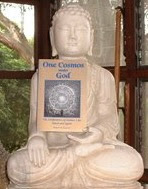
Here again I don't want to review all the tedious details. They are summarized in chapter 3 of The Bʘʘk of the Same Name

Jumping ahead a bit, let's put forth the following proposition: remove fathers from the equation and human beings are just like any other animal, only worse. 

Let's bat away one obvious objection: what about all the fatherless children who turn out just fine, not to mention all the children from intact families who become criminals, lunatics, assouls, and Congressional Black Caucus members?  

Put it this way: do not equate proper manhood with the mere physical presence of a father. Nor is spiritual manhood absent just because the physical father is. This question revolves around radiation and assimilation of a spiritual reality. Do not conflate spiritual and material categories, or at least bear in mind that the latter derives its content and significance from the former.

Analogously, Judaism and Christianity are "historical" religions. But don't conflate their historicity and their significance. In an example we've used before, an eyewitness to the Crucifixion itself may well have known nothing about it aside from the fact that it happened -- just like any other crucifixion. So?

The meaning is in the history but not reducible to it. Likewise, the meaning of fatherhood is present in fathers but cannot be reduced to them. If it is, then God is just a projection of human fatherhood rather than vice versa.

Let's briefly zoom down from the meso to the submicro: my own physical father was a good guy, but, with all due respect, if he were my only father, I would be a very different person, and not in a good way. One of the vital roles of good-enough-fathering is to help your child recognize good fathers, and ultimately the Father under whose authority we deputy terrestrial fathers operate. 

I won't always be here. Which is why I help my son recognize that this or that guy -- whether dead or alive -- is also a father. There aren't as many as there should be, but still plenty to go around if you know where to look. 

Not to get sidetracked into female nature, but it is impossible to imagine that feminism could exist if not for Daddy Issues; for what is feminism but the projection of Bad Daddy into "the patriarchy," even while casting the state as the fantasied Good Daddy?

The End for today.

Mama's Baby, Papa's Maybe

Continuing with the vision mentioned in the previous post: it revolves around the centrality of the category Father as it pertains to Homo sapiens

A moment's reflection reveals something interesting about human beings: that they are the only creatures that grow up with a father. No, not a sperm-donor, which all mammals have; rather, father as transcendent category.

Again, mammals are characterized by having mamas, which puts them a step above reptiles, who have only egg-donors, not proper mothers. Thus, the spiritual category of Mother appears earlier in the biospheric record, for reasons we will explore as we proceed. 

Everyone has a mother, insofar as the mother must, at the very least, carry the child to term. But not every child has a father. Again, everyone has a sperm-donor, but this donor may well have vanished from the scene the very day the donee was conceived.

Let us briefly pull away from the macro and focus on the micro, or better, the meso. Now, we all know what Democrat policies have done to the black family over the past 55 years: destroyed it. How did Dems finally accomplish this after 150 years of trying? 

I remember taking the history of a black patient. I asked him something to the effect of whether he grew up with his father, and he responded, "You know what they say -- mama's baby, papa's maybe." I'd never heard that gag before, but for him it was a matter-of-fact characterization of a rather dysfunctional family.

I will spare you all of the tedious statistics proving the effects -- divorce, bastardy, unemployment, crime, poverty, violence, addiction, prison, the Congressional Black Caucus, etc. Note that this downward spiral has been accompanied and guided by psychopathic Father-Leader substitutes such as Al Sharpton, Jesse Jackson, Barak Obama, et al. Each of them is an enthusiastic supporter of the very policies that have resulted in the destruction of the black family.

Let's return to the essay by Rob Henderson linked in the previous post, on the subject of America's Lost Boys. "Lost" is a tad euphemistic, since the real problem -- for the restavus -- is impulsive, violent, predatory, and criminal boys between the ages of 15 and 25 or so. Take them out of the picture and we'd have the crime rate of Sweden. Before the Muslims got there.

Ferality doesn't just happen; rather, it is the predictable consequence of identifiable causes. More to the point, although ferality is the return to a "state of nature," ironically, this state could never have come about naturally, in that Homo sapiens evolved within the trinitarian matrix of Mother-Father-Child, with each member playing a distinct and vital role for the perpetuation of culture and (hopefully) civilization.

Here again I don't want to review all the tedious details. They are summarized in chapter 3 of The Bʘʘk of the Same Name

Jumping ahead a bit, let's put forth the following proposition: remove fathers from the equation and human beings are just like any other animal, only worse. 

Let's bat away one obvious objection: what about all the fatherless children who turn out just fine, not to mention all the children from intact families who become criminals, lunatics, assouls, and Congressional Black Caucus members?  

Put it this way: do not equate proper manhood with the mere physical presence of a father. Nor is spiritual manhood absent just because the physical father is. This question revolves around radiation and assimilation of a spiritual reality. Do not conflate spiritual and material categories, or at least bear in mind that the latter derives its content and significance from the former.

Analogously, Judaism and Christianity are "historical" religions. But don't conflate their historicity and their significance. In an example we've used before, an eyewitness to the Crucifixion itself may well have known nothing about it aside from the fact that it happened -- just like any other crucifixion. So?

The meaning is in the history but not reducible to it. Likewise, the meaning of fatherhood is present in fathers but cannot be reduced to them. If it is, then God is just a projection of human fatherhood rather than vice versa.

Let's briefly zoom down from the meso to the submicro: my own physical father was a good guy, but, with all due respect, if he were my only father, I would be a very different person, and not in a good way. One of the vital roles of good-enough-fathering is to help your child recognize good fathers, and ultimately the Father under whose authority we deputy terrestrial fathers operate. 

I won't always be here. Which is why I help my son recognize that this or that guy -- whether dead or alive -- is also a father. There aren't as many as there should be, but still plenty to go around if you know where to look. 

Not to get sidetracked into female nature, but it is impossible to imagine that feminism could exist if not for Daddy Issues; for what is feminism but the projection of Bad Daddy into "the patriarchy," even while casting the state as the fantasied Good Daddy?

The End for today.

Tuesday, November 09, 2021

Mammals & Pappals

There are thousands of mammal species on this planet, but only one pappal: Homo sapiens

"Mammal," of course, is etymologically related to yo' mama. Unlike reptiles or insects, yo' mama don't just lay eggs, wish them luck, and skedaddle. Rather, mammals are characterized by an extrauterine relationship of varying lengths between mother and child.  

Here's a dictionary definition: a mammal is

a warm-blooded vertebrate animal of a class that is distinguished by the possession of hair or fur, the secretion of milk by females for the nourishment of the young, and (typically) the birth of live young.

Thus we see that Pete Buttigieg, for example, is excluded from this definition as a result of being an invertebrate.

Here's my problem, and it's not your problem, but here it is anyway: I've already seen this post in its entirety. It was a "vision," so to speak, and it was accompanied by the usual metacosmic certitude. 

Therefore, all that remains for me is to sketch it out. The sketching isn't for my benefit; again, I've already seen the end of this movie, so it's not as if I need to convince myself of its intrinsic truth.

So, is it for your benefit? No, I would never go that far. I just put it out there, mainly to keep the mind limber and the trolls piqued. 

Come to think of it, that's the same reason why I leave comments on this or that blog. The comments are always in the form of a joke or gag or aphorism, because these forms force the mind to create a little something out of nothing. An unexpected guffah-HA out of nowhere. More generally, any post that fails to provoke at least one guffah-HA is a failed post.

It's a spiritual exercise, really. A man who is tired of ridiculing the left is tired of life. 

But a man of the left isn't even a man, and of course I mean this literally, certainly not as an insult. There are degrees, of course, but I will repeat that a full blown man of the left -- from Stalin to Hitler to Mao -- is missing something vital, and we call this thing real manhood

To turn it around, who among us would call Castro a proper man except the improper men -- the genderless freaks -- of the left?

I apologize for the crack about being "genderless." For just as often it is not a matter of being genderless but of having too many genders, of being genderful.

Back to my problem. Although the end is certain, there are any number of pathways to get there, and writing a post means hacking a pathway through the jungle, or maybe finding one's way across a featureless desert. Where to begin?

I know: I'll begin at the end, with what triggered the vision to begin with. It was while reading an essay by the brilliant Rob Henderson about his own fatherless -- to say the least -- childhood. Calling him fatherless is like calling mentally ill and drug addicted street people "homeless" -- as if a home is the only thing lacking in their lives.

Except it's sort of the opposite of that: for what if Henderson, in spite of all the challenges, had had a strong, stable, and virtuous father protecting him the whole time? 

Let me begin with a couple of extracts, starting with a dramatic hook:

My earliest memory is of me gripping my mother, in the dark, burying my face so deeply into her stomach I can’t breathe. It’s dark. I come up for air and see two police officers looming over us. They want to take her away. I’m scared. I don’t want to let her go. I fasten myself to her as hard as I can. Suddenly, I’m in a long white hallway. I’m sitting on a bench next to my mother drinking chocolate milk. My three-year-old legs dangle above the floor. I sneeze and spill my milk. I look to my mom for help, but she can’t move her arms. She’s wearing handcuffs. I start to cry.

That year, I entered the Los Angeles County foster care system. I never saw my mother again (Link: https://bariweiss.substack.com/p/americas-lost-boys-and-me).

Not an auspicious start for a pappalian mammal.

From the time I was born until I was 17 years old, nearly everything in my life was propelling me to a life as one of America’s lost boys -- the young men who fail to mature, do poorly in school, live on the economic margins, and become absentee fathers or fail to form stable families of their own. 

Who fail to become men, precisely. Obviously we're not talking about mere biological manhood, which can only be prevented by transgenderist quacks armed with puberty blockers and parricidal hormones. 

Henderson goes on to highlight the fact that

one in six American men between the ages of 25 and 54 are unemployed or out of the workforce altogether: about 10 million men. This number has more than doubled since the 1970s. Meantime, over the past half-century, the number of men behind bars has more than quadrupled.

These are but symptoms of something more essential that is missing: manhood

As an asnide, we've all heard the jokes about Mayor Pete taking two months off of his do-nothing job for "paternity leave," meaning that he is fundamentally confused -- big surprise! -- as to what paternity is. For a real man doesn't take the occasion of the birth of his child to slack off, except maybe for a few days.

Rather, this is precisely when a real man begins to double-down on his career, in order to be able to provide the resources necessary for his wife and child to thrive. Paternity leave is not a thing, except when a man leaves work at the end of the day to spend time with the family. Maternity leave, however, is a thing. A 24/7 x 18+ years-or-so thing. A quintessentially human mammal thing.

To say that mothers have very different roles and functions from fathers has become "controversial." But even feminists know they can't sprout a johnson, therefore the need for these bitter nihilists to castrate men for the sake of equity. 

Henderson is presently in graduate school at Cambridge, where he is studying social psychology. I, of course, used to be a psychologist, but have in the meantime been kicked upstairs to full-time cosmic pneumatologist. Thus, we will be examining this subject from the standpoint of the perennial philosophy, psychology, and religion, not from the perspective of mere academic psychology, much less the "culture war" between civilization and barbarism (although the latter is an effect of what we'll be discussing).

Mammals & Pappals

There are thousands of mammal species on this planet, but only one pappal: Homo sapiens

"Mammal," of course, is etymologically related to yo' mama. Unlike reptiles or insects, yo' mama don't just lay eggs, wish them luck, and skedaddle. Rather, mammals are characterized by an extrauterine relationship of varying lengths between mother and child.  

Here's a dictionary definition: a mammal is

a warm-blooded vertebrate animal of a class that is distinguished by the possession of hair or fur, the secretion of milk by females for the nourishment of the young, and (typically) the birth of live young.

Thus we see that Pete Buttigieg, for example, is excluded from this definition as a result of being an invertebrate.

Here's my problem, and it's not your problem, but here it is anyway: I've already seen this post in its entirety. It was a "vision," so to speak, and it was accompanied by the usual metacosmic certitude. 

Therefore, all that remains for me is to sketch it out. The sketching isn't for my benefit; again, I've already seen the end of this movie, so it's not as if I need to convince myself of its intrinsic truth.

So, is it for your benefit? No, I would never go that far. I just put it out there, mainly to keep the mind limber and the trolls piqued. 

Come to think of it, that's the same reason why I leave comments on this or that blog. The comments are always in the form of a joke or gag or aphorism, because these forms force the mind to create a little something out of nothing. An unexpected guffah-HA out of nowhere. More generally, any post that fails to provoke at least one guffah-HA is a failed post.

It's a spiritual exercise, really. A man who is tired of ridiculing the left is tired of life. 

But a man of the left isn't even a man, and of course I mean this literally, certainly not as an insult. There are degrees, of course, but I will repeat that a full blown man of the left -- from Stalin to Hitler to Mao -- is missing something vital, and we call this thing real manhood

To turn it around, who among us would call Castro a proper man except the improper men -- the genderless freaks -- of the left?

I apologize for the crack about being "genderless." For just as often it is not a matter of being genderless but of having too many genders, of being genderful.

Back to my problem. Although the end is certain, there are any number of pathways to get there, and writing a post means hacking a pathway through the jungle, or maybe finding one's way across a featureless desert. Where to begin?

I know: I'll begin at the end, with what triggered the vision to begin with. It was while reading an essay by the brilliant Rob Henderson about his own fatherless -- to say the least -- childhood. Calling him fatherless is like calling mentally ill and drug addicted street people "homeless" -- as if a home is the only thing lacking in their lives.

Except it's sort of the opposite of that: for what if Henderson, in spite of all the challenges, had had a strong, stable, and virtuous father protecting him the whole time? 

Let me begin with a couple of extracts, starting with a dramatic hook:

My earliest memory is of me gripping my mother, in the dark, burying my face so deeply into her stomach I can’t breathe. It’s dark. I come up for air and see two police officers looming over us. They want to take her away. I’m scared. I don’t want to let her go. I fasten myself to her as hard as I can. Suddenly, I’m in a long white hallway. I’m sitting on a bench next to my mother drinking chocolate milk. My three-year-old legs dangle above the floor. I sneeze and spill my milk. I look to my mom for help, but she can’t move her arms. She’s wearing handcuffs. I start to cry.

That year, I entered the Los Angeles County foster care system. I never saw my mother again (Link: https://bariweiss.substack.com/p/americas-lost-boys-and-me).

Not an auspicious start for a pappalian mammal.

From the time I was born until I was 17 years old, nearly everything in my life was propelling me to a life as one of America’s lost boys -- the young men who fail to mature, do poorly in school, live on the economic margins, and become absentee fathers or fail to form stable families of their own. 

Who fail to become men, precisely. Obviously we're not talking about mere biological manhood, which can only be prevented by transgenderist quacks armed with puberty blockers and parricidal hormones. 

Henderson goes on to highlight the fact that

one in six American men between the ages of 25 and 54 are unemployed or out of the workforce altogether: about 10 million men. This number has more than doubled since the 1970s. Meantime, over the past half-century, the number of men behind bars has more than quadrupled.

These are but symptoms of something more essential that is missing: manhood

As an asnide, we've all heard the jokes about Mayor Pete taking two months off of his do-nothing job for "paternity leave," meaning that he is fundamentally confused -- big surprise! -- as to what paternity is. For a real man doesn't take the occasion of the birth of his child to slack off, except maybe for a few days.

Rather, this is precisely when a real man begins to double-down on his career, in order to be able to provide the resources necessary for his wife and child to thrive. Paternity leave is not a thing, except when a man leaves work at the end of the day to spend time with the family. Maternity leave, however, is a thing. A 24/7 x 18+ years-or-so thing. A quintessentially human mammal thing.

To say that mothers have very different roles and functions from fathers has become "controversial." But even feminists know they can't sprout a johnson, therefore the need for these bitter nihilists to castrate men for the sake of equity. 

Henderson is presently in graduate school at Cambridge, where he is studying social psychology. I, of course, used to be a psychologist, but have in the meantime been kicked upstairs to full-time cosmic pneumatologist. Thus, we will be examining this subject from the standpoint of the perennial philosophy, psychology, and religion, not from the perspective of mere academic psychology, much less the "culture war" between civilization and barbarism (although the latter is an effect of what we'll be discussing).

Sunday, November 07, 2021

Engender Studies & Transnatural Law

Man cannot violate the laws of nature, or they wouldn't be laws. But he can steer them, and in so doing transcend them. He can similarly steer his own nature, which means he has free will. Our nature itself can't be absolutely free -- i.e., without the limitation of form -- otherwise there would be nothing to steer and nowhere to go anyway.  

In short, form is always a constraint on possibility, even while the existence of so many forms is a consequence of the all-possibility of God, which is to say, his inexhaustible creativity. For what is creativity, exactly? It must be an orthoparadoxical combination of form and formlessness; or, to be precisely precise, it is the essence in existence, or substance in form, or perhaps "bounded freedom." 

Come to think of it, Schuon describes art in exactly this way: its essential function 

is to transfer Substance, which is both one and inexhaustible, into the world of accident and to bring the accidental consciousness back to Substance. 

This explains why man is compelled to create art on the one hand and attracted to it on the other, and indeed why it is so central to what man is. For art

transposes Being to the world of existence... it transposes in a certain way the Infinite to the world of the finite, or Essence to the world of forms; it thereby suggests a continuity proceeding from the one to the other, a way starting from appearance or accident and opening onto Substance or its celestial reverberations. 

As to the complementarity of creation-exteriorization and attraction-interiorization, Schuon points out that this function  

is both magical and spiritual: magical, it renders present principles, powers and also things that it attracts by virtue of a “sympathetic magic”; spiritual, it exteriorizes truths and beauties in view of our interiorization, of our return to the “kingdom of God that is within you.” 

The Principle becomes manifestation so that manifestation might rebecome the Principle, or so that the “I” might return to the Self; or simply, so that the human soul might, through given phenomena, make contact with the heavenly archetypes, and thereby with its own archetype. 

I don't want to get sidetracked into a discussion of art. The bottom line is that man is a form; the top line is that this form is an image of the Creator, and the Creator is -- obviously -- beyond form. 

Therefore, if you're following me, man, alone among creatures, is an orthoparadoxical -- no joke! I always mean this term literally -- complementarity of form and formlessness. Which is why we can -- and must -- grow and develop. We are created for purposes of transcendence or even transfiguration, AKA theosis.   

All of this no doubt sounds more than a bit abstract, and it is, and yet, the consequences could scarcely be more concrete. If they're not, then to hell with it. 

"Man," writes Schuon "is as if suspended between animality and divinity." As Life Itself clamors up the biological teloscape from veggies to insects to reptiles to mammals, there's more wiggle room at the top, but not much. Only in man is there a real breakthrough of form into the Great Wide Open of the formless, and vice versa.   

I was thinking about this ladder just yesterday. Every science has its proper object, and an object is -- duh -- a form, otherwise we'd be unable to study it. Now, what is the form of theology? Correct: it is God. And God is? Correct: beyond form. Therefore, theology is the formal study of the formless. 

Now, one reason, and maybe even the biggest reason, God is formless is that he's a person. In other words, there is an irreducible complementarity in persons qua personhood between form and formlessness, and now we're getting somewhere, because this again goes to the Trinity, since the Son is the engendered form of the "non-engendered" but engendering Father. 

We'll no doubt return to this principle as we proceed, but to en-gender is to give form, AKA to in-form. That being the case, a little gratitude is in order: thanks for the information! 

But I'm running short on time this morning, so TBC. 

Engender Studies & Transnatural Law

Man cannot violate the laws of nature, or they wouldn't be laws. But he can steer them, and in so doing transcend them. He can similarly steer his own nature, which means he has free will. Our nature itself can't be absolutely free -- i.e., without the limitation of form -- otherwise there would be nothing to steer and nowhere to go anyway.  

In short, form is always a constraint on possibility, even while the existence of so many forms is a consequence of the all-possibility of God, which is to say, his inexhaustible creativity. For what is creativity, exactly? It must be an orthoparadoxical combination of form and formlessness; or, to be precisely precise, it is the essence in existence, or substance in form, or perhaps "bounded freedom." 

Come to think of it, Schuon describes art in exactly this way: its essential function 

is to transfer Substance, which is both one and inexhaustible, into the world of accident and to bring the accidental consciousness back to Substance. 

This explains why man is compelled to create art on the one hand and attracted to it on the other, and indeed why it is so central to what man is. For art

transposes Being to the world of existence... it transposes in a certain way the Infinite to the world of the finite, or Essence to the world of forms; it thereby suggests a continuity proceeding from the one to the other, a way starting from appearance or accident and opening onto Substance or its celestial reverberations. 

As to the complementarity of creation-exteriorization and attraction-interiorization, Schuon points out that this function  

is both magical and spiritual: magical, it renders present principles, powers and also things that it attracts by virtue of a “sympathetic magic”; spiritual, it exteriorizes truths and beauties in view of our interiorization, of our return to the “kingdom of God that is within you.” 

The Principle becomes manifestation so that manifestation might rebecome the Principle, or so that the “I” might return to the Self; or simply, so that the human soul might, through given phenomena, make contact with the heavenly archetypes, and thereby with its own archetype. 

I don't want to get sidetracked into a discussion of art. The bottom line is that man is a form; the top line is that this form is an image of the Creator, and the Creator is -- obviously -- beyond form. 

Therefore, if you're following me, man, alone among creatures, is an orthoparadoxical -- no joke! I always mean this term literally -- complementarity of form and formlessness. Which is why we can -- and must -- grow and develop. We are created for purposes of transcendence or even transfiguration, AKA theosis.   

All of this no doubt sounds more than a bit abstract, and it is, and yet, the consequences could scarcely be more concrete. If they're not, then to hell with it. 

"Man," writes Schuon "is as if suspended between animality and divinity." As Life Itself clamors up the biological teloscape from veggies to insects to reptiles to mammals, there's more wiggle room at the top, but not much. Only in man is there a real breakthrough of form into the Great Wide Open of the formless, and vice versa.   

I was thinking about this ladder just yesterday. Every science has its proper object, and an object is -- duh -- a form, otherwise we'd be unable to study it. Now, what is the form of theology? Correct: it is God. And God is? Correct: beyond form. Therefore, theology is the formal study of the formless. 

Now, one reason, and maybe even the biggest reason, God is formless is that he's a person. In other words, there is an irreducible complementarity in persons qua personhood between form and formlessness, and now we're getting somewhere, because this again goes to the Trinity, since the Son is the engendered form of the "non-engendered" but engendering Father. 

We'll no doubt return to this principle as we proceed, but to en-gender is to give form, AKA to in-form. That being the case, a little gratitude is in order: thanks for the information! 

But I'm running short on time this morning, so TBC. 

Friday, November 05, 2021

Meta-World & Meta-Man

Thanks to the luxury of time -- and the timelessness tucked away therein -- I've lately been engaged in what you might call a close reading of Schuon. Being that he already writes in such a compact style -- deploying a minimum of words to convey a maximum of meaning -- his works are uniquely suited to such a line-by-line...

I was about to say "analysis," but that would be inaccurate and misleading. More like a pondering-and-abiding, waiting for the associations -- the vertical ins & outs -- to stream into the cabeza. Lightning & thunder, respectively. 

Reminds me of what the rabbis say of scripture -- that a single blow of the hammer sets off a multitude of sparks. According to Schuon, this is because

the truth is above all in the symbol's effective power of illumination and not in its literalness, and that is all the more evident since God, whose wisdom goes beyond all words, puts multiple meanings into a single expression.

Yup. And speaking of up yonder, here's one to ponder:

The uncreated Word shatters created speech, whilst at the same time directing it towards concrete and saving truth (ibid.).

Sure does. But that's not our immediate focus. Rather, we've lately been pondering two subjects -- or questions -- 1) the ultimate ground of reality, or meta-cosmology, and 2) the ultimate nature of man, or meta-anthropology, i.e., What is reality?What is man?, and What the heck is the nature of the relationship between them? 

In knowing these we would pretty much know everything worth knowing, or at least everything we need to know, leaving it to our STEMitic friends to fill in the details. 

Yes, I've already read all of Schuon's books more than once, and several of them many times, but this is different. It reminds me of slow-motion weight training, whereby, instead of doing a lot of repetitions, you do just a few, but verrrry slowwwwwly. Instead of doing fifty push-ups in one minute, do a single push-up in 30 seconds or whatever. 

Recall what Schuon said in the previous post: that the Science of Fundamental Principles, AKA philosophy, "operates with intuition, which 'perceives,' and not with reason alone, which 'concludes.'"  

This is because man is an open system, which means open to being and truth (or, to the truth-of-being which is constantly being-spoken in our cosmos).

Come to think of it, what is reality but Being-spoken? And what is man but understanding-being? Intelligibility and intelligence, respectively. A single lightbeam split into subject and object and meeting in the conceptual middle.

Conversely, postmodern sophistry is "hardly concerned with 'perceiving' and taking into account that which 'is.'" 

Rather, it "reasons" in such a way that reason is sealed off from the outside, to say nothing of the above. It is the proverbial snake attempting to devour its own tail. Schuon refers to it as "the codification of an acquired infirmity," an infirmity acquired way back in Genesis 3, when our adamant protodope deicided to unfriend God.

This is in no way to deny or denigrate the importance of reason. It's just that -- at risk of belaboring the point -- the principle of reason is not located in man. Rather, it was here long before we arrived on the scene. We didn't invent it. If we did, then the primordial link is broken between it and the world. 

"Man is not a closed system," writes Schuon, "although he can try to be so." In other words, just as man is free to reject freedom, he may choose to inhabit his own hermetically sealed matrix, which is one of the central themes of Genesis 3. Human nature never changes, but it can look that way because of the diverse simulations he constructs and inhabits, taking them for "reality." 

For example, there is nothing remotely real about progressivism or its many tentacles such as feminism, CRT, AGW, LGBTWTF, etc. But this hardly prevents these clueless anti-STEMites from living in their ontological tent cities.  

As we all know, matrix is etymologically related to mother and to womb, and isn't that convenient, because you could say that there are two possible wombs. Let's call them the wombs of Eve and of Mary. 

This cosmos just got interesting. And the subject of this post just got much bigger, but let's see if we can tame it in the time remaining. 

Chapp writes of 

the deep anthropological and ontological implications of the fact that we were not lowered into this world by God on the end of a crane as some sort of angelic visitor to a foreign land....

Rather, 

we were created along with this world precisely as temporal beings whose existence is characterized by the dynamic of event and sequential becoming.

Becoming. What, like in a womb?

Yes.

I'm a bit distracted this morning, since I have one ear on the Rittenhouse trial, which sucked me in. We'll try to refocus tomorrow. 


Meta-World & Meta-Man

Thanks to the luxury of time -- and the timelessness tucked away therein -- I've lately been engaged in what you might call a close reading of Schuon. Being that he already writes in such a compact style -- deploying a minimum of words to convey a maximum of meaning -- his works are uniquely suited to such a line-by-line...

I was about to say "analysis," but that would be inaccurate and misleading. More like a pondering-and-abiding, waiting for the associations -- the vertical ins & outs -- to stream into the cabeza. Lightning & thunder, respectively. 

Reminds me of what the rabbis say of scripture -- that a single blow of the hammer sets off a multitude of sparks. According to Schuon, this is because

the truth is above all in the symbol's effective power of illumination and not in its literalness, and that is all the more evident since God, whose wisdom goes beyond all words, puts multiple meanings into a single expression.

Yup. And speaking of up yonder, here's one to ponder:

The uncreated Word shatters created speech, whilst at the same time directing it towards concrete and saving truth (ibid.).

Sure does. But that's not our immediate focus. Rather, we've lately been pondering two subjects -- or questions -- 1) the ultimate ground of reality, or meta-cosmology, and 2) the ultimate nature of man, or meta-anthropology, i.e., What is reality?What is man?, and What the heck is the nature of the relationship between them? 

In knowing these we would pretty much know everything worth knowing, or at least everything we need to know, leaving it to our STEMitic friends to fill in the details. 

Yes, I've already read all of Schuon's books more than once, and several of them many times, but this is different. It reminds me of slow-motion weight training, whereby, instead of doing a lot of repetitions, you do just a few, but verrrry slowwwwwly. Instead of doing fifty push-ups in one minute, do a single push-up in 30 seconds or whatever. 

Recall what Schuon said in the previous post: that the Science of Fundamental Principles, AKA philosophy, "operates with intuition, which 'perceives,' and not with reason alone, which 'concludes.'"  

This is because man is an open system, which means open to being and truth (or, to the truth-of-being which is constantly being-spoken in our cosmos).

Come to think of it, what is reality but Being-spoken? And what is man but understanding-being? Intelligibility and intelligence, respectively. A single lightbeam split into subject and object and meeting in the conceptual middle.

Conversely, postmodern sophistry is "hardly concerned with 'perceiving' and taking into account that which 'is.'" 

Rather, it "reasons" in such a way that reason is sealed off from the outside, to say nothing of the above. It is the proverbial snake attempting to devour its own tail. Schuon refers to it as "the codification of an acquired infirmity," an infirmity acquired way back in Genesis 3, when our adamant protodope deicided to unfriend God.

This is in no way to deny or denigrate the importance of reason. It's just that -- at risk of belaboring the point -- the principle of reason is not located in man. Rather, it was here long before we arrived on the scene. We didn't invent it. If we did, then the primordial link is broken between it and the world. 

"Man is not a closed system," writes Schuon, "although he can try to be so." In other words, just as man is free to reject freedom, he may choose to inhabit his own hermetically sealed matrix, which is one of the central themes of Genesis 3. Human nature never changes, but it can look that way because of the diverse simulations he constructs and inhabits, taking them for "reality." 

For example, there is nothing remotely real about progressivism or its many tentacles such as feminism, CRT, AGW, LGBTWTF, etc. But this hardly prevents these clueless anti-STEMites from living in their ontological tent cities.  

As we all know, matrix is etymologically related to mother and to womb, and isn't that convenient, because you could say that there are two possible wombs. Let's call them the wombs of Eve and of Mary. 

This cosmos just got interesting. And the subject of this post just got much bigger, but let's see if we can tame it in the time remaining. 

Chapp writes of 

the deep anthropological and ontological implications of the fact that we were not lowered into this world by God on the end of a crane as some sort of angelic visitor to a foreign land....

Rather, 

we were created along with this world precisely as temporal beings whose existence is characterized by the dynamic of event and sequential becoming.

Becoming. What, like in a womb?

Yes.

I'm a bit distracted this morning, since I have one ear on the Rittenhouse trial, which sucked me in. We'll try to refocus tomorrow. 


Tuesday, November 02, 2021

Focus on Man

That's an order!

Sometimes it helps to know what something is by knowing what it isn't

For example, we say that God is infinite. However, this is a wholly negative, apophatic characterization, since it simply means not finite: in other words God can't be finite, therefore he's infinite. Which we can't ever wrap our minds around, even though we know with 100% certitude that it is true.

Which is an intriguing proposition, because it means man can know with certitude things he can most certainly never understand. Call it a primordial orthoparadox if you like. 

Similar examples abound, and I've been thinking about them since March of 1985, although I don't recall if I've ever posted on the subject.

For example, man is the being who knows he will die. But what is death? We can't say. Or, we can say (similar to in-finite) that it's not-life, but what is life? Life is the transcendence of matter, so is death the transcendence of life?

There's another one: tran-scend. What's that? To climb across, surmount; to rise above or go beyond the limits of: exceed. We can scarcely be human without the word transcend or some equivalent to it. So, humans routinely travel across and rise above & beyond. Yes, but to where? To in-finity, and beyond!

Back in March of 1985 I was in grad school, where I was learning all about the unconscious. What's that? Easy: un-conscious. Oh. Like, in-animate? No, inanimate things are not conscious. Okay, like death? No, that's... we don't know what that is. See paragraph six.

Eventually I realized that conscious / unconscious isn't a dualism but a complementarity. Nor is it an antithesis, like, say, good and evil, for in that case, evil is a privation. As mentioned in a comment yesterday, it has no positive ontological reality, but is only parasitic on it.

The unconscious isn't like that. It's not a privation or negation of consciousness. Rather, it's more like the dark side of the moon: we know -- with certitude! -- it's there. We just can't see it. 

Likewise the unconscious, which, in my considered opinion, bears the same relation to consciousness as does Beyond-Being to Being, or perhaps even Father to Son, being that the latter is a kind of "specification" of the former.

Analogously speaking, of course. But again, if God goes to all the trouble of revealing his trinitarian innards to us, I think we should take it seriously as a way to deepen our understanding of what's going on down here. We need to use it as a way to bust out of our habitual approach to things, which is -- at least for pinheads -- too linear and rationalistic.

I see. So we should be ir-rational or anti-rational? No, not at all; rather, trans-rational. God is telling us what he's like, which is a good thing, because we can't get there via mere reason. Reason, limited to its own devices, leads to inevitable impasses and absurdities, if only because reason can never furnish its own premises. Theology -- at least trans-natural theology -- really comes down to reasoning about premises furnished by God.

Looked at in this manner, there is nothing irrational about trinitarian metaphysics, even though reason could never arrive at it unaided. But once it is revealed to us, we can reason about it all day long.

Focus! Yes, back to man. What can reason tell us about the nature of man? Not much, except to say that man is the rational animal, which is a tautology, unless we can track down the actual source of reason. 

Revelation, which is trans- (not anti-!) rational, tells us we are in the image of the Creator, and now we're getting somewhere. To put it conversely, we can't get anywhere with a false image of man, and any image that excludes the Creator is a false one. 

Certitude. 

Human beings are uniquely able to stand aside, above, or beyond themselves and observe their own existence, and only a fundamentally im-material being can do this. Rocks can't escape themselves. They are incapable of ec-stacy. 

Change my mind:

the Trinity is eternal, but not in the sense of being indifferent to or opposed to time. Rather, it is supratemporal and includes the reality of time, analogously, within itself. Thus, the Trinity is not merely timeless or atemporal. If it were, then eternity would be opposed to temporality as its transcendent negation (Chapp). 

Just kidding. Some things will never change, and this is one of them. I want to say Bob's mind is made up, and it is, but that's merely the effect of a deeper cause. For example, if I look out my window and see a tree, I don't say, "My mind is made up: that's a tree, and you can't talk me out of it."

True, you can't talk me out of it, but that's because no one talked me into it. Rather, the tree is just there prior to my thinking about it. You are free to argue about whether the tree is really there or not there at all, but I've accepted its ex-istence and moved on. I'm out of here.

To Be con-tinuous...


Focus on Man

That's an order!

Sometimes it helps to know what something is by knowing what it isn't

For example, we say that God is infinite. However, this is a wholly negative, apophatic characterization, since it simply means not finite: in other words God can't be finite, therefore he's infinite. Which we can't ever wrap our minds around, even though we know with 100% certitude that it is true.

Which is an intriguing proposition, because it means man can know with certitude things he can most certainly never understand. Call it a primordial orthoparadox if you like. 

Similar examples abound, and I've been thinking about them since March of 1985, although I don't recall if I've ever posted on the subject.

For example, man is the being who knows he will die. But what is death? We can't say. Or, we can say (similar to in-finite) that it's not-life, but what is life? Life is the transcendence of matter, so is death the transcendence of life?

There's another one: tran-scend. What's that? To climb across, surmount; to rise above or go beyond the limits of: exceed. We can scarcely be human without the word transcend or some equivalent to it. So, humans routinely travel across and rise above & beyond. Yes, but to where? To in-finity, and beyond!

Back in March of 1985 I was in grad school, where I was learning all about the unconscious. What's that? Easy: un-conscious. Oh. Like, in-animate? No, inanimate things are not conscious. Okay, like death? No, that's... we don't know what that is. See paragraph six.

Eventually I realized that conscious / unconscious isn't a dualism but a complementarity. Nor is it an antithesis, like, say, good and evil, for in that case, evil is a privation. As mentioned in a comment yesterday, it has no positive ontological reality, but is only parasitic on it.

The unconscious isn't like that. It's not a privation or negation of consciousness. Rather, it's more like the dark side of the moon: we know -- with certitude! -- it's there. We just can't see it. 

Likewise the unconscious, which, in my considered opinion, bears the same relation to consciousness as does Beyond-Being to Being, or perhaps even Father to Son, being that the latter is a kind of "specification" of the former.

Analogously speaking, of course. But again, if God goes to all the trouble of revealing his trinitarian innards to us, I think we should take it seriously as a way to deepen our understanding of what's going on down here. We need to use it as a way to bust out of our habitual approach to things, which is -- at least for pinheads -- too linear and rationalistic.

I see. So we should be ir-rational or anti-rational? No, not at all; rather, trans-rational. God is telling us what he's like, which is a good thing, because we can't get there via mere reason. Reason, limited to its own devices, leads to inevitable impasses and absurdities, if only because reason can never furnish its own premises. Theology -- at least trans-natural theology -- really comes down to reasoning about premises furnished by God.

Looked at in this manner, there is nothing irrational about trinitarian metaphysics, even though reason could never arrive at it unaided. But once it is revealed to us, we can reason about it all day long.

Focus! Yes, back to man. What can reason tell us about the nature of man? Not much, except to say that man is the rational animal, which is a tautology, unless we can track down the actual source of reason. 

Revelation, which is trans- (not anti-!) rational, tells us we are in the image of the Creator, and now we're getting somewhere. To put it conversely, we can't get anywhere with a false image of man, and any image that excludes the Creator is a false one. 

Certitude. 

Human beings are uniquely able to stand aside, above, or beyond themselves and observe their own existence, and only a fundamentally im-material being can do this. Rocks can't escape themselves. They are incapable of ec-stacy. 

Change my mind:

the Trinity is eternal, but not in the sense of being indifferent to or opposed to time. Rather, it is supratemporal and includes the reality of time, analogously, within itself. Thus, the Trinity is not merely timeless or atemporal. If it were, then eternity would be opposed to temporality as its transcendent negation (Chapp). 

Just kidding. Some things will never change, and this is one of them. I want to say Bob's mind is made up, and it is, but that's merely the effect of a deeper cause. For example, if I look out my window and see a tree, I don't say, "My mind is made up: that's a tree, and you can't talk me out of it."

True, you can't talk me out of it, but that's because no one talked me into it. Rather, the tree is just there prior to my thinking about it. You are free to argue about whether the tree is really there or not there at all, but I've accepted its ex-istence and moved on. I'm out of here.

To Be con-tinuous...


Monday, November 01, 2021

Trans-Cosmic Meta-Anthropology

I've read about certain bands that don't write songs in the usual way. Rather, they just jam and fool around until they stumble upon something that sounds like a song. Then the jam begins to suggest what it's about lyrically, and eventually crystallizes into a composition. The Rolling Stones sometimes did it this way. R.E.M. too. 

If it's good enough for ancient man -- i.e., Keith Richards -- then it's good enough for me. I'll just start jamming and see where it goes. 

What is man that man should be mindful of him? Other animals don't give a hoot, honk, or hiss about their nature. But humans never stop hollerin' about it, especially the ones who insist there is no such thing. Hee-haw!

If these asses are correct, then Homo sapiens is the animal whose nature it is to deny its nature. 

Moreover, we are the only such animal, since human beings -- even young children -- easily recognize the nature of other animals. We don't confuse dogs and cats, or snakes and birds -- nor, for that matter, do we mistake a cock for a hen. If we take a bull for a cow there will be serious consequences. Yes, that's a warning.  

Here again, Homo sapiens is the only species that can make systematic -- not merely accidental -- mistakes about its own nature. For example, from time to time we hear rumors of this or that animal that engages in same-sex behavior, but no animal does so systematically or it wouldn't exist. 

To put it another way, homosexuality is obviously contingent; if it were essential, then it would place an absurdity at the foundation of our nature. If we can't agree that sex has a telos, then we might as well say that babies come from storks, or that two men can marry.

The moment we say Everybody Knows this or that, Somebody will insist otherwise, hence the existence of tenure. 

As the cliche goes, there is nothing so stupid that a professional leftist hasn't believed it. It's their nature to believe the unbelievable. Credo quia absurdum, and the more absurd the more credible. Some on the left still believe the conspiracy theory that Biden legitimately won the election, albeit fewer every day.

But let's try to stay focused. Better yet, what is the focus of this post? I would say human nature, which, first of all, either does or doesn't exist. We, of course, believe the former, although we do not necessarily believe it's a slam dunk. The reason I say this is that I am still waiting to meet someone who reminds me of me, i.e., who shares my nature. Am I my own species? Or are there others? 

Yes, there's obvious overlap. But never a perfect fit. This is probably what Sartre meant with his crack about hell being the existence of other people. 

However, in his case the operational term is existence, being that he was an existentialist, and the essence of existentialism is the denial of essence, precisely. Therefore, each person is not only an island monad cut off from all the others, but man invents himself -- makes it up -- as he goes along. Which is why his most famous work of philosophy is called Being and Nothingness

(Spoiler alert: being is. You, on the other hand, are nothing.)

Believe it or not, this is one of the first philosophy books I ever read. It would have been back in the late '70s, when I assumed that philosophy, like science, must be progressive, so why not just skip ahead and get to the point? Reading Aristotle or Thomas to learn about man would be as anachronistic as reading Galen to learn medicine or Ptolemy to learn astronomy.

In reality, some things progress, some remain the same, and some deteriorate. Confusion enters because man is indeed capable of "progress," but only in certain areas. 

More to the point, the principle of progress is not, nor can it be, change or progress. Rather, the very possibility of progress is rooted in and oriented toward something that does not change. Call this principle what you like -- even just an empty placeholder such as O -- but without it, we are Ø. Without a paddle.

Well, that was fun. And easier than digging up quotes from other experts. I think we have the outlines of a melody. With any luck, the words to the song will further reveal themselves in the next post. But this I know: there is an objective and universal anthropology, and it is rooted in a trans-cosmic meta-anthropology. That's for certain.


Trans-Cosmic Meta-Anthropology

I've read about certain bands that don't write songs in the usual way. Rather, they just jam and fool around until they stumble upon something that sounds like a song. Then the jam begins to suggest what it's about lyrically, and eventually crystallizes into a composition. The Rolling Stones sometimes did it this way. R.E.M. too. 

If it's good enough for ancient man -- i.e., Keith Richards -- then it's good enough for me. I'll just start jamming and see where it goes. 

What is man that man should be mindful of him? Other animals don't give a hoot, honk, or hiss about their nature. But humans never stop hollerin' about it, especially the ones who insist there is no such thing. Hee-haw!

If these asses are correct, then Homo sapiens is the animal whose nature it is to deny its nature. 

Moreover, we are the only such animal, since human beings -- even young children -- easily recognize the nature of other animals. We don't confuse dogs and cats, or snakes and birds -- nor, for that matter, do we mistake a cock for a hen. If we take a bull for a cow there will be serious consequences. Yes, that's a warning.  

Here again, Homo sapiens is the only species that can make systematic -- not merely accidental -- mistakes about its own nature. For example, from time to time we hear rumors of this or that animal that engages in same-sex behavior, but no animal does so systematically or it wouldn't exist. 

To put it another way, homosexuality is obviously contingent; if it were essential, then it would place an absurdity at the foundation of our nature. If we can't agree that sex has a telos, then we might as well say that babies come from storks, or that two men can marry.

The moment we say Everybody Knows this or that, Somebody will insist otherwise, hence the existence of tenure. 

As the cliche goes, there is nothing so stupid that a professional leftist hasn't believed it. It's their nature to believe the unbelievable. Credo quia absurdum, and the more absurd the more credible. Some on the left still believe the conspiracy theory that Biden legitimately won the election, albeit fewer every day.

But let's try to stay focused. Better yet, what is the focus of this post? I would say human nature, which, first of all, either does or doesn't exist. We, of course, believe the former, although we do not necessarily believe it's a slam dunk. The reason I say this is that I am still waiting to meet someone who reminds me of me, i.e., who shares my nature. Am I my own species? Or are there others? 

Yes, there's obvious overlap. But never a perfect fit. This is probably what Sartre meant with his crack about hell being the existence of other people. 

However, in his case the operational term is existence, being that he was an existentialist, and the essence of existentialism is the denial of essence, precisely. Therefore, each person is not only an island monad cut off from all the others, but man invents himself -- makes it up -- as he goes along. Which is why his most famous work of philosophy is called Being and Nothingness

(Spoiler alert: being is. You, on the other hand, are nothing.)

Believe it or not, this is one of the first philosophy books I ever read. It would have been back in the late '70s, when I assumed that philosophy, like science, must be progressive, so why not just skip ahead and get to the point? Reading Aristotle or Thomas to learn about man would be as anachronistic as reading Galen to learn medicine or Ptolemy to learn astronomy.

In reality, some things progress, some remain the same, and some deteriorate. Confusion enters because man is indeed capable of "progress," but only in certain areas. 

More to the point, the principle of progress is not, nor can it be, change or progress. Rather, the very possibility of progress is rooted in and oriented toward something that does not change. Call this principle what you like -- even just an empty placeholder such as O -- but without it, we are Ø. Without a paddle.

Well, that was fun. And easier than digging up quotes from other experts. I think we have the outlines of a melody. With any luck, the words to the song will further reveal themselves in the next post. But this I know: there is an objective and universal anthropology, and it is rooted in a trans-cosmic meta-anthropology. That's for certain.


Friday, October 29, 2021

Abracadabra

According to the Hebrew Bible, God made the world with words.... The Aramaic for "I create as I speak" is avara k'davara or, in magician's language, abracadabra. Not only are words the instrument of creation, in Judaism they are the primary reality itself. --Lawrence Kushner 

Ah ha. A cosmos made of language. That would explain a great deal -- in particular, it would shed additional obscurity on yesterday's post on the ins, outs, and what-have-yous of analogy, for an analogy is always between this and that word.

Now, a word is a form, and a form is a kind of word. In this context, it is noteworthy that Before the Beginning, when the Creator begins to begin, it is in the context of a void, which is to say, a complete absence of form. There are no words. Literally! 

It is also dark, which one would expect it to be with no words to light up the place. Think of, say, the world of Helen Keller before she made that infinite leap from the sensation of wetness to the concept of ¡water! That right there is an analogue of the moment man became man and left animality below.

To be perfectly accurate, we never left animality entirely. We are not angels. But that was the moment a link was established between. 

Yes, between, full stop. Between what? It almost doesn't matter, or, on the other hand, perhaps nothing matters more. 

I'm thinking of Voegelin's concept of the metaxy, which is the "in between" state where humans live, where we have always lived, and where we will always live. This space is humanness itself, hence its place of honor atop the comment box:

The quest, thus, has no external "object," but is reality itself becoming luminous for its movement from the ineffable, through the Cosmos, to the ineffable.

Some things will never change. Here is an exact definition of metaxy:

Between. Plato's symbol representing the experience of human existence as "between" lower and upper poles: man and the divine, imperfection and perfection, ignorance and knowledge, and so on. Equivalent to the symbol of "participation in being" (Webb).

"Between lower and upper poles" -- or in other words, within the space of verticality. With this firmly and clearly in mind, now you understand why we would never stoop to argue with someone who cannot or will not acknowledge something as soph-evident as our nonlocal verticality. 

By the way, this isn't just understood conceptually, or at least it shouldn't be. Rather, it is perceived by the intellect. Indeed, it is among the first things seen by the intellect upon opening its third eye on thinksgiving morn. 

With regard to verticality, you could say that man is suspended between animality and divinity; or -- and, rather -- time and eternity, spirit and matter, one and many, appearance and reality, angels above and demons below, etc.

Analogously, think of the space that is opened up with the local appearance of biological life in the cosmos. The other day, my son was inquiring as to why mosquitos exist. I think it's because this is a full-employment biosphere, or in other words, the very existence of a biosphere implies that every nook & cranny must be filled. 

Likewise our vertical world, filled as it is with so many crooks & loonies: it takes all kinds to make a pneumosphere. Alas, they will always be with us.

In the beginning we must begin with something that cannot be doubted, about which error is impossible, which presupposes no prior truth(s), and denial of which leads to absurdity. We're talking about the Truth by which truth is even possible. Thus, we're talking about necessary truth.

Which is kind of a trick, because a good working definition of truth is that which must be: 2 + 2 not only equals 4, but must equal 4. Certitude. 

Certitude! I'll let Schuon, with his limber mind, tie up the many strands unraveled in this post, emphases mine:

[P]hilosophy -- the “love of wisdom” -- is the science of all the fundamental principles; this science operates with intuition, which “perceives,” and not with reason alone, which “concludes.” 

Subjectively speaking, the essence of philosophy is certitude; for the moderns, on the contrary, the essence of philosophy is doubt: philosophy is supposed to reason without any premise, as if this condition were not itself a preconceived idea; this is the classical contradiction of all relativism. Everything is doubted except for doubt.

There is indeed "a source of certitude that transcends the mental mechanism, and this source -- the only one there is -- is the pure Intellect, or Intelligence as such." 

The intellect knows through its very substance all that is capable of being known and, like the blood flowing through even the tiniest arteries of the body, it traverses all the egos of which the universe is woven and opens out “vertically” on the Infinite (ibid.)

If anything is certain, it means that certitude is possible in principle. And what is the principle of certitude? Yes, God, the one thing of which -- of Whom -- we can be certain. For it is written:

If God were not a person, He would have died some time ago (Dávila).

In the spirit of shorter posts, I think I'll stop. Besides, 

God is the guest of silence.

Words and ears. Abracadabra! 

Abracadabra

According to the Hebrew Bible, God made the world with words.... The Aramaic for "I create as I speak" is avara k'davara or, in magician's language, abracadabra. Not only are words the instrument of creation, in Judaism they are the primary reality itself. --Lawrence Kushner 

Ah ha. A cosmos made of language. That would explain a great deal -- in particular, it would shed additional obscurity on yesterday's post on the ins, outs, and what-have-yous of analogy, for an analogy is always between this and that word.

Now, a word is a form, and a form is a kind of word. In this context, it is noteworthy that Before the Beginning, when the Creator begins to begin, it is in the context of a void, which is to say, a complete absence of form. There are no words. Literally! 

It is also dark, which one would expect it to be with no words to light up the place. Think of, say, the world of Helen Keller before she made that infinite leap from the sensation of wetness to the concept of ¡water! That right there is an analogue of the moment man became man and left animality below.

To be perfectly accurate, we never left animality entirely. We are not angels. But that was the moment a link was established between. 

Yes, between, full stop. Between what? It almost doesn't matter, or, on the other hand, perhaps nothing matters more. 

I'm thinking of Voegelin's concept of the metaxy, which is the "in between" state where humans live, where we have always lived, and where we will always live. This space is humanness itself, hence its place of honor atop the comment box:

The quest, thus, has no external "object," but is reality itself becoming luminous for its movement from the ineffable, through the Cosmos, to the ineffable.

Some things will never change. Here is an exact definition of metaxy:

Between. Plato's symbol representing the experience of human existence as "between" lower and upper poles: man and the divine, imperfection and perfection, ignorance and knowledge, and so on. Equivalent to the symbol of "participation in being" (Webb).

"Between lower and upper poles" -- or in other words, within the space of verticality. With this firmly and clearly in mind, now you understand why we would never stoop to argue with someone who cannot or will not acknowledge something as soph-evident as our nonlocal verticality. 

By the way, this isn't just understood conceptually, or at least it shouldn't be. Rather, it is perceived by the intellect. Indeed, it is among the first things seen by the intellect upon opening its third eye on thinksgiving morn. 

With regard to verticality, you could say that man is suspended between animality and divinity; or -- and, rather -- time and eternity, spirit and matter, one and many, appearance and reality, angels above and demons below, etc.

Analogously, think of the space that is opened up with the local appearance of biological life in the cosmos. The other day, my son was inquiring as to why mosquitos exist. I think it's because this is a full-employment biosphere, or in other words, the very existence of a biosphere implies that every nook & cranny must be filled. 

Likewise our vertical world, filled as it is with so many crooks & loonies: it takes all kinds to make a pneumosphere. Alas, they will always be with us.

In the beginning we must begin with something that cannot be doubted, about which error is impossible, which presupposes no prior truth(s), and denial of which leads to absurdity. We're talking about the Truth by which truth is even possible. Thus, we're talking about necessary truth.

Which is kind of a trick, because a good working definition of truth is that which must be: 2 + 2 not only equals 4, but must equal 4. Certitude. 

Certitude! I'll let Schuon, with his limber mind, tie up the many strands unraveled in this post, emphases mine:

[P]hilosophy -- the “love of wisdom” -- is the science of all the fundamental principles; this science operates with intuition, which “perceives,” and not with reason alone, which “concludes.” 

Subjectively speaking, the essence of philosophy is certitude; for the moderns, on the contrary, the essence of philosophy is doubt: philosophy is supposed to reason without any premise, as if this condition were not itself a preconceived idea; this is the classical contradiction of all relativism. Everything is doubted except for doubt.

There is indeed "a source of certitude that transcends the mental mechanism, and this source -- the only one there is -- is the pure Intellect, or Intelligence as such." 

The intellect knows through its very substance all that is capable of being known and, like the blood flowing through even the tiniest arteries of the body, it traverses all the egos of which the universe is woven and opens out “vertically” on the Infinite (ibid.)

If anything is certain, it means that certitude is possible in principle. And what is the principle of certitude? Yes, God, the one thing of which -- of Whom -- we can be certain. For it is written:

If God were not a person, He would have died some time ago (Dávila).

In the spirit of shorter posts, I think I'll stop. Besides, 

God is the guest of silence.

Words and ears. Abracadabra! 

Thursday, October 28, 2021

What is Analogous to Analogy?

I suppose everything has its analogue in God, even analogy itself, being that the Son is -- so to speak-- analogous to the Father: 

exteriorization within God forms the ontological ground of possibility for the analogous exteriorization of a finite world, as well as for the exteriorization of God that we refer to as the Incarnation (emphasis mine).

Chapp adds that 

The concept of personhood, developed primarily to describe the relational hypostases within the Trinity and now applied analogously to describe spiritual creatures, allows us to overcome the autonomy/heteronomy impasse in our concept of freedom.

In other words, human persons (qua persons) are simultaneously free and subject to a higher authority. 

This is the ontological basis of our freedom to know truth and to choose the good. It is what gives a direction to both thought and action; it is why "progress" can even exist, and why "progressivism" is the denial of its real possibility (for in the horizontal flatland of the left, there can be no direction that isn't either arbitrary or rooted in the will to power).

Consider the many times Jesus makes reference to doing the will of the Father, and doing so freely: on the one hand, Not My will but Yours; on the other, No one takes its from Me, but I lay it down of My own accord.

This complementarity goes to the Ultimate Anthropology, the highest and deepest principle and context of human personhood. Thus, 

If human freedom is made in the image and likeness of this relational, Trinitarian God, then it can only come to itself by going out of itself and drawing close to the divine freedom in a dialogical relationship of love (Chapp).

A post or two ago we spoke of approaching God's "immutability" in an analogous manner, and the same can be said of his "timelessness." For in reality,

there exists within God something for which our creaturely experience of spatiality and duration are analogies. The exteriorization of the interiority of the Trinitarian hypostases demands that we posit the event-like quality of these relations... (ibid., emphasis mine).

That's exactly what I thought, but I never heard anyone but Petey express it this way. Hartshorne does, but in a manner that denies immutability and instead places process and becoming at the foundation of things. 

This is a metaphysical non-starter, because a cosmos of pure becoming equates to an eternal absence of identity. If this were true, then boys really could be girls, homosexuals really could marry, math really could be racist, and Biden's 2 trillion dollar giveaway to liberal parasites really could cost their host nothing.

This is not to deny or devalue becoming, merely to situate it in the proper context. In fact, 

the becoming of creatures in their relations with worldly others is an image and likeness of the event-like quality of the Trinitarian relations (ibid.).

Moreover, "We are able to call God 'other' precisely because of the distance and relationally within God himself" (ibid.). 

In short -- and this is important -- we now have a principle that explains how it is possible for anything other than God to actually exist. Put conversely, any conceptualization of God as a radical monad cannot explain -- and generally must deny -- human freedom as a limit on divine omnipotence. But this "limit" is -- analogously -- within the Godhead itself.

We're almost out of time, so we'll end with this:

The Father is, from all eternity, nothing more than the act of generating the Son in self-donation, while the Son is nothing more than the act of letting oneself be generated. Hence, the Son is the ground of possibility for all extra-divine "allowing oneself to be." The coming of the creaturely realm is therefore the finite analogue of the intra-trinitarian act of begetting the Son (ibid.).

Exactly. Abiding in God may look passive, but it's actually quite time-consuming. It takes all day to get nothing done.

What is Analogous to Analogy?

I suppose everything has its analogue in God, even analogy itself, being that the Son is -- so to speak-- analogous to the Father: 

exteriorization within God forms the ontological ground of possibility for the analogous exteriorization of a finite world, as well as for the exteriorization of God that we refer to as the Incarnation (emphasis mine).

Chapp adds that 

The concept of personhood, developed primarily to describe the relational hypostases within the Trinity and now applied analogously to describe spiritual creatures, allows us to overcome the autonomy/heteronomy impasse in our concept of freedom.

In other words, human persons (qua persons) are simultaneously free and subject to a higher authority. 

This is the ontological basis of our freedom to know truth and to choose the good. It is what gives a direction to both thought and action; it is why "progress" can even exist, and why "progressivism" is the denial of its real possibility (for in the horizontal flatland of the left, there can be no direction that isn't either arbitrary or rooted in the will to power).

Consider the many times Jesus makes reference to doing the will of the Father, and doing so freely: on the one hand, Not My will but Yours; on the other, No one takes its from Me, but I lay it down of My own accord.

This complementarity goes to the Ultimate Anthropology, the highest and deepest principle and context of human personhood. Thus, 

If human freedom is made in the image and likeness of this relational, Trinitarian God, then it can only come to itself by going out of itself and drawing close to the divine freedom in a dialogical relationship of love (Chapp).

A post or two ago we spoke of approaching God's "immutability" in an analogous manner, and the same can be said of his "timelessness." For in reality,

there exists within God something for which our creaturely experience of spatiality and duration are analogies. The exteriorization of the interiority of the Trinitarian hypostases demands that we posit the event-like quality of these relations... (ibid., emphasis mine).

That's exactly what I thought, but I never heard anyone but Petey express it this way. Hartshorne does, but in a manner that denies immutability and instead places process and becoming at the foundation of things. 

This is a metaphysical non-starter, because a cosmos of pure becoming equates to an eternal absence of identity. If this were true, then boys really could be girls, homosexuals really could marry, math really could be racist, and Biden's 2 trillion dollar giveaway to liberal parasites really could cost their host nothing.

This is not to deny or devalue becoming, merely to situate it in the proper context. In fact, 

the becoming of creatures in their relations with worldly others is an image and likeness of the event-like quality of the Trinitarian relations (ibid.).

Moreover, "We are able to call God 'other' precisely because of the distance and relationally within God himself" (ibid.). 

In short -- and this is important -- we now have a principle that explains how it is possible for anything other than God to actually exist. Put conversely, any conceptualization of God as a radical monad cannot explain -- and generally must deny -- human freedom as a limit on divine omnipotence. But this "limit" is -- analogously -- within the Godhead itself.

We're almost out of time, so we'll end with this:

The Father is, from all eternity, nothing more than the act of generating the Son in self-donation, while the Son is nothing more than the act of letting oneself be generated. Hence, the Son is the ground of possibility for all extra-divine "allowing oneself to be." The coming of the creaturely realm is therefore the finite analogue of the intra-trinitarian act of begetting the Son (ibid.).

Exactly. Abiding in God may look passive, but it's actually quite time-consuming. It takes all day to get nothing done.

Monday, October 25, 2021

Keep the Change

Let's zig over to Chapp's The God of Covenant and Creationwhich we were discussing the post before last. Specifically, we pretty much agreed that divine immutability must be understood analogically -- like anything else we say of God, otherwise we will be led astray. 

Which is equally true of any idea about anything. Concepts help us to understand the object in question, but they aren't the object itself. Rather, they are the intelligible part of the object. (There are more elegant and official ways of saying that, but you get the point.)  

In this regard, Thomistic common sense occupies a nuanced third position between a naive and precritical realism on the one hand, and a Kantian phenomenalism on the other. The latter is the basis for the widespread barbarism that "perception is reality," AKA the absolute relativism of my truth, my lived experience, and other pathologies of the left. As if the cosmos starts and stops at their convenience!   

Everything, no matter how intelligible, is always partly unintelligible, which is precisely why our knowledge of things proceeds more deeply in an asymptotic manner. At the top of the asymptote is God himself; or, God is the origin of the infinite asymptotic ray(s) emanating from Celestial Central. Grab any one of them and ride it back to the top! Or, stop arbitrarily and call it a deity.

Come to think of it, these nonlocal rays form the warp of the cosmic area rug, while the circles around the center are the weft. As we've explained before, this is why the cosmos is both continuous and discontinuous: the rays account for the continuity, the concentric  circles for the discontinuity. 

If not for the rays, we could never, under any circumstances, pull the cosmos together via its timeless and universal principles. Rather, we would necessarily be reduced to nihilism, permanently banished to wanderment in blunderville.

But let's refocus! In last Saturday's post we made a passing comment about the principle by which the Incarnation is possible. Chapp agrees with our longstanding stand that it must be located in nature of the Trinity itself:

the sovereignty of God manifests itself in self-abandonment rather than a holding on to a static and univocal nature.... This exteriorization within God forms the ontological ground of possibility for the analogous exteriorization of a finite world, as well as for the exteriorization of God that we refer to as the Incarnation (emphasis mine).

In other words, the principle of both Creation and Incarnation is God-the-Father's own "prior" "exteriorization" of the Son-Logos. Except there's no "prior," rather, only this immutably continuous (so to speak) engendering.

This is why it's so misleading to say God is immutable and leave it at that, for the Trinity provides a way to understand such diverse things as relativity, change, time, contingency, multiplicity, human freedom, etc. -- you know, all those otherwise impenetrable and annoying things into which we are plunged.

It's a big deal, for it not only means "there exists within God something for which our creaturely experience of spatiality and duration are analogies," but that "the becoming of creatures in their relations with worldly others is an image and likeness of the event-like quality of the Trinitarian relations."

Again, we're trying to shorten the posts, so let's call a lid on this one.

Keep the Change

Let's zig over to Chapp's The God of Covenant and Creationwhich we were discussing the post before last. Specifically, we pretty much agreed that divine immutability must be understood analogically -- like anything else we say of God, otherwise we will be led astray. 

Which is equally true of any idea about anything. Concepts help us to understand the object in question, but they aren't the object itself. Rather, they are the intelligible part of the object. (There are more elegant and official ways of saying that, but you get the point.)  

In this regard, Thomistic common sense occupies a nuanced third position between a naive and precritical realism on the one hand, and a Kantian phenomenalism on the other. The latter is the basis for the widespread barbarism that "perception is reality," AKA the absolute relativism of my truth, my lived experience, and other pathologies of the left. As if the cosmos starts and stops at their convenience!   

Everything, no matter how intelligible, is always partly unintelligible, which is precisely why our knowledge of things proceeds more deeply in an asymptotic manner. At the top of the asymptote is God himself; or, God is the origin of the infinite asymptotic ray(s) emanating from Celestial Central. Grab any one of them and ride it back to the top! Or, stop arbitrarily and call it a deity.

Come to think of it, these nonlocal rays form the warp of the cosmic area rug, while the circles around the center are the weft. As we've explained before, this is why the cosmos is both continuous and discontinuous: the rays account for the continuity, the concentric  circles for the discontinuity. 

If not for the rays, we could never, under any circumstances, pull the cosmos together via its timeless and universal principles. Rather, we would necessarily be reduced to nihilism, permanently banished to wanderment in blunderville.

But let's refocus! In last Saturday's post we made a passing comment about the principle by which the Incarnation is possible. Chapp agrees with our longstanding stand that it must be located in nature of the Trinity itself:

the sovereignty of God manifests itself in self-abandonment rather than a holding on to a static and univocal nature.... This exteriorization within God forms the ontological ground of possibility for the analogous exteriorization of a finite world, as well as for the exteriorization of God that we refer to as the Incarnation (emphasis mine).

In other words, the principle of both Creation and Incarnation is God-the-Father's own "prior" "exteriorization" of the Son-Logos. Except there's no "prior," rather, only this immutably continuous (so to speak) engendering.

This is why it's so misleading to say God is immutable and leave it at that, for the Trinity provides a way to understand such diverse things as relativity, change, time, contingency, multiplicity, human freedom, etc. -- you know, all those otherwise impenetrable and annoying things into which we are plunged.

It's a big deal, for it not only means "there exists within God something for which our creaturely experience of spatiality and duration are analogies," but that "the becoming of creatures in their relations with worldly others is an image and likeness of the event-like quality of the Trinitarian relations."

Again, we're trying to shorten the posts, so let's call a lid on this one.

Theme Song

Theme Song