Saturday, October 23, 2021

Inspecting the Foundations of the Cosmos

We ended the previous post with something about a proposal to examine the foundations of our cosmic house, in order to better understand why the superstructure of Western Civilization is sliding off of it. What's going on? Is the problem termites? Mold? Bad plumbing? Holes in the roof? 

Did we build on sand, in which case the best foundation in the world won't help?  

And who is qualified to conduct the inspection? To do a proper job of it, one will first have to do a geological survey, venture down into the basement, climb up into the attic, etc., when most inspectors take only a superficial glance at the house itself, and assume their metaphysical assumptions are true enough to hold it up.  

They say our house is built on an alloy of Greek, Jewish, and Christian materials, which is true as far as it goes. But prior to this it's made of human nature, aspects of which are constrained by DNA (genetics being a necessary but not sufficient condition of humanness). 

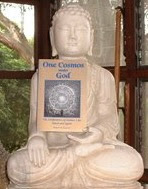
Along these lines, I recently read a book by the theologian Larry Chapp called The God of Covenant and Creation: Scientific Naturalism and its Challenge to the Christian Faith. The first half is a little dry, but it picks up the pace in the second half, as indicated by the many times I have written YES in the margins.  

Let's review these enthusiastic YESes and try to make out the contours of the hyperdimensional object which evoked them.

A number of my YESes pertain to the so-called immutability of God. Now, this immutability has an undeniable appeal if we're going to build a civilization on top of it. Put conversely, how can one build on a process, a wave, a cloud of energy, a changeable opinion, man? 

However, as we know, anything we say about God -- or can say about God -- is strictly analogical. Thus, for example, we can say God is "good," when in actuality he is the ground of goodness itself; in other words, it's not a "trait," but rather, the substance.

But Chapp (via Balthasar) makes the subtle point -- and how stupid of me to not have thought of it! -- that we must also consider God's immutability in the same analogical way:

Why is it, asks Balthasar, that we rarely see warnings about the analogical nature of all language about God when we speak of God's immutability or self-possession as an Absolute Subject? 

In short, God is "immutable," so long as this is understood analogically. Pushed too far and taken too literally, God becomes as intelligent, living, and relatable as a rock

It is at this point that the YESes begin flying. For example, Chapp quotes one of our favorite celestial inspectors, Norris Clarke, who writes that

Given an infinitely good and loving personal being, it seems to me one can say it is inevitable that it will pour over in some way to share its goodness outside itself, though one cannot predict just how. 

This inevitability, or necessity if you will, is not an external compulsion or blind metaphysical force, but the very logic, the special logic of a loving nature, that will spontaneously pour over to share its goodness in some way... uncompelled by anything but love, yet inevitable, out of character for it not to happen.

Yes. That's exactly what I see. In the ultimate ground of being, "freedom and necessity come together in a transcendent synthesis, proper only to the nature of love" (ibid.). 

Except to say it can't literally be a synthesis, because this implies two separate strands that are united a posteriori, when they are really complementary aspects of their anterior unity, like justice/mercy, time/eternity, Father/Son, etc.

Much more to say, but we promised shorter posts and we're sticking to it.  

Inspecting the Foundations of the Cosmos

We ended the previous post with something about a proposal to examine the foundations of our cosmic house, in order to better understand why the superstructure of Western Civilization is sliding off of it. What's going on? Is the problem termites? Mold? Bad plumbing? Holes in the roof? 

Did we build on sand, in which case the best foundation in the world won't help?  

And who is qualified to conduct the inspection? To do a proper job of it, one will first have to do a geological survey, venture down into the basement, climb up into the attic, etc., when most inspectors take only a superficial glance at the house itself, and assume their metaphysical assumptions are true enough to hold it up.  

They say our house is built on an alloy of Greek, Jewish, and Christian materials, which is true as far as it goes. But prior to this it's made of human nature, aspects of which are constrained by DNA (genetics being a necessary but not sufficient condition of humanness). 

Along these lines, I recently read a book by the theologian Larry Chapp called The God of Covenant and Creation: Scientific Naturalism and its Challenge to the Christian Faith. The first half is a little dry, but it picks up the pace in the second half, as indicated by the many times I have written YES in the margins.  

Let's review these enthusiastic YESes and try to make out the contours of the hyperdimensional object which evoked them.

A number of my YESes pertain to the so-called immutability of God. Now, this immutability has an undeniable appeal if we're going to build a civilization on top of it. Put conversely, how can one build on a process, a wave, a cloud of energy, a changeable opinion, man? 

However, as we know, anything we say about God -- or can say about God -- is strictly analogical. Thus, for example, we can say God is "good," when in actuality he is the ground of goodness itself; in other words, it's not a "trait," but rather, the substance.

But Chapp (via Balthasar) makes the subtle point -- and how stupid of me to not have thought of it! -- that we must also consider God's immutability in the same analogical way:

Why is it, asks Balthasar, that we rarely see warnings about the analogical nature of all language about God when we speak of God's immutability or self-possession as an Absolute Subject? 

In short, God is "immutable," so long as this is understood analogically. Pushed too far and taken too literally, God becomes as intelligent, living, and relatable as a rock

It is at this point that the YESes begin flying. For example, Chapp quotes one of our favorite celestial inspectors, Norris Clarke, who writes that

Given an infinitely good and loving personal being, it seems to me one can say it is inevitable that it will pour over in some way to share its goodness outside itself, though one cannot predict just how. 

This inevitability, or necessity if you will, is not an external compulsion or blind metaphysical force, but the very logic, the special logic of a loving nature, that will spontaneously pour over to share its goodness in some way... uncompelled by anything but love, yet inevitable, out of character for it not to happen.

Yes. That's exactly what I see. In the ultimate ground of being, "freedom and necessity come together in a transcendent synthesis, proper only to the nature of love" (ibid.). 

Except to say it can't literally be a synthesis, because this implies two separate strands that are united a posteriori, when they are really complementary aspects of their anterior unity, like justice/mercy, time/eternity, Father/Son, etc.

Much more to say, but we promised shorter posts and we're sticking to it.  

Wednesday, October 20, 2021

Orphans, Bastards, and Snippets

As promised -- or threatened -- more fragments of unfinished and abandoned posts:

There exists no scientific theory -- nor can there exist any such theory -- capable of explaining the presence of free will. Which is not really surprising, since one can say the same of subjectivity itself. The famous "hard problem of consciousness" is only hard from the perspective of materialism, in which case it is quite literally impossible. 

However, consciousness isn't contingent, rather, necessary. Once that little metamuddle is unmuddled, the hard problem is, What motivates a person to use consciousness in order to deny consciousness? That's more than a waste of time, for it is a waste of timelessness.

I remember back in the day reading book called The Taboo of Subjectivity by Buddhist scholar B. Alan Wallace, which cites the truism that, "strictly speaking," "there is no scientific evidence even for the existence of consciousness." That's what you call soph-evident, for reasons we needn't re-re-re-peat. What's more important are the cosmic implications, which are not only many, but ultimately even One.

More self-evident truth:

All the direct evidence we have consists of nonscientific, first-person accounts of being conscious. 

He cites the International Dictionary of Psychology, where it says of consciousness that (as of 2000) 

it is impossible specify what it is, what it does, or why it evolved. Nothing worth reading has been written about it.  

For example, that sentence. But in reality, many things worth reading have been written about it, for example, this post.

I don't remember much else about the book except that it confirmed what was already obvious to me: that consciousness is one of those things that cannot be explained by reducing it to something less. Rather, it can only be understood on its own terms -- or, to be perfectly accurate, by seeing it as an entailment of its own sufficient reason. Put conversely, the material world is entirely insufficient to even begin to account for it. There can be no greater category error than pretending otherwise.  

For me the matter was settled after going through the works of Alfred North Whitehead. But guess what?, Bob whispered creepily. I was only attracted to Whitehead because I already believed what he had to say about the matter. I just needed some big-name philosophical back-up, being that I was just a retail clerk at the time, and not yet a properly credentialed idiot.  

***    

Once free will is denied, one is no longer free to accept or reject the very theory that would deny it: it is neither falsifiable nor truifiable. In short, the denial of free will is not even unscientific. 

This goes to the necessary metacosmic relationship between Truth and Freedom, in that if we aren't free to know truth, then neither one -- truth nor freedom -- can exist. If truth is determined, then there is no exit from the closed circle of causation. 

The upshot is that the existence of freedom is one of the air holes in the Matrix. But it's more than that, for it is also a lifeline from and to God, possibly the most consequential ontological spiral of them all. 

As such, freedom is the sufficient cause of the left, albeit in an assbackward and reactionary manner, for each of their policies exists to thwart and vitiate freedom, whether freedom of speech, freedom to be born, freedom of self-defense, freedom of assembly, freedom of exchange, freedom from state indoctrination, etc. 

****

You've heard of micro- and macroeconomics. But these are situated below cosmo- or meta-economics, for it turns out that economics is grounded in a priori principles, meaning that on Mount Sinai they were handed down directly from God to Mises.

But let's begin at the Beginning, AKA Genesis. 

Now, in "paradise" -- in the Garden of Eden -- there is no economics and no possibility of economics. This isn't just because paradise is fun and economics dismal; rather, it is because the basis of economics is scarcity, and there's no scarcity in paradise. Simple as. If there's scarcity, you know you're not in heaven -- or that Pete Buttigieg is away on pretendity leave.   

And what is scarcity? The moment you think about it, you realize there's no such thing until human beings arrive on the scene, for scarcity is a function of desire. Animals have drives but they obviously don't have conscious desires.

For example, when our Great Dane wakes up in the morning she likes to bask in the sun. She prefers to do so on her comfy pad, but she can't form a connection between the sun over here and the pad over there in the shade. She'll stand in the sun until I drag the pad over, at which point she'll plop onto it.

There's probably a dog somewhere who has sense enough to drag a pad into the sun, but you get the point: dogs don't sit around wishing things were otherwise. Only human beings do that, nor do they ever stop doing it, and this is both a gift and a curse. We are always wishing things were different, which is the motive power for getting anything done. But even when things are perfect, we want more.

The other night I watched a Larry David episode in which he's in a waiting room with a beautiful view of the city. He asks the receptionist how long it took for her to take it for granted: "About a day and a half."

Me? I don't accomplish much because I'm pretty content the way things are. That makes me unusual, I guess, but it's the end result of a lot of wishing I didn't have to waste so much time wishing things were different. 

Rather, long ago I decided to conduct an experiment: why not be the guy who's content with the way things are, rather than exerting so much time and energy wishing they were otherwise? In other words, focus on the end rather than the means. In fact, just skip the latter altogether and get to the point. Just Be, and be done with it.

I know what you're thinkingt: Bob, you're just turning a defect into a virtue. You have no real skills or abilities, but you're just intelligent enough to realize that if you exerted more effort to be successful, you'd be revealed as the failure you are.

Perhaps, but one must nevertheless try! Now that I'm reflecting on this subject, I'm recalling those 12 years I spent working in a supermarket between 1976 and 1988, more often than not on the graveyard shift, which suited me perfectly because of the absence of authority. Every night was like having a substitute teacher in charge of the classroom.  

Anyway, during my ten minute breaks I'd spend 45 minutes or so flipping through magazines. I was especially influenced by People magazine, because it always featured stories about this or that famous and wealthy celebrity who was miserable: either their lives were caught up in addiction and scandal, or they were just out of rehab and rebuilding their lives and careers. 

In short, People was full of people who had gotten what they wanted -- fame, success, money -- but it had backfired; or, they were trying to do it all over again, but this time get it right by focusing on the things they should have valued all along, such as children, home, God, etc.  

Anyway, Mises, according to Prof. Wiki, conceived economic laws "as akin to geometric or mathematical  axioms: fixed, unchanging, objective and discernible through logical reasoning without the use of any empirical evidence." 

Every science has an object to which it is ordered, for example, physics to the material world, biology to the living organism, psychology to the human mind, etc. Religion is in one sense ordered to God or the Absolute, but that's really another way of saying it's ordered to "everything," since everything is God and God is everything -- and more.

This "science of Ultimate Reality," writes Nasr, is

attainable through intellect and not reason, of an essentially suprahuman character and including in its fullness the whole of man's being.

Bob, we know you are a mighty, mighty man, but suprahuman? Really? Sure, so long as everyone else is too:

to be human is to seek to be suprahuman. Man can in fact be defined as the being created to transcend himself and to seek the Transcendent as such. 

Circling back to where we started, if certain fundamental realities cannot be reduced to anything less, it is because their principle must be at the other end, i.e., "above." These things can never be defined from below, nor can they be contained by language, although, at the same time, language can nevertheless communicate directly some of their essence. This is an aspect of grace, which isn't God, but neither is it not God -- as the light streaming in my window isn't the sun, but not not the sun either.

Along these lines, there exist forms that communicate the formless, and exist to do so. Nevertheless, many folks misunderstand their function and reduce them to their form. Which is idolatry.

Well, now that we are caught up with these old bastards, we can move on to the next subject, which will  involve examining the foundation of the cosmos in order to better understand why the superstructure of Western Civilization is sliding off of it.

Orphans, Bastards, and Snippets

As promised -- or threatened -- more fragments of unfinished and abandoned posts:

There exists no scientific theory -- nor can there exist any such theory -- capable of explaining the presence of free will. Which is not really surprising, since one can say the same of subjectivity itself. The famous "hard problem of consciousness" is only hard from the perspective of materialism, in which case it is quite literally impossible. 

However, consciousness isn't contingent, rather, necessary. Once that little metamuddle is unmuddled, the hard problem is, What motivates a person to use consciousness in order to deny consciousness? That's more than a waste of time, for it is a waste of timelessness.

I remember back in the day reading book called The Taboo of Subjectivity by Buddhist scholar B. Alan Wallace, which cites the truism that, "strictly speaking," "there is no scientific evidence even for the existence of consciousness." That's what you call soph-evident, for reasons we needn't re-re-re-peat. What's more important are the cosmic implications, which are not only many, but ultimately even One.

More self-evident truth:

All the direct evidence we have consists of nonscientific, first-person accounts of being conscious. 

He cites the International Dictionary of Psychology, where it says of consciousness that (as of 2000) 

it is impossible specify what it is, what it does, or why it evolved. Nothing worth reading has been written about it.  

For example, that sentence. But in reality, many things worth reading have been written about it, for example, this post.

I don't remember much else about the book except that it confirmed what was already obvious to me: that consciousness is one of those things that cannot be explained by reducing it to something less. Rather, it can only be understood on its own terms -- or, to be perfectly accurate, by seeing it as an entailment of its own sufficient reason. Put conversely, the material world is entirely insufficient to even begin to account for it. There can be no greater category error than pretending otherwise.  

For me the matter was settled after going through the works of Alfred North Whitehead. But guess what?, Bob whispered creepily. I was only attracted to Whitehead because I already believed what he had to say about the matter. I just needed some big-name philosophical back-up, being that I was just a retail clerk at the time, and not yet a properly credentialed idiot.  

***    

Once free will is denied, one is no longer free to accept or reject the very theory that would deny it: it is neither falsifiable nor truifiable. In short, the denial of free will is not even unscientific. 

This goes to the necessary metacosmic relationship between Truth and Freedom, in that if we aren't free to know truth, then neither one -- truth nor freedom -- can exist. If truth is determined, then there is no exit from the closed circle of causation. 

The upshot is that the existence of freedom is one of the air holes in the Matrix. But it's more than that, for it is also a lifeline from and to God, possibly the most consequential ontological spiral of them all. 

As such, freedom is the sufficient cause of the left, albeit in an assbackward and reactionary manner, for each of their policies exists to thwart and vitiate freedom, whether freedom of speech, freedom to be born, freedom of self-defense, freedom of assembly, freedom of exchange, freedom from state indoctrination, etc. 

****

You've heard of micro- and macroeconomics. But these are situated below cosmo- or meta-economics, for it turns out that economics is grounded in a priori principles, meaning that on Mount Sinai they were handed down directly from God to Mises.

But let's begin at the Beginning, AKA Genesis. 

Now, in "paradise" -- in the Garden of Eden -- there is no economics and no possibility of economics. This isn't just because paradise is fun and economics dismal; rather, it is because the basis of economics is scarcity, and there's no scarcity in paradise. Simple as. If there's scarcity, you know you're not in heaven -- or that Pete Buttigieg is away on pretendity leave.   

And what is scarcity? The moment you think about it, you realize there's no such thing until human beings arrive on the scene, for scarcity is a function of desire. Animals have drives but they obviously don't have conscious desires.

For example, when our Great Dane wakes up in the morning she likes to bask in the sun. She prefers to do so on her comfy pad, but she can't form a connection between the sun over here and the pad over there in the shade. She'll stand in the sun until I drag the pad over, at which point she'll plop onto it.

There's probably a dog somewhere who has sense enough to drag a pad into the sun, but you get the point: dogs don't sit around wishing things were otherwise. Only human beings do that, nor do they ever stop doing it, and this is both a gift and a curse. We are always wishing things were different, which is the motive power for getting anything done. But even when things are perfect, we want more.

The other night I watched a Larry David episode in which he's in a waiting room with a beautiful view of the city. He asks the receptionist how long it took for her to take it for granted: "About a day and a half."

Me? I don't accomplish much because I'm pretty content the way things are. That makes me unusual, I guess, but it's the end result of a lot of wishing I didn't have to waste so much time wishing things were different. 

Rather, long ago I decided to conduct an experiment: why not be the guy who's content with the way things are, rather than exerting so much time and energy wishing they were otherwise? In other words, focus on the end rather than the means. In fact, just skip the latter altogether and get to the point. Just Be, and be done with it.

I know what you're thinkingt: Bob, you're just turning a defect into a virtue. You have no real skills or abilities, but you're just intelligent enough to realize that if you exerted more effort to be successful, you'd be revealed as the failure you are.

Perhaps, but one must nevertheless try! Now that I'm reflecting on this subject, I'm recalling those 12 years I spent working in a supermarket between 1976 and 1988, more often than not on the graveyard shift, which suited me perfectly because of the absence of authority. Every night was like having a substitute teacher in charge of the classroom.  

Anyway, during my ten minute breaks I'd spend 45 minutes or so flipping through magazines. I was especially influenced by People magazine, because it always featured stories about this or that famous and wealthy celebrity who was miserable: either their lives were caught up in addiction and scandal, or they were just out of rehab and rebuilding their lives and careers. 

In short, People was full of people who had gotten what they wanted -- fame, success, money -- but it had backfired; or, they were trying to do it all over again, but this time get it right by focusing on the things they should have valued all along, such as children, home, God, etc.  

Anyway, Mises, according to Prof. Wiki, conceived economic laws "as akin to geometric or mathematical  axioms: fixed, unchanging, objective and discernible through logical reasoning without the use of any empirical evidence." 

Every science has an object to which it is ordered, for example, physics to the material world, biology to the living organism, psychology to the human mind, etc. Religion is in one sense ordered to God or the Absolute, but that's really another way of saying it's ordered to "everything," since everything is God and God is everything -- and more.

This "science of Ultimate Reality," writes Nasr, is

attainable through intellect and not reason, of an essentially suprahuman character and including in its fullness the whole of man's being.

Bob, we know you are a mighty, mighty man, but suprahuman? Really? Sure, so long as everyone else is too:

to be human is to seek to be suprahuman. Man can in fact be defined as the being created to transcend himself and to seek the Transcendent as such. 

Circling back to where we started, if certain fundamental realities cannot be reduced to anything less, it is because their principle must be at the other end, i.e., "above." These things can never be defined from below, nor can they be contained by language, although, at the same time, language can nevertheless communicate directly some of their essence. This is an aspect of grace, which isn't God, but neither is it not God -- as the light streaming in my window isn't the sun, but not not the sun either.

Along these lines, there exist forms that communicate the formless, and exist to do so. Nevertheless, many folks misunderstand their function and reduce them to their form. Which is idolatry.

Well, now that we are caught up with these old bastards, we can move on to the next subject, which will  involve examining the foundation of the cosmos in order to better understand why the superstructure of Western Civilization is sliding off of it.

Sunday, October 17, 2021

Abandoning My Post

Just because I haven't been posting lately, it doesn't mean I haven't been writing posts. It's just that I haven't been finishing them. This morning I will try to finish them, or at least recover what seems postable, and flush the rest.

Here's one from two or three weeks ago, when we went through a libertarian phase. Not libertarian in the usual sense of the word, but in the deeper context of trying -- as usual -- to figure out how this particular cosmos works. It obviously works, or we wouldn't be here. But the deeper reasons are on the metaphysical, not merely physical, plane.  

Now, a key component of the cosmos is indeed liberty, which can under no circumstances be understood or even conceptualized "from the bottom up"; nor, for the same reason, can the top be reduced to the bottom without eliminating precisely what needs to be explained. If we aren't free to explain our freedom, then no explanation of anything is possible.

This is a two-way, hierarchical cosmos, and that's all there is to it. Empiricists and positivists deny one end, while idealists and many religionists deny the other, but both approaches result in an impoverished cosmos unfit for, and indeed uninhabitable by, man.

In certain emergencies or embarrassing situations I like to say to myself I'm not here and this isn't happening. But I would never dream of elevating this to a metaphysic! Rather, I'm only a situational Buddhist. 

Longtime readers will recognize this as our usual approach to things: instead of beginning with, say, physics or chemistry, and trying to figure out how these can make the ontological leap to man, we begin with the most undeniable fact of all -- in my case, me -- and try to figure out what sort of cosmos must exist in order for such an unlikely fact to even be possible, let alone actual. (And we won't even get into the actualizing process, which adds another layer to the mystery of the human subject -- i.e., in what kind of orthoparadoxical cosmos is it possible to become who one is?).

Not surprisingly, it turns out that I am only possible in a very peculiar universe -- and not just because I myself am peculiar. In the grander scheme of things, everyone is peculiar, which is to say, unique, and how is this possible? In other words, what is the principle of unique personhood, its sufficient reason? 

There is no such principle in, say, physics, in which things that appear diverse on the surface are reduced to (explained by) a handful of simple laws. But persons are characterized by their unrepeatable uniqueness; we might say that there's only one to a customer, notwithstanding the occasional case of multiple personality disorder on the one hand, or hivemind progressive conformist on the other.

In physics nothing is unique; rather, every event is fully reducible to more general laws. Now, it is true that humans are constrained by "human nature," otherwise we wouldn't have the word "human." And yet, the human being simultaneously belongs to a species while at the same time truly being his own species -- an oxymoronical "species of one."

So yes, not only are you weird, but I would go so far as to say that if you are not weird, then you're doing it wrong

Nor am I talking about merely posing as a weirdo in order to get attention, nor the tiresome contemporary plague of mental illness masquerading as uniqueness. Such persons are easily lumped into their diagnostic category, which is the opposite of uniqueness. Paranoid conspiracy theorists are a dime a dozen. Or maybe you've never watched MSNBC.

Naturally, this goes to the cosmic heresy of "identity" politics, which is the systematic denial of human identity. For to reduce identity to some superficial group characteristic is to deny one's human identity, precisely. Al Sharpton, or Joy Reid, or Barack Obama, are just professional black people -- serious jokes but not serious persons.

If you are a feminist, for example, you are just a cliché, not a proper three-dimensional person (i.e., biological, psychological, and spiritual). Moreover, you are no doubt identifying with the superficial feminist cliché in order to deny some pain associated with your deeper personhood. After all, being a feminist, stupid and shallow as it is, is much easier than becoming who you actually are. 

Oh, by the way, I just figured out why I'm not finishing these posts. It's due to our newfound absence of time constraints brought about by retirement. Back when I was gainfully employed, I had to wrap things up in order reenter the Conspiracy. Now I can just blah-blah-blog all day if I want to, like a song that goes on forever. The medium is the message, and now the medium is timelessness unbound instead of the bounds of temporality. 

This implies that I need to set an artificial limit to my writing, like stopping at 10:30, even if 

Abandoning My Post

Just because I haven't been posting lately, it doesn't mean I haven't been writing posts. It's just that I haven't been finishing them. This morning I will try to finish them, or at least recover what seems postable, and flush the rest.

Here's one from two or three weeks ago, when we went through a libertarian phase. Not libertarian in the usual sense of the word, but in the deeper context of trying -- as usual -- to figure out how this particular cosmos works. It obviously works, or we wouldn't be here. But the deeper reasons are on the metaphysical, not merely physical, plane.  

Now, a key component of the cosmos is indeed liberty, which can under no circumstances be understood or even conceptualized "from the bottom up"; nor, for the same reason, can the top be reduced to the bottom without eliminating precisely what needs to be explained. If we aren't free to explain our freedom, then no explanation of anything is possible.

This is a two-way, hierarchical cosmos, and that's all there is to it. Empiricists and positivists deny one end, while idealists and many religionists deny the other, but both approaches result in an impoverished cosmos unfit for, and indeed uninhabitable by, man.

In certain emergencies or embarrassing situations I like to say to myself I'm not here and this isn't happening. But I would never dream of elevating this to a metaphysic! Rather, I'm only a situational Buddhist. 

Longtime readers will recognize this as our usual approach to things: instead of beginning with, say, physics or chemistry, and trying to figure out how these can make the ontological leap to man, we begin with the most undeniable fact of all -- in my case, me -- and try to figure out what sort of cosmos must exist in order for such an unlikely fact to even be possible, let alone actual. (And we won't even get into the actualizing process, which adds another layer to the mystery of the human subject -- i.e., in what kind of orthoparadoxical cosmos is it possible to become who one is?).

Not surprisingly, it turns out that I am only possible in a very peculiar universe -- and not just because I myself am peculiar. In the grander scheme of things, everyone is peculiar, which is to say, unique, and how is this possible? In other words, what is the principle of unique personhood, its sufficient reason? 

There is no such principle in, say, physics, in which things that appear diverse on the surface are reduced to (explained by) a handful of simple laws. But persons are characterized by their unrepeatable uniqueness; we might say that there's only one to a customer, notwithstanding the occasional case of multiple personality disorder on the one hand, or hivemind progressive conformist on the other.

In physics nothing is unique; rather, every event is fully reducible to more general laws. Now, it is true that humans are constrained by "human nature," otherwise we wouldn't have the word "human." And yet, the human being simultaneously belongs to a species while at the same time truly being his own species -- an oxymoronical "species of one."

So yes, not only are you weird, but I would go so far as to say that if you are not weird, then you're doing it wrong

Nor am I talking about merely posing as a weirdo in order to get attention, nor the tiresome contemporary plague of mental illness masquerading as uniqueness. Such persons are easily lumped into their diagnostic category, which is the opposite of uniqueness. Paranoid conspiracy theorists are a dime a dozen. Or maybe you've never watched MSNBC.

Naturally, this goes to the cosmic heresy of "identity" politics, which is the systematic denial of human identity. For to reduce identity to some superficial group characteristic is to deny one's human identity, precisely. Al Sharpton, or Joy Reid, or Barack Obama, are just professional black people -- serious jokes but not serious persons.

If you are a feminist, for example, you are just a cliché, not a proper three-dimensional person (i.e., biological, psychological, and spiritual). Moreover, you are no doubt identifying with the superficial feminist cliché in order to deny some pain associated with your deeper personhood. After all, being a feminist, stupid and shallow as it is, is much easier than becoming who you actually are. 

Oh, by the way, I just figured out why I'm not finishing these posts. It's due to our newfound absence of time constraints brought about by retirement. Back when I was gainfully employed, I had to wrap things up in order reenter the Conspiracy. Now I can just blah-blah-blog all day if I want to, like a song that goes on forever. The medium is the message, and now the medium is timelessness unbound instead of the bounds of temporality. 

This implies that I need to set an artificial limit to my writing, like stopping at 10:30, even if 

Monday, October 11, 2021

Hope, Change, and Superiority

Continuing with the previous post, we were discussing the Moldbuggian concept of the Cathedral, which we call the progressive Matrix https://americandigest.org/long-read-of-the-week-a-brief-explanation-of-the-cathedral-by-curtis-yarvin-aka-moldbug/#more-27032. But first, an embarrassing confession.

Even back when I was a liberal I was always looking for systemic unity and conceptual integration -- in other words, I wanted to understand how facts and ideas that appear unrelated on a lower level are unified at a higher and deeper level. 

Nothing wrong with that, because it's simply what thinking is and does, whether in science or the humanities -- or in pseudoscience and the subhumanities. As always, the question isn't whether the mind seeks unity and integration, but whether the integration is true -- whether it conforms to the Permanent Real.

Pick any entree from the progressive kookbook and you will immediately notice that it offers a kind of unity -- a pseudo-unity to be sure, but unity just the same. For again: all humans, by virtue of being human, seek unity, and the very progress of human thought can be seen as a ceaseless struggle between good and functional unity -- AKA progress -- and regressive and dysfunctional unity. 

It's not a matter of left and right, but rather, up and down. Truth, or necessary being, is up, its entailments and contingencies down. Unless you are a postmodern progressive, in which case contingency is at the top and bottom. Which reduces to power.

An allied problem is that in the contemporary west there are waaaaay too many thinkers, or people who presume to think. These latter are indeed presumptuous, and with good reason, for to say intellectual is to say pride. The self-regard of these mediocretins is off the charts, but Humility knows what comes next. 

Just as there is the true guffah-HA! experience, there are any number of counterfeit ones. How to tell the difference? The false version excludes in order to unify; as such, it functions more to eliminate the ambiguity of reality than to unify the psyche at a higher level. At the same time, it takes no notice of anomalies. In short, it is not bothered by the cognitive dissonance that troubles a normal person.

For example, in response to the shock of the 2016 election, Democrats identified a unified theory that explained everything: President Trump is a Russian agent! It is no coincidence that these same people have embraced the conspiracy theory that Joe Biden legitimately won the 2020 election. 

More generally, you will have noticed that the conspiracy-prone can easily flit from one theory to another. The form scarcely matters, because it's the function that counts, and the function is to organize an otherwise disordered, chaotic, and anxiety-ridden mind. For it is not the healthy who need a doctorate in gender studies or queer theory, but the sick. 

Take a feminist. Please. Back in my day, such women would enter psychotherapy in order to figure out why they were so miserable. Before that they would just get married and have children. Problem solved. 

But feminism -- or any ideology for that matter -- allows one to politicize the human condition, and why not? Promise a facile solution to an insoluble problem, and you've got a lifetime Democrat.

Life is hard -- full of pain, loss, conflict, compromise. Adopting an ideology accomplishes two things: it 1) locates an easy enemy to explain one's unhappiness, while 2) offering hope that the unhappiness will be eliminated in the future once the enemy is vanquished. In short, it allows one to externalize pain in the present while promising a cure in the future.

Hope and Change. Give the prophet Obama credit: he abstracted the deeper form of any and all ideology and promised it to his supporters, who consisted of -- not coincidentally -- the over- and undereducated, AKA Lowfo and Nofo voters, those most susceptible to promises of false Slack. Just like today's promise, it will pay for itself!

Anyway, the embarrassing part is that, back when I was a liberal, I wanted to figure out the "real reason" why conservatives could believe such clearly stupid and even evil nonsense.  

Looking back on it, I realize that my liberal beliefs were completely unexamined, in part because they existed not on an epistemological plane, but rather, on a moral one. In other words, they were all about virtue signaling: I am better than you, for I care about women, children, immigrants, native Americans, blacks, gays, labor unions, trannies, you name it. I care. I am smarter than you, and I have an advanced degree to prove it.

Mother was right: I am a good man. 

Hope, Change, and Superiority

Continuing with the previous post, we were discussing the Moldbuggian concept of the Cathedral, which we call the progressive Matrix https://americandigest.org/long-read-of-the-week-a-brief-explanation-of-the-cathedral-by-curtis-yarvin-aka-moldbug/#more-27032. But first, an embarrassing confession.

Even back when I was a liberal I was always looking for systemic unity and conceptual integration -- in other words, I wanted to understand how facts and ideas that appear unrelated on a lower level are unified at a higher and deeper level. 

Nothing wrong with that, because it's simply what thinking is and does, whether in science or the humanities -- or in pseudoscience and the subhumanities. As always, the question isn't whether the mind seeks unity and integration, but whether the integration is true -- whether it conforms to the Permanent Real.

Pick any entree from the progressive kookbook and you will immediately notice that it offers a kind of unity -- a pseudo-unity to be sure, but unity just the same. For again: all humans, by virtue of being human, seek unity, and the very progress of human thought can be seen as a ceaseless struggle between good and functional unity -- AKA progress -- and regressive and dysfunctional unity. 

It's not a matter of left and right, but rather, up and down. Truth, or necessary being, is up, its entailments and contingencies down. Unless you are a postmodern progressive, in which case contingency is at the top and bottom. Which reduces to power.

An allied problem is that in the contemporary west there are waaaaay too many thinkers, or people who presume to think. These latter are indeed presumptuous, and with good reason, for to say intellectual is to say pride. The self-regard of these mediocretins is off the charts, but Humility knows what comes next. 

Just as there is the true guffah-HA! experience, there are any number of counterfeit ones. How to tell the difference? The false version excludes in order to unify; as such, it functions more to eliminate the ambiguity of reality than to unify the psyche at a higher level. At the same time, it takes no notice of anomalies. In short, it is not bothered by the cognitive dissonance that troubles a normal person.

For example, in response to the shock of the 2016 election, Democrats identified a unified theory that explained everything: President Trump is a Russian agent! It is no coincidence that these same people have embraced the conspiracy theory that Joe Biden legitimately won the 2020 election. 

More generally, you will have noticed that the conspiracy-prone can easily flit from one theory to another. The form scarcely matters, because it's the function that counts, and the function is to organize an otherwise disordered, chaotic, and anxiety-ridden mind. For it is not the healthy who need a doctorate in gender studies or queer theory, but the sick. 

Take a feminist. Please. Back in my day, such women would enter psychotherapy in order to figure out why they were so miserable. Before that they would just get married and have children. Problem solved. 

But feminism -- or any ideology for that matter -- allows one to politicize the human condition, and why not? Promise a facile solution to an insoluble problem, and you've got a lifetime Democrat.

Life is hard -- full of pain, loss, conflict, compromise. Adopting an ideology accomplishes two things: it 1) locates an easy enemy to explain one's unhappiness, while 2) offering hope that the unhappiness will be eliminated in the future once the enemy is vanquished. In short, it allows one to externalize pain in the present while promising a cure in the future.

Hope and Change. Give the prophet Obama credit: he abstracted the deeper form of any and all ideology and promised it to his supporters, who consisted of -- not coincidentally -- the over- and undereducated, AKA Lowfo and Nofo voters, those most susceptible to promises of false Slack. Just like today's promise, it will pay for itself!

Anyway, the embarrassing part is that, back when I was a liberal, I wanted to figure out the "real reason" why conservatives could believe such clearly stupid and even evil nonsense.  

Looking back on it, I realize that my liberal beliefs were completely unexamined, in part because they existed not on an epistemological plane, but rather, on a moral one. In other words, they were all about virtue signaling: I am better than you, for I care about women, children, immigrants, native Americans, blacks, gays, labor unions, trannies, you name it. I care. I am smarter than you, and I have an advanced degree to prove it.

Mother was right: I am a good man. 

Friday, October 08, 2021

The Ivory Tower of Babbling Idiots

Another quick one while waiting for the school bell to ring.

Over at American Digest is an essay by Mr. Yarvin Moldbug on his concept of the "Cathedral." Although an intellectual brother shamus, he's a smarter feller than myself and draws a lot of water in dissident conservative circles. In short, he's not exactly a lightweight -- unlike me, whose career has slowed down a little. 

(https://americandigest.org/long-read-of-the-week-a-brief-explanation-of-the-cathedral-by-curtis-yarvin-aka-moldbug/#more-27032) and (https://graymirror.substack.com/p/a-brief-explanation-of-the-cathedral)

In our nomenclature we call it the Matrix, but we're describing the same private residence. The deeper question is, what is the actual cause of the Cathedral-Matrix? What is its deeper structure -- that which unifies its diverse strands and what-have-yous? 

First of all, the Matrix clearly exists, although it can only be clearly seen from outside and above; from the inside it just looks like "the world," nor do its unhappitants even notice the sentient Agents that prevent them from leaving the Matrix.

The mystery of the cathedral is that all the modern world’s legitimate and prestigious intellectual institutions, even though they have no central organizational connection, behave in many ways as if they were a single organizational structure (emphasis mine).

This, I think, begs the question, because a central organizational connection is precisely what must exist in order to explain the diverse phenomena. 

Consider science as such, which always involves the reduction of multiplicity to unity. Prior to Einstein, for example, physicists looked at the world and saw no connection between, say, gravity and time. Rather, these were totally unrelated concepts. But with deeper conceptual insight we are able appreciate the connection between them.

Analogously, what is the connection between such diverse phenomena as totalitarian wokeness, economically absurd socialism, wicked tribalism, vicious race war, biology-hating genital mutilation, special rights for cross-dressers, climate magic, feminist witchcraft, and anti-Western barbarism in general? 

How could someone embrace such a range of florid lunacies unless they are but surface features of some deeper structure? And why these features in particular?  It's such a grab bag of insanity that perhaps we need to look at the bag instead of the content. 

While we can detect no obvious organizational connection between them, they are highly correlated. And they retain these correlations even as they move across long periods of time. 

Consider the fact that "In 1951, Harvard, Yale, the Times, and the Post were on the same page," just as they are today. However, the Yale of today is is so different from the Yale of '51 that they might as well be different planets: "If you could teleport either Yale into the other’s time zone, they would see each other as a den of intellectual criminals." 

Literally, at least with respect to how they regard us. AG Garlic Merman, for example, wants the FBI to hunt down those of us who are not on board with teaching our children the ins and outs of race-based nihilism.  

Likewise, I regard them as criminal, but not merely in a legalistic sense, rather, in ethical and metaphysical terms. For the first duty of the intellect is to discern between the Real and the unreal or the less real. One who fails to do so is unqualified to teach, for what is he teaching if not truth? Like, just his opinions? 

I'm starting to run out of time because school is about to begin. But let me jump waaay ahead to the distant past, and suggest that the Matrix-Cathedral has a nonlocal typological structure, and that the blueprint of this structure describes a certain tower.

Put it this way: once upin a timeless some status seeking narcissists decided to make a name for themselves by building a private residence so high that it reached the heavens -- up there where the Ultimate Principle dwells, above the clouds discussed in the previous post. A Swiss fuckin' watch, if I understand correctly.

But doing so went against the very Principle the people presumed to reach. As a result, these babbling idiots were scattered and the tower left unfinished. Ever thus to deadbeats.

Let's check out Dennis Prager's exegesis of the scandal: "The sin of the builders of Babel" was "wanting to do so solely to make a name for themselves, to bring glory to themselves. As God is completely absent, they recognize nothing higher than themselves." But ironically, the tower "is so far from the heavens that God must come down to see it."

Of course.  

Not all towers are bad, but there are rules for building one. For example, later in Psalms there is reference to how God has been a shelter for me / And a strong tower from the enemy. Later again we read of my fortress / My high tower and my deliverer / My shield and the One in whom I take my refuge

It seems that the problem lies in attempting to build a tower without the proper cornerstone, in which case you are entering a world of pain. Am I wrong? 

We'll have to resume this discussion in the next post, in which we will endeavor to prove that the progressive tower contravenes any number of metacosmic bylaws.

The Ivory Tower of Babbling Idiots

Another quick one while waiting for the school bell to ring.

Over at American Digest is an essay by Mr. Yarvin Moldbug on his concept of the "Cathedral." Although an intellectual brother shamus, he's a smarter feller than myself and draws a lot of water in dissident conservative circles. In short, he's not exactly a lightweight -- unlike me, whose career has slowed down a little. 

(https://americandigest.org/long-read-of-the-week-a-brief-explanation-of-the-cathedral-by-curtis-yarvin-aka-moldbug/#more-27032) and (https://graymirror.substack.com/p/a-brief-explanation-of-the-cathedral)

In our nomenclature we call it the Matrix, but we're describing the same private residence. The deeper question is, what is the actual cause of the Cathedral-Matrix? What is its deeper structure -- that which unifies its diverse strands and what-have-yous? 

First of all, the Matrix clearly exists, although it can only be clearly seen from outside and above; from the inside it just looks like "the world," nor do its unhappitants even notice the sentient Agents that prevent them from leaving the Matrix.

The mystery of the cathedral is that all the modern world’s legitimate and prestigious intellectual institutions, even though they have no central organizational connection, behave in many ways as if they were a single organizational structure (emphasis mine).

This, I think, begs the question, because a central organizational connection is precisely what must exist in order to explain the diverse phenomena. 

Consider science as such, which always involves the reduction of multiplicity to unity. Prior to Einstein, for example, physicists looked at the world and saw no connection between, say, gravity and time. Rather, these were totally unrelated concepts. But with deeper conceptual insight we are able appreciate the connection between them.

Analogously, what is the connection between such diverse phenomena as totalitarian wokeness, economically absurd socialism, wicked tribalism, vicious race war, biology-hating genital mutilation, special rights for cross-dressers, climate magic, feminist witchcraft, and anti-Western barbarism in general? 

How could someone embrace such a range of florid lunacies unless they are but surface features of some deeper structure? And why these features in particular?  It's such a grab bag of insanity that perhaps we need to look at the bag instead of the content. 

While we can detect no obvious organizational connection between them, they are highly correlated. And they retain these correlations even as they move across long periods of time. 

Consider the fact that "In 1951, Harvard, Yale, the Times, and the Post were on the same page," just as they are today. However, the Yale of today is is so different from the Yale of '51 that they might as well be different planets: "If you could teleport either Yale into the other’s time zone, they would see each other as a den of intellectual criminals." 

Literally, at least with respect to how they regard us. AG Garlic Merman, for example, wants the FBI to hunt down those of us who are not on board with teaching our children the ins and outs of race-based nihilism.  

Likewise, I regard them as criminal, but not merely in a legalistic sense, rather, in ethical and metaphysical terms. For the first duty of the intellect is to discern between the Real and the unreal or the less real. One who fails to do so is unqualified to teach, for what is he teaching if not truth? Like, just his opinions? 

I'm starting to run out of time because school is about to begin. But let me jump waaay ahead to the distant past, and suggest that the Matrix-Cathedral has a nonlocal typological structure, and that the blueprint of this structure describes a certain tower.

Put it this way: once upin a timeless some status seeking narcissists decided to make a name for themselves by building a private residence so high that it reached the heavens -- up there where the Ultimate Principle dwells, above the clouds discussed in the previous post. A Swiss fuckin' watch, if I understand correctly.

But doing so went against the very Principle the people presumed to reach. As a result, these babbling idiots were scattered and the tower left unfinished. Ever thus to deadbeats.

Let's check out Dennis Prager's exegesis of the scandal: "The sin of the builders of Babel" was "wanting to do so solely to make a name for themselves, to bring glory to themselves. As God is completely absent, they recognize nothing higher than themselves." But ironically, the tower "is so far from the heavens that God must come down to see it."

Of course.  

Not all towers are bad, but there are rules for building one. For example, later in Psalms there is reference to how God has been a shelter for me / And a strong tower from the enemy. Later again we read of my fortress / My high tower and my deliverer / My shield and the One in whom I take my refuge

It seems that the problem lies in attempting to build a tower without the proper cornerstone, in which case you are entering a world of pain. Am I wrong? 

We'll have to resume this discussion in the next post, in which we will endeavor to prove that the progressive tower contravenes any number of metacosmic bylaws.

Wednesday, October 06, 2021

Calculating God: Foggy with a Chance of Insight

Just a brief post that will continue until the school bell rings, i.e., until the student wakes up.

By way of context, the fact that we are living through such radically crazy times has prompted me to reexamine the Ultimate Ground of things. 

On the one hand, O is the apophatic godhead beyond-being, and there's nothing we can say about it without having to immediately unsay it on pain of misleading the public. In other words, O is beyond time, language, specification, and understanding, since these latter would place limits on the Limitless. Like quantum physics, if you can understand it, it's not God. 

This is why genuine theo-logy entails the mastery of unglish obliterature. 

That said, from our perspective -- i.e., the perspective of the maninfestation -- O manifests an implicit nonlocal order, or vertical hierarchy. You could say that this is the "first fruit" engendeered by and from O. 

At the top of this more "visible" goround plan is the Outward Face of God -- the great "AM," so to speak -- if anyone asks -- above and beyond which is the mysterious "I" of pure subjectivity hiding in or above that Cloud of Unknowing. 

This is why we can look up and see the cloud, but even the bestavus can see no further: "Moses went up into the mountain, and a cloud covered the mountain."

Later, the same meteorological language is used when "a bright cloud overshadowed them, and suddenly a voice came out of the cloud." One may fish many similar examples, and not only from the Judeo-Christian stream. 

Looked at one way, a cloud is just something that blocks the sun. But looked at from both sides now, and you realize it's but the end product of a nonlinear process involving everything from Hayward breezes to butterfly sneezes, Climbing to tranquility / Far above the cloud / Conceiving the heavens / Clear of misty shroud. So don't be so quick to dismiss our eyewitless foggus!  

As mentioned in the previous post, when things get crazy -- whether in individuals or groups -- it allows us a clearer understanding of sanity. Indeed, we needn't even think about sanity until there is insanity. Likewise, we don't think about virtue until there are criminals, nor truth until there are liars, journalists, and tenure. Nor I suppose do we think about paradise in the afternoon until it's lost by eve.

So, you may have noticed from the sidebar that I've been reading a lot of radical literature, since it makes more sense in the context of these radically insane times. 

For example, I recently reread the biography of Father Seraphim Rose. I want to say that he was a "radical" Christian, but this overlooks the fact that nothing by definition can ever be more radical than Christianity -- of Infinitude clothed in finitude for our convenience. There's nothing beyond that, except for finitude to return to infinitude and complete the circle.

I've also been reading radical libertarian economists such as Rothbard, von Mises, and Hoppe. In normal times, such thinkers appear a tad extreme. But in crazy times, they start to make more sense.

Oops! That was the school bell. Let me conclude with one last thought, which goes to a surprising coonfluence of economics and theology.

I'm not going to have time enough to flesh it out, but one of the most appealing aspects of Austrian economics is its epistemological humility and its appreciation not just of the known Unknown, but of the unknowable Unknown.

Then I read the following passage by a very libertarian and Hayekian-sounding theologian named Ratzinger: 

But if the logos of all being, the being that upholds and encompasses everything, is consciousness, freedom, and love, then it follows automatically that the supreme factor in the world is not cosmic necessity but freedom.

That's the libertarian part. Here's the explicitly Hayekian part:

this leads to the conclusion that freedom is [orthoparadoxically!] the necessary structure of the world, as it were, and this again means that one can only comprehend the world as incomprehensible, that it must be incomprehensibility.... 

[T]ogether with freedom the incalculability implicit in it is an essential part of the world. Incalculability is an implication of freedom; the world can never -- if this is the position -- be completely reduced to mathematical logic

Halt, who Gödels there!    

Calculating God: Foggy with a Chance of Insight

Just a brief post that will continue until the school bell rings, i.e., until the student wakes up.

By way of context, the fact that we are living through such radically crazy times has prompted me to reexamine the Ultimate Ground of things. 

On the one hand, O is the apophatic godhead beyond-being, and there's nothing we can say about it without having to immediately unsay it on pain of misleading the public. In other words, O is beyond time, language, specification, and understanding, since these latter would place limits on the Limitless. Like quantum physics, if you can understand it, it's not God. 

This is why genuine theo-logy entails the mastery of unglish obliterature. 

That said, from our perspective -- i.e., the perspective of the maninfestation -- O manifests an implicit nonlocal order, or vertical hierarchy. You could say that this is the "first fruit" engendeered by and from O. 

At the top of this more "visible" goround plan is the Outward Face of God -- the great "AM," so to speak -- if anyone asks -- above and beyond which is the mysterious "I" of pure subjectivity hiding in or above that Cloud of Unknowing. 

This is why we can look up and see the cloud, but even the bestavus can see no further: "Moses went up into the mountain, and a cloud covered the mountain."

Later, the same meteorological language is used when "a bright cloud overshadowed them, and suddenly a voice came out of the cloud." One may fish many similar examples, and not only from the Judeo-Christian stream. 

Looked at one way, a cloud is just something that blocks the sun. But looked at from both sides now, and you realize it's but the end product of a nonlinear process involving everything from Hayward breezes to butterfly sneezes, Climbing to tranquility / Far above the cloud / Conceiving the heavens / Clear of misty shroud. So don't be so quick to dismiss our eyewitless foggus!  

As mentioned in the previous post, when things get crazy -- whether in individuals or groups -- it allows us a clearer understanding of sanity. Indeed, we needn't even think about sanity until there is insanity. Likewise, we don't think about virtue until there are criminals, nor truth until there are liars, journalists, and tenure. Nor I suppose do we think about paradise in the afternoon until it's lost by eve.

So, you may have noticed from the sidebar that I've been reading a lot of radical literature, since it makes more sense in the context of these radically insane times. 

For example, I recently reread the biography of Father Seraphim Rose. I want to say that he was a "radical" Christian, but this overlooks the fact that nothing by definition can ever be more radical than Christianity -- of Infinitude clothed in finitude for our convenience. There's nothing beyond that, except for finitude to return to infinitude and complete the circle.

I've also been reading radical libertarian economists such as Rothbard, von Mises, and Hoppe. In normal times, such thinkers appear a tad extreme. But in crazy times, they start to make more sense.

Oops! That was the school bell. Let me conclude with one last thought, which goes to a surprising coonfluence of economics and theology.

I'm not going to have time enough to flesh it out, but one of the most appealing aspects of Austrian economics is its epistemological humility and its appreciation not just of the known Unknown, but of the unknowable Unknown.

Then I read the following passage by a very libertarian and Hayekian-sounding theologian named Ratzinger: 

But if the logos of all being, the being that upholds and encompasses everything, is consciousness, freedom, and love, then it follows automatically that the supreme factor in the world is not cosmic necessity but freedom.

That's the libertarian part. Here's the explicitly Hayekian part:

this leads to the conclusion that freedom is [orthoparadoxically!] the necessary structure of the world, as it were, and this again means that one can only comprehend the world as incomprehensible, that it must be incomprehensibility.... 

[T]ogether with freedom the incalculability implicit in it is an essential part of the world. Incalculability is an implication of freedom; the world can never -- if this is the position -- be completely reduced to mathematical logic

Halt, who Gödels there!    

Monday, October 04, 2021

Being, Becoming, and Beclowning

Possibly no more posts this week, since I'll be back in the classroom. Yes, the wife is off to visit her mother in Del Boca Vista, and I've been appointed substitute teacher.  

You will recall that we've been reexamining the Ultimate Ground of reality from various angles. Why have we been doing this? Because the country has become so unhinged from reality, that perhaps the reality from which it has become unhinged will be easier to see. 

It reminds me of how, say, medical science made such strides during our previous Civil War because doctors were able to see what was going on inside all the maimed and mangled bodies. It's the same now, except in Civil War II most of the maiming and mangling is on the inside. It is admittedly hard to look at this festering sinkhole of disease and filth, but we must overcome our squeamishness and bear in mind that the prospect of a cure for these unfortunate souls hangs in the balance.  

The current era is indeed a boon to psychology, even if we mourn the loss of so many fellow citizens to the spiritual plague of progressivism. So let us highly resolve that these undead shall not have been triggered, traumatized, and feminized in vain -- rather, that this nation, under God, shall have a new birth of Trumpism on steroids, and that a government of the sane, by the sane, for the sane, shall not perish from this earth.

As we know, the word radical is related to root. However, this has nothing in common with progressive cliches about "root causes," since those are always about horizontal or lateral distractions, never the depth. They're forever searching for the "root causes" of things, but the real purpose of this is to obscure the actual causes. For example, the real cause of crime is people doing bad things. The solution is to put them in jail.  

Lately they've been looking for the root causes of illegal immigration, when everyone knows it results from sh**hole countries happily turning their problems into our problems. For the left, this will persist until our country is transformed into a sh**hole and no one will want to come here. Problem solved!

But when we refer to root causes, we're speaking of vertical ones. Just as we can track causality backward from proximate to proximate cause, we can trace them upward from level to level. At the top, of course, is the First or Uncaused Cause without which causality has no ground or metaphysical basis. But thankfully God exists, so causes are everywhere. Which is another way of saying that being is intelligible.

This argument goes back a long way, even to the twilit roots of tenure in the ancient world. In one corner we have Parmenides, who denies becoming, and with it, multiplicity, in favor of immutable Being. Change is impossible, since Being is Being, and nothing comes from non-being.

In the other corner we have Heraclitus, who denies Being in favor of becoming -- or in other words, All is Change. You can never step into the same universe twice, and anything we say about it is just an abstraction from the ceaseless and total flow, not really real. 

Including the truth of that statement? 

Shut up!

Here's how Garrigou-Lagrange describes the stalemate:

If something becomes, this comes from being or from non-being; there is no middle. But both hypotheses are impossible: indeed, nothing can come from being... because being is already that which is, whereas that which becomes, before becoming, is not. On the other hand, nothing comes from nothing.... Therefore, becoming [too] is contradictory (emphasis mine). 

Blah blah yada yada, then Aristotle comes along and separates these two quarreling cousins with the principles of potency and act, thereby reconciling being and becoming and rendering both intelligible. We might say that the "root cause" of change is the reduction of potency to act. Potency itself is neither Being nor nothing, but something that abides between. 

Orthoparadoxically, potency is a kind of "non-being that is" (ibid). This is not a contradiction, because while potency is non-being in relation to act, it is nevertheless being in relation to nothingness

Just like us, come to think of it. Relative to God, creatures are nothing, but in relation to nothing they're everything. But human beings inhabit a third world whereby we become who we are in relation to God: change and changelessness are thereby reconciled, and some people say man as such is the cosmic link between the two, but that's a somewhat different subject...  

Does this make Parmenides the first conservative and Heraclitus the first progressive? A qualified NO to the first but a definite YES to the second, e.g., Hegel, Marx, Bergson, etc. We say NO to the first because conservatism is (or should be) a reflection of the third position that creates a stable but free context for orderly change -- for example, in the "radical conservatism" or "conservative radicalism" of the Founders. 

To quote Chesterton,

It is true that a man (a silly man) might make change itself his object or ideal. But as an ideal, change itself becomes unchangeable. If the change-worshipper wishes to estimate his own progress, he must be sternly loyal to the ideal of change; he must not begin to flirt gaily with the ideal of monotony. Progress itself cannot progress. 
It is worth remark, in passing, that when Tennyson, in a wild and rather weak manner, welcomed the idea of infinite alteration in society, he instinctively took a metaphor which suggests an imprisoned tedium. He wrote-- “Let the great world spin for ever down the ringing grooves of change.” He thought of change itself as an unchangeable groove; and so it is. Change is about the narrowest and hardest groove that a man can get into.

 "Yeah, well hold my artisanal gluten-free beer," says the Eternal Progressive.

Being, Becoming, and Beclowning

Possibly no more posts this week, since I'll be back in the classroom. Yes, the wife is off to visit her mother in Del Boca Vista, and I've been appointed substitute teacher.  

You will recall that we've been reexamining the Ultimate Ground of reality from various angles. Why have we been doing this? Because the country has become so unhinged from reality, that perhaps the reality from which it has become unhinged will be easier to see. 

It reminds me of how, say, medical science made such strides during our previous Civil War because doctors were able to see what was going on inside all the maimed and mangled bodies. It's the same now, except in Civil War II most of the maiming and mangling is on the inside. It is admittedly hard to look at this festering sinkhole of disease and filth, but we must overcome our squeamishness and bear in mind that the prospect of a cure for these unfortunate souls hangs in the balance.  

The current era is indeed a boon to psychology, even if we mourn the loss of so many fellow citizens to the spiritual plague of progressivism. So let us highly resolve that these undead shall not have been triggered, traumatized, and feminized in vain -- rather, that this nation, under God, shall have a new birth of Trumpism on steroids, and that a government of the sane, by the sane, for the sane, shall not perish from this earth.

As we know, the word radical is related to root. However, this has nothing in common with progressive cliches about "root causes," since those are always about horizontal or lateral distractions, never the depth. They're forever searching for the "root causes" of things, but the real purpose of this is to obscure the actual causes. For example, the real cause of crime is people doing bad things. The solution is to put them in jail.  

Lately they've been looking for the root causes of illegal immigration, when everyone knows it results from sh**hole countries happily turning their problems into our problems. For the left, this will persist until our country is transformed into a sh**hole and no one will want to come here. Problem solved!

But when we refer to root causes, we're speaking of vertical ones. Just as we can track causality backward from proximate to proximate cause, we can trace them upward from level to level. At the top, of course, is the First or Uncaused Cause without which causality has no ground or metaphysical basis. But thankfully God exists, so causes are everywhere. Which is another way of saying that being is intelligible.

This argument goes back a long way, even to the twilit roots of tenure in the ancient world. In one corner we have Parmenides, who denies becoming, and with it, multiplicity, in favor of immutable Being. Change is impossible, since Being is Being, and nothing comes from non-being.

In the other corner we have Heraclitus, who denies Being in favor of becoming -- or in other words, All is Change. You can never step into the same universe twice, and anything we say about it is just an abstraction from the ceaseless and total flow, not really real. 

Including the truth of that statement? 

Shut up!

Here's how Garrigou-Lagrange describes the stalemate:

If something becomes, this comes from being or from non-being; there is no middle. But both hypotheses are impossible: indeed, nothing can come from being... because being is already that which is, whereas that which becomes, before becoming, is not. On the other hand, nothing comes from nothing.... Therefore, becoming [too] is contradictory (emphasis mine). 

Blah blah yada yada, then Aristotle comes along and separates these two quarreling cousins with the principles of potency and act, thereby reconciling being and becoming and rendering both intelligible. We might say that the "root cause" of change is the reduction of potency to act. Potency itself is neither Being nor nothing, but something that abides between. 

Orthoparadoxically, potency is a kind of "non-being that is" (ibid). This is not a contradiction, because while potency is non-being in relation to act, it is nevertheless being in relation to nothingness

Just like us, come to think of it. Relative to God, creatures are nothing, but in relation to nothing they're everything. But human beings inhabit a third world whereby we become who we are in relation to God: change and changelessness are thereby reconciled, and some people say man as such is the cosmic link between the two, but that's a somewhat different subject...  

Does this make Parmenides the first conservative and Heraclitus the first progressive? A qualified NO to the first but a definite YES to the second, e.g., Hegel, Marx, Bergson, etc. We say NO to the first because conservatism is (or should be) a reflection of the third position that creates a stable but free context for orderly change -- for example, in the "radical conservatism" or "conservative radicalism" of the Founders. 

To quote Chesterton,

It is true that a man (a silly man) might make change itself his object or ideal. But as an ideal, change itself becomes unchangeable. If the change-worshipper wishes to estimate his own progress, he must be sternly loyal to the ideal of change; he must not begin to flirt gaily with the ideal of monotony. Progress itself cannot progress. 
It is worth remark, in passing, that when Tennyson, in a wild and rather weak manner, welcomed the idea of infinite alteration in society, he instinctively took a metaphor which suggests an imprisoned tedium. He wrote-- “Let the great world spin for ever down the ringing grooves of change.” He thought of change itself as an unchangeable groove; and so it is. Change is about the narrowest and hardest groove that a man can get into.

 "Yeah, well hold my artisanal gluten-free beer," says the Eternal Progressive.

Thursday, September 30, 2021

You Load Umpteen Puns, And Whaddya Get?

An author way older and deeper in... Dude.

Because our new, post-retirement lifestyle is so formless and enslackened, we're thinking of changing our approach to posting, so it's even more multi-undisciplinary. 

We're on the cusp of 16 years of blah-blah-blogging, which sounds like a lot, but it's all just one timeless pneumagraph: the shutter opens with birth -- the second one in particular -- and closes with death. For some, anyway. 

Back when I was a timebound clockjockey, I had to work around the structure of my servitude to the conspiracy, which necessitated writing first thing in the morning. But now there's no structure except for the natural rhythms of baseball season, the beer o'clock call to prayer, the daily hajj to the mailbox, etc. 

As result, there's been a reversal of figure and ground, such that structure is the exception, abiding the rule. There's a lot more gazing out the window of time and onto the landscape of archetypal mischief and celestial goings-on. Sometimes it's a party. Other times a war. Or rather, it's always both. But it's never boring.  

The point is, the membrane between here and there -- or this 'n THAT! -- has become much more permeable, so quiet murmurandoms wash ashore all day long. But they also float back out unless I take the time to pick them up out of the sand.

Is this all a bit circumnebulous? I guess what I'm saying is I need to strike when the irony's hot, and there's no longer any pattern to when that might happen. And if I don't do so at the moment, it's hard to reheat the vertical souffle. Even if I technically remember the content, it's difficult to recreate the melody.

Be assured that although we are pulling out of what you earthlings call "the world," we retain over-the-subjective-horizon culpabilities that allow us to drone on as usual. 

Example.  

Yesterday I was reading a book called We Hold These Truths, by John Courtney Murray. Some of it is dated -- it was published in 1960 -- but much of it is as timeless as.... as those timelessly self-evident truths referenced in the title. 

Truth by definition is timeless, at least "at the top," so to speak. On contact with time, truths become relativized (and multiple), but nevertheless, any truth is grounded in the transtemporal Truth from which it derives its authority and demands our assent. A person of good will spontaneously assents to the truth. The bad guys make it up as they go along but still appeal to the very Truth they deny.  

But the first duty of the intellect is to acknowledge and respect the Truth which transcends us. Which is why the adversary is described as "a liar from the beginning." Truth has no beginning, again, because it participates in the timeless. Only lies have a beginning. Truly truly, truth is anterior to time; it is with God.

This, I think, sheds light on our primordial catastrophe. Note that the "fall" is coeval with the Lie. The rest is commentary. For if the cosmos does not conform to the pattern of being< --> truth <--> intellect, then we are well and truly sealed in our own permanent stupidity: there is no exit from genebound animality and lifetime tenure.

Severed from being, the intellect is inoperative and even inconceivable. In other words, all knowledge, is -- wait for it -- of something. Moreover, our knowledge must be determined by this something. Our intellect is a passive power relative to being. If it isn't, then to hell with it. 

Or, look at it this way: some people say modernity begins with the idea that I think, therefore I am. But a real principle, among other things, presupposes no prior truth or principle, and Descarte's principle presupposes a number of things, for example, logic and the capacity of thought -- which for him comes first -- to arrive at being -- which is second. How is this even possible?

It is not possible, because all the thinking in the world can't lead us to reality unless reality is there first. You can pretend thought is able to escape itself into reality, but it's really the other way around: reality flows into us, such that we are able to reflect upon it via thinking.

To assert that our thinking comes first is to steal God's thunder, but with no subsequent (en)lightning: it is to shut ourselves

in a solipsism from which nothing will enable us to escape. Modern subjectivism is, in the intellectual order, analogous to what the sin of the angel was in the moral order. The angel placed its ultimate end in itself... 

Likewise, Descartes places "the terminus of the intellect within man" and thereby definitively closes "off the only route that leads to God. Descartes and Kant, the founders of idealism, are great, fallen intellects." Which is why their errors are so perennially popular: because they appeal to destructive nihilists, power-mad egomaniacs, and intellectual narcissists. Eight year olds, dude. 

All truths converge upon one truth, but the routes have been barricaded. --Dávila

Theme Song

Theme Song