Friday, November 02, 2018

Time Has Come Today

How this post came to be: I was searching the blog for something having to do with time, and so many interesting things popped up that I decided to repost some of it.

Come to think of it, this is probably something I should do more often. I'm starting to think that all the good posts have already been written, and that I'm now just repeating myself. It's as if the new stuff is old but the old stuff is new, since I don't recall writing it; no doubt I was in my right mind at the time. And since none of it has been properly edited, I can finally get around to it. But there are also some new things sprinkled in.

The mystery of time. When I say "mystery," I mean it in a particular way. First, it is a distinct mode of understanding through which we may know an absent presence and present absence. In other words, mystery has an epistemological sense and an ontological sense; it is both a form of knowing and a form of being.

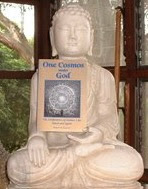
God, for example, is encountered through, or in, mystery. The more you heighten your sense of mystery, the more you are open to the transcendent. In my book, I symbolize this open be-attitude as (o).

But there is also the implicit ontological sense of the term. As I have mentioned before, I have long suspected that the various fundamental mysteries that confront man are somehow interconnected; you might say that they are diverse manifestations of O.

What I mean is that there are certain things that are fundamentally beyond the horizon of knowability -- at least in the profane or rationalistic sense. No amount of cogitation will ever resolve these riddles, which include Time, Life, People, Self, Liberty, Reason, O, and other magazines.

My apologies. That was a gag that couldn't help writing itself.

No joke: these mysteries include Time (in all its modes, but especially the Now), Consciousness, Life, Freedom, and Being (this last being our little window into eternity that can truly say -- and share in -- I AM).

In the past I have used the analogy of a three-dimensional hand passing through a two-dimensional plane. As the fingers break through the plane, they will initially appear as one, then two, eventually five, circles. But then the circles will blend together and become one at the wrist.

Think about the "place" where three dimensions appear as two. Is there such a place? Humanly speaking, it must be where free will takes place, not to mention the passage of time, which cannot be perceived absent a stationary or timeless "point." For example, prior to making a choice, we are confronted with a multitude of possibilities. Making the choice collapses the multidimensional field.

It reminds me of No Country For Old Men, which I recently read. Recall the scene in the gas station, where the proprietor's fate hinges on a coin flip. "I don't know what it is I stand to win." "You stand to win everything. Everything."

Nothing or everything, based on a coin toss. I think McCarthy is trying to say, That's Life. In fact, Chigurh says something in the book that isn't in the film:

Anything can be an instrument.... Small things. Things you wouldn't even notice. They pass from hand to hand. People dont pay attention. And then one day there's an accounting. And after that nothing is the same. Well, you say. It's just a coin. For instance. Nothing special there. What could that be an instrument of? You see the problem. To separate the act from the thing. As if the parts of some moment in history might be interchangeable with the parts of some other moment. How could that be? Well, it's just a coin. Yes. That's true. Is it?

So, you never really know when Everything is on the line, or what may by its instrument. Maybe it always is on the line -- or at least we ought to act as if it always is. We never really know what's coming. We can only pretend to know, which gets back to Hayek and the epistemological problem: we just don't know what we cannot know, and yet, we must choose.

With the gas station proprietor a coin is the instrument. With Moss, it's the leather document case filled with cash:

He sat there looking at it and then closed the flap with his head down. His whole life was sitting there in front of him. Day after day from dawn till dark until he was dead. All of it cooked down into forty pounds of paper in a satchel.

What does he do? He sees two lives before him, one already over, the other full of possibilities. I can't call it for you. It wouldn't be fair. It wouldn't even be right. Just call it!

He latched the case and fastened the straps and buckled them and rose and shouldered the rifle and then picked up the case and machinepistol and took his bearings by his shadow and set out.

Now, that is a provocative line: He took his bearings by his shadow. I could spend the rest of the post on that one, but I think I'll move on. Judas comes to mind. All this, for thirty pieces of silver!

Back to the subject of transition from one dimension to another... not that we ever left it. This is also the only "place" where the I AM could be. On one side, you might say, is the Dreamer who dreams the dream, on the other the dream-ee who recalls it. But life is a tapestry of Dreamer and Dream-ee, isn't it? Everything opens out to the infinite on one end, and the finite on the other. Subject and object.

I think on the Subject side is "religion as such," while on the object side is such-and-such a religion. Schuon writes that the perennial philosophy or religion

is quite evidently inexhaustible and has no natural limits.... As it is impossible to exhaust all that lends itself to being expressed, and as repetition in metaphysical matters cannot be a mistake -- it being better to be too clear than not clear enough -- we believe that we could return to our usual theses, either to offer things we have not yet said, or to explain in a usefully new way things we have said before.

So if this post is tediously repetitive, that's my excuse.

Later Schuon expands upon this in a useful way:

It is indispensable to know at the outset that there are truths inherent in the human spirit that are as if buried in the 'depths of the heart,' which means that they are contained as potentialities or virtualities in the pure Intellect: these are the principial or archetypal truths, those which prefigure and determine all others....

The intelligence of animals is partial, that of man is total; and this totality is explained only by a transcendent reality to which the intelligence is proportioned. Thus, the decisive error of materialism and of agnosticism is to be blind to the fact that material things and the common experiences of our life are immensely beneath the scope of our intelligence.... without the Absolute, the capacity of our conceiving it would have no cause.

As we've said before, profane thinking, or (k), can only arrive at O in the exterior sense; it can conceive it, but being in it is a different matter. Real ontonoetic thinking is a declension from O, i.e., that "transcendent reality to which the intelligence is proportioned."

Now, if we were fully "in O," then time stops and we simply enjoy the divine Slack. There is duration, but no time per se. Augustine talks about being "taken up into heaven"; likewise, one thinks of Plotinus and so many other mystics down through the ages. Or, as reader Johan reminds us, it is like when Homer talks about the paradox of the beer being "in us," that we may be "in the beer."

Wo. Be-er.

Is any of this actually helpful or even interesting or at least amusing to anyone? Or am I deluding myself? I honestly don't know. Well, amusing, maybe, in a weird kind of way.

Thursday, November 01, 2018

Change and Progress, Circle and Line

Yesterday it occurred to me that if there is no freedom, then time is reduced to a kind of space. It is completely solid, as it were, with no give.

Time is bound up with change, but if time is space, then change is... well, it isn't. It would be analogous to two views of the same space -- like this room: I can look in this corner or that one, but it's the same room. Nothing has changed.

When we first got our new dog last year, she'd go out to the backyard and look through the window and see me typing, and think it was a stranger. Slowly the fear turned to puzzlement, and eventually she let it go. In her case, she had two views of the same person but thought it was two people. But if time is an illusion, then everything is like that. What looks like surprise is reduced to inevitability.

Surprise. It's on a continuum, isn't it? There are good surprises and bad surprises, trivial ones and catastrophic ones. But what if there were no surprises? Life would be unendurable, wouldn't it? Goroundhog Day, in circles.

Is there an ontological basis for surprise? The answer may surprise you!

I insist that there is, because I believe creativity is an irreducible principle in God: God cannot be God and not be creative. It's in his nature. Hence all this creativity, everywhere, at all times. It's here because it is a prolongation of, or participation in, God.

Do you have a better idea? Maybe you think it's a "bottom up" phenomenon. If so, then it is anchored in a bottom that is devoid of creativity -- the atemporal block universe described by modern physics. How does creativity get in?

There is change, and there is progress. In the absence of the Absolute, progress is reduced to mere change, and change is reduced to inevitability. And for awhile, this is precisely what Marxists taught: that progressive change, ending in utopia, was inevitable.

D'oh! That didn't work out, so "progress" had to be forced upon the rest of us, which is still the current state of play.

This coming Tuesday will again come down to the choice: change or progress. Except that the people who call themselves "progressives" are really changists, and we mean this quite literally. It is not an insult, because progress is ruled out by their metaphysic:

[P]rogress implies some improvement. Improvement, in turn, implies a standard that is not itself changing. Unless I have access to a fixed standard, I cannot tell whether things are getting better or worse. I must have an idea of what would count as ideal in order to recognize progress (Brown).

Conversely, change requires no standard, which is convenient for the left, being that they have none:

Although some criterion must be used to know that there is change, it need not be a standard measure. I can use any measure I please, and the measure can be changed as often as I please. It does not even matter if my standard itself is changing... (ibid).

Again, convenient for the left. No, mandatory! Truly, it is no joke to say that in the absence of double standards, the left wouldn't have any. Thus, for example, we have to stop demonizing people and realize that white people are our biggest threat. Or stop foreigners from influencing our politics, unless they are illegal Democrats. Etc.

Here's a book we haven't discussed in a long time, if ever: The Reality of Time. Is time indeed real? Or is it just a side effect of something more fundamental? You know what we believe; still, what would it mean for time to be real? What is the meaning of real?

Reality is two things: it is what is, despite our wishing it to be otherwise. But if it is only inevitable, then this isn't any better then the timeless universe referenced above. Let's go back to Dr. Brown:

Reality includes the material universe experienced by our senses and studied by science, but also such things as thought, free will, moral principles, and love. If these things are not real, then life itself is meaningless.

Now, thought, beauty, love, meaning, and free will transcend materiality. Therefore, reality is transcendent. Or, it is immanent but always transcends its own immanence.

Again, reality is 1) what is. But reality (for us) must be a prolongation of the Ultimate Real, and this is what we call God: you might say that there is a kind of dialectical play between reality and Ultimate Reality.

Everything that exists is more or less real. In other words, to exist is to partake of reality. A bad man, for example, exists; but he exists in a state of privation, in that the absence of goodness is a measure of his privation and lack of participation in the Real. Thus, being that things are more or less real, a -- if not the -- point of life must be to become more real, no?

Let's jump-cut to one of the ultimate principles of Christianity: Incarnation. It's a very strange doctrine. What's the point? Well, for starters, it is that the Ultimate Real plunges into what we call reality, in order to redeem it: that God becomes man that man may become (i.e., participate in) God. So, we are real. The Incarnation allows us to become more real.

Really? Again, go back up a few paragraphs, to the ultimate standard against which change is measured. An aphorism comes to mind:

Christ is the truth. What is said about Him are mere approximations to the truth.

Boom. The container has entered the contained. The contained can never contain the container, only "approximate" it. Still, better than nothingness.

Try this approximation on for size:

Christ was in history like a point on a line. But his redemptive act is to history as the center is to the circumference.

The Incarnation is situated on a point in history. But history cannot contain what transcends it, i.e., its own source, ground, and telos. For with the Incarnation, we might say that the Center becomes peripheral that the periphery might become central. Which comports with this timeless nugget recalled by Schuon, and which really ties the room together:

To quote an expression of Pascal’s we favor -- Reality is “an infinite sphere whose center is everywhere and its circumference nowhere.”

How does this work, exactly -- center and circumference? Like this: think of a spider's web "formed of warp and weft threads -- or of radii and concentric circles." The radii connect directly to the center, while the circles are as if "echoes" or fractals or images of it; the former are continuous, the latter separate and discontinuous.

But again, the circles, although seemingly separate from the source, are real. How to reconcile the two relationships? Via the spiral: we are not God (the central point) and yet we are not-not God (via the radii). Christ in his godhood is pure radii, while in his manhood he is situated along a historical circle.

But God is always tossing down various ropes, i.e., radii. They go under the heading of "grace," which is really a vertical gift.

And seriously, where would we be without this ceaseless provision of vertical gifts? That's right: nowhere. We couldn't live for a second.

Never did get to the Reality of Time. Maybe tomorrow. Well, here are a couple of fragmental notes to myself in the back of the book, maybe relevant:

History is the time taken by humans to explicate humanness.

Only the present has a vertical dimension through which floods being, consciousness, life, eternity, etc.

Circle and line, change and progress, respectively.

Tuesday, October 30, 2018

Nothing and its Consequences

Still thinking about truth, freedom, and creation. These must be ultimate categories, and as we've said many times -- or suspected many times, anyway -- all ultimate categories must somehow be related to one another, otherwise this wouldn't be One Cosmos but many; there would be one cosmos for each ultimate, with no way to reconcile them.

An Ultimate Category is both the end and beginning of thought; take, for example, truth. Truth is obviously the whole point of thinking, but one cannot begin thinking without an implicit notion of truth. The very act of thinking presupposes the truth it converges upon. Indeed, I would say that truth is the substance of thought, just as thought is the form of truth.

But again, those other ultimates have to figure in as well. Freedom, for example, must be present, or truth is reduced to a compulsion or machine. Let's say I'm a leftist who knows the Truth of Gender, and therefore force everyone else to believe there are 57 genders, or that men and women are identical, or that women Must Be Believed. That's a rather brittle "truth," isn't it?

Which goes to the more general point that all "leftist truth" is brittle, for which reason it must be protected and afforded a safe space where it isn't challenged. It's not enough that 95% of professors believe it, or that speech codes protect it. Non-believers must be persecuted and punished!

I read of a survey the other day that found that over 50% of college students are afraid to disagree with their professors. Why only 50%? I suppose because half of the students are already so indoctrinated that they can't imagine disagreeing.

So, freedom makes truth more robust. It's why conservatives are eager to argue with leftists, but leftists ban conservatives from college campuses.

I heard of another self-evident study last week, revealing that conservatives understand leftist arguments much more than leftists understand conservative arguments. This explains why the left so rarely responds to the content of our arguments, but rather, with vilification and slander. This week, for example, you're a racist if you don't like the idea of a mob of foreigners exploiting our laws in order to invade the country. Everyone knows that if we were being invaded by mobs of Republicans, the wall would already be there. With turrets. And a moat.

Creativity is also unthinkable in the absence of freedom, and both require order. Too much order stifles freedom and creativity, as too little dissipates them.

Which certainly has a bearing on how God rolls. One of the fundamental doctrines of the West is "creation from nothing." A pure nothingness would be a total negation of truth and order; I suppose it's like a substance that is curative in a small dose but poisonous if you take too much. Probably a better way of expressing it would be creation with nothing, but not only nothing; rather, it's a vital ingredient, such that that there is a residue of nothingness in everything.

For example, what residues of nothingness do we see in human life? Well, death for starters. But also ignorance, which is again perpetual and irremediable; as described in the previous post, it is both a cause and consequence of a knowing intellect separate from (and yet a prolongation of) God.

We could also say that the inexhaustibility of creativity is a kind of shadow of nothingness. In this context, the most creative person in the world may be distressed to realize that the entirety of his efforts is but a grain of sand in the ocean.

Or, think of it the other way around: what if man could create something so comprehensive and so total that it eliminated the need for any further creativity -- a poem or painting so perfect that no further poems or paintings would be necessary or even desirable, because they would distract us from the One True Painting or Poem?

By the way, that is precisely the future book I have in the back of my mind. Yes, the Impossible Dream. But wait. Unlike the first book, it would not be an attempt at synthesis and integration of diverse fields. Rather, it would go to the nonlocal order of things -- to the implicit rules that make everything possible. Like this post is doing, for example.

Is it possible to read God's mind, or hack his computer? Fortunately we don't have to, because God tells us what's on his mind, or at least what we need to know. Why then do so many people ignore it? I think because it hasn't been presented to them in the right way. In particular, I think that certain important abstractions are understood concretely, and vice versa.

Example.

Okay, the Garden of Eden. Does one understand this concretely and literally, or is there supposed to be some abstract takeaway? This isn't just a problem with non-believers. It might even be worse with believers who not only superimpose some concrete understanding onto it, but vilify those of us who don't. Remember, since it verges on the ultimate, there must be an element of freedom and creativity mixed in there as well. Such mythopoetic stories are not there to look at but through. They illuminate the whole landscape. If they don't, then you're doing it wrong.

Think of how many metaphysical lessons are crammed into Genesis -- even just the first few chapters: creation from (or with) nothing; the uniqueness of man in all of creation; the primordial unity-in-complementarity of man and woman; fallenness, which is to say, separation from the Source (in the absence of which we couldn't exist at all); a seeming principle of evil or darkness or entropy; the perpetual exile and exodus of this life; the envy-fueled and murderous impulses in the hearts of our brothers; etc.

Time out for Schuon:

Obviously, creation “comes from” -- that is the meaning of the word ex -- an origin; not from a cosmic, hence “created” substance, but from a reality pertaining to the Creator, and in this sense -- and in this sense only -- it can be said that creation is situated in God. It is situated in Him in respect of ontological immanence: everything in fact “contains” on pain of being non-existent -- on the one hand Being, and on the other a given Archetype or “Idea”; the divine “content” is ipso facto also the “container,” and even is so a priori, since God is Reality as such. But things are “outside God” -- all sacred Scriptures attest to this -- in respect of contingency, hence in respect of the concrete phenomena of the world.

If I understand him rightly, our own nothingness must be a consequence of being situated "outside" God and "inside" contingency (AKA freedom, or at least indeterminacy), even though nothing in reality can be outside or free of him. Or, everything is simultaneously in- and outside him, which, you might say, goes to the principles of transcendence and immanence. We are always what we concretely are -- immanence -- but so much more -- transcendence. And freedom is, as it were, situated between these two rascals:

The purpose of freedom is to enable us to choose what we are in the depths of our heart. We are intrinsically free to the extent that we have a center which frees us: a center which, far from confining us, dilates us by offering us an inward space without limits and without shadows; and this Center is in the last analysis the only one there is.

Thursday, October 25, 2018

Freedom and Creation, Truth and Unfathomability

I'd like to get back to the subject of freedom. Again, we're trying to approach it from different angles, from the economic, political, and psychological (Hayek) to the metaphysical (Schuon). Also, I was just flipping through Stanley Jaki's Means to Message, which has a whole chapter devoted to the subject. (Jaki was a physicist, philosopher of science, and Catholic priest.)

Jaki highlights an important relationship between freedom and creation -- i.e., the doctrine of creation, whereby the cosmos is not self-explanatory, but must be rooted in a higher source.

Please note that there are two and only two possible choices -- createdness and self-sufficiency -- and that one's initial choice determines everything.

Note as well that most people who choose the latter (a vertically closed universe) want to have it both ways. That is, they pretend the cosmos isn't created, while enjoying numerous benefits that could only exist in a vertically open universe -- beginning with freedom itself, for example, the freedom to choose a self-sufficient universe while pretending free will doesn't exist.

Free will cannot be explained on any philosophical, psychological, or neurological basis. To be perfectly accurate, each of these disciplines can argue the question both ways, with no way to arbitrate between the two positions. Rather, the only way to objectively answer the question is to exit the system entirely, i.e., via a transcendence that is only possible if the universe is created.

Jaki discusses the psychologist William James, who "took the doctrine of creation out of nothing for the worst aberration of the human mind." But "little did he suspect that this idea alone" can resolve the Problem of all Problems -- or, one might say, the problem of the beginning and the beginning of all problems. For once creation is discarded, then "nothing can be seen as transcending matter, although this is what every free act does." Conversely, any materialistic paradigm reduces free will to sheer willfulness. Or to power.

I don't want to get all political right away, but you can see at once how this plays out in the Red vs. Blue sweepstakes. Yes, it is a question of truth vs. power, but also of freedom vs. control, of creativity vs. the machine, of religion vs. the religion of no religion, and in Hayekian terms, cosmos vs. taxis, the former a spontaneous order, the latter a manmade one. All because of one little error at the root of all subsequent thinking!

Democracy, of course, has no necessary relationship to truth. Rather, it is only about power -- the power of the demos. Therefore, the value of democracy depends entirely upon the quality of the demos, in particular, its access to, and assimilation of, truth. Yes, "the will of the people may express truth," and "yet this is increasingly less the case when he people are exposed to daily brainwashing" by the media, by academia, and by our culture itself.

Notice how socialism is enjoying a resurgence in popularity among the demos, especially the young and extensively indocucated such as our Miss Occluded Cortex. Again, the "truth" of socialism is power. Should it appeal to truth as such, then it is no longer socialism. Thus, it is quite natural that academia should have devolved into a left-wing oasis of totalitarianism in a desert of freedom. Even the acknowledgment of truth and freedom undermine leftism at the root.

Instead of appealing to truth, the left not only appeals to power, but more cleverly, to "the oppressed," AKA victims (as in the Central American Caravan of Invaders). There's demographic gold in them thar shills!

One of the most persistent strategies of the left is the appropriation and abuse of Christian ethics in service to the destruction of Christendom. It's really the timeless psychological fallacy of the appeal to pity, addressed to a religiously untutored demos still living in the shadow of Christian compassion. It wouldn't work in, say, China or Saudi Arabia, where victims are just pathetic victims and not would-be godlings.

Thus is the God of love covertly transformed into the god of power. It's how the Evil One rolls, at least in America. Elsewhere he needn't conceal himself, and can operate more openly.

The same principle that accounts for our freedom accounts for our paradoxical access to truth without ever being capable of knowing the full truth of the least imaginable thing. In other words, it is only because of a certain irremediable ignorance that we can know anything at all. And this irremediable ignorance is another consequence of the doctrine of creation.

Pieper explains it most clearly and concisely: "the natural world around us can be empirically known precisely because it has first been 'thought' by the Creator." That is to say, things -- real things, to the extent that they are indeed real -- literally ex-ist in the space between the divine intellect and the human mind; or between Creator and ensouled creature.

Which is why we can affirm that "all things are true." Reality is true, and truth is reality. Sounds uncontroversial, but trying saying it in a liberal looniversity! Safe spaces exist in order to shield their benefactors from the truth of reality and reality of truth.

"All things are true," would therefore mean, on the one hand, that all things are known by God in the act of creation and, on the other hand, that all things are by their nature accessible and comprehensible to the human mind.... All things are intelligible, translucent, clear and open because they are essentially spirit related.... In short, things can be known because they are created.

But! Orthoparadoxically, "being true and being unfathomable go together" because "the comprehensibility of a thing can never be fully exhausted by any finite mind." So, things are simultaneously knowable and unfathomable, and our freedom is located in the interstices between these. Which Hayek says, but from a totally different perspective.

To be continued...

Wednesday, October 24, 2018

Patterns of Tyranny, Part 1: Trump and Hitler

I have the title. And I have the book: The Infernal LibraryWill it result in a serviceable post? 

It depends upon whether there is a pattern -- a deep structure -- to the intellectual lunacy put out by these intellectual lunatics.  If there is such a pattern, then it may help us see when the same pattern is occurring in the present -- an early warning system for when tyranny is on the horizon.  

For the past two years we've been hearing from the left how tyranny isn't just over the horizon. It's here.  Indeed, they even cite some of the same sources I am going to cite.  For example, MSNBC sees the same pattern in Hitler as in Trump:
[Hitler's] primary rules were: never allow the public to cool off. Never admit a fault or wrong. Never concede that there may be some good in your enemy. Never leave room for alternatives. Never accept blame. Concentrate on one enemy at a time, and blame him for everything that goes wrong. People will believe a big lie sooner than a little one. And if you repeat it frequently enough, people will sooner or later believe it. 
First, this could apply to any number of politicians, to say nothing of the hyper-hysterical MSNBC itself, so it's neither here nor there.  Or it's there, but not where MSNBC wants it to be.

Here's another example which I had incorrectly assumed was a joke. Turns out the man is serious:
Key differences between Donald Trump and Adolph Hitler -- Hitler served honorably in the military, Trump didn't; Hitler was faithful to his wife, Trump cheated on all his wives; Hitler wrote a book, Trump's were all ghostwritten.
First, this idiot misspells "Adolf." He then doubles down on the Trump connection: "Immigrants are Trump's Jews. Give him time. We are only up to 1933." Then triples down: "Anyone who really thinks a comparison between Trump and Hitler is absurd should watch 'Triumph of the Will' and then watch one of Trump's MAGA rallies."

I was going to begin -- as the book does -- with Lenin and Stalin, but let's fast forward to Hitler. There are other ways in which he was superior to Trump. For example, Hitler "was a keen reader and remained one his whole life -- when he died at the age of fifty-six, he owned around sixteen thousand books."

What was Hitler's Big Idea, anyway? What was his MGGA? Well, unlike our president, who was quite successful in his pre-political life, Hitler was conspicuously aimless and adrift until he hit upon "a political ideology that married Jew hatred with socialism and nationalism."  

Ah ha! President Trump is an admitted nationalist. Does this make him a budding Hitler? Only if you conflate a nationalism of blood and nationalism of values.  

These two categories are at antipodes. And as usual the left is simply projecting, since leftism is itself a crude appeal to various primitive tribal, racial, and ethnic identities. And no one is as hated by the left as a person who is a traitor to his blood and skin -- say, Clarence Thomas, or Candace Owens, or Kanye West -- and they openly engage in ceaseless racial attacks on "whiteness," "old white men," and "white privilege." 

So, why was Germany in trouble in the 1930s and why did it need Hitler's National Socialism? Easy: "The Aryan gave up the purity of his blood and, therefore, his sojourn in the paradise ended." For Hitler, hematological confusion is the root of all evil, the Original Sin: "Blood mixture and the resultant drop in the racial level is the sole cause of the dying out of old cultures; for men do not perish as a result of lost wars, but the loss of that force of resistance which is contained only in pure blood."

Again, this is at antipodes to the American ideal, in which all men are created equal. Conversely, central to the left's mission is the division of Americans into racial categories and the granting of rights, spoils, and special privileges based thereupon. 

Another feature shared by Hitler and the left is the great magnification of the threat of the presumed enemy. In Hitler's case, the Jews, consisting of a tiny minority of Germans, are expanded into "a parasitic superintelligence moving from culture to culture... in order to more fully achieve [their] sinister goals of complete domination."

Thus, Jews function in the Nazi imagination in a way similar to how conservative "white supremacists" function in the leftist imagination. Except that Jews actually existed, at least in sufficient numbers to be seen. Unlike our contemporary leftists, Hitler did not hallucinate the presence of Jews, only their malign superpowers.

And, just like Hitler, Trump has worked tirelessly to reduce the influence of the federal government in our lives.  Oh, wait.  That's the opposite of Trump.  Whatever.  He has 
  • Achieved massive deregulation at a rapid pace, completing 22 deregulatory actions to every one regulatory action during his first year in office.
  • Signed legislation to roll back costly and harmful provisions of Dodd-Frank, providing relief to credit unions, and community and regional banks.
  • Federal agencies achieved more than $8 billion in lifetime net regulatory cost savings.
  • Rolled back Obama’s burdensome Waters of the U.S. rule.
  • Used the Congressional Review Act to repeal regulations more times than in history.
  • Provided more than $5.5 trillion in gross tax cuts, nearly 60 percent of which will go to families.
  • Increased the exemption for the death tax to help save Family Farms & Small Business.
  • Nearly doubled the standard deduction for individuals and families.
  • Enabled vast majority of American families will be able to file their taxes on a single page by claiming the standard deduction.
  • Doubled the child tax credit to help lessen the financial burden of raising a family.
  • Lowered America’s corporate tax rate from the highest in the developed world to allow American businesses to compete and win.
  • Small businesses can now deduct 20 percent of their business income.
  • Cut dozens of special interest tax breaks and closed loopholes for the wealthy.
Yes, just like Hitler, who insisted that "the government must become involved in the lives of its citizens to an extraordinary degree," beginning with the indoctrination of children, for it is an "absurdity" that "with the end of the school period, the state's right to supervise its young citizens suddenly ceases..."

Let's see. Who wants to ban homeschooling, Trump or the left?  Leftism doesn't work without a thorough deprogramming and indoctrination, so give them credit for honesty.

To be continued...

Tuesday, October 23, 2018

President Trump is Doing the Truth

Why undergo the aesthetic torture of immersing oneself in the literary works of the world's worst tyrants? Well, it reminds me of the old gag by Lao Tsu:  What is a good man but a bad man's teacher? What is a bad man but a good man's job?

Still, I'm glad Daniel Kalder took the job. He went through the complete works of the Big Five -- Lenin, Stalin, Hitler, Mussolini, and Mao -- and then of more minor literary figures such as Castro, Kim Jong-Il, and Saddam, followed by an exploration of some really weird and obscure ones that we don't need to discuss.  

Yes, you can learn a lot by reading, say, the Federalist Papers.  Those guys thought that certain pneumo-political truths were axiomatic or self-evident.  

I would agree, but with two qualifications:  first, echoing something Schuon wrote, two conditions are necessary to reason properly about such matters, one external and concrete, the other internal or psychic.  First is "the value or extent of the available information."   But even if you have the necessary information, it isn't sufficient.  Rather, the sufficient condition is "the acuity and profundity of the intelligence" that is doing the reasoning.   

There is something we might call "pure intelligence," what the science of intelligence calls "G."   Nevertheless, all the G in the world is rendered ineffectual by bad information.  Worse yet is if high G is mingled with low character.  

It seems to me that this is the world explored by Kalder.  You might say that intellectuals ruin everything.  Does this make us anti-intellectual?  Hardly.  Then again, there is something about intellectualism per se that troubles us, meaning me.  It, for example, is the subject of The World Beyond Your Head. The title itself says it all, because the first and last temptation of the intellectual is to compare the world to the world inside his head and to find the former wanting.

Abstract and concrete, word and flesh.  Remind me to return to these.

Another surprisingly relevant book is The Philosophy of Hebrew Scripture.  I can't recommend the book, because it's simultaneously rambling and tangential and slightly obsessive.  Nevertheless, there are some key points that I would say carry over directly into Christianity, and why wouldn't they?

Indeed, one thinks of Jesus' rhetorical question to the cynical Pilate:  What is truth?

Well?   Pilate is like an Obama -- or any other leftist -- for whom truth is whatever results in political power.  But what about the typical intellectual?  What is an intellectual?  An intellectual is someone who trucks in ideas.  Okay, what is an idea?

That is where the trouble enters.  "There are two kinds of literary works that address themselves to ultimate issues -- those that are the product of reason; and those that are known by way of revelation" (Hazony).

Now, right away your typical intellectual is likely to discard and ridicule #2 (revelation).  Which is unfortunate, because it directly contravenes Schuon's conditions for effective reasoning, one of which is the quality of available information.  And it turns out that revelation is of quite high quality.  I mean, at the very least it consists of the collective wisdom of man, rooted in experience, AKA what works.

Jews have had a pretty rough time of it over the past few thousand years.  For some reason, they make the best demons.  However, you will have noticed that they do indeed exist -- unlike all of their ancient competitors, from Babylonians to Mesopotamians to Romans and all the rest.

Anyway, what is the Jewish conception of truth? Turns out it is quite concrete, to such an extent that it is often more "done" than thought.  The typical intellectual likely doesn't think of truth as action, but there you go:
the biblical authors don't subscribe to a metaphysical picture in which word and object are independent from one another because they don't see the world and the mind of the observer as independent from one another. They recognize the object as understood as the only reality, and hold that true speech (or true things) is that which can be relied upon in the face of hardship and changing circumstance. In fact, this is what is meant by God's word.
So, something that is true can be relied upon;  you can bank on it. Call it "faith" if you like.  And note that faith is not opposed to reason.  Here is Hazony's bottom line on biblical truth: it
is not in the first instance a quality of that which is said, but of objects.... the truth of that which is said is dependent on, and perhaps identical to, that truth which is a quality of objects.
Which lines up perfectly with the Thomistic view that we begin with objects for the simple reason that they object -- in other words, that they have their own reality in defiance of our abstractions.  Maybe you're a Marxist who thinks history is scientifically determined.  Well, history has other ideas.  Or maybe you think a baby is "the mother's body," or a federal minimum wage reduces poverty, or men and women are identical.  In each case, the world objects to the subject.  Or, subjects and subjectivity are subordinate to objects and objectivity:
true and false are not properties of things that are spoken at all. Instead they are properties of objects and persons.
The Bible calls things "true" that are trustworthy:  "things that are reliable, steadfast, and faithful... that can be relied upon to hold firm under conditions of stress."

Maybe a weird thought in this context, but it occurs to me that I regard our president this way, as someone who -- unlike any past Republican politician -- "can be relied upon to hold firm under conditions of stress."  To paraphrase Andrew Breitbart, he walks toward the fire and doesn't worry about what they call him.

Now, why might President Trump be this way? Well, unlike Obama -- or, for that matter, Lenin or any other Deep Thinkers discussed by Kalder -- he is not an intellectual. Thank God!

Surely you're not comparing Obama to these tyrants? Yes, actually I am, in the sense that they all value their abstract thoughts over the concrete world. I can't tell you how many times I wrote in the margin, "cf. Obama."

Or, look at it this way: the media obsess over things Trump says, as if they are real, while systematically ignoring things he has actually accomplished, as if they aren't. Hazony cites numerous examples of how truth and falsity in the Bible "appear with reference to actions that are performed by men or God. In these cases we find that someone is to 'do truth' to or for someone else, or else that an action is described as being performed 'in truth.'"

Remarkably, as far as I am concerned, President Trump is doing more truth than any politician in my lifetime.  But don't believe me. I'm just another intellectual.  Believe reality.

Monday, October 22, 2018

"Thinking" and Thinking, "Education" and Education

We are on the subject of freedom and truth, which are of course necessary conditions of one another, which must mean they converge on a single reality (and are prolongations of it herebelow).

For human purposes, it doesn't get more important than these two.  And if we trace our civil war down to the fundamentals, we indeed see very different perspectives on them.

I've been listening to Dennis Prager for some 25 years, and one of his central points -- and he cites relevant examples every day, so it's not just an unsupported insult -- is that truth is simply not a value for the left.  Rather, the left is primarily motivated by feelings -- not necessarily wholly bad ones.  For example, they talk a lot about compassion; but unfortunately they are also consumed with envy, resentment, and a compulsion to control others.

This is why you can never expect a leftist to be consistent in his thought.  Because he is motivated by feelings and not logic -- well, one could think of dozens of examples, but he'll scream about how Black Lives Matter while enthusiastically supporting the abortion of millions of black babies, or attack law enforcement, which results in thousands more blacks being murdered on the streets of Baltimore or Chicago.

The point is, a leftist -- even if he happens to be speaking the truth -- never says something because it is true, but because it is expedient.  If truth and ideology clash, then the truth has got to go.  You already know this, and a leftist will never understand it, so I won't waste time pressing the issue. More obvious is the left's devaluation of freedom in favor of equality.   We won't even argue that point, because it is self-evident.

For Hayek, freedom is "a state in which each can use his knowledge for his own purposes."  In contrast, note how so much of the "pretended altruism" of the left "manifests itself in a desire to make others serve the ends which the 'altruist' regards as important."

Do you see what he -- the altruistic leftist -- did there?  He co-opted both your freedom and your truth in a single operation, because he knows better what's good for you.   But whatever it is, it isn't better than freedom, nor is it likely that the leftist knows more about you than you do.

I was explaining this to my son yesterday -- that our natural rights such as freedom of speech, religion, assembly, and self-defense do not obligate anyone else to do anything.  But if you have a right to medical care, or to a house, then someone must be compelled to treat you or build it.  Over the weekend I heard something about Miss Occluded Cortex suggesting how we should adopt  the blueprint of World War II  to combat "global warming."

Let's see. Back then, 50 million men between the ages of 18 and 45 had to register for the draft, and you may have noticed that the civil rights of military members vary quite significantly from regular citizens.  In short, you are forced to do and say a lot of things irrespective of whether or not you want to do or say them.   No wonder she's attracted to this model!

But as Hayek explains, it is "not in our power to build a desirable society by simply putting together the particular elements that by themselves appear desirable."

You might say that if freedom gets us into a ticklish spot, then only freedom can get us out of it.  The solution is not to eliminate our freedom.  For example, the solution to horse pollution was not to ban horses or tax hay, but to develop the automobile -- which, of course, no one planned.  Rather, it emerged from free people freely dabbling with their particular know-how.  Likewise, no one forced the Wright Brothers at gunpoint to fly.

Yes, "the value of freedom rests on the opportunities it provides for unforeseen and unpredictable actions."  As such, we can never know what we are losing when we restrict someone's freedom.  But because it is never seen, it is quite easy to dismiss.  Again, this is not a bug but a feature of the left:  ignorance of ignorance.

I'm tempted to veer into The Infernal Library: On Dictators, the Books they Wrote, and Other Catastrophes of Literacy for some pure insultainment, but the book actually has its serious side.  For every one of these left-wing tyrants was a f*ck-up in his own life, but knew how to bring about utopia by ignoring your knowledge and eliminating your freedom.

Just like our socialist numbskull from the Bronx.  How does she justify eliminating your freedom and devaluing your knowledge?  Of course, she does so with the usual veneer of "compassion," but think of what must be underneath that!  A kind of grandiosity, omniscience, moral rectitude, and entitlement to rule that would match any dictator anywhere.

"I was struck by the fact that many dictators begin their careers as writers, which probably goes a long way toward explaining their megalomaniac conviction in the awesome significance of their own thoughts."

I mean, I can't say that I think my own thoughts are insignificant.  However, it would never occur to me to force them on anyone else.  Nor would it ever occur to me to devalue or ignore the millions of people who know things I don't.

This highlights a Great Irony -- that formal education is by no means an unqualified good.  For education means abstraction, and abstraction may or may not be a reflection of concrete reality.  For example, the collected works of Lenin, Stalin, Mussolini, and Mao amount to hundreds of volumes.  But does any of it touch reality?

Yes, it is quite true that In the beginning is the Word.  But that refers to God's Word, not ours.  To the extent that our words detach from that Word, then trouble begins.  In the back I have a note to myself:  "High IQ or extensive education means being more skilled at being wrong, often catastrophically wrong."  See the frightening state of our elite universities for details.

Truly, we need to distinguish between "thought" and "leftist thought."  Indeed, we probably shouldn't even call the latter "thought," since it operates along such markedly different lines.  And I don't mean that merely as an insult.  Any ideologue uses his mind in a way the normal person doesn't.  Rather, he thinks upside-down, inside-out, and backward.

Which I mean literally, because the pseudo-thinking of such a person is characterized by deductions from the a priori system (upside-down), by psychological projection (inside-out), and by a confusion of cause and effect (backward).

Education most certainly kills, and not in trivial numbers!  Rather, the most horrific catastrophes in human history have resulted from them:

"Many people regard books and reading as innately positive, as if compilations of bound paper with ink on them in and of themselves represent a uniquely powerful 'medicine for the soul.'"

No!  In another note to myself, it says that "Education without virtue -- without soul formation -- is always wrong."  That may sound a little polemical, but think about it:  we love, for example, nuclear physics.  But what if Nazi Germany had come up with the atom bomb before we had?  Likewise, we love aviation, but for jihadis?

So, "a moment's reflection reveals that this is not even slightly true:  books and reading can cause immense harm. To take just one example: had Stalin's mother never sent him to the seminary then he never would have learned to read and never would have discovered the works of Marx or Lenin. Instead, he would have been a drunken cobbler like his father, or perhaps a small-time gangster in Tbilisi.  He would still have spread misery, but on a much smaller scale..."

Now, perhaps you think this is a remote or unlikely scenario. To the contrary!  Think of the thousands of leftists with PhDs in Grievance Studies of various kinds, from feminisim to critical race theory to queer studies.  To say that these people are "educated" and that they "think" is to condemn education and thinking.

Which we don't want to do.  We just want to distinguish them from their perversions and inversions.

To be continued....

Friday, October 19, 2018

Divine Freedom or Abject Leftitude: Call It!

I want to try to bring together several threads from disparate dimensions, because... because it's what we do here. No one else wants to do it, and I can't help doing it, so here we are.

I'm thinking in particular of the relationships between freedom, ignorance, economics, and universal metaphysics.  I suppose the whole thing was sparked by reading Schuon and Hayek at the same time, two thinkers one would normally think of as being at antipodes, at least in subject matter.

All the better for our freewheeling approach!  For the more we can bring together seeming contraries -- such as mind and matter, religion and science, economics and metaphysics -- well, the closer we are to illuminating the One Cosmos beneath and above.

This line by Hayek arrested my attention yesterday, and is as good a place as any to start:  "Freedom can be preserved only by following principles and it is destroyed by following expediency."  I know what you're thinking:  but the left has no principles!  That is correct, but we'll get to the gratuitous insultainment a little later.

Why does freedom depend upon adherence to principles?  That seems contradictory, because strict adherence to a principle is a kind of foregoing of freedom, isn't it?   Well, we have to make choices -- life consists of a series of choices -- and if there are no principles beneath the choosing, then our so-called freedom is really just randomness.

Moreover, "when we decide each issue solely on what appear to be its individual merits, we always over-estimate the advantage of central direction."  Take free speech.  For conservatives, this is a principle, not an expedient.   It is not "for" anything.   Like human life, it is an inherent good.

But the left is at war with this principle, and instead wants to apply it on a case-by-case basis, which of course defeats the whole purpose.  No one will accuse the left of self-awareness, but the effort to appeal to free speech in order to defeat free speech is up there with their greatest hits -- e.g., using the legal system to destroy the rule of law, or claiming "human rights" (such as abortion) to deny them.

Again, if the future were certain, then freedom would be entirely superfluous.  "Freedom" and "unknowability" are kissing cousins, as are tyranny and omniscience.  Every modern tyranny -- from Venezuela to Obamacare -- pretends to know how to bring about a desired future by eliminating freedom, i.e., all the bad choices individuals will make.

Think about what they're actually saying:  we know how to bring about the desired future, so we are entitled to eliminate your freedom in bringing it about.  But what if the desired future can only be brought about under conditions of freedom?  Or, what if the future is always unknowable, and freedom is simply the acknowledgement of this reality?

This is why the accomplishments of a regime of freedom always surpass even the dreams -- let alone reality -- of the anti-freedom left.  Indeed, freedom brings about conditions we never even dreamed of, such as this internet we are presently enjoying.  Similarly, we can't even imagine the medical breakthroughs that will occur in the future -- unless we adopt socialized medicine and destroy the very conditions that will bring them about.

Ah, I'm just ramblin' like a libertarian, which ain't nothin' but a right-wing hippie.

I'm driving at something deeper, but haven't yet hit praydirt.  One critical point is that we will never know what might have occurred had we not tampered with freedom in order to impose some desired outcome.  For example, Social Security was un- (or at least anti-)constitutionally imposed upon us in 1935.  If we'd done the same with communication, we'd probably still have a 1930s-style telephone system.

"That freedom can be preserved only if it is treated as a supreme principle which must not be sacrificed for particular advantages was fully understood by the leading liberal thinkers of the nineteenth century" (Hayek).

But now, thanks to the aggravated logocide of the left, the very people who are devoted to the sacrifice of freedom are called "liberals."  For "if one starts unsystematically to interfere with the spontaneous order there is no practicable halting point."  Indeed, there can be no limit, because you've already destroyed the principle that would limit it.  Good work!

It's so easy to do, because it's always possible to appeal to superficial conditions in order to deny a principle.  Look at the Kavanaugh hearing:  we must deny due process because Ford is a woman, and women never lie!  Which is a lie, and not even a good one.

Such diabolical appeals aren't usually that grotesque.  Indeed, I am told that Satan himself was embarrassed by that crude display by his minions last month.  Yes, he is as opposed to constitutional principles as the most fervent leftist, but he prefers to darken the minds of sophisticated academics over arousing the passions of the mob.  That's a last resort.   Think Roe v. Wade:  a cold, clean, and calculated decision by the best and brightest, not some sweaty mob of infanticidal lunatics.  Please.

Ah, here's an appropriate point of transition from terrestrial to celestial principles of freedom:  "What I meant to argue in The Road to Serfdom" may be expressed "in more homely language" in cautioning us that "If you do not mend your principles you will go to the devil."  Nevertheless, "the 'necessities' of policy are generally the consequences of earlier measures."  One expedient denial of freedom sets up conditions for the next. And next. And next.  Ad infinitum -- the bad kind, or an inverted image of the good kind of infinitude, as we shall see presently.

But freedom.  What is it really, and where does it come from?  How is it even possible?  Is it just an accidental byproduct, some residue of complexity, or is it built into the cosmic cake?

One of my favorite lines by Paul is Now the Lord is the Spirit; and where the Spirit of the Lord is, there is liberty.  This implies that freedom must be some kind of prolongation of the Holy Spirt, or perhaps a triproduct of the Trinity itsoph.

Now, Hayek would never make such an argument.  He was a secular son of the enlightenment, not some kind of religious wacko.  Well, in what then does he ground his most decisive and consequential principle?   In expedience?  If so, then that's ultimately no better then the left's unprincipled appeal to expedience.

I suppose we might ask:  is there an Absolute Freedom, as implied by Paul?  Or is it always accidental and relative?  And if so, relative to what?  More relativity?  In which case it just reduces to nothingness, as taught by that bedwetting, Mao-loving existentialist, Sartre.

No, freedom is very much like truth itself:  either it is a fundamental attribute of absoluteness, or this cosmos is just an airless and lightless jungle of inescapable absurdity.

But as Schuon suggests, one might as well declare it "to be absolutely true that there is nothing but the relatively true," or "say that there is no language or write that there is no writing."   Such absurdities result from "the implicit claim to be unique in escaping, as if by enchantment, from a relativity that is declared to be the only possibility."

Bottom line: if man weren't free, he could never know it.  He would be plunged into matter and enclosed in his own neurology.  And if he is free, then nothing short of freedom can account for this astonishing fact.  An animal doesn't doubt because an animal isn't free.  But you doubt because you are free to do so, and freedom and doubt are functions of truth and reality.

Error and falsehood are privative phenomena, always parasitic on truth and certainty.  Appearance is a function of reality, not vice versa.  If reality were a function of appearance, then there would be no reality, only "reality."  Then you are well and truly in the leftist hell of My Truth, AKA "truth" AKA ineradicable illusion.

Two -- and only two -- possibilities. As Anton says, you must choose:
Chigurh:  Call it.
Gas station proprietor:  Call it?
Chigurh: Yes.
GSP:  For what?
Chigurh: Just call it.
GSP:  Well, we need to know what we're calling it for here.
Chigurh: You need to call it. I can't call it for you. It wouldn't be fair.
GSP: I didn't put nothin' up.
Chigurh:  Yes you did. You've been putting it up your whole life and you just didn't know it.
Call it!   And don't pretend you have no choice.

But if you choose freedom, exactly what have you chosen?
It is the consciousness of an unlimited diversity of possibilities, and this consciousness is an aspect of Being itself.... freedom as such is an immutable essence, in which creatures may either participate or not.... 
Defined in positive terms freedom is the possibility of manifesting oneself fully or being perfectly oneself, and this possibility -- or this experience -- runs through the universe as a real, hence concrete, beatitude.... the animate universe is a being that breathes and that lives both in itself and in its innumerable individualized constituents; and deep within all this there subsists the ineffable Freedom of the Infinite.
Oh.  That would explain it.  Truth is to Absoluteness as Freedom is to Infinitude. And the left has no use for either.

Tuesday, October 16, 2018

Introduction to Not Knowing: Ignorance Saves

We have various intelligence agencies. But what we really need is an Federal Bureau of Ignorance, or Central Ignorance Agency.

True, our intelligence agencies are ignorant of much, and often behave stupidly, but that's not the type of ignorance we're talking about; there is negative ignorance and there is positive ignorance, and ironically, the latter may be the most important principle in maintaining our liberty.

Negative ignorance is easy to understand: for example, maybe I have a growing brain tumor, but don't know about it. Or perhaps a mugger is waiting for me around the corner. In those cases, knowledge helps.

But is ignorance ever really helpful? Yes, because it is intrinsically intertwined with our freedom. Freedom, in a certain sense, is a function of ignorance. If we always knew ahead of time what was going to happen, we wouldn't be free.

I was thinking about this last night while watching a frustrating loss by the Dodgers. Out of all the major sports, baseball is most subject to the realm of chance, AKA the unknowable unknown. In basketball, for example, the best team almost always wins, especially if the players apply themselves. But in baseball the best team will still lose roughly a third of the time, and the worst team will win a third of their games. Thus, the best skill and soundest strategy are often trumped by chance.

In fact, the very purpose of strategy is to minimize the role of chance. For example, it is generally preferable to use righthanded hitters against a lefthanded pitcher, and vice versa. However, doing so doesn't result in a sure thing. Again, the future is unknown, so our strategy is deployed in the effort to tame it somewhat.

There are a number of lines to this effect in No Country for Old Men, which is all about ignorance and luck:

Point bein', even in the contest between man and steer the issue is not certain.

Or this exchange, that shows how our rules of strategy, which are designed to reduce ignorance and tame the future, don't always work out (i.e., sometimes a righthand hitter will get a base hit off a lefthand pitcher):

Anton Chigurh: And you know what's going to happen now. You should admit your situation. There would be more dignity in it.

Carson Wells: You go to hell.

Anton Chigurh: [Chuckles] Alright. Let me ask you something. If the rule you followed brought you to this, of what use was the rule?

But some people are ignorant of their ignorance:

Wendell: You think this boy Moss has got any notion of the sorts of sons of bitches that're huntin' him?

Ed Tom Bell: I don't know, he ought to. He's seen the same things I've seen, and it's certainly made an impression on me.

How little we really know:

Poolside Woman: Oh... that's who you keep looking out the window for?

Llewelyn Moss: Half...

Poolside Woman: What else then...?

Llewelyn Moss: Just looking for what's coming...

Poolside Woman: Yeah... But no one ever sees that coming...

This one is particularly relevant; I don't remember it in the film, but it's in the book:

You never know what worse luck your bad luck has saved you from.

Or this:

People complain about the bad things that happen to em that they don't deserve but they seldom mention the good. About what they done to deserve them things.

Another good one from the book, which certainly goes to our central topic, which is the role of government in eliminating ignorance and attempting to control the future:

It takes very little to govern good people. Very little. And bad people can't be governed at all. Or if they could I never heard of it.

Which immediately suggests an important electoral strategy of the left: if you want to justify the largest and most intrusive government possible, you'll need to create a lot of ungovernable people. A Blue Wave of them, as it were. No borders. No standards. A demographic invasion from below, as in California. This is a subject to which we will no doubt return.

In fact, this whole preface is by way of returning to the subject of Law, Legislation, and Liberty, which is so full of important insights that I'm having difficulty wrapping my mind around it. Maybe an amazon reviewer can sort it out for us.

the social order is produced by a complex array of institutions and behavioral norms, which have evolved and endure because they work. The Fatal Conceit of modern planners is to presume that the social order could be easily rearranged; but in fact the rationality of human planners is far more limited than the evolutionary ‘wisdom' that inheres in the complex rules of the free society.

This is helpful -- it's not just me:

Hayek wrote and published Law, Legislation, and Liberty on and off over a timespan of approximately 15 years, which were in part interrupted by ill health. Hayek admits that the result is at times repetitive and lacking in organization.

There are plenty of flashes of that true rhetorical brilliance characteristic of Hayek that can make his writings such a feast to the ear and mind. On the downside, however, these rhetorical gems are hidden in a large volume of pages that at times do indeed seem tedious, repetitive, and unorganized...

I suppose the ultimate insight is that rules are not -- and cannot be -- about guaranteeing outcomes, because that will undermine the very conditions of freedom and affluence. As in Venezuela, the state can guarantee a certain outcome only by eroding the conditions that make the outcome possible. But this is what the left does, every time. The first and last temptation of the left is denial of ignorance.

Hayek finds the philosophical base of totalitarian thought in the belief that "we can create the welfare with law, if we arrange it logically." That's why he calls every kind of totalitarian thought "constructive cartesian rationalism," because they all want to reform the whole world to realize their specific outcome...

By which he means that the world is not simple and linear, but complex and nonlinear. Treating a complex system as a simple one will generate disorder and bring about unintended consequences. For example, you can "raise taxes" on the simplistic assumption that the economy is a linear system. But doing so changes incentives and alters behavior throughout the system.

I have a number of notes to myself, for example, "The purpose of rules is to help us deal with the problem of not knowing what we cannot know." Or, "the essential problem is how to create a system in which we benefit from knowledge we do not possess, i.e., from our ignorance; or, how to utilize knowledge we don't have."

It calls to mind the famous essay about how no one knows how to make a pencil. Nevertheless, there are plenty of pencils for everyone. Think about it: if everyone who needed a pencil had to know how to make one, there would be very few pencils. Thus -- orthoparadox ahead -- it is specifically our ignorance that results in such an abundance of writing implements.

Contrast this with the Soviet Union, which would have attempted to predict ahead of time how many pencils are necessary, and marshal all the knowledge and resources necessary to manufacture them, inevitably resulting in too many or too few pencils due to a misallocation of resources. In this case, knowledge kills. Ignorance saves. Literally, if we're dealing with medicine and not just pencils.

Another note to myself: "funny how the left rejects intelligent design in biology but accepts it in economics."

All other animals consist of a repertoire of knowledge, so to speak. They know what they know (instinctively), and not only can they not fail to know it, they have no access to the much wider world of the Unknown. In other words, they don't know anything about ignorance, with the result that the are "sealed in knowledge" while being sealed from the ignorance that would free them.

Conversely, what really characterizes man -- even more than knowledge -- is our permanent state of ignorance. Ignorance is the prior condition of curiosity, wonder, and learning. And there is no end to it. If there were, then we would be as enclosed as any other animal, and thereby lose contact with the Absolute-Infinite that transcends us, and through which we "grow" by assimilating its substance.

Aphorisms.

--Intelligence does not consist in finding solutions, but in not losing sight of the problems.

--Politics is not the art of imposing the best solutions, but of blocking the worst.

Friday, October 12, 2018

Falcons and Falconers, Mobs and their Masters

Aw, look at me, I'm ramblin' again...

This morning I was looking for that quote (by Schuon) promised in the previous post, but in so doing fell into another unanticipated rabbit hole. Then again, maybe that's why I find the post s'durned innarestin'.

Schuon is like Dávila in his compressed rabbitholery: the sentences are fractal, such that each one contains a whole essay or book or even doctrine, so to utter One is to mutter it All.

Remarkable when you think about it. I know of no other writers who do that. Some come close, and some do it sometimes, but these two are masters of fractal speech. Which is a real thing requiring a real explanation, not something I just made up. Oh, we'll see about that!, said the rational side of his brain.

I assume you know about fractals, but a brief review never hurts:

a fractal is a detailed, recursive, and infinitely self-similar mathematical set.... Fractals exhibit similar patterns at increasingly small scales.... [and] can also be nearly the same at different levels.

Fractals exist in nature, but how? To put it more philosophically, by virtue of what principle are fractals possible and even necessary? As Mandelbrot, the discoverer of fractals, remarked, "A fractal is a shape made of parts similar to the whole in some way." I would say that if fractals are in nature, this must be because nature is fractal, which is what Whitehead suggested in so many ways (before the formal discovery of fractals). For example,

in a certain sense, everything is everywhere at all times. For every location involves an aspect of itself in every other location. Thus, every spatio-temporal standpoint mirrors the world.

Dávila suggests that

Phrases are pebbles the that the writer tosses into the reader's soul. The diameter of the concentric waves they displace depends on the dimensions of the pond.

This implies that the soul is a series of concentric circles, and this would be correct. It is why we apprehend the world as just such a series, except that different people locate the circles around different centers, from energy to idea to soul to matter to unalloyed grievance (in the case of the left).

Leaving the dimensions of the pond to the side, there must be a center, or we couldn't think at all. Now, this center is the ground of thought, and -- whether implicitly or explicitly, coherently or incoherently -- a prolongation of the absolute.

Let's bring this down to a practical level: why is the nation of E pluribus unum -- of all places -- engaged in a civil war? Easy: different unums, which is to say, Absolutes.

The (real) Absolute includes the dimension of first principles, which you might say are as Son to Father. The Absolute "iterates" in time and space as (for example) principles of logic, natural law, and human nature. These constants are all different, and yet the same; they are brothers and sisters, related through blood to the vertical Absolute. They are also fractal, in that each "contains" and reflects the others, so it is more like an interlocking net than, say, a pointillist painting.

The point is, everything isn't just connected, but interior to everything else. On the metaphysical side, this is expressed by Whitehead; on the scientific side, by quantum physics; on the psychological side by intersubjectivity; and on the religious side by the great I AM or the irreducible interpersonalism of the Holy Spirit.

Ultimate reality is and must be personal, which is to say, Person, or human persons would be impossible. And a person is never just a person-in-isolation, or a monad; rather, a person is always implicitly person-in-relation, and this principle is the last (and first) word.

I need to emphasize how literal I'm being here. It's similar to how the Bible doesn't mention the word "Trinity." Rather, the Trinity is needed in order to tie up various loose ends that otherwise make no sense. It is the Truth of these lesser truths -- as in how quantum physics is the truth of Newtonian physics, which is the truth of our common sense world of experience.

Likewise, the Absolute is Person(hood); conversely, if it isn't a person, then truly, the center cannot hold, mere an-archy is loosed upon the world, and uh oh, here comes the blood-dimmed mob.

Again, I'm not trying to go all visionary on you this morning. Although Yeats words have become a cliche used by both right and (without irony or self-awareness) left, he was definitely on to something concrete. Yes, he was a visionary, but a vision is not a hallucination.

Let's put it this way: both the left and right agree that the gyre is widening. If there exists a "responsible left," it has lost control of its falcon mobs. But the falcon masters don't call their birdbrains mobs. Rather, they would no doubt say that a vast image troubles their sight, with the shape of a businessman and the head of a tyrant, a rough beast slouching toward re-election!

Back to what is at issue in our civil war: ultimately it is the Absolute on one side, and Absolute Relativism on the other. The latter, of course, reduces to nihilism, but don't tell the nihilists! Nevertheless, this is the only way to understand the ground of leftism.

For example, on one side we have the Constitution, on the other side whatever they want the Constitution to say. But if the Constitution can say anything, then it says nothing.

Which was true of the Soviet Union. The communist bill of rights was much better than ours. But what did it actually mean in practice? That's right: nothing. No, worse than nothing!

The clock is ticking down, so I want to get back to Schuon, which is where this all started. He writes that "If there is such a thing as abuse of the intelligence, it is to be found in the substitution of the relative for the Absolute..."

Intelligence on one side, abuse of it on the other. No wonder we're in a civil war.

Tuesday, October 09, 2018

Matrices of Life, Mind, and Spirit

I want to tie up some loose ends from yesterday's post. In so doing, we'll no doubt loosen some tight ends, but that's how it is with thinking: it is always a dialectical process of loosening and tightening, or what I call mental metabolism.

You could say that it is analysis (breaking down, loosening) and synthesis (integrating, tightening), but these two poles are always necessary for any deep thinking. Really, it is what makes us human instead of computers or robots or ideologues.

Schuon touches on this somewhere. If I'm lucky, I'll find it right away. If not, I'll move on.

Damn. I'm looking for something totally unrelated, but it is as if the first book I pick up comments on what I've already said: "The image of man presented to us by modern psychology is not only fragmentary, it is pitiable." Quite true. Which is why it no longer interests me; or, it interests me, but only up to a point -- the point at which psychology shades off into theology (and vice versa, for the dimension of psychology is a prolongation of something higher; the converse -- that religion is reducible to psychology -- is a popular delusion).

"In reality man is as if suspended between animality and divinity," but "modern thought -- be it philosophical or scientific -- admits only animality, practically speaking."

Now, if you haven't understood that literally, then you haven't understood it. For what is man in the absence of divinity? Correct: he is an animal, nothing more, nothing less. What we call "man" takes place in the nonlocal space between animality and divinity.

Which touches directly on the Kavanaugh madness and on our civil war more generally. Since the 1960s in particular, the left has been attacking and undermining every human norm, including norms of sexuality. Mission accomplished. Now what?

Well, now we are bearing witness to an unleashing of all the primitive energy which the norms had previously structured and channeled. Note also that what had been a spontaneous order that was evolved in order to cope with this perennial and insoluble problem, now had to be an external order imposed by some top-down bureaucracy -- e.g., campus sex police.

It is no different than if we had abolished the civilizational norms that channel any other instinct, say, aggression. Which liberals also did. Only when he has eroded law and order does the ahistorical liberal discover why law and order were there to begin with.

Thus, the soft-on-crime mania of the 1960s was followed immediately by a hard-on-citizens mania on the part of criminals for the subsequent two or three decades. Criminals are stupid, but not so stupid that they don't know how to recognize and respond to incentives. The same pattern repeated with President Obama's ceaseless attack on police. As we know, inner city blacks were and are the predominant victims of the Ferguson Effect.

Anyway, man exists in a matrix; and not just one, but several. Now, matrix comes from mater (mother), which is in turn related to uterus or womb. If you really want to know what distinguishes man from woman (womb-an) -- or maleness from femaleness -- it would be this matrix. A matrix is a space of organic growth and development. You can actually turn this around and say: where there is growth and development, it is contained by a matrix, whether visible or invisible, local or nonlocal, vertical or horizontal, spatial or temporal.

For example, if you try to grow a pine tree at the equator -- or a palm tree in Alaska -- it's the wrong matrix. Nothing has changed except for the surrounding space, but this space is everything, in the sense that it a necessary cause of growth, whereas the genetic form is only a sufficient cause.

Well, it's the same with humans: humans require a matrix, beginning with the literal matrix, AKA womb. But that is hardly the last womb we inhabit! Early infancy is literally the attempt to recreate the conditions of the womb, only on the outside. Eventually the child moves on (in) to higher and more subtle matrices, and is contained by the symbolic worlds of language, culture, religion, etc. To be so contained is to be human; an uncontained human is a psychopath, literally.

It occurs to me that our republic is supposed to be contained in and by the Constitution. No American disagreed with this proposition until Woodrow Wilson, and the left has been disagreeing with it ever since. They do not wish for state power to be contained, structured, and channelled by the Constitution. Rather, they want it to be constrained by their own wishes and desires, which is no constraint at all.

Their judicial philosophy is by no means a mirror image of ours, in which case we would say "a pox on both louses."

Rather, to take one obvious example, there is nothing about abortion, pro or con, in the Constitution. Thus, the right and proper thing for SCOTUS to have done in 1973 would have been to turn it back to the states. But if constitutional conservatives behaved like the left, they'd invent something in the Constitution to make abortion a federal crime -- say, an infant's right to privacy. This guy provides additional examples:

WE DON’T HAVE A “RADICAL RIGHT-WING SUPREME COURT,” despite lots of mewing on the left to the contrary. Here are the sorts of things that would be at the top of the agenda for a radical right-wing Court: (1) ban abortion nationwide as a violation of the right to life protected by the due process clause; (2) rule that publicly-provided (but not funded) education is unconstitutional because it inherently involves viewpoint discrimination by the government, or at least require vouchers for those who object to the public school curriculum; (3) overrule an 1898 precedent and completely abolish birthright citizenship; (4) Use the First Amendment as a sword to require “fairness” in the left-dominated media.

Not only is the Supreme Court not about to do any of [these] things, I don’t think any of these things would even get one vote on the current Court. Moreover, merely bringing the scope of Congress’s constitutional back to where it was, say, in 1935, which was already much broader than the original meaning of the Commerce power, probably wouldn’t get more than one or two votes. What you are looking at right now is a conservative Court that will only affect society on the margins, not a “radical right-wing” Court.

Here is the Schuon quote I was looking for, now that we're out of time:

Discernment is separative, and it is what "doctrine" refers to; concentration is unitive, and it is what "method" refers to; "faith" is connected to the first element, and "love of God" to the second.

Doctrine and method are as if two matrices, the first more spatial -- like a vast intellectual cathedral -- the second more temporal, like a growing plant. In both cases we are fed from above via love and faith. Call it the nonlocal umbilical cord without which we sophicate in mere animality.

Theme Song

Theme Song