Friday, December 16, 2016

What it Takes to Be a Man

Let's leave my own tangential asides to the side, and try to make some progress with God's Gamble. On page 56 Bailie makes a point that I don't recall anyone else making... except me. In a slightly different way, but still. It is not good that I should be alone in making it!

Specifically, in writing of Adam's "longing for communion" that is fulfilled in Eve, he points out that "It is just such a longing, and not the expansion of the creature's cranial cavity, that constitutes the precondition for the other-directed self-sacrifice which uniquely distinguishes our species."

I didn't put it quite that way, but I have many times emphasized that humanness cannot be the result merely of bigger brains, irrespective of how big. Rather, unless selves are intersubjective, then there can be no selves at all. Bigger brains are a necessary condition, to be sure, but not a sufficient one.

The two most important extra-genetic sufficient conditions are 1) being born premature and neurologically incomplete, and 2) maternal empathy, the latter of which is a "feeling with" the personhood of the baby.

Here we go, into another aside. Can't be helped. I'll try to make it brief. For my money, Bion provides the most fruitful way of looking at this.

Biological evolution has been going on for what, 4.5 billion years? Yet despite all that has happened since then, they say the most consequential development of all occurred with the emergence of eukaryotes some 2 billion years ago, give or take. The details aren't important, the main point being that -- to the best of my recollection -- one type of cell learned to survive by living inside another type, and voila! The rest is (evolutionary) history, "since eukaryotes include all complex cells and almost all multicellular organisms," up to and including us.

The point I want to make is that -- so to speak -- it was not good that prokaryotes should be all alone. Rather, had that been the case, then evolution would have been stymied. The details of exactly how it occurred don't really matter, for the principle is the same: life "entered" life and become something much more complex.

Well, the same principle applies to persons. Just as there was a sharp limit to how far prokaryotes could evolve, so too is there a limit on how far isolated, individual minds could evolve. Rather, we had to somehow become members of one another, i.e., intersubjective.

The hinge of all this is again the helpless and neurologically incomplete infant who must evoke the mothering necessary for it to survive, or this little evolutionary experiment is over in one generation.

I'm just going to summarize, but for Bion, it is as if the mother's job is to "think" the thoughts of the infant before the infant is capable of doing so. This may sound odd unless you've had a child, in which case it will sound about right.

Indeed, in the past I've written of how my wife used a particular technique with our preverbal baby, of putting his thoughts and emotions into words, such as "Tristan is angry!" or "Tristan doesn't want to leave the park!" This always had the effect of calming him and making him quite reasonable. Believe it or not, he's been reasonable ever since. And he's remarkably articulate with regard to his inner life -- much more so than I was until, I don't know, around age 40 or so.

Bion calls the thoughts without a thinker beta elements. The mother's job is to process the beta elements through what he calls alpha function. This is what one does with babies, and it also happens to be what one does with patients in psychotherapy -- that is to say, one tries to help the patient articulate unconscious experience.

Assuming we have been successfully mothered (and I use that term in the generic sense to stand for the whole environment of the developing child), then we internalize alpha function and become capable of thinking our own thoughts and metabolizing our own experience.

But the ultimate point is that thinking is an internalized relationship. And any number of pathologies result from degrees of failure to internalize alpha function. Then, instead of thinking thoughts, the thoughts become symptoms, manifesting in the body (somatization), or moods and anxieties, or interpersonal conflicts, or acting out, or substance abuse, or political pathologies, etc.

End of aside. Just note that the development of alpha function is analogous to the emergence of eukaryotes, only in a higher key. Not a coincidence. Just God punning again.

Consider what Bailie says about Eve being made from Adam's rib, which "is typically symbolized in our time by the heart, especially if we see the heart, not as the seat of emotions and even less the source of sentimentality, but -- as the ancients did -- as the source of a wisdom and understanding greater than that arising from cogitation alone" (emphasis mine).

Note the familiar pattern: something from one is internalized by the other, making for a more complex entity. "God took the heart out of the man and put it into the woman," for which reason Adam exclaims "This at last is bone of my bone and flesh of my flesh!" And perhaps even more to the point, "psyche of my psyche," or "being of -- or with -- my being," AKA intersubjectivity. The one is literally inside the other.

Here we have the remarkable moment "when love appeared in the world for the first time..." Or was it? In my book I emphasized the irreducibly trinitarian nature of it all, in that the helpless infant evokes the mother it requires to survive, as mother evokes the husband she and the baby need to survive. In short, the tripartite family becomes the "unit" of civilization.

Bailie often speaks of "things hidden since the foundation of the world," in reference to human sacrifice. Well, this is another one of those things, only hidden in plain sight. I was reminded of it by a link at Happy Acres that goes to the idea that the ones we love are more a part of us than our own parts.

In other words, I could lose a leg, or a kidney, or an eye, and still be me. But remove my son, and that would be infinitely worse than mere amputation. The father expresses it well: "he knows me better than anyone, and that's how I like it." Note the orthoparadox here: for alpha function isn't actually a one-way street. Rather, through our relationship with our children, we become aware of parts of ourselves that would otherwise be unconscious and un-actualized.

Bailie quotes Ratzinger, who writes of "letting ourselves be torn away from the selfishness of someone who is living only for himself and entering into the great basic orientation of existing for the sake of another."

The bottom penultimate line is that although "prehuman men," for lack of a better term, were "in possession of all the neurological wherewithal requisite to human experience, the full actualization of his humanity awaited the moment when he came out of himself and discovered the mystery that was his true calling: self-sacrificial love" (Bailie).

However, "there is no reason to doubt that the more typical situation in which the bonding event occurs is the moment of exchange of loving gazes between a mother and a child" (ibid.).

So there you are. We'll have to agree to agree.

We cannot say that they love with each other until the two love a third in harmonious unity, lovingly embracing him in common, and the affection of the two surges forth as one in the flame of love for the third. --Richard of Saint Victor, in Bailie

Thursday, December 15, 2016

Free to Be Three

From instinct to... to what?

That is to say, other animals don't have to worry about anything, because instinct takes care of every contingency -- even if the instinct is inappropriate to the contingency.

For example, we used to have a cat we rescued from a dumpster. In addition to being half-dead, he had been prematurely separated from his mother, so was never quite right -- or rather, better than right: he had to be the Funniest Cat Ever. His wires were crossed, such that he would exercise instinctual behaviors in the wrong context, for example, making motions to bury his poop while drinking water, or being startled by his food.

Come to think of it, many neuroses have a similar pattern. Think, for example, of all the strange things that are conjoined in unholy matrimony with the sexual impulse -- various perversions, fetishes, frotteurism, masochism, sadism, etc.

With regard to early humans, Bailie speaks of an "aboriginal world, now inhabited by a creature which had slipped its instinctual leash, so to speak, a creature whose survival could no longer depend on neurophysiological reflexes" to govern behavior. What a strange development!

How does a creature slip its instinctual leash, anyway? Is there some in-between state, of an animal that is mostly instinctual but just a little bit free?

Not really. Compared to man, the most evolved animal is infinitely distant -- literally. No animal could ever conceive of infinitude. Or of absoluteness, or eternity, or any other concept. Which is one of the main reasons it isn't good that man should be alone. A man allone could only pretend to be one anyway, since we are intersubjective down to the ground and up to the sky.

Which may provide a hint into what -- or Who -- we were released into upon slipping the instinctual leash: intersubjectivity. Not only do humans "interact" externally like any other objects, but we also do so internally, like... like what, exactly?

Well, not to get too far ahead of ourselves, but like the Trinity. This answers the question of what we were released into in the most general sense: into an irreducibly trinitarian structure of intersubjectivity.

Come to think of it, I even had a dream about this last night, so it must be true. I was explaining to someone the whole idea; I remember she was a novice therapist -- possibly a student -- holding a baby; the idea "clicked" in her, and she gleefully ran from the room in an acute state of guffah-HA!

In fact, Bailie has a chapter called "It is Not Good That Man Should Be All Alone..." It begins with a crack by Balthasar: "It is clear that a conscious subject can only awaken to himself and his distinct selfhood if he is addressed by one or more others who regard him as of value or perhaps indispensable."

We are literally actualized by love and by the m(o)ther's (p)re-cognition of us. Love alone is not fully sufficient, for it must be a passionate love for a unique and particular individual, not just "anybody."

Nor can it be a disinterested and "professional" love -- the way, say, we are "loved" by the state. Under the best of circumstances the state is supposed to treat us equally, which is to deny individuality. That's appropriate for a state but not for a mother.

I've mentioned before that amazon seems to "love" me in a way; or at least it acknowledges my uniqueness, constantly suggesting far-flung books that only an intimate would recognize as appropriate. But that's hardly a substitute for human love. Even so, the Japanese never stop trying, do they?

In how many ways do people search after counterfeit trinitarian substitutes? I don't know. It's the first time I've put it that way, but I'll bet the answer is "lots."

"[T]he God in whose image humans are made is a Trinitarian God, a God who, prior to creation, is a community of such unimaginably generous love that the sources of this love are consubstantial. In the words of an early creed: 'God is one but not solitary'" (Bailie).

I would suggest that this truly represents our First Metaphysical Orthoparadox, one without which all the others can make only imperfect nonsense: that Ultimate Reality is neither substance nor relation but substance-in-relation.

Of note, this is not a "complementarity," since that would imply two agents. However, I would suggest that it will be mirrored herebelowintime in the form of various rockbottom complementarities -- even a complementarity principle.

Not to get all new-agey on you, but do you think it is a coincidence -- and what is a meaningful coincidence anyway but a celestial pun? -- that material reality is simultaneously wavenparticle? That wave is not the sum of particles, and that particles exhibit nonlocality, meaning that every thing is inside everything else, pardon my French? That physics is trinitarian?

Whitehead wrote that the properties of elementary particles "are in the end influenced by the history and state of the whole universe"; and that "we habitually speak of stones, and planets, and animals, as though each individual thing could exist, even for a passing moment, in separation from an environment which is in truth a necessary factor in its own nature."

But we can't speak of reality that way. Because Trinity.

Why is it not good that man should be alone? Precisely because he cannot fulfill his true human vocation in solitude, for he is made in the image and likeness of a God who -- even within the Godhead -- is a communion of loving self-gift. --Bailie

Wednesday, December 14, 2016

The Cheap and Primitive Edge of Experience

This post may be more rambly than usual, because we are attempting to explore the far edge of the psyche in real timelessness, where things aren't so neatly ordered in a linear way...

The question is, is the primitive edge of experience the edge of primitive experience? It really comes down to whether there is anything about the psyche today that can help us get into the mind of archaic humans.

It seems to me that you can't start with an adult. Compared to a first-world adult human, a primitive man would likely look more like an animal. However, we all start off as infants. And apparently, an infant of 50,000 years ago is essentially no different than an infant born today.

Let's enter the all-the-wayback machine and try to imagine what it was like. If you consult p. 150 of the book, there is a stab at it by another author. First of all, there is no writing and probably not much of a vocabulary:

"Learn to use facial expressions and bodily gestures to convey much of your meaning." Also, there can't have been much in the way of insight, or critical distance from oneself: "You have not yet developed the ability to analyze and plan beyond the most rudimentary level." The space we call the transcendent Third -- for it is between neurology and world -- has yet to be fully pried open, but we have a foot in the door.

Time too must have been closely bound to the rhythms of nature and to biological need. The latter couldn't have been far from awareness at every moment of the day, i.e., the next meal. It's not as if you could walk over to the fridge and grab a snack.

Danger was everywhere. One wonders to what extent fear was the dominant emotion. In any event, "Put aside any sophisticated emotions, such as romantic love. You do not have a a sufficiently distinct sense of yourself or others to support such feelings."

Back to temporality, "Exclude an extended past or future from your awareness. All that is significant is happening now." Moreover, there is no rational explanation for anything. This can't be stressed enough: "Everything that happens is the result of invisible and unknown forces."

Boo!

Consciousness must at first have been very "diffuse" and extended, not localized and contained in the head. Hans Jonas describes this in The Phenomenon of Life:

"When man first began to interpret the things of nature -- and this he did when he began to be man -- life was to him everywhere, and being the same as being alive.... Soul flooded the whole of existence and encountered itself in all things. Bare matter, that is, truly inanimate, 'dead' matter, was yet to be discovered -- as indeed its concept, so familiar to us, is anything but obvious."

"Primitive panpsychism, in addition to answering powerful needs of the soul, was justified by the rules of inference and verification within the available range of experience." That the world was alive was obvious. There was no competing theory.

This reminds me of children and of psychotics, for whom matter is very much alive. But "That the world is alive is really the most natural view, and largely supported by prima-facie evidence."

Even someone as lofty as Aristotle couldn't fully cleanse his mind of animism, and saw objects as "desiring" their own ends. And really, it took until Newton to come up with a better explanation. That's just yesterday in evolutionary terms. And in how many ways do people still cling to a magical worldview?

This reminds me of Freud's belief to the effect that a neurosis is a kind of private magic, whereas religious magic is a public neurosis.

Was human sacrifice just such a public neurosis? Or psychosis? "The rite of sacrifice," says Bergmann, must have met "a deep and universal need, otherwise we would be at a loss to explain its presence in all known cultures." He notes that "From early times" -- indeed, the (circular) time before (linear) time -- people "felt that they must give up something dear to them in order to prevent destruction by an envious or jealous god."

"Primitive cultures were haunted by a fear that it is dangerous to eat a hunted animal or harvest a crop without giving some of it back. One who does not sacrifice will be persecuted, punished; the soil will become barren; no animal will be hunted successfully. In further developments this feeling expands into a belief that the harmony of nature depends on periodic sacrifice."

In any event, "this suggests an exceptionally deep cultural anxiety, because not even the continuance of time could be taken for granted."

Reminds me of mad old Chronos devouring his son:

Now, from whence comes the envy and jealousy? Well, where does it ever come from? From the psyche of man, only projected outward, into gods. The gods must have served as fixed receptacles for otherwise unruly projections: they were a "place" to put one's greed, envy, aggression, etc. They were a way to manage Thoughts that didn't yet have a proper Thinker.

Have you seen one of those deranged Keith Olbermann Resistance videos? That's the kind of raw and primitive emotionality we're dealing with here. It bears no relationship to the external world, but is simply a way to deal with one's own persecutory thoughts and emotions. Better that they live in Trump than inside Olbermann's own head! Note that he signs off each paranoid rant with an open-handed "peace." That's what you call "reaction formation," a complete reversal of his own psychic truth.

Let's get back to God's Gamble. "One could say that God's great gamble was in giving humans freedom..." However, "it was a necessary gamble" without which the giving of love and seeking of truth would be impossible.

It is to these and other transcendentals that humans are properly ordered. But we are always free to turn away from them, hence the Fall: "freedom can be used to rebel against the very order that is indispensable to the exercise of freedom," occasioning the descent into "violence and madness."

The other day I noticed this headline: $1,570,000,000,000: How Much the World Spent on Arms this Year. That's 1.57 trillion dollars. Why so much lethal force? To attack, and to protect us from, other humans. That's a lot of cash, but it is just a measure of how much violence and craziness we're dealing with.

Back into the wayback machine: "What the first fallen humans needed far more than they might have needed garments to protect them from the elements was something to protect them from each other, which is precisely what archaic religion did for our most ancient ancestors. That is to say, it allowed them to exert a degree of ritual control" over the violence.

And it was much cheaper.

Tuesday, December 13, 2016

Primitive Minds and Minds of Primitives

I'm always receiving notices in the mail for continuing education courses and seminars. Yesterday's flier from a psychoanalytic institute has several offerings that remind me of our current attempt to reach down into the mindset of human sacrifice.

One is called Treating Primitive Mental States. You might say that human sacrifice was the treatment for certain primitive mental states. Before there was psychotherapy, there was murder. I'm not sure which is more effective. Certainly murder is more popular.

Another seminar is called Forms of Things Unknown: An Approach to Ineffable Experience. It goes to how we manage to translate unconscious experience into language.

Here again, this goes to the problem of thoughts and what to do with them. Human sacrifice had to be a mode of expression, but expression of what exactly? Clearly, it involved acting out instead of thinking. The acting out is a kind of thinking-in-action, the way children act out their thoughts and emotions instead of reflecting upon them.

Recall what was said about innocence only being seen retrospectively. It is no doubt the same with human sacrifice. It could not be seen for what it was when it was occurring -- which was the whole point. Acting out is defense mechanism, the purpose of which is to avoid thinking, precisely.

Here's another: The Fragmented Self: Psychoanalytic Perspectives on Dissociation. As we've discussed in the past, we begin life with a fragmented self that eventually becomes integrated through what is generically called good-enough-mothering.

But any number of things can happen along the way that keep the self fragmented: trauma, neglect, abuse, etc. This is how the mind parasites take root. A mind parasite is essentially an unintegrated and semi-autonomous fragment of subjectivity that takes on a life and agenda of its own.

Each of these concepts is essential to understanding human experience and behavior: primitive mental states, unverbalized experience, and fragmentation. The more primitive the mental state, the more fragmentation, dissociation, projection, etc.

The question is, can our current knowledge of primitive mental states tell us anything about the mental states of primitives? I don't see any other way. Humans are humans; just as our physical form develops along certain universal lines, so too do our minds. Indeed, if they don't develop the same way, then we're talking about a different species.

That was abrupt. Work suddenly beckons. I gotta get going. To be continued...

Monday, December 12, 2016

Toward a Total Explanation of Everything

This next chapter in God's Gamble is called Toward a Theological Anthropology. I find that you have to beware of papers and chapters that begin with the word "toward." It's a tip that the author didn't actually arrive at the destination. Rather, he tried.

Which is sometimes the best you can do. For example, I might call this post Toward a Total Explanation of Everything. That lets me off the hook for failing to explain everything. But I'll try.

Over the weekend I wasn't puzzling over everything, just onething, that is, human sacrifice. Maybe I'm missing something, but as I mentioned in a comment on Friday's post, I'm not so sure uncontrolled mimetic desire is a sufficient explanation for the practice. Nice try, but I don't find it completely satisfying. (And this is not to criticize the book; it's still a brilliant toward.)

How can a practice that was so ubiquitous have no explanation? Virtually all humans everywhere thought human sacrifice was a great idea for coping with reality. It's not as if we're trying to figure out the motivations of some alien species. Rather, we're talking about us! Why therefore can't we just look within to find the answer? Or ask ourselves: if I were an archaic human who suddenly found myself self-aware, what would I do?

The thing is, it's as difficult to put ourselves in the mind of primitive human as it is to put ourselves in the mind of an infant. In fact, infant comes from the Latin, unable to speak. Is it even possible for a linguistic being to (re)enter a wordless reality?

Bailie touches on something similar with a rather interesting take on our prelapsarian innocence. That is, "innocence is never a present experience; it is the memory of a situation no longer pertaining." Our primordial innocence is a kind of backward projection from the condition of non-innocence. We can never fully recover it, for which reason the way back to it is guarded by those sword-wielding cherubim.

"No innocent child walks around aware of his innocence. Anyone older than a child has ceased to be innocent and has access to a lost innocence only as a mental reconstruction..." It is "always in the past. It is always remembered as a prior state of blessedness" (Bailie).

It reminds me of Hesse's Demian, in which the main character, Sinclair, only realizes his innocence upon being tormented by his conscience. Let's see if I can find it....

"[A]ll of it was lost to me now, all of it belonged to the clear, well-lighted world of my father and mother, and I, guilty and deeply engulfed in an alien world, was entangled in adventures and sin, threatened by an enemy -- by dangers, fear, and shame."

He has been expelled from paradise, from where he can now see paradise: the old innocent world is "more precious, more delicious than ever before, but... had ceased to be a refuge and something I could rely on.... None of it was mine anymore, I could no longer take part in its quiet cheerfulness. My feet had become muddied, I could not even wipe them clean on the mat; everywhere I went I was followed by a darkness of which this world of home knew nothing." Etc.

The point is, the innocence is only fully appreciated retrospectively. Thus, in a sense, we could say that paradise is an experience that "never happened," but for which we are nevertheless nostalgic -- in the same sense that we can only know we were an infant retrospectively. What did Churchill say about his birth? "Although present on that occasion I have no clear recollection of the events leading up to it."

Might we say: Although present at the expulsion from paradise, I have no clear recollection of the events leading up to it. That's why the reason for the expulsion is a bit hazy and Kafkaesque: we are guilty of being guilty, you might say.

About that term: theological anthropology. For Girard, each illuminates the other, for which reason a purely secular anthropologist couldn't get on board with the theo- part. But "it's a question of the Light that is at once what must be seen and what makes it possible to see..." Theology illuminates anthropology, and vice versa, for which reason its last -- and first -- Word is Christ.

Girard doesn't explicitly say this, but it is as if the secular anthropologist is trying to use a Light that could only come from above in order to illuminate the below. As such, he can never get back to the point when the light split off from the darkness and became a conscious experience. Although present on that occasion he has no clear recollection of the events leading up to it.

Thus, "When and how the threshold from animal to human existence was crossed is a mystery known only to God" (Bailie). On the far side of that threshold is myth, or stories about the transition.

However, on this side is ritual violence: "Attempts to find evidence for peaceful primitive societies or even to imagine them... are, of course, doomed" (ibid). They don't exist. But the societies remember paradise, and virtually all their rituals -- including the violent ones -- are designed to resurrect it.

Over the weekend I consulted another book that attempts an explanation of human sacrifice, In the Shadow of Moloch: The Sacrifice of Children and its Impact on Western Religions. It comes at the phenomenon from a psychoanalytic perspective, writing that "The religious past of Western culture is alive in the unconscious and is just as important to atheists as to believers." He maintains that the struggle against sacrifice "has been a driving force in the development of Western religions." Even so, "the fear of being sacrificed is still alive in the unconscious of men and women today."

For Bergmann, human sacrifice is a way to try to control a hostile and arbitrary deity who might lash out at any time: "the hostility of the sacrificer has been projected onto the deity and thereby transformed into a fear of being persecuted by the deity. The sacrifice is made in the belief that the deity will accept a substitute victim. Nothing is asked of the deity but that the sacrificer be spared."

Let this cup passover, and all that.

Note that he has an individual-psychological explanation, where Girard's is a collective-anthropological one. Although vaguely aware of a sense of guilt, or wrongness, I'm not sure how much individuality would be present in primitive minds. Rather, they would have been primarily aware of being members of the group; sacrifice was done by the group, for the group. Just as there was no individual without a family, there was no family outside the collective. For Girard, the sacrifice is in order to maintain harmony within the group, whereas for Bergman it is for managing one's own anxieties.

It seems noteworthy that pagan myths feature a great deal of inter-generational violence, including a lot of "hostility of the father directed toward the son." Indeed, "the Greeks never succeeded in creating loving gods." They "could sacrifice to their gods, make promises of further sacrifices, but they could not develop a trust in their gods..." (Bergman).

Thus, the transformation of "the image of the deity from a god who demanded the sacrifice of babies to one who abhorred such rites signifies an inner change, but one can imagine it taking place only gradually" (ibid.).

Out of time for this morning. At least we made some headway toward that Total Explanation... .

Friday, December 09, 2016

In the Beginning was the Word... or the Deed. Your Call.

What a piece of work is a man!

How so? Well, for starters, "Making gods by killing victims is the human gesture par excellence..." (Girard, in Bailie).

It's what humans do. Does anyone else do it? If we discovered intelligent life on another planet, would we find that they too engaged in the practice?

"The killing of victims produced the false gods of pagan antiquity, but in killing these victims our ancestors took part in the murder of the true God" (Bailie).

I was just thinking of how Finnegans Wake -- the Book of Everything -- has the recurrent motif of human sacrifice.

Bishop writes that "consciousness of death and consciousness as a totality cannot be disentangled: one is the condition of the other." And "The further out of consciousness one keeps one's own shady account of the wake, the more bearable life in its middle may be."

Death -- although it is "nothing" -- has a kind of real power over the living. What to do about it?

Of the gods of antiquity, Bailie notes that they "were for the most part dreaded figures that had to be kept from visiting their worshipers with scourges by ritual offerings of blood, which reenacted the darkly veiled event that gave rise to both the gods and the worshipping community in the first instance." Thus, "archaic religion was both the absolute antithesis of Christian salvation and a crude groping toward it."

Death and sin are entirely bound up together. This is clearly conveyed in Genesis, in which death follows directly on the heels of sin, i.e., separation from God. Man qua man cannot be unaware of sin; it is only a matter of what he does with the awareness: deny it? Repress it? Project it?

Yes, that's the ticket -- project it!: "In myth, the victim is 'guilty' -- that is, the victim's death is justified -- and the victimizing community is exonerated."

Conversely, "In the Gospel... the victim is innocent and the community culpably oblivious -- 'they know not what they do.'" This recognition of the scapegoat mechanism "represents the single-most historically significant anthropological breakthrough in human history."

Indeed, it has been so successful that we have a hard time entering a state of mind in which victims are contemptible and unworthy of our sympathy. Today we recoil at the idea of slavery, but slavery was once universal. It provoked no moral qualms whatsoever.

Again, SJWs have veered so far in the opposite direction that victims have become their divinity. To claim victimhood is not only to be above moral reproach, but to authorize a violent reprisal. Think of Black Lives Matter, which provokes the murder of innocent police officers based upon the lie that blacks are victims of police.

So BLM is really a lie that obfuscates sacrificial murder. But this is nothing new; indeed, nothing is older. For Girard, "the beginning of human culture must have been a murder concealed by a lie." For which reason Jesus calls the devil "a murderer, a liar, and the father of lies, 'from the beginning.'"

Does this all seem a little reductive? That's something I struggle with. It almost seems too simple, and yet, it accounts for some mighty strange data, i.e., the ubiquity of scapegoating and sacrifice.

I look at the phenomena through a slightly wider-angle lens. That is, the transition from animal to man -- from instinct to freedom, from unself-conscious to self-awareness, from merger with the environment to detachment from it -- must have been a catastrophe of the first order.

Indeed, not only is it by definition the first catastrophe, it is the most catastrophic thing that could ever happen. The magnitude of this break -- which Genesis tries to convey -- is literally beyond conception.

And, like the Big Bang, this primordial he & shebang is still going on. We all repeat the primordial event through the individuation process, and we all must find a way to "adapt to mindedness," so to speak.

Or to paraphrase Bion, there is the thinker and there are thoughts. How does the former manage the latter? What do we do with these thoughts? Yes, "think them" would be a good idea. But there are a multitude of alternatives to thinking painful thoughts, including thoughts of death.

Consider just our Islamist adversaries. What is going on with their thoughts? Why, instead of thinking them, do they insist on acting them out on innocent victims?

So it's hardly as if the sacrificial mechanism has disappeared. Islamists want to sacrifice innocent victims in order to redeem their own guilty selves, while leftists seek redemption by elevating "victims" such as Black Lives Matter to engage in the sacrificing. However, I'm not so sure they know not what they do. Or at least they have no excuse for not knowing, having presumably been exposed to the good news.

Thursday, December 08, 2016

What Does Desire Desire?

What exactly happened when man became man? How do we mark the transition?

Among other things, we now had an assoul released from instinctual programming running lose in the cosmos. All other animals do what they are constrained to do, and any "thinking" that goes on is related solely to those fixed and predetermined ends.

A lion, after satisfying its biological needs, doesn't gaze up at the stars and wonder what it's all about. Nor does it ponder things from the gazelle's rather different perspective. And it certainly doesn't sacrifice another lion in order to appease the Lion God and keep the gazelles coming. Rather, it just goes to sleep. Why don't we do that? It would solve a lot of problems.

By the way, some people say -- or everyone, rather -- that human thought is an extension of animal thought. Can't be. I think it's the other way around: whatever goes on in animal brains is an attenuation of properly human thought. Indeed, we see the same principle at work within humanness: smart people aren't simply an extension of the stupid ones. Rather, the stupid ones are missing something.

In the book, I touched on the distinction between appetite, which is biological, and desire, which is metaphysical and more or less infinite. It was the latter to which Buddha referred with his crack about desire being the root of all suffering. That makes perfect sense, as far as it goes. But what if the desire is here for a purpose? What if, like intelligence, it is proportioned to its proper object?

Analogously, think of all the terrible things that have been done with human intelligence. Would it then be fair to say that the root of all suffering is intelligence? Well, animals in the wild don't become neurotic. They aren't conflicted. Perhaps the road to nirvana is unpaved with the transcendence of desire and intelligence. Or could all those Marxists be wrong? In a Marxist paradise there is no reason to think or want, since the state takes care of both.

Central to Girard's theory is the idea that "above and beyond instinctual appetite or what the philosophical tradition calls natural desire is a form of desire that profoundly shapes and fairly defines human motivation, namely mimetic desire, desire aroused by another's desire and that easily leads to rivalry with the model whose desire one imitates" (Bailie).

Respectfully, I'm not so sure. It is no doubt a partial explanation, but is it really sufficient to account for the pervasive violence that erupts with the emergence of man? I suppose I come at it from a different angle than Girard, since he looks at the phenomenon through an anthropological lens, while I look at it more from a developmental-psychological perspective (a subject to which we will later return; for now let's just stick with Girard's view).

The question is, when does man begin to display his propensity for violence? If we take Girard's idea literally, it is when one man sees that another man desires something, which makes it "desirable" to the first. In short, it provokes envy. And this in turn leads to an inevitable crisis, what with everyone wanting what everyone else has.

Now, Girard's theory explains a lot. Along similar lines is one of our Coon Classics, Helmut Schoeck's Envy: A Theory of Social Behavior. Envy is indeed a key to human behavior, and managing it is central both to human happiness and even the possibility of human cooperation. We've spoken in the past of how human groups had to transcend the "envy barrier" in order to evolve into higher and more complex forms. Put conversely, envy is one of the primary mechanisms that keeps primitive groups primitive.

Nor can we eliminate it from the human repertoire, any more than we could eliminate lust, or jealousy, or greed, or pride, or sloth. Nevertheless, the entire appeal of leftism is rooted in the placation of envy. Likewise all this talk of "income inequality," which is just a modern way to express and externalize envy.

This is well known, and many wise humans have pointed it out -- for example, Churchill, who said that "Socialism is a philosophy of failure, the creed of ignorance, and the gospel of envy, its inherent virtue is the equal sharing of misery." But what if the other guy's stuff is none of my damn business? Is it even possible for a liberal to imagine such an unenvious state of mind?

Jumping waaayyy ahead in the book, to p. 144, Bailie makes the profound point that -- quoting Aquinas here -- "The nearer any nature is to God, the less inclined it is to be moved by another and the more capable it is of moving itself."

Bailie elaborates: "the more open to the divine one is -- the unsurpassable height of which is the co-existence with Christ's own co-existence within the Trinity... -- the less mimetically promiscuous one will be, the less easily one is drawn off balance by the mimetic influence of others."

You might say that you will be yourself instead of someone else. Which you'd think would be easy, but first you must differentiate your own desire from what everybody else wants. Bailie adverts to the Serpent -- and we'll get back to him later -- who first triggers mimetic desire by tempting Eve. What is going there, i.e., what principle is the story trying to convey? It is that we do indeed have a kind of infinite desire but that it is proportioned to the infinite God. Detach this desire from God, and what happens?

Yes, history, most especially the bad stuff. All hell breaks loose. This is a huge subject to which we will return in due time, after laying the foundation.

You won't hear me denigrating the free market, nevertheless, it does unleash mimetic desire like nothing in history. It is as if it serves to pander to our infinite desires, detached from God. All day long we are bombarded with images of Things To Want. People order their whole lives around obtaining these Desirable Things, only to find out -- repeatedly! -- that none of them can scratch the itch of mimetic desire, at least for long. One desire simply displaces another.

Not to give undue credit to myself. Rather, it is simply in my nature to be a neo-traditional retro-futuristic bohemian fringe-dweller. Nevertheless, I have to say I saw through this cycle of desire rather early in life. I concluded that there was nothing there for me in conventional aspirations. Only later did I put one and one together and consciously aspire to the third, which is what the blog is all about.

Anyway, back to Desire Unhinged. For Bailie, "culture" is the mechanism that emerged in order to manage it: "culture became necessary for survival precisely when the instinctive dominance-submission mechanisms that served to curtail violence in the animal kingdom proved inadequate to that task of a creature endowed with seemingly insatiable, metaphysical, and fickle desires."

Mimetic rivalry. Is it any wonder the first thing that happens upon our expulsion from paradise is an envy-drenched murder over whom God likes best? How can a culture of cooperation ever emerge out of such a matrix? "How can such violence be transformed into the nascent social consensus upon which conventional culture depends?"

The short answer is that "Archaic religion, the emergence of which marks the birth of culture itself, was born of the transfiguration of violence into religious awe and holy dread..." Our furbears projected violence "onto expendable victims... thereafter ritually reproducing the catharsis with which the original violence was concluded, thereby rejuvenating the social solidarity it produced."

Maybe you have a better idea for why human sacrifice was so ubiquitous. Certainly their gods appeared to demand blood: "Ritual sacrifice was clearly how the world worked."

Think about that one: how the world worked. It's like a scientific theory. And guess what: it did work, certainly for much longer than our democracy has worked. We are the ones in uncharted territory, not them. We are the ones who have to try to figure out how culture can exist without scapegoats.

Or maybe you don't know about the 20th century, with its 100 million victims sacrificed to pagan ideologies...

Wednesday, December 07, 2016

Does Leftism Feed on the Blood of Innocents?

Almost no time this morning to make any vertical progress. Therefore you get this half-baked and unfinished post:

Have you ever read James Frazer's classic The Golden Bough? He was apparently the first to notice all the human sacrifice going on, and is considered one of the founding fathers of anthropology. I read the abridged edition many years ago. I mention it because it was a major influence on Girard.

The Golden Bough attempts to define the shared elements of religious belief and scientific thought, discussing fertility rites, human sacrifice, the dying god, the scapegoat and many other symbols and practices whose influence has extended into twentieth-century culture. Its thesis is that old religions were fertility cults that revolved around the worship and periodic sacrifice of a sacred king. Frazer proposed that mankind progresses from magic through religious belief to scientific thought" (Prof. Wiki).

So Frazer was a positivist. Which is why he committed the ontological booboo of conflating Christianity with pre-Christian myths. For Girard, it is the other way around: the myths prefigure the reality.

I refer you to chapter XXIV, The Killing of the Divine King. "Now primitive peoples, as as we have seen, sometimes believe that their safety and even that of the world is bound up with the life of one of these god-men or or human incarnations of the divinity."

But of course the god-man is nothing of the sort. Eventually he shows signs of mortality, even if only aging. Have you ever seen The Man Who Would be King? In it Sean Connery becomes the god-man for a pagan tribe. When he is seen to bleed, he is chucked down a mountain gorge while his pal, Michael Caine, is crucified.

In order to avoid this eventuality, Frazer says that "the man-god must be killed as soon as he shows symptoms that his powers are beginning to fail.... The advantages of thus putting the man-god to death instead of allowing him to die of old age and disease are, to the savage, obvious enough."

There's a lot more. The condensed version is over 800 pages. But you get the idea. As did primitive man, since the practice was so widespread. Even so, it is difficult to wrap our minds around the subject -- Bailie would say because we have been Christianized and therefore "treated" for -- if not wholly cured of -- the sacrificial virus.

Even so, the sacrificial motif clearly survives into contemporary times, only we have to look for it under the surface of things. It's even a kind of lens you may use to interpret the news of the day: the news often comes down not only to identifying today's sacrificial victim, but creating the victim. Whose life will the media destroy today?

For pre-Christian savages, victims are just victims. However, in a Christianized culture, we have sympathy for them, which is precisely why leftism involves the unedifying race to the bottom of victimhood. Just as primitive peoples have a garbled and half-digested message, so do leftists. In short, because the divine -- Christ -- was a victim, they deploy unconscious logic and conclude that victims are therefore divine.

You simply cannot understand contemporary leftism outside this twisted logic. Their whole appeal is to Sacred Victims, including everyone from women to blacks to Muslims to Hispanics to the elderly to "LGBT people." Add them all up and it probably comes to, I don't know, 85% of the population. The only people who aren't victims are white males.

In this scenario, it is as if we -- white males -- are the corrupt priesthood sacrificing all these innocent victims. I suppose Trump would be the alpha priest. Who's on his altar today?

Tuesday, December 06, 2016

The Emergence of Man: Who is to Blame?

This next chapter, The Emergence of Homo Sapiens, gets into one of our favorite subjects: exactly how and when did man become man? We have a religious explanation -- sort of -- and a scientific one -- kind of -- but neither, taken at face value, is remotely satisfying. Both are more than a little vague at the edges.

C'mon. What really happened? How did the merely animal escape animality and enter this new world of truth, language, meaning, love, beauty? Any purely scientific account ends up negating what it needs to explain, while a purely religious account tends to overlook everything leading up to it. Each, in its own way, forms man from the dirt and leaves it at that, leaving aside the question of how dirt can come alive to begin with. Godlike magic or magical God isn't much of a choice.

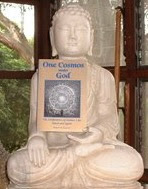
As we know from our reading and even writing of One Cosmos, there are four major discontinuities in existence, and it's hard to say which is the most queer.

First there is existence itself arising out of "nothing" from a primordial explosion that is still exploding as we speak; then this explosion suddenly comes to life some 3.8 billion years ago (suggesting, among other things, that it must have been alive all along); then, around 100,000 years ago, portions of this biosphere are "catapulted into the status of a metaphysical being"(Bailie), and begin thinking, speaking, inventing, and so on; and finally, the story loops back around on itself, and these latter beings break through and commune with their ultimate ground and destiny.

The whole thing is just too weird, except it really happens.

But right now we're focused on the third explosion, anthropogenesis.

By the way, instead of seeing these as four separate mysteries requiring four separate explanations, I tend to think of them as variations on a single explosion. Furthermore, since the whole thing is circular, we can't necessarily locate the point of origin on a line; in other words, nothing compels us to begin with lifeless matter and somehow try to figure out how it came to life.

Rather, we can, for example, begin with Life (as did the theoretical biologist Robert Rosen). As Rosen put it, there is no reason we have to begin with physics instead of biology as our paradigmatic science. Or, to paraphrase Whitehead, biology is the study of the larger organisms, whereas physics is the study of the smaller. And perhaps cosmology is the study of the largest. Unless you want to raise that and say that the Trinity is the largest, an idea to which we will return.

Alternatively, we can begin with man. What if man is the key to the whole existentialada? Not just in the sense that he is the "measure of all things," but that he is the reason for them? This would explain a lot. But let's not get out on front of our headlights.

Now first of all, how do we know when man has become man? This is impossible to say with scientific certitude, because we have access only to physical clues, including DNA, but not to what was going on in their heads.

In my book I looked to the Paleolithic cave paintings as definitive evidence of humanness; I also touched on the universality of human sacrifice, but Bailie, in following René Girard, emphasizes the latter. For Girard, it is a kind of "grand unified theory" of anthropogenesis, enculturation, and more.

Certainly we need to account for the universality of such a seemingly absurd and brutal practice: why human sacrifice? Why, when humans become human, do they begin sacrificing one another to their "gods?" Indeed, why do some of them still practice it to this day? Why haven't they gotten the message -- the Good News, as it were?

Girard's simple explanation -- although full of implications -- is that it is in order to maintain culture. We know that man is prone to violence, to put it mildly. How did early man prevent it from spinning out of control and engulfing these proto-cultures in a downward and dis-integrating cycle of bloodletting?

Here we must emphasize that this is not only a legitimate question, but an absolutely essential one: how on earth do we domesticate such a violence-prone being? For Girard the answer is: human sacrifice. Via this mechanism, the group essentially projects its psychological toxins into a scapegoat. Why? Because it works. At least for a while. It doesn't really solve anything in a final way, so must be compulsively re-enacted, eventually by a professional class, a priesthood.

"Quite logically, the beneficiaries of this blessed peace replicate as best they can the process that produced it. They reenact the drama in rituals of blood sacrifice; they recount the event that turned madness into peace in their myths, and they establish taboos to prevent the spontaneous eruption of this crisis. Archaic religion is born."

Now, we know that the Abrahamic line begins with a human sacrifice. Or rather, the prevention of one. The rest is history -- or salvation history, to be precise. As it so happens, it also ends in a human sacrifice -- or again, the failure of one, AKA the Resurrection.

Not much time this morning, only enough to sketch a crude and preliminary outline. To be continued...

Monday, December 05, 2016

Freedom From and Freedom For

We are about to embark on a very close reading of God's Gamble -- no more than a chapter at a time, and possibly even less. I don't think anything short of this can do it justice.

*****

Land of the free, home of the brave. The former isn't of much use without the latter; it is no coincidence that college campuses are the most ideologically unfree places in the country; and that it is difficult to conceive of a group more cowardly than college deans.

"Academic freedom." What is it for, anyway? Like any other form of freedom, it cannot merely be "freedom from." If it isn't simultaneously freedom for, then it is worthless. It equates to nihilism, or freedom to be absurd (which is no freedom at all).

Toward the beginning of God's Gamble, Bailie cites an article that appeared in the New York Times Magazine (which you may recall from the fourth to last paragraph in this post), called In the Age of Radical Selfishness. In it the author speaks of how our "freedom from the gravity of age-old constraints" has been "accompanied by a weightless feeling that attached itself to even the most fundamental human decisions."

Even? How about especially? For in order to achieve the kind of Timesmanian weightlessness he's talking about, one would require a radical, ontological freedom. It is beyond anything conceived by America's founders, who bequeathed to us an ordered freedom-for, not merely a rootless and chaotic freedom-from.

Given the latter kind of freedom, the author asks: "Why bother? Why get married? What are families for? What was new about these questions was that they didn't have answers, or that the answers they did have were so multiple and contingent and arbitrary that they never felt like answers at all."

Multiple, contingent, and arbitrary. That is the way it must be if there is no One at the heart of it all -- which is to say, no ground and no telos. Bailie is not criticizing the writer per se. Rather, he is to be congratulated for his honesty, for having the courage of his lack of convictions. Thanks for nothing!

But can someone really live from that place? Is this really how humans are made -- for nothing? To know nothing, be anything, and end nowhere?

Possibly. Indeed, there are only two possibilities, and that is no doubt one of them.

No, I should amend that. There are three possibilities: nihilism, religion, and Christianity. (I won't speak of Judaism, which wouldn't exactly be a fourth, but rather, a different take on the third.)

Not to get ahead of ourselves, but one of the themes of God's Gamble is that Christianity is the cure for primitive -- which is to say, pre-Christian -- religion.

Remember when Moses led the Israelites out of slavery and into the desert bewilderness? For 40 years they lived in this in-between state, but it was always with the faith that there was a deustination. But what if the bewilderness is all there is? Taking the long view, it is as if we were liberated from slavery into spiritual freedom, only to be condemned to a vast prison of postmodern nothingness. At least the slaves lived in hope for freedom! But for what does the nihilist hope? A lost paradise that never existed?

"It is a world in despair even when it remains unconsciously so. It is a world of weightlessness, of 'the unbearable lightness of being,' a fragmented world characterized by what... de Lubac brilliantly termed 'the waning of ontological density.'"

Or, looked at from a different angle, we might call it a loss of metaphysical transparency -- thus, a loss of weight and an occlusion of vision, the former going to absoluteness, the latter to infinitude. You might say that infinitude without weight -- without a center -- reduces to a kind of absolute diffusion. And absoluteness without transparency is like being encased in ice, or released into a null-de-slack called Death Circle.

It reminds me of, say, behaviorism, which explains everything about man, and therefor nothing. Everything is simply a conditioned response -- even language -- so there is nothing that isn't determined. Which certainly cures the disease of freedom. Although the patient doesn't survive the operation.

"Whatever the putative benefits of having been freed from tradition, that freedom has been accompanied by the loss of a sense of being part of a larger story in the context of which one's life might make sense, a story about why we're here and what we should be about while we are, a story that demands something of us and situates our lives in a living historical drama in which what we do has both meaning and consequence" (ibid.).

Well, progress has its costs, right? Perhaps the existentialists are right, that the cost of freedom is absurdity, precisely.

It scarcely needs to belabored that this goes to the unbridgeable divide between Red and Blue. As far as I can tell, most Red Pill People are still rooted in -- or have returned to -- tradition, while our Blue Pill coastal elites have extricated themselves from anything as naive as "meaning," and wish to drag us with them into their cold and dark echo chamber. Perhaps if everyone believes in nothing, it's not quite so lonely in there. But if just one person escapes the Matrix -- AKA Plato's cave -- then that unsettles the herd. The left hates no one as much as the runaway slave.

It's the same vis-a-vis primitive religion, by the way. It only takes one awakened conscience to ruin a human sacrifice for everybody.

Which is an important point, because if Bailie is correct, we all have a deep structure of pre-Christian religiosity. We can jettison Christianity, but don't be surprised when this unleashes a hunt for victims.

About our postmodern idea of freedom-from. Bailie points out that it is "based on a very weak understanding of freedom and its spiritual depth. Our civilization rests on the strength of the natural family and on the willingness to sacrifice freedom, understood in adolescent terms, in favor of freedom freely subordinated to the responsibilities of loving service."

That is a loaded paragraph. The other day we spoke of the energy released from the fission of Trinitarian love. This love is the glue that binds the family, which in turn is the incubator of human personhood. The family isn't just anything, let alone nothing. The Christianized family was a long time coming. It didn't happen overnight, but only after centuries of leavening by the Christian message. Thus, we know there can be Christian individuals. It remains to be seen if there can be any other kind, because the experiment is ongoing.

But if this were real science, the experiment would be suspended on the ethical grounds that it's causing too much harm to the subjects.

To be continued...

Saturday, December 03, 2016

Scientific Faith and Religious Hypothesis

Can one posit a "religious hypothesis?" Normally we think of science as promulgating hypotheses and religion relying upon faith or belief. However, we know that scientism or leftism are faiths, and conversely, that at least some religions can begin with hypotheses. Regarding the former, I found this at Happy Acres:

Interestingly, socialism combines a stupid metaphysic with a childlike faith. And the left typically projects this childishness on to Christians, as if we share the same stupid immaturity. No doubt some do, but the difference is that at least Christianity has the possibility of a deeper understanding, whereas with socialism it's stupidity all the way up.

Who is one of their cognitive elites? Paul Krugman? Who can forget his uncanny prediction upon Donald Trump winning the election? As to when the stock market would recover from the electoral trauma, Krugman's assured us that it would be never.

Any idiot can be wrong about the economy, but it takes someone with a Nobel Prize in economics to be that far off. Let's give him the benefit of the doubt and say that his hypothesis proved wrong. But will that falsify his theory of reality?

Ha! The leftist emulates the devout who continue venerating the relic after the miracle has been proved to be a hoax (NGD).

Now, it seems to me that God's Gamble revolves around a kind of explanatory hypothesis, that "the truth revealed by Christ is the anthropological key for understanding the human drama and deciphering the postmodern malaise."

We can't say this is a properly scientific hypothesis, because for one thing it is too loaded with assumptions -- such as "human drama," the "postmodern malaise," and the "truth revealed by Christ."

But this is always the case as we proceed up the epistemological food chain. Down at the bottom it is easy to define and quantify things; or at least it was before quantum theory re-fuzzified everything. But the central principle nevertheless applies: increasing precision correlates with less depth of understanding.

You could even say that this is an extension of Gödel's theorems, such that the more complete your explanation, the more inconsistent, and vice versa. At the end, scientism can explain everything about nothing.

We -- along with Bailie -- are looking for a complete explanation, the most complete explanation available to human beings, so there are bound to be inconsistencies along the way.

Conversely, scientism tries to confine man to a consistent explanation from which he always escapes. Man can no more be trapped in quantity than the meaning of a poem can be reduced to grammar. The most important things in life always slip through the cold, grasping hands of the tenured, e.g., truth, love, beauty, sanctity, music, poetry, and the Dow Jones average.

So, let's dive into the meta-Christian hypothesis and try it on for size. How much does it explain? Equally important, what does it unexplain? Many hypotheses are rejected on the basis of how much they would unexplain if true -- for example, phrenology. If phrenology is true, then we have to rethink everything else we know to be true of neuroanatomy.

As alluded to above, there are certain assumptions we have to maintain even before we start, most notoriously the idea that truth exists, and even more preposterously, that it is accessible to man! It is literally pre-posterous, in that it reverses cause (pre) and effect (post). Even worse, the same Truth is both before and after, as suggested by a couple of provocative quotes "before the beginning" wink-wink of the book.

The first is by Charles Péguy: He was at the very end and here at the same time... / He was in the middle and simultaneously at one and the other end....

Another is by Jean Daniélou: he is Alpha and Omega, the last end of the world as he is the spring of its eternal youth.... For Christians, the structure of history is complete, and its decisive event, instead of coming last, occupies the central position.

This sounds similar to the quote from Eliot "before the beginning" of a long-forgotten book of mine: Or say that the end precedes the beginning, / And the end and beginning were always there / Before the beginning and after the end.

There are other hints, such as this one from Terence McKenna on p. 185: When we reverse our preconceptions about the flow of cause and effect, we get a great attractor that pulls all organization and structure toward itself over several billion years.

And this equally preposterous one by Bede Griffiths: Every step in advance is a return to the beginning, and we shall not really know him as he is, until we have returned to our beginning, and learned to know him both as the beginning and end of our journey.

Yes, I wrote a book. But I'm an awful salesman. I don't encourage people to buy it, because it contains Error, but a charitable view would see that it is not so much riddled with errors as errored with riddles that lead to the threshold of a truth that is Up ahead, 'round the bend. The circle unbroken, by and by. A Divine child, a godsend, a touch of infanity, a bloomin' yes.

Prophetic, if you will, at least for me personally. You just need to read the tealeafology.

Back to our hypothesis, that "the truth revealed by Christ is the anthropological key for understanding the human drama and deciphering the postmodern malaise." Now, first of all, either there is a truth and a key; or a truth with no key (e.g., Kant); no truth but lots of keys (e.g., deconstruction and relativism); or no truth and no key (e.g., existentialism and nihilism).

For Christians there is a truth (Christ) and a key (the Holy Spirit).

I think it is fair to say that any of the other three options result in futility and despair, at least for the intelligent person, because they essentially come down to having no access to a truth that probably doesn't exist anyway. And as a psychologist I am well aware of people being depressed or anxious for "unconscious" reasons.

Let's say you are depressed and don't know why. Perhaps there is an unconscious idea assimilated from childhood that you are stupid or unloveable. But what if you have an unconscious idea that life is meaningless, and that there is really no point to it all? Perhaps you will compulsively engage in all sorts of frenzied activities to try to wring meaning out of things, only to return to that baseline of depressive futility when they're over.

In the past I have written about feeling this way when I was younger and under the influence of existentialism, Freudianism, and a kind of unreflective leftism. I became "depressed." But in hindsight, it seems to me that the depression was not so much a "symptom" as an accurate reflection of my implicit beliefs. It was an honest assessment from a deeper part of me. It was a vertical memo from my future self.

This post has probably gone on too long. To be continued. Meanwhile, you might want to get the book so you can join us on the bus for this readalong to parts unKnown.

Friday, December 02, 2016

Fission for Love in All the Wrong Places

Goodnews badnews: The emergence of the individual "can be traced to the Enlightenment and its rejection of traditional authorities and beliefs, which were replaced by a high valuation of the power of reason..." (Hollander).

However, while "the release of the individual from traditional ties of class, religion, and kinship" has liberated us, this freedom "is accompanied not by the sense of creative release, but by the sense of disenchantment and alienation" (Lisbet, ibid.).

Hollander speaks to "the difficulties created by a liberating individualism in establishing and maintaining committed personal relationships," but also -- *ironically* -- "in developing and maintaining a satisfactory sense of identity."

I would suggest... well, insist rather, that radical individualism necessarily leads to a complete loss of identity. But so too does a radical "communitarianism," or collectivism, or whatever one wishes to call it.

The truth is found in the complementarity between the two, beginning with the most intimate two of all, mother-infant, much more on which as we proceed down this path. Both "reality" and "human reality" are wave-particle -- or wavicle -- all the way down (and up). The individual is a local particle of the nonlocal wave, and neither is prior. Humanness is inconceivable from any other metaphysical standpoint (e.g., atomism, materialism, idealism, etc.).

I am tempted to get straight to God's Gamble, but I first want to make sure I've plagiarized with Extravagant Expectations for all its worth. It really sets the stage for the wrong turn we've taken these past...

It's tempting to try to pinpoint an exact year or epoch, but I think it's more fruitful to locate the wrong turn in vertical space, as does Genesis. This potential turn is always before us, and you could say that the Serpent is always there bidding us to take that forked tongue in the road.

Before the rise of individualism, "Man was conscious of himself only as a member of a race, people, party, family, or corporation -- only through some general category" (Burkhardt, in Hollander). But especially in America, we hatched the radical idea that everyone is unique: "This uniqueness is the principal foundation of [our] self-esteem and sense of identity, which cannot and should not be reduced to a social role."

Now interestingly, leftism -- which flatters itself with the idea that it is "progressive" -- is actually the leading edge of a trans-historical regress to a more primitive identity rooted in race, ethnicity, gender, (non-Christian) religion, or some other general category. This is in no way "liberal," which embodied the opposite trend, toward the unique individual.

Thus, strictly speaking, the Cosmic Raccoon is neither liberal nor left, i.e., neither reduced to the group nor radically excised from it. Rather, we are proudly tripolar, vibrantly existing in the living space between the two. It is the only place to "be" -- and become.

We hear from the pundits that one reason the Democrats lost the election was their descent into tribalism and identity politics. In their reflexive flight from individualism they are truly the reactionary party, in that they are bereft of any functional ideas, but can only resort to cobbling together a ragged coalition of victim groups. We know that leftism eventually runs out of other people's money; it also runs out of victims. For now, anyway. They'll try again in 2020.

The problem is not individualism per se, but secular individualism. Consider the fact that individualism only emerged in the Judeo-Christian west. To keep the individualism and throw away the Christianity is truly analogous to dismembering the roots and expecting the leaves to thrive. Individualism must be "nourished" by a nonlocal source, or it is just Nothing writ small -- to paraphrase Don Colacho, it is just man puffing up his emptiness in order to challenge God.

Which brings to mind another Aphorism or two: "The importance it attributes to man is the enigma of Christianity." And "Man is important only if it is true that a God has died for him."

Ultimately, what makes the individual so precious is that he is loved by God. If not, then to hell with it. Democrat politicians affirming our existence by feeling the pain of our victimhood is a pathetic substitute.

One of the central themes of Extravagant Expectations -- it's in the title -- is that the lurch into secular individualism has placed a tremendous strain on marriage. Because this type of person is cut off from the very roots that made him possible, he tries to recover the connection with another person, but the relationship cannot bear the strain: "people demand from personal relations the richness and intensity of a religious experience" (Lasch, ibid.).

Thus, "Family instability has been a major outcome of individualism as it has replaced the traditional collectivism of the past. Traditional societies demanded loyalty to time-honored, prescribed social roles and social bonds, a sense of duty, and absence of concern with 'self-fulfillment'" (ibid.).

But here again, Christianity actually exists between these two extremes, as it is essentially a formula for relatedness, such that the Self individuates via Love.

Think of the idea of a Trinity of love; love is the very "glue" that binds it in oneness. Or in other words, absent love, the Trinity would be three separate ones instead of a oneness-in-three and threeness-in-one. Three is a quality, not a quantity.

Compare this to nuclear power -- the power of which comes from the bond between the particles. Destroy that bond through nuclear fission, and tremendous power is unleashed. The resultant power is a reflection of the force that had held the particles together in nuclear love.

Is it possible that something analogous happens when we break apart the Trinity? We might think of secular individualism as a kind of ontological fission that releases tremendous destructive power. But doesn't this go all the way back down to Genesis 3, which speaks to our fusion with God, followed by the primordial fission?

We'll have much more to say on this as we proceed through God's Gamble, which I highly recommend to all Coons and Coonettes. I'm only up to page 85, but there is already enough to provoke a monthsworth of posts.

At any rate, one thing that can occur as a consequence of our fission expedition through history is a crisis of identity: "Americans regularly experience identity crises, that is to say, at times they are not sure who they are, astonishing as this may sound to those who did not grow up in this society" (Hollander).

Indeed, over the years I have conducted countless psychological evaluations of second- and third-world types, and not once has one of them had anything resembling an "identity crisis." For most of them it is because they are still rooted in more primitive modes of identity, or fusion with the group. Fission has yet to occur. Which, of course, is why Democrats want them to flood the country. They are needed to complement their herd of rootless pseudo-individuals.

Thursday, December 01, 2016

Pascal Bets on God, God Bets on Man

I apologize in advance for the rambliness of this post. It can't be avoided. Besides, I'm only trying to BE MYSELF, so stop judging me!

So: in the West we have been liberated from bad old tradition. I'm old enough to remember when that meant a woman could pretend to be a man and a man could pretend not to be a pussy. Now it means that one can abandon male and female altogether, and identify with one of 37 or 63 or however many genders there are this week.

But why limit the number to 63? Aren't numbers just a conspiracy of the patriarchy? And why limit it to human? Why not follow your first principle where it leads, and acknowledge that there are no rational or defensible limits to who or what we are? I can be a panther or a god or a trolley car, and you can't stop me!

In other words, we are nothing, precisely. Humanness has no ground, no nature, no purpose. I am what I decide to be -- which begs the question of who "I" is anyway: where does this "I" get off deciding what I am? Who gave it the authority?

I was just reading this morning of how Castro had this authority over all Cuban beings:

Because we knew nothing else, because we were taught only one reality, Fidel came to embody not only the ideas of the revolution but also the nation itself.... All powerful, all seeing, he came to replace God at a time when the government declared the country atheist. Who needs God in the face of such powerful force?

.... [Castro] controlled what music we listened to, what books we read, what uniforms we wore, the length of men's hair, whether or not we communicated with our cousins in the U.S. (the euphemism for the US then was el exterior as if all that was ours and all that was good stood in juxtaposition to everything that happened outside that island, outside our revolutionary bubble).

But if we are nothing -- if there is no God -- what does it matter if Castro tells us who we are, or if some arbitrary voice inside us does?

You can see where this leads logically: the only way to defy all authority is to become completely crazy, such that every thought and action is random, unpredictable, and discontinuous. That is total freedom from any constraint. Surely no one would believe that, would they?

Wrong!

Think of anarchism, for example. "Anarchism does not offer a fixed body of doctrine from a single particular world view, instead fluxing and flowing as a philosophy." Well, no kidding! On what possible basis could it ever offer a fixed body of doctrine? That would remove the "an" from anarchism ("arch" having to do with order and hierarchy).

And then there was the whole 1960s zeitheist that grew out of the beat movement. I'd like to pretend I was never attracted to this nonsense, but that would be pretending. I read my Ginsberg, Kerouac, Kesey, and Burroughs. There is a reason why the Beat Generation lasted only one generation, though, since it is a completely unsustainable philosophy. You can have one generation of nihilists, but it ends there -- although the psychic damage will live on in any children who accidentally came out of it.

We're getting rather far afield this morning, aren't we? But as I mentioned yesterday, we'll eventually tie all of this together. Somehow.

Robert Nisbet (in Hollander) writes of being "confronted by the spectacle of seeking to escape from the very process of individualism and impersonality which nineteenth century rationalists hailed as the very condition of progress..."

In other words, history finally gives birth to the Individual, only to have these ungrateful individuals reject it on the grounds of being completely isolated from everything else. This is precisely where the romantic movement comes in: back to nature!

This impulse to eliminate the self and fuse with nature (or whatever) inspired everything from environmentalism to sexual liberation to the drug culture to the human potential movement. The basic idea is that the only thing standing between you and an ecstatic encounter with reality is you. Therefore, just annihilate this imposter, and you -- or what's left of you, anyway -- are assured a life of nonstop thrills.

Some younger readers may think I am exaggerating, but the Bob never exaggerates. I remember back in the mid-1970s, when the parents of a friend of mine got involved in the EST program. Not deeply involved, mind you. Rather, they attended a weekend seminar or two, which was the Thing To Do back then in California. "The purpose of the seminar was 'to transform one's ability to experience living so that the situations one had been trying to change or had been putting up with, clear up just in the process of life itself.'"

Okay whatever. In other words, it was an early example of some charismatic pneumapath Deepaking the Chopra for cash and other valuable prizes. What could go wrong?

I had intended to get into God's Gamble. Does God gamble? Einstein thought not: God doesn't play dice with the universe. Einstein was famously wrong on that score, at least insofar as quantum mechanics renders prediction and determinism impossible in principle.

But apparently -- or so we have heard from the wise -- God gambles on man. How so? Well, first of all, in giving him the gift of freedom. It is as if God is saying: I'll bet man doesn't misuse it!

The rest is history -- or prehistory, rather. No, before that even. For we are going in search of that very moment outside time when God placed his wager and (pre)man became (free)man.

To be continued...

Wednesday, November 30, 2016

The Wild Cosmic Divorce Court

We've been exploring a seeming covariance between politics and human development, with a particular focus on how this plays out in relationships.

Note that for the left, none of this will make any sense, since, while they believe in "progress," they do not believe in development, which essentially nullifies their reason for being. In other words, if progress does not involve the movement toward a higher state of affairs, then it is just change, not progress.

Genuine progress is inherently teleological and must be rooted in a real human capacity for such. For example, human beings have the potential to be educated, for which reason we can agree that universal education represents progress. But it would make no sense to put in place a system to, say, teach dogs how to paint. You can call such a policy "progressive," but it has nothing to do with canine nature, so you are just flattering yourself by calling it progressive.

How many progressive schemes have nothing to do with human nature? How many others, instead of potentiating development, do the opposite and incentivize developmental regression? "Affirmative action" would be a fine example of the latter. Not only does it not help blacks, it harms them. But it makes white liberals feel good about themselves, so it's worth it.

Which shows that there actually is something called "white privilege." But it is only available to white liberals, i.e., the privilege of indulging in morally masturbatory race-based virtue signaling.

Again, if development is not toward a telos, it's just change, not progress. Judeo-Christian metaphysics certainly posits human development, but in a definite direction, e.g., toward wisdom, virtue, sanctity, etc. But leftism is a materialistic metaphysic, so it rules out teleology up front. This is how we end up with a Deepak Chopra -- whom I use as a convenient synecdoche bag for new-ageism -- who preaches Infinite Change into the Perfect You. "Your only identity is I am, undefined and infinite. Any label you give yourself limits you." Or in other words, you are God.

Which begs the question: if you are God, and I am God, then one of us is wrong. Unless the statement is drained of all meaning.

Similar to what we were saying yesterday, Dalrymple writes that "People are no longer born into a social role that they are assigned to fill until they die, simply by virtue of having been born in a certain place to certain parents." That's a good thing, as far as it goes, because it means that our human potential is liberated from such rigid demands and expectations.

Thus, "In theory, at least, every man in modern society is master of his own fate. Where he ends up is a matter of his own choice and merit."

Which may sound good on paper, but conceals two major problems: first, as alluded to above, the question arises: liberated toward what exactly? In other words, are we liberated toward a telos, or just into the nothingness of arbitrary choice?

The second problem goes to why a meritocracy should be agreeable to the... meritless. You can't expect the latter to be thrilled with a system that rewards only merit. Rather, they would likely be more content with a system of corruption, favoritism, and privilege, since at least they will have a chance. Which is precisely why the left champions a corrupt system of racial, ethnic, and gender spoils. It gives the losers a chance.

"The problem with meritocracy," as Dalrymple explains, "is that few people are of exceptional merit. The realization that the fault lies in us, not in our stars, that we are underlings, is a painful one; and in the nature of things, there are more underlings than what I am tempted to call overlings. A meritocracy is therefore fertile ground for mass resentment" (emphasis mine).

Don't worry. I'll tie all of this together. And in a way that will surprise me.

Now we have a corollary. Call it Godwin's Law, assuming that name isn't taken: meritocracy gives rise to victimology.

Therefore, the more meritocratic the culture, the more envy, resentment, and auto-victimization we should expect. UNLESS we specifically teach people not to be envious, resentful, and self-pitying. Which we once did, via our Judeo-Christian wisdom tradition. Without that, there is no brake on these darker psychic impulses. They are not only permitted to run free, but encouraged to do so. It's what the left calls "progress."

Now, for nearly half my life I did not in any way feel "special." To the contrary, I was painfully aware of being ordinary. But for whatever reason, it never really bothered me. For example, when I was triumphing in junior college, I had friends who were destined for medical school, or for ivy league law schools. It never occurred to me that there was something unfair in this. Rather, it was simply a reflection of the truth: they had academic merit where I possessed none.

It's impossible to imagine how different my experience would have been had I been steeped in a victim culture that nurtured my envy and resentment. Such a system would have legitimized dysfunctional aspects of myself that also promote unhappiness. Nurturing chronic envy is one of the easiest ways to be unhappy.

Now, while I never felt I had much of what the world calls merit, I was aware of feeling... unique. Not special, mind you, just different. I was who I was, and none other. And it turns out that this points to a way out of our mess, for it goes to the idea of actualizing ourselves, but in a particular direction -- not just into anyone, but someone in particular. To put it conversely, nothing in the world would be worth having to deny or suppress myself, in the deepest sense of the word.

Which leads to the question: what is the deepest sense of that word, myself?

If you had asked me two days ago, my answer may have been a little vague. But I just started reading Gil Bailie's new book, God's Gamble: The Gravitational Power of Crucified Love, and it turns out he is all over this question (at least in the first 15 pages or so, which is as far as I've gotten).

Not to get too far ahead of oursoph, but he suggests that "the truth revealed by Christ is the anthropological key for understanding the human drama." Indeed, Christ is at the ontological center of western civilization, such that to remove Christ -- which is what the progressive never stops doing -- will have the approximate effect of removing the sun from the solar system. That's me talking, not Bailie, but I'll bet he says as much.

(Bear in mind in the following what was said above about being liberated into nothingness, AKA, having no developmental telos.)

Bailie cites a particular millennial who reflects upon his millions of cohorts "in their 20's and 30's who seem to lack any sense of necessary connection to anything larger than their own narrowly personal aims and preoccupations." The "basic laws of social gravity" have "lost their pull," such that "we are free to be white or black, gay or straight, to grow our hair long or shave our heads, meditate for days on end, have children or not, drink bottled water, work out at the gym, watch television until 3 in the morning and otherwise exist outside the traditional roles" that once defined and constrained us.

One could add dozens of alternative trivial pursuits to the list, but they all go to the idea of having no center and no narrative. The future is collapsed into the present, and with it, our deeper self into our transient impulses and desires. No past and no future -- no Alpha or Omega -- just the eternal Whatever of the now.

Circling back around to where we started -- with Hollander's meditation on our changing expectations regarding intimate relationships -- Bailie writes that "as a culture slips into crisis, relational difficulties, most especially sexual relationships, are the first to show strain." He cites Chesterton, who wrote of how "Everything has been sundered from everything else, and everything has grown cold.... The world is one wild divorce court."

Not just the divorce of Male and Female, but man and God, information and truth, truth and wisdom, existence and purpose, identity and cosmic narrative, and more.

To be continued...

Tuesday, November 29, 2016

Individuals without Individuality

Where were we? I've lost the thread, nor am I sure the thread, whatever it was, is worth pursuing. It had something to do with... or was leading to, at any rate, a meditation on politics and romance. Is there a relationship between where we are politically and where we are personally -- or interpersonally?

Looked at in a certain way, how could there not be a relationship? I mean, if cannibals could vote, they'd no doubt vote for a cannibal king. Which is to say, if given a choice, people relate to a leader who reflects their own level of development.

Hollander gets into one of our favorite subjects, which is the historical emergence of the individual in the Christian west. Obviously this affects everything from marriage to politics -- from the most intimate to the most public. For example, he references one scholar who notes that "For most of history it was inconceivable that people would choose their mates on the basis of something as fragile and irrational as love."

The first thing that occurs to me is that the ideas of choosing one's mate and choosing one's leaders emerge at around the same time. I wonder which was the leading edge, the personal or political? Both are predicated on awareness of the individual, of an interior horizon that is autonomous and relatively free from group coercion. For most of human history, people did not experience themselves in this way. Rather, they were embedded in networks of kinship, class, occupation, and certainly gender. No one wondered if he was a man or woman, let alone 37 other flavors.

In a certain sense you could say that people were more objective than subjective. Perhaps the earliest appearance of the latter turn is Augustine's Confessions, in which he reflects upon his own psychic interior. But he was the leading edge a phenomenon that didn't become more widespread until the 16th century or so. Only as people begin to be liberated from rigid roles do they start noticing the interior world -- that it is a world in its own right.

Interesting that if we fast forward to contemporary times, it is as if people believe there is only the subjective world, such that there is no objective limit to who or what they can be. Thus, a man can indeed be a woman, or those 37 other supposed genders. But why limit the number? Once you have detached yourself from any objective world, relativism and subjectivism are absolute.

I wonder if this goes to why our precious college snowflakes are having such difficulty assimilating the fact that the world is different from their subjective fantasies? On the one hand, their subjectivism is total; but for the same reason they cannot accept anyone else's view of reality. Rather, they flock with people who are completely likeminded, and who reflect their own subjectivism back to them. Therefore, they're back in the rigid and more developmentally primitive world from which we first individuated several hundred years ago!

This reminds me of an observation by Theodore Dalrymple. I'll paraphrase, but he points out that our postmodern snowflakes have self-exposure without self-reflection, frivolity without gaiety, earnestness without seriousness, and ultimately individualism without individuality.

Individuals without individuality. I think we're finally on to something here. Think, for example, of Cuba. The recently departed Castro was literally the only person on that slackforsaken island who was free to be himself. Everyone else was permitted to be as unique as an ant. There is a type of man "whose absolute freedom requires that he should accept no limits.." But "Starting with absolute freedom, I end with absolute tyranny" (ibid.).

But how is this different in principle from our college campuses, where one is free to think or say anything, so long as it reflects a far-left ideology? Here again, it is as if man starts out embedded in the group matrix and gradually emancipates himself from it, only to regress and re-merge with it. Thus, while the series premodern tradition --> modern liberalism --> postmodern leftist resembles a line, it is really a circle.

This is precisely what happened to Germany during the Hitler era. How, people wonder, could the world's most modern and liberal culture plunge into such primitive barbarism? Easy: it's what comes after (classical, not left) liberalism. As in Cuba, there was only one individual: Hitler. And there was one group: Germans. Individualism had absolutely nothing to do with it. Indeed, it was thought of as a desiccated Jewish abstraction, Jews representing a people who stubbornly maintained their identity apart from the larger group.

Reminds me of how Gil Bailie (or maybe Rene Girard) described human sacrifice: unanimity minus one. The Jews were the "minus one." (Although so too were any groups or individuals distinct from the German ideal.)

The point is, there are two ways to lose our individuality, the premodern and the postmodern. Of the latter, Dalrymple writes that "people are no longer born into a social role that they are assigned to fill until they die, simply by virtue of having been born in a certain place to certain parents. In theory, at least, every man in a modern society is master of his own fate. Where he ends up is a matter of his own choice and merit."

Deepak's latest nonsense is a fine example of the no-limits-to-subjectism model. Bear in mind that he is one of those pigs who squealed the loudest when his preferred candidate lost the recent election. How does this square with the idea that we invent our own reality? Don't ask.

Here are a few of his twenty principles of reality, but the very first one contradicts the idea that there can be any stable, objective reality at all: "Always think unlimited possibilities. Infinity exists in all directions."
 Moreover, "Your only identity is I am, undefined and infinite. Any label you give yourself limits you" -- which is the death of identity, precisely.

"Be your own best friend by forgiving yourself and dropping self-judgment." Er, what self? Besides, in our view, objective self-judgment is not only absolutely necessary, it is the essence of a functioning maturity.

This one really sums it up: "Emotional intelligence begins when you feel without labels or evaluation." No, emotional stupidity returns when we cannot discriminate, label, and prioritize our emotions. Isn't this the the whole catastrophe the left is dealing with, a primitive release of ungoverned and preliterate emotionality? Dalrymple:

"The cultural development in question is the systematic over-estimation of the importance not so much of emotion, as of the expression of emotion -- one's own emotion, that is. The manner with which something is said has come to be more important than what is said. Saying nothing, but with sufficient emotional vehemence or appearance of sincerity, has become the mark of the serious man. Our politicians are, in effect, psychobabblers because we are psychobabblers; not the medium, but the emotion, is the message."

No one should take, say, chocolate commie cueball Van Jones' -- or any other traumatized leftist's -- public tears (or rage, or grief) seriously, least of all Van Jones. When it comes to coping with objective reality, our feelings are none of our business.

Theme Song

Theme Song