Friday, August 12, 2016

Predestined to Freedom

We were talking about a possible relationship between involution and universals. My intuition tells me that one is impossible without the other.

Now, first of all, what do we mean by involution? For me, it is almost synonymous with "creation," or at least with the manner in which the creator creates. In other words, because the universe is created, it has certain features that mark it as being so. Indeed, the existence of these features cannot be explained in any other way.

Our creator is intelligent, which is the sufficient reason for the intelligibility that pervades the cosmos wherever we look. Likewise our own intelligence, which both mirrors and explores the intelligibility: intelligence and intelligibility are complementary sides of the same single reality, i.e., the createdness of things.

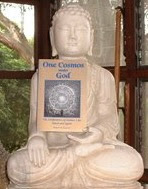
Our creator is also -- obviously -- alive, thus we inhabit a living cosmos. As I suggested in the book, biological life is a kind of focused concentration of a more general principle, like light through a magnifying glass. This is one reason why I was so drawn to the works of biologist Robert Rosen, because he says the same thing, even though he was not a believer. Rather, he just saw that biology was more universal than physics.

This is also why I was so pleased when a reader alerted me to the works of "metaphysical architect" (my term) Christopher Alexander. Alexander says that life is everywhere implicit in the cosmos, and that it is his job as an architect to render it explicit via certain patterns and relationships. Interestingly, you would think that this is a rather abstract theory, but it is really quite the opposite.

That is, it is empirical and experiential, at least if your soul remains open to it. You have one experience in, say, the Chartres cathedral, another inside a McDonald's. The former not only is more "alive," but it also radiates or transmits a spiritual presence. Conversely, the McDonald's transmits no life and no spirit. It is barren and dry -- even more barren and dry than the empty land on which it sits.

Which goes to another point: it is not as if the living spiritual reality is only made present by man's manipulation of patterns and relationships. Rather, it is spontaneously present everywhere in nature, in mountains, rivers, oceans, clouds, the animal kingdom, the starry sky, etc. Why should this be so? And why shouldn't we trust our intuition when it conveys the reality of a spirit-saturated nature?

That is one way I think of involution: that the Creator is everywhere involved in his creation. This is not the same as directing it from above or pulling all the strings in a deterministic manner. What I am saying doesn't so much go to cause as to presence; it is more a vertical reality than a horizontal one.

When we are in the presence of the sacred, it is not something brought about causally from past to present, but vertically from the top down. Sanctity is the downward prolongation of God into our world. We don't create it, but we must be open to it. Also, we can bring about circumstances that render it more visible -- or palpable -- but again, that doesn't mean we are its source.

To say that man is created is to say that we too are a kind of prolongation of God, such that God is intimately involved in and with us. In man there are both horizontal and vertical causes, not to mention different degrees in each. In other words, there is both horizontal and vertical hierarchy.

In one sense, we are a "creation" of the past. We can each trace past causes that led to our present circumstances. However, this can never be an exhaustive explanation, because the horizontal causes are always interacting with vertical ones. We are woven by a mysterious pattern of freedom and necessity, and it is easy to overemphasize one or the other, i.e., to fall into predestination at one end (no freedom) and existentialism at the other (all freedom, AKA nothingness).

This is something I tried to convey in an orthoparadoxical comment yesterday to a post by Bruce Charlton. I'm not sure I made my point clear when I suggested that "we are only truly free to the extent that we choose what we are and what is. Only a free being can comprehend predestination, and man is uniquely predestined to be free to realize the destiny that precedes him."

That soiled gem of bobscurity was inspired by an essay by Schuon called The Question of Evangelicalism. The theme of the piece is on whether protestantism is legitimate or not (short answer: yes), but it is a wide-ranging article that touches on many primordial issues, one of which being the paradoxical relationship between freedom and predestination -- or our freedom and God's omnipotence. How can these two coexist? I know, I know, but the standard answers don't satisfy my demand for logic, or at least compelling illogic.

I'm not sure I even understood what Schuon is saying, which is why I'm returning to it. Hopefully this isn't a distraction, but will somehow relate to the topic at hand, involution and universals.

First of all, Schuon points out that there are spiritual archetypes. By definition these archetypes are ontologically prior to us; we don't invent them, but rather, discover them. Or, more likely, we simply unconsciously identify with one.

God is obviously the archetype of archetypes. You could say that the archetypes are analogous to his primordial thoughts, at least as they pertain to our world. There is a human archetype, which is to say, our nature. Indeed, you could say that Jesus is God's archetype of man, just as he is our archetype of God. Both vectors meet in Jesus, which is pretty much the whole point of his being here with (and in) us.

For Schuon, an archetype is a "legitimate spiritual possibility." There are of course illegitimate spiritual possibilities, as found in everything from Nazism to new-ageism to leftism. These all involve counterfeit archetypes.

In the case of the funny pneumatic money, it is as if they invent and bow down to their own manmade archetypes. But this only encloses them in their own absurcular microcosmos, closed and cut off from the whole, the real source of life and spirit (not to mention intelligence; or, to be precise, intelligence renders itself stupid when it cuts itself off from its own vertical source -- just as life renders itself dead when it closes itself to the environment via starvation or asphyxiation).

"Each denomination manifests the Gospel in a certain manner," writes Schuon. A Catholic would say that his denomination does so in the fullest manner, but the Protestant would reply that too much of Catholicism is at the human margin, away from the core transmission. The purpose of this post is not to arbitrate that question, but rather, to point out that religion is somewhat analogous to Alexander's conception of architecture, in that it is a kind of vertical and nonlocal "structure" for rendering spirit present -- a cathedral of the mind (and spirit).

Schuon notes that Protestantism "retains from the Gospel the spirit of simplicity and inwardness while accentuating the mystery of faith..." Interestingly, he suggests that part of this has to do with the nature and needs of the Germanic soul -- needs that are not in and of themselves illegitimate. In fact, we all deserve a God who speaks to us, i.e., in our "language of being."

I wonder if the language of being changed with the emergence of widespread literacy? It must have. The iconography of Catholicism and Orthodoxy speaks even to the illiterate. You might say it is a direct transmission to the right brain, but what happened when people became literate and therefore more left-brained? It must have awakened a new need for clarity and individuality.

At the same time, "Lutheran doctrine is founded essentially upon the anthropological pessimism and the predestinationism of Saint Augustine: man is fundamentally a sinner, and he is totally determined by the Will of God."

Is this a "legitimate" archetype? Yes and no. For Luther, "the first condition of salvation... is the awareness of abysmal and invincible sin, and hence the impossibility of vanquishing sin by our own strength." There is a tension between grace and freedom, but Luther emphasizes the former. And it is true that grace is a necessary condition -- i.e., a condition without which -- but that doesn't mean there are no sufficient conditions that can cooperate (or not) with it.

Schuon suggests that "Without works, faith would not quite be faith, and without faith, works would be eschatologically inoperative," i.e., just horizontal arrangements cut off from God, with no intrinsic meaning or value.

But Luther sacrifices "freedom to the Prescience and Omnipotence of God," and therefore "intelligence to faith." For Schuon, "this is solely a question of spiritual temperament," not of the literal reality of things. I know people who are reassured by the idea that "God is in control" and that everything will somehow work out for the best. I am just not built that way, and if I said that, I would be lying to myself.

Back to the question at hand. Schuon points out that "Absolute Being comprises both Necessity and Freedom." And because this is the case, our world is comprised of the same things -- again, think of God's involution, his involvement in creation. Therefore, "it is false to deny the possibility of freedom in the world, just as it is false to deny predestination."

It would appear that freedom and necessity (predestination) are truly complementary. But in all complementaries, one must be prior. Which is what I was trying to convey in the comment above, in that it is necessary to be free in order to know our destiny. Necessity must be a mode of freedom, because the converse could never be true. We are predestined to freedom, and there is not a thing we can do about it. Except to use freedom to choose our (pre)destiny.

Thursday, August 11, 2016

Ideas have Consequences, Especially this One

If we invert the materialist's cosmos, then what we see as evolution is the consequence of a prior involution. The wiki article on the subject points out that involution "refers to different things depending on the writer." That's not good. We need to specify what we mean, because it is a critical concept.

"In some instances it refers to a process that occurs prior to evolution and gives rise to the cosmos, in others an aspect of evolution, and still others a process that follows the completion of evolution in the human form."

In skimming the wiki article, I don't see anything that exactly coincides with my view -- perhaps because I've never actually explicitly thought it through, or at least written it out in plain english. (I have, however, described it in unglish in the Cosmonaught section of the book.)

Rather, for me it is a strong intuition; not only does it make sense, but perhaps more importantly, without it, nothing makes sense. It is a unifying concept. A heuristic. In this regard, it is somewhat analogous to God. Remove God and not only is there no meaning, but there is no possibility of meaning. Nothing makes sense because only Nothing Is.

This line of thought was inspired by something Mitchell says about artificial intelligence. She points out that there are several things human intelligence readily accomplishes, but which artificial intelligence can't. Each of these goes to the very nature of humanness, and has no scientific explanation.

For example, computers cannot make analogies, which "is the ability to perceive abstract similarity between two things in the face of superficial differences." But "this ability pervades every aspect of what we call intelligence."

It is also the basis of much humor. Siri can retrieve jokes. But could she invent a new one? I hear my son watching the Simpsons in the background. Homer gazes upon the Grand Canyon, and says something like, "And people say we're running out of space for our trash." The joke is based on the unexpected analogy between the Grand Canyon and a landfill.

Nor do computers have "sensitivity to context." It minds me of a Get Smart episode, when the Chief tells Hymie the robot to knock it off. In another episode Max tells him to "hit the light," and he proceeds to smash a lightbulb.

Another thing computers cannot do is describe a picture. This is because they cannot see holistically, only atomistically. For a computer, the sum cannot be greater than its parts.

But perhaps the most important deficit is the inability to perceive universals. This is truly one of the things that defines human intelligence. For Aquinas, it is the first act of the mind, the thing we must do before we can properly can think at all. A five year-old can do this with ease -- for example, see that the dog is a dog, i.e., part of a larger category of universal dogginess.

Now, the modern view appears to be that there is no such thing as universals. This is the consequential idea Richard Weaver writes about in his Ideas have Consequences. Yes, ideas have consequences, but perhaps the most consequential idea of all is that they do -- i.e., that ideas are ontologically real.

You might say that ideas have consequences, especially this one! Can a computer understand this? No, because a computer is confined to its own program, and can never take a perspective from outside or beyond itself. A computer is always in the loop. But humans routinely escape from the loop, a la Gödel. How?

Above I said that my intuition tells me that involution is a key concept for understanding reality. And now my intuition is telling me that there is a strong relationship between involution and universals. What could it be?

I guess we'll have to find out tomorrow, because I'm really out of time.

Wednesday, August 10, 2016

What is Life?

I was just reading a post by Roger Simon on why the press hates Trump, and it goes to what we've been saying about liberals and complexity.

On the one hand, "No more perfect candidate of the status quo has ever come along than Hillary Clinton." Conversely, "Donald Trump is a wholly different matter. No one, especially the media, knows what he really intends to do. The media doesn't like this because if there's one thing they don't like, no matter what they profess, it is change. Or loss of control." It is why liberals hate the free market, the first amendment, talk radio, anything that lessens their grip.

The problem is that change is obviously inevitable. Complex, dynamic systems -- such as the weather -- are defined by change. However, they exhibit a certain type of change: too much change results in chaos, whereas too little results in stasis, AKA death. Thus, a complex system operates on the mysterious knife edge between order and disorder. Too much of either is fatal.

As it applies to the psychopolitical dimension, Chesterton said it well: "A state without the means of some change is without the means of its conservation." One definition of conservatism is the desire to conserve the institutions, customs, and laws that make this type of healthy change possible. One definition of liberalism is total ignorance of these same things, e.g., marriage, rule of law, private property, equality before the law, respect for the constitution, the necessity of religion, etc.

Everyone wants "change" in the abstract, because nothing is perfect. But the absence of perfection can hardly be used as the pretext for change, since nothing will ever be perfect. Nevertheless -- and here is another sharp difference between the two political philosophies -- liberals project unavoidable existential realities into the realm of politics, whereas conservatives accept man as he is, and do not pretend there is a political cure for what ails him.

To bring it down to a practical level, liberals look at the world and ask why it can't be better. Conservatives look at the same world and are astonished that it works at all. The more one studies history, the more one appreciates the rarity and fragility of what we once had in the United States. The left never appreciated that rarity, for which reason they have always been so casual about discarding the values, principles, and institutions that made it all possible.

What is the ruling principle of the left? Surely it is equality. Okay, fine. But what happens if you try to force things to be "equal" in a complex system? Complex systems are always hierarchical. For example, if equality existed in the world of physics, there would be only hydrogen atoms; if it existed in the biosphere, we would all be amoebas; and if it existed in the economy, we would all be Venezuela.

Likewise, if equality exists between man and woman, then we are all Pajama Boy, or Chris Hayes, or Lena Dunham. Olympic athlete Kerri Walsh Jennings made the error of advertising her biological inequality, declaring that she was born to have babies. The horror! "What is NBC doing to us?" "Is Donald Trump running the network?!" Kerri Walsh Jennings is a woman. But what is that commenter? Something arrested on the way to womanhood, I suppose.

Not only is complexity impossible without hierarchy, but one measure of complexity is the degree of hierarchy. For example, there is more hierarchy in a man than a mollusk. "The most important common attributes of complex systems are hierarchy and near-decomposability" (Mitchell).

Complex systems such as the human body are composed of subsystems, from organs to cells to to cellular subsystems and on down, probably even to the quantum level. And each interacts both horizontally and vertically; in man, our verticality reaches up into the realms of mind and spirit, which is why it is so fucking retarded to try to reduce a higher level to a lower one, when the whole system only exists because of its irreducible dynamic and hierarchical complexity. And there is no hierarchy without a toppermost of the poppermost.

Can you really understand, say, carbon -- the molecular basis of life -- by examining only its atomic structure as opposed to its possibilities, i.e., its power to relate, to bond with other molecules? The wiki article quotes materialist brainiac Stephen Hawking, who says that "What we normally think of as 'life' is based on chains of carbon atoms, with a few other atoms, such as nitrogen or phosphorus." Well, yes. We might also say that what we normally think of as "Shakespeare" is based on chains of consonants, with a few vowels such as 'A' and 'E" tossed in. This type of bottom-up approach doesn't explain, but explains away.

What we normally think of as life. Hawking implies that it is abnormal to think of life in his molecular terms, and surely he is correct. Note that the higher up the hierarchy we proceed, the more absurd the reduction to molecular interactions. Is it possible to consider the phenomenon of life on its own terms, instead of reflexively reducing it to a bizarre and inexplicable side effect of physics and chemistry?

Well, for starters, I thought this was one of the very purposes of the science of complexity. The hint is in its name: complexity, not simplicity, i.e., reductionism. This is why I was so delighted when I somehow discovered the works of theoretical biologist Robert Rosen. Back when I was writing the book, it was his ideas that provided me with some intellectual back-up for the vertical links between life and physics below, and life and mind above. Rosen does not attempt to reduce life to physics; rather, the converse: he maintains that physics applies only to statistically rare types of systems, and that biology may well be our paradigmatic science.

I would go much further than Rosen. To paraphrase Whitehead, biology is the study of large organisms, whereas physics is the study of the smaller ones. For the same reason, conservatism is the politics of life, while leftism is the politics of death.

Tuesday, August 09, 2016

The Red Pill and the Negentropic God

Time only for a speed post. Perhaps enough to follow up on yesterday's loose ends.

We were discussing one of the subtle but nevertheless dramatic differences between left and right, which comes down to an appreciation of complexity. Note that when progressivism was really gaining steam in the early 20th century, conservatives had no intellectual -- or at least epistemological -- defense for it. Rather, we were dismissed as hopelessly retrograde fossils bitterly clinging to scientifically outmoded things like religion, personal liberty, limited government, and love of one's culture.

Progressives such as John Dewey would have none of this. Their whole philosophy was rooted in the idea that society was like a machine and government the operator or driver. In order for the driver to get where he wanted to go, the constitution was an obvious barrier. Rather, we should leave governance in the hands of the self-appointed experts, and let them do whatever is necessary to keep us all happy. Free blue pills for everyone. Red pills forbidden.

But society is not like a machine, and no one -- short of a dictator -- can drive it. Rather, society is much more like an evolved organism with countless adaptations that have proven beneficial over time. Take marriage, for example. Two-person heterosexual marriage -- AKA marriage -- has been so successful for so long in the Christian west, that we have forgotten how to defend it. It never occurred to anyone to defend it, even until as recently as 20 or so years ago.

Thus, because it (apparently) couldn't be rationally defended, it was taken to be irrational, or just rooted in an arbitrary and benighted prejudice. With its foundations cut from under it, it didn't take long for the final blow, delivered by a divided Supreme Court, to knock it down. "Ironically," now there actually is no rational definition of the word, for it is anything our robed clowns want it to be. There can be no principled opposition to polygamy, sibling marriages, or cross-species unions.

Levin writes that "Roosevelt and other progressives argued for an unprecedented degree of national control over the economy -- and even over the growth of personal wealth. 'We grudge no man a fortune in civil life if it is honorably obtained and well used,' Roosevelt said." Well used? Who is this "we" who will decide if my money is put to good use? And what do they mean by "good?" A: Whatever they want it to mean.

Roosevelt continues: "It is not enough that it should have been gained without doing damage to the community. We should permit it to be gained only so long as the gaining represents benefit to the community."

Hmm. That would seemingly exclude the Clintons, who have made a fortune selling their influence to the highest bidder. But it's all in the service of the a priori Good of progressives gaining power, so this ill-gotten gain is actually to our benefit.

I sense a tautology, i.e., "it's good because a progressive is doing it" -- similar to Nixon's "if the president does it, it's legal." Being progressive absolves one of any- and everything -- like celebrities who fly their private jets halfway around the world for climate change conferences, or Black Leaders who become wealthy by perpetuating the victimhood of their dupes.

Weather is a quintessential complex system. It has more variables than we know, and the variables interact in ways we cannot predict. In the case of climate science, it doesn't even know what it doesn't know, which is why its models always and inevitably fail.

Complex systems exhibit what is known as sensitive dependence on initial conditions. What this means is that even a tiny tweak in one variable can lead to massive changes in the system as a whole. Thus, even the best computer models of weather are "reasonably accurate only to about one week in the future." The best climate models aren't accurate at all. Of AGW's ideological cousin, communism, it was said the "the future is known. It's the past that keeps changing." Similarly, in the case of AGW, the future is known, even if earth refuses to cooperate.

Again, we just don't know what we don't know. And not only that. Rather, in the case of complex systems, we can never know what we don't know. In other words, the ignorance is not only de facto but de jure. "The key property is nonlinearity. A linear system is one you can understand by understanding its parts individually and then putting them together" (Mitchell). But "a nonlinear system is one in which the whole is different from the sum of the parts." In a nonlinear system, 2+2 can really equal 5. Reminds one of the Trinity, as in how 1+1 = 3.

Nonlinearity is "the reductionist's nightmare." Really, it spells the end of the dream of reductionism. But from the Raccoon perspective, it is reductionism that is the human nightmare. Who would want to live in such a cosmos except control freaks on the OCD spectrum? Novelty. Creativity. Upside surprise. A new blog post. What would life be without these unpredictable things?

"A complete account of how such entropy-defying self-organization takes place is the holy grail of complex systems science." But I don't believe complexity will ever be explained with the crude tools of scientism. In this regard, we ought to listen to Godel, who proved that any logical system contains assumptions that cannot be proved by the system. Thus, any complete explanation of complexity will be inconsistent, and any consistent one will be incomplete.

In order to understand complexity, I think we also need to take negentropy seriously. It is not just some side effect of entropy, rather, the converse. You could say that God is the ultimate source of negentropy, and that this is reflected in such terrestrial phenomena as life, mind, spirit, creativity, etc. In short, we already have a holy grail, and one is more than enough.

To be continued...

Monday, August 08, 2016

Reality: It's Complex

Last Friday we left off with a reminder that liberals are stuck in an outmoded 20th century -- 19th century, really -- epistemology which ensures that what they want to happen will not happen (and that things they never imagined happening will happen). It's like trying to use a map of London to get around Paris. This is not a new idea. Hayek realized it 75 years ago, and von Mises before him:

"Today it is almost heresy to suggest that scientific knowledge is not the sum of all knowledge. But a little reflection will show that there is beyond question a body of very important but unorganized knowledge which cannot possibly be called scientific in the sense of knowledge of general rules: the knowledge of the particular circumstances of time and place. It is with respect to this that practically every individual has some advantage over all others because he possesses unique information of which beneficial use might be made, but of which use can be made only if the decisions depending on it are left to him or are made with his active coöperation" (Hayek).

Thus, before there was even an explicit science of complexity, Hayek had an implicit grasp of it:

"economists are increasingly apt to forget about the small changes which make up the whole economic picture" because of "their growing preoccupation with statistical aggregates, which show a very much greater stability than the movements of the detail" (ibid.).

A complex system is one in which "many simple parts are irreducibly entwined," such that "relatively simple components with only limited communication among themselves collectively give rise to complicated and sophisticated system-wide ('global') behavior" (Mitchell). Thus, you can't reasonably hope to change a complex system by attempting to manipulate the aggregate from the top down; to be precise, you can surely change it, but you cannot predict how the system will behave.

When politicians talk about high-level abstract aggregates such as "the middle class," it is not as if you can push a button that will result in a larger middle class in some linear manner. Remember, no one ever planned this "middle class," and if it had been planned, it would have never happened. Similarly, no one "plans" science. Rather, scientific progress is a result of the automatic coordination of thousands of independent scientific actors.

Think of global warming, which is beset by two major problems. First, it has never produced a model that can accurately retrodict the past, let alone predict the future. Second, the field itself is controlled from the top down by various state and transnational actors and interests. The science is not being permitted to evolve in the usual way, from the bottom up, but is constantly distorted by the interests of organizations such as the the U.N. Intergovernmental Panel on Climate Change.

My own racket, psychology, has been ruined by activists who seek to control it from the top down. I've been licensed since 1991, but today it is impossible to pass the verbal exam without making it past the Thought Police, who force one to accept certain Truths of psychology such as multiculturalism. Nor can you even think that any homosexual has ever become heterosexual as a result of psychotherapy. Vice versa is fine, but some things are absolute and Not to Be Wondered About. Curiosity is permitted only so far and no farther.

This book about complexity proved disappointing. It started off well, but bogged down in excessive detail. The most interesting thing about complexity itself is how the details become the system, i.e., how the trees become the forest. I hadn't read a book on the subject for about a decade, but it turns out that nothing has changed in the interim: no one has a clue. There are many theories, but they all have obvious holes.

A big part of the problem -- ironically -- is that they try to reduce complexity to some scientistic explanation, when that is the whole point of complexity -- that it transcends material science itself. No mundane type of scientist is comfortable with this realization, so they are barred from using the everyday tools of the Raccoon such as teleology, AKA future or top-down organization -- let alone the strangest attractor of them all, God.

In a way, complexity is the most astonishing fact of existence, for it is the necessary condition for every other astonishing fact, including astonishment itself. A complex system is one "in which large networks of components with no central control and simple rules of operation give rise to complex collective behavior, sophisticated information processing, and adaptation via learning or evolution" (ibid) -- for example, in the brain.

Perhaps the problem is in the definition itself: it is assumed at the outset that there is "no central control," when in fact the cosmos may be filled with nonlocal attractors that draw the system from "above." Not only do I believe we live in such a cosmos, nothing and no one could ever convince me otherwise. In the absence of this principle, not only does nothing make sense, it is not possible for anything to make sense. In other words, the ultimate meaning of things transcends us. Any meaning we superimpose on the parts "from below" is just a local projection.

It is as if Mitchell searches for the meaning of complexity in something less than what the complexity points toward; she looks backward instead of forward, down instead of up. Which is fine for scientists, but not philosophers. It is what scientists do.

But again, we know in principle that there are strict boundaries around what science may know. If we pretend that science is epistemologically unbounded, then we either inflate science to a godlike status or reduce God to math and chemistry. Consider: "It was the understanding of chaos that eventually laid to rest the hope of perfect prediction of all complex systems, quantum or otherwise" (Mitchell). Not only are there more variables than anyone could ever know, the possible interactions between them are as close to infinite as we can get this side of creation.

Imagine trying to model something as complex as history. One measure of complexity is the amount of information necessary to describe the system. As it pertains to history, nothing less than the totality of history can describe itself. Indeed, think of the impossibility of describing the life of a single person, let alone the totality! You quickly find yourself lost in infinitude.

But this does't stop the left. Think of Marx's crude reduction of history to a clash of class interests. It reminds one of an aphorism: A vocabulary of ten words is enough for a Marxist to explain history.

Come to think of it, a unifying principle that emerges from Levin's previous book, The Great Debate: Edmund Burke, Thomas Paine, and the Birth of Right and Left, is the idea that conservatives respect cultural and economic complexity, whereas the left imagines it can produce better systems by the imposition of top-down control.

And now that I think about it, like Burke, this may be one of the unifying themes of Don Colacho's aphorisms, i.e., respect for complexity and skepticism toward the linear psycho-political schemes of the left and their unintended consequences:

The difference between "organic" and "mechanical," in social facts, is a moral one: the "organic" is the result of innumerable humble acts; the "mechanical" is the result of a decisive act of pride.

The error lies not in dreaming that secret gardens exist, but in dreaming they have doors.

The left's theses are trains of thought that are carefully stopped before they reach the argument that demolishes them.

Revolutions have as their function the destruction of the illusions that cause them.

The modern state is the transformation of the apparatus which society developed for its defense into an autonomous organism which exploits it.

Propose solutions? As if the world were not drowning in solutions!

Legal freedom of expression has grown up alongside the sociological enslavement of thought.

Social problems cannot be solved. But we can ameliorate them by preventing our determination to alleviate just one of them from aggravating all.

A man is called a liberal if he does not understand that he is sacrificing liberty except when it is too late

Liberty is indispensable not because man knows what he wants and who he is, but so that he can find out who he is and what he wants.

Human warmth in a society diminishes by the same measure that its legislation is perfected.

The devil can achieve nothing great without the careful collaboration of the virtues.

Society's most serious ailments usually come from the imprudence with which they are treated.

Reason, truth, justice, tend not to be man's goals, but the names he gives to his goals.

Hell is the place where man finds his plans realized.

The cause of the modern disease is the conviction that man can cure himself.

One could go on and on...

Friday, August 05, 2016

There's a Simple Solution to Every Complex Problem. Which is the Problem.

Obama and Clinton prove the old adage that lying is the essential quality -- for if you're good at lying, then brother, you're good at everything. Thus, Obama's presidency has been a stunning success, and Clinton is the most qualified candidate for president ever.

Churchill once remarked that it is sometimes necessary for truth to be protected by a bodyguard of lies. In the case of the left it's the other way around: their lies are protected and propagated by a bodyguard of self-styled "truth tellers," AKA the media.

Think about that: our culture has developed a systematic and pervasive megaphone for the propagation of liberal lies, under the guise of being the necessary institution for an informed citizenry. It pretends to be our cognitive immune system on a seek-and-destroy mission against falsehood, when it is really an autoimmune disorder that attacks truth.

There's another old adage about how every movement begins with an ideal but ends up a racket. But the media is not a racket, in the sense that its members are not generally motivated by venality -- at least consciously -- but by idealism. What happens when lies are animated by idealism? Pretty much every manmade catastrophe in history. Islamists are idealists, as were communists, national socialists, and the French revolutionaries.

Ideals don't exist in the world but in the head. The world can never match the ideal, but that doesn't stop idealists from trying to force the issue, with violence if necessary. Yesterday I heard Clinton say she was going to "rewrite the rules for the middle class." Can you imagine the presumption? She must believe the middle class only developed because of some set of government rules, instead of spontaneously emerging from the free activities of millions of independent actors. No one planned it, because such things are far too complex to ever be planned.

The left labors under an epistemology that is not only outmoded but delusional. I've only just started this refresher on Complexity, but that's my takeaway already. If you deny complexity and live in the old-fashioned, linear cosmos of the progressive, then lies become plausible and the impossible becomes possible. You can tweak some rule at the top and pretend to solve a complex societal problem. Magic is real!

Levin mentions the same thing in The Fractured Republic, and it is such an important point that I will proceed to belabor it.

There was a time when Americans actually had confidence in their government, but this was because virtually everyone was laboring under the pre-postmodern idea that there are linear solutions to complex societal problems. The whole war on poverty was based on this faulty premise, with catastrophic results. For it turns out that an input at one end doesn't result in a linear, predictable output at the other. Rather, in a complex system there is no way to predict -- not even in principle -- what will result from the new input.

Everyone who isn't a liberal understands that this is how the economy works. It is an infinitely complex information-processing system that no human being could ever comprehend. As with global warming, liberals superimpose some simplistic model over the irreducibly complex system and pretend they can get the output they want by tweaking this or that factor -- like the Community Reinvestment Act that nearly brought down the global economy in 2007-2008. The input -- forcing banks to give loans to unqualified borrowers -- was with the Best of Intentions. But look at the output: it didn't generate order, but complete chaos. And not the good kind.

"Indeed, this outdated model for solving problems is what now stands out most about the social-democratic vision that implicitly guides the American left: although it offers itself up as a vision of the future, it is an anachronism. It is how the past used to think about the future" (Levin).

Amen.

Nevertheless, this sidesteps perhaps the most important aspect of politics, which is to say, its implicit promise that there are linear solutions to complex problems. Someone said that politics is the "organization of hatreds," which is surely true. However, hatred -- even if warranted -- isn't rational, but emotional. More generally, I find that politics is much more rooted in emotion, in atavistic tribalism, in magical wish fulfillment, in anxiety containment, than in anything rational.

Therefore, not only must we understand reality itself as a complex system, but the system we apply to the complex system -- politics -- is itself a complex system. That may not be entirely clear. Hopefully it will become more so as we proceed.

I suppose it goes to a comment I made yesterday, that "no plan survives contact with reality, and the future cannot be extrapolated from current trends." We bifurcate our politics into a simplistic left and right, but in reality, we have no idea what will result from conservative inputs or liberal ones. From our side, even if our policies are successful, you can be sure the media will make it appear they aren't, which will in turn generate unpredictable outcomes.

Yesterday I also mentioned Eliot's gag that there are no lost causes because there are no gained ones. Thus, even if we gain the White House, that will only be prelude to countless losses. As if the left will just roll over. Evil doesn't sleep. It doesn't even rest.

If Trump thinks he's being attacked now, just wait until next November 9th. Everything for which Obama and Clinton are responsible will be immediately blamed on him. 95 million out of the workforce! 20 trillion in debt! Wars all over the middle east! Racial division! Crime increasing! Unsustainable entitlement programs! Blacks regressing by every conceivable measure! Why haven't you solved these staggering problems!

Levin cites several reasons why the vision of the left is so fucking retarded. First, it -- ironically, given the fact that it is responsible for, and even proud of, our deep divisions -- "takes a degree of social cohesion for granted that is no longer realistic." Yes, you would never game the system to get free stuff from the government. Hell, you just want the government to leave you alone.

But that is not true of people with quite different cultural conditioning. The left loves immigrants, so long as they are immigrants who love the left, i.e., big government. Democrats were thrilled when Mr. Khan whipped out that constitution, because it is the very same constitution they so reverently ignore.

In the old days -- i.e., prior to the 1960s -- we could assume a level of cultural order, stability, and cohesion that no longer exists. And guess why it no longer exist? Many reasons, one of which is past efforts on the part of the left to pretend there are simple, top-down solutions to complex problems. "This means they [their policies] don't work to to create order, and in fact that they frequently undermine it -- especially by creating incentives against family formation and work" (ibid.).

It reminds me of how conservatives favor economic policies that generate wealth, whereas the left just assumes the wealth and goes about dividing it up between favored constituents. The end result is Venezuela, i.e., failure to generate wealth at all. But at least everyone is equal. Or rather, income equality reaches infinity, in that people in the bottom 90% have nothing.

Levin is of course correct that "we need alternatives that actively encourage the integration of needy and vulnerable Americans into the mediating institutions of family, community, and work." Well, yes. There is a little catch, however. People tend to marry people of a similar IQ. They then produce children with similar IQs to the parents. You know the rest. As I said, I'm all for marriage. But marriage itself, without a host of other values and virtues -- for example, absence of class envy -- won't suffice. I mean, Obama and Clinton are married. QED.

Levin again highlights the left's "fundamentally anachronistic epistemology, or theory of knowledge." In this quaint worldview, "the most effective way to regulate and manage a complex modern society was for the legitimately elected government to empower social scientists to employ their centralized expert knowledge." This has been the reigning paradigm ever since FDR (and really, Hoover before him), such that it seems impossible to dislodge it.

For the most part, Republicans simply promise to do a better job while using the same faulty paradigm. Very few are true conservatives, like Reagan, who knew that when it comes to complex systems such as the economy, less is more. That is, less regulation, taxation, and bureaucratic meddling results in much upside surprise.

In political and economic Realville, "the top-down theory has given way to a kind of bottom-up theory of distributed knowledge suggesting that the expertise needed to make complex decisions is not concentrated in the hands of a small band of experts, but dispersed among all, and best aggregated through the medium of individual choice in a diverse society" (ibid.).

The implications are almost staggering. For example, it could mean that you understand more about your healthcare needs than the most thoroughly indoctrinated leftist expert sitting behind a desk in DC.

Nah, can't be. How could we ever negotiate through life without our liberal masters?

Modern man comforts himself by thinking that everything has a solution. As if there were no sinister solutions!

And

None of the high points of history has been planned. --Don Colacho

Thursday, August 04, 2016

One Nation Divided by God

I have to say, I don't see any realistic possibility of overcoming our problems. True, we've been backed into a corner before, even from the very beginning, with Washington's eight year struggle to keep together a bedraggled and vastly overmatched army. Then there was the civil war, the Great Depression (another man-caused disaster of the left), World War II. But we've never seen anything like the present slow motion conflagration, in which the left serves as both arsonist and fire department.

And this is coming from a temperamental optimist. America is the world's "last best hope." Lose America, and there is no hope for the world. Simple as. If the left prevails, it is the end of America as we know it. The geographical space will still exist, but not the idea, the vision, the project.

Yes, there is always the possibility of a divine intervention, but the left has not only passively frittered away the moral inheritance that would render us worthy of divine providence, but actively poisoned it. At the present rate of decline, we will have to ask ourselves: does America even deserve to live?

The left is hardly reticent in announcing its goals. Clinton will have the opportunity to name two, three, or four justices to the Supreme Court. We can certainly say goodbye to the first and second amendments. Recall that the Citizens United case was about whether the state had the power to ban a film critical of Hillary Clinton.

Of course it doesn't. Congress is specifically forbidden to make any such law. So, naturally the left would love to overturn that inconvenient barrier to its total control of information. It won't apply to left wing megaphones such as the New York Times (and virtually all big city papers), CNN, NBC, ABC, CBS, academia, the entertainment industry, public education. Remember what was said yesterday about the intellectual brittleness of the left, such that they cannot tolerate a single light shining on their darkness. It burns!

The liberal media really is a fourth branch of government, and probably even more powerful than the other three. I mean, if the media decides to go after a politician -- or anyone else -- it's very difficult to survive with one's reputation in tact. With so much to work with, they certainly could have destroyed Obama if they had wanted to.

Look at the Khan kerfuffle, in which the media has devoted something like 75 times the coverage it has to Clinton's sleazy lies to the "gold star parents" of Benghazi. The media is a force of nature -- or supernature, rather, in that it speaks for powers and principalities that are not of this world -- and unfortunately, Trump doesn't seem to understand this, so he plays into their hands.

More generally, you can divide conservatives into two camps. There are those of us who see the left as quite manifestly evil, and those who think they are just dealing with different ideas about which it is possible to negotiate. Note that, unlike the left, I do not say the people holding the views are necessarily evil. Rather, it is the ideology that is evil, and when the ideology hijacks the personality, the person helps bring about evil despite the "best of intentions."

Of course, many of them are plainly malevolent and actively work toward the weakening and ultimate destruction of America (again, America as we know it). But even then, they are always coming from a self-styled "moral" plane. The Black Lives Matter vermin who call for violence toward police hardly think they are less moral than the rest of us. Rather, they are animated by the same confident moral superiority radiated by Obama.

So yes, we are living in a deeply Fractured Republic. The fracture is between "left and right," but that obscures much deeper sources of division.

The division is ultimately rooted in absolutely polarized visions that can never, under any circumstances, be reconciled. Just as in Lincoln's time, when it was impossible to reconcile slavery with the universal principles embodied in the Declaration of Independence, it is strictly impossible to reconcile liberty and equality, or the natural law of marriage with the state's imposition of an arbitrary redefinition, or (true) individualism and collectivism.

These things -- and many more -- cannot coexist. There is no compromise between what the constitution says and what the left wishes it said. There is no middle ground between biological man and woman (with trivial and generally pitiable exceptions). But in New York you are compelled by the state to recognize 31 genders on pain of a $250,000 fine "if establishments refuse to address someone by their preferred pronoun." These Orwellians call it a friendly "guide" rather than a totalitarian threat.

One point Levin makes -- and I think he's correct here -- is that "collectivism and atomism are not opposite ends of the political spectrum, but rather two sides of the same coin." The two "often coexist and reinforce one another," in that there are no mediating institutions between the radical, isolated individual and the massive state. Recall the infamous Julia of the liberal imagination, who, at every vital stage of life, was married to the state. They don't consider that pathetic, but rather, the ideal.

But human beings are not isolated monads, so the left has their anthropology all wrong. Rather, we are intersubjective right down to the ground. This intimate intersubjectivity is discovered and nurtured in the context of the tripartite family, which nothing can replace -- at least nothing invented by the state, and not at a psychic cost to the child and to society. We wouldn't mind Clinton's claim that it takes a village to raise a child, so long as she didn't conflate the spontaneously self-organizing, bottom-up village with the coercive, top-down state. One of these is not like the other.

Nevertheless, we are living in this new and unprecedented world, in which the unmediated individual is supreme. Now, a nation is bound by an implicit and collectively held vision of the world. Prior to the 1960s, the majority of Americans held to this ideal, so we were generally familiar to one another. But a nation of so-called individuals naturally erodes trust. Although my next door neighbors are American, they aren't American, so we have little in common. There's nothing to discuss. We live in different worlds.

Certainly neither Trump nor Clinton will be able to do anything to "heal" this truly ontological divide. Rather, regardless of who prevails, it will be four years of total war. Neither side will accept the other as legitimate. And the truth of the matter is that one side is illegitimate. Or perhaps neither side will be legitimate, depending upon how forceful Trump is in naming Supreme Court justices who will defend and uphold the constitution. We already know that Hillary won't.

Usually we are faced with a choice between the evil party and the stupid party, but this time around it is the evil party vs. the impulsive, undisciplined, and occasionally incoherent one. Nevertheless, the choice is still easy, in that we must reject evil and hope for -- and work toward -- the best. Death can't be avoided, but perhaps we can slow the disease.

Wednesday, August 03, 2016

We Demand an Education that Will Make Us Even More Stupid!

Speaking of IQ, Black Lives Matter has issued its demands. One of the demands has to do with access to better education, which introduces an interesting paradox: if they are as educationally deprived as they are suggesting, then they are too stupid to know what they should be demanding. How did they get so stupid? It's certainly not our fault. Republicans have no say in the awful state of our educational system. Is there a majority black school district run by conservatives? Somehow I doubt it.

The whole manifesto is a monument to invincible ignorance, but here are the educational demands:

"Reparations for the systemic denial of access to high quality educational opportunities in the form of full and free access for all Black people (including undocumented and currently and formerly incarcerated people) to lifetime education including: free access and open admissions to public community colleges and universities, technical education (technology, trade and agricultural), educational support programs, retroactive forgiveness of student loans, and support for lifetime learning programs."

Public education is of course already free, but there will be no access to a high quality public education so long Democrats are in charge, i.e., until such a time as education is private and competitive. You know the old joke: "The food is terrible. And such small portions!" Likewise, government education is completely dysfunctional, so can we please have more of it?

And we already have free -- or at least very low cost -- access to lifetime education. It's called books. I access them all the time, with no support whatsoever from the state. Indeed, I read a fair number of books that the state would never permit anywhere near a place of learning.

Next:

"Reparations for the cultural and educational exploitation, erasure, and extraction of our communities in the form of mandated public school curriculums that critically examine the political, economic, and social impacts of colonialism and slavery, and funding to support, build, preserve, and restore cultural assets and sacred sites to ensure the recognition and honoring of our collective struggles and triumphs."

Reparations for the cultural and educational exploitation, erasure, and extraction of our communities. What does that even mean? You can't exploit what has been erased. As to the "critical examination" of their metaphysical victimhood, what they are really asking for is a state-funded Marxist education to prevent them from ever outgrowing their childish beliefs. We already have whole university departments devoted to that, and it's been highly successful in producing stunted intellects.

There's more!

"A constitutional right at the state and federal level to a fully-funded education which includes a clear articulation of the right to: a free education for all, special protections for queer and trans students, wrap around services, social workers, free health services (including reproductive body autonomy), a curriculum that acknowledges and addresses students’ material and cultural needs, physical activity and recreation, high quality food, free daycare, and freedom from unwarranted search, seizure or arrest."

That's a tautology: a constitutional right to a free education that articulates the right to a free education. More generally, that word "free" certainly comes up a lot. Just because an education is "free," it hardly means it is accessible. For example, I am utterly free to learn advanced trigonometry, quantum mechanics, and vector calculus. Indeed, they could pay me to learn them, but that wouldn't help. There's this thing called "aptitude" that places constraints on learning, irrespective of its material cost. There are no extrinsic factors stopping blacks from majoring in science and engineering.

I've always said that if we could mandate high school courses in logic and basic economics, that would go a long way toward inoculating children against the left. Which is why they will never be mandated.

We mentioned last week that leftists habitually externalize their problems, whereas conservatives regard the locus of control as being interior. As such, the main obstacle to our success is ourselves. (It reminds me of the old Buddhist story about the king who wanted to pave the world with leather so as to be able to walk comfortably in it. This is what the left has done to the university: sensitive liberals want to pave it with leather instead of simply wearing shoes. Or -- the horror! -- developing mental calluses.)

Perversely, these warped leftists are demanding access to educational services that will only further warp them. It's really a kind of soul sickness demanding the conditions for its own perpetuation.

Which is what leftism is more generally: when the soul is in a state of "wrongness," it feels compelled to transform the world in order to mirror, support, and legitimize its wrongness. This is not true of the healthy soul, which will always be at odds with "the world." How prescient is it of Jesus to remind us that "you will be persecuted for my sake," and that "if the world hates you, be aware that it hated me first."

This goes to the ubiquitous totalitarian temptation of the left. Any reminder of their wrongness -- their sinfulness -- cannot be tolerated, hence the inevitable assaults on freedom of speech, conscience, and religion, to the point of absolute absurdity, e.g., microaggressions. Why is sin so darn touchy? It must be because it isn't safe so long as light exists to shine on it.

It reminds me of Gil Bailie's Violence Unveiled. So long as one person fails to enter the group trance, it spoils the whole scapegoating ritual. Scapegoating is always "unanimity minus one" -- that one being the scapegoat.

Consider the current media trance of scapegoating Trump for daring to criticize Mr. Khan, the the high-end Muslim coyote and sharia devotee. It is an absolute, fevered unanimity, with no critical distance -- and no desire for it -- whatsoever. Rather, there is nothing that thrills the superego more than cultural sanction for the release of primitive aggression.

This also explains the psychology of rioting. Liberals, of course, give blacks the moral sanction for violent acting out, such that simple criminality becomes sanctified violence, AKA "rebellion," or murdering police officers is placed on the same moral plane as killing a thug in self-defense.

Back to The Fractured Republic. Levin says something at the very outset that I have always maintained, that "Life in America is always getting better and worse at the same time."

And it's not just America. At any point in history, it is always the best and worst of times. I am reminded of when Churchill was asked to name his favorite year: "1940, every time." That was the year good and evil paired off, to such an extent that "it was equally good to live or die." But good and evil are always pairing off.

Traditionalists tend to see in history only the best of times, while leftists tend to see the worst. But the bag is always mixed, largely because of the mixed nature of man. Under the best of circumstances, man's ambiguous nature ensures that the best, even if established, won't last long. Rather, as per the above, the good is always under attack. The more dangerous a conservative is to the project of the left, the more he will be equated with Absolute Evil. I just googled Trump Fascist, and 552,000 entries come up. But that is a fraction of the 23,000,000 that come up for Trump Hitler.

Indeed, even in my son's fourth grade class, at least one classmate casually mentioned that Trump is As Bad As Hitler. My son knows better than to argue with a liberal. More to the point, he knows that to equate Hitler and Trump is to trivialize evil to the point of meaninglessness.

But this is what the left does: as Dennis Prager has said, if you don't recognize and fight real evil, then you will end up elevating some non-evil to the status of absolute evil, and then fight that. In other words, humans are built to recognize and struggle against evil. This explains why John Kerry and the rest of the climate buffoons think that air conditioners are more of a threat then ISIS.

I didn't intend this to be a mere rant, but now I'm out of time, so, to be continued.

Monday, August 01, 2016

The Fractured Republic and the Big Sort

We left off Friday with the idea that a purportedly horizontal multiculturalism may obscure a hierarchical and vertical multi-worldism. Indeed, this is one reason why it is such an historical anachronism to uncritically accuse our distant forebears as "racist," when, first of all, the concept didn't exist, and second, they were simply being empirical, not ideological. In other words, they observed the undeniable differences in cultural attainment, and concluded accordingly. There was no one there to tell them to ignore their lying eyes, and that all cultures are equally worthwhile and beautiful.

Speaking of worlds and cultures, I just finished reading Yuval Levin's new book, The Fractured Republic: Renewing America’s Social Contract in the Age of Individualism. I was looking forward to it, because I really enjoyed his previous book, The Great Debate: Edmund Burke, Thomas Paine, and the Birth of Right and Left. That's a book I never got around to blogging about, despite the fact that it does an excellent job of tracing the genealogy of left and right, all the way down to the roots.

This will probably be a series of posts. This first one is just from memory, so I'll no doubt pass over a lot of detail and not do the book justice. This is just my first overall stream-of-consciousness impression, based upon what I remember.

The Great Debate really shows how left and right inhabit different worldspaces, with very different assumptions about reality and about human nature, and therefore about the role of the state.

Politics, of course, applies to human beings and only human beings. Therefore, if you get your anthropology wrong, then your political philosophy will be even more wrong. This hardly stops people from trying to apply the defective model, but this only causes more problems. It's analogous to running a zoo but knowing nothing about zoology.

For the left, this results in an inevitable vicious cycle of 1) misunderstanding human nature, 2) trying to fix it with the wrong approach, 3) which results in further human wreckage, and 4) which then requires the state to remedy. This formula is a guarantee that the state will always grow in power over the citizen.

Note that, among other things, our founders were explicitly trying to extricate man from this cycle by placing sharp limits on the scope of state power. This was rooted in a specific conception of human nature, whereby the state is not permitted to violate our natural, God-given rights; rather, it is there to respect and protect them -- especially from itself!

Anyway, the first half of The Fractured Republic does an excellent job of diagnosing our historical situation. However, I found that the second half, which proposes the remedies, is way too optimistic, and a little naive -- which is something a conservative should never be.

One reason it is naive is that it ignores the scientific Elephant in the Room, which is to say, the heritability of IQ, more on which below. What I would say is that if the science of IQ is correct, then none of the current solutions proposed by the left or right will help. Indeed, they will only make matters worse. (Remember what was said above about getting your anthropology wrong: if you believe intelligence isn't limited by the genes, then you are in for a rude awakening).

For Levin, both the left and right are blinded by nostalgia. In short, they assume as a norm economic circumstances that were quite unique. Leftists such as Paul Krugman hearken back to the 1950s, when we had a greatly expanding economy, full employment, much more "income equality," and a marginal tax rate of 90%.

But that period of time was hardly normative, and certainly not repeatable. For one thing, in the wake of World War II we were Masters of the Universe, with no competition anywhere in the world. We were by far the largest manufacturer and consumer, to such an extent that it would have taken a real genius like Obama to mess things up.

A key point is that we essentially controlled the global economy from top to bottom. As such, there were plentiful jobs available for everyone along the IQ spectrum, from low to middle to high. And with no global competition for labor, everyone was relatively well paid.

Levin points out that back then, we were a labor-driven economy, such that business could afford the economic inefficiency of overpaying their employees. But in the meantime we have become a much more efficient consumer-driven economy, with people expecting high quality at the lowest possible price. In order to achieve that, something has to give, i.e., high wages for low-value work.

Precisely because that unusual situation was taken as normative, liberals assumed it would continue forever. Thus the vast expansion of government in the mid 1960s, with all the Great Society programs that continue haunting us to this day. It didn't take long for the economy to crash in the 1970s, only to be resuscitated by Reaganomics.

Thus, conservatives tend to hearken back to the 1980s as normative, but there too we were in a specific historical situation that cannot be repeated. For example, Reagan brought the marginal tax rate down from 70% to 28%, whereas now the parties fight over a mere percentage or two. I don't see any future tax cut that will unleash the economy as the Reagan tax cuts did.

One other major change has been the relentless globalization of the economy. Oddly, this is something lamented by left and right -- or at least Sanders and Trump -- but it is not going away, and there is no way to reverse the trend. Again, because consumers expect high quality at low prices, they are not going to buy an American made phone for $2,000 when they can get a Chinese-made one for $500.

Yes, through tariffs we can force Americans to purchase the more expensive phones. But you can't fool Mother Economics, such that it accomplishes nothing to protect mid- or low-wage jobs if everything costs more.

Another important point made by Levin is that the middle class hasn't so much "disappeared" as moved up. In short, we now have a bifurcated economy with a crater in the middle. Why the middle? Well, those are the jobs that are most ripe for exportation due to the consumer-driven demand for economic efficiency. But you can't export low-wage service jobs such as janitor, housekeeper, gardener, etc. Those jobs can't be done from China, so we will always have them.

Increasing the minimum wage is simply the left's acknowledgment that they have no idea how to foster economic conditions that will create high-wage jobs, so they will simply outlaw low-wage ones. Which inevitably leads to higher prices and fewer jobs. But more Democrat voters, and that's the important point.

This leads directly to the problem of the Big Sort. Recall that in the 1950s and 196s there was a decent paying job for most everyone, from low to to high IQ. But now, more than ever, we have a "knowledge-based" economy with a cratered middle and mostly low wage service jobs at the bottom. This means that the economy is efficiently -- ruthlessly -- sorting people by intelligence, with predictable results.

Now, how do you solve that problem, especially if the problem isn't permitted to be named? Levin doesn't name it, so all of his solutions are somewhat beside the point. He mainly argues that we have to make a commitment to rebuilding mid-level institutions that mediate between the state and the citizen, because our economic bifurcation has led to a situation in which we have the isolated individual at one end and the state at the other, with nothing in between.

We know, for example, that the poor have much higher divorce rates, if they marry at all. But this might well be conflating a consequence with its cause. For example, divorce rates for college-educated women are quite low. Do they not get divorced because they are college-educated, or are both education and divorce rate controlled by something else, i.e., native intelligence?

It reminds me of the canard that kids raised in a house full of books grow up more intelligent -- as if the mere presence of books is the causal factor! In reality, intelligent people tend to read books, and pass on their intelligence to their children. If you take a person with an IQ of 85, and fill his house with books, it won't make any difference in the long run. This is to confuse a marker of intelligence with its attainment -- like making college "free" for everyone, including those of below-average intelligence.

Likewise, if two people with IQs of 125 have a stable marriage, economic prosperity, and successful children, can we extrapolate from this to say that people with IQs of 85 can and should expect the same? I mean, I believe in the institution of marriage for entirely different reasons. I'm all for it. But again, conservatives tend to conflate cause and consequences. I don't see how it will do much of anything to reverse the Big Sort.

I have no idea what the solution might be.

As I said, those are just my first impressions. I'll need to dig into more detail to do the book justice. Maybe Wednesday, because tomorrow will be tight.

Friday, July 29, 2016

The Devil's Catechesis

We're talking about minds and worlds, i.e., the access to the latter given by the former. For example, animals know nothing about aesthetic worlds, i.e., beauty. While they are no doubt "attracted" to certain patterns or colors or shapes, they do not reflect upon it. Likewise, they do not wonder about truth, nor do they nurse regret over what they ought to have done.

So, the human world is a specifically human world, containing categories found nowhere else in nature: experientially "negative" qualities such as guilt, shame, and envy, as well as a host of positively transcendent ones such as love, exaltation, laughter, awe, reverence, etc. It is as if there is a human "form," not just externally, i.e., the body, but internally, i.e., the soul.

Or just say "human nature," which is precisely what the left denies, always and everywhere. Indeed, in order for leftism to work, it must not only deny human nature, but abolish it. Yes, there is a contradiction at the core of leftism, to wit, "there is no such thing as the soul, and we will gleefully annihilate it!"

Example. In this enjoyable book on Bearing False Witness: Debunking Centuries of Anti-Catholic History, Stark references Engels, who wrote in 1844: "We want to sweep away everything that claims to be supernatural and superhuman.... For that reason, we have once and for all declared war on religion and religious ideas..."

Likewise, in 1911, the Socialist Party of Great Britain proclaimed that "Socialism is the natural enemy of religion.... No man can consistently be both a socialist and a Christian.... Socialism, both as philosophy and as a form of society, is the antithesis of religion."

True then, true today: socialism is at war with the very transcendence that defines our humanness. Which is why the DNC wanted to paint Bernie Sanders as a secret atheist in order to fool some of those deplorably dim Democrats who still insist upon calling themselves Christian. How can a Christian be so stupid as to not realize his whole philosophy and way of life are under attack? By a lifetime of the Devil's Catechesis, I suppose.

Speaking of the Devil's Catechesis, out here in California, the indoctrination begins early, with seven year olds being forced to learn about "LGBT History." The California State Board of Education voted unanimously to shove this pernicious twaddle down the throats of our children. They want to ensure that the most vulnerable among us grow up irreparably warped. It is child abuse, pure and simple.

(Related: Obama to Name Navy Ship After Notorious Child Molester. Why not? No more perverse than having the mothers of would-be cop killers speak at their convention.)

Back to minds and worlds, if we ever left. There is the world and there is our description of the world, and the two are often conflated. For example, if I recall correctly, only 17% or whatever believe the country to be "on the right track," whatever that would be. I would interpret the statistic to mean that people are feeling a lot of existential anxiety that is not being "contained" by "the system"

One of the key functions of this so-called system is to contain our anxiety; sometimes a dysfunctional and self-defeating system such as the New Deal successfully contains group anxiety, whereas a functional one unleashes it -- as in how inner city blacks only began rioting in the 1960s with the passage of the Civil and Voting Rights Acts, in the context of low unemployment and a greatly expanding economy. Clearly, Democrat rhetoric is successful in containing black anger, frustration, and anxiety, despite the damage and destruction done to them and their communities by Democrat policies.

I well remember the anxiety unleashed on the left in the midst of the incredible success of Reaganomics in the 1980s. Indeed, I probably have my REAGAN HATES ME! t-shirt stored away somewhere.

Perhaps you will have noticed that the whole noxious spectacle of the DNC convention was to convince us not to believe our own lying eyes. But it goes deeper than mere empirical reality, rather, to an existential and even ontological level -- to more primitive levels of existence and being. Very hard to paper over those. When these levels are "uncontained," it is like trying to tell someone in the midst of a panic attack to just calm the fuck down. It doesn't help.

America is -- or at least was -- a unique place, in that it was founded upon the idea of sharply constraining the realm of politics, such that we could claim our own existence without placing the blame on (or giving credit to) the state. In other words, liberty. Never forget that liberty is a terrible thing, for while it connotes the joy of freedom it also implies the terror of nothingness -- of life without a net. Humans are not accustomed to this, and in most places and for most of history they have utterly rejected it in favor of collective security.

It is not so much that collectivism is designed to prevent anxiety. Rather, it is our default state. Human beings were social animals long before they became individuals, such that the progression into individuality is always accompanied by a degree of anxiety. You can't have one without the other.

This is precisely why psychotherapy was invented in the west and nowhere else. Over the years I have had the opportunity to conduct psychological evaluations of people from third-world and non-western cultures, and it is often so ridiculous as to be comical. Here I am, deploying concepts and techniques designed for modern, self-aware, neurotically conflicted westerners, on people who don't even know they have a mind.

I remember evaluating a recent immigrant from the deepest interior of China. He grew up a peasant in conditions hardly different from 500 or a 1000 years ago. No offense, but his worldspace was so narrow that he simply had no words for concepts we take for granted. Offering such a person "psychotherapy" was as bizarre and beside the point as giving acupuncture to your car. Rather, he needed a shaman or witch doctor or spirit visitation or something. Short of a blow to the head, I couldn't imagine his world, and he certainly knew nothing of mine.

There's a lot more of that going on than we realize. In other words, much of what passes for horizontal multiculturalism is really a vertical and hierarchical multi-worldism. It's why you can't argue with a liberal -- unless they have an unusually open mind and a deep regard for the truth that is prior to them.

Thursday, July 28, 2016

My World and Welcome to It

So, -- continuing with yesterday's line of thought -- evolution doesn't involve only changes "of" the world, but into worlds. Oddly, the first thing that occurs to me is the Dunning-Kruger effect, whereby half the people are too stupid to understand what the other half knows, while half are too intelligent to understand how little the other half knows.

Actually, it can't be a fifty-fifty proposition, because an IQ of 100 doesn't get you too far. But are there worlds intelligible to the intelligent that are foreclosed to the less gifted? I don't see any way to avoid that conclusion.

However, there are other factors at play, because high intelligence, while it may give access to other worlds, hardly guarantees that said world is real. I keep hearing how Trump's core supporters are white working class males without college degrees. The implication is that they are too stupid to know they ought to be voting for Hillary. Conversely, you will never hear them suggest that the self-defeating blacks who inevitably support the Democratic party are too stupid to know better.

But just as reliable as the black vote is the tenured vote, who no doubt have higher than average IQs but lower than average contact with reality. Indeed, it is precisely their intelligence that facilitates the unreal abstractions they inhabit. So, IQ surely cannot be the last word in wisdom and prudence. Consider the left's ubiquitous support for tyranny. What if we had listened to all those smart people? What if we elected some clever and smooth-talking Marxist community organizer?

How do we know if an alternate world is a higher one? The question, although it may sound a little odd or irrelevant, really goes to the core of the matter. Consider Jesus, whose public career began with the announcement of another world -- the Kingdom of Heaven -- in the presence of this one. Is this world higher? Lower? Parallel? Real? An abstract fantasy no better than the tenured visions of Bernieland?

The other day, when I caught a bit of that Bill Maher interview on MSNBC, he made the comment that what unifies Republican concerns is that none of them involve reality. For example, our belief that biology rather than neo-Marxian sociology determines our gender, places us in an unreal world. Pay no attention to those visibly complementary genitalia that serve an actual biological purpose. No, the reality is that biology is whatever we want it to be.

Who's living in the fantasy world? And why only genitals? Why not say that hands are for walking and feet for grasping? Why impose our oppressive, binary conception of limbs upon the growing child?

Another point comes to mind, and that is the question of personality style. I mentioned the other day that I gave my son the Myers-Briggs Test, and his personality is quite different from mine, even "opposite" in many ways. Whereas he is clearly a thrill-seeking and adventurous ESTP, I am an eccentric and inward INTP. The point is, we inhabit quite different worlds.

For starters, he is more attuned to the exterior world, whereas I prefer to explore the interior. We are both adventurous, only in different dimensions. He would be miserable if forced to live like me, whereas I would be bored stiff in his world. I mentioned that he resonates with Trump, and it turns out that they share the same ESTP style.

Conversely, my type, the INTP, would never get into politics to begin with. Here is a little bit about how we roll:

They may appear to drift about in an unending daydream, but INTPs' thought process is unceasing, and their minds buzz with ideas from the moment they wake up. This constant thinking can have the effect of making them look pensive and detached, as they are often conducting full-fledged debates in their own heads, but really INTPs are quite relaxed and friendly when they are with people they know, or who share their interests. However, this can be replaced by overwhelming shyness when INTP personalities are among unfamiliar faces, and friendly banter can quickly become combative if they believe their logical conclusions or theories are being criticized.

I've mastered the combative part. Now I am either bemused, silently horrified, or prone to a cold fury that I keep to myself. I don't get rattled, and I no longer bother arguing with them. For this, I credit the influence of Dennis Prager.

When INTPs are particularly excited, the conversation can border on incoherence as they try to explain the daisy-chain of logical conclusions that led to the formation of their latest idea. Oftentimes, INTPs will opt to simply move on from a topic before it's ever understood what they were trying to say, rather than try to lay things out in plain terms.

Right. I'm sure I've never done that.

As for career paths, politics would pretty much come in last:

INTPs are solitary, eccentric, and independent.... INTPs duly struggle in finding careers that meet their needs.... INTPs live primarily in their own heads, and have little interest in social distractions like chitchat and motivational speeches.

And our purported weaknesses would not be conducive to a public career, in that we are supposedly Very Private and Withdrawn, and vulnerable to insensitivity, absent-mindedness, condescension, and loathing of rules and guidelines.

Not me at all.

Wednesday, July 27, 2016

Liberal Emotiology: I Feel, Therefore I Am (and You Must, Or Else)

It is clearly not possible to even begin to think about the world in the absence of the category "transcendence." The moment one thinks, one has already transcended the world, or rather, realized that the world consists of more than its physical constituents. Although science is literally inconceivable without transcendence, it can never account for it. Rather, transcendence is a necessary condition for the practice of science. Ultimately, no God no science, but that's the subject for a different post.

"For example," writes Spitzer, "the laws of physics described by standard equations... cannot be identified by direct observation or standard scientific instruments or tests." So, where are they? We know them by their effects, but we can never perceive the thing itself.

I suppose the strangest and most surprising thing of all is that these transcendent laws are intelligible to our own transcendent consciousness, *almost* as if they were made for each other. Einstein famously observed that the most incomprehensible thing about the universe was its comprehensibility.

We can compare this to how our senses work. Obviously our senses are proportioned to the environment they sense. To paraphrase Einstein, we might say that the most non-sensical thing about the world is that it can be sensed. Nevertheless, our senses interiorize a world that is exterior to us, as does our consciousness. Just as our senses are made for the physical world, our consciousness is made for a transcendent one (without excluding the physical).

I suppose I first encountered these ideas in Ken Wilber's Eye to Eye back in the early '80s. Humans have three "eyes," the eye of the senses, the eye of reason, and the eye of spirit. Even the tenured are forced to recognize the first two in some form or fashion, but seem to know nothing of the third.

But consistent with what we said yesterday, just because we ignore the third eye, it doesn't mean it stops "seeing." By way of analogy, there are certain people who are physically blind, and yet, will flinch if you take a swing at them. Something in them still "sees," except that the seeing isn't conscious. One of the purposes -- or outcomes at any rate -- of the spiritual life is to train the third eye, so that it can become familiar and comfortable in the spirit-realm. Notice, for example, how the spiritually untutored -- Bill Maher comes to mind -- simply ridicule what they cannot perceive. How easy is that?

And yet, they do perceive it. Or better, the perceptual apparatus is still there, but not seeing what it should. We all perceive higher values. Where did Bill Maher get his? From reason? No, because again, reason cannot furnish its own materials. Probably he derives them from his feelings, which is not generally a good idea. I mean, feelings should be consulted, or at least not ignored, but they should never be dispositive.

This is one of the main characteristics of the left, that they replace thinking with feeling. To the extent that they deploy their third eye, it simply ratifies what they feel about this or that, conferring upon it the familiar arrogance and self-righteousness. This is a kind of master key to understanding the preoccupations of the left, and how they transform the subrational to the transnational. Then their own feelings acquire a kind of omnipotent authority to which they are in no way entitled.

Think, for example, of their attitude toward the redefinition of marriage, or envy of the rich, or global warming. Because they consult only their feelings, and their feelings are imbued with a kind of bogus omnipotence via an absence of higher reflection, mere sentiment is transformed into a categorical imperative. Then, the person who denies the imperative -- that would be us -- is rendered evil. Yes, it is evil to transgress genuine moral imperatives. The left just substitutes the real ones with their feelings.

Back to how the higher fields of transcendence might operate. Spitzer writes that "they could exist in the same way as physical laws and constants -- as determinative information in the universe as a whole." This information "is not a thing, but rather, a controlling influence on things" and their relations.

In the past, I have used the example of how language works (probably borrowed from Polanyi). There are 26 letter of the alphabet which may be combined in certain ways to create words. The purpose of letters cannot be found in themselves; rather, they can only be understood with regard to what they converge upon, i.e., words.

The same relation applies to words and sentences, sentences and paragraphs, paragraphs and blog post, blog post and ... well, it depends. In most cases, the post is converging upon O. We are trying to aim language at higher realities -- not realities disclosed by the senses or by mere reason, but those realities disclosed by a proper awakening and discipline of the third eye.

The really shocking thing is that from the moment of the Big Bang, the universe is implicate with innumerable information fields that will only be explicated much later.

For example, the laws of physics were (are) buried in there, as was mathematics, life, mind, all of it. This is why I came up with the idea -- at least I think I did, because I've never really heard anyone else explain it quite this way -- that when merely biological homos became human, they specifically entered a "human space," so to speak, that pre-exists us. Life is the exploration and colonization of this space.

Think of Jesus' ungrammatical crack that "Before Abraham was, I AM." There is definitely something similar going on with all humans, which is why Plato was correct that the most important things involve vertical recollection, or what he calls anamnesis. Much of scripture is understood in this way, as in, "oh yeah, I remember paradise!" Or. "I remember escaping from slavery," or "I remember driving in that nail at the Crucifixion," etc.

Tuesday, July 26, 2016

Religion in the Raw at the DNC Convention

"The hard problem of consciousness," writes Spitzer, "really begins with the hard problem of living systems."

In other words, the mysteries of life and of consciousness are really two iterations of the same mystery. In neither case can the phenomenon be reduced to its physical constituents without eliminating the higher principle that animates, defines, and illuminates it.

Life is transcendence, because "in living systems, physical processes are oriented toward objectives that lie beyond them..." In short, organisms are oriented toward their own future. In Robert Rosen's expensive terminology, they are anticipatory systems.

And "if a living system cannot be reduced to physical processes, then how much more irreducible will be consciousness in animals and self-consciousness in humans?" (Spitzer). Animals have their ends and we have ours. But ours are infinitely remote from other animals, whose aims, while transcendent, are nevertheless quite "close" to the body and its immediate needs. Animals always orbit closely to their own biology.

Conversely, man's transcendence can -- and should -- go all the way up, and to all points in between. Actually "should" is not quite the correct word. In reality, our consciousness always proceeds to God; or better from God, who is its sufficient reason. As daylight is to the central sun, consciousness is to God, simultaneously distinct and yet "not-two."

So much becomes clear if we simply dis-invert the cosmos and see things from the top down instead of bottom up! Then, instead of the impossible leap from matter to consciousness -- the infinite journey from existence to experience -- we see a kind of smooth transition from Creator to creation: from supra consciousness to consciousness, from mind to life, and from life to matter.

In another book that I almost understood, Rosen argued that it was simply metaphysical prejudice to assume that the simple, linear, and unambiguous physical systems described (and describable!) by physics were the cosmic norm.

What Rosen really accomplishes is to provide a scientific alibi for accepting Whitehead's conceptualization of reality: that everything is process and that all processes have a degree of life and of consciousness, however attenuated. Then you don't have to somehow magically shoehorn them in later. The cosmos is an organism that converges on God; cosmic evolution is simply the mirror image of a prior involution. For this roundtrip back to God, we must unpack what is involved in us (as potential) in order to realize it in time. Woo hoo!

At the remote end of our consciousness is the necessary being we call God or O. Between man and God is a whole hierarchy of transcendental values that are easily discernible as Truth, Beauty, Goodness, and Unity. Without these transcendentals, nothing makes sense down here. Man is always oriented toward his own transcendence, no matter how hard he tries to deny it.

This explains how and why man is necessarily, always and everywhere, homo religiosus. I say, if you don't believe in God and religion, try watching a few minutes of the DNC convention. There you will see religion "in the raw," that is, the religious impulse untethered from and unbound by any divinely authorized channel. This is why it so resembles madness, because both madness and transcendence are "unmoored," so to speak, from physical reality, only in opposite directions.

Looking at the convention the way I have described will help you to avoid throwing up. And if the spectacle does not induce vomiting, then you are ontologically insensate to what is going down.

Our way turns a pagan ceremony, rife with hatred, scapegoating, and magical manipulation of reality, into an interesting cosmo-anthropological study. They are always trying to bait you, to drag you down from your peaceful transcendent perspective. But you must remain detached and alert: wise as the serpents on stage but innocent as doves.

You're really looking at a lower form -- or better, mode -- of humanity, and I mean that literally. Not only do they violate every commandment of God -- each being a signpost to transcendence -- but they incorporate the violation into their platform: idolatry, murder, theft, envy, deceit, etc. Truly, it is a "plunge into darkness." Which is why they project their own darkness into Donald Trump. This remarkable crockstep unity is either an example of DNC-MSM coordination, or of instantaneous nonlocal quantum coherence on the lower vertical plane.

Monday, July 25, 2016

Soul and Consciousness, Tool and Brain

In Spitzer's The Soul's Upward Yearning: Clues to Our Transcendent Nature from Experience and Reason, there is a chapter on The Soul and Its Brain, which I've been meaning to discuss. Not much time this morning, but at least we can lay a foundation or something.

First of all, no one knows what the relationship is between soul and brain. It is a Total Mystery that is not susceptible to any merely rational explanation, the reason being that your reason will still have to explain the Reasoner.

Besides, who said you could rely upon reason to arrive at the answer? That's a very unGödelian sassumption that can never be proven, plus, reason can only operate on premises supplied from outside the chain of reasoning. Thus, reason is founded upon non-reason (or trans-reason, if our Raccoon fathers are correct).

You might say that not a soul knows the answer. Then again, you might say that not a brain knows, which illustrates the dilemma. Spitzer tips his hand in the title, implying that the soul contains the brain, rather then vice versa. Any properly indoctrinated, post-sensible biped knows that the flow of causation is the other way around -- that the brain contains the soul, which, by the way, doesn't exist.

Hey, that's what I learned in graduate school. And also the opposite of what I learned. That is, I had to take the usual physicalist courses in neuroanatomy, psychobiology, neurobiological development, etc. But none of that exterior paraphernalia had much practical application. Rather, the real action was in the software, the programming, the Great Interior. They didn't call it the soul, despite the fact that psych-ology is its study.

I remember a helpful book by a Buddhist fellow named B. Alan Wallace, called The Taboo of Subjectivity: Toward a New Science of Consciousness. Sounds chopraesque, but it isn't, at least as far as I can recall. He states in the Introduction that "Strictly speaking, at present there is no scientific evidence even for the existence of consciousness!" Rather, "All the direct evidence we have consists of nonscientific, first-person accounts of being conscious."

And the "first-person" perspective can never be scientific. Rather, science is always from a third-person, I-it, perspective. And even then, how did this mysterious "I" sneak into the equation? Ideally, science would be an it-it relation, i.e., purely quantitative. The I, to the extent that it exists, would simply serve as a link between quantities, like an equal sign.

But we all know how subjectivity "infects" science, most notoriously with regard to "climate science," but also gender, IQ, and other sensitive subjects. In other words, there are subjects -- souls -- so sensitive that they cannot bear the truth of certain subjects.

Last night, because of the DNC hacking brouhaha, I checked into the Crazy Liberal station to see how they were coping. Instead, it was Chris Matthews interblowing Bill Maher. Republican denial of AGW came up, and they chuckled over how the absence of snow on Kilimanjaro is all the proof we need that GLOBAL WARMING IS REAL AND WE'RE ALL GONNA DIE!!! I hadn't heard that one, but a quick search revealed that this was one of the feary tales peddled in Al Gore's Oscar-winning science fiction thriller, and that it has no basis in fact.

I see that Wallace begins his introduction with a quote by the always pithy A.N. Whitehead, to the effect that When we consider what religion is for mankind, and what science is, it is no exaggeration to say that the future course of history depends upon the decision of this generation as to the relations between them.

Which I would modify to say every generation, since each generation must face anew the primordial and irreducible conundrum of a world and a world-sensorium -- AKA subjects and objects, interior and exterior, perception and perceived -- and the relations between them.

So don't pretend to know the answer! Without first consulting a Senior Raccoon. For "Modern science does not know any better than Augustine how or why consciousness originates, nor does it have any way of directly detecting the presence or absence of consciousness in a human fetus or even a human adult" (ibid.). Wallace quotes from The Dictionary of Psychology that "it is impossible to specify what [consciousness] does, or why it evolved. Nothing worth reading has been written about it."

Until today.

One thing you will have noticed is that there is a political bifurcation that mirrors the complementarity of Inside and Outside. That is, the left is the party of the Exterior, while conservatives are the party of the Interior. For the left, all problems are located outside the individual. We call those individuals victims, and without these passive amoeboids the left would have no political traction whatsoever.

Because the left is running out of victims, they have invented the term "microaggression" to create more of them. Black Lives Matter -- and the Professional Negro Industry in general -- is in the victim business, as are the open border enthusiasts. In other words, they have no enthusiasm for importing high IQ people from first world countries who won't serve as liberal victim fodder.

Look at their first instinct in the DNC scandal: "We are victims of Putin's hackers!" The left specializes in transforming bullies into victims, which is why the mother of notorious bully Michael Brown will be speaking at their convention. Their whole war on cops is rooted in this inversion. It's why they want to outlaw bullying, for if we legislate against bullying, only legislators will bully.

Just as it takes a Constitutional Scholar like Obama to lose more Supreme Court cases than any previous president, it takes a true genius such as Stephen Hawking to come up with the following: "it seems that we are no more than biological machines and that free will is just an illusion." Nothing demonstrates more the limitations of genius than when they step outside their narrow speciality. As if the soul can be contained by matter!

This ramble will continue tomorrow, when I will have more time to penetrate beneath the surface and hurl some real insults.

Theme Song

Theme Song