Friday, January 30, 2015

Interpersonal Neurotheology

Whether you call it grandiose or humble, I could swear that sometimes my otherwise random reading selections are guided by the Holy Spirit.

Then again, maybe the perception is just an artifact of our holistic 20/∞ mindsight, which sees connections others don't. However, even Toots Mondello was prone to seeing connections that didn't exist. But that was mostly after the alcoholic dementia set in.

Yesterday we were talking about the Glass Bead Game, which involves "a synthesis of aesthetics and scientific arts, such as mathematics, music, logic, and philosophy," and more generally, an integration of "the intellectual and the participatory life." The latter -- participatory -- is key, because embodiment -- incarnation -- distinguishes us from the sleepy herd of infertile eggheads grazing in the politico-academic complex.

So yesterday I began reading this Pocket Guide to Interpersonal Neurobiology (IPNB for short). I've only read a few chapters, but the material so far is like a commentary on yesterday's post.

Being that this sort of nonlocal bibliocontinuity happens all the time, it leads me to believe -- okay, insist -- that we are attracted to ideas that simultaneously attract us. There is a mutual attraction going on, which may sound implausible until you realize that behind the idea is a person who wants to be understood.

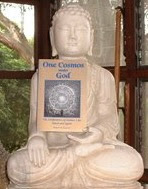
From yesterday's post: "[F]olks who play the [Glass Bead] game realize that all truth is related, and that it is indeed One Cosmos after all." The rules of the game are simple: "take two subjects or disciplines that appear to have nothing to do with each other, and show how they are related." I should have said two or more, but you get the idea.

The Pocket Guide to IPNB draws upon "a wide range of traditionally independent fields of research -- such as neurobiology, genetics, memory, attachment, complex systems, anthropology, and evolutionary psychology," in the effort to find a "unity of knowledge, or consilience" of "numerous domains of study into a common language and conceptual framework" (emphasis mine).

I've been doing the same thing since my latent cʘʘnvision was awakened on March 4, 1985. Everything I've written since then is a variant of the GB Game.

What especially motivated me was an unwavering conviction that subjectivity is not reducible to objectivity, but rather, that the former is an irreducible category of being. In reality, the two are complementary, not contrary, so any metaphysic that tries to deluminate the subject or reduce it to something else is a non-starter.

Siegel too writes of how he was motivated to create "a common ground in which to bring science and subjectivity into" a fruitful dialogue. The dialogue revolves around "finding the universal principles across many academic fields," and "discovering the consilience that emerges when usually independent research endeavors are explored together" (emphasis mine).

As we will see, I have some slight and/or significant differences with Siegel, one of which would be the idea that the consilience only "emerges" as opposed to being an antecedent condition for the unity. Perhaps he means to say that, but those from the science side of the dialogue would tend to strongly dispute this fundamental Raccoon principle.

Siegel might as well be describing me in graduate school, when "I longed to find a way to connect the power of objective science with the centrality of our subjective mental lives."

Siegel wondered, for example, whether "the molecules I had been studying in the lab that allowed salmon to transition safely from fresh to saltwater" could "be in some way connected to the equally important reality that the way we communicate with another person in crisis can mean life or death" (at the time, he worked on a suicide prevention help line).

There is the Glass Bead Game, and there is Extreme Glass Bead Gaming, and seeking a connection between suicide and salmon molecules would be an example of the latter. Brother Toots, of course, saw the connection, but everybody thought he was crazy.

Eventually Siegel formed a group of forty scientists from a diversity of disciplines, including "anthropology, molecular biology, cognitive science, education, genetics, linguistics, neuroscience, neurosurgery, physics, psychology, psychiatry, mathematics, computer science, and sociology."

Is there any fundamental, underlying principle such a diverse group could agree upon? Frankly, the Raccoon doesn't have time to find out. Rather, he prefers to cut out the middlemen and duit himsoph.

Most scientists won't even try to define the mind, but instead, simply use the word "as a kind of placeholder for the unknown." This is actually not a bad strategery, but only if taken to extremes, which is what I did in the book, giving this empty placeholder the symbol (•). I don't really know how the mind, utilizing its own resources, could define itself, any more than the eye can see itself or the crotch can grab itself -- unless we are able to view the mind from a higher, outside perspective, which science naturally excludes.

One quick point that very much goes to the personal and cultural evolution we recently discussed in the context of Inventing the Individual. Recall how we spoke of the many "disentanglements" that occurred, especially after 1075. Siegel writes of how, "when we differentiate concepts from each other and then link them, we integrate knowledge."

Not only that, but we integrate the person who has differentiated and then re-integrated the concepts. I would say that this is actually a two-way process: that it takes an integrated person to synthesize the diversity, while synthesizing the diversity makes us more integrated. Which is the point of life, for it really goes to what we call "mental health," which runs in the direction fusion --> disentanglement --> integration.

As I wrote in the book, mental health can really be defined along two axes: integration and actualization, the former giving momentum to the latter. As Siegel writes, "when we move energy and information flow toward something called integration, we move toward health." This "makes a stronger, healthier, more flexible, and resilient mind."

So integration results in greater strength, flexibility, and resilience, which is of course the purpose of our daily verticalisthenics, and the anti-purpose of multiculturalism (which flows in the opposite direction, toward disintegration and therefore mental and cultural pathology).

Now, Siegel is at pains to emphasize that human beings are always embodied and embedded. What he means by this is that we have a brain which, via the nervous system (which is just the periphery of the brain), extends throughout the body. Where is the brain? Only partly in the head. It's really "in" the whole body (although it's probably more accurate to say that the body is in the mind, i.e., a representation of it).

But at the same time, "Our mental lives are profoundly relational," and really take place in the space between our neurology and other persons. Thus, "Embodied and embedded is the fundamental nature of mind."

Guess what this made me think of? Yes, the second person of the Trinity, who indeed becomes "embodied and embedded" with the restavus. We explicitly focus on the embodiment -- incarnation -- but it is for the purpose of embeddedness, i.e., the offer of relatedness. If Christ is God's icon of man (and man's icon of God), this should not surprise us. Rather, shock us.

To be continued...

Thursday, January 29, 2015

Law and Music

"Law and music."

While gazing at the blank computer screen, that phrase popped into my head. Should I follow up? Is it another cryptic memo from Petey? Or is it just craptic noise? Only one way to find out.

As an aside, I was very much influenced by Herman Hesse's Glass Bead Game (AKA Magister Ludi), even though I don't think I understood a word of it. But I did understand the description of what the book was supposed to be about, and that was enough.

This experimental novel "is set in a 23rd-century utopia in which the intellectual elite have distilled all available knowledge of math, music, science, and art into an elaborately coded game." Just like here in Upper Tonga.

Another review says the book is an intricate bildungsroman....

Excuse me. Bildungsroman?

Ah: "a novel dealing with one person's formative years or spiritual education." As if I didn't know that.

Anyway, as I was saying, Magister Ludi was a big part of my own intricate bildungsroman. It is "about humanity's eternal quest for enlightenment and for synthesis of the intellectual and the participatory life.... Since childhood, [the protagonist] has been consumed with mastering the Glass Bead Game, which requires a synthesis of aesthetics and scientific arts, such as mathematics, music, logic, and philosophy. This he achieves in adulthood, becoming a Magister Ludi (Master of the Game)."

So, the folks who play the game realize that all truth is related, and that it is indeed One Cosmos after all. And although I didn't understand the book, I've been playing the game ever since. It goes like this: take two subjects or disciplines that appear to have nothing to do with each other, and show how they are related. I do it all the time. Or, maybe I can't help doing it.

So, the whispered fragment "law and music" is like an invitation to play the game. Or maybe a taunt. In any event, it doesn't mean I'll win the game. After all, if the outcome were known, it wouldn't be much of a game, would it?

It says here in Law and Revolution that "the most significant difference between Roman law" and law as it later developed in Christendom is that the former, "with certain rare exceptions, was treated as finished, immutable, to be reinterpreted but not changed."

In contrast, the canon law of the Church, for example, "had a quality of organic development, of conscious growth over generations and centuries." "This gave it a somewhat disorderly character," whereas Roman law was nothing if not ordered.

Applying a musical analogy, we can say that the Christian development of law was much more jazzy and swingin', whereas Roman law was staid, static, and predictable.

But of course, it's always a balance of complementaries, isn't it? At the opposite extreme from Roman law is Obama-style lawlessness, whereby the law is so flexible that it is anything he wants it to be.

But even Obama always obeys the law in a rigid manner. It's just a question of deducing the law he obeys and the tune to which he is dancing. For example, what is the ancient law that makes him treat Prime Minister Netanyahu in the hateful manner he does? It is not any explicit "law of the land" -- being that this is a deeply philo-Semitic land -- but rather, an implicit law that governs the squalid precincts of his soul.

Whatever it is, it is very rigid and not subject to learning via experience. One could say the same of his warm feelings for Islam, which seem to be insulated from the influence of any real-world behavior of Muslims. Thus, as of yesterday, the Taliban is not a terrorist group, just an armed insurgency, like the Continental Army.

So you can see that Obama plays his own twisted version of the Glass Bead Game whereby he proves to himself that "one man's terrorist is another man's freedom fighter." He is indeed an "intellectual," a word that does not imply any quality of the thought.

Rather, as Sowell describes it, an intellectual is simply a person who deals in ideas, whether we're talking about someone as brilliant as Thomas Aquinas or someone as retarded as Thomas Friedman or Charles Blow. Being that most ideas are bad ones, most intellectuals are therefore harmful, in particular, if their ideas should be put into practice via politics.

Everyone talks about the "separation of church and state," which, despite the hypertrophied vertical hostility of its votaries, at least reflects a kernel of truth, in that problems arise when terrestrial and celestial powers converge in the same person or institution. This salutary principle found its first historical instantiation with the idea that the Pope is the Pope and the King is the King: two heads of two hierarchies.

Few people, however, talk about the separation of ideology and state. But since leftism is a secular religion, my own glass bead game long ago led to the recognition that the consequences of their fusion are worse even than the convergence of church and state, since it redounds to the consolidation -- the re-fusion -- of unalloyed power unleavened by a trace of spiritual truth.

This is why the politico-media or the university-politico complexes are so destructive of our liberty. It is as if they play an outwardly improvisatory melody rooted in pure expedience, all the while dancing to a predictable Marxian tune.

Consider the movie critic Howard Dean, who makes the outwardly insane observation that the people who like The Sniper are just angry and hateful tea-partiers. But the comment makes perfect sense from a Marxian class warfare perspective. The latter is Dean's "higher law," even though it makes his utterances sound like chaotically insane word salad to us.

More generally, the left masks its power under the form of chaos. It is like compulsory chaos, if you like. For example, a ruling just came down in California that judges are not permitted to be members of the Boy Scouts. Why? Because the latter would prefer to conform to the eternal vertical order, and not have members who might be posing as Boy Scouts while scouting for boys. Being that one man's terrorist is another man's freedom fighter, the freedom-loving Boy Scouts are just homophobic terrorists.

Back to music. Now, music cannot actually be static, in the sense that it is always deployed in time. But it can be repetitive, like an Obama speech or a troll comment. Berman describes how, as the seeds of Christian moral intuitions began sprouting in history, "a new sense of time" appeared, and with it, a "new sense of mission to reform the world. A relatively static view of political society was replaced by a more dynamic view."

Politics is always about order, but here we see a radically new conception of order, which is oriented toward an open future, instead of the future being foreclosed by the repetitions of the past. Note that those living in the old order will resist the new order, either because of fear, or inadequacy, or settled habit, or because it threatens the legitimacy of their power, which is rooted in custom and tradition.

Here again, we're talking about a repetitious tune grounded in some self-serving murky-mythic encounter with ultimate authority, vs. a new reality in which we are at liberty to compose our own damn melody, free of the state's tedious ditty blaring in our ears.

"In the twelfth century there appeared the first European historians who saw the history of the West as moving from the past, through stages, into a new future." The Christian "yearns ardently," in the words of Peter Brown (in Berman), "for a country that is always distant but made ever present by the quality of his love and hope."

The leftist flatlander collapses this love and hope into the now, and as we all know, "Attempts to create heaven on earth invariably produce hell."

Brown also suggests that the great disentanglement of secular and spiritual was analogous to nuclear fission, accounting for the tremendous "release of energy and creativity" that followed. Which is why America quickly became the most energetic and creative nation. And which is why we should be every bit as frightened of the left's attempts at nuclear fusion as the Mullah's efforts at nuclear fission.

Well, we didn't get too far with the music side of the game. We'll end today with a quote by Zuckerkandl:

How is music possible?.... [W]hat must the world be like, what must I be like, if between me and the world the phenomenon of music can occur? How must I consider the world, how must I consider myself, if I am to understand the reality of music?

Wednesday, January 28, 2015

Performing the Theo-symphony

Not much time this morning, but might as well give it a go. We've been discussing the nature of music, and have concluded that music itself, in its very structure, tells us something -- or sings to us, rather -- of the nature of reality.

For example, music is organized and yet spontaneous; continuous and discontinuous; vertical (harmonic) and horizontal (melodic); inexhaustibly creative (despite a finite number of notes, we'll never run out of tunes); always happening in the moment and yet reaching toward its own fulfillment; holistic and particulate; yada yada.

One of the most important properties of music is its temporality. If music really mirrors reality, then this suggests that time is of the essence, not just an entropic field of accidents, repetitions, decay, and disintegration. Something "holds music together" from the inside out, analogous to the surface tension of water.

For example, Frankophiles always talk about how he was able to "get inside" a song. While that sounds like a metaphor, perhaps it isn't. You can take almost any performance by Frank from the Great American Songbook, and it will be the definitive version. Once you hear his, others sound almost fake or mannered by comparison.

If it is possible to "get into" music, this implies that it is possible to be outside it. But isn't that the very definition of bad or substandard music? Even for the great performer who is having an "off" night, it will likely be because he or she isn't able to get "inside" the music. A discriminating listener can always tell the difference, because the music won't be as "alive."

Now, I agree with Rosen that biology must be more general than physics, which is why you can get from life to matter but not vice versa (in other words, not from the bottom up). However, we must think of this ontologically, not chronologically. In other words, Life is ontologically prior to matter but chronologically later: the physical cosmos was apparently here for some 10 billion years before life kabloomed from its colden darkwomb.

But that hardly means that life can be reduced to matter, any more than we could take all the notes of a symphony, put them in a big pile, and say, "that's where the symphony came from." A simplistic metaphysic such as materialism or Islam simultaneously explains everything and nothing, not even itself.

Just flipping through Nature, Man, and Society, and there is an essay by the Tibetan Buddhist monk-scholar Lama Govinda, who writes of the problem of past, present, and future. Again, when we listen to music, it is always in the now. And yet, we are implicitly aware of the notes leading up to the now, while the now is always anticipating its forward movement.

Thus, there can be no abstract, zero-dimensional now that is radically disconnected from the past and future. Rather, this is just a kind of fantasy derived from the quantitative abstractions of physics, or a denial that particles reveal waves and vice versa. (Einstein suggested that time for physicists is nothing more than a "stubborn illusion.")

So, it takes a non-Einstein to realize time is movement. Which I suppose is why a symphony has movements. We could also say that the past must have been pregnant with the now, just as the now is pregnant with the future.

What this implies is that the future has some kind of influence on the present, just as in music, wherein no note can be understood outside the context of the whole song. Again, it is not just moment-to-moment random notes, but a flow of interior relations.

Thus, as Govinda writes, "the future is essentially contained in the past and focalized in the present." Therefore, what we call "evolution" is "the unfoldment in time and space of something that is already potentially existent in its essential features, though indeterminable in its individual realization" (emphasis mine).

That's my story and I'm sticking to it, because no alternative makes sense.

"The manner in which we accomplish this individual realization is the task of our life and the essence of our freedom." In Buddhist terminology our freedom would consist of choosing whether or not to follow and actualize our dharma or "to become slaves of our own ignorance," whereas from the Christian perspective it would be the freedom to choose between good and evil.

The leftist imagines he can bring about goodness by restricting our freedom of choice, but that not only undercuts man's dignity at the root, but denies his reason for being. If we are not free to do bad, there is no merit. Likewise, if success is outlawed, only outlaws will be successful.

This complementarity of notes and melody is a key principle. It implies that it is not a question of being or becoming, but rather, being as becoming, and vice versa. "Both are ever united, and those who try to build a philosophy upon only one of them, to the exclusion of the other, lose themselves in verbal play" (ibid.).

And "just as a picture gets its meaning, i.e., becomes a 'picture,' because it is related to a frame, so freedom has meaning only within a framework of or with reference to law.... Though the frame imposes a limitation on the picture, it strengthens it at the same time" (ibid.).

Which I think is how we might understand the ten commandments, or four cardinal virtues, or three theological virtues, etc. They are like the divine chords in which we compose our melody.

Which I think brings us back to the "arc of salvation," which is like the overall melody -- or symphony -- in which we are situated. Balthasar discusses it in terms of "theodrama," but I think we could just as easily call it a "theo-symphony."

Tuesday, January 27, 2015

Building an Astral Body in the Comfort of Your Own Skin, or I Never Speculate!

Continuing this gnostalgic romp through Nature, Man, and Society, biologist Harold Morowitz describes how "each living thing, including man, is a dissipative structure," meaning that "it does not endure in and of itself but only as a result of the continual flow of energy in the system" -- like an eddy in a stream, or a welfare state from the flow of taxes.

As it so happens, that was one of the main arguments of my doctoral thesis, later published in 1994 as Psychoanalysis, Chaos, and Complexity: The Evolving Mind as a Dissipative Structure. I must have only found this book after completing my dissertation, because it's not in the bibliography. At any rate, it would certainly have been a confidence booster to have the authority of an esteemed theoretical biologist at my back, instead of having to rely solely on Raccoon night-vision.

We hear a lot about biology, but not enough about theoretical biology, or what might be called "meta-biology." Or maybe I just don't know where to look. Meta-biology would be to life what metaphysics is to existence, or historiography to history, or metapsychology to psychology -- a more general set of assumptions and principles that helps explain and contextualize the particulars.

There is a glut of books on the meaning of modern physics, but comparatively few on the meaning of biological life. Whitehead certainly touched on it, what with his philosophy of organicism, and physicist Erwin Schrödinger (famous for writing the play Cats or something) wrote a classic little meditation on the subject called What is Life?

Now, there's something I didn't know: the wiki article says that a number of thinkers formed a secret cult, just like the Raccoons, called the Theoretical Biology Club, founded "to promote the organicist approach to biology. The Club was in opposition to mechanism, reductionism and the gene-centric view of evolution. Most of the members were influenced by the philosophy of Alfred North Whitehead. The Club disbanded as funding was failed from the Rockefeller Foundation which was needed for them to carry out their investigations." D'oh! Foiled by the conspiracy!

In the subsection immediately above, it mentions Robert Rosen, who may be dead but at least now has his own page, so he's got that going for him. Alert readers will recall that my stumbling into his phase space was a kind of eureka moment for me, as his ideas helped me build the bridge between matter and mind in the bʘʘk. Without him, I might have have been reduced to merely speculating about the nature of ultimate reality.

I believe I have told the story about contacting his literary executor -- his daughter -- for a blurb. When I described the nature of the book, she was initially very enthusiastic. However, I made the mistake of sending her the infamous Cosmogenesis section, and never heard from her again. I guess some people only permit themselves to be so weird.

But in my opinion, Rosen was plenty weird. Although he published his ideas in respectable journals, one can easily see how they could be plundered by unrespectable Raccoons and made to look weirder than he might have wanted. A good summary from the wiki entry: he

"believed that the contemporary model of physics -- which he thought to be based on an outdated Cartesian and Newtonian world of mechanisms -- was inadequate to explain or describe the behavior of biological systems; that is, one could not properly answer the fundamental question What is life? from within a scientific foundation that is entirely reductionistic.

"Approaching organisms with what he considered to be excessively reductionistic scientific methods and practices sacrifices the whole in order to study the parts. The whole, according to Rosen, could not be recaptured once the biological organization had been destroyed. By proposing a sound theoretical foundation via relational complexity for studying biological organization, Rosen held that, rather than biology being a mere subset of the already known physics, it might turn out to provide profound lessons for physics, and also for science in general."

That last bit is what really caught my attention: that biology might be more general than physics, and explain more about it than vice versa! My first thought was that I wanted to buy some pot from him, but by then he was already dead.

The other thing that riveted my attention was the whole idea of relational biology, I mean RELATIONAL biology. Hello?! He's talking about Life Itself as an icon of the trinity. Of course, he never said that, and if I had let that slip to his daughter she would have obtained a restraining order, but what can you do? The Raccoon has no place to rest his head among the tenured, so that's nothing new.

Here are some of the key principles of a relational biology: it "maintains that organisms, and indeed all systems, have a distinct quality called organization which is not part of the language of reductionism.... [O]rganization includes all relations between material parts, relations between the effects of interactions of the material parts, and relations with time and environment, to name a few. Many people sum up this aspect of complex systems by saying that the whole is more than the sum of the parts."

Now, what is a relation? It cannot be the parts as such; rather, it is in the space between. Or in other words, there can be no relation in the absence of this space. Without it there would be the opposite of relatedness, just an undifferentiated, monadic oneness. (Seriously, just look at all the space!)

Now, as mentioned in our book, we do not say that God is the way he is because physics or biology are the way they are; rather, physics and biology are the way they are because God is the way he is. Which is precisely why both are wholly relational right down to the ground. There is nothing "beyond" relation because God is relation. In the absence of God -- a specific type of God -- interior relations would be impossible and unthinkable. So there.

As Rosen wrote, "The human body completely changes the matter it is made of roughly every eight weeks, through metabolism, replication and repair. Yet, you're still you -- with all your memories, your personality... If science insists on chasing particles, they will follow them right through an organism and miss the organism entirely."

Now, take that same idea and apply it to the vertical: a human being is not just an open system on the biological level, but also open on the psychological/emotional/intellectual plane, and even more critically, on the vertical/spiritual. In short, we are always open to O, and cannot not be open to O, on pain of a living spiritual death.

What?

No, I never speculate. This is completely logical, empirical, experiential, and I would even say necessary, in that no other theory can account for the phenomena (or better, theomena).

In our open relationship to God, something is "taken in," metabolized, and assimilated. In a dissipative structure there is a continuous flow of matter, energy, or information. What is the medium of exchange in the divine vortex? You could call it grace. Or, if you spent too much time hanging out at the Bodhi Tree, shakti, or chi, or orgone, or kundalini. In the book I tried to simplify matters by just calling it (≈).

The following could apply equally to horizontal or vertical systems: "The build-up and breakdown" of order is "linked to the environment around us: the inflows of energy must come from outside ourselves, and we in turn must radiate energy to our surroundings." Just say "downflow" of grace and prolongation into the world, and you've got it: downcarnation, you might say. So start spreading the nous!

Cosmological biology tells us that there is more to the universe than we have yet dreamed of. --Harold Morowitz

Monday, January 26, 2015

The World Cannot be a Little Bit Pregnant with Meaning

Since no other subject occurs to me, we'll just keep whistling this tune until the music's over. In a book that made an impact on me back in the day, Nature, Man, and Society...

Well, first of all, it's actually a compendium of essays from an interdisciplinary journal called Main Currents in Modern Thought. As for why it made an impact, check out its vertical mission statement: "A cooperative journal to promote the free association of those working toward the integration of knowledge through study of the whole of things, Nature, Man, and Society, assuming the universe to be one, intelligible, harmonious."

The journal was founded by F.L. Kunz in 1940. If I recall correctly, its editorship taken over by Ken Wilber at some point, and presumably went downhill from there, into Chopraville, Franklin Jonestown, and Coheny Island. But it was once a serious forum for the sorts of things we discuss here.

I can't imagine how difficult it must have been back then, in the days long before the internet made it so easy for scattered members of vertical diaspora to reconnect. How did these oddballs find each other?

Probably in the usual way, via nonlocal attractors synchronistically drawing them together into the same vertical phase space. In fact, it was probably the same nonlocal attractor that drew me to this obscure book and caused me to pluck it from the shelf at the old Bodhi Tree bookstore in West Hollywood.

Before Amazon opened the floodgates and put every book at our fingertips, the Bodhi Tree was the only place in town for all types of spiritual weirdness, high, low, and in between. Whereas the typical chain store might have a couple of books on UFOs, the Bodhi Tree had a whole wing. But they also had entire sections devoted to Christian mysticism, Vedanta, Buddhism, the occult, weird and wacky science, etc. Without the Bodhi Tree, I don't see how I would have ever gotten off the ground.

In fact, the store was divided in half, East and West. I remember once seeing George Harrison there on the eastside, perusing the yoga section. Which is a synchro-circular nicety, since his interest in yoga had been one of the early influences that piqued my own. I well remember my 11 year old Bobself pondering the pseudo-profundity of the space between us all / And the people who hide themselves behind a wall of illusion / Never glimpse the truth, then it's far too late, when they pass away.

(?!) So when I saw George at the Bodhi Tree, there was only one thing to say: Can I buy some pot from you?

Back to this book I read all those years ago, probably in the mid-1980s. I see that some of my marginalia could have been marginalized today: "metabolism recapitulates biogenesis." "We are foci for the build-up of order." "Physics is 'psychics' inverted." "Life is quite as primal as energy" (that one from Kunz).

But let's focus: music. In an essay called The New Dimensions of Nature and Man, a Donald Andrews writes that the behavior of the "fundamental entities" of the world "is characterized less by a particle-like and more by a wave-like nature."

Of course, the particles and waves are irreducibly complementary, so the former may be analogized to notes and melodies, the latter to harmonic structure. He concludes that "in a word, both the universe as a whole and we in particular are not matter but music."

There can be no music without matter-in-motion, so our lives are a musical matter. Again, that would be the point of the Incarnation, which is very much analogous to the composer jumping into and taking part in his own composition. "Word made flesh" is essentially identical to "composer become music"; it is especially apt because it factors in the dynamic/temporal element, not just the spatial/static. Which is why the Incarnation is a melody that is still playing today, an oldie but goodie.

"So I think that Pythagoras with his vision of the universe as music or waves deserves as much credit as Democritus with his vision of the particulate or atomic aspect of matter." Exactly: not either/or, but both/and.

Having said that, as Hartshorne writes, of the two sides of a complementarity, one will always be more fundamental than the other, even if we never see them apart. As for wave/particle, the wave must be ontologically prior, because it is impossible to get from random particle to coherent wave.

The wave is kind of boundary condition. There is freedom within the vibrational phase space, without which there would be only random chaos: "the internal tensions and boundary conditions make possible only certain definite vibration patterns. This means that the atom can exist only in certain energy states.... these may be said to be the tones..." Thus, the boundary conditions of the waves are analogous to the score to which the electron dances.

So: because music is "pure dynamic form, I think that it is both suggestive and meaningful to say that the atom now appears to be music."

Note that music has the interesting property of being simultaneously continuous and discontinuous: a melody is composed of notes. Outside the context of the melody the notes have no meaning, but without the notes the melody cannot be composed or played. This reveals one of the fundamental complementarities of existence, i.e., continuous/discontinuous.

Which is really the basis of a number of other irreducible complementarities such as part/whole, form/substance, individual/group, linear/holistic, subject/object, interior/exterior, analysis/synthesis, freedom/necessity, participation/detachment, one/many, PS <--> D, etc.

Before we move along, let me just see if there is anything else we can pluck from this book...

The great physicist Werner Heisenberg contributed an essay that makes a point that has captivated me ever since. Speaking of his colleague Wolfgang Pauli, he writes that he too "was captivated by the attempt to talk about material and psychical processes in the same language." He even spoke of the possibility of a "common language" to describe both physical and psychical processes, what he called "psycho-physical monism," a "mode of expression for the unity of all being."

Which was precisely the mission of my doctoral dissertation, and later the book: again, if it is One Cosmos, then there must be One Truth, and this One Truth can only be the One God. Otherwise nothing makes any sense. In other words, this is very much a binary, all-or-nothing question, God or nihilism, O or Ø, with no alternatives in between. The world cannot be a little bit pregnant with meaning.

Pauli was skeptical of the Darwinian reduction of evolution to accidental mutations. Rather, he proposed a nonlocal order of the cosmos revolving around archetypes that shape "matter and spirit equally." For example, there are mathematical archetypes (i.e., boundary conditions) to which matter dances, just as there are spiritual archetypes -- those helpful nonlocal operators standing by, ready to assist us -- that help guide our journey.

So, "contrary to the strict division of the activity of the human mind" into binary opposites, Heisenberg proposes "the ideal goal of surmounting the opposites" via what I would call a transcendent third.

Physicist Jean Charon writes that "evolution reveals a tendency toward unification and toward differentiation," such that "the universe has evolved out of its chaotic beginnings into a present state which is infinitely more unified and more differentiated..."

This goes to our recent discussion of the Invention of the Individual, in that the arc of this invention involves many distinctions and differentiations from a prior fusion, for example, of self and group, law and custom, mind and nature, etc.

Here Charon speaks of the Great Attractor, O, through which "each living element has an awareness of the final state to be attained," "defined by boundary conditions which... guide life toward the goal which evolution has assigned it." That's not the most elegant or precise way of putting it, but as we were saying the other day, "One need only observe how life multiplies itself in the living cell to be convinced of this."

In fact, the biologist Harold Morowitz defines biology itself in a much broader sense, as a study of organization as such, "of the underlying principles behind the organization of matter, the evolution from less organized to more organized states."

And speaking of the wave/particle complementarity, he writes of how "at the genetic level there is a clear-cut distinction between all individuals" (the particles), within the context of "a continuum point of view which stresses that no individual human exists in any kind of biological isolation: every individual is really very much a part of the global system and his existence itself is related to the existence and the properties of the continuum" (i.e., wave). Can't have one without the other.

And with that I gotta run...

Friday, January 23, 2015

Beauty and Sadness

Let's see if we can extract any more nuggets of joy from Schopenhauer's manifesto of melancholia.

Here's some good news: "The inexhaustible variety of possible melodies corresponds to nature's inexhaustible variety of individuals, physiognomies, and ways of life."

But with Schopenhauer there's always a catch: "the transition from one key to an entirely different one, since it breaks the connection with what went before, is like death, in so far as the individual ends there..."

(✖╭╮✖)

You, see, that's what makes Schopenhauer such a sad guy. He always sees the worst case scenario, the glass half empty. On the one hand, the Blind Cosmic Will in which we participated while alive "lives on, appearing in other individuals," -- BUT -- this "consciousness has no connection with" ours. So we got that going for us. We're still dead, but at least the meaningless impersonal will that willed us wills on forever.

C'mon, Art. Lighten up.

This is better: music is an "unconscious exercise in metaphysics in which the mind does not know that it is philosophizing." Thus, "our imagination is... susceptible to music" and "seeks to give form to that invisible yet lively spirit-world which speaks to us directly, and clothe it with flesh and blood." But for Schopenhauer, this "lively spirit world" is just an impotent Wiener process of the same old impersonal World Will.

Nevertheless, he gets the broad outline correct, that "we may regard the phenomenal world, or nature, and music as two different expressions of the same thing," such that the "unutterable depth of music" reveals the "truth, the inner nature, the in-itself of the world..."

Music is "a perfectly universal language," but unlike, say, the universal abstractions of mathematics, it is both embodied and experienced in the body. Thus, "we might just as well call the world 'embodied music' as 'embodied will."

That's right, Art, so why build your system around the latter instead of the former? Why reduce music to blind will instead of elevating the will to conscious composer?

I'll tell you why: because you are depressed, that's why. When we are depressed, our depression feels like "the truth." In short, your philosophy is an expression of your clinical depression. Dude, you said it yourself:

I would recommend an antidepressant, but they won't be invented for another 100 years or so. Try getting a bit more sunlight, or maybe eat more fish.

Okay. Be that way.

I suspect that Schopenhauer tried to use art in general and music in particular as an antidepressant. In fact, according to his biographer, Bryan Magee, he felt "there is one way in which we can find momentary release from our imprisonment in the the dark dungeon of the world, and that is through the arts." Thus, Schopenhauer regarded art as providing more the temporary removal of pain than the revelation of cosmic joy:

"In painting, sculpture, poetry, drama, and above all music, the otherwise relentless rack of willing on which we are stretched out throughout life is relaxed," and for a moment "we find ourselves free from the tortures of existence." Woo freaking hoo.

True, music does stimulate the release of dopamine, a neurotransmitter that mediates pleasure and reward. But chronically depressed people are probably low on dopamine, accounting for their anhedonia, i.e., difficulty experiencing pleasure and joy.

Schopenhauer was a major influence on Wagner, who attempted to embody the world will in his music. Magee has written of this in another book, The Tristan Chord.

Wagner was, of course, a Nazty Piece of Work, but some people think he is the greatest musical genius in history. I have no opinion on that, but Magee writes that for Wagner, "the function of serious art" is "to reveal to human beings the most fundamental truths of their innermost nature." His music "is the direct utterance of the metaphysical will."

But I'm not sure someone as nasty as Wagner can know the fundamental truth about humans. Magee writes that very early on, "he felt unable to relate to other people," for "they did not understand him." This is a common feature of Narcissistic Personality Disorder, in that the narcissist is so special that he is in a category all his own.

"As a result, the world always seemed to him an alien place, both puzzling and hostile. He did not understand it, was not home in it, did not like it. He wanted to escape from it."

In fact, "Until his fifties not a year of his adulthood went by in which he did not seriously contemplate suicide."

(✖╭╮✖)

But again, consistent with clinical narcissism, the depression alternated with intense grandiosity, in that he was convinced that he was the only person in history who could express the ultimate truth of existence: "it is a question here of conclusions which I am the only person able to draw," for "there has never been a man who was poet and musician at the same time, as I am, and to whom therefore insights into inner processes were possible such as are not to be expected from anyone else."

Well, aren't you special. I can't say what it means about his music, but Hitler was absolutely crazy about it, attending performances of it as often as he could, even when he was poor and broke. It "nourished" him like nothing else.

The Blurb from Hell.

I forget why Wagner was such a vicious anti-Semite, but certainly the Biblical view of music is quite contrary to his -- for example, it is God our maker "who gives songs in the night" (Job 35:10), and who puts those new songs in our mouths (Ps 40:3). In other words, music doesn't come from the primordial below, the noumenal will, but is a gift from above.

Then again, maybe I'm just not depressed enough to understand the awful truth about the world.

Thursday, January 22, 2015

Cosmic Rhythm, Divine Harmony, Planetary Funkmanship, and the Prodigal Melody

This will be a transitional post, since Petey has not yet informed me of the updated bus schedule. I've picked a subject more or less out of thin air, although it came to me while driving the boy to school. We were talking about my own childhood, and I was telling him that in my youth I had two, and only two, interests: music and sports. This continued until about, oh, age 26, although by then beer and women were in the mix.

The first thing I want to say about music is that it had damn well better be important, because if it isn't, then I've wasted a huge chunk of my life.

To put it another way, does the near universal attraction to music imply anything about its significance, or is it nothing more than ultimately pointless noise, just sound and fury signifying sound and fury? The fact that it "speaks to us" implies that there is something in us spoken to. But what is being communicated, to whom, and why?

I made an initial foray into this subject in the book. I believe I've mentioned before that one its working titles was The Cosmic Suite, in that it has four movements -- matter, life, mind, and spirit -- each with a motif that is developed in different ways. Plus, the opening Cosmonaught section is supposed to be like the overture that previews the motifs that will later be developed in the individual sections, while the Cosmobliteration section is the crescendo or finale.

Along these lines, one of my initial inspirations was Schopenhauer, who is one of the few philosophers to appreciate the meta-cosmic significance of music. I'm guessing that he too needed a grandiose alibi for spending so many hours listening to AM radio as a kid and hanging around in used record stores.

Let's drag some Schopie from the shelf and see what he says. The idea that he was only a pessimistic sourpuss is a bit of a caricature. Like Bob, Schopenhauer basically wrote one book that he never stopped working on (in his case, editing and adding new material), The World as Will and Idea. From the introduction:

Schopenhauer wrote of all forms of art, but felt that music was the highest: "Whereas architecture makes transparent rather elementary Ideas, music expresses most distinctly (partly because of its non-spatial character) the inner nature of the whole world" (emphasis mine).

Ah ha! Now we're on to something: we are drawn to music because at its core, it actually communicates essential truths about the very nature and structure of existence.

That's what I think. Music is able to "capture what has evaded scientists and philosophers and theologians," because it is in a non-discursive language they do not speak; it communicates truths that cannot be articulated in such cutandry & wideawake terms. Plus, music is essentially temporal, so it reveals some important things about time.

Here he analogizes the cosmic hierarchy to a kind of great resonant chord of existence, in which "animal and plant are the descending fifth and third of man," while "the inorganic kingdom is the lower octave."

I might express it slightly differently and suggest that nature is like the rhythm section, with a repetitive groove consisting of day, night, seasons, lunar phases, years, etc., while the biosphere -- or, let's say our instinctual life -- provides the ground notes, or the bass guitar that serves to unify and hold together the rhythm below and the melody above. Or, we can only "improvise" above -- i.e., exercise free will -- because of the excellent and very tight rhythm section below.

The piano is also considered part of the rhythm section. In particular, it usually provides the chords over which the soloist improvises. I like to think that tradition feeds us those chords, but that it is up to us to use them to jam. In the words of John Lee Hooker, let that boy boogie woogie.

Thus, to paraphrase Schopie, the melody "surges forwards," and "may be regarded as in some sense expressing man's life and endeavor." The melody is played over "the ponderous bass," and "completes" the music, incorporating "the animal kingdom and the whole of nature that is without knowledge."

In other words, only man may play the cosmic suite, and this may even be man's sufficient reason -- as I put it in the Coonifesto, "we are each a unique and unrepeatable melody that can, if we only pay close enough attention to the polyphonic score that surrounds and abides within us, harmonize existence in our own beautiful way..."

Later in the book he devotes another ten pages to the subject, reiterating that "we must attribute to music a far more serious, deeper significance for the inmost nature of the world and our own self."

Here he implies that music is a kind of two-way mirror, as indeed is nature, in that the endless intelligibility of the latter is a mirror of our infinite intelligence, and vice versa. "In some sense music must relate to the world as does a representation to the thing represented."

Most people think of music as a non-representational art form, in that it supposedly conveys nothing except its own abstract patterns. But Schopenhauer agrees with Bob that music actually does represent something -- a little thing called reality. In semiotic terms, if music is the signifier, the world-process is its signified.

This relationship is "very deep, infinitely true, and really striking, for it is instantly understood by everyone, and has the appearance of a certain infallibility..." By examining -- or dwelling in -- the "inner essence of music," we may perceive "its imitative relation to the world."

Interestingly, we perceive how low notes persist longer than high notes which are heard and gone. Here gain, the bass is an expression of the biosphere as such, not the individual species, whereas, say, birds darting around in the sky are like the notes of a flute (and often sound like notes of a flute). These latter notes "die away more swiftly." But all living things are grounded in those resonant bass notes.

Where we differ from Schopenhauer is that he believes the score was essentially "written" by nature, or is a product of the impersonal world-will, whereas we believe the score is written by God, at least in its harmonic outlines and overall structure.

At the lowest level of quantum mechanics, we see a kind of music of pure vibration -- which is precisely what audible music is, i.e., vibration.

Again, it is up to man to harmonize the whole existentialada: "all these bass and other parts which make up harmony lack that coherence and continuity which belong only to the upper voice singing the melody."

Man is the quintessential melody maker, or improviser, taking the repetitive rhythms and unchanging chords and then making sometune of himself. "The deep bass moves more slowly and.... ponderously of all.... It rises and falls only in large intervals..." If it were to suddenly improvise all over the place, it would produce earthquakes and extinctions. Indeed, a real revolution might be thought of as a change in the bass line.

But we can all participate in our own private revolution by creating our own melody: with its relative freedom, it can express the meaning and coherence of the whole, or in other words, weave the whole thing together in a three minute pop masterpiece. (By which I mean that the span of our lives in comparison the the 14 billion year old cosmos is like a pop jingle.)

Even so, "Only the melody has significant intentional connection from beginning to end." It "is a constant digression and deviation from the key-note in a thousand ways," but "always follows a return at last to the key note" -- like one of those marathon thirty minute solos by John Coltrane or Keith Jarrett. Call it the prodigal melody.

The composer reveals the inner nature of the world, and expresses the most profound wisdom, in a language which his reasoning faculty does not understand... --Schopenhauer

Wednesday, January 21, 2015

The Past: An Interesting Place to Visit, But I Wouldn't Want to Live There

Let's race through the last 100 pages of Inventing the Individual in order to mine any final insights.

Insights into what? Into how something as utterly strange and unlikely as "you" or "I" came to exist. There are so many necessary conditions for I AM to appear in time that it bobbles the Bob.

Which raises the question: would different conditions have caused another "subjective entity" to emerge, something so different from our familiar selves that we can scarcely imagine it?

This is similar to asking if it is possible for a different form of life to exist, something not based on carbon. What would it be like? Who knows? Likewise, what would a universe with different laws be like? It is unimaginable, because for one thing, imagination is only a feature of this universe. It is very unlikely to exist in other universes.

It's the same with the desire to discover "intelligent life" elsewhere. The necessary conditions for life to emerge on this planet are so insanely specific, that I can't imagine they are found anyplace else. You may find one, or ten, or a hundred of these variables, but they all need to be proportioned to one another. For example, earth has a much larger planetary wingman, Jupiter, to attract all the cosmic debris, so it won't plow into us and destroy our little floating biology lab.

Even knowing as much as we know about antiquity, or about the Middle Ages, our ability to project ourselves into these periods hits a kind of wall that we cannot venture past, for the same reason we cannot imagine what it is like to be a bat or a cow. The reason why we can't break through the wall is that we have to jettison a part -- the central part -- of ourselves that wouldn't have existed at the time, or would have only existed in a weak or nascent form. This probably sounds more controversial than it is, but it strikes me as self-evident.

For example, we all know that it makes no scientific sense to ask what came "before" the Big Bang, because time is supposedly a function of the Big Bang. Therefore, there is no before, so ignore that man behind the curtain of tenure and stop asking childish questions.

What is actually going on is that the scientific model simply breaks down at that point. It is similar to what happens at the quantum level: anomalies and conundrums arise because our common sense models simply don't apply. Thus, with no model, there is no way to imagine what is going on down there. We can invent purely mathematical models to try to tie up the anomalies -- which is what string theory is all about -- but these are more like pre-Copernican speculation about planetary epicycles. In other words, the 26 (or whatever it is) dimensions of string theory "save the appearances," as did epicycles for geocentrism.

We're getting a little far afield, aren't we? The point is that naively projecting ourselves into the past is more problematic than we may realize. For me, reading history often provokes WTF?! moments of stark incomprehension.

I'll give you a little example. I'm reading in Berman what pre-Christian law was like. While I understand the words, I find it impossible to actually put myself in the mind of a person for whom the following form of justice would have made perfect sense:

In pagan Germanic society there were two types of ordeal to determine innocence or guilt, trial by water or trial by fire -- fire for elites and big shots, water for the rest of us. "Originally these were invocations of the gods of fire and water.... Those tried by fire were passed blindfolded or barefooted over hot glowing plowshares, or they carried burning irons in their hands."

Exactly what does this have to do with justice? What, it's not obvious? "If their burns healed properly they were exonerated."

The other type of ordeal involved either freezing or boiling water. "In cold water, the suspect was adjudged guilty if his body was borne up by the water contrary to the course of nature, showing the water did not accept him." Excuse me, but WTF? Accept him?

"In hot water he was adjudged innocent if after putting his bare arms and legs into scalding water he came out unhurt." Again I respectfully ask: WTF?

Yes, this form of justice is "one way of looking at things." But is there any part of you that can really look at it this way and agree that it makes perfect sense? Nevertheless, the folks were content with it. Even with the influence of Christianity, "there was considerable resistance to the abolition of ordeals in the thirteenth century." You know, why mess with a system that is perfectly adequate?

That is just one teeny tiny example of how the past is a very different country. I could easily find more extreme examples, but you get the point: we can only pretend to understand much of the past.

"It is difficult for us to re-enter a social world where so little was shared." In other words, not only are these people different from us, but they were all different from each other. There was no "universality," because "In the twelfth century each group -- whether of feudatories, serfs, or townspeople -- was a world unto itself. People did not locate themselves in a world of commonality."

This has direct contemporary relevance, because, for example, we do not live in the same world as the Islamists. Here again, we can only pretend to understand people who torture children, burn Christians alive, and decapitate journalists. Well, maybe we kind of get the last one, but the point is that they are "missing" something we take for granted. Liberals pretend the terrorists simply want what we have, or are angry at us for something we did 500 years ago, but they are actually motivated by an entirely different mentality. The terrorists too.

Speaking of the moral insanity of the left, look at how they equate Chris Kyle -- the Sniper -- with Nazis and terrorists, as if he shares the mentality of our enemies and is motivated by the same ends! For Michael Moore, the imaginary sniper who murdered his make believe uncle is no different from a real sniper who kills evil people who want to destroy civilization and every person in it.

It is no different than equating trial by fire to trial by jury. But if you are a multiculturalist, that's what you do. We are "invaders," "occupiers," and "torturers," just like ISIS.

So, that's about the size of it. We'll end this series with a quote by Siedentop:

[T]he defining characteristic of Christianity was its universalism. It aimed to create a single human society, a society composed, that is, of individuals rather than tribes, clans, or castes.... Hence the deep individualism of Christianity was simply the reverse side of its universalism. The Christian conception of God becomes the means of creating a brotherhood of man, of bringing to self-consciousness the human species, by leading each of its members to see him- or herself as having, at least potentially, a relationship with the deepest reality -- viz., God -- that both required and justified the equal moral standing of all humans.

You say you want a revolution? That is a revolution, the most consequential ever. And it is ongoing, because there are reactionaries everywhere.

Tuesday, January 20, 2015

The Great Disentangling

I'd like to wrap up Inventing the Individual before moving on. One theme that emerges from the book is that while it took centuries for the individual to be disentangled from the group, it has been the work of less than a century for the left to re-entangle us.

For both Siedentop and Berman, 1075 is a truly revolutionary, world-historical turning point, for that is when Pope Gregory insists on the independence of the church from secular authorities. As a consequence, the king, at least in theory, is demoted to a mere layperson instead of combining spiritual and temporal power in his person. Indeed, he can't do that, because only Jesus does.

As always, timelessness takes time: "Gregory's vision of a social order founded on individual morality" instead of "brute force and mere deference, had taken centuries to prepare" (Siedentop). You know, like the way a person goes bankrupt: very gradually and then all of a sudden.

So, suddenly "relations of equality and reciprocity are now understood as antecedent to both positive and customary law." Thus, law is disentangled from custom, and seen more abstractly as a universal category. This constitutes a "reversal of assumptions," such that "instead of traditional social inequalities being deemed natural... an underlying moral equality was now deemed natural."

This Great Disentangling "freed the human mind, giving a far wider scope and a more critical edge to the role of analysis. It made possible what might be called the 'take off' of the Western mind" (emphasis mine), vaulting mother Europe "along a road which no human society had previously followed." Vertical liftoff!

Here we can see how the left's retarded project involves a Great Re-entangling: again, it took thousands of years for "individuals rather than established social categories or classes" to become "the focus of legal jurisdiction." But now, thanks to the left, the individual is subsumed into race, class, gender, sexual orientation, etc., and we're back to where we started: post-Christian necessarily redounds to the pre-Christian.

"The papal claim of sovereignty" furthered the transition to the "meta-role" of the individual "shared equally by all persons." Seen this way, the self is the essence, while social roles become mere accidents instead of being in the nature of things.

It seems to me that this idea of disentanglement is key; it reminds me of how the fertilized egg first divides into two, then four, eight, sixteen, etc., becoming more complex and specialized along the way. There is still unity, of course, but it is a deeper form of organic unity because the diversity is unified on a higher level.

Just so, once the secular-spiritual cell divides in two, this initiates further divisions and distinctions. For example, philosophy becomes distinct from theology, and more generally, "logical studies" develop "with astonishing rapidity during the twelfth century."

Likewise, a new distinction is seen between the moral and physical elements of crime. Because of the new interiority, the concept of "intent" or motive comes into play: "intentions had scarcely been distinguished from actions in 'barbarian' justice." "Degrees of guilt" are perceived, and punishment becomes distinct from mere retaliation.

Marriage changes too, as measures are adopted to ensure that it is "based on consent rather than coercion." Politics too: instead of authority flowing in one direction only, from the top down, "The authority of superiors thus became a delegated authority. Authority is again understood as flowing upwards."

If we stand back and look at the overall arc, we see that "under way was nothing less than a reconstruction of the self, along lines more consistent with Christian moral intuitions." This ushers in "a new transparency in social relations," for now we relate to another person, not just his role. Conversely, "in societies resting on the assumption of natural inequality," this interpersonal transparency is obscured.

Another major development is the distinction between free will and fate, choice and necessity. If human beings are personally accountable to God, then this emphasizes not only our moral freedom, but the need for political freedom so that we are free to exercise moral choice. In other words, nothing less than eternity is at stake, so the freedom to do good becomes a matter of urgent necessity; for what is free will but "a certain ability by which man is able to discern between good and evil"?

Note that if people are fundamentally unequal, then we can make no generalizations about them: there is one law for the sheep, another for the wolf; or one law for us, another law for Obama.

With this new self, there is a kind of interiorizing of the logos: instead of the logos being only a sort of exterior reason that controls events, it is "understood as an attribute of individuals who are equally moral agents." Here again, in the post-Christian world we see a regression to determinism, for example, the idea that we are controlled by genes, or neurology, or poverty, or race.

The empirical becomes distinct from the general, induction from deduction: "The Christian preoccupation with 'innerness' and human agency," or "between the will and the senses," leads to "a growing distrust of the coercive potential of general terms or concepts, if an extra-mental reality is attributed to them."

Conversely, leftism is always rooted in the projection of an abstraction onto the world, thus giving it the illusion of an "extra-mental reality" or self-evident fact. Scientism, materialism, metaphysical Darwinism -- each elevates an uncritical naïveté to the highest wisdom.

Come to think of it, this is one of the major themes of The Great Debate: conservatives begin with the world as it is, whereas the left begins with the world as they wish it were. We'll be hearing a lot about this tonight, but it all comes down to an atavistic desire on the part of the left to undo the work of centuries and re-entangle mind and world, individual and group, state and citizen, time and eternity, freedom and compulsion, messiah and politician, executive and legislature, class and guilt, etc.

Monday, January 19, 2015

We All Worship the Same God, We Just Agree Different

I award this post the Raccoon Squeal of Approval, and declare it to be nihil bobstat, that is, vaguely plausible and free of anything Bob wouldn't say, and probably containing some things he wishes he had.

We all know that contemporary liberalism is a secular religion -- only the most successful one ever -- and that man, as homo religiosus, cannot not be religious, but rather, only pretend not to be. Kristor implicitly argues that this is because we come into the world with certain universal archetypes that shape our experience:

"Not only is there always a state religion, but there is always a king of some sort, a father of the country. Likewise there is always a class of priests and judges, always a class of warrior nobles, always a class of merchants, always monastics and hermits, a market, a language, families, patriarchs, prophets, sex roles, etc. These things are built into man. They can be suppressed for a while, or injured, but not permanently eliminated from the constitution of human society. You can’t get rid of them, any more than you can get rid of the pancreas or the spleen. The functions they mediate must be mediated, and one way or another they will be mediated."

Actually, you can get rid of the spleen. But no sane person asks for it to be removed. Rather, it usually follows some terrible accident. Likewise, there are some archetypes we can dispense with, but this usually results from a terrible developmental accident of some kind, say, sexual abuse.

First of all, what is an archetype? I would say that they are to the vertical what instincts are to the horizontal. Our minds are not "blank slates," any more than our bodies are. Rather, our bodies have built in needs, expectations, and abilities. Similarly, we come into the world expecting, say, a mother and father. Thus, we are also entitled to a mother and father, just as infants are entitled to milk and not bourbon.

You could also say that an archetype is an "empty category" awaiting experience to fill it out. While it has a general outline, it has no specific content until we encounter it in life. It is the blueprint (or clueprint), not the building materials or finished project. Therefore, it is a kind of final cause. Archetypes operate as attractors in the subjective phase space of the interior world. Kristor alludes to several: father, judge, warrior, hermit, prophet, sex roles, etc.

In a subsequent series of posts I hope to discuss the classic Law and Revolution: The Formation of the Western Legal Tradition. While doing a little research on the author, I came across an interview in which he speaks of how the Law is built into us. Yes, we are all little lawyers:

"Belief in law comes from early childhood," he said. "A child says, 'It's my toy.' That's property law. A child says, 'You promised me.' That's contract law. A child says, 'He hit me first.' That's criminal law. A child says, 'Daddy said I could.' That's constitutional law."

From the same piece: "Berman's main contention is that law is a foundational principle of Western society that derives its moral and religious dimension from God as the first lawgiver." Thus, any law must be grounded in the Law, just as any truth is a reflection of the One Truth.

So, because there is Law, there are promises, contracts, private property, justice, injustice, and a supreme court, or a final court of appeal.

And in fact, although we appeal to this court in this life, our real hope is that it is still very much in session in the next life -- in other words, that in the end, justice will prevail and the scales will be balanced.

I suppose we could say that social justice warriors imagine that the scales can be balanced in this life. Like all leftists, they immanentize the eschaton, in this case eschatological justice. This results in the "divine judgment" taking place right here and now, only promiscuously mixed with the demon-haunted wrath of the social warrior. This is why, when the radicals succeed, life looks like a vision of Hieronymus Bosch, as in the French, Communist, and Nazi revolutions.

Just as truth implies a truth-giver, law implies a law-giver. Kristor points out that language is only a kind of prolongation of this primordial Truth. Language cannot not speak of truth, because its substance is truth. It reminds me of a current in the ocean: the current is distinct from the ocean, and yet, nothing more than the substance of the ocean. Likewise, a word is distinct from the truth while being composed of it. Language converges on truth; or, truth is its alpha and omega.

Back to our religious nature. Since the leftist denies his religiosity, it naturally expresses itself in a covert and subconscious manner. For us their religiosity is transparent, whereas for the leftist it is hidden, because it must be denied by the person who regards himself as superior to religion. In other words, the leftist has a hypertrophied vertical defense mechanism deployed to repress spirit.

Today's holiday is only peripherally about the human being named Martin Luther King. Rather, he has been swallowed by his projected archetype, just as other leftist icons have been eclipsed by theirs -- FDR, JFK, Nelson Mandela, etc. So thick is the ideological penumbra surrounding these icons, that the actual person can't be seen at all. And if you try to point to the man beneath the projection, the left's reaction bears an uncanny resemblance to how Muslims react to cartoons of Muhammad.

Friday, January 16, 2015

Liberal Distinctions and Leftist Conflations

One thing that comes through in Inventing the Individual is how the so-called middle ages ushered in so many vital cognitive distinctions that we take for granted. But man didn't always have these distinctions, nor do all men have them even today. To put it mildly.

In fact, Fried says much the same thing, although neither author devotes a separate section to the subject. Rather, the evidence is scattered throughout both books, so I'll attempt to pull some of it together here.

This probably sounds like a slightly dryasdust subject, but it definitely isn't, because it goes directly to our vision of the world. Without the proper tools, that vision can only be so deep, complex, and comprehensive.

Consider what happens when we chuck religious tools from our cognitive bag of tricks. It is not as if a hammer can replace the work of a wrench or screwdriver. But if that's all you have, you'll end up trying to pound religious screws into place with a hammer, which makes for an ugly and probably dysfunctional end product, like a half-assed home repair done by me.

A big one is the distinction between secular and spiritual authority. Prior to this distinction there is only authority -- or power -- period.

But there is more to it than just keeping these two domains apart, because for one thing, they cannot be kept apart. That is to say, they are complementary, not "opposite." To imagine the latter is be a leftist.

But the leftist only pretends to deny spiritual authority while actually usurping it. In short, he regresses to a state of mind in which the two are still fused, and then subsumes the religious into the secular, thus ending up with either the omnipotent state or the cult of personality (or both, as in Castro or Kim). Put another way, he denies a primordial complementarity and then subsumes one side into the other.

As Hartshorne has explained, this is a common strategy for all kinds of tenured foolishness. You might say that pre-Christian neo-Platonists tended to default to the spirit side, while post-Christian sophists default to the material side. But how can one even begin to describe reality without including both?

And while it is possible to regard one side of a complementarity as the more fundamental, these folks always choose the wrong side, as, for example, Marx did to Hegel; a pox on both, but at least Hegel gives spirit its props, since it can theoretically account for matter while the converse is impossible without millions of corpses.

Again, once there is a distinction between the secular and religious realms, that is not the end of their interaction. We are still left with the question of what constitutes legitimate authority, and that is a question that cannot be answered by mere power, i.e., the secular arm.

Rather, that is always a spiritual question, for which reason the American founding is thoroughly grounded in, and legitimized by, spiritual principles, i.e., nature and nature's God. While there is of course secular authority, if it should become divorced from spiritual authority, the founders say that this invokes the natural (i.e., God-given) right of rebellion.

The purpose of government is to secure our God-given rights. And if government becomes "destructive of these ends, it is the Right of the People to alter or to abolish it, and to institute new Government, laying its foundation on such principles and organizing its powers in such form, as to them." Again, secular power is not self-justifying; rather, power is grounded in transcendent truth.

While we (conservative liberals) take this for granted, it took a very long time for mankind to draw these distinctions and to work out the political implications. As Fried writes, as of 1000 AD, "lords did not think in 'political' categories," for "the habit of thinking in categories was still only in its infancy then."

Thus, "There were no conceptions of 'domestic' or 'foreign policy,' or of 'politics' and 'the state.'" Indeed, "nobody would have understood them as templates for interpreting the world or for acting in a particular way, nor could anyone have associated a particular attitude with them or have advocated such a mind-set." Among other things, man had yet to recognize a clear distinction between mind and reality, or God and world.

As such, rulers looked to the world for signs and augurs; these "were everywhere to be seen for those who knew how to read them"; think of them as the pundits of the premodern world. Like our pundits, they all had opinions, usually wrong and immediately forgotten. They looked "to the sun, moon, and stars in the sky, in the natural world and among people, and even animals." The wrong decision might bring on the object lesson of a natural disaster, which "skillful interpreters could always be relied upon to proclaim their import with hindsight."

As man slowly individuates from the womb of nature, language undergoes a profound change, "engendering whole new sets of differentiating terminology, and bringing about advances in perception and an increase in the sum total of cognitive capacity." A new mode of thought emerges; you could say that this mode is capable of being critical because of the critical distance between subject and object.

Now, this critical distance between subject and object is a kind of "space" through which "new perspectives on and approaches to the complexity of the world and cosmos opened up." "[T]hings that had never even been imagined came into peoples' purview, while familiar things were seen in a new light" and "placed in a new relation to one another" (Fried).

From our privileged perspective, this space is "everything." Eliminate it and what's left, obedience to the state, or adherence to some state-funded ideolatry? Or perhaps a pre-political life of simply obeying one's impulses.

One implicit point made by both Fried and Siedentop is that freedom tends to emerge and flourish in the interstices between competing powers. It is almost as if these powers, because they are so preoccupied with one another, overlook little pockets here and there where people are left the fuck alone.

But it took until the American founding to make this principle explicit and put it the fuck in writing. That is, the framers recognized that freedom is only safe when power is dispersed among competing interests. Collapse these interests and powers, and we end with a freedom-usurping Obama. "The bigger the state, the smaller the citizen," as Dennis Prager says.

Which is precisely why the left sells us chains it relabels "freedom," as in "you're not really free if you don't have health insurance, therefore the state has a right to your body." To which we respond: why can't we have health and freedom? Why revert to a time when there was no space between ruler and ruled? Why deprive us of our God-given slack?

Thursday, January 15, 2015

If You're Charlie Hebdo, How Come You're Not Rupert Murdoch?

New principles lead to new uprisings (to deploy one of the left's favorite buzzwords). This is because the mind must first rise up to a new vertical principle before awareness of it provokes a horizontal uprising -- or better, a down- and out-flowing, i.e., a clamoring to see the principle instantiated in the world.

For example, people have to first intuit that all men are created equal before regarding inequality as problematic instead of just being in the nature of things. Legal equality is a discovery, not a given. And once discovered it needs to be real-ized in the world, for which reason the Constitution follows the Declaration as effect to cause.

The moral intuitions prompted by Christian beliefs provided just such a basis "for an appeal against injustice that had not been available in the ancient world" (Siedentop). Thus, "the universalism of Christian aspiration had a subversive potential" unknown to that time, and still at work in the world today.

You could say that the universal subverts the particular, just as in science, whereby a more general theory subsumes disparate phenomena: ice and clouds, for example, are just different states of water.

Against this progressive approach is the modern superstition of multiculturalism, whereby the particular subverts the universal: for the left there is no objective or universal good except for the conviction that there isn't. Except when there is. I know. It's a form of Gödel's theorems: you can get consistency or completeness from a leftist, but don't expect both.

Regarding the invention of progress, "The idea of a more 'open' future was a symptom of Christian moral beliefs affecting the population at large." This was accompanied by "the rejection of fate and advent of hope," but this cuts two ways, since the new uncertainty brings with it new anxieties.

As someone once said, if you have no alternatives then you have no problems. But the dawn of an open future that can be shaped by the individual brings with it a new burden of responsibility which some people, understandably, don't want to bear. Nowadays we call them liberals.

Today we talk about "upward mobility," but this was preceded by awareness of a new inward mobility. As Siedentop writes, people began realizing "that salvation did not depend upon social status," which contributed to a new "kind of imagined mobility, a moral standing that could be achieved rather than inherited."

Now, here's an ironic one: a critically important factor in the development of a common European identity was the contrast with a violent and expansionist Islam. The presence of a common enemy can cause people to appreciate a shared identity.

For example, leftists everywhere are proclaiming that "I am Charlie Hebdo." But it shouldn't take a mass murder for leftists to realize that they too are nihilistic peddlers of pornography, only more craven.

A better example is their universal hatred of Fox News, which is the only major media outlet that actually does critique Islam, only in a far more informative and measured way than Charlie Hebdo.

But you will never see hypocritical leftists proclaiming I AM RUPERT MURDOCH!, because their identity depends upon this shared hatred of conservative heresy. They will shout I AM ISIS! before admitting any common values with conservative liberalism (as Jane Fonda might just as well have announced I AM HO CHI MINH!, or Jimmy Carter I AM YASSER ARAFAT!)

Back when religious leaders weren't appeasement-mongering invertebrates, "The appeal by Pope Urban II for volunteers to halt the expansion of Islam... created in Europe a new consciousness of itself." Prior to this, "Europe had never been excited by one sentiment, or acted in one cause; there was no Europe. The crusades revealed Christian Europe."

No wonder leftists can't forgive the crusades and Muslims can't forget them.

Once again Islamic terrorists are trying their best to bring about a unified response, but leaders such as Obama refuse to even name the enemy, for it would engender the wrong kind of unity, i.e., a patriotic love for our way of life.

Rather, Obama's leftist worldview revolves around despising our way of life, so in that sense he's implicitly in agreement with the terrorists. This is a guy who spent two decades in a toxic mosque church that taught exactly this doctrine, i.e., GOD DAMN AMERICA! and all the rest. Terror is just leftism by other means.

So, "The crusades were truly a universal event, involving all strata of the population," revealing "'a people' with a shared identity."

Again, this is very much in contrast to the reigning dogma of multiculturalism, whereby the only thing that unites us is our differences (along with an unacknowledged, implicit unity derived from hatred of universalist conservatives).

If Islamists had wanted to invent a divide-and-conquer strategy, they couldn't possibly have come up with something more effective than this principled divisiveness of the left.

Wednesday, January 14, 2015

Journeying Down and In with God

It is possible that this post will come to an abrupt end, depending upon whether or not I have to go into the office, which is yet to be determined. So, we'll have one eye on the post and another ear on the phone.

You'd think this would deustracting, but ever since the Boy arrived I've mastered the ability to maintain my concentration under the most extreme forms of nuisance: the maestro is a sensitive subgenius no more!

I remember -- must have been around eight years ago -- posting while being double-teamed by a three month old Great Dane puppy above the waist and a two year old below, so this is nothing. Although I do believe I've lost some brain cells since then, so there's that.

Just yesterday I read something that goes to this question of interior con-centration. Without looking it up, it appears to me that con must mean "with," while centration has to do with gathering one's consciousness into a central point in order to increase the intensity -- somewhat like a magnifying glass can gather the sun's rays into a fiery point.

Now, man has always had this ability, for it is a form of volition applied to the mind as opposed to the body. However, it seems to me that he mastered the exterior focus long before the interior.

In other wor(l)ds, man was able to, say, master the concentration necessary to track and kill a wild animal before he could turn that focus inward and explore the subjective horizon. As mentioned a couple of weeks ago, many scholars regard Augustine's Confessions as the first sustained written effort in that direction, although it is probably more accurate to say that he is the most visible representative of a more general trend.

Oddly enough, Sowell touches on this in Knowledge and Decisions. One of the ideas we've been discussing is that man was very different in the past, but part of this is due to the exterior focus. It's not so much that his "nature" was different. Rather, he had to adapt to a radically different environment, plus this environment did not include such things as books or written language, both of which being a cause and effect of the interior journey.

Long story short, Sowell makes the point that man has always known a great deal, and that there is no reason to believe that an individual's life today is any less "complicated" than it was 50,000 years ago. While today we benefit from great complexity, the complexity is systemic, not the possession of any single individual. Indeed, as the old economic truism goes, no single man possesses even the know-how to make a pencil, which requires detailed knowledge of mining, metallurgy, forestry, rubber, etc.

Today we have much more complexity due to the division of labor. But back in the day -- 50,000 years ago -- since the only division of labor was between man and woman, a man had to know everything (or half) there is to know about how to survive.

A contemporary man in the archaic environment would essentially be a worthless know-nothing. Put us in those conditions, and very few of us would last a week, for lack of general knowledge of how to survive. So give primitive man his props. If he hadn't figured out a way to master the exterior world, we wouldn't be here exploring the interior.

While Inventing the Individual depicts the broad sweep of this subjective turn, The Middle Ages fills in a lot of the details. It is more dry and pedantic, so not really recommended if you're looking for a gay and lighthearted romp through middle earth.

The author does show, however, that it is hardly as if progress and history somehow slowed to a crawl between 500 and 1500, or between antiquity and Renaissance, or however you cut the historical sausage. Nor is the progress linear or universal. Rather, little springs of interiority appear here and there, only later becoming more of a collective pool or stream (and sometimes sewer).

At first, thinking is geared to the immediate environment, since that is all there is. Only after there is some degree of reliable slack does man have the space -- the luxury -- to take a look inside his own head.

After all, the interiority of Christianity had to deal with an existing world in which "people still celebrated bloody sacrifices, indulged in fortune-telling and magic, placed their faith in amulets and soothsayers, sought salvation through spells, and believed in superstition." Each of these represents an exteriorized from of religiosity. Only gradually was "the magical interpretation" of the world "robbed of its allure." And like Moloch or the Golden Calf or AGW or leftism more generally, the temptation to regress is always there.

Even the language of the day is difficult for us to comprehend, or to "think our way into," since its users were so different. As Fried writes, cognition "was rooted in a situational mode of thinking and rarely used abstracts" (in other words, situational as opposed to universal).

Likewise, familiar tools and concepts such as formal logic and cause-and-effect "were largely absent." Sometimes this resulted in failure to differentiate an image from the god: iconography easily descended to idolatry: "Many a simple-minded believer may well have identified the image with the subject depicted."

Again, this doesn't mean our forebears didn't know anything; rather, that they knew a very different world: "Within such a framework, no unity could be identified." Nor was there "any figure of abstraction separating the private from public realms." In this context, one can see the developmental leap required to intuit monotheism, which is another name for the ultimate unity of things, or their single cause.

I've mentioned before how the severely mentally ill person can provide insight into the relatively sane, since their psychic content and defense mechanisms are so visibly hypertrophied and externalized. Just so, we can see how each and every one of these prior modes of thought persist today. We don't so much abandon them as integrate them into a more comprehensive system. I can have an icon of Christ on the wall without confusing it with Christ; we can be religious without conflating it with magic; we can believe in science without confusing it with ultimate reality.

"Individual" and "private" co-arise in history, as they are two sides of the same development. Just as exterior freedom and private property are entirely bound up together, so too are self and privacy.

This lays the foundation for the profound political changes to come, for the unit of subjection becomes the person instead of the family or group. Compare this to, say, the Arab-Muslim world, where the primary identification is still to kin and tribe, while morality is not a private matter but public conformity to sharia law.

The latter is quite different from the Christian view, in which the individual was encouraged to undertake a "strict accounting of himself" (in Siedentop). We must try to look at ourselves as God sees us. Indeed, "moral authority ought to imitate the condescension of God, seeking out and inhabiting the depth of the human condition." God goes all the way down and in, so if it's good enough for him, it should be good enough for the likenesses of us.

Tuesday, January 13, 2015

Disinventing the Individual: You Have No Right to Reality!

Do we have a right to live in reality? For most of human history, the answer has been no, in the sense that people have been forced to live in someone else's vision or idea of reality.

It reminds me of what Thomas Sowell says about planned economies: every economy is planned. It's just a matter of who does the planning, unaccountable elites or private parties.

It indeed comes down to knowledge and power -- the power to be the decider. For example, Obama and the Democrats have the power to define what constitutes economic knowledge of medical costs. However, as in Heisenberg's uncertainty principle, the more centralized power one exerts over economic realities, the less knowledge one has of them. Total power -- as in totalitarian states -- equates to total ignorance of price signals, and therefore of economic realities of supply, demand, scarcity, etc.

Moreover, the power is only illusory anyway, because there is no way for any human being, or even the most powerful computer, to ever calculate the potential interactions of millions of independent prices. That knowledge is essentially infinite, and therefore requires omniscience to calculate. It is not even calculation, just -- to use the technical term -- bullshitting.

To which Obama responds, "your point being?"

Fantastic book, by the way. Sowell says it's his most important work, and I can see why, as it lays the philosophical groundwork for everything he's written since then (it was originally published in 1980). It is not as reader-friendly as his more recent books, and I'm probably going to reread it before discussing it at length and weaving it into the cosmic narrative. Nor would he ever think of it in those grandiose terms, i.e., "cosmic narrative."

Rather, grandiosity and sweeping generalizations are our department. Which is a quasi-joke, but not really, because if a culture isn't grounded in a kind of grandiose narrative that explains where we came from, where we are, and where we're going -- the Point of it All -- it tends to decay.

The left, of course, has spent the last century or so trying to replace our old cosmic narrative with their new and improved version, but the problem there, as alluded to at the top of this post, is that it is simultaneously -- to reference another of Sowell's books -- "unconstrained" while at the same time being highly constraining because it is forced upon us.

What do we we mean by that? To quote the first reviewer, "This book presents two visions of the world.... The two visions are metaphysical, pre-scientific points of view regarding how the world works. In one view (Unconstrained), people can drive change, intentions matter, and this could improve the world. In the other view (Constrained), people will always be (somewhat) bad, only results and processes matter, and improvements always involve tradeoffs."

Visions of how the world works. That goes to what was said above about who gets to define reality, but more importantly, who gets to define the reality in which we are all forced to live. For example, I live in California, a one party state in which no one has any input except for the unconstrained visionaries who want to control every aspect of our lives.

In California the Democrats even veto God, and insist that we decide what sex we are. So it's really "unconstrained for thee but not for me." The hypocrisy is built in, because it's never "power to the people" but "power to the right people."

The other day I mentioned the obnoxious book on Indians my son is being forced to read. That's because in California it's against the law for a textbook to tell the truth -- or to not speak with a forked tongue -- about any officially sanctioned victim group. Likewise, everything Obama does is to insulate centralized state decision makers from public influence.

That little preamble was provoked by the following passage in Inventing the Individual: "Since the time of Paul, Christian thought has been directed to the status and claims of humans as such, quite apart from any roles they happened to occupy in a particular society." Therefore, "It is hardly too much to say that Paul's conception of deity provided the individual with a freehold in reality" (emphasis mine).

¡Una freeholdia de reality! That is a remarkable observation, for among other things, it "laid a normative foundation for the individual conscience and its claims." Truly, this turned the world upside down -- or brightside up, rather -- because it created limits on the state's power to define reality and force it on the restavus.

Reality has many dimensions, both horizontal and vertical. For example, thanks to the state, we are never even freeholders of our own land, in that (at least in California) we must pay an annual property tax to pretend to call it our own. Nor do children have a right to the truth about, say, American Indians, or Islam, or homosexuals. As such, it is as if the state has a claim on that part of your child's mind.

I'm just about out of time for today, but the thought occurs to me that if we knew in 1900 what we know today, the left could be declared unconstitutional on first amendment grounds. Why? Because the economy is an information system that continuously conveys the facts about economic reality via prices. Therefore, to interfere with the economy in a massive way -- as in ObamaCare -- is equivalent to burning libraries full of books.

Theme Song

Theme Song