Friday, October 04, 2013

The Transformative Fantasy of Leftism

In his analysis of the Devil Card, our Unknown Friend (UF) writes that the excesses of the left are always "owing to an intoxication of the will and imagination which engenders demons." So, Will + Perverse Imagination = Demon.

For example, if Marx and Engels had simply behaved as good Jews or Christians and "defended the interests of the industrial workers without having let themselves be carried away by their intoxicated imagination" (ibid.), then their ideas wouldn't have been so apocalyptically destructive. After all, every normal person wants to help the poor and needy, but it is axiomatic that helping the human animal while killing the human soul is not the best way to go about it.

Further, as Schuon commented, "Progressivism is the wish to eliminate effects without wishing to eliminate their causes..." To paraphrase him, the leftist wishes to make himself as useful as possible to a collectivity which renders the individual as useless as possible. Thus, measured in terms of the number of useless people he has enabled (i.e., wards of the state), Obama has been our most indispensable president ever.

What is worse, the left always couches its so-called empathy for the downtrodden in fantastically broad and sweeping generalizations of historical "and even cosmic significance, such as the statement that God does not exist, that all religion is only the 'opium of the people,' [and] that all ideology is only a superstructure on the basis of material interests" (MOTT). UF wrote that in the early '60s, but it is no different today, with the intoxication that fuels and pervades the Obama campaign:

"What we hear from Obama is the eternal mantra of the socialists; America is broken, millions have no health care, families cannot afford necessities, the rich are evil, we are selfish, we are unhappy, unfulfilled, without hope, desperate, poverty stricken, morally desolate, corrupt and racist. This nihilism is the lifeblood of all the democrat candidates.... When Michelle Obama claims she is only newly proud of her country, she does not exaggerate. In her world as in Obama's, they believe we are a mess, a land filled with the ignorant and unenlightened, filled with despair" (Fairchok).

As UF writes, it is always a "matter of excess -- a going beyond the limits of competence and sober and honest knowledge" -- and no leftist doubts his superior competence, knowledge, and intentions -- "having been carried away by the intoxicating impulse of radicalism, i.e. by a fever of the will and imagination to change everything utterly at a single stroke."

It is this fever dream of sweeping existential change that animates the left no less than the Islamists. As Lee Harris has written, a fantasy ideology such as Islamism is obviously not a rational response to the world, arrived at in a logical, sober manner. Rather, it is a transformative belief, meaning that its primary purpose is to psychologically transform the person who believes the fantasy.

In other words, belief in the fantasy is an end in itself -- it has no purpose other than to make the fantasy seem like reality, as if it might actually be true. Looked at this way, the real reason for 9-11 wasn't actually to bring down western civilization, which is not going to happen (unless we do it to ourselves as a result of our own fantasy ideology). Rather, it was for the Islamists to deepen their trance and make the fantasy seem more real.

It's the same with leftist economic policies, which don't just fail, but backfire. They cause all sorts of unintended consequences that the leftist never connects to the original policy -- e.g., how the welfare state eroded the structure of the black family, how racial quotas inevitably harm blacks, how rent control causes housing shortages, how subsidizing higher education simply drives up the cost, how nationalized health reduces quality and leads to rationing, how forcing banks to make bad loans to unqualified people was at the epicenter of the meltdown of 2008, etc.

The irony is that socialists aren't even good socialists. In this piece at American Spectator, Kaminsky notes that if Obama is really interested in helping the poor and disadvantaged, he's going about it in an entirely counter-productive manner. But if socialism is just a transformative belief for leftist, then actual success is entirely irrelevant. Rather, the only relevant factor is whether the leftist feels more secure in his delusions of magnanimity, compassion, and generosity.

As Kaminsky suggests, let's give Obama the benefit of the doubt and not go all conspiratorial, imagining that his destructiveness is intentional. It's tempting to think it is, but "sometimes incompetence is just incompetence." However, I would add that incompetence is not just incompetence if it is impervious to feedback from reality:

"After all," writes Kamnisky, "the people Obama most claimed to want to help, namely the lower rungs of the American income ladder, are stuck in a swamp of the president’s creation with only more punishment in sight. Median household income has plunged under this president, with a devastating 11 percent drop among black Americans. Obama has indeed redistributed our money: to unions, bankers, and political donors. He’s not even a good socialist."

Except that he's a great socialist, if we regard socialism as a transformative fantasy, not an actual theory of reality. Looked at this way, success for socialism is measured by the intensity of belief in it, and Obama's faith shows no signs of wavering. Rather, he is more pompous, smug, and condescending than ever.

Now, UF explains that the virtue of temperance protects us from the intoxicating counter-inspiration of radical fantasies -- including religious fantasies, which are not actually religious but manmade. As such, it is foolish to blame God or religion for things that emanate from the lower vertical in man.

UF makes the subtle point that one cannot engender a positive collective mind parasite. This is related to the principle that the mind parasite is an effect of "congealed" or "coagulated" psychic energy. As a result, it always "enfolds," whereas the good radiates. The former is an inward, contracting movement, whereas the latter is an expansive, radiant movement.

This may sound overly abstract, but we are all familiar with the intellectually and spiritually closed world of the left, whether it is their elite university campuses or the op-ed page of the New York Times. If you pay close attention, you may be aware of this "inverse radiation," which feels like an attack on the intellect. There is no resonance at all, only a kind of psychic vampirism.

Now, why did people respond to, say, Ronald Reagan? For the opposite reason -- the radiant positive energy which citizens were able to perceive directly. This only became more apparent when placed side by side with Jimmy Carter's withered and constipated presence.

I suppose the only novel thing about Obama is that he is selling the same constipation, but with a shallow "celebrity radiation" that one must be intoxicated (or just stupid) to appreciate. Indeed, as Fairchok writes,

"That is his appeal; he is [ironically] an actor, a performer, a cinematic presence that stirs simple emotions, emotions that have little grounding in truth. His speeches are the inane lyrics to a popular song that endures only because it has a great beat. One must not think too deeply on what Obama says, for it turns to smoke and disappears in the light of day. Ezra Klein is correct [see the bottom of yesterday's post], Obama's speeches do not inform, they pander, they propagandize, they harmonize with the mythology of despair and the chimera of entitlement. As his hagiographies proclaim, he represents a new Camelot, but one that does not hold America quite so precious, a Camelot of globalists, moral relativists and communitarians."

Now, how to drive out a demon? Easy. But hard. The easy part is that "Light drives out darkness. This simple truth is the practical key to the problem of how to combat demons. A demon perceived, i.e. on whom the light of consciousness is thrown, is already a demon rendered impotent.... A demon rendered impotent is a deflated balloon" (UF).

The hard part is that the institutions that are supposed to throw a little light -- i.e., the media-academic complex -- instead cast an intense beam of darkness. I suppose our best hope is that the left will be so successful in implementing their fantasies, that their destructiveness will finally be undeniable to a critical mass before it's too late.

Wherever politics tries to be redemptive, it is promising too much. Where it wishes to do the work of God, it becomes, not divine, but demonic. --Pope Benedict XVI

Thursday, October 03, 2013

Obama, Messiah of False Slack

Now, when I say the left is antichristic, this isn't just my opinion, but theirs, since they are defined by their rejection of transcendence in general. But this isn't just a negation or opposition, but rather, an inversion -- an inversion of the good, the true, the beautiful, and the One, among other transcendental and archetypal categories uniquely accessible to man (and without which man is not man).

In fact, yesterday I started watching this new lecture by Evan Sayet (posted at Ace of Spades), whose "grand unified theory of liberalism" exactly comports with this assessment. He attributes the pathology to their absence of discrimination, which results in seeing all differences as invidious. It's a very efficient way to commit intellectual and spiritual suicide, because it turns false to true, bad to good, ugly to beautiful, and divisiveness to unity.

Perhaps it's less inflammatory to identify Obama as a messiah of false slack. Obamacare, for example, is the greatest theft of the nation's slack since its founding. I say this because it diminishes not just our liberty, but assumes control of our lives and our most sacred property, i.e., the body. Let's face it, it's difficult to pursue happiness if the death panel decides you've had enough.

The slack that Obama pretends to give us is entirely false. The state cannot produce slack, but can only steal one person's slack and give it to another. James Taranto has pointed out that Obamacare will work beautifully, so long as people ignore its incentives -- that is, so long as the young, healthy, and stupid pay too much for their health insurance in order to subsidize the old and ill. And if they refuse to behave irrationally, then the state appropriates their slack in the traditional way, by fining -- er, taxing -- them at the point of a gun.

The really frightening thing about Obama is the "superior ignorance" nurtured by his confinement to the leftist looniversity bin, which encouraged him to regard unfounded opinions as inerrant truths. For example, his long-time membership in that racist, anti-American religious sect can only mean that he must take this diseased Marxist aberration for normative Christianity -- and take normative Christians for noxious and ignorant "bitter clingers."

But I think the real source of Obama's omniscient ignorance is that he is our first postmodern president. True, Presidents Clinton and Bush were ivy league educated, but this was when it still meant something -- before the leftist takeover of higher education. Also, the fact that Obama was a benefactor of the "diversity" fraud, means that he had even less cognitive equipment than the typical student to resist the neo-Marxist indoctrination he was about to receive.

In any event, by the time Obama attended college in the 1980s, it was possible -- even likely -- that one could pass through the university without once encountering any serious opposition to leftist indoctrination -- like one of those subatomic particles that can pass through the earth without touching matter. Dennis Prager often mentions that when he speaks on college campuses, students routinely approach him and tell him that they have never heard conservative ideas in any of their classrooms, except in a caricatured, straw-man way.

Is it any wonder that this remains Obama's primary mode of argument when it comes to addressing conservative objections? You know, "some people say that we should hunt down children of the poor and bury them alive in shallow graves. But Democrats don't believe that. We have a better idea."

Weak-minded postmodern leftists live in a kind of hermetically sealed ignorance that they call "education" or "sophistication." And this is why they feel no need to condescend to the level of those who disagree with them, since we are not just a priori wrong, but evil, misguided, and malevolent as well. These haters project their hatred into us, and then react to the hatred.

As recently as a few hundred years ago, mankind at large was mired in a slackless existence that hadn't changed all that much for the average geezer in thousands of years. It was war, famine, plague, tyranny, oppression, cruelty, poverty, illiteracy, backbreaking toil, early death, very bad smells, and repeat as unnecessary.

However, one place on earth took a great leap forward into the realm of slack, a realm that left wing medullards and proglodytes take for grunted today. The engine that drove this expansion of our slack was the free market, accompanied by its enablers -- i.e., necessary conditions -- such as private property, civil rights (founded upon the sanctity of the human person), and the rule of law.

Some say this slack doesn't really exist, that it's all a big con job by the powers that be, and that we are condemned to a world in which everything averages out to zero.

Thus, for example, the only way to have health insurance for all is to charge too much to some and not enough to others -- as if the problems of shortage and price aren't a result of government interference with the free market. Healthcare costs only began spinning out of control after massive state interference in the marketplace.

Linear-thinking leftists never understand the non-linear system of incentives they are putting in place when they enact complex legislation, so they inevitably must introduce more legislation to deal with those baleful consequences. Never forget that the government programs of the 1960s were sold as a way to end poverty, not to make it a permanent feature to justify the need for more big government.

The penultimate lie of the left -- following on the heels of absolute relativity -- is that the state is the source of our slack, or that it can even create slack, which is an intrinsic metacosmic heresy. Look at Obama's oft-cited claim that he created or saved X number of jobs. But the government can only "create" jobs by taking money out of the job-creating private sector, so he is truly selling us false slack, an entirely meretricious something-for-nothing, or "turd made fresh."

The state can surely protect slack. In fact, that is the president's primary job. His oath is to preserve and protect the Constitution, which is the guarantor of our unencumbered pursuit of slack. But with FDR a line was crossed, and people began looking to the state as the source of slack, and we can all see what has resulted.

When people depend upon the state for their slack, the pool of slack is gradually dissipated in one way or another. For the state only has three sources of slack: taxation, printing money (as if slack grows on trees!), or borrowing. Two of these come down to outright theft, while the third is simply deferred theft from future generations. My son will have less slack because of Obama's larcenous actions today.

The bottom lyin' is that Obama is trying to increase the slack of the takers by stealing it from the makers. This will never work, because in the real slack-generating economy, nothing happens until someone sells something -- until there is a voluntary exchange of value resulting in an increase in slack for both parties.

But in the anti-slack world of the left, nothing happens until the government forcibly takes something from someone. Thus, the whole foul enterprise is rooted in involuntary transactions masquerading as slack.

However, this can't go on forever, because the problem with leftism is that you eventually run out of other people's slack.

Wednesday, October 02, 2013

Don't Worry, Obama is Not the Antichrist

Well, first of all, I have a cold. Thus, no can blog. Yesterday was the worst, but I think I've turned a coroner. Still plagued by low physical and mental energy, however.

But that doesn't mean we can't have a little fun at Obama's expense! Back in 2009, you may recall that we posted the occasional "Anti-Christ Update" to gauge Obama's progress in wrecking the greatest nation on earth. I'd like to reviscerate some of these old eviscerations, just to see how well they hold up in light of his holdup of the country.

In general, there are always going to be problems when infantile omnipotence collides with the reality principle. In fact, Obama addressed this just yesterday, comparing the trainwreck of Obamacare to a bug in an Apple product. Rrrright: when you think of the federal bureaucracy, isn't the first thing that comes to mind the most successful company in the world?

Given the level of unsustainable fantasy that was projected into Obama prior to actually doing anything, we knew the country was going to be in for a screwed aweakening when this Nobody from Nowhere underwent the formality of actually existing as Someone doing Something.

In short, we are now living in the dark future of which these blognostications were shadows. Here are some excerpts:

First of all, let's get this out of the way at the outset. Are we calling Obama the antichrist?

Yes, of course.

Nah, just kidding. Let's just say an embodiment of the antichristic principle. Please, let's be mature, and discuss this in terms of abstract cosmic principles, without getting personal. No need to demonize someone just because he's an instrument of satan. Besides, he's just the vehicle, not the driver. The surfer, not the wave. The bong, not the smoke.

Now, what do we mean by "antichrist?" I would say that, as Christ is Word-made-flesh, the realm of the antichristic would analogously represent the "lower principle" made flesh -- the instantiation, as it were, of the energies of the Fall (speaking of apples and bugs).

So first of all, one must believe that man is in some sense a fallen being with a built-in design flaw. You don't have to be a fanatic about it. You only have to know that "something ain't right" with the earthlings, however you wish to conceptualize it.

Being aware of this principle is our greatest inoculation against utopian leftist schemes to perfect mankind, which always -- always -- result in unanticipated cosmic belowback. We might think of the left as the Good Intentions Paving Company, and we all know where that road leads.

Secondly, you would have to believe that it is possible for the energies responsible for the Fall to be personified -- or, let us say, both focused and dispersed like a beam of darkness through the concavity or convexations of man's heart. As Christ is a blinding light, antichrist would be, oh, darkness visible. Thus, to those who live in spiritual darkness, it might appear as a false light -- as, say, a single match is brighter than the sun in an enclosed room, cut off from the real source of light.

The Serpent -- to paraphrase our Unknown Friend -- symbolizes advanced intelligence ("the most cunning of the beasts") turned wholly toward the horizontal. Thus, it is a perversion of man's intellect, as it represents a self-sufficient naturalism and total (small r) realism that betrays the vertical source of human intelligence. As such, we would expect one aspect of the antichrist to be high intelligence combined with extraordinary vapidity, at least for those with spiritual discernment.

But this cannot merely be the philosophical vapidity of the doctrinaire atheist or scientistic materialist, or it could never gain traction in the human heart, which always hungers for Spirit, even (or especially) if it is the false kind. Rather, it would have to come cloaked in some sort of seductive or hypnotic faux verticality. It would indeed have to be charismatic and charming, bearing in mind the root meaning of former, which is "divine gift," and of the latter, which is "incantation" or "magic spell."

A spiritually normal person would be alarmed if he possessed this kind of influence over others, for it is always a great danger to mess with the destiny of others. At the very least, it would be an occasion for the deepest humility, combined with concern over the precarious state of the souls under his influence. I mean, if someone were inclined to worship me, the first thing I'd want to say is, what the hell is wrong with you?!

Most people, if they knew the implications, would not want this power, because they would know that they are neither worthy of it nor competent to deal with it, any more than they are competent to perform brain surgery. But a person with narcissistic issues will be too intoxicated by the power and adulation to care about the souls with whom he is toying. They are just props, part of his psychic furniture.

This power is a heavy responsibility and is not to be taken lightly. The spiritually normal person knows that any charis is only on loan to him (or courses through him locally from a nonlocal source), and that he is not free to use it as he will.

Rather, one is only free to use this power if it is aligned with its vertical source and with vertical principles, i.e., Truth, Love, Beauty, and Unity (not relativism, idiot compassion, aesthetic barbarism, and diversity). There is something coming through the charismatic, not from him, and as soon as one realizes this, it is an occasion for, yes, gratitude, but also fear and trembling. It is analogous to the power to send men to die for their country, only on the vertical plane. It is the ability to inspire selfless martyrs, but for what purpose? Our satanic Islamist enemies are clearly selfless idealists under the influence of charismatic leaders. So what?

Our Unknown Friend asks the questions, "Can one produce artificially intellectual, moral or spiritual inspiration? Can the lungs produce the air which they need for respiration?" No, of course not: "the very process of breathing teaches the laws of obedience, poverty, and chastity, i.e. it is a lesson (by analogy) of grace. Conscious breathing in of the reality of grace is Christian Hatha-yoga. Christian Hatha-yoga is the vertical breathing of prayer and benediction -- or, in other words, one opens oneself to grace and receives it."

Unknown Friend goes on to say that the antichrist represents "the ideal of biological and historical evolution without grace." This is a key idea, for what is a progressive? A progressive is someone who believes fervently in progress while fanatically denying its possibility, since progress can only be measured in light of permanent truths and transcendent ideals.

The antichrist "is the ultimate product of this evolution without grace and is not an entity created by God," since divine creation is always a vertical act or descent. Yes, all things ultimately "come from God," in the same sense that all light comes from the sun, but think of all the infernal uses to which man may put the light, darkling!

Now, in this closed and absurcular dialectic, Obama is ultimately a creator of those who created him. Unknown Friend writes that, just as there are spiritual beings who reveal themselves "from above," there are what he calls egregores, which are "engendered artificially [and collectively] from below."

Thus, "as powerful as they may be," they "have only an ephemeral existence," the duration of which "depends entirely on galvanising nourishment on the part of their creators." (As Obama's projected power begins to fade and the illusion is punctured, we'll see more and more people publicly asking, "what was I thinking?" in supporting this intellectual cypher. The answer is, "you weren't. You were fantasizing." Of course, others -- the true believers -- will "dig in.")

As such, the really frightening thing about these kinds of amorphous demagogues is that they are given life and nourished by the rabble they nourish and to whom they give faux life, in a spiritually barren cycle. The result is either spiritual asphyxiation or starvation, or probably both. And starved and suffocating men are capable of anything.

Ultimately, the antichrist is the shadow of the totality of mankind, as Jesus was the immanent shadow, so to speak, of the transcendent Divine Principle. The antichrist represents all that man is, and can be, in the absence of divine grace. It is he who transported Jesus to the highest earthly mountain "and showed him all the kingdoms of the world and their glory" and said to him All these things I will give you if you will fall down and worship me.

The secular extremist or fanatical progressive worships his own creation, and in so doing, gives birth to the antiword. Materially, it results in a statist Tower of Babel, whereas spiritually it results in a gelatinous tower of leftist babble (i.e., the vacuous but seductive demagogue who will lead the people in the direction of their most base impulses and envious desires).

We'll leave you with this classic from Ezra Klein, just to remind you that we're not exaggerating:

Obama's finest speeches do not excite. They do not inform. They don't even really inspire. They elevate. They enmesh you in a grander moment, as if history has stopped flowing passively by, and, just for an instant, contracted around you, made you aware of its presence, and your role in it. He is not the Word made flesh, but the triumph of word over flesh, over color, over despair.... The tens of thousands of new voters Obama brought to the polls tonight came because he wrapped them in that experience, because he let them touch politics as it could be, rather than merely as it is.

Tuesday, October 01, 2013

Dreaming Along with God: To Infinity, and Beyond!

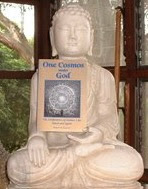
There's a helpful chapter in this book on Hartshorne's theory of order and disorder -- helpful because it speaks to our recent discussions of information theory, in particular, the differences between order, chaos, and information, and how they work together to produce meaningful change.

For example, "to deny the meaning of chaos is also to deny the meaning of order." This is an example of what Hartshorne calls "the logic of ultimate contrasts," a subject to which we will return momentarily. In a very real sense, the seeds of order are impotent in the absence of a fertile soil of chaos.

Furthermore, "The theological consequences of making order absolute would be that the Cosmic Orderer is responsible for all evils."

We might say that evils take place "due to the chaotic element. And if it be asked, 'Why does God not eliminate the chaos entirely?', the reply is, 'Because this is meaningless.' Order is just the limiting of chaos, as a river is the channeling (not the absence) of water."

In short, even God's power cannot be exercised on something that does not, and cannot, exist, i.e., order without chaos: "In this context, we might well think of evil as the overflowing of the banks," as "typified in the destructiveness of a flood."

However, there are also evils that result from too much control, as in the left's coercive, top-down approach of trying to solve problems by eroding liberty. Thus, both excessive and insufficient order can contribute to evil, and if chaos and spontaneity are covalent, these two "must be protected against by being overwhelmed by order."

Hartshorne's novel solution to this conundrum "is to grant everything, including God, some measure of both order and chaos." Again, an absolute order or an absolute chaos would both negate information, creativity, and novelty. For example, an accomplished musician always plays on the boundary between order and chaos; he does not simply reproduce the piece in a rote manner, but allows for creativity and surprise.

Theologians have typically ascribed the order of the cosmos to God, and then puzzled over the disorder. But what if the ultimate category is not order or chaos, but order and chaos? This immediately reminds me of the Jewish principle that the unit of mankind is not male or female, but male and female.

Which brings us back to the logic of ultimate contrasts. What are some of the ultimate contrasts that characterize existence? Let's see: Time/Eternity. One/Many. Absolute/Relative. Wave/Particle. Continuous/Discrete. Subject/Object. Transcendence/Immanence. Form/Substance. Freedom/Necessity. Abstract/Concrete. Whole/Part. Finite/Infinite. Individual/Group.

How are we to understand these pairs? It seems to me that the traditional way is to emphasize one to the neglect of the other -- as if one may be derived from the other, say, relative from absolute.

But what if these are not static dualities or polarities, but rather, ultimate complementarities? What this would mean is that, for example, Absolute + Relative is somehow "more" than Absolute alone, or One + Many is "more" than One alone.

In turn, this would go to the question posed in yesterday's post, Does God suffer? If we respond "yes" to this question, the suffering can be explained with recourse to the logic of ultimate contrasts -- that change and changelessness in God are somehow more than changelessness alone.

In the past, I have viewed the same principles in a modified vertical-emanationist way, a la Schuon. In other words, in his system -- which he regards as the "universal metaphysic" -- you might say that there is the changeless, apophatic God at the top, which in turn gives rise to the confessional/cataphatic God of religion, the God whom we may know and relate to.

This latter God -- say, YHVH -- is not the Absolute, but rather, the "relatively absolute." The true Absolute is beyond anything we can say about it, e.g., the ain sof of Kabbalistic thought, or the nirguna brahman of Vedanta, or Eckhart's unknowable grunt (ground).

But here again, what if -- to continue with the above example -- YHVH and ain sof are not two levels, but rather, a single reality that necessarily includes both poles, i.e., more horizontal/complementary than vertical/emanationist?

In the past, I have borrowed an analogy from psychoanalysis to illuminate this idea. If you've studied a little psychology, you've probably learned that we have a conscious mind (the ego) and an unconscious mind (the id). Typically, this is visualized as a kind of space with a horizontal boundary, with conscious above and unconscious below.

But this isn't how it actually works. Rather, you have to think of conscious/unconscious as a true complementarity that is present in all mental occasions. In other words, there is unconsciousness in every conscious act or thought or feeling, and consciousness in all unconscious ones. No one could possibly know themselves entirely; this is a literal impossibility, and if you don't realize this, just pay attention to your dreams.

Speaking of which, I think the dreamer/dream relation can be a useful way to think about God. The dreamer, for example, is inexhaustibly creative. It is not as if you can have one last dream and be done with it. Rather, dreaming is what the dreamer does -- just as creation is what the Creator does.

Or, as Whitehead put it, The many become one and are increased by one.

Monday, September 30, 2013

Does God Suffer?

It is a commonplace that Christian theology evolved in an intellectual matrix of Greek thought. This is not surprising, since this latter tradition was -- and in many ways, still is -- the most complete and consistent system of thought available, and the early fathers wanted their new sect to benefit from the prestige of such an association (the same can be said for making clear the continuity with the venerable Hebrew Bible).

The Catholic church considers the Greek matrix providential, but in the past we've speculated on whether this connection is truly necessary or perhaps contingent, and how Christianity might have developed in a different intellectual climate -- most recently with regard to our series of posts on Jesus Purusha, i.e., Christ incarnating as a Hindu instead of a Jew.

More to the point, if Christ is "universal," then it seems to me that so too should his "metaphysical penumbra" be universal.

In other words, there really shouldn't be "Greek way" or "Hindu way" or "Chinese way" to understand him, but just one way -- which should in turn reflect a universal metaphysic. A universal metaphysic is one that cannot be reduced to anything more basic or fundamental, and is discernible in every event or occasion of reality.

The process theologian John Cobb writes of how "Philosophical theology has been deeply influenced by Greek thought," which in turn "reflected Greek values. These values included the appraisal of eternity as superior to time, and of being as superior to becoming."

Thus, this presupposes an ultimate reality that is essentially static, since movement implies change, and if something is already perfect, then change can only diminish it.

For this reason, God is considered "pure act," with no possibility of anything being added to or subtracted from him: "For the divine perspective change does not occur, since the whole temporal process is always co-present." Our distinctions of time past, present, and future "hold only from the creaturely point of view."

A corollary of this is that God's perspective is "real" whereas ours is fundamentally unreal. Here we see an implicit connection with Hindu-Buddhist theories of maya, of the essential unreality of the manifestation, of appearances. (Then again, the compassion of the bodhisattva impels him to forgo nirvana in favor of a return to the world of suffering and change, implying that compassion is superior to -- or perhaps covalent with -- enlightenment.)

It also means that what we believe we are free to choose has somehow already been chosen, and that "our sense of creativity, of rendering determinate what was, prior to that act, not determinate, is an illusion." Thus, "our sense of responsibility is undercut."

You can't pretend this isn't an issue, for the Protestant split obviously produced various theologies of predestination (both religious and secular/scientistic), and we routinely hear the phrase "everything happens for a reason" -- as if God designed the Holocaust for reasons known only to him, or even just gave some little girl leukemia.

Many people who are otherwise positively disposed toward religion cannot get past this hurdle of the simultaneous existence of divine omniscience and evil (and let's face it, there's plenty of evil that isn't just attributable to human freedom).

Perhaps we need to rethink what we mean by the idea of "perfection." To take one obvious example, a "perfect lover" is not unchanged by our love for him or her, just as we are not unchanged by their love for us. Is it possible to conceive of a "higher" and more "perfect" kind of love than this, in which the participants are completely unchanged by the experience? I don't see how, without love turning into something it is not.

A related issue is whether God suffers. We all want to believe he does -- that he suffers with us -- and I think it takes a skilled theologian to prove he doesn't. For example, "The early church knew that Jesus had suffered death on the cross, and there were those who drew the conclusion that God suffered in Jesus's suffering. But the church drew back from from this conclusion," as "'God the Father' could not suffer."

This again parallels the Greek idea that it "is a mark of weakness and inferiority" to be acted upon, and to thus "be vulnerable to the actions of others over which one cannot exercise control." Rather, the Greek ideal emphasized "the basic invulnerability necessary to excellence."

Let's again toy with the idea -- or principle -- that man is in the image of the divine. What this means is that our accidents and contingencies do not reflect the divine reality, but rather, only our essence. In other words, what truly and necessarily defines us as human -- or, let us say, persons -- would have to have some divine analogue.

Now, what truly and necessarily defines a human? What are the conditions without which we cannot be persons? I think, prior to everything else, we must be intersubjectively open systems. Clearly, the notion of God-as-Trinity reflects this principle, in that the Trinity is not static at all, nor is it closed. Rather, it is the very essence of dynamism, of self-giving, and of receptivity.

Likewise, Cobb notes that "True human excellence does not involve insensitivity or indifference to others, but rather empathy with them.... This is especially important when others are suffering."

If we were to transpose this imperfect ability of ours to the divine plane, it would imply that "the divine perfection means that God perfectly receives all that happens in the world and perfectly responds to it. Far from being unaffected by our suffering and joy, God suffers fully with us and rejoices fully with us" (emphasis mine).

Importantly, this does not represent an anthropomorphization of God, but rather, a divinization of man. The same can be said of all man's divine qualities, prerogatives, and responsibilities, including his obligation to truth, his capacity for beauty, his striving for nobility, not to mention all the various flavors of love, e.g., philia, agape, caritas, eros, etc.

Well, all of this is still quite preliminary. Maybe I can dive into the heart of the matter tomorrow.

Friday, September 27, 2013

Man's Faith in God's Faith in Man

Some interesting comments yesterday about divine foreknowledge, free will, the nature of prophecy, etc.

In rereading the post, the following passage caught my attention: "Rather, I can only provide some general outlines and directions, but I hope to begin fleshing things out on Monday. Anyway, don't jump to any conclusions just yet. It will all make sense in the end."

First of all: Napoleon, like anyone can even know that.

But... I do know it, at least in a kinda sorta way. I mean, I don't know it like I know the sun is shining outside, but I have this intuition that a number of diverse strands will somehow come together and make sense.

So, it's not yet knowledge. Nor is it foreknowledge, because it's not like a mathematical equation, which, given the variables, has only one solution. You know the feeling. Call it... faith.

Faith is always a kind of unKnowing, because it's not just blind stupidity or flat ignorance, but an irreplaceable mode in the search for meaning, guided -- or lured -- by an invisible gradient of deepening coherence. Faith points and we follow -- it's analogous to our natural compass that points us toward foodsexgrog, but on a higher plane. It's a supernatural compass.

The world is full of “particulars,” of loose ends and bits of disconnected information. The deeper philosophy will be the one that connects the most fragments into a unified whole. Therefore, reality is both “present” and hidden from us, depending on our skill in weaving our own psychopneumatic area rug and pulling the cosmic womb together.

But this goes to what one commenter said yesterday vis-a-vis the differences between present, past, and future. These three are so different that it is difficult to see how they relate to the same word, time.

For the past is fully real (or realized), the present is the space of possibility, and the future hasn't happened at all, so it is not "real" in the same way as the first two.

Anyway, you might say that faith is the substance of things hoped for and the evidence of things unSeen. Thus, it is both substance and evidence, but not a physical substance and not empirical or (merely) rational evidence.

This got me to thinking: faith is said to be such a commendable virtue, I wonder if there is something analogous with God?

Again, I go back to the principle that man is in the image of the Absolute, so if this modality is so critical to our existence, why wouldn't it also be present in God, albeit in some analogous fashion? (Or, more properly, our faith would have to be an analogue of God's faith.)

So, is there any evidence that God has faith? Or is there some kind of reciprocity going on, whereby we have faith in God and God has faith in us?

You biblical scholars out there will be better at this than I am, but my first impulse was to check out my concordance in search of God's faith, and there it was, all over the place. For example,

Even with the Holy One who is faithful (Hos 11:12).

But as God is faithful, our word to you was not Yes and No (2 Cor 1:18).

He who calls you is faithful, who also will do it (2 Thes 23:24).

... for He who promised is faithful (Heb 10:23)

He is faithful and just to forgive us our sins and to cleanse us from all unrighteousness (1 Jn 1:9).

So, it's almost as if we are called upon to have faith in God's faith in us. If God's faith is analogous to ours, I suppose it would mean he "hopes" we do the right thing, just as I hope this series of posts will make sense.

In both cases, the faith is not just "passive"; or rather, it is passive in the sense of opening up an unsaturated space of freedom and possibility in the now, but active in the sense of movement toward the source of our faith, which in turn is the "vector of coherence," so to speak, or the density and interconnectivity of wholeness. Our faith is the shadow cast back and down by the light of this wholeness.

This again touches on the issue of God's omniscience, and whether it is possible to have the same sort of omniscience vis-a-vis the past, present, and future.

It seems to me that omniscience of the past is not especially problematic, because it consists only of "what happened." And knowledge of the present would flow from God's interior prehension of the whole -- or in other words, there would be no coherent whole, no cosmos at all, in the absence of God.

But what of the future? When God "prophesizes," I wonder if it is, in a way, analogous to my "prophecy" that this series of posts will somehow "all make sense in the end." Thus, it wouldn't so much mean This is going to happen, and I know exactly how, but rather, Don't worry. This is gonna happen, even if the particulars aren't all worked out yet.

Thus, this would allow for genuine surprisal in history, and God's ongoing "adjustment" to it, so to speak, to bring about the "ordained" outcome. In other words, there are many roads, none of which were built in a day, all leading to home.

Well, that's about it for today. Still no time to get into the unseen substance of what I was hoping for.

Thursday, September 26, 2013

A Creative God of Information vs. A Predictable God of Order

As promised, I want to try to relate information theory -- as discussed in Gilder's Knowledge and Power -- to theology.

It's a little frustrating, because it's a huge topic, and I barely have enough time to scratch the surface this morning. Rather, I can only provide some general outlines and directions, but I hope to begin fleshing things out on Monday (not sure about tomorrow). Anyway, don't jump to any conclusions just yet. It will all make sense in the end.

First of all, do we have any reason to believe that the structure of the cosmos reveals anything about God? I don't see why not; there's always something of the creator in the creation.

That word: creator. If God is a creator, then that alone is full of implications. For as Gilder writes, "creativity always comes as a surprise to us.... It is a high-entropy event. Innovations are not an expression of equilibrium and order, like crystals or snowflakes," but rather, "disruptions of it."

The question is, does creativity come as a surprise to God? Well, only if he is a creator. If he is not surprised by his creation -- and by the creativity of his creatures -- then he is something other than a creator, perhaps an "orderer," or mathematician, or playwright, or puppet master.

A God of this sort doesn't play dice with the cosmos, or with anything else, for that matter. In fact, he can't gamble at all, because he knows the outcome ahead of time. Sounds a little boring to me.

Furthermore, if God knows the outcome ahead of time, this erodes our free will, revealing it to be an illusion of temporality. Many Christians are fine with this, but I personally have issues with this type of omniscience.

Indeed, I think one of the most shocking implications of Christianity is the idea that the Creator submits himself to his own creation; that God genuinely offers himself to history, with no foreknowledge of what is going to happen -- because he is free, as are the human actors involved.

Isn't the whole pathology of the left encrapsulated in the pretext of foreknowledge of an open and undetermined future? Again, they try to impose order at the expense of information. But since the cosmos is in fact informational, this means that leftism fails because it doesn't comport with the nature of reality. As Gilder writes,

"No rational determinist scheme can encompass entrepreneurial entropy," because it "begins beyond the boundaries of settled rationality. As a form of new discovery, it passes Gödel's threshold, the point where all logical systems, including mathematics, exhaust their completeness. Entrepreneurship transcends certainty and enters the always-evanescent realm of creation."

So God is some kind of businessman and not just an isnessman? Not just O, but CEO?

Before you laugh -- or wince -- consider the fact that the essence of the trinitarian God involves transactional giving. Let's not idealize the individual businessman, but let's just consider why the free market works. It works because of "an imaginative sense of the needs of others," which, in aggregate, constitutes "a pattern of giving that dwarfs in extent and essential generosity any socialist scheme of redistribution."

As mentioned yesterday, I've been reading a book on process theology (not raccoomended to the casual or maybe even formal reader). I've always had problems with process theology; or perhaps it's just with the most prominent process theologians, who tend to use it to undermine orthodoxy and to promote radical environmentalism, hysterical feminism, Marxist liberation theology, and other pneumopathologies. These vertical activists blatantly use theology to legitimize their political and economic preferences.

But I think a genuine understanding of process theology goes in the opposite direction, for reasons alluded to above: because the cosmos is more like an informational organism than it is an ordered machine. This is why the cosmos is full of surprising developments that cannot be deduced from, much less predicted by, prior states; or as Gilder writes,

"[C]hemistry cannot be reduced to physics -- the density of information is much higher," just as "biology cannot be reduced to chemistry, or human creativity to biology." To simply shout evolution did it! is to beg the question entirely. Such simplistic notions "stop thinking rather than stimulate it."

So let's start thinking about this surprising cosmos of ours. Let's do like Hartshorne, for whom metaphysics was a "solemn vocation," involving "as a philosopher, the pursuit of the nature of reality, and as a theologian, the search for a rational foundation for religion" (McMurrin).

Wednesday, September 25, 2013

The Unboreable Lileks of Bleating

Reading this book of essays by and about Charles Hartshorne in conjunction with Knowledge and Power has been mutually illuminating. Hartshorne was the most famous acolyte of Whitehead, refining and extending his process philosophy, especially into theology. Both information theory and process philosophy describe a world of ceaselessly flowing information.

Again, mere order is not information. I hadn't appreciated this subtle point, but Gilder reemphasizes it in a section on fractals. Fractals are a form of order that reveals similarity across scale, but they actually contain virtually no information.

For example, I remember reading a couple of decades ago, about how researchers were attempting to predict the stock market by looking at the fractal pattern of day-to-day and year-to-year movements of the entire stock market -- as if its future were constrained by some macro-fractal pattern, or strange attractor.

But that makes no sense from the perspective of information theory, which again produces unpredictable novelty. Gilder compares the above approach to "analyzing water by focusing on the bubbles as it boils," on "trivial patterns yielding small or chaotic effects that are divorced from the actual substance of causes and consequences."

But one "cannot predict the future of markets or companies by examining the fractal patterns of their previous price movements," because "there simply is not enough information in current prices to reveal future prices."

It reminds me of an app Lileks has written about, which tracks his movements throughout the day. It produces interesting patterns that essentially depict the phase space in which Lileks lives, moves, and bleats.

But is he really constrained by that space? Does it really mean he has only the illusion of free movement? No, not unless he's severely OCD. But he's only a little OCD. Not to mention the fact that the exterior phase space doesn't say anything about his thrilling interior adventures. Another person running around in the identical phase space as Lileks would be totally boring.

But Lileks always manages to transform his low-entropy peregrinations and encounters into high entropy, entertaining bleats. It's called art -- a little like Joyce's Ulysses, only intelligible.

I mean, that's what art does, right? It takes the same materials available to all of us, but uses them to create novelty. Unlike Tom Friedman -- who always wants you to know that he lives in a very big phase space that takes him all over the world -- you never know what Lileks is going to say. Thus, there is no relationship between Friedman's expansive exterior phase space -- which seems so "free" -- and any meaningful pneumacognitive freedom.

For Gilder, "markets are more analogous to biological phenomena," which immediately calls to mind Whitehead's organismic approach to the totality of being: in short, reality is much more like an organism than it is a machine.

Hartshorne was a relentless critic of reductionism and determinism, because "chance and causal indeterminacy" are "negative but necessary aspect[s] of" of our freedom. In contrast, determinism "is a doctrine of the total insignificance of our freedom, giving human beings no greater scope of creative options than the lowest of creatures."

Thus, with the emergence of man, there is a huge ingression of freedom, novelty, creativity, entropy, and unpredictability into the cosmos. Where did it come from? To say that it comes simply from a prior state of low-entropy order makes no sense at all:

"Neither pure chance nor the pure absence of chance can explain the world" -- to which I would add that neither pure order nor the absence of pure order can explain it. Rather, "there must be something positive limiting chance and something more than mere matter in matter."

But what?

How about creativity? "Nuts and bolts cannot evolve," because "they have no intrinsic creativity. To have creativity is to have, in some sense, a goal or purpose. Future possibilities are causes in the present, both in sustaining the entity and enabling it to evolve." Conversely, determinism "is a theory of cosmic monotony, not of cosmic beauty."

Ah, now we're getting somewhere, because future causation is also vertical causation. Jumping ahead a bit, one of the essayists references Josiah Royce, who said that The best world for a moral agent is one that needs him to make it better. But how do we make it better unless we are lured by the attractor of a superior mode of being?

Or in other words, "The divine orderer works with entities that each have their degree of freedom to respond or not to respond to that influence. This may be tiny at the level of the electron" or the New York Times editorial page, but "is highly significant at the level of the human person."

And this is a very Raccoonish sentiment: "God, instead of being the all powerful manipulator of the creation, is its great persuader, providing its entities with specific goals or purposes and coordinating the activity of all."

In fact, this is where all the human information comes from -- in particular, I'm thinking of the "orienting" or "anchoring" principles that make a meaningful human existence possible.

A dog, for example is oriented by very simple attractors, e.g., food, sex, and companionship. But what is so surprising about man is that, the moment he becomes man, he is oriented around an entirely novel set of attractors, things like love, truth, beauty, virtue, nobility, courage, creativity, etc.

Where did these come from? From the past? From mere order? No. From the future -- or from the upper vertical (the former in time, the latter in space). In the absence of orientation to this upper vertical -- consistent with Voegelin's main point -- our lives are absolutely meaningless.

And ironically, this applies quintessentially to science, in that "the very sense of intensity in scientific activity is essentially bound up with the unpredictability of future discoveries and the frequent surprises in experimental results" -- for example, the surprising result that the globe hasn't been warming for the past 15 years after all.

Notice how the so-called scientists are attempting to characterize this as noise rather than information. That's not science. Nor is it religion. Rather, it is just the illicit attempt to impose a specious order upon surprising information so as to make it go away.

Gotta run. I'll leave you with another quote:

If becoming does not create new quality and quantity, new determinateness, then, we argue, it creates nothing and nothing ever becomes. And if nothing ever becomes, then there is no temporal passage from past to future. Everything simply is all at once.

Or in other words, history is just the time it takes for nothing to happen.

(The Sipster is another guy who can fling low entropy bits of his life onto the Internet floor and turn them into art. Few people can do that, and I'm not one of them. I always need to dialogue with high entropy folks like Gilder and Hartshorne in order to extrude a little novelty.)

Tuesday, September 24, 2013

Socialism Would Be Easy If Not for F*cking Creativity

"The very nature of creativity is that it always comes as a surprise to us" (Gilder).

Right? An antiquated machine that extrudes the identical lame product over and over -- say, Tom Friedman -- is the antithesis of creativity. If something can be predicted by its antecedents, it isn't a creation, it's a mere effect of something else, fully reducible to predetermined causes.

Science, strictly speaking, explains everything but creativity. Not only that, but in its reductionist mania, it generally attempts to explain the creative via the uncreative, the intelligent via the mindless, freedom via necessity, and the living via the lifeless. It just waves a magic wand over the ontological discontinuities and pretends this is an explanation.

I noticed this yesterday while thumbing through a recent Scientific American in the orthopedist's office. No matter what subject they touched -- the Big Bang, the origin of life, the intersection of ideology and science -- every author had the same adolescent tone of smug superiority to go along with their dull absence of style and their one-dimensional shallowness of thought. The magazine seems to exert a heavy editorial hand that banishes seriousness of thought; or that affirms a frivolous certainty.

To put it another way, their minds are entirely lacking in creative surprisal, so perhaps the metaphysic they embrace is just a massive projection of their own experience and limitations. As the left likes to say, they are indeed speaking their truth. Which no one should confuse with Truth. Rather, these are just fairy tales for the tenured, chicken shit for the scientistic soul.

But to be trapped in that sort of mind would be a kind of living hell for anyone who has made it to freedom, or who has rotated in Plato's cave.

Freedom means nothing to someone who has never experienced it, which is why it is so difficult to export it to places where it has never existed, e.g., Islamistan. For such peoples, freedom has an entirely different connotation, meaning essentially the freedom to live in their traditionally unfree manner. For them, the alternative to such oppression is social chaos. What we think of as individual liberty doesn't enter the equation.

My own racket of psychology is no more a science than is global warming. Psychologists have no difficulty explaining something after it has happened. The trick is predicting the event before it happens, which is what a genuine science does. The best historian in the world cannot predict the future.

What this means, of course, is that man can never be exhaustively described scientifically. True, it is useful to consider certain human parts in a mechanistic/deterministic manner, but the soul -- or a person, if you like -- is quite clearly beyond any human calculation. A person is not reducible to an ape, just as taking a shower is not reducible to rubbing oneself with hydrogen and oxygen.

The same is true of the climate, but for different reasons -- not because the earth has a soul (although it may have some analogous, emergent large-scale interior unity), but because of the infinitude of variables, i.e., because of the complexity and non-linearity of the system. Climate cannot be predicted for the same reason we have no idea what the global economy will look like 100 years hence. In both cases, the researchers simply don't know what they don't know -- which swamps what they do know.

Scientism is afflicted with a bad case of WTSIATI: what they see is all there is. How sad!

If we could predict surprise -- a contradiction in terms -- then we could organize and plan for it. Nevertheless, despite the intrinsic contradiction, this is precisely what leftists presume to do, i.e., control the uncontrollable and predict the unpredictable. In short, socialism would work beautifully if only creativity didn't exist.

Or, to paraphrase Larry Sanders' self-serving agent, "our job would be so easy if it weren't for fucking talent!"

"In a free economy," writes Gilder, "a high degree of apparent randomness does not mean actual randomness. An apparently random pattern is evidence not of purposelessness but of an entrepreneurial economy full of creative surprises."

Again, it's just like a person, only worse. If you kick a rock, you can pretty much predict where it will roll. But if you kick a man, you have no idea what he might do. Freedom is a terrible thing. No wonder most cultures -- and most people -- hate it.

One of the most succinct definitions of a person is provided by Nicolás Gómez Dávila; it is simultaneously the least and most you can say: a person is the permanent possibility of initiating a causal series.

Now, to initiate a causal series is to create, since an "initiation" is not preceded by anything else. In other words, it arises in a genuine space of undetermined freedom of choice. This, of course, is one of the deeper meanings of being in the image and likeness of God, for only God and man have this power to freely initiate a causal series (God absolutely, man in a relative analogue).

So, just as knowledge and power are intimately related, so too are freedom and creativity. Only in a free-market liberal democracy are they all present and accounted for. The left wants the power but not the knowledge, the freedom but not the creativity. Mere power + freedom results in precisely the type of lawlessness we see in the Obama regime. e.g., Obamacare for thee but not for me. (Or Clintonworld, where the powerful trade their StupidPower for more of it.)

Ironically, the most important scientific developments of the 20th century should be a lesson in epistemic humility, not an excuse for promethean omniscience. Gilder catalogues some of these:

"In physics, mathematics, cosmology, and psychology, reason collided at every turn with an insuperable barrier of incompleteness, uncertainty, paradox, incomputability, or recursive futility."

Raccoons know the drill: Gödel's incompleteness theorems, Heisenberg's uncertainty principle, Bohr's complementarity, Polanyi's tacit knowledge, Matte Blanco's symmetrical logic, the irreconcilability of quantum and relativity theories, the irreducibility of Slack, etc., etc.

It takes a big mind to know little -- or to unKnow a lot, to be precise -- the reason being that the largest spotlight has the largest area of surrounding darkness. But in a way, that darkness is a measure of our freedom, or at least makes it a permanent possibility. It certainly means that no one can shove us into their little prefabricated boxes -- boxes of class, or gender, or homophobia, or white privilege.

Perhaps the simplest and most suggestive definition of entropy is as a measure of freedom of choice: the higher the entropy, the larger the bandwidth or range of selection (Gilder).

Monday, September 23, 2013

On My Careless Linkage of Obama and Manson

First of all, about that last post -- I must apologize for implicitly linking Charles Manson to President Obama. An inexcusable lapse of judgment.

Rather, the link is much more explicit than I had realized. You might say there's just one degree of separation between the two, in the form of Obama's Chicago buddy and all around ghostrotter, Bill Ayers.

Guinn points out that in 1969, many on the left instinctively sympathized with Manson's anti-establishment credentials, and that the most radical among them "took it a step further; the presumed guilt of Charlie and his followers made him admirable."

No way. That's just another right-wing HateFact, isn't it?

Well, at a December 1969 meeting of the Weather Underground, Ayers' bitter half, Bernardine Dohrn, was unstinting in her praise of the Manson family:

Dig it! First they killed those pigs, then they ate dinner in the same room with them. They even stuck a fork into the victim's stomach. Wild!

These lovely friends of Obama, Ayers and Dohrn, "probably had the most authority within the Weatherman." Thus, their tasteful salute became "four fingers held up into the air to signify the fork jammed into Leno LaBianca's abdomen" (ibid.).

Stay classy, Bill!

There's no point in refighting the battles of 2008, and besides, if Leno LaBianca had lived to see it, does anyone doubt that Obama's tireless work to jam socialized medicine down our throats "would have brought comfort to her in her old age"?

That's what you call even Steven on the left. We're all familiar with Joseph Stalin's omelette recipe, which begins with appropriating the power to break eggs and ends with no breakfast for you. Way it is.

Speaking of HateFacts, here is a helpful piece on how the left dupes its useful LoFo idiots into supporting its illiberal agenda. It is impossible to understand the left -- or Obama -- without the key of cultural Marxism.

Returning to our main theme of information theory, "the key issue in economics is not aligning incentives with some putative public good but aligning knowledge with power." The free market does this spontaneously.

In contrast, the state not only aligns power and ignorance (of which it is ignorant), but is then shielded from the consequences. Power corrupts what is supposed to be a low entropy carrier -- the state -- with noise. Obamacare, for example, has to be the noisiest legislation in the history of the country.

"From the perspective of information theory, regulation is mainly an effort to replace knowledge with power" (Gilder).

But the most complete regulation can never overcome its "epistemic futility," i.e., Hayek's knowledge barrier. Regulation is of course necessary, but it "should be a low-entropy carrier" rather than a high-entropy barrier to commerce, as is Obamacare.

Remember, for the left, politics is, and can only be, about power, if only because it lacks the information necessary to govern rationally. It is certainly not about universal truths, or ordered liberty, or human nature, or natural law, or limited government, or classical soulcraft.

But real effective power is always the result of a pneumasynthesis of natural resources with supernatural ones, i.e., with human intelligence and creativity. Power minus information pretty much = the left.

Thus, for example, in 2009, Obama-Reid-Pelosi "turned up the power to compensate for the lack of information. The most readily available lever of power was federal spending."

In short, "seeking to ordain outcomes from the demand side, the blind side, without information and by dint of dumb money, politicians sought to control investment by brute spending" (ibid.).

But "federal spending based on borrowing from banks that is loaned at 0-percent interest from the Federal Reserve is the epitome of dumb money" -- i.e. Stupid Power -- and "devoid of information and deadly to the real assets of the nation." Rather, "all the relevant information is on the supply side."

But this is unacceptable to the Mansonoid left, since these evil supply-side piggies are precisely the ones who need to be brought down and punished in the liberal Helter Skelter of class warfare.

Friday, September 20, 2013

Charles Manson, Liberalism, and Information Theory

Okay, I get it. Information theory is not your thing. Well, I'm also reading a book about the life and times of Charles Manson. Would you prefer that we talk about him?

It's a really outstanding book, not the least bit sensational or exploitive, and very well written. Not the sort of thing I'd usually read, but it got a rave review in National Review, and I like to have something on hand that doesn't strain the Gagdad melon.

It's not just about Manson, but about the whole cultural milieu(s) that made a Manson possible -- not the least of which being the Haight-Ashbury scene of 1967, where he found himself shortly after being released from prison in March of that year (by then he was 33, and had already spent most of his life in reform schools or prison).

The chaotic environment of the Haight -- full of troubled souls in denial of their troubles -- was the absolute perfect setting for a sociopath to ply the emerging trade of self-styled new age guru. There, where reality wasn't real, his abnormality would appear normal. He began deepaking his charismatic chopra to vulnerable dupes, and the rest is history.

Charlie was never much of a student, but during his last prison stint leading up to his 1967 release, he took a deep interest in two prototypes of modern-day self-help snake oil, the benign clown Dale Carnegie and the malignant clown L. Ron Hubbard. He took formal courses in How to Win Friends and Influence People, and drank deeply of Scientology. Of course, the last thing on his mind was "self-improvement" in any ordinary sense of the term. Rather, his goal was "other-manipulation" for purposes of helping Charlie.

In short, he just wanted to learn how to exert power over others.

So in that sense, he was a huge success. Aside from new-age guru, the only other career path consistent with his skill-set would have been politics or self-help books, but he obviously wasn't straight enough for those paths. So instead he practiced retail politics on the people around him, manipulating them to his advantage and organizing his own little community.

Not to compare the two, but I am reminded of Obama's friction-free passage through the liberal education establishment, in which he seems to have assimilated little but the fashionable leftist pieties and cliches of the day, resulting in nothing left standing in his head but the will to dominate and control others via politics. You might say that leftist politics is sociopathy for conformists.

Thus, if Obamacare should remain the law of the land, rationing alone will be responsible for killing many more people than was Manson. Leftism kills. Always has, always will. We'll leave it to God to sort out whether such destructive ignorance is culpable or invincible.

The book is a real page-turner, but I'm only up to Charlie in the Summer of Love. Which sounds "ironic" -- what with the juxtaposition of love and mass murder -- but of course there was nothing healthy about that disease-ridden revolt against human nature. It carried the seeds of its own violent implosion, and one of the seeds that landed there was a charismatic guru named Charlie.

Does any of the above have any possible connection to information theory? Yeah, probably, since everything does -- at least everything made of information, such as a human being. (Perhaps a better way of putting it is that information -- i.e., the logosphere -- is made of person(s).)

"Financial crises," writes Gilder, "are no more a product of evil machinations than are hurricanes." Rather, "If you build your house with the wrong stuff in the wrong place, with the wrong algorithm, you may be hit."

Likewise, if you build your psyche out of the wrong stuff -- for example, envy, ideology, the will to power, etc. -- things may not go as planned.

Again, in order for the economy to function, we need to conserve low entropy carriers such as the rule of law, stable families, religious values, etc. But the same principle applies to the successful individual. In Manson's case, there was no stable psychic foundation whatsoever, and genetics -- i.e., temperament -- took care of the rest. Or in other words, if you nurture nature in the wrong way, you're courting disaster.

How and why did the economic *surprise* of 2008 occur? Well, it "suddenly made transparent the values that had been artfully rendered opaque when packaged as low-entropy money and debt instruments."

In short, what we thought were boring, low-entropy investments turned out to be full of turbulence and downside surprisal. Investors thought they had transparent information about them, when the instruments were actually quite opaque, and were suddenly revealed as risky ventures instead of safe havens. And when the low-entropy carrier fails, then you've got economic chaos.

It reminds me of the parole board that released Manson from prison in 1967. Interestingly, even Charlie knew that this wasn't such a good idea -- that while he might appear stable in the low-entropy environment of prison, left to his own devices in the high-entropy world of reality, he wouldn't be capable of ordering his life:

"At the age of thirty-two he was finally going to be free again after almost seven years.... The facade slipped; Charlie panicked and told Terminal Island officials that he didn't want to be paroled after all. He felt safe in prison; he didn't think he could adjust to being outside again. If they let him out, he'd end up doing things he shouldn't."

No dice: "the wheels of the penal system bureaucracy were turning. On the morning of March 21 [1967], Charlie found himself out on the sidewalk with a cheap suitcase and his guitar, not certain of where to go."

And to make the same pattern immediately relevant to the news of the day, check out Krauthammer's column on the Navy Yard mass murderer. Again, liberalism -- in this case, deinstitutionalization -- kills.

Thursday, September 19, 2013

All We are Saying is Give Information a Chance

Gilder writes that "When law becomes high-entropy, the flow of information halts and knowledge withers."

Again, this is because we need stable boundary conditions at the lower level of any system, in order to create the conditions for upside surprise, i.e., growth, progress, creativity, and evolution.

Thus, when "the line of demarcation between conduit and content dissolves," everything is reduced to noise (or at least no one can distinguish information from noise).

For example, "When currencies float chaotically and financial rules gyrate unpredictably, finance becomes a high-entropy and a high-profit endeavor. The economy lurches toward a hypertrophy of finance and litigation" instead of growth and progress.

I was thinking of how perfectly this captures the present economic crisis when I read a piece at PowerLine called Why Such a Pathetic Recovery? The short answer is because of all the noise Obama has inserted into the economy, and thus all the information that has been destroyed or displaced.

As we all know, the “Age of Obama" has been characterized "by record poverty, declining incomes, unprecedented numbers depending on federal poverty programs, and millions leaving the labor force in despair." Why? Or, more to the point, why haven't we experienced the typical post-recession recovery?

For the scholars cited in the piece, the stagnation has been a consequence of the "poorly designed and implemented government policies [that] have impeded capital and technological investments and hiring."

Well, yeah. No shit, Bob. By the way, when are you going to get off economics and return to the more purely spiritual subjects you also pretend to know about?

First of all, there is a Connection between the two, but I first need to lay a foundation. Remember, we're trying to interpret the PowerLine piece in terms of information theory, not just partisan point-scoring.

In this case, the policies of Obama-Reid-Pelosi have impeded capital and technological investments and hiring, which is another way of saying they have impeded the flow of economic information that is needed in order to make such decisions and commitments.

The authors say as much: "These policies impacted many key economic channels, including monetary and fiscal policies, commercial and investment banking, manufacturing, housing, and the environment."

And "many of these policies have depressed growth by distorting the normal forces of supply and demand that are critical for a market economy to function well and create new jobs" (emphasis mine).

There it is: low-entropy economic channels have been flooded with noise, thus distorting the signals necessary to make rational economic decisions.

Note also that Obama's insistence that he can interpret and enforce laws as he sees fit, only adds additional noise to the system -- or contaminates information with power. If no one knows what the law is, then no one can rely on it as a low-entropy carrier of information. Rather, everyone has to try and predict what Obama is going to do. But that's not in the realm of rational economics; rather, it's in the occult realm of mind-reading.

So, with the porkulus bill of 2009, Obama infused the economy with a trillion dollars of borrowed money, hoping it would magically turn into information. Instead, it just remained noisy cash, which various interests pocketed; rather than being used productively, individual states mostly used the illicit gift to fund transfer payments to various interest groups and/or to reduce their own unsustainable debt.

Tax policy has also been distorted by noise, rendering it "highly unpredictable, which in turn depresses the incentive for business to make long-term investments in capacity and technology, and holds business back from significantly expanding their workforce." Again, when the tax code isn't a stable carrier, it diminishes information.

So, how do we get things back on track? Obama has attempted to use the Stupid Power of the state to get the job done, but again, power is just a substitute for his non-existent knowledge. Why not give information a chance, as did Reagan, or Kennedy, or Coolidge?

What would an information-based approach look like? Here again, I think the authors have nailed it. For example, it would involve "restoring transparency and simplicity to the tax code," which is an obvious way to return it to being a predictable, low-entropy carrier.

Likewise, "reducing the U.S. corporate income tax rate, and reducing marginal income tax rates, which now exceed 50 percent in some states." Doing so would result in less information being siphoned off by the state and converted to Stupid Power.

The authors also mention changes in labor, energy, and environmental policy that would "make it less costly to hire workers and reduce the cost of becoming energy independent." And of course, there is Obamacare, which has to be the most catastrophic injection of Stupid into the economy since LBJ.

Truth always walks with humility, while stupid tends to strut omnisciently. Why is this? Ace made an offhand comment about it the other day, that "the more you know the more you realize you don't know. And conversely, only someone who knows a tiny little bit could possibly be under the illusion he knows it all."

So, all we are saying to President Stupid is to give information a chance.

(More on the high cost of Stupid.)

Wednesday, September 18, 2013

On Building a Better Human for Fun and Profit

It is strange how one seemingly random book resonates with and expands upon the next, but I've long since stopped trying to figure out exactly how this works, and instead just take the cosmic hint and go with it. It's been happening for some 30 years, so by now I almost expect this kind of surprisal.

As it pertains to the intellect, the rule is simple: obey your thirst! -- just make sure your thirst is from the intellect, and isn't mere promethean prying, ego expansion, or cognitively concupiscent curiosity. In short, don't be an infertile egghead. This is not academia, to put it mildly.

The intellect knows what it needs, and if you abandon yourself to its Higher Whims, it -- or its proper Object, rather -- won't fail you. Many Raccoons can personally witness to this truth.

Of course, when you first drop into its precincts, it might appear as a dense jungle -- as indeed this blog may appear to first-timeless readers.

But as one acclimates to the fauna and terrain, one discovers all sorts of unsuspected interstellar highways, byways, low ways and HO! ways. Indeed, in the absence of this subtle arterial structure, the cosmos would be a pretty bland and boring place, no? Isn't this where all the action is?

In this case, America 3.0 might as well be Knowledge and Power 2.0, because it fills in a lot of specific detail that is missing from Gilder's more high-altitude view of psycho-economics.

In Gilder's case, he talks about the low-entropy carriers that are necessary for high-entropy economic signals to reach their destination. If the low-entropy carrier is too unstable, or filled with noise, or too slow, then it cannot perform its function.

This goes to the critical nature of human software, as embodied both in individuals and in institutions. In other words, in order for economic progress to occur, we must have the correct low-entropy carriers in place, both individually and collectively.

Perhaps this sounds a little abstract, but this is where America 3.0 fills in the details. Interestingly, the authors' ideas are not "new" per se. Rather, they have simply availed themselves of decades of research that supports the insights and intuitions of conservatives going back to Edmund Burke, at least. (I might add that this new biography of Burke is a kind of pre-commentary on the other two books under discussion; hopefully we'll have time to get into this later in the week.)

Again, we're grappling with this question of how a specific population of human beings vaulted out of economic stasis after so many millennia of stasis. "Why for almost all of that time is there nothing going on, and then in the last 200 years things suddenly just go nuts?" (Bailey, in Gilder).

One answer "is that we developed better institutions.... if you don't have the right institutions in place, it [the nutty growth] won't happen."

But that begs the question somewhat, since it requires better -- or at least less nutty -- humans to make better institutions. Afterwards the superior institutions can help to form more effective humans, but it must start with individual minds and souls.

I'm only about a third of the way through America 3.0, but this is precisely its point: how America evolved the institutions that made it uniquely susceptible to such miraculous economic growth.

Conservatives have always had the intuition that it had something to do with "family values," but America 3.0 demonstrates with historical, empirical, psychological, anthropological, and sociological evidence just how right they are.

"Family values" is just a shorthand way of pointing to a psychic reality that is full of implications. Americans are quite different from Africans, from Arabs, from Chinese, and even from Europeans (with the interesting exceptions of certain parts of Holland, Sweden, and Norway, where a number of prominent Raccoons reside).

Put the other way around, the wrong type of family and kinship structure will place a nearly insurmountable barrier to economic growth -- as we see so conspicuously in the Arab-Muslim world. Israel stands out as a beacon of economic sanity in that benighted region, but (ontologically) prior to that, it also stands out as a beacon of family, parental, and kinship sanity.

For this reason, you could give the physical territory of Israel to the Palestinians, but you first need to eliminate everything Israelis have built there, and reduce it to the wasteland that existed prior to their arrival.

Under such conditions, the worthless land couldn't support a fraction of the so-called Palestinians that have metastasized since 1948. In short, Arab institutions could never have created anything resembling modern Israel, and never will.

Very little time today. To be continued...

Monday, September 16, 2013

Cosmo-Economics and the Metaphysics of Surprise

Same post, just a better title. It's all I had time for today...

If the second law of thermodynamics -- i.e., the inevitable drift toward entropy -- is true, why then do so many processes wind up instead of winding down?

For example, we are told that the cosmos starts off in a state of such maxed out order that it will someday be possible to reduce its recipe to a simple equation or discrete tattoo.

And yet, the cosmic story doesn't end in an abyss of dissipation, nor arrive in a land of bland randomness. To the contrary: here we are as laughing proof, hosting the most irreducibly complex object in the entire universe right inside our very skulls.

Speaking of the guffah-HA! experience, this weekend I stumbled across a scientific explanation of it in Kahneman's provocative but not mandatory Thinking, Fast and Slow.

It has to do with the sudden intuition of a hidden coherence between seemingly unrelated words and concepts. When this occurs, "measurements of electrical activity in the muscles of your face" will detect "a slight smile."

He doesn't go into what happens with the experience of a BIG coherence -- the biggest of all known as God -- but the impression of coherence "appears to be mildly pleasurable in itself." No kidding.

And it can also work the other way around, a point we have made on many occasion, e.g., how a depressed mood dismantles our pneumacognitive links and plunges us into a space of lesser dimension.

Thus, there is explicit humor in this blog, but the most important comedy is implicit, always revolving around the inexhaustible punchline -- meaning it never gets old -- of cosmic wholeness. For it is written:

Lesson! My yokes are easy, my words enlight. Beholied!

At any rate, this question of complexification, of "winding up," is of course one of the recurring motifs of the ink and pulp version of the blog. One fine day, after nine or ten billion years of matter just doing what matter does, it suddenly comes to life. Wo. Didn't see that coming.

Then, just as suddenly, life becomes self-reflective and enters a higher-dimensional space of truth, beauty, virtue, luv, laffs, wholeness, etc. And in the past few posts we've been discussing how man's economic condition suddenly vaults into a new space some 300 years ago, again, after thousands of years of stasis. In each case, the system breaks out of order and into a higher realm. But how?

All you metaphysical Darwinians and other tenured apes out there, why engage in the auto-pullwoolery of pretending to understand? In your case you really do need to read Thinking, Fast and Slow, because you're all laboring under a lazy and simplistic narrative fallacy, a theory-induced blindness resulting in the illusion of understanding, all revolving around a substitute heuristic (in which you totally beg the question of what Life is) and instead persist in your deluded state of WYSIATI (What You See Is All There Is).

Or, as Gilder describes it, you need to abandon your "futilitarian, zero-sum view of the universe," which "reduces credulous biologists and neuroscientists to the intellectual penury of a materialist superstition that denies the objective significance of their own scientific thinking." So, crawl out from under your academic crock and into the light!

For the cosmos -- the real cosmos, not your dead and hollowed out abstraction of it -- "is an engine of ideas, an information system, like an economy." (Although I would put it the other way around: a functioning economy is a microcosmos.) "It is a singularity full of detailed and improbable information. It is a 'super-surprise.'"

Again: it is the ultimate guffah-HA! experience.

You might be asking yourself: how is all this cosmic happy talk, this odious pneumababbling, different from merely deepaking the chopra? Well, for starters, it results in conclusions that are exactly the opposite of his Obama-worshiping liberal fascism. For

"The supply side, with all its intricacies of goods and services, commands far more information than the homogeneous money-dominated demand side." Top-down order "means lack of surprise and absence of creativity." Which is precisely why Obama's LoFo base of useful idiots is so surprised at his economic failures. But that's not surprise -- rather, the opposite. Nor is the joke funny to its victims.

Now, we do need order in order for the order to yield upside surprisal. However, this order must be at the "bottom," so to speak -- better, the foundation -- not imposed at the top by an all-powerful state. But the left specializes in imposing order at the top, while destroying it at the bottom, resulting in social and economic disorder.

The stable, low-entropy order includes such things as "moral codes, constitutional restraints, personal discipline, educational integrity, predictable laws, reliable courts, stable money, trustworthy finance, strong families, dependable defense, and police powers," not to mention sane and sober leadership and orthodox religious beliefs. This is where the real exceptions of American exceptionalism lay.

Thus, "All the surprising singularities of creative capitalism depend on the boring regularities of political order.... The entire saga of the history of the West conveys the courage and sacrifice necessary to enforce and defend these values against their enemies."

In short, conservatives defend the Permanent Things so as to engender real hope for improvement in one's material circumstance, and to facilitate benevolent change, i.e. progress. Conversely, progressives poison the conditions of progress at the root. They undermine and denigrate the Permanent Things that make progress possible, replacing them with their relativistic fantasies and malignant dreams.

Friday, September 13, 2013

Economics and the Noosphere

Picking up where we left off yesterday, we're inquiring into mankind's great leap forward, after thousands or even millions of years of economic stagnation (that is, if we want to include pre-Homo sapiens such as old Homo erectus and the like).

In fact, I wouldn't even call it "economic," since the rational underpinnings of an economy -- e.g., prices, secure private property, rule of law, etc. -- are precisely what we lacked; nor would I call it "stagnation," again, because every species is stagnant. Every species subsists on what is available in the surrounding environment. Truly, our great leap forward was an existential discontinuity, and not just a prolongation of biology.

And ever since it started, there have been people predicting it was petering out, or who warned that it would end in catastrophe, or who actually want it to end. Remember the Simon-Eherlich wager? How about the perennial myth of "peak oil?" Global warming hysteria is just the latest outlet for these hopeless pessimystics.

One commenter mentioned the centrality of energy to our Great LF. This is correct, except that energy isn't just energy.

Rather, it must of course unite with information in order to become useful. By way of illustration, Gilder cites a seemingly mundane example involving the history of lighting. Note how it parallels yesterday's sad story of man's long economic flatline:

"[F]or millions of years, from caveman's fires to the candles that illuminated the palace of Versailles, the labor cost of a lumen-hour of light dropped by perhaps 75 percent." But the emergence of gas light in the nineteenth century resulted in a a huge decrease in the price of light, and "the arrival of electricity in the 1880s produced another thousand-fold drop."

Now, the question is, how can we possibly measure the resulting improvement in our quality of life? We're talking about "a million-fold increase in the abundance and affordability of light itself," but that's just a number. The real impact is incalculable, and very few people take the time to think about what a miracle it is. And again, it is a miracle, if by miracle we mean a vertical ingression into the horizontally closed flow of time.

Note also that any leftist along the way could have proclaimed that we have quite enough light to go around, and that it's just a matter of redistributing it so that everyone gets enough -- say, three candles a day, or a bucket of kerosene, or whatever. In the 1970s it was gasoline every other day. The mentality never changes.

The other critical point is that no one -- certainly not any central authority -- planned for any of this benevolent progress. If they had, we'd probably still be using candles. No doubt manufactured by Solyndra.

Again, a free economy facilitates and protects information; an unfree one -- to the extent that it is unfree -- crowds out information with power. It "protects the centripetal power of kings, bureaucracies, politicians, and other purchasers of economic influence."

Obama-style krony kapitalism is just the latest version, but there are always going to be economic parasites and free-riders. Hemingway once called critics "the lice on literature." You might say that leftists are the lice on economics. They have no idea how to create wealth, only how to exploit it. The only difference is that they are not as intelligent as lice, in that lice at least have the good sense to avoid killing the host.

California is subject to the one party rule of such suicidal parasites, with utterly predictable consequences. Are they worried about hundreds of billions of dollars in unfunded public pensions for their fellow bloodsuckers? Nah. What are they worried about, then? About making sure that sexually confused children can pick the bathroom they want. Progress!

I don't know about the sexually confused ones, but I do know that any healthy, sexually unconfused male will naturally choose the girls locker room.

I guess Jerry Brown wanted to shed the "Governor Moonbeam" image, and finally prove that he's not from this solar system at all.

Now, if we examine the deep structure of the economic miracle described above, what's really going on?

First of all, I would suggest that economic growth is only possible in an open system that is specifically open to entrepreneurial creativity, imagination, innovation, and most importantly, to failure. I was reading something just yesterday -- can't remember where -- that if failure is not permitted, then neither is success. We must be free to fail, which is why there is no such thing as an unfree launch in the econosphere.

Conversely, leftists view the total economy as if it were a closed system with a set amount of wealth. They "believe their mission is to seize capital for the masses," and just infuse a bunch of money at the back end -- i.e., the demand side -- to reinflate the balloon. Which is a little like taking water from the deep end of the pool and pouring it into the shallow end.

Our president, for example -- the noted constitutional scholar -- has pointed out that the founders got it wrong in not giving sufficient power to the state to seize property and redistribute cash from one end of the pool to the other.

The problem is, any elected idiot can seize money. But that doesn't mean he's seizing wealth.

Again, a million dollars in the hands of Bill Gates is very different from a million dollars in the grubby hands of some bum on the street or in the White House. As Gilder explains, "detached from a capitalist, there is no capital."

Rather, in order "to create wealth, knowledge and power must be merged." This infusion -- or vertical ingression -- of information into capital doesn't appear on any accounting statement, because it is qualitative, not quantitative. You might say it's "in the cloud" -- the cloud of the ultrahuman noosphere that surrounds the material world.

Consider all of the "quantitative easing" by the Fed, which simply removes information from the economy. Conversely, Reagan unleashed entrepreneurial activity by what we might call "qualitative easing," through which it became much easier for venture capitalists to unite with entrepreneurs to create "informational capital."

Again, no one planned the consequent technology revolution. Rather, it was just a matter of getting out of the way and letting the noosphere do its thing.

In any event, it is this openness to verticality that "is the source of restoration that prevents the circular flow from running down into inanation. When the circular flow seems healthy, it is only because we do not notice that it is being constantly replenished. Such constant replenishment and revitalization by new information and knowledge is the only solution to the dissipation and physical entropy that is normal at all times..."

The other day, reader Julie commented that this sounds a bit like "as above, so below." Precisely. We could take the above paragraph and say the exact same thing of the vertical flow of grace -- or of our tension toward the Great Attractor -- in the absence of which we are just absurcular tale-spinning Darwinian monkeys chasing our tails.

Theme Song

Theme Song