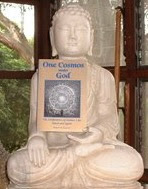
Saturday, July 26, 2008

Little Queeg's Footballs and the Coon Mutiny

Within each of us is the blueprint of the universe. We are of it. It is of us. And that universe from the beginning to the end of time is the body of the Holy Ancient One.... And as each cell carries sealed within it the genotype of itself, so each of us is the whole universe. --Lawrence Kushner, Honey From the Rock: Visions of Jewish Mystical Renewal

As Dupree mentioned yesterday -- and I don't know what makes him think he's authorized to disclose our private conversations -- I'm not sure what this post will be about, but I like the way the title rolls off the tongue.

First of all, why am I involving myself in this ugly bidness of Charles Johnson's public auto-Sullivanization? Why do I care whether LGF or any other blog goes off the rails into the weird personal obsession of its improprietor? Why all the UGLY, FANATICAL, VICIOUS, and UNHINGED attacks on someone who THREATENS my crumbling worldview?

I'll tell you why: because I happen to feel very passionate about doing what comes naturally. In short, I have to blog about something, and this is about as easy as it gets. Low-hanging strawberries, as it were. A slack attack. Yes, the Raccoon is a strange animal, in that, when attacked, it will defend itself. But always in a light and cheerful manner, because as Sir Winston said, it costs you nothing to be polite when shooting the other fellow. (And Charles really needs to stop the whining. He sounds like Ibrahim Hooper, who is also constantly under vicious attacks.)

But I'm not going to continue in this vein, because the last thing I need is to draw attention to myself and have a bunch of humorless Liztards coming over and stinking up the joint. I get enough supportive emails and comments to know that I'm performing some kind of public service in articulating a widespread perception of the deterioration of what was once a Good Thing. But unlike other blogs, our desire is to keep this one a bit of a secret, and hide out in our little cooncoon slacktuary. No one is banned, but few are invited.

The problem is, when discussing these matters, you can kill a person over and over, but if they're too dim to understand that they're dead, where's the bloody satisfaction in that? This is why I don't argue with these people, because who argues with a zombie? I like the clean kill. But you can generally only get a clean kill with a noble and uncorrupted spirit who wishes to die to his lower self. Until that lower self is either dead or circling the drain, we don't have much to discuss. In opposing God, you'll just end up feeding and puffing up the very pride and hubris that causes your transtemporal myopia.

There's nothing I can say that would arouse these souls from their metaphysical slumber that I haven't said in the previous 1030 posts. As Roger Kimball wrote about some Darwinist nonsense, "one recalls David Hume’s remark about the absurdity of calling a difficulty what pretends to be a demonstration and endeavouring by that means to elude its force and evidence.” We can demonstrate again and again, but the Darwinian faithful will just talk about "'difficulties,' or 'anomalies,' or perhaps even 'problems' for the theory." But Darwinism can never be falsified for the True Believer.

We are mistaken to imagine that we can share the understanding of higher worlds with those who have remained behind. This is because the awareness of holier worlds shatters earthenware vessels unable to withstand the light.... It is as if there were gateways. And at each one there stands a guard who wants nothing from you. Except that you go away. He will do all in his great power to foil your ascent. But his power is only the evil in you. --Lawrence Kushner

Speaking of which, many people have noticed and commented upon Charles' strange choice of personal demon-guradians. I mean, who cares if some people believe that evolution reveals cosmic intelligence instead of unintelligent randomness? Charles suggests that he's concerned that such a belief will poison the minds of children and destroy science education.

Whatever. Surely it cannot have escaped his attention -- but I guess it has -- that there is not a shred of evidence to support his delusion, and abundant evidence for the opposite proposition: that loss of religious principles renders people shallow, stupid, and uncurious. If you can't look at what has become of our university system and see that, then you are just too committed to your delusion. Like I said, I enjoy the clean kill, so I'm not going to press the point.

In my opinion, our educational standards have plummeted largely as a result of the attempt by leftists -- who have obviously taken over the educational establishment -- to impose their radical secular values on impressionable children. These values are not inspiring, to say the least, unless you are one of those odd people who draws sustenance from the idea that humans are merely clever animals, that objective truth is a hoax, that absolute morality is a fraud, and that Darwinism provides a remotely aequate account of the human state.

In this context, for Charles to cast his lot with the monolithic left and shout down the opposition takes about as much courage as it does for Dan Rather to Speak Truth to Power by being critical of President Bush, or for a college dean to ban Daniel Pipes from speaking. Like Rather, he vows to never give up this battle for Truth and Decency, and to vanquish the shills and frauds who wish to brainwash the Children, who are our future!

As Theodore Dalrymple points out, for some reason these pompous atheistic types always flatter themselves "that they are saying something new and brave" when they're just trucking in well-worn philosophical cliches. They take themselves so seriously, and yet exhibit "sloppiness and lack of intellectual scruple, with the assumption of certainty where there is none," combining it "with adolescent shrillness and intolerance." That perfectly describes the coarse mentality of the neo-Liztard, does it not?

I wonder if Charles would feel differently if he actually had a child, and saw the kind of scientific garbage they are exposed to in our public schools? Because it's all of a piece, and it all pivots around the idea that man is not only nothing special, but a kind of pernicious aberration, a demon-spawn of Mother Nature. We're not just Darwinian machines, but not even good machines. We poison the planet! We're racists! We plunder the world's resources under the guise of capitalism!

But because we are only machines, our leftist masters may remake us with proper incentives put in place by the state. It's such an intrinsic assault on human dignity, so unworthy of Man, that any spiritually normal person would resist -- again, unless you believe there is nothing intrinsically noble in the human state. Raccoons would much prefer to die in the wilderness than serve these academonic Egyptians.

Darwinist tautology can normalize virtually anything. But once you understand that truth -- not to mention, virtue and beauty -- is real and that man is free, you are no longer a Darwinist. Man is only free -- and intelligent -- to the extent that he is free to choose truth. If, like the Darwinist Liztard, he is condemned by natural selection to understand only what his genes have been selected to understand... well, you figure it out.

As I said, I don't expect these immature folks to be able to connect the sociocultural and psychohistorical, let alone, cosmo-spiritual, dots. For whatever reason, Charles has decided to alienate the grown-ups and gear his message to an adolescent mentality for whom anti-Muslim sentiment provides a good outlet for their hypertestosteronic predickament. But you all know how difficult it is to argue with an omnipotent college student with just enough philosophy to render himself loud and stupid.

Charles persistently reduces this dispute to a bad-faith, false dichotomy that reveals a kind of blind hubris and profound absence of intellectual curiosity. That is, either you are a reductionist Darwinist or you are a young earth creationist, no matter how much you protest to the contrary. But in reality, it is a matter of two competing visions of evolution, one of which is complete and consistent, the other of which is of necessity neither. Nor can Darwinism ever be consistent and complete, for reasons that are intrinsic to its erroneous metaphysical assumptions.

Like all science, Darwinism attempts to unify multiplicity on a "deeper" or more interior plane, even while it can never account for such things as interiority, depth, and unity -- let alone interior depth or absolute unity. This is why whatever truth Darwinism is able to disclose fits easily into the paradigm of perennial religion, whereas Darwinism could never account for those religious truths that "cannot not be," since they abide on on eternal, interior and archetypal plane that obviously transcends Darwinism. Darwinism cannot address this plane without maiming and ultimately destroying Man: again, reductionistic Darwinism is a form of nonviolent resistance to transcendence, or intellectual fascism. Thus the totalitarian streak at LGF, whereby Charles, like Kos or Huffpo, bans heretics from his blog.

As I have mentioned in the past -- and this is only half-ironic -- perhaps this dispute between Raccoons and Darwinists is a result of both parties being in the right, at least insofar as the Darwinian theory applies to those who adopt it and thereby cash in their humanness. In other words, Darwinism does seem to adequately explain the simple mind of the Darwinist, just as it does any other animal. After all, a "reduced mind" would apparently call for a reductionistic explanation. If they want to say that they cannot know truth, who am I to argue?

The Liztard wishes for us to be as cynical and disillusioned as they are. But worse yet, they want to foist this toxic attitude upon innocent children. But I believe we should do the opposite, and cultivate the innate spirituality and mysticism of childhood. Instead of throwing cold water on their spirits, we should assist them in developing "in the direction of the true reality which the ordinary world calls illusion":

"This is what it should be, instead of making children ordinary, with that dull, vulgar common sense which becomes an inveterate habit.... This is like an acid, a destructive acid in the being, which takes away hope, certitude, confidence in future possibilities.... And if you [avoid] this when you are very small, you have much less difficulty than if later on you have to undo all the bad effects of a bad education, undo that kind of dull and vulgar common sense which makes it insipid, boring, and contradicts all the hopes, all the so-called illusions of beauty..."

I know that Future Leader will not only have an adequate scientific education, but he will appreciate the magic and mystery of science -- the extraordinarily weird privilege of living in a light-filled cosmos that is intelligible to human intelligence in such a way that it shatters any and all materialistic assumptions, which are just pernicious roadblocks to the discovery and development of our divine-human potential. The relationship between Reality and the Liztard's cold and desiccated version of scientistic half-truths is analogous to that between pornography and love. It is devoid of interior beauty, and therefore cannot be true, nor can it touch the soul of man.

Ordinary souls like you and I are the link between this world and the higher ones, shuttling back and forth, carrying buckets of light in our heads. --Lawrence Kushner

Charles gots no bucket.

Thursday, July 24, 2008

The Missing Strawberries, or Ten Vicious Attacks on Charles Johnson Before Breakfast

Sources inform me that I have been banned from commenting at LGF for making a vicious -- vicious, I tell you! -- comment about Charles the other day. BabbaZee linked to the post, the hyper-vigilant Charles noticed it, and he immediately capped his most amusing and self-aggrandizing commenter. So at least old yellowstain puts principle -- or paranoia -- above self-interest, as his blog continues to auto-Sullivanize into a monolithic frat of anti-intellectual gee-howdies who know as much about theology and metaphysics as I do about web design and bicycling.

Imagine if I banned all of the people who make vicious comments about me, such as, "Bob, I disagree with you." To be honest, I've never banned a single person, although I have asked a couple of them to go away, mainly because they are just too stupid and/or annoying to understand what is going on here. I've never banned anyone for criticizing me, because in nearly every instance, the criticism is self-refuting, especially as it moves up the hysteria scale or down the materialist scale. As I've mentioned before, I don't even like it when other Raccoons reflexively defend me from these folks, unless they do so in a way that is funnier than the criticism -- which is almost always intrinsically funny if looked at from a sufficient height. In fact, I would be honored if Charles would link to this post, so we can see on a first hand basis how funny his dopey commenters would be!

Being that cyberspace persecutors are everywhere sapping his precious bodily fluids, Charles is a busy man, and can't possibly have noticed my previous vicious comments about him -- about his increasingly anti-intellectual rabble of illibertarian commenters and about what LGF has turned into, with its irrational lurch into a scientistic wacko chamber of substitious idolaters. Therefore, I've extended the courtesy of assembling them all in one place, so he can ban me retroactive to June 14, 2008, when I began addressing the subject. This is only the first ten. I'll post some more on the weekend.

1) As Charles Darwin wrote, "While nature, making procreation free, yet submitting survival to a hard trial, chooses from an excess number of individuals the best as worthy of living, thus preserving them alone and in them conserving the species, man limits procreation, but is hysterically concerned that once a being is born it should be preserved at any price."

Nah, just pulling your leg. That was Adolf Hitler explaining his values -- which he derived from immanent nature, not the transcendent Absolute -- in Mein Kampf. As someone once said, fascism in all its forms is the violent resistance to transcendence. Therefore, Charles at LGF, or the goons at dailykos, or any other flatland guardians, are not Nazis, since they engage in non-violent resistance to transcendence, as do the ACLU, or People for the American Way, or any other anti-religious activist and/or bigot or plain old ignoramus.

2) You see, the blinkered Lizard thinks that life only points down and back to the dead matter out of which it was magically given birth. But for the Raccoon, life is a symbol (symbol meaning "thrown across") that again points "up" and "in." We do not see life as a circular series of lateral mutations, but an open spiral that ultimately rejoins whole and part, absolute and relative, time and eternity, center and periphery, man and God.

And human beings are the "axis" or "pivot" of the whole existentialida. Deep down we all recognize this, albeit often in a garbled and perverted manner, for example, the environmental hysterics or the pompous and deluded LGFers who know they are superior to biology, but have no idea how or why.

Life! If Darwinism is all there is, what is it good for? Absolutely nothing. I have no respect for a reductionistic Lizard who is not a nihilist and a sociopath, for he is merely a weakling and coward who lacks basic intellectual honesty and the courage of his convictions. He has his feet planted in the soil of Judeo-Christian values, even while he has his head planted in his ass.

3) Again: to have the courage of one's convictions and to fully inhabit the Darwinist world of the scientistic imagination would be to live as an animal, not a human. Remember, to a Darwinist, a human being can be nothing other than an animal, pure and simple. Along the lines of our last couple of posts, there can be no radical discontinuity between human and animal -- or matter and Truth, behavior and Virtue, accident and Beauty, etc. It is a subhuman world unfit for Man. Which is again why none of them actually live there. They're all frauds, phonies, and crude loudmouths, including, sad to say, the Head Lizard.

4) Any Lizard who claims their life is meaningful in the context of reductionistic Darwinism is strictly fooling themselves. I won't argue with them, because there is no reason to take them seriously for even a single moment. If they don't understand this, they are either stupid or intellectually dishonest. The same applies without qualification to morality, beauty, and truth. Obviously, I will not waste my time "debating" someone who simultaneously believes in Darwinism and truth, as if the latter could ever be derived from former.

I notice that the unsophisticated commenters at LGF also have a caricatured view of the scientific endeavor, as if it is a strictly mechanical process that results from "facts + induction" -- as if it requires no imaginative leaps, or an overarching paradigm in order to even perceive a fact! I cannot see that any of them are the least bit acquainted with the philosophy of science, e.g., people like Whitehead and Polanyi.

One stupidly arrogant Lizard even said in response to one of my queries that he believed in "absolute facts" but not "absolute truth." How to even begin to respond to such sophistry? There is no fact that "speaks for itself," no experience that tells us what we are experiencing. To paraphrase Weaver, only by knowing little may we know much; logic depends on our "metaphysical dream," not vice versa. And it should go without saying that it is this Dream that unites men, not the logic. Nazis and Islamists are rational within the logic of their sick dreams.

5) Horizontal folks -- flatland materialists, secular pneumapaths, left-brainers, MENSA members, Lizards, et al -- love to sneer at religion and exalt the superiority of science or mere reason in understanding the world. But when they do this, they always deal with a caricature of religion based upon their own limited horizontal understanding. In this regard, they are very much like children or primitive people who cannot transcend their narrow cognitive horizons, and mock what they do not understand.

Science can never account for the scientist, that is, for the human subject capable of knowing real truth. Again, it simply assumes the existence of truth-bearing scientists, as if this is not deeply philosophically problematic. How can the watered-down evolution of reductionistic Darwinism ever account for that? It can only pretend to do so, again, by confusing the rays with the sun. But to understand Darwinism is to have transcended it.

6) The problem is, Darwinism should be taught as science, not metaphysics, but virtually all of the middlebrow Lizards absurdly elevate it to a quasi-religious metaphysic that is logically self-refuting at every turn. In turn -- and I have noticed this, for example, in many threads at LGF -- militant atheists do indeed confuse Darwinism with metaphysics, and blindly defend it with the same belligerence as any "fundamentalist." Light simply cannot break through their hardened defenses.

Religion easily accommodates science, while the reverse can never be true. Religion accommodates science for the same reason that our minds do. For our minds are designed to know truth, pure and simple, whether it is empirical truth, rational truth, artistic truth, moral truth, or metaphysical truth. Intelligence itself is prior to what it knows, and what it knows is truth (otherwise, “knowledge” is a meaningless, even absurd term). Therefore, intelligence is truth itself implanted within our being, or a prolongation of the Absolute within the relative.

7) Yesterday while commenting at LGF, I couldn't help noticing how the reductionistic Darwinists practice a sort of inverse mysticism, in that they elevate what can only be ceaseless change into eternal truth. With reductionistic Darwinism, all is change; everything is "on the way" to something else that is equally temporary. In such a paradigm, not only can truth not exist, but we couldn't know it anyway; the quantification of knowledge undermines its only meaningful measure, which is the intellect in light of the Absolute.

In a way, this is a caricature of Buddhist metaphysics, as it too advances what amounts to a paradox, i.e., "all is flux," so that it is folly to become attached to the passing stream of maya. However, the ignorant Lizards are missing a very important point, that being that it is possible to escape maya both from "above" and "below," and this makes all the difference, as the latter is actually a deeper plunge into its snares, a point that the -- let us say, less spiritually gifted -- LGF commenters never stop proving.

8) In other words, the Buddhist transcends the flux of maya in order to know the eternal, the transcendent Absolute, whereas the Darwinist Lizard goes the other route and identifies eternity with matter. Naturally this makes no sense in a cosmos that is itself contingent and evolving, but there you go. Metaphysically consistent they are not. There is a rebellious streak in them that is very similar to the left (who also escape reality from "below," except in their case, instead of becoming Darwinist "monotheists" they descend into the fragmented polytheism of multiculturalism, moral relativism, deconstruction, etc.).

In reality, they are two sides of the same worthless coin, just as, say, the Semitic and Eastern religions are two sides of an infinitely precious coin. I am disappointed that Charles can fall for this junk metaphysics -- just as he expressed disappointment in me -- but in my case I have an excuse, because I only want to be disappointed by the best. I do note that he clearly possesses a kind of peerless left brained, technological kind of lizardy wizardry, and that may be the issue, for every gift carries a potential curse. Every savant is an idiot in certain areas.

9) The scientific reductionist, like a machine, "has reversed the roles, turning its creators into its own creatures; it escapes the control of intelligence as such from the moment that it claims to define the nature of intelligence from the outside and below" (Schuon). People forget that the quantification of all knowledge "necessarily entails an inward impoverishment, unless accompanied by a spiritual science that re-establishes unity and maintains equilibrium."

This is one of the points I attempted to make at LGF, but to no avail. The bulk of commenters there seem to think that the "wall of separation" between church and state (itself a willful disunderstanding) must somehow extend to science and religion. Talk about a "wedge strategy"! But American schools are not failing because of "too much religion" (and by this I do not mean a religion, but simply a more sophisticated transcendental viewpoint that easily accommodates religion as such). To the contrary, our schools only began to fail after they were taken over by the radical secularists of the left. It could hardly be otherwise. What did you expect, wisdom?

10) Scientistic materialists -- including Lizards and other radical Darwinists -- are like defoliants, or people who would take an axe to this beautiful tree that has organically grown over the past 2000+ years. When you mess with the fundamental vision that holds a culture together "from the inside," you are messing with the equivalent of nuclear physics on the collective human plane: an Adam smasher, if you will. You just have no idea what you will unloose from the bowels of hell.

Human beings do not live in world of sense-data. But the postmodern vertical barbarians do. In their small Lizard minds, they are "liberated" from the "childish mythologies" of the past. In my opinion, Charles is quite naive about the inevitable implications of such an intrinsically anti-human ideology. The other day, one of the mutual readers of LGF and One Cosmos was also commenting on the increasing lurch into anti-intellectualism of the former, noting that his rabbi -- an eminent scholar -- had spent his entire life studying the Torah, and yet, had not even scratched its surface.

But it takes no learning -- let alone, wisdom -- for a jackbooted mob of metaphysical yahoos to, as the reader put it, "pontificate with grand self-assuredness that they know fully what is meant in all the intricacies and layers of Torah and the rest of us believers are a bunch of deluded dummies. There's nothing to be said to such people." Indeed, like gleeful, deicidal three year-olds, these Lizards can tear down in the space of five minutes what it took 3000 years of spiritual genius to build, from Moses to Sandy Koufax.

Wednesday, July 23, 2008

You're Nobody 'til Somebody Loves You

Squeezed for time again. Another speed post.

Plotinus provides an interesting example of the cross-fertilization of the world's religions, being that he not only represents the convergence of 800 years of Greek thought, but is also known to have studied the philosophies of India at some point (although details of his life remain sketchy, since he thought them unimportant). In turn, as Andrew Louth writes, from Plotinus "issues a new current destined to fertilize minds as different as those of Augustine and Boethius, Dante and Meister Eckhart, Coleridge, Bergson, and T.S. Eliot." Not to mention Toots Mondello, even if he was unaware of the coonnection. Although he obviously had a public school diploma, he was not what we would call a "learned man."

Again, it is not so much that the early Christians were neo-Platonists per se; rather, they simply knew the latter to be the pinnacle of human thought, so they naturally wanted to understand or frame their own new ideas within its context. Hadot points out that ancient philosophy was very different from contemporary philosophy, in that tradition and continuity were valued, whereas novelty and innovation were distrusted and even scorned. Therefore, one did not gain prestige by being the latest innovation, but by association with established truth. For example, Plotinus would not have considered himself a "neo-Platonist," but simply a Platonist.

But what were the earliest Christians? Obviously Christ gave us the theos, but not the -ology, so to speak. He left that for others to work out. Or, you could say he gave us O "in full," plus quite a bit of (n), but not in any systematic way. Rather, most of his comments are like sparks emanating from a central fire, as opposed to being meta-level statements on the nature of sparks, fire, and eyes (although one suspects that he did this with his inner circle, much of which is preserved in tradition).

In the case of Plotinus, he begins with three main principles, 1) the One, or the Good; 2) Intellect, or nous; and 3) Soul, or psyche. I don't think we do any violence to this formulation to say that it exactly corresponds to the symbols used in the Coonifesto, that is O, (¶), and (•), respectively. Furthermore, just as I explain in the book, each of these is an emanation from above, not "from below," which would be strictly impossible. In other words, there is simply no way that (¶) could arise from (•). Rather, (•) is like a "satellite" of (¶); where (•) is local, (¶) is nonlocal, just like the cosmos it mirrors. Or, you could day that (•) is particle while (¶) is wave, just like the quantum realm which is its inverse image in the material.

I will let you argue amongst yourselves whether O is the "end of the line," or whether it is an emanation from "beyond-being." Personally, I don't think it particularly matters, as it really comes down to the necessary distinction between nirguna brahman and saguna brahman, or Godhead and God, or apophatic and cataphatic theology. In my view, being that humans are in the image of the Creator, the law of inverse analogy tells us that the structure of our minds reveals something about the Divine Mind (and about the relationship between quantum and Newtonian reality, as hinted at above).

Being that humans have a conscious and unconscious mind (which are really one, just looked at from different angles), I speculate that the Creator has what might be called Mind and Supramind; which is to say, just like a person, there is a face we see, animated by hidden forces that we don't. But a person without a face would still be a person, just as God is still God irrespective of his public persona. I suppose you could say that there is "God for us" and "God for himself." It's just that the nature of the latter makes it almost necessary that he would wish to communicate the former; thus, you might say that human beings are the last word in the "self discovery" (so to speak) of God's creative "idiom," in the sense discussed a few posts back.

In fact, it would probably be fair to say that this is the innovation Christians brought to neo-Platonism. That is, for Plotinus, the One is indifferent to the world. It is completely static, simple, beyond the duality of knower and known (or any other duality). It is the source of everything, and yet, outside everything. Now that I think about it, this is what distinguishes Greek emanationism from Christian panentheism, in that the God of the former would never sully himself with the world, whereas in the latter view, God very much gets down and dirty; in the Christian view, every thing is God, even while God is not everything. In Plotinus' view, there is much more of a bright line between God and world, or O and Ø.

Now, as it so happens, Origen, one of the most brilliant early fathers, studied under the same teacher as Plotinus, a fellow named Ammonius Saccas. However, as Louth explains, unlike Plotinus, who studied him as a pagan, Origen studied him as a Christian. Thus, he was one of the first -- if not the first -- to regard scripture as a special language having to do with facilitating spiritual ascent, or the soul's journey through purification, illumination, and union, or from (•) to O. But instead of being a mere "emanation" from the One, we are in the image of it, which makes a huge difference, for it means that we retain -- and perfect! -- our essential humanness on the way to divinization, or theosis.

I could be wrong -- again, I never claim to be a scholar on these matters -- but I don't think Plotinus would ever have considered human beings to be in the image of the Creator, nor would it be conceivable that the Creator would ever deign to actually become one of us. In short, it would be our job to ascend to O (↑), not the place of O to coondescend to us (↓).

Indeed, as Warren pointed out yesterday, it was none other than Augustine who worked this out to its fullest. It turns out that he was also deeply -- and quite personally -- influenced by Plotinus, except that "in his hands," the "longing for God is transformed from a human restlessness [for our homeland] to our response to the incredible love and condescension of God, indeed is the movement of the Holy Spirit in our hearts."

Louth says that this represents "an extraordinary break with Plotinus," in that "what for Plotinus is the culmination of the soul's experience is for Augustine only the beginning of the way." This is because of the Christ-principle, which "comes from our homeland to us in this world, who can enable us to pass from hence to there. He does this by making available a wooden vessel which can traverse the sea" between us and O. In the plotinian vision, we have to do all the work, whereas in the Christian view, God throws us the ultimate bone, if we may so express it.

You might say that Plotinus had too negative a view of matter, in that the very first sentence in Porphyry's biographical sketch says he appeared "ashamed to have a body." Obviously, some of this attitude crept into Augustine, but one wonders if this is more Greek than Christian? Or perhaps it is just a reflection of a certain archetypal reality, i.e., the beauty of the eternal vs. the corrupt and decaying world of time. I suppose it's a matter of emphasis, or inflection, for as Schuon wrote,

"For Plato, matter -- or the sensible world -- is bad [only] in so far as it is opposed to spirit, and in this respect only; and it does in fact oppose the spirit -- or the world of Ideas -- by its hardened and compressive nature, which is heavy as well as dividing, without forgetting its corruptibility in connection with life."

However, "matter is good with respect to the inherence in it of the world of Ideas: the cosmos, including its material limit, is the manifestation of the Sovereign Good, and matter demonstrates this by its quality of stability, by the purity and nobility of certain of its modes, and by its symbolist plasticity, in short by its inviolable capacity to serve as a receptacle for influences from Heaven."

So there can be a world-denying strand of Christianity, just as there can be a world-affirming strand of pagan thought. To emphasize one or the other is a "dangerous disequilibrium," and it is precisely this disequilibrium that would seem to be resolved to the fullest with the Incarnation -- or with the avatar principle, if you like: God became man so that man might become God.

Tuesday, July 22, 2008

Keepin' it Real with the Old School Raccoons

A few words about my favorite pagan, Plotinus. Being that I am hardly an expert on ancient philosophy, I can say with total confidence that he represents the summit of pagan wisdom.

Furthermore, since I don't have time to check my sources, I can also spread the rumor that his thinking found its way into Christianity, first through Origen, then to Dionysius, on to John Scottus Eriugena, over to Meister Eckhart, and then on up to us. Therefore, like, say, Hermes -- even if the thrice-great one didn't undergo the formality of actually "existing" -- one could go so far as to say that Plotinus is one of a handful of Uber-Coons. Each of these men kept the Raccoon dream alive and passed it forward, preserving and prolonging the vertical in the horizontal, so that it would always be accessible to later generations, including our masters, Herman and Toots. That's pretty much all you could ask of a fellow.

Being that Plotinus represented the best of the world Christians came to inherit, it makes perfect sense that the early Christians would make some attempt to reconcile their new understanding with his, just as we would like for Christianity to make sense in the modern world in which we find ourselves. This does not mean that we reduce religion to the passing fashions of the day; rather, the opposite. Real religion is always capacious enough to make room for anything humans can throw at it, whether natural selection, psychoanalysis, heliocentrism, whatever.

Religion can and must be "flexible" without ever being amorphous or unprincipled, just as it must be uncompromising without being rigid. You could say that it must always retain both its geometrical and musical aspects, on pain of becoming sclerotic and deathbound. When that happens, it's always the fault of the humans, who kill the nonlocal spirit with the local letter, or the free-ranging music with the static geometry. New age types do the opposite, spoiling the beautiful geometry, or architecture, with bland muzak.

Here is why we love Plotinus: unlike, say, Alan Watts -- to pick a name out of thin air -- Plotinus' overriding concern was to embody his realization and to bring it down into the world. If your realization is real, you can do nothing less, because, on the one hand, "wisdom begins with awe of God," but it also works the other way around: awe of God is one of the first fruits of true wisdom, since we know without a doubt that this wisdom did not come from us. So if you think you inwardly "know God," and yet, nothing about your outward behavior changes, then you have to question your realization.

In short, if you don't walk it like you talk it and run it like you spun it, then you're probably just an enchanting or seductive gasbag at best. If your words do not come from realized wisdom, then what good are they? They will mimic the form, but they will be lacking the substance that gives them life and makes them real. In one sense this is a "subtle" difference, but in another sense, it is as obvious as the difference between.... between everything, vertically speaking.

What I mean is that there is scale of hierarchical values in the cosmos, and this scale is proof enough of the Divine, at least for people who are able to perceive it in all domains. As we move up this scale, things become simultaneously "lighter," and yet, have more existential heft. They are lighter because they specifically preserve and convey the celestial light that transcends them, but heavier because they endure, being that they partake of the eternal.

Most of the profane art that dominates our age has the opposite structure -- a thick surface that repels spirit and reflects only the lower human realm, accompanied by a gloomy kind of heaviness that "falls" or drags us down, rather then helping us "stabilize," like an axis. To the extent that it is "alive," it is only alive with the creepy-crawly things of the unconscious, so it is more like "living matter" than matter come to Life. Look at one of Michelangelo's statues and you see the miracle of matter come to life: again, geometry + music. This is to mimic the Creator. The other way is to mock him.

In Plotinus' metaphysics, the summit of reality is the One, which, for reasons we will get into later, is necessarily good (and the source of goodness, just as it is the source of all unity). In turn, the purpose of life is to 1) realize the One, and 2) crystalize this realization in the herebelow. This formula actually works both ways, so that the cultivation of virtue leads toward the vision of the One, while vision of the One should result in purification and unity of the Self. If this purification does not occur -- either as cause or effect -- then the whole exercise serves no useful purpose, either for the individual or the collective.

Hadot points out that for the ancients, philosophy was not the cold and dead, dryasdust academic game it has become for most moderns. To the contrary, it mainly connoted a way of life. Studying under a venerable philosopher was much more analogous to converting to a religion and delivering oneself into the hands of a spiritual master; its ultimate purpose was transformation of the self, not merely filling one's head with lofty ideas. The ideas are only useful to the effect that they serve as enzymes or catalysts that bring about real change.

Here you can clearly see that Plotinus drew a sharp distinction between (n) and mere (k). As I wrote somewhere in my book -- here it is, p. 211 -- "(n) has a transformative effect on the person who understands it, as it raises and expands the level of being, which in turn 'makes room' for more (n)." Therefore, if "understanding" only takes place in the mind, then it is again of little use. (n) is obviously quite different from profane knowledge, which can be passed from head to head without regard for qualifications. Again, so long as you aren't mentally retarded, you can understand Darwinism or other purely mental abstractions.

To know God means to do so with one's whole being -- body, mind, and spirit. It is knowledge of a totally different order. In fact, a spiritual practice will again primarily involve the gradual transformation of the self, as the light and warmth of (n) does its purificatory work. (Indeed, to know Darwinism "body, mind and soul" -- if such a perversity were possible -- would be to renounce one's humanness and to render oneself lower than the beasts.)

Look at it this way: philosophy is love of Sophia, or wisdom. And if you really love someone, you don't just do it with words. In fact, as often as not, words can conceal an absence of love. Real love is action is it not? We show our love in a multitude of nonverbal ways that give it real substance and depth. Look at liberals. They "love" their country, but not enough to put the words into action and actually defend it. Rather, for them, the essence of love is to criticize our country ("dissent is the highest form of patriotism"). This is like saying that the highest form of coonjugal love is for Mrs. G. to nag me.

I am reminded of Bion, who didn't even want to know if a patient was married, for he would decide that for himself. In other words, it is common for people to be "married," which only obscures the fact they they aren't, not really really. This is no different than someone who has a Ph.D, but isn't actually educated, or someone like Keith Olbermann, who is a "journalist," but not really. You know what they say: language was given to man so as to conceal his thoughts. Note that the very first words out of Adam's mouth are lies. And you tell me that Darwinism has more wisdom than Genesis!

This is why a Plotinus and an Alan Watts represent philosophical antipodes, despite any surface similarities in language. For Plotinus, "the practice of the virtues ensures a connection between the ecstatic and the everyday" in an entire style of life, and in particular, in one's relations with others. It is "the transformation of one's whole being, a practice of virtue and contemplation that makes one present to Spirit while not excluding the presence of other people, the world, and even the body."

This is absolutely in contrast to Alan Watts, who used Zen as a pretext to argue that morals were just repressive forces of social control. True, the conscience can be transcended, but from above not below. In the case of the former, one becomes conscious of the reality from which morality flows, so that the actions of the sage are at one with it. One no longer has to think about whether one is doing the right thing. It hardly means that one is free to do "just anything," or that anything the sage does is by automatically moral. But almost all cults and fraudulent gurus rely on that (lower) self-serving formulation.

To know God means that "we are never quite the same again." True, the intensity of the experience may ebb and flow, but we organize our lives "in such a way that we are once again prepared for contemplation." In other words, we prepare ourselves to be receptacles of grace: "We must concentrate ourselves within, gathering ourselves together to the point that we can always be ready to receive the divine presence when it manifests itself again." Con-centration -- i.e., to gather oneself around the center -- is the very reflection and vehicle of Unity on the human plane.

In contrast, dispersal of one's energies toward the periphery automatically results in alienation from God. So to focus upon God is nothing less than dwelling in our own ultimate unity -- body, mind and spirit. This is why Plotinus "exhorts us to a conversion of attention.... If we wish to be conscious of those transcendent things already present in the summit of the soul, we must turn inward and orient our attention toward the transcendent."

Thus, we are constantly preparing the temple for God, the temple being our minds and bodies. When he sweeps in and makes himself known, it is a grace, but if the grace is truly appreciated for what it is, we never cease attempting to make ourselves worthy of it. It is not a denial of life but a "lived plenitude," "not a means of escape, not a way of evading life but of being absolutely present to it."

Never stop sculpting your own statue. --Plotinus

(All quoted material taken from Plotinus or Simplicity of Vision)

Monday, July 21, 2008

Proof of Proof is Proof of God

Oops! I was suddenly called away early to work. I'm going to quickly skim this to make sure it makes minimal sense, then I'm outta here. Forgive typos and other infelicities.

****

First some unfinished isness before we begin. It's too short a subject to justify a post, but probably too important to warrant just a comment. But the other day, a commenter suggested that I was being a little unfair about Alan Watts. So let's put it this way: if you folks discovered that I was actually an alcoholic and an indifferent and irresponsible father with a spanking fetish, would it make any difference to you?

Would you look at my writings in a different way, if my main purpose in composing them were to trawl for Raccoon chicks and impress them with my continental charm and buoyant repartee? If I enjoyed going on speaking tours of college campuses not because that's where the ignoramuses are, but because that where the nubile babes are?

Here's the point: what I write and who I am are absolutely of a piece. In fact, if they weren't, I would have no right to say them. You will never learn anything about me that surprises you in a negative way, unless it is something that happened 30 years ago, which I enjoy writing about anyway, since it's mostly just funny rather than malicious.

Everything I write is a realized and assimilated truth (or at least "on the way" to it), not just "intellectually," but in terms of being. For better or worse, the writing comes from who I am, not what I think -- which is the only way I can do it on a daily basis. Along these lines, I'm currently reading an excellent book about Plotinus, and he clearly had the same attitude -- more on which later, because this is starting to turn into a post, when I just meant for it to be a quick thought.

I wanted to offer some reflections on something I read at Just Thomism, entitled Evidence For God. I'm going to expand upon it a bit for the purposes of drawing attention to myself and impressing the chicks, but if you read the post, you will see that I am largely playgiaphrasing with the original.

If someone asks what the evidence is for the expanding universe, one could give a simple three word answer: “the red shift.” However, this answer is unlikely to be persuasive or even make sense to someone who doesn't already have a background in science. For example, if you say it to a primitive person, or to someone with a high school diploma from one of our liberal-run schools, they will probably just give you a blank stare.

Furthermore, even if you ask the average person why they believe in the big bang, or global warming, they won't be able to tell you. Rather, they will simply be relying upon authority, or "thinking with the head of another." Suffice it to say that you are in much safer hands if you are "thinking with the head of Aquinas" than with the head of Dawkins. To "think" in the latter manner is to accept materialism on faith and authority -- except that there is no "truth" or "understanding" at the end of the line, just incomprehensibility and absurdity. This is "stupidity as such" masquerading as wisdom.

You could go on to provide a basic explanation of the red shift based upon the behavior of light we see from distant parts of the universe, but this is again unlikely to be convincing enough to overturn the common sense and everyday empirical observation of a scientifically untutored person who can see with his own eyes that the universe is obviously not expanding.

In an analogous way, if someone asks for evidence of God, we might say "truth," or "beauty," or "virtue." For a soul of sufficient purity and depth, this will be an adequate argument, especially once the implications are fully appreciated and worked out in an ontologically consistent manner. However, materialists, Darwinists, Lizards, and other metaphysical yahoos imagine that they can reject the whole of religion based upon a single argument taken out of context, just as a savage could reject the big bang based upon the obvious empirical evidence that refutes it.

Thus, as Just Thomism explains, both types of primitives "want more than evidence; they want the whole science by which their mind could be moved by the evidence" (emphasis mine). They essentially want to see the tree that will prove the existence of the forest, when the forest is on a different ontological level than the tree.

Do you see the dilemma? We get the occasional materialistic barbarian who demands "proof of God," but this is certainly no less difficult to provide than proof of the Big Bang to an eight year-old, which, even if you accept it, doesn't mean you actually understand it. Rather, you are accepting it based upon the authority of hordes of scientists who have worked out the math and physics to come up with the theory, a theory that is also grounded in a paradigm full of assumptions about how the universe works. In turn, many of these assumptions cannot be accounted for by the paradigm, as per Gödel, but the experts don't concern themselves with that. Science is science, not metaphysics, so few scientists care that their paradigm is irrevocably incomplete or inconsistent.

Bear in mind that we are usually dealing with an unintelligent person who is demanding evidence that would satisfy his intellect. Now, this is something I could never do, as I have long since forgotten how to be so stupid. In this regard, I take full responsibility for my failure to persuade trolls that the Permanent Real necessarily exists as a first principle. Likewise, in order for my intellect to be persuaded by the arguments of Dawkins, or Harris, or Charles Johnson, I would have to extinguish my intellect and become stupid, plus ignore years of experiential/phenomenological evidence.

First of all, mere logic and evidence are going to be insufficient for these people, being that they are not inclined to accept it to begin with, nor are they willing to undergo the traditional means of verifying the truths of religion. Furthermore, Just Thomism makes the key point that "what is usually meant by evidence" for the flatland materialist is evidence that will be persuasive to a hostile opponent in the heated context of a verbal combat or short debate -- or “evidence that I can just look at and immediately understand the whole scientific or religious structure in which it reveals itself as evidence.”

As Just Thomism properly notes, "Under this restriction, there is no 'evidence' for God’s existence, or for any other scientific, mathematical, logical, or academic truth." Also, Schuon notes that "in the spiritual order a proof is of assistance only to the man who wishes to understand, and who, by virtue of this wish, has already in some measure understood; it is of no practical use to one who, deep in his heart, does not want to change his position, and whose philosophy merely expresses this desire."

But this is true of all proof. O.J. is innocent to those who wish to believe it, just as "Bush Lied" is a dogma for the liars of the left. You could go so far as to say that truth only applies to good and honest people, but that doesn't mean that we don't hold the bad and dishonest ones to account, or invent a new truth that conforms to their wishes and doesn't bruise their feelings. But this is the essence of the compassionate left: truth as comforter, rather than truth as True.

Thus, logical "proofs of God" aren't really necessary. For example, it is more common for people to arrive at God through "spontaneous intuition which, if it is authentic, necessarily contains in an infused manner the certitude transmitted by the proofs of God or of the supernatural" (Schuon). Again: something is not true because it is logical, but logical because it is true, especially when we are dealing with truth of this order.

Another important point is that human intelligence "coincides in its essence with certainty of the Absolute." The existence of the Absolute is the first principle of any coherent metaphysics, whether "secular" or religious, as it is the condition without which there can be neither coherent thought nor communication of truth. But for the average man, "awareness of 'accidents' has stifled the intuitive awareness of 'Substance'; hence an intelligence that is systematically superficial, fixed upon a fragmentary reality."

Now, I have no objection to the existence of these people. They are often the "intellectual worker bees," and they have their role to play in elaborating the periphery of this or that relative domain. Again, the problems begin when this relativity is absurdly elevated to the Absolute, which ushers in the wrecking ball that brings down both religion and intelligence. These tenured children are completely blind to the fact that if their stance were correct, "we could never prove anything at all."

In a certain sense, proof itself is proof of the supernatural, being that it obviously exists in a realm above matter. The metaphysical transparency of the world is all the proof the Raccoon requires, but all men are not Raccoons, and I do not write for the wider non-Raccoon world. In short, while truth is surely unqualified, it takes a qualified person to realize that.

There is a translogical component to acceptance of any truth. We are not merely "logic machines." In other words, we must make a free act of assent to truth, and this cannot be reduced to the principles of logic. For example, there is no logical proof that one should abide by logic. What if I want to live a life a life guided by absolute spontaneity and transgression of logic, like people who live in San Francisco?

Saturday, July 19, 2008

Meditation for Dummies: Sit Down and Shut Up!

Here is your weekly soiled bobservation from two years past. As always, I try to pluck the best items from the bunch -- or at least one with unfilfulled potential -- but it seems to me that the pickin's were somewhat slim that month. I wonder why? Let me think back....

I don't know. Just an echo of the Rhythm of Eternity, I suppose. Can't always be inspired, although one does one's best.

As it so happens, this one touches on the topic we've been discussing this week. It was originally called On Meditation and Prayer: How to Depart and Bewholed. Let's see if I can nudge it a bit and get it up on its feet. Or at least make it entertaining. Or insultaining, with a few zingers from Dupree's belowtorch.

*****

Let’s pull another reader’s question out of the cosmic hopper, this one from Twisted Knickers, who asked, “I'm another one of those in the back of the class trying to keep up, and I'd appreciate it if you could recommend some books on learning to meditate. Or, maybe you could offer some meta-advice on how to navigate through the choices.”

“I'd also like to hear your thoughts on the contrast between traditional Christian meditation and the 'Eastern' types of meditation.”

In fact, yesterday I received an email from another reader with a similar question, who asked about a book entitled The Power of Focusing (which I had never heard of). “My question to you is whether you've heard of ‘focusing,’ whether you have any experience with it, and if you would recommend a person in search of the Truth to give it a try?”

[Focusing? What a novel concept. I always thought that being a scatter-brain was the key to the spiritual enterprise. After all, you folks saw the comment section at brother Deepak's site. If this doesn't demonstrate the power of frivolousness, I don't know what does, because this is the power that drives Deepak's empire. Isn't it fascinating how with capitalism, a sinister mediocretin can actually harness stupidity and shallowness and convert them into material power? And this is the very capitalism that Deepak would decry as "greedy" or "exploitative." The irony.]

In my view, there is nothing magical about meditation per se. I myself practiced it for many years without really getting anywhere, and I am sure this is true of many spiritual seekers, especially those drawn toward Buddhism. Many irreligious or anti-religious Westerners are looking for what they regard as a “rational” alternative to religion, so they turn to things like Zen, which is largely a non-theistic (not atheistic) psycho-spiritual technology.

Ultimately I found Zen and similar "bare witnessing" approaches to be rather dry, although there are obviously many wise and lovely aspects to Buddhism -- I suppose it's partly a matter of personal inclination, or one's dharma, to reference a buddha-ism. (I also have a lot of problems with the deeply immoral non-violence of Buddhism, at least as preached in the West, but that’s another subject; another irony though, because the Zen of the Samurai was hardly non-violent -- quite the opposite.)

In the West, Buddhism is often wrenched from its cultural matrix and reduced to a kind of shallow "realizationism." I agree with Schuon that “meditation cannot of itself provoke illumination; rather, its object is negative in the sense that it has to remove inner obstacles that stand in the way, not of a new, but of a preexistent and ‘innate’ knowledge of which it has to become aware. Thus meditation may be compared not so much to a light kindled in a dark room, as to an opening made in the wall of that room to allow the light to enter -- a light which preexists outside and is in no way produced by the action of piercing the wall.... The role of meditation is thus to open the soul, firstly to the grace which separates it from the world, secondly to that which brings it nearer to God and thirdly to that which, so to speak, reintegrates it into God.”

I find this to be a perfectly accurate description, because it is in accord with my own personal experience and with another one of my nonlocal authorities, Sri Aurobindo. (Yes, I know, Schuon would have a lot of problems with Sri Aurobindo, who was not a strict traditionalist, but that’s between the two of them.) For Aurobindo, the only purpose of meditation is to silence the lower mind or “frontal” personality in order to make an opening in what he calls the “psychic being.”

For Raccoon purposes, we may think of the psychic being simply as the vertical self that is both “deeper” and “higher” than the ordinary, worldly, conditioned ego. It is both "behind" and "above"; or, you may think of it as a line that extends from the principle to the manifestation, from God to man, or from O to (n). Using the lingo of modern physics, the ego is local, while the psychic being is nonlocal; or, (•) is particle, whereas (¶) is wave. In fact, for most people, (•) will be a kind of particle, or "crystalized" aspect of (¶). But the Raccoon "reverses figure and ground" in order to ride the wild surf of O. Or, he "reverses the vector flow" that causes us to live at the outskirts of being, at what I call the "terminal moraine" of the senses. Instead, he gathers himself inward and upward, and "breathes the eternal."

In short, as I tried to get across on pp. 219-224 of One Cosmos, the dual purpose of meditation is to 1) achieve stillness or mental silence, or (---); and 2) to maintain openness, surrender, or self-offering, or (o). I specifically define “faith” in this context as a sort of “expectant silence,” as we do our part to make ourselves a receptacle for the power or grace that transcends us. We are literally attempting to make contact with the spiritual world (or person), which always engenders an influx of forces. Again, the important point is not the meditation -- which is only a means -- but preparing ourselves for the subtle energy of grace, or (↓).

Depending on various personal factors, the grace appears in different guises. For some it will be more of a higher emotional experience, for others, awareness of the sacred and holy. For some it will simply manifest as an unaccountable change in personality, for others, newfound abilities or a deeper understanding of spiritual matters. It is not at all uncommon to actually feel this energy, often in the heart region or above the head. In fact, tantric yoga attempts to commandeer this energy and “take heaven by storm,” so to speak, which I would not recommend. Occasionally things can get out of hand.

Schuon is again exceptionally clear when he notes that “the contact between man and God [in meditation] becomes contact between the intelligence [he is referring here to the higher mind] and Truth, or relative truths contemplated in view of the Absolute.... Meditation acts on the one hand upon the intelligence, in which it awakens certain consubstantial ‘memories,’ and on the other hand upon the subconscious imagination which ends by incorporating in itself the truths meditated upon, resulting in a fundamental and as it were organic process of persuasion.”

This, I believe, accounts for what the immortal Dilys has called the “draining the swamp” aspect of true meditation and prayer -- why it not only opens us to the higher, but has the practical effect of cleansing, purifying, and “deconditioning” the lower mind as well. This is again why I am not a big fan of “empty” meditation of the Zen variety, especially when removed from the overall sacred and cultural matrix that guides, contains, and reflects it.

As touched upon above, another point to consider is that meditation is only an “exercise” or an adjunct to the spiritual life. It cannot be its purpose or end. Just as exercise has the purpose of making the body more healthy and fit in general -- not just while one is exercising -- meditation is a verticalisthenic that should carry over into one’s moment to moment life. In other words, insofar as it is possible, we should make the effort throughout the day to live in that silent (---) and open (o) state, in which we are not so involved with the ceaseless barrage of mechanical chatter and internal propaganda coming from the lower mind and the external cultural wasteland. Most of these "thoughts" are probably just chattering mind parasites anyway, either individual or collective.

This is why I am so drawn to Orthodox Christianity, because it really emphasizes everything we have been discussing above. Another of my nonlocal authorities, St. Theophan the Recluse, writes of how the lower mind is entangled with the world like an opium addict. It cannot get enough of what it really doesn’t need: "There is a lot of motion, but no life.” And “the reason there is no life in such a life is that it does not occupy and nourish all the aspects of human life, but only a small portion of it. And this small portion stands in last place, not even touching the center of human life.”

St. Theophan writes that “within each person is a spirit, the highest aspect of human life (¶). It is the force (↑) that draws that person from the visible to the invisible, from the temporal to the eternal, from the creation to the Creator.”

Writing of the ego, or frontal personality (•), St. Theophan notes that we might think that someone is “deep in thought.” But “in reality, he is deep in emptiness.... Observe yourself, and you will see that the greater part of our time is spent on such empty and straying thought. Some days, not a single substantial thought enters the mind.” Do our trolls not prove this point?

Not a single substantial thought. How true. This can actually happen to an entire freaking lifetime -- much more often than you might think. But here again, this is why I believe it is so important to have a religious framework for one’s “thinking.” As I have had O-->(k)sion to mention many times in the past, the very purpose of an authentic, revealed religion is to be able to think fruitfully about the otherwise unthinkable. Through meditation, concentration and prayer, we may take this thinking deeper and deeper -- or higher and higher -- into the vertical. Put it his way: religions are vertical languages that go hand in hand with the horizontal languages of math and science. Evolution is the evolution of both.

St. Theophan’s specific advice regarding meditation and prayer is to think of it as the state of standing before God with the mind in the heart. Body, soul, and spirit all have their own special ways of knowing, and this is the way to know God, as opposed to “knowing about” God with the mind. Another Orthodox text simply says to “establish peace and recollection within yourself and ask for the inspiration and guidance of the Holy Ghost.” St. Theophan says it is “simple: it is prayer -- children talking to their Father, without any subtleties...”

And one more thing: don’t look for immediate “results.” Rather, just do it for its own sake. Just make it a routine part of your life, like exercising or brushing your teeth. In my case, I’ve hardly missed some sort of physical workout a single day in my adult life. One has to adopt the same attitude as it pertains to exercising the Spirit. It’s the least you can do to devote at least 15 or 20 minutes a day to turning your mind to higher things (↑), so that the Higher Thing may turn to you (↓).

Meditation / Concentration / Prayer: These three words epitomize the spiritual life, while at the same time indicating its principal modes. Meditation, from our standpoint, is an activity of the intelligence in view of understanding universal truths; concentration, for its part, is an activity of the will in view of assimilating these truths or realities existentially, as it were; and prayer in its turn is an activity of the soul directed towards God. --Fritjhof Schuon

Friday, July 18, 2008

On Participating Joyfully in the Sorrows of the World: Isn't it Great to Love This Much?

Some final thoughts on the subject of identity, individualism, caste, creativity, and the human role in the pneumacosmic economy. Because if we have no role, then the Buddhists and Hindus are correct, that our humanness is "nothing," except perhaps an opportunity to realize our nothingness. In this view, nothing x nothing = a kind of paradoxical empty plenitude, or effervescent emptiness.

I agree with Warren that Schuon -- and this is really no secret -- was a more-or-less crypto-Vedantin, perhaps because this was the only way he could reconcile all the world's religions. But I don't think you can do this without eliminating something quite central to Christianity, and it is precisely this question of the eternal worth and infinite preciousness of the individual.

Part of the problem involves the definition of "individual," because in my view, most people do not become individuals, which is to say, themselves. And this is especially true in more traditional cultures, as there is no question that man's "social-ism" is chronologically, developmentally, and ontologically anterior to his "narciss-ism" (and I am using both of these words in a value-neutral sense; the point is, the individual emerges from the group, just as one's personal identity emerges from a matrix of unconsciousness).

Now, as I mentioned the other day, I believe the Buddhist path represents "the easy way out." It is one of resignation born of despair and hopelessness. I well remember once discussing this with my analyst some 20 years ago, and he made a wise crack that's stuck with me ever since. I must have been saying something about the superiority of "detachment" and such, when he said something to the effect that it wasn't difficult to see the wisdom in such an view when life was so obviously short, nasty, brutish, uncertain, arbitrary, tedious, and disease-ridden. But he was making a more direct point to me, having to do with an unconscious desire to essentially "refuse" my incarnation and withdraw from the game. (At the time, I was very much drawn to Zen and the like.)

Clearly, in my analyst's view, this would not represent any kind of advance, but a capitulation. Being that he was Jewish, perhaps this was a factor, in that Judaism, perhaps even more than Christianity, is very much this worldly. It is very much a religion of descent, of bringing the divine energies into this world rather than escaping up and out. The idea that a Jew could "leave the community," renounce marriage and family, move to a monastery, and obliterate one's personal identity is pretty much meshuggenah. In fact, there is a Talmudic idea that one cannot be a rabbi if one doesn't have children, because that is the only way to understand the depth of God's love for mankind. It's very concrete, not abstract.

But if you look at the conditions of life 500, or 1000, or 2000 years ago, who wouldn't want to move into a cave near the mouth of the Ganges and detach from it all -- just withdraw inward and ascend up and out? Obviously it can be done. But I sometimes wonder if it's just an elaborate means of self-hypnosis. Of note, none of the societies that adopt this view were particularly functional, at least until they began importing western values.

To paraphrase John Lennon, "I'm not anti-Buddhist, anti-Buddha, or anti-non-theism. I'm not knockin' it or putting it down. I'm just saying it as a fact and it's true more for Raccoons than for others. I'm not saying that we're better or greater, or comparing us with Buddha as a person or God as emptiness or whatever it is. I just said what I said and it was wrong. Or it was taken wrong. And now it's all this."

To illustrate my point about the difficulty of the Raccoon path, I remember seeing an interview with Tony Snow ( a Catholic convert) about a year ago. They began discussing Snow's cancer, and he began to break down, fighting back the tears. The interviewer -- who was also close to tears -- said something to the effect of, "You've got a lot to live for." Snow's pained response encapsulated the Raccoon view: Isn't it great to love this much?

Looked at in one way, you could say, "hell no! It sucks to love this much. If I were a single guy living in a cave, I could just slip off into the infinite, and not even notice the transition." But here is a man who found a way to value his own crucifixion -- and for those of you with small children, you know what I mean, because that's what it is. And yet, Snow didn't back away from it. Just like you-know-who, he actually embraced his fate. He did not think "my attachment to my loved ones is the source of pain." Rather, he said "my attachment to my loved ones is infinitely precious. I must not back away from it, but throw myself into it even more passionately."

Passion. Where have I heard that before? Judaism also has a passion for this Life, which is everything to it. This is why it is such a monstrosity to exchange the Palestinian beasts of depravity -- who are "living death" -- for the dead Israeli soldiers, who are "stolen life."

Likewise, the Christian God does not evade embodiment, life, and history. To the contrary, he plunges in feet first, into all of the muck, slime, confusion, obscurity, and ambiguity of the human state. If you think I'm exaggerating, this is one of the things that even the wisest pagans of the time could not comprehend, being that they believed the highest wisdom to consist of detachment and ascent. They could scarcely imagine a God who would actually choose this horrible situation, much less in a worthless and screaming baby born of anonymous peasants. That's crazy! As Pierre Hadot writes, this

"was one of the reasons for pagan hostility towards the mystery of the Incarnation." Porphyry asked, "How can we admit that the divine became an embryo, and that after its birth, it was wrapped up in swaddling clothes, covered with blood, bile, and even worse things?" "One could say that every philosophy of this period tried to explain the presence of [the] divine soul in a terrestrial body. Each was responding to the anxious interrogation of men who felt like strangers in this lower world" (Hadot).

In fact, it was in this climate that the heresy of Gnosticism (not to be confused with gnosis) was born, as it was a form of life-denial, rooted in the idea that existence wasn't just a mistake, but the perverse creation of a hostile demi-god. One can easily understand how a sophisticated person of the time could arrive at this conclusion. Imagine the faith it took to think otherwise.

But is it more or less difficult for us? For the blessings of modernity only make the world all the more enticing. Two thousand years ago it wasn't that difficult to be detached from children, since infant mortality was so extraordinarily high. People realized this, and didn't put a lot of emotional investment in a child until there was some certainty that he would survive. But even then, without the experience of passionate attachment at the foundation of the personality, the person will grow up with a schizoid, or paranoid, or borderline core -- meaning that they will either be emotionally detached from others, or project the bad content of their mind outward, thereby creating an eerily malevolent world, or be driven to extremes of impulsivity and a kind of "stably unstable" bipolar moodiness.

I suppose the question is, how do we truly reconcile Eastern and Western approaches without artificially reducing Christianity to Vedanta? Perhaps sophisticated Westerners need to get over their inferiority complex, and say that it is incumbent upon the Eastern religions to get a clue and to reconcile themselves with the Judeo-Christian values of America. Can it be done? Oh, I think so.

It is surely no coincidence that Sri Aurobindo was educated in the Christian West from a very early age. He eventually graduated with honors from Cambridge, and it was only then, at the age of 21 or so, that he returned to India. At the time, he knew nothing about Indian philosophy, and only later developed his own version of it, still rooted in tradition but adding some clearly Western concepts.

Quoting from the wiki article, it states that "One of Sri Aurobindo's main philosophical achievements was to introduce the concept of evolution into Vedantic thought.... Aurobindo rejected the materialistic tendencies of both Darwinism and Samkhya, and proposed an evolution of spirit along with that of matter, and that the evolution of matter was a result of the former."

But perhaps most importantly, "Sri Aurobindo rejected a major conception of Indian philosophy that says that the World is Maya (illusion) and that living as a renunciate was the only way out. He says that it is possible, not only to transcend human nature but also to transform it and to live in the world as a free and evolved human being with a new consciousness and a new nature which could spontaneously perceive the truth of things, and proceed in all matters on the basis of inner oneness, love and light" (emphasis mine).

Bingo! The Way of the Raccoon, whatever your religion. Elsewhere Aurobindo wrote that such an approach necessarily altered "our whole normal view of things; even in preserving all the aims of human life, it will give them a different sense and direction."

Isn't it great to love so much?

The first victory is to create an individuality. And then later, the second victory is to give this individuality to the Divine. And the third victory is that the Divine changes your individuality into a divine being.

There are three stages: the first is to become an individual; the second is to consecrate the individual, that he may surrender entirely to the Divine and be identified with Him; and the third is that the Divine takes possession of this individual and changes him into a being in His own image, that is, he too becomes divine
. --The Mother

Thursday, July 17, 2008

The Great Cosmic Casting Couch and the Role of a Lifetime

Before we implement the caste system, a couple of readers wanted some clarification. I'm hardly an expert on the subject, but I'll give it the old Coonish try.

Rick asks, "So Bob, do you think a person can be built for two or more [castes]? I think you are saying there is a 'predominant' one for a person and that even then most will not be great at it. Which is fine. It’s the forcing yourself to be exceptional at it, and convincing yourself you are when you are not, that is not good. And you’re speaking 'generally.' But I look at the categories and I clearly see a little farmer and hunter and warrior in me too. Seems the blessings of modernity finally allow it. The real world outside of your predominant caste will provoke those lesser ones. In other words, you may need ‘em someday."

That's a good point. Reminds me of astrology, in which one has a dominant sun sign, but within the context of various other archetypes, aspects, houses, elements, transits, and cycles, so that each horoscope is as unique as a... a human being.

The second question is from an anonymous commenter who boasts of living "in an abandoned refrigerator carton in a vacant lot. My box is lined with carpet scraps and is quite snug and cozy. I use the computer at the public library. I turn in aluminum cans and so forth to get spending money."

What this resourceful man wants to know is, "So, what caste am I, anyway? Am I the lowest or is there an even lower one?"

Let's start with these latter questions, being that I sense they have more comedic potential. First of all, there is an unavoidable political dimension to the questions, in that the caste of which he speaks only exists during a Republican administration. During such Hard Times, hordes of these untouchables suddenly appear as if by magic, living in their cardboard boxes and pushing shopping carts around the city. But when a Democrat is in office, the problem just as suddenly "disappears," and there are no longer any members of this caste. This is the nature of "liberal compassion." It is so powerful, that mere good intentions are sufficient to make the problem go away, at least until a Republican returns to office.

Caste. Exactly what is it? Schuon writes that "in its spiritual sense, caste is the 'law' or dharma governing a particular category of men in accord with their qualifications." The Bhagavad-Gita says that it is "better to perish in one’s own law; it is perilous to follow the law of another.... [S]imilarly the Manava-Dharma Shastra says: 'It is better to carry out one’s own proper functions in a defective manner than to fulfill perfectly those of another; for he who lives accomplishing the duties of another caste forthwith loses his own.'” The point is, there is real existential peril and pain involved in failure to identify one's caste.

Of the castes, Schuon only mentions four, but as Rick implies, the modern world would seem to suggest that there are many more niches to fill within the pneumacosmic economy -- which is again one of the great blessings of America, not just that we are free to move from level to level (vertically) or category to category (horizontally), but may also make a "mid-course correction" at any age. It's never too late to discover your role in the Cosmic Adventure!

Regarding the four castes, "There is first of all the intellective, speculative, contemplative, sacerdotal type, which tends towards wisdom or holiness.... Next there is the warlike and royal type, which tends towards glory and heroism.... this type will readily be active, combative and heroic, hence the ideal of the 'heroicalness of virtue.' The third type is the respectable 'average' man: he is essentially industrious, balanced, persevering; his center is love for work that is useful and well done, and carried out with God in mind.... Lastly there is the type that has no ideal other than that of pleasure in the more or less coarse sense of the word; this is concupiscent man who, not knowing how to master himself, has to be mastered by others, so that his great virtue will be submission and fidelity."

Again, we are not interested in the institutional application of these principles in any top-down manner. Rather, for Raccoon purposes, their only value is in the idea that we do possess our own "soul imprint," so to speak, which must be "actualized" in this life. In the past, I have discussed this in terms of Bollas's idea of the "unthought known" and its relationship to the discovery of our own unique idiom of expression, which would represent the "exteriorization" of our inwardness, so to speak. This is where liberty and the sanctity of private property come in, because it is obviously quite impossible to discover oneself except under conditions of freedom, nor can this exteriorization of the interior occur unless the soul can choose those objects that "resonate" with it.

That probably sounds too abstract, but I think you will find that it is actually quite concrete and "experience near." For example, Bollas talks about how a person's dwelling is like a sort of "soul museum" -- like walking through an objectified dreamscape in which the "contents are visible," as Van Morrison put it in song. To say that a sanctuary is where the soul and intellect find their rest is to say that there is a "good fit" between the inward and the outward. Thus, one person's sanctuary can be another's dreary airport terminal. I am often shocked at what people call "home," since my soul would be quite restless, if not totally alienated, there; but there you go. Different cloaks for different blokes.

In my case, whatever the external trappings, I usually go straight for the books and CDs. That tells me everything I need to know about what kind of person I'm dealing with (although what is hanging on the wall -- i.e., what they call "art" -- is another dead giveaway). This may sound... I don't know, petty, but I am utterly disoriented if someone has the complete works of Michael Buble or Harry Connick, but no Sinatra. Frankly, I don't know what to say to such a person. Just make my apologies and slowly back away.

You see, it's a matter of essentials. I am reminded of Ray Charles, who said that he could tell everything he needed to know about a woman by holding her wrist. Someone said to him, "that's preposterous. How can you tell everything about a person by touching their wrist?" To which Ray responded: "I didn't say everything. I said everything I need to know." (Which reminds me: How does one become a Raelette? Easy. You let Ray.)

Some people have no clear or articulate idiom, and that is part of the problem. For if you haven't discovered the soul, then you will not have found its idiom. Or, to put it the other way around, to find the soul's idiom is to have found the soul, precisely. Look at me. I would say that I didn't fully discover my idiom and truly flesh it out until I began blogging. This is a critical point, and again goes to what Rick was saying about the diversity of modernity, and the many more opportunities to identify and occupy niches and sub-niches.

As I have probably mentioned before, my book was difficult -- or at least laborious -- to write, in large measure -- which I now realize in hindsight -- because I had no audience. It was as if I were trying to develop a unique idiom, but absent any context. It's analogous to an artist who must simultaneously express himself and invent the means to do so. Looking back on it, I can definitely say that for much of my life, I felt like "an artist without an art form," and now I know why: I had to invent the art form, or the idiom, for my soul's expression. And of course, it's an ongoing process. For example, in reading that post yesterday from early '06, I could see how far I've come since then. And where I've come is "toward me."

Again, not necessarily just in terms of "content," but in expression, which turns out to be a vital component of the content! For this reason, I would never worry about someone "stealing my ideas," because they would have to "steal me," which no one could ever do. Or, put it this way: it is obviously possible to steal a scientific idea, or just discover it before someone else does. But no one could steal my idiom, because it is unique to my soul. For this reason I say, to paraphrase Walt Whitman: This is no blog, comrade. Who touches this touches a man! Or a soul, to be precise; cut it, and it bleeds my blood. So I suppose it's a body as well: again, the exteriorization of my deepest interior, for what it's worth. It is my "image and likeness."

Another important point is what Bollas calls "the erotics of being." This refers to the deeply satisfying feeling of expressing the soul's idiom and having it understood by someone else. It is "erotic" in the sense that it is soul-to-soul touch. People occasionally or constantly ask me when I might write the next book, and the answer is "possibly never," one reason being that it could never be as satisfying as the blogging, through which I have the privilege of indulging in the "erotics of being" every morning. With a book, I would have to be too self-conscious and couldn't "pull out all the stops." Even as it is, I am surprised that my publisher went along with some of the unorthodox features of my existing book. No one knew back then about the lost tribe of Raccoons, and how we share a similar idiom.

Now, back to our box-dwelling reader. Is there a lower caste? First, he might be confusing caste with socioeconomic status, for one's essential caste doesn't change with material circumstances. There are obviously wealthy people who are outcasts (one thinks of Hollywood) and noble and dignified people of modest means who have a natural aristocracy about them. They know who they are. These are often the people for whom liberal outcasts have contempt that they express under the guise of "helping the little guy." In point of fact, liberals are "little guys," i.e., constricted and emaciated souls. We are not, for we contain the very cosmos that contains the liberal.

Regarding those Hollywood liberals, one has only to examine their idiom -- i.e., their dreadful films -- to know everything you need to know about them. They must live in a kind of grinding soul-poverty that is scarcely imaginable to a Raccoon. What kind of soul thinks that these projects needed to exist, or even have a right to?

The lowest caste is a kind of "anti-caste," being that it has to do with a person who has no center, or else has a completely exteriorized and therefore dissipated soul. He then chases his soul outward, which results only in additional fragmentation and further distance from himself, as his soul drains into the terminal moraine of the senses.

Nevertheless, such a person, according to Schuon, is "salvageable through submission to someone better than he, and who will serve as his center. This is exactly what happens -- but on a higher plane which may concern any man -- in the relation between disciple and spiritual master." Recall that a couple of weeks ago, I was discussing how this has worked in my life. I have repeatedly discovered "spiritual masters" who at once served as a "surrogate center" and a means to discover my own idiom. Once that occurs, then you can relinquish the model, because the center is now "inside," so to speak.

The other day, Hoarhey was asking about people who are (•••) or even (•••••). What about them? Schuon talks about the "pariah," who arises from a "mixture of castes." One thinks of Deepak, who combines the sacerdotal with the material, and is therefore "capable of everything and nothing." In fact, this probably applies to all cult leaders and spritual frauds, who may have some level of spiritual insight, only mixed with other factors and tendencies, and which results in the inevitable "acting out" that we always see in such people -- the abuses, the contradictions, the broken moral compass, the rules that apply to followers but not the leader, etc. L. Ron Hubbard, Da Love Ananda, Rajneesh.... One could think of dozens more.

"The pariah has neither center nor continuity; he is nothingness eager for sensations; his life is a disconnected series of arbitrary experiences." Again, one commonly encounters this type in new age circles -- those "masters" who confuse the absence of a center with a kind of false transcendence. One can always sense when one is dealing with such a person, because their teaching will have no true depth, continuity, or resonance. It is very ad hoc, and they nearly always reject and belittle tradition, because it calls their absence of a transcendent center to account. They are also "charismatically creepy" or "creepily charismatic."

For as Schuon notes, "there is a supra-human Center which is always available to us, and whose trace we bear within ourselves, given that we are made in the image of the Creator." So although manifestation is a kind of great casting couch, ultimately there is really only one Role, and that's all that matters.

You know what they say: it's Frank's world, baby. We just love in it.

Wednesday, July 16, 2008

Beauty, Milk, Poop, Soul Jazz, and the Miscaste Obama

As I mentioned to a commenter yesterday, although I obviously cite Schuon a lot, I cannot say I am a disciple, nor do I believe he is infallible. One big reason I can't be a disciple is that I am quite certain that he would disapprove of my use of his ideas. In fact, if he were still alive, I would probably live in fear that he would find out about me and Go Medieval on my... person, like Dupree did to LaFayette last night.

I am reminded of when James Joyce was asked if he had relied upon the ideas of Giambattista Vico in his Finnegans Wake, and he responded "I would not pay overmuch attention to these theories, beyond using them for all they're worth." So I don't pay much attention to Schuon aside from playgiarizing with him 'til the sacred cows go OM, but hopefully in an inimitable Raccoonish, space age au-go-go manner that may look vulgar to the uninitiated, for the same reason that someone might mistakenly regard Potato Head Blues as primitive "jungle music" instead of a divinely hip transmission from Gabriel himself.

I suppose our main point of disagreement -- that would be me and Fritz -- is over the issue of adherence to strict traditionalism. In my case, I have a dilemma, and the best analogy I can think if is the difference between a jazz musician and a classical musician. Schuon is like a stately, dignified, and somber classical musician. But I am like what a condescending British reviewer once wrote of the early Beatles: Authentic R & B in the American Negro Tradition.

I suppose it comes down to two issues, 1) the value of the individual over the collective, and 2) how this impacts creativity, since creativity takes on a different inflection as it passes through the individual. Schuon was obviously preoccupied with how the rise of narcissistic individualism -- and with it, the loss of transcendence, norms, and standards -- had led to the kind of aesthetic anarchy we see today, where so-called "artists" produce works of "eternal worthlessness," if one may so put it. "Art for art's sake" is no art at all, for it deprives art of its sufficient reason, which is to serve as a bridge between man and God. To paraphrase Schuon, in serving only man, it inevitably betrays him in the process. Most modern art isn't even bad, just "nothing."

So while Schuon clearly had an appreciation of the dark side of modernity, he didn't seem to have any feel whatsoever for the totalitarian nature of premodern cultures, in which one really wasn't free to "become who you are." One was free to adhere to a "celestial archetype," so to speak, but not to discover or elaborate one's uniqueness.

Now, this latter process can clearly be abused, and I think it is fair to say that it is the central Pathology of our Times. For example, it seems that everyone is urged to be creative, when there are only a handful of people who are capable of being creative in a worthwhile way. It's no different than urging everyone to be Michael Jordan. What would be the point, except to pretend that everyone is good at basketball?

So the narcissism and individualism of our day places value on the individual to such an extent that it has the effect of -- in psychoanalytic terms -- conflating milk and feces; which is to say, breast and the lower GI tract. I remember the first time I heard this formulation in graduate school, and thinking that my professor was surely speaking metaphorically or just insane. Nope. The pathological narcissist imagines he's giving you milk when he's actually feeding you poop; in short, he's not a bountiful breast but a toxic asshole. Once you get a feel for this, you can really appreciate the ubiquity of the dynamic. Ever wonder how Noam Chomsky can be so prolific? Because the large intestine never sleeps. Likewise, mass culture is a sewer. Literally.

Nevertheless. One of the things I'm constantly trying to work out is the relationship between modernity and tradition, or individual and collective. Surely there must be a way to individuate that leads "upward" and which "crystalizes" our celestial essence, as opposed to downward, where it is dissipated and supplanted by a hypertrophied and promethean terrestrial ego. I mean, I can see how this path does usually lead downward into vulgarity, stupidity, and excess -- a gross and cringe-inducing "song of myself" -- but is there a way to be oneself in the context of timeless truth?

I admit that this may be completely self-serving, but I think so, and I believe that this is ultimately the entire basis of the American experiment in a culture of liberty, i.e., of conservative classical liberalism. True, the founders wanted to liberate themselves from various religious, political, and cultural strictures of old Europe, but at the same time, they clearly did not value liberty for its own sake, but only to the extent that it had a spiritual telos. This is obvious from their writings on the subject, so I won't waste time debating the knuckleheads who think otherwise.

Here's the problem, though: very few people can play jazz, for it combines the virtues of intense discipline with total freedom and abandon. It is the "sound of surprise," but not only surprise, which is just another name for anarchy.

Now, one reason I don't pretend to be some kind of "guru" is that I don't believe I can generalize my specific path to others, at least on any kind of wholesale basis. Perhaps to a very limited extent on a kind of boutique level, but only if the so-called "student" already has the makings of a master. To be honest, this is why I have never tried to get a job at a university. Many people who've heard me on a particularly inspired rant have asked, "why aren't you a teacher?," and the reason is, I could never handle teaching a bunch of idiots and mediocrities, and that is what college has become. Since we now have the egalitarian belief that everyone should have a college education, colleges are full of people who have no business being there. I know plenty of Ph.D.s who can't even write coherently or think deeply.

It's no different than suggesting that everyone should be in the military, when it is equally clear that warriors are special people who belong to their own caste and develop their own culture. As I have written before, I am a big believer in the "caste system," so long as it is not enforced in a "top-down" way that limits the freedom to discover one's gift and one's place. For example, my father was a quintessential "merchant," in that he was a born salesman. He loved people, and people loved doing business with him. He eventually became a sales executive on the strength of an 8th grade education, but it didn't matter, because he had such an innate feel for doing business with people.

In my case, I imagined that I would be capable of the same thing, but as I have written about in the past, I flunked out of business school. I was literally like a retard. Not only was it "not my dharma," but it took me a long time and a lot of floating on the Luck Plane to discover what my dharma was.

Similarly, I have a relative -- we have been estranged for years -- who is a fine artisan, in such a way that it comes completely naturally to him, but imagines himself to be a "scholar." For whatever reason, he rejects his God-given caste, and wants to be an "intellectual," so he writes books that would make fine benches or ottomans, but they certainly have no intellectual or literary merit. But you will have noticed that at least 90% of what comes out of academia is of this nature, since it is produced by people who don't belong there. They're in the wrong caste. (In contrast to this relative, I would have a hard time making a bookshelf out of two cinderblocks and a wood plank.)

Speaking of which, one cannot help noticing that an awful lot of people who reckon themselves to be members of the "priestly caste" don't belong there. Here again, because of the individualism of the age, virtually anyone can declare himself guru and usurp that role. Thus, a Deepak, or Tony Robbins, or Wayne Dyer, or all the others, who are certainly effective, if sociopathic, merchants, but who are not any kind of transmitters of wisdom, to put it charitably.

Look at Obama. What is he? That's part of the problem, because he clearly doesn't know. He's certainly not "priestly" or spiritual, based upon his long-time membership in a racist cult. He's not intellectual, based upon his skin-deep grasp of the issues, and a mind that seems to consist of little more than recycled leftist cliches with no discernible center. He's not a warrior; quite the opposite, as he has no feel whatsoever for military culture. He's not a leader, as his basic masculinity is too much in doubt. He's pretending to be something, but even he doesn't seem to know what it is. Apparently, he wasn't even a good community agitator, like Al Sharpton.

Yes, America is the "land of opportunity," in that anyone can be anything. But if this results in no one knowing their place, what good is it? In Obama's case, he's basically offering himself as a mirror to be what a certain lost segment of the population needs him to be. It's actually a kind of two-way mirror that -- not to invoke Godwin's law -- is at the basis of fascism, in which the leader embodies the people, and vice versa. Except in this case, both are "empty," so it's a kind of "negative fascism." The trouble is, we truly won't know what rushes in to fill that void until he's in office.

Hey, how did I get here? This is not my subject. This is not my beautiful post. I had wanted to continue our discussion of beauty, but merely preface it with my misgivings about completely jettisoning modernity. Unlike Schuon, I can't help believing that it has produced some worthwhile stuff despite the preponderance of subhuman garbage, and that our task, as always, is to "redeem the times" and find a way to reconcile the temporal and timeless.

For example, we all know about Bach. But he was just one of hundreds of court musicians who were patronized by various syphilitic kings, dukes, and princes, but whose work we never hear about, because it was just uninspired, derivative, and repetitive schlock. Likewise, we know about Shakespeare, but surely there must have been a multitude of bad playwrights in 16th century England?

In a couple hundred years, no one will know anything about 1960s rock music except perhaps the Beatles, Stones, Dylan, Kinks, Who, Brian Wilson, and a handful of others who achieved timelessness, depth, luminosity, and universality. But it would obviously be fallacious to imagine that they were the norm, and that there were no Freddie and the Dreamers, Sopwith Camel and Iron Butterfly.

Now. Now it is time to go to work. Oh well. As always, free association is free, and you get what you pay for.

Theme Song

Theme Song