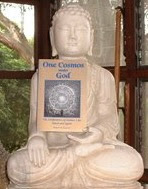
Modernity's quantitative and idealistic conception of liberty implies by definition freedom for evil, hence also freedom to abolish all liberty. --Frithjof Schuon
One major difference between left and right, or illiberal leftists and conservative liberals, is that for the former, liberty is wholly abstract and quantitative because horizontal, whereas for the latter, it is concrete and realistic because vertical.
In fact, now that I am about to cease thinking about the subject and begin contemplating it, this might be the defining difference between the two ontologies, and the type of people they help engender (or ungender, in the case of the leftist castrati). It cannot be overemphasized that the two systems result in two very different kinds of human beings. Or, you could say that one system results in the possibility of human beings, while the other results in something even worse.
I say "ontology" rather than philosophy, because in my opinion the differences go deeper than mere thought, or (k). Rather, the differences are very much rooted in being, hence the passions generated by the "culture war." Really, it's a question of being vs. non-being -- "to be or not to be" -- since, in the absence of vertical liberty, one can only pretend to be. That is, one can only exist in arbitrarily different ways -- "lifestyles" instead of living in proper human style. Leftism is not a race, except to the bottom.
Thus, if you're not following me, and I don't blame you if you are, the primordial "pre-political" divide would be between essence and existence; or being and nothingness; or the trees of Life and Death; or, to put it in the most polyunsaturated way possible, between O and ø, which, in the human microcosm, comes down to (¶) vs. (•). I don't want to dumb it down too much, but you can also think of it as sane vs. tenured.
Perhaps because most people are an unconscious blend -- i.e., they simply fit themselves into whatever the environment -- they don't notice the vast difference, or perhaps they are upset by all the "angry polarization." But in this regard, it must be said that so-called moderates are generally just retarded or limping liberals, since they are simply "adapted to change" as opposed to anything real and stable, i.e., transcendent. Thus, as man falls, these chameleons fall along for the ride inside the time crapsule, and therefore conflate "average" with "normal."
Another way of saying it is that any person or institution that is not explicitly conservative will inevitably dissipate and drift toward liberalism, in keeping with man's corrupted nature + the law of cosmic gravity, or 2 + 2 = forewarned. This is why one searches in vain for any left-wing levity. These O-holes can neither elevate nor laugh at themselves, which is why it is so important for us to laugh at them twice as hard for their spiritual benefit. My laughty relevations are intended to be a guffaw-ha experience, a wake-up call for the benefit of the alarming clucks among us.
As someone at the razzer's edge once said, "My jokes are easy, my words enlight." I don't mean to be some kind of hoppy jester bunny on the one hand, or reptiblican punster from the black lampoon on the other, but I'm only pulling the leg you don't have to stand on, hoping you'll trip and then gag on your own absurdity. Yes, you might need a hipness replacement for your groove disability, but If you could only laugh at the wisecrack in the cosmic egg, your sunny side wouldn't be so scrambled. When I post and riposte about these matters, it's a ridicure for what ails you.
Even some of my supporters accuse me of religious sincretism, but I'm jest praying the field in order to reach the widest potential Odience. We're not all bozos on this bus, and that's the problem. If I can be a comicalzee riding a farcical made of clues, perhaps I can blow open a big enough whole that you can catch a glimpse of your facetiousness before you were born. In mother words, for you feminists out there, I just want to tickle the rib of which you're maid mary, so you too can give birth to a lila wordplay of your own.
Okay, back to the mano-a-manologue, or hand to hand combat without hands or jokeholds.
A liberty that is wholly quantitative is ultimately absurd, since it not only can have no purpose, but it cannot even justify its own existence. In this regard, leftist political philosophy must be tautologous and taught to all of us in a totolerantarian way. Since it bears on nothing outside its own closed circle of jerks and smirking clerks, it is a cirque d' so-lame that it tries to root liberty in the demands of the collective, which is self-refuting in principle and self-defeating in practice.
In turn, this is why there is in fact an inverse relationship between leftism and freedom. Any institution taken over by the left results in the the diminution of freedom on the basis of the demands of the group. The travails of Ezra Levant before the Canagaroodian Court of Subhuman Rights is a vivid example, but one could cite countless other pouches of liberal tyranny. This morning reader Steve sent me this fine example.
But conservatism is always a tough sell, since it it relatively "empty" of content on this plane. In other words, it is very difficult to get elected by promising to do nothing, which is in most spheres the most important job of the government. As Schuon writes, "We often hear it said that criticism is 'sterile' because it does not involve any 'constructive' proposals; this is like saying that because one is not able to show someone the proper path one has no right to tell him he is walking toward a precipice..."
Perhaps this is why conservatism accomplished more in the 1990s as an opposition party than it did in the 2000s as the majority party. When in the opposition, conservatives are more in a position to stop or slow down liberals, whereas when in the majority, they end up imitating liberals. One wishes it weren't so, but if wishes were hearses, we'd all ride around like spiritually dead liberals.
I give up. This post was written under great duress, trying to type and watch a 2 3/4 year-old in the same timelessness. That's my excuse, and I'm sticking it to you. Probably no posts this weekend either, but we'll see, for "the windbag bloweth when he will."
Friday, January 25, 2008


Thursday, January 24, 2008
Political Truth and the Cosmic Errors of Liberalism (1.10.11)
I believe contemporary liberalism (i.e., leftism) is not just historically, accidentally, or "merely" in error, but intrsinsically, cosmically, and "principially" (if there is such a word) so. It is wrong not in this or that elaboration of its principles and policies, but in its very substance. As such, it's like trying to use defective bricks to erect a building, or magical thinking as the basis of science.
I hope it goes without saying that contemporary "Republicanism" is hardly the opposite of leftism. Rather, it's more like an obstacle, or bump in the road to socialism. More often than not it's just the crooked officer who wants his piece of the pie and can be appeased with bribes. Although more people call themselves conservative than liberal, there are in fact more "principled" liberals than principled conservatives.
Schuon is never explicitly political, but he frequently slips in a page-stopping observation that is pregnant with political implications. It would be strictly impossible to be a student of his and also be a leftist, just as it would be impossible for any seriously religious person to be a leftist. Not that there aren't religious leftists. It's just that their values are deeply at odds with the "perennial religion," and when push comes to shove, it is clear that they derive their values from politics, not religion; or, if from religion, they deeply misunderstand its esoteric and often even plain meaning. Rather, they simply use religion as a vehicle to advance their political agenda, an agenda that is rooted in ungoverned feeling. Everyone knows this, which is why the Democrat candidates are so awkward and unnatural when they talk about religion.
Edwards is a case in point. From where did he derive his mandate to end poverty -- as if such a thing could be possible, given the constants of human nature? He never explains how the sudden conversion to this mission came about. If it's just his ideology, that's one thing, i.e., the usual Marxist politics of envy, resentment, victimhood, entitlement, and theft. But if it is a "religious" impulse, he needs to explain his reasoning, and how and why it is permissible to force his religious beliefs on the rest of us, for it is hardly self-evident that "charity begins with government coercion."
To the contrary, there is reason to believe that charity ends with government coercion, for it places man either at odds with the collective or helplessly dependent upon it -- a helplessness that will be encouraged as "normative" once the system is in place and human nature, i.e., "gravity," takes care of the rest. Furthermore, this kind of socialist "charity" easily goes "hand in hand with complacency, which annuls its spiritual quality" (Schuon). Socialism never cures human selfishness but breeds it.
A spiritual virtue -- let us say charity -- is "nothing other than consciousness of a reality," in this case, the reality that all men are created equal and that our neighbor is equally precious "in the eyes of the lord." This is fundamentally a consciousness, not merely a "sentiment." If only the latter, then it is likely to be perverted by various forms of "intelligent stupidity," discussed in the last couple of posts.
Thus, "when virtue is purely sentimental, in the sense of being ignorant of the reality to which it relates, it may have a relative utility, but it is nonetheless a spiritual obstacle and source of errors" (emphasis mine). Again, true charity is rooted in consciousness of a reality. It is the very opposite of, say, self-created victims exploiting our sentiments to perpetuate their victimhood and therefore legitimize the presence of their hand in our pocket.
Metaphysical truths, in order to be effective, must become operative in the will. Thus, to transfer responsibility for a dimly perceived spiritual truth to the collective is to render it inoperative, since it relieves man of having to be personally conscious of the principle. But demagogues and narrow-minded moralists don't like to be reminded of this complexity, as they imagine that their "straightforwardness" absolves themselves "of the need for reflection."
For example, a John Edwards or Dennis Kucinich flatters himself by thinking he "speaks truth to power," when he actually speaks seductive lies to the powerless in order to keep them that way (and to keep voting Democrat). After all, it isn't as if the simple behavioral principles for avoiding poverty aren't well understood. But since they require the cultivation of certain timeless virtues -- and don't allow the sentimental liberal to feel good about himself -- the liberal isn't interested.
Is there a single leftist who understands the following principle?: "Too great an indulgence toward others is often caused not by an innate weakness of character but by an actual inability to conceive the frailty of men and the malice of the devil." And the reason they can't conceive of the frailty of men is that it would require too much painful self-examination.
One immediately thinks of the Hollywood left, who presumably project their deep character flaws into those they presume to rescue, which then absolves them of the need to root out their own frailties and rise above themselves. But "to take fallen man as the human norm is to end up idealizing not man but the human animal, the thinking beast." This is why no one is more anti-human than a humanist, for they undermine man's sufficient reason for being, not to mention his rootedness in the transcendent.
A Bill Clinton embodies the "qualities" of earthly intelligence and oily charm; or cunning and seduction; or calculation and hypnosis. As Harvey Mansfeld wrote, he is "the envy of vulgar men," and deservedly so. But as Schuon explains, "cunning" is no more a normal mode of intelligence than paranoia is a normal mode of perception. The latter is not perception but apperception, i.e., the systematic confirmation of one's malevolent suspicions. Keith Olbermann has to be the current poster boy for this dark side of human "knowing"; he is as brutally charmless as Clinton is "charming" to the willfully naive.
Suspicion becomes "illegitimate as soon as it becomes a tendency and a kind of principle, for then it engenders a sickness of the soul that is incompatible with virtue and hence sanctity." "Bush Derangement Syndrome" reflects this principle "gone wild," and we can see the dreadful consequences for the soul drowning in its dark waters. Rational thought becomes impossible, since it it organized by hate, not love. It is similar to moralism, which sunders beauty from truth. In fairness, one also sees this latter problem in certain annoying precincts of the religious right. Morality should never be made to look "disproportionate" by detaching it from truth and beauty. Moralistic virtues merely imitate their archetype, and can in turn become "a form of idolatry" (Schuon).
Here is another principle to which liberals are oblivious: "Rights that are defensive for an isolated individual become aggressive for a collectivity." The latter situation arises from envy and entitlement, not any virtue. As Schuon explains, "There is no legitimate connection between humility and a mere leveling down, for such a leveling is a form of pride since it denies the natural hierarchy of values and men; by this negation it is also opposed to dignity. Humility -- or simplicity -- is never a synonym for egalitarian mediocrity or weakness." Racial quotas based upon group identity are an affront to cosmic reality.
But "To take a collectivity as such as an intellectual norm means the progressive strangulation of intelligence." It means ignoring the reality of man's fallenness, however you wish to conceive it. It amounts to saying that man has "unlimited rights," but no responsibilities. "The consequences of such an attitude are evident: it opens the door to all the vices of human nature and unleashes the downward force of its fall; this is enough to prove it false."
Sorry I have to end abruptly.... no time to edit or spell check.
All the Schuon quotes taken from Spiritual Perspectives and Human Facts
BTW, I hope you've all seen these videos of someone being dragged before the leftist inquisition. I think I have a man-crush....
I hope it goes without saying that contemporary "Republicanism" is hardly the opposite of leftism. Rather, it's more like an obstacle, or bump in the road to socialism. More often than not it's just the crooked officer who wants his piece of the pie and can be appeased with bribes. Although more people call themselves conservative than liberal, there are in fact more "principled" liberals than principled conservatives.
Schuon is never explicitly political, but he frequently slips in a page-stopping observation that is pregnant with political implications. It would be strictly impossible to be a student of his and also be a leftist, just as it would be impossible for any seriously religious person to be a leftist. Not that there aren't religious leftists. It's just that their values are deeply at odds with the "perennial religion," and when push comes to shove, it is clear that they derive their values from politics, not religion; or, if from religion, they deeply misunderstand its esoteric and often even plain meaning. Rather, they simply use religion as a vehicle to advance their political agenda, an agenda that is rooted in ungoverned feeling. Everyone knows this, which is why the Democrat candidates are so awkward and unnatural when they talk about religion.
Edwards is a case in point. From where did he derive his mandate to end poverty -- as if such a thing could be possible, given the constants of human nature? He never explains how the sudden conversion to this mission came about. If it's just his ideology, that's one thing, i.e., the usual Marxist politics of envy, resentment, victimhood, entitlement, and theft. But if it is a "religious" impulse, he needs to explain his reasoning, and how and why it is permissible to force his religious beliefs on the rest of us, for it is hardly self-evident that "charity begins with government coercion."
To the contrary, there is reason to believe that charity ends with government coercion, for it places man either at odds with the collective or helplessly dependent upon it -- a helplessness that will be encouraged as "normative" once the system is in place and human nature, i.e., "gravity," takes care of the rest. Furthermore, this kind of socialist "charity" easily goes "hand in hand with complacency, which annuls its spiritual quality" (Schuon). Socialism never cures human selfishness but breeds it.
A spiritual virtue -- let us say charity -- is "nothing other than consciousness of a reality," in this case, the reality that all men are created equal and that our neighbor is equally precious "in the eyes of the lord." This is fundamentally a consciousness, not merely a "sentiment." If only the latter, then it is likely to be perverted by various forms of "intelligent stupidity," discussed in the last couple of posts.
Thus, "when virtue is purely sentimental, in the sense of being ignorant of the reality to which it relates, it may have a relative utility, but it is nonetheless a spiritual obstacle and source of errors" (emphasis mine). Again, true charity is rooted in consciousness of a reality. It is the very opposite of, say, self-created victims exploiting our sentiments to perpetuate their victimhood and therefore legitimize the presence of their hand in our pocket.
Metaphysical truths, in order to be effective, must become operative in the will. Thus, to transfer responsibility for a dimly perceived spiritual truth to the collective is to render it inoperative, since it relieves man of having to be personally conscious of the principle. But demagogues and narrow-minded moralists don't like to be reminded of this complexity, as they imagine that their "straightforwardness" absolves themselves "of the need for reflection."
For example, a John Edwards or Dennis Kucinich flatters himself by thinking he "speaks truth to power," when he actually speaks seductive lies to the powerless in order to keep them that way (and to keep voting Democrat). After all, it isn't as if the simple behavioral principles for avoiding poverty aren't well understood. But since they require the cultivation of certain timeless virtues -- and don't allow the sentimental liberal to feel good about himself -- the liberal isn't interested.
Is there a single leftist who understands the following principle?: "Too great an indulgence toward others is often caused not by an innate weakness of character but by an actual inability to conceive the frailty of men and the malice of the devil." And the reason they can't conceive of the frailty of men is that it would require too much painful self-examination.
One immediately thinks of the Hollywood left, who presumably project their deep character flaws into those they presume to rescue, which then absolves them of the need to root out their own frailties and rise above themselves. But "to take fallen man as the human norm is to end up idealizing not man but the human animal, the thinking beast." This is why no one is more anti-human than a humanist, for they undermine man's sufficient reason for being, not to mention his rootedness in the transcendent.
A Bill Clinton embodies the "qualities" of earthly intelligence and oily charm; or cunning and seduction; or calculation and hypnosis. As Harvey Mansfeld wrote, he is "the envy of vulgar men," and deservedly so. But as Schuon explains, "cunning" is no more a normal mode of intelligence than paranoia is a normal mode of perception. The latter is not perception but apperception, i.e., the systematic confirmation of one's malevolent suspicions. Keith Olbermann has to be the current poster boy for this dark side of human "knowing"; he is as brutally charmless as Clinton is "charming" to the willfully naive.
Suspicion becomes "illegitimate as soon as it becomes a tendency and a kind of principle, for then it engenders a sickness of the soul that is incompatible with virtue and hence sanctity." "Bush Derangement Syndrome" reflects this principle "gone wild," and we can see the dreadful consequences for the soul drowning in its dark waters. Rational thought becomes impossible, since it it organized by hate, not love. It is similar to moralism, which sunders beauty from truth. In fairness, one also sees this latter problem in certain annoying precincts of the religious right. Morality should never be made to look "disproportionate" by detaching it from truth and beauty. Moralistic virtues merely imitate their archetype, and can in turn become "a form of idolatry" (Schuon).
Here is another principle to which liberals are oblivious: "Rights that are defensive for an isolated individual become aggressive for a collectivity." The latter situation arises from envy and entitlement, not any virtue. As Schuon explains, "There is no legitimate connection between humility and a mere leveling down, for such a leveling is a form of pride since it denies the natural hierarchy of values and men; by this negation it is also opposed to dignity. Humility -- or simplicity -- is never a synonym for egalitarian mediocrity or weakness." Racial quotas based upon group identity are an affront to cosmic reality.
But "To take a collectivity as such as an intellectual norm means the progressive strangulation of intelligence." It means ignoring the reality of man's fallenness, however you wish to conceive it. It amounts to saying that man has "unlimited rights," but no responsibilities. "The consequences of such an attitude are evident: it opens the door to all the vices of human nature and unleashes the downward force of its fall; this is enough to prove it false."
Sorry I have to end abruptly.... no time to edit or spell check.
All the Schuon quotes taken from Spiritual Perspectives and Human Facts
BTW, I hope you've all seen these videos of someone being dragged before the leftist inquisition. I think I have a man-crush....
Wednesday, January 23, 2008
Erotic Tales of Metaphysical Ignorance and Tenure
The cult of intelligence and mental passion distances man from truth: intelligence narrows as soon as man puts his trust in it alone; mental passion chases away intellectual intuition just as the wind blows out the light of a candle. --Frithjof Schuon
In today's post we shall continue circumnavelgazing human intelligence and try to discover why it poses such a problem in the wrong heads. Obviously Man is intelligent. That's the problem. In fact, almost all his troubles are caused by his intelligence, through which he believes so many amazing things that can't be so. More often than not, the greater the intelligence, the more catastrophic the error, which is why it has been remarked that philosophy is "error on a grandiose scale."
There are many reasons man is in need of salvation, but because of the contemporary under-appreciation of gnosis, few people understand that they are especially in need of intellectual salvation in order to prevent their minds from "rotting in hell," so to speak. (I don't care if you understand all of this metaphorically, so long as you understand it.) There is a reason why so much foolishness comes from the secular left in general and liberal academia in particular. It's not an accident or coincidence, but absolutely "in the nature of things." We all fall, but only the secular left sanctifies the fall and renames it "tenure," for their left brains don't know who their right brains are screwing.
Taylor goes into great detail about how all of the impulses that eventually lead to the despiritualized secular world were rooted in religion. Only later did they become detached from spirit, at which time a new, self-flattering narrative was invented, depicting intellectual liberation as a revolt against spirit instead of its extension and elaboration.
Now we have a situation in which things like science and democracy have been severed from their metaphysical roots -- as if they just "happened," or were developed by people who rejected religion. This is the secular fairy tale we are asked to believe. But all religions have founding myths, and secularism is no different. Atheism is at odds with the humility necessary to receive Truth, and always -- either implicitly or explicitly but always obnoxiously -- "takes itself for a form of moral heroism" (Schuon).
Schuon writes that "modern man collects keys without knowing how to open a door." In contrast to this, a generative metaphysical doctrine "is the mental incarnation of of a universal truth."
Thus, what makes most modern thought so fruitless is that it is detached from its proper object, which results in a kind of sterile cognitive narcissism -- just "brains rubbing together." Since it adam & evesdrops only on the plane of middling relativities, it can only proceed in an absurcular manner, and can never even account for its own fallen activity. In other words, it "seeks the culminating point of the cognitive process on its own level," which, intellectually, is a little like marrying your sister. When that happens, don't be surprised if your offspring are a little off.
This is the difference between the intellection of a fertile egghead vs. the mere intellectualism of academic wacktivists. Most of the people we misleadingly call "intellectuals" fall and fall into the latter category of mental inbreds. They incubate thoughts and ideas to succubi, which are ultimately by the dead and for the tenured (and vice versa).
I suppose one has to have spent 20 years or so in the looniversity bin, as I did, to appreciate the full ghastly picture, but to be granted tenure is to be given access to the wider intellectual jerk circle of mutual master-, bachelor-, and doctorbation. It's really just a form of pornography, and like its sexual cousin, is so boring because no one's ever naked. And in case you don't know what I mean, when I say "no one's naked," I mean that it's full of jaded cynicism, joyless irony, and other posemoderns that are the consolution prizes for its spiritual vacuity and lack of intercourse with the Real.
(I don't want to get sidetracked again, but perhaps I should review my understanding of pornography, as the sexual kind must be just a symbolic sub-category of a wider phenomenon [as I explained in previous posts here and here]. In Portrait of the Artist as a Young Man, Joyce's alter ego, Stephen Dedalus, discusses the criteria for great art. He says it is the task of the true artist to record "epiphanies," that is, the sudden ingression of spirit into matter, when something leaps through its outer appearance and reveals its true nature in a way that illuminates the soul.
Didactic art is the opposite of this -- in fact, it is not art at all. That is, it lowjacks the medium of an art form and tries to cram some merely worldly message into it. In other words, instead of transmitting radiance from another dimension -- from the higher -- it forces in a message or "lesson" from the lower, from this side of manifestation. This is why nazi or communist or leftist art is so tedious. It is also why so much contemporary art is so awful. It's not really art, but what Joyce called pornography.
Pornography has nothing to do with sex per se; from the Greek, it means "writing of whores," which pretty much summarizes my point. It occurs whenever we completely despiritualize anything and divest it of its otherworldly radiance and spiritual telos. Therefore, there is much that is pornographic that is not sexual at all. By this definition, most contemporary music is indeed pornographic, as is most TV, certainly MSM news. Most literature is pornographic. Even religion can easily be pornographic. And certainly most politics.)
Yesterday, what smelled like a probable denizen of academia left a comment to the effect that this blog and its "true believers" are just plain stupid, proving once again that the wisdom of this world is folly to Godwin. I didn't argue with him, because I know exactly what he means, even if he doesn't.
That is to say, as Schuon points out, a metaphysical truth can never be exhausted on the mental level, as this would be absurd, for the same reason that a three-dimensional sphere contains an infinite number of two-dimensional circles, none of which are "wrong" on their own level, but nevertheless can never be equivalent to the sphere if added together. This is why it is so easy for the Intelligent Stupid to argue that one circle looks different from another circle, therefore the sphere doesn't exist.
In turn, this proves the adage that "when one denies the supernatural it is unwise to hold forth on matters that have no meaning without it" (Schuon). Such critics apply a kind of deranged but impeccable logic "to things that a priori elude them." To paraphrase Schuon, what such a person calls "objectivity" is simply an honest confession of their genuine inability to distinguish truth from error, and then congratulate themselves with the title "objective." You will notice that liberal MSM boneheads do this habitually. They really don't see their bias. Yes, they're that stupid.
The whole point is that a traditional doctrinal formulation is a symbolic emanation of O, so to speak, which "realizes a mental form capable of communicating a ray of [infinite] Truth to one who is intellectually fit to receive it." Thus, it is not we who embrace truth; rather, it is Truth which deigns, or coondescends, to embrace and "become" us.
Everything revolves around truth and the will; the one must penetrate the other. Truth illumines the will, which, when illumined, vivifies the truth.... Intelligence is nothing without truth, and without virtue it is unable to contain truth in a really adequate and absolutely stable way. --Schuon, Spiritual Perspectives and Human Facts
Think outside the postmodern box:

And don't be like the drunk who looks for his keys under the street lamp because that's where the light is:

In today's post we shall continue circumnavelgazing human intelligence and try to discover why it poses such a problem in the wrong heads. Obviously Man is intelligent. That's the problem. In fact, almost all his troubles are caused by his intelligence, through which he believes so many amazing things that can't be so. More often than not, the greater the intelligence, the more catastrophic the error, which is why it has been remarked that philosophy is "error on a grandiose scale."
There are many reasons man is in need of salvation, but because of the contemporary under-appreciation of gnosis, few people understand that they are especially in need of intellectual salvation in order to prevent their minds from "rotting in hell," so to speak. (I don't care if you understand all of this metaphorically, so long as you understand it.) There is a reason why so much foolishness comes from the secular left in general and liberal academia in particular. It's not an accident or coincidence, but absolutely "in the nature of things." We all fall, but only the secular left sanctifies the fall and renames it "tenure," for their left brains don't know who their right brains are screwing.
Taylor goes into great detail about how all of the impulses that eventually lead to the despiritualized secular world were rooted in religion. Only later did they become detached from spirit, at which time a new, self-flattering narrative was invented, depicting intellectual liberation as a revolt against spirit instead of its extension and elaboration.
Now we have a situation in which things like science and democracy have been severed from their metaphysical roots -- as if they just "happened," or were developed by people who rejected religion. This is the secular fairy tale we are asked to believe. But all religions have founding myths, and secularism is no different. Atheism is at odds with the humility necessary to receive Truth, and always -- either implicitly or explicitly but always obnoxiously -- "takes itself for a form of moral heroism" (Schuon).
Schuon writes that "modern man collects keys without knowing how to open a door." In contrast to this, a generative metaphysical doctrine "is the mental incarnation of of a universal truth."
Thus, what makes most modern thought so fruitless is that it is detached from its proper object, which results in a kind of sterile cognitive narcissism -- just "brains rubbing together." Since it adam & evesdrops only on the plane of middling relativities, it can only proceed in an absurcular manner, and can never even account for its own fallen activity. In other words, it "seeks the culminating point of the cognitive process on its own level," which, intellectually, is a little like marrying your sister. When that happens, don't be surprised if your offspring are a little off.
This is the difference between the intellection of a fertile egghead vs. the mere intellectualism of academic wacktivists. Most of the people we misleadingly call "intellectuals" fall and fall into the latter category of mental inbreds. They incubate thoughts and ideas to succubi, which are ultimately by the dead and for the tenured (and vice versa).
I suppose one has to have spent 20 years or so in the looniversity bin, as I did, to appreciate the full ghastly picture, but to be granted tenure is to be given access to the wider intellectual jerk circle of mutual master-, bachelor-, and doctorbation. It's really just a form of pornography, and like its sexual cousin, is so boring because no one's ever naked. And in case you don't know what I mean, when I say "no one's naked," I mean that it's full of jaded cynicism, joyless irony, and other posemoderns that are the consolution prizes for its spiritual vacuity and lack of intercourse with the Real.
(I don't want to get sidetracked again, but perhaps I should review my understanding of pornography, as the sexual kind must be just a symbolic sub-category of a wider phenomenon [as I explained in previous posts here and here]. In Portrait of the Artist as a Young Man, Joyce's alter ego, Stephen Dedalus, discusses the criteria for great art. He says it is the task of the true artist to record "epiphanies," that is, the sudden ingression of spirit into matter, when something leaps through its outer appearance and reveals its true nature in a way that illuminates the soul.
Didactic art is the opposite of this -- in fact, it is not art at all. That is, it lowjacks the medium of an art form and tries to cram some merely worldly message into it. In other words, instead of transmitting radiance from another dimension -- from the higher -- it forces in a message or "lesson" from the lower, from this side of manifestation. This is why nazi or communist or leftist art is so tedious. It is also why so much contemporary art is so awful. It's not really art, but what Joyce called pornography.
Pornography has nothing to do with sex per se; from the Greek, it means "writing of whores," which pretty much summarizes my point. It occurs whenever we completely despiritualize anything and divest it of its otherworldly radiance and spiritual telos. Therefore, there is much that is pornographic that is not sexual at all. By this definition, most contemporary music is indeed pornographic, as is most TV, certainly MSM news. Most literature is pornographic. Even religion can easily be pornographic. And certainly most politics.)
Yesterday, what smelled like a probable denizen of academia left a comment to the effect that this blog and its "true believers" are just plain stupid, proving once again that the wisdom of this world is folly to Godwin. I didn't argue with him, because I know exactly what he means, even if he doesn't.
That is to say, as Schuon points out, a metaphysical truth can never be exhausted on the mental level, as this would be absurd, for the same reason that a three-dimensional sphere contains an infinite number of two-dimensional circles, none of which are "wrong" on their own level, but nevertheless can never be equivalent to the sphere if added together. This is why it is so easy for the Intelligent Stupid to argue that one circle looks different from another circle, therefore the sphere doesn't exist.
In turn, this proves the adage that "when one denies the supernatural it is unwise to hold forth on matters that have no meaning without it" (Schuon). Such critics apply a kind of deranged but impeccable logic "to things that a priori elude them." To paraphrase Schuon, what such a person calls "objectivity" is simply an honest confession of their genuine inability to distinguish truth from error, and then congratulate themselves with the title "objective." You will notice that liberal MSM boneheads do this habitually. They really don't see their bias. Yes, they're that stupid.
The whole point is that a traditional doctrinal formulation is a symbolic emanation of O, so to speak, which "realizes a mental form capable of communicating a ray of [infinite] Truth to one who is intellectually fit to receive it." Thus, it is not we who embrace truth; rather, it is Truth which deigns, or coondescends, to embrace and "become" us.
Everything revolves around truth and the will; the one must penetrate the other. Truth illumines the will, which, when illumined, vivifies the truth.... Intelligence is nothing without truth, and without virtue it is unable to contain truth in a really adequate and absolutely stable way. --Schuon, Spiritual Perspectives and Human Facts
Think outside the postmodern box:

And don't be like the drunk who looks for his keys under the street lamp because that's where the light is:

Tuesday, January 22, 2008
Intelligent Stupidity in the Age of the Descending Curve
Yesterday the office was closed, so I caught up with my work during the morning and actually had time in the afternoon to do some sustained meditative reading. In this case, it was the new translation of Schuon's Spiritual Perspectives and Human Facts. I've actually been dipping into it for the past several months, as it's not the kind of book that you should read straight through. It's probably Schuon's "easiest" book, but nevertheless, his thoughts are so deep -- so deeply vertical -- that it would be a shame to dash through it in a "horizontal" way, just to finish it. Is there a name for the opposite of a page-turner? I suppose it's a page-stopper, because one repeatedly finds oneself falling -- or ascending -- between the lines and being drawn into the contemplative depths of O.
Unlike most of his other books, which are collections of essays, this one -- which was originally published in the early 1950s -- consists of "extracts from letters, notes from our reading, and reflections arising independently of outward circumstances and organized only later in the form of chapters." To me, it reads like a pure exercise in O-->(n), with these perfect -- and perfectly expressed -- little gems of gnosis, straight from the firehose. It's as if they are still aglow with the fire that accompanied their celestial birth -- full of both heat and light, which is to say, heart and mind, or stern love and gracious wisdom. To use one of his formulations, his are not just thoughts that "argue," but that simultaneously "listen." (Frankly, I'm relieved that I have some fundamental differences with him, otherwise I'd be tempted to believe he wasn't actually human; as a matter of fact, I keep photos on my desk of him and the face on the Shroud of Turin, and the resemblance is rather uncanny, for what it's worth.)
The "perfect expression" is also critical, because there is an essential aesthetic and rhythmic dimension to all spiritual communication, and if one is unaware of this, something vital will be lost in the translation. It's always geometry + music, never just one or the other. This is one reason why most spiritual writing is so bad. It is an offense to that which it presumes to disclose, but which cannot be reveiled in such a vulgar manner. The closer the proximity to O, the more Beauty becomes the splendor of the True, even if it is a naive, rustic, or completely unmannered beauty. This is why I'm sure that Schuon would agree that virgin nature discloses more of the Creator than reams of human (k) that circles the Source like so much abandoned space junk around the earth.
Since I've read virtually all of his subsequent works, I can see how many of the ideas he later elaborated are contained here in seed form. I like that, because the seed is more unsaturated and "explosive" than the tree, and can work on one's own mind in unpredictable ways once planted there. They are like little depth charges of noetic potential that one may use to stimulate genuine gnosis in oneself. With gnosis, you can never "think with someone else's head," in the way you can with profane knowledge. Rather, it has to be (im)personally experienced, or not at all.
I certainly don't want to over-hype the book, because Schuon clearly isn't for everyone. As Cutsinger says in the preface, "the breadth of Schuon's erudition can be somewhat daunting," which should serve as a warning to the unserious and unprepared. The way of gnosis is not everyone's path, nor is it in any way superior to the others -- e.g., the bhakti or karma yogi (which, in Christianity, roughly translates to the ways of faith and works, or "vertical" love of God and charitable love of the neighbor (the vertical horizontalized, so to speak).
Nevertheless, all of the classical ways to God necessarily contain something of the others -- as Schuon would say, there are no stupid saints (although they may well be naive or childlike on planes below the suprasensable, which is why we needn't take seriously their pronouncements on, say, economics or geopolitics), nor are there any unvirtuous sages. Perhaps less than ten percent of the population has even the minimum qualification for the path of gnosis; nevertheless, it must be counted as the most under-served sector of the religious or would-be religious in the West. But gifted minds have needs, too, so many coondidates turn away from religion because of the absence of gnosis, and embrace its pseudo-forms in the occult, the new-age, or much of the so-called integral movement.
Of note -- and this is what I wanted to discuss today -- it has nothing to do with intelligence per se. While intelligence is a necessary condition, it is not a sufficient one, the latter being an activated intellect, or nous, which is our perceptual organ for seeing -- and it is literally a seeing, or "visioning" -- higher realities. It's also not just a matter of left-brain right-brain, but more a synthesis between the two, which facilitates a "stereoscopic" vision of the Whole -- except that, as we discussed yesterday, this mysterious "psychic third" is not just two or three dimensions, but an incalculable number. (And of course, we cannot omit the necessary component of grace to gnosis, which "blows where it will.")
Today I wanted to discuss a phenomenon that pervades our day and age, intelligent stupidity, which refers to the predominance of people in essential positions whose intelligence is only accidental, cut off from any higher reality which is the sufficient reason for man's intelligence. One immediately thinks of last night's Democrat debate, which treated us to an unadulterated stream of intelligent stupidity. Obviously, all three knaves on the stage possess average or above average intelligence, but truly, what good is it if it is not in humble service to Truth? One also thinks of the disaster of contemporary academia, as our universities have become moonuments to leftist lunacy. But make no mistake: human intelligence detached from its transcendent source becomes an evil, just as action detached from virtue becomes neutral at best.
It almost seems trivial to have to say this, but intelligence in the absence of Truth is nothing, a farce, a cosmic joke. But as Schuon says -- and you could apply this statement to the radical atheist crowd -- "Men who spiritually speaking are 'fools' are often more cunning than wise men; hence their conviction, which is sustained by a certain practical experience, that they are more intelligent than such men." As such, "we see everywhere fools who are accidentally intelligent and intelligent men who are accidentally fools."
Quintessential examples of the former would be the pretentious buffoons of the New York Times or of leftist academia. Again, these are not men of essential intelligence, only men who have jumped through the proper societal hoops and internalized the correct elite attitudes and opinions. What always strikes one about these people is their utter cluelessness, which is concealed by contempt for that which they do not understand -- a soulless cynicism that is functionally just the reverse of superstition. A Keith Olbermann comes to mind, whose rampant paranoia is a kind of faux gnosis, as he "sees" secrets concealed to the rest of us rubes.
Along these lines, you will have no doubt noticed that it is a characteristic of our intellectual elites to objectify and even (ironically) sacralize their own limitations -- as if the boundaries of their own cramped little minds coincided with the boundaries of the knowable and known! But as Schuon explains, "In order to reach the truth it is necessary to awaken in oneself if possible the intellectual facility, not to strive to 'explain' realities one does not 'see' with the reason." As such, a stance such as atheism does not end, but begins with a sort of "axiomatic blindness" that is blind to its own sightlessness and then calls it "seeing clearly." No doubt they do see clearly, in the manner in which a monkey clearly sees a banana. For that is all a monkey knows or need know. So let the media bury the tenured.
This is a subtle point, but when a man lives in mere "thought," his habitual thoughts eventually wear grooves in the psyche in a manner described by Sri Aurobindo. As a result, something curious happens, a kind of "erosion of truth." In the words of Schuon, "it is as though true ideas took their revenge on anyone who limits himself to thinking about them."
That is not the Way to the Light. Rather, Paul was clearly on the right track -- to put it mildly -- when he said "do not be conformed to this world, but be transformed by the renewing of your mind," for Truth is both ever new and transformative. It is quite literally the result of forming an "open system" between O and (¶), in the absence of which, man's thought "finally slips into error even if he was not in error already, just as the ascending curve of a circle changes imperceptibly to a descending curve" (Schuon).
Intellectually, we are living through the Age of the Descending Curve. But that's okay. Resistance to it just makes our transdimensional muscles stronger.
To be continued....
*****
Speaking of "sophisticated" vulgarity, scroll to the bottom of the Bleat for the manic, jazzed-up mockery of Do the Raccoon. You can almost smell the reefer. "College man, knowledge man, do the Raccoon," indeed. I'd like to see them try, with two left brains. Anti-Coon prejudice is the last socially acceptable form of bigotry.
Unlike most of his other books, which are collections of essays, this one -- which was originally published in the early 1950s -- consists of "extracts from letters, notes from our reading, and reflections arising independently of outward circumstances and organized only later in the form of chapters." To me, it reads like a pure exercise in O-->(n), with these perfect -- and perfectly expressed -- little gems of gnosis, straight from the firehose. It's as if they are still aglow with the fire that accompanied their celestial birth -- full of both heat and light, which is to say, heart and mind, or stern love and gracious wisdom. To use one of his formulations, his are not just thoughts that "argue," but that simultaneously "listen." (Frankly, I'm relieved that I have some fundamental differences with him, otherwise I'd be tempted to believe he wasn't actually human; as a matter of fact, I keep photos on my desk of him and the face on the Shroud of Turin, and the resemblance is rather uncanny, for what it's worth.)
The "perfect expression" is also critical, because there is an essential aesthetic and rhythmic dimension to all spiritual communication, and if one is unaware of this, something vital will be lost in the translation. It's always geometry + music, never just one or the other. This is one reason why most spiritual writing is so bad. It is an offense to that which it presumes to disclose, but which cannot be reveiled in such a vulgar manner. The closer the proximity to O, the more Beauty becomes the splendor of the True, even if it is a naive, rustic, or completely unmannered beauty. This is why I'm sure that Schuon would agree that virgin nature discloses more of the Creator than reams of human (k) that circles the Source like so much abandoned space junk around the earth.
Since I've read virtually all of his subsequent works, I can see how many of the ideas he later elaborated are contained here in seed form. I like that, because the seed is more unsaturated and "explosive" than the tree, and can work on one's own mind in unpredictable ways once planted there. They are like little depth charges of noetic potential that one may use to stimulate genuine gnosis in oneself. With gnosis, you can never "think with someone else's head," in the way you can with profane knowledge. Rather, it has to be (im)personally experienced, or not at all.
I certainly don't want to over-hype the book, because Schuon clearly isn't for everyone. As Cutsinger says in the preface, "the breadth of Schuon's erudition can be somewhat daunting," which should serve as a warning to the unserious and unprepared. The way of gnosis is not everyone's path, nor is it in any way superior to the others -- e.g., the bhakti or karma yogi (which, in Christianity, roughly translates to the ways of faith and works, or "vertical" love of God and charitable love of the neighbor (the vertical horizontalized, so to speak).
Nevertheless, all of the classical ways to God necessarily contain something of the others -- as Schuon would say, there are no stupid saints (although they may well be naive or childlike on planes below the suprasensable, which is why we needn't take seriously their pronouncements on, say, economics or geopolitics), nor are there any unvirtuous sages. Perhaps less than ten percent of the population has even the minimum qualification for the path of gnosis; nevertheless, it must be counted as the most under-served sector of the religious or would-be religious in the West. But gifted minds have needs, too, so many coondidates turn away from religion because of the absence of gnosis, and embrace its pseudo-forms in the occult, the new-age, or much of the so-called integral movement.
Of note -- and this is what I wanted to discuss today -- it has nothing to do with intelligence per se. While intelligence is a necessary condition, it is not a sufficient one, the latter being an activated intellect, or nous, which is our perceptual organ for seeing -- and it is literally a seeing, or "visioning" -- higher realities. It's also not just a matter of left-brain right-brain, but more a synthesis between the two, which facilitates a "stereoscopic" vision of the Whole -- except that, as we discussed yesterday, this mysterious "psychic third" is not just two or three dimensions, but an incalculable number. (And of course, we cannot omit the necessary component of grace to gnosis, which "blows where it will.")
Today I wanted to discuss a phenomenon that pervades our day and age, intelligent stupidity, which refers to the predominance of people in essential positions whose intelligence is only accidental, cut off from any higher reality which is the sufficient reason for man's intelligence. One immediately thinks of last night's Democrat debate, which treated us to an unadulterated stream of intelligent stupidity. Obviously, all three knaves on the stage possess average or above average intelligence, but truly, what good is it if it is not in humble service to Truth? One also thinks of the disaster of contemporary academia, as our universities have become moonuments to leftist lunacy. But make no mistake: human intelligence detached from its transcendent source becomes an evil, just as action detached from virtue becomes neutral at best.
It almost seems trivial to have to say this, but intelligence in the absence of Truth is nothing, a farce, a cosmic joke. But as Schuon says -- and you could apply this statement to the radical atheist crowd -- "Men who spiritually speaking are 'fools' are often more cunning than wise men; hence their conviction, which is sustained by a certain practical experience, that they are more intelligent than such men." As such, "we see everywhere fools who are accidentally intelligent and intelligent men who are accidentally fools."
Quintessential examples of the former would be the pretentious buffoons of the New York Times or of leftist academia. Again, these are not men of essential intelligence, only men who have jumped through the proper societal hoops and internalized the correct elite attitudes and opinions. What always strikes one about these people is their utter cluelessness, which is concealed by contempt for that which they do not understand -- a soulless cynicism that is functionally just the reverse of superstition. A Keith Olbermann comes to mind, whose rampant paranoia is a kind of faux gnosis, as he "sees" secrets concealed to the rest of us rubes.
Along these lines, you will have no doubt noticed that it is a characteristic of our intellectual elites to objectify and even (ironically) sacralize their own limitations -- as if the boundaries of their own cramped little minds coincided with the boundaries of the knowable and known! But as Schuon explains, "In order to reach the truth it is necessary to awaken in oneself if possible the intellectual facility, not to strive to 'explain' realities one does not 'see' with the reason." As such, a stance such as atheism does not end, but begins with a sort of "axiomatic blindness" that is blind to its own sightlessness and then calls it "seeing clearly." No doubt they do see clearly, in the manner in which a monkey clearly sees a banana. For that is all a monkey knows or need know. So let the media bury the tenured.
This is a subtle point, but when a man lives in mere "thought," his habitual thoughts eventually wear grooves in the psyche in a manner described by Sri Aurobindo. As a result, something curious happens, a kind of "erosion of truth." In the words of Schuon, "it is as though true ideas took their revenge on anyone who limits himself to thinking about them."
That is not the Way to the Light. Rather, Paul was clearly on the right track -- to put it mildly -- when he said "do not be conformed to this world, but be transformed by the renewing of your mind," for Truth is both ever new and transformative. It is quite literally the result of forming an "open system" between O and (¶), in the absence of which, man's thought "finally slips into error even if he was not in error already, just as the ascending curve of a circle changes imperceptibly to a descending curve" (Schuon).
Intellectually, we are living through the Age of the Descending Curve. But that's okay. Resistance to it just makes our transdimensional muscles stronger.
To be continued....
*****
Speaking of "sophisticated" vulgarity, scroll to the bottom of the Bleat for the manic, jazzed-up mockery of Do the Raccoon. You can almost smell the reefer. "College man, knowledge man, do the Raccoon," indeed. I'd like to see them try, with two left brains. Anti-Coon prejudice is the last socially acceptable form of bigotry.
Monday, January 21, 2008
Father, Sun, and Seeing-Eye Gods (1.31.11)
Let me express myself in an even clearer way. The fruitful person gives birth out of the very same foundation from which the Creator begets the eternal Word or Creative Energy, and it is from this core that one becomes fruitfully pregnant. --Meister Eckhart
Stone writes that by the 16th century, new and unprecedented trends in human psychological evolution were becoming clear. In particular, there was an increase in individualism, characterized by a growing capacity for introspection, or exploration of the interior world. Not surprisingly, we see the first real novels appear at this time, which explore the interior life of everyday individual characters, instead of dealing mainly in archetypes, heroic epics, and more stock characters. There is also a growth of personal autonomy, marked by awareness of the individual conscience, empathy for others, affectionate marriage, and the uniqueness (and therefore, value) of the individual.
Again, since these things are completely taken for granted in our own time, it's very difficult to try to imagine what life would be like in their absence. Another important point, as Elias mentions, is that we cannot think of these changes as having been brought about in any conscious manner. Nor were they caused by the ideas of a few great and influential men. Rather, they just "happened." Or did they? Is there a hidden "law" at work in the movement of history?
Not to get sidetracked right off the bat, but Magnus left a pertinent comment yesterday, writing that he wonders "whether modern civilization could even have come to exist had not the Nativity Story been burned into our minds year after year, generation after generation, millions of times through the centuries." This reminds me of how Gil Bailie looks at scripture. That is, we have our own ideas of what it's all about, but what if God has his own agenda of which we are not consciously aware? What if he's trying to nudge all of mankind in a particular direction, so to speak, by tinkering with our unconscious tomeplate?
In Bailie's case -- and he's an orthodox Catholic, by the way -- he sees the central gospel message to be about putting an end to mankind's perpetual scapegoating and sacrificial violence, in order to create a truly transcendent unity. This is in contrast to the temporary unity achieved by ritual sacrificial violence, which must be repeated again and again. The unconscious message of the gospel is that when we murder the innocent victim, we murder God. Such an idea was utterly novel in the world of ancient Rome, just as it is today in the Islamic world, where might makes right and the meek inherit a rusty knife to the jugular. (Bailie's book is far too rich for me to summarize here, but it is highly recommended.)
Similarly, if Magnus is correct -- and I believe he is -- then another unconscious message of the gospels would be about the manner in which we are to regard children. Again, it is difficult -- and even painful -- for us to put ourselves in the mindset of antiquity, but children were regarded as essentially worthless. I say "essentially," because they had no "essence" or intrinsic value conferred by the Father, only the arbitrary value conferred upon it by its father. If the father wanted to keep the baby, then it lived. If not, it was adios. To the dungheep, or "exposed," to be torn apart and eaten by wild animals. In its metaphysical form, this is identical to the argument of radical pro-abortionists, who affirm without apology that the human fetus has no intrinsic value -- that ending its life is fundamentally no different than removing a decayed tooth. The mother determines its value. But who determines the value of the mother? Don't ask.
However, in a world in-formed by the gospel message, no one can actually believe this "deep down." I think this is why the left believes it so radically and so fanatically, for to entertain doubt about the matter is to be convicted by one's conscience. And we wouldn't want that.
The point I am attempting to make is that we have a conscious mind and an unconscious mind. Our conscious mind understands things one way, while the unconscious understands them in another way entirely, and which might well be totally at odds with what the conscious mind believes. We do our best to "consciously" interpret the divine message, but is this even possible? Isn't it a little like a two-dimensional object trying to describe a three-dimensional one? For example, a sphere moving through two dimensions can be described as a series of circles of varying sizes. But it will require a leap of imagination for the flatlander to "see" that these apparently separate circles are all partial reflections of the one sphere.
To extend the analogy, what if God, or "God's word," is, say, a ten-dimensional object moving through our four dimensions? We will attempt to read the shadows of this object in a linear way, when in fact, it takes a vast leap of imagination to en-vision the Divine Reality. At the very least, this would explain the "60,000" distinct denominations of Christianity -- not to mention other valid "non-Christian" perspectives -- for what if God has 60,000 dimensions? What if God has a million dimensions?
No, what if God has 6,645,472,522 dimensions, which is to say, a number equivalent to the human population at this moment? Actually, that would be the minimum, wouldn't it, because we'd have to include every human who has ever lived and will live.
Am I arguing for relativism? No, not at all. I am arguing that there is an absolute object with at least 6,645,472,522 dimensions, and in whose shadow -- or light -- or both -- we live. Remember, every bit of light we see -- and of which we are made -- is just a part of the sun. We imagine that the sun is a distinct object 93 million miles away, but this is pure fantasy. We're right here, in the middle of it.
Similarly, our own I AM is plugged directly into the hyperdimensional subject in the manner described by Meister Eckhart, so that "the eye with which I see God is the same eye with which God sees me." So is it my eye? Or God's eye? Or are you blind? In order for a knower to know an object, there must be a third thing called "light," and the supraformal light is always superior to any formal object it illuminates. For as Schuon wrote, "the formal cannot exhaustively express the informal," nor can metaphysics be reduced to creed. "There is only one single Subject; the rest is blindness."
Not to mention blandness.
Man partakes of the divine being, therefore he "is." However, since he is not God, he -- alone among the animals -- may "become." God and man are not one; but nor are they two. I suppose the best way of saying it would be that God and man are three. Two of the parties are obvious, which is to say, the Absolute and the relative, the latter of which must exist in light of the existence of the Absolute. In other words, the relative is a necessary consequence of the Absolute, the latter being infinite and extending into relativity, as the central sun extends to all the millions of eyes with which it sees itself.
The Great Mystery is why this middle term exists, this uncertain mode of being-becoming.
Now, what is a baby? Or, to put it in a slightly different way, what does a baby symbolize -- at least for those of us with a "Christianized" unconscious -- which is to say, virtually all of us in the Judeo-Christian West (for remember, there was a critical context for the valuing of babies, and that was the Jewish culture of antiquity; Jesus almost had to be a Jew).
Let me ponder this for a moment....
Okay, done pondering. In a baby, the circle is unbroken and heaven and earth touch. The child, by virtue of his im-maturity, is "an incomplete state which points toward its own completion." The child represents what was and is "before," that is, "what is simple, pure, innocent, primordial, and close to the Essence, and this is what its beauty expresses; this beauty has all the charm of promise, of hope and of blossoming, at the same time that of a Paradise not yet lost; it combines the proximity of the Origin with the tension towards the Goal" (Schuon).
Therefore and thus and so forth and so on and in conclusion:
"The man who is fully mature always keeps, in equilibrium with wisdom, the qualities of simplicity and freshness, of gratitude and trust, that he possessed in the springtime of his life" (Schuon). For verily, as Petey says unto you, except ye be coonverted and become as little kits, ye shall not exit the king-kongdom of heathens.
Now, the moment I flowed out from the Creator all creatures stood up and shouted: "Behold, here is God."
They were correct. For if you ask me: Who is God? What is God? I reply: Isness. Isness is God.... Creation is the giving of Isness from God. And that is why God becomes where any creature expresses God. --Meister Eckhart
Stone writes that by the 16th century, new and unprecedented trends in human psychological evolution were becoming clear. In particular, there was an increase in individualism, characterized by a growing capacity for introspection, or exploration of the interior world. Not surprisingly, we see the first real novels appear at this time, which explore the interior life of everyday individual characters, instead of dealing mainly in archetypes, heroic epics, and more stock characters. There is also a growth of personal autonomy, marked by awareness of the individual conscience, empathy for others, affectionate marriage, and the uniqueness (and therefore, value) of the individual.
Again, since these things are completely taken for granted in our own time, it's very difficult to try to imagine what life would be like in their absence. Another important point, as Elias mentions, is that we cannot think of these changes as having been brought about in any conscious manner. Nor were they caused by the ideas of a few great and influential men. Rather, they just "happened." Or did they? Is there a hidden "law" at work in the movement of history?
Not to get sidetracked right off the bat, but Magnus left a pertinent comment yesterday, writing that he wonders "whether modern civilization could even have come to exist had not the Nativity Story been burned into our minds year after year, generation after generation, millions of times through the centuries." This reminds me of how Gil Bailie looks at scripture. That is, we have our own ideas of what it's all about, but what if God has his own agenda of which we are not consciously aware? What if he's trying to nudge all of mankind in a particular direction, so to speak, by tinkering with our unconscious tomeplate?
In Bailie's case -- and he's an orthodox Catholic, by the way -- he sees the central gospel message to be about putting an end to mankind's perpetual scapegoating and sacrificial violence, in order to create a truly transcendent unity. This is in contrast to the temporary unity achieved by ritual sacrificial violence, which must be repeated again and again. The unconscious message of the gospel is that when we murder the innocent victim, we murder God. Such an idea was utterly novel in the world of ancient Rome, just as it is today in the Islamic world, where might makes right and the meek inherit a rusty knife to the jugular. (Bailie's book is far too rich for me to summarize here, but it is highly recommended.)
Similarly, if Magnus is correct -- and I believe he is -- then another unconscious message of the gospels would be about the manner in which we are to regard children. Again, it is difficult -- and even painful -- for us to put ourselves in the mindset of antiquity, but children were regarded as essentially worthless. I say "essentially," because they had no "essence" or intrinsic value conferred by the Father, only the arbitrary value conferred upon it by its father. If the father wanted to keep the baby, then it lived. If not, it was adios. To the dungheep, or "exposed," to be torn apart and eaten by wild animals. In its metaphysical form, this is identical to the argument of radical pro-abortionists, who affirm without apology that the human fetus has no intrinsic value -- that ending its life is fundamentally no different than removing a decayed tooth. The mother determines its value. But who determines the value of the mother? Don't ask.
However, in a world in-formed by the gospel message, no one can actually believe this "deep down." I think this is why the left believes it so radically and so fanatically, for to entertain doubt about the matter is to be convicted by one's conscience. And we wouldn't want that.
The point I am attempting to make is that we have a conscious mind and an unconscious mind. Our conscious mind understands things one way, while the unconscious understands them in another way entirely, and which might well be totally at odds with what the conscious mind believes. We do our best to "consciously" interpret the divine message, but is this even possible? Isn't it a little like a two-dimensional object trying to describe a three-dimensional one? For example, a sphere moving through two dimensions can be described as a series of circles of varying sizes. But it will require a leap of imagination for the flatlander to "see" that these apparently separate circles are all partial reflections of the one sphere.
To extend the analogy, what if God, or "God's word," is, say, a ten-dimensional object moving through our four dimensions? We will attempt to read the shadows of this object in a linear way, when in fact, it takes a vast leap of imagination to en-vision the Divine Reality. At the very least, this would explain the "60,000" distinct denominations of Christianity -- not to mention other valid "non-Christian" perspectives -- for what if God has 60,000 dimensions? What if God has a million dimensions?
No, what if God has 6,645,472,522 dimensions, which is to say, a number equivalent to the human population at this moment? Actually, that would be the minimum, wouldn't it, because we'd have to include every human who has ever lived and will live.
Am I arguing for relativism? No, not at all. I am arguing that there is an absolute object with at least 6,645,472,522 dimensions, and in whose shadow -- or light -- or both -- we live. Remember, every bit of light we see -- and of which we are made -- is just a part of the sun. We imagine that the sun is a distinct object 93 million miles away, but this is pure fantasy. We're right here, in the middle of it.
Similarly, our own I AM is plugged directly into the hyperdimensional subject in the manner described by Meister Eckhart, so that "the eye with which I see God is the same eye with which God sees me." So is it my eye? Or God's eye? Or are you blind? In order for a knower to know an object, there must be a third thing called "light," and the supraformal light is always superior to any formal object it illuminates. For as Schuon wrote, "the formal cannot exhaustively express the informal," nor can metaphysics be reduced to creed. "There is only one single Subject; the rest is blindness."
Not to mention blandness.
Man partakes of the divine being, therefore he "is." However, since he is not God, he -- alone among the animals -- may "become." God and man are not one; but nor are they two. I suppose the best way of saying it would be that God and man are three. Two of the parties are obvious, which is to say, the Absolute and the relative, the latter of which must exist in light of the existence of the Absolute. In other words, the relative is a necessary consequence of the Absolute, the latter being infinite and extending into relativity, as the central sun extends to all the millions of eyes with which it sees itself.
The Great Mystery is why this middle term exists, this uncertain mode of being-becoming.
Now, what is a baby? Or, to put it in a slightly different way, what does a baby symbolize -- at least for those of us with a "Christianized" unconscious -- which is to say, virtually all of us in the Judeo-Christian West (for remember, there was a critical context for the valuing of babies, and that was the Jewish culture of antiquity; Jesus almost had to be a Jew).
Let me ponder this for a moment....
Okay, done pondering. In a baby, the circle is unbroken and heaven and earth touch. The child, by virtue of his im-maturity, is "an incomplete state which points toward its own completion." The child represents what was and is "before," that is, "what is simple, pure, innocent, primordial, and close to the Essence, and this is what its beauty expresses; this beauty has all the charm of promise, of hope and of blossoming, at the same time that of a Paradise not yet lost; it combines the proximity of the Origin with the tension towards the Goal" (Schuon).
Therefore and thus and so forth and so on and in conclusion:
"The man who is fully mature always keeps, in equilibrium with wisdom, the qualities of simplicity and freshness, of gratitude and trust, that he possessed in the springtime of his life" (Schuon). For verily, as Petey says unto you, except ye be coonverted and become as little kits, ye shall not exit the king-kongdom of heathens.
Now, the moment I flowed out from the Creator all creatures stood up and shouted: "Behold, here is God."
They were correct. For if you ask me: Who is God? What is God? I reply: Isness. Isness is God.... Creation is the giving of Isness from God. And that is why God becomes where any creature expresses God. --Meister Eckhart
Sunday, January 20, 2008
History Through the Eyes of a Child
As I mentioned a while back, the psychoanalyst Erik Erikson is one of the first theorists to try show the relationship between psychological development and social thought and behavior. While I'm waiting for the coffee to perform its magic, I'll just recap the Wikipedia article:
"Psychosocial development as articulated by Erik Erikson describes eight developmental stages through which a healthily developing human should pass from infancy to late adulthood. In each stage the person confronts, and hopefully masters, new challenges. Each stage builds on the successful completion of earlier stages. The challenges of stages not successfully completed may be expected to reappear as problems in the future."
I want to focus in particular on the first stage -- birth to 18 months -- vis-à-vis what we were discussing yesterday about the terrible treatment of children in the past. Again, from the Wiki article -- it's somewhat poorly written, but you get the point:
*****
Psychosocial Crisis: Trust vs. Mistrust
"Developing trust is the first task of the ego, and it is never complete. The child will let its mother out of sight without anxiety and rage because she has become an inner certainty as well as an outer predictability. The balance of trust with mistrust depends largely on the quality of the maternal relationship.
Main question asked: Is my environment trustworthy or not?
Central Task: Receiving care
Positive Outcome: Trust in people and the environment
Ego Quality: Hope
Definition: Enduring belief that one can attain one’s deep and essential wishes
Developmental Task: Social attachment; Maturation of sensory, perceptual, and motor functions; Primitive causality.
Significant Relations: Maternal parent
"Erikson proposed that the concept of trust versus mistrust is present throughout an individual’s entire life. Therefore if the concept is not handled properly during infancy, the individual may be negatively affected and never fully immerse themselves in the world. For example, a person may hide themselves from the outside world and be unable to form healthy and long-lasting relationships with others, or even themselves. If an individual does not learn to trust themselves, others and the world around them then they may lose the virtue of hope, which is directly linked to this concept. If a person loses their belief in hope they will struggle with overcoming hard times and failures in their lives, and may never fully recover from them. This would prevent them from learning and maturing into a fully-developed person if the concept of trust versus mistrust was improperly learned, understood and used in all aspects of their lives."
*****
Now, if Erikson is close to even half-correct, it shouldn't be too difficult to detect huge societal differences based upon the quality of childcare. Among other things, we should see at a minimum a persistent lack of trust, and possibly outright paranoia. We should see disturbances in the ability to apprehend linear causality. We should see relationships tinged by anger, impulsivity, and envy. We should see a kind of hopelessness toward the world, and therefore futility about the possibility of change.
So, what does Stone find in his examination of late medieval society? He pretty much sees the contemporary Islamic world: "The violence of everyday life seems to have been accompanied by much mutual suspicion and a low general level of emotional interaction and commitment. Alienation and distrust of of one's fellow man are the predominant features.... The basic assumption is that no one is to be trusted, since anyone and everyone -- wife, servants, children, friends, neighbors, or patrons -- are only kept loyal by self-interest, and may, therefore, at any moment turn out to be enemies."
Stone cites so much fascinating evidence for his conclusions that it is impossible to duplicate it here. Remember, he's not saying that everyone was this way, only that it was the psychohistorical "mode," if you will -- just as you wouldn't say that every American is trustworthy, honest, transparent, and hopeful, even though most Americans are. It is just that, as Stone writes, prior to modernity, a majority of individuals "found it very difficult to establish close emotional ties to any person. Children were often neglected, brutally treated, and even killed; many adults treated each other with suspicion and hostility; affect was low, and hard to find."
(By the way, yes, I am well familiar with Rodney Stark's revisionist works on the Middle Ages, but I don't think they fundamentally contradict anything here; first, there was nothing "Christian" about the thought and behavior we're discussing, and in fact, Christianity ultimately pushed the populace toward a higher ideal of emotional health. Secondly, the evolution of technology took place on a parallel psychohistorical track, as there is no necessary relationship between this and other trends.)
Of note, as I was saying the other day, it is not as if everyone need be paranoid and suspicious for the entire society to become so, just as a sane Palestinian had better keep it to himself if he secretly admires the Jews, or an American university professor had better hold his tongue if he thinks there are some intrinsic differences between men and women. Under such primitive conditions, it's probably a good strategy to act as primitive as the majority of the tenured in our occupied universities.
For the same reason, the Parable of the Tribes teaches that we had better have as much capacity for violence as our most primitive enemy, or face being conquered by that enemy. This is why the most decent country in the world must have the biggest military. It's not a paradox at all, liberal fatheads.
In his classic Autumn of the Middle Ages, Huizinga paints a similar picture to Stone. Since paranoia was the norm, it shouldn't be surprising that people "condemned as basically sinful" the "entire sphere of the beautification of life with an exception being made in cases where such efforts assumed expressly religious forms..." He discusses at length the "gruesome fascination" with sadistic violence, and how criminal execution was "an important element in the spiritual nourishment of the people" (I would say psychological nourishment).
The courts invented horrible punishments that it is almost beyond our capacity to imagine, unless we happen to be from the Muslim world. I was going to describe some of them, but I think I'll skip it. But I'm sure you remember the scene at the end of Braveheart, when Mel Gibson is being drawn and quartered. Read here for the details of what that procedure entrailed, I men, entailed, and then ask yourself, "what kind of perverse imagination came up with this?" You can almost picture a scene from a Monty Python movie (this comes to mind), in which the authorities are trying to top each other in their cruelty. It's so "over the top" in its sadism, and yet, people watched on in fascination, as if they were viewing a horror flick:
"What strikes us about the judicial cruelty of the later Middle Ages is not the perverse sickness of it, but the dull, animal-like enjoyment, the country fair-like amusement, it provided for the people.... [They] cannot get enough of the spectacle of [suspects] undergoing repeated torture. The people delay executions, which the victims themselves request, for the enjoyment of seeing them subjected to even more sufferings" (Huizinga). It is difficult for us to comprehend "the incredible harshness, the lack of tender sentiment, the cruel mockery, and the pleasure of watching others suffer."
(Incidentally, in my opinion, liberal hysteria over our "torture" of terrorists is a transparent projection of their own naked sadism. Once you think about it, it becomes obvious, given the level of ungoverned and free-floating rage on the left. If you want to see a contemporary version of primitive sadism, just read the comments at huffingtonpost when Dick Cheney undergoes a heart procedure or Tony Snow undergoes chemotherapy. It gets so vicious that they have to turn off and hide the comments.)
Norbert Elias was one of the first to really dig into the historical evidence of childrearing practices, and draw out the psycho-cultural implications. As he wrote, "It seems as if grown-up people, in thinking about their origins, involuntarily lose sight of the fact that they themselves and all adults came into the world as little children. Over and over again, in the scientific myths of origin no less than the religious ones, they feel impelled to imagine: In the beginning was a single human being, who was an adult."
In fact, this is one of my biggest divergences from Schuon, whose spiritual insight is otherwise so extraordinarily lucid. Nevertheless, the developmental egg is undoubtedly prior to the historical chicken. As Elias puts it, "a child of the twelfth century develops a different structure of drives and consciousness from that of a twentieth century child." How could it not be, without undermining everything we know about child development? No emotionally healthy parent would ever treat a child in the manner they were routinely treated in the past. In fact, I think it is because we can't imagine it, that many historians just skip over the evidence. It's just too alien. Politically correct academics do the same thing with the contemporary Islamic world, what with its honor killings and general degradation of female children. They look but don't see.
Elias writes of how common infanticide was in the past. Indeed, I would suggest that the average pro-abortion person has more moral compunction about the procedure than the average person in the past had about outright infanticide. "Children came, they cried, they generated work, and the parents had no use for them.... Eliminating little children is easy. In ancient Greece and Rome we hear time and time again of infants thrown onto dungheaps or into rivers. Exposing children was part of everyday life. People were used to it. Until the late nineteenth century there was no law against infanticide."
Elias' general conclusion is that "a legend has become established which makes it look as if parental love and affection for their children is something more or less natural and, beyond that, an always stable, permanent and lifelong feeling. In this case, too, a social 'should' is transformed into the notion of a natural 'is.'"
But in the absence of the transcendent Ought, there is no humanity.
"Psychosocial development as articulated by Erik Erikson describes eight developmental stages through which a healthily developing human should pass from infancy to late adulthood. In each stage the person confronts, and hopefully masters, new challenges. Each stage builds on the successful completion of earlier stages. The challenges of stages not successfully completed may be expected to reappear as problems in the future."
I want to focus in particular on the first stage -- birth to 18 months -- vis-à-vis what we were discussing yesterday about the terrible treatment of children in the past. Again, from the Wiki article -- it's somewhat poorly written, but you get the point:
*****
Psychosocial Crisis: Trust vs. Mistrust
"Developing trust is the first task of the ego, and it is never complete. The child will let its mother out of sight without anxiety and rage because she has become an inner certainty as well as an outer predictability. The balance of trust with mistrust depends largely on the quality of the maternal relationship.
Main question asked: Is my environment trustworthy or not?
Central Task: Receiving care
Positive Outcome: Trust in people and the environment
Ego Quality: Hope
Definition: Enduring belief that one can attain one’s deep and essential wishes
Developmental Task: Social attachment; Maturation of sensory, perceptual, and motor functions; Primitive causality.
Significant Relations: Maternal parent
"Erikson proposed that the concept of trust versus mistrust is present throughout an individual’s entire life. Therefore if the concept is not handled properly during infancy, the individual may be negatively affected and never fully immerse themselves in the world. For example, a person may hide themselves from the outside world and be unable to form healthy and long-lasting relationships with others, or even themselves. If an individual does not learn to trust themselves, others and the world around them then they may lose the virtue of hope, which is directly linked to this concept. If a person loses their belief in hope they will struggle with overcoming hard times and failures in their lives, and may never fully recover from them. This would prevent them from learning and maturing into a fully-developed person if the concept of trust versus mistrust was improperly learned, understood and used in all aspects of their lives."
*****
Now, if Erikson is close to even half-correct, it shouldn't be too difficult to detect huge societal differences based upon the quality of childcare. Among other things, we should see at a minimum a persistent lack of trust, and possibly outright paranoia. We should see disturbances in the ability to apprehend linear causality. We should see relationships tinged by anger, impulsivity, and envy. We should see a kind of hopelessness toward the world, and therefore futility about the possibility of change.
So, what does Stone find in his examination of late medieval society? He pretty much sees the contemporary Islamic world: "The violence of everyday life seems to have been accompanied by much mutual suspicion and a low general level of emotional interaction and commitment. Alienation and distrust of of one's fellow man are the predominant features.... The basic assumption is that no one is to be trusted, since anyone and everyone -- wife, servants, children, friends, neighbors, or patrons -- are only kept loyal by self-interest, and may, therefore, at any moment turn out to be enemies."
Stone cites so much fascinating evidence for his conclusions that it is impossible to duplicate it here. Remember, he's not saying that everyone was this way, only that it was the psychohistorical "mode," if you will -- just as you wouldn't say that every American is trustworthy, honest, transparent, and hopeful, even though most Americans are. It is just that, as Stone writes, prior to modernity, a majority of individuals "found it very difficult to establish close emotional ties to any person. Children were often neglected, brutally treated, and even killed; many adults treated each other with suspicion and hostility; affect was low, and hard to find."
(By the way, yes, I am well familiar with Rodney Stark's revisionist works on the Middle Ages, but I don't think they fundamentally contradict anything here; first, there was nothing "Christian" about the thought and behavior we're discussing, and in fact, Christianity ultimately pushed the populace toward a higher ideal of emotional health. Secondly, the evolution of technology took place on a parallel psychohistorical track, as there is no necessary relationship between this and other trends.)
Of note, as I was saying the other day, it is not as if everyone need be paranoid and suspicious for the entire society to become so, just as a sane Palestinian had better keep it to himself if he secretly admires the Jews, or an American university professor had better hold his tongue if he thinks there are some intrinsic differences between men and women. Under such primitive conditions, it's probably a good strategy to act as primitive as the majority of the tenured in our occupied universities.
For the same reason, the Parable of the Tribes teaches that we had better have as much capacity for violence as our most primitive enemy, or face being conquered by that enemy. This is why the most decent country in the world must have the biggest military. It's not a paradox at all, liberal fatheads.
In his classic Autumn of the Middle Ages, Huizinga paints a similar picture to Stone. Since paranoia was the norm, it shouldn't be surprising that people "condemned as basically sinful" the "entire sphere of the beautification of life with an exception being made in cases where such efforts assumed expressly religious forms..." He discusses at length the "gruesome fascination" with sadistic violence, and how criminal execution was "an important element in the spiritual nourishment of the people" (I would say psychological nourishment).
The courts invented horrible punishments that it is almost beyond our capacity to imagine, unless we happen to be from the Muslim world. I was going to describe some of them, but I think I'll skip it. But I'm sure you remember the scene at the end of Braveheart, when Mel Gibson is being drawn and quartered. Read here for the details of what that procedure entrailed, I men, entailed, and then ask yourself, "what kind of perverse imagination came up with this?" You can almost picture a scene from a Monty Python movie (this comes to mind), in which the authorities are trying to top each other in their cruelty. It's so "over the top" in its sadism, and yet, people watched on in fascination, as if they were viewing a horror flick:
"What strikes us about the judicial cruelty of the later Middle Ages is not the perverse sickness of it, but the dull, animal-like enjoyment, the country fair-like amusement, it provided for the people.... [They] cannot get enough of the spectacle of [suspects] undergoing repeated torture. The people delay executions, which the victims themselves request, for the enjoyment of seeing them subjected to even more sufferings" (Huizinga). It is difficult for us to comprehend "the incredible harshness, the lack of tender sentiment, the cruel mockery, and the pleasure of watching others suffer."
(Incidentally, in my opinion, liberal hysteria over our "torture" of terrorists is a transparent projection of their own naked sadism. Once you think about it, it becomes obvious, given the level of ungoverned and free-floating rage on the left. If you want to see a contemporary version of primitive sadism, just read the comments at huffingtonpost when Dick Cheney undergoes a heart procedure or Tony Snow undergoes chemotherapy. It gets so vicious that they have to turn off and hide the comments.)
Norbert Elias was one of the first to really dig into the historical evidence of childrearing practices, and draw out the psycho-cultural implications. As he wrote, "It seems as if grown-up people, in thinking about their origins, involuntarily lose sight of the fact that they themselves and all adults came into the world as little children. Over and over again, in the scientific myths of origin no less than the religious ones, they feel impelled to imagine: In the beginning was a single human being, who was an adult."
In fact, this is one of my biggest divergences from Schuon, whose spiritual insight is otherwise so extraordinarily lucid. Nevertheless, the developmental egg is undoubtedly prior to the historical chicken. As Elias puts it, "a child of the twelfth century develops a different structure of drives and consciousness from that of a twentieth century child." How could it not be, without undermining everything we know about child development? No emotionally healthy parent would ever treat a child in the manner they were routinely treated in the past. In fact, I think it is because we can't imagine it, that many historians just skip over the evidence. It's just too alien. Politically correct academics do the same thing with the contemporary Islamic world, what with its honor killings and general degradation of female children. They look but don't see.
Elias writes of how common infanticide was in the past. Indeed, I would suggest that the average pro-abortion person has more moral compunction about the procedure than the average person in the past had about outright infanticide. "Children came, they cried, they generated work, and the parents had no use for them.... Eliminating little children is easy. In ancient Greece and Rome we hear time and time again of infants thrown onto dungheaps or into rivers. Exposing children was part of everyday life. People were used to it. Until the late nineteenth century there was no law against infanticide."
Elias' general conclusion is that "a legend has become established which makes it look as if parental love and affection for their children is something more or less natural and, beyond that, an always stable, permanent and lifelong feeling. In this case, too, a social 'should' is transformed into the notion of a natural 'is.'"
But in the absence of the transcendent Ought, there is no humanity.
Saturday, January 19, 2008
All in the Family: Interior Development and the Micro-Evolution of Man
One book that influenced me along the way was Lawrence Stone's The Family, Sex and Marriage in England 1500-1800, which is packed with fascinating details about what life was like for pre-modern Europeans. In contrast, A Secular Age is so dense and wordy that I'm having a little difficulty getting through it. Reminds me too much of school -- one of those books I should read, but don't really want to. Oh, the things I do for my readers.....
Surprisingly, Stone's book has only one amazon review, but it's pretty spot-on: "It is an excellent source of information for genealogists trying to understand the motivation of ancestors whose actions seem incomprehensible today. By providing detailed analysis of family relationships from 1500 to 1800 in England, Mr. Stone has given us all an insight into thought processes and values that are very different from our own. The book would be equally valuable for anyone trying to understand the everyday lives of people in another time, to historians, to authors doing research for historical novels or plays, or simply to anyone who wants to take the equivalent of a ride in a time machine."
Having said that, I think I read somewhere that Stone was a Man of the Left, so I have no idea if he had some other agenda in writing the book (e.g., "deconstructing the family" or "queering the patriarchy"), but it seems hard to fault his data. It certainly rang true to me, because the one thing I always wanted to know about history is, "why were people so freaking crazy?" One of the things that made history so boring to me as a young kit is that it was just a chronicle of insane behavior, with no explanation for why people were so nutty.
Not until I began studying psychohistory did things begin to add up. Now I wonder why history isn't even crazier than it is. As Woody Allen said about the Holocaust, the only question is why it doesn't happen more often. At the same time, the psychohistorical perspective has added to my gratitude for being so fortunate to live in the United States at this particular time. Judged by the standards of historical precedent, every day is a miracle.
In any event, Stone begins by pointing out the four key features of the modern family -- again, things that we probably just take for granted, but which, from the point of view of developmental psychology, could hardly be of more earth-shattering consequence. If we fail to understand how different we are from our furbears, we will just project the present onto the past, and thereby not really understand it at all. The four features are
1) "intensified affective bonding of the nuclear core at the expense of neighbors and kin"; 2) "a strong sense of individual autonomy and the right to personal freedom in the pursuit of happiness"; 3) "a weakening of the association of sexual pleasure with sin and guilt"; and 4) "a growing desire for physical privacy." All of these trends were well established by the mid-18th century in the English middle and upper classes.
However, it's not as if it were a linear process of evolution. Rather, Stone describes it as more analogous to an archaeological dig, in which different layers and strata are copresent, revealing very different "psychoclasses" (deMause's term), so to speak, living side by side. This is no different than today. For example, in my work conducting psychological evaluations of a culturally diverse population, I see the vast "vertical" differences between different cultural practices and beliefs, especially with regard to childrearing. For the left, these differences are purely "horizontal," which is why, for example, feminist groups have been so conspicuously silent about the greatest global threat to the well-being of women, Islam.
As Stone writes, "older family types survive unaltered in some social groups at the same time other groups are evolving new patterns." One of my beefs with the Democrat party is that they make transparent appeals to more primitive mentalities and psychoclasses, which probably constitute the majority of their constituency. The appeal of a John Edwards is strictly limited to the very stupid and very angry.
Oddly, the left is a combination of the over-educated (or uselessly educated), the fortuitously wealthy (i.e., Hollywood, the MSM), and the psychoculturally primitive, the latter of whom are ceaselessly manipulated by the former because it makes them feel good about themselves, even while guaranteeing that their largely self-generated problems will continue -- which may be the whole point, as the contemptuous leftist requires people to whom he can feel morally and intellectually superior under the guise of "rescuing." Look at the flack Obama is getting from the Clintons for being an ungrateful negro. Doesn't he realize that without LBJ, that goddamned nigger preacher (as President Johnson called King) wouldn't have accomplished a thing?
Let's not get sidetracked. With regard to marriage, it doesn't surprise me at all to learn that what we take for granted as modern companionate love, just didn't exist in the pre-modern world. Rather, through the middle ages, marriage was basically "a private contract between two families concerning property exchange, which also provided some financial protection to the bride in case of the death [or desertion] of her husband." I can't help thinking that most people literally couldn't fall in love, for a whole host of developmental reasons, not the least of which being that the foundation and possibility of love is laid down in the first two years of life, during the critical period of bonding and attachment to our parents. If you consider the incredibly callous way in which children were treated (which we'll get into below, both today and in subsequent posts), it is not surprising that earthly love was not on their psychological radar.
This is not to say that pre-modern marriages were entirely loveless. Again, remember the idea of the psychohistorical "strata." It's just that by the 17th century, as described by Spierenburg, there emerges an unprecedented "romantic ideal," along with the greater choice of a partner. At the same time, the "emotional distance" between family members begins to shrink. Before 1700, wives and children typically open letters with"My Lord Husband" or "My Lord Father," and use very formal and stiff language. From the age of 7 or 8 -- or whenever they were capable of doing so -- children were simply put to work. They were mainly regarded as an economic resource, not a cherished object of emotional intimacy. There was a much higher rate of accidental deaths of children, partly because parents just paid so little attention. I look at my son, who is admittedly on the "spirited" side of the continuum, but he would have been dead in five minutes without a body on him at all times, something that would have been quite difficult in the pre-modern world, when everyone was working from sunup to sundown.
One reason we are so much more empathic toward our children is that most of us remember what it was like to be young -- we remember the ecstasies, the frustrations, the fears, the rages. But we know that people who were traumatized during childhood generally don't remember it all that clearly or accurately. In fact, the more they were traumatized, the more they tend to act out the trauma as adults, often toward their own children, as a pathological form of "recollection." I always find it fascinating to interview such a person, because as you get close to the trauma, their mind begins generating "flack." They start to lose coherence in the most striking manner. Not uncommonly, linear history breaks down altogether. I call this a "dimensional defense," as they essentially break up time into incomprehensible "bits" that prevent them from being synthesized into an unwanted meaning.
Along these lines, Spierenburg writes that adults were so preoccupied with their own concerns, that "they never seemed to remember what it was like to be young." Not surprisingly, there was "a large measure of indifference" toward sucklings in particular. Any parent who had the financial means to do so, simply placed the infant with a wet nurse, even though (because?) this greatly raised the chances of mortality. Stone cites much evidence of "culpable neglect" for the astonishing rates of infant mortality, from lack of attention in the first few critical weeks of life to outright abandonment of the child. Even if left at a the doorway of a church or foundling hospital, the rate of death was astronomical.
Hazards were everywhere -- death from fevers during teething, worms, contaminated water, poisonous pewter dishes, inadequate milk supply. Dead and butchered animals were left to decay in the street, latrines were adjacent to water supplies, open pits were used as common graves, only covered over when full. "In 1742 Dr. Johnson described London as a city 'which abounds with such heaps of filth as a savage would look on in amazement.'" Human excrement was everywhere, which lead to constant outbreaks of bacterial stomach infections. The medical profession "was almost entirely helpless," since even their theories of disease were catastrophically wrong. Not a single disease was properly understood. For example, a doctor might treat cataracts by blowing dried and powdered human excrement into the eye.
Spierenburg writes that "when a child died, the parents felt hardly any grief, thinking the loss of one would no doubt be compensated by another birth." In the contemporary West, we call such a person "Schizoid" -- that is, someone who is curiously indifferent to intimate relationships. It's more common than you may realize, and in fact, most "normal" neurotics might have some schizoid "envelopes" that essentially form closed sub-systems within the psyche (this would be a typical form of mind parasite).
Consider the "great" Rousseau, who had five children with his companion, but abandoned them all without a moment of remorse. In a letter, he casually commented that they were all "put out as foundlings. I have not even kept a note of their dates of birth, so little did I expect to see them again." None of his contemporaries -- including enemies -- chided him for this.
Even under the best of circumstances, about half of children had lost at least one parent by the time of adolescence. So to say that attachment, bonding, and intimacy could not flourish under such circumstances is not to criticize them. Again, the great mystery is how modern people broke through that emotional barrier and became.... modern people.
Stone writes that in order to "preserve mental stability," parents were naturally "obliged to limit the degree of their psychological involvement with their infant children." Even when wanted, "it was very rash for parents to get too emotionally concerned about creatures whose expectation of life was so very low." In fact, multiple children would often be given the same name, assuming that only one would survive to carry it into the future. It cannot be coincidence that, as infant mortality begins to fall in the mid-18th century, we see a corresponding great rise in affection and intimacy in general.
Stone concludes that "it is impossible to stress too heavily the impermanence of the Early Modern family." None of its members "could reasonably expect to remain together for very long, a fact which fundamentally affected all human relationships."
To be continued....
Surprisingly, Stone's book has only one amazon review, but it's pretty spot-on: "It is an excellent source of information for genealogists trying to understand the motivation of ancestors whose actions seem incomprehensible today. By providing detailed analysis of family relationships from 1500 to 1800 in England, Mr. Stone has given us all an insight into thought processes and values that are very different from our own. The book would be equally valuable for anyone trying to understand the everyday lives of people in another time, to historians, to authors doing research for historical novels or plays, or simply to anyone who wants to take the equivalent of a ride in a time machine."
Having said that, I think I read somewhere that Stone was a Man of the Left, so I have no idea if he had some other agenda in writing the book (e.g., "deconstructing the family" or "queering the patriarchy"), but it seems hard to fault his data. It certainly rang true to me, because the one thing I always wanted to know about history is, "why were people so freaking crazy?" One of the things that made history so boring to me as a young kit is that it was just a chronicle of insane behavior, with no explanation for why people were so nutty.
Not until I began studying psychohistory did things begin to add up. Now I wonder why history isn't even crazier than it is. As Woody Allen said about the Holocaust, the only question is why it doesn't happen more often. At the same time, the psychohistorical perspective has added to my gratitude for being so fortunate to live in the United States at this particular time. Judged by the standards of historical precedent, every day is a miracle.
In any event, Stone begins by pointing out the four key features of the modern family -- again, things that we probably just take for granted, but which, from the point of view of developmental psychology, could hardly be of more earth-shattering consequence. If we fail to understand how different we are from our furbears, we will just project the present onto the past, and thereby not really understand it at all. The four features are
1) "intensified affective bonding of the nuclear core at the expense of neighbors and kin"; 2) "a strong sense of individual autonomy and the right to personal freedom in the pursuit of happiness"; 3) "a weakening of the association of sexual pleasure with sin and guilt"; and 4) "a growing desire for physical privacy." All of these trends were well established by the mid-18th century in the English middle and upper classes.
However, it's not as if it were a linear process of evolution. Rather, Stone describes it as more analogous to an archaeological dig, in which different layers and strata are copresent, revealing very different "psychoclasses" (deMause's term), so to speak, living side by side. This is no different than today. For example, in my work conducting psychological evaluations of a culturally diverse population, I see the vast "vertical" differences between different cultural practices and beliefs, especially with regard to childrearing. For the left, these differences are purely "horizontal," which is why, for example, feminist groups have been so conspicuously silent about the greatest global threat to the well-being of women, Islam.
As Stone writes, "older family types survive unaltered in some social groups at the same time other groups are evolving new patterns." One of my beefs with the Democrat party is that they make transparent appeals to more primitive mentalities and psychoclasses, which probably constitute the majority of their constituency. The appeal of a John Edwards is strictly limited to the very stupid and very angry.
Oddly, the left is a combination of the over-educated (or uselessly educated), the fortuitously wealthy (i.e., Hollywood, the MSM), and the psychoculturally primitive, the latter of whom are ceaselessly manipulated by the former because it makes them feel good about themselves, even while guaranteeing that their largely self-generated problems will continue -- which may be the whole point, as the contemptuous leftist requires people to whom he can feel morally and intellectually superior under the guise of "rescuing." Look at the flack Obama is getting from the Clintons for being an ungrateful negro. Doesn't he realize that without LBJ, that goddamned nigger preacher (as President Johnson called King) wouldn't have accomplished a thing?
Let's not get sidetracked. With regard to marriage, it doesn't surprise me at all to learn that what we take for granted as modern companionate love, just didn't exist in the pre-modern world. Rather, through the middle ages, marriage was basically "a private contract between two families concerning property exchange, which also provided some financial protection to the bride in case of the death [or desertion] of her husband." I can't help thinking that most people literally couldn't fall in love, for a whole host of developmental reasons, not the least of which being that the foundation and possibility of love is laid down in the first two years of life, during the critical period of bonding and attachment to our parents. If you consider the incredibly callous way in which children were treated (which we'll get into below, both today and in subsequent posts), it is not surprising that earthly love was not on their psychological radar.
This is not to say that pre-modern marriages were entirely loveless. Again, remember the idea of the psychohistorical "strata." It's just that by the 17th century, as described by Spierenburg, there emerges an unprecedented "romantic ideal," along with the greater choice of a partner. At the same time, the "emotional distance" between family members begins to shrink. Before 1700, wives and children typically open letters with"My Lord Husband" or "My Lord Father," and use very formal and stiff language. From the age of 7 or 8 -- or whenever they were capable of doing so -- children were simply put to work. They were mainly regarded as an economic resource, not a cherished object of emotional intimacy. There was a much higher rate of accidental deaths of children, partly because parents just paid so little attention. I look at my son, who is admittedly on the "spirited" side of the continuum, but he would have been dead in five minutes without a body on him at all times, something that would have been quite difficult in the pre-modern world, when everyone was working from sunup to sundown.
One reason we are so much more empathic toward our children is that most of us remember what it was like to be young -- we remember the ecstasies, the frustrations, the fears, the rages. But we know that people who were traumatized during childhood generally don't remember it all that clearly or accurately. In fact, the more they were traumatized, the more they tend to act out the trauma as adults, often toward their own children, as a pathological form of "recollection." I always find it fascinating to interview such a person, because as you get close to the trauma, their mind begins generating "flack." They start to lose coherence in the most striking manner. Not uncommonly, linear history breaks down altogether. I call this a "dimensional defense," as they essentially break up time into incomprehensible "bits" that prevent them from being synthesized into an unwanted meaning.
Along these lines, Spierenburg writes that adults were so preoccupied with their own concerns, that "they never seemed to remember what it was like to be young." Not surprisingly, there was "a large measure of indifference" toward sucklings in particular. Any parent who had the financial means to do so, simply placed the infant with a wet nurse, even though (because?) this greatly raised the chances of mortality. Stone cites much evidence of "culpable neglect" for the astonishing rates of infant mortality, from lack of attention in the first few critical weeks of life to outright abandonment of the child. Even if left at a the doorway of a church or foundling hospital, the rate of death was astronomical.
Hazards were everywhere -- death from fevers during teething, worms, contaminated water, poisonous pewter dishes, inadequate milk supply. Dead and butchered animals were left to decay in the street, latrines were adjacent to water supplies, open pits were used as common graves, only covered over when full. "In 1742 Dr. Johnson described London as a city 'which abounds with such heaps of filth as a savage would look on in amazement.'" Human excrement was everywhere, which lead to constant outbreaks of bacterial stomach infections. The medical profession "was almost entirely helpless," since even their theories of disease were catastrophically wrong. Not a single disease was properly understood. For example, a doctor might treat cataracts by blowing dried and powdered human excrement into the eye.
Spierenburg writes that "when a child died, the parents felt hardly any grief, thinking the loss of one would no doubt be compensated by another birth." In the contemporary West, we call such a person "Schizoid" -- that is, someone who is curiously indifferent to intimate relationships. It's more common than you may realize, and in fact, most "normal" neurotics might have some schizoid "envelopes" that essentially form closed sub-systems within the psyche (this would be a typical form of mind parasite).
Consider the "great" Rousseau, who had five children with his companion, but abandoned them all without a moment of remorse. In a letter, he casually commented that they were all "put out as foundlings. I have not even kept a note of their dates of birth, so little did I expect to see them again." None of his contemporaries -- including enemies -- chided him for this.
Even under the best of circumstances, about half of children had lost at least one parent by the time of adolescence. So to say that attachment, bonding, and intimacy could not flourish under such circumstances is not to criticize them. Again, the great mystery is how modern people broke through that emotional barrier and became.... modern people.
Stone writes that in order to "preserve mental stability," parents were naturally "obliged to limit the degree of their psychological involvement with their infant children." Even when wanted, "it was very rash for parents to get too emotionally concerned about creatures whose expectation of life was so very low." In fact, multiple children would often be given the same name, assuming that only one would survive to carry it into the future. It cannot be coincidence that, as infant mortality begins to fall in the mid-18th century, we see a corresponding great rise in affection and intimacy in general.
Stone concludes that "it is impossible to stress too heavily the impermanence of the Early Modern family." None of its members "could reasonably expect to remain together for very long, a fact which fundamentally affected all human relationships."
To be continued....
Friday, January 18, 2008
Inner Space: The Final Frontier
The pupil of the eye performs a function on the physical level which aptly symbolizes that of the self, inasmuch as the latter is the nexus through which all experience and all kinds of knowledge must pass. None of the contents of experience can be unaffected by this relation, since things received always take on the qualities of the receiver.... For this reason, misunderstandings of the self lead to misunderstandings of everything else. --Robert Bolton, Self and Spirit
The first thing we must understand is that the cosmos is always refracted through a modified primate brain -- that the world comes into being in the transitional space between subject and object. The world is not experienced directly, but is always a form of our sensibility, and is therefore limited by our ability to comprehend it. This is why our understanding of the world can evolve and deepen, unlike any other animal, for whom the world is just "given" in an inalterable way. Only humans can "see beneath the surface" in an inexhaustible way, since they are not limited to their physical senses.
Now, the same thing applies ipso facto to the transcendent planes. We are able to see of them what we can, but quite obviously, not everyone sees as much or as deeply or as far, any more than all men are Wayne Gretzky. This is why two people can read the Bible and arrive at such radically different interpretations -- which will not just differ "horizontally," but vertically.
But as I was saying a couple of days ago, this is where metaphysics can be helpful, as it eliminates interpretations that just cannot be -- what Schuon called intrinsic heresies, those conclusions that are "contrary not only to a particular perspective or a particular formulation, but to the very nature of things, for [they] result, not from a perspective legitimate by nature and therefore 'providential,' but from the arbitrary judgment of a mind left to its own resources and obliged to 'create' what the intellect when paralyzed -- fundamentally or accidentally -- cannot transmit to it."
This is why I say that religious fundamentalism is analogous to scientism, in that both severely restrict O to their own narrow manmade judgments, which they then naively absolutize. Neither one recognizes that their image of the Real is restricted to their ability to know it. If one wishes to penetrate more deeply into reality, "it is essential that it be 'upwards' and not 'downwards': dogmatic form is transcended by fathoming its depths and contemplating its universal content, and not by denying it in the name of a pretentious and iconoclastic ideal of 'pure truth.'" In other words, more often than not -- in science, in psychotherapy, and in religion -- "truth" is the greatest barrier to the evolution of Truth, or O-->(n).
Bolton makes an important point that serves as a good segue back to our discussion of Taylor, which is that "Exoteric religion, however sincere, allows people to go on believing themselves to be solely what they appear to be to other people. Deeper insights into the self lead outside the exoteric, and are usually resisted in a mistaken belief that this must be a danger to orthodoxy." This often results in a situation directly antithetical to the purposes of religion, in that the most conventionally devout can have the least insight into the nature of the self. These are the grinning robots who give us the Jesus, Krishna, Buddha, Joseph Smith, or Ken Willies.
Jesus famously asked, "who do you say that I am?" The answer partly depends upon what we mean by "I" as applied to Jesus and to ourselves. There is always going to be a gap between the I AM and what we can say about it, which is true of the relation between any two subjectivities, or I AMs. The better you know someone, the more you can say about them, but there is always a limit to what you can say, since you are not them. Nor are you even fully yourself, as that relationship is subject to evolution as well. When you were a child, you understood as a child, but even today, you are hopefully a child in relation to the man you'll someday be. Who, with luck, will also be as a little child in relation to its own manchildish future.
In A Secular Age, Taylor goes into great detail about the contextual limits to the imagination of the self, limits which have changed drastically over the centuries (I just don't have time to cite 700 pages of documentation). A few readers keep insisting in the teeth of this evidence that "folks is folks, everywhere the same." To the extent that they truly believe this, even after examining the evidence, then it's just a statement about themselves, not about reality.
For example, people who live in the modern West just take the idea of the individual as a given -- as if it has always existed, or as if it exists for everyone, say, in the Muslim Middle East, instead of being an exceptional deviation from all mentalities that came before. But in its own way, the difference between reflective individual minds and the unreflective group mind is as striking and unexpected as the difference between man and animals (and no, I am obviously not equating primitive groups with animals, or diminishing their humanity -- I'm explaining the phenomenon instead of explaining it away in the manner of cultural relativists).
In the West, we first experience ourselves as individuals (i.e., "all men are created equal"), and only then "become aware of others, and of forms of sociality" (Taylor). But in all human groups until quite recently, this formulation was literally unthinkable. So much was your identity embedded in the group, that you wouldn't know who you were in its absence. You would be utterly lost, a nothing and a nobody. Banishment from the group was existential death. It's somewhat like trying to imagine if you were the opposite sex. For example, so much does the normal male identify with his sex, that he can't imagine what it would be like to be John Edwards.
Again, Taylor traces this unprecedented change from immersion in the group-mind to the ability to conceive of ourselves as free individuals and "to have our own opinions, to attain our own relation to God, our own conversion experience." But ironically, Taylor believes that this was actually a sort of "delayed reaction" to the implicit metaphysics hidden in plain sight in scripture. For example, in the New Testament there are numerous calls "to leave or relativize solidarities of family, clan, society, and be a part of the Kingdom." This is actually a mind-blowing idea, especially in the context of the times (not to mention a culture- and state-blowing idea, as you are called to solidarity with a higher mind, i.e., the "body of Christ"; nothing could be more radical and subversive to the "powers that be").
In fact, it would be hard to imagine a more radical idea, because this "new inwardness" was going against the grain of all human and religious organization prior to that time. No wonder individualism only arose in the West, and that it took another 1600 or 1700 years for it to begin happening on a widespread scale! It was literally like trying to evolve a third eye or some other new organ. Because that's what the Self is: a new immaterial organ (to be perfectly accurate, it's a subtle material) for navigating around the hyperspace of human subjectivity, which is infinite at its outer inner reaches. You might say that religion tracks the outer reaches of inner space, while science tracks the inner reaches of outer space, whereas my book shows how the two meet in the muddle of the mount, if you'll just be an accomplice to my literary climb.
That's what I meant when I wrote in the introduction, "The aim of this book is to bore through the cosmic mountain from both sides: from the inside out, where science explores a world of diverse material objects and forces to which we are subject, and from the outside in, where the teeming multiplicity of the world is synthesized in the transcendental human subject. Is there a center where these two shafts could possibly meet?"
Well, yes. But only if you understand the mystery of who I AM.
For the more one discovers of God, the more one finds one has to learn. Every step in advance is a return to the beginning, and we shall not really know him as he is, until we have returned to our beginning, and learned how to know him both as the beginning and end of the journey. --Fr. Bede Griffiths, The Golden String
The first thing we must understand is that the cosmos is always refracted through a modified primate brain -- that the world comes into being in the transitional space between subject and object. The world is not experienced directly, but is always a form of our sensibility, and is therefore limited by our ability to comprehend it. This is why our understanding of the world can evolve and deepen, unlike any other animal, for whom the world is just "given" in an inalterable way. Only humans can "see beneath the surface" in an inexhaustible way, since they are not limited to their physical senses.
Now, the same thing applies ipso facto to the transcendent planes. We are able to see of them what we can, but quite obviously, not everyone sees as much or as deeply or as far, any more than all men are Wayne Gretzky. This is why two people can read the Bible and arrive at such radically different interpretations -- which will not just differ "horizontally," but vertically.
But as I was saying a couple of days ago, this is where metaphysics can be helpful, as it eliminates interpretations that just cannot be -- what Schuon called intrinsic heresies, those conclusions that are "contrary not only to a particular perspective or a particular formulation, but to the very nature of things, for [they] result, not from a perspective legitimate by nature and therefore 'providential,' but from the arbitrary judgment of a mind left to its own resources and obliged to 'create' what the intellect when paralyzed -- fundamentally or accidentally -- cannot transmit to it."
This is why I say that religious fundamentalism is analogous to scientism, in that both severely restrict O to their own narrow manmade judgments, which they then naively absolutize. Neither one recognizes that their image of the Real is restricted to their ability to know it. If one wishes to penetrate more deeply into reality, "it is essential that it be 'upwards' and not 'downwards': dogmatic form is transcended by fathoming its depths and contemplating its universal content, and not by denying it in the name of a pretentious and iconoclastic ideal of 'pure truth.'" In other words, more often than not -- in science, in psychotherapy, and in religion -- "truth" is the greatest barrier to the evolution of Truth, or O-->(n).
Bolton makes an important point that serves as a good segue back to our discussion of Taylor, which is that "Exoteric religion, however sincere, allows people to go on believing themselves to be solely what they appear to be to other people. Deeper insights into the self lead outside the exoteric, and are usually resisted in a mistaken belief that this must be a danger to orthodoxy." This often results in a situation directly antithetical to the purposes of religion, in that the most conventionally devout can have the least insight into the nature of the self. These are the grinning robots who give us the Jesus, Krishna, Buddha, Joseph Smith, or Ken Willies.
Jesus famously asked, "who do you say that I am?" The answer partly depends upon what we mean by "I" as applied to Jesus and to ourselves. There is always going to be a gap between the I AM and what we can say about it, which is true of the relation between any two subjectivities, or I AMs. The better you know someone, the more you can say about them, but there is always a limit to what you can say, since you are not them. Nor are you even fully yourself, as that relationship is subject to evolution as well. When you were a child, you understood as a child, but even today, you are hopefully a child in relation to the man you'll someday be. Who, with luck, will also be as a little child in relation to its own manchildish future.
In A Secular Age, Taylor goes into great detail about the contextual limits to the imagination of the self, limits which have changed drastically over the centuries (I just don't have time to cite 700 pages of documentation). A few readers keep insisting in the teeth of this evidence that "folks is folks, everywhere the same." To the extent that they truly believe this, even after examining the evidence, then it's just a statement about themselves, not about reality.
For example, people who live in the modern West just take the idea of the individual as a given -- as if it has always existed, or as if it exists for everyone, say, in the Muslim Middle East, instead of being an exceptional deviation from all mentalities that came before. But in its own way, the difference between reflective individual minds and the unreflective group mind is as striking and unexpected as the difference between man and animals (and no, I am obviously not equating primitive groups with animals, or diminishing their humanity -- I'm explaining the phenomenon instead of explaining it away in the manner of cultural relativists).
In the West, we first experience ourselves as individuals (i.e., "all men are created equal"), and only then "become aware of others, and of forms of sociality" (Taylor). But in all human groups until quite recently, this formulation was literally unthinkable. So much was your identity embedded in the group, that you wouldn't know who you were in its absence. You would be utterly lost, a nothing and a nobody. Banishment from the group was existential death. It's somewhat like trying to imagine if you were the opposite sex. For example, so much does the normal male identify with his sex, that he can't imagine what it would be like to be John Edwards.
Again, Taylor traces this unprecedented change from immersion in the group-mind to the ability to conceive of ourselves as free individuals and "to have our own opinions, to attain our own relation to God, our own conversion experience." But ironically, Taylor believes that this was actually a sort of "delayed reaction" to the implicit metaphysics hidden in plain sight in scripture. For example, in the New Testament there are numerous calls "to leave or relativize solidarities of family, clan, society, and be a part of the Kingdom." This is actually a mind-blowing idea, especially in the context of the times (not to mention a culture- and state-blowing idea, as you are called to solidarity with a higher mind, i.e., the "body of Christ"; nothing could be more radical and subversive to the "powers that be").
In fact, it would be hard to imagine a more radical idea, because this "new inwardness" was going against the grain of all human and religious organization prior to that time. No wonder individualism only arose in the West, and that it took another 1600 or 1700 years for it to begin happening on a widespread scale! It was literally like trying to evolve a third eye or some other new organ. Because that's what the Self is: a new immaterial organ (to be perfectly accurate, it's a subtle material) for navigating around the hyperspace of human subjectivity, which is infinite at its outer inner reaches. You might say that religion tracks the outer reaches of inner space, while science tracks the inner reaches of outer space, whereas my book shows how the two meet in the muddle of the mount, if you'll just be an accomplice to my literary climb.
That's what I meant when I wrote in the introduction, "The aim of this book is to bore through the cosmic mountain from both sides: from the inside out, where science explores a world of diverse material objects and forces to which we are subject, and from the outside in, where the teeming multiplicity of the world is synthesized in the transcendental human subject. Is there a center where these two shafts could possibly meet?"
Well, yes. But only if you understand the mystery of who I AM.
For the more one discovers of God, the more one finds one has to learn. Every step in advance is a return to the beginning, and we shall not really know him as he is, until we have returned to our beginning, and learned how to know him both as the beginning and end of the journey. --Fr. Bede Griffiths, The Golden String
Thursday, January 17, 2008
Don't Poop Under the Dinner Table, and Other Rules of Etiquette
I guess I'll be going back and forth between topics for a while, but I want to get back to Taylor's A Secular Age and ponder a few things I read yesterday. Again, the central question his book addresses is how human beings "moved from a condition in 1500 in which it was hard not to believe in God, to our present situation just after 2000, where this has become quite easy for many." In ways that never existed before, even nominally religious people are quite content to pursue goals that are purely immanent and to enjoy activities that take no account of the transcendent. This can be easily proved by the existence of NASCAR.
Some people seemed puzzled by my statement the other day, to the effect that a contemporary religious and secular person will probably have more in common with each other than either of them do with a pre-modern person or NASCAR fan, but it's difficult to avoid that conclusion. How many contemporary religious people would actually like to eliminate the secular realm, as the Islamists wish to do? Until a few hundred years ago, all of mankind was completely swaddled in religion. There was no "space" outside it. The very possibility of skepticism just didn't exist.
Likewise, it wasn't as if people converted from godlessness to Christianity. Rather, it was simply a change of allegiance from one god to another, usually for a better deal. No evangelist had to begin "from the ground up" and lay a basis for why God exists and religion is necessary. It was completely and totally self-evident. A book such as mine would have been even more superfluous than it is today: "Of course the universe was created. Of course life didn't arise by accident. What's your point?"
But today, for the vast majority of people, God is anything but self-evident. In my case, as I was saying yesterday, it wasn't until I tapped into the esoteric and Hermetic tradition of Christianity that it made any sense to me at all. I was then able to use that as a "bridge" to more traditional forms, and it all began to add up.
I think it was also much easier for pre-modern people to be religious because life was so short and unpleasant: "Lousy food. And such small portions!" Plus, no one understood how anything worked or why anything happened. I think of Buddha, or the early desert fathers, who withdrew from the world in order to have a direct encounter with God. As much as I admire them, what were they giving up? Life was so obviously transient and full of pain, that the Buddha must be counted as a champion of the obvious. "Life is suffering. Gee, ya think? What would you like us to do, name a religion after you?"
I was particularly struck by Taylor's discussion of the "civilizing process" that commenced in Europe in the 16th century. I touched on this in my book, on pp. 162-166, but there again, that section could easily be expanded into a whole book. (In fact, it has, for example, Norbert Elias's classic The Civilizing Process.) It turns out that you can learn a lot about people by looking at the etiquette books of the time, to see what was required to be a polished gentleman and stand out from the uncivilized rabble -- by the things that were and weren't taken for granted.
For example, when dining with others, don't blow your nose with the tablecloth. When walking with a companion down the street, it is not a "very fine habit," "when one comes across excrement... to point it out to another, and hold it up for him to smell." Do not defecate in public places, either in the middle of the street or down the hallway. Don't just walk around naked.
Neil Postman also discusses this in his excellent The Disappearance of Childhood. People "were not shamed by exposing their bodily functions to the gaze of others.... The idea of concealing sexual drives was alien to adults, and the idea of sheltering children from sexual secrets, unknown.... Indeed, it was common enough in the Middle Ages for adults to take liberties with the sexual organs of children.... In the Middle Ages there were no children because there existed no means for adults to know exclusive information..." Manners, literacy, disenchantment, individualism, boundaries, and the interior self all arise simultaneously.
In his book, Elias devotes an an entire analysis to "the rise of the fork," which symbolized a more general trend toward refinement of manners, or self-restraint, courtesy, psychological boundaries, and recognition of the other as a separate being. Prior to the 16th century, everyone just ate with their hands from a common bowl, and this persisted in the lower classes into the 19th century. In a way, the civilizing process tracks along with the development of shame, or at least putting it to an entirely new purpose. As Taylor writes, the civilizing process is a matter of learning to feel shame "in the proper places."
Thus, what may appear to be a trivial change in manners on the surface signifies a much deeper psychological change, in that people are beginning to be aware of their own psychological interior, and how they appear to others. Prior to this time, people are much more like children, with no shame whatsoever about bodily functions, about expressing emotion with no restraint, or about acting on violent or sexual impulses without reflection. Ironically, it is only with the development of the individual that intimacy can begin to develop, which you might say is the unashamed sharing of two people, interior to interior, or "psychological undressing."
It's easy to criticize the Catholic Church, but the point is, they were just reflecting the average mentality of the time. A day-to-day chronicler of papal life tells of how, at a Vatican banquet in around 1500, the Pope watched from a balcony "with loud laughter and much pleasure," as his illegitimate son "slew unarmed criminals, one by one, as they were driven into a small courtyard below" (Manchester, A World Lit Only by Fire). One could cite hundreds of similar examples. People were just fascinated with the most barbaric expressions of sadistic violence, in a way that we only express in disguise by, say, watching horror movies or NASCAR crashes.
Since there was no interior self, there was no need for privacy. The typical home of even a prosperous peasant centered around a bed made of straw pallets, "all seething with vermin. Everyone slept there, regardless of age or gender -- grandparents, parents, children, grandchildren, hens and pigs -- and if a couple chose to enjoy intimacy, the others were aware of every movement." One wonders as well if they weren't perpetually intoxicated: "Under Henry VII and Henry VIII the per capita allowance was one gallon of beer per day -- even for nuns and 18-year-old children." After all, you were taking your life into your hands if you drank water. Because of malnourishment, the average man stood 5'5" and weighed 135 pounds. Because of the toll of childbearing, "a young girl's life expectancy was twenty-four." Marriages typically lasted only six or seven years, since few people surpassed the age of 40, by which time they probably looked and felt 70 (Manchester).
Not only was skepticism unheard of, but childlike credulousness was the norm. Taylor traces the psychological "disenchantment" of the world, which made it possible to study the world objectively, and thereby give rise to science. But before the development of psychological boundaries demarcating a distinct interior and exterior, the world was teeming with psychological content projected outward. Everyone just "knew" that the air was filled with ghosts, ghouls, incubi, the spirits of unbaptized infants, water nymphs, sprites, fairies, and vampires. Many of the burial practices we maintain today were developed in order to make sure that the dead person stayed dead, and did not come back to haunt the living (Vampires, Burial, and Death: Folklore and Reality).
My children, this post has become rather rambling and unwieldy, without ever getting to my main point. To be continued....
Some people seemed puzzled by my statement the other day, to the effect that a contemporary religious and secular person will probably have more in common with each other than either of them do with a pre-modern person or NASCAR fan, but it's difficult to avoid that conclusion. How many contemporary religious people would actually like to eliminate the secular realm, as the Islamists wish to do? Until a few hundred years ago, all of mankind was completely swaddled in religion. There was no "space" outside it. The very possibility of skepticism just didn't exist.
Likewise, it wasn't as if people converted from godlessness to Christianity. Rather, it was simply a change of allegiance from one god to another, usually for a better deal. No evangelist had to begin "from the ground up" and lay a basis for why God exists and religion is necessary. It was completely and totally self-evident. A book such as mine would have been even more superfluous than it is today: "Of course the universe was created. Of course life didn't arise by accident. What's your point?"
But today, for the vast majority of people, God is anything but self-evident. In my case, as I was saying yesterday, it wasn't until I tapped into the esoteric and Hermetic tradition of Christianity that it made any sense to me at all. I was then able to use that as a "bridge" to more traditional forms, and it all began to add up.
I think it was also much easier for pre-modern people to be religious because life was so short and unpleasant: "Lousy food. And such small portions!" Plus, no one understood how anything worked or why anything happened. I think of Buddha, or the early desert fathers, who withdrew from the world in order to have a direct encounter with God. As much as I admire them, what were they giving up? Life was so obviously transient and full of pain, that the Buddha must be counted as a champion of the obvious. "Life is suffering. Gee, ya think? What would you like us to do, name a religion after you?"
I was particularly struck by Taylor's discussion of the "civilizing process" that commenced in Europe in the 16th century. I touched on this in my book, on pp. 162-166, but there again, that section could easily be expanded into a whole book. (In fact, it has, for example, Norbert Elias's classic The Civilizing Process.) It turns out that you can learn a lot about people by looking at the etiquette books of the time, to see what was required to be a polished gentleman and stand out from the uncivilized rabble -- by the things that were and weren't taken for granted.
For example, when dining with others, don't blow your nose with the tablecloth. When walking with a companion down the street, it is not a "very fine habit," "when one comes across excrement... to point it out to another, and hold it up for him to smell." Do not defecate in public places, either in the middle of the street or down the hallway. Don't just walk around naked.
Neil Postman also discusses this in his excellent The Disappearance of Childhood. People "were not shamed by exposing their bodily functions to the gaze of others.... The idea of concealing sexual drives was alien to adults, and the idea of sheltering children from sexual secrets, unknown.... Indeed, it was common enough in the Middle Ages for adults to take liberties with the sexual organs of children.... In the Middle Ages there were no children because there existed no means for adults to know exclusive information..." Manners, literacy, disenchantment, individualism, boundaries, and the interior self all arise simultaneously.
In his book, Elias devotes an an entire analysis to "the rise of the fork," which symbolized a more general trend toward refinement of manners, or self-restraint, courtesy, psychological boundaries, and recognition of the other as a separate being. Prior to the 16th century, everyone just ate with their hands from a common bowl, and this persisted in the lower classes into the 19th century. In a way, the civilizing process tracks along with the development of shame, or at least putting it to an entirely new purpose. As Taylor writes, the civilizing process is a matter of learning to feel shame "in the proper places."
Thus, what may appear to be a trivial change in manners on the surface signifies a much deeper psychological change, in that people are beginning to be aware of their own psychological interior, and how they appear to others. Prior to this time, people are much more like children, with no shame whatsoever about bodily functions, about expressing emotion with no restraint, or about acting on violent or sexual impulses without reflection. Ironically, it is only with the development of the individual that intimacy can begin to develop, which you might say is the unashamed sharing of two people, interior to interior, or "psychological undressing."
It's easy to criticize the Catholic Church, but the point is, they were just reflecting the average mentality of the time. A day-to-day chronicler of papal life tells of how, at a Vatican banquet in around 1500, the Pope watched from a balcony "with loud laughter and much pleasure," as his illegitimate son "slew unarmed criminals, one by one, as they were driven into a small courtyard below" (Manchester, A World Lit Only by Fire). One could cite hundreds of similar examples. People were just fascinated with the most barbaric expressions of sadistic violence, in a way that we only express in disguise by, say, watching horror movies or NASCAR crashes.
Since there was no interior self, there was no need for privacy. The typical home of even a prosperous peasant centered around a bed made of straw pallets, "all seething with vermin. Everyone slept there, regardless of age or gender -- grandparents, parents, children, grandchildren, hens and pigs -- and if a couple chose to enjoy intimacy, the others were aware of every movement." One wonders as well if they weren't perpetually intoxicated: "Under Henry VII and Henry VIII the per capita allowance was one gallon of beer per day -- even for nuns and 18-year-old children." After all, you were taking your life into your hands if you drank water. Because of malnourishment, the average man stood 5'5" and weighed 135 pounds. Because of the toll of childbearing, "a young girl's life expectancy was twenty-four." Marriages typically lasted only six or seven years, since few people surpassed the age of 40, by which time they probably looked and felt 70 (Manchester).
Not only was skepticism unheard of, but childlike credulousness was the norm. Taylor traces the psychological "disenchantment" of the world, which made it possible to study the world objectively, and thereby give rise to science. But before the development of psychological boundaries demarcating a distinct interior and exterior, the world was teeming with psychological content projected outward. Everyone just "knew" that the air was filled with ghosts, ghouls, incubi, the spirits of unbaptized infants, water nymphs, sprites, fairies, and vampires. Many of the burial practices we maintain today were developed in order to make sure that the dead person stayed dead, and did not come back to haunt the living (Vampires, Burial, and Death: Folklore and Reality).
My children, this post has become rather rambling and unwieldy, without ever getting to my main point. To be continued....
Wednesday, January 16, 2008
Follow the Depth
The pneumatic is a man who identifies a priori with his spiritual substance and thus always remains faithful to himself; he is not a mask unaware of his scope, as is the man enclosed in accidentality. --F. Schuon
I suppose one of the secrets of keeping my readership quite... er, "compact," is the ability to alienate people of all persuasions. Only a masochistic leftist is going to read more than one post here. A new-ager or integralist might initially be drawn in, but then be repelled by my traditionalism and moonbat-battering. Traditionalists are put off by my evolutionism, while many Jews (not Lisa, of course) and followers of eastern religions might be put off by my Christian slant. But many Christians are eventually put off by my neo-Vedantin orientation, not to mention my esoteric and Hermetic understanding of Christianity. Today perhaps I'll alienate the rest, and finally have some solitude.
With that in mind, what follows is not actually an attempt to start or continue an argument, but a rambling exploration of some important principles. I'm just talking to myself, Coon to Coon. Feel free to listen in.
AT in LA writes that:
There really isn't such thing as Christianity. Only Christ and His Church. His authenticity and authority, or not. For each of us, we are able to receive what we are disposed to receive, and that is the rub. He is who he claimed to be and rose from the dead, or the whole thing is a sham with some nice teachings and miracles thrown in. And that's not my opinion or position, but the claim put forward to us all.
Not to be pedantic about it, but there must be such a thing as Christianity, or we wouldn't be able to recognize it. Something only exists by virtue of being defined, even if we can't fully understand the definition. It reminds me of when physicists say that time doesn't exist. Oh really? It takes time to recognize time, let alone deny its existence. More importantly, the archetypal quality of duration, or "eternity extended," transcends anything physicists can say about quantitative time. Put another way, it takes a minimum of 13.7 billion years to produce a physicist capable of making such a self-refuting statement. And that's the law.
Perhaps it would be more accurate to say that an "archetypal Christianity" exists, but that Man's definitions of it perpetually -- and perhaps necessarly -- fall short, for reasons related to Plato's allegory of the cave. However, in my opinion, this is where esoterism, metaphysics, and Hermeticism come to the rescue, as they all deal with the fundamental cosmic principles that simply "cannot not be," and which religion is here to disclose in a way that the average Man can understand.
I align mysoph with Saint Augustine, who wrote that "What we now call the Christian religion existed amongst the ancients, and was from the beginning of the human race, until Christ Himself came in the flesh; from which time the already existing true religion began to be styled Christian." What a profound statement! I would only add that this true religion never existed "on earth," since it is archetypal. It is the archetypal form in light of which the substance of religion can be seen. But perhaps the most paradoxical thing about it is that it is not superior to the form it takes, any more than the idea of Mother is superior to your dear old Mom, or the baseball rule book is superior to a game.
The "already existing true religion" is the "root religion" of all mankind, bearing in mind that the Tree of Life has its nonlocal roots aloft, its local branches and district offices down below. Because it exists, people could (and can) recognize and understand Christianity when they heard it. Otherwise, Christianity would simply be an absurdity, which it obviously isn't. True, many modern intellectuals regard it as one, but that's only because they aren't intellectuals in the true sense of that word, which means to have an awakened intellect, or nous.
In essence, these sleepwaking clockjockeys down in flatland try to understand transcendent reality with senses and modes adapted to, and reflecting, the material world. But the lower cannot comprehend the higher, since the lower is a descent, or involution, of the higher. That being the case, we can only evolve toward the One because the One is involved in the many -- which is just another way of saying that everything (including, of course, the mind) is made of language, or the word. If it weren't, we couldn't read reality like a book.
It is perfectly true that Christianity cannot be understood by the ego or profane mind, but that doesn't mean it can't be understood at all. In fact, many Christians who say so are under the same illusions as the modern skeptics, except they're just not as proud of their minds. ("God said it, I believe it, that settles it.") You might say that they believe it because it is absurd, as a kind of defiant alternative (but on the same plane) to the ego's verdict that all of reality is ultimately absurd. Nevertheless, there is obviously a deeper part of theirwholes that Christianity "speaks to," even if they only dimly apprehend its dimensions and coordinates.
What is the part of us that recognizes and understands the "divine message," or (n), since it is obviously a necessary condition for the earthly existence of Christianity? More on that later. For now, let's just call it (¶). In the absence of (¶) there can be no (n), for the same reason that in the absence of ears there can be no sound. Let those with ears hear! More fundamentally, let ears be the material instantiation, or descent of the cosmic archetypal principle of sound. This is the sacred syllable, AUM, "which is in all the scriptures -- the supreme syllable, the mother of all sound" (Taittirya Upanishad), for A-u-m-en are created equal.
Thus, if Christianity is true, it must not only echo the a priori meta-cosmic principles, but -- for the faithful -- be an essentially "perfect" instantiation of them, a luminous obscurity seen "through a glass darkly," but seen more clearly with the eyes of faith. "Be ye perfect, even as your Father in heaven is perfect" = work at being a more accurate immanent image of the transcendent Principle. Just because you can never achieve perfection in this life, it doesn't mean the Principle doesn't exist or that you should stop trying to reach it.
I suppose it comes down to the question of how much Truth may be discovered by Man in the absence of revelation. I'm guessing that the sort of Christian I alienate would be the type who insists that we cannot really understand these ultimate principles, but simply have to accept on faith the ones that are revealed to us, even if they seem illogical, clash with everything else we know to be true of the world, and do not appeal to the intellect. Call me promethian, like great aunt Mary, but I just find this unacceptable.
I believe there are close to 60,000 groups/sects/denominations that might all label themselves "Christian", but many hold central beliefs that are opposed to one another. This is clearly impossible and it's no wonder people are reluctant about it and even get, as Bob would say, the Jesus willies, when a lot of what passes for Christianity has little to do with Christ.
The fact that there are 60,000 interpretations of Christianity should tell us something. Not that they are false, but that most of them are attempting to describe a hyperdimensional manifold with eyes designed for only three dimensions. On the horizontal axis, things are either true or false in the unambiguous scientific sense. But only on the vertical axis can you get into "profound truths," some of which might even superficially contradict one another.
Speaking only for myself -- as something of an inside outsider or outside insider -- I find the most consistently "full" elaboration of this hyperdimensional object to abide within Orthodoxy, with certain vital Catholic contributions added later, for example, Meister Eckhart, whose vision might well be most compatible with my own. (In the near future, I hope to do a series of posts to explore his thought in great detail.)
Statements of higher truth never merely contain what they contain. Rather, they are activated in unpredictable ways upon contact with them by one's own gnosis. This is why Schuon says that "there is the order of principles, which is immutable, and the order of information -- traditional or otherwise -- of which one can say that it is inexhaustible."
Obviously even in my own faulty way, my wording or unintentional tonality may cause some to say, "here we go again, another naive 'Christian.'" But all I would say is, look into it yourself. It's a big claim. It's very unique to human kind and our history. We are all imperfect and faulty souls. Don't let the "Christian" be the stumbling block to Christ.
Not to be pedantic again, but something can't be very unique, only unique, since uniqueness cannot be surpassed. Irrespective of its uniqueness, the esoterist nevertheless goes one step further, and always asks by virtue of what principle is this true? So let's say that Christianity is uniquely true. Nevertheless, the Coon in me wants to know, "by virtue of what principle?"
For example, if we "reverse imagineer" Christianity, there must be an a priori principle that allows the Creator to take human form, unless the Creator just makes it up as he goes along, like Allah. Likewise, there must be an immanent principle that allows the mind of man to be a witness to Christian truth. In the absence of these principles, then Christ could not have appeared and we couldn't have recognized him anyway; unless you simply insist that this is true, regardless of whether you really understand it. Again, I find such a view unacceptable. This was the Christianity that was foisted upon me as a child, and which caused me to unfortunately reject all Christianity out of hand by the time I was 10 years old.
As Schuon has written, "The very word 'man' implies 'God,' the very word 'relative' implies 'Absolute.'" This is an example of another principle that cannot not be. You could say the same for other irreducible polarities such as time and eternity, spirit and matter, form and substance, freedom and determacy, fate and providence, quantity and quality, individual and group, conscious and unconscious, and others.
I suppose my bottom line -- and this will no doubt smell blasfumy to some -- is that Christianity can be true, but it cannot surpass Truth. While the human mind is "made of truth," it only exists in potential until it is realized. Once you walk the blank into God's arbor and your wood beleaf, the coonundrum ends and the Great Mystery begins. And it is a "mystery in motion," otherwise known as an adventure -- the only one that really Is and has ever been: the adventure of consciousness. Don't listen to the others, most of all me. Just follow the depth, for O is nothing if not deep.
I suppose one of the secrets of keeping my readership quite... er, "compact," is the ability to alienate people of all persuasions. Only a masochistic leftist is going to read more than one post here. A new-ager or integralist might initially be drawn in, but then be repelled by my traditionalism and moonbat-battering. Traditionalists are put off by my evolutionism, while many Jews (not Lisa, of course) and followers of eastern religions might be put off by my Christian slant. But many Christians are eventually put off by my neo-Vedantin orientation, not to mention my esoteric and Hermetic understanding of Christianity. Today perhaps I'll alienate the rest, and finally have some solitude.
With that in mind, what follows is not actually an attempt to start or continue an argument, but a rambling exploration of some important principles. I'm just talking to myself, Coon to Coon. Feel free to listen in.
AT in LA writes that:
There really isn't such thing as Christianity. Only Christ and His Church. His authenticity and authority, or not. For each of us, we are able to receive what we are disposed to receive, and that is the rub. He is who he claimed to be and rose from the dead, or the whole thing is a sham with some nice teachings and miracles thrown in. And that's not my opinion or position, but the claim put forward to us all.
Not to be pedantic about it, but there must be such a thing as Christianity, or we wouldn't be able to recognize it. Something only exists by virtue of being defined, even if we can't fully understand the definition. It reminds me of when physicists say that time doesn't exist. Oh really? It takes time to recognize time, let alone deny its existence. More importantly, the archetypal quality of duration, or "eternity extended," transcends anything physicists can say about quantitative time. Put another way, it takes a minimum of 13.7 billion years to produce a physicist capable of making such a self-refuting statement. And that's the law.
Perhaps it would be more accurate to say that an "archetypal Christianity" exists, but that Man's definitions of it perpetually -- and perhaps necessarly -- fall short, for reasons related to Plato's allegory of the cave. However, in my opinion, this is where esoterism, metaphysics, and Hermeticism come to the rescue, as they all deal with the fundamental cosmic principles that simply "cannot not be," and which religion is here to disclose in a way that the average Man can understand.
I align mysoph with Saint Augustine, who wrote that "What we now call the Christian religion existed amongst the ancients, and was from the beginning of the human race, until Christ Himself came in the flesh; from which time the already existing true religion began to be styled Christian." What a profound statement! I would only add that this true religion never existed "on earth," since it is archetypal. It is the archetypal form in light of which the substance of religion can be seen. But perhaps the most paradoxical thing about it is that it is not superior to the form it takes, any more than the idea of Mother is superior to your dear old Mom, or the baseball rule book is superior to a game.
The "already existing true religion" is the "root religion" of all mankind, bearing in mind that the Tree of Life has its nonlocal roots aloft, its local branches and district offices down below. Because it exists, people could (and can) recognize and understand Christianity when they heard it. Otherwise, Christianity would simply be an absurdity, which it obviously isn't. True, many modern intellectuals regard it as one, but that's only because they aren't intellectuals in the true sense of that word, which means to have an awakened intellect, or nous.
In essence, these sleepwaking clockjockeys down in flatland try to understand transcendent reality with senses and modes adapted to, and reflecting, the material world. But the lower cannot comprehend the higher, since the lower is a descent, or involution, of the higher. That being the case, we can only evolve toward the One because the One is involved in the many -- which is just another way of saying that everything (including, of course, the mind) is made of language, or the word. If it weren't, we couldn't read reality like a book.
It is perfectly true that Christianity cannot be understood by the ego or profane mind, but that doesn't mean it can't be understood at all. In fact, many Christians who say so are under the same illusions as the modern skeptics, except they're just not as proud of their minds. ("God said it, I believe it, that settles it.") You might say that they believe it because it is absurd, as a kind of defiant alternative (but on the same plane) to the ego's verdict that all of reality is ultimately absurd. Nevertheless, there is obviously a deeper part of theirwholes that Christianity "speaks to," even if they only dimly apprehend its dimensions and coordinates.
What is the part of us that recognizes and understands the "divine message," or (n), since it is obviously a necessary condition for the earthly existence of Christianity? More on that later. For now, let's just call it (¶). In the absence of (¶) there can be no (n), for the same reason that in the absence of ears there can be no sound. Let those with ears hear! More fundamentally, let ears be the material instantiation, or descent of the cosmic archetypal principle of sound. This is the sacred syllable, AUM, "which is in all the scriptures -- the supreme syllable, the mother of all sound" (Taittirya Upanishad), for A-u-m-en are created equal.
Thus, if Christianity is true, it must not only echo the a priori meta-cosmic principles, but -- for the faithful -- be an essentially "perfect" instantiation of them, a luminous obscurity seen "through a glass darkly," but seen more clearly with the eyes of faith. "Be ye perfect, even as your Father in heaven is perfect" = work at being a more accurate immanent image of the transcendent Principle. Just because you can never achieve perfection in this life, it doesn't mean the Principle doesn't exist or that you should stop trying to reach it.
I suppose it comes down to the question of how much Truth may be discovered by Man in the absence of revelation. I'm guessing that the sort of Christian I alienate would be the type who insists that we cannot really understand these ultimate principles, but simply have to accept on faith the ones that are revealed to us, even if they seem illogical, clash with everything else we know to be true of the world, and do not appeal to the intellect. Call me promethian, like great aunt Mary, but I just find this unacceptable.
I believe there are close to 60,000 groups/sects/denominations that might all label themselves "Christian", but many hold central beliefs that are opposed to one another. This is clearly impossible and it's no wonder people are reluctant about it and even get, as Bob would say, the Jesus willies, when a lot of what passes for Christianity has little to do with Christ.
The fact that there are 60,000 interpretations of Christianity should tell us something. Not that they are false, but that most of them are attempting to describe a hyperdimensional manifold with eyes designed for only three dimensions. On the horizontal axis, things are either true or false in the unambiguous scientific sense. But only on the vertical axis can you get into "profound truths," some of which might even superficially contradict one another.
Speaking only for myself -- as something of an inside outsider or outside insider -- I find the most consistently "full" elaboration of this hyperdimensional object to abide within Orthodoxy, with certain vital Catholic contributions added later, for example, Meister Eckhart, whose vision might well be most compatible with my own. (In the near future, I hope to do a series of posts to explore his thought in great detail.)
Statements of higher truth never merely contain what they contain. Rather, they are activated in unpredictable ways upon contact with them by one's own gnosis. This is why Schuon says that "there is the order of principles, which is immutable, and the order of information -- traditional or otherwise -- of which one can say that it is inexhaustible."
Obviously even in my own faulty way, my wording or unintentional tonality may cause some to say, "here we go again, another naive 'Christian.'" But all I would say is, look into it yourself. It's a big claim. It's very unique to human kind and our history. We are all imperfect and faulty souls. Don't let the "Christian" be the stumbling block to Christ.
Not to be pedantic again, but something can't be very unique, only unique, since uniqueness cannot be surpassed. Irrespective of its uniqueness, the esoterist nevertheless goes one step further, and always asks by virtue of what principle is this true? So let's say that Christianity is uniquely true. Nevertheless, the Coon in me wants to know, "by virtue of what principle?"
For example, if we "reverse imagineer" Christianity, there must be an a priori principle that allows the Creator to take human form, unless the Creator just makes it up as he goes along, like Allah. Likewise, there must be an immanent principle that allows the mind of man to be a witness to Christian truth. In the absence of these principles, then Christ could not have appeared and we couldn't have recognized him anyway; unless you simply insist that this is true, regardless of whether you really understand it. Again, I find such a view unacceptable. This was the Christianity that was foisted upon me as a child, and which caused me to unfortunately reject all Christianity out of hand by the time I was 10 years old.
As Schuon has written, "The very word 'man' implies 'God,' the very word 'relative' implies 'Absolute.'" This is an example of another principle that cannot not be. You could say the same for other irreducible polarities such as time and eternity, spirit and matter, form and substance, freedom and determacy, fate and providence, quantity and quality, individual and group, conscious and unconscious, and others.
I suppose my bottom line -- and this will no doubt smell blasfumy to some -- is that Christianity can be true, but it cannot surpass Truth. While the human mind is "made of truth," it only exists in potential until it is realized. Once you walk the blank into God's arbor and your wood beleaf, the coonundrum ends and the Great Mystery begins. And it is a "mystery in motion," otherwise known as an adventure -- the only one that really Is and has ever been: the adventure of consciousness. Don't listen to the others, most of all me. Just follow the depth, for O is nothing if not deep.
Tuesday, January 15, 2008
When the (O)ther Comes Crashing into History
Religion, first of all, is rooted in a genuine encounter with the Other. Petey symbolized this as (?!) in my book, I suppose in order to capture both its immediate and undeniable presence, but also our simultaneous inability to contain or account for it. It's "here," but what is it? It truly is Other, and we need to meditate upon this relationship, not just ignore or superficially accept it, since it is without a doubt the weirdest thing in existence after existence itself.
Here it is important to emphasize that the encounter with the "raw" Other is prior to religion. For example, none of the people who actually saw Jesus in the flesh were Christians. And who knows -- to be cynical about it -- perhaps they wouldn't even have seen him if they had been. The Christianity only came later, as an attempt to comprehend ("hold in the hand"), memorialize, and "extend" the contact. But anyone who thinks this is an effective substitute just hasn't been paying attention. Of course it can be, but much depends upon what the individual brings to the program. Transfigurers don't lie, but you can't say the same for all their followers.
Now clearly, all human cultures throughout history and prehistory have had encounters with the Other, and in fact, as Taylor points out, they are generally founded upon this contact. Culture comes from cult, and when you get right down to it, all cultures are cults that extend back into an atemporal mythology, or "sacred time," when their founding heroes walked the earth. This isn't just true of religions, but of secular societies as well. Look at the way the Soviet Union mythologized their founding, or the transparent manner in which American liberals create substitute religious idols such as FDR, JFK, MLK, ACLU, and other graven initials.
As Taylor writes, the political organization of all pre-modern societies was based on adherence and fidelity to some notion of the Other, which forms the basis and the possibility of their unity. This is one of the reasons why a purely secular society cannot survive, because they can only have the pluribus but no true unum. Under the OMbrella of the unum all men are brothers, but in the shadows of the pluribus, all men are a nuisance.
Primitive societies recognize this, which is why they always revolve around the sacrifice, which is the ritual re-enactment and re-collection of their primordial unity. It dissipates anger, aggression, paranoia, and other mind parasites by projecting them into the sacrifical "container," and then doing away with the container. Does it work? Yes, but it must be repeated again and again, because the mind parasites always return, thus requiring ongoing ritual sacrifices to maintain unity.
This can be seen today in a myriad of thinly disguised ways, especially in the liberal media, who you might say are the sacrificial priesthood of the secular elite. They choose the victim, rip out the heart, drink the blood, and mindlessly move onto the next victim. Yesterday it was American GIs. Today it will be someone else to "unite" the left. This is the true meaning of victim, by the way. The 3000 who perished in the Twin Towers were victims of Islamic human sacrifice, just as George Bush has been a perpetual voodoo doll for the media priesthood.
I believe it was Gil Bailie (following the work of Rene Girard) who said that human sacrifice is "unanimity minus one," which is as close as human beings can get to total agreement on the horizontal plane (his book is highly recommended).
Here we can see how one of the "purposes," if you will, of Jesus, is to transpose this ineradicable urge to sacrifice to a "higher key," so to speak, thus uniting all humans as brothers. It is intended to be the "ultimate" sacrifice and therefore the final sacrifice, thereby being a permanent memorial to this unique encounter with the Other, which can be meditated upon "endlessly," instead of compulsively and repulsively acted out again and again in the manner of, say, the Aztec or the New York Times editorial pages.
Taylor attempts to outline the lineaments of the Other, writing of the abiding human conviction that "Somewhere, in some activity, or condition, lies a fullness, a richness; that is, in that place (activity or condition), life is fuller, richer, deeper, more worth while, more admirable, more what it should be." It is also experienced as a moving and inspiring "place of power"; at times we may catch glimpses of it from afar, while other times it can come crashing through more dramatically in the manner of (?!), or, for the secular person, (WTF?!). It is "an experience which unsettles and breaks through our ordinary sense of being in the world, with its familiar objects, activities and points of reference."
Ultimately, this is the only way you can really prove the existence of God to your own satisfaction (but never to another). You can't just take somebody else's word for the word. I mean, there are perfectly sound and reasonable ontological arguments for God's existence, but they tend not to "take root" in the absence of a pretty dramatic or harrowing (?!). Put another way, once you've had the (?!), then religious stories and explanations begin to make sense, from Moses on Sinai, to the disciples atop Mount Tabor, to Paul on the road to Damascus, to innumerable contemporary examples. In fact, I love reading and collecting these stories of (?!), as, taken together, they begin to create a composite portrait of O, which no single surface could possibly scratch.
Again I return to the comment a couple of days ago to the effect that "Jesus is the truth, and it is only for us to surrender to it." Yes, yes, fine, I'll certainly go along with that -- although I'm not one of those people who limit Christ to Christianity. The same reader asked what sort of Christian I am, or "who do I say Jesus was?," or words to that effect. First of all, I make no claim to be an orthodox anything except Transdimensional Raccoon. If I were anything else, I'd just be lying to you and you wouldn't be able to see right through me anymore. I don't think about it all the time too much, but when Purusha comes to Shiva, I suppose I would just say that the strangest damn thing that has ever happened or could happen would be for O to actually take human form. Is such a thing possible, or only inevitable?
It reminds me of something nine year-old Terence McKenna said to his mother after reading The Doors of Perception: "Mom, if even one tenth of this is true, we've got to do something about it!"
Whatever will we do about O?
Here it is important to emphasize that the encounter with the "raw" Other is prior to religion. For example, none of the people who actually saw Jesus in the flesh were Christians. And who knows -- to be cynical about it -- perhaps they wouldn't even have seen him if they had been. The Christianity only came later, as an attempt to comprehend ("hold in the hand"), memorialize, and "extend" the contact. But anyone who thinks this is an effective substitute just hasn't been paying attention. Of course it can be, but much depends upon what the individual brings to the program. Transfigurers don't lie, but you can't say the same for all their followers.
Now clearly, all human cultures throughout history and prehistory have had encounters with the Other, and in fact, as Taylor points out, they are generally founded upon this contact. Culture comes from cult, and when you get right down to it, all cultures are cults that extend back into an atemporal mythology, or "sacred time," when their founding heroes walked the earth. This isn't just true of religions, but of secular societies as well. Look at the way the Soviet Union mythologized their founding, or the transparent manner in which American liberals create substitute religious idols such as FDR, JFK, MLK, ACLU, and other graven initials.
As Taylor writes, the political organization of all pre-modern societies was based on adherence and fidelity to some notion of the Other, which forms the basis and the possibility of their unity. This is one of the reasons why a purely secular society cannot survive, because they can only have the pluribus but no true unum. Under the OMbrella of the unum all men are brothers, but in the shadows of the pluribus, all men are a nuisance.
Primitive societies recognize this, which is why they always revolve around the sacrifice, which is the ritual re-enactment and re-collection of their primordial unity. It dissipates anger, aggression, paranoia, and other mind parasites by projecting them into the sacrifical "container," and then doing away with the container. Does it work? Yes, but it must be repeated again and again, because the mind parasites always return, thus requiring ongoing ritual sacrifices to maintain unity.
This can be seen today in a myriad of thinly disguised ways, especially in the liberal media, who you might say are the sacrificial priesthood of the secular elite. They choose the victim, rip out the heart, drink the blood, and mindlessly move onto the next victim. Yesterday it was American GIs. Today it will be someone else to "unite" the left. This is the true meaning of victim, by the way. The 3000 who perished in the Twin Towers were victims of Islamic human sacrifice, just as George Bush has been a perpetual voodoo doll for the media priesthood.
I believe it was Gil Bailie (following the work of Rene Girard) who said that human sacrifice is "unanimity minus one," which is as close as human beings can get to total agreement on the horizontal plane (his book is highly recommended).
Here we can see how one of the "purposes," if you will, of Jesus, is to transpose this ineradicable urge to sacrifice to a "higher key," so to speak, thus uniting all humans as brothers. It is intended to be the "ultimate" sacrifice and therefore the final sacrifice, thereby being a permanent memorial to this unique encounter with the Other, which can be meditated upon "endlessly," instead of compulsively and repulsively acted out again and again in the manner of, say, the Aztec or the New York Times editorial pages.
Taylor attempts to outline the lineaments of the Other, writing of the abiding human conviction that "Somewhere, in some activity, or condition, lies a fullness, a richness; that is, in that place (activity or condition), life is fuller, richer, deeper, more worth while, more admirable, more what it should be." It is also experienced as a moving and inspiring "place of power"; at times we may catch glimpses of it from afar, while other times it can come crashing through more dramatically in the manner of (?!), or, for the secular person, (WTF?!). It is "an experience which unsettles and breaks through our ordinary sense of being in the world, with its familiar objects, activities and points of reference."
Ultimately, this is the only way you can really prove the existence of God to your own satisfaction (but never to another). You can't just take somebody else's word for the word. I mean, there are perfectly sound and reasonable ontological arguments for God's existence, but they tend not to "take root" in the absence of a pretty dramatic or harrowing (?!). Put another way, once you've had the (?!), then religious stories and explanations begin to make sense, from Moses on Sinai, to the disciples atop Mount Tabor, to Paul on the road to Damascus, to innumerable contemporary examples. In fact, I love reading and collecting these stories of (?!), as, taken together, they begin to create a composite portrait of O, which no single surface could possibly scratch.
Again I return to the comment a couple of days ago to the effect that "Jesus is the truth, and it is only for us to surrender to it." Yes, yes, fine, I'll certainly go along with that -- although I'm not one of those people who limit Christ to Christianity. The same reader asked what sort of Christian I am, or "who do I say Jesus was?," or words to that effect. First of all, I make no claim to be an orthodox anything except Transdimensional Raccoon. If I were anything else, I'd just be lying to you and you wouldn't be able to see right through me anymore. I don't think about it all the time too much, but when Purusha comes to Shiva, I suppose I would just say that the strangest damn thing that has ever happened or could happen would be for O to actually take human form. Is such a thing possible, or only inevitable?
It reminds me of something nine year-old Terence McKenna said to his mother after reading The Doors of Perception: "Mom, if even one tenth of this is true, we've got to do something about it!"
Whatever will we do about O?
Subscribe to:
Posts (Atom)
Theme Song