It’s pretty simple, folks: either there’s a truth and therefore a way -- a doctrine and a method -- or there is ultimately only falsehood and confusion -- or relativity, contingency, and arbitrariness. The one follows from the other, for if there is Truth, then we are constrained to know it. Truth is what we must know, just as good is what we must do and beauty what we must love. These three activities distinguish us from the beasts, and constitute the human vocation. You cannot fail to know this unless you are highly educated.
As we were discussing the other day, the cosmogonic (“vertical”) order includes a center and a periphery, which may be visualized as a series of concentric circles with radii emanating out from a central point of zero dimensions. The only difference is that in euclidean geometry, the closer one gets to the center, the less space is occupied by each concentric circle. In the case of the spiritual journey, the opposite is true: the closer one gets to the center, the “wider” and more expansive the space.
This is why Ramana Maharshi never left his mountain cave, Sri Aurobindo never left his room, and St. Theophan the Recluse was a recluse. No one but the most metaphysically naive and unimaginative inhabitant of atheistic flatland would think of these celestial I-ambassadors as living a “restricted” lifestyle. You may know a false prophet by his fruits, but also by his number of appearances on the Larry King show.
In order to get the picture, you must also visualize the above-referenced circle as a cone, with the central point at the top. This is the most adequate image of the vertical, bearing in mind what I just said about the increasingly expansive world in each successive “ring.” A horizontal world -- of which there are many -- is going to be any of those rings mistakenly regarded as the whole of reality. To take just one example that comes readily to mind, there is the “New York Times” ring, a very narrow, parochial, unsophisticated, and naive world where the inhabitants paradoxically regard themselves as the opposite of these things: open-minded, sophisticated, cynical, worldly, and certainly superior.
Interestingly, in his lack of metaphysical sophistication, New York Times Man does not know the mountain, but knows only his own little enclosed citified world. And yet -- here is the inconsistency at the heart of any bad philosophy -- he secretly does believe in the mountain, because he knows that he is standing at the peak. This reflects the primordial “lie of the left,” which proclaims that “my relative is the absolute.” It is what allows them in good (meaning “consistent,” not actually good) conscience to betray the country by revealing state secrets to our enemies while attacking others for supposedly doing so. Like all bad and narcissistic prophets, they do not say, “I did it because it was right.” Rather, they say, “it was right because I did it.”
Now, we all know -- I am speaking to my Homo sapiens readers, so the rest of you Homos without sapiens can just ignore this -- that the exterior world reveals itself in two modes. There is the phenomenal world available to our senses and reason (reason in its restricted, mechanical sense, not in its more expansive “logoistic” sense). And “behind,” “above” or “beneath” that is the noumenal world -- that is, whatever reality actually is, unfiltered by our evolved nervous system. In short, there is a world of causes and effects, essence and existence, principles and their manifestation, brahman and maya, the One and the many, O and (k).
Correspondingly, there is an “outer” and an “inner” man. The outer man knows through reason and empiricism, while the inner man knows through the intellect in its traditional connotation (in other words, we are not talking about debased garden-variety “intellectuals”). Just as something is not true because it is logical but logical because it is true, the Inner Man does not “conclude” with logic but perceives with the intellect, the “heart-mind,” the nous, or “psychic being” (in Aurobindo’s terminology). The knowledge of the intellect (most of it, anyway) may subsequently be explained with logic, but it was not arrived at through logic.
When we speak of truth and method, we are specifically referring to the total, a priori truth of the principial world, not to the relative truth of the manifested world. Here again, all bad and naive philosophies -- meaning almost all philosophies -- turn the cosmos upside down and confuse principles with their manifestation. Scientism, atheism, objectivism, reductionism, existentialism, rationalism, and all forms of leftism habitually and necessarily do this, which ends up generating paradox and hopeless inconsistency.
Just as there is only one cosmos, there is only one Truth. Your mission --should you choose to accept it -- is to align yourself with this Truth. All attempts to do so place us in the realm of method. Method is any practice that helps us deepen our adequation to the Real. Therefore, we needn’t restrict ourselves to explicitly spiritual practices, but to anything that helps to make us deeper and more whole -- diet, exercise, adequate rest, psychotherapy, medication, etc.
First we must know the truth -- which is, in a certain sense, the easy part -- but then we must be this truth, which becomes “extended” in the manifested world by aligning our will and sentiment with it. This is one of the dangers of propagating such wisdom to the masses -- the well-known dilemma of casting pearls before swine -- because to merely understand these things with the ego is to misunderstand them. No one can quote scripture like you-know-who.
In other words, we all understand that it is possible to know the truth but to act contrary to it. You might say that this forms the essence of our fallenness: we know the truth but reject it, turn away from it, rationalize, blame, externalize, deny, etc. Why? Ultimately because to submit to a truth is to die a bit, and to submit to total truth is to die completely -- it is to be crucified, is it not? For if truth is what you must know, then the petty desires of the ego don’t enter into the equation. The ego is simply “in the way,” but will nevertheless defend its little thingdumb.
But thy kingdom come, thy will be done, on earth as it is in heaven. Trancelighted into the terms we are discussing today: “let the truth of the celestial center manifest here at the periphery, and let me align my will with it so that the manifested world will be just a little more in accord with the principial world of the sovereign good.”
And while you’re at it, if you don’t mind, give us each day our daily bread. No, not horizontal bread but the vertical bread that feeds the Self but is indigestible by the ego. Personally, I never go to bed at night without first recalling the many ways in which this vertical bread -- or manna from heaven -- was indeed given to me during the day. It has to be a pretty bad day to have ended up with a handful of gimme -- like that terrible day in October of 1966, when Willie Davis made three errors in one inning of the World Series in what turned out to be Sandy Koufax's last appearance on the mound.
In fact, one of the reasons I bake these little loaves fresh each morning is because it is one way to make sure I get my daily bread. Furthermore, at risk of sounding grandiose, my hope is that these little loaves can serve the same purpose for others. To the extent that that happens, it actually makes the loaf bigger, not smaller.
This is because life at the periphery is a zero-sum game. But as you approach the center, scarcity is replaced by abundance, if only because envy is replaced by gratitude. Thus follows the spontaneous attitude of forgive us our debts as we forgive our debtors. And lead us not into temptation, which is to say, down the mountain and away from the center, where temptation naturally reflects the ontological emptiness of the ego. But deliver us from evil, or save us from the periphery! Because the periphery is maya, whereas the center is the kingdom, and the power, and the glory. Forever.
It cannot be otherwise, unless it is other than wise.
As I'm fated for the material world
Get frustrated in the material world
Senses never gratified
Only swelling like a tide
That could drown me in the
Material world
From the spiritual sky,
Such sweet memories have I
To the spiritual sky
How I pray
Yes I pray
That I won't get lost
Or go astray --George Harrison
UPDATE:
What an excellent description of unsophisticated New York Times Man:
"A distinct subculture, a belief system if not a religion, exists in the United States. Its members draw their instruction on what to believe and how to live from the New York Times...."
New York Times Man "is a creature of human respect, although he doesn’t show it as much as he craves it. He sees nothing above his caste, and when he casts his myopic eyes downward, is assaulted by the visage of the common man. This explains his paternalism. He is also a creature of his age, being too disconnected from that which is ageless to transcend it. He is trapped in time and place, the servant who fancies himself a king, the simpleton posing as a savant."
Saturday, November 04, 2006


Friday, November 03, 2006
A Whole in One!
I’m not sure if I am in a frame of mind to post anything substantive this morning. The gagbaby had his shots on Wednesday, which seemed to trigger a reaction of some kind, which I guess is common. But he woke up screaming in the middle of the night, which startled me out of a deep coma. It took quite a while to get him back down, and even longer to get me back down, so here I am, feeling slightly dead.
And deadness is the right word when you're having a little difficulty pulling it all together. Yesterday Dr. Sanity had a relevant post entitled All Trees and No Forest, about the intrinsic pathologies of leftist postmodern thought. She writes, “There is a long philosophical tradition that has claimed that universality and abstractness have no legitimate basis in our experience of reality. This is usually called the ‘problem of universals’ and it derives from the fact that we humans experience objects in the real world as discrete, concrete and individual. Yet, this is contrasted to our thoughts, which experience and know about objects in more general and abstract, or universal ways.”
Now, if you want to create intellectual tyranny, all you have to do is undermine the possibility of universals, which is exactly what the psycho-spiritual left has been trying to do over the past 40 years or so: “By making universals and generalizations completely subjective, they have successfully invalidated anyone's attempts to understand reality and truth.” For to destroy universals is to destroy the human world, precisely. It is to do away with absolute truth, objective beauty, universal morality, and God (God being the “universal of universals,” or even the possibility of universals).
This is why I insist (to paraphrase Richard Weaver) that all attacks on religion are ultimately an attack on mind itself. This is not to imply that there are not bad forms of religion . Of course there are. That is self-evident. Nor does it imply that there are no useful forms of analytic thought -- of the proper application of reason. However, the human world specifically exists in a dialectical space between whole and part, the One and the many. A “world” -- any world -- is a synthesis of particulars into a coherent whole, which in turn reveals the meaning of the otherwise meaningless particulars.
The ontological category of real wholeness is anterior to any philosophy or ideology of any kind, and explains why any reductionistic or materialistic philosophy is logically self-refuting, whether it is garden variety “bonehead” atheism, natural selection, or Randian objectivism. Take natural selection. It begins with the concept of the organism, which is obviously a “whole.” But why does it begin there? Who said that an organism is a discrete whole, and how did the wholeness get there? Isn’t the existence of wholeness a prior condition of there being organisms to begin with?
In other words, if the universe -- which, by the way, is another concept of wholeness that is completely unwarranted on any reductionistic grounds -- were not a self-prehending whole (in Whitehead’s terminology), there is no way that wholeness could suddenly emerge later in the course of cosmic evolution. As it so happens, the existence of anterior wholeness explains many of the otherwise inexplicable mysteries of existence, including both life and consciousness, the mysteriously unitary and yet multiple “I AM.”
To most sensible people, it goes without saying that there will never be a scientific or reductionistic explanation of consciousness, even if they cannot articulate why they believe this. The reason is that consciousness represents on a micro level the personal experience of the macroscopic subjective wholeness of existence itself. Ever since language began colonizing the brain, it has been an unending task to synthesize these bits of meaning into a coherent self and world. But this coherence is not something we can ever arrive at inductively. Rather, the wholeness is our prior condition, and it is simply a matter of intuiting ever deepening levels of complex wholeness -- both objectively (in the world) and subjectively (within the self).
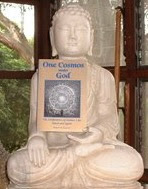
This ceaseless process of synthesis -- of the metabolism of experience -- is life itself. In other words, mental life is the dynamic synthesis of the interior of the cosmos, sponsored at every step along the way by an anterior wholeness which makes it all possible. My book was nothing more or less than an expression of this wholeness, hence the title “One Cosmos Under God.” Ultimately, it is perfectly accurate to say that the only philosophical alternative to mine is some form of many chaosmoses over matter, which is to say, any sort of empiricism, rationalism, reductionism, scientism, deconstructionism, what have you, that tries to arrive at wholeness through partness. In reality, “you can’t get there from here.”
Now, in order to truly to intuit that ultimate wholeness known as God, you naturally must liberate your mind from much of what is merely local and accidental, which encompasses most of what goes by the name of “culture.” In may respects, culture is a public neuroses, just as neurosis is a private culture. As we mentioned a couple of days ago, reductionism is “satan’s perspective” of reality. He sees only trees, and wants you to believe that only trees exist. That way, you will be assured of never discovering the ultimate Forest that goes by many names, but which is ultimately One. If we can only rid ourselves of this annoying One, then the noetic enterprise that is man’s true vocation will come to nothing -- which it does for all the sterile counter-philosophies alluded to above.
Now, we must be very careful what we allow to enter our psyche, because memes of various kinds carve out a niche there and reproduce themselves, which can often result in tenure. You will have noticed that I was recently having some problems with blogspot that were making my site behave very strangely. It turned out to be a corrupted template, which is an apt metaphor for the problem with fallen man. Except that it is not a metaphor. It is completely literal.
My blog’s template is supposed to be an effect, not a cause, of wholeness. In other words, I have an idea of what I want my blog -- the whole of it -- to look like. But when the template is corrupted with little parts that aren’t supposed to be there, they reproduce and compromise the wholeness of my vision.
It is exactly so with the mind, with what I call mind parasites. To the extent that these parasites have taken root in you, your psychological template has been corrupted, and your ability to intuit wholeness -- both exterior and interior -- will be compromised. Both the world and your life will more or less fail to make sense, and in extreme cases, can become as static as a dog’s bark or the Democratic platform.
The more ill the person or culture is, the more obvious this becomes. The personal will -- another example of inexplicable wholeness -- becomes riven and undermind by various competing factions with agendas all their own. In the case of a sick culture, it will be forced to narrow reality down to the perspective of its parasites, as we see in the Islamic world. This is why they must remain closed societies, which is absolutely no different than the neurotic person whose mind becomes a more or less closed system caught up in the endlessly repeating agenda of its mind parasites. This is the true meaning of the repetition compulsion at the heart of any neurosis. The compulsion to repeat is not a cause, but an effect, of the mind becoming a closed system and therefore being unable to profit from experience.
A culture or subculture is a group fantasy, or imaginary collective vision of the interior of reality. And anything lying outside the group fantasy is a foreign language. Thus, the very real culture war in which we are engaged is between two very different languages. However, some people are bilingual. For example, I am able to speak fluent materialism, secularism, atheism, and leftism, because I used to believe all of those dopey things.
But I also speak fluent spiritualease, and can see that this is a far more comprehensive language for describing reality. In fact, the differences are so striking, that without it, it would be a little bit like trying to explain Hamlet with mathematics. While I suppose you could do it, you would specifically lose sight of the author’s intent, which is located only in an aesthetic wholeness spread throughout the text -- just as God’s wholeness is spread throughout reality in the form of his immanence. As a matter of fact, that beautiful wholeness is actually present in the numiracle of math, as most great mythematicians realize.
I will grant that materialists have a certain understanding of the parts but no wonderstanding of the whole. Nothing is that simple, let alone everything. The problem is, when you try to teach something you do not understand, you just pass along the parts. Thus, our universities crank out spiritually crippled beings aleinated from the real, and call them “educated.”
If the mind did not exist, scientists would have no trouble explaining it. But to be alienated from God is to be trapped in the spiritually ass-fixiating manifest. Conversely, in order to witness the whatness, the theophany of God’s metaphysical radiance, you must realize that the brain is exterior to being, and that inscapes everywhere dot the so-called external world. Wholeness is everywhen and where. Or as Joyce put it, "when a part so ptee does duty for the holos, we soon grow to use of an allforabit."
Without objectivity and transcendence there cannot be man, there is only the human animal; to find man, one must aspire to God. --F. Schuon
And deadness is the right word when you're having a little difficulty pulling it all together. Yesterday Dr. Sanity had a relevant post entitled All Trees and No Forest, about the intrinsic pathologies of leftist postmodern thought. She writes, “There is a long philosophical tradition that has claimed that universality and abstractness have no legitimate basis in our experience of reality. This is usually called the ‘problem of universals’ and it derives from the fact that we humans experience objects in the real world as discrete, concrete and individual. Yet, this is contrasted to our thoughts, which experience and know about objects in more general and abstract, or universal ways.”
Now, if you want to create intellectual tyranny, all you have to do is undermine the possibility of universals, which is exactly what the psycho-spiritual left has been trying to do over the past 40 years or so: “By making universals and generalizations completely subjective, they have successfully invalidated anyone's attempts to understand reality and truth.” For to destroy universals is to destroy the human world, precisely. It is to do away with absolute truth, objective beauty, universal morality, and God (God being the “universal of universals,” or even the possibility of universals).
This is why I insist (to paraphrase Richard Weaver) that all attacks on religion are ultimately an attack on mind itself. This is not to imply that there are not bad forms of religion . Of course there are. That is self-evident. Nor does it imply that there are no useful forms of analytic thought -- of the proper application of reason. However, the human world specifically exists in a dialectical space between whole and part, the One and the many. A “world” -- any world -- is a synthesis of particulars into a coherent whole, which in turn reveals the meaning of the otherwise meaningless particulars.
The ontological category of real wholeness is anterior to any philosophy or ideology of any kind, and explains why any reductionistic or materialistic philosophy is logically self-refuting, whether it is garden variety “bonehead” atheism, natural selection, or Randian objectivism. Take natural selection. It begins with the concept of the organism, which is obviously a “whole.” But why does it begin there? Who said that an organism is a discrete whole, and how did the wholeness get there? Isn’t the existence of wholeness a prior condition of there being organisms to begin with?
In other words, if the universe -- which, by the way, is another concept of wholeness that is completely unwarranted on any reductionistic grounds -- were not a self-prehending whole (in Whitehead’s terminology), there is no way that wholeness could suddenly emerge later in the course of cosmic evolution. As it so happens, the existence of anterior wholeness explains many of the otherwise inexplicable mysteries of existence, including both life and consciousness, the mysteriously unitary and yet multiple “I AM.”
To most sensible people, it goes without saying that there will never be a scientific or reductionistic explanation of consciousness, even if they cannot articulate why they believe this. The reason is that consciousness represents on a micro level the personal experience of the macroscopic subjective wholeness of existence itself. Ever since language began colonizing the brain, it has been an unending task to synthesize these bits of meaning into a coherent self and world. But this coherence is not something we can ever arrive at inductively. Rather, the wholeness is our prior condition, and it is simply a matter of intuiting ever deepening levels of complex wholeness -- both objectively (in the world) and subjectively (within the self).
This ceaseless process of synthesis -- of the metabolism of experience -- is life itself. In other words, mental life is the dynamic synthesis of the interior of the cosmos, sponsored at every step along the way by an anterior wholeness which makes it all possible. My book was nothing more or less than an expression of this wholeness, hence the title “One Cosmos Under God.” Ultimately, it is perfectly accurate to say that the only philosophical alternative to mine is some form of many chaosmoses over matter, which is to say, any sort of empiricism, rationalism, reductionism, scientism, deconstructionism, what have you, that tries to arrive at wholeness through partness. In reality, “you can’t get there from here.”
Now, in order to truly to intuit that ultimate wholeness known as God, you naturally must liberate your mind from much of what is merely local and accidental, which encompasses most of what goes by the name of “culture.” In may respects, culture is a public neuroses, just as neurosis is a private culture. As we mentioned a couple of days ago, reductionism is “satan’s perspective” of reality. He sees only trees, and wants you to believe that only trees exist. That way, you will be assured of never discovering the ultimate Forest that goes by many names, but which is ultimately One. If we can only rid ourselves of this annoying One, then the noetic enterprise that is man’s true vocation will come to nothing -- which it does for all the sterile counter-philosophies alluded to above.
Now, we must be very careful what we allow to enter our psyche, because memes of various kinds carve out a niche there and reproduce themselves, which can often result in tenure. You will have noticed that I was recently having some problems with blogspot that were making my site behave very strangely. It turned out to be a corrupted template, which is an apt metaphor for the problem with fallen man. Except that it is not a metaphor. It is completely literal.
My blog’s template is supposed to be an effect, not a cause, of wholeness. In other words, I have an idea of what I want my blog -- the whole of it -- to look like. But when the template is corrupted with little parts that aren’t supposed to be there, they reproduce and compromise the wholeness of my vision.
It is exactly so with the mind, with what I call mind parasites. To the extent that these parasites have taken root in you, your psychological template has been corrupted, and your ability to intuit wholeness -- both exterior and interior -- will be compromised. Both the world and your life will more or less fail to make sense, and in extreme cases, can become as static as a dog’s bark or the Democratic platform.
The more ill the person or culture is, the more obvious this becomes. The personal will -- another example of inexplicable wholeness -- becomes riven and undermind by various competing factions with agendas all their own. In the case of a sick culture, it will be forced to narrow reality down to the perspective of its parasites, as we see in the Islamic world. This is why they must remain closed societies, which is absolutely no different than the neurotic person whose mind becomes a more or less closed system caught up in the endlessly repeating agenda of its mind parasites. This is the true meaning of the repetition compulsion at the heart of any neurosis. The compulsion to repeat is not a cause, but an effect, of the mind becoming a closed system and therefore being unable to profit from experience.
A culture or subculture is a group fantasy, or imaginary collective vision of the interior of reality. And anything lying outside the group fantasy is a foreign language. Thus, the very real culture war in which we are engaged is between two very different languages. However, some people are bilingual. For example, I am able to speak fluent materialism, secularism, atheism, and leftism, because I used to believe all of those dopey things.
But I also speak fluent spiritualease, and can see that this is a far more comprehensive language for describing reality. In fact, the differences are so striking, that without it, it would be a little bit like trying to explain Hamlet with mathematics. While I suppose you could do it, you would specifically lose sight of the author’s intent, which is located only in an aesthetic wholeness spread throughout the text -- just as God’s wholeness is spread throughout reality in the form of his immanence. As a matter of fact, that beautiful wholeness is actually present in the numiracle of math, as most great mythematicians realize.
I will grant that materialists have a certain understanding of the parts but no wonderstanding of the whole. Nothing is that simple, let alone everything. The problem is, when you try to teach something you do not understand, you just pass along the parts. Thus, our universities crank out spiritually crippled beings aleinated from the real, and call them “educated.”
If the mind did not exist, scientists would have no trouble explaining it. But to be alienated from God is to be trapped in the spiritually ass-fixiating manifest. Conversely, in order to witness the whatness, the theophany of God’s metaphysical radiance, you must realize that the brain is exterior to being, and that inscapes everywhere dot the so-called external world. Wholeness is everywhen and where. Or as Joyce put it, "when a part so ptee does duty for the holos, we soon grow to use of an allforabit."
Without objectivity and transcendence there cannot be man, there is only the human animal; to find man, one must aspire to God. --F. Schuon
Thursday, November 02, 2006
The Power of Love and the Love of Power
It sounds like reader Stu has begun to experience a mild influx of holy guacamole into his existentialada. For example, he writes,
“Some higher realms have been readily accessible. Like that inner-space where time stops and the uncreated part of my being opens up into infinite pureness. And the state-of-being where thoughts and events effortlessly reveal their hidden meanings. And the quiet confidence that comes with knowing, feeling and experiencing, without a shred of doubt, that God is.”
So far, so good. However, at the same time, “while accessible, these spaces have also been very confusing, overwhelming and exhausting. The realizations that come from these realms have been difficult to understand and have, frankly, overloaded my mind. So much so that I have been unable to retain much of the imparted wisdom or put it into practice. But what I just realized is that I am trying to pull God down to my level instead of elevating myself to God’s level.“
He fears that this “will result in overload to attempt to experience divine revelation from a rational/emotional perspective. These lower human faculties are valuable and serve important functions. In fact, the divine can be interpreted and channeled through these more base forms of self.... But my self has been highly conditioned to filter my experience through reason and emotion. I experience modes of higher consciousness, but I do not possess the proper faculties to meet these experiences at the level they come from. I don’t even know what form such faculties would take. So I translate the experiences down to a consciousness I am comfortable with.”
“Perhaps the world has been given to us as a forum to develop these higher aspects of self, whatever they may be.... So I’ve discerned the problem. But what next? How do I identify and cultivate these ‘higher faculties?’ Any suggestions would be appreciated.”
There’s a lot here to chew on, so let’s break it all down. In Lord of the Rings, Frodo asks Gandalf the Grey (interestingly, grey is a mixture of black and white) why he doesn’t simply return the ring to the volcano himself. Gandalf responds with words to the effect that if he came into possession of the ring, he knows that he would become intoxicated by its power and and misuse it to control others. In other words, the power of the ring would meet his own impurities and become a force of destruction. Implicitly, this means that there is a form of power that is higher than power, which is relinquishing power. (This in itself is food for thought as it relates to kenosis, both our’s and God’s.)
As a brief aside, this is why, technically speaking, we shouldn’t even be openly discussing some of the things we discuss here, because it has always been understood that esoteric knowledge should only be given to one who has undergone the moral preparation. Because to the extent that you haven’t, the influx of forces -- or so we have heard from the wise -- is going to either 1) fry your circuits, 2) inflate your ego to monstrous proportions, or worse yet, 3) inflate a mind parasite or sub-personality that you have identified with. Don’t believe me. Just look around, both now and throughout history. It happens all the time.
However, as the kabbalists say, it is better that the knowledge be misused than lost entirely, so here we are, the first generation of human beings to discuss these delicate matters in cyberspace.
The power we seek is ours only to the extent that we do not identify it as ours, but receive it with graciousness and humility. The moment we begin “pulling” at it, it becomes contaminated with ego. Another story comes to mind, this one from Zorba the Greek, by Nikos Kazantzakis. Perhaps you are familiar with it. It almost spooks for itsoph:
“I remember one morning when I discovered a cocoon in the back of a tree just as a butterfly was making a hole in its case and preparing to come out. I waited awhile, but it was too long appearing and I was impatient. I bent over it and breathed on it to warm it. I warmed it as quickly as I could and the miracle began to happen before my eyes, faster than life.
“The case opened; the butterfly started slowly crawling out, and I shall never forget my horror when I saw how its wings were folded back and crumpled; the wretched butterfly tried with its whole trembling body to unfold them. Bending over it, I tried to help it with my breath, in vain. It needed to be hatched out patiently and the unfolding of the wings should be a gradual process in the sun. Now it was too late. My breath had forced the butterfly to appear all crumpled, before its time. It struggled desperately and, a few seconds later, died in the palm of my hand.
“That little body is, I do believe, the greatest weight I have on my conscience. For I realize today that it is a mortal sin to violate the great laws of nature. We should not hurry, we should not be impatient, but we should confidently obey the external rhythm.
"I sat on a rock to absorb this New Years's thought. Ah, if only that little butterfly could always flutter before me to show me the way."
The caterpillar, the cocoon and the butterfly are such apt symbols of the spiritual journey that it almost seems as if they must have been created by an other-wordly intelligence for heuristic purposes. Because spiritual growth -- just like any other growth -- is an organic process that obeys its own rhythm. And the rhythm will be different for each person. You cannot force it, but you can -- and must -- provide it with the appropriate environment and “food” that it needs to flourish, whether it is meditation, prayer, ritual, lectio divina, etc.
But you must always -- always -- include moral preparation, not just because virtue is its own reward, but also because doing so will help illuminate those parts of yourself that will either resist or misuse the powers that are coming down. And when they do come down, you must never say “it’s about time,” but ask “why me?” It is a good practice to immediately ask oneself how one may help others with it, and to meditate on what you can do to repay a debt that can never be repaid.
I don’t know if you’ve ever heard the classic gospel song by the great Shirley Caesar, No Charge. A couple of weeks ago, when our dear secular liberal atheist friend was visiting, I bet her that I could give her the gift of tears in three and a half minutes. I put on the song. It starts with the recitation of a story:
“My sister's little boy came in the kitchen one evening while she was fixing supper, and he handed her a piece paper he had been writing on. And after wiping her hands on an apron, she took it in her hands and read it,
and this is what it said:
“For mowing the yard, five dollars.
And for making up my own bed this week, one dollar.
For going to the store, fifty cents.
And playing with little brother while you went shopping, twenty five cents.
Taking out the trash, one dollar.
And for getting a good report card, five dollars.
And for raking the yard, two dollars.
Total owed $14.75.
“Well she looked at him standing there and expecting, and a thousand memories flashed through her mind. So she picked up a pen and turned the paper over and this is what she wrote:
“For the nine months I carried you, holding you inside me no charge
For the nights I sat up with you, doctored you and prayed for you no charge
For the time and tears and the costs through the years, there’s no charge
When you add it all up, the full cost of my love is no charge
“For the nights filled with grey,
And the worries ahead,
For the advice and the knowledge,
And the costs of your college, no charge
For the toys, school, and clothes,
And for wiping your nose,
There's no charge son
When you add it all up, the full cost of my love is no charge
“Well you know when I think about that I think about the day that Jesus went out to Calvary and gave his life as a ransom for me. When I think on the words ‘If Any Man be in Christ He's A New Creature," I like to think about the very minute that he shedded his blood, my debt was paid in full.
“And I want you to know today, when you add it all up, the full cost of real love is no charge.”
What?
Yes, our friend was indeed "misty with the old unshed," as Bertie Wooster once put it, even though, interestingly, she found that last bit of the song off-putting. There was a time that I too would have found it off-putting, but it’s the whole point of the song, for it does address that nagging existential question: where does all this inexplicable love come from, anyway? Now, you don’t necessarily have to accept sister Shirley’s answer, but at least she has one -- one that is certainly more plausible than such pseudo-explanations as “evolutionary psychology” or “sociobiology” -- i.e., a trick of the genes.
In fact, in my book, I pointed out that you needn’t regard scripture as merely literally true when you imaginatively enter its world. If you are just a little too Greek to get past certain apparent follies, don’t worry about that. Don’t let it stop you from letting it engage your spirit, any more than you stop yourself from enjoying a great book or movie because it isn’t real.
As it so happens, some things are just too beautiful not to be true, but don’t concern yourself with that now. Just enjoy the beauty, and soon you will find yourself wondering how the world can be so arranged that butterflies are symbols and symbols are coccoons for caterpultering one's coconsciousness into a buddhafly.
We’ve only scratched the surface here, so this will probably be a multi-parter. We don't want to open this chrusallus presence too quickly. Time takes time. Let alone, eternity.
“Some higher realms have been readily accessible. Like that inner-space where time stops and the uncreated part of my being opens up into infinite pureness. And the state-of-being where thoughts and events effortlessly reveal their hidden meanings. And the quiet confidence that comes with knowing, feeling and experiencing, without a shred of doubt, that God is.”
So far, so good. However, at the same time, “while accessible, these spaces have also been very confusing, overwhelming and exhausting. The realizations that come from these realms have been difficult to understand and have, frankly, overloaded my mind. So much so that I have been unable to retain much of the imparted wisdom or put it into practice. But what I just realized is that I am trying to pull God down to my level instead of elevating myself to God’s level.“
He fears that this “will result in overload to attempt to experience divine revelation from a rational/emotional perspective. These lower human faculties are valuable and serve important functions. In fact, the divine can be interpreted and channeled through these more base forms of self.... But my self has been highly conditioned to filter my experience through reason and emotion. I experience modes of higher consciousness, but I do not possess the proper faculties to meet these experiences at the level they come from. I don’t even know what form such faculties would take. So I translate the experiences down to a consciousness I am comfortable with.”
“Perhaps the world has been given to us as a forum to develop these higher aspects of self, whatever they may be.... So I’ve discerned the problem. But what next? How do I identify and cultivate these ‘higher faculties?’ Any suggestions would be appreciated.”
There’s a lot here to chew on, so let’s break it all down. In Lord of the Rings, Frodo asks Gandalf the Grey (interestingly, grey is a mixture of black and white) why he doesn’t simply return the ring to the volcano himself. Gandalf responds with words to the effect that if he came into possession of the ring, he knows that he would become intoxicated by its power and and misuse it to control others. In other words, the power of the ring would meet his own impurities and become a force of destruction. Implicitly, this means that there is a form of power that is higher than power, which is relinquishing power. (This in itself is food for thought as it relates to kenosis, both our’s and God’s.)
As a brief aside, this is why, technically speaking, we shouldn’t even be openly discussing some of the things we discuss here, because it has always been understood that esoteric knowledge should only be given to one who has undergone the moral preparation. Because to the extent that you haven’t, the influx of forces -- or so we have heard from the wise -- is going to either 1) fry your circuits, 2) inflate your ego to monstrous proportions, or worse yet, 3) inflate a mind parasite or sub-personality that you have identified with. Don’t believe me. Just look around, both now and throughout history. It happens all the time.
However, as the kabbalists say, it is better that the knowledge be misused than lost entirely, so here we are, the first generation of human beings to discuss these delicate matters in cyberspace.
The power we seek is ours only to the extent that we do not identify it as ours, but receive it with graciousness and humility. The moment we begin “pulling” at it, it becomes contaminated with ego. Another story comes to mind, this one from Zorba the Greek, by Nikos Kazantzakis. Perhaps you are familiar with it. It almost spooks for itsoph:
“I remember one morning when I discovered a cocoon in the back of a tree just as a butterfly was making a hole in its case and preparing to come out. I waited awhile, but it was too long appearing and I was impatient. I bent over it and breathed on it to warm it. I warmed it as quickly as I could and the miracle began to happen before my eyes, faster than life.
“The case opened; the butterfly started slowly crawling out, and I shall never forget my horror when I saw how its wings were folded back and crumpled; the wretched butterfly tried with its whole trembling body to unfold them. Bending over it, I tried to help it with my breath, in vain. It needed to be hatched out patiently and the unfolding of the wings should be a gradual process in the sun. Now it was too late. My breath had forced the butterfly to appear all crumpled, before its time. It struggled desperately and, a few seconds later, died in the palm of my hand.
“That little body is, I do believe, the greatest weight I have on my conscience. For I realize today that it is a mortal sin to violate the great laws of nature. We should not hurry, we should not be impatient, but we should confidently obey the external rhythm.
"I sat on a rock to absorb this New Years's thought. Ah, if only that little butterfly could always flutter before me to show me the way."
The caterpillar, the cocoon and the butterfly are such apt symbols of the spiritual journey that it almost seems as if they must have been created by an other-wordly intelligence for heuristic purposes. Because spiritual growth -- just like any other growth -- is an organic process that obeys its own rhythm. And the rhythm will be different for each person. You cannot force it, but you can -- and must -- provide it with the appropriate environment and “food” that it needs to flourish, whether it is meditation, prayer, ritual, lectio divina, etc.
But you must always -- always -- include moral preparation, not just because virtue is its own reward, but also because doing so will help illuminate those parts of yourself that will either resist or misuse the powers that are coming down. And when they do come down, you must never say “it’s about time,” but ask “why me?” It is a good practice to immediately ask oneself how one may help others with it, and to meditate on what you can do to repay a debt that can never be repaid.
I don’t know if you’ve ever heard the classic gospel song by the great Shirley Caesar, No Charge. A couple of weeks ago, when our dear secular liberal atheist friend was visiting, I bet her that I could give her the gift of tears in three and a half minutes. I put on the song. It starts with the recitation of a story:
“My sister's little boy came in the kitchen one evening while she was fixing supper, and he handed her a piece paper he had been writing on. And after wiping her hands on an apron, she took it in her hands and read it,
and this is what it said:
“For mowing the yard, five dollars.
And for making up my own bed this week, one dollar.
For going to the store, fifty cents.
And playing with little brother while you went shopping, twenty five cents.
Taking out the trash, one dollar.
And for getting a good report card, five dollars.
And for raking the yard, two dollars.
Total owed $14.75.
“Well she looked at him standing there and expecting, and a thousand memories flashed through her mind. So she picked up a pen and turned the paper over and this is what she wrote:
“For the nine months I carried you, holding you inside me no charge
For the nights I sat up with you, doctored you and prayed for you no charge
For the time and tears and the costs through the years, there’s no charge
When you add it all up, the full cost of my love is no charge
“For the nights filled with grey,
And the worries ahead,
For the advice and the knowledge,
And the costs of your college, no charge
For the toys, school, and clothes,
And for wiping your nose,
There's no charge son
When you add it all up, the full cost of my love is no charge
“Well you know when I think about that I think about the day that Jesus went out to Calvary and gave his life as a ransom for me. When I think on the words ‘If Any Man be in Christ He's A New Creature," I like to think about the very minute that he shedded his blood, my debt was paid in full.
“And I want you to know today, when you add it all up, the full cost of real love is no charge.”
What?
Yes, our friend was indeed "misty with the old unshed," as Bertie Wooster once put it, even though, interestingly, she found that last bit of the song off-putting. There was a time that I too would have found it off-putting, but it’s the whole point of the song, for it does address that nagging existential question: where does all this inexplicable love come from, anyway? Now, you don’t necessarily have to accept sister Shirley’s answer, but at least she has one -- one that is certainly more plausible than such pseudo-explanations as “evolutionary psychology” or “sociobiology” -- i.e., a trick of the genes.
In fact, in my book, I pointed out that you needn’t regard scripture as merely literally true when you imaginatively enter its world. If you are just a little too Greek to get past certain apparent follies, don’t worry about that. Don’t let it stop you from letting it engage your spirit, any more than you stop yourself from enjoying a great book or movie because it isn’t real.
As it so happens, some things are just too beautiful not to be true, but don’t concern yourself with that now. Just enjoy the beauty, and soon you will find yourself wondering how the world can be so arranged that butterflies are symbols and symbols are coccoons for caterpultering one's coconsciousness into a buddhafly.
We’ve only scratched the surface here, so this will probably be a multi-parter. We don't want to open this chrusallus presence too quickly. Time takes time. Let alone, eternity.
Wednesday, November 01, 2006
The Divine Center and the Human Margin
The other day, a friendly commenter mentioned that I am not a Christian, which is not entirely fair. Nor is it unfair, however. It all depends on your point of view. Not to say that "it's all relative.” However, it is to say that revelation, while it emanates from the divine center, is not to be confused with the divine center, as many modern evangelicals are in the habit of doing. The Bible cannot be "the" Word of God, but rather “words of God” addressed to a human subject who is necessarily relative and contingent.
In other words, while language reflects the substance of the speaker, it is nevertheless separate from him. Furthermore, our own understanding is not going to conform perfectly with the Divine Mind, any more than our understanding of a great work of art will conform perfectly with the mind that created it. While we must take the revealed message very seriously, it is still critical to bear in mind that religion is not about religion, but about that which transcends religion. The most sublime religious ritual is nevertheless at the “human margin” compared to the uncontainable radiance it is designed to capture and transmit.
I hesitate even to venture down this path, because it invites a certain type of misunderstanding, and opens the doorway to human pride and willfulness. Everything I am about to say is actually intended to help the person move away from the human margin -- which is more or less relative -- and toward the Divine center, which is subjectively objective. So while it may at times seem as if I am “eclectic” or “ecumenical,” that is neither my desire nor my intent. Rather, I am always trying to get at the core or center of the divine message, not to somehow synthesize various religious points of view that only exist at the human margin.
Thus, there are two errors that must be avoided. The first is adhering to a dogma that, while technically “true,” is nevertheless a human variation on this or that central point of the divine message. In other words, there is “pure dogma,” which is a good thing. You might say that it comes directly from God. However, the undeniable existence of various factions and denominations proves that dogma radiates, as it were, from the center to the periphery, to the point that we end up with groups that have entirely divergent points of view, but still calling themselves “Christian.” For example, I believe I am much more Christian than the National Council of Churches, which exists almost entirely at the all-too-human marxgin.
I hope this is not too esoteric and that I am being clear. Perhaps an analogy would be helpful. On the political/secular plane, the American Constitution is the equivalent of divine revelation, the “word of God.” Having said that, the Constitution nevertheless leaves open much room for interpretation “at the margins.” Thus we have denominations -- Republicans, Democrats, Libertarians, Progressives, Conservatives, etc. -- all claiming to be the One True Church.
But interpretation can only go so far before it becomes completely detached from the center, and exists only at the human margin. In so doing, the Word of God becomes nothing more than the legalistic word of man, but stills tries to gain prestige by claiming to be the Word of God. Roe vs. Wade is a perfect example of something wholly manmade that exists only at the human margin, but nevertheless claims to be “from the center.” It is a new peripheral dogma that is absolutely indefensible from the standpoint of the constitutional center.
And this is the problem with “progressives” in general, whether political or religious. You might think that Christian fundamentalists are “conservative,” but you would be very wrong. Rather, this is a thoroughly modern movement that has detached itself from oral tradition, inspired commentary, and the testimony of various superhuman saints and sages, to produce a largely manmade, exteriorized version of Christianity. It is no different than political progressives who twist a part of the Constitution in order to create a new political religion that finds justification for their own desires. Roe vs. Wade is just one example, but one could cite dozens more, most notably, the belief that the Constitution somehow sanctions racial discrimination or is hostile to religion. These leftist ideas are human inventions that have nothing to do with the message of the founders.
The other great spiritual danger is that of the “new agers,” who would take what I am saying and turn it on its head, so as to give themselves permission to borrow freely from this or that religious tradition in order to create their own cafeteria-style spirituality. If it ever looks as if this is what I am doing, just disregard that thought. I am not. Although at various times I may speak the language or Christianity, Judaism, Vedanta, or Taoism, this is generally for two purposes. One reason is that it can often deepen understanding of one’s own framework to see it in terms of another tradition. Another reason is that there are certain things that are implicit in one religion but explicit in another. Furthermore, there are certain inevitable “gaps” or interstices that can only be filled out by adopting a more totalistic view of reality.
Here again, perhaps an analogy will be useful. Sigmund Freud made one Great Big Discovery, called ”the unconscious.” For our purposes, think of the unconscious as “God” and Freud as “his prophet.” Freud laid down the dogma, spread the gospel, chose the disciples, formed the early church, named his Pope, and defined heresy.
But the unconscious, like God, cannot actually be contained by any dogma. You might say that it mocks our attempts to do so. Like God, it seems to almost take pleasure in shattering our brittle containers that try to channel the roaring torrent of divinity into the little pridepool of the human ego.
Therefore, no sooner had Freud laid down the dogma for all time, than he had a bunch of heretics splintering off and forming their own churches, each in its turn embodying the One True Faith: Jung, Adler, Reich, and later Klein, Kohut, and others, including complete heretics such as N.O. Brown, Erich Fromm and Fritz Perls.
Now, as I have mentioned before, my biggest psychological influence was a bona fide genius of a fellow named W.R. Bion, who was sent to this earth to clean up this psychoanalytic Tower of Babel. In this regard, he performed a similar function as did Jesus to ancient Judaism or Buddha to ancient Hinduism. In both of the latter cases, these traditions had become so reified and legalistic that they were in danger of losing contact with the divine message it was their purpose to propagate. (For our Jewish friends, please don’t misunderstand the point; clearly, Judaism also responded “within itself” to this impasse, and became a very different, far more interiorized approach, after the destruction of the second temple.)
Bion even used the word “messiah” as a term of art to describe the individual who shatters the manmade container of the “establishment” in order to accomplish two things, 1) re-establishent of the possiblity of a direct encounter with psychic reality (which he called "O"), and 2) evolution within that reality (I adopted the symbol O for my book, only as applied explicitly to God instead of the unconscious).
To greatly oversimplify, genuine psychological insight must proceed from O-->k (or knowledge), not from k-->O (which will simply superimpose a grid of more or less superficial knowledge on O). The same goes for spiritual knowledge, which must be realized knowledge if it is to be efficacious. In fact, to realize it is to render it effective. To not realize it is to render religious language sterile. It is then not “the Word,” but merely words: pneumababble, or just plain blah blah.
Again, I hope I haven’t lost anyone, but O is God. While it has various names -- God being one of them -- it is actually omninameable, which is another of God’s names. O can be thought of as the divine center that radiates out to the periphery of various concentric circles of manifestation. Or it can be imagined as an eternal spring at the peak of a sacred mountain that eternally pours forth its glory into various temporal rivers and streams that cascade down the mountain. Eventually they reach all the way down to the valley below, where the inhabitants have no idea that the water comes from the same source, or even that there is a real experiential source in the here and now, "anterior" to the stream.
Having said that, I do not necessarily recommend my understanding to others, because it has its pitfalls and dangers. As I explain in the book, the trick is to abide in O, while at the same time recognizing that the closer one approaches the center, the more one’s own understanding is replaced by a certain objectivity that is embodied in dogma and tradition. As such, my approach is simultaneously fluid and rigid, if you know what I mean. This is a dialectic that must be maintained, for veering too far in either direction eclipses O and prevents its unfolding evolution through the luxury corps of the lumin being.
All clear?
In other words, while language reflects the substance of the speaker, it is nevertheless separate from him. Furthermore, our own understanding is not going to conform perfectly with the Divine Mind, any more than our understanding of a great work of art will conform perfectly with the mind that created it. While we must take the revealed message very seriously, it is still critical to bear in mind that religion is not about religion, but about that which transcends religion. The most sublime religious ritual is nevertheless at the “human margin” compared to the uncontainable radiance it is designed to capture and transmit.
I hesitate even to venture down this path, because it invites a certain type of misunderstanding, and opens the doorway to human pride and willfulness. Everything I am about to say is actually intended to help the person move away from the human margin -- which is more or less relative -- and toward the Divine center, which is subjectively objective. So while it may at times seem as if I am “eclectic” or “ecumenical,” that is neither my desire nor my intent. Rather, I am always trying to get at the core or center of the divine message, not to somehow synthesize various religious points of view that only exist at the human margin.
Thus, there are two errors that must be avoided. The first is adhering to a dogma that, while technically “true,” is nevertheless a human variation on this or that central point of the divine message. In other words, there is “pure dogma,” which is a good thing. You might say that it comes directly from God. However, the undeniable existence of various factions and denominations proves that dogma radiates, as it were, from the center to the periphery, to the point that we end up with groups that have entirely divergent points of view, but still calling themselves “Christian.” For example, I believe I am much more Christian than the National Council of Churches, which exists almost entirely at the all-too-human marxgin.
I hope this is not too esoteric and that I am being clear. Perhaps an analogy would be helpful. On the political/secular plane, the American Constitution is the equivalent of divine revelation, the “word of God.” Having said that, the Constitution nevertheless leaves open much room for interpretation “at the margins.” Thus we have denominations -- Republicans, Democrats, Libertarians, Progressives, Conservatives, etc. -- all claiming to be the One True Church.
But interpretation can only go so far before it becomes completely detached from the center, and exists only at the human margin. In so doing, the Word of God becomes nothing more than the legalistic word of man, but stills tries to gain prestige by claiming to be the Word of God. Roe vs. Wade is a perfect example of something wholly manmade that exists only at the human margin, but nevertheless claims to be “from the center.” It is a new peripheral dogma that is absolutely indefensible from the standpoint of the constitutional center.
And this is the problem with “progressives” in general, whether political or religious. You might think that Christian fundamentalists are “conservative,” but you would be very wrong. Rather, this is a thoroughly modern movement that has detached itself from oral tradition, inspired commentary, and the testimony of various superhuman saints and sages, to produce a largely manmade, exteriorized version of Christianity. It is no different than political progressives who twist a part of the Constitution in order to create a new political religion that finds justification for their own desires. Roe vs. Wade is just one example, but one could cite dozens more, most notably, the belief that the Constitution somehow sanctions racial discrimination or is hostile to religion. These leftist ideas are human inventions that have nothing to do with the message of the founders.
The other great spiritual danger is that of the “new agers,” who would take what I am saying and turn it on its head, so as to give themselves permission to borrow freely from this or that religious tradition in order to create their own cafeteria-style spirituality. If it ever looks as if this is what I am doing, just disregard that thought. I am not. Although at various times I may speak the language or Christianity, Judaism, Vedanta, or Taoism, this is generally for two purposes. One reason is that it can often deepen understanding of one’s own framework to see it in terms of another tradition. Another reason is that there are certain things that are implicit in one religion but explicit in another. Furthermore, there are certain inevitable “gaps” or interstices that can only be filled out by adopting a more totalistic view of reality.
Here again, perhaps an analogy will be useful. Sigmund Freud made one Great Big Discovery, called ”the unconscious.” For our purposes, think of the unconscious as “God” and Freud as “his prophet.” Freud laid down the dogma, spread the gospel, chose the disciples, formed the early church, named his Pope, and defined heresy.
But the unconscious, like God, cannot actually be contained by any dogma. You might say that it mocks our attempts to do so. Like God, it seems to almost take pleasure in shattering our brittle containers that try to channel the roaring torrent of divinity into the little pridepool of the human ego.
Therefore, no sooner had Freud laid down the dogma for all time, than he had a bunch of heretics splintering off and forming their own churches, each in its turn embodying the One True Faith: Jung, Adler, Reich, and later Klein, Kohut, and others, including complete heretics such as N.O. Brown, Erich Fromm and Fritz Perls.
Now, as I have mentioned before, my biggest psychological influence was a bona fide genius of a fellow named W.R. Bion, who was sent to this earth to clean up this psychoanalytic Tower of Babel. In this regard, he performed a similar function as did Jesus to ancient Judaism or Buddha to ancient Hinduism. In both of the latter cases, these traditions had become so reified and legalistic that they were in danger of losing contact with the divine message it was their purpose to propagate. (For our Jewish friends, please don’t misunderstand the point; clearly, Judaism also responded “within itself” to this impasse, and became a very different, far more interiorized approach, after the destruction of the second temple.)
Bion even used the word “messiah” as a term of art to describe the individual who shatters the manmade container of the “establishment” in order to accomplish two things, 1) re-establishent of the possiblity of a direct encounter with psychic reality (which he called "O"), and 2) evolution within that reality (I adopted the symbol O for my book, only as applied explicitly to God instead of the unconscious).
To greatly oversimplify, genuine psychological insight must proceed from O-->k (or knowledge), not from k-->O (which will simply superimpose a grid of more or less superficial knowledge on O). The same goes for spiritual knowledge, which must be realized knowledge if it is to be efficacious. In fact, to realize it is to render it effective. To not realize it is to render religious language sterile. It is then not “the Word,” but merely words: pneumababble, or just plain blah blah.
Again, I hope I haven’t lost anyone, but O is God. While it has various names -- God being one of them -- it is actually omninameable, which is another of God’s names. O can be thought of as the divine center that radiates out to the periphery of various concentric circles of manifestation. Or it can be imagined as an eternal spring at the peak of a sacred mountain that eternally pours forth its glory into various temporal rivers and streams that cascade down the mountain. Eventually they reach all the way down to the valley below, where the inhabitants have no idea that the water comes from the same source, or even that there is a real experiential source in the here and now, "anterior" to the stream.
Having said that, I do not necessarily recommend my understanding to others, because it has its pitfalls and dangers. As I explain in the book, the trick is to abide in O, while at the same time recognizing that the closer one approaches the center, the more one’s own understanding is replaced by a certain objectivity that is embodied in dogma and tradition. As such, my approach is simultaneously fluid and rigid, if you know what I mean. This is a dialectic that must be maintained, for veering too far in either direction eclipses O and prevents its unfolding evolution through the luxury corps of the lumin being.
All clear?
Tuesday, October 31, 2006
The Remystification of the World: Amen for a Child's Job
I dreamt last night that I was mountain climbing, something I’ve never done in the 4D world. It looked like someplace in Germany or Switzerland. It was a rather sheer face with lots of vegetation and a green valley down below. I reached out to pluck one of the wild berries that was growing from the mountain side, as it looked like it must be the purest food one could imagine. But my guide cautioned me that it had been discovered that it was actually full of all kinds of subtle toxins. However, there was a pill one could take that neutralizes the poisons.
There are so many thresholds to the doorway of the divine -- to the intelligent and benign forces that surpass the ego -- and one of them is by way of the dream. Because once you begin taking your dreams seriously, you realize that you “inhabit” a parallel world that is every bit as real as the material world. It is real because you -- your ego -- in no way create this world. Rather, you are are just as much an “object” in it as you are in the material world.
In my dreams I have seen beautiful architecture and paintings that have somehow been produced in me but not by me. I have seen the most awesome landscapes that one would think only God could have created. In fact, perhaps the highly creative person is simply someone who is able to dream by day -- to trancelight a small fraction of the infinite creativity of the night and bring it out into daylight. It seems to me that all great art has something of the dream -- and therefore, magic -- in it.
]
What is so striking about dreams is not just that you can interpret them and that they contain a wealth of wisdom and knowledge. That is a given. The larger question is, as my colleague James Grotstein out it in the title of a book, Who is the Dreamer Who Dreams the Dream? Because whoever he is, he knows us much better than we know ourselves. He knows virtually everything about us, and wishes to communicate it to us through plot, imagery, character, and symbolism. Why? What are these mysterious messages from our Self to our self?
First of all, dreams are not structured in the way science understands the material world to be structured (scientists are actually only half right about that, but I don’t have time to get into it right now). Rather, dream consciousness is explicitly holographic, meaning that, like a great work of art, it is dense with possible interpretations, all of them more or less true. In the case of this dream of mine, I believe it was a commentary of our recent little sidetrack into the bloodless and devitalized world of atheism, for such a world represents the exact opposite of the dream, so dense with layer upon layer of inexhaustible meaning.
A person will literally go crazy if he is prevented from dreaming. Along those lines, it is a truism that there is a form of madness that involves losing everything but one’s capacity to reason. This I believe summarizes the dry and denatured madness of atheism.
Here again, please do not get me wrong: I do not intend to insult or belittle rank and file atheists who are simply indifferent to matters of spirit, Rather, I specifically address myself to the rank and foul, to those who make it their life’s work to demystify the unfathomable mysteries of existence, life and consciousness, and then to try to impose that morbid ideology on the rest of us.
For to drain the world of its irreducibly mysterious and dreamlike qualities is to create a nightmare. Even as a child, without knowing it consciously, I realized that this was the world of atheistic communism. More than anything I could have learned from the adults around me, it was this dark intuition of an unambiguous world devoid of dreaming -- in a child’s mind, perhaps the polar opposite of Disneyland, which to me was literally paradise on earth. Which world is more real, the objective world of philosophical materialism, or the “fantasy” world of depth, meaning and wonderment? Is sustained wonderment not a vital human faculty? Are we not more in touch with the world when we are full of wonder than we are when we are filled with the answer?
Philosophy is no different than music, in that one can tell in an instant when a musician or a piece of music comes from a merely technical or “mechanical” place as opposed to a spiritual source. This is what gives music its depth and richness, and allows repeated listening despite having heard a piece hundreds of times. It is not about the complexity, for if that were true, there would be no way to explain the magic of certain “primitive” blues musicians such as Muddy Waters or Howlin’ Wolf. I think it is fair to say that the person who is alienated from spirit cannot help seeing the world as geometry, when it is actually frozen music of the most exquisite kind.
One of the reasons I love the music of Van Morrison is that he is always at least trying to encounter the source of music. In reading his biography, I wasn't surprised to learn that a number of years back he actually organized a conference on the power of music to convey spiritual experiences and to bring about higher states of consciousness. He rarely does interviews, but when asked what effect he would like his music to have, he responded "Ideally, to induce states of meditation and ecstasy as well as to make people think." Based on my own experience, he clearly possesses an ability to tap into and convey these spiritual states through his music. As he has said, "If you say that we all have a basic purpose for for being here, then that's why I'm here. I've tried running away from it. I've tried ignoring it. I've tried suppressing it. I've tried everything there is to get away from this because at times its seems it's a hell of a big responsibility."
I can well understand the latter concern, because, unlike most artists who simply play their "greatest hits,” I have personally seen how Morrison enters a sort of altered state in concert, bringing the audience along with him. In this regard, his music has some connections with jazz, since it is improvisational, but it is improvisational in a different way -- almost as if he's being led by a spirit into some other dimension and "singing in tongues." But that's not something you can turn on like a light switch. It's is a grace, which is not self-generated but comes from elsewhere. And when it's not there, the music becomes "merely human," so to speak. Nice craftsmanship, but missing the element that vaults you into another dimension.
Many of Morrison's songs are about the "natural mysticism" of childhood. Apparently as a child he had many unprovoked mystical experiences in which the veil that separates our world from the deeper mystery surrounding it was rent away--often when listening to music. I can totally relate to this, as I had similar experiences as a child. But as we age and increasingly ingest the “food of the world,” something happens to that childlike (but hardly childish) sense of wonder, unless we are very careful to nurture and preserve it. Is there a pill we can take that can undo or neutralize the pneuma-toxins of the world?
One fatuous charge that is frequently levelled against theists is that we are frightened of life and therefore drawn to “fairy tales” of the hereafter. I can only speak for myself and affirm that I personally don’t give much thought to what happens upon our physical demise. Rather, for me, religion is a much more intense way of being in the world, not just spiritually, but intellectually, philosophically, aesthetically, interpersonally, creatively, and in every other way.
My son, who is 18 months old, is so full of life that it is as if his little body can’t contain the ecstasy involved. Yesterday he stood up on his little chair and began dancing, trembling, laughing, stomping his feet and shouting with joy. He would become rigid one moment--sort of like one of those body builder poses--only for the energy to course through him like lightning exploding a statue. It was absolutely contagious, because he could look at us through his eyes and transmit the energy. Soon we were all laughing, and our laughter simply amplified his energy. It only happens every day. I’m sure there is a scientific explanation for this transmission of shakti. Which explains precisely nothing.
The child of whatever age remains close to the paradise not yet fully lost. “and it is for that reason that childhood constitutes a necessary aspect of the integral man: the man who is fully mature always keeps, in equilibrium with wisdom, the qualities of simplicity and freshness, of gratitude and trust, that he possessed in the springtime of his life” (F. Schuon).
In Song of Being a Child (a poem by Peter Handke), Morrison recites,
When the child was a child,
[It] wanted the stream to be a river and the river a torrent
And this puddle, the sea
When the child was a child, it didn’t know
It was a child
Everything for it was filled with life and life was one
Saw the horizon without trying to reach it
Couldn’t rush itself
And think on command
Was often terribly bored
And couldn’t wait...
When the child was a child berries fell
Only like berries into its hand...
Atop each mountain it craved
Yet a higher mountain... And still does
Reach for the cherries in the treetop
As elated as it still is today
Morrison improvises here:
And on and on and on and on
And onward with a sense of wonder
Upon the highest hill
When the child was a child
Up on the highest hill
Shhhhhhh, shhhhhhh
Are you there?
Yes, I think I was. In my dream last night.
There are so many thresholds to the doorway of the divine -- to the intelligent and benign forces that surpass the ego -- and one of them is by way of the dream. Because once you begin taking your dreams seriously, you realize that you “inhabit” a parallel world that is every bit as real as the material world. It is real because you -- your ego -- in no way create this world. Rather, you are are just as much an “object” in it as you are in the material world.
In my dreams I have seen beautiful architecture and paintings that have somehow been produced in me but not by me. I have seen the most awesome landscapes that one would think only God could have created. In fact, perhaps the highly creative person is simply someone who is able to dream by day -- to trancelight a small fraction of the infinite creativity of the night and bring it out into daylight. It seems to me that all great art has something of the dream -- and therefore, magic -- in it.
]
What is so striking about dreams is not just that you can interpret them and that they contain a wealth of wisdom and knowledge. That is a given. The larger question is, as my colleague James Grotstein out it in the title of a book, Who is the Dreamer Who Dreams the Dream? Because whoever he is, he knows us much better than we know ourselves. He knows virtually everything about us, and wishes to communicate it to us through plot, imagery, character, and symbolism. Why? What are these mysterious messages from our Self to our self?
First of all, dreams are not structured in the way science understands the material world to be structured (scientists are actually only half right about that, but I don’t have time to get into it right now). Rather, dream consciousness is explicitly holographic, meaning that, like a great work of art, it is dense with possible interpretations, all of them more or less true. In the case of this dream of mine, I believe it was a commentary of our recent little sidetrack into the bloodless and devitalized world of atheism, for such a world represents the exact opposite of the dream, so dense with layer upon layer of inexhaustible meaning.
A person will literally go crazy if he is prevented from dreaming. Along those lines, it is a truism that there is a form of madness that involves losing everything but one’s capacity to reason. This I believe summarizes the dry and denatured madness of atheism.
Here again, please do not get me wrong: I do not intend to insult or belittle rank and file atheists who are simply indifferent to matters of spirit, Rather, I specifically address myself to the rank and foul, to those who make it their life’s work to demystify the unfathomable mysteries of existence, life and consciousness, and then to try to impose that morbid ideology on the rest of us.
For to drain the world of its irreducibly mysterious and dreamlike qualities is to create a nightmare. Even as a child, without knowing it consciously, I realized that this was the world of atheistic communism. More than anything I could have learned from the adults around me, it was this dark intuition of an unambiguous world devoid of dreaming -- in a child’s mind, perhaps the polar opposite of Disneyland, which to me was literally paradise on earth. Which world is more real, the objective world of philosophical materialism, or the “fantasy” world of depth, meaning and wonderment? Is sustained wonderment not a vital human faculty? Are we not more in touch with the world when we are full of wonder than we are when we are filled with the answer?
Philosophy is no different than music, in that one can tell in an instant when a musician or a piece of music comes from a merely technical or “mechanical” place as opposed to a spiritual source. This is what gives music its depth and richness, and allows repeated listening despite having heard a piece hundreds of times. It is not about the complexity, for if that were true, there would be no way to explain the magic of certain “primitive” blues musicians such as Muddy Waters or Howlin’ Wolf. I think it is fair to say that the person who is alienated from spirit cannot help seeing the world as geometry, when it is actually frozen music of the most exquisite kind.
One of the reasons I love the music of Van Morrison is that he is always at least trying to encounter the source of music. In reading his biography, I wasn't surprised to learn that a number of years back he actually organized a conference on the power of music to convey spiritual experiences and to bring about higher states of consciousness. He rarely does interviews, but when asked what effect he would like his music to have, he responded "Ideally, to induce states of meditation and ecstasy as well as to make people think." Based on my own experience, he clearly possesses an ability to tap into and convey these spiritual states through his music. As he has said, "If you say that we all have a basic purpose for for being here, then that's why I'm here. I've tried running away from it. I've tried ignoring it. I've tried suppressing it. I've tried everything there is to get away from this because at times its seems it's a hell of a big responsibility."
I can well understand the latter concern, because, unlike most artists who simply play their "greatest hits,” I have personally seen how Morrison enters a sort of altered state in concert, bringing the audience along with him. In this regard, his music has some connections with jazz, since it is improvisational, but it is improvisational in a different way -- almost as if he's being led by a spirit into some other dimension and "singing in tongues." But that's not something you can turn on like a light switch. It's is a grace, which is not self-generated but comes from elsewhere. And when it's not there, the music becomes "merely human," so to speak. Nice craftsmanship, but missing the element that vaults you into another dimension.
Many of Morrison's songs are about the "natural mysticism" of childhood. Apparently as a child he had many unprovoked mystical experiences in which the veil that separates our world from the deeper mystery surrounding it was rent away--often when listening to music. I can totally relate to this, as I had similar experiences as a child. But as we age and increasingly ingest the “food of the world,” something happens to that childlike (but hardly childish) sense of wonder, unless we are very careful to nurture and preserve it. Is there a pill we can take that can undo or neutralize the pneuma-toxins of the world?
One fatuous charge that is frequently levelled against theists is that we are frightened of life and therefore drawn to “fairy tales” of the hereafter. I can only speak for myself and affirm that I personally don’t give much thought to what happens upon our physical demise. Rather, for me, religion is a much more intense way of being in the world, not just spiritually, but intellectually, philosophically, aesthetically, interpersonally, creatively, and in every other way.
My son, who is 18 months old, is so full of life that it is as if his little body can’t contain the ecstasy involved. Yesterday he stood up on his little chair and began dancing, trembling, laughing, stomping his feet and shouting with joy. He would become rigid one moment--sort of like one of those body builder poses--only for the energy to course through him like lightning exploding a statue. It was absolutely contagious, because he could look at us through his eyes and transmit the energy. Soon we were all laughing, and our laughter simply amplified his energy. It only happens every day. I’m sure there is a scientific explanation for this transmission of shakti. Which explains precisely nothing.
The child of whatever age remains close to the paradise not yet fully lost. “and it is for that reason that childhood constitutes a necessary aspect of the integral man: the man who is fully mature always keeps, in equilibrium with wisdom, the qualities of simplicity and freshness, of gratitude and trust, that he possessed in the springtime of his life” (F. Schuon).
In Song of Being a Child (a poem by Peter Handke), Morrison recites,
When the child was a child,
[It] wanted the stream to be a river and the river a torrent
And this puddle, the sea
When the child was a child, it didn’t know
It was a child
Everything for it was filled with life and life was one
Saw the horizon without trying to reach it
Couldn’t rush itself
And think on command
Was often terribly bored
And couldn’t wait...
When the child was a child berries fell
Only like berries into its hand...
Atop each mountain it craved
Yet a higher mountain... And still does
Reach for the cherries in the treetop
As elated as it still is today
Morrison improvises here:
And on and on and on and on
And onward with a sense of wonder
Upon the highest hill
When the child was a child
Up on the highest hill
Shhhhhhh, shhhhhhh
Are you there?
Yes, I think I was. In my dream last night.
Monday, October 30, 2006
The Flat Cosmos Society and their Junk Metaphysics
I think you may have just compromised your hippocratic oath - you have done harm. You have fostered malignant stereotypes on a group of people as wide & diversified as any Western nation. WAAAAAAAA!
At last we reach what has always been the gist of the leftist atheist’s apologia, that he is a victim of mean believers. The appeal to victimhood is ironic, since, as I have mentioned before, it represents such a twisted inversion of a Christianized psychology: since Christ is victimized, all victims must be sacred, even if their victimhood is self-inflicted. Thus, atheists are sacred martyrs to their God, who is conspicuously present in his absence. But if truth and morality are relative, to what else can atheists appeal except to the Christian sympathy for victims?
(Yet again the disclaimer: my opinions regarding the militant atheist commenters on this site have nothing to do with indifferent or “negative” atheists who simply have no interest in spiritual growth. Rather, I address myself to the angry and juvenile activists who are actually anti-theists, such as the ACLU and radical secular fundamentalists in general.)
Now, all of the castes also exist within each caste, and I make no apologies for being a “warrior priest,” as it were, even if atheists end up with hurt feelings because they’re not used to someone above Pat Robertson or Jerry Falwell’s pay grade pushing back. I am gravely concerned about the culture war in which we are engaged, for I have no doubt whatsoever that the future of the world will hinge on its outcome. And at the moment, the activist intellectual laborers of the left (i.e., brains with hammers) are waging jihad against the Judeo-Christian metaphysical foundation of our culture, a foundation that has produced the most decent and prosperous nation that has ever existed.
It is no coincidence that the United States is also the most religious country in the world. Some might object that the Islamic world is more religious, but in reality, that’s the problem. They aren’t religious at all, because any true vertical religiosity is rooted in liberty oriented toward a spiritual telos. God cannot be imposed, only freely discovered. Thus, both Islam and leftism--our two spiritual competitors--are excluded, since the one expounds mindless tyranny, the other a meaningless horizontal freedom that ends in tyranny as well. In short, both atheism, and Islamism are “junk metaphysics.” God is specifically a God of liberty--the God upon which the authority of America’s founding document rests. As a conservative (i.e., classical liberal), the Declaration of Independence is one of those little things I would most like to conserve. That and the constitution.
As I mentioned, one of our atheist visitors has been reduced to playing the victim card, which is always the last refuge of the left, for it is their holiest of holies. It is designed not to advance thought but to stop it in its tracks. You will also note that he makes an appeal to that related icon of contemporary left-liberalism, diversity, meaning that he has hit the leftist trifecta: 1) relative truth is absolute, 2) I am a victim, and 3) diversity is sacrosanct. This is an exact reversal of the American creed, which is liberty, e pluribus unum, and In God We Trust.
I think you may have just compromised your hippocratic oath - you have done harm. You have fostered malignant stereotypes on a group of people as wide & diversified as any Western nation.
We come in all shapes & sizes. Black, white, Asian, Arab, Jew. We run the entire spectrum from conservative to moderate to left to right. We come from varied backgrounds.
My question is this: does the APA approve of mass diagnoses? How do you, as a psychiatrist, justify a collective diagnosis?
“Diagnosis of what?,” one might ask, since all is truly relative for a leftist atheist. I might add that I am not a psychiatrist, so I am not bound by the Hippocratic Oath, nor am I a member of my own APA because it has been taken over by agenda-driven leftist activists. As for “mass diagnoses,” I do indeed do this, but not in my role of psychologist but as a clinical anthropologist and theo-pathologist. And I certainly have no quarrel with conservative, classical liberal, or libertarian atheists who fight for my spiritual values, any more than I have problems with Muslims who share my values.
Ultimately this is not about labels but about spiritual value systems that are entirely opposed and incompatible. If you want to see the future of America should the left be successful in undermining our Judeo-Christian heritage, you need look no further than old Europe, which “progresses” further every day toward its own oblivion--and into the jaws of its Islamist executioners, who will perform the coup de grace.
Science tells us about the world of quantities, but spirituality is here to tell us about the specifically human world. Needless to say, when it comes to comprehending revelation, atheists tend to be the most literal-minded of individuals. Reduced to mere horizontality, religion makes no sense at all, any more than science can account for verticality, i.e., our free will, our love of truth, and our ability to know objective beauty. Just as biology can explain everything about life except for what it is, science can explain everything except for the radical incommensurability between the consciousness of the scientist and everything else in the cosmos.
The atheist is blocked on his journey to divinity. As such, it is a sort of attachment disorder, a failure to leave the orbit of one reality for another, a metaphysical “failure to launch.” But the spiritual reality from which they are excluded is anterior to the material world, not just chronologically but ontologically. In other words, there is a vertical cosmogonic order, and it is precisely this order that all forms of leftism resent and rebel against.
The lower world is a “mirror” of the higher, except it is somewhat like a tree reflected in a lake. Standing across the lake and looking at the water, we will see an inverse image of the tree, which is what we see here below, and which explains most of the mysteries and anomalies that a strictly scientistic and reductionistic world view will inevitably generate. For, like the tree reflected in the water, atheistic reductionism sees the lowest for the highest and the highest as nonexistent, a metaphysical absurdity squared. Leaves and branches are not roots, but in order to see this, you can’t be a sap.
There are quintessential miracles of which all miracles are a reflection: the miracles of existence, life, and human intelligence. Human creativity--assuming it is grounded in truth--is a mirrorcle that follows the “fiat lux” of the first day, which, in the cosmogonic order, is every day. No, every moment--if you choose to participate (some restrictions apply; offer void in Manhattan, San Francisco, and Hollywood). To be “born again” vertically “from above” is none other than consciousness caterpultering out its cocoognitve limitations and learning to buddhafly, no more or less mysterious than a dead universe coming to life or an ape not just quoting Shakespeare, but being Shakespeare.
This expansive view of reality is in contrast to the closed circle of atheism, which is, after all--now please, don’t get me wrong here--the “devil’s perspective” of reality. Let us stipulate that we are speaking, er, metaphorically. The devil’s perspective is to turn the cosmogonic order inside out and upside down, so that what is distant appears close, and what is close, distant. As a result, it drowns in “particulars” and is lost in endless induction.
This induction will never end in wholeness, for the wholeness is prior to the particulars: it is the Creator’s perspective, the One who sees the whole of reality in an instant. This view synthesizes a mass of of particulars in order to perceive both their depth and their meaning, which amount to the same thing. Meaning, depth, consciousness, life, love, beauty, truth, humor, the sacred... To quote brother John Hiatt, “Don't come from you and me, come from up above.” Furthermore,
Ugly ducklings don't turn into swans
And glide off down the lake
Whether your sunglasses are off or on
You only see the world you make.
Yes, that’s the point. The atheist is proud of the fact that he only believes what he sees. But in so doing, he only sees what he believes.
At last we reach what has always been the gist of the leftist atheist’s apologia, that he is a victim of mean believers. The appeal to victimhood is ironic, since, as I have mentioned before, it represents such a twisted inversion of a Christianized psychology: since Christ is victimized, all victims must be sacred, even if their victimhood is self-inflicted. Thus, atheists are sacred martyrs to their God, who is conspicuously present in his absence. But if truth and morality are relative, to what else can atheists appeal except to the Christian sympathy for victims?
(Yet again the disclaimer: my opinions regarding the militant atheist commenters on this site have nothing to do with indifferent or “negative” atheists who simply have no interest in spiritual growth. Rather, I address myself to the angry and juvenile activists who are actually anti-theists, such as the ACLU and radical secular fundamentalists in general.)
Now, all of the castes also exist within each caste, and I make no apologies for being a “warrior priest,” as it were, even if atheists end up with hurt feelings because they’re not used to someone above Pat Robertson or Jerry Falwell’s pay grade pushing back. I am gravely concerned about the culture war in which we are engaged, for I have no doubt whatsoever that the future of the world will hinge on its outcome. And at the moment, the activist intellectual laborers of the left (i.e., brains with hammers) are waging jihad against the Judeo-Christian metaphysical foundation of our culture, a foundation that has produced the most decent and prosperous nation that has ever existed.
It is no coincidence that the United States is also the most religious country in the world. Some might object that the Islamic world is more religious, but in reality, that’s the problem. They aren’t religious at all, because any true vertical religiosity is rooted in liberty oriented toward a spiritual telos. God cannot be imposed, only freely discovered. Thus, both Islam and leftism--our two spiritual competitors--are excluded, since the one expounds mindless tyranny, the other a meaningless horizontal freedom that ends in tyranny as well. In short, both atheism, and Islamism are “junk metaphysics.” God is specifically a God of liberty--the God upon which the authority of America’s founding document rests. As a conservative (i.e., classical liberal), the Declaration of Independence is one of those little things I would most like to conserve. That and the constitution.
As I mentioned, one of our atheist visitors has been reduced to playing the victim card, which is always the last refuge of the left, for it is their holiest of holies. It is designed not to advance thought but to stop it in its tracks. You will also note that he makes an appeal to that related icon of contemporary left-liberalism, diversity, meaning that he has hit the leftist trifecta: 1) relative truth is absolute, 2) I am a victim, and 3) diversity is sacrosanct. This is an exact reversal of the American creed, which is liberty, e pluribus unum, and In God We Trust.
I think you may have just compromised your hippocratic oath - you have done harm. You have fostered malignant stereotypes on a group of people as wide & diversified as any Western nation.
We come in all shapes & sizes. Black, white, Asian, Arab, Jew. We run the entire spectrum from conservative to moderate to left to right. We come from varied backgrounds.
My question is this: does the APA approve of mass diagnoses? How do you, as a psychiatrist, justify a collective diagnosis?
“Diagnosis of what?,” one might ask, since all is truly relative for a leftist atheist. I might add that I am not a psychiatrist, so I am not bound by the Hippocratic Oath, nor am I a member of my own APA because it has been taken over by agenda-driven leftist activists. As for “mass diagnoses,” I do indeed do this, but not in my role of psychologist but as a clinical anthropologist and theo-pathologist. And I certainly have no quarrel with conservative, classical liberal, or libertarian atheists who fight for my spiritual values, any more than I have problems with Muslims who share my values.
Ultimately this is not about labels but about spiritual value systems that are entirely opposed and incompatible. If you want to see the future of America should the left be successful in undermining our Judeo-Christian heritage, you need look no further than old Europe, which “progresses” further every day toward its own oblivion--and into the jaws of its Islamist executioners, who will perform the coup de grace.
Science tells us about the world of quantities, but spirituality is here to tell us about the specifically human world. Needless to say, when it comes to comprehending revelation, atheists tend to be the most literal-minded of individuals. Reduced to mere horizontality, religion makes no sense at all, any more than science can account for verticality, i.e., our free will, our love of truth, and our ability to know objective beauty. Just as biology can explain everything about life except for what it is, science can explain everything except for the radical incommensurability between the consciousness of the scientist and everything else in the cosmos.
The atheist is blocked on his journey to divinity. As such, it is a sort of attachment disorder, a failure to leave the orbit of one reality for another, a metaphysical “failure to launch.” But the spiritual reality from which they are excluded is anterior to the material world, not just chronologically but ontologically. In other words, there is a vertical cosmogonic order, and it is precisely this order that all forms of leftism resent and rebel against.
The lower world is a “mirror” of the higher, except it is somewhat like a tree reflected in a lake. Standing across the lake and looking at the water, we will see an inverse image of the tree, which is what we see here below, and which explains most of the mysteries and anomalies that a strictly scientistic and reductionistic world view will inevitably generate. For, like the tree reflected in the water, atheistic reductionism sees the lowest for the highest and the highest as nonexistent, a metaphysical absurdity squared. Leaves and branches are not roots, but in order to see this, you can’t be a sap.
There are quintessential miracles of which all miracles are a reflection: the miracles of existence, life, and human intelligence. Human creativity--assuming it is grounded in truth--is a mirrorcle that follows the “fiat lux” of the first day, which, in the cosmogonic order, is every day. No, every moment--if you choose to participate (some restrictions apply; offer void in Manhattan, San Francisco, and Hollywood). To be “born again” vertically “from above” is none other than consciousness caterpultering out its cocoognitve limitations and learning to buddhafly, no more or less mysterious than a dead universe coming to life or an ape not just quoting Shakespeare, but being Shakespeare.
This expansive view of reality is in contrast to the closed circle of atheism, which is, after all--now please, don’t get me wrong here--the “devil’s perspective” of reality. Let us stipulate that we are speaking, er, metaphorically. The devil’s perspective is to turn the cosmogonic order inside out and upside down, so that what is distant appears close, and what is close, distant. As a result, it drowns in “particulars” and is lost in endless induction.
This induction will never end in wholeness, for the wholeness is prior to the particulars: it is the Creator’s perspective, the One who sees the whole of reality in an instant. This view synthesizes a mass of of particulars in order to perceive both their depth and their meaning, which amount to the same thing. Meaning, depth, consciousness, life, love, beauty, truth, humor, the sacred... To quote brother John Hiatt, “Don't come from you and me, come from up above.” Furthermore,
Ugly ducklings don't turn into swans
And glide off down the lake
Whether your sunglasses are off or on
You only see the world you make.
Yes, that’s the point. The atheist is proud of the fact that he only believes what he sees. But in so doing, he only sees what he believes.
Sunday, October 29, 2006
Garbage In, Godless Out
What a hard days night. First the vaporized post -- which was a real corker, by the way -- and then Dupree came home raving drunk from a costume ball at 3:00 AM.
All I hear is pounding inside the garage. I go in, and he’s torn a hole in the wall with a sledge hammer, looking for the “murphy bed.” Needless to say, we don’t have a murphy bed in the garage -- or anyplace else, for that matter -- but Dupree is confused and agitated, because he thinks he’s back in the last place he stayed in Baton Rouge, in our great auntie Cile's basement. So now I’ve got an extra window in the garage, and meanwhile, I have to attend another all-day seminar today while atheists flock here liked rodents to an offal dump. Now, I hardly blame rodents for being attracted to offal dumps, but the problem is, they don’t know the difference between that and a banquet table, and in so doing, turn the latter into the former.
Just what is the militant atheist's claim? It is not quite accurate, is it, to say that he knows something we don’t, for he specifically claims to not know what we do know; and furtherless, that his metaphysical ignorance represents a superior form of knowledge. That ignorance is not knowledge -- let alone truth -- let further alone Ultimate Truth -- eludes them entirely, even if one can be sympathetic to their view that authentic ignorance is preferable to what they necessarily regard as false knowledge (which, were that true, is no knowledge at all).
The atheist believes that reason obliges one to deny God, but this represents a most limited and facile understanding of reason, since reason can only work with sources that are not supplied by reason in its narrowly construed understanding.
There are two distinct forms of ignorance, an active variety and a passive one. As it so happens, tolerating one’s not-knowing is an indispensable step on the way to genuine knowledge of any kind. However, it cannot be a permanent phase, for the simple reason that generative “not-knowing” in any discipline is guided by a telos that will eventually fill out this unsaturated container with content.
Put it this way: an a-theist is no different than an “a” anything -- for he is a self-confessed ontological adolescent, in the sense that human beings (analogous to, but also very different from, other living things) point toward their own completion, whereas the atheist forms his identification around what he is not: a theist. As any parent of a two year-old can tell you, it is very easy to no! what you are not.
Now, knowledge is a grace, which is to say mercy. It certainly does not have to be, and yet it is. That there exists a primate capable of knowing absolute truth absolutely is proof enough for me -- albeit, a preluminary truth -- that any materialistic philosophy is hopelessly self-refuting. Again, the hiatus between the most lofty animal and the lowliest bacon-loving atheist is nevertheless absolute, which is why we may say -- insist, even -- that his every blasphemy only praises God. He is his own doorway that leads straight out of a crude and reductionist Darwinism, for while human beings may easily comprehend the truth in natural selection, natural selection can never comprehend the truth that is in man--that is man.
Naturally, there was a time that I did not know. Like our militant atheists, I was ignorant of my ignorance, and instead knew that I knew. For me, the key out of the closed world of my own nervous system was to encounter a being who did know, and to tolerate the considerable gap between his knowledge and my ignorance. This gap is known as “faith” in its dynamic and generative aspect, and is the critical component in acquiring metaphysical knowledge that is rooted in being, not just the “head.”
It must be jarring to a pork-loving atheistic renaissance man to be the proud possessor of a triple digit IQ and therefore absolute knowledge and truth, only to stumble upon a community of souls who reject his facile pseudo-philosophy as the commonest stupidity. What? How can this be! My MENSA friends assured me that my superior intelligence was the guarantor of absolute truth!
In reality, there are by definition as many ways to prove the existence of God as there are human beings. One could say the same thing about the unconscious, which no other human being can discover for you. Therapy can naturally help, but only to assist you in making the discovery yourself.
But the atheist is an egomaniacal control freak who refuses to see that we do not control the unconscious. Rather, he is just like the obsessive-compulsive patient who attempts to colonize the unconscious mind with a grid of mere conscious knowledge. It can accurately be described as egoic imperialism, and it works both ways, above and below. For the ego can “comprehend” neither the unconscious “below” nor the Spirit “above” (this is a simplification, for many aspects of the “unconscious” are highly conscious and “above,” for example, the dreamer who dreams the dream). Instead, the idea is for the ego to be conquered by the divine. To the extent that we do not participate in this profoundly mysterious process, we are all the poorer for it. Or, let us say, the proud ego becomes wealthy while the spirit goes begging for crumbs of bacon.
In order to grow spiritually, we must become supple and receptive, and yield to powers that are largely unpredictable and beyond our control. This is something the hypertrophied ego of the atheist cannot do for whatever developmental reason, if only because the humility is intolerable and readily slides into shame. Thus, they cannot know what it means to abandon oneself to something infinitely higher and greater. In maintaining the postmodern superstition that they are the sole authors of their own lives, they miss out on the adventure of a lifetime. As one can see, the spiritual impoverishment radiates (as if darkness could radiate) from their very manner of expression. They exalt in their own misplaced egoic exaltation, which amounts to the most unsophisticated form of idol worship.
As I predicted several posts back, the atheists cannot stay away from this site for the simple reason that the atheist necessarily projects his religious “shadow” (to employ Jung’s terminology) into the theist, where he may engage it through proxy. You might say that they see in us a pneumagraphic negative of themselves--a shadow of their own inner fire. Naturally the image is distorted through repression and projection, which is why none of us recognize to the crude and childish religious image being projected onto us.
The crudeness and childishness most certainly exist, but in the projector, not projectee. This is elementary. It is also alimentary, rooted in the most primitive oral and anal psychodynamics. This is a topic for another post, but those who have been following this debate and have ears to hear will most certainly know what I am talking about. You are what you feed.
Sadly, as Jung understood, one of the reasons why “shadow work” is so critical to psychological development is that the alchemical gold is found in the shadow. Is this not obvious? The atheists project a part of themselves into us, but in so doing, reject their most vital and precious aspect -- something of great beauty and value, now rendered ugly and worthless. Pity, really.
Now, there is a proper form of projection that is required (not always, but generally) for spiritual development. That is, we all must find the mentor -- living or “dead,” it does not matter -- who represents the projection and the attractor of what we are to become. He or she is your unrealized self, projected onto someone who has realized it. There are many forms of realization, and I imagine that this blog specifically appeals to people who share similar “spiritual histories.”
For example, I did not know my Minister of Doctrinal Enforcement before he staggered in from the cold into our warm little inn a number of months ago. And yet, what is so remarkable is the close correlation of our beliefs, not just the broad strokes, but many fine and subtle details. This, even though we arrived at our respective deustinotions through largely divergent paths.
And yet, here we are, all of us, shaking hands atop the mountain, while at the same time regarding with sacred awe the even more towering peak that stands before us.
Naturally we cannot help seeing the valley dwellers below, who seem content to live with their noses to the ground, occasionally pausing to look up and remark about the cloud cover that obscures the mountain top. We have no quarrel with the contented valley dwellers. However, more than a few remind us of a bucket of crabs who instinctively pull down any of their brethren who try to climb out. To call such a crabbed existence “philosophy” is to celebrate the state of being a raging animal inside a dying carcass, as one metaphysical wag put it. I can’t say I really blame them for being drawn to this site. There is no envy like spiritual envy.
This I know: beauty enters as the ego falters. The cosmos is a circle that opens in man and closes in the Divine Being, however you understand it. We are the two-way mirror through which the sacred projects itself, and which stimulates the spontaneous response of adoration, devotion, and yes, submission. But if you align yourself with these forces of your own destiny, you will discover that the sub-mission of the ego is a super-mission of the Self, as -- surprise of surprises -- you pull the sword of life from the stone of death. For we do not merely dream to live, but we live to dream, and we build by day the dream body we shall wear when the sun has set and no man can work.
O mighty atheist, knower of all, you are already whole! Why dost thou need this asswholier-than-thou-physician?
All I hear is pounding inside the garage. I go in, and he’s torn a hole in the wall with a sledge hammer, looking for the “murphy bed.” Needless to say, we don’t have a murphy bed in the garage -- or anyplace else, for that matter -- but Dupree is confused and agitated, because he thinks he’s back in the last place he stayed in Baton Rouge, in our great auntie Cile's basement. So now I’ve got an extra window in the garage, and meanwhile, I have to attend another all-day seminar today while atheists flock here liked rodents to an offal dump. Now, I hardly blame rodents for being attracted to offal dumps, but the problem is, they don’t know the difference between that and a banquet table, and in so doing, turn the latter into the former.
Just what is the militant atheist's claim? It is not quite accurate, is it, to say that he knows something we don’t, for he specifically claims to not know what we do know; and furtherless, that his metaphysical ignorance represents a superior form of knowledge. That ignorance is not knowledge -- let alone truth -- let further alone Ultimate Truth -- eludes them entirely, even if one can be sympathetic to their view that authentic ignorance is preferable to what they necessarily regard as false knowledge (which, were that true, is no knowledge at all).
The atheist believes that reason obliges one to deny God, but this represents a most limited and facile understanding of reason, since reason can only work with sources that are not supplied by reason in its narrowly construed understanding.
There are two distinct forms of ignorance, an active variety and a passive one. As it so happens, tolerating one’s not-knowing is an indispensable step on the way to genuine knowledge of any kind. However, it cannot be a permanent phase, for the simple reason that generative “not-knowing” in any discipline is guided by a telos that will eventually fill out this unsaturated container with content.
Put it this way: an a-theist is no different than an “a” anything -- for he is a self-confessed ontological adolescent, in the sense that human beings (analogous to, but also very different from, other living things) point toward their own completion, whereas the atheist forms his identification around what he is not: a theist. As any parent of a two year-old can tell you, it is very easy to no! what you are not.
Now, knowledge is a grace, which is to say mercy. It certainly does not have to be, and yet it is. That there exists a primate capable of knowing absolute truth absolutely is proof enough for me -- albeit, a preluminary truth -- that any materialistic philosophy is hopelessly self-refuting. Again, the hiatus between the most lofty animal and the lowliest bacon-loving atheist is nevertheless absolute, which is why we may say -- insist, even -- that his every blasphemy only praises God. He is his own doorway that leads straight out of a crude and reductionist Darwinism, for while human beings may easily comprehend the truth in natural selection, natural selection can never comprehend the truth that is in man--that is man.
Naturally, there was a time that I did not know. Like our militant atheists, I was ignorant of my ignorance, and instead knew that I knew. For me, the key out of the closed world of my own nervous system was to encounter a being who did know, and to tolerate the considerable gap between his knowledge and my ignorance. This gap is known as “faith” in its dynamic and generative aspect, and is the critical component in acquiring metaphysical knowledge that is rooted in being, not just the “head.”
It must be jarring to a pork-loving atheistic renaissance man to be the proud possessor of a triple digit IQ and therefore absolute knowledge and truth, only to stumble upon a community of souls who reject his facile pseudo-philosophy as the commonest stupidity. What? How can this be! My MENSA friends assured me that my superior intelligence was the guarantor of absolute truth!
In reality, there are by definition as many ways to prove the existence of God as there are human beings. One could say the same thing about the unconscious, which no other human being can discover for you. Therapy can naturally help, but only to assist you in making the discovery yourself.
But the atheist is an egomaniacal control freak who refuses to see that we do not control the unconscious. Rather, he is just like the obsessive-compulsive patient who attempts to colonize the unconscious mind with a grid of mere conscious knowledge. It can accurately be described as egoic imperialism, and it works both ways, above and below. For the ego can “comprehend” neither the unconscious “below” nor the Spirit “above” (this is a simplification, for many aspects of the “unconscious” are highly conscious and “above,” for example, the dreamer who dreams the dream). Instead, the idea is for the ego to be conquered by the divine. To the extent that we do not participate in this profoundly mysterious process, we are all the poorer for it. Or, let us say, the proud ego becomes wealthy while the spirit goes begging for crumbs of bacon.
In order to grow spiritually, we must become supple and receptive, and yield to powers that are largely unpredictable and beyond our control. This is something the hypertrophied ego of the atheist cannot do for whatever developmental reason, if only because the humility is intolerable and readily slides into shame. Thus, they cannot know what it means to abandon oneself to something infinitely higher and greater. In maintaining the postmodern superstition that they are the sole authors of their own lives, they miss out on the adventure of a lifetime. As one can see, the spiritual impoverishment radiates (as if darkness could radiate) from their very manner of expression. They exalt in their own misplaced egoic exaltation, which amounts to the most unsophisticated form of idol worship.
As I predicted several posts back, the atheists cannot stay away from this site for the simple reason that the atheist necessarily projects his religious “shadow” (to employ Jung’s terminology) into the theist, where he may engage it through proxy. You might say that they see in us a pneumagraphic negative of themselves--a shadow of their own inner fire. Naturally the image is distorted through repression and projection, which is why none of us recognize to the crude and childish religious image being projected onto us.
The crudeness and childishness most certainly exist, but in the projector, not projectee. This is elementary. It is also alimentary, rooted in the most primitive oral and anal psychodynamics. This is a topic for another post, but those who have been following this debate and have ears to hear will most certainly know what I am talking about. You are what you feed.
Sadly, as Jung understood, one of the reasons why “shadow work” is so critical to psychological development is that the alchemical gold is found in the shadow. Is this not obvious? The atheists project a part of themselves into us, but in so doing, reject their most vital and precious aspect -- something of great beauty and value, now rendered ugly and worthless. Pity, really.
Now, there is a proper form of projection that is required (not always, but generally) for spiritual development. That is, we all must find the mentor -- living or “dead,” it does not matter -- who represents the projection and the attractor of what we are to become. He or she is your unrealized self, projected onto someone who has realized it. There are many forms of realization, and I imagine that this blog specifically appeals to people who share similar “spiritual histories.”
For example, I did not know my Minister of Doctrinal Enforcement before he staggered in from the cold into our warm little inn a number of months ago. And yet, what is so remarkable is the close correlation of our beliefs, not just the broad strokes, but many fine and subtle details. This, even though we arrived at our respective deustinotions through largely divergent paths.
And yet, here we are, all of us, shaking hands atop the mountain, while at the same time regarding with sacred awe the even more towering peak that stands before us.
Naturally we cannot help seeing the valley dwellers below, who seem content to live with their noses to the ground, occasionally pausing to look up and remark about the cloud cover that obscures the mountain top. We have no quarrel with the contented valley dwellers. However, more than a few remind us of a bucket of crabs who instinctively pull down any of their brethren who try to climb out. To call such a crabbed existence “philosophy” is to celebrate the state of being a raging animal inside a dying carcass, as one metaphysical wag put it. I can’t say I really blame them for being drawn to this site. There is no envy like spiritual envy.
This I know: beauty enters as the ego falters. The cosmos is a circle that opens in man and closes in the Divine Being, however you understand it. We are the two-way mirror through which the sacred projects itself, and which stimulates the spontaneous response of adoration, devotion, and yes, submission. But if you align yourself with these forces of your own destiny, you will discover that the sub-mission of the ego is a super-mission of the Self, as -- surprise of surprises -- you pull the sword of life from the stone of death. For we do not merely dream to live, but we live to dream, and we build by day the dream body we shall wear when the sun has set and no man can work.
O mighty atheist, knower of all, you are already whole! Why dost thou need this asswholier-than-thou-physician?
Saturday, October 28, 2006
Movin' On Up in the Inwardly Mobile Cosmos
I cannot believe I did this. I just finished a lengthy post, but when I went to copy it, I accidentally hit "paste." Then I hit "paste" again, and now its gone. Tried to undo it, but I did another bad thing in between, so it was too late. Nor did I even hit save while I was working on it, because I was in such a trance that I just didn't notice. WAAAAAA!
Like a Buddhist sand painting, my post has bitten the dust-to-dust in the wind that bloweth where it will. I am really heartbroken. Must recover. Stupid halloween spirits.
I must say, it was an outstanding post, but now we'll never see it. Furthermore, now I have to get ready to leave for another stupid all-day seminar. So I'm just dipping into the bloggereliquarium and grabbing an old post nearly at random. I notice that it only had three comments, so only a few people apparently ignored it the first time.
******
Reader Dilys made an excellent point a couple of days ago, noting that, "My working hypothesis is that repeated close encounters with age-ripened liturgies access far-reaching psycho-spiritual genius that drain the subconscious swamp." In other words, by immersing ourselves in certain time-tested vertical modalities, something very real and measurable happens to us. One thing grows. Another thing shrinks, or at least begins to lose its grip on us.
What is spiritual growth? What is it that grows? What does it “feed” on, since a living thing can only maintain itself in an open system that exchanges energy or information with the environment? And what is the medium into which it is expanding? In other words, as a biological object grows, it obviously complexifies and expands into physical space. Where do we expand spiritually?
Again we must refer back to the concepts of vertical and horizontal. Just as there is a horizontal evolution in the form of increased complexity through time, there is vertical evolution in the form of increased depth or “degrees of being.” But in both cases, growth only takes place through metabolism. It is a process. Only open systems that are in disequilibrium are susceptible to evolution.
For example, as a biological system, you maintain yourself by constant energetic exchanges with the environment in the form of food and oxygen. Being at equilibrium with the environment is also known as being dead. Ordered complexity can only be maintained in a state of dynamic disequilibrium.
It is the same way in the vertical--in the spiritual realm. In order for us to grow vertically, we must first realize that we are in need of nourishment. Then we must identify and eat the proper food. And finally, we must chew, swallow, metabolize, and digest. Not just once, but every day. In so doing, something within us begins to grow and develop, like a seed in the womb of being. Spiritually, this is why the athiest is necessarily dead, for atheism is none other than vertical anorexia.
“Give us this day our daily bread.” What does this mean? Outwardly or horizontally it means one thing. But inwardly and vertically it means something else altogether. I should emphasize that this is not a novel idea that I developed on my own. For example, Greek mythology recognized the existence of “ambrosia,” a celestial substance capable of imparting immortality. In the Vedas, it is called “amrita” or “soma.” It is an actual substance, although not in the material sense. It is fluid and energetic, and it is easy to see how it could be symbolized by wine, and by a mystical quest for the cup, chalice, or “holy grail” that might hold the wine.
This is also the symbolism of the Last Supper, of Jesus distributing the bread and wine--his body and blood--to his disciples to eat. What could this curious practice be but theophagy, or the subtle “ingestion” of God?
“Blessed are the poor in spirit.” “The meek shall inherit the earth.” “It is easier for a camel to pass through the eye of a needle than for a rich man to enter heaven.” What could these mean? In my opinion, they are again referring to the vertical, not the horizontal. There is an exterior man and an interior man. The interior man is the astral fetus lying between our evolved nervous system and the transcendent Other. Spiritual work is oriented on the vertical plane, not the horizontal. To the extent that this fetus or “divine child” is not nourished, it will be spiritually stillborn--a celestial abortion. A tragic waste of a life.
Without a mirror to reflect it, reality disappears, does it not? What would the cosmos be without nervous systems to reflect it back to itself? Hot, cold, large, small, here, there, light, dark--these are all qualities of nervous systems. Take away the conscious observer and the universe has no explicit qualities at all.
It is the same way with the vertical world. Here again, to say that we are “the image of God” is to say that we are mirrors of the vertical. Without the human mirror, the divine disappears. Clean your mirror and it reappears “out of nowhere”: “I was blind, but now I see.” Or, as it says in the little psychotic (or pneumotic) genesis myth at the beginning of my book, "He expectorated a mirrorcle, now you're the spittin' image."
I have no quibble whatsoever with science. It is one of the glories of mankind. But it only maps the horizontal, not the vertical. Spirituality, on the other hand, maps the vertical, the interior of the cosmos. In its horizontal aspect, things just happen in the world. But in the vertical world they are made or created. And all true creation is a miracle from the standpoint of the horizontal.
You might say that the minimum requirement for existence is worlds and beings, and that the fabric of existence is the warp and weft of vertical and horizontal, as eternity pours into time and time pierces eternity in the now.
In order to have a comprehensive view of the world, one must appreciate the vertical and the horizontal, the interior and the exterior. In fact, reality is a cross ( + ) where the vertical and horizontal energies converge. Each moment--the eternal now--is a sort of “whirlpool” that is created out of these dialectically related streams. Your body is actually the “rosy cross” that blooms around the area of the heart--if given the proper vertamins and heartilizer.
Ours is an inwardly mobile cosmos. Would you like to move on up in it? Then crucify your ego on that invisible cross where the vertical meets the horizontal in the now. Recognize your inner emptiness. Give yourself your daily bread. And don’t forget to chew.
Like a Buddhist sand painting, my post has bitten the dust-to-dust in the wind that bloweth where it will. I am really heartbroken. Must recover. Stupid halloween spirits.
I must say, it was an outstanding post, but now we'll never see it. Furthermore, now I have to get ready to leave for another stupid all-day seminar. So I'm just dipping into the bloggereliquarium and grabbing an old post nearly at random. I notice that it only had three comments, so only a few people apparently ignored it the first time.
******
Reader Dilys made an excellent point a couple of days ago, noting that, "My working hypothesis is that repeated close encounters with age-ripened liturgies access far-reaching psycho-spiritual genius that drain the subconscious swamp." In other words, by immersing ourselves in certain time-tested vertical modalities, something very real and measurable happens to us. One thing grows. Another thing shrinks, or at least begins to lose its grip on us.
What is spiritual growth? What is it that grows? What does it “feed” on, since a living thing can only maintain itself in an open system that exchanges energy or information with the environment? And what is the medium into which it is expanding? In other words, as a biological object grows, it obviously complexifies and expands into physical space. Where do we expand spiritually?
Again we must refer back to the concepts of vertical and horizontal. Just as there is a horizontal evolution in the form of increased complexity through time, there is vertical evolution in the form of increased depth or “degrees of being.” But in both cases, growth only takes place through metabolism. It is a process. Only open systems that are in disequilibrium are susceptible to evolution.
For example, as a biological system, you maintain yourself by constant energetic exchanges with the environment in the form of food and oxygen. Being at equilibrium with the environment is also known as being dead. Ordered complexity can only be maintained in a state of dynamic disequilibrium.
It is the same way in the vertical--in the spiritual realm. In order for us to grow vertically, we must first realize that we are in need of nourishment. Then we must identify and eat the proper food. And finally, we must chew, swallow, metabolize, and digest. Not just once, but every day. In so doing, something within us begins to grow and develop, like a seed in the womb of being. Spiritually, this is why the athiest is necessarily dead, for atheism is none other than vertical anorexia.
“Give us this day our daily bread.” What does this mean? Outwardly or horizontally it means one thing. But inwardly and vertically it means something else altogether. I should emphasize that this is not a novel idea that I developed on my own. For example, Greek mythology recognized the existence of “ambrosia,” a celestial substance capable of imparting immortality. In the Vedas, it is called “amrita” or “soma.” It is an actual substance, although not in the material sense. It is fluid and energetic, and it is easy to see how it could be symbolized by wine, and by a mystical quest for the cup, chalice, or “holy grail” that might hold the wine.
This is also the symbolism of the Last Supper, of Jesus distributing the bread and wine--his body and blood--to his disciples to eat. What could this curious practice be but theophagy, or the subtle “ingestion” of God?
“Blessed are the poor in spirit.” “The meek shall inherit the earth.” “It is easier for a camel to pass through the eye of a needle than for a rich man to enter heaven.” What could these mean? In my opinion, they are again referring to the vertical, not the horizontal. There is an exterior man and an interior man. The interior man is the astral fetus lying between our evolved nervous system and the transcendent Other. Spiritual work is oriented on the vertical plane, not the horizontal. To the extent that this fetus or “divine child” is not nourished, it will be spiritually stillborn--a celestial abortion. A tragic waste of a life.
Without a mirror to reflect it, reality disappears, does it not? What would the cosmos be without nervous systems to reflect it back to itself? Hot, cold, large, small, here, there, light, dark--these are all qualities of nervous systems. Take away the conscious observer and the universe has no explicit qualities at all.
It is the same way with the vertical world. Here again, to say that we are “the image of God” is to say that we are mirrors of the vertical. Without the human mirror, the divine disappears. Clean your mirror and it reappears “out of nowhere”: “I was blind, but now I see.” Or, as it says in the little psychotic (or pneumotic) genesis myth at the beginning of my book, "He expectorated a mirrorcle, now you're the spittin' image."
I have no quibble whatsoever with science. It is one of the glories of mankind. But it only maps the horizontal, not the vertical. Spirituality, on the other hand, maps the vertical, the interior of the cosmos. In its horizontal aspect, things just happen in the world. But in the vertical world they are made or created. And all true creation is a miracle from the standpoint of the horizontal.
You might say that the minimum requirement for existence is worlds and beings, and that the fabric of existence is the warp and weft of vertical and horizontal, as eternity pours into time and time pierces eternity in the now.
In order to have a comprehensive view of the world, one must appreciate the vertical and the horizontal, the interior and the exterior. In fact, reality is a cross ( + ) where the vertical and horizontal energies converge. Each moment--the eternal now--is a sort of “whirlpool” that is created out of these dialectically related streams. Your body is actually the “rosy cross” that blooms around the area of the heart--if given the proper vertamins and heartilizer.
Ours is an inwardly mobile cosmos. Would you like to move on up in it? Then crucify your ego on that invisible cross where the vertical meets the horizontal in the now. Recognize your inner emptiness. Give yourself your daily bread. And don’t forget to chew.
Friday, October 27, 2006
Yelling Fire in the Theater of Dreams
Eloi, Eloi, lama sabachthani?
No, I shouldn’t say that. That’s a bit histrionic. I’m not Andrew Sullivan.
But it was awful. The irony is that the all-day seminar I attended yesterday was entitled Spirituality and Mental Health: New Horizons, New Directions. I’ll be honest. Within about 30 minutes into it, I began sympathizing with the atheists--not the obnoxious and/or crazy ones who enjoy my blog, but the indifferent and or mildly contemptuous (but not mean-spirited) ones. It was so tedious that, as I predicted, it brought back immediate flashbacks of my school days, which were like having to sit in an airport for 16 years (I’m including undergraduate work).
So, anything interesting happen in my absence?
Well, nothing that couldn't have been predicted. I’m not going to respond to all the tomtrollery, because that would simply invite another round of angry atheistic fanaticism, but there are a couple mischaracterizations of my position that I should address.
First, it is a willful misunderstanding--apparently motivated by a desire to take offense--to suggest that I in any way believe that atheists are “infrahuman.” I specifically stated that there are different kinds of atheists, and that I do not regard “negative” atheism in the same way I do “positive” atheism--the certitude that God does not exist. Furthermore, I will reiterate that atheism is by definition an infrahuman philosophy (meaning that it ignores what it presumes to explain qua humans), not that its adherents are de facto infrahuman. Some are, some aren’t, but one can obviously say the same thing about many theists.
In a way, it is similar to my views on homosexuality. As soon as you say that homosexuality is sometimes an illness, the activists want to call you homophobic and stop jumping down your throat. But modern psychoanalysis does not so much view sexuality in a binary hetero- vs. homosexual manner, but in a vertical, developmental manner. In other words, I am strictly concerned with the maturity of the sex drive, not its object. While I believe there are a number of intrinsic and extrinsic factors that make the achievement of this maturity more of a challenge for the homosexual, that is a separate issue. And I always--always--draw a sharp distinction between the individual homosexual and what I regard as the destructive aims of homosexual activists.
Some recent commenters have demonstrated that to touch certain varieties of atheism is to touch pitch. However, as I mentioned last week, my baby’s godparents are both liberal and generally atheistic. But they are also, needless to say, among the finest people I know. For one thing, they are very open minded and very slow to take offense, even around the most explosive issues. I am not offended by their rejection of God, nor are they offended by my acceptance. And if we weren’t separated by distance, I believe I could eventually pound my point of view into them, but that is only because they are already rational and open-minded people, which is ninety percent of the battle. Should I croak, my only request would be that they expose the boy to my writings once he is emotionally and intellectually mature enough to comprehend religion. “What was my daddy like?” “Er, hard to explain. Here. Read this. The comments too. Discern the light, then go toward it.” That’s it.
Not to re-belabor the point, but the existence of God can be proved with metaphysical certitude. However, the atheists are correct in asserting that this alone does not prove that God is good, that Brahma or Jehovah is the “real” God, or that God cares about us. Furthermore, while the jnani can prove the existence of God with pure metaphysics, this is cold comfort to the bhakta or raja yogi, who take the next step of loving or knowing (and therefore being loved or known by) God. One can actually prove that God--the necessary being--is necessarily good, but I don’t want to go there, for we’ll both just get dirty, but the pig will enjoy it.
This is another way of saying that you can easily prove the existence of God to yourself--as billions have--but not to others who are not inclined to believe the evidence and who are not gifted with the intellect of the jnani. (By the way, another willful mischaracterization of my view. This is not to say that atheists are not “intellectual”--which they generally are--or that I am not impressed by the triple-digit IQ of the semitic lover of pork products. I use the word intellect in its traditional sense as that which may comprehend higher knowledge with metaphysical certitude, i.e., the nous, buddhi, or psychic being [in Aurobindo’s terminology]).
On to yesterday’s conference. As a way of dealing with the tedium, I took copious notes throughout, which should be good for several posts. Let me start with the good, because there were a few interesting points. You may have known that 96% of Americans believe in God. But perhaps you did not know that 87% are aware of a need for personal spiritual growth, and that 49% have experienced God’s presence in the past 24 hours.
Did you also know that 82% of psychologists say that religion is beneficial to mental health, and that they are right? There is a very high correlation between religion and mental health, just as there is a high correlation between mental illness--especially substance abuse--and an absence of involvement in religion or spiritual practice. (It is a truism that substance abuse is an illness from which one may usually only be saved by a spiritual experience.) It has been empirically proven again and again that the presence of religion is a “protective” factor and that its absence is a risk factor for mental illness (which demolishes the outmoded Freudian view that religion is somehow an escape into fantasy, since if that were true, we would see more general pathological processes in believers). For that matter, it has also been empirically proven that the absence of religion has serious health consequences, in that religious people live longer and healthier lives in general.
There was also some interesting information on what is called in the literature Quantum Change. As someone with a psychoanalytic background, I can tell you that this kind of sudden, dramatic, and permanent change--which happens all the time--is something that traditional psychological models can in no way account for. I would guess that most of my readers, like me, have been vouchsafed at least one of these “peak experiences” (which are also peek experiences, in that they involve a lifting of the veil and a peek into the larger reality from which we had been previously alienated). These experiences--documented ad nauseam in books such as Evelyn Underhill’s Mysticism or William James Varieties of Religious Experience--are always accompanied by a powerful, instantaneous, and unchallengeable recognition of their truth.
Interestingly, individuals who have had these mystical experience are not proselytizers. Often they tell no one, or just a few people, about them. For one thing, as I warned at the outset of our recent little unsolicited debate, doing so is absolutely fruitless. As Petey always says, it is pointless to butt heads with a butthead. I re-re-repeat: I have no desire whatsoever to convince the person who is at peace with either his God or godlessness. My blog is generally for two types, 1) people who are already religious but want to get more out of it, and 2) skeptical but open-minded people who would like to gain a point of entry into a form of religiosity that they can intellectually respect and wrap their minds around.
One of the most famous “quantum conversions” was that of Pascal, which vividly demonstrates the difference between the jnani “God of the philosophers” and the God that shatters all of our little cognitive containers like a cheap birthday suit, whatever that means. Perhaps I was thinking of the fact that Pascal transcribed the event while it was happening in real time, and for the rest of his life kept it sewn into the breast of his coat. It was one of many inspirations for the ecstatic conclusion of my book. Some excerpts:
In the year of grace 1654
Monday, 23 November, Feast of St. Clement,
Pope and Martyr,
From about half past ten in the evening
Until half past midnight,
FIRE!
Not the god of the philosophers and scholars.
Certitude. Certitude. Feeling. Joy. Peace....
Forgetfulness of the world and of everything, except God....
Greatness of the Human Soul.
"Righteous Father, the world hath not known Thee, but I have known Thee."
Joy, joy, joy, tears of joy....
Let me not be separated from Him eternally.
"This is eternal life.”
Renunciation, total and sweet....
Eternally in joy for a day's training on earth.
The atheist says, “I feel no heat, nor do I see light. Show me this fire!”
How, exactly?
Cosmonight, cosmonaught. Unfearing allahpeering darkness within darkness, benighting the way brightly. Wu, full frontal nullity!
All-embracing secret center of depth, the meaning of Within, the realization of Being, O first and last truth of Self, knowing without knowledge all that can be unKnown: existence to the end of the beginning....
A drop embraced by the sea held within the drop. Unborn body of the bodiless one, dark rays shining from a midnight sun, your phase before you were bearthed & begaialed, empty tomb of a deathlaz child.
The body, an ephemeral harmelody of adams forged from within stars, our life, a fugitive dream within the deathless, sleeping what’s his G-d name.
A Divine child, a godsend, a touch of infanity, a bloomin’ yes.
Shut my mouth! Enough bull, it’s eneffable. Stop prehending. The blankety-blank hole affear is over: not a thought but the absence of thought, luminous presence, all-negating Void Supreme, immobile, self-rapt, timeless, solitary, the El Supremo at the top of the stairs, a Starman waiting in the sky, tip-toppermost of the poppermost Man on a Flaming Pie.
Same flames. Same fire. Less talent.
No, I shouldn’t say that. That’s a bit histrionic. I’m not Andrew Sullivan.
But it was awful. The irony is that the all-day seminar I attended yesterday was entitled Spirituality and Mental Health: New Horizons, New Directions. I’ll be honest. Within about 30 minutes into it, I began sympathizing with the atheists--not the obnoxious and/or crazy ones who enjoy my blog, but the indifferent and or mildly contemptuous (but not mean-spirited) ones. It was so tedious that, as I predicted, it brought back immediate flashbacks of my school days, which were like having to sit in an airport for 16 years (I’m including undergraduate work).
So, anything interesting happen in my absence?
Well, nothing that couldn't have been predicted. I’m not going to respond to all the tomtrollery, because that would simply invite another round of angry atheistic fanaticism, but there are a couple mischaracterizations of my position that I should address.
First, it is a willful misunderstanding--apparently motivated by a desire to take offense--to suggest that I in any way believe that atheists are “infrahuman.” I specifically stated that there are different kinds of atheists, and that I do not regard “negative” atheism in the same way I do “positive” atheism--the certitude that God does not exist. Furthermore, I will reiterate that atheism is by definition an infrahuman philosophy (meaning that it ignores what it presumes to explain qua humans), not that its adherents are de facto infrahuman. Some are, some aren’t, but one can obviously say the same thing about many theists.
In a way, it is similar to my views on homosexuality. As soon as you say that homosexuality is sometimes an illness, the activists want to call you homophobic and stop jumping down your throat. But modern psychoanalysis does not so much view sexuality in a binary hetero- vs. homosexual manner, but in a vertical, developmental manner. In other words, I am strictly concerned with the maturity of the sex drive, not its object. While I believe there are a number of intrinsic and extrinsic factors that make the achievement of this maturity more of a challenge for the homosexual, that is a separate issue. And I always--always--draw a sharp distinction between the individual homosexual and what I regard as the destructive aims of homosexual activists.
Some recent commenters have demonstrated that to touch certain varieties of atheism is to touch pitch. However, as I mentioned last week, my baby’s godparents are both liberal and generally atheistic. But they are also, needless to say, among the finest people I know. For one thing, they are very open minded and very slow to take offense, even around the most explosive issues. I am not offended by their rejection of God, nor are they offended by my acceptance. And if we weren’t separated by distance, I believe I could eventually pound my point of view into them, but that is only because they are already rational and open-minded people, which is ninety percent of the battle. Should I croak, my only request would be that they expose the boy to my writings once he is emotionally and intellectually mature enough to comprehend religion. “What was my daddy like?” “Er, hard to explain. Here. Read this. The comments too. Discern the light, then go toward it.” That’s it.
Not to re-belabor the point, but the existence of God can be proved with metaphysical certitude. However, the atheists are correct in asserting that this alone does not prove that God is good, that Brahma or Jehovah is the “real” God, or that God cares about us. Furthermore, while the jnani can prove the existence of God with pure metaphysics, this is cold comfort to the bhakta or raja yogi, who take the next step of loving or knowing (and therefore being loved or known by) God. One can actually prove that God--the necessary being--is necessarily good, but I don’t want to go there, for we’ll both just get dirty, but the pig will enjoy it.
This is another way of saying that you can easily prove the existence of God to yourself--as billions have--but not to others who are not inclined to believe the evidence and who are not gifted with the intellect of the jnani. (By the way, another willful mischaracterization of my view. This is not to say that atheists are not “intellectual”--which they generally are--or that I am not impressed by the triple-digit IQ of the semitic lover of pork products. I use the word intellect in its traditional sense as that which may comprehend higher knowledge with metaphysical certitude, i.e., the nous, buddhi, or psychic being [in Aurobindo’s terminology]).
On to yesterday’s conference. As a way of dealing with the tedium, I took copious notes throughout, which should be good for several posts. Let me start with the good, because there were a few interesting points. You may have known that 96% of Americans believe in God. But perhaps you did not know that 87% are aware of a need for personal spiritual growth, and that 49% have experienced God’s presence in the past 24 hours.
Did you also know that 82% of psychologists say that religion is beneficial to mental health, and that they are right? There is a very high correlation between religion and mental health, just as there is a high correlation between mental illness--especially substance abuse--and an absence of involvement in religion or spiritual practice. (It is a truism that substance abuse is an illness from which one may usually only be saved by a spiritual experience.) It has been empirically proven again and again that the presence of religion is a “protective” factor and that its absence is a risk factor for mental illness (which demolishes the outmoded Freudian view that religion is somehow an escape into fantasy, since if that were true, we would see more general pathological processes in believers). For that matter, it has also been empirically proven that the absence of religion has serious health consequences, in that religious people live longer and healthier lives in general.
There was also some interesting information on what is called in the literature Quantum Change. As someone with a psychoanalytic background, I can tell you that this kind of sudden, dramatic, and permanent change--which happens all the time--is something that traditional psychological models can in no way account for. I would guess that most of my readers, like me, have been vouchsafed at least one of these “peak experiences” (which are also peek experiences, in that they involve a lifting of the veil and a peek into the larger reality from which we had been previously alienated). These experiences--documented ad nauseam in books such as Evelyn Underhill’s Mysticism or William James Varieties of Religious Experience--are always accompanied by a powerful, instantaneous, and unchallengeable recognition of their truth.
Interestingly, individuals who have had these mystical experience are not proselytizers. Often they tell no one, or just a few people, about them. For one thing, as I warned at the outset of our recent little unsolicited debate, doing so is absolutely fruitless. As Petey always says, it is pointless to butt heads with a butthead. I re-re-repeat: I have no desire whatsoever to convince the person who is at peace with either his God or godlessness. My blog is generally for two types, 1) people who are already religious but want to get more out of it, and 2) skeptical but open-minded people who would like to gain a point of entry into a form of religiosity that they can intellectually respect and wrap their minds around.
One of the most famous “quantum conversions” was that of Pascal, which vividly demonstrates the difference between the jnani “God of the philosophers” and the God that shatters all of our little cognitive containers like a cheap birthday suit, whatever that means. Perhaps I was thinking of the fact that Pascal transcribed the event while it was happening in real time, and for the rest of his life kept it sewn into the breast of his coat. It was one of many inspirations for the ecstatic conclusion of my book. Some excerpts:
In the year of grace 1654
Monday, 23 November, Feast of St. Clement,
Pope and Martyr,
From about half past ten in the evening
Until half past midnight,
FIRE!
Not the god of the philosophers and scholars.
Certitude. Certitude. Feeling. Joy. Peace....
Forgetfulness of the world and of everything, except God....
Greatness of the Human Soul.
"Righteous Father, the world hath not known Thee, but I have known Thee."
Joy, joy, joy, tears of joy....
Let me not be separated from Him eternally.
"This is eternal life.”
Renunciation, total and sweet....
Eternally in joy for a day's training on earth.
The atheist says, “I feel no heat, nor do I see light. Show me this fire!”
How, exactly?
Cosmonight, cosmonaught. Unfearing allahpeering darkness within darkness, benighting the way brightly. Wu, full frontal nullity!
All-embracing secret center of depth, the meaning of Within, the realization of Being, O first and last truth of Self, knowing without knowledge all that can be unKnown: existence to the end of the beginning....
A drop embraced by the sea held within the drop. Unborn body of the bodiless one, dark rays shining from a midnight sun, your phase before you were bearthed & begaialed, empty tomb of a deathlaz child.
The body, an ephemeral harmelody of adams forged from within stars, our life, a fugitive dream within the deathless, sleeping what’s his G-d name.
A Divine child, a godsend, a touch of infanity, a bloomin’ yes.
Shut my mouth! Enough bull, it’s eneffable. Stop prehending. The blankety-blank hole affear is over: not a thought but the absence of thought, luminous presence, all-negating Void Supreme, immobile, self-rapt, timeless, solitary, the El Supremo at the top of the stairs, a Starman waiting in the sky, tip-toppermost of the poppermost Man on a Flaming Pie.
Same flames. Same fire. Less talent.
Thursday, October 26, 2006
Mind of Goo, Mind of Ice, Mind of Light
First, a little Cosmic housekeeping.
For some reason, I am embarrassed by the appearance of the, ahem, bold new look of the blog, even though I have nothing to do with it. Blogspot started acting crazy last Saturday, and the situation has only deteriorated since then. Surely it cannot be a coincidence that we have simultaneously endured this infestation of atheistic knaves and sophists and learned that a beloved founding One Cosmonaut, JWM, has apparently survived an, er, cardiac event of some kind, the details of which we are eager to know, so that we may call upon our various nonlocal operators for the appropriate transpersonal intervention. Until then, vague prayers are sent in your general vicinity.
I am ready to abandon blogspot for a new home just as soon as possible, and I am open to any and all suggestions, since my practical knowledge of computers approaches the atheist’s knowledge of Spirit. I am just like Google, or like Democrats, in that if I try to fix the problem, it will only get worse.
And if blogging is light in the next four days--which it may or may not be, depending on the Gagdad constitution--it is because of this horror: I so detest my mandatory continuing education that I wait until the last minute to complete it before my license to heal souls expires, which would then cause all of my readers to revert to their heathen ways. In short, I have to attend all-day seminars today, Saturday, and Sunday, which, if you hated school as much as I did, causes a wave of flashbacks, existential nausea, and memories of the endless wait for PE.
I don’t know whether it is creepier to be in a room full of psychologists or at an atheist convention. Probably the latter, because their minds are so coarse and their souls (which, after all, do not exist) so vacant. Psychologists’ minds tend to be more “gooey” (which, let it be said, is what makes ShrinkWrapped, Dr. Sanity, and other members of my Shrink Tank so unique), whereas the atheist mind is more prickly, defensive, and ultimately void of spiritual content. In the long run, both would drive me crazy, but in small doses I suppose I can better tolerate being enveloped in goo than being deprived of spiritual light and oxygen. Curious that atheists enjoy visiting Petey and Cousin Dupree and His Assholier-Than-Thou here in cosmic cloud-cuckoo land. Are they masochatheists?
Anyway, it is a test. I’ll just do what I did in high school, which is to say, sit in the back, bring a good book, and try to befriend the one or two like-minded souls who might be attending. Didn’t you do that in school? Scan the room, looking into their eyes, trying to identify a living being?
I don’t know how much more time to spend on this atheist business. As you know, like the Bush administration, I don’t plan things in advance, but just react to the chaos I have created on the ground. As I emphasized at the outset, it is a pure waste of time to debate an atheist, for the same reason that it is a waste of time to debate any person of faith--which is not to put down people of faith. It all depends upon what you have faith in. As I have had occasion to mention before, there is infinitely more wisdom in the simple soul who believes that the universe was created in six days than the bovine atheist who worships at the altar of pure chance, that almighty god of the saps.
Hmm, interesting. A reader just commented “I probably had something to do with the recent visits of Ka and the Bacon Eating Atheist Jew. I encouraged them to come over and take a gander at Christian writing that also accepts evolutionary theory. Even though I consider myself to be an Atheist I was impressed by the eloquence I found here and the fun with words. Atheist writing can be a little prosaic at times and I feel it often throws the baby out with bath water, mocking any appreciation for the mystical or the divine even when it is purely metaphorical.”
Atheist writing can be a little prosaic at times . Now that’s putting it mildly, isn’t it? As our barbarian visitors have demonstrated, atheistic writing is necessarily coarse and ultimately infrahuman, for the simple reason that it is a perfectly imperfect adequation to the coarse and infrahuman--to the lowest level of existence only. Here again, I say this not as an insult but as a simple description, because for an atheist, the most perfect description of reality would presumably be mathematical--which is to say, a language drained of all the explicitly spiritual categories and accompanying modes to which the human intellect has unique access, such as transcendental beauty, mystical union, and a sense of the sacred. (I am leaving aside the truism that all great mathematicians actually realize the transcendental beauty of the equations it is their privilege to know.)
"The soul is all that it knows," said Aristotle. What the atheist does not know--cannot know, by their own admission--is that language must be deployed in a very special way if it is going to be adequate to the realm of spirit. This “ inner science” is something of which I am never unaware, and I take great pains--or pleasures, actually--in trying to make my language comport with the spiritual realities we discuss here. Whether I accomplish this is of course for others to decide--or deicide, as the case may be--but I am absolutely aware of the struggle to do so. It is as real as the struggle of an artist to capture the essence of the spirit of the subject they are painting, or the struggle of a John Coltrane to breathe the love supreme through metal and reed. That he attempted to do so makes him human. That he succeeded makes him a mirrorcle of something beyond human. But again and always, only if you have ears to hear.
Now, I am a mighty, mighty man--my eighteen month-old can tell you that--but am I mighty enough to restore hearing to those with perfectly intact ears but who hear not? Ahh, no. I am not that mighty. With a lot of nonlocal assistance I may be able to croak a tune, but I cannot teach the tone deaf how to hear music, any more than I could teach my dog to appreciate poetry. While I could direct you to those who taught me to appreciate music, you must first be genuinely curious about this thing called music, and as I already said, the atheist is not so inclined, for as always, “the answer is the disease that kills curiosity.” The empirical brain-mind the atheist uses to understand reality is not the same as the heart-mind with which the soul intuits the Real. Such a misguided approach is condemned to metaphysical sterility.
Bacon Eating Atheist Jew has demanded that I prove the existence of God to him. This is something I, of all people, cannot do, if only because the injunction against casting pearls before swine loving swine is absolute. To be honest, he shouldn’t even be here, because such a proudly barbarous mind only sullies the truth that is trying to manifest. There are certain basic qualifications such a one lacks, and although he would no doubt regard it as a condescending insult, no one else has apparently been good enough to inform him that there is no reliable spiritual knowledge without the cultivation of certain virtues--deep humility, absolute sincerity, and a spirit of devotion being the bare minimum.
One does not eagerly grasp at spiritual knowledge, certainly not with the cold, dead hand of an atheist. That is an absurdity. If you wish to escape from your prison--which you manyfistly have no desire to do--you must first appreciate the thick layer of ice that has formed between you and your source. Or so we have heard from the wise.
I agree. What I just said is perfect nonsense. Now move along. Nothing to see hear. Or touch.
But I know. You cannot stay away, for darkness is envious of the light. How frustrating that the light shines in the dark, but the dorks don’t comprehend it, any more than pi can ever comprehend the circle, so simple and yet so perfect. For when time tries to comprehend eternity, it succeeds only in generating the bad infinite. In the end, it is infinite stupidity. Nevertheless, it is infinite, so that must be some small consolution.
Well, that’s it. Off to the land of infinite goo.
For some reason, I am embarrassed by the appearance of the, ahem, bold new look of the blog, even though I have nothing to do with it. Blogspot started acting crazy last Saturday, and the situation has only deteriorated since then. Surely it cannot be a coincidence that we have simultaneously endured this infestation of atheistic knaves and sophists and learned that a beloved founding One Cosmonaut, JWM, has apparently survived an, er, cardiac event of some kind, the details of which we are eager to know, so that we may call upon our various nonlocal operators for the appropriate transpersonal intervention. Until then, vague prayers are sent in your general vicinity.
I am ready to abandon blogspot for a new home just as soon as possible, and I am open to any and all suggestions, since my practical knowledge of computers approaches the atheist’s knowledge of Spirit. I am just like Google, or like Democrats, in that if I try to fix the problem, it will only get worse.
And if blogging is light in the next four days--which it may or may not be, depending on the Gagdad constitution--it is because of this horror: I so detest my mandatory continuing education that I wait until the last minute to complete it before my license to heal souls expires, which would then cause all of my readers to revert to their heathen ways. In short, I have to attend all-day seminars today, Saturday, and Sunday, which, if you hated school as much as I did, causes a wave of flashbacks, existential nausea, and memories of the endless wait for PE.
I don’t know whether it is creepier to be in a room full of psychologists or at an atheist convention. Probably the latter, because their minds are so coarse and their souls (which, after all, do not exist) so vacant. Psychologists’ minds tend to be more “gooey” (which, let it be said, is what makes ShrinkWrapped, Dr. Sanity, and other members of my Shrink Tank so unique), whereas the atheist mind is more prickly, defensive, and ultimately void of spiritual content. In the long run, both would drive me crazy, but in small doses I suppose I can better tolerate being enveloped in goo than being deprived of spiritual light and oxygen. Curious that atheists enjoy visiting Petey and Cousin Dupree and His Assholier-Than-Thou here in cosmic cloud-cuckoo land. Are they masochatheists?
Anyway, it is a test. I’ll just do what I did in high school, which is to say, sit in the back, bring a good book, and try to befriend the one or two like-minded souls who might be attending. Didn’t you do that in school? Scan the room, looking into their eyes, trying to identify a living being?
I don’t know how much more time to spend on this atheist business. As you know, like the Bush administration, I don’t plan things in advance, but just react to the chaos I have created on the ground. As I emphasized at the outset, it is a pure waste of time to debate an atheist, for the same reason that it is a waste of time to debate any person of faith--which is not to put down people of faith. It all depends upon what you have faith in. As I have had occasion to mention before, there is infinitely more wisdom in the simple soul who believes that the universe was created in six days than the bovine atheist who worships at the altar of pure chance, that almighty god of the saps.
Hmm, interesting. A reader just commented “I probably had something to do with the recent visits of Ka and the Bacon Eating Atheist Jew. I encouraged them to come over and take a gander at Christian writing that also accepts evolutionary theory. Even though I consider myself to be an Atheist I was impressed by the eloquence I found here and the fun with words. Atheist writing can be a little prosaic at times and I feel it often throws the baby out with bath water, mocking any appreciation for the mystical or the divine even when it is purely metaphorical.”
Atheist writing can be a little prosaic at times . Now that’s putting it mildly, isn’t it? As our barbarian visitors have demonstrated, atheistic writing is necessarily coarse and ultimately infrahuman, for the simple reason that it is a perfectly imperfect adequation to the coarse and infrahuman--to the lowest level of existence only. Here again, I say this not as an insult but as a simple description, because for an atheist, the most perfect description of reality would presumably be mathematical--which is to say, a language drained of all the explicitly spiritual categories and accompanying modes to which the human intellect has unique access, such as transcendental beauty, mystical union, and a sense of the sacred. (I am leaving aside the truism that all great mathematicians actually realize the transcendental beauty of the equations it is their privilege to know.)
"The soul is all that it knows," said Aristotle. What the atheist does not know--cannot know, by their own admission--is that language must be deployed in a very special way if it is going to be adequate to the realm of spirit. This “ inner science” is something of which I am never unaware, and I take great pains--or pleasures, actually--in trying to make my language comport with the spiritual realities we discuss here. Whether I accomplish this is of course for others to decide--or deicide, as the case may be--but I am absolutely aware of the struggle to do so. It is as real as the struggle of an artist to capture the essence of the spirit of the subject they are painting, or the struggle of a John Coltrane to breathe the love supreme through metal and reed. That he attempted to do so makes him human. That he succeeded makes him a mirrorcle of something beyond human. But again and always, only if you have ears to hear.
Now, I am a mighty, mighty man--my eighteen month-old can tell you that--but am I mighty enough to restore hearing to those with perfectly intact ears but who hear not? Ahh, no. I am not that mighty. With a lot of nonlocal assistance I may be able to croak a tune, but I cannot teach the tone deaf how to hear music, any more than I could teach my dog to appreciate poetry. While I could direct you to those who taught me to appreciate music, you must first be genuinely curious about this thing called music, and as I already said, the atheist is not so inclined, for as always, “the answer is the disease that kills curiosity.” The empirical brain-mind the atheist uses to understand reality is not the same as the heart-mind with which the soul intuits the Real. Such a misguided approach is condemned to metaphysical sterility.
Bacon Eating Atheist Jew has demanded that I prove the existence of God to him. This is something I, of all people, cannot do, if only because the injunction against casting pearls before swine loving swine is absolute. To be honest, he shouldn’t even be here, because such a proudly barbarous mind only sullies the truth that is trying to manifest. There are certain basic qualifications such a one lacks, and although he would no doubt regard it as a condescending insult, no one else has apparently been good enough to inform him that there is no reliable spiritual knowledge without the cultivation of certain virtues--deep humility, absolute sincerity, and a spirit of devotion being the bare minimum.
One does not eagerly grasp at spiritual knowledge, certainly not with the cold, dead hand of an atheist. That is an absurdity. If you wish to escape from your prison--which you manyfistly have no desire to do--you must first appreciate the thick layer of ice that has formed between you and your source. Or so we have heard from the wise.
I agree. What I just said is perfect nonsense. Now move along. Nothing to see hear. Or touch.
But I know. You cannot stay away, for darkness is envious of the light. How frustrating that the light shines in the dark, but the dorks don’t comprehend it, any more than pi can ever comprehend the circle, so simple and yet so perfect. For when time tries to comprehend eternity, it succeeds only in generating the bad infinite. In the end, it is infinite stupidity. Nevertheless, it is infinite, so that must be some small consolution.
Well, that’s it. Off to the land of infinite goo.
Wednesday, October 25, 2006
Atheism and Other Religions (10.04.08)
That was interesting. I hadn’t intended to generate such panic in the atheist community. In fact, I had no idea they followed my work so closely.
I am not surprised that militant atheists have become just another angry victim group, because that is what they have always been, starting with Grandma O'Harebrain. Please bear in mind that I am specifically referring to the easily offended activist kind of atheist who wishes to rewrite history and efface the Judeo-Christian heritage of this country, not to the person who is really and truly just indifferent to God. I have no quarrel with the latter kind of atheist, nor should they with me. While our respective philosophies are no doubt bizarre to one another, I am fully cognizant of the fact that it takes all kinds to make a world, and that a good atheist will contribute much more to the world than a bad theist. It’s a non-issue to me that there are good and decent atheists.
Nor do I have any problem whatsoever with agnostics. While I regard militant, or “positive” atheism as the commonest form of philosophical stupidity (i.e., the affirmation that God definitely does not exist, as opposed to mere disbelief in God), I would never say that of agnosticism. For one thing, simple common sense and intellectual honesty compel agnosticism, and I would never denigrate common sense, being so uncommon and all.
There are several ways to end up being what I call an obligatory atheist. Like every other human capacity--from math to music to hitting a baseball--the ability to intuit the divine runs along a continuum. Frankly, there are a few people for whom the realm of the sacred really does seem to be a closed book, but I actually focus a lot of my writing on trying to give these good folks a hand up, a way to "get" religion. On the other hand, a larger percentage of atheists have been traumatized or repulsed by a dysfunctional version of religion as a child. They are the ones who can get more angry, obnoxious and militant.
Another segment of the atheist population consists of the “not smart enough” who are nevertheless extremely proud of their intellect. This in itself is a contradiction, for they have great faith in the intellect’s ability to know reality, and yet, place an arbitrary limit on what the intellect may know. The placement of this limit is not a result of logic or reason. It is actually more of a religious inclination, for it is an absolute statement about what the human mind may or may not know. And once you are in the realm of the absolute, you are reflecting one of the attributes of the divine mind.
I do not know the first thing about wine. And yet, I know that I do not know, and I also know full well that there are enologists who do know what I don’t. In fact, I am one hundred percent certain both of my ignorance and their expertise in this area. But since I am ignorant, how do I know this? Among other reasons, I know it because it would be absurd to deny the testimony of thousands of enologists who have trained themselves to make subtle discriminations in the realm of wine. If I were to object and tell them that they are fooling themselves and that there is no empirical proof that one wine is any better than another, they would properly regard me as a gustatory moron with a boorish and cretinous palate.
While numbers aren’t everything, needless to say, the numbers are on my side, in that billions of human beings have personally experienced the Divine, whereas atheism is an absurdity that makes no sense to all but a few eccentrics and misfits. More importantly, there are any number spiritual geniuses who have left maps of the domain of spirit that are every bit as subtle and detailed as the maps of science. I have been guided by these maps, so I know the territory they describe is ontologically real.
One atheist yesterday took me to task for “trashing” atheism because I hadn’t personally experienced it, but that is false. There was a time that I was an atheist, but I eventually found its philosophical foundation to be utterly lacking. When I wrote yesterday that positive atheism was naively self-contradictory at every turn, I meant that literally, not as an insult. Most bad metaphysics can be dismissed with a single insurmountable sentence or two, and atheism is no exception. To declare that it is absolutely true that only relative truth exists is nonsensical. And to declare that absolute truth exists is to make a statement so pregnant with metaphysical implications that one could write a whole book on the subject, which I done went and did.
One commenter proclaimed yesterday that “I am an Atheist because the universe makes perfect sense to me without putting God in the equation. You say God is easily provable. That is horse manure. There is absolutely no evidence God exists. God is nothing but a manmade idea in order to give one hope for meaning and even everlasting life.”
He dismisses all religion as an “invisible myth that you cling on to. In fact, I now have as much justification that there is an invisible man living under my bed, as there is a God. In other words, I have no reason to believe in either, as no evidence exists that either God or the invisible man under my bed exists.”
How does one respond to such invincible ignorance? “There is no evidence that God exists.” Of course there is evidence. It's just that he is either unfamiliar with the evidence or has chosen to reject or ignore it, which he is naturally free to do. As for the statement that religious belief is an “invisible myth,” the reverse is true: it is only possible to cling to the invisible myth of atheism in a hermetically sealed environment of fellow fervent believers who are similarly innocent of any direct encounter with transcendent reality. They are free to insist that “all wines are identical,” just as I am free to dismiss them as possessing barbarous palates.
Yesterday I pointed out the truism that “Human beings are much more difficult to account for than God--in fact, impossible for materialistic science to explain. Of this I am certain.” An atheist responded, “Then I respectfully advise you read more books on science, & a few less on iambic pentameter.”
For the record, I have read thousands of books on the former and none on the latter, but somehow I must have missed the scientific breakthrough that has explained human consciousness. In fact, in the course of obtaining a Ph.D. in the field, it somehow eluded me that materialistic science has fully accounted for all of the miraculous properties of human consciousness. I’m sure I must have been absent that day. He specifically recommends Julian Jaynes’ Origins of Consciousness In the Breakdown of the Bicameral Mind, which I read when it was published 25 years ago. What his speculations have to do with the topic at hand is anyone’s guess.
Again, atheism is pure postmodern mythology. As this atheist just demonstrated, it has nothing to do with an honest assessment of the evidence, but, like so much bad metaphysics, is simply an assumption dressed up as a conclusion. On the other hand, my theistic belief is based, among other things, on personal experience that I would no more doubt than I would doubt the fact that my eyes see or that I love my child.
One of the reasons I wrote my book is to give sophisticated and ironized readers "permission” to take religion seriously. As a result of mindless repetition, secularists have made significant inroads to the undermining of rational religious belief, which will have catastrophic consequences for the future evolution of mankind, which we can already see with regard to spiritually exhausted old Europe. For a person who is alienated from his own soul and intellect properly so-called is like a disabled person with missing limbs, except that he doesn’t know it. Better yet, he is like a leper, in the sense that lepers suffer from nerve damage that causes them to be unaware when they are injuring themselves. To the extent that one is unaware of one’s soul, one will engage in more or less spiritually self-injurious behavior. (No different, really, than the neurotic patient who suffers because he is ignorant of his unconscious motivations.)
The effectiveness of one’s “thinking about God”--that is, thinking metaphysically--always depends upon two factors, neither of which falls strictly within the realm of rationalism. First, there is the depth, breadth and profundity of the intelligence involved. Obviously there are plenty of smart people walking around. College campuses are full of smart people. But they are hardly profound, deep, or wise thinkers. For example, there are presumably thousands of musicologists with Ph.D.’s, but who would pretend that their words are remotely as deep or profound as one of Beethoven’s late string quartets? There are many books on iambic pentameter, but only one Shakespeare.
The second thing that limits the mere rationalist is an arbitrary restriction on what is taken as evidence. The rationalist limits himself to empirical phenomena (or something reducible to it). But this limitation is not something that can be justified by reason. Rather, it is a pre-logical, a priori assumption.
The religious metaphysician is not hindered in this manner. He does not arbitrarily stop at the external senses, but considers other sources of information, most notably, divine revelation, the testimony of the saints and sages, and one’s own personal experience. The rationalist merely defines these realms out of existence, and as a result, is unable to reason about God at all. Or we can say that his reasoning will be limited to mundane facts of common experience, not to that which transcends them. They will simply project onto God their own limited understanding, like a two-dimensional circle pronouncing on the nonexistence of spheres. Of course spheres do not exist for such a square. They can prove it with ironclad logic.
This is what happens when reason detaches itself from the intellect, which is the realm of pure, unencumbered intelligence. Properly understood, reason is a tool of the intellect, not vice versa. Something is not true because it is logical, but logical because it is true. The rationalist confuses truth with method.
One of the monumental lies of our age is that the intelligence is inherently limited, so that the realm of ultimate issues must be left to faith alone. Who said that intelligence is limited? If so, how do we know that that statement is not equally relative and limited? Who said that human beings are intelligent enough to pronounce on the limitations of intelligence? Either intelligence is in principle unlimited, or else it is arbitrary, relative, and illusory, incapable of saying anything with certitude. But the shallow contemporary thinker wants it both ways: the omnipotent ability to know where to place an absolute line between what is knowable and what is not.
But reason is not autonomous, and cannot reason without data being supplied from elsewhere. As Schuon writes, “Just as it is impossible to reason about a country of which one has no knowledge, so also it is impossible to reason about suprasensory realities without drawing upon the data which pertain to them, and which are supplied, on the one hand, by Revelation and traditional symbolism, and, on the other, by intellective contemplation, when the latter is within reach of the intelligence. The chief reproach to be leveled against modern philosophy and science is that they venture directly or indirectly on to planes which are beyond their compass, and that they operate without regard to indispensable data...”
Bottom line: I would not presume to get into an argument with Van Gogh about what he saw with his eyes. I’d rather just enjoy the depth of his vision. But if you don’t believe in depth of artistic or spiritual vision, then a Van Gogh is no better than a Thomas Kinkade purchased on QVC, and atheism is just as profound as the Upanishads.
*****
For what it is worth, the wisdom of one of the world's leading atheists (HT Jewish Atheist):
Regarding the accusations of sexual abuse of children by Catholic priests, deplorable and disgusting as those abuses are, they are not so harmful to the children as the grievous mental harm in bringing up the child Catholic in the first place. --Richard Dawkins
He has a point, because inculcating a child to believe lies and fantasies is without a doubt abusive. This is what I mean when I say that intellectually consistent militant atheism amounts to strict foolishness.
I am not surprised that militant atheists have become just another angry victim group, because that is what they have always been, starting with Grandma O'Harebrain. Please bear in mind that I am specifically referring to the easily offended activist kind of atheist who wishes to rewrite history and efface the Judeo-Christian heritage of this country, not to the person who is really and truly just indifferent to God. I have no quarrel with the latter kind of atheist, nor should they with me. While our respective philosophies are no doubt bizarre to one another, I am fully cognizant of the fact that it takes all kinds to make a world, and that a good atheist will contribute much more to the world than a bad theist. It’s a non-issue to me that there are good and decent atheists.
Nor do I have any problem whatsoever with agnostics. While I regard militant, or “positive” atheism as the commonest form of philosophical stupidity (i.e., the affirmation that God definitely does not exist, as opposed to mere disbelief in God), I would never say that of agnosticism. For one thing, simple common sense and intellectual honesty compel agnosticism, and I would never denigrate common sense, being so uncommon and all.
There are several ways to end up being what I call an obligatory atheist. Like every other human capacity--from math to music to hitting a baseball--the ability to intuit the divine runs along a continuum. Frankly, there are a few people for whom the realm of the sacred really does seem to be a closed book, but I actually focus a lot of my writing on trying to give these good folks a hand up, a way to "get" religion. On the other hand, a larger percentage of atheists have been traumatized or repulsed by a dysfunctional version of religion as a child. They are the ones who can get more angry, obnoxious and militant.
Another segment of the atheist population consists of the “not smart enough” who are nevertheless extremely proud of their intellect. This in itself is a contradiction, for they have great faith in the intellect’s ability to know reality, and yet, place an arbitrary limit on what the intellect may know. The placement of this limit is not a result of logic or reason. It is actually more of a religious inclination, for it is an absolute statement about what the human mind may or may not know. And once you are in the realm of the absolute, you are reflecting one of the attributes of the divine mind.
I do not know the first thing about wine. And yet, I know that I do not know, and I also know full well that there are enologists who do know what I don’t. In fact, I am one hundred percent certain both of my ignorance and their expertise in this area. But since I am ignorant, how do I know this? Among other reasons, I know it because it would be absurd to deny the testimony of thousands of enologists who have trained themselves to make subtle discriminations in the realm of wine. If I were to object and tell them that they are fooling themselves and that there is no empirical proof that one wine is any better than another, they would properly regard me as a gustatory moron with a boorish and cretinous palate.
While numbers aren’t everything, needless to say, the numbers are on my side, in that billions of human beings have personally experienced the Divine, whereas atheism is an absurdity that makes no sense to all but a few eccentrics and misfits. More importantly, there are any number spiritual geniuses who have left maps of the domain of spirit that are every bit as subtle and detailed as the maps of science. I have been guided by these maps, so I know the territory they describe is ontologically real.
One atheist yesterday took me to task for “trashing” atheism because I hadn’t personally experienced it, but that is false. There was a time that I was an atheist, but I eventually found its philosophical foundation to be utterly lacking. When I wrote yesterday that positive atheism was naively self-contradictory at every turn, I meant that literally, not as an insult. Most bad metaphysics can be dismissed with a single insurmountable sentence or two, and atheism is no exception. To declare that it is absolutely true that only relative truth exists is nonsensical. And to declare that absolute truth exists is to make a statement so pregnant with metaphysical implications that one could write a whole book on the subject, which I done went and did.
One commenter proclaimed yesterday that “I am an Atheist because the universe makes perfect sense to me without putting God in the equation. You say God is easily provable. That is horse manure. There is absolutely no evidence God exists. God is nothing but a manmade idea in order to give one hope for meaning and even everlasting life.”
He dismisses all religion as an “invisible myth that you cling on to. In fact, I now have as much justification that there is an invisible man living under my bed, as there is a God. In other words, I have no reason to believe in either, as no evidence exists that either God or the invisible man under my bed exists.”
How does one respond to such invincible ignorance? “There is no evidence that God exists.” Of course there is evidence. It's just that he is either unfamiliar with the evidence or has chosen to reject or ignore it, which he is naturally free to do. As for the statement that religious belief is an “invisible myth,” the reverse is true: it is only possible to cling to the invisible myth of atheism in a hermetically sealed environment of fellow fervent believers who are similarly innocent of any direct encounter with transcendent reality. They are free to insist that “all wines are identical,” just as I am free to dismiss them as possessing barbarous palates.
Yesterday I pointed out the truism that “Human beings are much more difficult to account for than God--in fact, impossible for materialistic science to explain. Of this I am certain.” An atheist responded, “Then I respectfully advise you read more books on science, & a few less on iambic pentameter.”
For the record, I have read thousands of books on the former and none on the latter, but somehow I must have missed the scientific breakthrough that has explained human consciousness. In fact, in the course of obtaining a Ph.D. in the field, it somehow eluded me that materialistic science has fully accounted for all of the miraculous properties of human consciousness. I’m sure I must have been absent that day. He specifically recommends Julian Jaynes’ Origins of Consciousness In the Breakdown of the Bicameral Mind, which I read when it was published 25 years ago. What his speculations have to do with the topic at hand is anyone’s guess.
Again, atheism is pure postmodern mythology. As this atheist just demonstrated, it has nothing to do with an honest assessment of the evidence, but, like so much bad metaphysics, is simply an assumption dressed up as a conclusion. On the other hand, my theistic belief is based, among other things, on personal experience that I would no more doubt than I would doubt the fact that my eyes see or that I love my child.
One of the reasons I wrote my book is to give sophisticated and ironized readers "permission” to take religion seriously. As a result of mindless repetition, secularists have made significant inroads to the undermining of rational religious belief, which will have catastrophic consequences for the future evolution of mankind, which we can already see with regard to spiritually exhausted old Europe. For a person who is alienated from his own soul and intellect properly so-called is like a disabled person with missing limbs, except that he doesn’t know it. Better yet, he is like a leper, in the sense that lepers suffer from nerve damage that causes them to be unaware when they are injuring themselves. To the extent that one is unaware of one’s soul, one will engage in more or less spiritually self-injurious behavior. (No different, really, than the neurotic patient who suffers because he is ignorant of his unconscious motivations.)
The effectiveness of one’s “thinking about God”--that is, thinking metaphysically--always depends upon two factors, neither of which falls strictly within the realm of rationalism. First, there is the depth, breadth and profundity of the intelligence involved. Obviously there are plenty of smart people walking around. College campuses are full of smart people. But they are hardly profound, deep, or wise thinkers. For example, there are presumably thousands of musicologists with Ph.D.’s, but who would pretend that their words are remotely as deep or profound as one of Beethoven’s late string quartets? There are many books on iambic pentameter, but only one Shakespeare.
The second thing that limits the mere rationalist is an arbitrary restriction on what is taken as evidence. The rationalist limits himself to empirical phenomena (or something reducible to it). But this limitation is not something that can be justified by reason. Rather, it is a pre-logical, a priori assumption.
The religious metaphysician is not hindered in this manner. He does not arbitrarily stop at the external senses, but considers other sources of information, most notably, divine revelation, the testimony of the saints and sages, and one’s own personal experience. The rationalist merely defines these realms out of existence, and as a result, is unable to reason about God at all. Or we can say that his reasoning will be limited to mundane facts of common experience, not to that which transcends them. They will simply project onto God their own limited understanding, like a two-dimensional circle pronouncing on the nonexistence of spheres. Of course spheres do not exist for such a square. They can prove it with ironclad logic.
This is what happens when reason detaches itself from the intellect, which is the realm of pure, unencumbered intelligence. Properly understood, reason is a tool of the intellect, not vice versa. Something is not true because it is logical, but logical because it is true. The rationalist confuses truth with method.
One of the monumental lies of our age is that the intelligence is inherently limited, so that the realm of ultimate issues must be left to faith alone. Who said that intelligence is limited? If so, how do we know that that statement is not equally relative and limited? Who said that human beings are intelligent enough to pronounce on the limitations of intelligence? Either intelligence is in principle unlimited, or else it is arbitrary, relative, and illusory, incapable of saying anything with certitude. But the shallow contemporary thinker wants it both ways: the omnipotent ability to know where to place an absolute line between what is knowable and what is not.
But reason is not autonomous, and cannot reason without data being supplied from elsewhere. As Schuon writes, “Just as it is impossible to reason about a country of which one has no knowledge, so also it is impossible to reason about suprasensory realities without drawing upon the data which pertain to them, and which are supplied, on the one hand, by Revelation and traditional symbolism, and, on the other, by intellective contemplation, when the latter is within reach of the intelligence. The chief reproach to be leveled against modern philosophy and science is that they venture directly or indirectly on to planes which are beyond their compass, and that they operate without regard to indispensable data...”
Bottom line: I would not presume to get into an argument with Van Gogh about what he saw with his eyes. I’d rather just enjoy the depth of his vision. But if you don’t believe in depth of artistic or spiritual vision, then a Van Gogh is no better than a Thomas Kinkade purchased on QVC, and atheism is just as profound as the Upanishads.
*****
For what it is worth, the wisdom of one of the world's leading atheists (HT Jewish Atheist):
Regarding the accusations of sexual abuse of children by Catholic priests, deplorable and disgusting as those abuses are, they are not so harmful to the children as the grievous mental harm in bringing up the child Catholic in the first place. --Richard Dawkins
He has a point, because inculcating a child to believe lies and fantasies is without a doubt abusive. This is what I mean when I say that intellectually consistent militant atheism amounts to strict foolishness.
Subscribe to:
Posts (Atom)
Theme Song