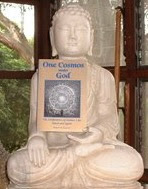
The noble man is one who is sovereign over himself; the holy man is one who transcends himself.... The spiritual man transcends himself and loves to transcend himself; the worldly man remains horizontal and detests the vertical dimension. --Frithjof Schuon
Another important post by Dr. Sanity (ricocheted off a post by ShrinkWrapped), entitled Getting to the “Root” of Root Causes. You might want to go over and read the whole thing while Petey and I wait here. But don’t take too long, since Petey has to be “elsewhere” in a bit. (I say that in bewilderment rather than just sarcasm, because I’m not sure what “elsewhere” means to a purely vertical being.)
Both Dr. Sanity and ShrinkWrapped make reference to the willful misunderstanding and misappropriation of Freud’s ideas by the left. Specifically, since Freud argued that our behavior was determined by unconscious factors, free will is an illusion and no one is really responsible for their bad behavior. To a certain extent this misunderstanding is understandable, for there is no question that Freud was an anti-religious determinist and a materialist. However, as ShrinkWrapped points out, Freud also emphasized that behavior was “overdetermined,” meaning that a multitude of factors contributed to any particular thought or action.
Just as there are no Marxist economists outside academia, it is fair to say that there are virtually no strict Freudians outside academia either. At least for clinicians, Freud’s hydraulic model of the mind has been replaced by an emphasis on the self, which represents our total subjective experience of ourselves. By definition, it cannot be understood as an object, but as the subjective experiencer of experience, both internal and external.
Humanism always results in subhumanism, because, among other things, it denies the very free will that defines us as human. Interestingly, both Islam and the left share the common view of seeing man as determined rather than free. One of the impediments to development in the Islamic world is the concept of “fate,” meaning that Allah wills everything on a moment-by-moment basis.
This is radically different from the Judeo-Christian view, which sees God creating the universe but then “standing back,” so to speak, in order to facilitate and encourage freedom. While miracles still occur--indeed, must occasionally occur because of the vertical axis of reality--they are clearly the exception, not the rule. In Islam, it is as if every moment is miraculously caused by Allah in a top-down manner, with no horizontal causation at all. This is partly what accounts for the deep irrationalism of the Muslim world.
But while Islam is “subrational,” we might say that the left is “hyper-rational,” in that they categorically deny the vertical, which leaves them only with horizontal causation. Since free will can only be located in a vertical sphere that transcends horizontal causation, once you have successfully eliminated the vertical, you end up with the infrahuman, mechanical universe of the left. Bad behavior--as well as good behavior--is simply caused by some antecedent state, instead of being the free choice of an autonomous self that is situated above the stream of temporal cause and effect. This is why leftists believe such clichés as “poverty causes crime” instead of “bad values cause crime,” or “Israel’s existence is the cause of terrorism” instead of “delusional beliefs are the cause of terrorism.”
Another Freudian idea misappropriated by the left is the “superego,” which Freud felt was the source of morality. Since the superego is an internalized object based on family and cultural experience, this implies that there is an unavoidably arbitrary aspect to morality. One culture thinks it’s bad to eat people, another thinks that human flesh is delicious. Who are we to judge? One man’s terrorist is another man’s freedom fighter, even if terrorists don’t believe in freedom. Whatever. Giant fans are no different than Dodger fans--they just express themselves by throwing batteries and used hypodermic needles at players instead of cheering and booing.
But morality actually has three sources: 1) revealed law, 2) the voice of conscience, and 3) the superego. In my view, Freud conflated the conscience--which is a living “revelation” of God implanted in our heart--with the superego, which is indeed a contingent mechanism of socialization that may or may not even be moral. The true conscience can only be located in the vertical, whereas the superego is wholly horizontal (or lower vertical). More often than not, it is actually a corrupt enabler of bad behavior than a source of objective morality. (I discussed this at greater length in a post entitled Conscience, Superego, and Huk al Berri.)
There I explained “why the emphasis on truth is so vital. For in the Arab Muslim world, they are so inundated with vicious lies about America and Israel that it would be ‘immoral’ for them not to hate us. In a racist or anti-Semitic society, the superego will actually demand that its members be racist and anti-Semitic. For example, the nazi movement in Germany was animated by extremely high ideals, without which they could not have engaged in their project of exterminating the Jews. Once the lie is established as truth, then the superego takes over, impelling the individual to act in a ‘moral’ way, consistent with the implications of the lie.”
Therefore, because of the truth-loving nature of the uncreated conscience, if you can establish a lie as the truth, the furtherance of evil will take care of itself.
What largely defines man is his free will, which implies both intelligence and objectivity, for if we aren’t free, then we cannot really possess either truth or goodness. Animals cannot leave the closed system of cause and effect, whereas human beings clearly can. In our vertical aspect, we can see a range of potential choices before us, whereas the animal is simply spurred by the demands of instinct.
Thus, to call free will into question is to make us less than human, which is why humanism is always subhumanism. The most subhuman places on earth are specifically those places where free will was and is denied or atrophied: in communist countries, in the Islamic world, and in urban areas where free will has been eroded by 40 years of leftist brainwashing and social engineering. In the latter case, you might say that poverty does indeed cause crime--the impoverished metaphysic of the left.
Liberty in itself is an aspect of divinity in which we may either participate or not participate. This is a truth that our founders found to be be self-evident, and we can be sure that, in their wildest nightmares, they did not anticipate an illiberal counterrevolution from the left that actually denied the entire basis of the American ideal.
Likewise, George Bush, who is in the philosophical mold of the founders, clearly did not anticipate the anti-liberty forces of the left or the Islamic world, who now work in concert to deny freedom to millions. Without freedom, there is no human existence--or perhaps we might say, no existence worthy of humans. For liberty is the very possibility of manifesting oneself to the utmost, of becoming fully human, of becoming what we already are--and of knowing the divine spark that manifests through us. Nothing is less human than the merely human. The “perfect horizontal man” of leftist utopian thought is simply a perfect animal or robot.
But even that isn't quite right, since there is an inherent dignity and nobility to animals in their natural state, whereas in its verticality, man's natural state is supernatural, so to speak. Thus, reduced to mere animality, man becomes lower than the animals.
Saturday, August 26, 2006


Friday, August 25, 2006
Autobangography of a Small Cosmos
Dr. Sanity has a very eloquent piece today that touches on the mysterious relationship between mind and brain. I left a little comment, recalling the truism that “if the brain were simple enough to understand, we'd be too simple to understand it. Then again, the great mystery is how the virtually infinite complexity of the brain resolves itself into the simple, unitary experience of an ‘I.’ It doesn't get any simpler than that, and yet, what an extraordinary tangle of complexity to make it possible!”
I suppose that that dialectical tension between mind and brain, or subject and object, is what spurred me to write my book, for that’s the ultimate question, isn’t it? That is, how does matter give rise to consciousness? More generally, how does mere existence become experience? How is it that the cosmos has given rise to an interior through which it may experience itself?
To a large extent, a philosopher is somewhat like an annoying child who persists in asking “why” after others have stopped. Some people, like my father, just intuitively realize that such questions are ultimately pointless, that no matter how much we think about existence, no one will ever really figure it out. So why bother with such an impractical and ultimately fruitless endeavor? The history of philosophy is simply a chronicle of error on a particularly grandiose scale. As sometwo once said, it is “an an abuse of language invented for that purpose,” or “a journey of many roads leading from nowhere to nothing.”
But some cosmonauts and vertical adventurers can’t help thinking about these things. For one thing, human beings have an intrinsic need for meaning. And what is meaning? Meaning is revealed when things come together in such a way that the union of particulars reveals what they are pointing toward or converging upon.
For example, the meaning of letters is revealed in the word, just as the meaning of words is revealed in the sentence. Once you know how to read, your mind doesn’t even notice the letters of which the words are composed. They fade into the background and become “invisible,” as your mind sees through them, to what they are pointing toward. Nor, as you read this, is your mind focussed on my words (at least until I brought your attention to them), but is instead focusing on the meaning I am trying to convey through words. Words and letter are simply the vehicles of meaning, not its creator. Or, you might say that words are necessary but insufficient to account for the meaning that transcends them.
The reason why human language exists--can exist--is that the cosmos is composed of language, or what is called the logos or Word. For example, astrophysicists search for the mathematical language that governs the big bang. Physicists have discovered the mathematical language that explains both the macro (relativity theory) and micro (quantum theory) realms, but cannot figure out how those two are related. In other words, they are searching for a “higher meaning” that would unify those two outweirdly incompatible theories.
Likewise, DNA is obviously a highly sophisticated language, a language that “speaks” biological organisms. But strict materialists are mistaken in thinking that any purely Darwinian paradigm is sufficient to account for life. For one thing, natural selection presupposes a very special cosmos in which one thing can stand for another and carry messages. In other words, before we even talk about the “message” of DNA, we must have a medium capable of carrying the message, just as, in order to write a book, you need something like rock and chisel, paper and a pen, or computer chip and bits. And no biological theory can account for the existence of biology, for the simple reason that biology presupposes the presence of biological entities, including the biologist studying them.
Furthermore, natural selection presupposes a wholeness of which the organism is an expression. In other words, wholeness is not an emergent phenomena, but an anterior one. Wholeness can manifest in organisms--or in the genome, or in human consciousness--because wholeness is somehow built into the cosmos. In a whole--as opposed to a mere agglomeration of parts--the parts are internally related to one another, so life and consciousness presuppose an internally related cosmos--which our cosmos just happens to be, based upon the testimony of quantum physics, which reveals a vast sea of entangled energy underlying our perception of clear-cut boundaries and separation.
Obviously the universe is ultimately “One,” for it cannot not be One and still be a cosmos. That is, if there is something that cannot resolve itself into the unity of our cosmos, then it is part of another cosmos, not this one. So no matter how “dualistic” things may appear on the surface, any dualism must ultimately spring from the same nondual source.
This nondual source has always been known and recognized, except perhaps in postmodern times. In Vedanta it is called Brahman. In Kabbalistic Judaism it is called the ain sof. Lao Tsu called it the tao. In Christianity it is called the “godhead” or “ground” (by Meister Eckhart). Steely Dan refer to it as the El Supremo at the top of the stairs.
But because the One is truly One, it necessarily contains the many. That is, the One, by its very nature, is a unity, not a sum. Therefore, while every part has its own relative existence, it is ultimately one with the ground.
As the One “blows itself out” or bangs into existence, it creates the ineluctable primordial dualities of subject-object, part-whole, form-substance, time-eternity, wave-particle, quantity-quality, vertical-horizontal, and others. Therefore, wherever you see one of these, you must see the other. If there are objects--which there surely are--then there must be a subject. And if there is a cosmos--which there undoubtedly is--there must be a Subject.
It is said in the Upanishads that this Subject is hidden in the universe as cream is hidden in milk. The cosmos is actually suffused with a subjectivity of which we are all the beneficiaries. You might say that we are all sparks of this divine Subject--not “I think, therefore I am,” but “I am, therefore Being is.”
Or, as I mythunderstood it in One Cosmos, there is only the
One brahman deathless breathing breathless, unknown origin prior to time and space, fount of all being, unborn thus undying, beginning and end of all impossibility, empty plenum and inexhaustible void. Who is? I AM. A wake. A lone. Hallow, noumena!
And that is the story of your cosmic birthday, my child. Now open His presence and report for karmic duty.
I suppose that that dialectical tension between mind and brain, or subject and object, is what spurred me to write my book, for that’s the ultimate question, isn’t it? That is, how does matter give rise to consciousness? More generally, how does mere existence become experience? How is it that the cosmos has given rise to an interior through which it may experience itself?
To a large extent, a philosopher is somewhat like an annoying child who persists in asking “why” after others have stopped. Some people, like my father, just intuitively realize that such questions are ultimately pointless, that no matter how much we think about existence, no one will ever really figure it out. So why bother with such an impractical and ultimately fruitless endeavor? The history of philosophy is simply a chronicle of error on a particularly grandiose scale. As sometwo once said, it is “an an abuse of language invented for that purpose,” or “a journey of many roads leading from nowhere to nothing.”
But some cosmonauts and vertical adventurers can’t help thinking about these things. For one thing, human beings have an intrinsic need for meaning. And what is meaning? Meaning is revealed when things come together in such a way that the union of particulars reveals what they are pointing toward or converging upon.
For example, the meaning of letters is revealed in the word, just as the meaning of words is revealed in the sentence. Once you know how to read, your mind doesn’t even notice the letters of which the words are composed. They fade into the background and become “invisible,” as your mind sees through them, to what they are pointing toward. Nor, as you read this, is your mind focussed on my words (at least until I brought your attention to them), but is instead focusing on the meaning I am trying to convey through words. Words and letter are simply the vehicles of meaning, not its creator. Or, you might say that words are necessary but insufficient to account for the meaning that transcends them.
The reason why human language exists--can exist--is that the cosmos is composed of language, or what is called the logos or Word. For example, astrophysicists search for the mathematical language that governs the big bang. Physicists have discovered the mathematical language that explains both the macro (relativity theory) and micro (quantum theory) realms, but cannot figure out how those two are related. In other words, they are searching for a “higher meaning” that would unify those two outweirdly incompatible theories.
Likewise, DNA is obviously a highly sophisticated language, a language that “speaks” biological organisms. But strict materialists are mistaken in thinking that any purely Darwinian paradigm is sufficient to account for life. For one thing, natural selection presupposes a very special cosmos in which one thing can stand for another and carry messages. In other words, before we even talk about the “message” of DNA, we must have a medium capable of carrying the message, just as, in order to write a book, you need something like rock and chisel, paper and a pen, or computer chip and bits. And no biological theory can account for the existence of biology, for the simple reason that biology presupposes the presence of biological entities, including the biologist studying them.
Furthermore, natural selection presupposes a wholeness of which the organism is an expression. In other words, wholeness is not an emergent phenomena, but an anterior one. Wholeness can manifest in organisms--or in the genome, or in human consciousness--because wholeness is somehow built into the cosmos. In a whole--as opposed to a mere agglomeration of parts--the parts are internally related to one another, so life and consciousness presuppose an internally related cosmos--which our cosmos just happens to be, based upon the testimony of quantum physics, which reveals a vast sea of entangled energy underlying our perception of clear-cut boundaries and separation.
Obviously the universe is ultimately “One,” for it cannot not be One and still be a cosmos. That is, if there is something that cannot resolve itself into the unity of our cosmos, then it is part of another cosmos, not this one. So no matter how “dualistic” things may appear on the surface, any dualism must ultimately spring from the same nondual source.
This nondual source has always been known and recognized, except perhaps in postmodern times. In Vedanta it is called Brahman. In Kabbalistic Judaism it is called the ain sof. Lao Tsu called it the tao. In Christianity it is called the “godhead” or “ground” (by Meister Eckhart). Steely Dan refer to it as the El Supremo at the top of the stairs.
But because the One is truly One, it necessarily contains the many. That is, the One, by its very nature, is a unity, not a sum. Therefore, while every part has its own relative existence, it is ultimately one with the ground.
As the One “blows itself out” or bangs into existence, it creates the ineluctable primordial dualities of subject-object, part-whole, form-substance, time-eternity, wave-particle, quantity-quality, vertical-horizontal, and others. Therefore, wherever you see one of these, you must see the other. If there are objects--which there surely are--then there must be a subject. And if there is a cosmos--which there undoubtedly is--there must be a Subject.
It is said in the Upanishads that this Subject is hidden in the universe as cream is hidden in milk. The cosmos is actually suffused with a subjectivity of which we are all the beneficiaries. You might say that we are all sparks of this divine Subject--not “I think, therefore I am,” but “I am, therefore Being is.”
Or, as I mythunderstood it in One Cosmos, there is only the
One brahman deathless breathing breathless, unknown origin prior to time and space, fount of all being, unborn thus undying, beginning and end of all impossibility, empty plenum and inexhaustible void. Who is? I AM. A wake. A lone. Hallow, noumena!
And that is the story of your cosmic birthday, my child. Now open His presence and report for karmic duty.
Thursday, August 24, 2006
Envy and Gratitude (9.14.08)
Man is so caught up in the toils of mechanical life that he neither has time to stop nor the power of attention needed to turn his mental vision upon himself. Man thus passes his days absorbed by external circumstances. The great machine that drags him along turns without stopping, and forbids him to stop under penalty of being crushed.... Life passes away from him almost unseen, swift as a ray of light, and man falls engulfed and still absent from himself. --Boris Mouravieff.
“Zoom!" What was that? That was your life, mate. Oh, that was quick, do I get another? Sorry mate, that's your lot. --Basil Fawlty
We conclude our little tour of the inner meaning of the Ten Commandments with the tenth, “thou shalt not covet.” It is a fitting capstone to our journey, since the injunction against envy is really more of a reward for a life well lived than an ultimatum. For envy is the most corrosive of emotions (or perhaps more accurately, “mental states”), in that it undermines any possibility of personal happiness or spiritual fulfillment. While it often takes the form of longing for what one doesn’t have, it is usually built on an unconscious foundation of being ungrateful for what one has, or even actively devaluing what one has, so that one constantly feels deprived. Thus, envy is often the residue of the inner emptiness caused by unconscious devaluation, "spoiling," and ingratitude.
Ultimately envy is a self-consuming process that leaves nothing but itself standing, like Michael Corleone at the end of Godfather II or Charles Foster Kane at the end of Citizen Kane. Both endings represent envy triumphant. All that is left of Kane is a huge warehouse of meaningless objects frantically acquired during a lifetime spent trying vainly to fill a psychological and spiritual void with possessions. It is appropriate that they are consigned to the fire, as workers absently toss one after another into the flames.
Here we discover a certain confluence between Buddhism and the Judeo-Christian tradition, for Buddha is famous for his wise crack about desire being the source of our suffering. But actually, he was trying to make a point about attachment to desire. Desires will come and go, like smoke driven by wind. It is only when we attempt to hold on to them that they become problematic.
But even then, as I pointed out in One Cosmos, I find it useful to draw a distinction between appetite, which is natural, and desire, which is often mimetic, meaning that it is not spontaneous but prompted from the outside. Many people give themselves entirely over to this process, and lead lives of simply wanting what others seem to want. They are pushed and pulled around by fleeting desires, impulses and passions, but when one of them is being gratified, it gives rise to a spurious sense of “freedom,” when in reality this kind of ungoverned desire is the opposite of freedom.
It is very difficult to avoid this dynamic in a consumer-driven culture such as ours. It’s the kind of cliché that Petey detests, but we are constantly bombarded with messages and images that fan the fires of envy and mimesis. Sri Aurobindo referred to this as the “vital mind,” and the fundamental problem is that it cannot really be appeased. In other words, it doesn’t shrink when we acquiesce to it. Instead, it only grows, like an addiction or compulsion.
Importantly, the vital mind does not merely consist of impulses seeking discharge. Rather, it can take over the machinery of the host, and generate its own thoughts and rationalizations. We’ve all seen this happen in ourselves. Yoga in its most generic sense involves a reversal of this tendency, so that we may consciously yearn for what we actually want, rather than mindlessly willing what we desire. This tends to be a constant battle at the beginning. But only until the end.
I’m currently reading Peter Guralnick’s magisterial biography of Elvis, and it is amazing how elaborate the vital mind can become if left unchecked. It seems that someone can become so wealthy and powerful that they lose the friction necessary to distinguish between fantasy and reality. A sort of hypnotic, dreamlike imagination takes hold, which can become quite elaborate and unnatural. I am sure this accounts for the general nuttiness that comes out of the typical left-wing hollywoodenhead. They are so far from what you and I know as reality, that they are both ontologically and epistemologically (not to say spiritually) crippled.
“Job one” of the vital mind is to foster a kind of I-amnesia, so that we repeatedly fool ourselves into believing that fulfillment of the next desire will finally break the cycle and bring us real contentment, but most of us know that drill. For in that gap between desire and fulfillment lies the hidden key. In that gap there is both anticipation and hope. But like the referred pain of a back injury that we feel in the leg, this hope is misplaced onto a realm incapable of fulfilling it. For, as it is written--probably on a bumper snicker somewhere--”You can never get enough of what you don’t really need.”
This pattern of desiring what we don’t really want or need is well beyond merely affecting our spiritual lives. Rather, it is starting to seriously compromise even our physical well-being. At some point in the last 10-15 years, affluence became a much more serious threat to health than poverty. The levels of obesity, type II diabetes, and other related health problems have become epidemic. Why? Because people are able to live in the vital mind as never before. The Western world is increasingly full of “poor” people whose bodies look like the most prosperous people of the past. They are still impoverished, but it is a spiritual impoverishment that causes them to try to fill the void with food and meaningless sedentary activities, such as television and video games. In a way, they are more poor--not to say pathetic and lacking in dignity--than the poor of the past.
Natural appetites can be satisfied, but the gods of abstract metaphysical desire are omnipotent and require constant tribute. That is one of the paradoxes, for one might think that the spiritually developed person lives in an “abstract” world, while the bovine, slack-jawed grazing multitudes live in the concrete world, but it is quite the opposite. The spiritual person becomes very concretely aware of subtle and fleeting little concrete joys on a moment-by-moment basis, where as the BSJGM’s are only tuned into the most gross forms of sensory overload, whether in music, entertainment, or food (and I imagine the porn industry taps into this same dynamic as well).
Here again we must bear in mind the limitlessness of the human imagination. We can always imagine something better, something that we don’t have. Any clown can do that. Much more tricky is being grateful for what we do have. Thus, the cultivation of humility and gratitude actively counter the vital mind and its constitutional envy. This may initially feel as if we are being deprived of our horizontal liberty, such as it is, and this is true. However, the whole point is to replace that with a more expansive vertical freedom that is relatively unconstrained by material circumstances, excluding the most dire cases.
And, just like my absurcular book, the commandments circle back around to the beginning, back to where we started, with the holographic first commandment that contains all the others: “The secular left turns the cosmos upside down and inside out. As a result, instead of being conditioned in a hierarchical manner from the top down, it is conditioned from the bottom up. This results not in true liberation, only in rebellion and pseudo-liberation, for there can be no meaningful freedom outside objective Truth. The left rejects top-town hierarchies as intrinsically repressive, but the opposite is true--only in being conditioned by the higher can we actually elevate and liberate ourselves from contingency and relativity.”
Or, as Will put it “Like any physical attribute, if the human intellect is not yoked to and governed by the Higher Intelligence, it runs amok and eventually goes crazy. It's taken some time to get there, but currently, the spiritually bereft intellect is basically in charge of most of the world's influential institutions, which of course means the world is in deep stew. As far as definitions of the Antichrist go, I think this would do OK.”
On the spiritual level, there is simply nothing more satanic than envy. The sword of gratitude is our only defense.
“Zoom!" What was that? That was your life, mate. Oh, that was quick, do I get another? Sorry mate, that's your lot. --Basil Fawlty
We conclude our little tour of the inner meaning of the Ten Commandments with the tenth, “thou shalt not covet.” It is a fitting capstone to our journey, since the injunction against envy is really more of a reward for a life well lived than an ultimatum. For envy is the most corrosive of emotions (or perhaps more accurately, “mental states”), in that it undermines any possibility of personal happiness or spiritual fulfillment. While it often takes the form of longing for what one doesn’t have, it is usually built on an unconscious foundation of being ungrateful for what one has, or even actively devaluing what one has, so that one constantly feels deprived. Thus, envy is often the residue of the inner emptiness caused by unconscious devaluation, "spoiling," and ingratitude.
Ultimately envy is a self-consuming process that leaves nothing but itself standing, like Michael Corleone at the end of Godfather II or Charles Foster Kane at the end of Citizen Kane. Both endings represent envy triumphant. All that is left of Kane is a huge warehouse of meaningless objects frantically acquired during a lifetime spent trying vainly to fill a psychological and spiritual void with possessions. It is appropriate that they are consigned to the fire, as workers absently toss one after another into the flames.
Here we discover a certain confluence between Buddhism and the Judeo-Christian tradition, for Buddha is famous for his wise crack about desire being the source of our suffering. But actually, he was trying to make a point about attachment to desire. Desires will come and go, like smoke driven by wind. It is only when we attempt to hold on to them that they become problematic.
But even then, as I pointed out in One Cosmos, I find it useful to draw a distinction between appetite, which is natural, and desire, which is often mimetic, meaning that it is not spontaneous but prompted from the outside. Many people give themselves entirely over to this process, and lead lives of simply wanting what others seem to want. They are pushed and pulled around by fleeting desires, impulses and passions, but when one of them is being gratified, it gives rise to a spurious sense of “freedom,” when in reality this kind of ungoverned desire is the opposite of freedom.
It is very difficult to avoid this dynamic in a consumer-driven culture such as ours. It’s the kind of cliché that Petey detests, but we are constantly bombarded with messages and images that fan the fires of envy and mimesis. Sri Aurobindo referred to this as the “vital mind,” and the fundamental problem is that it cannot really be appeased. In other words, it doesn’t shrink when we acquiesce to it. Instead, it only grows, like an addiction or compulsion.
Importantly, the vital mind does not merely consist of impulses seeking discharge. Rather, it can take over the machinery of the host, and generate its own thoughts and rationalizations. We’ve all seen this happen in ourselves. Yoga in its most generic sense involves a reversal of this tendency, so that we may consciously yearn for what we actually want, rather than mindlessly willing what we desire. This tends to be a constant battle at the beginning. But only until the end.
I’m currently reading Peter Guralnick’s magisterial biography of Elvis, and it is amazing how elaborate the vital mind can become if left unchecked. It seems that someone can become so wealthy and powerful that they lose the friction necessary to distinguish between fantasy and reality. A sort of hypnotic, dreamlike imagination takes hold, which can become quite elaborate and unnatural. I am sure this accounts for the general nuttiness that comes out of the typical left-wing hollywoodenhead. They are so far from what you and I know as reality, that they are both ontologically and epistemologically (not to say spiritually) crippled.
“Job one” of the vital mind is to foster a kind of I-amnesia, so that we repeatedly fool ourselves into believing that fulfillment of the next desire will finally break the cycle and bring us real contentment, but most of us know that drill. For in that gap between desire and fulfillment lies the hidden key. In that gap there is both anticipation and hope. But like the referred pain of a back injury that we feel in the leg, this hope is misplaced onto a realm incapable of fulfilling it. For, as it is written--probably on a bumper snicker somewhere--”You can never get enough of what you don’t really need.”
This pattern of desiring what we don’t really want or need is well beyond merely affecting our spiritual lives. Rather, it is starting to seriously compromise even our physical well-being. At some point in the last 10-15 years, affluence became a much more serious threat to health than poverty. The levels of obesity, type II diabetes, and other related health problems have become epidemic. Why? Because people are able to live in the vital mind as never before. The Western world is increasingly full of “poor” people whose bodies look like the most prosperous people of the past. They are still impoverished, but it is a spiritual impoverishment that causes them to try to fill the void with food and meaningless sedentary activities, such as television and video games. In a way, they are more poor--not to say pathetic and lacking in dignity--than the poor of the past.
Natural appetites can be satisfied, but the gods of abstract metaphysical desire are omnipotent and require constant tribute. That is one of the paradoxes, for one might think that the spiritually developed person lives in an “abstract” world, while the bovine, slack-jawed grazing multitudes live in the concrete world, but it is quite the opposite. The spiritual person becomes very concretely aware of subtle and fleeting little concrete joys on a moment-by-moment basis, where as the BSJGM’s are only tuned into the most gross forms of sensory overload, whether in music, entertainment, or food (and I imagine the porn industry taps into this same dynamic as well).
Here again we must bear in mind the limitlessness of the human imagination. We can always imagine something better, something that we don’t have. Any clown can do that. Much more tricky is being grateful for what we do have. Thus, the cultivation of humility and gratitude actively counter the vital mind and its constitutional envy. This may initially feel as if we are being deprived of our horizontal liberty, such as it is, and this is true. However, the whole point is to replace that with a more expansive vertical freedom that is relatively unconstrained by material circumstances, excluding the most dire cases.
And, just like my absurcular book, the commandments circle back around to the beginning, back to where we started, with the holographic first commandment that contains all the others: “The secular left turns the cosmos upside down and inside out. As a result, instead of being conditioned in a hierarchical manner from the top down, it is conditioned from the bottom up. This results not in true liberation, only in rebellion and pseudo-liberation, for there can be no meaningful freedom outside objective Truth. The left rejects top-town hierarchies as intrinsically repressive, but the opposite is true--only in being conditioned by the higher can we actually elevate and liberate ourselves from contingency and relativity.”
Or, as Will put it “Like any physical attribute, if the human intellect is not yoked to and governed by the Higher Intelligence, it runs amok and eventually goes crazy. It's taken some time to get there, but currently, the spiritually bereft intellect is basically in charge of most of the world's influential institutions, which of course means the world is in deep stew. As far as definitions of the Antichrist go, I think this would do OK.”
On the spiritual level, there is simply nothing more satanic than envy. The sword of gratitude is our only defense.
Wednesday, August 23, 2006
Lies and the Lying Liars Who Live Them
That would be us. For, depending on how you look at it, God became man so that man might become God. Or, Brahman became Maya so that Maya might become Brahman. Or perhaps Truth became falsehood so that falsehood might become Truth.
The enigmatic Christian esoterist Boris Mouravieff wrote that “We live in a world ruled by lies. Lying and stealing are the dominant elements of human character whatever the race, creed or caste. Whoever says that this is not true simply tells another lie. Man lies because in a world ruled by lies it is not possible to for him to do otherwise.... [T]he progress of this civilization, which is the fruit of an intellectual culture, considerably increases the need for lying.”
I believe it was Burke who said that culture “reconciles a man to everything,” no matter how foolish or barbarous the custom. But some cultures are so immersed in the Lie that they cannot help producing lying liars, most dramatically in the Middle East, but obviously here in the United States as well, only in a more subtle form. For example, the pressure of political correctness is an instrument of coercion designed to reconcile you to the infrahuman lies of the left.
In conducting a psychological evaluation, patients are often motivated to lie--to make it appear that they are better off than they actually are, or worse off than they actually are, or that one thing is responsible for their distress when it is actually another. And yet, a part of them knows they are lying and is uncomfortable with the fact. In his heart, even absent a divine commandment, man (a normal man, anyway) knows that he should not lie. Why is that? Why this grudging respect for a thing called truth, even among cynical postmodernists who are too jaded to believe that such a thing exists?
We live in a world of forces. Just as human beings are tripartite entities consisting of body, mind and spirit, there are physical forces, mental forces, and spiritual forces. In the spiritual-intellectual realm, truth is a force. There is a counter-force which we call "lying," which, if you think about it for even a moment, has probably had a greater impact and influence on the world than Truth. Or at the very least, it is a constant battle. Truth is always embattled on all sides, just as light is surrounded by darkness. Darkness, on the other hand, is not necessarily surrounded by light. Not for nothing did Jesus crack that the adversary “was a murderer from the beginning and does not stand in the truth, because there is no truth in him. When he speaks a lie, he speaks of his own substance, for he is a liar and the father of lies.”
This is an interesting statement, for it suggests that lies are somehow a "human substance," somewhat like a spider that spins a web out of its own body. Truth, on the other hand, is not, and cannot be of human origins. It is somehow anterior to us, and it is only for us to discover or remember it--what Plato called anamnesis. And oh what a tangled web we weave, compared to the spider.....
You'd think it would be uncontroversial to utter a simple truth, but you'd be wrong, wouldn't you? If you don't believe in the force of falsehood, try sharing a controversial but banal truth at one of our elite universities, such as "men and women are fundamentally different and, on average, excel at different things," or "children do better with a mother and a father than with two mothers and two fathers," or “racial quotas hurt blacks," or “some, if not most, cultures are patently sick." It seems that to carry Truth is to pick up a cross and paint a target on one's back.
Animals cannot lie. While they can have certain naturally selected mechanisms of deception, they cannot live a lie (actually, as an astute commenter mentioned the other day, it might be possible if the luckless pet has a particularly nutty owner, like James Wolcott). But living a lie is in the normal course of events for human beings. Talleyrand once remarked that language was given to man so as to conceal his thoughts. Interestingly, this problem is fully recognized in scripture, as the very first conversations recorded in the Bible are a tissue of lies. The serpent lies to the woman, the woman transmits the lie to the man, and the man lies about it to God. The very emergence of self-consciousness seems to be inseparable from lying. Isn’t that interesting?
A cursory glance at history--or at the idiotorial pages of the New York Times--establishes the fact that lying is absolutely fundamental to human existence, even though the idea wasn't systematized until the early 20th century, in the works of Freud (the good Freud) and his followers. In particular, the psychoanalyst W.R. Bion developed a sophisticated epistemology (or sophistemology, for short) showing how a vital lie is at the basis of most all forms of psychopathology. He made the provocative observation that the lie requires a thinker to think it, whereas the truth does not, for it simply is. We discover truth, but it takes a thinker to concoct the lie (and, I might add, a brilliant thinker such as Marx or Chomsky to create the most grandiose lies). And once the lie is in place, it causes the psyche to enter a sort of parallel universe, for it constructs itself on the foundations of that primordial lie.
In my own colorful terminology, I have called these internalized lies "mind parasites." I believe the term is an accurate one, for it is meant to convey the idea that a vital lie that lodges itself in the psyche is not static, but takes on the characteristics of the host, so to speak. I remember once discussing this with my analyst. I don't remember the exact context of the problem I was whining about (or if I’m lying about not remembering) but he said words to the effect of, "What do you expect? It's as smart as you are."
Ah ha! In other words, the mind parasite has at its disposal all of the marvelous hi-tech machinery of the mind. Therefore, it can easily justify itself, elaborate itself, gang up on the truth, intimidate healthier parts of the psyche. It's like a dictator who uses legitimate means to come to power, but then corruptly uses all of the levers of power to stay there and eliminate opponents--similar to how liberalism gradually morphed into the leftism which now controls the Democratic party.
Just as freedom and truth are necessarily linked--i.e., no one who is living a lie is actually free--those who are in thrall to the lie are slaves. While they may enjoy a subjective sense of freedom, it is an illusion. In fact, they have forfeited their freedom and are attached to a spiritually suffocating demon generated out of their own psychic substance, just like the above referenced spider.
Think of a vivid example that comes readily to mind--the Islamists. Is it not obvious to one and all (er, no) that they are absolutely enslaved by artificial beings of their own creation? And that they want everyone else to be enslaved by the same demon? Does this not demonstrate the insane power of demons and the lies they propagate? And how the liberal media simply treats the lie as another variety of truth? You know, who are we to judge? The Middle East is just too complex.
There are personal mind parasites and collective mind parasites. Many cultures revolve entirely around monstrous entities that have been engendered by whole communities, such as the Aztec. Here again, it would be wrong to say that the Aztec had a bloodthirsty god--rather, it clearly had them. Thousands upon thousands of human beings sacrificed to satisfy this god's appetite for human blood, elaborate mechanisms set up to supply fresh bodies, the heart of the sacrificial victim cut out by the officiating priest who would himself take a bite out of it while it was still beating. A whole society of Jeffrey Dahmers trying desperately to allay their existential anxiety by vampirically ingesting the life force of others. The head-chopping Izlambies are just the latest edition of this primordial anti-religion. But you undoubtedly know some people in your own life who do the same thing--hungry ghosts who "feed" on the spirit (or blog) of others.
In all times and in all places, human beings have looked for ways to objectify, worship, and appease their self-created demons. This is preferable to having them run around loose in one's own psyche. Take again the example of the typical beast of Islamist depravity. How would one even begin to tell him: "you have a persecutory entity inside of you that your life revolves around. You have placed it outside of yourself, in the 'infidels,' so as to make your life bearable, for it conceals a truth that is too painful to endure. Would you like to put down that meat cleaver and talk about it?"
To a large extent, this dynamic is at the heart of more mundane politics as well. For those who do not experience George Bush as a demon, it is almost impossible to understand those who do, any more than we can really understand the motivations of the Aztec. The collective mind parasite has a grammar and logic all its own, inaccessible to all but initiates into the Lie.
You don't actually want to get that close to an intoxicating Lie of that magnitude. It's not safe. Better to observe it from a respectful distance. Otherwise, you will find yourself pulled down into a false world of counter-lying rather than simple truth. You cannot create an artificial "good demon,” which is what secular leftists are trying to do when they aren't creating bad ones. Those critical critics who criticize my "negativity" probably think I am engaging in the former--heatedly countering the lie--when I am calmly engaged in the latter--simply affirming the truth. This is the inner meaning of "resist not evil." Resist it in the wrong way, and you come into its orbit.
For a demon operates through a combination of will and imagination. You may think of perverse will as the male principle and perverse imagination as the female principle. Together they beget the demon child that then controls the parents, taking over both will and imagination. Consider how so much art and academic nonsense is nothing more than the elaboration of the perverse imagination--ideological superstructures giving cover to lies of various magnitude. Think of how much "activism" is simply the angry agitation of the perverse will.
Truth is a living thing, a Being that cannot be reduced to the idolatrous systems of men, especially corrupted men who do not honor Truth to begin with. Most modern and postmodern ideologies and philosophies are opiates for elites too sophisticated for such nonsense as Truth. But like all misused drugs, “Lies gravely affect our mind; they distort the undeveloped organs of the Personality, upon which depends the effort that must lead us to the second Birth.... Even more, lying makes the man who aspires to evolution go backwards” (Mouravieff).
Why is that? Maybe because the Truth became falsehood so that falsehood might become Truth.
The enigmatic Christian esoterist Boris Mouravieff wrote that “We live in a world ruled by lies. Lying and stealing are the dominant elements of human character whatever the race, creed or caste. Whoever says that this is not true simply tells another lie. Man lies because in a world ruled by lies it is not possible to for him to do otherwise.... [T]he progress of this civilization, which is the fruit of an intellectual culture, considerably increases the need for lying.”
I believe it was Burke who said that culture “reconciles a man to everything,” no matter how foolish or barbarous the custom. But some cultures are so immersed in the Lie that they cannot help producing lying liars, most dramatically in the Middle East, but obviously here in the United States as well, only in a more subtle form. For example, the pressure of political correctness is an instrument of coercion designed to reconcile you to the infrahuman lies of the left.
In conducting a psychological evaluation, patients are often motivated to lie--to make it appear that they are better off than they actually are, or worse off than they actually are, or that one thing is responsible for their distress when it is actually another. And yet, a part of them knows they are lying and is uncomfortable with the fact. In his heart, even absent a divine commandment, man (a normal man, anyway) knows that he should not lie. Why is that? Why this grudging respect for a thing called truth, even among cynical postmodernists who are too jaded to believe that such a thing exists?
We live in a world of forces. Just as human beings are tripartite entities consisting of body, mind and spirit, there are physical forces, mental forces, and spiritual forces. In the spiritual-intellectual realm, truth is a force. There is a counter-force which we call "lying," which, if you think about it for even a moment, has probably had a greater impact and influence on the world than Truth. Or at the very least, it is a constant battle. Truth is always embattled on all sides, just as light is surrounded by darkness. Darkness, on the other hand, is not necessarily surrounded by light. Not for nothing did Jesus crack that the adversary “was a murderer from the beginning and does not stand in the truth, because there is no truth in him. When he speaks a lie, he speaks of his own substance, for he is a liar and the father of lies.”
This is an interesting statement, for it suggests that lies are somehow a "human substance," somewhat like a spider that spins a web out of its own body. Truth, on the other hand, is not, and cannot be of human origins. It is somehow anterior to us, and it is only for us to discover or remember it--what Plato called anamnesis. And oh what a tangled web we weave, compared to the spider.....
You'd think it would be uncontroversial to utter a simple truth, but you'd be wrong, wouldn't you? If you don't believe in the force of falsehood, try sharing a controversial but banal truth at one of our elite universities, such as "men and women are fundamentally different and, on average, excel at different things," or "children do better with a mother and a father than with two mothers and two fathers," or “racial quotas hurt blacks," or “some, if not most, cultures are patently sick." It seems that to carry Truth is to pick up a cross and paint a target on one's back.
Animals cannot lie. While they can have certain naturally selected mechanisms of deception, they cannot live a lie (actually, as an astute commenter mentioned the other day, it might be possible if the luckless pet has a particularly nutty owner, like James Wolcott). But living a lie is in the normal course of events for human beings. Talleyrand once remarked that language was given to man so as to conceal his thoughts. Interestingly, this problem is fully recognized in scripture, as the very first conversations recorded in the Bible are a tissue of lies. The serpent lies to the woman, the woman transmits the lie to the man, and the man lies about it to God. The very emergence of self-consciousness seems to be inseparable from lying. Isn’t that interesting?
A cursory glance at history--or at the idiotorial pages of the New York Times--establishes the fact that lying is absolutely fundamental to human existence, even though the idea wasn't systematized until the early 20th century, in the works of Freud (the good Freud) and his followers. In particular, the psychoanalyst W.R. Bion developed a sophisticated epistemology (or sophistemology, for short) showing how a vital lie is at the basis of most all forms of psychopathology. He made the provocative observation that the lie requires a thinker to think it, whereas the truth does not, for it simply is. We discover truth, but it takes a thinker to concoct the lie (and, I might add, a brilliant thinker such as Marx or Chomsky to create the most grandiose lies). And once the lie is in place, it causes the psyche to enter a sort of parallel universe, for it constructs itself on the foundations of that primordial lie.
In my own colorful terminology, I have called these internalized lies "mind parasites." I believe the term is an accurate one, for it is meant to convey the idea that a vital lie that lodges itself in the psyche is not static, but takes on the characteristics of the host, so to speak. I remember once discussing this with my analyst. I don't remember the exact context of the problem I was whining about (or if I’m lying about not remembering) but he said words to the effect of, "What do you expect? It's as smart as you are."
Ah ha! In other words, the mind parasite has at its disposal all of the marvelous hi-tech machinery of the mind. Therefore, it can easily justify itself, elaborate itself, gang up on the truth, intimidate healthier parts of the psyche. It's like a dictator who uses legitimate means to come to power, but then corruptly uses all of the levers of power to stay there and eliminate opponents--similar to how liberalism gradually morphed into the leftism which now controls the Democratic party.
Just as freedom and truth are necessarily linked--i.e., no one who is living a lie is actually free--those who are in thrall to the lie are slaves. While they may enjoy a subjective sense of freedom, it is an illusion. In fact, they have forfeited their freedom and are attached to a spiritually suffocating demon generated out of their own psychic substance, just like the above referenced spider.
Think of a vivid example that comes readily to mind--the Islamists. Is it not obvious to one and all (er, no) that they are absolutely enslaved by artificial beings of their own creation? And that they want everyone else to be enslaved by the same demon? Does this not demonstrate the insane power of demons and the lies they propagate? And how the liberal media simply treats the lie as another variety of truth? You know, who are we to judge? The Middle East is just too complex.
There are personal mind parasites and collective mind parasites. Many cultures revolve entirely around monstrous entities that have been engendered by whole communities, such as the Aztec. Here again, it would be wrong to say that the Aztec had a bloodthirsty god--rather, it clearly had them. Thousands upon thousands of human beings sacrificed to satisfy this god's appetite for human blood, elaborate mechanisms set up to supply fresh bodies, the heart of the sacrificial victim cut out by the officiating priest who would himself take a bite out of it while it was still beating. A whole society of Jeffrey Dahmers trying desperately to allay their existential anxiety by vampirically ingesting the life force of others. The head-chopping Izlambies are just the latest edition of this primordial anti-religion. But you undoubtedly know some people in your own life who do the same thing--hungry ghosts who "feed" on the spirit (or blog) of others.
In all times and in all places, human beings have looked for ways to objectify, worship, and appease their self-created demons. This is preferable to having them run around loose in one's own psyche. Take again the example of the typical beast of Islamist depravity. How would one even begin to tell him: "you have a persecutory entity inside of you that your life revolves around. You have placed it outside of yourself, in the 'infidels,' so as to make your life bearable, for it conceals a truth that is too painful to endure. Would you like to put down that meat cleaver and talk about it?"
To a large extent, this dynamic is at the heart of more mundane politics as well. For those who do not experience George Bush as a demon, it is almost impossible to understand those who do, any more than we can really understand the motivations of the Aztec. The collective mind parasite has a grammar and logic all its own, inaccessible to all but initiates into the Lie.
You don't actually want to get that close to an intoxicating Lie of that magnitude. It's not safe. Better to observe it from a respectful distance. Otherwise, you will find yourself pulled down into a false world of counter-lying rather than simple truth. You cannot create an artificial "good demon,” which is what secular leftists are trying to do when they aren't creating bad ones. Those critical critics who criticize my "negativity" probably think I am engaging in the former--heatedly countering the lie--when I am calmly engaged in the latter--simply affirming the truth. This is the inner meaning of "resist not evil." Resist it in the wrong way, and you come into its orbit.
For a demon operates through a combination of will and imagination. You may think of perverse will as the male principle and perverse imagination as the female principle. Together they beget the demon child that then controls the parents, taking over both will and imagination. Consider how so much art and academic nonsense is nothing more than the elaboration of the perverse imagination--ideological superstructures giving cover to lies of various magnitude. Think of how much "activism" is simply the angry agitation of the perverse will.
Truth is a living thing, a Being that cannot be reduced to the idolatrous systems of men, especially corrupted men who do not honor Truth to begin with. Most modern and postmodern ideologies and philosophies are opiates for elites too sophisticated for such nonsense as Truth. But like all misused drugs, “Lies gravely affect our mind; they distort the undeveloped organs of the Personality, upon which depends the effort that must lead us to the second Birth.... Even more, lying makes the man who aspires to evolution go backwards” (Mouravieff).
Why is that? Maybe because the Truth became falsehood so that falsehood might become Truth.
Tuesday, August 22, 2006
Jesus Saves, Moses Invests, Mohammed Plunders
“Thou shalt not steal.” Why not? As always, the left has found a way out of this one by questioning its premise, i.e., the existence of private property. For one way to eliminate theft is to eliminate or at least question the legitimacy of private property, which naturally ends with one big thief called “the government.”
Property, according to Richard Pipes, is “the key to the emergence of political and legal institutions that guarantee liberty.” Look at most anyplace in the world where there is an absence of liberty, and you will find weak property rights.
Liberals--classical liberals, anyway, not the misnamed leftist kind--have always understood that property is much more than property. Rather, it is the cornerstone of freedom, its very enabler and protector. And underneath property is the use of legitimate violence to protect said property. For if ever there were “sacred violence,” it is the violence that ensures the protection of property, for without property, humans cannot become fully human.
For one thing, property is simply a free expression of “what people want,” and to a large extent, what you want is what you are, for better or worse. Therefore, property is an extension of the person. I once read a description of this by the outstanding psychoanalyst and writer, Christopher Bollas, who notes that the self can never be perceived directly, only indirectly, largely through its use of objects:
“Perhaps we need a new point of view in clinical psychoanalysis, close to a form of person anthropology. We would pay acute attention to all the objects selected by a patient and note the use made of each object. The literature, films, and music a person selects would be as valued a part of the fieldwork as the dream.” In so doing, we may “track the footsteps of the true self.”
For me, if I go to someone’s home, there are two things I am most curious about: the books and music it contains. And the medicine cabinet. Likewise, I should think that after I am gone, a psychoanalytic fieldworker would be able to construct a fairly accurate representation of me by merely rifling through my library. A person whose name I cannot recall referred to reading as “the mystery school of individuation.”
Just consider the odd assortment of books in my sidebar. I am quite sure that no one else on the planet has a matching list. There may not be another person in history who has read and assimilated those particular books. I am not saying that to boast, only to emphasize the amazingly unique alchemy of choices we all embody when given the opportunity to exercise those choices. As Petey once said, “freedom is eccentricity lived,” and he has a point. At the very least, freedom is individuality lived, and it is very difficult to live out your individuality without a range of choices before you.
I realize it’s politically incorrect to say this, but in the course of my work I have had the opportunity to evaluate a fair number of people from second and third world cultures, and what always impresses me about them is their essential sameness. Their life stories are all remarkably similar, almost as if they were the same person. And in a way they are, for they were not brought up in a cultural space in which they could develop their own metaphysical dream. Instead, their life is dreamt by others, either vertically by a ruling class or horizontally by the collective. What Bollas calls the person’s “destiny drive” has been almost entirely squelched. They do not live in a space of possibilities, only a sort of invariant and unchanging now.
Pipes notes that “while property in some form is possible without liberty, the contrary is inconceivable.” And this is one thing that frightens us about the illiberal left, for as we have said many times, if you scratch a leftist, he will probably sue you. But underneath the scratch, you will discover a conviction that your property doesn’t really belong to you, but to the collective. It is simply a variation of the bald-faced assertion that “private property is public theft.” itself the absolute inversion of the seventh commandment. For as we have also had occasion to mention before, Karl Marx was the great anti-Moses with the reverse Sinai revelation, and all forms of contemporary leftism may trace their intellectual genealogy to him; whereas the modern conservative intellectual movement is the current expression of an entirely different stream of thought, classical liberalism.
Our most precious property is, of course, our own body. However, it is amazing how late in history this idea emerged. For example, the Islamic beasts we are fighting have no such notion. In their cultures, your body belongs to the religious authorities, and only they can dictate what you can and cannot do with it. For example, a woman’s body is not her own. She has no choices (or only a narrow range of choices established by others) of how to express it, how to adorn it, and whom to share it with. (Memo to trolls--please don’t even bother. The moral issue behind the abortion debate is not whether a woman has a right to do whatever she pleases with her own body, but whether she has that right over another’s body. That’s the whole point.)
Slavery was still legal in parts of the Arab world as late as the 1960’s, and widespread virtual slavery still exists today. This is the ultimate theft, the theft of a human soul. But that is hardly the only sort of soul-theft that goes on in the Islamic world. Again, the idea that children are autonomous beings with their own inherent rights and dignity is a very late historical development that has yet to appear in most human cultures. Rather, children are “owned” by their parents, which is a great barrier to psychohistorical evolution. As a parent, your job is to create a space for your child’s true self to emerge, not to enforce your version of who you child is and what he should be. Naturally this does not exclude boundaries, discipline and values, but the point of these is to facilitate true freedom, not to suppress it.
Most religions conceive of a mythical Golden Age, an edenic past in which there was no private property. Likewise, they may speculate about a hereafter in which there is no need for private property because there is no lack of anything. But in between, in our embodied state, there is a me and therefore a mine, a you and a yours. And just as the development of individualism is facilitated by property, property benefits from the arrangement as well. That is, most people do not take proper care of things that do not belong to them. As they say, no one ever took it upon himself to wash a rental car. Likewise, “Primitive people are prone mindlessly to exterminate animals and destroy forests, to the extent that they are physically able, without any thought of the future” (Pipes). There is an obvious reason why the most affluent countries with the strongest property rights also have the best environmental records.
Likewise, only when one owns oneself will one feel compelled to improve oneself. Here again, we see the left undermining this fundamental assumption, with disastrous consequences. For the entire basis of leftist victimology is that you are not sovereign over yourself and are not responsible for your destiny. Rather, the doctrine of victimology maintains that your life is directed by others. If you are a woman, you are controlled by men. If you are black, you are controlled by racist whites. If you are gay, you are controlled by “homophobes.” In each case, personal agency is undermined and replaced with a collective that, in the long run, will further erode the liberty it claims to advance. Racial quotas simply displace the ceiling further down the road. For example, a recent study proved that easing the standards for admitting blacks to law school simply results in black lawyers with dead-end careers in which they never make partner.
There are many “social justice” or “liberation theology” Christians who maintain that Jesus was a sort of proto-communist, what with his counsel to give to the poor. But there is a big difference between voluntary renunciation of one’s wealth and government seizure and redistribution of one’s wealth. Just as one must first be a man before becoming a gentleman, one must first have sovereignty over one’s property before giving it away. And as a matter of fact, statistics demonstrate that there is an inverse relationship between high taxes and charitable giving. Those states with the lowest taxes give the most, while those with the highest taxes--”liberal” places such as Massachusetts--give the least. There is a reason why America is the most generous nation the world has ever known, both in terms of blood and treasure. For me, if I were ever to somehow become wealthy, one of the great privileges would be to give it away. It wouldn't be an obligation, but a joy.
And there is a reason why, say, China, has no qualms whatsoever about stealing billions of dollars per year in American intellectual property, for they now want the benefits of private property without the sacred duty to protect it. For a Marxist, private property is public theft, so when they steal American music, DVDs, and computer programs, they’re just doing what comes naturally to them. Clearly, this is a perversion of private property that perhaps even Marx didn't envision: “what’s mine is mine, and what’s yours is mine as well.” (Which reminds me--why are these so-called "shame cultures" always so shameless?)
Well, I can see that I’ve run out of time before I could come up with any snappy ending. Let’s just say this: in order to create a properly functioning society and a spiritually balanced person, “thou shalt not steal” (i.e., private property is sacrosanct) must be reconciled with “thou shalt not covet” (property isn't everything). We'll get to that one in a couple days, assuming I can steal the time that I so enviously covet.
Property, according to Richard Pipes, is “the key to the emergence of political and legal institutions that guarantee liberty.” Look at most anyplace in the world where there is an absence of liberty, and you will find weak property rights.
Liberals--classical liberals, anyway, not the misnamed leftist kind--have always understood that property is much more than property. Rather, it is the cornerstone of freedom, its very enabler and protector. And underneath property is the use of legitimate violence to protect said property. For if ever there were “sacred violence,” it is the violence that ensures the protection of property, for without property, humans cannot become fully human.
For one thing, property is simply a free expression of “what people want,” and to a large extent, what you want is what you are, for better or worse. Therefore, property is an extension of the person. I once read a description of this by the outstanding psychoanalyst and writer, Christopher Bollas, who notes that the self can never be perceived directly, only indirectly, largely through its use of objects:
“Perhaps we need a new point of view in clinical psychoanalysis, close to a form of person anthropology. We would pay acute attention to all the objects selected by a patient and note the use made of each object. The literature, films, and music a person selects would be as valued a part of the fieldwork as the dream.” In so doing, we may “track the footsteps of the true self.”
For me, if I go to someone’s home, there are two things I am most curious about: the books and music it contains. And the medicine cabinet. Likewise, I should think that after I am gone, a psychoanalytic fieldworker would be able to construct a fairly accurate representation of me by merely rifling through my library. A person whose name I cannot recall referred to reading as “the mystery school of individuation.”
Just consider the odd assortment of books in my sidebar. I am quite sure that no one else on the planet has a matching list. There may not be another person in history who has read and assimilated those particular books. I am not saying that to boast, only to emphasize the amazingly unique alchemy of choices we all embody when given the opportunity to exercise those choices. As Petey once said, “freedom is eccentricity lived,” and he has a point. At the very least, freedom is individuality lived, and it is very difficult to live out your individuality without a range of choices before you.
I realize it’s politically incorrect to say this, but in the course of my work I have had the opportunity to evaluate a fair number of people from second and third world cultures, and what always impresses me about them is their essential sameness. Their life stories are all remarkably similar, almost as if they were the same person. And in a way they are, for they were not brought up in a cultural space in which they could develop their own metaphysical dream. Instead, their life is dreamt by others, either vertically by a ruling class or horizontally by the collective. What Bollas calls the person’s “destiny drive” has been almost entirely squelched. They do not live in a space of possibilities, only a sort of invariant and unchanging now.
Pipes notes that “while property in some form is possible without liberty, the contrary is inconceivable.” And this is one thing that frightens us about the illiberal left, for as we have said many times, if you scratch a leftist, he will probably sue you. But underneath the scratch, you will discover a conviction that your property doesn’t really belong to you, but to the collective. It is simply a variation of the bald-faced assertion that “private property is public theft.” itself the absolute inversion of the seventh commandment. For as we have also had occasion to mention before, Karl Marx was the great anti-Moses with the reverse Sinai revelation, and all forms of contemporary leftism may trace their intellectual genealogy to him; whereas the modern conservative intellectual movement is the current expression of an entirely different stream of thought, classical liberalism.
Our most precious property is, of course, our own body. However, it is amazing how late in history this idea emerged. For example, the Islamic beasts we are fighting have no such notion. In their cultures, your body belongs to the religious authorities, and only they can dictate what you can and cannot do with it. For example, a woman’s body is not her own. She has no choices (or only a narrow range of choices established by others) of how to express it, how to adorn it, and whom to share it with. (Memo to trolls--please don’t even bother. The moral issue behind the abortion debate is not whether a woman has a right to do whatever she pleases with her own body, but whether she has that right over another’s body. That’s the whole point.)
Slavery was still legal in parts of the Arab world as late as the 1960’s, and widespread virtual slavery still exists today. This is the ultimate theft, the theft of a human soul. But that is hardly the only sort of soul-theft that goes on in the Islamic world. Again, the idea that children are autonomous beings with their own inherent rights and dignity is a very late historical development that has yet to appear in most human cultures. Rather, children are “owned” by their parents, which is a great barrier to psychohistorical evolution. As a parent, your job is to create a space for your child’s true self to emerge, not to enforce your version of who you child is and what he should be. Naturally this does not exclude boundaries, discipline and values, but the point of these is to facilitate true freedom, not to suppress it.
Most religions conceive of a mythical Golden Age, an edenic past in which there was no private property. Likewise, they may speculate about a hereafter in which there is no need for private property because there is no lack of anything. But in between, in our embodied state, there is a me and therefore a mine, a you and a yours. And just as the development of individualism is facilitated by property, property benefits from the arrangement as well. That is, most people do not take proper care of things that do not belong to them. As they say, no one ever took it upon himself to wash a rental car. Likewise, “Primitive people are prone mindlessly to exterminate animals and destroy forests, to the extent that they are physically able, without any thought of the future” (Pipes). There is an obvious reason why the most affluent countries with the strongest property rights also have the best environmental records.
Likewise, only when one owns oneself will one feel compelled to improve oneself. Here again, we see the left undermining this fundamental assumption, with disastrous consequences. For the entire basis of leftist victimology is that you are not sovereign over yourself and are not responsible for your destiny. Rather, the doctrine of victimology maintains that your life is directed by others. If you are a woman, you are controlled by men. If you are black, you are controlled by racist whites. If you are gay, you are controlled by “homophobes.” In each case, personal agency is undermined and replaced with a collective that, in the long run, will further erode the liberty it claims to advance. Racial quotas simply displace the ceiling further down the road. For example, a recent study proved that easing the standards for admitting blacks to law school simply results in black lawyers with dead-end careers in which they never make partner.
There are many “social justice” or “liberation theology” Christians who maintain that Jesus was a sort of proto-communist, what with his counsel to give to the poor. But there is a big difference between voluntary renunciation of one’s wealth and government seizure and redistribution of one’s wealth. Just as one must first be a man before becoming a gentleman, one must first have sovereignty over one’s property before giving it away. And as a matter of fact, statistics demonstrate that there is an inverse relationship between high taxes and charitable giving. Those states with the lowest taxes give the most, while those with the highest taxes--”liberal” places such as Massachusetts--give the least. There is a reason why America is the most generous nation the world has ever known, both in terms of blood and treasure. For me, if I were ever to somehow become wealthy, one of the great privileges would be to give it away. It wouldn't be an obligation, but a joy.
And there is a reason why, say, China, has no qualms whatsoever about stealing billions of dollars per year in American intellectual property, for they now want the benefits of private property without the sacred duty to protect it. For a Marxist, private property is public theft, so when they steal American music, DVDs, and computer programs, they’re just doing what comes naturally to them. Clearly, this is a perversion of private property that perhaps even Marx didn't envision: “what’s mine is mine, and what’s yours is mine as well.” (Which reminds me--why are these so-called "shame cultures" always so shameless?)
Well, I can see that I’ve run out of time before I could come up with any snappy ending. Let’s just say this: in order to create a properly functioning society and a spiritually balanced person, “thou shalt not steal” (i.e., private property is sacrosanct) must be reconciled with “thou shalt not covet” (property isn't everything). We'll get to that one in a couple days, assuming I can steal the time that I so enviously covet.
Monday, August 21, 2006
Adultery is Adolescentry
Let the truth of Brahman be taught only to those who are devoted to him, and who are pure in heart. --Mundaka Upanishad
“You shall not commit adultery.” Like the other commandments, this one has an outward, exoteric meaning as well as an inner, esoteric one. After all, adultery is related to adulterate, which means to corrupt, debase, or make impure by the addition of a foreign or inferior substance. In this case, we are talking specifically about the purity of the soul, and avoiding activities that corrupt it.
This commandment goes directly to the heart of the mysterious bond between body and soul, that which distinguishes us from the beasts. According to Valentin Tomberg, “The power of mutual love unites soul and body. Life, which consists of the union of soul and body, is the marriage of soul and body. For this reason the commandment: ‘You shall not commit adultery’ follows from the commandment: ‘You shall not murder.’ For adultery is essentially a form of killing--of separating soul and body, whose union is the archetype of marriage.”
Jewish tradition regards the bond between Israel and YHVH as a marriage covenant; likewise the covenant between Christ and the church, or the mystical union between the soul and Jesus, or Shiva and Shakti.
Soul and body form a harmonious union, and the separation of the two in any sphere of activity is the equivalent of murder, since the higher life is not possible without their union. When we talk about the death culture, we are really talking about the soulless culture, because so much of our culture has become empty and soulless.
In adhering to the soul in all we do, we remain “faithful” to the Good, the True, and the Beautiful. On the contrary, if we transfer our loyalty to that which corrupts us, we will soon discover that it clings to us as much as we adhere it it. The death culture begets death.
As we have mentioned before, depth is a dimension of soul, so that achieving depth is a pathway toward recognition of the soul’s existence. In the absence of soul, the world has no depth--everything is of equal importance, or else simply has the importance our feelings attach to it.
This is why the postmodern strategy of deconstruction is not just bad philosophy. Rather it is murder, specifically, soul murder. And this is why, to paraphrase Richard Weaver, all attacks on religion inevitably result in attacks on the mind itself. Deconstruction is “intellectual crack,” as someone once put it.
In fact, any kind of radical skepticism represents nothing more than an esoterism of stupidity: the lower mind’s ability to doubt anything is elevated to the central truth of our existence. It is the worst kind of soul betrayal, because it operates under cover of a counterfeit pursuit of truth.
Perhaps it should be emphasized that this commandment does not imply some sort of dry, austere, or anti-pleasure approach to life. Quite the opposite. In fact, in Jewish tradition, it is said that the first thing God will ask upon your death is why you didn't partake of all the permitted pleasures He so generously bestowed for your enjoyment.
The point is that existence is embodied, but not only embodied. There are two false paths; one is the descending path into hedonism, distraction, and other various soulless activities. But the other false path is the ascending one: going up the sacred mountain with the soul, but leaving the body behind.
This is a persistent message of both Judaism and Christianity. Both, in different ways, stress the embodied nature of existence, and the problem of how to sanctify our lives by remembering the soul in everything we do.
But clearly, if one stands back and looks at the historical situation from the widest possible vantage point, we can see a problem. Because the Judeo-Christian tradition regards the world as real and worthy of our attention, it can lead to an exteriorizing tendency that ends up severing soul and body.
On the other hand, if we look at the philosophies of the east, they have tended to regard the world as illusory, or as maya, unworthy of being taken seriously. Historically they have made the opposite mistake of becoming too interior: “Brahman alone is real.” Thus, Buddhism and Hinduism have a bit of an interiority complex.
I do believe that the evolutionary task of our age is to bring these two extremes back together--to fully reconcile soul and body and achieve the Life Divine in a monkey body. In truth, it is merely a matter of emphasis, for there is no question that this is at the heart of the uncorrupted Christian message.
Likewise, although Sri Aurobindo is responsible for correcting Vedanta’s overemphasis on otherworldly concerns, he too was simply going back to the original message of the Upanishads: “To darkness are they doomed who devote themselves only to life in the world, and to a greater darkness they who devote themselves only to meditation,” says the Isha Upanishad. Rather, “Those who combine action and meditation cross the sea of death through action and enter immortality,” that is, through the sacred union of soul and body, spirit and matter, male and female, mamamaya and papurusha (for those who know their punskrit).
I once had a psychotic patient who took one look at my name--Godwin--and blurted out, “Godwin--is that like a combination of God and Darwin?” I thought about it for a moment and knew that he was right, for while he might have been crazy, he wasn't stupid. Because the whole point of my philosophy is to marry Adam and Evolution in such a way that they live happily ever after, both aspiring to the same nonlocal goal 'til death do us part. Like the song says, "We've only just begun..."
“You shall not commit adultery.” Like the other commandments, this one has an outward, exoteric meaning as well as an inner, esoteric one. After all, adultery is related to adulterate, which means to corrupt, debase, or make impure by the addition of a foreign or inferior substance. In this case, we are talking specifically about the purity of the soul, and avoiding activities that corrupt it.
This commandment goes directly to the heart of the mysterious bond between body and soul, that which distinguishes us from the beasts. According to Valentin Tomberg, “The power of mutual love unites soul and body. Life, which consists of the union of soul and body, is the marriage of soul and body. For this reason the commandment: ‘You shall not commit adultery’ follows from the commandment: ‘You shall not murder.’ For adultery is essentially a form of killing--of separating soul and body, whose union is the archetype of marriage.”
Jewish tradition regards the bond between Israel and YHVH as a marriage covenant; likewise the covenant between Christ and the church, or the mystical union between the soul and Jesus, or Shiva and Shakti.
Soul and body form a harmonious union, and the separation of the two in any sphere of activity is the equivalent of murder, since the higher life is not possible without their union. When we talk about the death culture, we are really talking about the soulless culture, because so much of our culture has become empty and soulless.
In adhering to the soul in all we do, we remain “faithful” to the Good, the True, and the Beautiful. On the contrary, if we transfer our loyalty to that which corrupts us, we will soon discover that it clings to us as much as we adhere it it. The death culture begets death.
As we have mentioned before, depth is a dimension of soul, so that achieving depth is a pathway toward recognition of the soul’s existence. In the absence of soul, the world has no depth--everything is of equal importance, or else simply has the importance our feelings attach to it.
This is why the postmodern strategy of deconstruction is not just bad philosophy. Rather it is murder, specifically, soul murder. And this is why, to paraphrase Richard Weaver, all attacks on religion inevitably result in attacks on the mind itself. Deconstruction is “intellectual crack,” as someone once put it.
In fact, any kind of radical skepticism represents nothing more than an esoterism of stupidity: the lower mind’s ability to doubt anything is elevated to the central truth of our existence. It is the worst kind of soul betrayal, because it operates under cover of a counterfeit pursuit of truth.
Perhaps it should be emphasized that this commandment does not imply some sort of dry, austere, or anti-pleasure approach to life. Quite the opposite. In fact, in Jewish tradition, it is said that the first thing God will ask upon your death is why you didn't partake of all the permitted pleasures He so generously bestowed for your enjoyment.
The point is that existence is embodied, but not only embodied. There are two false paths; one is the descending path into hedonism, distraction, and other various soulless activities. But the other false path is the ascending one: going up the sacred mountain with the soul, but leaving the body behind.
This is a persistent message of both Judaism and Christianity. Both, in different ways, stress the embodied nature of existence, and the problem of how to sanctify our lives by remembering the soul in everything we do.
But clearly, if one stands back and looks at the historical situation from the widest possible vantage point, we can see a problem. Because the Judeo-Christian tradition regards the world as real and worthy of our attention, it can lead to an exteriorizing tendency that ends up severing soul and body.
On the other hand, if we look at the philosophies of the east, they have tended to regard the world as illusory, or as maya, unworthy of being taken seriously. Historically they have made the opposite mistake of becoming too interior: “Brahman alone is real.” Thus, Buddhism and Hinduism have a bit of an interiority complex.
I do believe that the evolutionary task of our age is to bring these two extremes back together--to fully reconcile soul and body and achieve the Life Divine in a monkey body. In truth, it is merely a matter of emphasis, for there is no question that this is at the heart of the uncorrupted Christian message.
Likewise, although Sri Aurobindo is responsible for correcting Vedanta’s overemphasis on otherworldly concerns, he too was simply going back to the original message of the Upanishads: “To darkness are they doomed who devote themselves only to life in the world, and to a greater darkness they who devote themselves only to meditation,” says the Isha Upanishad. Rather, “Those who combine action and meditation cross the sea of death through action and enter immortality,” that is, through the sacred union of soul and body, spirit and matter, male and female, mamamaya and papurusha (for those who know their punskrit).
I once had a psychotic patient who took one look at my name--Godwin--and blurted out, “Godwin--is that like a combination of God and Darwin?” I thought about it for a moment and knew that he was right, for while he might have been crazy, he wasn't stupid. Because the whole point of my philosophy is to marry Adam and Evolution in such a way that they live happily ever after, both aspiring to the same nonlocal goal 'til death do us part. Like the song says, "We've only just begun..."
Sunday, August 20, 2006
Thou Shalt Not Murder, Especially Souls (8.23.08)
Worlds there are without suns, covered up with darkness. To these after death go the ignorant, slayers of the Self. --Isha Upanishad
The sixth commandment is often erroneously translated as “thou shalt not kill” instead of “thou shalt not murder.” Killing has no inherent moral consequence one way or the other (i.e., it depends on the context), whereas murder specifically refers to the deliberate taking of innocent human life.
In the West, I know of no one outside the left who argues otherwise. For example, one routinely hears leftists argue that there is no difference between deaths that occur as a deliberate policy of Islamo-nazis vs. those that occur as a result if Israel defending itself from Islamo-nazis. One also routinely hears George Bush described by the left as a terrorist--indeed, “the world’s biggest terrorist”-- which again simply highlights the broken moral compass that afflicts so much of the left.
The same broken moral compass is present in animal rights activists who equate the killing of animals with the murder of humans. One also hears leftists perversely invoke “thou shalt not kill” in order to try to prevent murderers from being put to death. But again, the commandment specifically forbids the taking of innocent human life, and no one is less innocent than a murderer. The “golden rule” maintains that we should treat others as we would have them treat us, and it is just so with capital punishment.
As Schuon writes, it is absurd to want to abolish the death penalty "on the grounds that one would not like to be in the condemned man’s place; to be in the place of the condemned man is at the same time to be the murderer; if the condemned man can earn our sympathy it is precisely by being able to recognize his crime and by desiring to pay for it with his life, thereby removing all antagonism between him and us.” In short, a murderer who is truly reformed and understands the infinite gravity of his crime will wish to be put to death. Only then is there even a basis for discussion.
But there are many ways to murder a man without killing the body, and these also fall under the rubric of this commandment. One can even draw out the implications of the commandment, in that, if we are to refrain from the taking of innocent life, we are necessarily enjoined to promote, preserve and protect innocent life in all of its manifestations.
At bottom, what the commandment is emphasizing is that life is sacred--it is of infinite value; therefore, do everything you can to honor and protect it. Clearly, not all cultures do so. Some, as in so much of the Muslim world, worship death, not life. And this inversion is reflected throughout these sick cultures, in that they are “fruitless.” That is, they produce nothing but misery, both to themselves and to others. They produce nothing for the body, i.e., no medicines, no new ways to produce food; they produce nothing for the mind, i.e., no science, no translations of books, no freedom of inquiry; and they produce nothing for the spirit, i.e., only the spiritual shackles of their medieval death cult.
Most soul murders are undoubtedly committed by those who are already so spiritually damaged as to be functionally dead. These undead souls such as a Nasrallah, an Arafat, or an Amahdinejad, speak to us from “the other side,” from the shadow world that is created when the soul has been so damaged that it essentially exits the body, leaving only a human animal in its place. But other demonic energies rush in to fill the void, so that the individual becomes a sort of “antihuman.” At their core, they are filled with unbearable envy toward the living, and the only way they can assuage this envy is to kill and kill plentifully. Life is a reminder of their own walking death, hence, “death to Israel,” that primordial symbol of life: l’chaim.
The undead also cannot help converting their children to their way of non-being. In ways both subtle and profound, they will interact with their children in a pathological manner, causing the children to internalize the same virus that afflicts their parents. Regardless, the virus always goes by the name of “love,” which simply further confuses the child. In the end, they will not be able to distinguish the difference between love and hate or truth and lies, any more than they can distinguish between life and death.
That depraved Muslim couple that was going to use their baby as a bomb surely love their child, except that the love flows out of death, not life. Likewise, the proud Palestinian parents who raise their children to be mass murderers undoubtedly love their children, as do the Muslim parents who murder their daughters for holding hands with a Christian boy. Death loves, just as the person who doesn't believe in truth seeks to accumulate “knowledge.” Our universities are filled with lie-roasted academia nuts who know much. They too worship death--the death of the intellect and its innate spiritual wisdom.
Oddly, just as life spreads and propagates, so too does death. In other words, death has a sort of life all its own--just as disease isn’t the opposite of health, but a pathological form of living. The undead soul attempts to overcome and “transcend” his soul death by killing, by substitute sacrifices. Human sacrifice is a way to “steal” the life essence of the victim in order to give the undead a spurious sense of life. This is why the hizb'moloch ecstatically scream "allahu ackbar" (the god of death is great!) as they chop off another head.
In this regard, the Izlambies are no different than Jeffrey Dahmer, who would attempt to have an orgasm at the exact moment his victim was dying, the idea being that the victim's life force would somehow pass into him. Islamists believe that by exterminating Israel, the life essence of Israel will pass into and revive their undead souls and cultures, but this is simply the most perverse of unconscious fantasies. If tiny Israel had never existed, the same massive death cult would have simply metastasized into the geographical area now called Israel. Life departed from Gaza, but Death merely rushed in to occupy the void created.
Again, the implicit message of the sixth commandment is that we must promote Life in everything we do, not just limiting ourselves to innocent human life, but to the Good, the True and the Beautiful, for these are the principal manifestations of the uncorrupted, living soul. As I wrote in One Cosmos, “There is a culture of Life and a culture of death, and the cultural necropolis can only maintain itself by an increasingly brazen assault on Truth (as well as beauty and decency). It is therefore also a cult of hypnotic enslavement, for only the Truth can liberate us from this zone of illusion. In your day-to-day life, you must refrain from activities that advance the infrahuman tide of ugliness, barbarism, and falsehood in our endarkened world.”
The sixth commandment is often erroneously translated as “thou shalt not kill” instead of “thou shalt not murder.” Killing has no inherent moral consequence one way or the other (i.e., it depends on the context), whereas murder specifically refers to the deliberate taking of innocent human life.
In the West, I know of no one outside the left who argues otherwise. For example, one routinely hears leftists argue that there is no difference between deaths that occur as a deliberate policy of Islamo-nazis vs. those that occur as a result if Israel defending itself from Islamo-nazis. One also routinely hears George Bush described by the left as a terrorist--indeed, “the world’s biggest terrorist”-- which again simply highlights the broken moral compass that afflicts so much of the left.
The same broken moral compass is present in animal rights activists who equate the killing of animals with the murder of humans. One also hears leftists perversely invoke “thou shalt not kill” in order to try to prevent murderers from being put to death. But again, the commandment specifically forbids the taking of innocent human life, and no one is less innocent than a murderer. The “golden rule” maintains that we should treat others as we would have them treat us, and it is just so with capital punishment.
As Schuon writes, it is absurd to want to abolish the death penalty "on the grounds that one would not like to be in the condemned man’s place; to be in the place of the condemned man is at the same time to be the murderer; if the condemned man can earn our sympathy it is precisely by being able to recognize his crime and by desiring to pay for it with his life, thereby removing all antagonism between him and us.” In short, a murderer who is truly reformed and understands the infinite gravity of his crime will wish to be put to death. Only then is there even a basis for discussion.
But there are many ways to murder a man without killing the body, and these also fall under the rubric of this commandment. One can even draw out the implications of the commandment, in that, if we are to refrain from the taking of innocent life, we are necessarily enjoined to promote, preserve and protect innocent life in all of its manifestations.
At bottom, what the commandment is emphasizing is that life is sacred--it is of infinite value; therefore, do everything you can to honor and protect it. Clearly, not all cultures do so. Some, as in so much of the Muslim world, worship death, not life. And this inversion is reflected throughout these sick cultures, in that they are “fruitless.” That is, they produce nothing but misery, both to themselves and to others. They produce nothing for the body, i.e., no medicines, no new ways to produce food; they produce nothing for the mind, i.e., no science, no translations of books, no freedom of inquiry; and they produce nothing for the spirit, i.e., only the spiritual shackles of their medieval death cult.
Most soul murders are undoubtedly committed by those who are already so spiritually damaged as to be functionally dead. These undead souls such as a Nasrallah, an Arafat, or an Amahdinejad, speak to us from “the other side,” from the shadow world that is created when the soul has been so damaged that it essentially exits the body, leaving only a human animal in its place. But other demonic energies rush in to fill the void, so that the individual becomes a sort of “antihuman.” At their core, they are filled with unbearable envy toward the living, and the only way they can assuage this envy is to kill and kill plentifully. Life is a reminder of their own walking death, hence, “death to Israel,” that primordial symbol of life: l’chaim.
The undead also cannot help converting their children to their way of non-being. In ways both subtle and profound, they will interact with their children in a pathological manner, causing the children to internalize the same virus that afflicts their parents. Regardless, the virus always goes by the name of “love,” which simply further confuses the child. In the end, they will not be able to distinguish the difference between love and hate or truth and lies, any more than they can distinguish between life and death.
That depraved Muslim couple that was going to use their baby as a bomb surely love their child, except that the love flows out of death, not life. Likewise, the proud Palestinian parents who raise their children to be mass murderers undoubtedly love their children, as do the Muslim parents who murder their daughters for holding hands with a Christian boy. Death loves, just as the person who doesn't believe in truth seeks to accumulate “knowledge.” Our universities are filled with lie-roasted academia nuts who know much. They too worship death--the death of the intellect and its innate spiritual wisdom.
Oddly, just as life spreads and propagates, so too does death. In other words, death has a sort of life all its own--just as disease isn’t the opposite of health, but a pathological form of living. The undead soul attempts to overcome and “transcend” his soul death by killing, by substitute sacrifices. Human sacrifice is a way to “steal” the life essence of the victim in order to give the undead a spurious sense of life. This is why the hizb'moloch ecstatically scream "allahu ackbar" (the god of death is great!) as they chop off another head.
In this regard, the Izlambies are no different than Jeffrey Dahmer, who would attempt to have an orgasm at the exact moment his victim was dying, the idea being that the victim's life force would somehow pass into him. Islamists believe that by exterminating Israel, the life essence of Israel will pass into and revive their undead souls and cultures, but this is simply the most perverse of unconscious fantasies. If tiny Israel had never existed, the same massive death cult would have simply metastasized into the geographical area now called Israel. Life departed from Gaza, but Death merely rushed in to occupy the void created.
Again, the implicit message of the sixth commandment is that we must promote Life in everything we do, not just limiting ourselves to innocent human life, but to the Good, the True and the Beautiful, for these are the principal manifestations of the uncorrupted, living soul. As I wrote in One Cosmos, “There is a culture of Life and a culture of death, and the cultural necropolis can only maintain itself by an increasingly brazen assault on Truth (as well as beauty and decency). It is therefore also a cult of hypnotic enslavement, for only the Truth can liberate us from this zone of illusion. In your day-to-day life, you must refrain from activities that advance the infrahuman tide of ugliness, barbarism, and falsehood in our endarkened world.”
Saturday, August 19, 2006
Honoring the Authorized Deputies of Your Celestial Parent (8.23.08)
Never fail to respect the sages. See the divine in your mother, father, and teacher... --Taittiriya Upanishad
The fifth of the first five “vertical” commandments is “honor your father and your mother.” This is an important point, because the verticality of this commandment means that it is clearly not just referring to our earthly parents. At the very least, the commandment implies a link between the earthly and celestial dimensions, filtered through the family. The trinitarian family of father-mother-child is an intrinsic reflection of God's design, another instance of the microcosm reflecting the macrocosm (“as above, so below”). Also, being the last of the vertical commandments, it is somehow an important link to the next five "horizontal" commandments that allow the wider human community to function properly.
Naturally, a large part of the leftist project is to undermine this commandment and to de-sacralize the family, so that it essentially becomes "just anything." Thus, the vertical family that is ultimately oriented in a hierarchical manner toward the divine is reduced to a wholly horizontal unit in which the members are only oriented toward each other. A family is “any two or more people who love each other.” Not “honor your mother and father,” but “honor your father and father,” or worse yet, honor just earthly love. But earthly love alone cannot sustain a family, which is one of the reasons for the increased incidence of divorce. If you go into a marriage thinking that another person is going to make you happy and fulfill all of your needs, you are bound to be sorely disillusioned.
Some may think that the onus of this commandment lies with children to honor their parents. But I believe this is a misunderstanding of the total context of the commandments. For the burden is actually on the parents--especially the father--to be an earthly reflection of the celestial father. Indeed, this is a father’s only claim to legitimate authority--the extent to which he is a dignified and noble man through whom divine authority radiates “downward.”
Parents do not own children--this was one of the radical innovations of Judaism, in contrast to other ancient peoples who practiced infanticide and other forms of systematic abuse.
In raising a child, you are deputized by the divine to help usher your child from his earthly caretaker--i.e., you--to his celestial benefactor. Even if you are not particularly religious, this is still the aim of your parenting, but it will merely go by another name--for example, instilling good values. Few people outside the Muslim world actually consciously want to raise their children as antisocial, homicidal beasts. And even these Moloch-worshipping parents are under the delusion that they are on a divine mission to raise their children in this perverse way.
Arab parents are now naming their children “Hizb’allah” and “Nasrallah,” a genocidal group and a genocidal fanatic, respectively. These children will surely grow up to honor their father--the father of lies. These parents are spiritually unfit to bring children into the world, because they inflict the worst possible psychic injury to the child: failing to provide them with a parent worthy of honor. Like most any abused child, the child will still do his part--he will honor his parents--which will have the practical effect of making him lower than the beasts, unless the child somehow sees through his warped parents and locates his father “who art in heaven.”
In short, to the extent that our parents are worthy of of honor, it is because the archetypes of our otherworldly Mother and Father are revealed to us through them. Not only do many parents fail at this fundamental task, but they even usurp God’s rightful power, becoming bad gods and “lording it over” their children (as undoubtedly happened to them).
More generally, the pure love we receive “vertically” from our parents is like a seed that is planted deep within our psyche. Children can have no idea how much they were loved until they have children of their own. This is as it should be, because the task for the child is to spread this divine-parental love horizontally, out into the world. If children loved parents as much as parents love their children, it would be very difficult to break out of that closed circle and evolve psycho-culturally.
And just because we have left our earthly parents, it hardly means that we have no further need of parenting. Again, there is something primordially true in the trinitarian arrangement of father-mother-child. In order to continue to grow spiritually as adults, we must in some way "become as children" and establish an ongoing rapport with the divine masculine and feminine. As such, the commandment also implies that we should honor worldly representatives of the divine, for example, the avatars, saints, and spiritual masters who, just like our own parents, have made incredible sacrifices for our benefit, and who extend truly priceless wisdom, guidance, and even salvation. Thanks to them, the vertical hole in creation is always accessible.
There is nothing which is more necessary and more precious in the experience of human childhood than parental love.... nothing more precious, because the parental love experienced in childhood is moral capital for the whole of life.... It is so precious, this experience, that it renders us capable of elevating ourselves to more sublime things--even divine things. It is thanks to the experience of parental love that our soul is capable of raising itself to the love of God. -- Anonymous
The fifth of the first five “vertical” commandments is “honor your father and your mother.” This is an important point, because the verticality of this commandment means that it is clearly not just referring to our earthly parents. At the very least, the commandment implies a link between the earthly and celestial dimensions, filtered through the family. The trinitarian family of father-mother-child is an intrinsic reflection of God's design, another instance of the microcosm reflecting the macrocosm (“as above, so below”). Also, being the last of the vertical commandments, it is somehow an important link to the next five "horizontal" commandments that allow the wider human community to function properly.
Naturally, a large part of the leftist project is to undermine this commandment and to de-sacralize the family, so that it essentially becomes "just anything." Thus, the vertical family that is ultimately oriented in a hierarchical manner toward the divine is reduced to a wholly horizontal unit in which the members are only oriented toward each other. A family is “any two or more people who love each other.” Not “honor your mother and father,” but “honor your father and father,” or worse yet, honor just earthly love. But earthly love alone cannot sustain a family, which is one of the reasons for the increased incidence of divorce. If you go into a marriage thinking that another person is going to make you happy and fulfill all of your needs, you are bound to be sorely disillusioned.
Some may think that the onus of this commandment lies with children to honor their parents. But I believe this is a misunderstanding of the total context of the commandments. For the burden is actually on the parents--especially the father--to be an earthly reflection of the celestial father. Indeed, this is a father’s only claim to legitimate authority--the extent to which he is a dignified and noble man through whom divine authority radiates “downward.”
Parents do not own children--this was one of the radical innovations of Judaism, in contrast to other ancient peoples who practiced infanticide and other forms of systematic abuse.
In raising a child, you are deputized by the divine to help usher your child from his earthly caretaker--i.e., you--to his celestial benefactor. Even if you are not particularly religious, this is still the aim of your parenting, but it will merely go by another name--for example, instilling good values. Few people outside the Muslim world actually consciously want to raise their children as antisocial, homicidal beasts. And even these Moloch-worshipping parents are under the delusion that they are on a divine mission to raise their children in this perverse way.
Arab parents are now naming their children “Hizb’allah” and “Nasrallah,” a genocidal group and a genocidal fanatic, respectively. These children will surely grow up to honor their father--the father of lies. These parents are spiritually unfit to bring children into the world, because they inflict the worst possible psychic injury to the child: failing to provide them with a parent worthy of honor. Like most any abused child, the child will still do his part--he will honor his parents--which will have the practical effect of making him lower than the beasts, unless the child somehow sees through his warped parents and locates his father “who art in heaven.”
In short, to the extent that our parents are worthy of of honor, it is because the archetypes of our otherworldly Mother and Father are revealed to us through them. Not only do many parents fail at this fundamental task, but they even usurp God’s rightful power, becoming bad gods and “lording it over” their children (as undoubtedly happened to them).
More generally, the pure love we receive “vertically” from our parents is like a seed that is planted deep within our psyche. Children can have no idea how much they were loved until they have children of their own. This is as it should be, because the task for the child is to spread this divine-parental love horizontally, out into the world. If children loved parents as much as parents love their children, it would be very difficult to break out of that closed circle and evolve psycho-culturally.
And just because we have left our earthly parents, it hardly means that we have no further need of parenting. Again, there is something primordially true in the trinitarian arrangement of father-mother-child. In order to continue to grow spiritually as adults, we must in some way "become as children" and establish an ongoing rapport with the divine masculine and feminine. As such, the commandment also implies that we should honor worldly representatives of the divine, for example, the avatars, saints, and spiritual masters who, just like our own parents, have made incredible sacrifices for our benefit, and who extend truly priceless wisdom, guidance, and even salvation. Thanks to them, the vertical hole in creation is always accessible.
There is nothing which is more necessary and more precious in the experience of human childhood than parental love.... nothing more precious, because the parental love experienced in childhood is moral capital for the whole of life.... It is so precious, this experience, that it renders us capable of elevating ourselves to more sublime things--even divine things. It is thanks to the experience of parental love that our soul is capable of raising itself to the love of God. -- Anonymous
Thursday, August 17, 2006
The Devil's Third Commandment: All Metaphysics and God-Talk Shall Be in Vain (8.10.08)
One of the purposes of this blog is to encourage serious people to take religion seriously. I was once a person who didn’t take religion seriously, although even in my atheagnostic days, I probably wouldn’t have objected to being called “spiritual,” since it’s such a bland and neutral description that essentially means anything you want it to. I have observed that a lot of liberals feel this way. They will describe themselves as spiritual, but draw the line at religious, as if it is an insult.
But this type of unstructured spirituality usually amounts to either solipsism or narcissism, because it is wholly subjective and makes no demands at all on the person. Furthermore, it usually alienates the person from potent channels of grace that is the true catalyst for change.
In fact, authentic religions are frameworks for spirituality, in the same way that music theory is a framework for music. You can try to play music without it--you can be “musical”--but except for rare exceptions, you won’t be able to play much of interest. It will be a pretty vain endeavor. This is why, for example, regardless of what objection you may have to the Catholic church, they have produced more profound spiritual geniuses than the “new age” ever will. Frankly, there’s just no comparison in terms of depth, power and spiritual radiance.
I'm not taking a position for or against, but when you hear debates about whether or not the Ten Commandments should be displayed in schools or courthouses, you will often notice that liberals assume their typical superior tone of mockery and derision toward them--as if some arbitrary laws thought up thousands of years ago by primitive people have any contemporary, much less universal, applicability. While they will grant that it might be bad under certain circumstances to murder or steal, they especially dismiss injunctions against making graven images (discussed in yesterday’s post) or taking the name of the lord in vain. No one is going to tell a leftist what he can and cannot mock, since knee-jerk adolescent rebellion is at the core of leftism. If they can’t blaspheme, what’s left for them?
You will also notice that no one is more literal-minded or “fundamentalist” than the leftist who rejects religion. That is, they reject only a caricature of religion that they have concocted themselves. Or perhaps, as often happens, they had a bad experience with a dysfunctional version of religion as a child, and are in perpetual revolt against it. While perfectly understandable--in fact, to a certain extent, I was a victim of this myself--there is no reason why it should pose a lifelong obstacle to opening oneself to the boundless depths of genuine religion.
For the past couple of days we have been discussing how leftism (and remember, when I use that term, I’m generalizing about the deep structure of an entire philosophical attitude or temperament, not this or that particular leftist) represents an upside-down version of Judeo-Christian teachings, and how it manages to invert each of the commandments. In other words, they are not just against the Ten Commandments, but (whether wittingly or unwittingly) enshrine their opposite.
The third commandment is “You shall not take the name of the lord in vain.” There are even many Christians who believe that this means nothing more than refraining from cursing. If so, what’s the point? If that were all it amounted to, then liberals might even be correct in mocking something so seemingly trivial in the overall scheme of things.
First of all, this commandment has something important to say about metaphysical vanity, specifically, vain and fruitless talk about God, of which there is an overabundance. Much religious talk is entirely vain, in that it serves no purpose--it is mere “pneuma-babble” emanating from the ego, not the spirit.
The omninameable One has revealed several of his names to mankind, perhaps the most important one being I AM. In fact, there are certain forms of yoga that consist of nothing more than meditating on the mystery of this I AM to which we all have magical access. To do so is to engage in the deepest form of vertical recollection, for this I AM is not located in the field of time. Rather, it eternally radiates through the vertical now to which humans have unique access. To dwell in the primordial I AM--or so ham in Sanskrit--is to reconnect with the eternal ground of being. It is anything but vain.
As I was at pains to point out in One Cosmos, the truths embodied in genuinely revealed religions must be experienced, not merely thought. This is really not much different than, say, psychology. You can read all about the criteria for a depression or panic attack in the DSM, but unless you have actually experienced a panic attack, the words don’t really convey the experience. If anything, they might even convince you that you understand it because you have the words for it, but the words are merely pointers or place markers.
Especially with regard to religion and psychology, words must be analogous to bank notes that one may “cash in” for their actual experiential value. Otherwise you are simply dealing with religious counterfeiters and with spiritual “funny money” that has no value at all. It is entirely vain. When you read Meister Eckhart or Saint John of the Cross, you know that their words are backed by the full faith and credit of the First Bank of Divine Reality. When you read Deepak Chopra or Tony Robbins, you know that their words are backed by the full faith and credit of their rampant narcissism. But Gresham's law means that bad spiritual money tends to drive out good, which accounts for their vast personal fortunes.
Perhaps the worst way of taking the name of the Lord in vain--and the most spiritually catastrophic for the person who does so--is to use the name of God as a pretext to commit great evil, as do the Islamists. I’m trying to think of a worse sin, but I can’t at the moment. What the Islamists are doing is beyond evil, for they are committing evil in the name of God, thus undermining the very possibility of the good.
Contrary to popular understanding, these monsters of depravity are worthy both of divine wrath and our own unyielding holy anger, even hatred. True, under most circumstances it is appropriate to “hate the sin and not the sinner.” However, it is entirely legitimate to despise the sinner to the extent that he has not only completely given himself over to sin, but fully identifies with it in an implacable way.
In other words, the Islamo-nazis are not just committing evil, they are willfully identified with evil--more, they are absolutely committed to violent overthrow of the very possibility of the good. It is our sacred duty to hate these monsters in the proportion to which we love the Good. In no way does this mirror the illegitimate, passionate, and sadistic hatred of the Islamists themselves, for holy anger is dispassionate and does not surpass the boundaries of its cause. Americans do not chop off heads for fun; they only do what is necessary to stop the evil.
It is not only a spiritual error to think otherwise, but the failure of a basic societal defense mechanism. We did not win World War II by not hating Hitler, who was also entirely worthy of our divine anger. Again, like an Arafat, Nasrallah, or Ahmadinejad, he was not a mere sinner but the embodiment of sin. Woe unto spiritually depraved groups such as CAIR that align themselves with these embodiments of evil. As Jesus might say if he were here, "somebody needs to grab a whip and go seriously money-changer on those creeps." It's the Christian thing to do.
If you don't despise the vile people who rejoice and dance in the street upon hearing this, then there's probably something wrong with your soul. Or how about people who would use their baby as a liquid bomb? Oh well, all cultures are equally beautiful, I suppose.
There is one additional aspect of the third commandment that I had wanted to get into, but I can see that I won’t really have timelessness enough to expand upon it. That is the possibility of metaphysical knowledge which is both objectively true and operative, or fruitful, in the psyche. Virtually all postmodern thought is in agreement that metaphysical knowledge is not possible--that it is “vain.” Here again we see an exact reversal of the reality, for the religious view is that human beings most definitely have access, through the uncreated intellect, to objective truth. There are eternal truths that man may not only know, but without which man would not be man.
Example?
Oh, there are so many, I don’t know where to begin. How about this one: “semantics cannot be reduced to syntax.” Because it can’t, language is not just a vain epiphenomenon produced by a modified primate brain, including the mathematical language that governs the physical universe, the language of DNA, the language of music, or the language of Shakespeare. Ultimately, it means that meaning is indeed meaningful and not merely a vain irksomstenchial pursuit. The cosmos is not just a tale told by a tenured idiot, full of sound and fury but signifying short hours and a nice paycheck. Rather, it is a valhallicle of Ultimate Meaning.
But this type of unstructured spirituality usually amounts to either solipsism or narcissism, because it is wholly subjective and makes no demands at all on the person. Furthermore, it usually alienates the person from potent channels of grace that is the true catalyst for change.
In fact, authentic religions are frameworks for spirituality, in the same way that music theory is a framework for music. You can try to play music without it--you can be “musical”--but except for rare exceptions, you won’t be able to play much of interest. It will be a pretty vain endeavor. This is why, for example, regardless of what objection you may have to the Catholic church, they have produced more profound spiritual geniuses than the “new age” ever will. Frankly, there’s just no comparison in terms of depth, power and spiritual radiance.
I'm not taking a position for or against, but when you hear debates about whether or not the Ten Commandments should be displayed in schools or courthouses, you will often notice that liberals assume their typical superior tone of mockery and derision toward them--as if some arbitrary laws thought up thousands of years ago by primitive people have any contemporary, much less universal, applicability. While they will grant that it might be bad under certain circumstances to murder or steal, they especially dismiss injunctions against making graven images (discussed in yesterday’s post) or taking the name of the lord in vain. No one is going to tell a leftist what he can and cannot mock, since knee-jerk adolescent rebellion is at the core of leftism. If they can’t blaspheme, what’s left for them?
You will also notice that no one is more literal-minded or “fundamentalist” than the leftist who rejects religion. That is, they reject only a caricature of religion that they have concocted themselves. Or perhaps, as often happens, they had a bad experience with a dysfunctional version of religion as a child, and are in perpetual revolt against it. While perfectly understandable--in fact, to a certain extent, I was a victim of this myself--there is no reason why it should pose a lifelong obstacle to opening oneself to the boundless depths of genuine religion.
For the past couple of days we have been discussing how leftism (and remember, when I use that term, I’m generalizing about the deep structure of an entire philosophical attitude or temperament, not this or that particular leftist) represents an upside-down version of Judeo-Christian teachings, and how it manages to invert each of the commandments. In other words, they are not just against the Ten Commandments, but (whether wittingly or unwittingly) enshrine their opposite.
The third commandment is “You shall not take the name of the lord in vain.” There are even many Christians who believe that this means nothing more than refraining from cursing. If so, what’s the point? If that were all it amounted to, then liberals might even be correct in mocking something so seemingly trivial in the overall scheme of things.
First of all, this commandment has something important to say about metaphysical vanity, specifically, vain and fruitless talk about God, of which there is an overabundance. Much religious talk is entirely vain, in that it serves no purpose--it is mere “pneuma-babble” emanating from the ego, not the spirit.
The omninameable One has revealed several of his names to mankind, perhaps the most important one being I AM. In fact, there are certain forms of yoga that consist of nothing more than meditating on the mystery of this I AM to which we all have magical access. To do so is to engage in the deepest form of vertical recollection, for this I AM is not located in the field of time. Rather, it eternally radiates through the vertical now to which humans have unique access. To dwell in the primordial I AM--or so ham in Sanskrit--is to reconnect with the eternal ground of being. It is anything but vain.
As I was at pains to point out in One Cosmos, the truths embodied in genuinely revealed religions must be experienced, not merely thought. This is really not much different than, say, psychology. You can read all about the criteria for a depression or panic attack in the DSM, but unless you have actually experienced a panic attack, the words don’t really convey the experience. If anything, they might even convince you that you understand it because you have the words for it, but the words are merely pointers or place markers.
Especially with regard to religion and psychology, words must be analogous to bank notes that one may “cash in” for their actual experiential value. Otherwise you are simply dealing with religious counterfeiters and with spiritual “funny money” that has no value at all. It is entirely vain. When you read Meister Eckhart or Saint John of the Cross, you know that their words are backed by the full faith and credit of the First Bank of Divine Reality. When you read Deepak Chopra or Tony Robbins, you know that their words are backed by the full faith and credit of their rampant narcissism. But Gresham's law means that bad spiritual money tends to drive out good, which accounts for their vast personal fortunes.
Perhaps the worst way of taking the name of the Lord in vain--and the most spiritually catastrophic for the person who does so--is to use the name of God as a pretext to commit great evil, as do the Islamists. I’m trying to think of a worse sin, but I can’t at the moment. What the Islamists are doing is beyond evil, for they are committing evil in the name of God, thus undermining the very possibility of the good.
Contrary to popular understanding, these monsters of depravity are worthy both of divine wrath and our own unyielding holy anger, even hatred. True, under most circumstances it is appropriate to “hate the sin and not the sinner.” However, it is entirely legitimate to despise the sinner to the extent that he has not only completely given himself over to sin, but fully identifies with it in an implacable way.
In other words, the Islamo-nazis are not just committing evil, they are willfully identified with evil--more, they are absolutely committed to violent overthrow of the very possibility of the good. It is our sacred duty to hate these monsters in the proportion to which we love the Good. In no way does this mirror the illegitimate, passionate, and sadistic hatred of the Islamists themselves, for holy anger is dispassionate and does not surpass the boundaries of its cause. Americans do not chop off heads for fun; they only do what is necessary to stop the evil.
It is not only a spiritual error to think otherwise, but the failure of a basic societal defense mechanism. We did not win World War II by not hating Hitler, who was also entirely worthy of our divine anger. Again, like an Arafat, Nasrallah, or Ahmadinejad, he was not a mere sinner but the embodiment of sin. Woe unto spiritually depraved groups such as CAIR that align themselves with these embodiments of evil. As Jesus might say if he were here, "somebody needs to grab a whip and go seriously money-changer on those creeps." It's the Christian thing to do.
If you don't despise the vile people who rejoice and dance in the street upon hearing this, then there's probably something wrong with your soul. Or how about people who would use their baby as a liquid bomb? Oh well, all cultures are equally beautiful, I suppose.
There is one additional aspect of the third commandment that I had wanted to get into, but I can see that I won’t really have timelessness enough to expand upon it. That is the possibility of metaphysical knowledge which is both objectively true and operative, or fruitful, in the psyche. Virtually all postmodern thought is in agreement that metaphysical knowledge is not possible--that it is “vain.” Here again we see an exact reversal of the reality, for the religious view is that human beings most definitely have access, through the uncreated intellect, to objective truth. There are eternal truths that man may not only know, but without which man would not be man.
Example?
Oh, there are so many, I don’t know where to begin. How about this one: “semantics cannot be reduced to syntax.” Because it can’t, language is not just a vain epiphenomenon produced by a modified primate brain, including the mathematical language that governs the physical universe, the language of DNA, the language of music, or the language of Shakespeare. Ultimately, it means that meaning is indeed meaningful and not merely a vain irksomstenchial pursuit. The cosmos is not just a tale told by a tenured idiot, full of sound and fury but signifying short hours and a nice paycheck. Rather, it is a valhallicle of Ultimate Meaning.
Wednesday, August 16, 2006
The Devil's Decalogue: Shackle Number Two
In the past, we have had occasion to note that the first five commandments govern man’s relationship to God, i.e., the vertical, while the second five govern man-to-man relations. However, these second five do not so much represent the horizontal as they do the vertical emanating downward and then radiating outward into all of creation, but especially toward other human beings. Thus, if, and only if, the commandments were actually followed by everyone, it would be on earth as it is in heaven.
Yesterday we discussed the secular leftist project of undermining the first commandment and replacing it with its counter-commandment (“there is no God, and we are his angry clowns”). This has the practical effect of turning the cosmos upside down and absolutizing the relative, thus shackling us in the Egypt of ontological flatland. Sounds like a good deal, but in the end, you're going to be e-gypped. Big time.
The first commandment is actually a fractal that contains all of the others, so once you eliminate it, a host of disastrous implications follows in its wake: the reign of quantity, the tyranny of the horizontal, the subversion of truth, the devaluation of beauty, and the loss of the quintessential categories of the holy and the sacred through which celestial energies radiate into our world. In short, hell on earth.
The reason why it is necessary to acknowledge the Absolute prior to the relative is that, in the absence of the Absolute, all transcendent values are bleached out and ultimately wiped away. Values can only exist in a hierarchy (i.e., some things are more precious and valuable than others), and any hierarchy is conditioned from top to bottom. There can be no higher or lower in an infinite horizontal wasteland. Rather, in such a case, the world is simply a brute fact, with nothing to spiritualize it. Matter is elevated to the “ultimate,” so that the world shrinks down to our most primitive way of knowing it. In fact, it is precisely because there are degrees within the relative that we may prove the Absolute, in that these degrees of relativity reflect the Absolute either more or less adequately.
Although secularists like to think that their's represents a sophisticated view of the world, in reality, no philosophy could be more provincial and monkey-bound. As Richard Weaver has noted, it substitutes facts for truth and logic for wisdom, elevating the world of the senses above the antecedent reality that can only be known by the intellect. Man becomes the center of authority, which makes him no authority at all, for no fact speaks for itself and no experience can tell us what we are experiencing.
The secular materialist attempts through endless induction to assemble the cosmos from the bottom up, but you can never get there from here. No one has ever seen this thing called “cosmos,” and no one ever will. Rather, it is accepted on faith, as it is an inevitable shadow of its unitary creator. In other words, we all intuit that there is a strict totality of interacting objects and events because we were built to do so (unlike any other animal). To say “cosmos” is to say “God,” for God is the cosmos, even though the cosmos is not God. It is a "reflection" of God, and therefore cannot help but to be One.
Haven’t you ever wondered why the cosmos is so beautiful? Why should it be? Why in the world should there be a category called “the beautiful?” Where is that beauty? Is it actually in the cosmos? Or is it only in us? If so, how did it get there, and what is its purpose?
In reality, beauty is another inevitable “residue” of its source, an exteriorization of the Universal Mind. To the extent that ugliness exists--and it surely does--it does not represent a fundamental reality but a deprivation of such. It is a measure of distance from the divine archetype, the full brunt of which reality could not bear. Thus we have degrees of beauty just as we have degrees of goodness and truth. And no one could plausibly argue that this beauty is perceived by the senses, but only by the uncreated intellect that mirrors it.
Two things that the uncorrupted mind cannot not know: that the world is intelligible and man is free. Take away either, and the world is simply an absurdity, a monstrosity, a mistake. For to say that we may know is equally to say that we are free, otherwise it is not knowledge at all. Knowledge proves freedom, freedom proves knowledge, and both prove the Creator, for the hierarchy of being disclosed by the free intellect leads back to its nonlocal source above.
Therefore, the second commandment follows logically from the first: you shall not turn the cosmos upside down and inside out, and worship created things. There are, of course, many parallel injunctions in the Upanishads: “He alone is the reality. Wherefore, renouncing vain appearances, rejoice in him.” Because of our uncreated intellect, humans, and only humans, are able to discern between the Real and the apparent, maya and Brahman, the Absolute and the relative, the transient and the eternal.
Behind the idolatrous secular impulse is a persistent, vulgar materialism that collapses the hierarchy of being and reduces the Absolute to some tangibly manifest idea or object that can be “contained” by the lower mind. But these are truly “mind games” for the childlike secularist, for no fragmented detail at the periphery of existence can explain the mysterious whole, much less the infinite interior center that represents its beating heart.
Life, for example, is not a function of DNA. Rather, the reverse is true. Likewise, consciousness is not a product of brains, but vice versa. For at the tip-toppermost of the poppermost, reality is sat-chit-ananda, or being-consciousness-bliss. Or so we have heard from the wise, from Petey, the merciful, the compassionate, the tendentious, the obnoxious!
“The universe is a tree eternally existing, its root aloft, its branches spread below.” So says the Katha Upanishad. We know that tree, for it is the same tree that appears in Genesis. It is a Tree of Life for those whose wood beleaf. For the grazing herdhearted woodenheads who wouldn't, they are the sap.
Yesterday we discussed the secular leftist project of undermining the first commandment and replacing it with its counter-commandment (“there is no God, and we are his angry clowns”). This has the practical effect of turning the cosmos upside down and absolutizing the relative, thus shackling us in the Egypt of ontological flatland. Sounds like a good deal, but in the end, you're going to be e-gypped. Big time.
The first commandment is actually a fractal that contains all of the others, so once you eliminate it, a host of disastrous implications follows in its wake: the reign of quantity, the tyranny of the horizontal, the subversion of truth, the devaluation of beauty, and the loss of the quintessential categories of the holy and the sacred through which celestial energies radiate into our world. In short, hell on earth.
The reason why it is necessary to acknowledge the Absolute prior to the relative is that, in the absence of the Absolute, all transcendent values are bleached out and ultimately wiped away. Values can only exist in a hierarchy (i.e., some things are more precious and valuable than others), and any hierarchy is conditioned from top to bottom. There can be no higher or lower in an infinite horizontal wasteland. Rather, in such a case, the world is simply a brute fact, with nothing to spiritualize it. Matter is elevated to the “ultimate,” so that the world shrinks down to our most primitive way of knowing it. In fact, it is precisely because there are degrees within the relative that we may prove the Absolute, in that these degrees of relativity reflect the Absolute either more or less adequately.
Although secularists like to think that their's represents a sophisticated view of the world, in reality, no philosophy could be more provincial and monkey-bound. As Richard Weaver has noted, it substitutes facts for truth and logic for wisdom, elevating the world of the senses above the antecedent reality that can only be known by the intellect. Man becomes the center of authority, which makes him no authority at all, for no fact speaks for itself and no experience can tell us what we are experiencing.
The secular materialist attempts through endless induction to assemble the cosmos from the bottom up, but you can never get there from here. No one has ever seen this thing called “cosmos,” and no one ever will. Rather, it is accepted on faith, as it is an inevitable shadow of its unitary creator. In other words, we all intuit that there is a strict totality of interacting objects and events because we were built to do so (unlike any other animal). To say “cosmos” is to say “God,” for God is the cosmos, even though the cosmos is not God. It is a "reflection" of God, and therefore cannot help but to be One.
Haven’t you ever wondered why the cosmos is so beautiful? Why should it be? Why in the world should there be a category called “the beautiful?” Where is that beauty? Is it actually in the cosmos? Or is it only in us? If so, how did it get there, and what is its purpose?
In reality, beauty is another inevitable “residue” of its source, an exteriorization of the Universal Mind. To the extent that ugliness exists--and it surely does--it does not represent a fundamental reality but a deprivation of such. It is a measure of distance from the divine archetype, the full brunt of which reality could not bear. Thus we have degrees of beauty just as we have degrees of goodness and truth. And no one could plausibly argue that this beauty is perceived by the senses, but only by the uncreated intellect that mirrors it.
Two things that the uncorrupted mind cannot not know: that the world is intelligible and man is free. Take away either, and the world is simply an absurdity, a monstrosity, a mistake. For to say that we may know is equally to say that we are free, otherwise it is not knowledge at all. Knowledge proves freedom, freedom proves knowledge, and both prove the Creator, for the hierarchy of being disclosed by the free intellect leads back to its nonlocal source above.
Therefore, the second commandment follows logically from the first: you shall not turn the cosmos upside down and inside out, and worship created things. There are, of course, many parallel injunctions in the Upanishads: “He alone is the reality. Wherefore, renouncing vain appearances, rejoice in him.” Because of our uncreated intellect, humans, and only humans, are able to discern between the Real and the apparent, maya and Brahman, the Absolute and the relative, the transient and the eternal.
Behind the idolatrous secular impulse is a persistent, vulgar materialism that collapses the hierarchy of being and reduces the Absolute to some tangibly manifest idea or object that can be “contained” by the lower mind. But these are truly “mind games” for the childlike secularist, for no fragmented detail at the periphery of existence can explain the mysterious whole, much less the infinite interior center that represents its beating heart.
Life, for example, is not a function of DNA. Rather, the reverse is true. Likewise, consciousness is not a product of brains, but vice versa. For at the tip-toppermost of the poppermost, reality is sat-chit-ananda, or being-consciousness-bliss. Or so we have heard from the wise, from Petey, the merciful, the compassionate, the tendentious, the obnoxious!
“The universe is a tree eternally existing, its root aloft, its branches spread below.” So says the Katha Upanishad. We know that tree, for it is the same tree that appears in Genesis. It is a Tree of Life for those whose wood beleaf. For the grazing herdhearted woodenheads who wouldn't, they are the sap.
Tuesday, August 15, 2006
The Ten Commandments of... Satan!
One thing that has really surprised me about the spiritual path is that no matter how deeply you get into it, you keep discovering others from the past who have visited the same place, as well as contemporaries who know exactly what you’re talking about when you discuss it--just as if you were both viewing the same garden or landescape. And I’m talking about very minute, subtle things that one can only discover for oneself, not objective or “exterior” dogmas that can be disclosed to anyone. This leads me to conclude that the world of Spirit--which can only be revealed to subjects--is actually a thoroughly objective world.
Take, for example, yesterday’s post on The System of the Antichrist. It’s fair to say that for most people--certainly the secular left--such a topic would generate nothing but howls of derision. As a matter of fact, one of the reasons I write the way I do is to undercut the cynical and ironized left by anticipating their every move and going them one further. It helps that I used to be one of them, so I am wearily familiar with the grooves in which their little minds run. At One Cosmos, we are always laughing at our ideological opponents, but never in the angry and destructive ways of the left. For their part, they either do not get the humor or they take it personally.
Reader Jacob C. made exactly this point yesterday, quoting Lewis’ Screwtape Letters: "Only a clever human can make a real Joke about virtue, or indeed about anything else; any of them can be trained to talk as if virtue were funny. Among flippant people the Joke is always assumed to have been made. No one actually makes it; but every serious subject is discussed in a manner which implies that they have already found a ridiculous side to it. If prolonged, the habit of Flippancy builds up around a man the finest armour plating against the Enemy that I know, and it is quite free from the dangers inherent in the other sources of laughter. It is a thousand miles away from joy; it deadens, instead of sharpening, the intellect; and it excites no affection between those who practise it."
Exactly. I believe it was Jonah Goldberg who pointed out that the left has been been brought so low intellectually that its greatest thinkers are comedians: Bill Mahar, Jon Stewart, Stephen Colbert, Al Franken, Janine Garofolo, Larry David, Margaret Cho, Garrison Keillor, and on down. Their biggest website--huffingandpissed--is mostly comprised of vacuous celebrities who are just like the comedians, only funnier (albeit unintentionally so). You could never win a debate with such an individual, because their primary weapon is a sort of mocking tone that undercuts any serious discussion. A mere raised eyebrow or roll of the eyes incites the “woo woos” from the knowing audience, who are trained to know exactly what they are supposed to gleefully mock.
As Hoarhey put it yesterday, “It seems to me that the left tends to enviously block access to those higher planes for anyone trying consciously or unconsciously to reach them. Then once the higher planes are touched upon and the process of assimilation begun, the mocking and ridicule begin.” Yes. Exactly. You might say that this kind of derision is one of the “satanic defense mechanisms,” as it serves to repress and deny the higher vertical, as opposed to the lower vertical, as does a conventional defense mechanism.
And this is the real reason liberals detest a Rush Limbaugh--not just because he runs circles around them, but because he does so with humor and derision. He mocks their sacred cows, which is when you realize that the secular left is every bit as devout as you are, except that they have transferred their allegiance from the things above to the things below. Piss Christ? That’s just free speech. But don’t ever refer to a bitter, man-hating moonbat activist as a feminazi! Don’t ever mention that a “home” is at the end of a long list of virtues and attributes that are generally missing in the person without one! Never make fun of the sacred Person Without Health Insurance, even if he is an addle-brained 21 year-old who chooses to spend his money on other things. And never, ever make fun of that Pied Piper in Diaper, Mahatma Gandhi, as I did the other day, because he was for peace!
The list of liberal icons and sacred cows is endless, for the very reason that it partakes of time and not eternity--of the many and not the One. I don’t know if anyone has really noticed, but the reason I entitled my book One Cosmos Under God is to emphasize the hierarchical nature of the cosmos, and the fact that the cosmos only makes sense because it is conditioned from the top down. Although it is a banality to point out that we live in the relative, there is no such thing as the “absolutely relative” for the very reason that the relative partakes of the Absolute. The Absolute is anterior to the relative, whether conceived of as ground (at the base) or source (at the apex) of creation; it is actually both, resulting from the fact that the Absolute is necessarily both immanent and transcendent. For the same reason, the relative necessarily and inevitably contains degrees of being, with the last degree known as “God.”
Thus, Satan’s first commandment is really just a reversal of the actual first commandment. Instead of “I am your God and you shall have no other gods before me,” the parallel looniverse of the secular left begins with “there is no Absolute and you shall bow down before all of the sacred relativities we have inserted in His place.”
From this commandment follow many implications. In fact, reader Gumshoe touched on a number of them yesterday, quoting the author Eric Raymond. For example, “There is no truth, only competing agendas,” “All Western claims to moral superiority are vitiated by the West’s history of racism and colonialism,” and “There are no objective standards by which we may judge one culture to be better than another. Anyone who claims that there are such standards is an evil oppressor.” All are repressive absolutes disguised as relatives, and in fact, designed to undermine and subvert the Absolute.
Reader Will also touched on this first commandment, noting that an intrinsic part of the secular left's agenda is to reduce Intellect (which is the means by which human beings may know Truth) to mind and mind to brain, making it a wholly material epiphenomenon. However, “Like any physical attribute, if the human intellect is not yoked to and governed by the Higher Intelligence, it runs amok and eventually goes crazy. It's taken some time to get there, but currently, the spiritually bereft intellect is basically in charge of most of the world's influential institutions, which of course means the world is in deep stew. As far as definitions of the Antichrist go, I think this would do OK.”
Precisely. Again, the secular left turns the cosmos upside down and inside out. As a result, instead of being conditioned in a hierarchical manner from the top down, it is conditioned from the bottom up. This results not in true liberation, only in rebellion and pseudo-liberation, for there can be no meaningful freedom outside objective Truth. The left rejects top-town hierarchies as intrinsically repressive, but the opposite is true--only in being conditioned by the higher can we actually elevate and liberate ourselves from contingency and relativity. Are there repressive hierarchies? Of course. But almost all of them come from the left, in the form of various socialist schemes, or from Muslim fanatics, in the form of totalitarian Sharia law. America is an experiment in ordered liberty oriented toward an explicitly spiritual telos, not a satanic workshop to explore and celebrate the numberless dead ends of mere horizontal freedom.
Well, that covers just Satan’s First Commandment. As I will attempt to demonstrate in subsequent posts, each of the commandments of the secular left represents an inversion of the actual commandment, the world turned upside-down and/or inside-out.
Take, for example, yesterday’s post on The System of the Antichrist. It’s fair to say that for most people--certainly the secular left--such a topic would generate nothing but howls of derision. As a matter of fact, one of the reasons I write the way I do is to undercut the cynical and ironized left by anticipating their every move and going them one further. It helps that I used to be one of them, so I am wearily familiar with the grooves in which their little minds run. At One Cosmos, we are always laughing at our ideological opponents, but never in the angry and destructive ways of the left. For their part, they either do not get the humor or they take it personally.
Reader Jacob C. made exactly this point yesterday, quoting Lewis’ Screwtape Letters: "Only a clever human can make a real Joke about virtue, or indeed about anything else; any of them can be trained to talk as if virtue were funny. Among flippant people the Joke is always assumed to have been made. No one actually makes it; but every serious subject is discussed in a manner which implies that they have already found a ridiculous side to it. If prolonged, the habit of Flippancy builds up around a man the finest armour plating against the Enemy that I know, and it is quite free from the dangers inherent in the other sources of laughter. It is a thousand miles away from joy; it deadens, instead of sharpening, the intellect; and it excites no affection between those who practise it."
Exactly. I believe it was Jonah Goldberg who pointed out that the left has been been brought so low intellectually that its greatest thinkers are comedians: Bill Mahar, Jon Stewart, Stephen Colbert, Al Franken, Janine Garofolo, Larry David, Margaret Cho, Garrison Keillor, and on down. Their biggest website--huffingandpissed--is mostly comprised of vacuous celebrities who are just like the comedians, only funnier (albeit unintentionally so). You could never win a debate with such an individual, because their primary weapon is a sort of mocking tone that undercuts any serious discussion. A mere raised eyebrow or roll of the eyes incites the “woo woos” from the knowing audience, who are trained to know exactly what they are supposed to gleefully mock.
As Hoarhey put it yesterday, “It seems to me that the left tends to enviously block access to those higher planes for anyone trying consciously or unconsciously to reach them. Then once the higher planes are touched upon and the process of assimilation begun, the mocking and ridicule begin.” Yes. Exactly. You might say that this kind of derision is one of the “satanic defense mechanisms,” as it serves to repress and deny the higher vertical, as opposed to the lower vertical, as does a conventional defense mechanism.
And this is the real reason liberals detest a Rush Limbaugh--not just because he runs circles around them, but because he does so with humor and derision. He mocks their sacred cows, which is when you realize that the secular left is every bit as devout as you are, except that they have transferred their allegiance from the things above to the things below. Piss Christ? That’s just free speech. But don’t ever refer to a bitter, man-hating moonbat activist as a feminazi! Don’t ever mention that a “home” is at the end of a long list of virtues and attributes that are generally missing in the person without one! Never make fun of the sacred Person Without Health Insurance, even if he is an addle-brained 21 year-old who chooses to spend his money on other things. And never, ever make fun of that Pied Piper in Diaper, Mahatma Gandhi, as I did the other day, because he was for peace!
The list of liberal icons and sacred cows is endless, for the very reason that it partakes of time and not eternity--of the many and not the One. I don’t know if anyone has really noticed, but the reason I entitled my book One Cosmos Under God is to emphasize the hierarchical nature of the cosmos, and the fact that the cosmos only makes sense because it is conditioned from the top down. Although it is a banality to point out that we live in the relative, there is no such thing as the “absolutely relative” for the very reason that the relative partakes of the Absolute. The Absolute is anterior to the relative, whether conceived of as ground (at the base) or source (at the apex) of creation; it is actually both, resulting from the fact that the Absolute is necessarily both immanent and transcendent. For the same reason, the relative necessarily and inevitably contains degrees of being, with the last degree known as “God.”
Thus, Satan’s first commandment is really just a reversal of the actual first commandment. Instead of “I am your God and you shall have no other gods before me,” the parallel looniverse of the secular left begins with “there is no Absolute and you shall bow down before all of the sacred relativities we have inserted in His place.”
From this commandment follow many implications. In fact, reader Gumshoe touched on a number of them yesterday, quoting the author Eric Raymond. For example, “There is no truth, only competing agendas,” “All Western claims to moral superiority are vitiated by the West’s history of racism and colonialism,” and “There are no objective standards by which we may judge one culture to be better than another. Anyone who claims that there are such standards is an evil oppressor.” All are repressive absolutes disguised as relatives, and in fact, designed to undermine and subvert the Absolute.
Reader Will also touched on this first commandment, noting that an intrinsic part of the secular left's agenda is to reduce Intellect (which is the means by which human beings may know Truth) to mind and mind to brain, making it a wholly material epiphenomenon. However, “Like any physical attribute, if the human intellect is not yoked to and governed by the Higher Intelligence, it runs amok and eventually goes crazy. It's taken some time to get there, but currently, the spiritually bereft intellect is basically in charge of most of the world's influential institutions, which of course means the world is in deep stew. As far as definitions of the Antichrist go, I think this would do OK.”
Precisely. Again, the secular left turns the cosmos upside down and inside out. As a result, instead of being conditioned in a hierarchical manner from the top down, it is conditioned from the bottom up. This results not in true liberation, only in rebellion and pseudo-liberation, for there can be no meaningful freedom outside objective Truth. The left rejects top-town hierarchies as intrinsically repressive, but the opposite is true--only in being conditioned by the higher can we actually elevate and liberate ourselves from contingency and relativity. Are there repressive hierarchies? Of course. But almost all of them come from the left, in the form of various socialist schemes, or from Muslim fanatics, in the form of totalitarian Sharia law. America is an experiment in ordered liberty oriented toward an explicitly spiritual telos, not a satanic workshop to explore and celebrate the numberless dead ends of mere horizontal freedom.
Well, that covers just Satan’s First Commandment. As I will attempt to demonstrate in subsequent posts, each of the commandments of the secular left represents an inversion of the actual commandment, the world turned upside-down and/or inside-out.
Monday, August 14, 2006
The System of the Antichrist, Revealed!
I was thinking about writing a post with the colorful title, "The System of the Antichrist," in response to how intellectually hamstrung we have become in our ability to think about and confront evil. I was inspired to reflect further on this topic by one of Dr. Sanity's posts a couple of days ago, entitled The Surreal Rules of Modern Warfare. In it, the bad Doctor (urbonically speaking) concludes that,
"As long as we play by their specially designed postmodern--and hence, irrational, anti-western, anti-freedom--rules; and accept the underlying premise that all the values of the west are inherently oppressive and evil; then it will impossible for us to win any battle of this war."
In response, I left a little comment mentioning that I too had been thinking about "how it's like an intellectual chess match, in which we have become cornered by the many pathological assumptions that have insinuated themselves into our discourse over the past 30-40 years. If these types of ideas had entered the body politic in the 1930's, we would not be having this conversation. Or at least we'd be having it in German."
So the idea is, let's just suppose--for heuristic purposes only, mind you--that there is a demonic force in the world that seeks to undermine the possibility of the good, almost analogous to Freud's notion of the "death wish" in the individual psyche. How does it operate? What are its main methods? How do we combat it? What is its appeal? How does it hijack minds that are otherwise perfectly intelligent? Has it already colonized too many leftist minds, or is there reason to hope that we can turn things around?
All very provocative questions, but I have to leave for an appointment in Santa Barbara in less than an hour, so you'll have to figure it out for yourselves. On the positive side, whenever I'm in Santa Barbara, I always make it a point to visit the Vedanta temple nestled up in the mountains above Montecito, overlooking the Pacific. If I were ever going to be a monk, that is where I would prefer to be stationed. I'll bring my camera and take a few pictures, so you can get the idea. I'll also go into the temple and put in a few good words for bobbleheads--and even the far more numerous antibobbleheads--everywhere. And, of course, I'll make sure their bookstore carries my book.
In the mean time, to set things up, I will rebroadcast this review of Stephen Hicks excellent Explaining Postmodernism: Skepticism and Socialism from Rousseau to Foucault. Both Dr. Sanity and I have found this book to be extremely useful in analyzing the deep structure of the Left. For me, it is a good point of departure for discussing The System of the Antichrist, because you may not be able to prove that God exists, but you sure can easily prove that his opposite exists. Or perhaps we might say, "there is no satan, and Mike Wallace is his stenographer."
*****
Surely you have wondered why the academic left is not just foolish, but completely out of touch with reality? In a mere 201 pages, author Stephen Hicks efficiently accomplishes exactly what is promised in the title of his book, Explaining Postmodernism: Skepticism and Socialism from Rousseau to Foucault. Not only is there hardly a wasted sentence in the book, but Hicks writes in an exceptionally clear way about some rather difficult and abstruse thinkers and concepts. For example, I have never before encountered such a lucid discussion of the inane pseudo-profundities of that uber-charlatan, Heidegger. He is a key postmodern figure, one that many of the lesser lights and dimmer bulbs fall back upon, mainly because his writing is so appallingly obscure that no normal person can see through his portentous vacuities. This kind of bluff writing usually signifies that the author either wishes to conceal the banality of his thoughts behind a cloud of jargon and neologisms, or that he is simply talking out of his hat and doesn’t really understand what he is writing about.
I don’t want to put words into his mouth, but the purpose of Hicks’ book is clearly to answer the questions: What has happened to our looniversities? Why do the humanities departments of our elite universities teach such unalloyed leftist nonsense? In short, why is the left so bereft? Hicks makes the critical point that, if we were just dealing with generic nonsense, then we might expect about half of it to result in left wing nonsense, the other half in right wing nonsense. But practices such as deconstruction result in almost 100% left wing nonsense, meaning that, whatever theoretical or methodological cover these academics are taking behind their high-flown rhetoric, it’s all just a smokescreen for the promulgation of leftist ideas.
And that is exactly what Hicks concludes. He chronicles the utter failure of socialist ideas in the past three centuries, beginning with pre-Marxist leftists such as the odious paleofrog Rousseau. But the key figure in the descent into modern irrationalism and illiberal leftism was the figure of Immanuel Kant, for it was Kant who divided the world into phenomena (what is accessible to our senses and categories of thought) and noumena (the ultimate reality behind them). By closing off the noumenal reality to reason, Kant thought he had spared religion from the onslaught of scientific skepticism, when he had actually opened the door to all the baleful forms of irrationalism that followed. For in the Kantian system, all we can really know is our own nervous system--reason and science merely toy with the phenomena, leaving the deeper reality unknown and unknowable. The next time some cliche-ridden boob says to you, “perception is reality,” know that they are a metaphysically retarded son or daughter of Kant.
As an aside, one can trace the history of philosophy in a pretty straight line from the ancient Greeks to Kant. But Kant represents the end of that line and its subsequent ramification into the many streams, creeks, drainage ditches and sewer lines that reach us today. Virtually every philosophy since Kant has been either a rational extension of his ideas (Schopenhaur, structuralism, phenomenology), an irrational exploration of his ideas (e.g., reality is absurd, we are impotent to know anything, feeling and instinct trump reason, the irrational yields more valid insights into reality, etc.), or attempts to undo his ideas (e.g., Hegel, who reunited noumena and phenomena in his notion of the Absolute Subject, and Hegel's upside-down disciple, Marx).
Postmodernism involves a smorgasbag of these various reactions to Kant. Ever wonder why leftists are so irrational and unreasonable? According to Hicks, postmodernism is “the first ruthlessly consistent statement of the consequences of rejecting reason.” This is why leftists routinely resort to ad hominem attacks, extreme hostility to dissent, speech codes, and authoritarian political correctness.
Ultimately, according to Hicks, postmodernism is “the academic left’s epistemological strategy for responding to the crisis caused by the failures of socialism in both theory and practice.” Ironically, they have an a priori and unfalsifiable belief in the moral superiority of socialism over capitalism. But since capitalism has repeatedly disproved every one of socialism’s predictions, postmodernism provides the “skeptical epistemology to justify the personal leap of faith necessary to continue believing in socialism.”
Ironically, Kant was trying to save traditional religion from being eroded by scientific skepticism, but his ideas are now used by the secular left to shield the false religion of socialism from rational scrutiny. The choice for leftists is simple: either follow the evidence and reject their utopian ideals, or hold to their beautiful ideals and undermine the notion that logic and evidence matter. Obviously they have chosen the latter course, which is why a casual stroll through the halls of academia, the editorial pages of the New York Times, or the darker corners of the internet reveals that language is no longer being used as a vehicle to understand reality, but a rhetorical club with which to beat opponents. In this context, “Bush bashing” can be seen as a completely impersonal and inevitable phenomenon, for if your only tool is a rhetorical hammer, you will treat everything as an ideological nail.
And this also explains the common observation that the left is devoid of constructive ideas, for without logic and evidence, leftism has been reduced to a knee-jerk critique of Western civilization. It is essentially irrational and nihilistic, because language is not about reality, but simply about more language. Therefore, language cannot build anything but illusions.
Moreover, this explains why the left is so incoherent and contradictory--why, for example, all truth is relative but leftism is absolute, why all values are subjective but homophobia and American exceptionalism are evil, why tolerance is the highest ideal but political correctness is higher still, etc. Leftism is simply an absolutism masquerading as a relativism.
The only problem with Hicks’ book is that he stops short of explaining how to overcome what I call the logopathologies of the left. This is because he appears to be an objectivist or secular libertarian, and seems vaguely hostile to religion. In reality, there is no defense against these destructive ideas within the bounds of common reason--as soon as you descend into mere reason, you have already given the game away, for there is almost nothing the human mind can prove that it cannot equally disprove. In a subsequent post I will explain the only way to combat the left's hijacking of the higher planes.
"As long as we play by their specially designed postmodern--and hence, irrational, anti-western, anti-freedom--rules; and accept the underlying premise that all the values of the west are inherently oppressive and evil; then it will impossible for us to win any battle of this war."
In response, I left a little comment mentioning that I too had been thinking about "how it's like an intellectual chess match, in which we have become cornered by the many pathological assumptions that have insinuated themselves into our discourse over the past 30-40 years. If these types of ideas had entered the body politic in the 1930's, we would not be having this conversation. Or at least we'd be having it in German."
So the idea is, let's just suppose--for heuristic purposes only, mind you--that there is a demonic force in the world that seeks to undermine the possibility of the good, almost analogous to Freud's notion of the "death wish" in the individual psyche. How does it operate? What are its main methods? How do we combat it? What is its appeal? How does it hijack minds that are otherwise perfectly intelligent? Has it already colonized too many leftist minds, or is there reason to hope that we can turn things around?
All very provocative questions, but I have to leave for an appointment in Santa Barbara in less than an hour, so you'll have to figure it out for yourselves. On the positive side, whenever I'm in Santa Barbara, I always make it a point to visit the Vedanta temple nestled up in the mountains above Montecito, overlooking the Pacific. If I were ever going to be a monk, that is where I would prefer to be stationed. I'll bring my camera and take a few pictures, so you can get the idea. I'll also go into the temple and put in a few good words for bobbleheads--and even the far more numerous antibobbleheads--everywhere. And, of course, I'll make sure their bookstore carries my book.
In the mean time, to set things up, I will rebroadcast this review of Stephen Hicks excellent Explaining Postmodernism: Skepticism and Socialism from Rousseau to Foucault. Both Dr. Sanity and I have found this book to be extremely useful in analyzing the deep structure of the Left. For me, it is a good point of departure for discussing The System of the Antichrist, because you may not be able to prove that God exists, but you sure can easily prove that his opposite exists. Or perhaps we might say, "there is no satan, and Mike Wallace is his stenographer."
*****
Surely you have wondered why the academic left is not just foolish, but completely out of touch with reality? In a mere 201 pages, author Stephen Hicks efficiently accomplishes exactly what is promised in the title of his book, Explaining Postmodernism: Skepticism and Socialism from Rousseau to Foucault. Not only is there hardly a wasted sentence in the book, but Hicks writes in an exceptionally clear way about some rather difficult and abstruse thinkers and concepts. For example, I have never before encountered such a lucid discussion of the inane pseudo-profundities of that uber-charlatan, Heidegger. He is a key postmodern figure, one that many of the lesser lights and dimmer bulbs fall back upon, mainly because his writing is so appallingly obscure that no normal person can see through his portentous vacuities. This kind of bluff writing usually signifies that the author either wishes to conceal the banality of his thoughts behind a cloud of jargon and neologisms, or that he is simply talking out of his hat and doesn’t really understand what he is writing about.
I don’t want to put words into his mouth, but the purpose of Hicks’ book is clearly to answer the questions: What has happened to our looniversities? Why do the humanities departments of our elite universities teach such unalloyed leftist nonsense? In short, why is the left so bereft? Hicks makes the critical point that, if we were just dealing with generic nonsense, then we might expect about half of it to result in left wing nonsense, the other half in right wing nonsense. But practices such as deconstruction result in almost 100% left wing nonsense, meaning that, whatever theoretical or methodological cover these academics are taking behind their high-flown rhetoric, it’s all just a smokescreen for the promulgation of leftist ideas.
And that is exactly what Hicks concludes. He chronicles the utter failure of socialist ideas in the past three centuries, beginning with pre-Marxist leftists such as the odious paleofrog Rousseau. But the key figure in the descent into modern irrationalism and illiberal leftism was the figure of Immanuel Kant, for it was Kant who divided the world into phenomena (what is accessible to our senses and categories of thought) and noumena (the ultimate reality behind them). By closing off the noumenal reality to reason, Kant thought he had spared religion from the onslaught of scientific skepticism, when he had actually opened the door to all the baleful forms of irrationalism that followed. For in the Kantian system, all we can really know is our own nervous system--reason and science merely toy with the phenomena, leaving the deeper reality unknown and unknowable. The next time some cliche-ridden boob says to you, “perception is reality,” know that they are a metaphysically retarded son or daughter of Kant.
As an aside, one can trace the history of philosophy in a pretty straight line from the ancient Greeks to Kant. But Kant represents the end of that line and its subsequent ramification into the many streams, creeks, drainage ditches and sewer lines that reach us today. Virtually every philosophy since Kant has been either a rational extension of his ideas (Schopenhaur, structuralism, phenomenology), an irrational exploration of his ideas (e.g., reality is absurd, we are impotent to know anything, feeling and instinct trump reason, the irrational yields more valid insights into reality, etc.), or attempts to undo his ideas (e.g., Hegel, who reunited noumena and phenomena in his notion of the Absolute Subject, and Hegel's upside-down disciple, Marx).
Postmodernism involves a smorgasbag of these various reactions to Kant. Ever wonder why leftists are so irrational and unreasonable? According to Hicks, postmodernism is “the first ruthlessly consistent statement of the consequences of rejecting reason.” This is why leftists routinely resort to ad hominem attacks, extreme hostility to dissent, speech codes, and authoritarian political correctness.
Ultimately, according to Hicks, postmodernism is “the academic left’s epistemological strategy for responding to the crisis caused by the failures of socialism in both theory and practice.” Ironically, they have an a priori and unfalsifiable belief in the moral superiority of socialism over capitalism. But since capitalism has repeatedly disproved every one of socialism’s predictions, postmodernism provides the “skeptical epistemology to justify the personal leap of faith necessary to continue believing in socialism.”
Ironically, Kant was trying to save traditional religion from being eroded by scientific skepticism, but his ideas are now used by the secular left to shield the false religion of socialism from rational scrutiny. The choice for leftists is simple: either follow the evidence and reject their utopian ideals, or hold to their beautiful ideals and undermine the notion that logic and evidence matter. Obviously they have chosen the latter course, which is why a casual stroll through the halls of academia, the editorial pages of the New York Times, or the darker corners of the internet reveals that language is no longer being used as a vehicle to understand reality, but a rhetorical club with which to beat opponents. In this context, “Bush bashing” can be seen as a completely impersonal and inevitable phenomenon, for if your only tool is a rhetorical hammer, you will treat everything as an ideological nail.
And this also explains the common observation that the left is devoid of constructive ideas, for without logic and evidence, leftism has been reduced to a knee-jerk critique of Western civilization. It is essentially irrational and nihilistic, because language is not about reality, but simply about more language. Therefore, language cannot build anything but illusions.
Moreover, this explains why the left is so incoherent and contradictory--why, for example, all truth is relative but leftism is absolute, why all values are subjective but homophobia and American exceptionalism are evil, why tolerance is the highest ideal but political correctness is higher still, etc. Leftism is simply an absolutism masquerading as a relativism.
The only problem with Hicks’ book is that he stops short of explaining how to overcome what I call the logopathologies of the left. This is because he appears to be an objectivist or secular libertarian, and seems vaguely hostile to religion. In reality, there is no defense against these destructive ideas within the bounds of common reason--as soon as you descend into mere reason, you have already given the game away, for there is almost nothing the human mind can prove that it cannot equally disprove. In a subsequent post I will explain the only way to combat the left's hijacking of the higher planes.
Subscribe to:
Posts (Atom)
Theme Song