Tuesday, November 17, 2009

Life Begins at Two

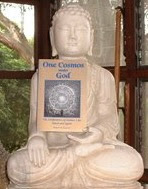
I don't like to get all self-referential this early in the morning, but in my book I present the idea that humanness could never have emerged merely as a result of a big brain. Rather, it could -- and can -- only occur as a result of individuals being linked up in the transitional space between them. Thus, you could say that the large brain was a necessary, but not sufficient, condition. The sufficient condition was the invention of the neurologically incomplete and helpless infant (and this is leaving aside the essential factor of the final cause, the nonlocal archetype of man as such). (This, by the way, is one of the reasons why I don't believe intelligent life exists elsewhere -- the evolutionary neck is just too freakishly narrow.)

Interestingly, it is the same with music. "A tone," according to Zuckerkandl, is not yet music." Rather, "music actually begins when a second tone has followed the first." Therefore, strictly speaking, "the smallest particle of music, then, the musical atom, is not properly the tone but the connection of the tone with the tone, the interval." So really, it's a kind of threeness: tone 1, tone 2, and the link between them. Presumably, any living thing with ears can hear a tone. But only humans can link tone to tone in a meaningful way.

Like life itself, music is "ordered motion," a "complex kinetic organism." Not only can we perceive its motion, but its direction. Even children can discern "the rise and fall of the tones in musical space." In other words, they can distinguish "high" notes from "low" ones. Which is interesting, because no one looks at violet and sees that it is "higher" than red; nor could you create visual music by presenting successive beams of light vibrating at different frequencies. For that matter, no one would say "that the fourth floor of a house was sharper than the third, the first flatter then the second" (Zuckerkandl).

In music, high notes, such as those played by the flute, are often associated with gaity, with spring, with frivolity, with angels and fairies and similarly fruity things. Is this just culturally conditioned? Would it be possible to use the flute to express deep gravity, like the voice of God? I doubt it; not for nothing is Barney's last name Fife. However, it can obviously communicate an aspect of God, which is no doubt why Krishna is never far from his flute. A quick google search reveals the following:

"Flute is the oldest musical instrument known to mankind.... the flute is very close to Nature and sounds very melodious when played in an atmosphere surrounded by Nature.... For example, if you take a short flute to mountains or a thick forest and then play, the echo of the sound bouncing back either from the leaves of the trees or from the mountains is simply very delightful. Every flute player in such circumstances receives a celestial experience. Nature actually talks back to you."

Back to the twoness -- or threeness -- of music. Like time, music "moves forward," even while retaining and remembering the past. The reason why music is possible is that one tone recalls the previous one and "anticipates" the next; there is a curious lack of fulfillment present to each tone, as it "completes itself" by handing over the melody to its neighbor. Again, very strange when you stop to think about it: "No musical tone is sufficient unto itself; and as each musical tone points beyond itself, reaches, as it were, a hand to the next, so we too, as these hands reach out, listen tensely and expectantly for each next tone."

Therefore, to be "in" music is a phenomenologically complex state, for one cannot merely be in the moment and hear what it is all about; rather, "to be auditively in the time now sounding means, then, to always be ahead of it too, on the way to the next tone." I suppose it's no different than understanding speech. In so doing, we don't recognize the fact that listening only to the individual words will not reveal the meaning of what the speaker is saying. Rather, we must simultaneously listen to and beyond them.

Seriously, it's amazing that unambiguous meaning can be transmitted from mind to mind, except in the case of purely objective information. In order to accomplish this feat, I must have a meaning in mind, reverse engineer it by selecting the individual words to convey it without distortion and with all subtlety in tact, and then hope that the hearer will take those words and reassemble them to arrive at the same complex meaning.

To cite one obvious example of how communication can go awry, I can't think of a single troll who understands my actual meaning before attacking it. Instead, they use my words to construct a monstrous chimera of their own making, and then attack the trollucination.

Along these lines, at American Digest a commenter remarked that "Science is much harder then religion, because religion doesn't have a lot of really hard math." Actually, it's the opposite. Science, especially the closer it gets to math, is an example of information that can be conveyed from head to head in a very unproblematic, undistorted manner -- which is the very reason why it results in such a philosophically simplistic world, a world far too simple for the human mind to exist in it.

In contrast, the truths, say, of Shakespeare, are far more complex and subtle. Who would be foolish enough to compare the intellect of Shakespeare to the typical worker bee scientist? Among other things, Shakespeare, although writing 400 years ago without benefit of modern science, tapped into deep human truths that will always be true. Unlike science, they are not subject to fashion or to revocation by a tenure-seeking mediocrity.

In Our Culture, What's Left of It, there is a chapter entitled Why Shakespeare Is for All Time. Scientists tell us that there is no such thing as "essences," including such fanciful notions as "self" or "human nature." Fortunately, Shakespeare knows nothing of that postmodern nonsense, but "is interested in the essentials of human nature, not the accidentals of human history."

And there is surely a reason why one can pass through our elite universities without ever encountering Shakespeare, but learning all kinds of multicultural nonsense about lesbian poets and post-colonial authors of color.

For, among other things, Shakespeare undercuts the first principle of the left by destroying "the utopian illusion that social arrangements can be made so perfect that men will no longer have to be good." He knows that human nature is inclined toward the temptation to evil, which "will always make a mockery of attempts at perfection based upon manipulation of the environment." Instead, "prevention of evil" will always "require personal self-control and the conscious limitation of appetites" (Dalrymple).

In contrast, one could master everything there is to know about natural selection, but it would reveal no wisdom whatsoever: "Statistics will not lead us to enlightenment about ourselves, any more than elucidation of the human genome will render Shakespeare redundant. Those who think that an understanding of the double helix is the same as an understanding of ourselves are not only prey to an illusion but are stunting themselves as human beings, condemning themselves not to an advance of self-understanding, but to a positive retrogression" (Dalrymple).

This is an example of how the melody of man can be played backward to reveal a hidden satanic message.

Sunday, November 15, 2009

Listening to History: The Testimony of Music

If music is meaningful -- if it wordlessly says something about reality -- what does it say, and can we translate it to mere speech?

Here we are not so much concerned with what this or that performance conveys, but with what music as such tells us. And according to Zuckerkandl, music transmits fundamental truths about time, space, and motion, which are only the fabric of reality. As I said somewhere in my book -- here it is, p. 44, quoting the Z man:

"The knowledge of space that hand and eye possess is exactly matched by their ignorance of time.... A true image of time must be an image for the ear, an audible image, an image made of tones.... Thanks to music, we are able to behold time."

That right there is an earful: behold time. Everyone knows how difficult it is to say what time "is," because as soon as we begin to look at it, it slips through our grubby fingers. Indeed, it is one of those fundamentals, like consciousness, that defy verbal description. We cannot describe time or consciousness because we are "in" them, and could never be outside of them. It would be like a fish trying to describe the ocean, or a member of the MSM trying to look at liberalism.

But if Zuckerkandl is correct, music is a way to stand "above" time while still being in it. That is, music is a meaningful organization of time, an "ordered motion" which serially reveals its meaning as we listen, like a kind of rotating object.

Hold it right there -- "ordered motion?" Surely music doesn't "move" in the conventional sense of the term. We don't have to follow it around the room in order to keep up with it. In this regard, it "moves" and "flows" in the same way the mind does, like a con-versation (literally, "flowing together") that wends its way to its nonlocal "point." What are we talking about right now? Frankly, we don't yet know. All we know is that we're in the process of arriving there. Don't you feel the cool breeze blowing along your neocortex?

This very much reminds me of the "fundamental rule" in psychoanalysis, which is free association. The purpose of free association is to liberate the right brain from the tyranny of the left, so that we can stop making sense for a while -- superficial sense, that is. The left brain always has a ready store of excuses, cover stories, alibis, personal myths, and other "time binding" structures. It is the spinmeister extraordinaire.

And that's what any narrative is, a time binder, a way to contain and organize time. Consider that idea for a moment: just as we require structures to bind space -- for example, our home -- we also need structures to enclose us in time. Think of all the shoddy and substandard temporal shacks people live in to keep the hostile elements out of their little myths!

The Islamist myth is quintessential in this regard. By the way, I read The Looming Tower last week, and I cannot recommend it highly enough. It is the best book of which I am aware of the whole history of Islamism, which is even more bizarre and bloodthirsty than you may think. It is interesting that the Islamists especially detest any form of western music. But the Islamist myth is like a kind of insane opera that binds all of history into one dramatic arc.

This kind of insane monomythology also afflicts the left. In his Our Culture, What's Left of It, Dalrymple writes of the "various branches (feminist, gay, and so on) of academic resentment studies, in which history is nothing but the backward projection of current grievances, real or imagined, used to justify and inflame resentment."

Such individuals are not living in time; rather, they are living in an "eternal now" of resentment which is then widened out to encompass the past and future. This is the basis of Obama's never-ending World Apology Tour, as if his personal shame is a reliable source of information about America.

Note that "the object of such historiography is to disconnect everyone from a real sense of a living past and a living culture." The point of these leftist monomyths is to oust us from the deep vertical narrative that unites us, so that "people find themselves cut off from the past as a matter of deliberate policy." As the cultural left has made its long march through the institutions, it has waged a brazen campaign against our past, enforced by the dehumanizing newspeak of political correctness. In the end, "nothing exists except an endless present in which the Party is always right."

To bring this back around to the original point, any enforced political dystopia must be rooted in a kind of existential amusia, in which one has lost (or is prevented from exercising) the ability to detect the rhythm, melody, and harmony of history.

In his outstanding Music, the Brain, and Ecstasy, Jourdain talks about how the greatest works of music parallel the greatest scientific achievements: "In all branches of cognitive endeavor, our highest praise is reserved for works that build the deepest hierarchies. When these works are scientific theories, they explain the world more comprehensively than lesser ones." They aren't like, say, metaphysical Darwinism, which simplistically and fanatically eliminates so many other vital truths of man -- without which man is no longer even man, so that the theory cannot be said to actually explain him as he truly is. Man must be eliminated in order to save the theory.

The kind of cognitive synthesis we are describing is very much analogous to the uniquely horizontal basis of western music, through which many different instruments and musical lines are harmonized and brought together in a moment of listening. It takes a capacious musical mind to compose a work capable of unifying so many diverse strands, both in time and space. Such works "show us relations far deeper than we are normally able to perceive," and reach far "across time to encompass the deepest relations." And interestingly, "harmony became elaborate in Western music at about the same time that perspective was introduced into painting during the Renaissance."

And wouldn't you know it, "it turns out that the left ear, which channels primarily to the right brain, displays clear superiority" in "making sense of melodies." Which is why the harmelody of the cosmos can only be heard through a great imaginative synthesis of its many voices, passages, and movements.

Saturday, November 14, 2009

On the Musicalization of Thought: Do You Hear What I Hear?

I want to focus on the question of what music signifies. As Zuckerkandl reminds us, musical meaning is unlike any other kind of meaning, since it doesn't refer to anything else but the music to which it refers. Think about that one for a moment. The meaning of meaning is that one thing can refer to another. If it only refers to itself, that usually means that it is meaningless -- a tautology.

But the existence of music suggests that some types of meaning are intrinsic. They do not have to point to anything beyond themselves in order to be meaningful. Still, this is very weird, and needs to be reflected upon in order to be fully appreciated.

Zuckerkandl writes that "the word and its meaning are independent things. Here is the word -- a complex of sounds or signs; there is what it means. The two are separable; each exists by itself, the word without the thing, the thing without the word." This no doubt contributes to our common sense, default dualistic view of the world -- of thoughts and of things. What could be more obvious than the existence of these two very different worlds?

But again, the existence of music is a direct challenge, both to dualism and to any attempt to collapse one side of the dualism into the other -- to either reduce information to matter, on the one hand, or matter to idea, on the other. In other words, music doesn't fit into either a materialistic or an idealistic metaphysic, for "when meaning sounds in a musical tone, a nonphysical force intangibly radiates from its physical conveyor."

Clearly, "the musical significance in the tone is of a nonmaterial nature." However, unlike the word -- which points to something else -- the significance of the tone cannot be separated from itself: "The acoustical event and its musical meaning are in no sense two independent phenomena, existing by themselves. They cannot be imagined separate." Oddly, "tones must themselves create what they mean" by "pointing into themselves." It seems to me that this "inward pointing" is the key.

Zuckerkandl only touches on the potential religious significance of this mystery. For example, he writes that "we find a similar kind of 'being in' in the religious symbol. The symbol is the representation of a supernatural -- that is, physically indemonstrable -- force in a material form."

One immediately thinks of icons, which are a kind of transparent membrane through which divine energies flow back and forth -- or in and out, down and up. We can look "in" toward the divine, while the divine radiates out toward us. Transfered to the plane of music, you could say that the icon is simultaneously speaker and microphone, a two-way vibrating membrane, depending upon which way you look at it.

You could even say that the icon -- or host, for that matter -- is not a symbol, but an unsymbol, that is, an existential reality that nevertheless isn't merely what it is. It points, but like music, it points further into itself. Zuckerkandl seems to understand this connection: "The religious symbol is not a sign that merely indicates the divine being to the believer" -- again, in the manner that a word refers to a thing.

Rather, "the deity is directly present in the symbol, is one with it, and is also directly beheld in the symbol by the believer." The symbol doesn't cause one to have a "thought" of God; rather, it provokes a kind of merger with him, in the same way one merges with music. When we listen to music, we become one with it. If we can't "get into" the music, then we haven't really heard it at all. Rather, we have only bounced off its exterior -- or vice versa.

Thus, just as music reveals immaterial forces, so too does the religious symbol manifest transcendent forces in a material medium. And just as the tune deaf individual hears the notes but not the melody, the spiritually autistic soul sees the religious symbol, but not the forces it embodies and radiates. Zuckerkandl: "Do normal eyes suffice to see the god in the symbol? The believer sees him; the unbeliever sees nothing -- who is right? The believer himself says that the unbeliever can see nothing there. What does disbelief prove against belief?"

Note that in order to get deeply into a musical performance, it is not a matter of "belief." It is, however, a matter of faith, especially for challenging music that doesn't condescend to meet us where we are. For example, it took me many years of "practice" to (literally) "get into" modern jazz, and to hear what it was all about. In this regard, faith was an absolute prerequisite, in that I had to have faith that people with better ears than mine weren't lying, and that there really was a there there, even if it sounded like chaos to the uninitiated.

But through patient faith, I eventually found my way "in" to the music. Thus, I do not say that I "believe" in modern jazz. Rather, I would say that I now have access to the immaterial existential reality it conveys. If some musical philistine tells me that there really isn't anything there, what can I say to him? It's not as if you could use any kind of scientific instrument to prove to him that the musical reality actually exists.

That this reality is "not physically in the tones, that no instrument would register [its] presence, is no argument against [its] existence." Rather, "to him who opens himself without reservations to symbols, their meaning will gradually become clear of itself."

Bottom line -- or cadenza: "Because music exists, the tangible and visible cannot be the whole of the given world. The intangible and invisible is itself part of the world, something we encounter, something to which we respond."

Friday, November 13, 2009

Getting Into the Melody of Existence

Zuckerkandl discusses some of the interesting philosophical -- and I would say theological -- problems raised by the existence of melodies. After all, what is a melody? A melody is a succession of tones. However, a cat scampering over a piano keyboard will produce a series of tones, but that's not a melody. Unless it's one very hep cat.

So why are some series of tones meaningful, while others are not? It's a tricky question, because meaning usually involves one thing that stands for and symbolizes another; there is the signifier (the symbol or word) and that which it signifies (the object, concept, activity, etc.).

But melodies don't refer to anything but themselves. Yes, there is programmatic music intended to evoke preconceived ideas and emotions, but that is the exception. The greatest music is completely abstract, and has no external referent.

Zuckerkandl writes that "when we hear a melody, we hear things that have no counterpart in physical nature." This is again why music occupies that third area, the mysterious transitional space alluded to in the previous post. A single tone -- or the cat running across the keyboard -- is not a musical phenomenon, but merely an acoustical one. Does this imply that music is therefore "unreal," like an auditory hallucination? Perhaps, so long as we agree with Terence McKenna that there exist true hallucinations.

What is it that converts the tone into a note, and the note into a melody? I would suggest that it is the same cosmic force that converts an atom into a molecule, molecule into a cell, and a cell into a body. As discussed somewhere in the Coonifesto, one of the problems with philosophical Darwinism is that it presupposes a very particular kind of cosmos, one in which wholeness is built into its very fabric. Neither music nor natural selection would be possible in any other kind of world.

But ironically, Darwinists nevertheless promulgate a very different kind of cosmos, one in which cats running around on keyboards will eventually produce the works of Bach. As a result, there is an infinite and unbridgeable gap -- literally -- between matter and life, to say nothing of life and mind. There is simply no plausible explanation for how a universe of logical atomism -- of distinct notes wholly external to one another -- could every have snapped to attention and begun reflecting upon itself and singing the Sounds of Science.

And in the naked light I saw
Ten thousand tenured maybe more
People talking without speaking
People hearing without listening


Again, as explained in my book, wholeness implies both interiority and meaning. It implies the latter by virtue of the fact that the parts may participate in a higher entity which is their meaning. And it implies the former for the simple reason that meaning of any kind can only take place in an interior. But again, this meaning is not merely an eccentric and wholly private hallucination (although it certainly can be). Rather, it takes place in the transitional space between world and neurology, where truth, beauty, and virtue enter the world.

The point is that a melody is a whole through which the individual note derives its meaning. The note is only meaningful in the context of the melody. Nor does a random succession of tones make a melody, as with the cat. When we perceive a melody, we are perceiving none other than "wholeness in action." Just as we can perceive static wholeness in space -- say, an animal or building -- we are also able to perceive wholeness in time. Thus, we see how intimately related to music are history, biography, and narratives of any kind.

Zuckerkandl writes that "such a thing as 'mere matter' does not exist in music; its very material is permeated with relation to wholeness." In music, "we hear the promise of a whole that it bears within itself."
The promise of a whole. What does that remind me of? (No, not the promise of a-holes; that's a different subject.)

Oh yes. Religion -- and the faith required to "hear" what it discloses if only you sharpen your ears. For "in the outer world there are forces active whose activity transcends the physical, and at least one of our senses is an organ capable of directly perceiving nonphysical occurrences."

Again, the existence of music cannot be understood in dualistic terms, i.e., physical and psychic. Rather, Zuckerkandl speaks of the "external psychic," but one could just as well say "interior material," for both are ineluctable properties of cosmic wholeness. But "so greatly is our thinking under the spell of the two-worlds schema!" As a result, philosophical explanations swing from the one to the other, even while the explanations -- and music -- can only occur in the transitional third. This is why solid matter is "transparent" to mind, which can "see" and "hear" what is going on "inside" of it.

"In." That might be the most mysterious little word in our entire vocabulary, even more mysterious than being, or AM. For science posits a world of pure exteriority, an IT IS, as it were. The problem is how the IT IS ever results in the I AM, which requires something being "inside" the IT IS. But how do we get in?

Many of us don't. Perhaps you've noticed that one of the most painful aspects of depression is that it prevents one from "getting into" things. It is as if the world is reduced to its IT aspect, with no meaning or depth, i.e., interiority.

Stupidity (e.g., materialism, neo-Marxism, Obamism) results in the same thing, which is why it is so depressing to be around spiritually opaque and dense people who are exiled from the deep interiority of the cosmos, or just living in a collective hallucination. Religion is all about disclosing and reconnecting with this interiority, of "being in." This being in is the tonal center of both man and cosmos, from where all the best melodies arise and return.

Here's a swingin' little loony coon for you:

Wednesday, November 11, 2009

An Eternal Harmelody of Adams

It is an existentialist cliché that modern man is "exiled in time," since he has lost his mooring in the eternal. But this cannot be quite correct, unless we forget what time is.

For time is not a successive appearance of independent "nows," or "points of time." Rather, it is a serial unfolding of past--> present--> future, in which the past anticipates the future and the future recalls and retains the past. Again, one cannot understand time -- or history -- by isolating a single point of it, any more than one can understand a melody by hearing one of its notes.

But since postmodern secular man is not in real time, where is he? Good question. I would suggest that he is in the same place existentially as is the contemporary pop music listener aesthetically, which is to say, "nowhere." I have no idea what's in the Top Thirty these days, but I'm pretty sure you won't find much beauty.

Now, if time is indeed a melody -- or, to be precise, if music is the image of time -- then we should expect time to have all of the same fundamental qualities as music, which include melody (the horizontal component), harmony (the vertical component), and rhythm (the repetitive, containing, or "boundary giving" component).

Modern man doesn't lack for rhythm, except that the beat is either jagged and inhuman on the one hand -- dragging him along by the ear with it -- or as boring as a nine-to-five-to sixty five to the grave necronome on the other.

Nor does he lack for melody, except that the melodies are either trite and sacharrine, or overly "free," verging on not being melodies at all, just a succession of notes with no internal consistency.

What man really lacks of the time element is harmony, and it is harmony that lends music its richness and its depth. Now, transferred to the human plane, to what could harmony be the analogue?

The first thing that comes to mind is tradition, especially the deep tradition of the orthodox revelations, through which man resonates at the same frequency as millions of other living souls, past, present and future. Ultimately one resonates with the first man and the last, or Adam and Christ. Compare this to metaphysical Darwinism, in which one resonates only with an animal and ultimately material past.

In other words, in the case of the Judeo-Christian stream, the harmonic tradition extends back to the dawn of man as we know him -- but really, to the (vertical) origin of the cosmos. To say in the beginning God created the heavens and the earth, is analogous to the da-da-da-DUMMM that enunciates Beethoven's fifth and keeps coming 'round until it is resolved.

Thus, when we harmonize with this tradition, we are still our own note or chord, so to speak, except that it is given a kind of infinite meaning by being situated in the vast cosmic Symphony of Man. Here again, ritual, prayer, meditation -- these are all specific ways of adding a voice to the celestial choir of temporal resonance.

Now, the beat -- the rhythm -- is exceptionally important in these meters. As alluded to above, meter involves repetition, containment, and boundaries. Without it, we could not "think" musically, since it would involve one endless display of novelty, with no breaks (i.e., boundaries) or patterns. A beat is like a unit of time that allows us to think about it.

Transfered to the human plane, this means that we live in various natural rhythms, i.e., the day, season, year, developmental stage, etc. This is how we can say that all Sundays -- or Christmases, or Springs, or Weddings, or Adolescences -- are the same, and yet different. Thanks to rhythm, we have retention with variation. And of course, we can all add in our own groovy little syncopations in order to make life swing. Now that I haven't been blogging every day, I've noticed how the whole thing depended on being locked into a certain rhythm. I'm guessing that most creative people find this to be true, at least if the creativity is to last.

Time is motion, or movement. This is why the ears in general and music in particular are so ideally suited to disclose it. Interestingly, Zuckerkandl observes that "A God enthroned beyond time in timeless eternity would have to renounce music," because "temporal omnipresence would make the revelation of audible beauty impossible."

Imagine what temporal omnipresence would be like: you would hear all the notes of, say, a Mozart symphony, except all played simultaneously instead of in succession. Just one eternally cacophonous OMMMMMMMMMMMM going out and returning to itself. In fact, there wouldn't even be enough time for OM, just OOOOOOOOOOOOOO..... Or O. And O would literally have no content.

But -- and we will have more to say about this later -- if God is not one but three (or three-in-one), then this has definite implications for the Cosmic Symphony, for it means that there is an intrinsic time element in the Godhead. After all, no matter how you play it, it takes some kind of time for the Father to give birth to the Son, even if it's a timeless time. I don't intend to start an argument, but it can't be literal timelessness, or it could never "happen." And this is the position of non-dualism, that "nothing happens" in God. Rather, there is no time, no individual self, no nothing, just a static eternity, compared to which everything else -- including notions of Trinity or personal God -- are illusion.

The Christian God is clearly not monistic, i.e., a "simple one." But nor is reality dualistic, i.e., God and creation. Rather, a key point, both for man and music, is that God is trimporphic. That being the case, perhaps the trimorphism of music can tell us something about the interior of God.

And when we say "interior," we mean this literally. Again, as Zuckerkandl notes, the eyes reveal the exterior of things, while the ears reveal the interior. Remember, a mere tone can be situated in the external world, but a melody cannot be. But nor is the melody simply on the side of neurology, since the tune-deaf person hears the identical notes, but not the melody.

Therefore, melody -- which is the meaning of the notes -- is the quintessential example of something that occurs only in the mysterious transitional space, the psychic third where everything -- everything -- meaningful actually takes place.

Indeed, one cannot even say that the the most stubborn external fact exists in the absence of this transitional space, for without it, we wouldn't even know what was important. Rather, everything would be of equal importance, which is another way of saying that there would be no facts. To say "fact" is to say "value" is to connect the dots is to sing a melody, however insipid or profound. And suffice it to say that the left specializes in destroying harmony and insisting that all melodies are arbitrary.

To be continued....

Theme Song

Theme Song